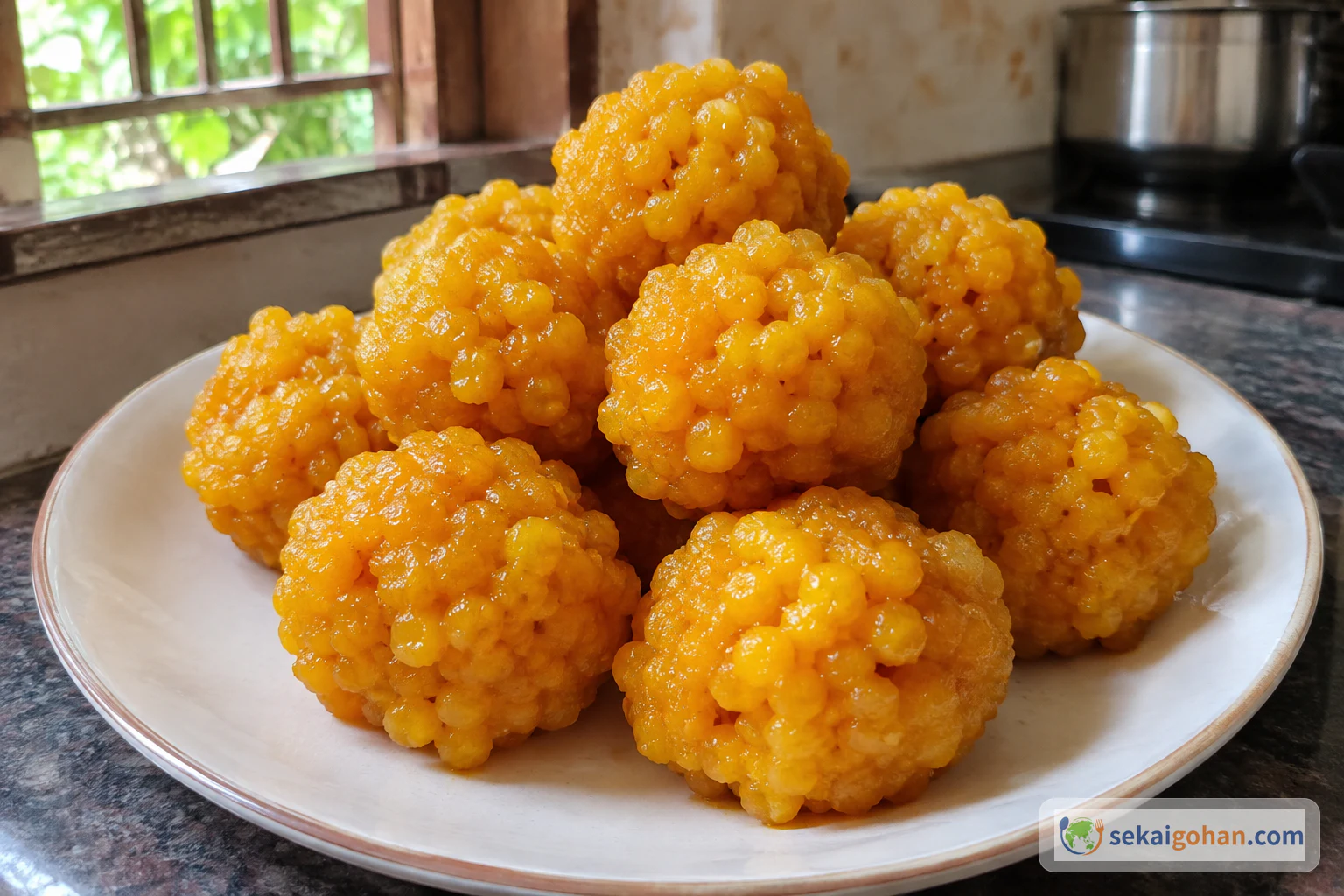
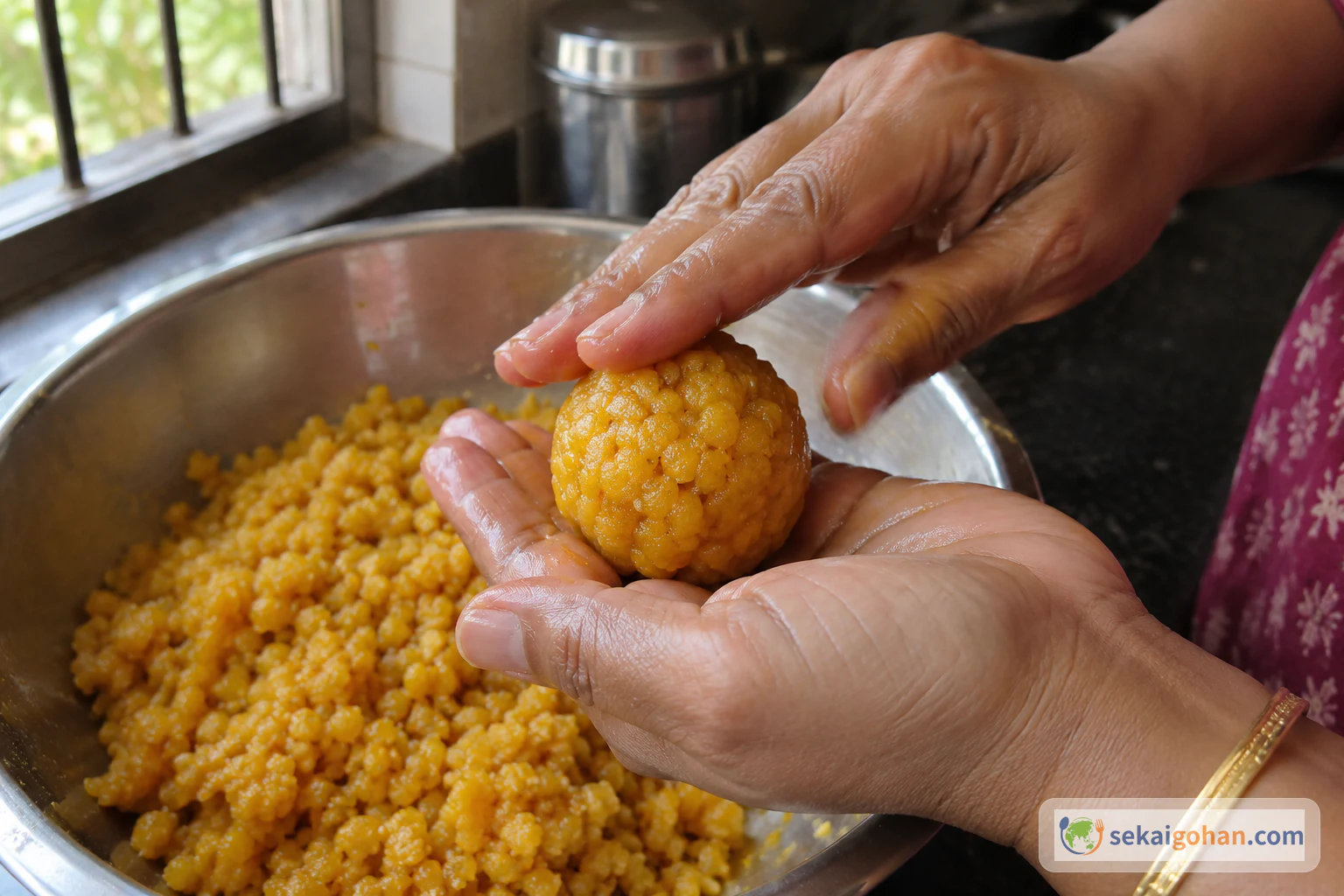
Halwai-style boondi laddu served on a plate
CuisineIndian

Boondi Laddu (Halwai Style): Gram-Flour Pearls Bound in Sugar Syrup

How to make halwai-style boondi laddu, the Indian sweet of tiny gram-flour pearls fried golden, soaked in one-thread sugar syrup with melon seeds, cardamom and ghee, then shaped by hand. Covers testing the batter by frying, checking the syrup safely, using a jhara, frying to golden but not crisp, and shaping the warm mixture.

Level: Intermediate

Cooking flow

Cooking steps

STEP 11 / 11

Make the batter

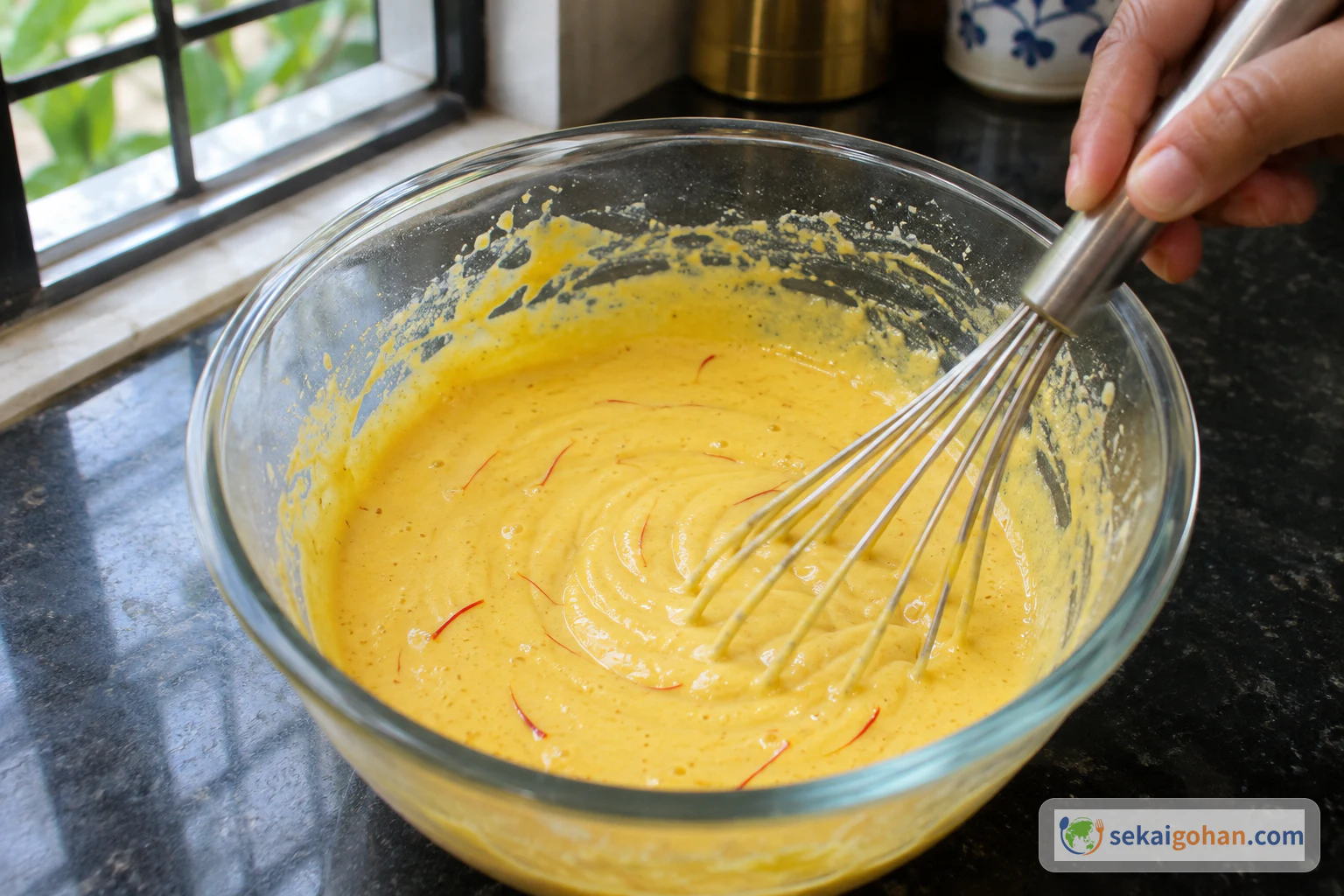
Whisking gram flour and saffron with the water already added
Whisk the gram flour, saffron and water into a smooth batter

Put 1.5 cups gram flour and 2 pinches saffron in a bowl. Add 1 cup + 1 tbsp water and whisk until the batter is smooth.

STEP 22 / 11

Test-fry a little batter and adjust

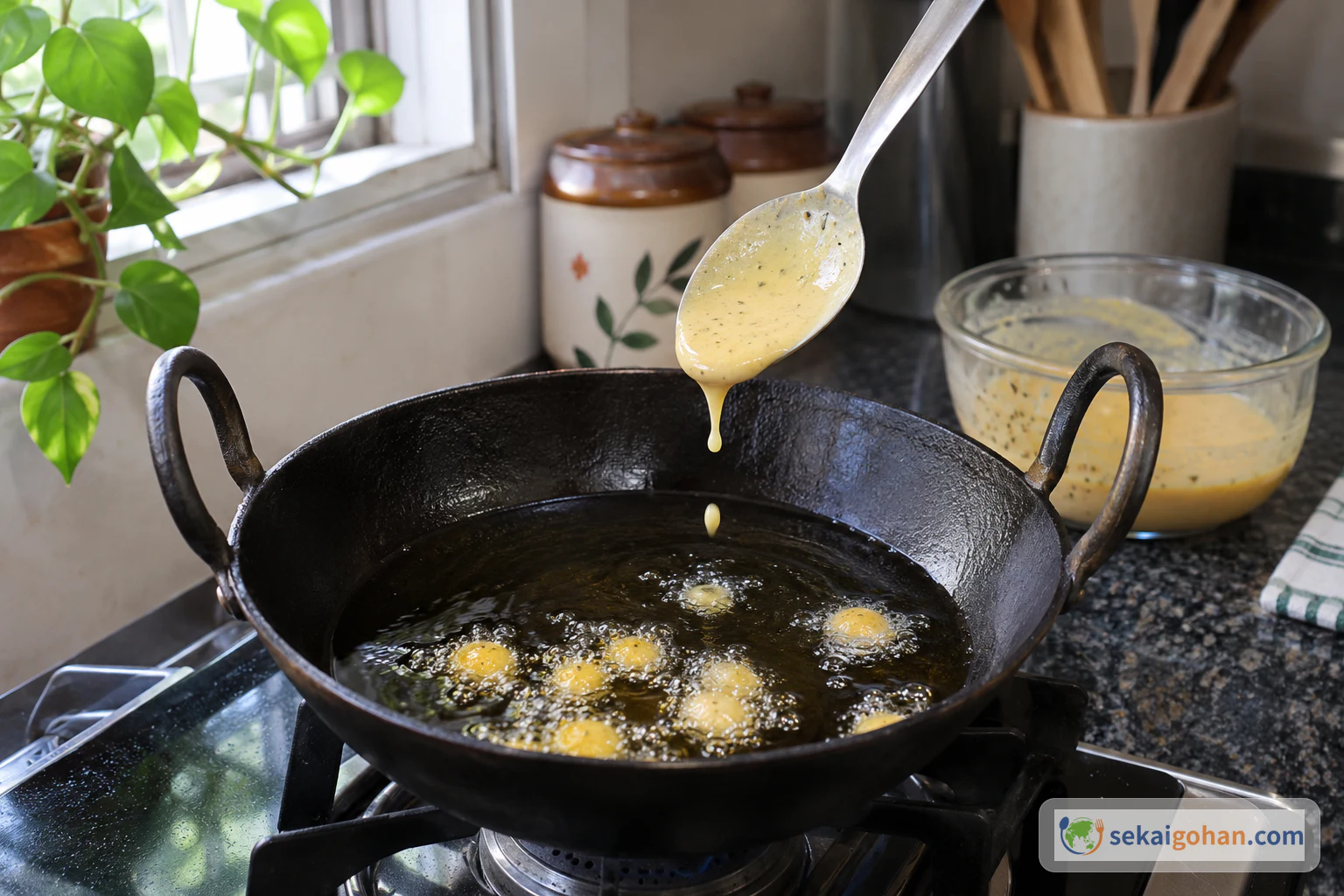
A small sample of batter falling into oil and forming round droplets
Round drops in the test fry mean the batter is ready

Heat oil for deep-frying. Drop a small amount of batter into the hot oil from a spoon. If the drops form round boondi, the batter is ready.

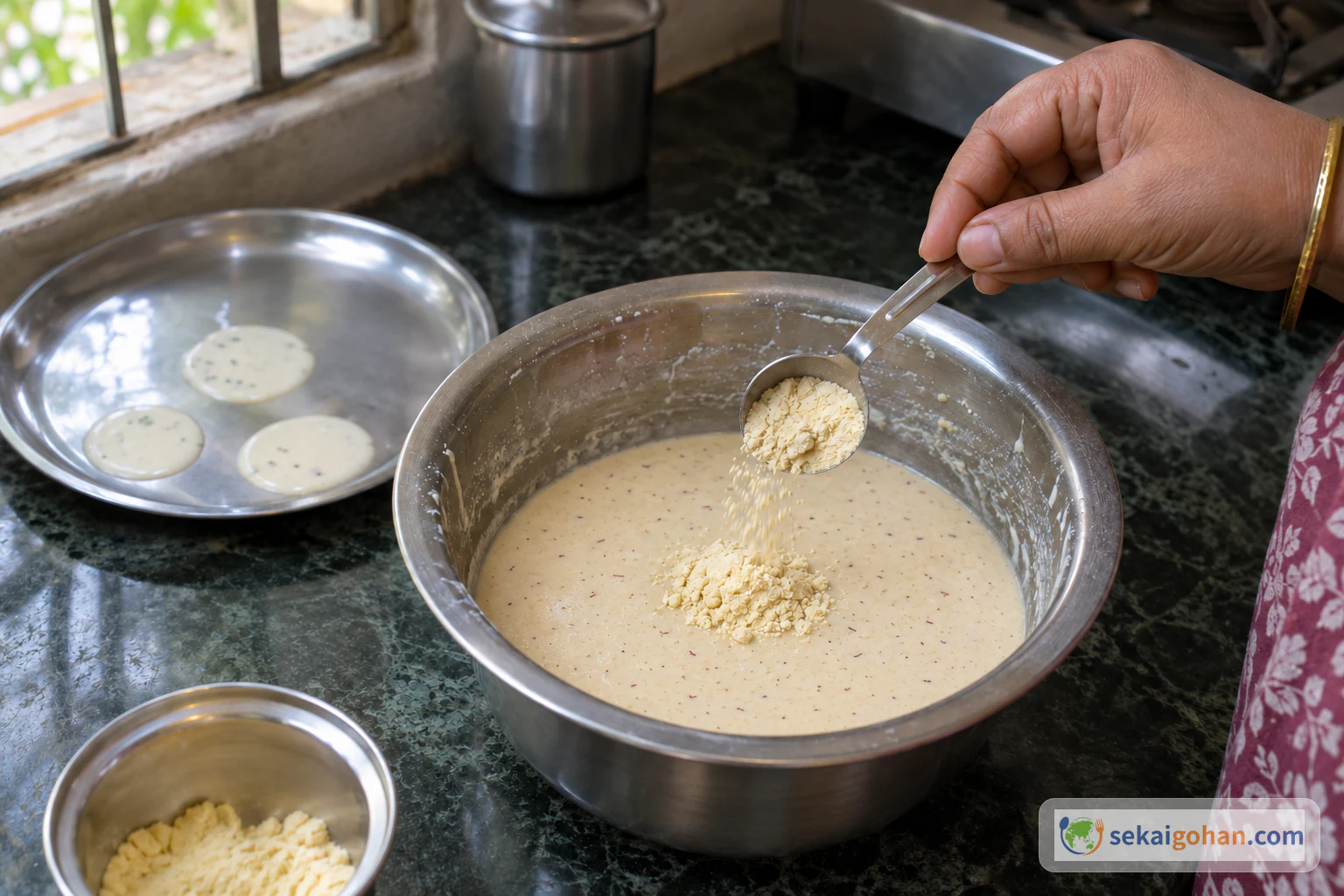
If the drops come out flat, the batter is too thin: stir in a little gram flour and test again.

Adding a little gram flour to batter that fried flat
Flat drops mean thin batter; add a little gram flour

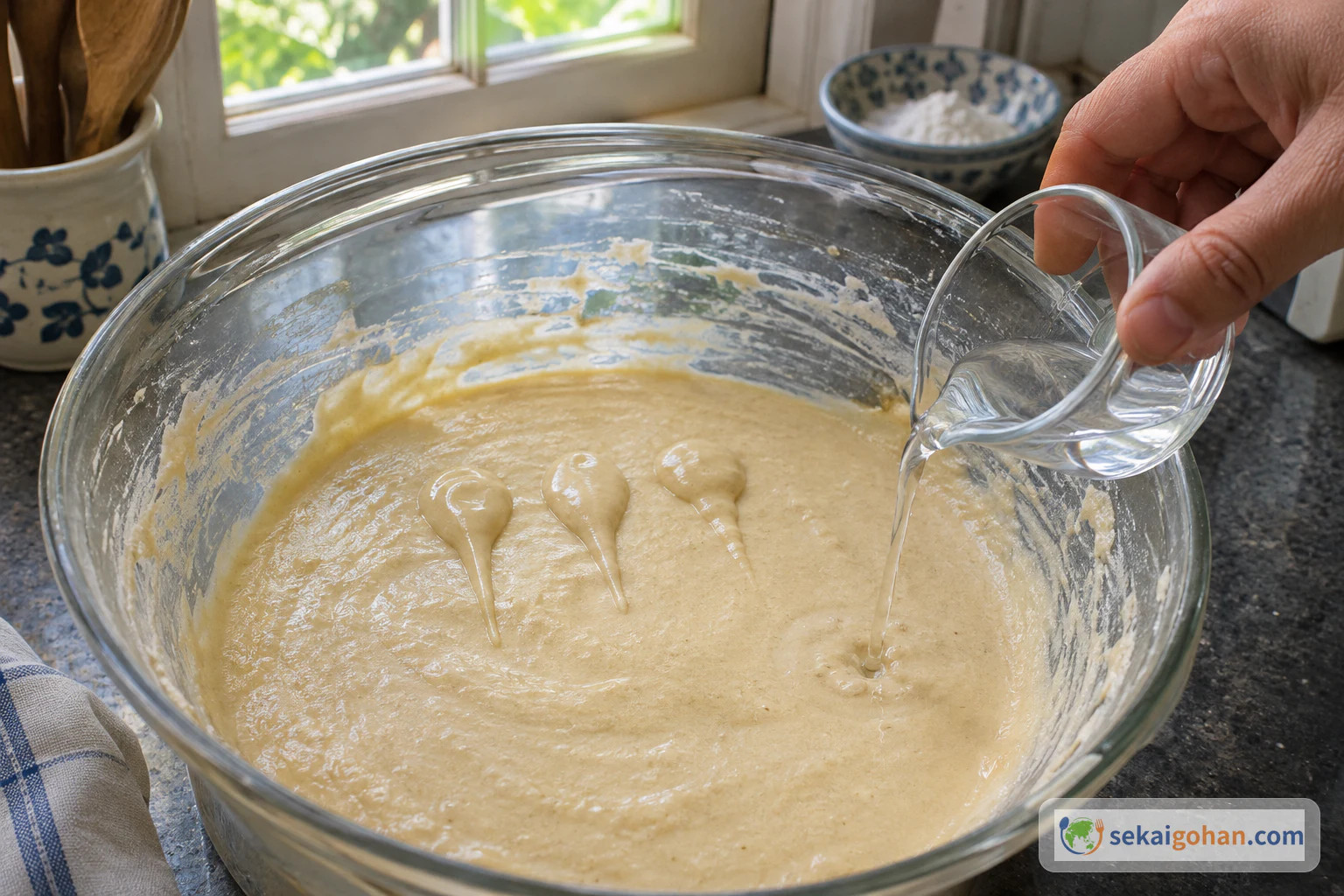
If the drops have tails, the batter is too thick: stir in a little water and test again. These are two separate fixes; use only the one your batter needs.

Adding a little water to batter that fried with tails
Drops with tails mean thick batter; add a little water
STEP 33 / 11

Cook the sugar syrup

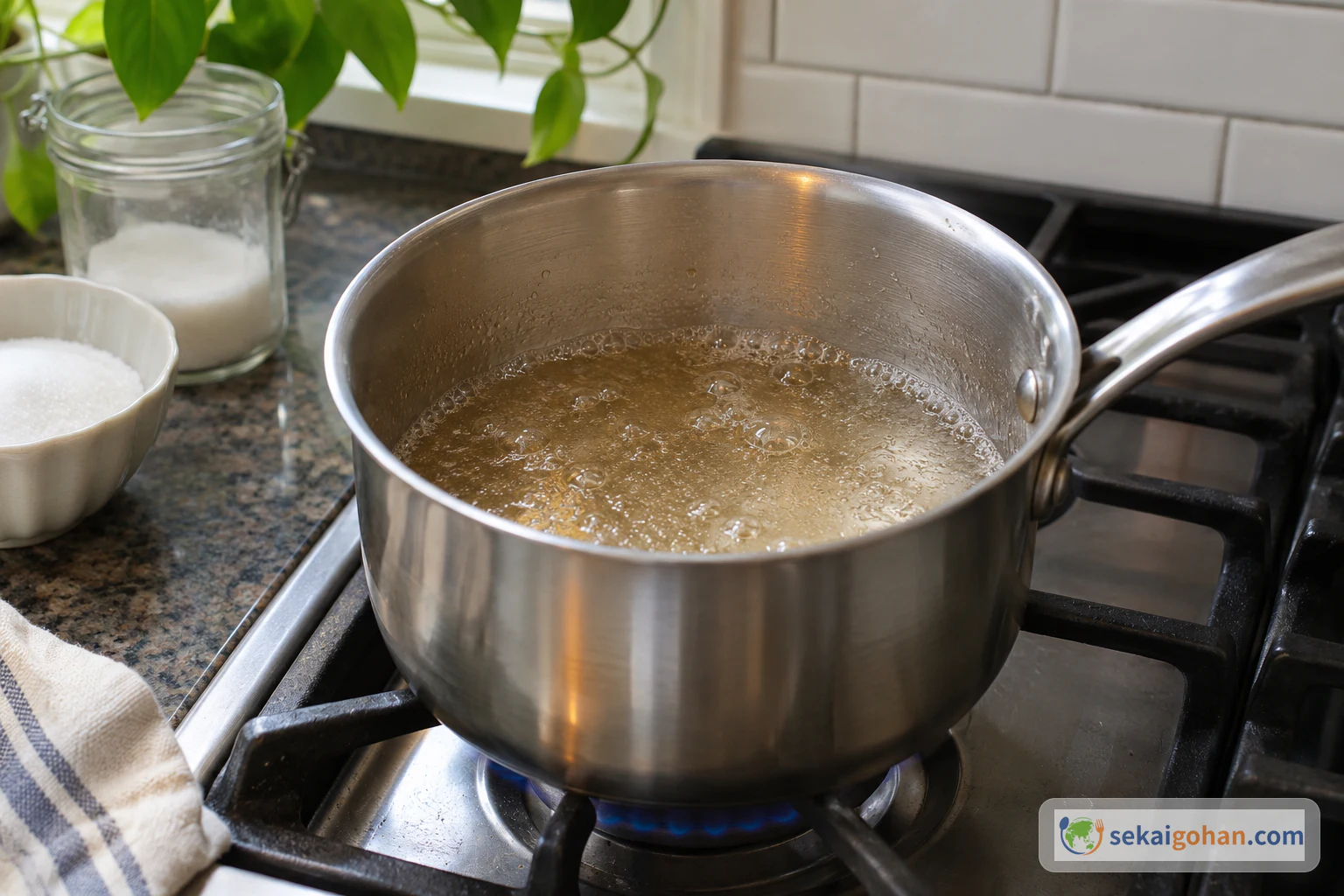
Sugar and water simmering gently in a saucepan over low heat
Simmer the syrup gently over low heat

Combine 1.5 cups sugar and 3/4 cup water in a saucepan. Simmer gently over low heat until the syrup reaches one-thread consistency, then turn off the heat.

STEP 44 / 11

Check for one thread safely

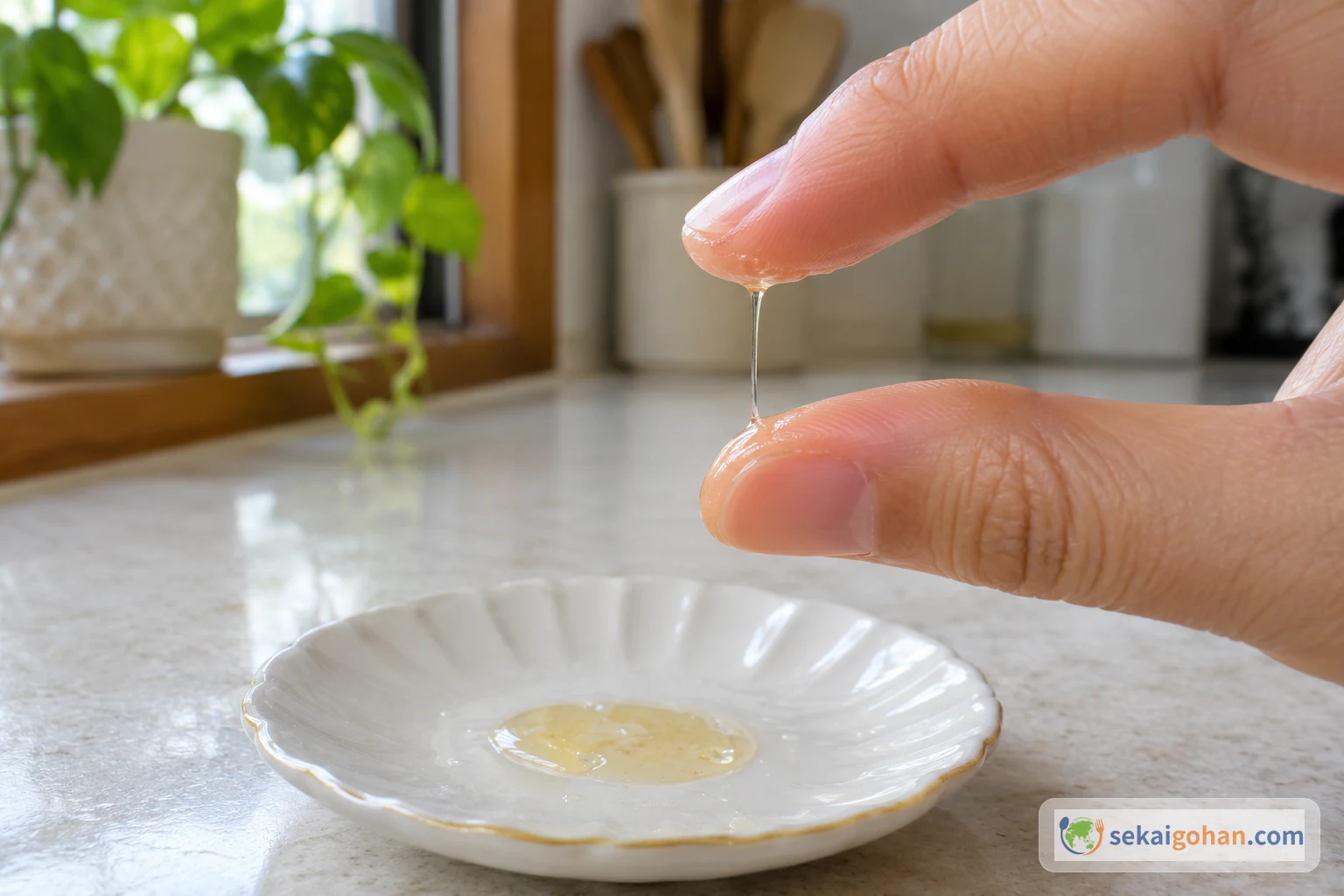
Pulling a cooled drop of syrup into one thread between fingertips
Check a small, cooled sample away from the pan for one thread

Never put your fingers into the hot pan. Take a few drops of syrup onto a small spoon or plate, away from the pan, and let it cool until it is safe to touch. Press it between your fingertips and pull them apart: one fine thread means the syrup is ready. To keep the syrup warm while you fry, set the saucepan over a larger container of hot water instead of on the heat.

STEP 55 / 11

Hold the jhara over the oil

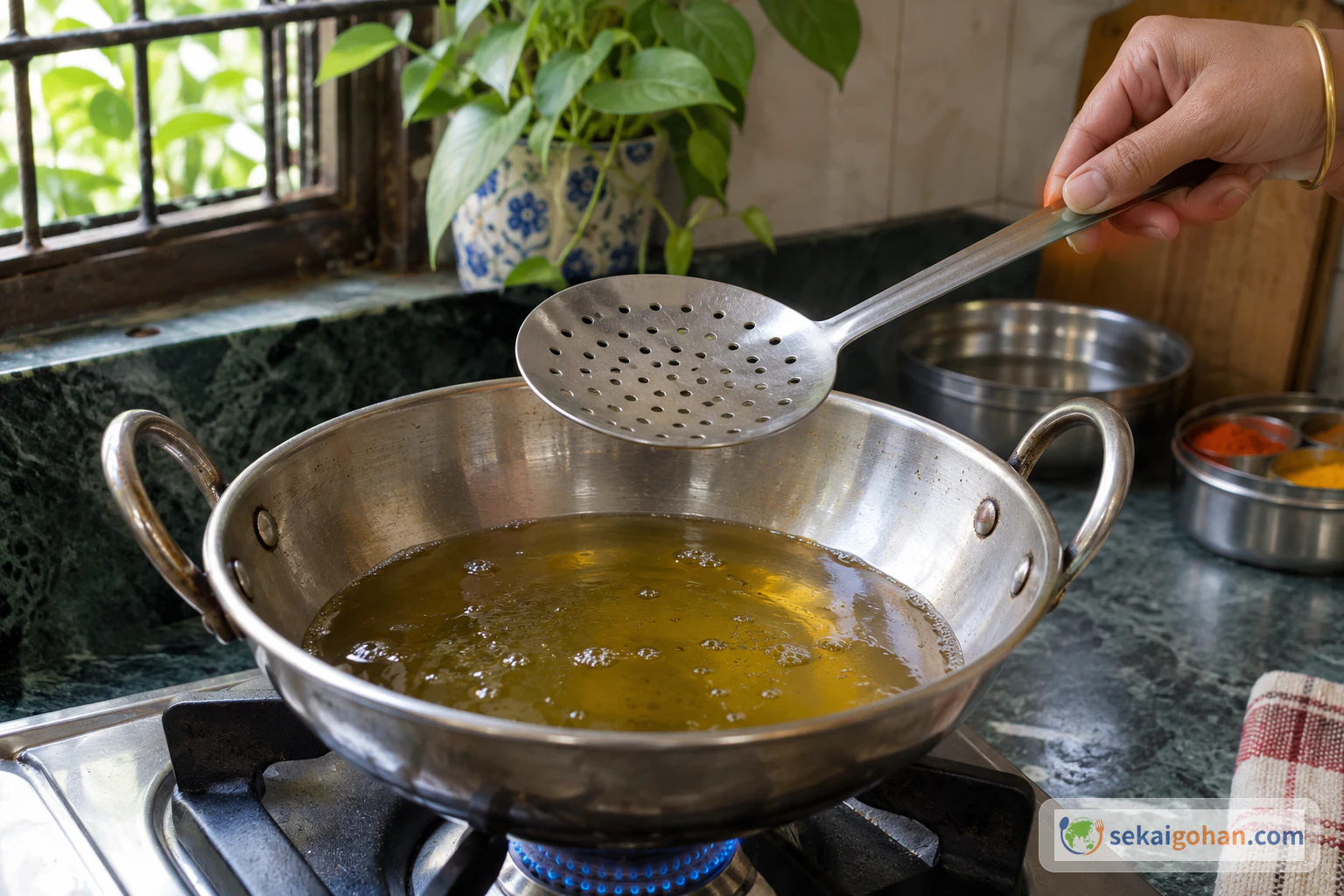
A dry, flat round-hole ladle held above the hot oil
Hold the dry jhara a few inches above the oil

Take a dry, flat ladle with round holes and hold it a few inches above the hot oil. An ordinary slotted spoon will not give you round drops.

STEP 66 / 11

Spread the batter through the ladle

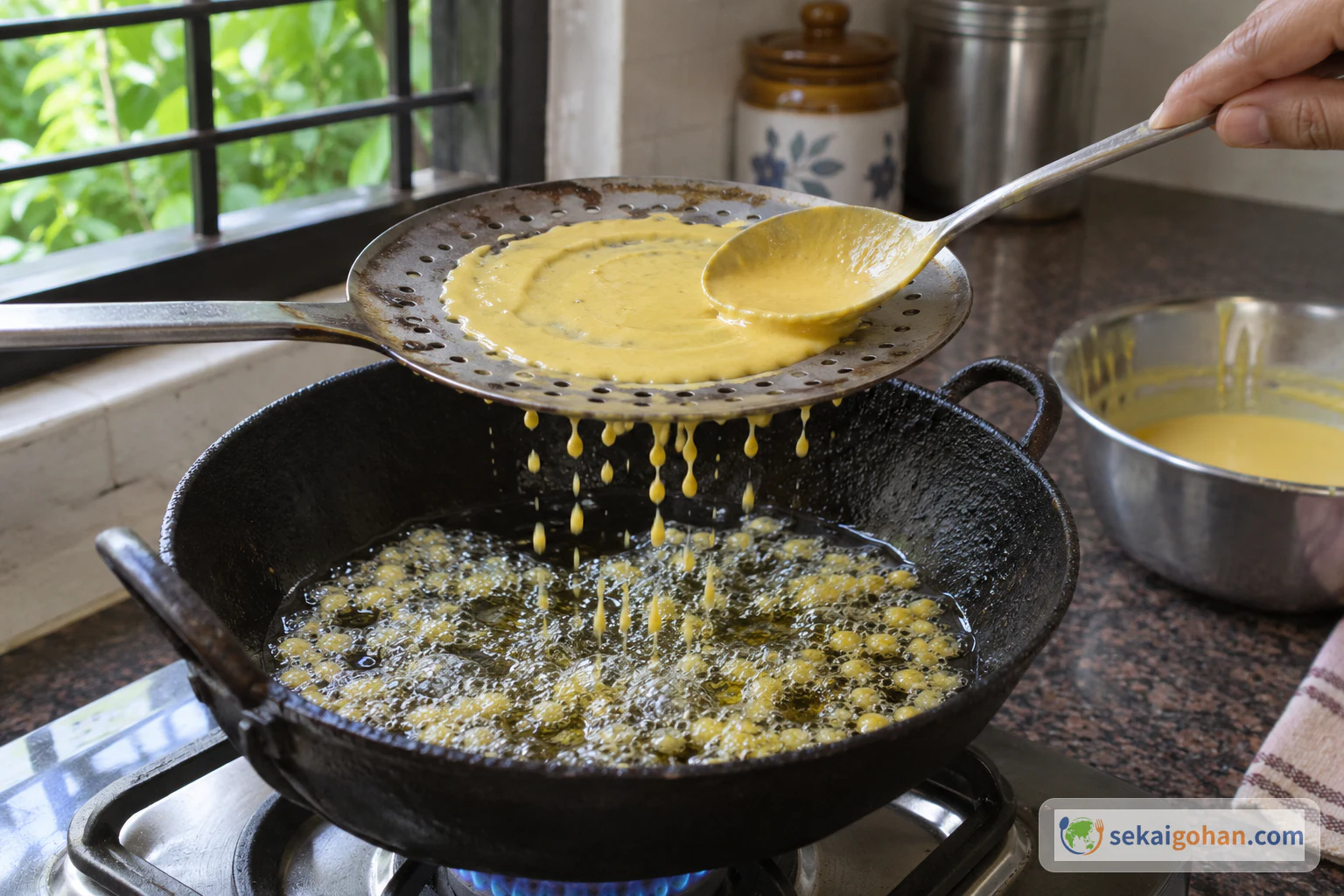
Spreading batter across the ladle with a spoon so drops fall into the oil
Spread the batter lightly so it falls through as drops

Pour some batter onto the ladle and spread it lightly with a spoon in one motion, so the drops fall through the holes into the oil.

STEP 77 / 11

Fry the boondi until golden

Small boondi frying to a golden color
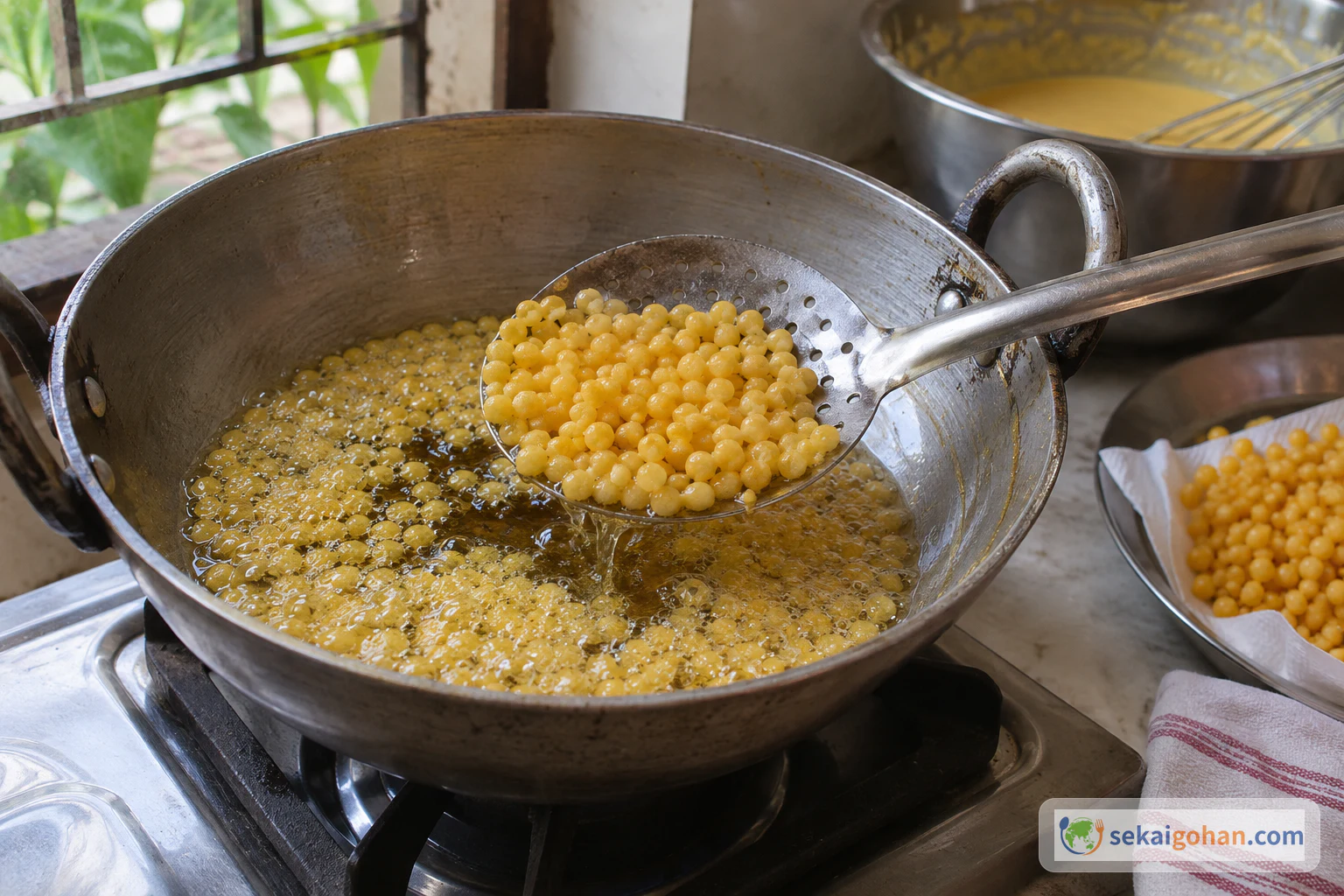
Stop at golden, while the boondi is still soft

Fry until the boondi is cooked and golden, and take it out when the sizzling stops. Do not fry until crisp or dark; boondi that has turned hard will not absorb the syrup well. Lift the boondi out with a slotted spoon.

STEP 88 / 11

Wipe the ladle after every batch

Wiping the upper face of the ladle with a dry cloth away from the oil
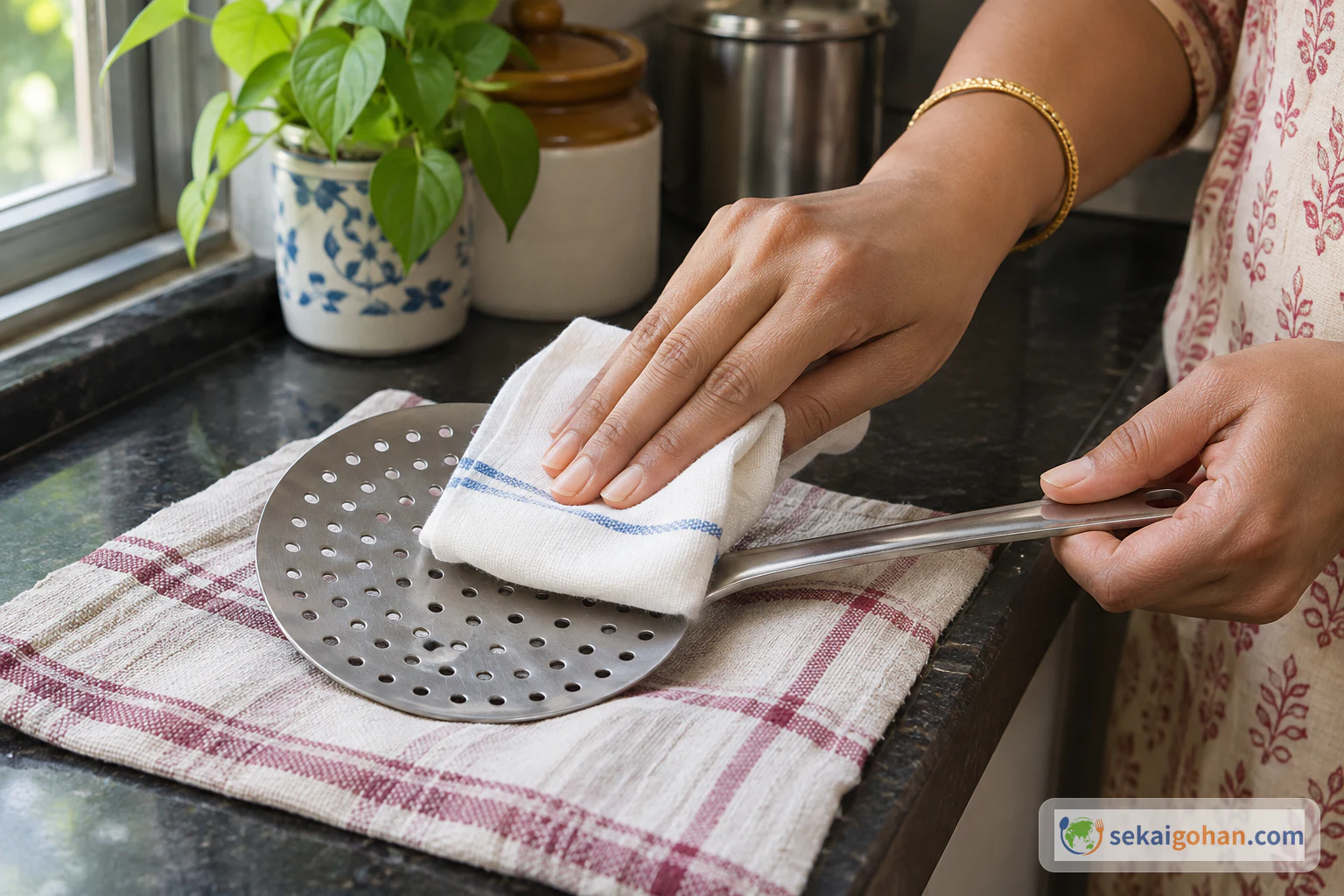
Wipe both faces of the jhara dry before the next batch

Away from the hot oil, wipe both sides of the jhara with a clean, dry, thin cotton cloth before the next batch. This keeps the holes clear so the next drops fall round.

STEP 99 / 11

Add each batch to the hot syrup

Tipping a drained batch of golden boondi into hot sugar syrup
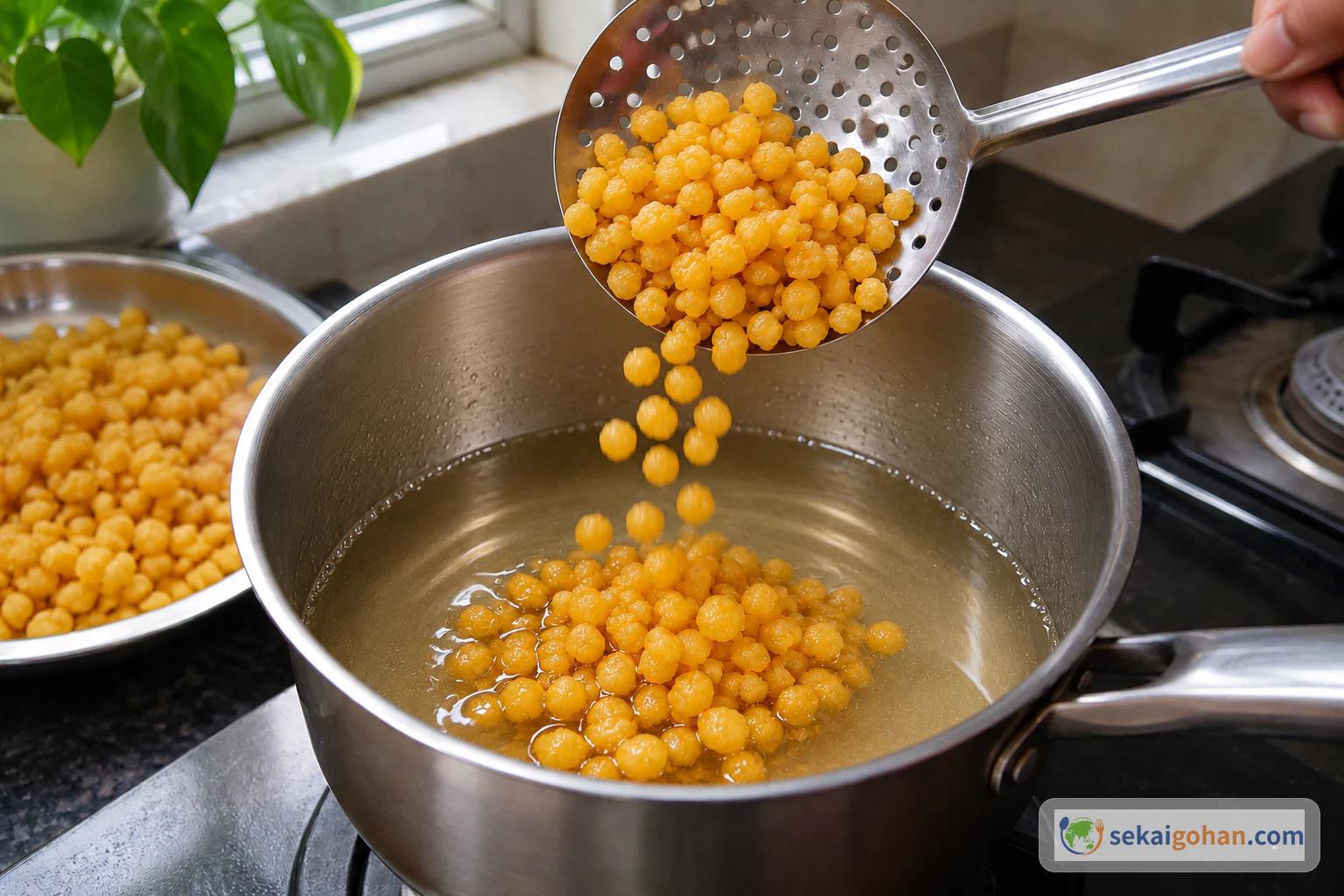
Each drained batch goes straight into the hot syrup

Let the oil drain from the boondi, then add the batch directly to the hot sugar syrup. Repeat steps 5 to 9 until all the batter is fried.

STEP 1010 / 11

Mix in the seeds, spices and ghee

Mixing syrup-soaked boondi with melon seeds, spices and ghee
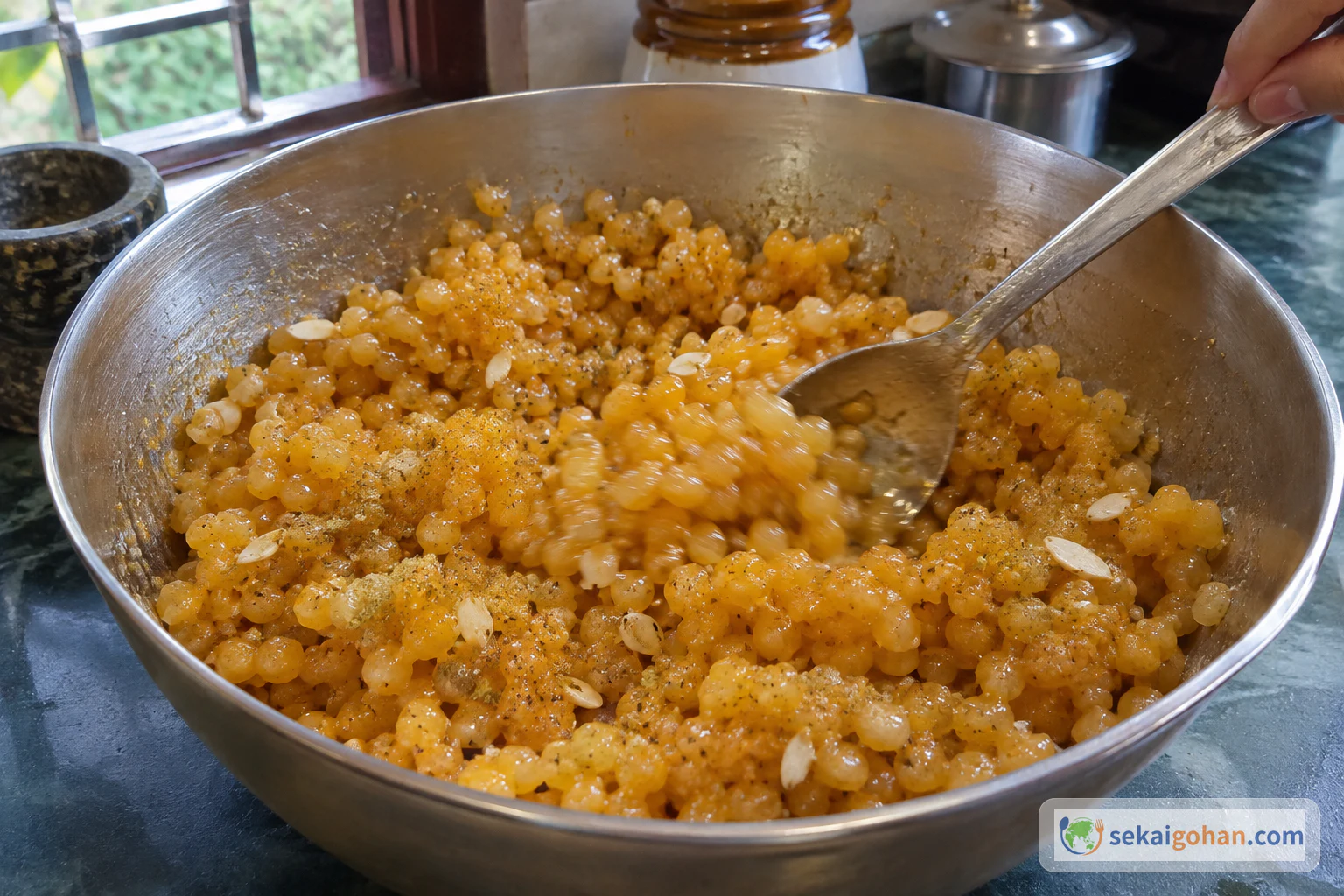
Mix until the boondi has taken up the syrup

Add 1 tbsp melon seeds, 1/2 tsp green cardamom powder, the seeds from 2 black cardamom pods and 1 tbsp ghee. Mix well until the boondi absorbs the syrup.

STEP 1111 / 11

Shape the laddu

Shaping the cooled boondi mixture into a ball with ghee-coated hands
Shape with ghee-coated palms once the mixture is warm or at room temperature

When the mixture is warm or at room temperature, coat your clean palms with a little ghee and press portions of the mixture into balls. If the mixture will not hold together, mix in 1–2 tbsp more ghee and shape again.

0 / 0
Ingredients

Ingredients

1 / 1

Ingredients

Ingredient Amount Role
Gram flour (besan) 1.5 cups The base of the boondi pearls
Saffron, crushed or powdered 2 pinches Color and aroma in the batter
Water, for the batter 1 cup + 1 tbsp Loosens the batter; adjust after the test fry
Oil as needed For deep-frying the boondi
Sugar 1.5 cups Sweetens and binds the laddu
Water, for the syrup 3/4 cup Dissolves the sugar into syrup
Melon seeds (magaz) 1 tbsp Mixed into the soaked boondi
Green cardamom powder 1/2 tsp Aroma
Black cardamom (badi elaichi) seeds from 2 pods Aroma; discard the husks
Ghee 1 tbsp Mixed in to help the laddu hold together
Ghee a little For coating your palms while shaping
Ghee (only if the mixture will not hold) 1–2 tbsp Extra binding, added only when needed
0 / 0

Gram-flour batter spreads across a flat ladle with round holes, and tiny droplets rain down into the hot oil. Once they turn golden, they go straight into a pan of hot sugar syrup and soak it up. Then they're pressed into balls between ghee-coated palms. That's boondi laddu: small fried pearls of gram flour (boondi) held together by syrup and scented with cardamom. This is the halwai-style version, the kind sold in Indian sweet shops. For more dishes from the same country, see India.

About Boondi Laddu

"Laddu" covers a whole family of round Indian sweets. Boondi, motichoor, besan, coconut and semolina laddus are all separate varieties. Besan laddu, for example, is a different sweet from the pearl-based one made here. The name comes from "boond," meaning a droplet, and boondi laddu is a sweet closely tied to festivals.

Boondi laddu is built in two parts: pearls and syrup. Gram flour (besan) is loosened with water and saffron into a pourable batter. The batter is pushed through a round-hole ladle (jhara) into hot oil and fried into small pearls. A separate syrup of sugar and water is cooked to a one-thread consistency. Melon seeds (magaz), cardamom and a spoonful of ghee finish the sweet. Once the mixture has cooled to warm or room temperature, it's shaped by hand.

The pearls need to stay soft so they can absorb the syrup. Hard boondi takes up syrup poorly, so fry them only until golden, never crisp.

Recipes differ from cook to cook. One version uses 500g gram flour, 750g sugar and 3.5 cups water and adds cashews, raisins and saffron. It cooks the syrup to a one-and-a-half-thread stage and gives the mixture a rest in hot water.

Ingredients for the Batter, Syrup and Finish
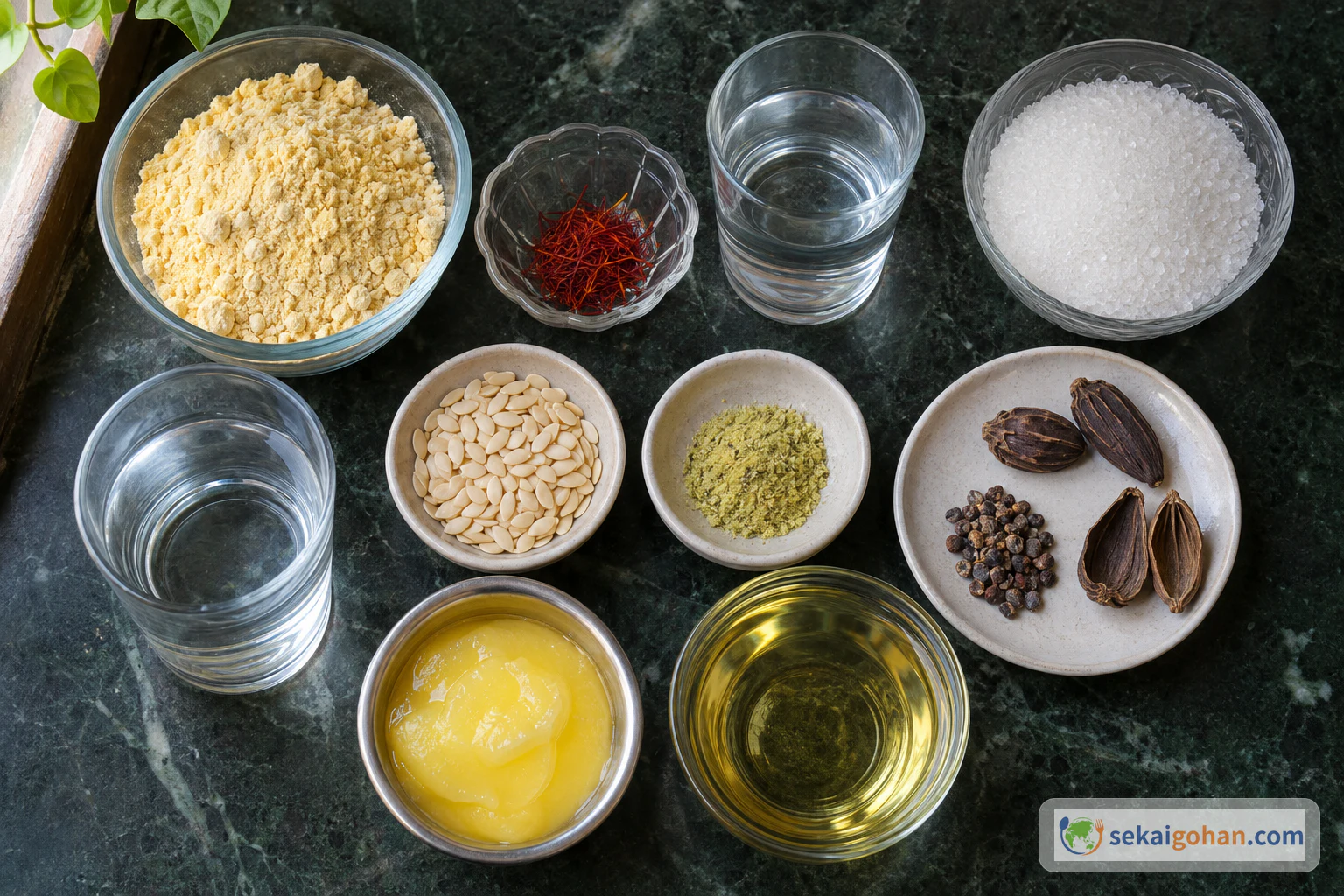
All the ingredients for boondi laddu, laid out by stage
Batter, syrup and finishing ingredients, with the black cardamom seeds kept apart from their husks

Equipment

  • Mixing bowl and whisk
  • Deep pan for frying
  • Flat ladle with round holes (jhara)
  • Spoon for spreading the batter
  • Slotted spoon
  • Saucepan for the syrup
  • Small spoon or plate for checking the syrup
  • Clean, dry, thin cotton cloth
  • Larger container of hot water to hold the syrup pan (optional)

Choosing Ingredients for Boondi Laddu

There are two separate waters. One measure goes into the batter and the other into the syrup, so keep them apart. Treat the batter water as a starting point and adjust it after the test fry.

Black cardamom: seeds only. Open the pods, take out the seeds and throw away the husks. For green cardamom, you can use 1/2 tsp of powder or 5–6 whole green cardamom pods.

Extra ghee is conditional. The additional 1–2 tbsp of ghee isn't part of the base amount. Add it only if the mixture won't hold a shape.

No camphor. Edible camphor is optional and is left out of this version. Never use household camphor in food.

Allergens and food safety

Ghee is made from milk, so these laddus are not dairy-free. Check the labels on your ghee, melon seeds, spices and other packaged ingredients for allergen and shared-facility statements. Do not taste the raw gram-flour batter. Hot oil and hot sugar syrup can cause serious burns: keep hands, faces and children away from the pans, and never leave hot oil unattended.

Before you start

Judge by the batter test, the syrup test and the color of the boondi, not the clock.

Method: From Batter to Shaped Laddu

Read the cues, not the clock

The batter is right when test drops fry into round pearls. The syrup is right when a cooled drop pulls into one thread. The boondi is done when it is golden and still soft. Steps 5 to 9 repeat for each batch until the batter is used up.

Boondi Laddu Troubleshooting

What you see Likely reason What to do
Test drops fry flat Batter is too thin Add a little gram flour and test again
Test drops have tails Batter is too thick Add a little water and test again
Drops are not round Wrong ladle, or batter stuck in the holes Use a flat jhara with round holes, and wipe both sides dry after each batch
Boondi is hard or crisp Fried past golden Lift the next batches out at golden, when the sizzling stops
Boondi does not take up the syrup Pearls fried too hard Keep the remaining batches golden and soft, and mix well after adding the ghee and spices
Syrup is cooling while you fry Frying several batches takes a while Set the saucepan over a larger container of hot water rather than leaving it on the heat
Mixture will not hold a ball Not enough binding Mix in 1–2 tbsp extra ghee, then shape with ghee-coated palms
Mixture is too hot to handle Shaping too soon Wait until it is warm or at room temperature

Frequently Asked Questions

How many laddus does this make?

About 10–12 pieces.

Can I convert the cups to grams?

Stick with the cup amounts as written, and use the same cup measure for everything.

Is boondi laddu dairy-free?

Not this version. It uses ghee, which is made from milk. Check the labels on all packaged ingredients for allergens.
Sources

  • Dassana Amit, "Boondi Laddu Recipe (Halwai Style)," Dassana's Veg Recipes, updated Jul 03, 2025. The recipe followed in this article: batter amounts and the round-droplet test, one-thread syrup with a cooled sample check and optional hot-water bath, frying golden but not crisp with a wiped jhara, finishing with melon seeds, cardamom, black cardamom seeds and ghee, shaping when warm, optional edible camphor, and the 12 / 10–12 piece counts. https://www.vegrecipesofindia.com/boondi-ladoo-recipe-boondi-laddu/
  • Niru Gupta, "Boondi ke Ladoo (Laddu) Recipe," NDTV Food. Used only for comparison: a different formula with cashews, raisins, saffron, a one-and-a-half-thread syrup and a hot-water rest, and the description of boond as a droplet in a festive context. https://food.ndtv.com/recipe-boondi-ke-ladoo-laddu-218557/amp/1
  • District Administration, Gwalior, Government of Madhya Pradesh, "Bundi Ke Laddu." General description of boondi laddus as Indian sweets made from gram flour, sugar, cardamom and ghee. https://gwalior.nic.in/en/culinary-delight/bundi-ke-laddu/
  • Uttarakhand Open University, "Regional Cuisines of India-II (BHM-602AT)," Laddu section. Laddu as a broad category including boondi, motichoor, besan, coconut and semolina varieties. https://uou.ac.in/sites/default/files/slm/BHM-602AT.pdf