Lau Chingri: Soft Bottle Gourd, Seared Shrimp, Hot Rice
Let the bottle gourd soften in the juice it releases under the lid, and let the shrimp sear briefly first and come back at the end. Mustard oil carries the aroma; everything else stays simple.
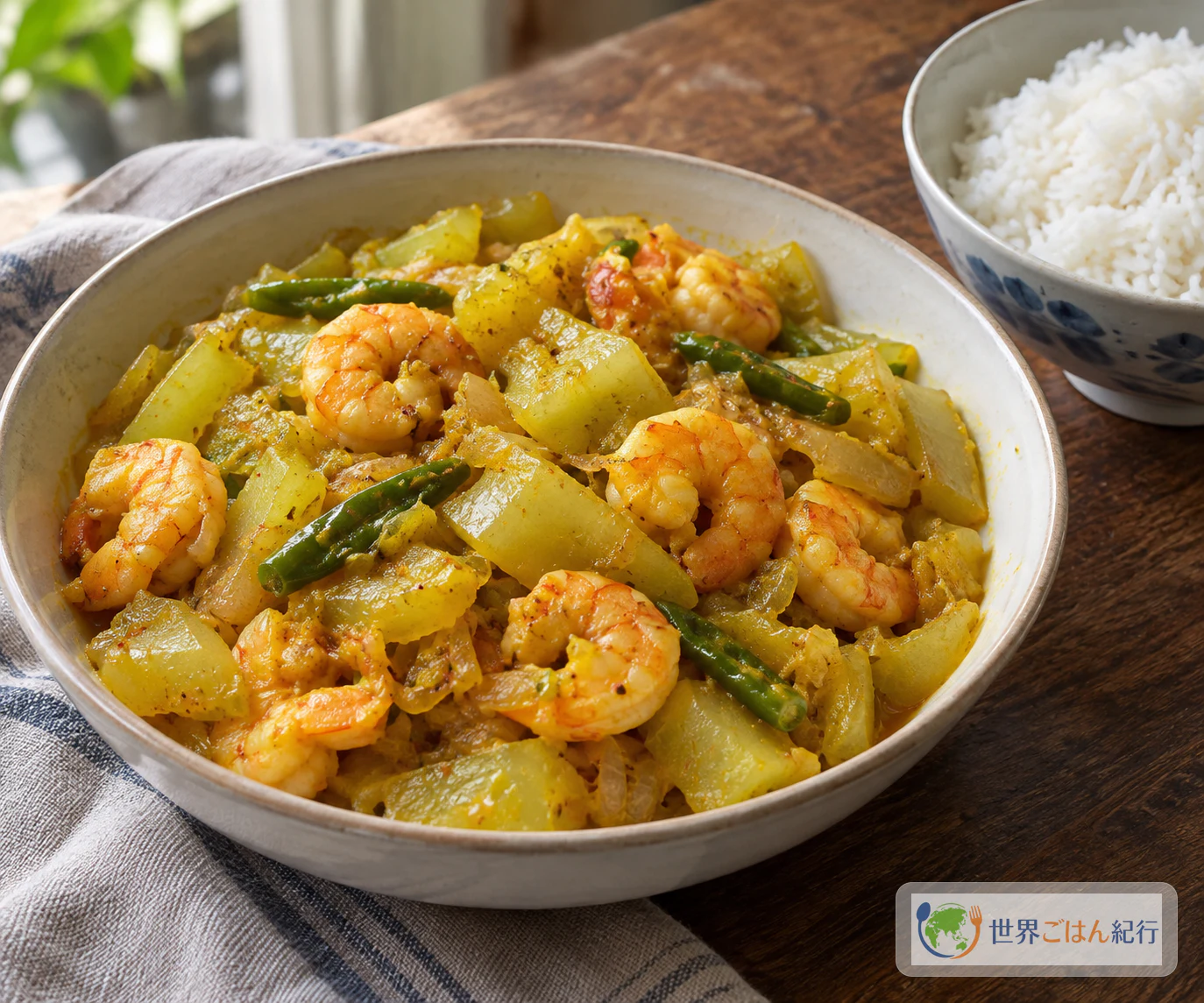
A plate of hot white rice, a spoonful of pale, tender gourd glossy with mustard oil, and pink shrimp tucked through it. That is lau chingri, which TV9 Bangla frames as a Bengali pairing of soft gourd and shrimp, eaten with hot rice at lunch. The Bengali food writer behind BongCook describes it as a home dish passed down through the generations of a family.
The name puts the two ingredients side by side. Lau (লাউ) is bottle gourd and chingri (চিংড়ি) is shrimp. In Japan the same plant is known as yūgao.
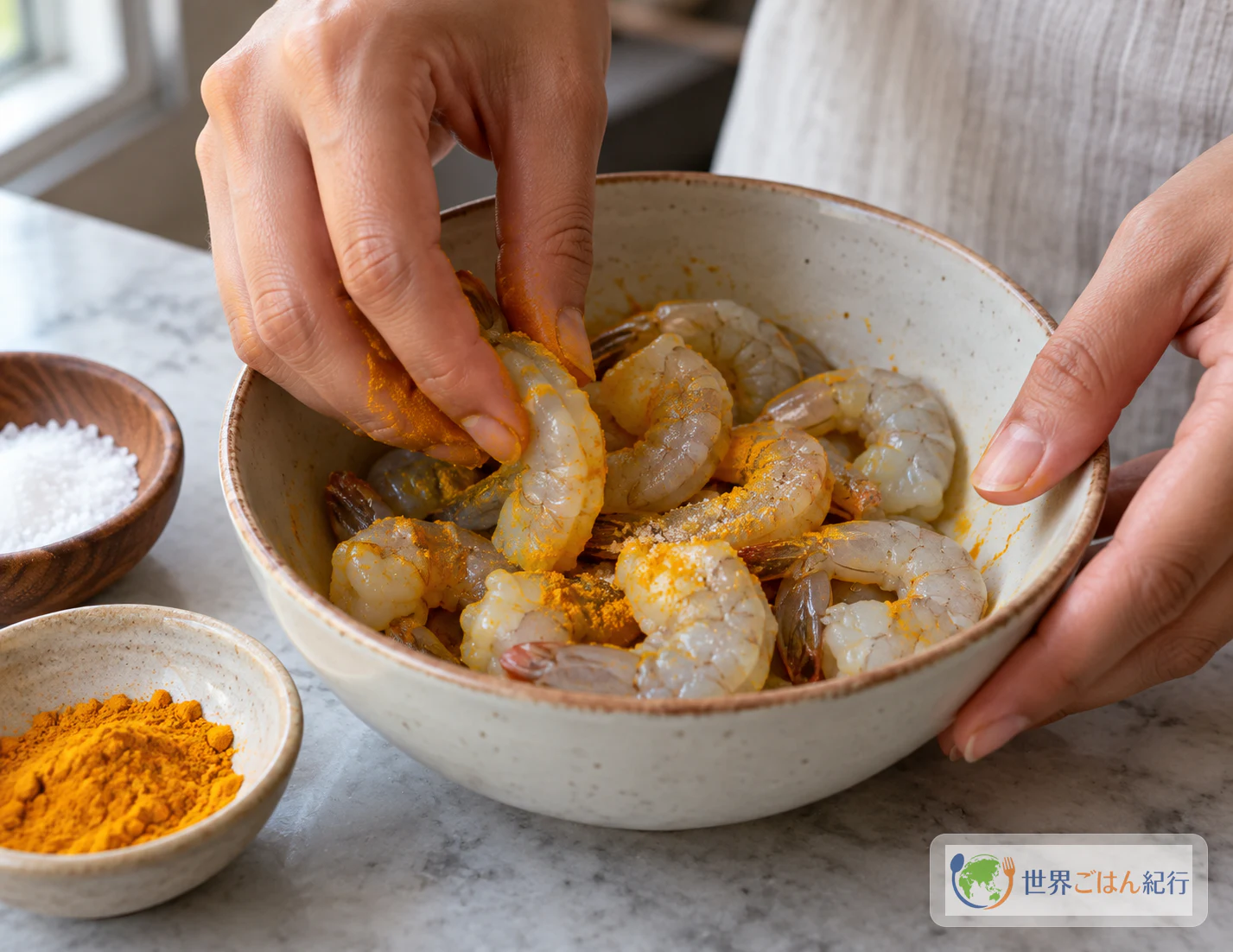
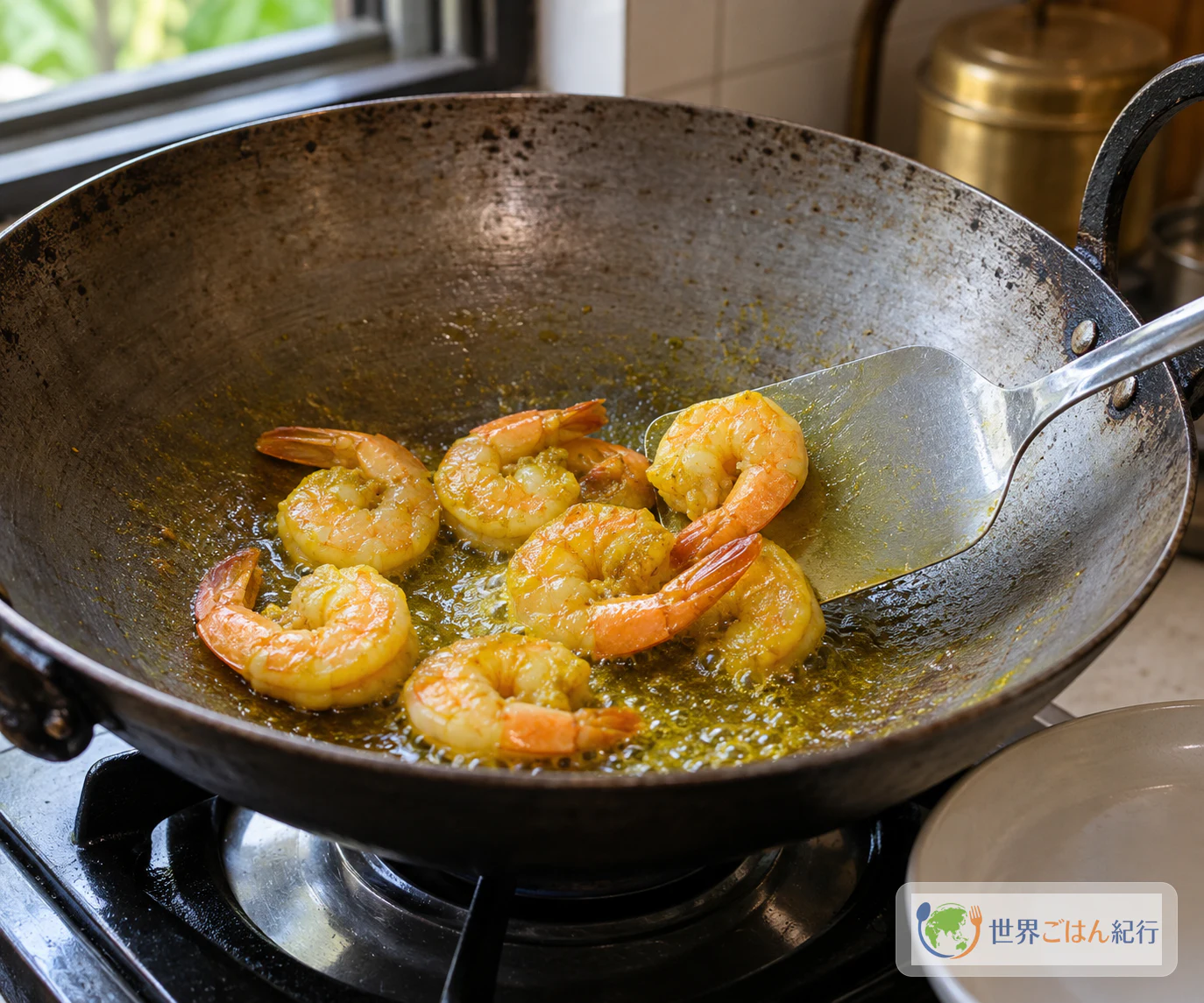
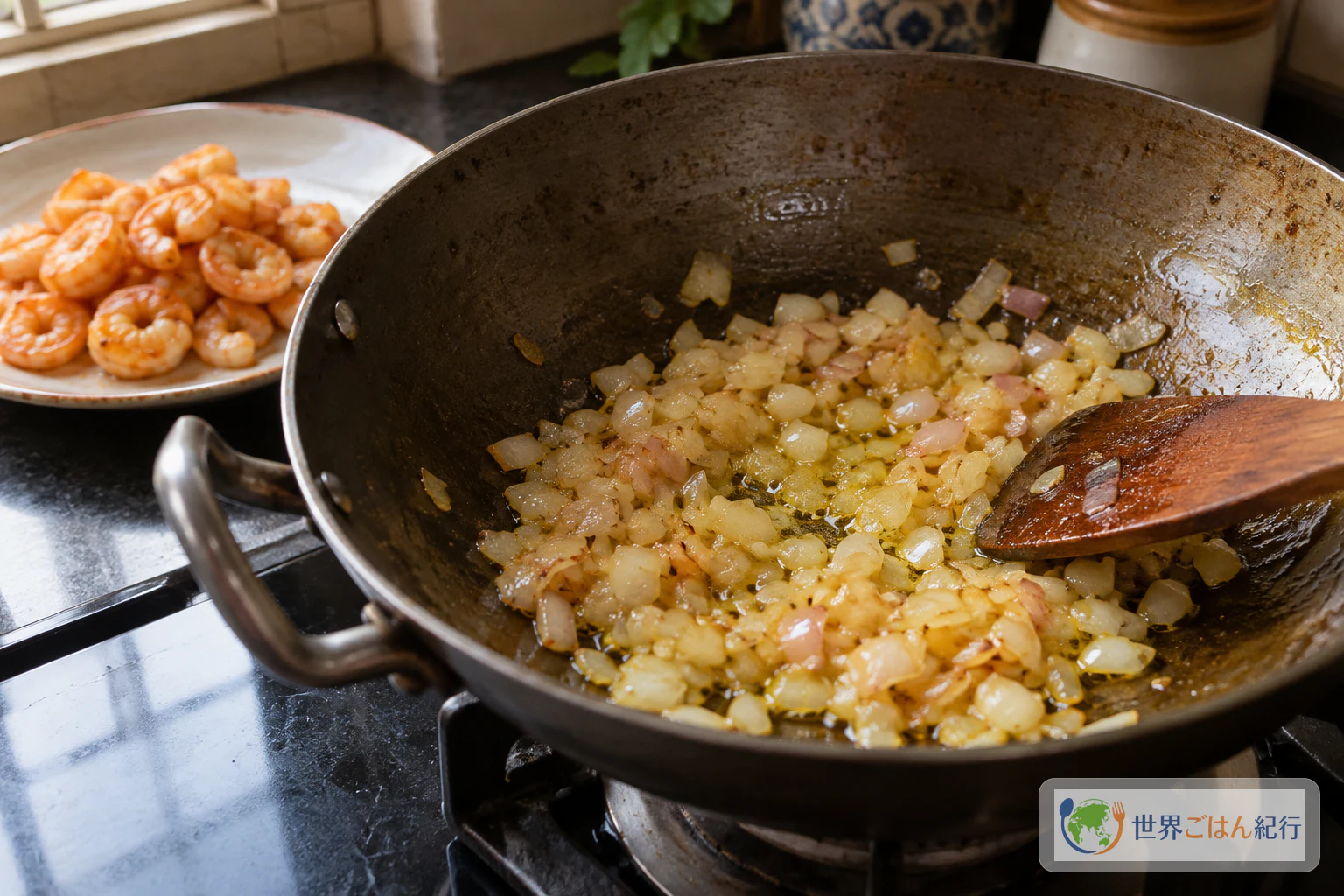
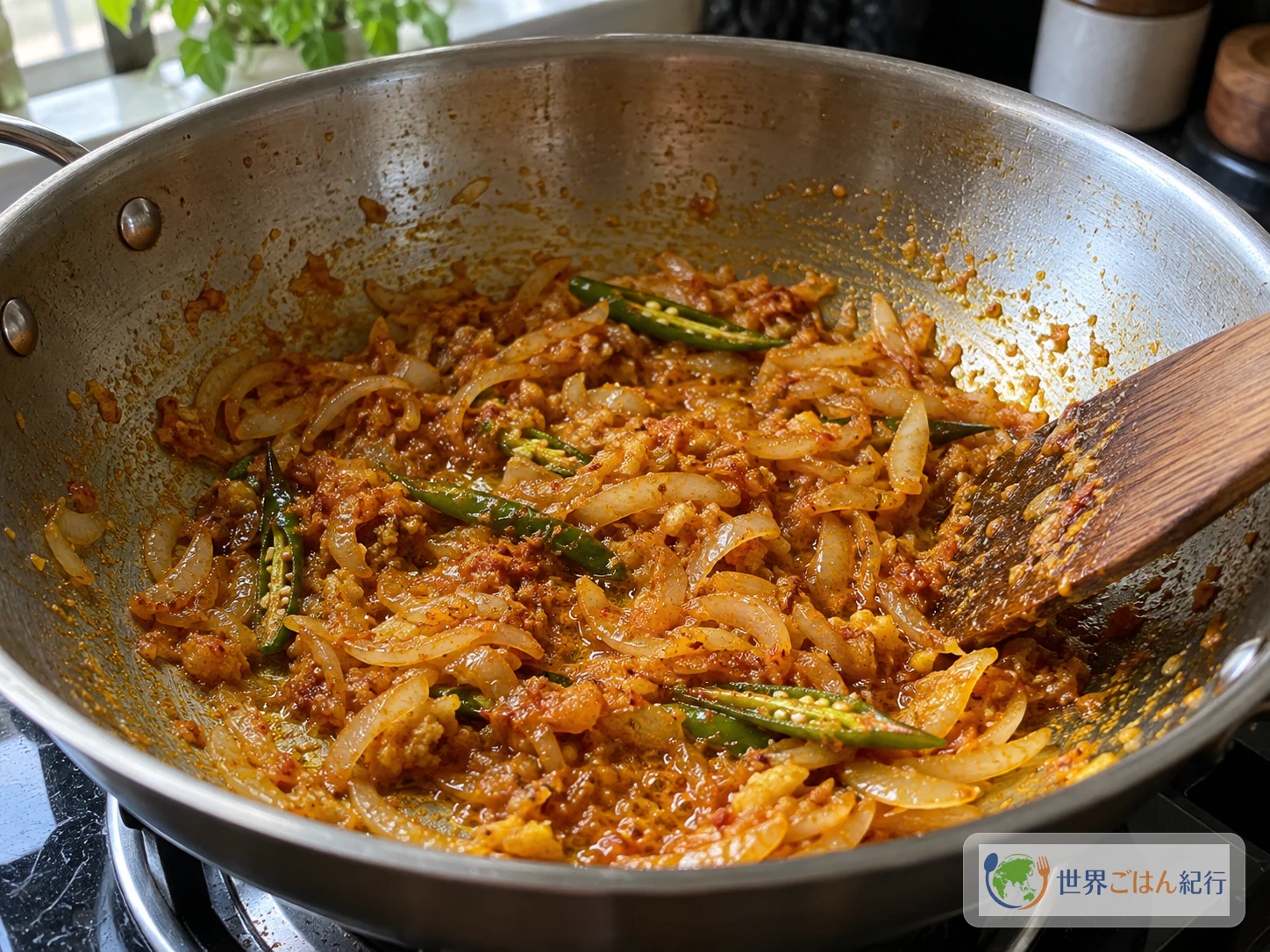
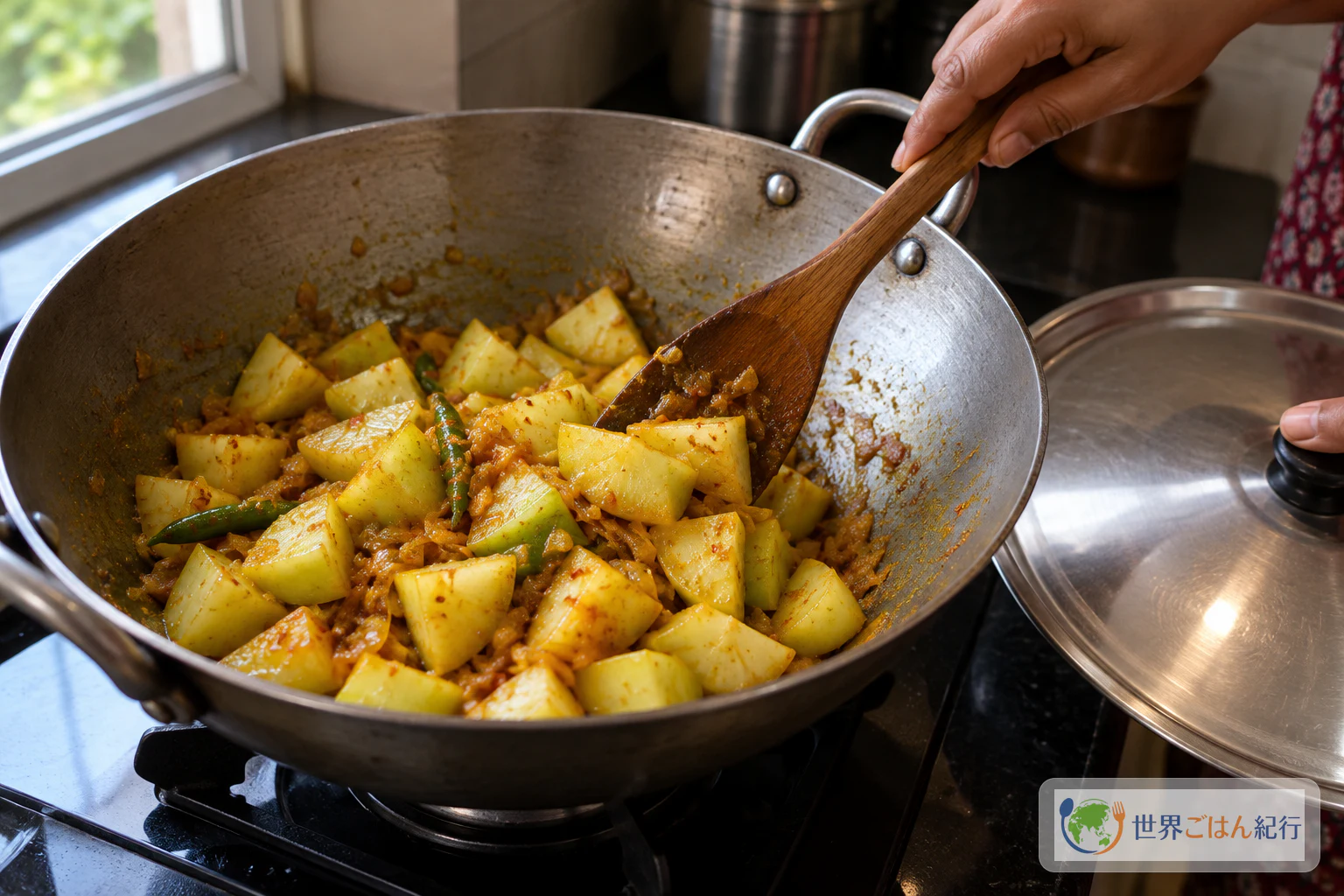
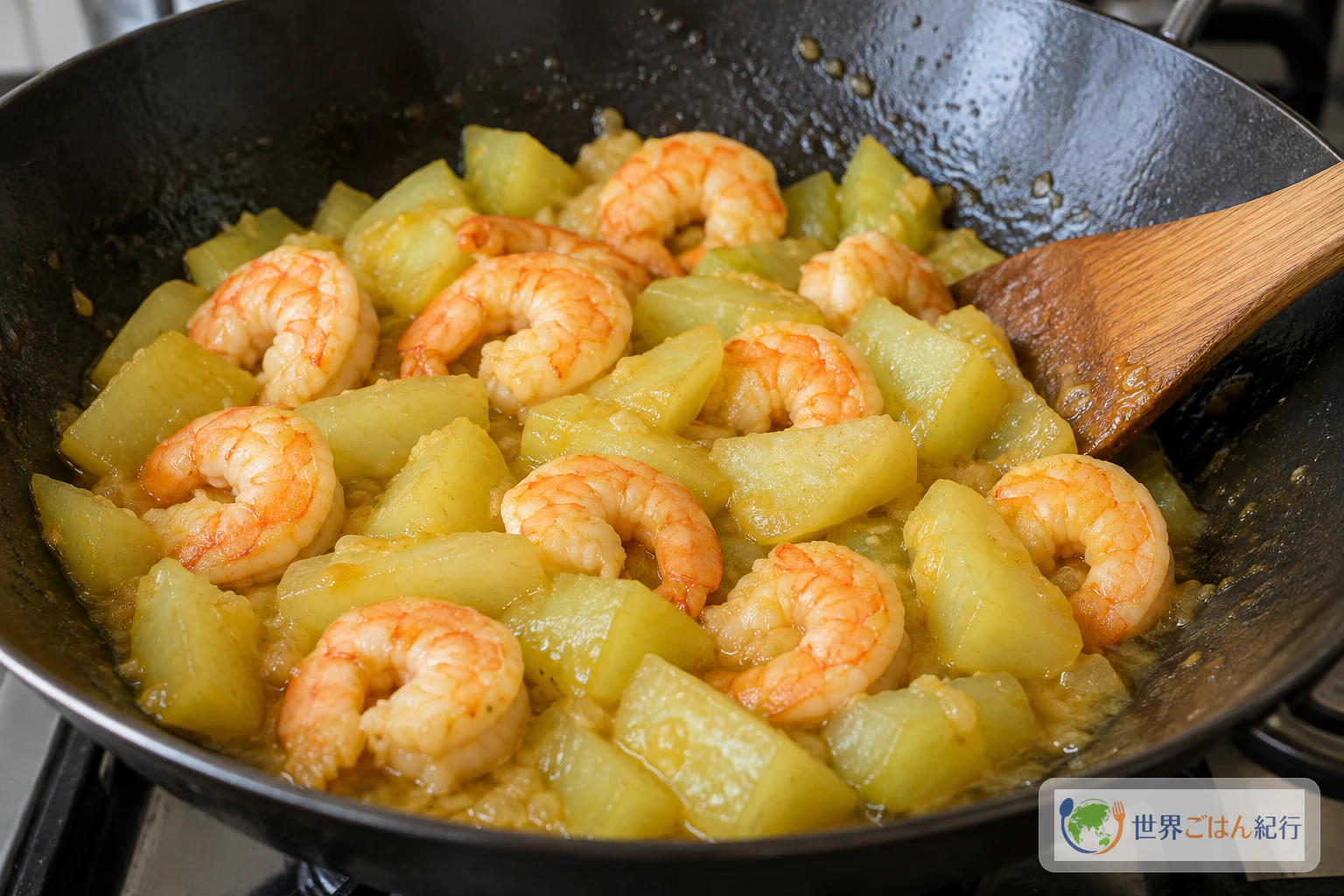
The key to this dish is not a long spice list. It is the order of the pan. The shrimp are seasoned and seared first, then lifted out. The onion and spices go into the same oil. The peeled gourd cooks covered in its own liquid, with no water added. The shrimp only go back in once the gourd is soft. If you keep that order, the gourd cooks in its own juices and the shrimp are not overcooked.
This recipe follows the TV9 Bangla version of lau chingri. It has not been kitchen-tested for this article. The published recipe gives no gourd weight, cooking times, heat levels, salt amount or number of servings, so none are added here. Judge each stage by how the pan looks.
What Lau Chingri Is, and Why This Version
Lau chingri is a Bengali home dish, and the same name turns up on both sides of the border. Here it is presented under India. A Bangladeshi magazine, Anannya, also publishes a household lau chingri. Because one name covers several household recipes, this article follows a single recipe from start to finish rather than blending them.
The version used here is TV9 Bangla's. It uses onion, ginger-garlic paste, green chilies, turmeric, red chili powder and mustard oil. Other published versions differ in ways that change the dish, not just the seasoning level:
| Version | Seasoning and fat | Order in the pan |
|---|---|---|
| TV9 Bangla (the recipe below) | Onion, ginger-garlic paste, green chilies, turmeric, red chili powder, mustard oil | Shrimp seasoned with salt and turmeric, seared and removed. Onion browned, spices added, gourd cooked covered in its own liquid. Shrimp returned once the gourd is soft, finished with a little mustard oil |
| BongCook (Bengali home recipe, 2011) | Whole cumin seeds, green chilies, coriander powder, cumin powder, turmeric, coriander leaves | Gourd covered and cooked without added water until its liquid dries off |
| Anannya (Bangladesh) | Small shrimp, chopped onion, onion paste, garlic paste, green chilies, coriander leaves, soybean oil | Shrimp cooked with the onion and seasonings first, then the gourd added and cooked covered over medium heat for 10–15 minutes |
All three let the gourd's own moisture do the cooking. If you have eaten a lau chingri flavored with cumin and coriander leaves, it was probably a version closer to BongCook's. That is a different household style, not something to add to this one. The sources here say nothing about the dish's origins, its age, or any link to festivals, religion or seasons, so this article makes no claims about them.
The name can also be confused with chingri malai curry. That dish simmers shrimp in coconut milk, and the gourd plays no part. They are separate dishes that happen to share the word for shrimp.
For more dishes from across the country, see India.
Ingredients for Lau Chingri
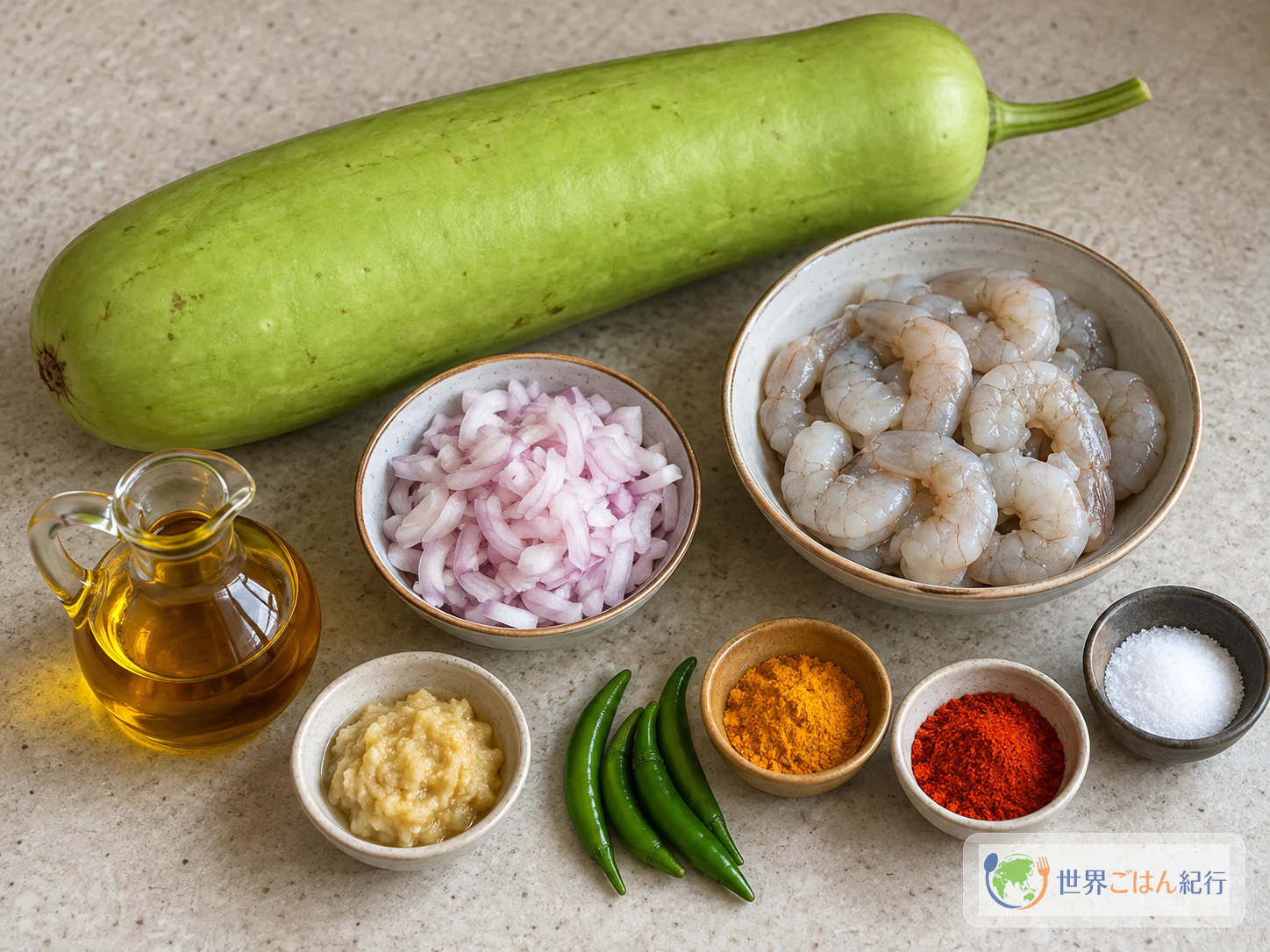
These are the only ingredients. There is no water in the list: the gourd supplies the liquid.
Equipment
- A wok or deep pan with a lid
- A peeler or knife for the gourd
- A small bowl for seasoning the shrimp
- A cutting board and plate kept for raw shrimp
- A separate clean plate for the seared shrimp
- A spatula
Choosing the Gourd, the Oil and the Shrimp
Bottle gourd. Look for a bottle gourd sold as a vegetable for cooking. You will find it at South Asian or other import grocers, and in Japan sometimes as yūgao. Its flesh is white. Do not use a ridged luffa or a winter melon in its place without expecting a different dish. Above all, never use an ornamental or craft gourd. Food-poisoning cases have been linked to eating ornamental gourds and to bitter compounds in gourds, so use varieties selected for eating. Gourds vary a great deal in size, and no weight is given. Treat "one gourd" as one ordinary cooking gourd and season by taste rather than by calculation.
Mustard oil. Mustard oil gives the dish its sharp, mustardy aroma. Look for it at South Asian grocers or online, and check that the bottle is labeled for food or cooking use. If you cannot find it, a neutral vegetable oil will cook the dish, but the mustard aroma will be gone. It is a workable stand-in, not the same flavor.
Shrimp. Use medium shrimp, cleaned. Frozen shrimp are fine if you thaw them in the refrigerator.
Ginger-garlic paste. If you buy it ready-made, read the ingredient label.
Method: Sear, Set Aside, Soften, Return
The shrimp are cooked twice: briefly at the start, and again at the end until done. Between those two moments they wait on a clean plate while the gourd softens.
Fixing Problems in the Pan
The recipe gives no times or heat levels, so the suggestions below are ordinary home-kitchen judgment rather than part of the recipe.
| Problem | Likely cause | What to do |
|---|---|---|
| The bottom catches before the gourd releases any juice | Heat too high early on, or the lid off | Keep the lid on. Start over moderate heat (medium is a reasonable starting point) and stir now and then. If it is about to scorch, a small splash of water will rescue it. This is a fix, not an ingredient |
| The dish is thin and watery | Water added on top of the gourd's own juice | Let the gourd's own moisture do the cooking first. Pans and stoves vary, so if liquid is left, cook a little longer uncovered |
| Shrimp are tough or shrunken | They cooked alongside the gourd the whole time | Follow the order: sear briefly, set aside, and return only once the gourd is soft |
| Unsure whether the shrimp are done | Judging by the clock | No cooking time is given. Look at the shrimp: firm, pearly and opaque all through |
| The flavor drifts toward a different dish | Spices from another household version added | Cumin, coriander leaves and similar belong to other versions. Leave them out here |
Ways to Adjust It
- Milder heat. Use fewer green chilies. The dish will be gentler, but you lose some of their fresh aroma too.
- No mustard oil. A neutral vegetable oil works for cooking, but the sharp mustard aroma that marks this version will be missing.
- A very large gourd. No gourd weight is given, so there is no basis for scaling salt or oil by weight. Season by taste. Watch how the pan looks rather than relying on numbers.
- Cut size. The gourd is simply cut small; no size is given. Smaller pieces may soften sooner, but that is reasoning, not tested fact. Judge by the texture.
- Another household's lau chingri. If you want the cumin-and-coriander style or the Bangladeshi onion-paste style, cook it as its own recipe (see the comparison above) rather than mixing it into this one.
Serving: With Hot White Rice
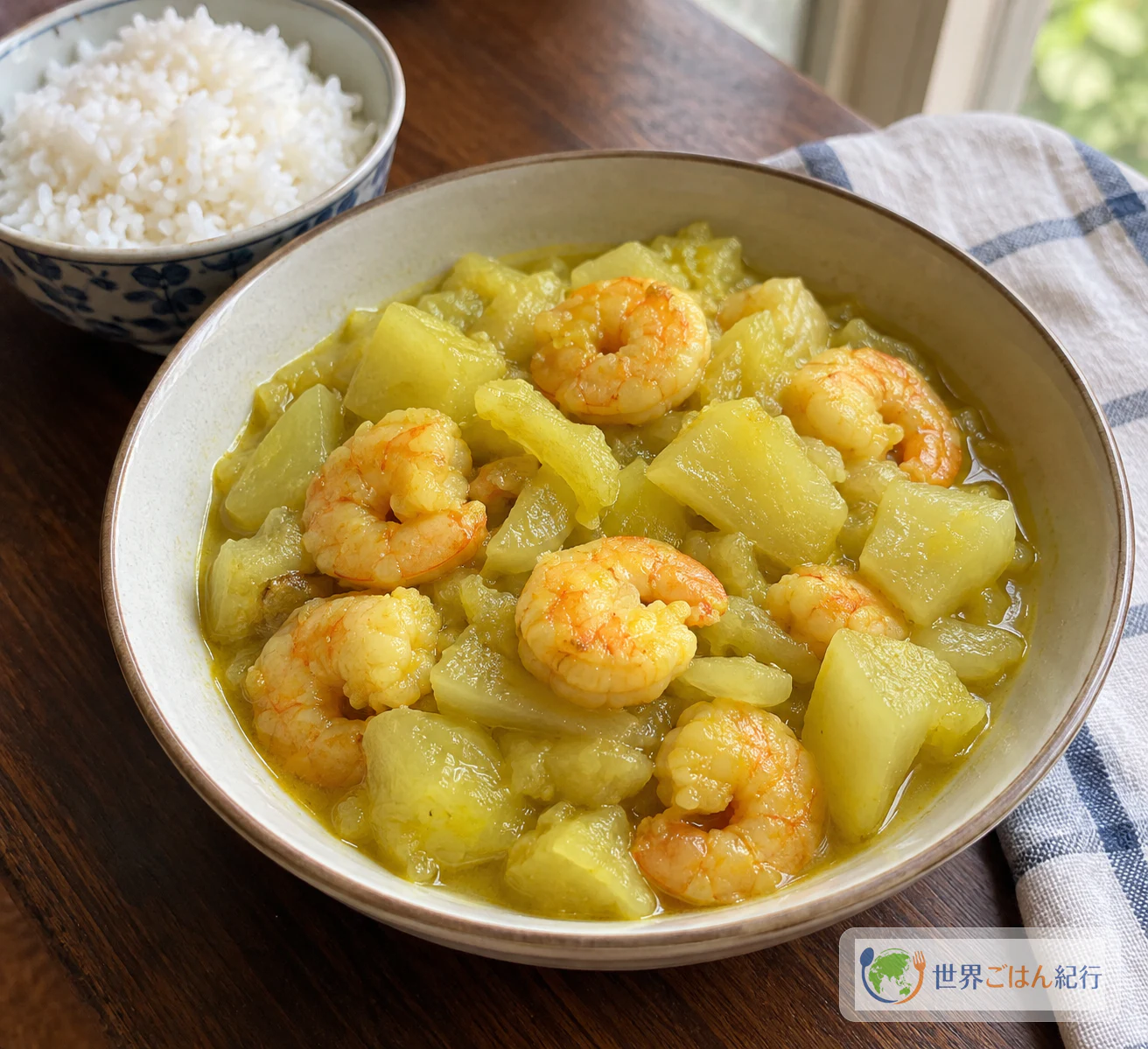
TV9 Bangla and BongCook both pair lau chingri with white rice, and TV9 Bangla frames it as a lunch dish. Serve the gourd and shrimp beside a portion of plain hot rice. The rice is a serving suggestion, not part of the recipe, so you can treat the dish as the main event or as one dish among others.
Food Safety and Allergies
This dish contains shrimp (crustacean shellfish). If you use store-bought ginger-garlic paste, check its ingredient label.
The U.S. Food and Drug Administration advises:
- Cook shrimp until the flesh is firm, pearly and opaque.
- Thaw frozen seafood in the refrigerator.
- Do not leave seafood at room temperature for more than two hours.
Keep the board and plate used for raw shrimp separate from the plate for the seared shrimp and the serving dish.
Leftovers. Do not leave seafood at room temperature for more than two hours. No storage period or reheating instruction is given here.
Frequently Asked Questions
What do "lau" and "chingri" mean?
Lau is bottle gourd and chingri is shrimp, so the name simply names the pairing. The sources here do not trace the words' history, so this article doesn't either.
Can I use winter melon instead of bottle gourd?
It has not been tested here. Winter melon differs in moisture and texture, so treat it as a different dish rather than an equivalent swap. Never use an ornamental or craft gourd.
Should I add water?
No. The gourd cooks covered in its own liquid, and BongCook's version likewise cooks the gourd without added water. Only add a small splash if the pan is about to scorch.
How long does it cook?
TV9 Bangla's recipe gives no times. Cook the gourd until it is soft. Cook the returned shrimp until they are pearly and opaque. The Bangladeshi Anannya version gives 10–15 minutes over medium heat for the gourd. That figure belongs to a different recipe with a different order, so use it only as a loose point of comparison.
How much mustard oil goes in at the end?
TV9 Bangla lists 3 tbsp of mustard oil and also finishes the dish with "a little" more. It does not say whether that finishing oil comes out of the 3 tbsp or is extra, and this article does not decide for it. A small drizzle is all that is meant.
How is the turmeric divided between the shrimp and the pan?
TV9 Bangla uses turmeric both to season the shrimp and with the onion, but does not say how the 1/2 tsp is split. Use a little on the shrimp and the rest in the pan, so you don't add the full amount twice.
Is it very spicy?
That depends on your chilies and your red chili powder, which is not specified by type. For a milder dish, use fewer green chilies.
Is this the same as chingri malai curry?
No. Chingri malai curry is a shrimp dish cooked in coconut milk. Lau chingri centers on bottle gourd cooked in its own juices and uses no coconut milk.
Sources
- TV9 Bangla, "Lau Chingri Recipe: গরম ভাতে খান লাউ-চিংড়ি, বাঙালির রসনা তৃপ্তির অমোঘ যুগলবন্দি, রইল রেসিপি." The recipe followed here: ingredients, amounts and order of cooking, the dish as a Bengali lunch with hot rice, and the soft-gourd-and-shrimp pairing. It does not give gourd weight, salt amount, times, yield or how the oil is divided. https://tv9bangla.com/lifestyle/lau-chingri-recipe-how-to-make-lau-chingri-1240017.html
- BongCook (Somtapa Brahmachari), "Lau-chingri," 2011. The dish described as a Bengali home dish shared across generations, hot white rice as a serving suggestion, and a different household version with cumin, coriander and coriander leaves cooked without added water. https://www.bongcook.com/2011/08/lau-chingri.html
- Anannya, "লাউ চিংড়ি." A same-named Bangladeshi household version with its own ingredients, order and cooking time, showing variation across the border. https://anannya.com.bd/article/30262
- U.S. Food and Drug Administration, "Selecting and Serving Fresh and Frozen Seafood Safely." Shrimp cooked until firm, pearly and opaque; thawing seafood safely and not leaving it at room temperature for more than two hours. Food-safety guidance only, not evidence for cooking times in this dish. https://www.fda.gov/food/buy-store-serve-safe-food/selecting-and-serving-fresh-and-frozen-seafood-safely
- Tohoku Seed Co., "ユウガオ" (Yūgao). Identifies yūgao as bottle gourd with white flesh, and distinguishes edible yūgao from ornamental and craft gourds. https://www.tohokuseed.co.jp/list_seed/vegetable/nagayugao.html
- Ministry of Health, Labour and Welfare (Japan), "自然毒のリスクプロファイル:高等植物:ユウガオ 概要版" (Natural toxin risk profile: bottle gourd, summary). Bottle gourd varieties selected for eating, and food poisoning linked to eating ornamental gourds and to bitter compounds. https://www.mhlw.go.jp/stf/seisakunitsuite/bunya/0000079843.html