Ari Pathiri: A Thin Round That Stays White on a Hot Griddle
Boil the water first, cook the roasted rice flour into a dough, knead it smooth, roll it very thin, and keep the color unchanged on the griddle.
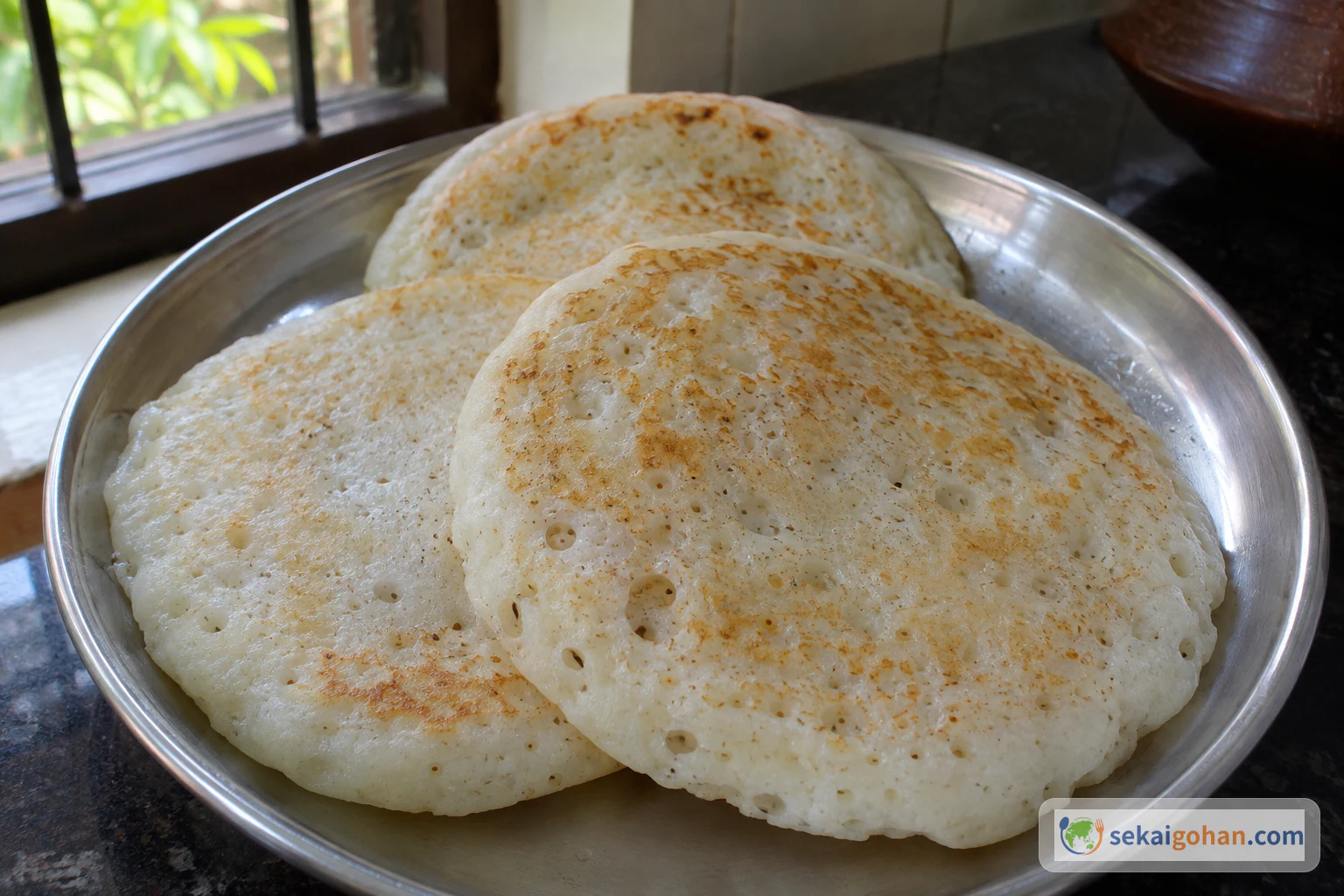
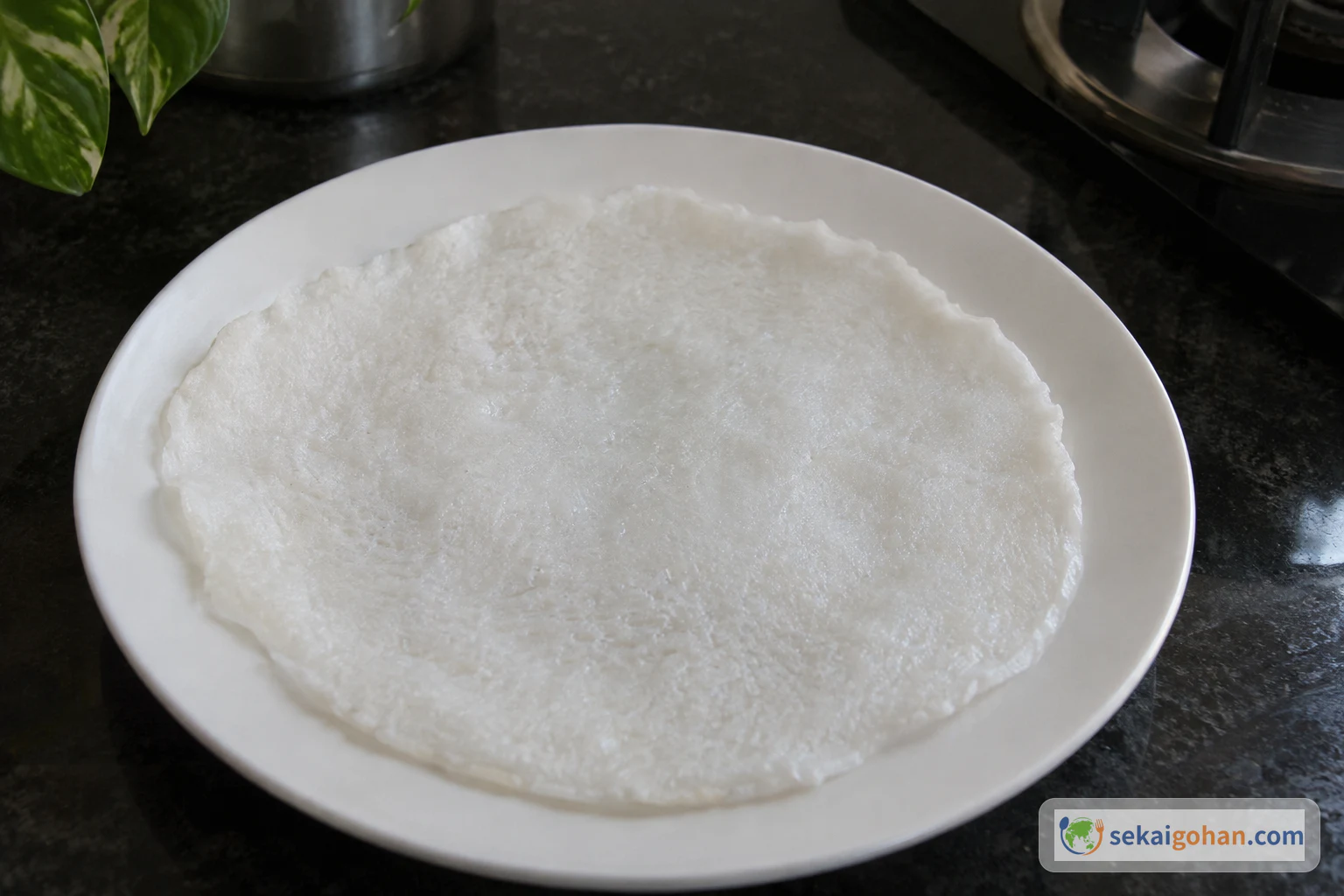
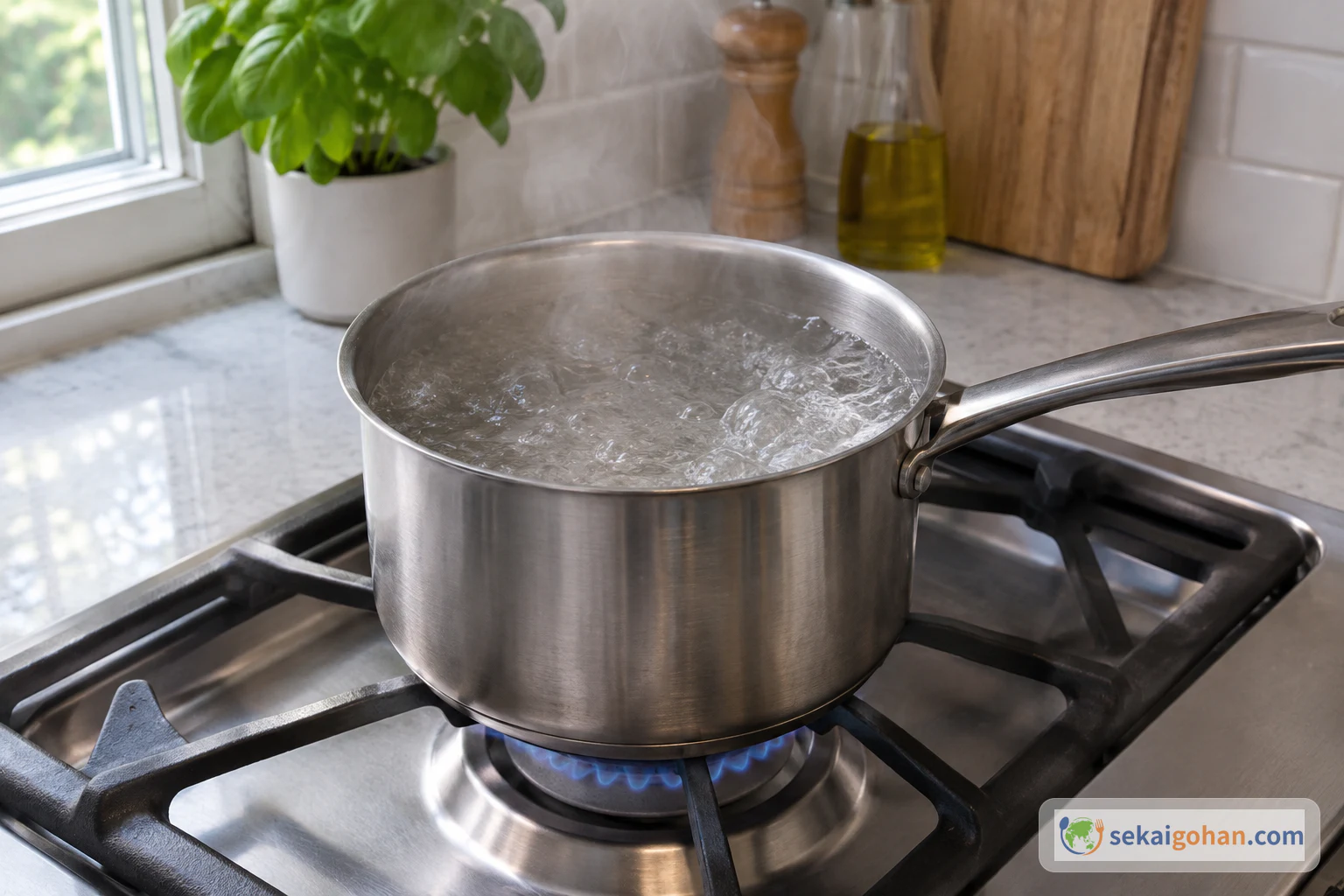
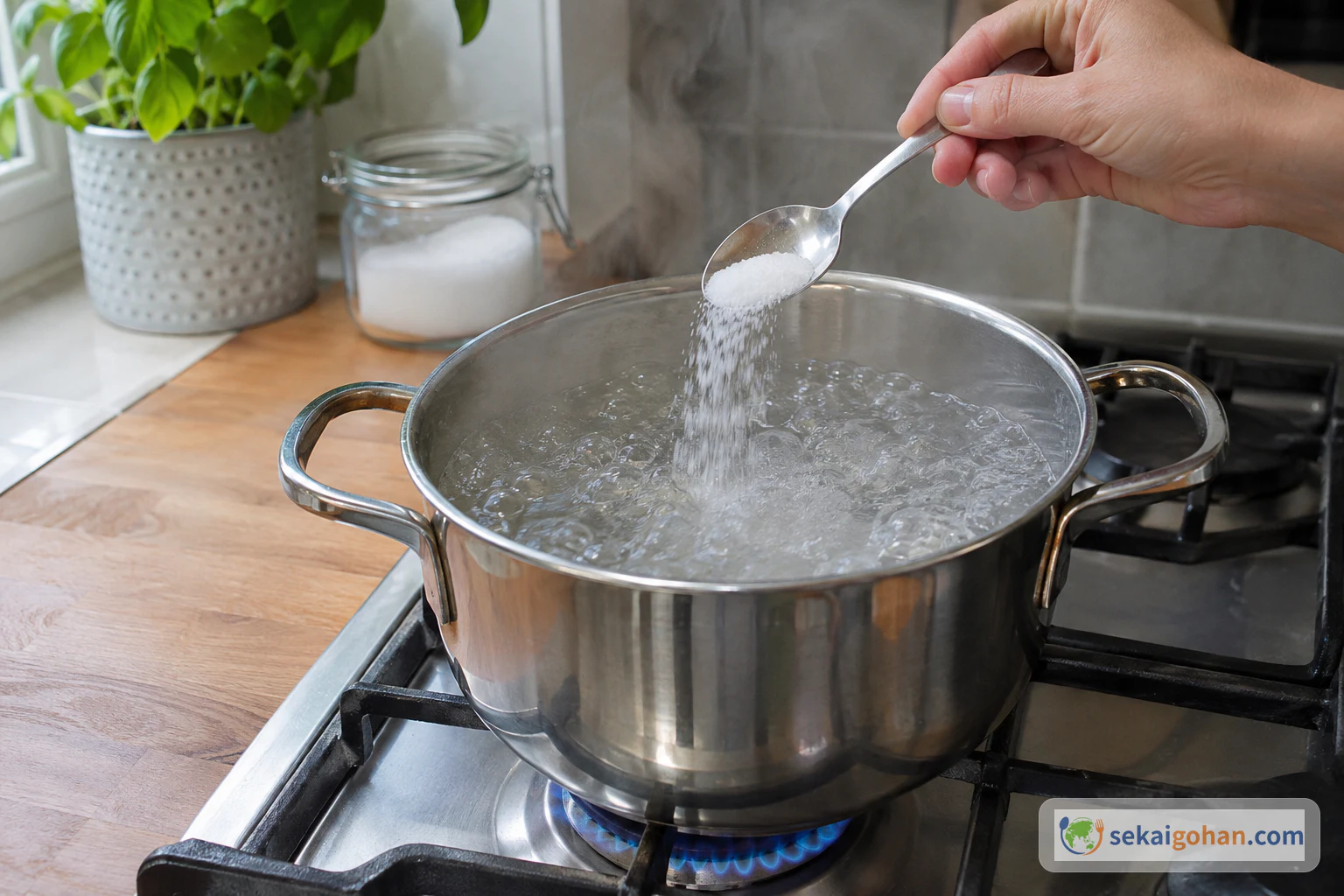
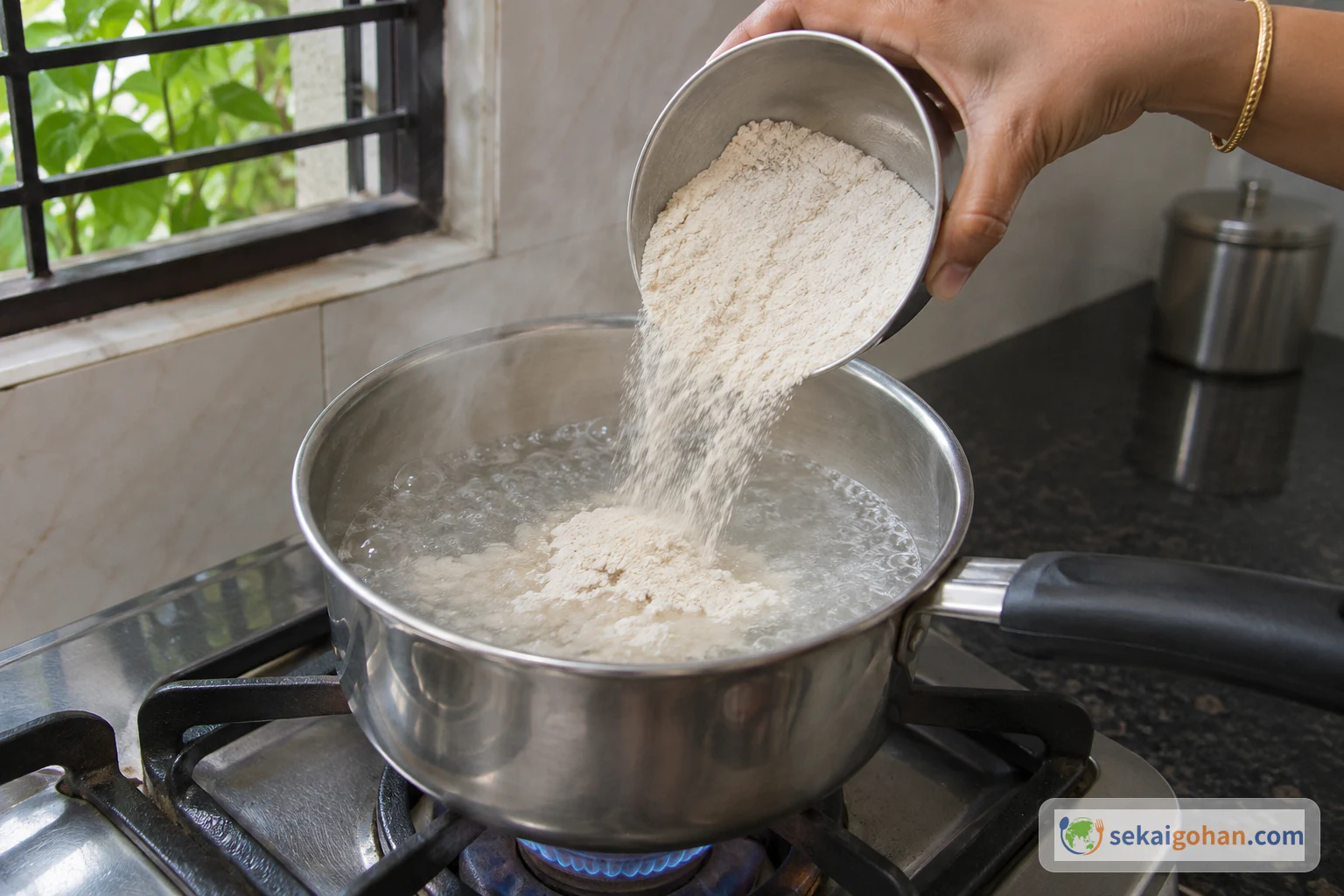
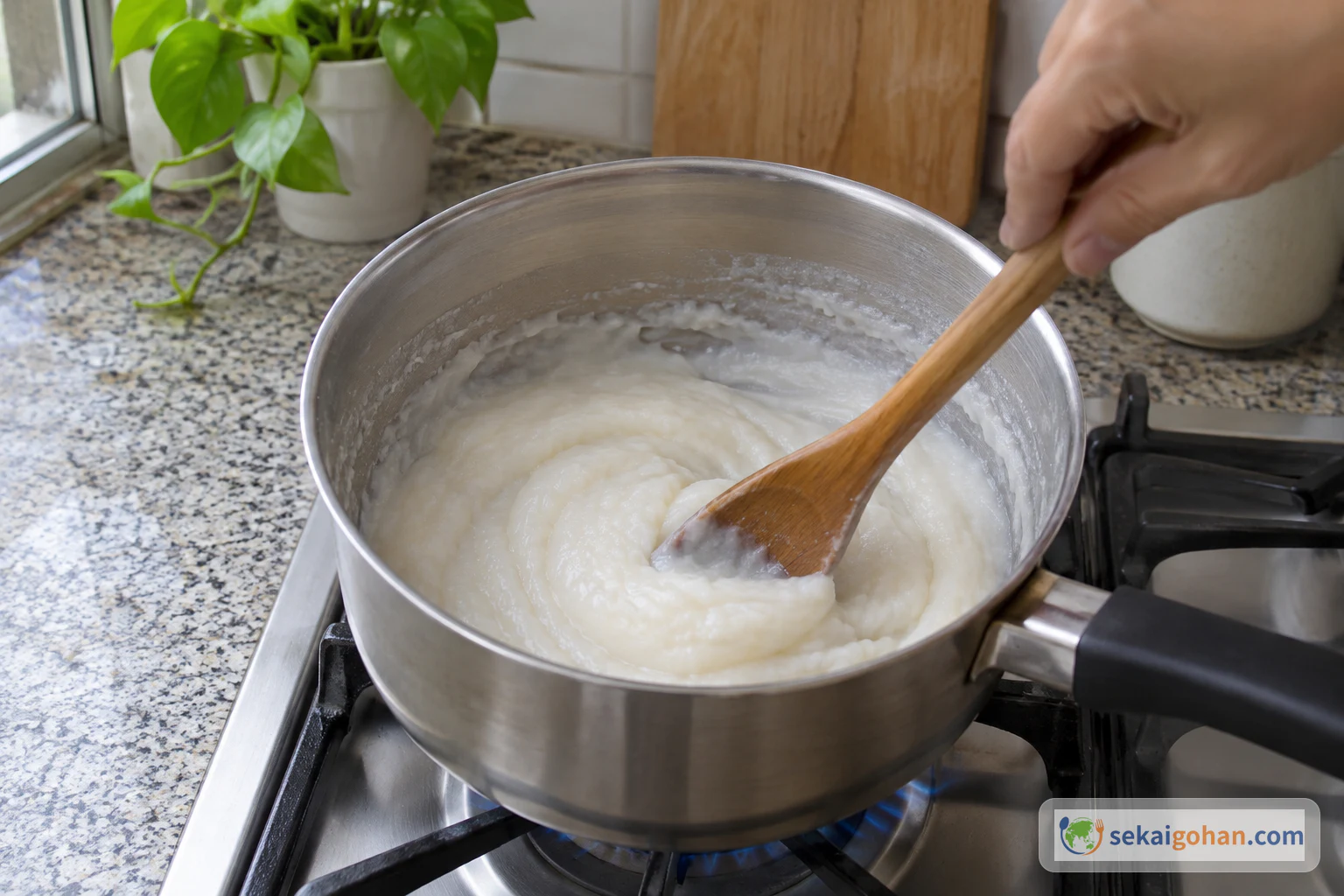
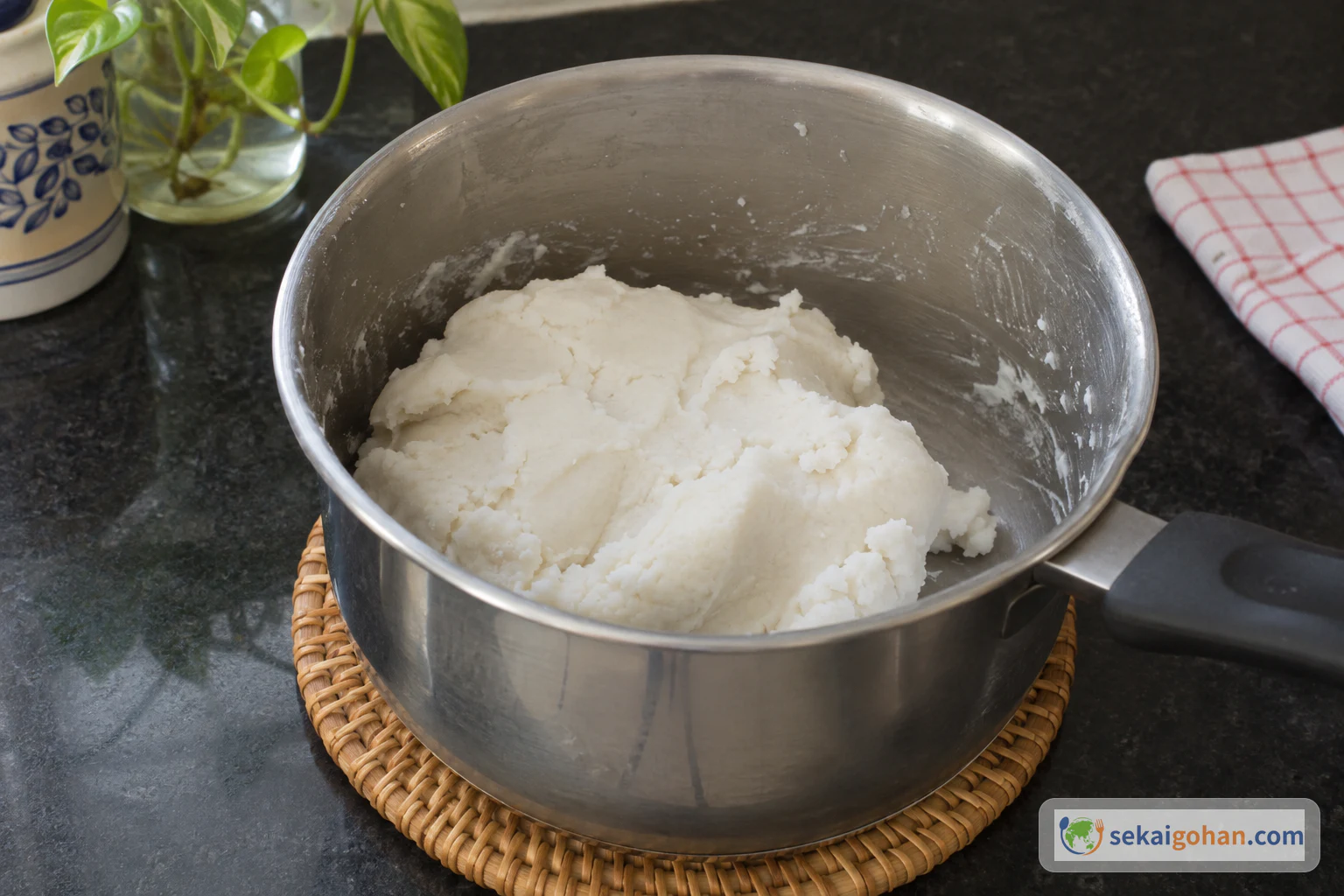
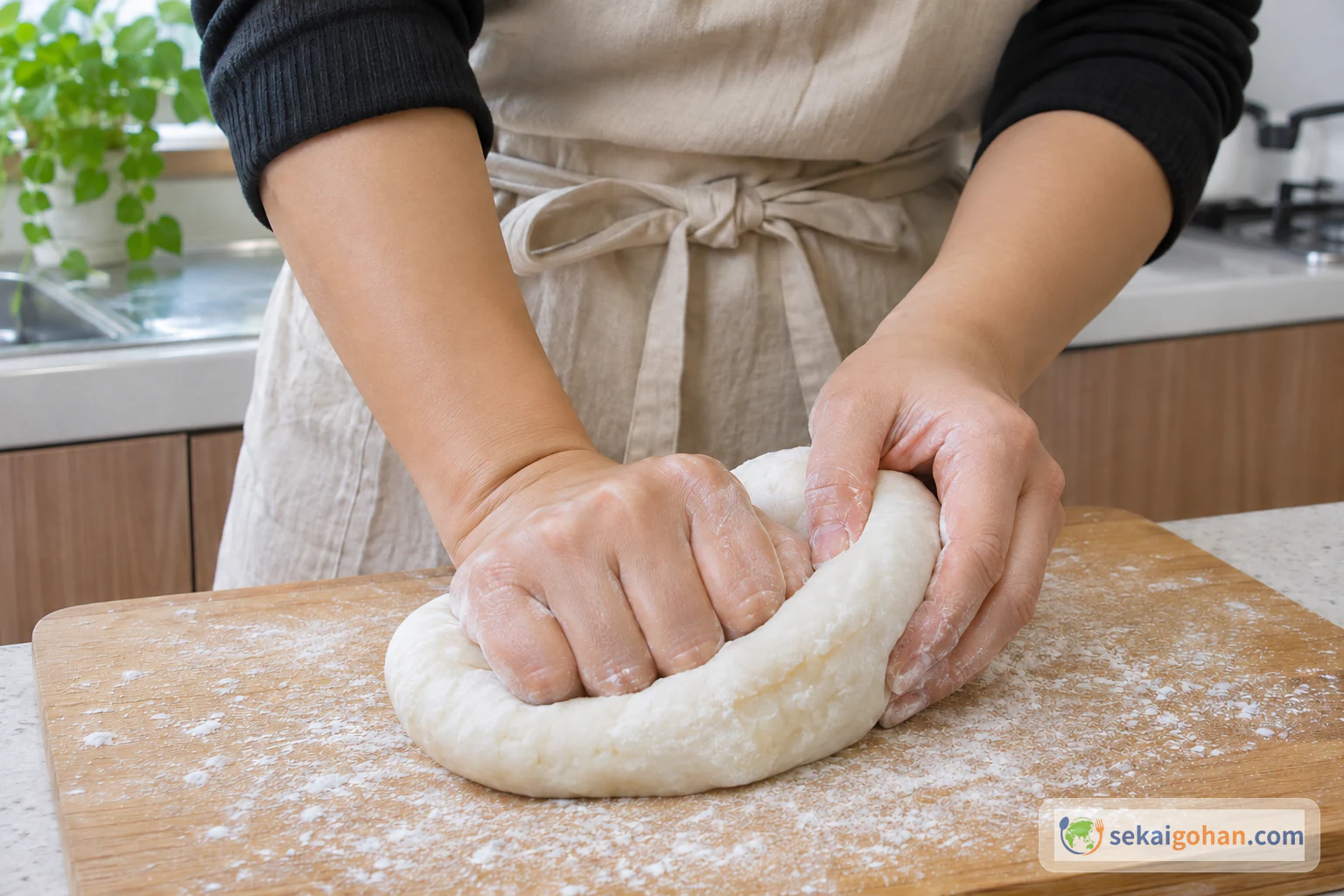
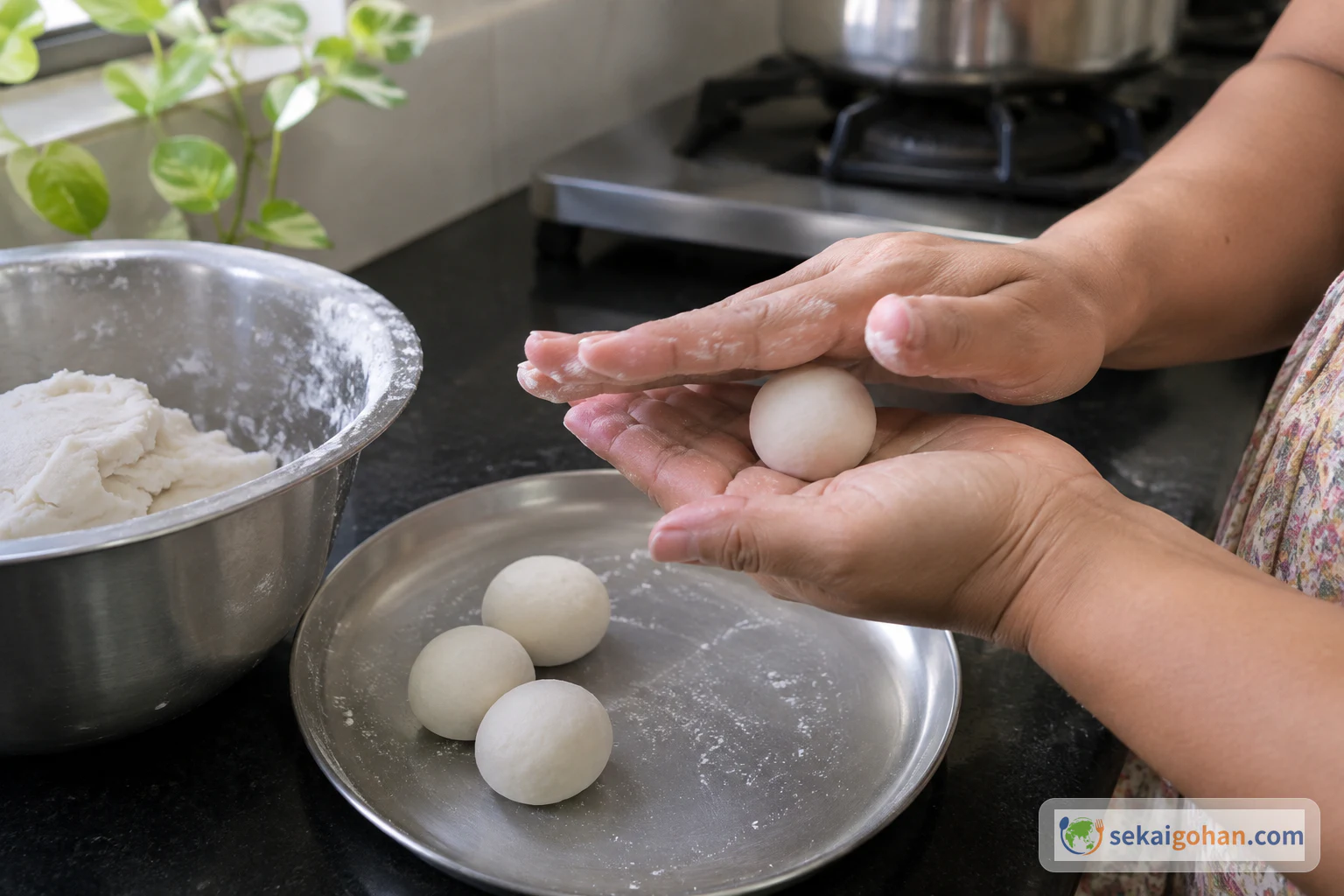
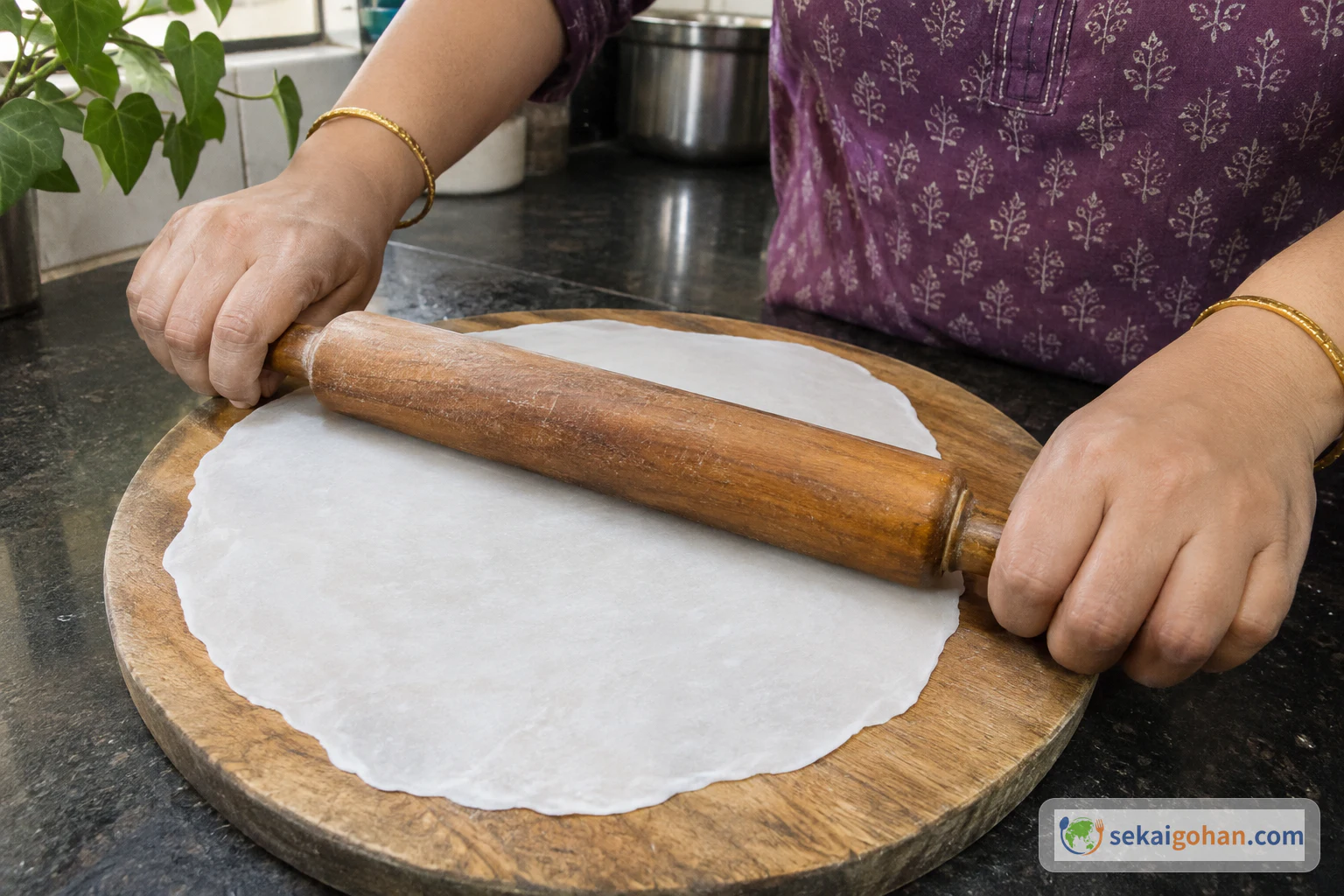
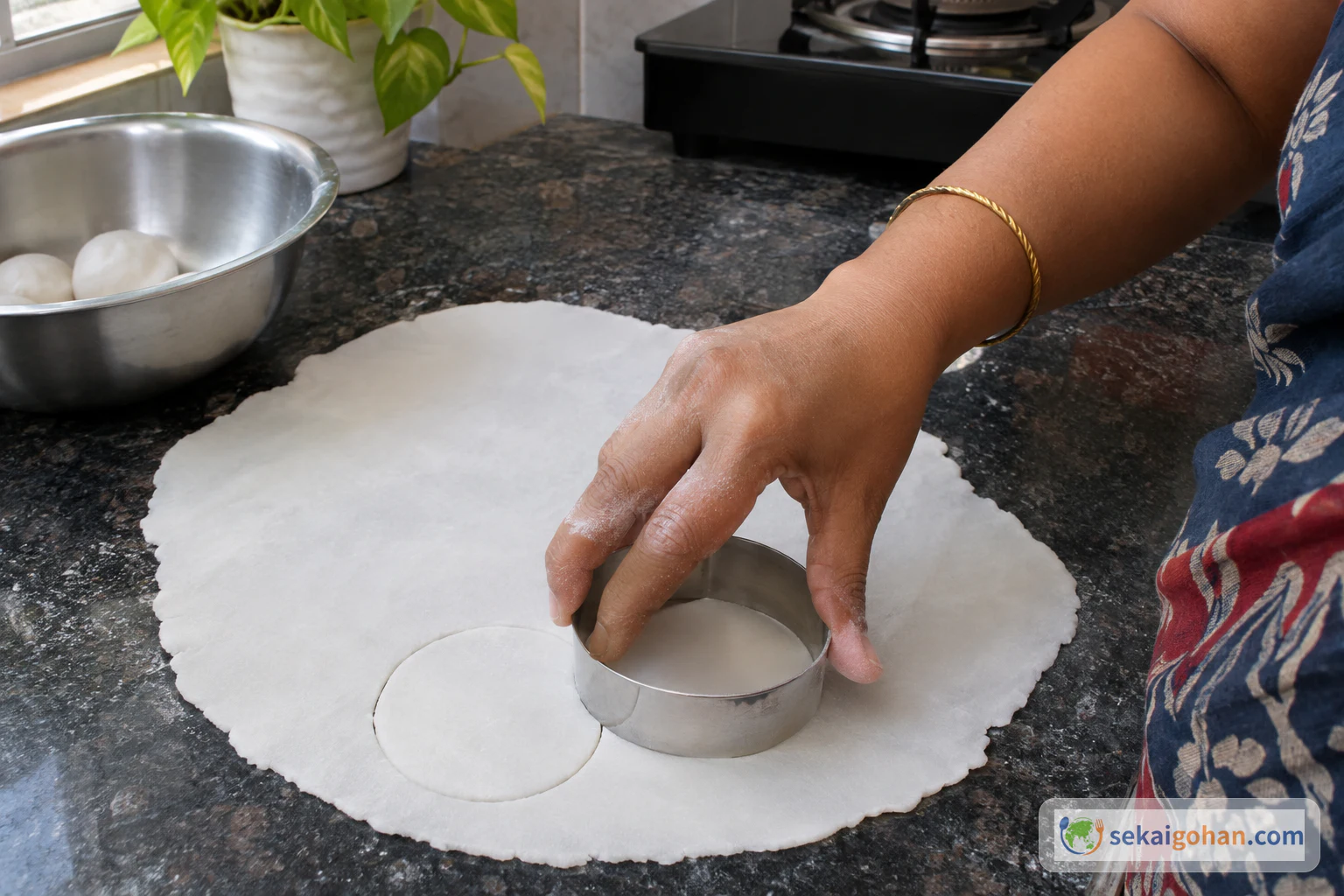
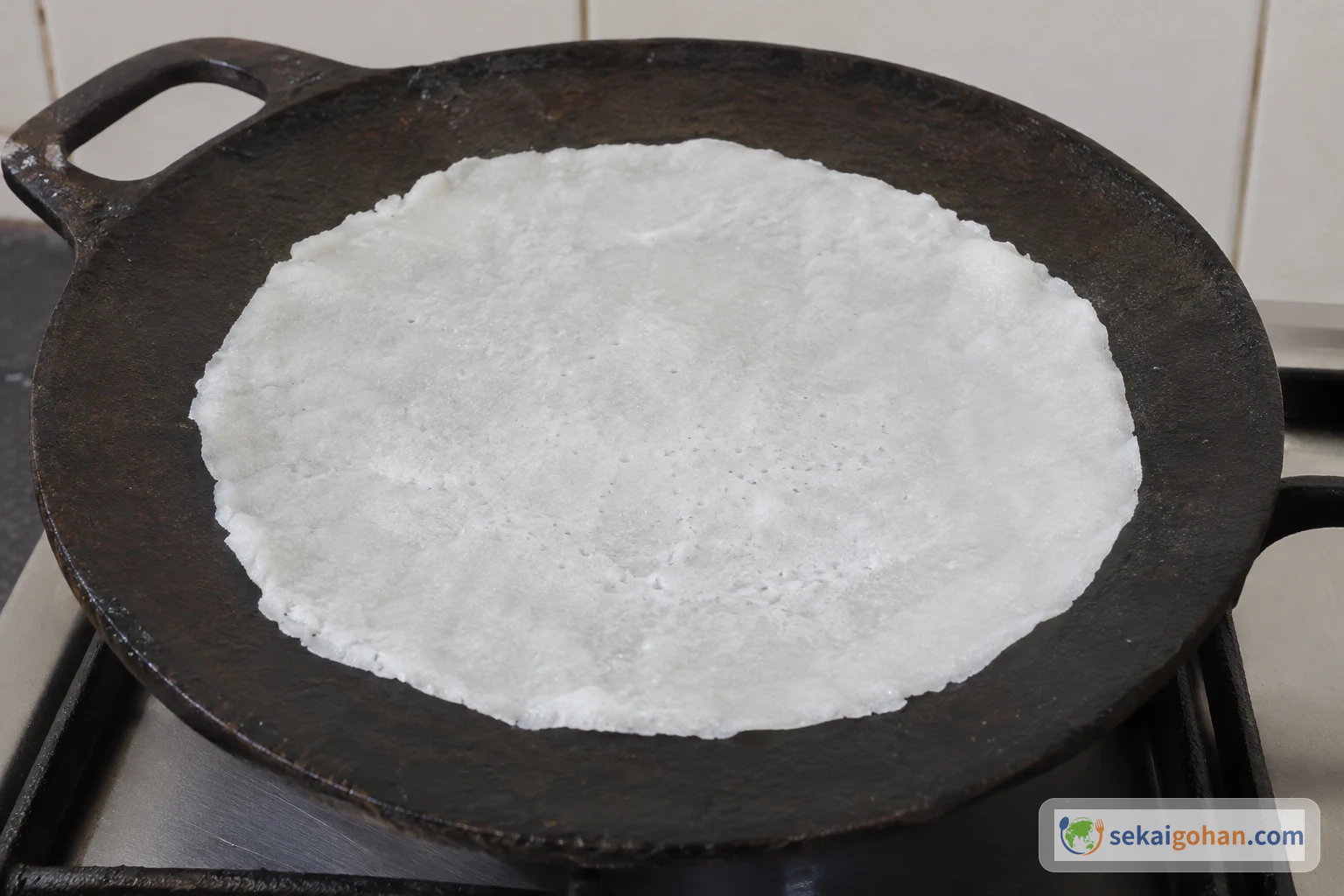
Water comes to a boil, salt goes in, then roasted rice flour. The mixture is stirred over low heat until it becomes a dough, then taken off the heat, cooled and kneaded smooth. Each small ball is rolled to about 1mm and cut into a 5-inch round. On a hot griddle, the round cooks without taking on color, and it is served hot.
This is the thin Ari Pathiri from Kerala Tourism's pathiri page. That page describes several ways of making pathiri, and this article follows only this one. Its other versions, Vachchu and Kunji, use different methods and are not blended in here.
Kerala Tourism does not give a yield, griddle temperature, cooking time or storage period for this recipe, so none are added here.
This recipe as a whole has not been kitchen-tested by Sekai Gohan.
Ingredients: Roasted Rice Flour, Water and Salt
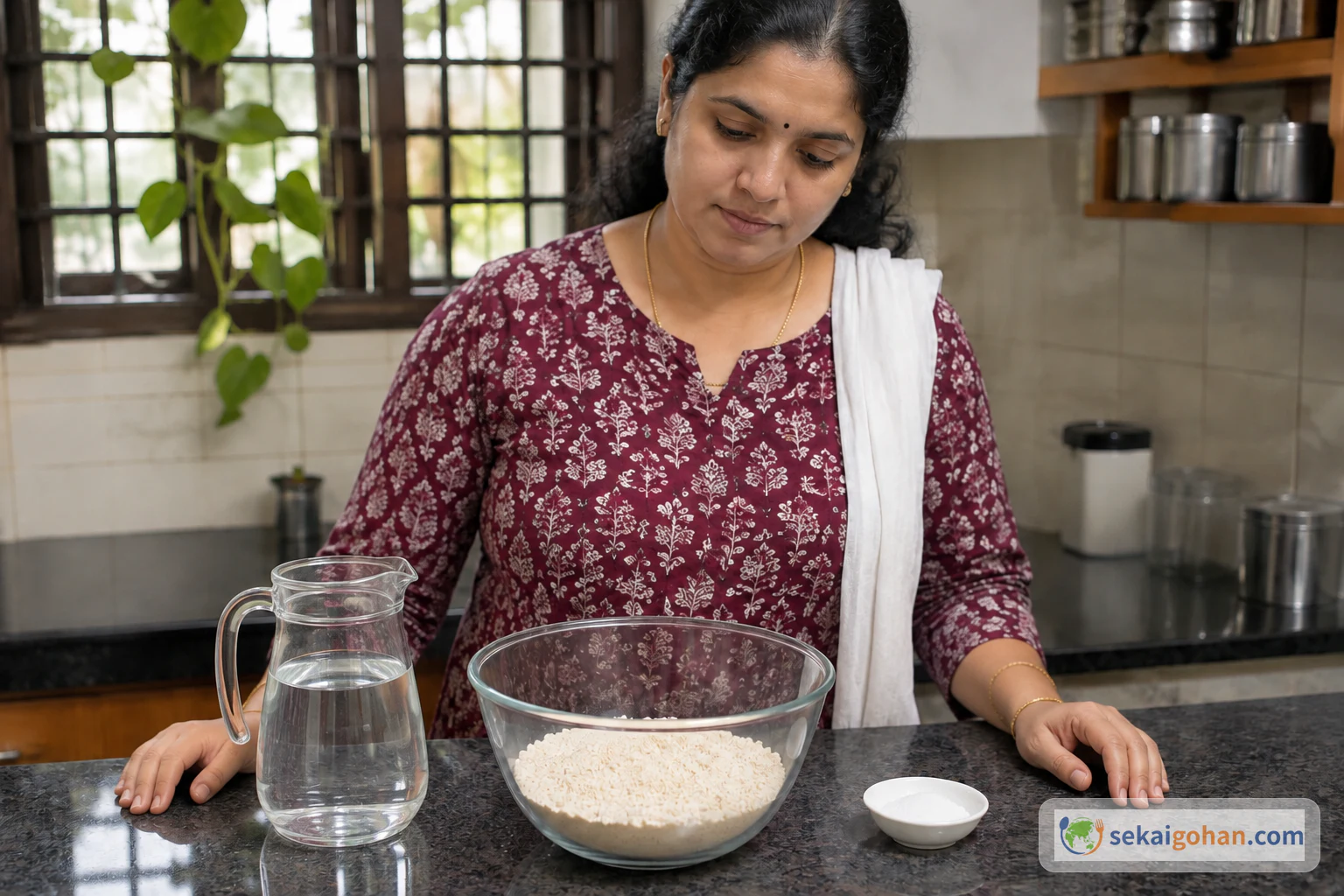
No oil, coconut, wheat flour or extra dusting flour goes into this dough.
Equipment
- Saucepan
- Sturdy spoon for stirring
- Kitchen scale for portioning the dough
- Clean board
- Rolling pin
- Round cutter, 5 inches in diameter
- Flat griddle
You don't need to buy special equipment for this recipe if your kitchen already has tools that do these jobs.
Choosing the Flour: Look for "Roasted"
Check that the package says the rice flour is roasted. Rice flours are not all the same, so don't assume that any bag labeled "rice flour" will match.
This recipe has no tested substitute. Unroasted rice flour would be a change to the recipe, and the method here doesn't cover it. The same goes for adding oil or coconut, or for borrowing the proportions of another pathiri recipe.
Three Numbers Not to Mix Up
The shaping stage uses three separate measurements, each describing something different.
| What it measures | Amount | When it applies |
|---|---|---|
| Weight of each dough ball | 30–35g | When dividing the kneaded dough |
| Thickness of the rolled dough | about 1mm | When rolling each ball |
| Diameter of the cut round | 5 inches | When cutting the rolled dough |
Method: From Boiling Water to a White Round
Boiling water and freshly cooked dough can burn you. Let the dough cool until you can handle it before kneading with your hands.
The pictures show each action, but they can't confirm exact amounts, thickness, temperature or safety. Use the written measurements when you cook.
Serving: Hot from the Griddle
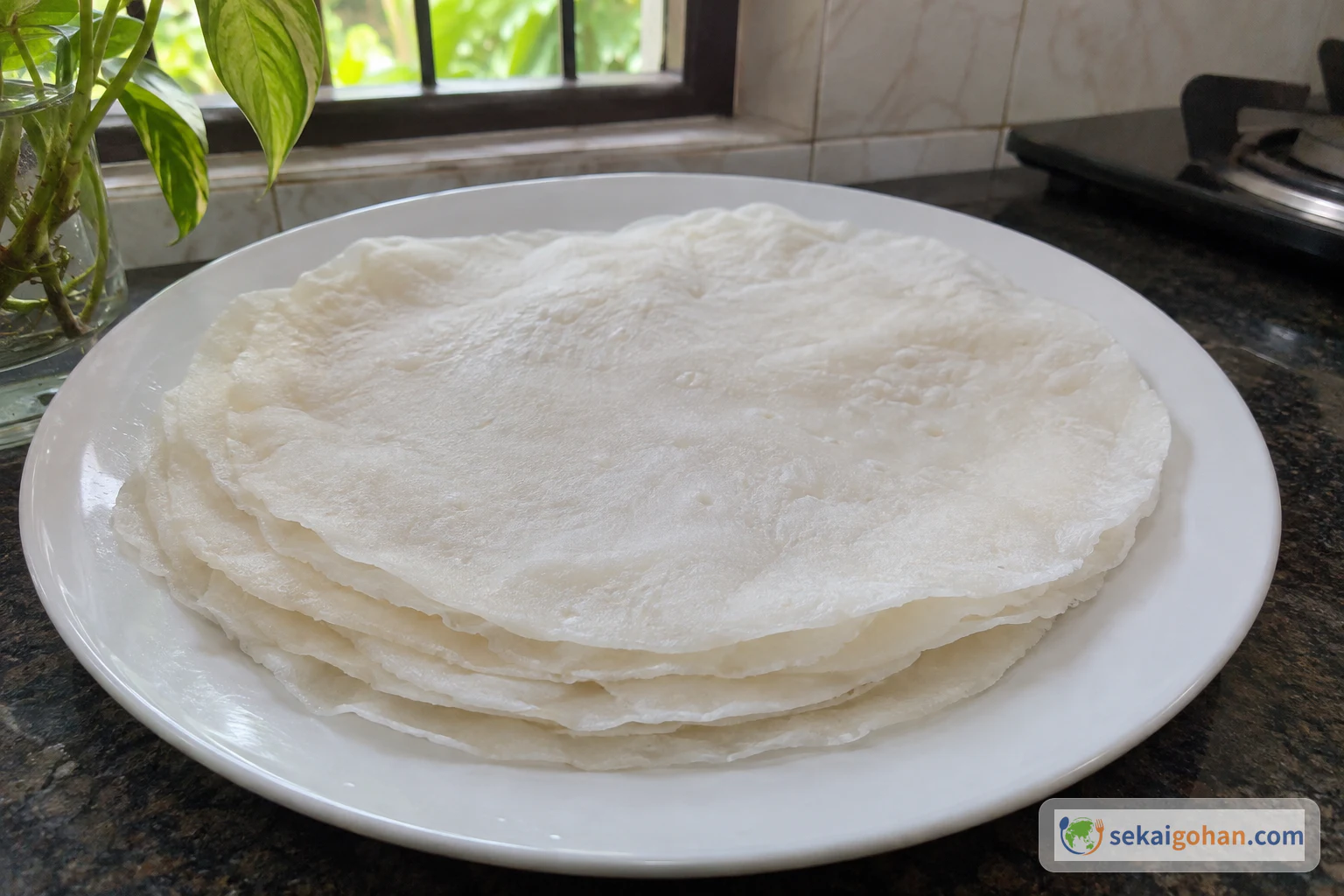
Bring the pathiri to the table while hot. Chicken or fish curry is an optional pairing, and this recipe doesn't include a curry.
Troubleshooting: Fixes That Stay Within the Recipe
| What you notice | What to do |
|---|---|
| The dough is too hot to touch | Keep waiting until you can handle it, and don't start kneading early |
| The dough has lumps | Keep kneading until it is smooth |
| The rolled dough still looks thick | Keep rolling toward about 1mm before you cut |
| A round is starting to take on color | Lift the next one from the griddle before its color changes |
| The dough's feel isn't what you wanted | Next time, choose a different amount of water within 450–500ml |
Variations: Other Pathiri, Kept Separate
The name "pathiri" covers more than one bread, and each version below is its own recipe rather than an add-on to this one.
| Type | How it differs | Where it is described |
|---|---|---|
| Vachchu Pathiri | A leaf-wrapped type with its own method | Kerala Tourism |
| Kunji Pathiri | Small pieces that are steamed | Kerala Tourism |
| Nice Pathiri and Katti Pathiri | Named as a thin type and a thicker type | Kerala Travel Pal |
| Open Spice Box's Malabar rice flatbread | Also adds rice flour to boiling water and rolls thin rounds, but has different proportions and includes oil | Open Spice Box |
To try one of these, follow its own recipe from start to finish. Mixing their amounts or steps with the ones above would make a different bread.
Pathiri at the Malayali Table
Kerala Tourism describes pathiri as Malabari pancakes and pairs them with Malayali chicken or fish curry. Kerala Travel Pal, a regional information site, also describes serving pathiri with curries.
This article stays within those descriptions. It makes no claims about the dish's origin, religious occasions or what every household does. For more of the country's dishes, see India's recipes.
Frequently Asked Questions
How many pathiri does this make?
Kerala Tourism doesn't give a yield, and this article doesn't estimate one from the flour and water amounts. The recipe does give the size of each ball: 30–35g.
How long do they cook, and at what temperature?
Kerala Tourism gives neither a time nor a temperature. It says only to use a hot griddle, cook without changing the color, and serve hot. Browning and puffing aren't given as signs of doneness.
Do I flip the pathiri?
Kerala Tourism's Ari Pathiri instructions don't address flipping, so the method above doesn't add it. Kerala Travel Pal does describe cooking its plain rice pathiri on both sides, but that is a separate recipe.
How do I choose between 450ml and 500ml of water?
Kerala Tourism gives the range without saying how to choose within it. Pick an amount, boil that amount, and adjust within the range next time if you wish.
Can I use ordinary unroasted rice flour?
Kerala Tourism specifies roasted rice flour, and this article has no basis for saying how unroasted flour would behave. Check the package for "roasted" when you buy.
Other recipes use oil or a different ratio. Which is right?
They are different recipes. Open Spice Box includes oil and different proportions, and Kerala Travel Pal also has its own ratio. This article follows Kerala Tourism's Ari Pathiri alone and doesn't blend them.
Can I store or reheat pathiri?
Kerala Tourism gives no storage period or reheating method for this recipe, only the instruction to serve it hot. This article doesn't add any storage guidance.
Sources
- Kerala Tourism, "Recipe of Pathiri, Breakfast Recipe, Vegetarian, Cuisine, Kerala Food." The main recipe: ingredients, basic dough and Ari Pathiri method, plus the Malabari description, curry pairing and other pathiri types. https://www.keralatourism.org/kerala-food/pathiri/72/
- Kerala Travel Pal, "Pathiri." Used for comparison only: types of pathiri, a separate plain rice recipe and serving with curries. https://www.keralatravelpal.com/Pathiri.html
- Open Spice Box, "Malabar Rice Flatbread (Pathiri)." Used for comparison only: a separate recipe with different proportions and oil. https://openspicebox.com/recipes/pathiri