Milk Peda: Grated Khoya Stirred Low Until It Leaves the Pan
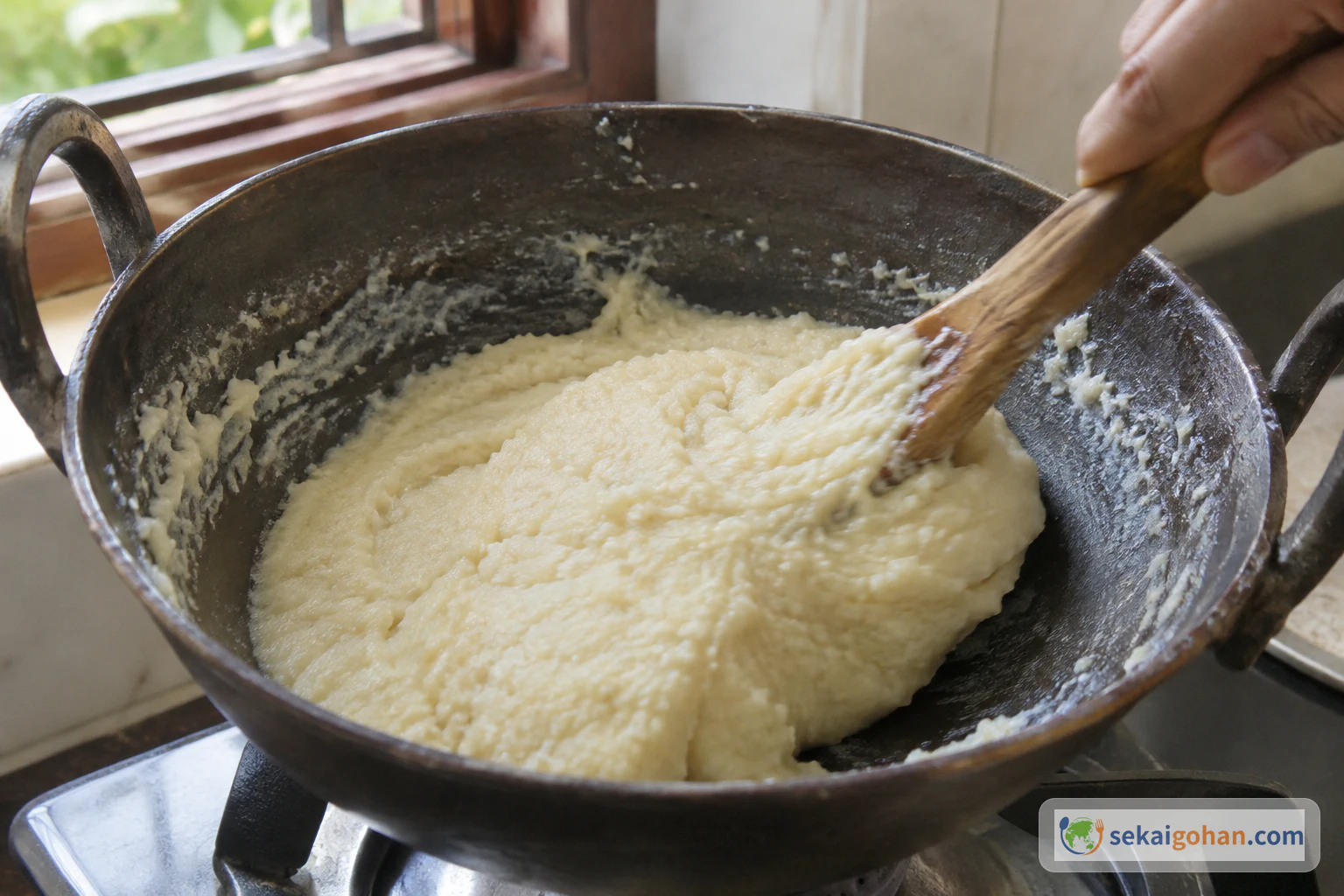
Use low heat and keep stirring the whole time. Stop when the mixture is thick and has started to pull away from the sides of the pan. Shape it while it is still lukewarm, and serve it fresh.
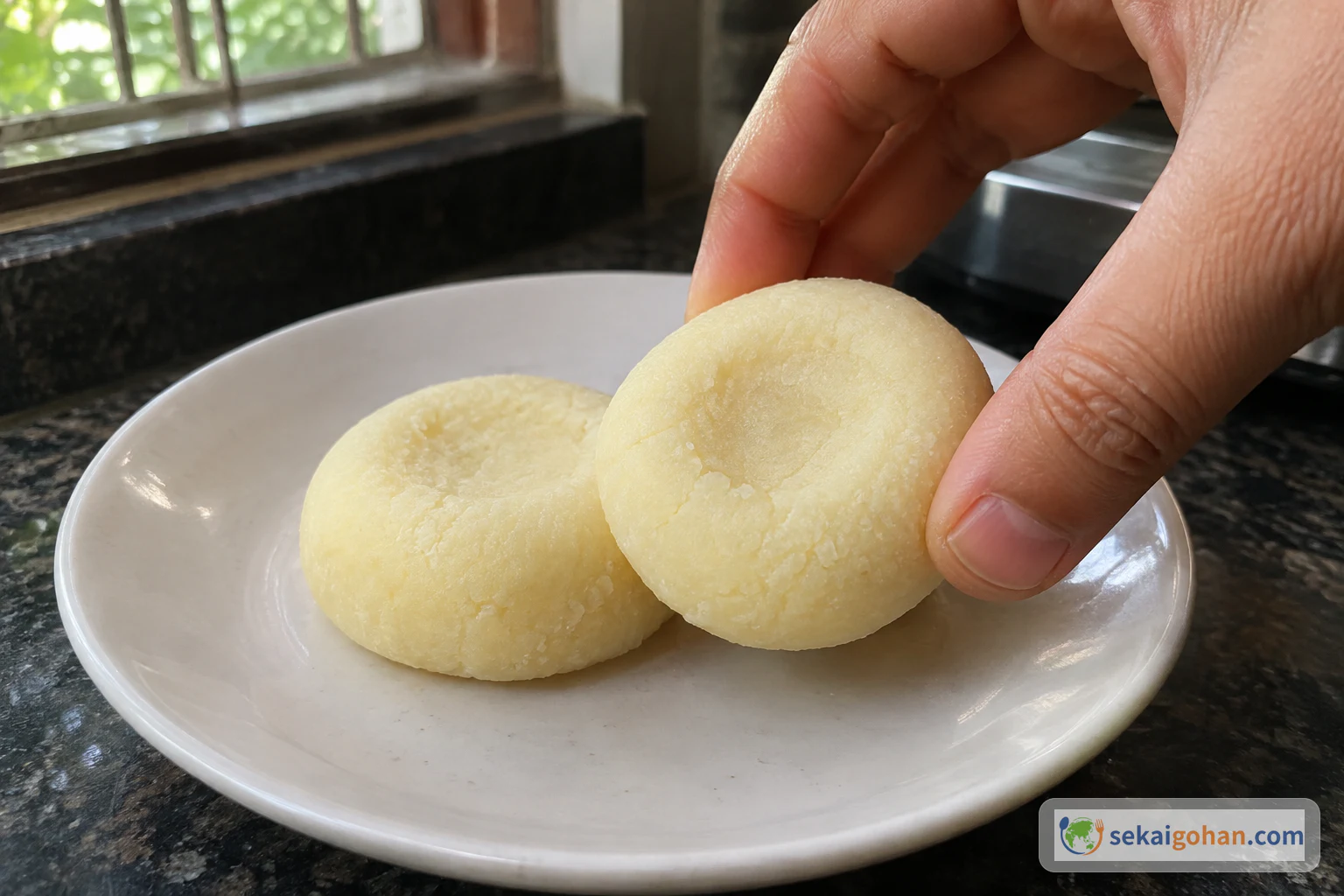
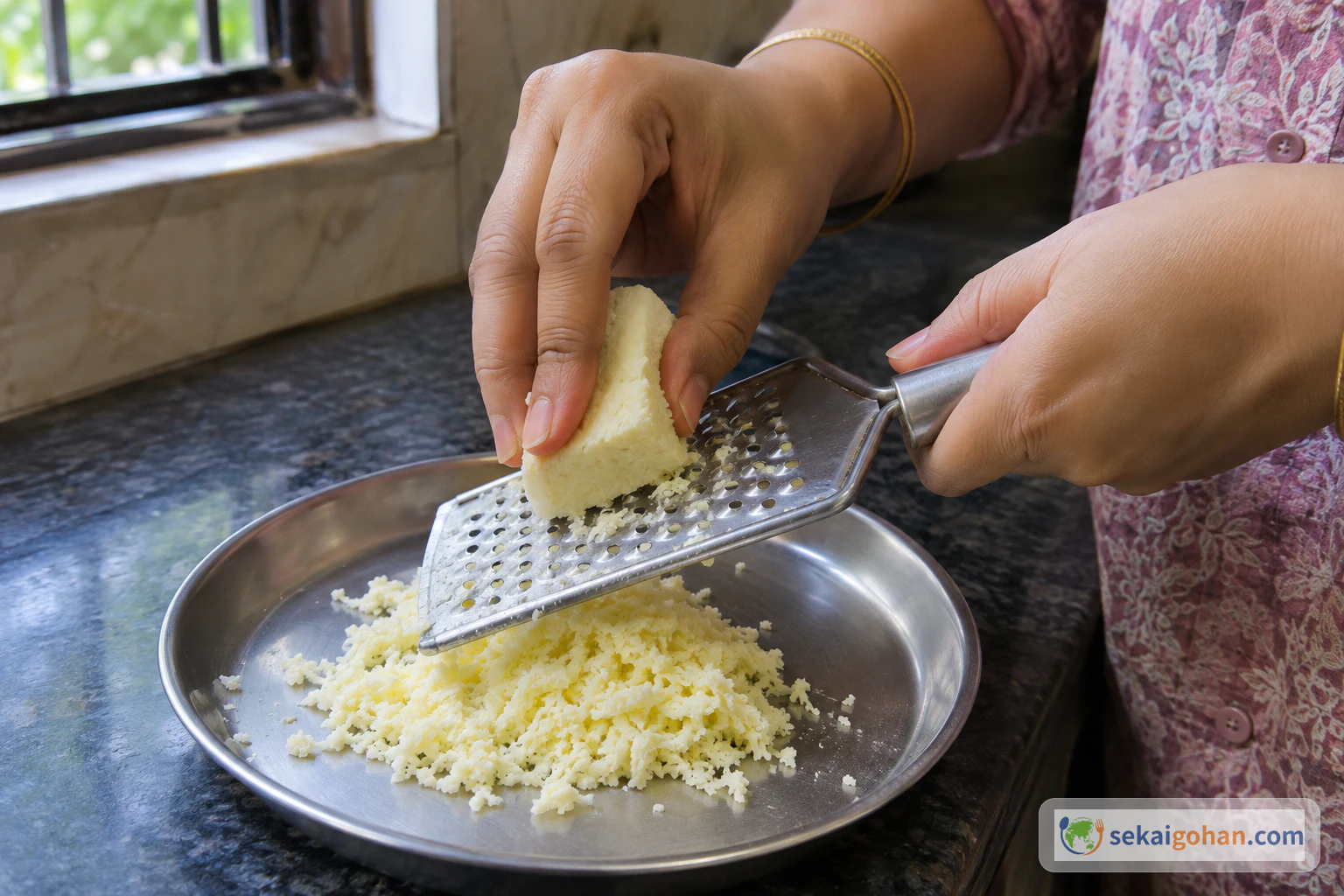
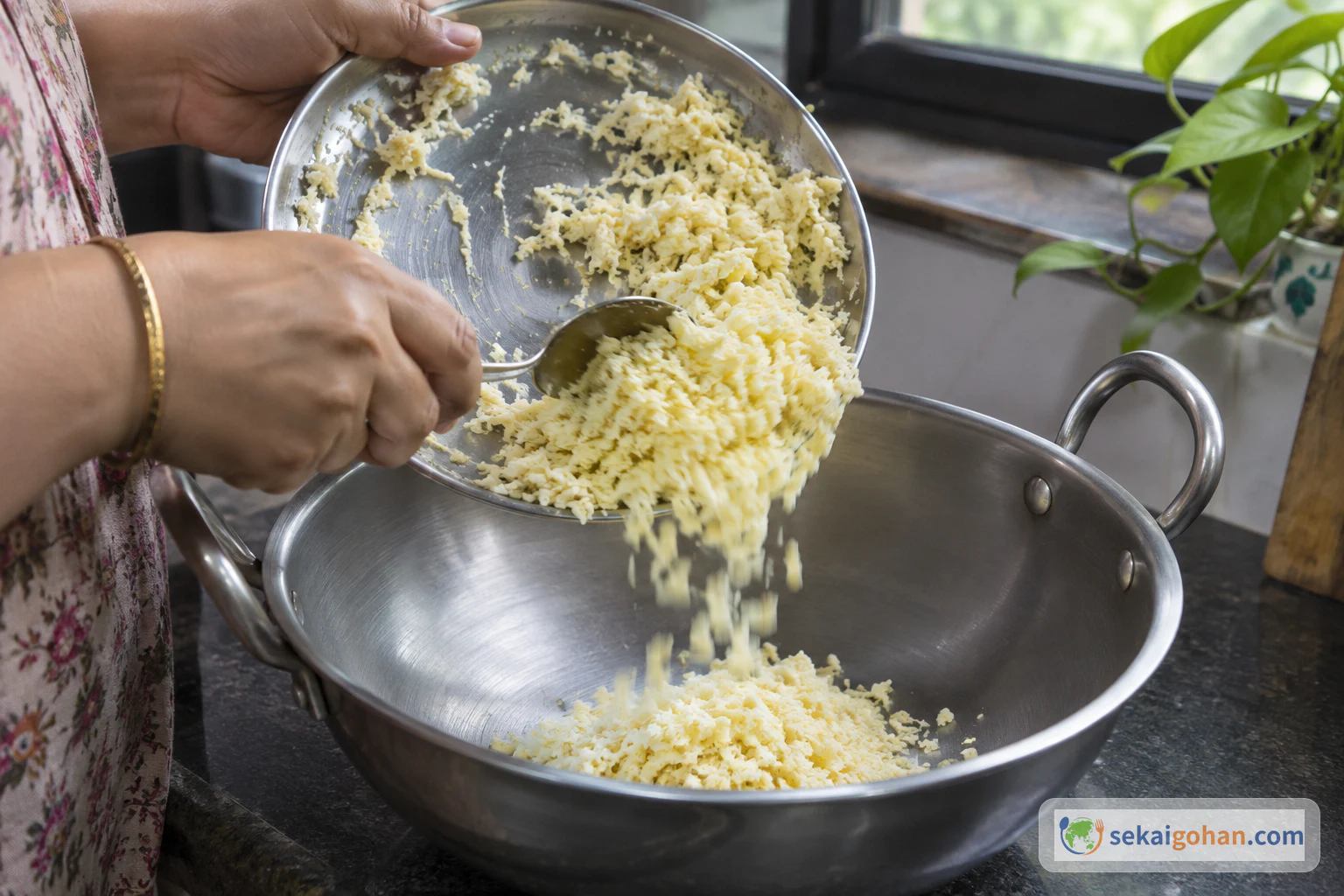
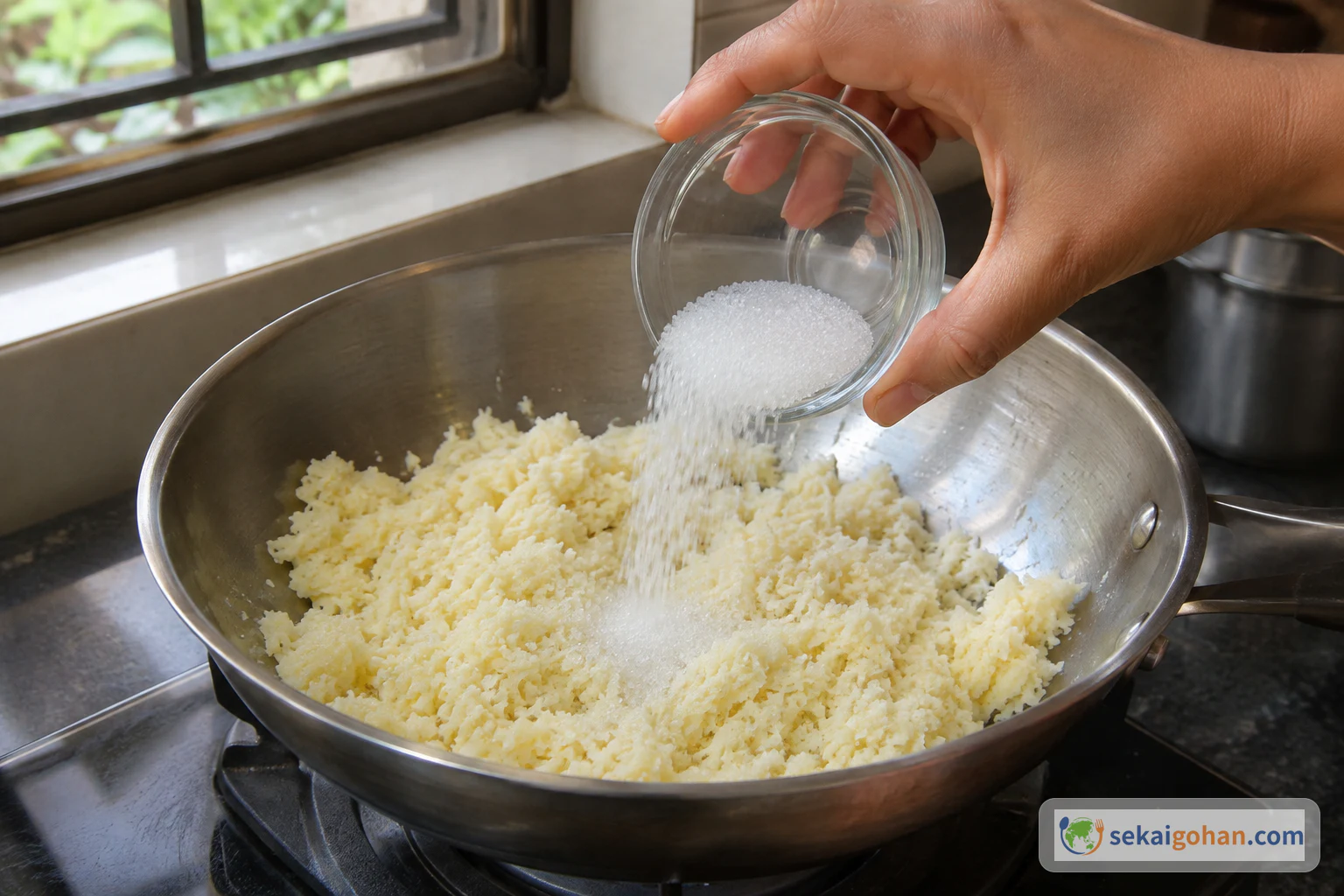
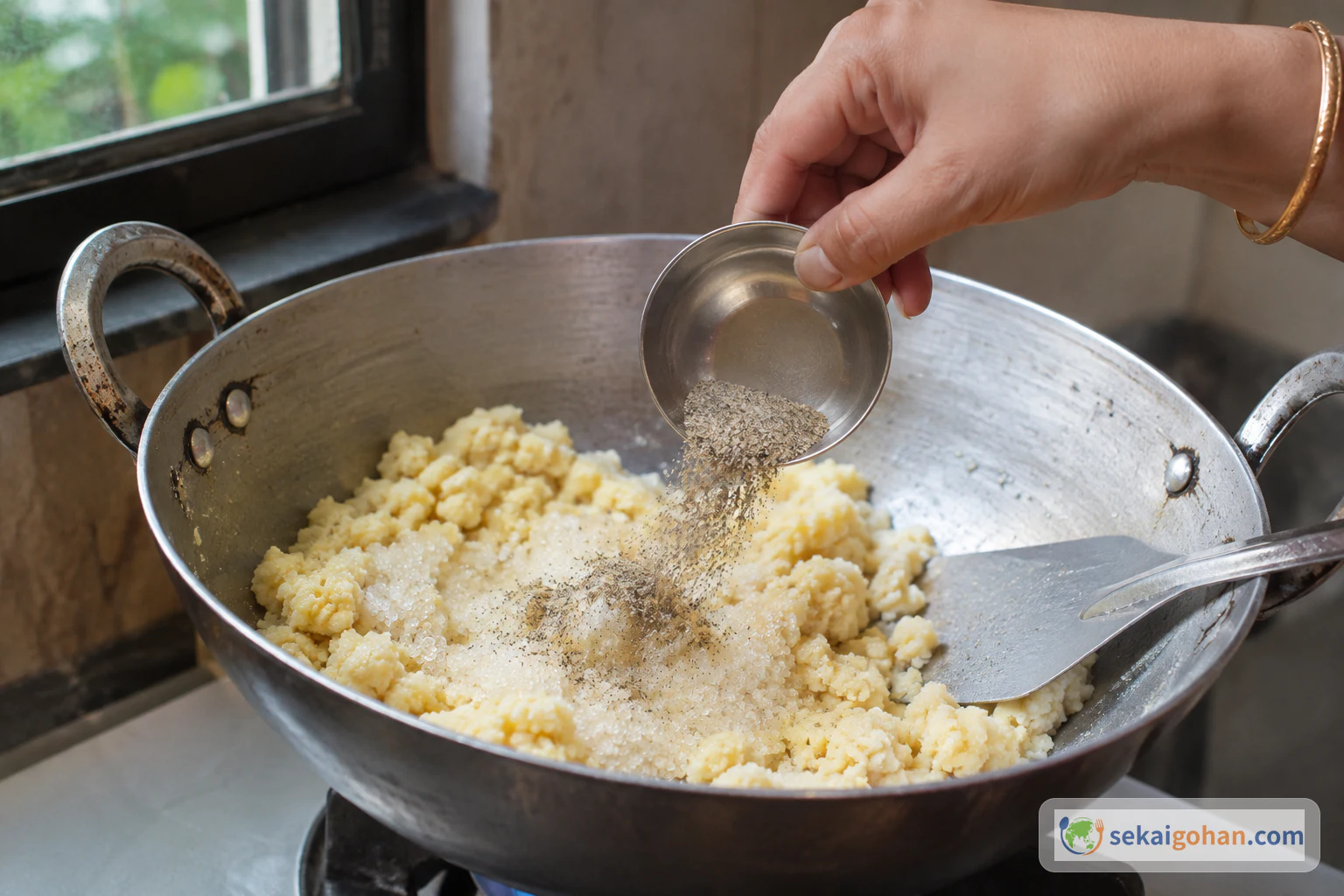
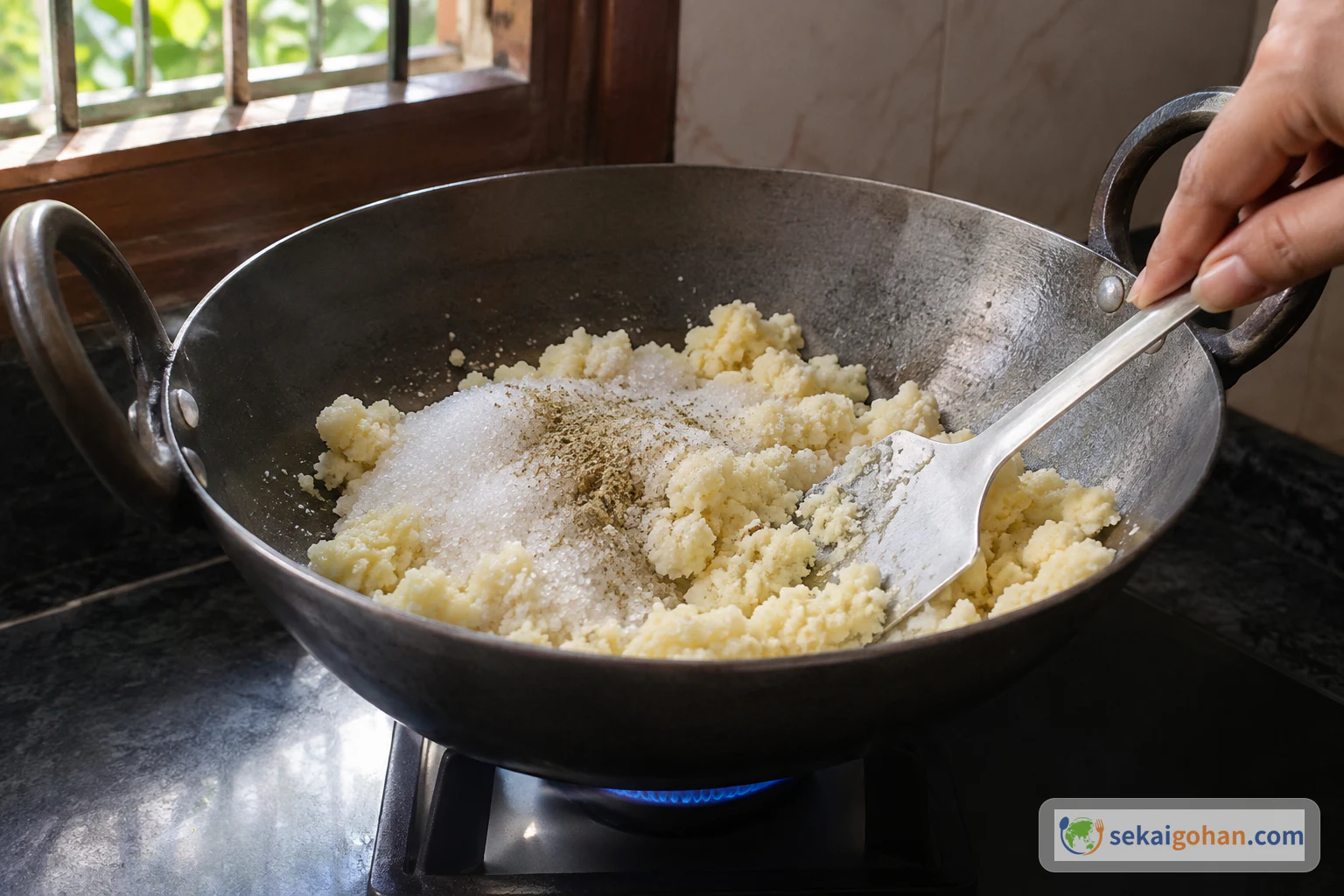
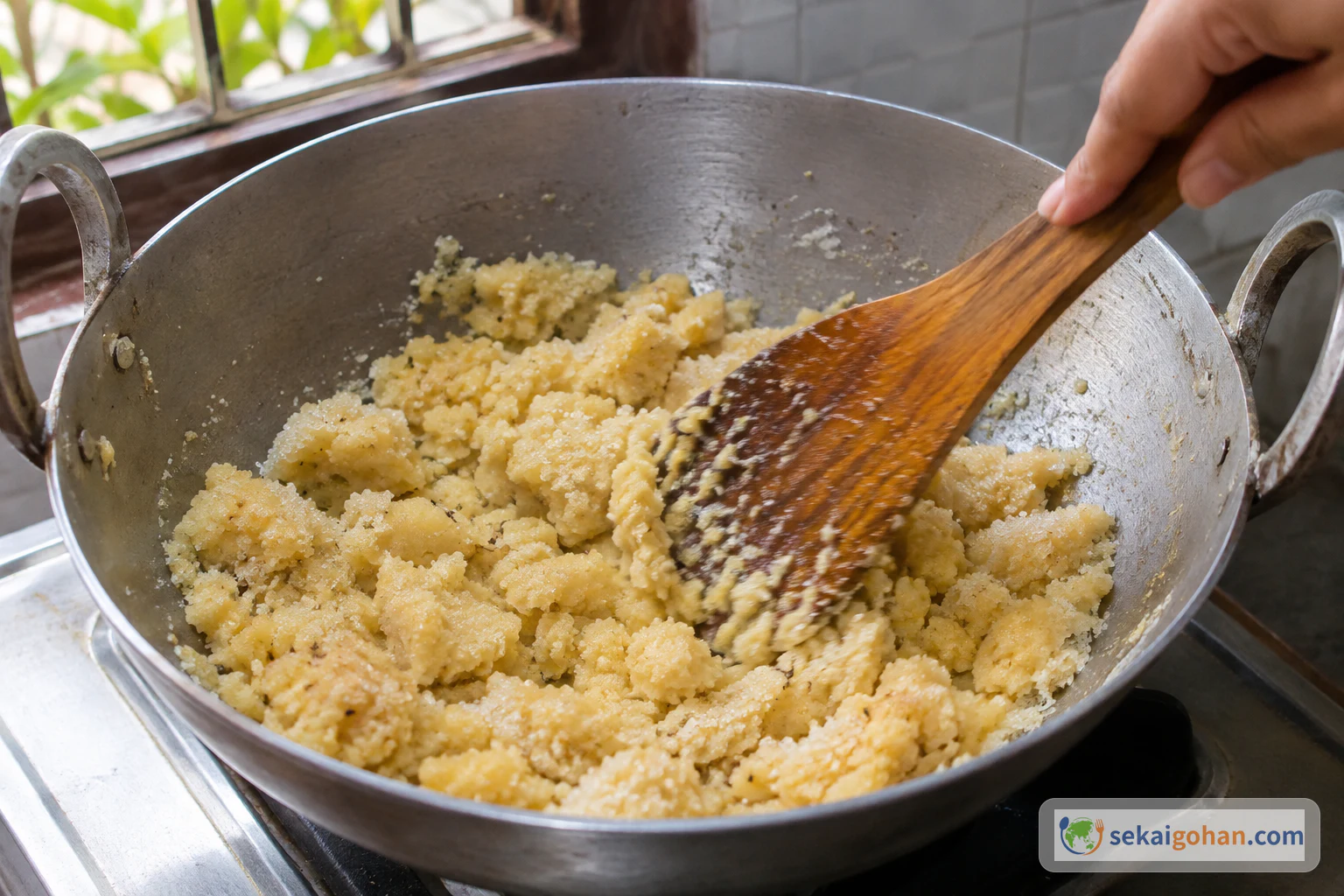
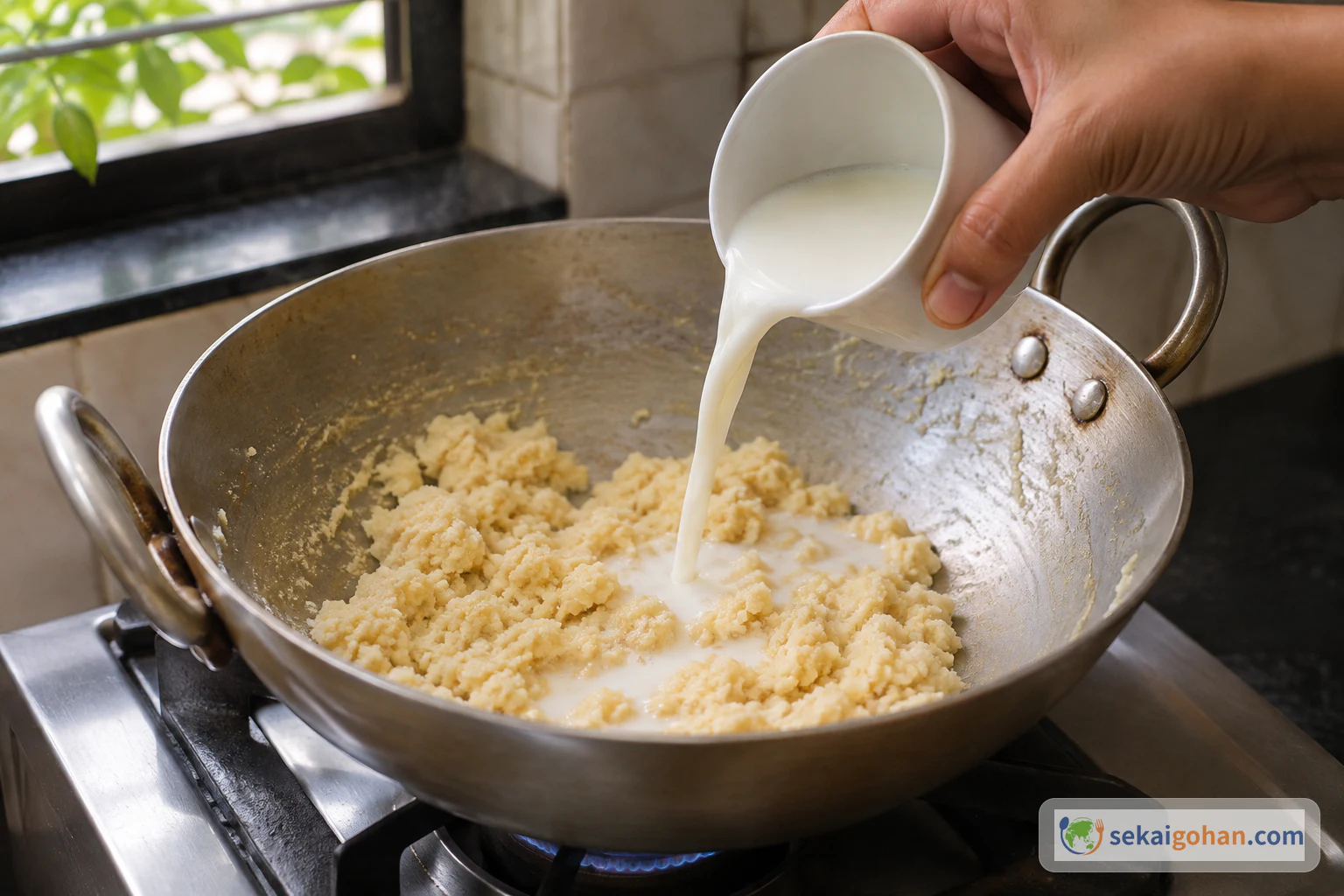
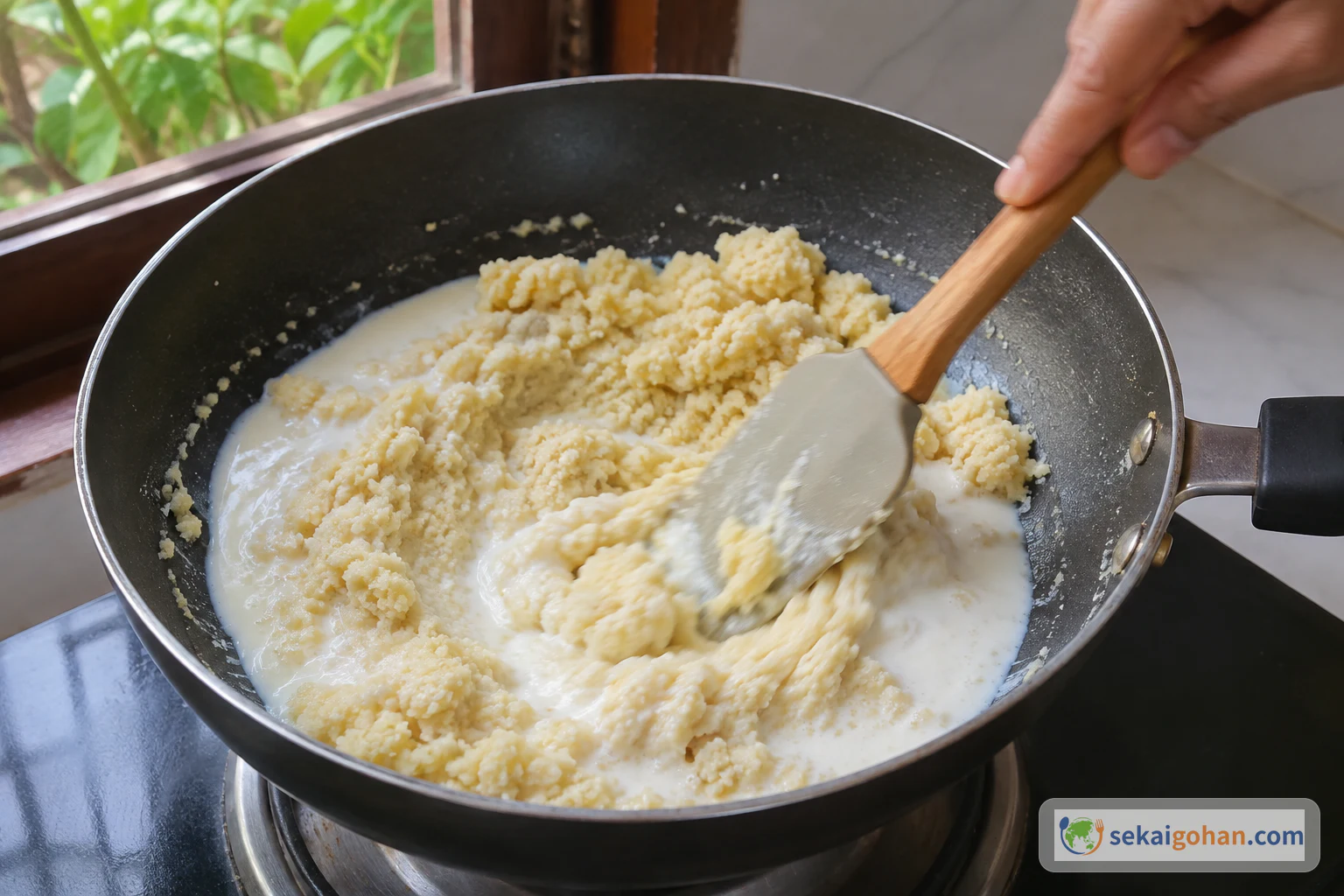
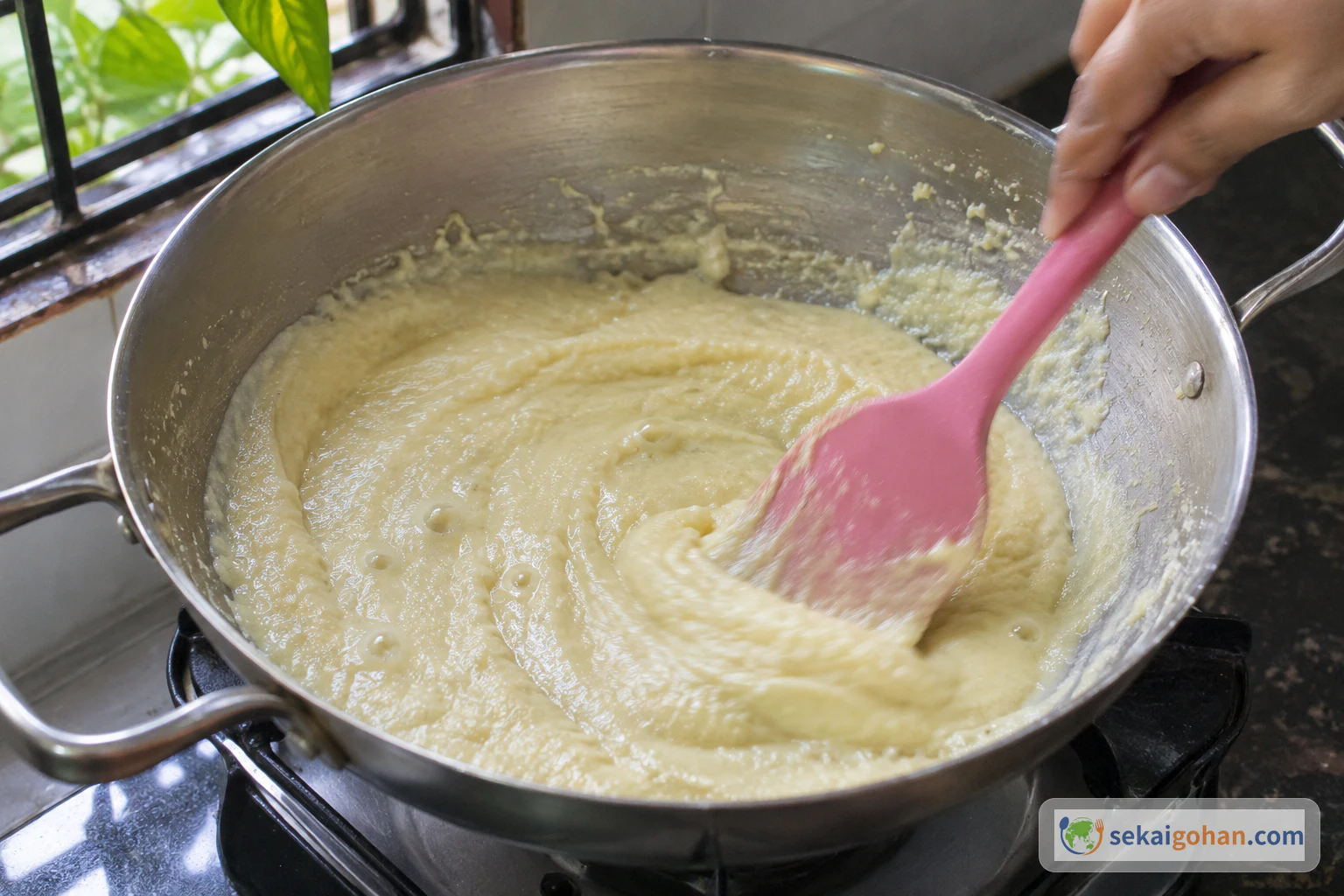
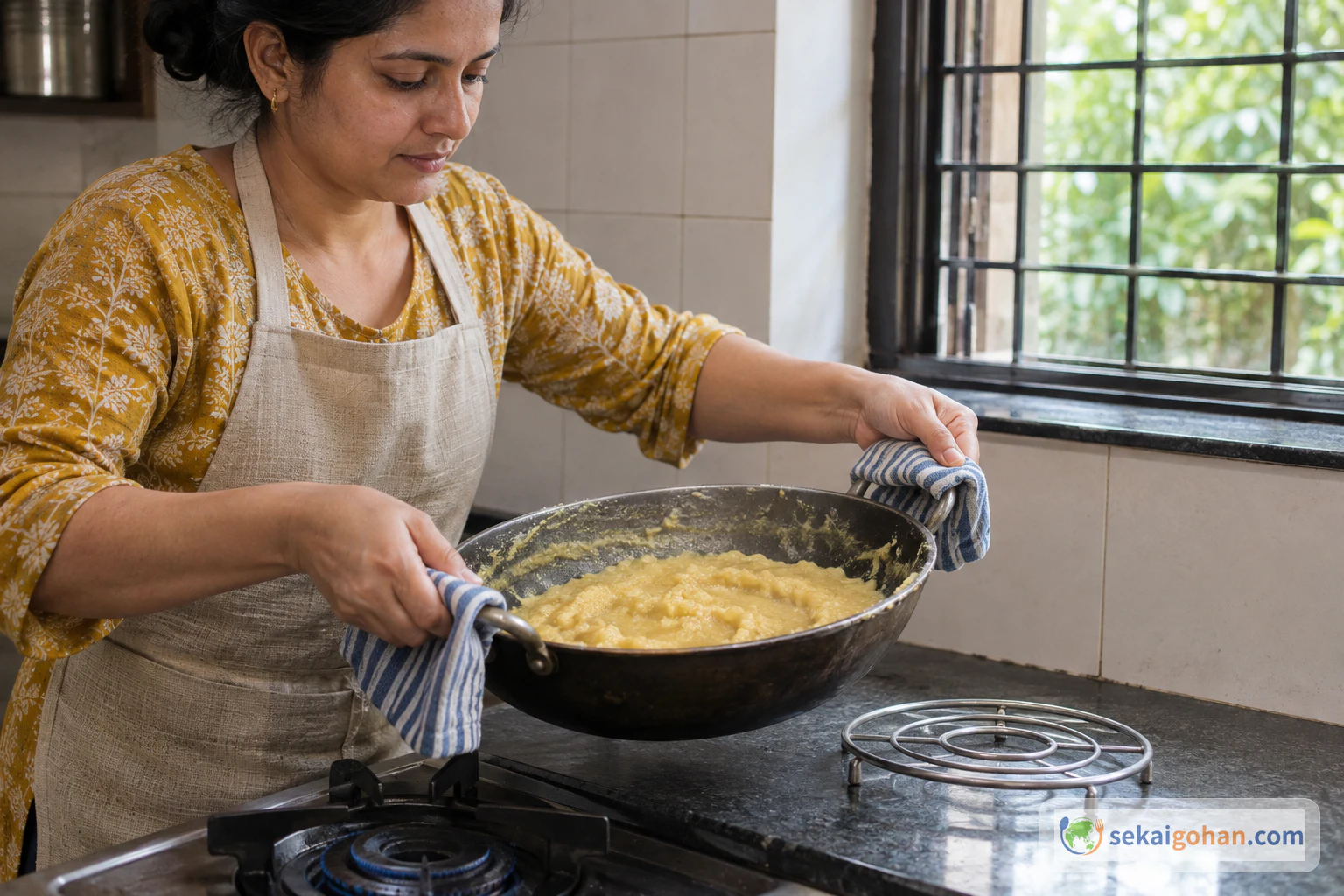
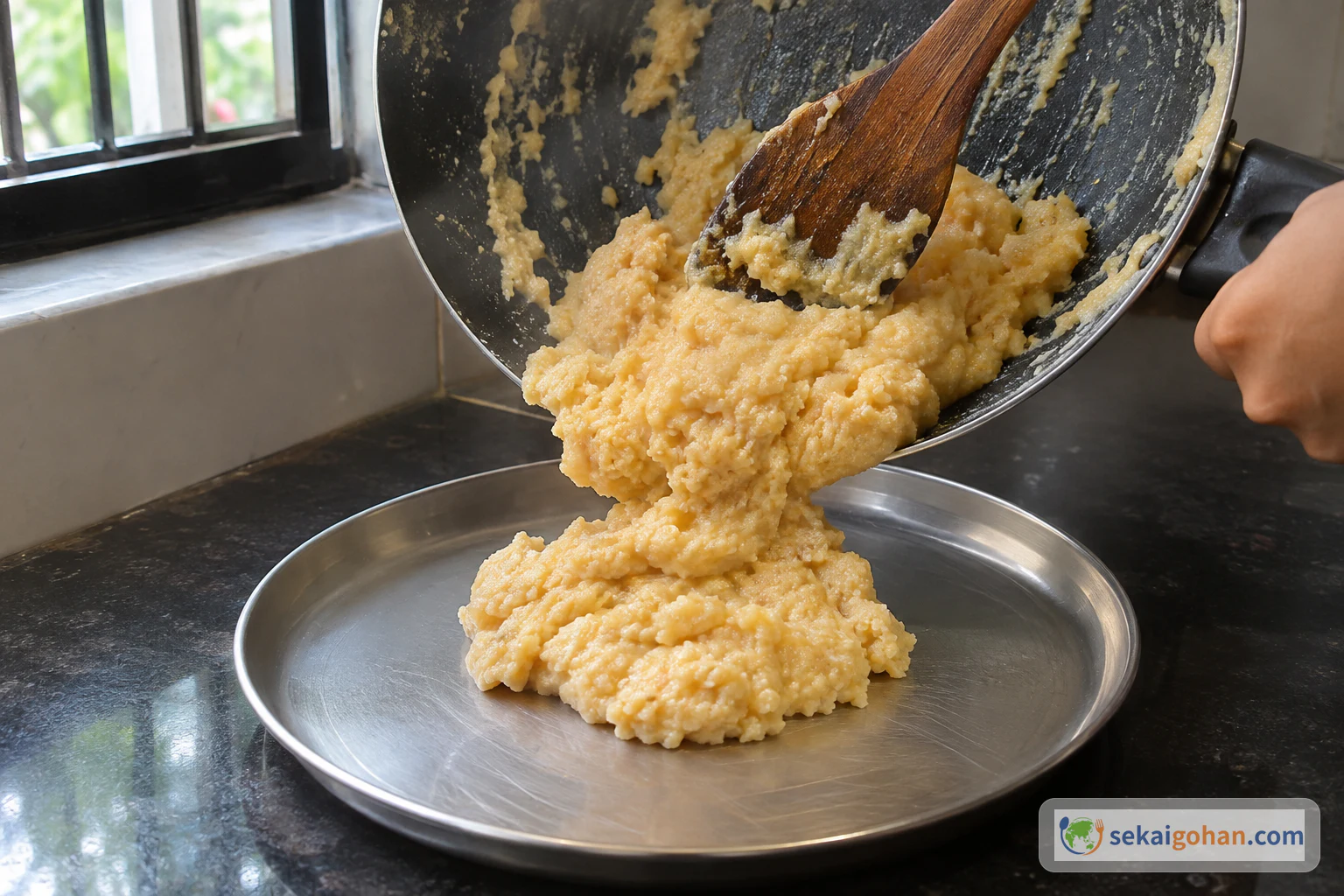
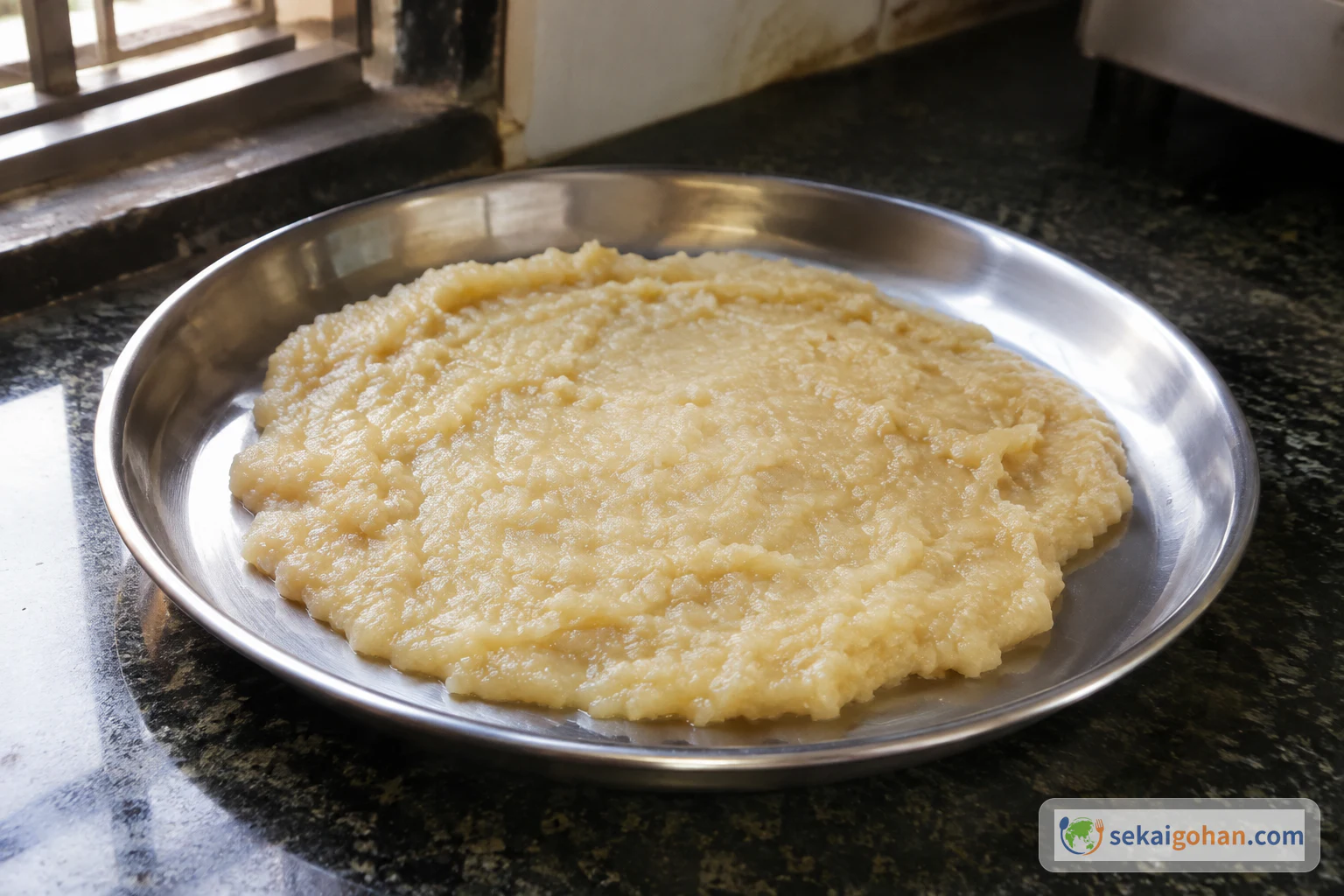
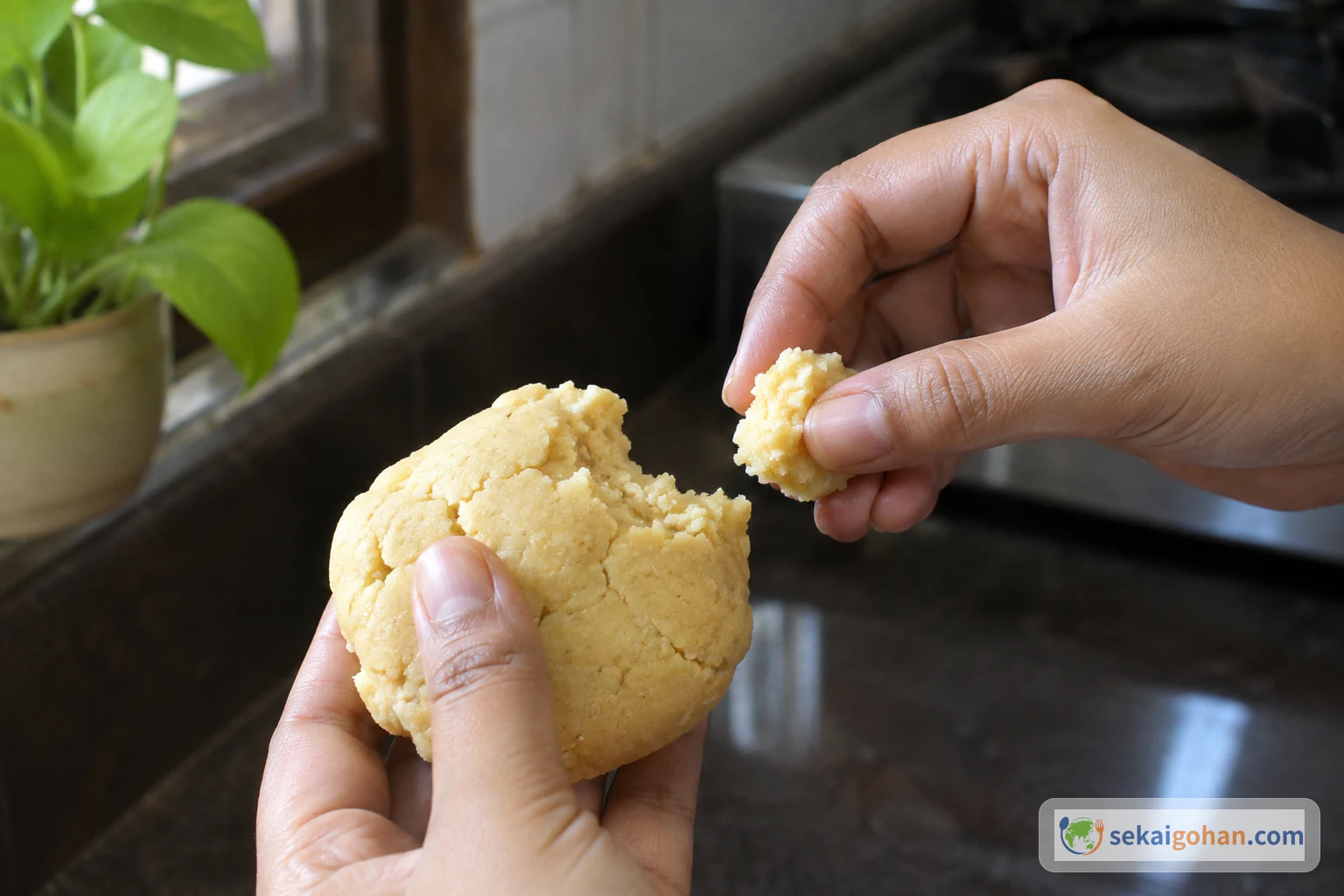
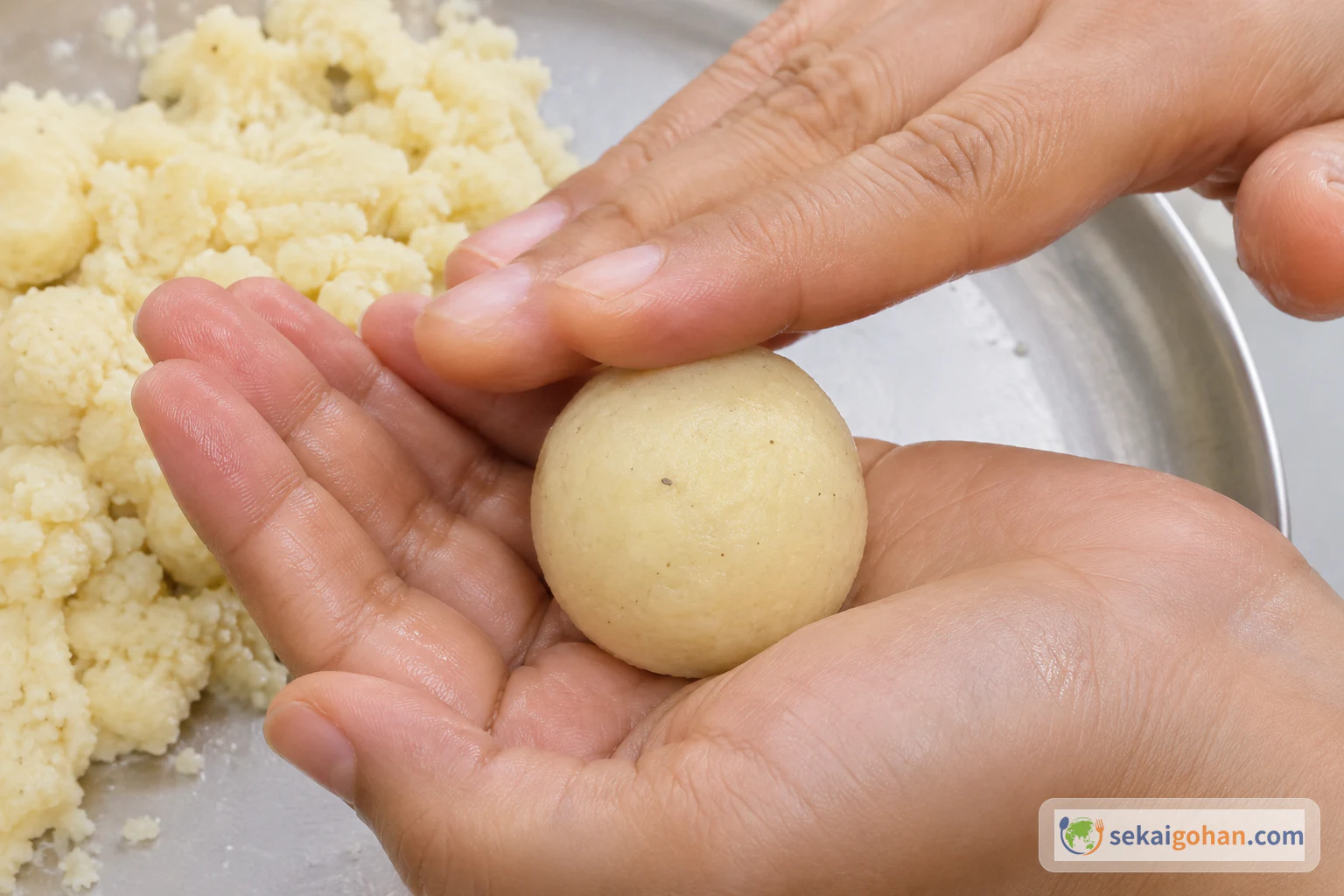
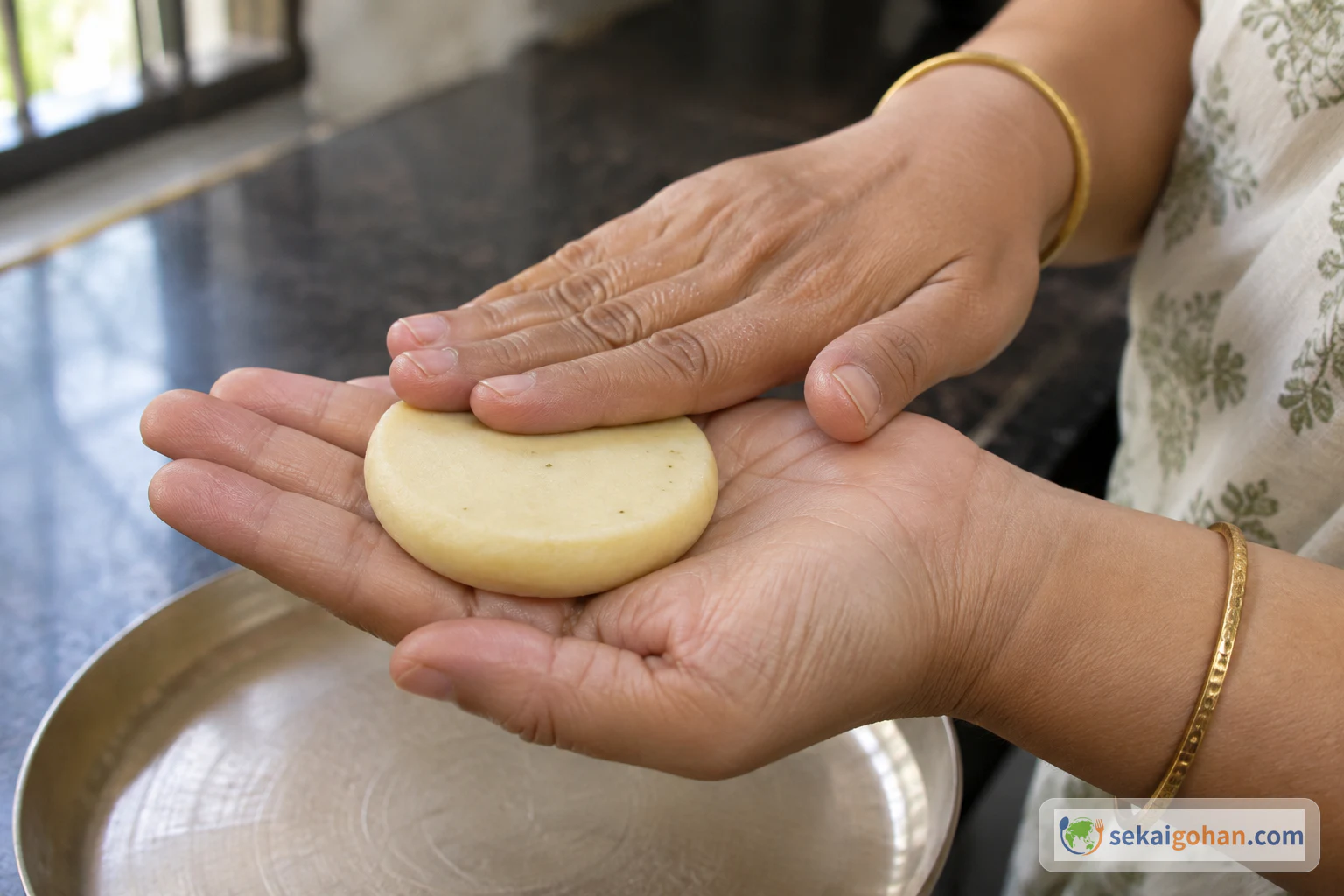
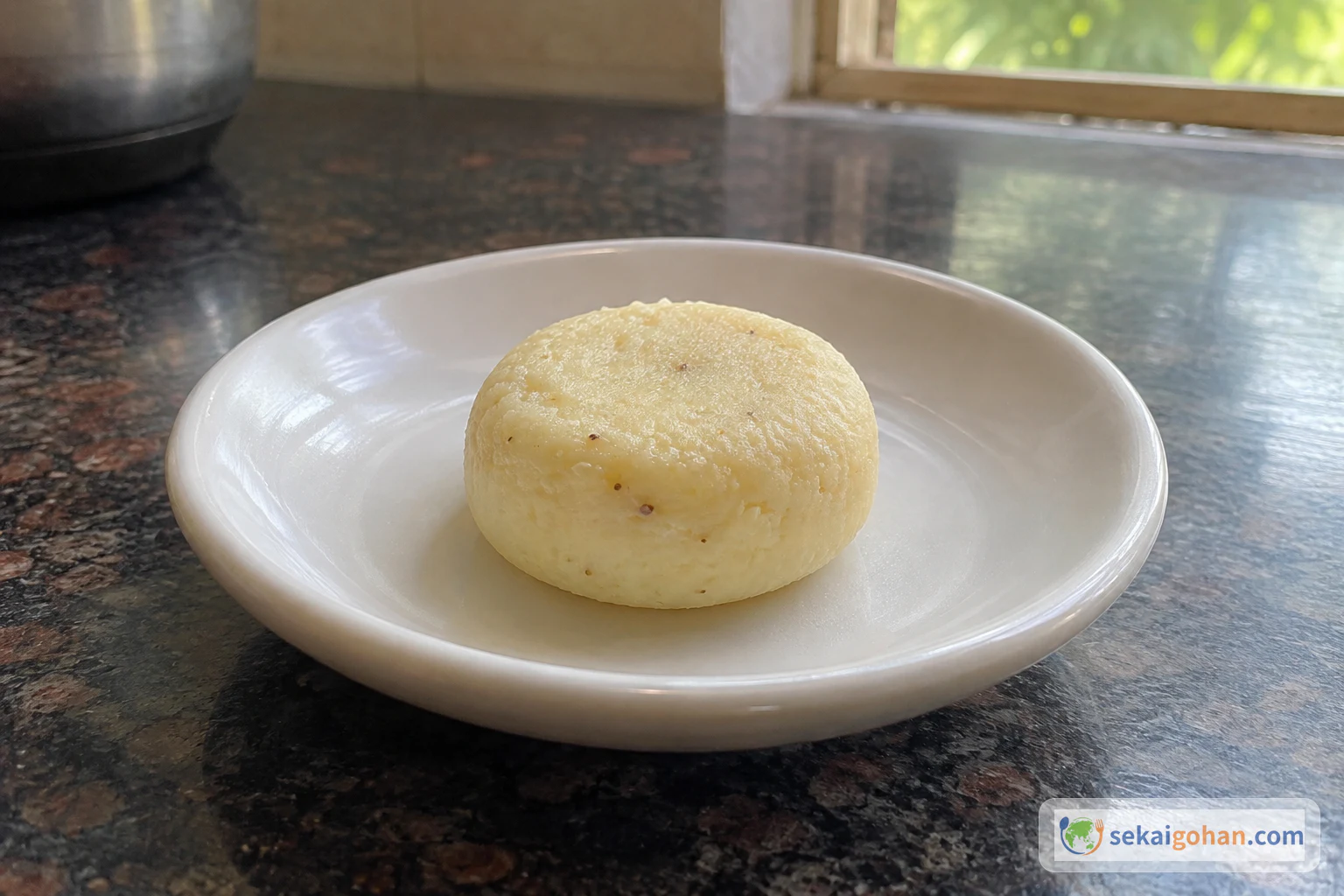
Grated khoya, sugar and a little cardamom go into a heavy-bottomed pan over low heat. As you stir, the mixture turns soft and creamy and small bubbles rise through it. With more stirring it thickens, gathers into one mass and starts to come away from the sides of the pan. It goes onto a steel plate while still hot. Once it has cooled enough to handle, you pinch off small pieces, roll them smooth and press each one gently between your palms into a thick, pale disc. That is doodh peda, or milk peda.
Peda is a name shared by several khoa-based sweets across India, and how they are made changes with regional taste. This article makes just one of them: a plain North Indian doodh peda. The formula and method come from the written milk peda recipe by Dassana Amit on Veg Recipes of India. On the site's About page, the author describes testing recipes in their own kitchen. That is the author's own account, not an independent check. This recipe as a whole has not been kitchen-tested by Sekai Gohan.
We made some fixed choices within that recipe. It allows 2–3 tablespoons of milk, and here the amount is always 2 tablespoons. That is an editorial choice inside the printed range, not something you adjust by how dry the mixture looks. The recipe also allows a plain finish with no garnish, and that is the version shown here: no nuts, no ghee on the hands, no saffron or rose and no pattern pressed into the top. It uses good-quality commercially prepared unsweetened khoya, not homemade khoya and not condensed milk or milk powder.
The recipe lists its yield as about 12 medium peda and its times as 5 minutes prep, 10 minutes cooking and 15 minutes total. Treat these as the recipe's own estimates. They don't guarantee a piece count or how long it will take, and they do not establish how long the mixture needs to cool before you shape it.
Ingredients: Four Things, Kept Plain
Choosing the Khoya and Keeping It Plain
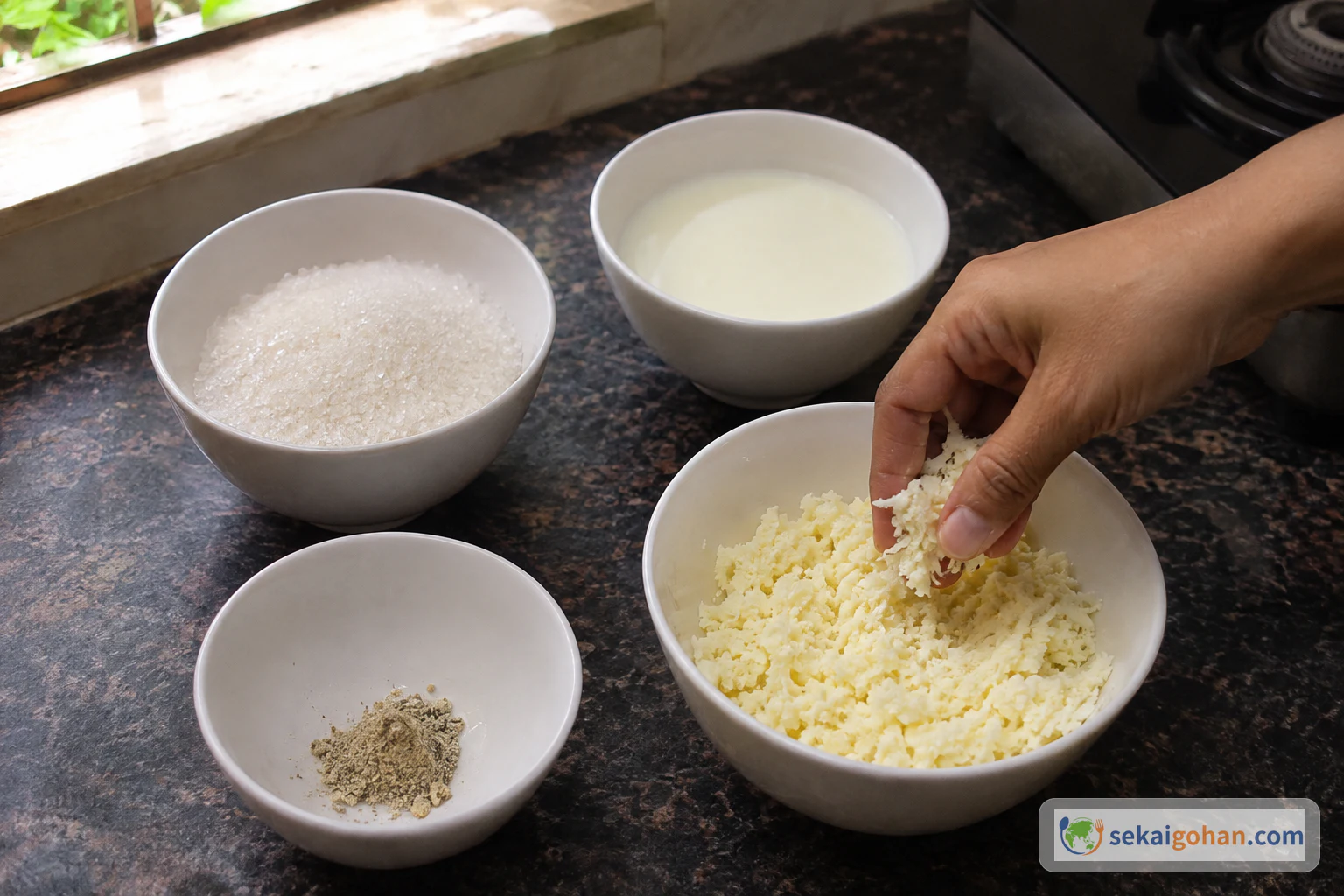
Look for good-quality commercially prepared unsweetened khoya, also sold as mawa. The sugar is measured separately, so sweetened khoya isn't the right starting point. This version doesn't use homemade khoya, condensed milk or milk powder in place of the khoya.
Use exactly 2 tablespoons of milk. Add it all at once at the point given in the method, and don't add more if the mixture looks dry.
Leave out nuts, saffron, rose and other flavorings, and don't grease your hands with ghee. The finished peda is simply khoya, sugar, cardamom and milk.
Peda is a dairy sweet. Khoya and milk are both milk products. This article makes no health, nutrition or safety claims.
Equipment
- Grater
- Heavy-bottomed pan
- Spatula (a wooden one works well)
- Steel plate or tray
- Small serving dish
Method: Low Heat, Constant Stirring, Shaping While Lukewarm
The key signs are a soft, creamy mixture with small bubbles, followed by a thick mixture that starts to leave the sides of the pan. Keep the color pale and don't let it brown.
Troubleshooting: Reading the Mixture
| What you see | What to do |
|---|---|
| The mixture is still loose and doesn't leave the pan | Keep it over low heat and keep stirring until it is thick and starts to pull away from the sides. |
| The color is darkening toward brown | Keep the heat low and stir without stopping. The aim is only a slight change in color, not browning. |
| The mixture looks dry after the milk goes in | Keep to the 2 tablespoons and carry on stirring over low heat. Don't add more milk. |
| It's too hot to handle on the plate | Wait until it is lukewarm and comfortable to touch before you portion it. |
| You're waiting for it to cool completely | Don't. Shape it while it is still lukewarm. |
| You end up with more or fewer than about 12 pieces | Expect some variation. About 12 is a guide, and the size of each piece is up to you. |
Variations: What Stays Fixed and What Changes Across Peda
This page makes one plain version. The khoya, sugar, cardamom and milk amounts stay as listed, and it has no garnish, no added flavorings and no pressed pattern.
The wider world of peda is broad. A dairy-technology chapter on khoa-based sweets describes peda as made across Indian regions, with methods shaped by regional preferences. Those regional versions have their own formulas and backgrounds, so we don't mix them into this recipe. If you want to explore them, treat each as a separate dish rather than a tweak to this one.
Peda as a Khoa-Based Sweet
Khoa (also written khoya, or called mawa) is a traditional Indian dairy product made by cooking milk down with heat. The INFLIBNET e-PG Pathshala chapter on traditional Indian dairy products groups peda with other khoa-based sweetmeats. It explains that the sweet is found across regions and that how it is made follows regional taste. The cooking in this recipe works on the same idea: already-made khoya goes back over low heat with sugar and a little milk until it thickens.
This article doesn't tell a single origin story, date or religious-origin story for peda. The sources used here don't support one, and the dish takes too many forms for one story to cover. For more dishes from the same country, see India.
Frequently Asked Questions
Why exactly 2 tablespoons of milk?
The recipe this version follows gives a range of 2–3 tablespoons. We fixed the amount at 2 so the method stays the same every time. It isn't meant to be adjusted by how dry the mixture looks.
Can I add pistachios, almonds, saffron or rose?
The recipe allows a plain, garnish-free finish, and that is the version given here. Additions like these aren't part of this page's formula.
Can I use homemade khoya, condensed milk or milk powder instead?
This version is written only for good-quality commercially prepared unsweetened khoya. Other bases aren't covered here.
Does it really take 15 minutes?
The recipe lists 5 minutes prep, 10 minutes cooking and 15 minutes total. Treat these as estimates, not a promise; they do not establish how long cooling the mixture until it is lukewarm will take. Judge the cooking by how the mixture looks and behaves in the pan.
How many peda does this make?
The recipe gives about 12 medium peda. Your count depends on how big you make each piece.
How long does peda keep?
This recipe is meant to be served fresh, right after shaping. This page gives no room-temperature, refrigeration or freezing guidance.
Who wrote the recipe?
The recipe is by Dassana Amit of Veg Recipes of India. The site's About page describes the author's background and says recipes are tested in the author's own kitchen. That is the author's own account, not an independent check or a food-safety review.
Sources
- Dassana Amit, "Peda Recipe | Milk Peda (Doodh Peda)," Dassana's Veg Recipes. The household recipe for the formula used here, its plain no-garnish option, the 2–3 tablespoon milk range, the method and how to tell when it's done, the yield of about 12 medium peda, and the listed 5/10/15-minute times. https://www.vegrecipesofindia.com/milk-peda-recipe-doodh-peda-recipe/
- Amit Patel, "Traditional Indian dairy products – Khoa based sweetmeats," INFLIBNET Centre, e-PG Pathshala. Background on traditional khoa processing and on peda as a khoa-based sweet found across Indian regions, with methods shaped by regional preferences. https://ebooks.inflibnet.ac.in/ftp04/chapter/traditional-indian-dairy-products-khoa-based-sweetmeats/
- Veg Recipes of India, "About." Dassana Amit's own description of the author's background and the site. https://www.vegrecipesofindia.com/about/