Hot Butter Cuttlefish: A Crisp Coating Meets a Hot, Spicy Butter Sauce
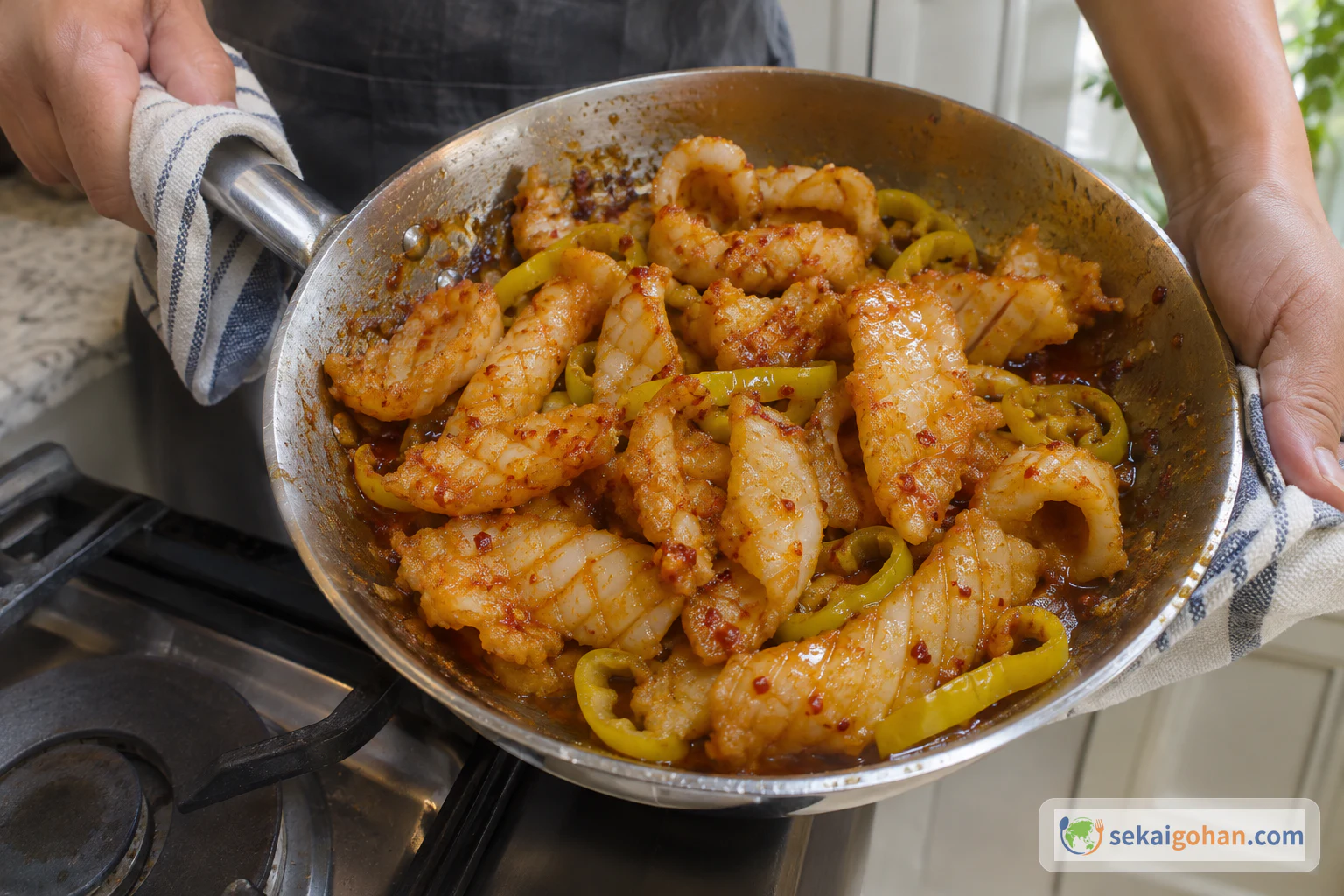
A thin, crisp coating on tender cuttlefish, and a sauce of butter, garlic and chili that clings lightly instead of soaking in. Everything comes together at the end, so it is eaten straight from the pan.
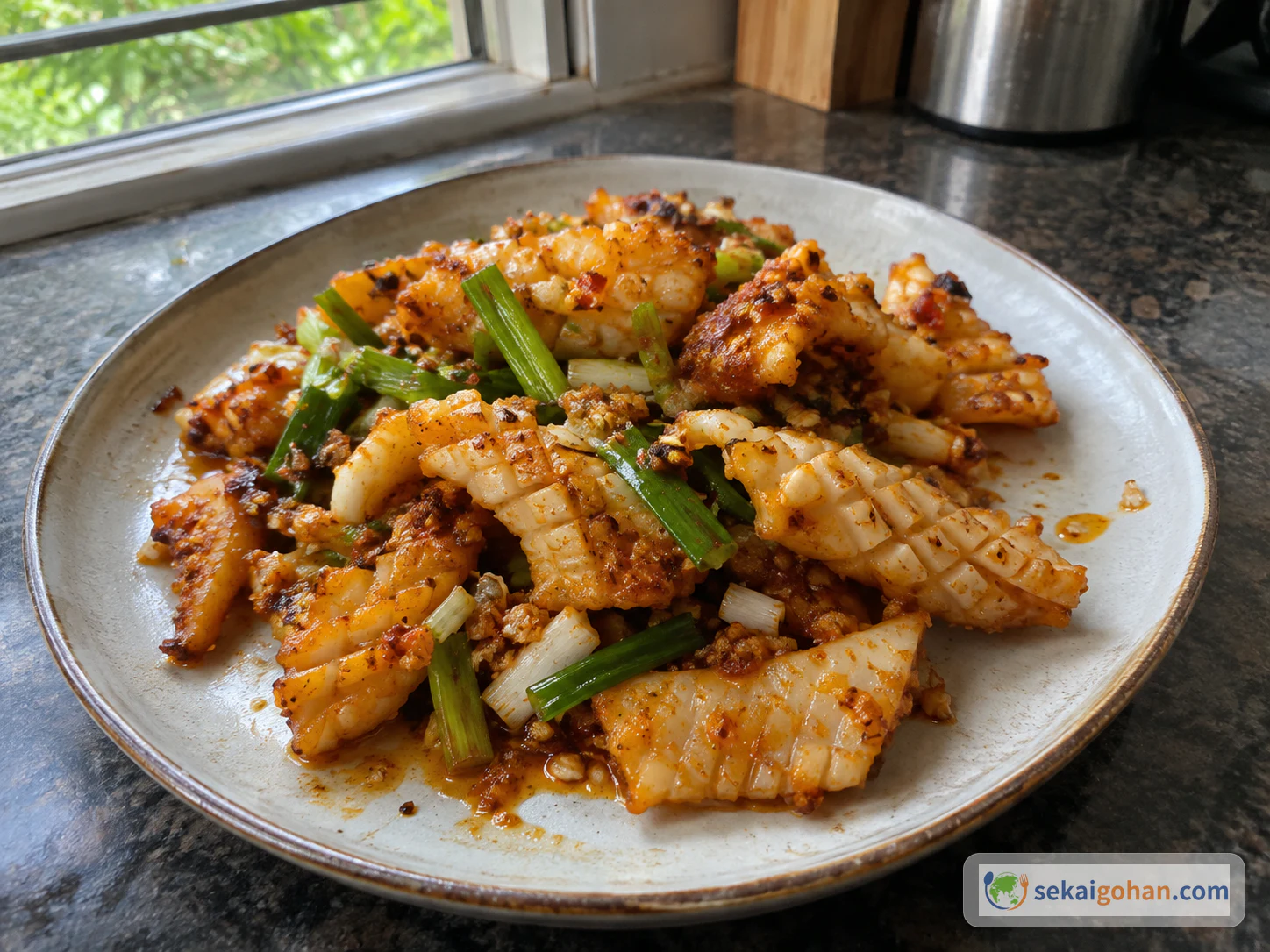
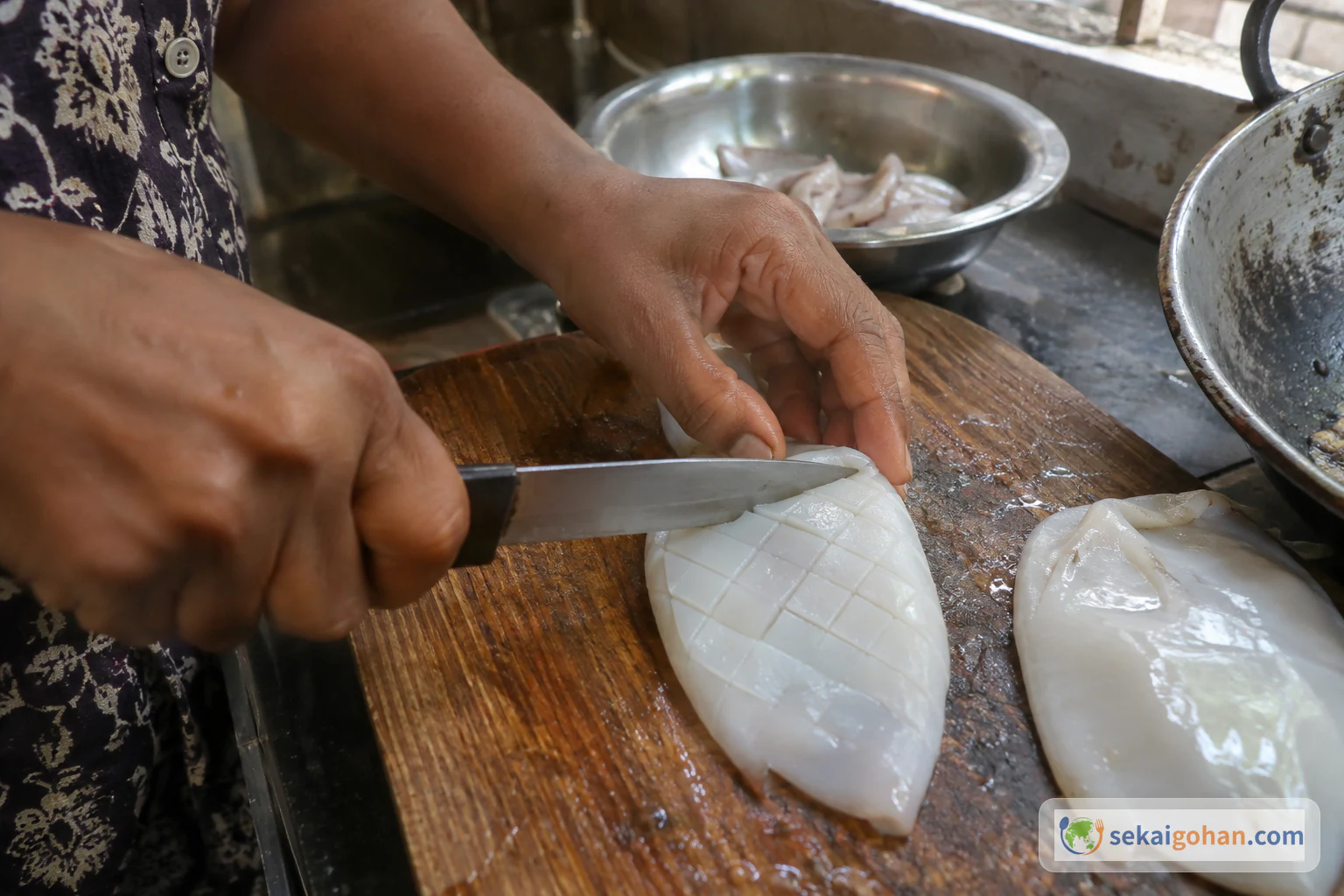
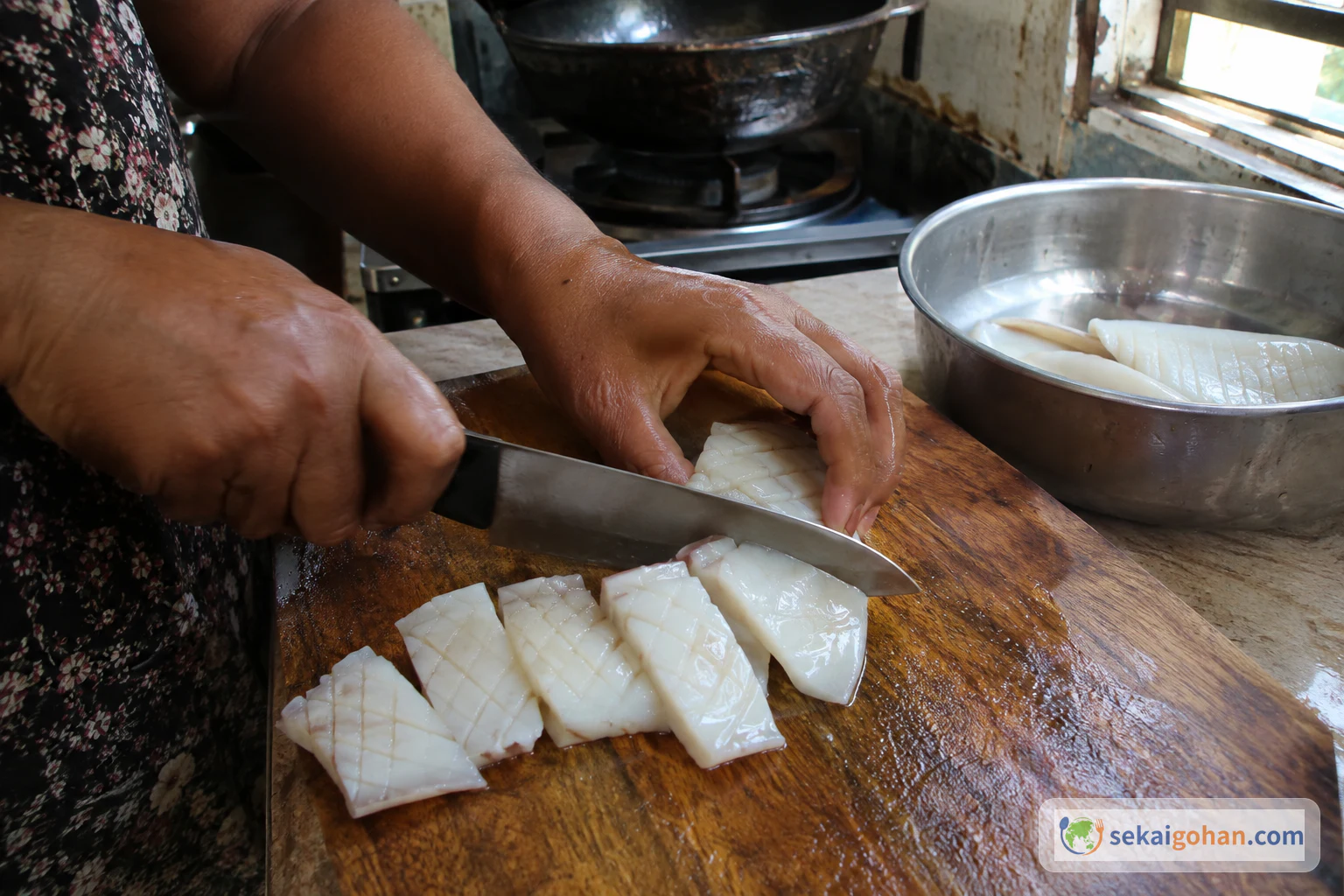
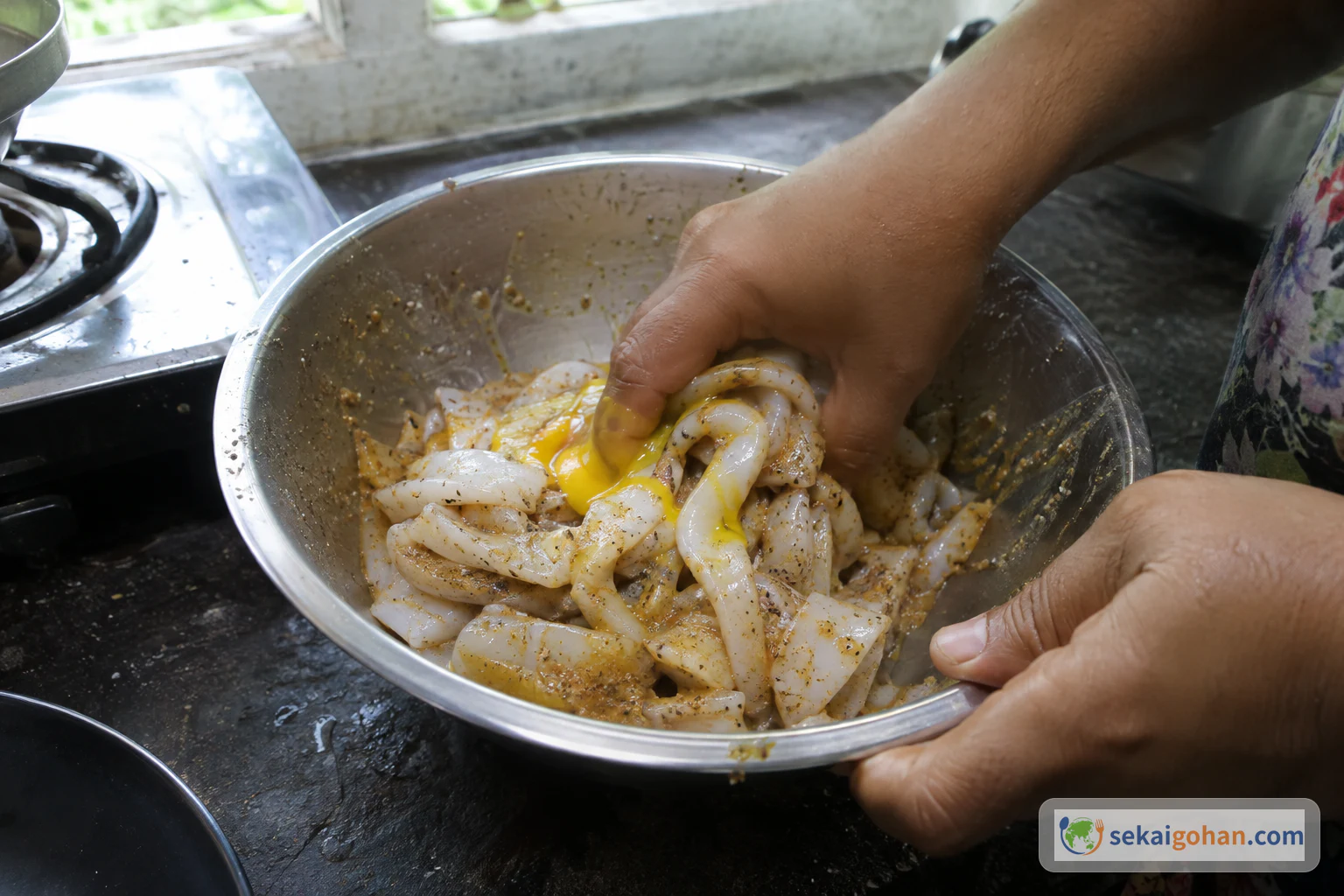
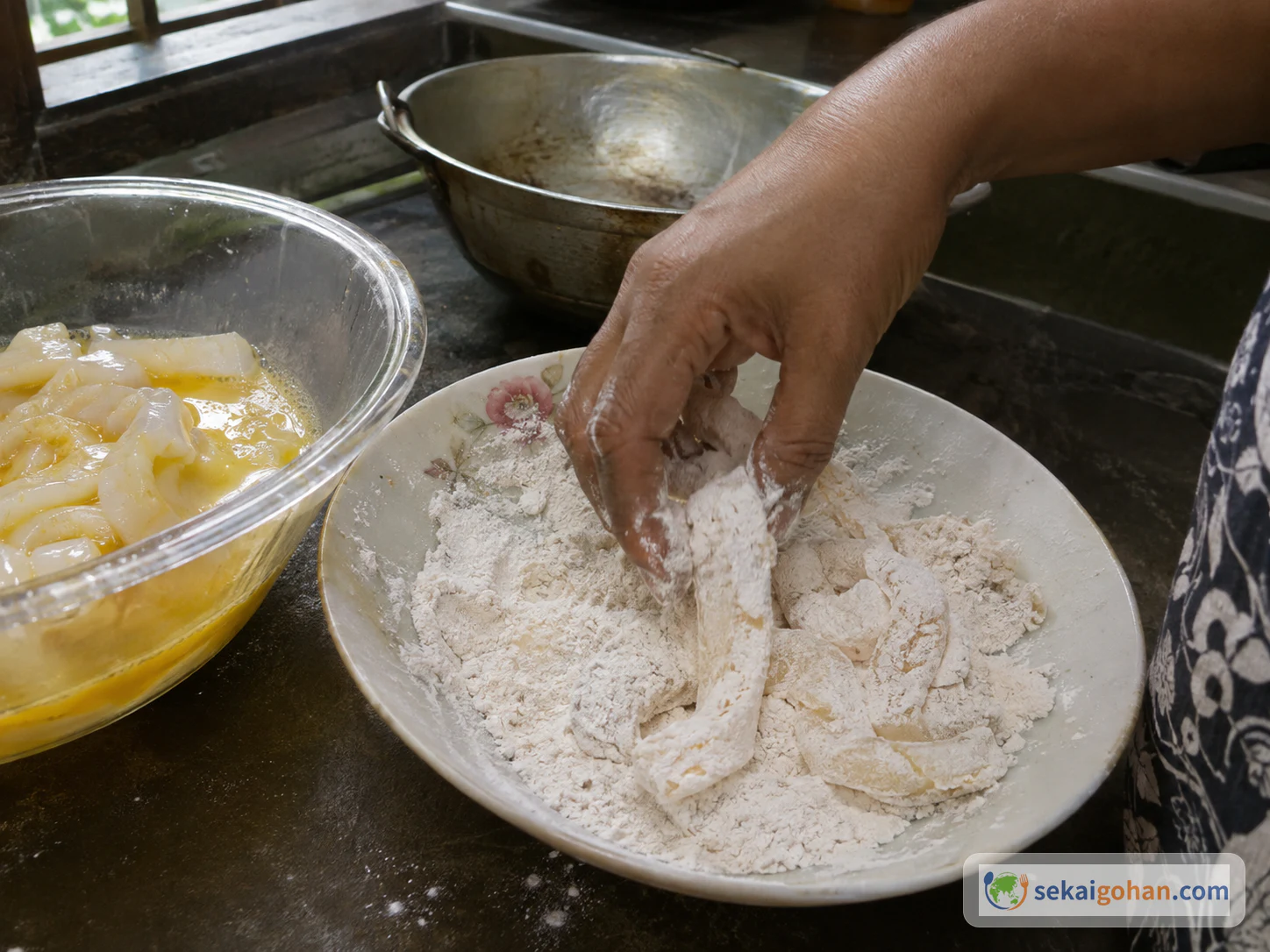
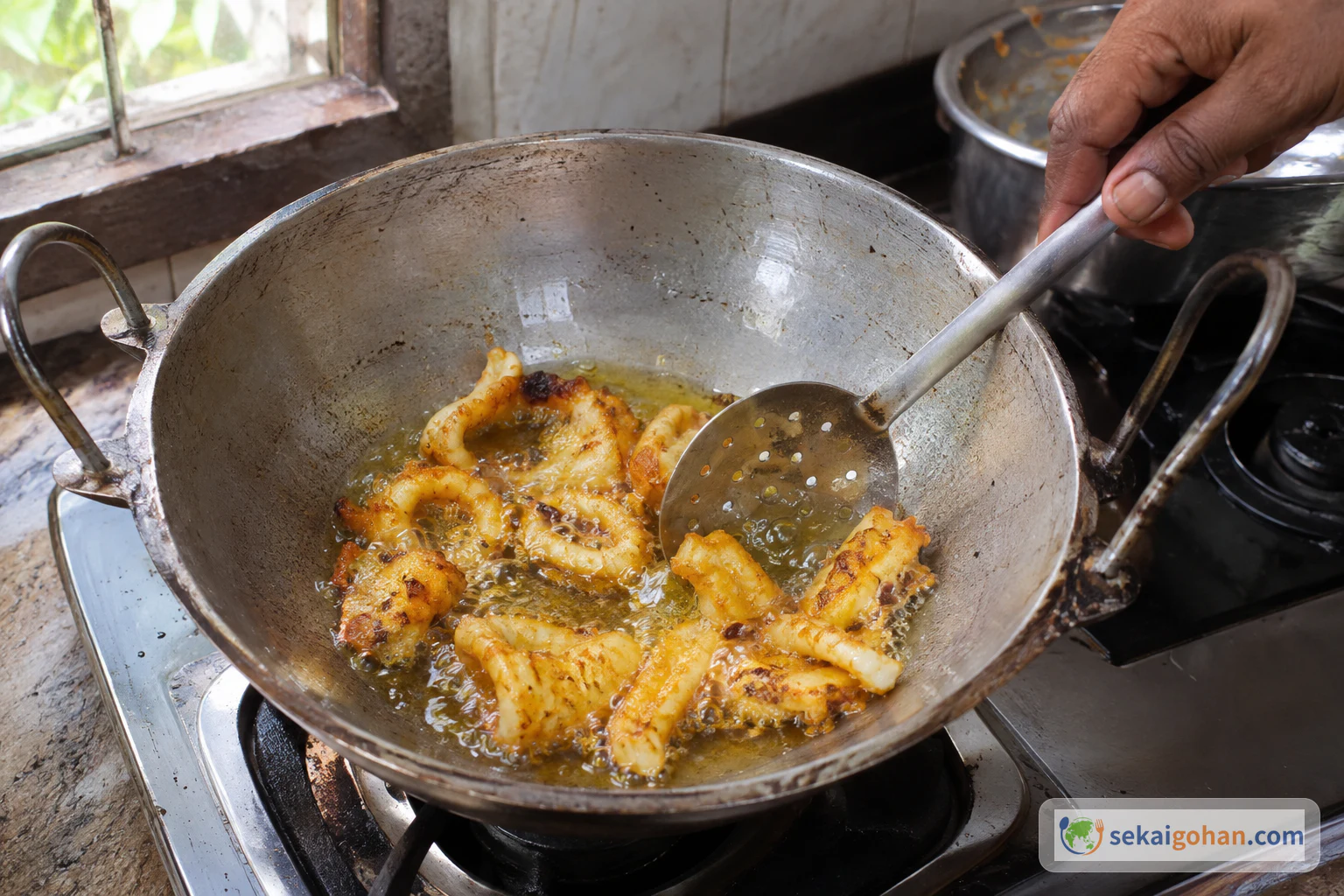
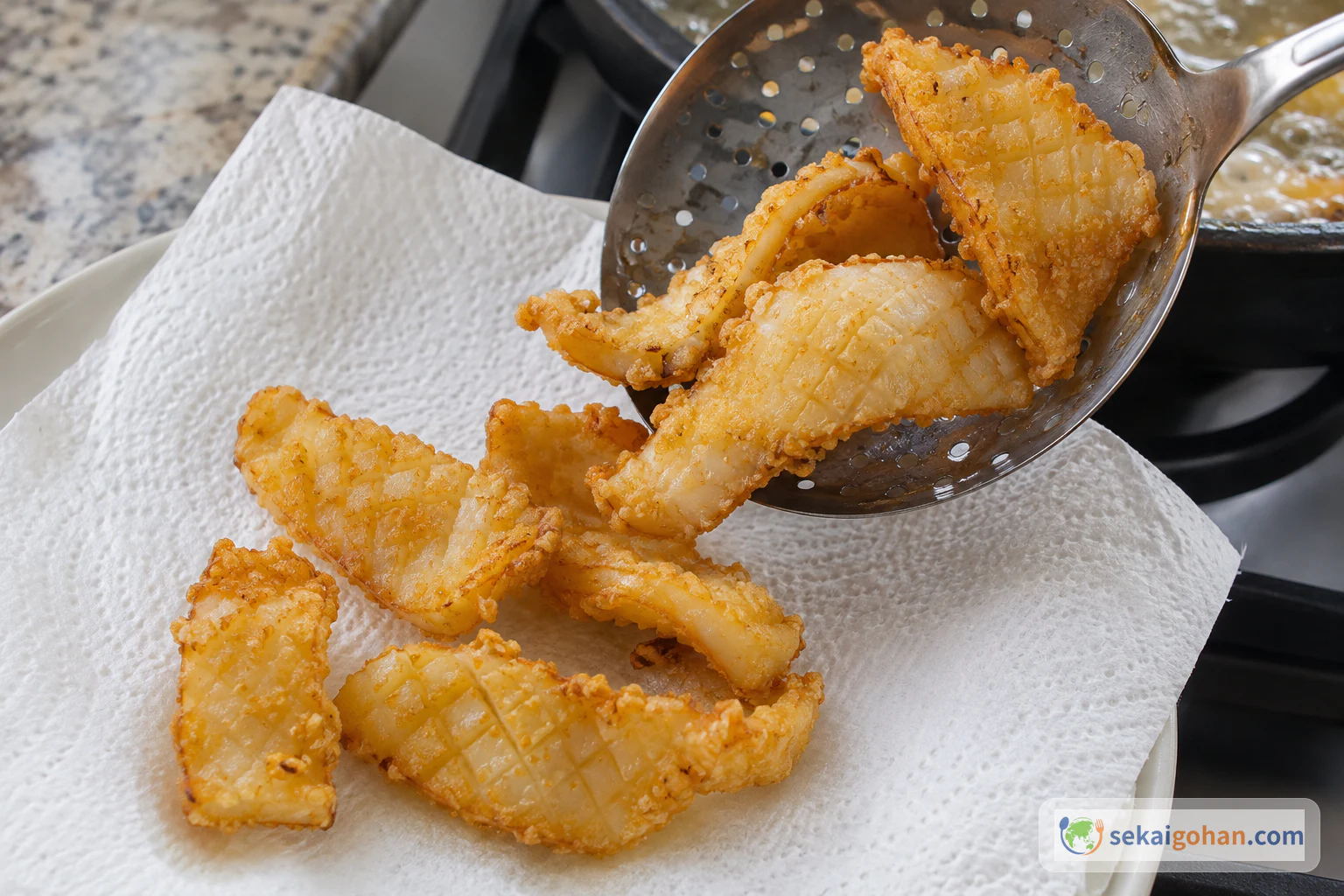
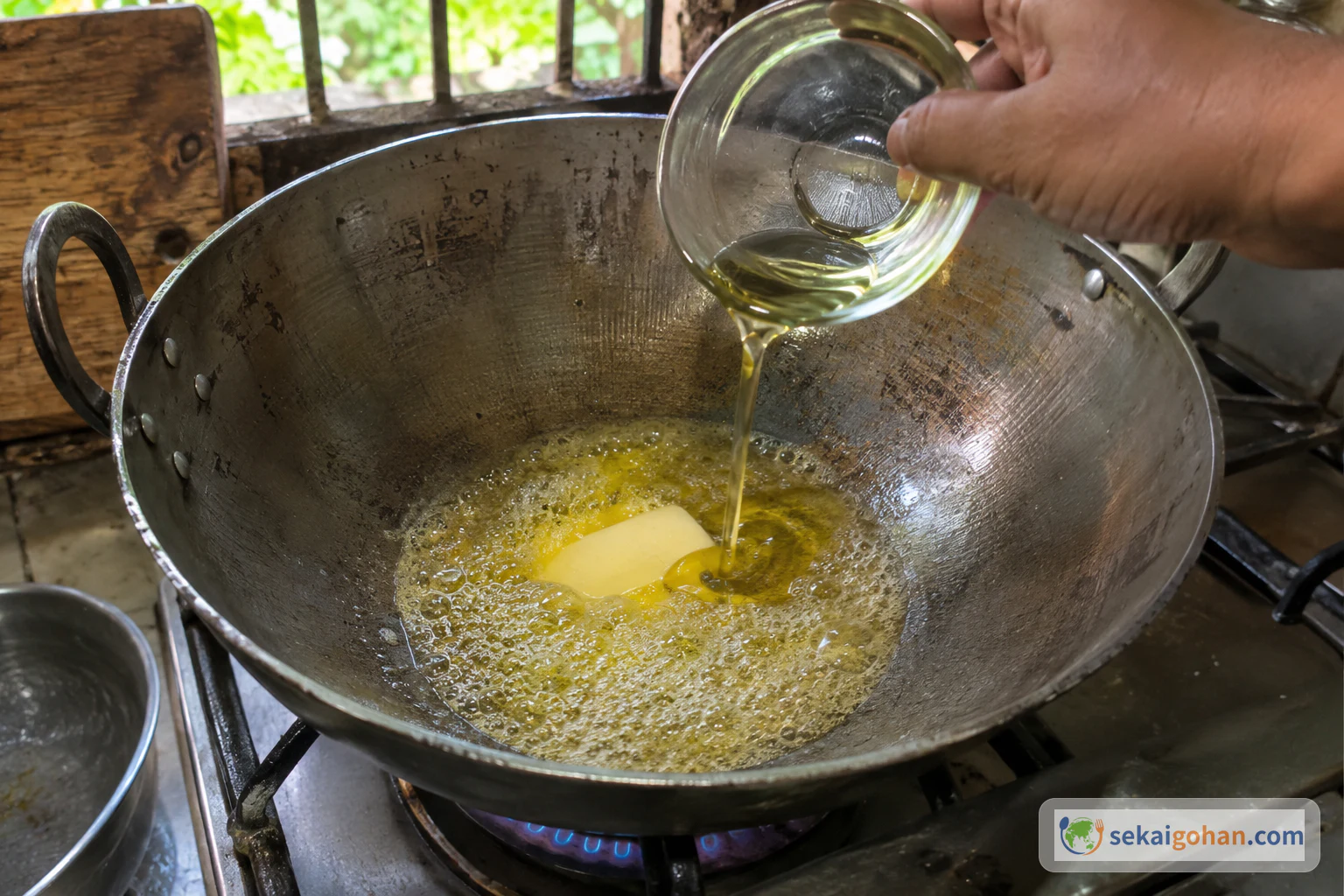
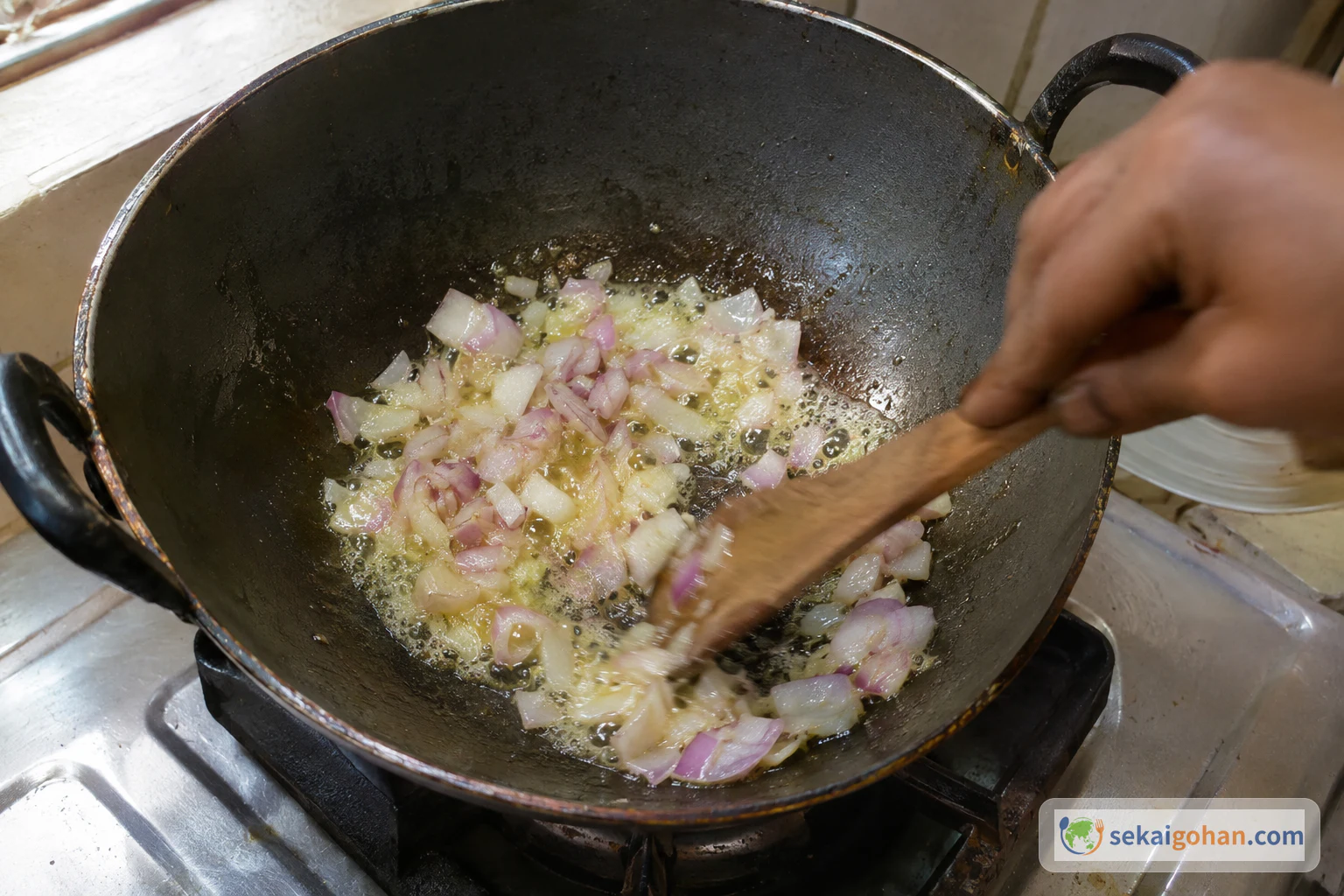
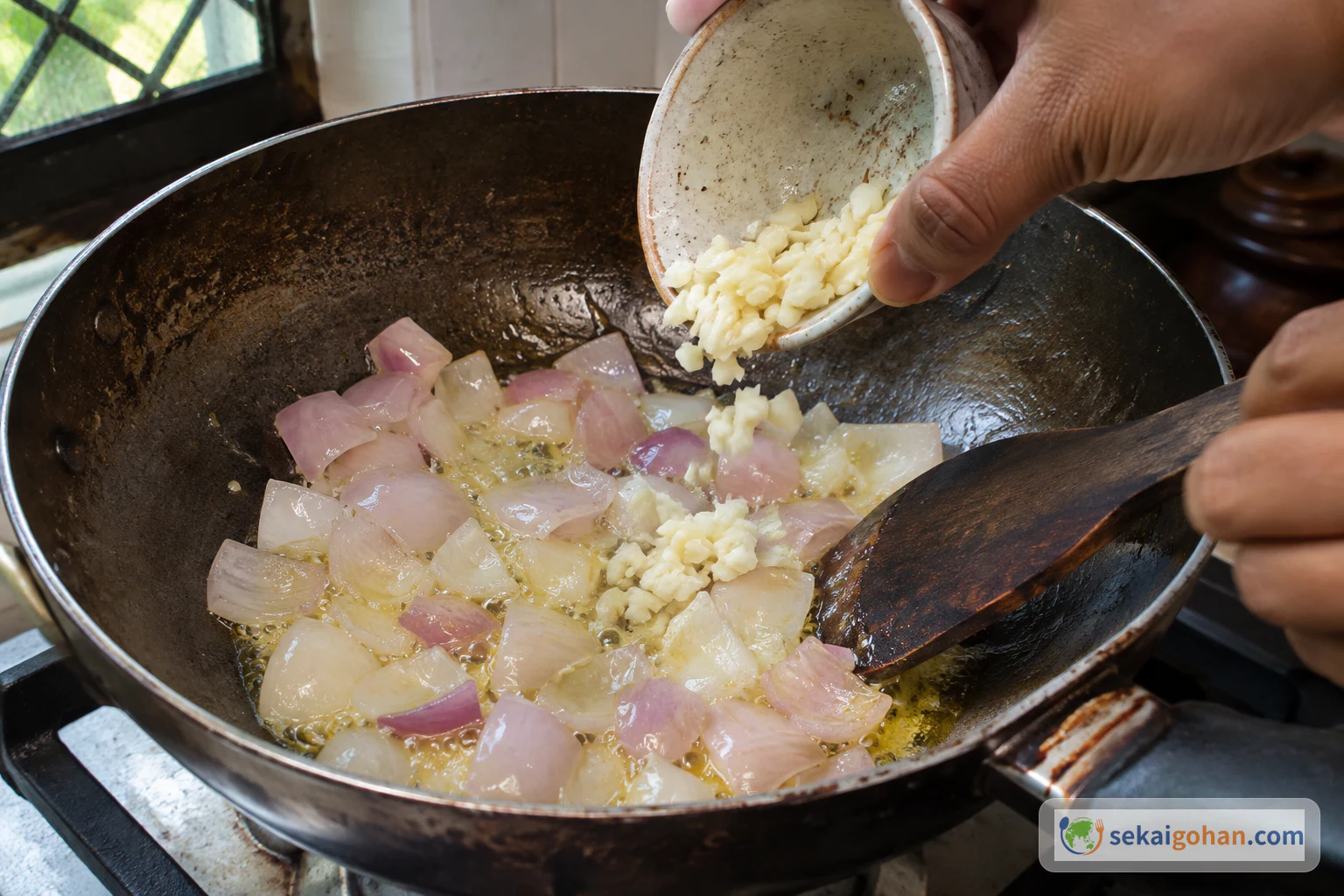
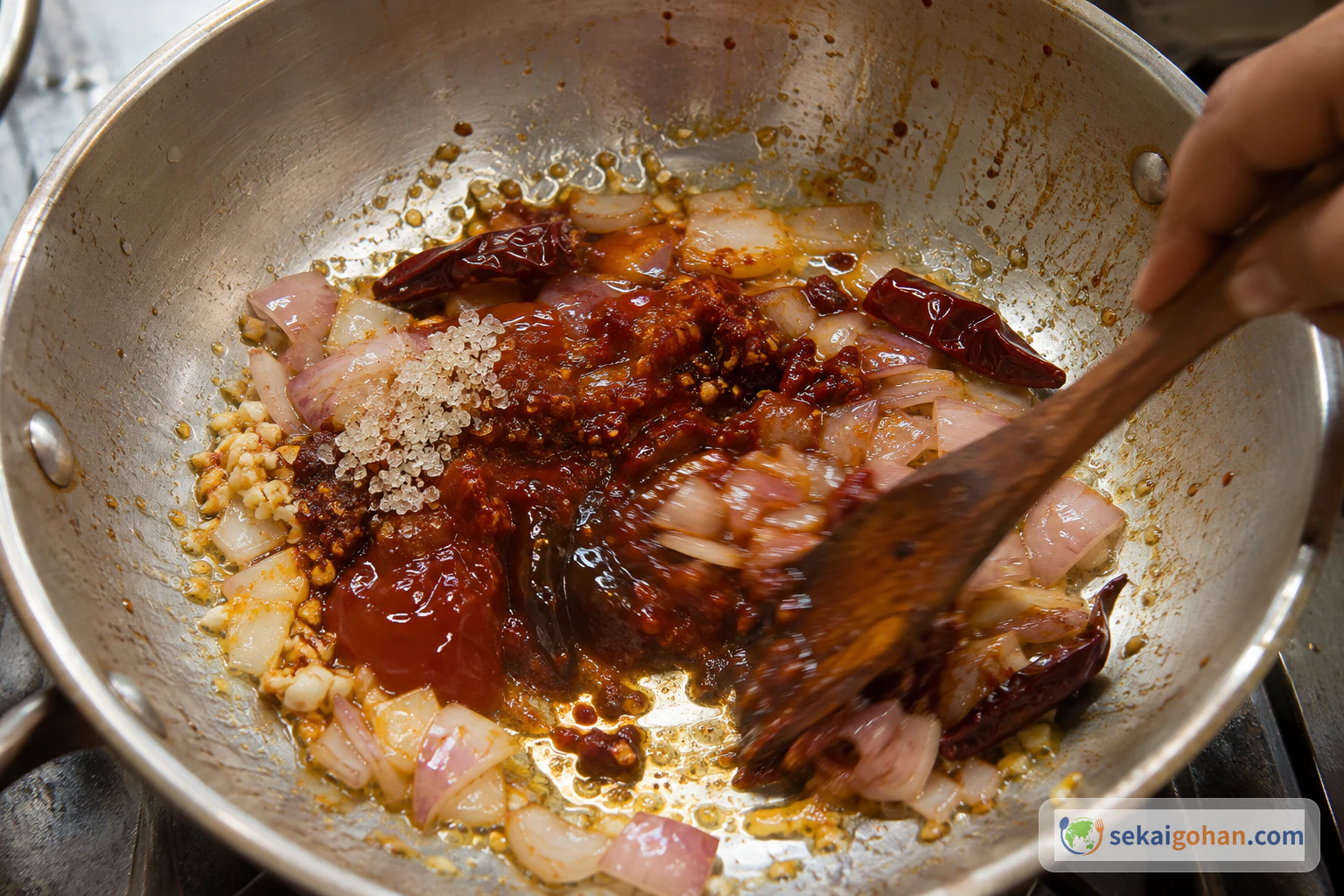
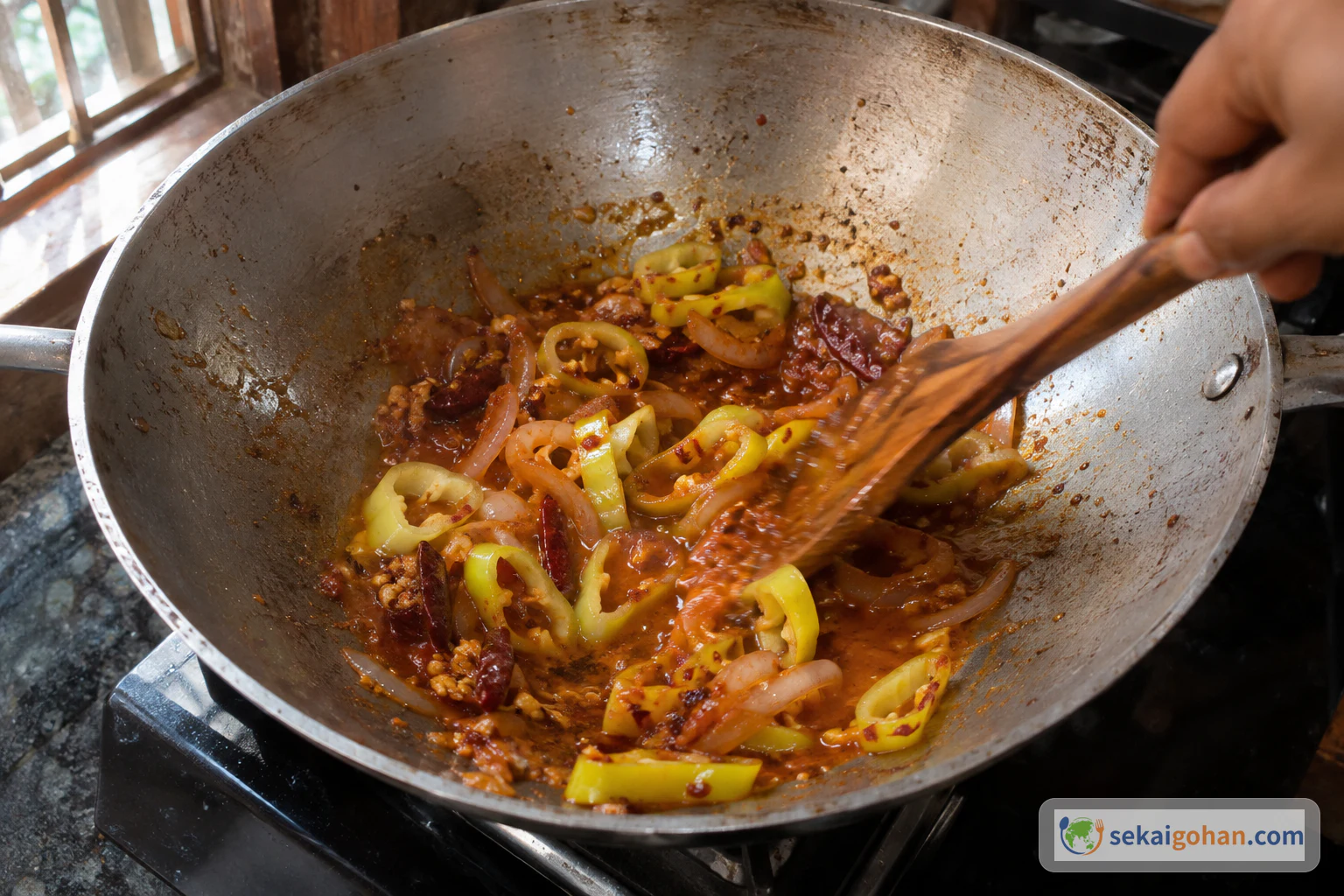
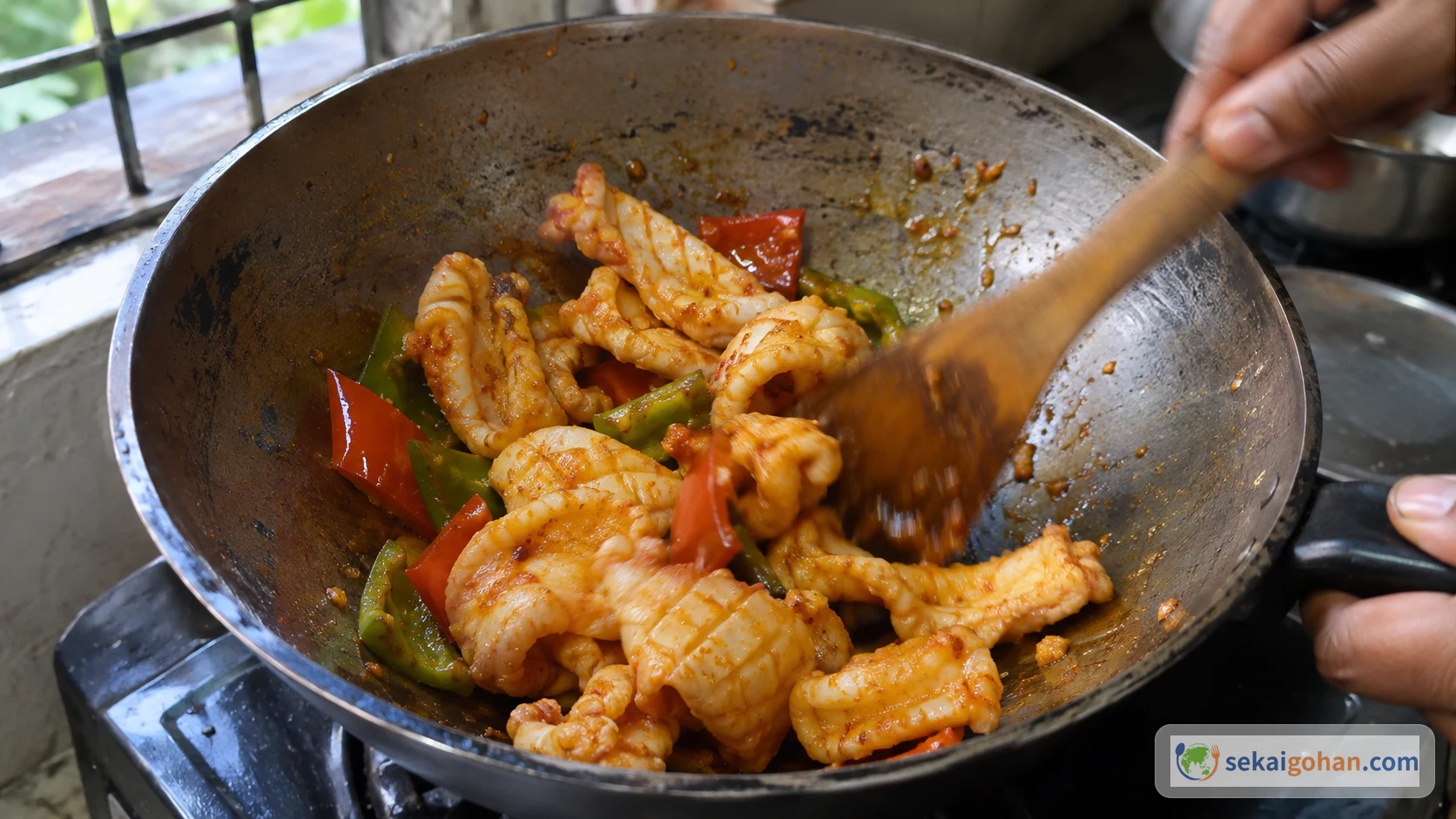
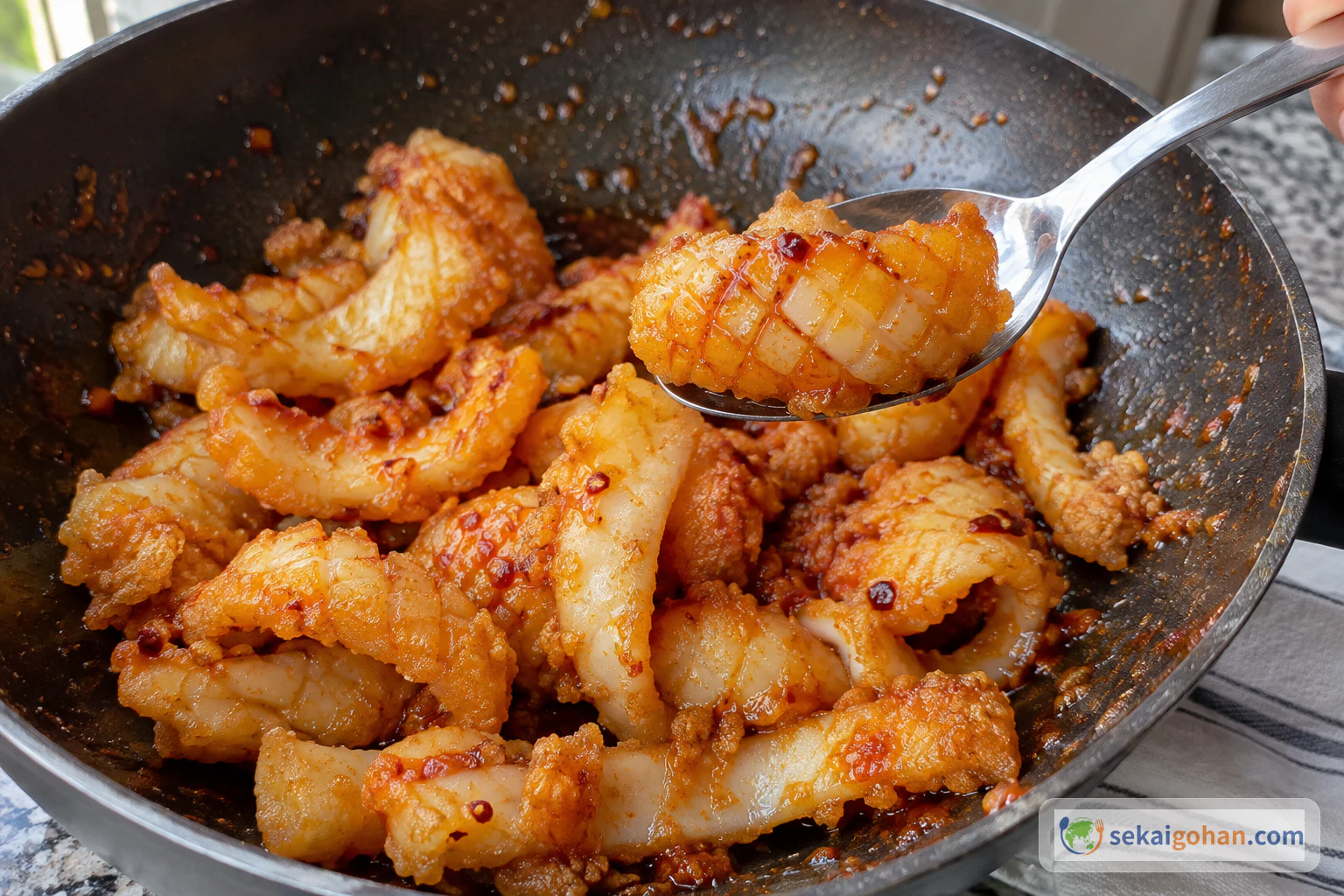
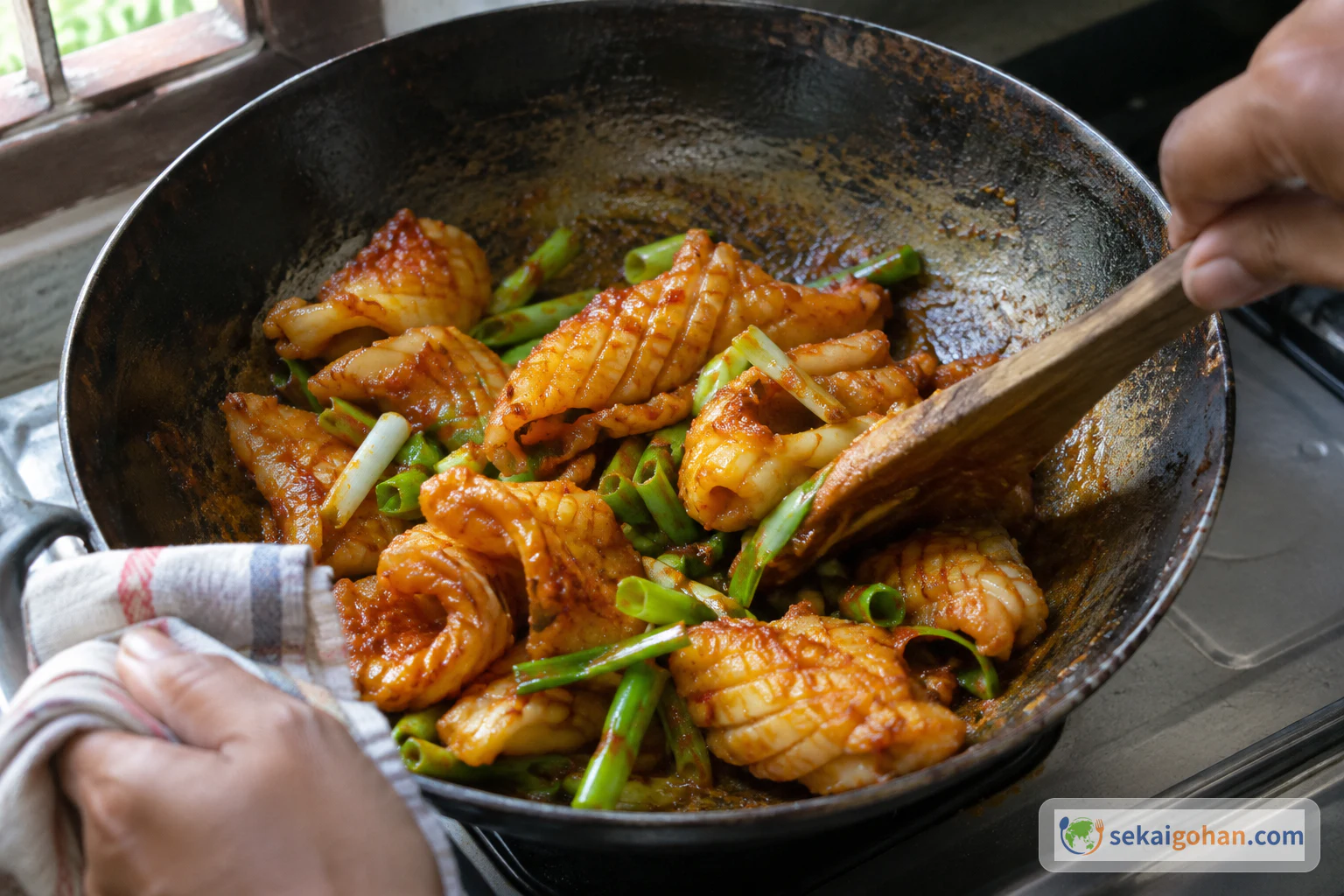
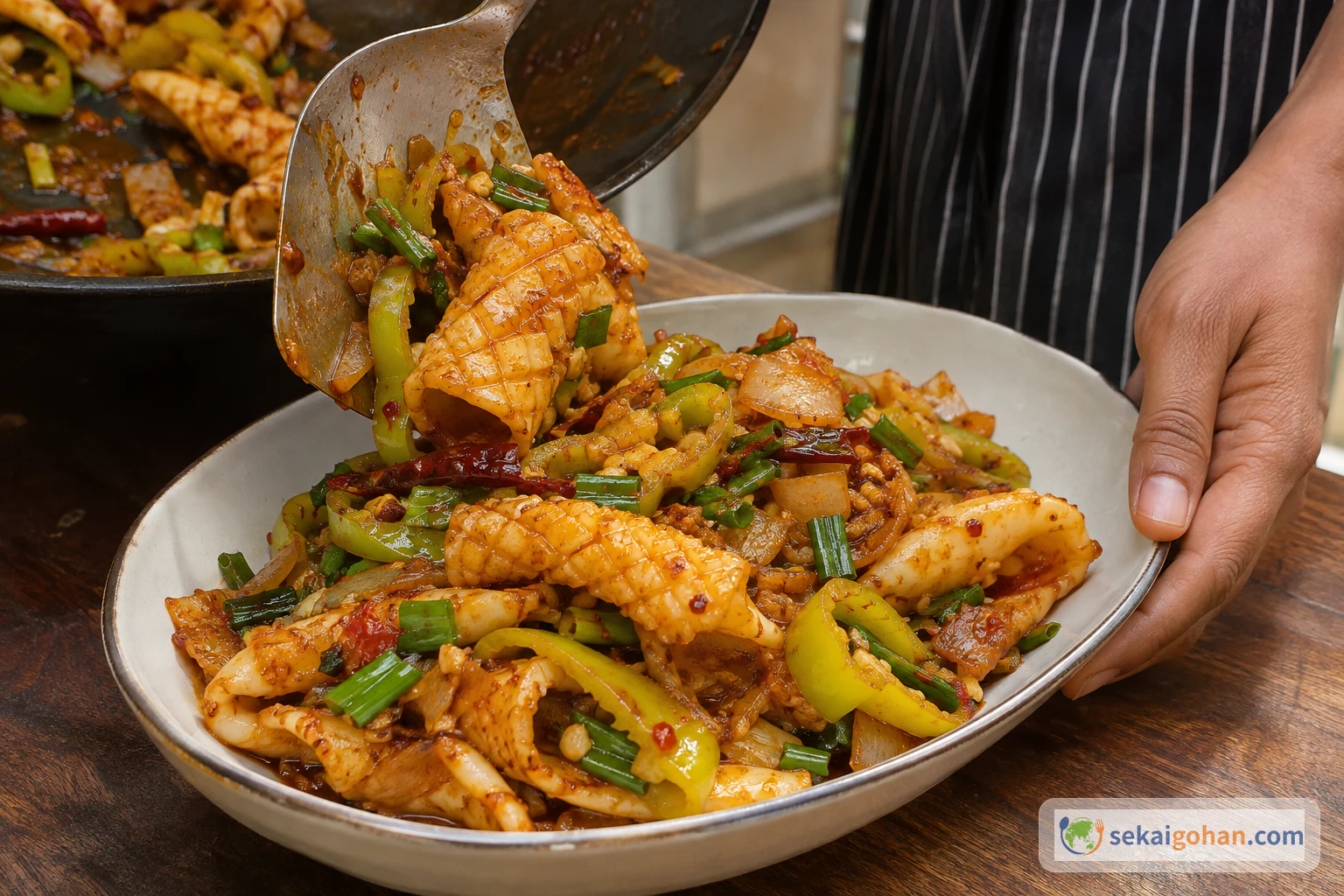
Strips of cuttlefish, scored in a shallow diamond pattern, come out of the oil with a golden, craggy coating. Moments later they hit a pan of foaming butter, garlic, onion, chili paste and softened banana peppers, get a quick toss, and go to the table with a scatter of green onion. Hot butter cuttlefish is that contrast: crunch from the coating, heat from the chilies, and the rich smell of butter and garlic over it all.
The method here follows a single recipe by Sri Lankan-born cook and cookbook author Dini Kodippili, published on The Flavor Bender, at its full 1x amounts. Ingredients and order are not mixed with other versions. The author describes the dish as a Sri Lankan dish with Sri Lankan Chinese (Hakka) influence, eaten as a snack or short eat with cold drinks, or with steamed or fried rice and vegetables.
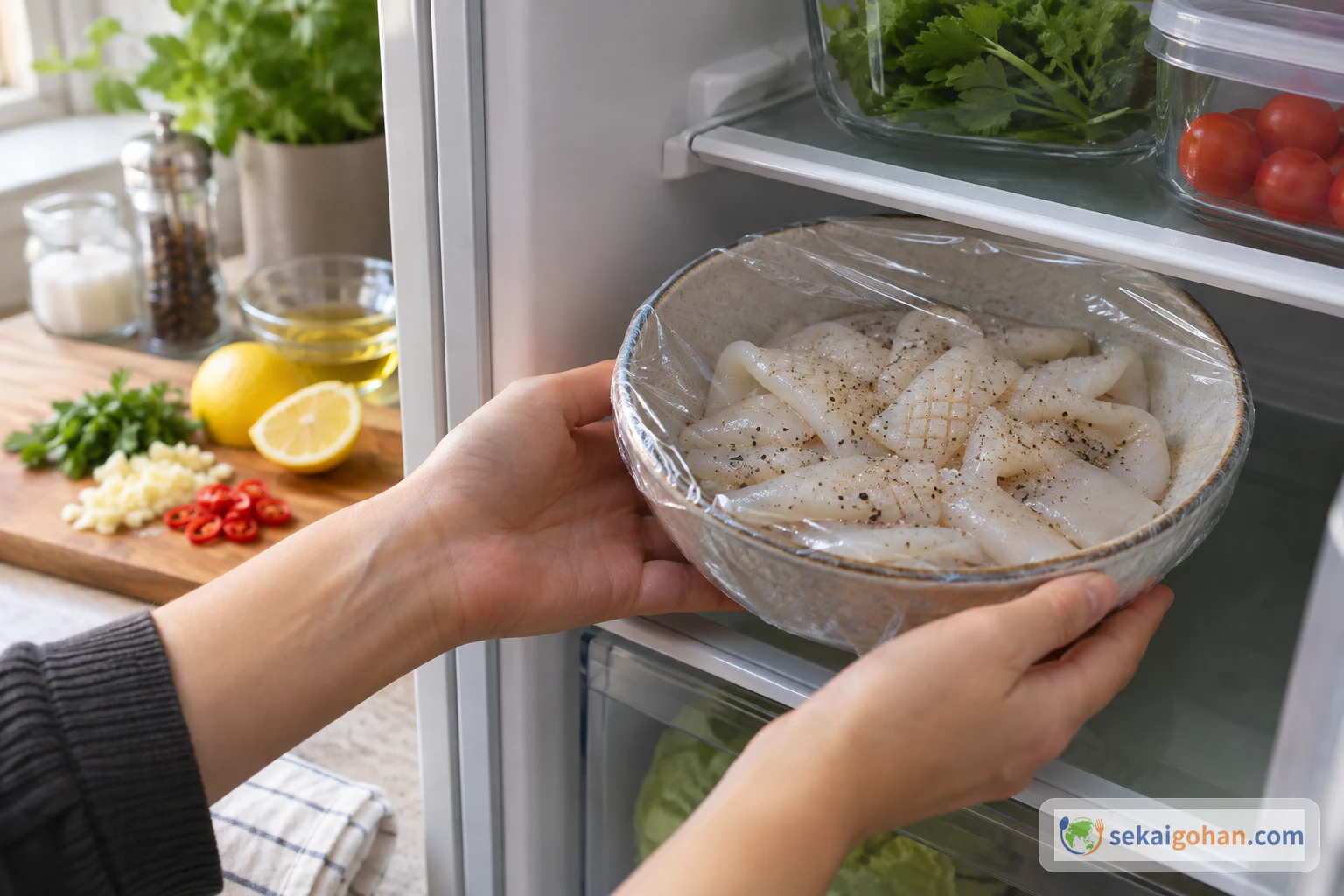
This recipe has not been kitchen-tested by Sekai Gohan. Two things are editorial additions: the cuttlefish rests in the refrigerator rather than on the counter (a general seafood-handling precaution based on FDA guidance, not a tested food-safety condition of the recipe), and a note that frying-oil temperature is not the temperature inside the food.
Where This Dish Sits on the Sri Lankan Table
Dini Kodippili presents hot butter cuttlefish as a fusion dish shaped by Sri Lankan Chinese and Hakka cooking. That is the author's account; its exact history and origin are not settled here. What is clear is the structure: seafood fried in a light coating, then finished in a separate pan with aromatics, chili and butter.
A travel feature in Explore Sri Lanka follows seafood landing in Negombo and moving on to hotels and restaurants, and records hot butter cuttlefish being cooked in the kitchen of Curry Leaf at the Hilton Colombo: fried in hot oil, then combined with aromatics in another pan. That is one restaurant kitchen's practice, not a home recipe or a source of amounts. A dining feature on Hi Online introduces the dish as a well-loved tavern dish served as part of a spread of plates, which gives a picture of how it is eaten rather than a ranking of popularity.
Other home versions exist with different formulas. DailyLife.lk, for example, publishes a version using 250 g of cuttlefish with flour and corn flour and spices such as turmeric. It is useful for seeing the range of the dish, but none of its seasoning or coating is used here.
For more of the island's cooking, see more Sri Lankan dishes.
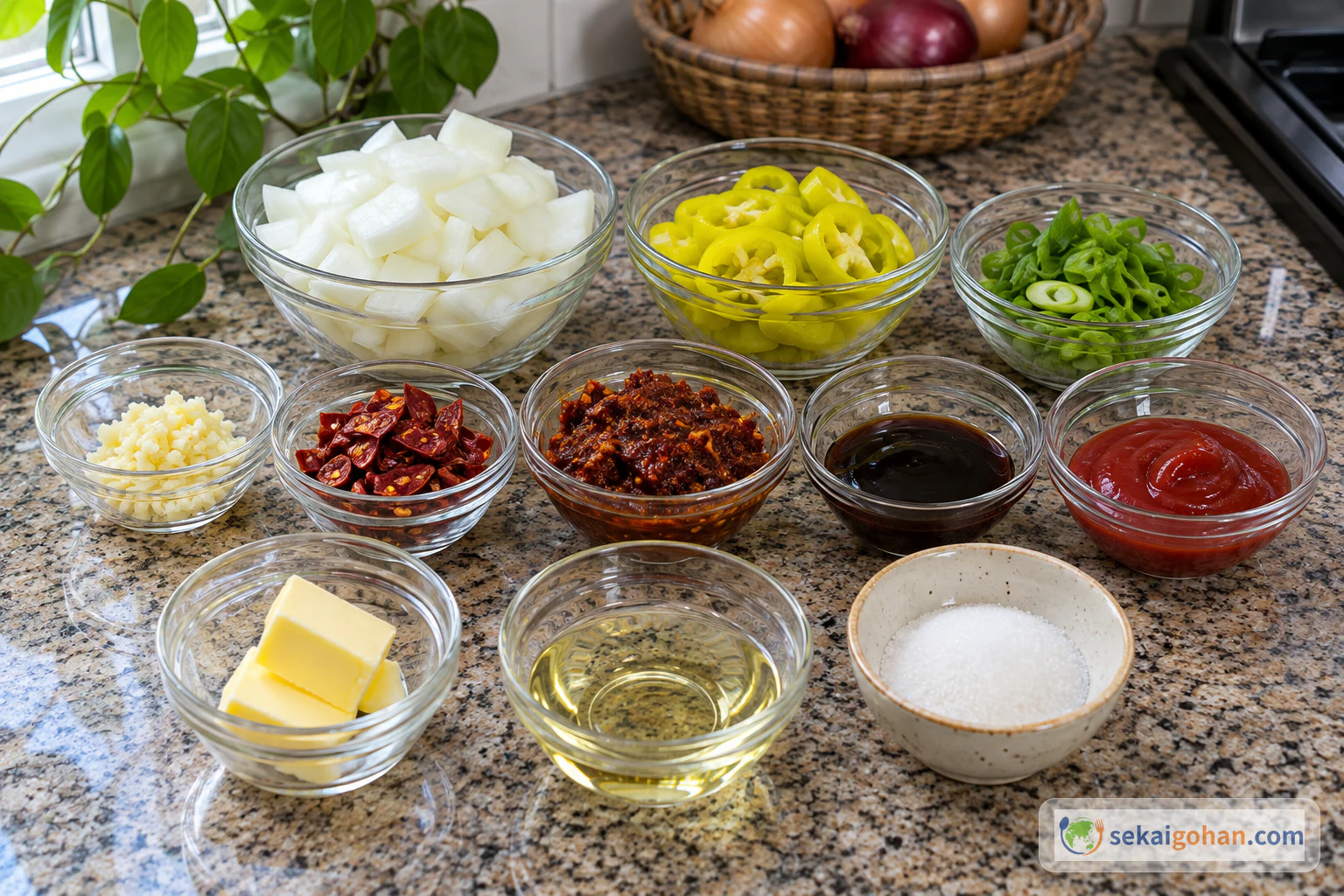
Ingredients (4 servings, or 2 generous servings)
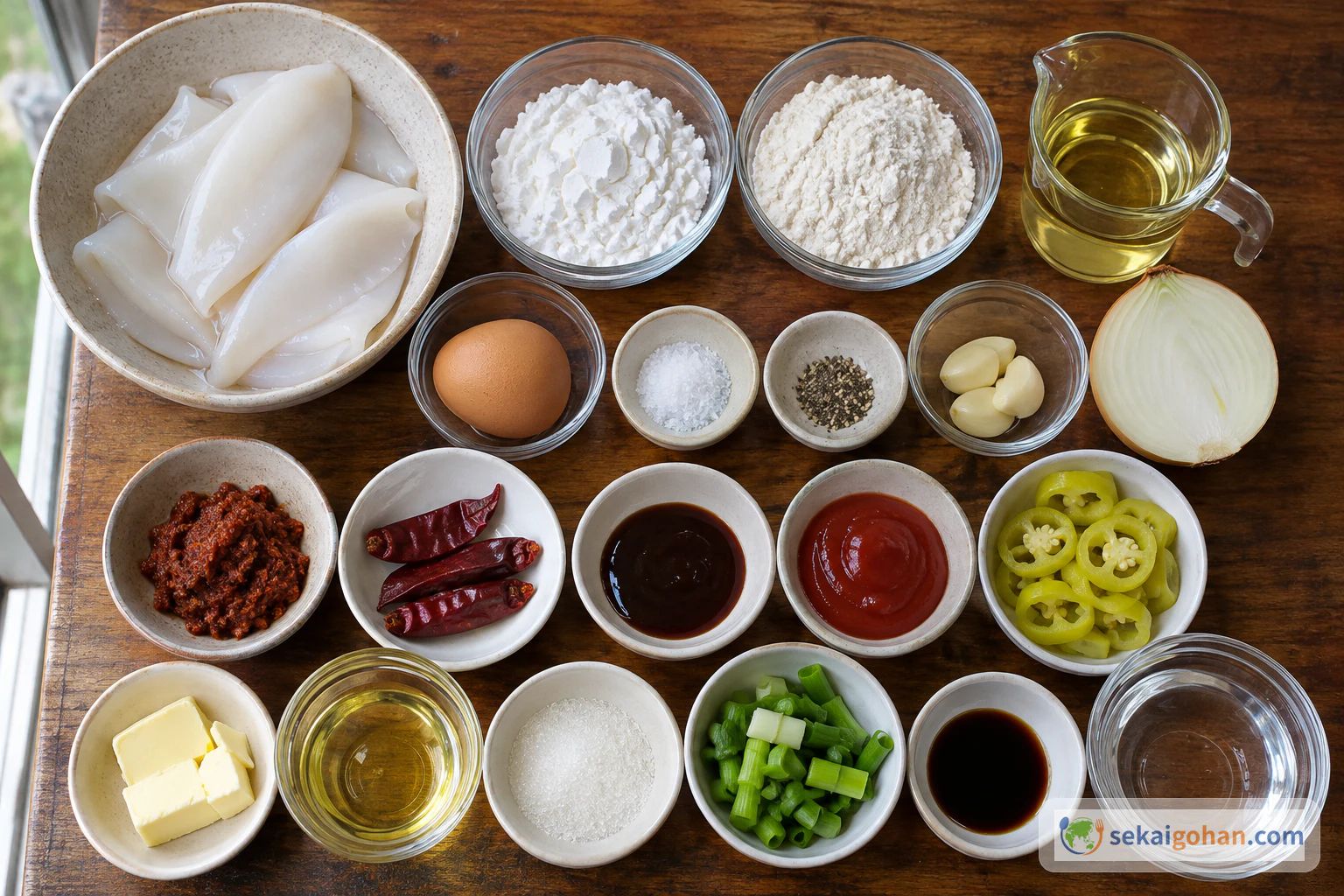
The first group coats and fries the cuttlefish; the second group builds the sauce in the pan.
This dish contains cuttlefish (a mollusc), egg, wheat and milk (butter). Sri Lankan chili paste may contain shrimp, oyster sauce contains oyster, and soy sauce or some bottled sauces contain soy. Products differ, so check the label of each chili paste, chili crisp, oyster sauce and soy sauce, including any shared-facility or cross-contact statements.
Equipment
- Cutting board and sharp knife
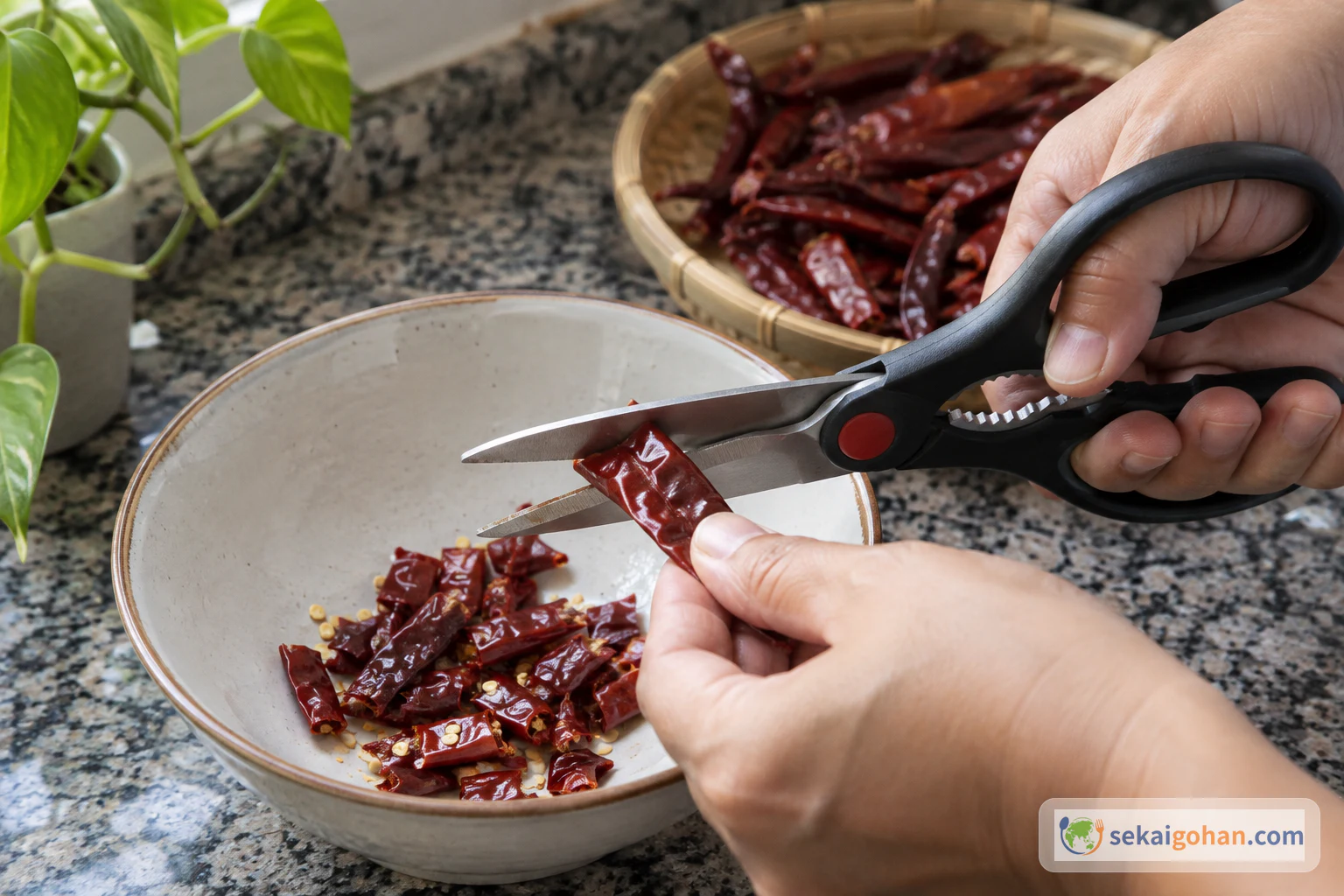
- Kitchen scissors (for the dried chilies)
- Several bowls for seasoning, coating and the prepared aromatics
- Deep pot for frying
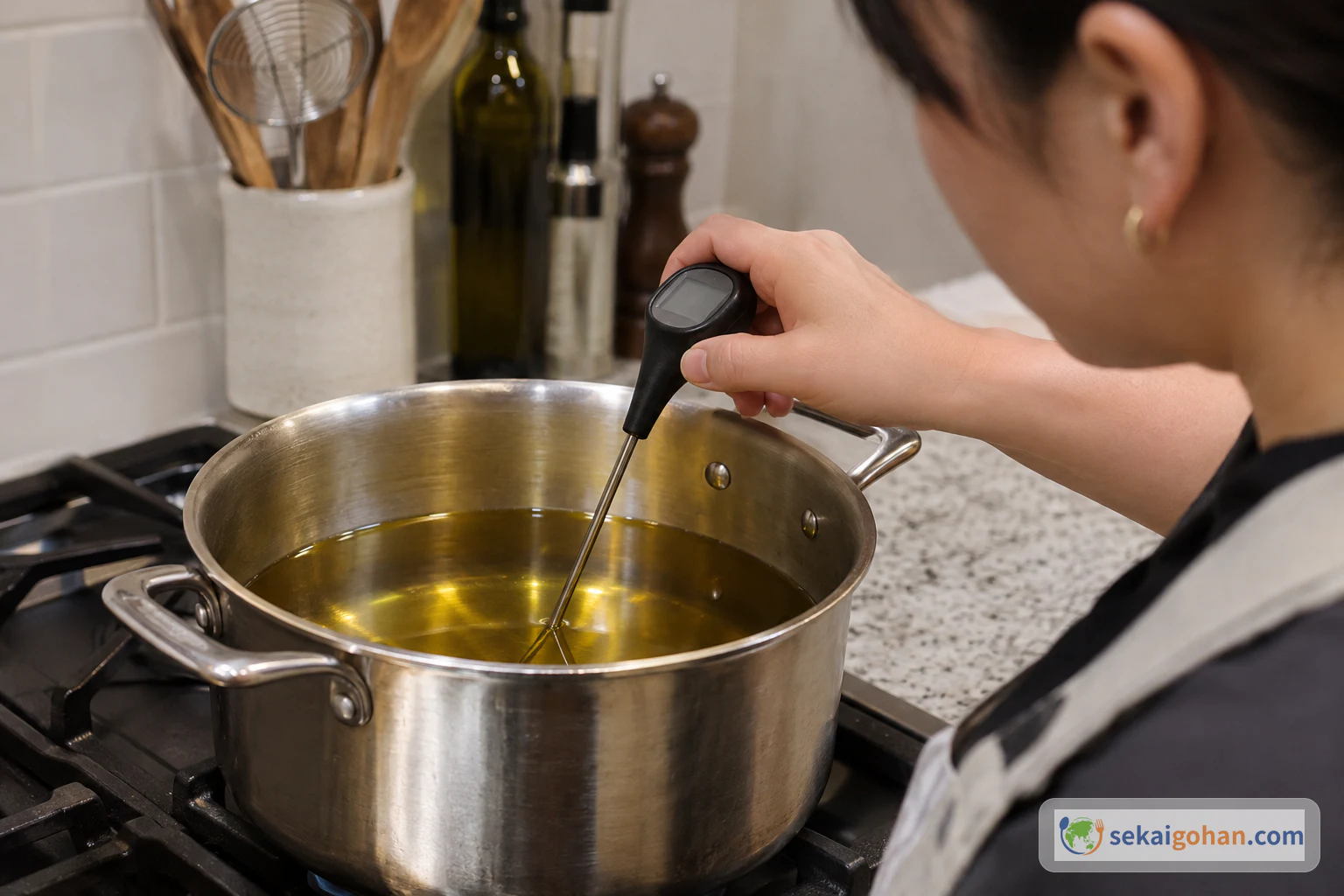
- Oil thermometer
- Slotted spoon
- Paper towels for draining
- Large stainless-steel or carbon-steel wok or skillet (a nonstick pan is not suited to this high heat)
Choosing and Substituting
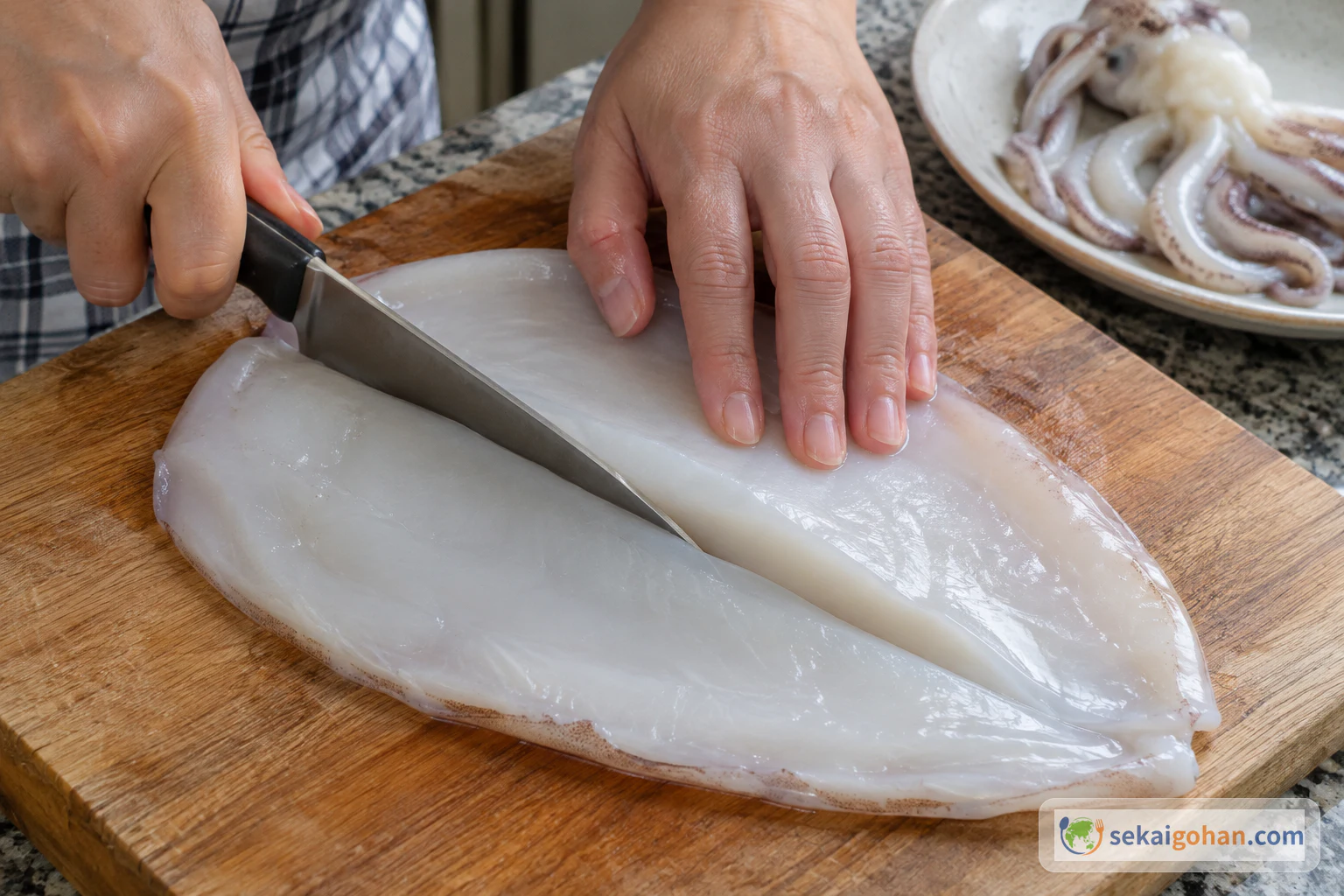
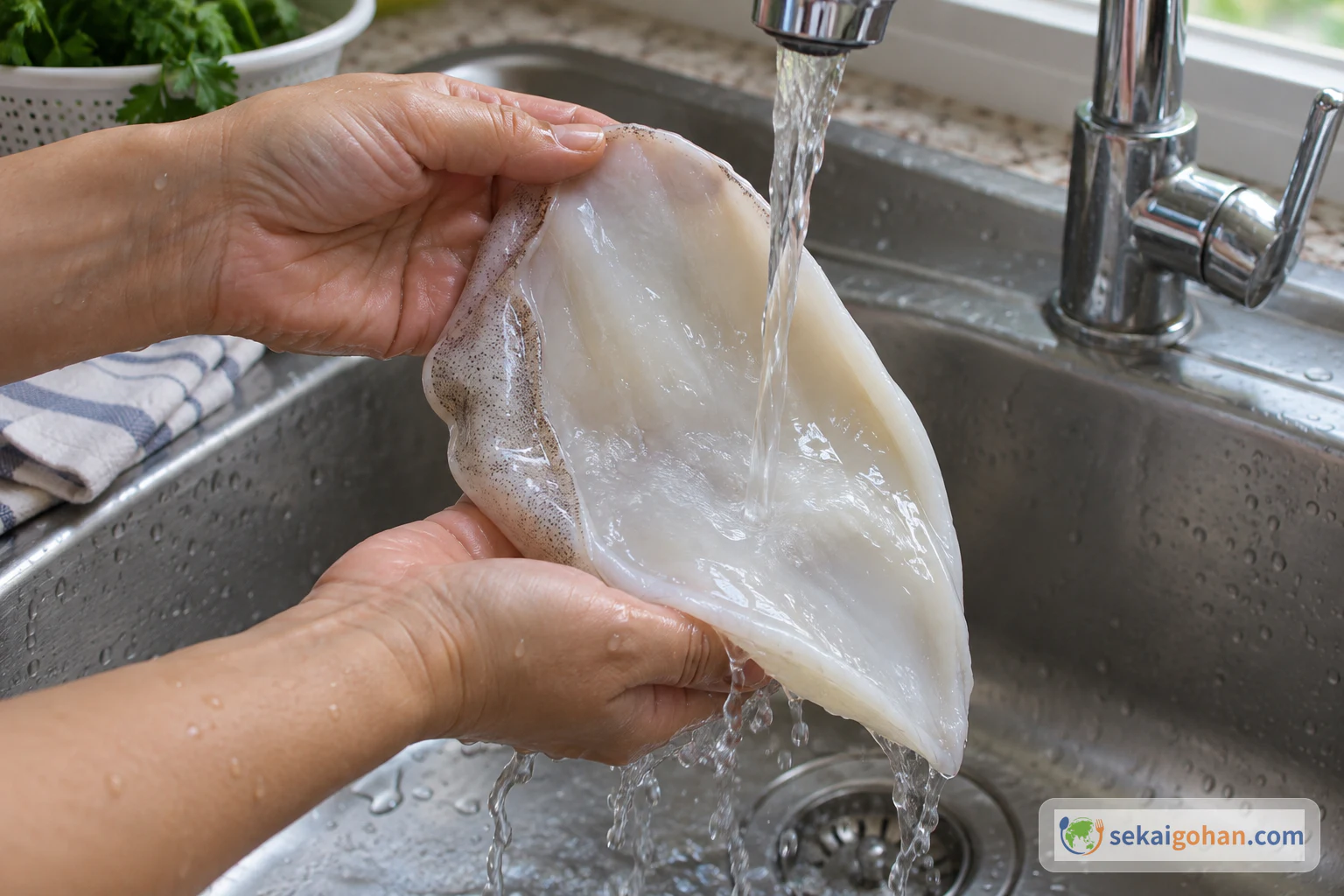
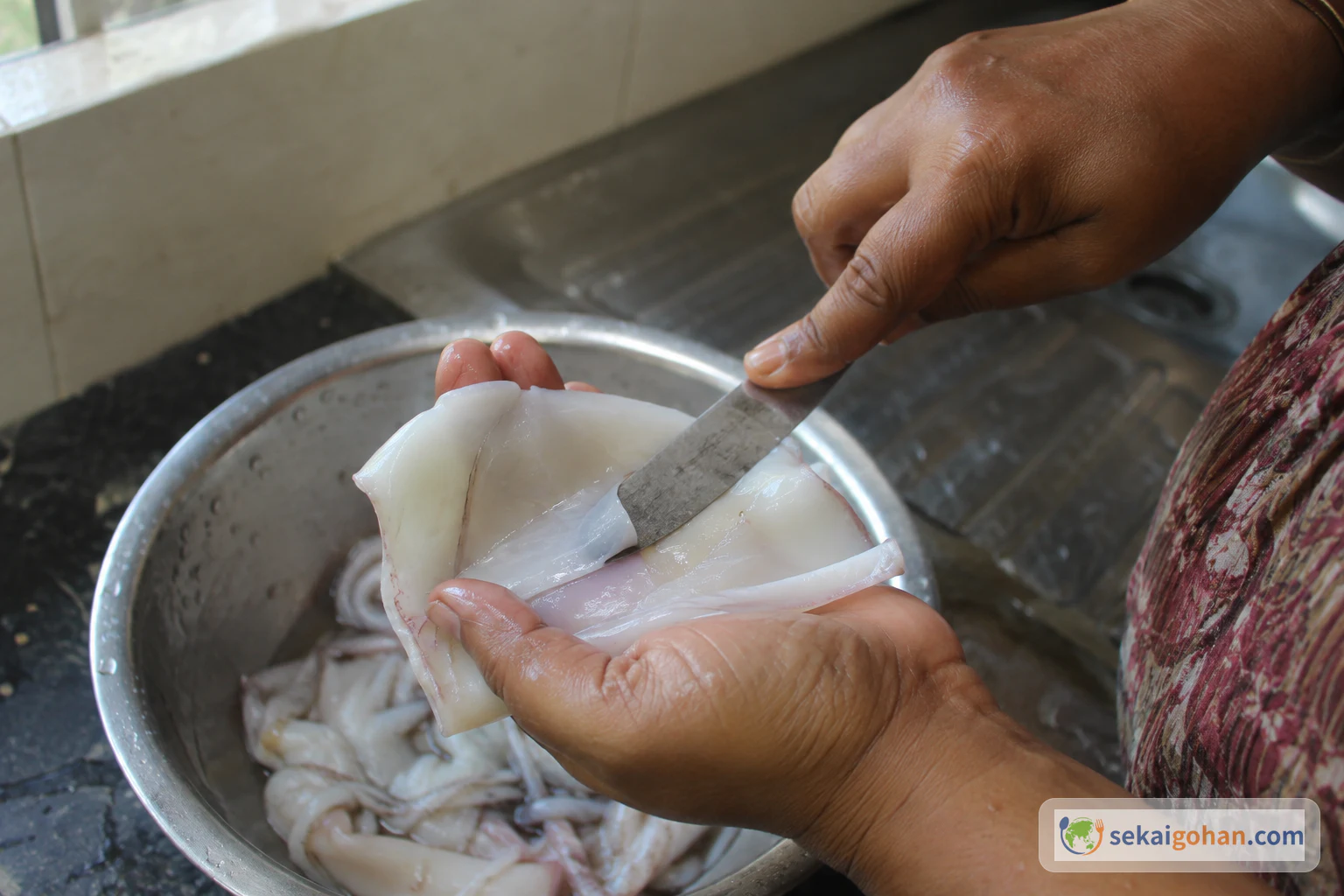
Cuttlefish. Look for cleaned cuttlefish tubes, fresh or frozen; they save the cleaning work and make even pieces easier. Squid or calamari can be used instead. They are a different animal with a different texture, so treat that as a squid version of the dish rather than the same thing.
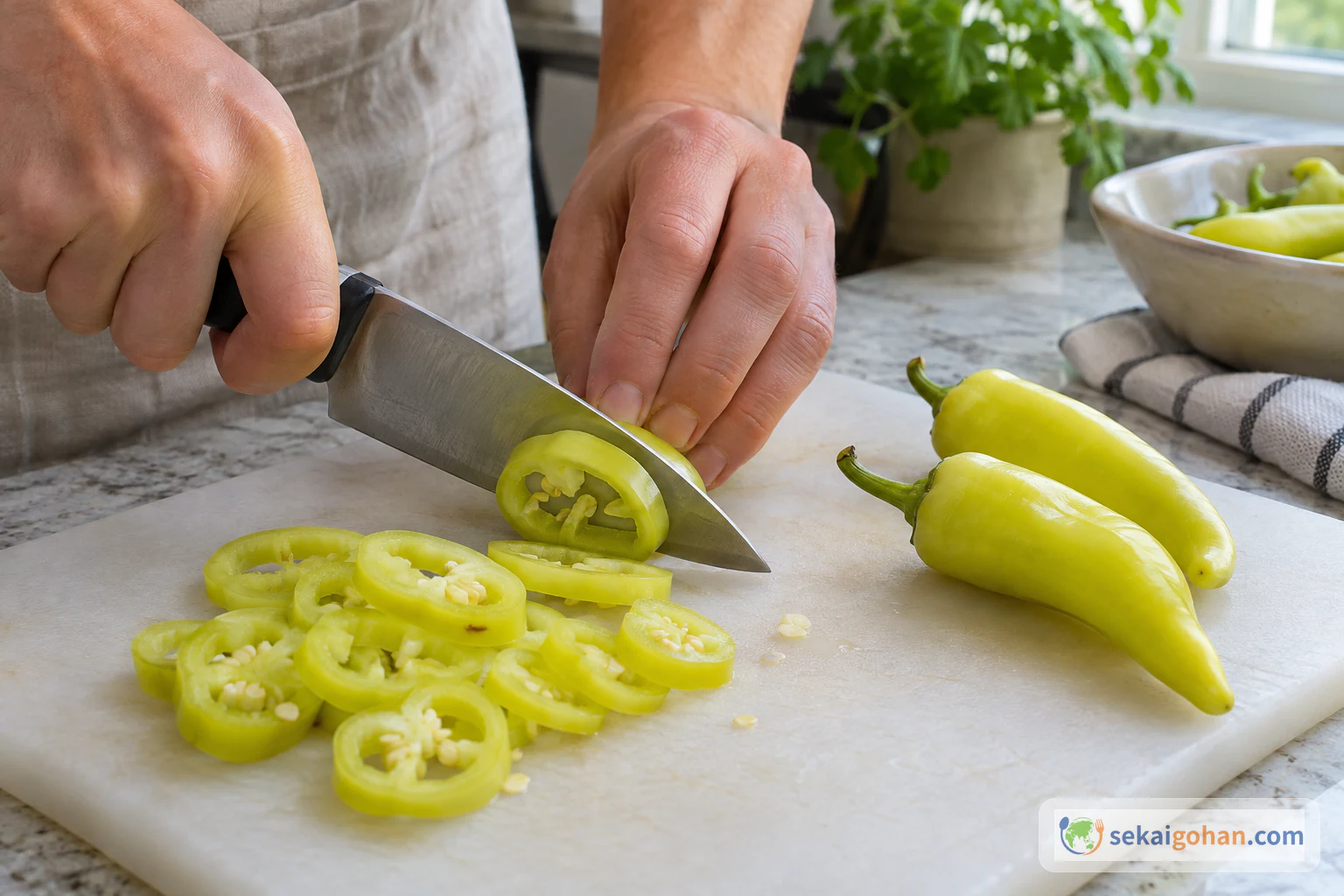
Banana peppers. Alternatives are Hungarian peppers, about 1 cup of seeded jalapeños, or sweet bell peppers. Bell peppers make the dish sweeter and milder; jalapeños bring more heat, which drops when the seeds are removed.
Sri Lankan chili paste. It can include shrimp, which adds savory depth. If you cannot find it, use a Chinese-style chili crisp or chili oil, using the solid chili part rather than pouring in extra oil. The flavor will differ, and so will the allergens, so read the label. Oyster sauce is optional and especially useful when Sri Lankan chili paste is not used; this version includes it.
Butter. Use 45 g of margarine as an alternative. If you are avoiding dairy, check that the margarine itself is dairy-free.
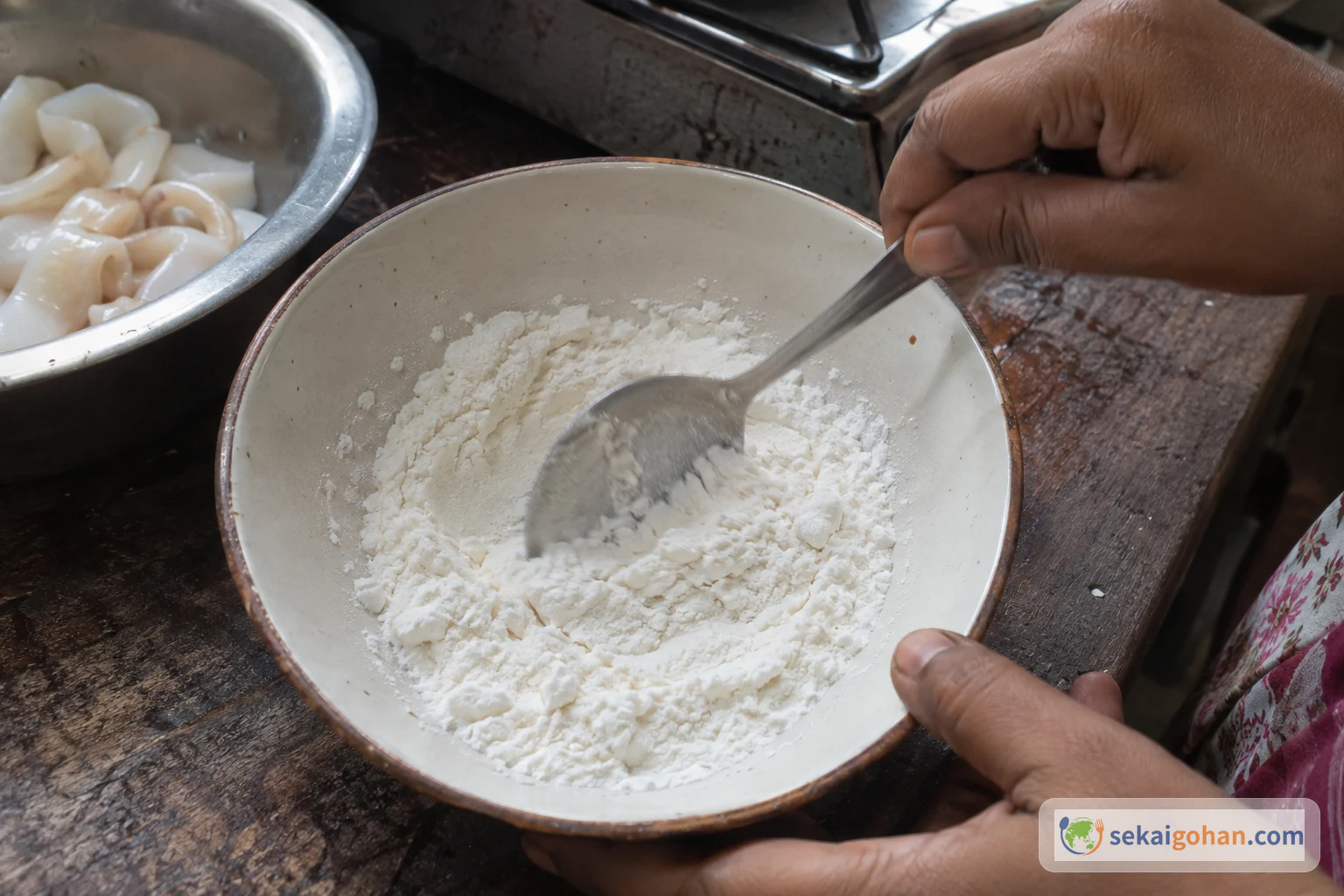
Starch and flour. Potato starch is an editorial alternative to cornstarch, not the same ingredient, and it can change how the coating crisps. Other flours in place of all-purpose flour may also change the texture.
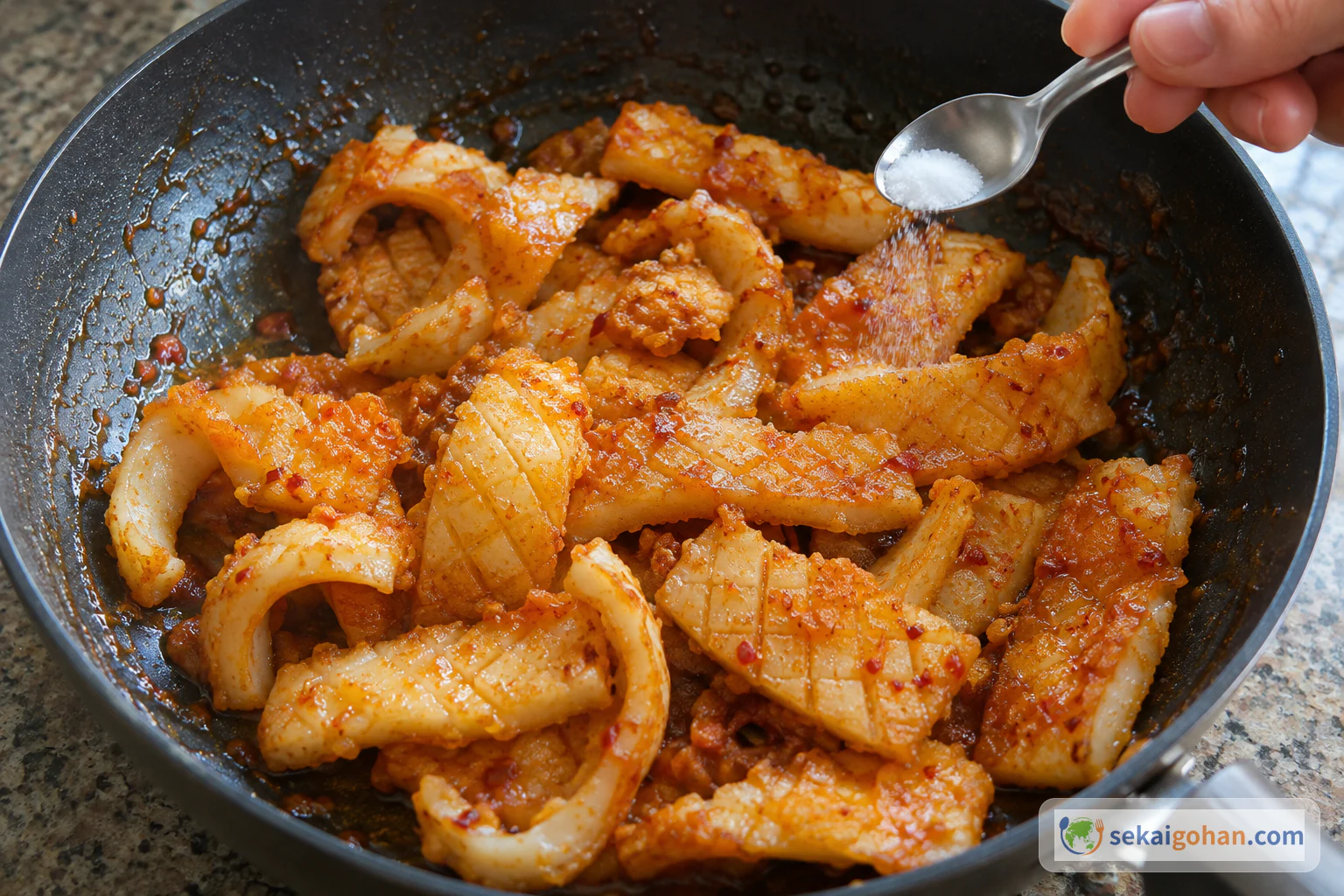
Finishing seasoning. The finish can be salt or soy sauce; this version uses salt. You do not need both.
Milder heat. Remove the seeds of the dried chilies or leave them out, or use sweet bell peppers. Using a little less chili paste softens the flavor along with the heat.
Method
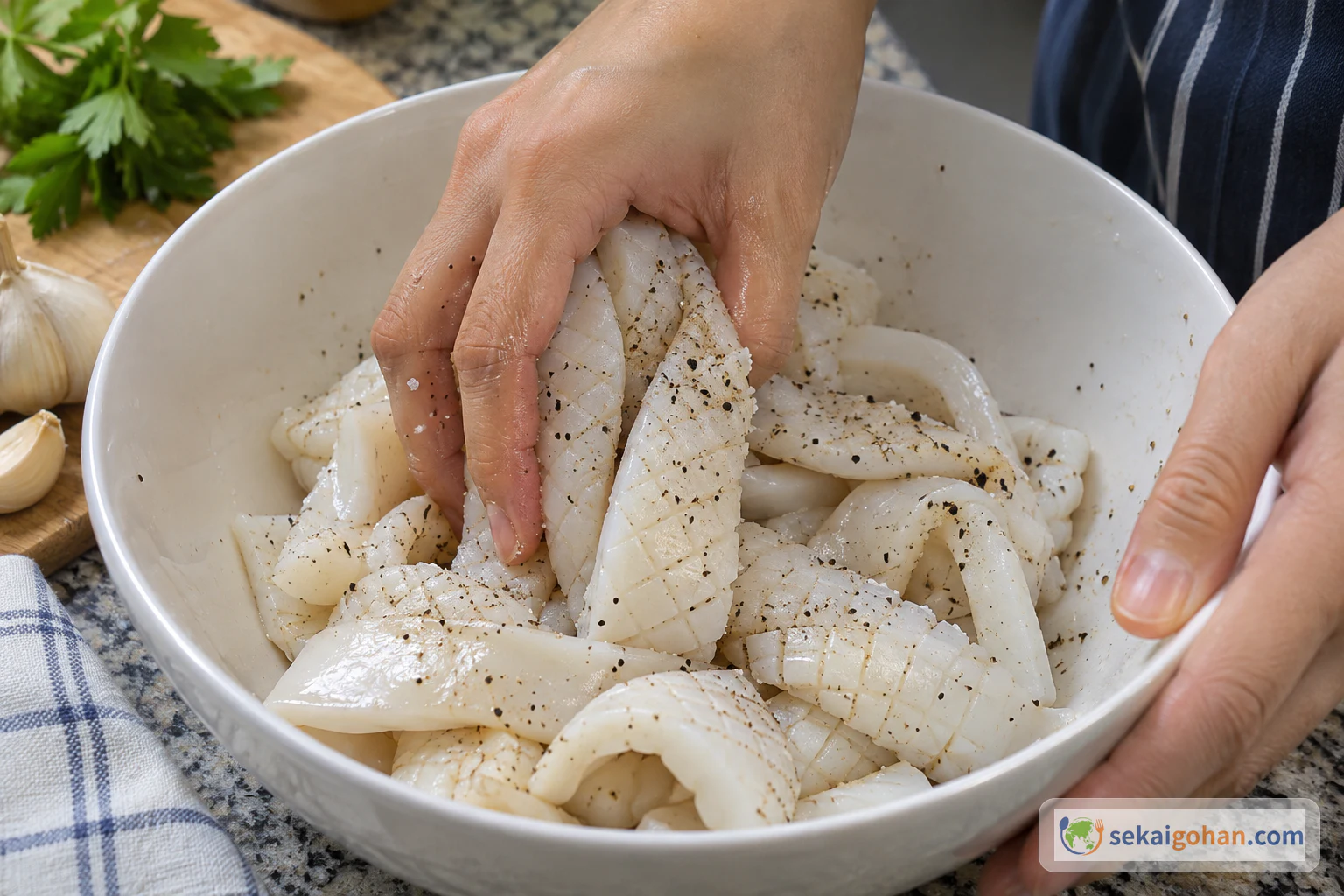
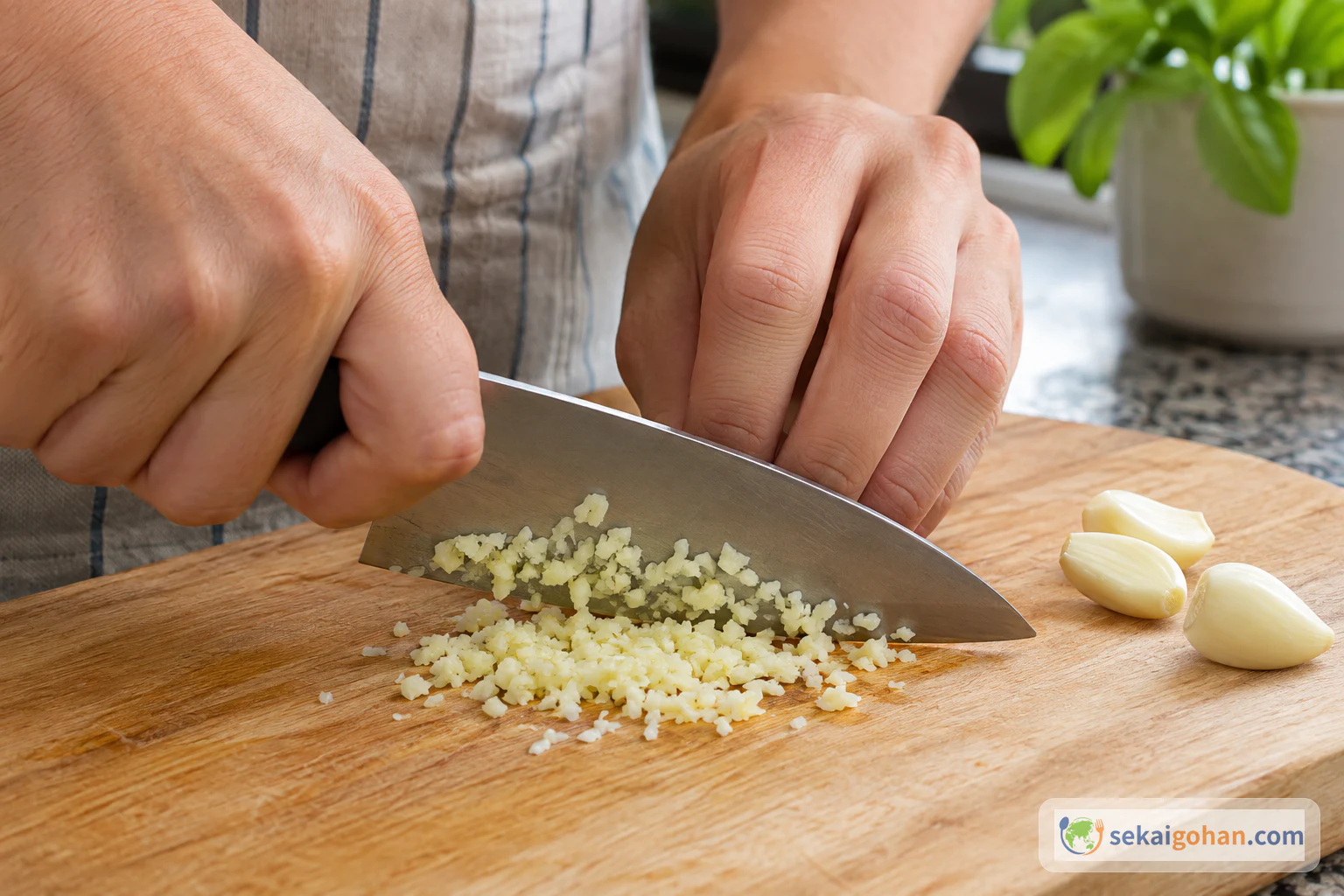
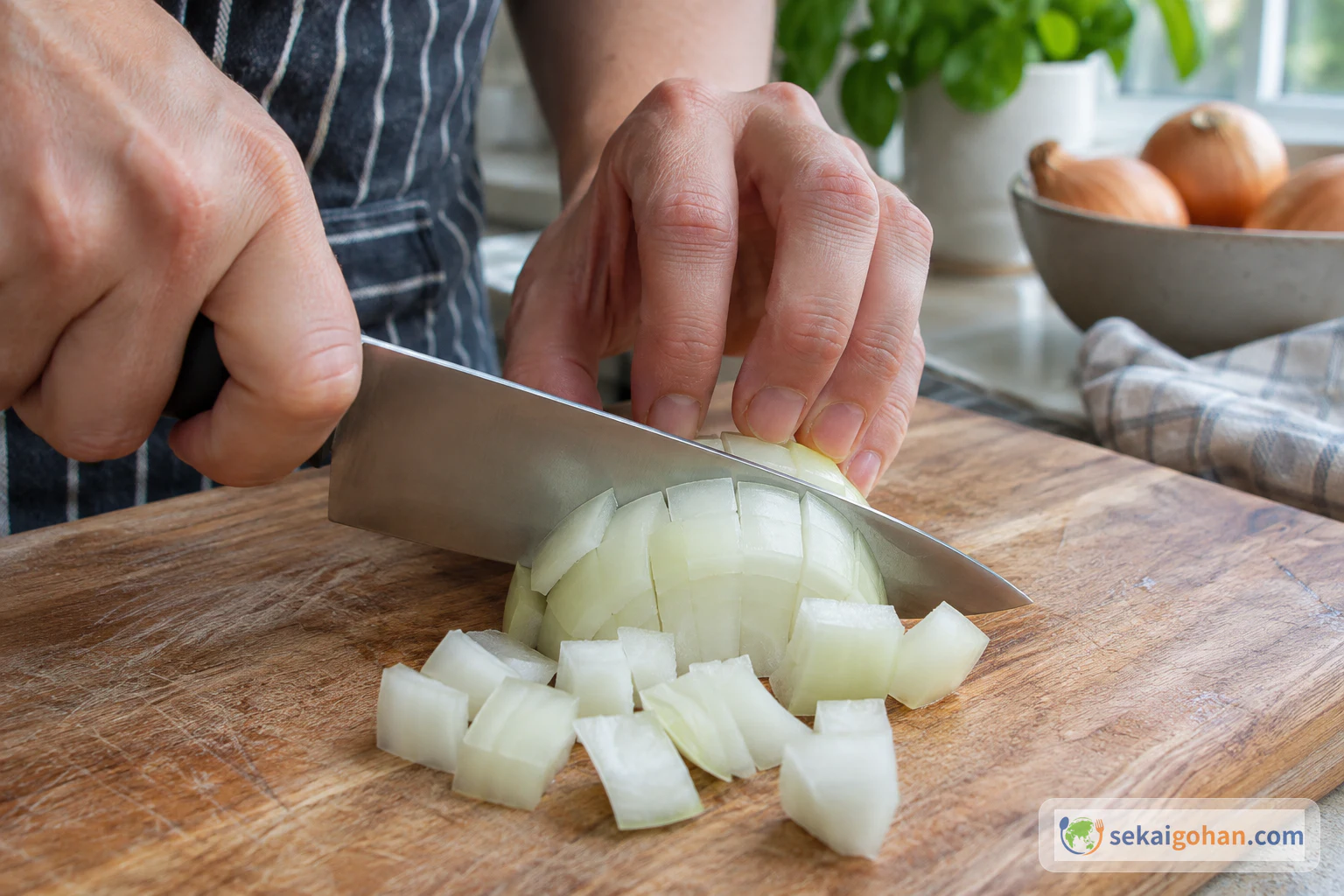
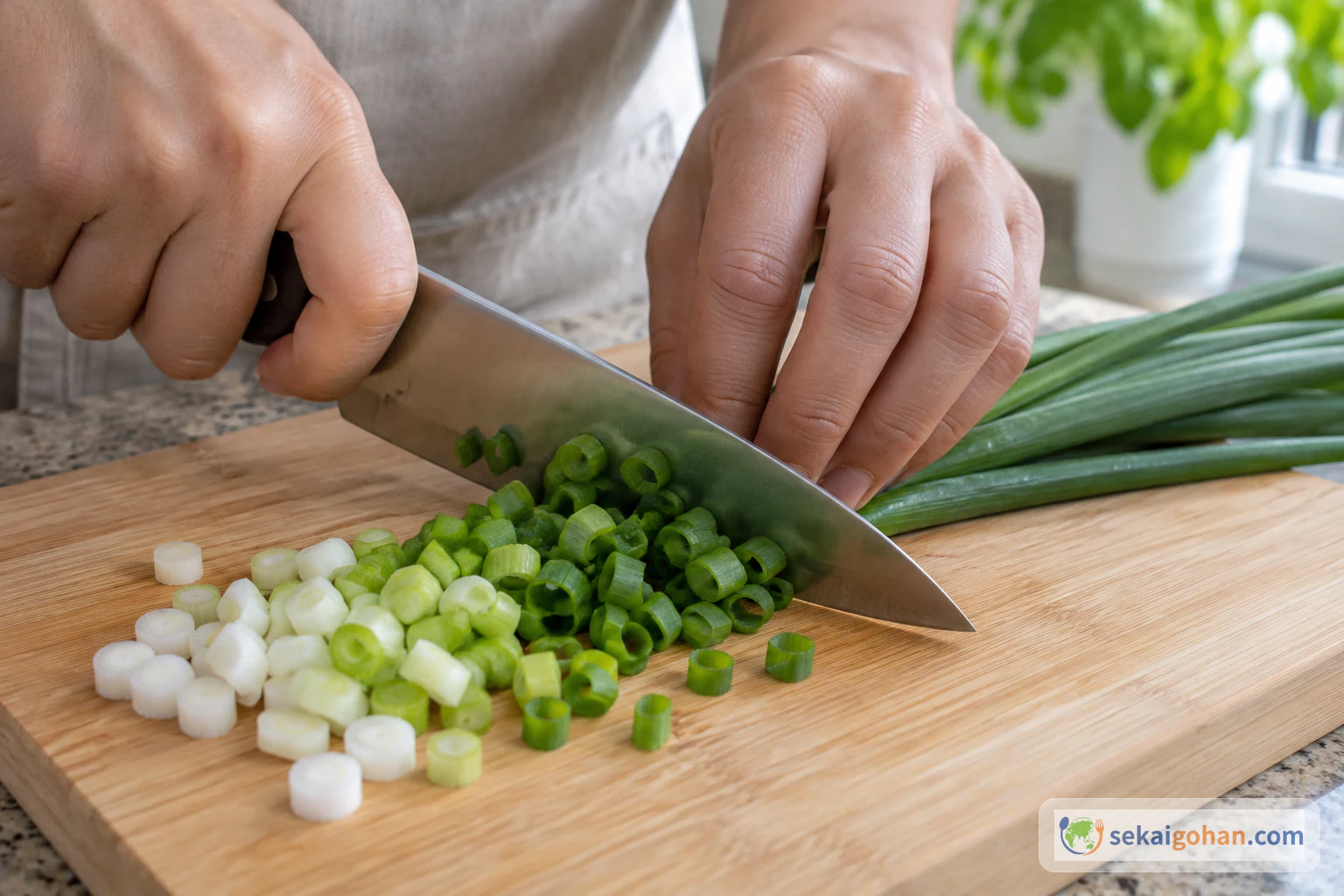
Preparation takes time; the stir-fry takes only a few minutes. Have every sauce ingredient cut and measured before the oil goes on, and fry all the cuttlefish before you start the sauce.
Fixing Problems
| Problem | Likely cause | What to do |
|---|---|---|
| The coating browns before the cuttlefish is cooked, or the cuttlefish is tough | Oil too hot or too cool, pieces of uneven thickness, frying too long | Keep the oil at 180°C, fry in small batches, and lift each piece out once it is golden and cooked through rather than leaving it in the oil |
| The coating turns soft | Crowded pot, too much liquid in the sauce, waiting before serving | Fry in uncrowded batches, keep the sauce thick before the cuttlefish goes in, and serve as soon as it is tossed |
| The garlic tastes bitter | Butter and oil too hot, garlic cooked too long | Add the garlic after the onion and move on after 30–60 seconds; lift the pan off the heat if it is too hot |
| Too spicy | Chili seeds, hot peppers | Seed or omit the dried chilies, use sweet bell peppers, or use a little less chili paste (the flavor softens too) |
| Too sharp or too flat | Sugar out of balance | Start with 1/2 tsp sugar and go up to 1 tsp only if needed |
- Keep raw seafood away from other foods. Wash hands, boards, knives and surfaces after handling it.
- FDA guidance is to refrigerate or freeze seafood quickly after buying; if you will use it within 2 days, keep it in a refrigerator at 4.4°C (40°F) or below.
- Cook seafood thoroughly. FDA's general guidance for seafood is an internal temperature of 145°F (about 63°C). This is general seafood guidance, not a cuttlefish-specific time or temperature, and the 180°C in this recipe is the oil temperature, not the temperature inside the cuttlefish. Color, frying time and photos do not guarantee safety.
- The texture is best right after cooking; Dini Kodippili recommends eating it the same day, ideally within 1 hour. That is about texture. For safety, do not leave cooked seafood at room temperature for more than 2 hours (1 hour when the temperature is above 32°C). Cool any leftovers, cover them and refrigerate them right away. This dish is not suited to making ahead.
Variations
- Squid version: Use squid or calamari in place of cuttlefish. Expect a different texture.
- Milder version: Use sweet bell peppers instead of banana peppers and seed or omit the dried chilies.
- Chili crisp version: Use the solids of a Chinese-style chili crisp or chili oil instead of Sri Lankan chili paste, without adding the extra oil. Keep the oyster sauce, especially in this case.
- Soy sauce finish: Adjust with a little soy sauce instead of salt at the end. Remember it adds soy as an allergen.
- Ways to serve: On its own as a snack with cold drinks, or as part of a meal with steamed rice or fried rice and vegetables.
Frequently Asked Questions
Can I use squid instead of cuttlefish?
Yes. Dini Kodippili notes that squid or calamari can be used. They are a different species from cuttlefish, so the texture will not be the same; follow the same scoring, coating and frying steps and watch for the pieces becoming golden and cooked through.
What can I use instead of banana peppers?
The author suggests Hungarian peppers, about 1 cup of seeded jalapeños, or sweet bell peppers. Bell peppers give a sweeter, milder result; jalapeños are hotter.
I can't find Sri Lankan chili paste. What now?
The author's suggestion is the solid chili part of a Chinese-style chili crisp or chili oil, without pouring in extra oil. Sri Lankan chili paste can contain shrimp, so a substitute will taste different and may have different allergens; check the label.
Why does the frying time vary?
Thickness matters. The recipe's text gives about 1–2 minutes, with thick pieces taking up to 3 minutes, while its recipe card gives about 1 minute for small pieces and up to 2 minutes for thick ones. Both are estimates. The more reliable signs are oil held at 180°C, a golden, crisp coating and cuttlefish that is cooked through, and frying too long makes it tough.
Why did my coating go soft?
Usually from a crowded frying pot, too much liquid left in the sauce, or waiting before eating. Fry in small batches, keep the sauce thick before adding the cuttlefish, toss quickly and serve straight away.
Why rest the cuttlefish in the refrigerator?
The seasoned cuttlefish rests for at least 15 minutes and up to 1 hour. Keeping it covered in the refrigerator during that time is an editorial precaution based on FDA's general seafood-handling guidance, not a requirement tested as part of the recipe.
Sources
- Dini Kodippili, "Sri Lankan Hot Butter Cuttlefish (Chili Garlic Squid)," The Flavor Bender. The single recipe followed here: ingredients and US measures, yield, preparation, the 15-minute to 1-hour rest, the egg and cornstarch-flour coating, frying in 180°C oil and the differing frying-time ranges, the butter-oil sauce sequence, substitutions, serving suggestions, the author's description of Sri Lankan Chinese/Hakka influence, and same-day eating for best texture. https://www.theflavorbender.com/sri-lankan-hot-butter-cuttlefish-squid/
- DailyLife.lk, "Hot Butter Cuttlefish Recipe." A separate Sri Lankan home recipe with a different coating and seasoning, used only to show the range of versions. https://www.dailylife.lk/kitchen/hot-butter-cuttlefish/
- Explore Sri Lanka, "The Upper Crust Of Seafood." Seafood moving from Negombo to hotels and restaurants, and a restaurant kitchen record of hot butter cuttlefish at Curry Leaf, Hilton Colombo, fried and then finished with aromatics in a separate pan. https://exploresrilanka.lk/upper-crust-seafood/?pdf=31193
- Hi Online, "A Tasteful Trek Through History." A dining feature introducing hot butter cuttlefish as a tavern dish served among several plates. https://www.hi.lk/travel__cuisine/A-Tasteful-Trek-Through-History/43-5661
- U.S. Food and Drug Administration, "Selecting and Serving Fresh and Frozen Seafood Safely." General seafood guidance on refrigeration at 40°F (4.4°C) or below, preventing cross-contamination, cooking seafood to 145°F, and not leaving cooked seafood at room temperature for more than 2 hours. https://www.fda.gov/food/buy-store-serve-safe-food/selecting-and-serving-fresh-and-frozen-seafood-safely