Pittu: Small Moist Crumbs, Steamed in a Tube
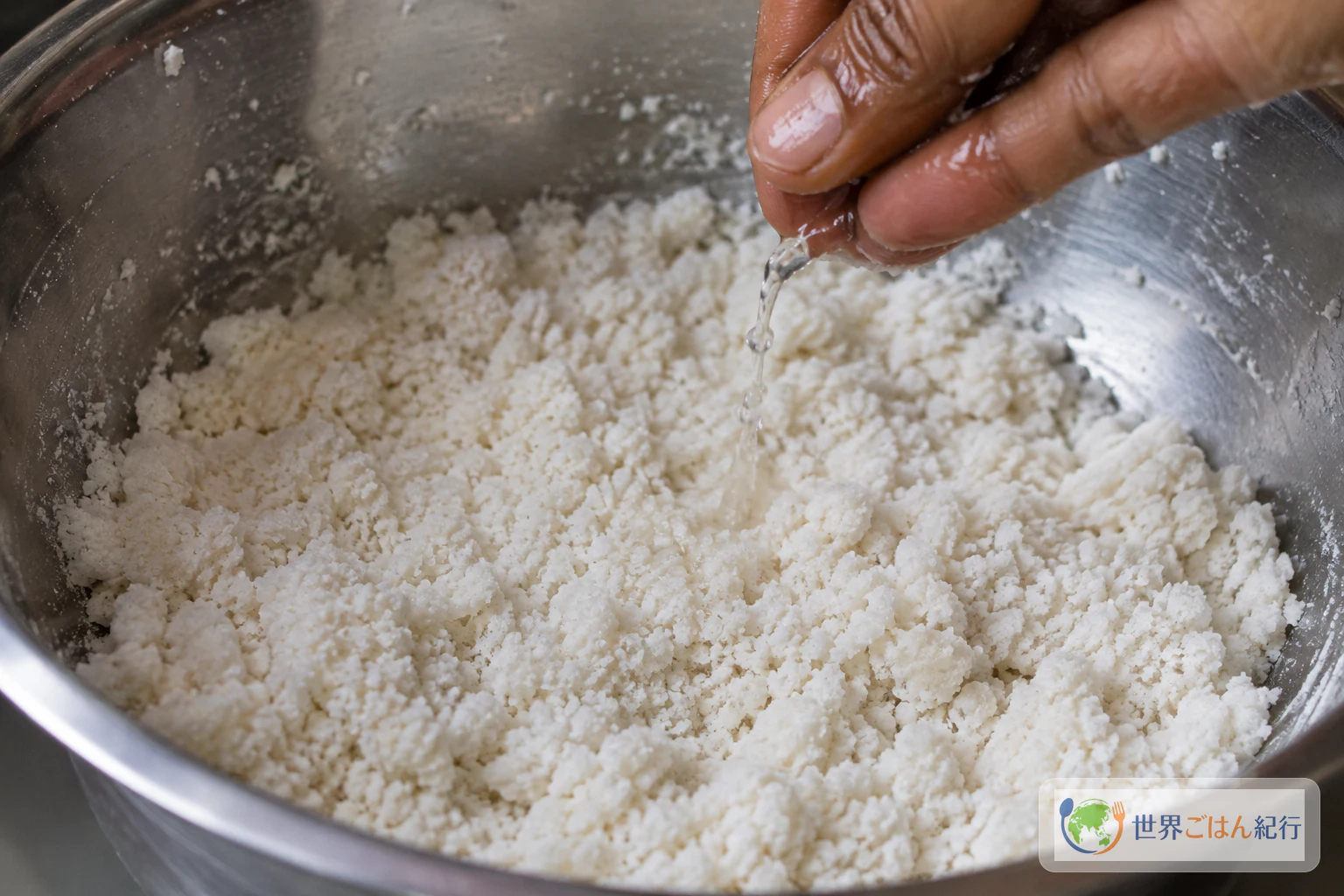
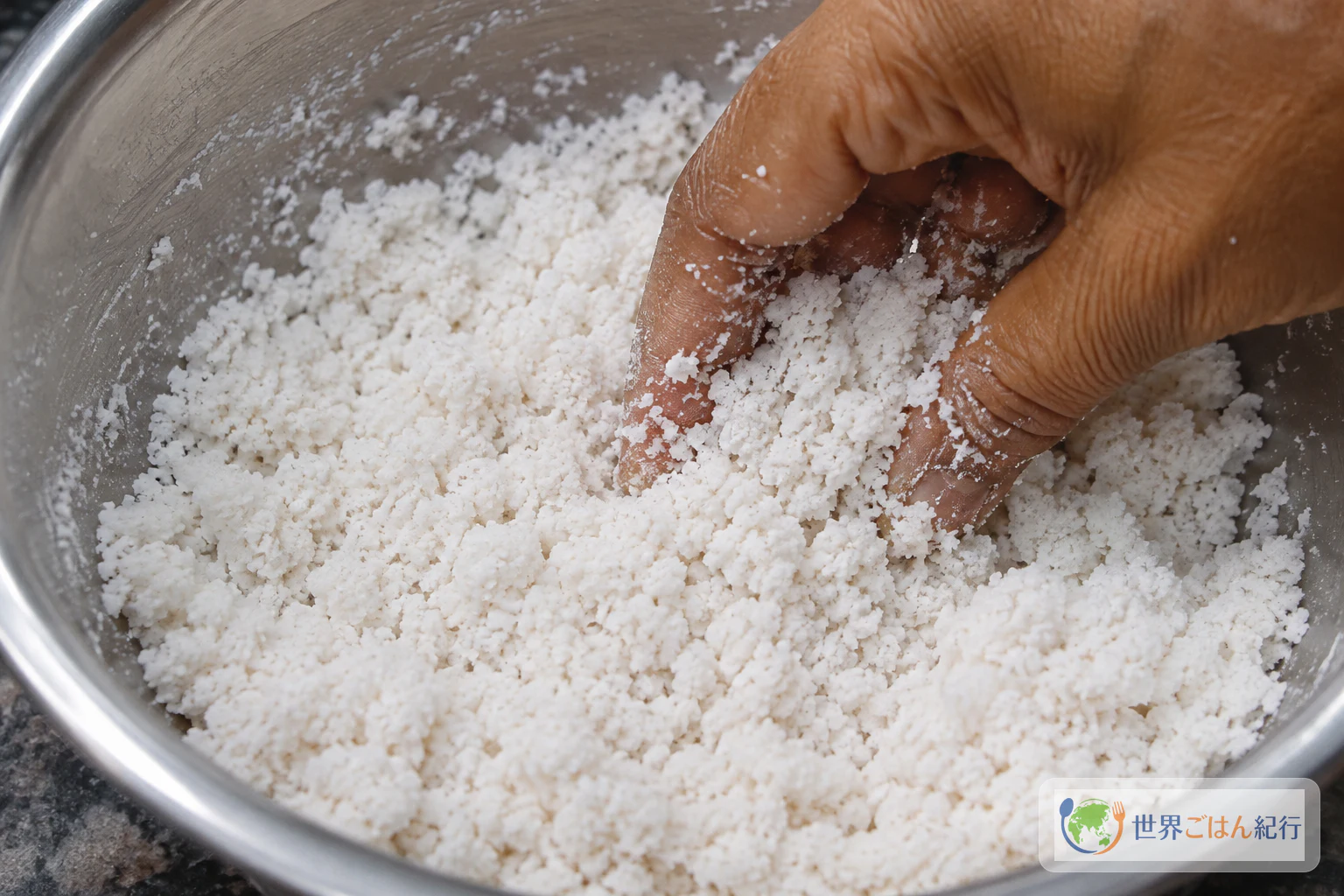
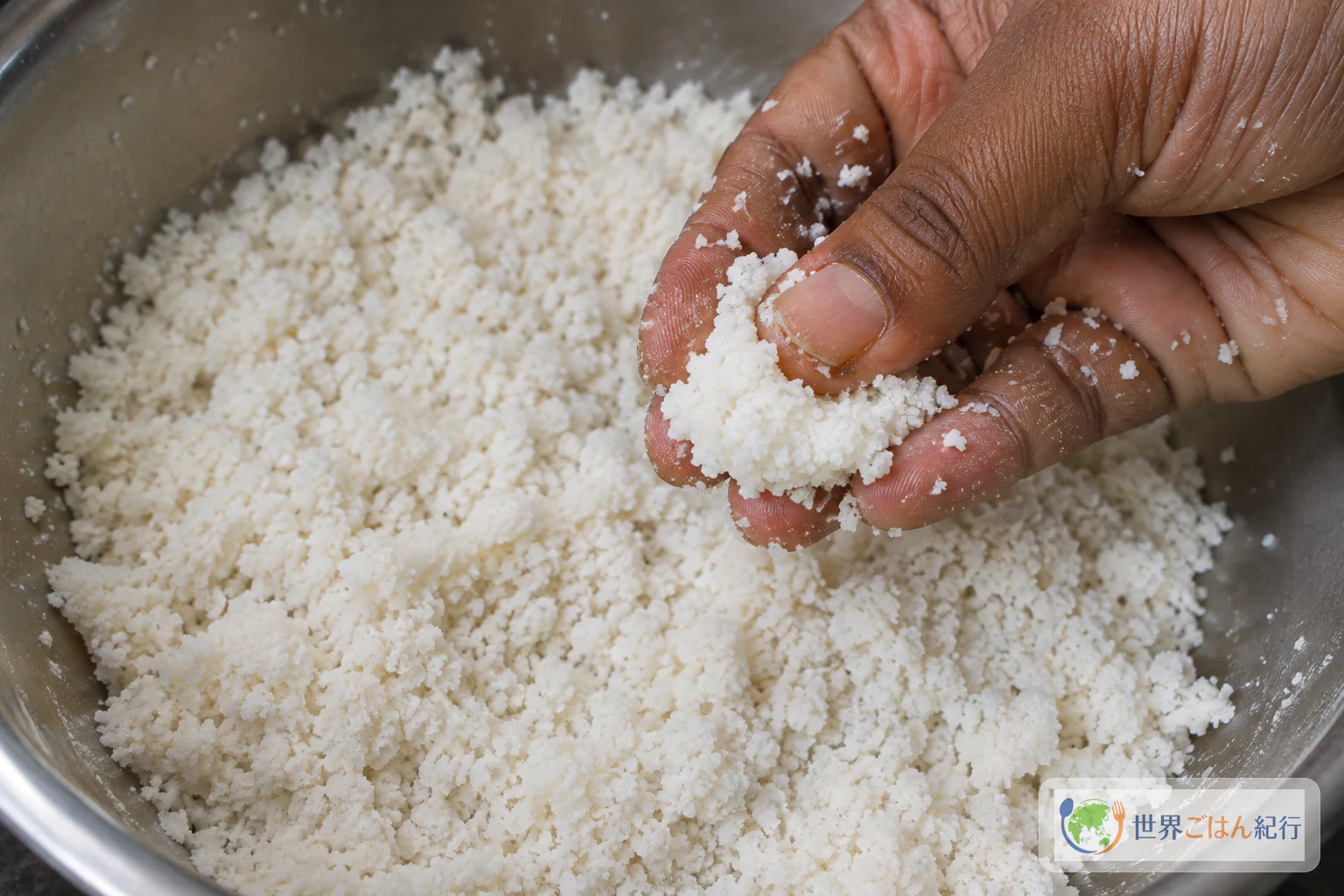
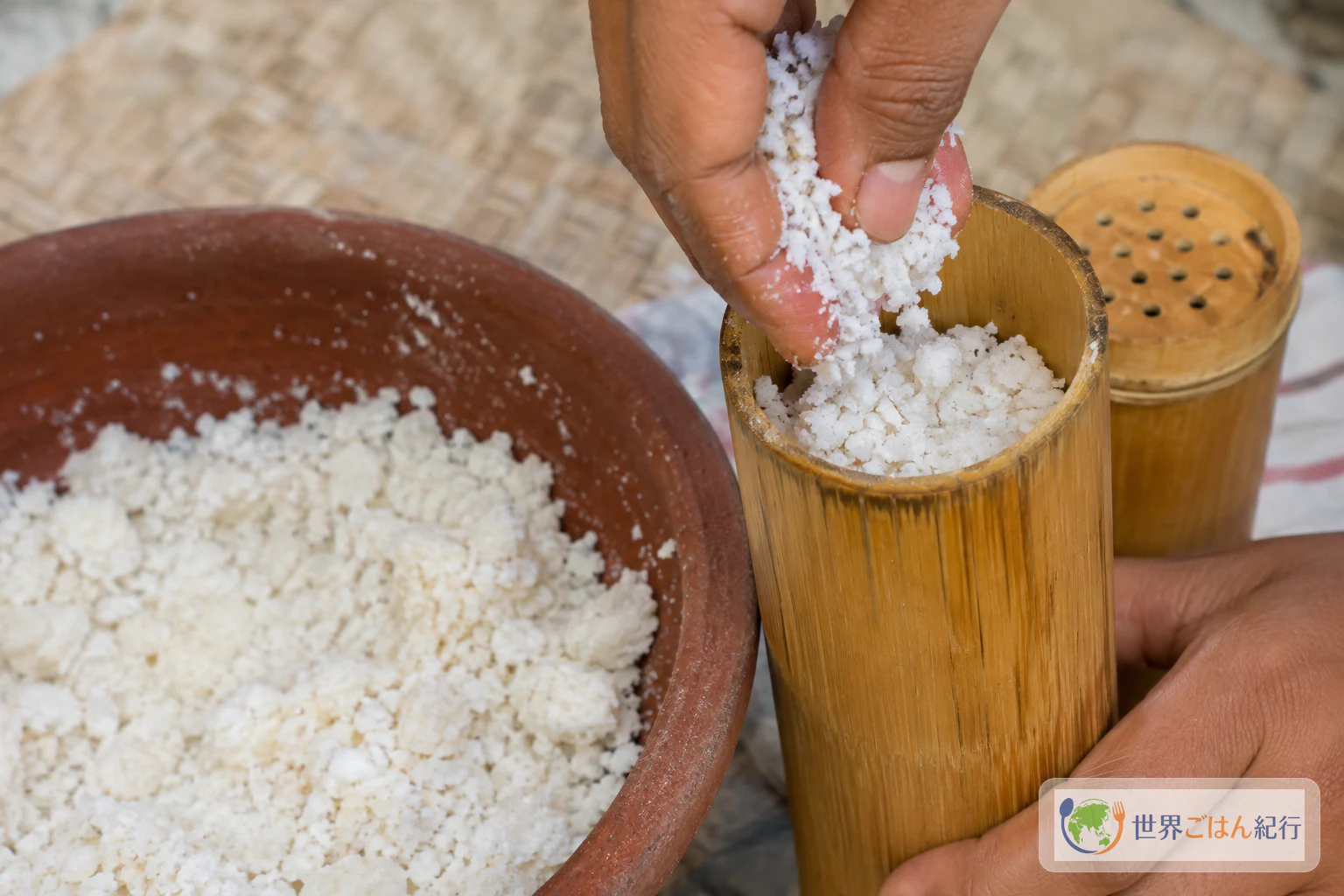
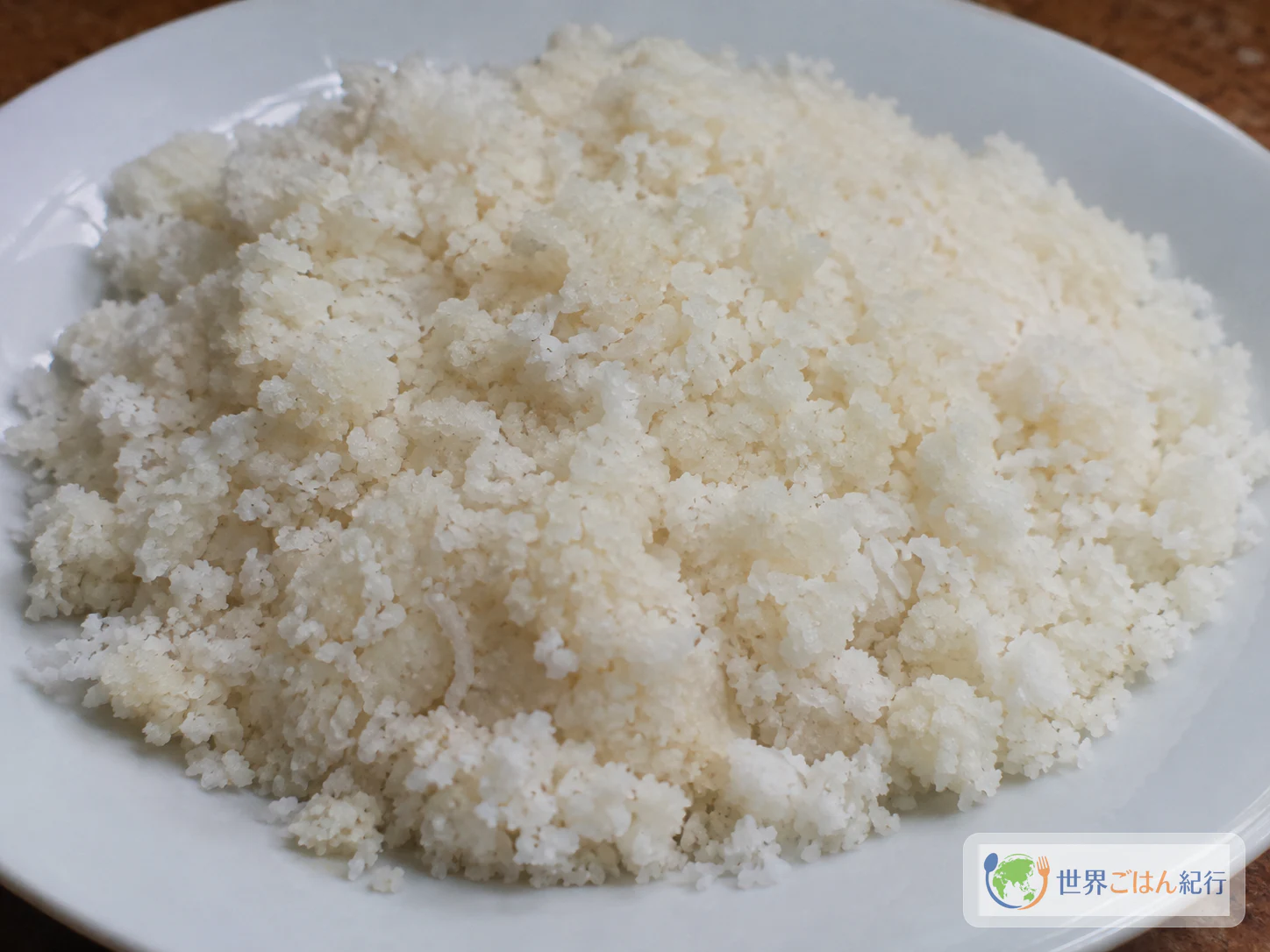
Pittu is built on four ingredients and one test: rub the mixture into small moist crumbs, and check that a squeezed sample holds together before it goes into the tube.
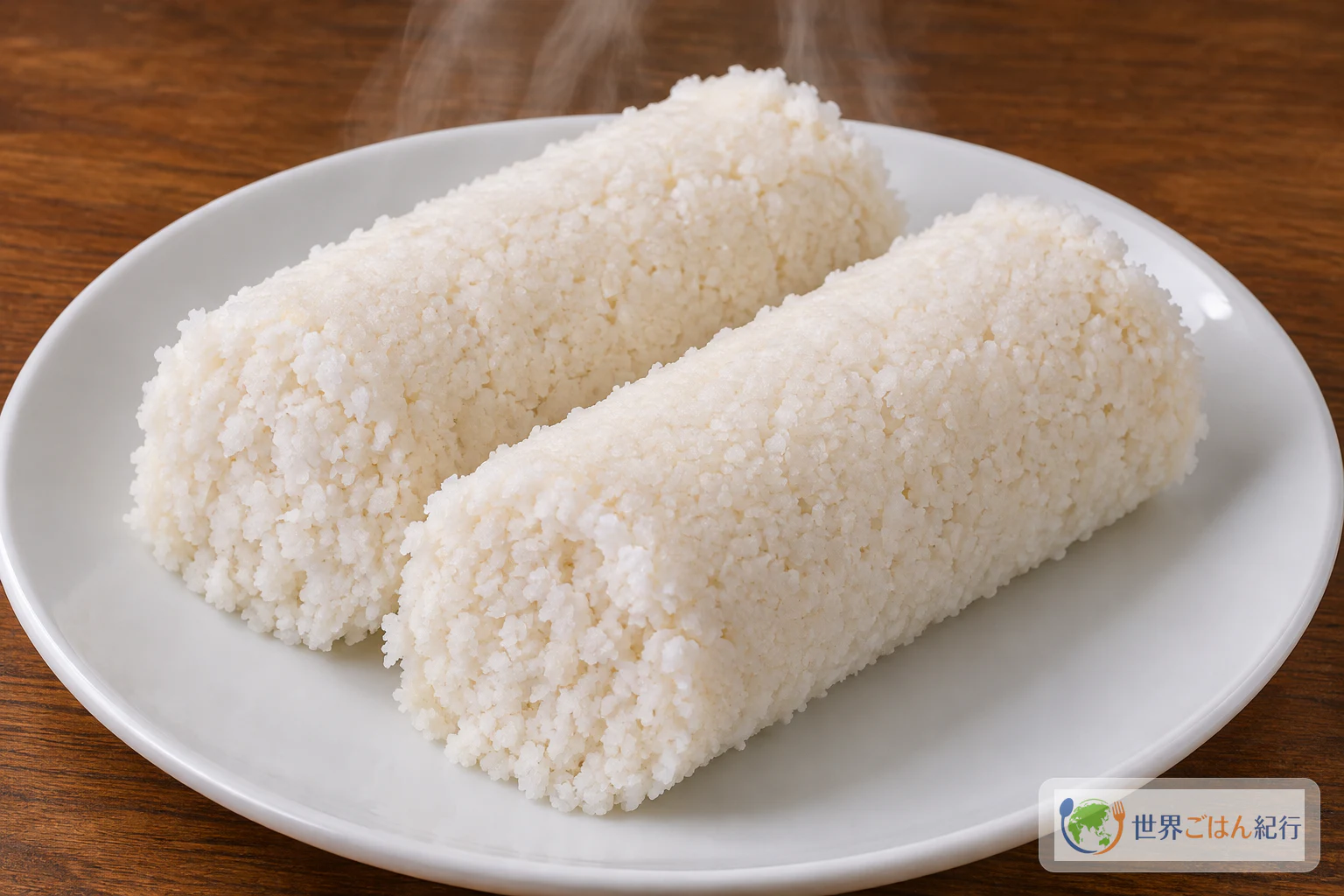
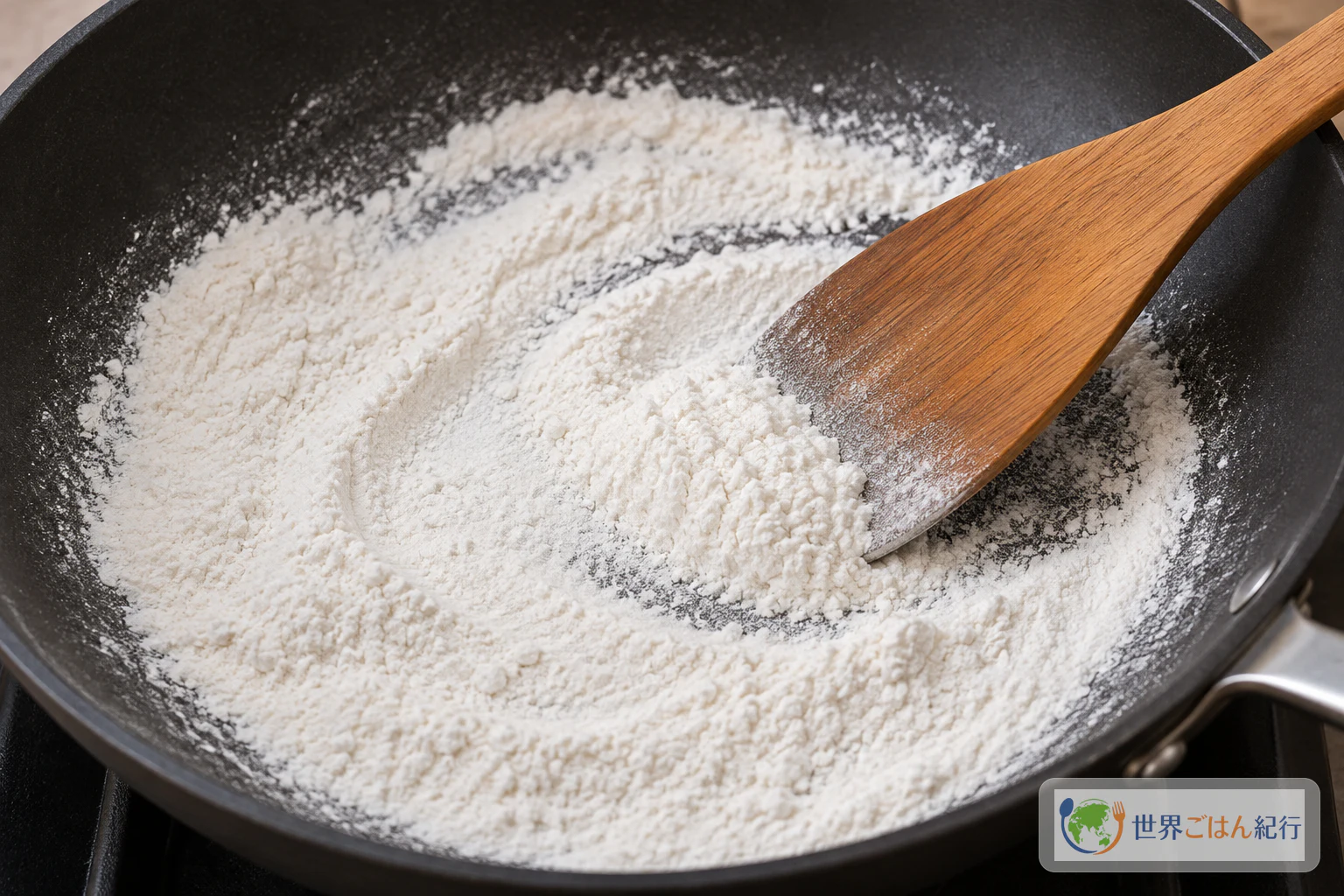
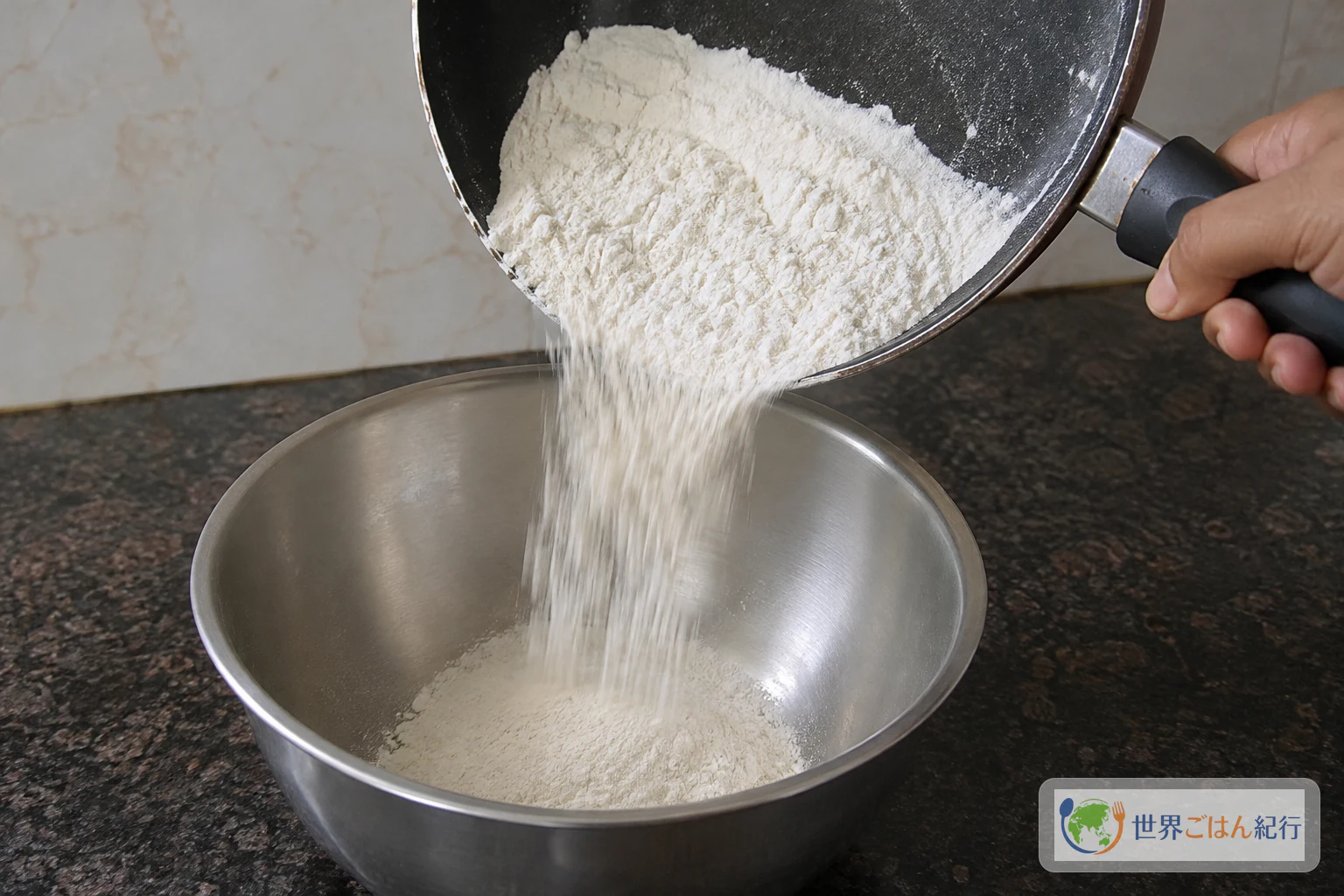
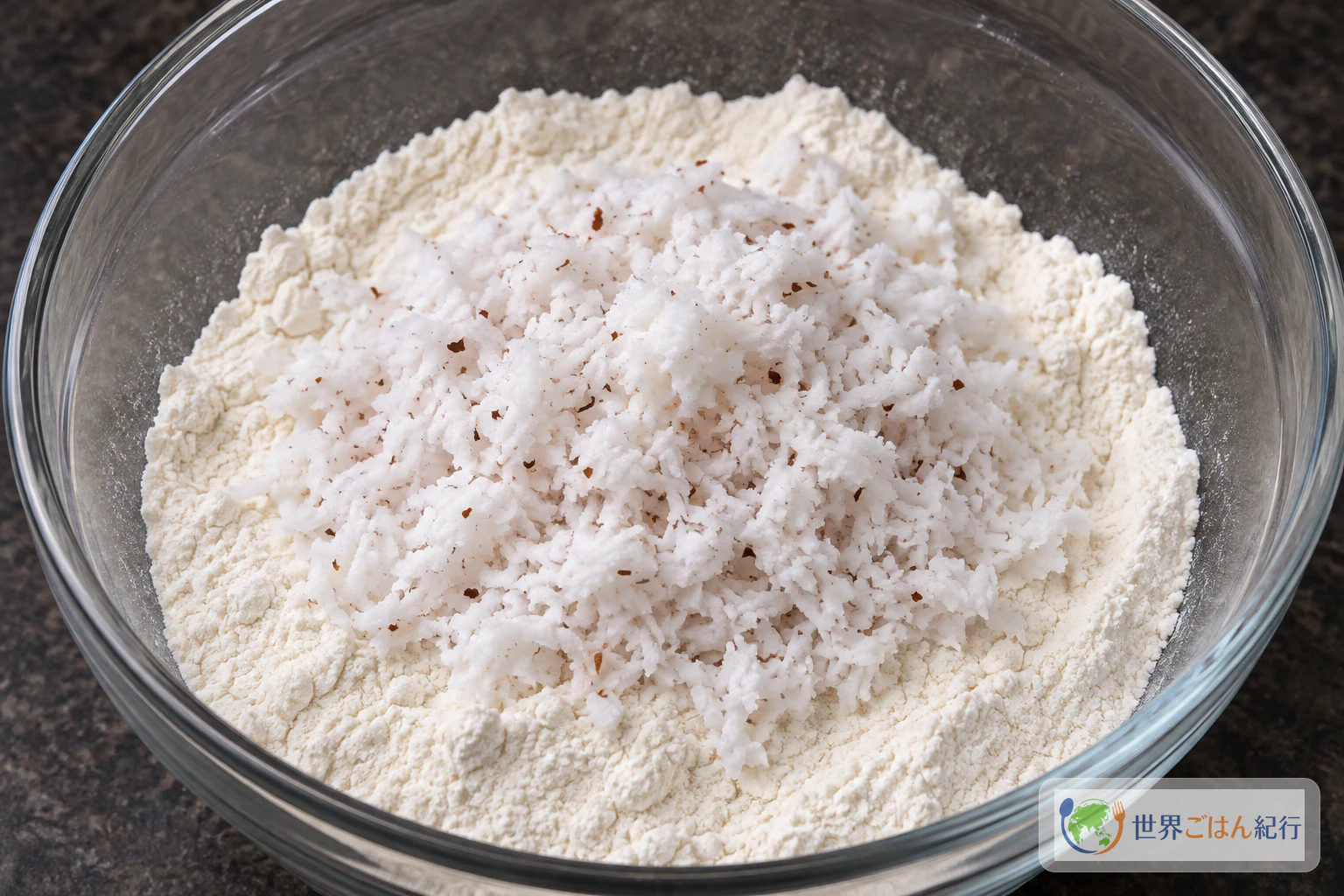
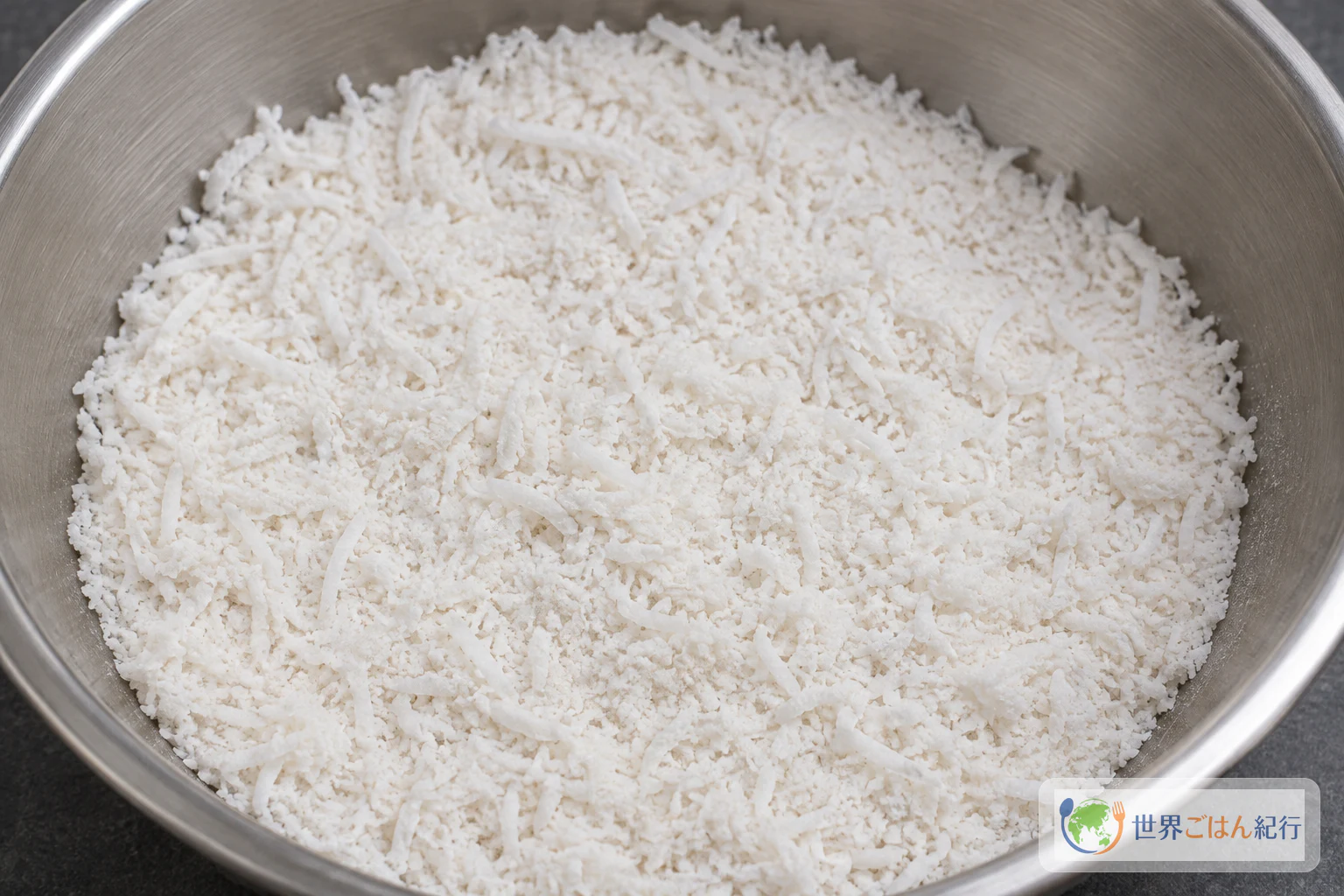
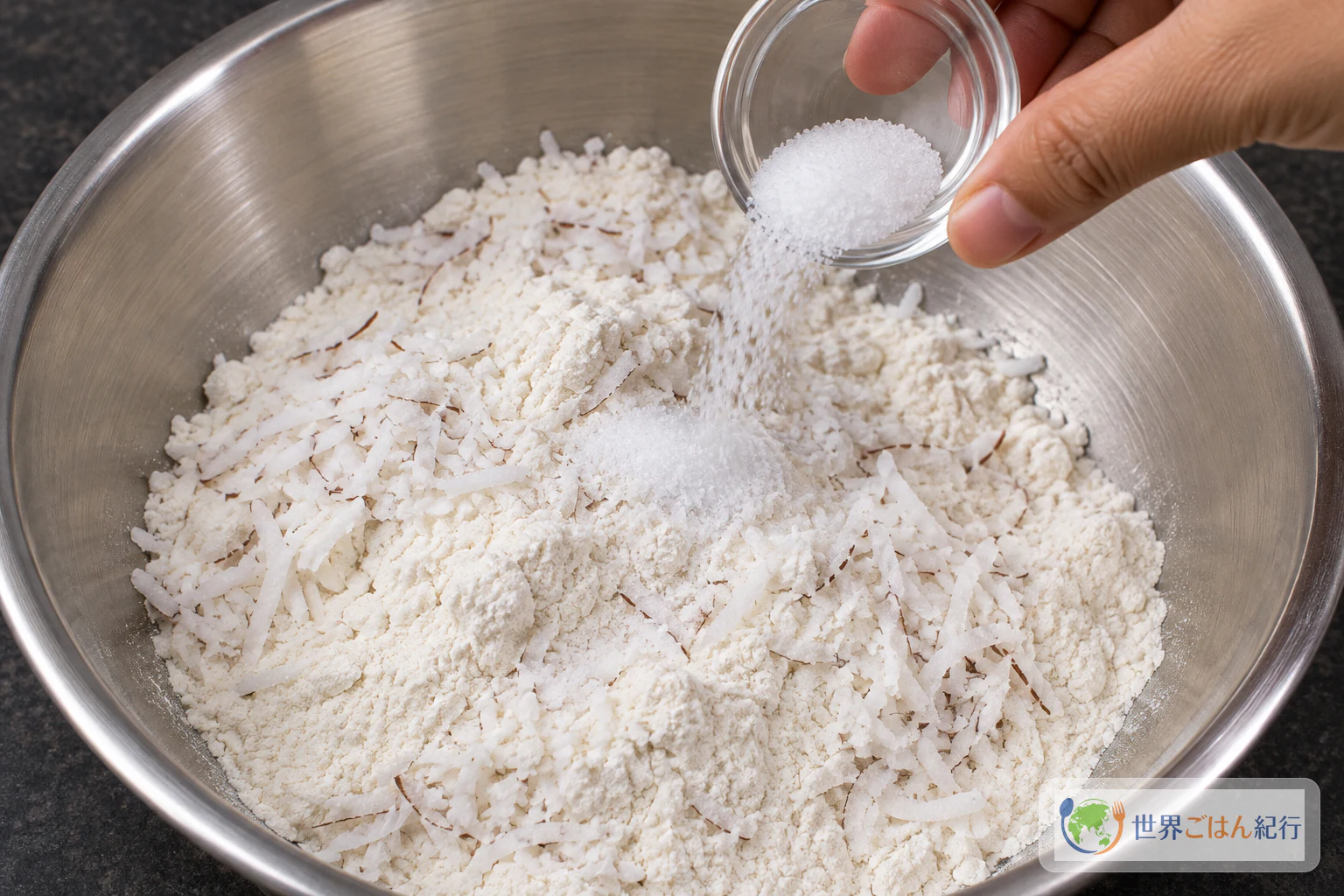
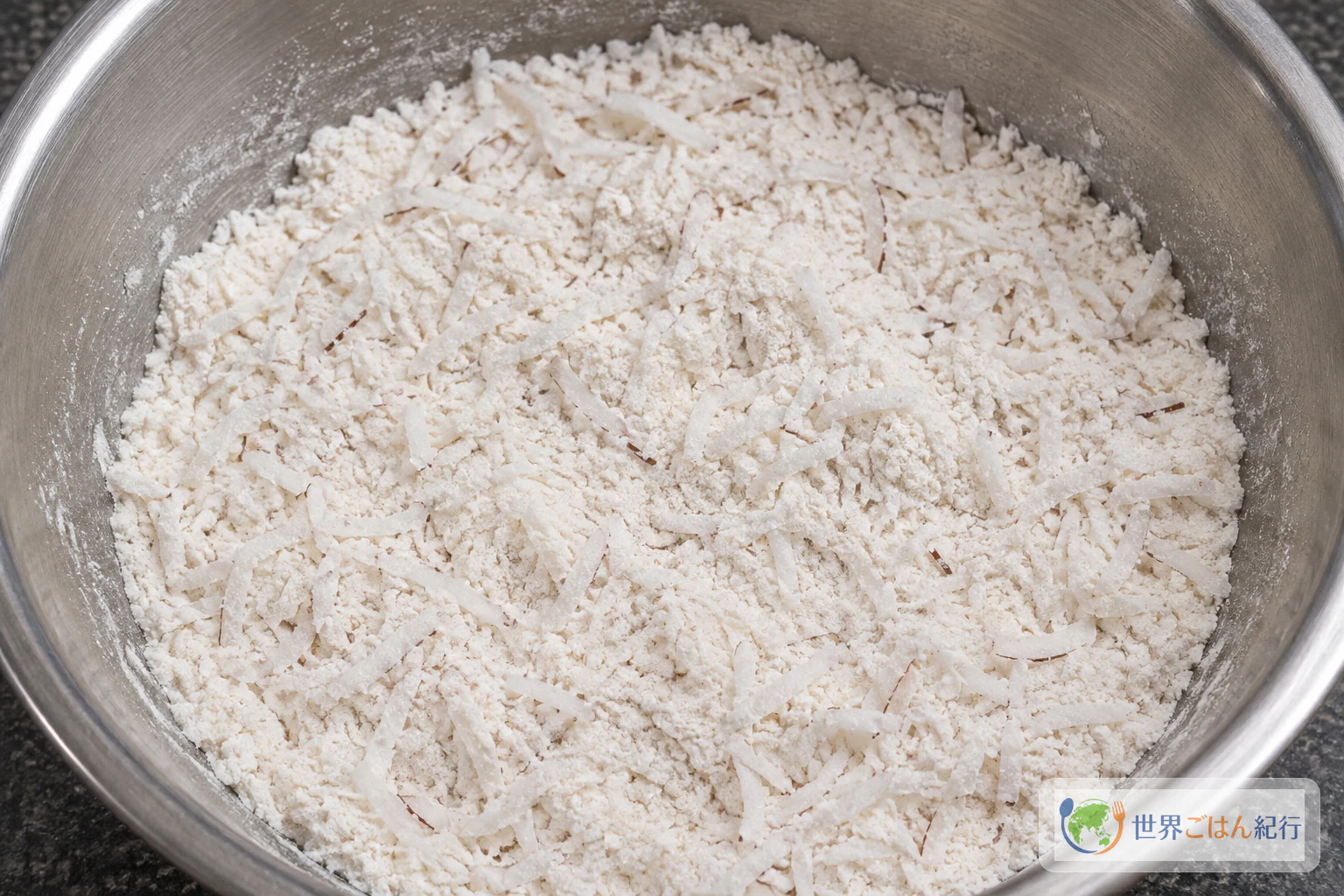
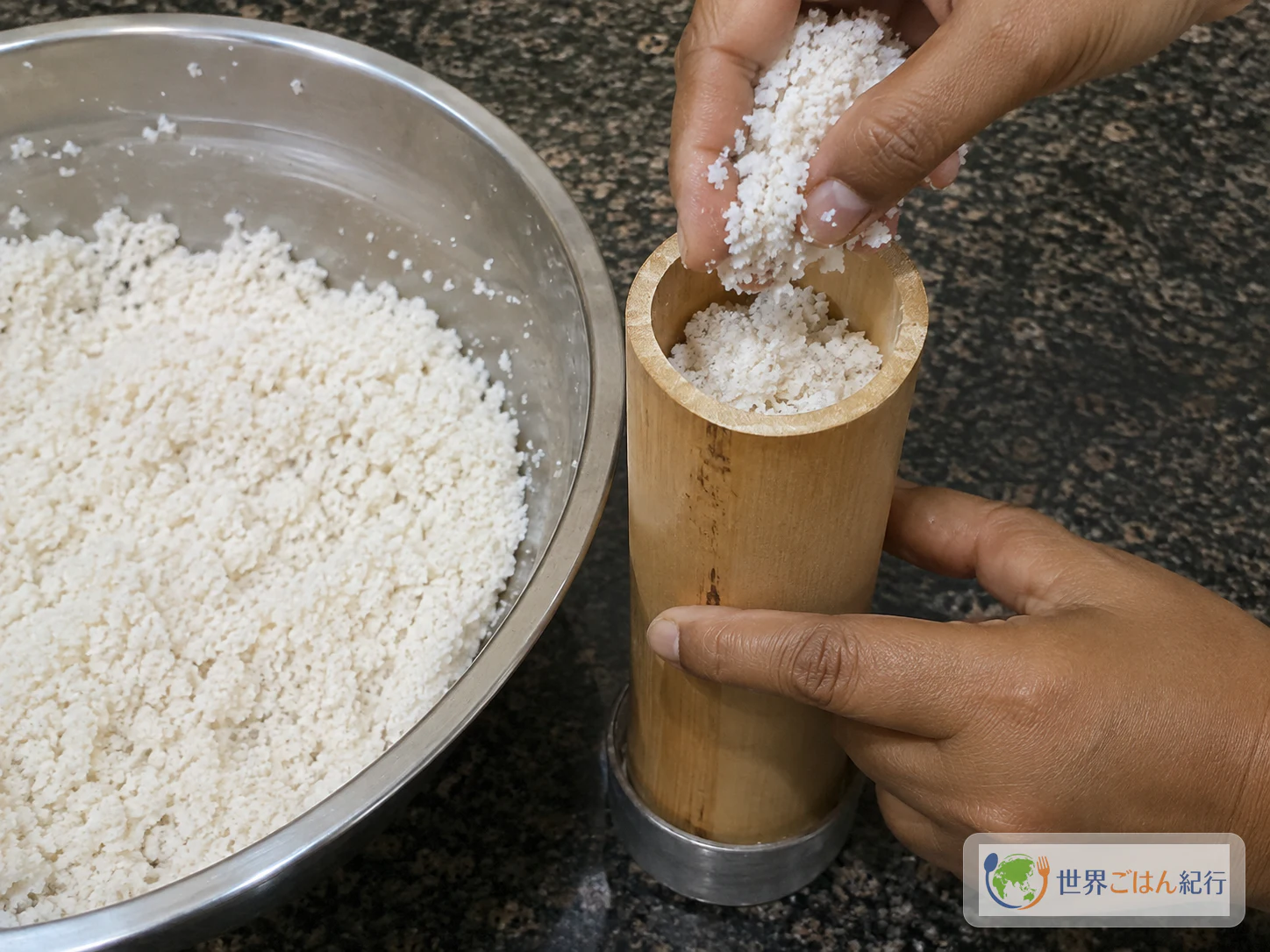
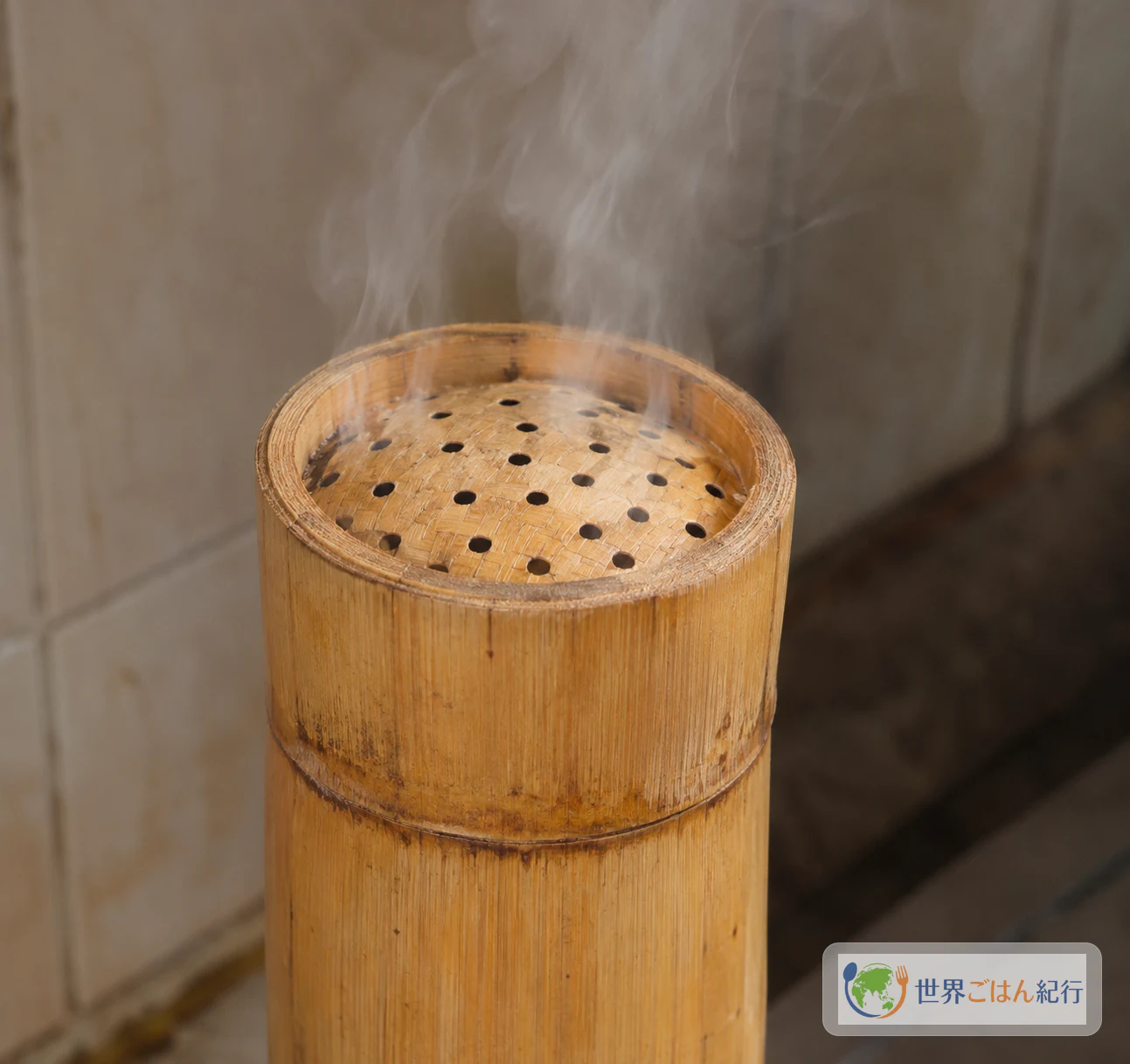
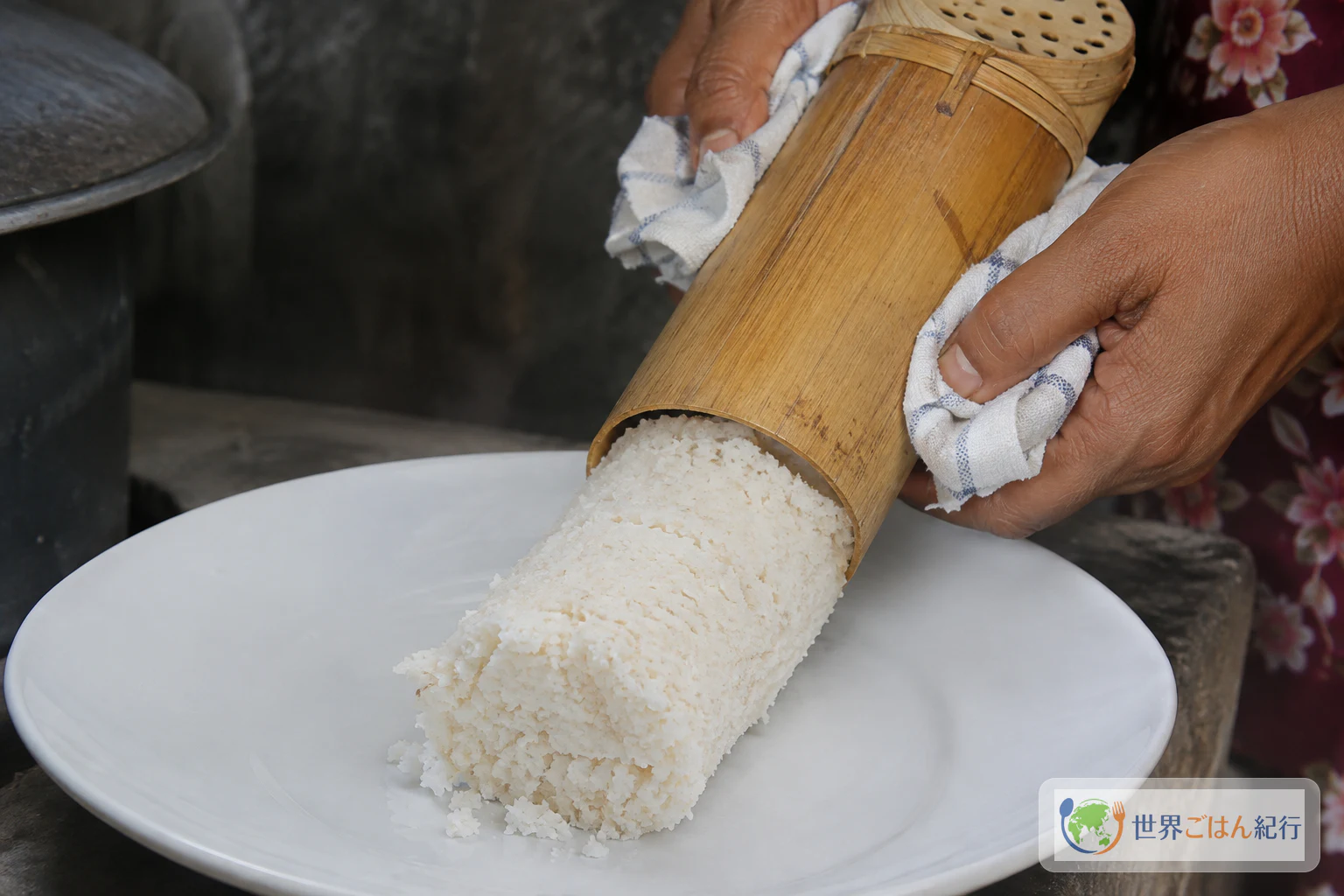
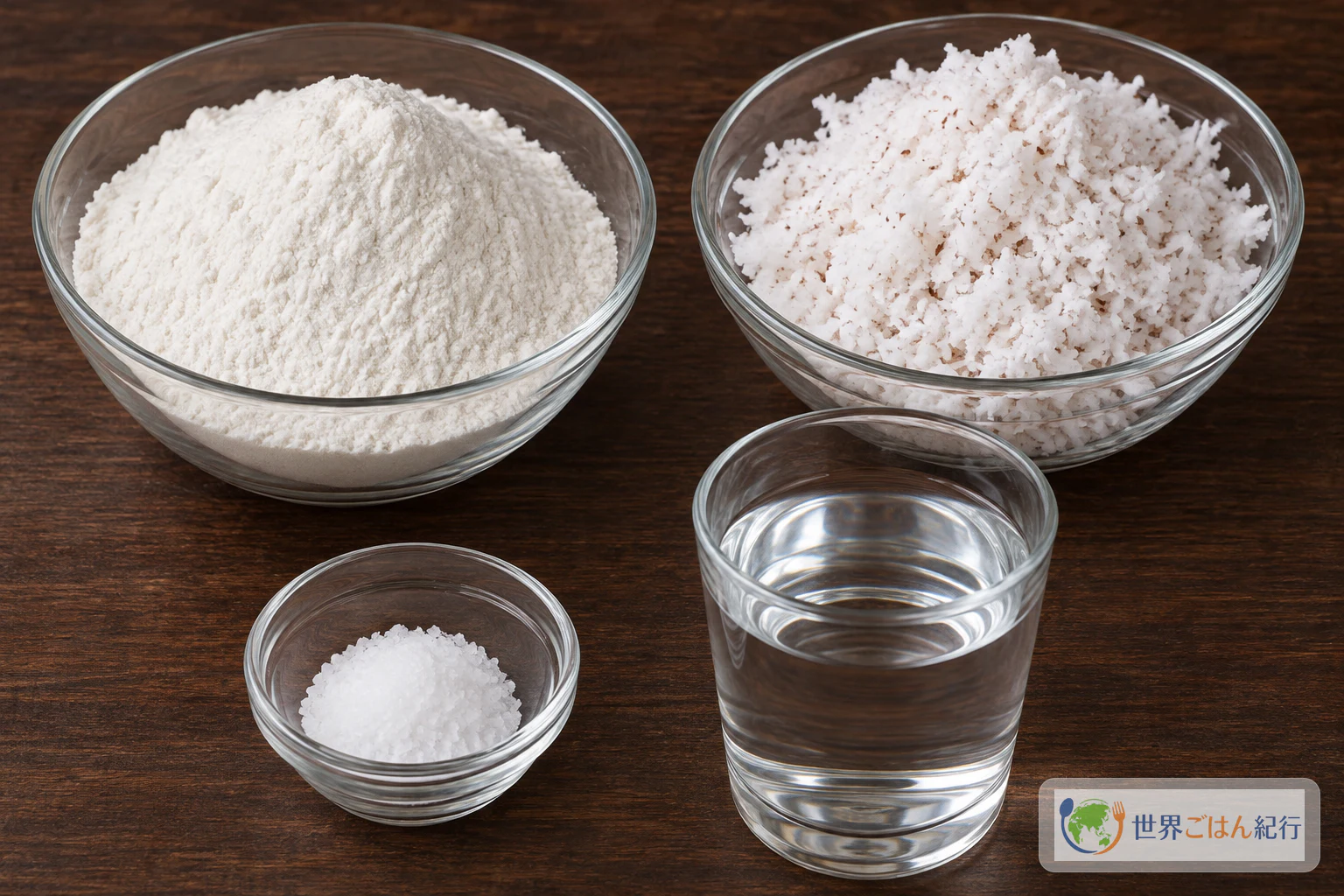
Rice flour goes into a dry pan for a light roast. Fresh grated coconut and salt follow in a bowl, then water, sprinkled a little at a time and rubbed in with the fingertips until the mixture turns to small moist crumbs. Those crumbs are steamed in a vertical bamboo tube and come out as pittu, which Sri Lanka Tourism describes as crumbly in texture.
This article follows one recipe: the Sri Lankan pittu published on Food Corner by Amila Gamage Wickramarachchi, whose About Me page describes a Sri Lankan home cook living in Singapore who began a cooking blog in 2011. It is a personal household recipe, not a national or institutional standard, and it is not blended here with other versions. Sekai Gohan has not kitchen-tested this recipe.
What the recipe does and doesn't define
- Measures: Food Corner lists 1 cup of rice flour, 1 cup of fresh grated coconut and 1/2 tsp of salt, without defining the volume of its cup or teaspoon. These amounts stay as listed, with no conversions to grams or milliliters.
- Water: It is listed "as required," with no amount or temperature. The texture of the crumbs is your guide.
- Yield: Food Corner displays 3 pittu and 2–3 servings. Treat this as a reference only, because no mould size is given and the number you get isn't guaranteed.
- Time: The only figure is about 15 minutes of steaming, which is an estimate. No total cooking time or safe end temperature is established.
For more dishes from the country, visit our Sri Lanka page.
Ingredients: Four Things Only
Equipment
- Dry pan
- Mixing bowl
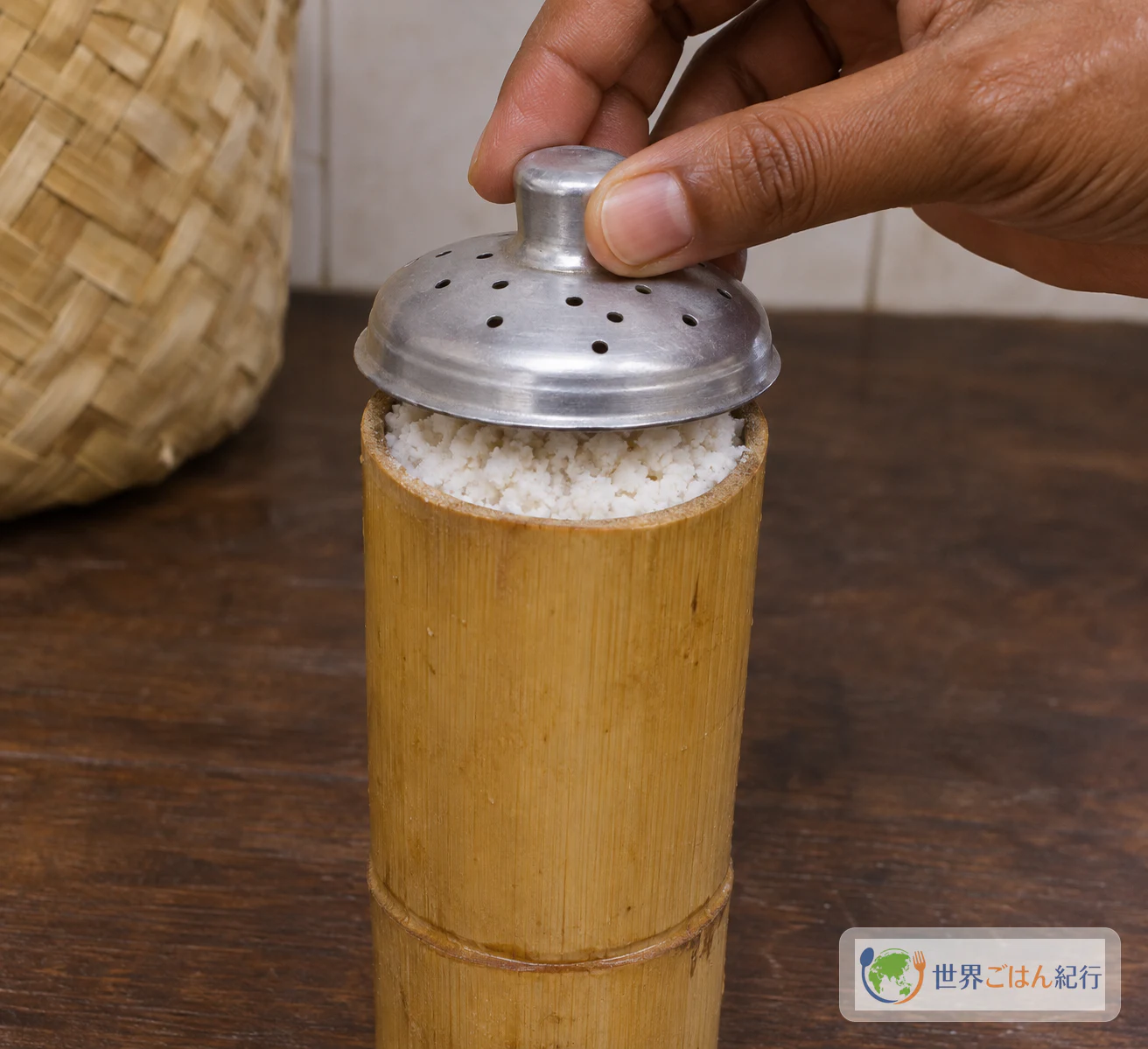
- Food-use vertical bamboo pittu tube with a fitted perforated base and perforated lid
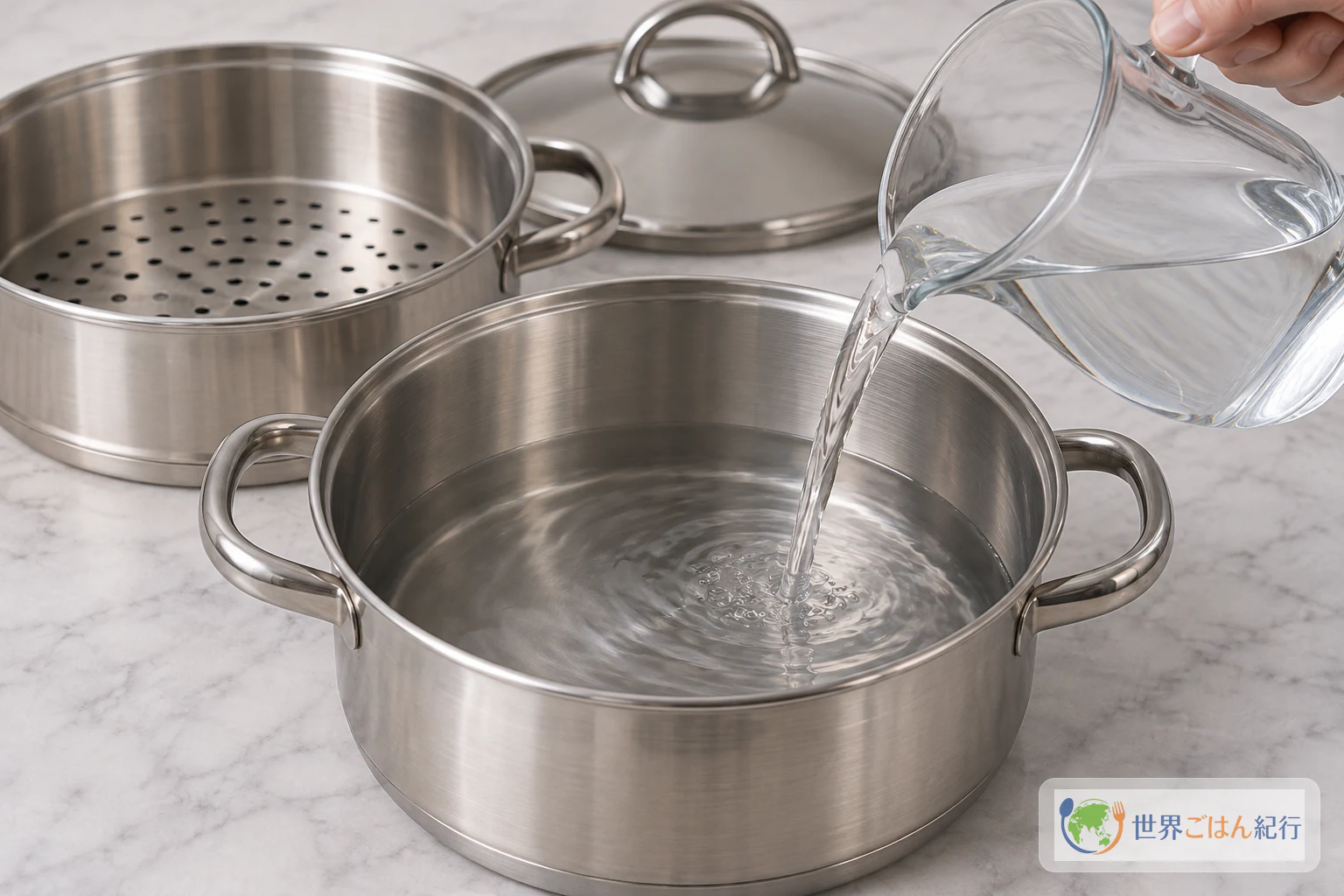
- Matching pot for boiling water
- Heat-safe cloths
- Serving plate
Choosing the Flour and Coconut
Rice flour: Choose ordinary white rice flour, and avoid very fine rice flour, which is unsuitable for pittu. No particle size or brand can be named as a clear dividing line. Glutinous rice flour and flours sold for idiyappam or string hoppers shouldn't be assumed to behave the same way.
Coconut: Use fresh grated coconut. If you buy it ready-grated, look for a fresh, unsweetened, undried product. Don't replace it with dried coconut, coconut flour or a sweetened coconut product, because none of these has been established as an equivalent.
Mould: This recipe uses a vertical bamboo tube made for food. Don't improvise with a sealed pressure-type mould or a homemade plastic one.
Method: From Dry Flour to Hot Pittu
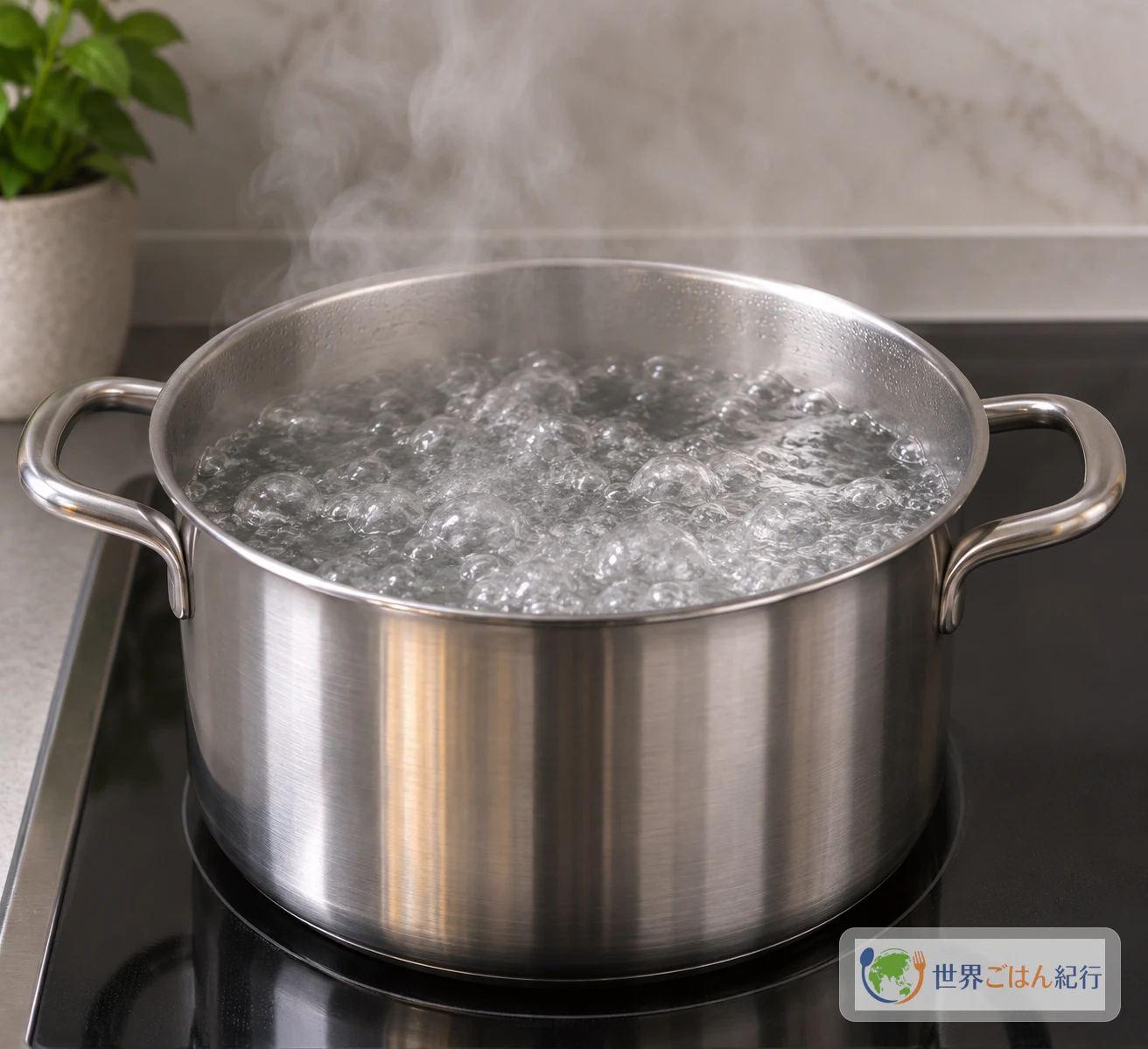
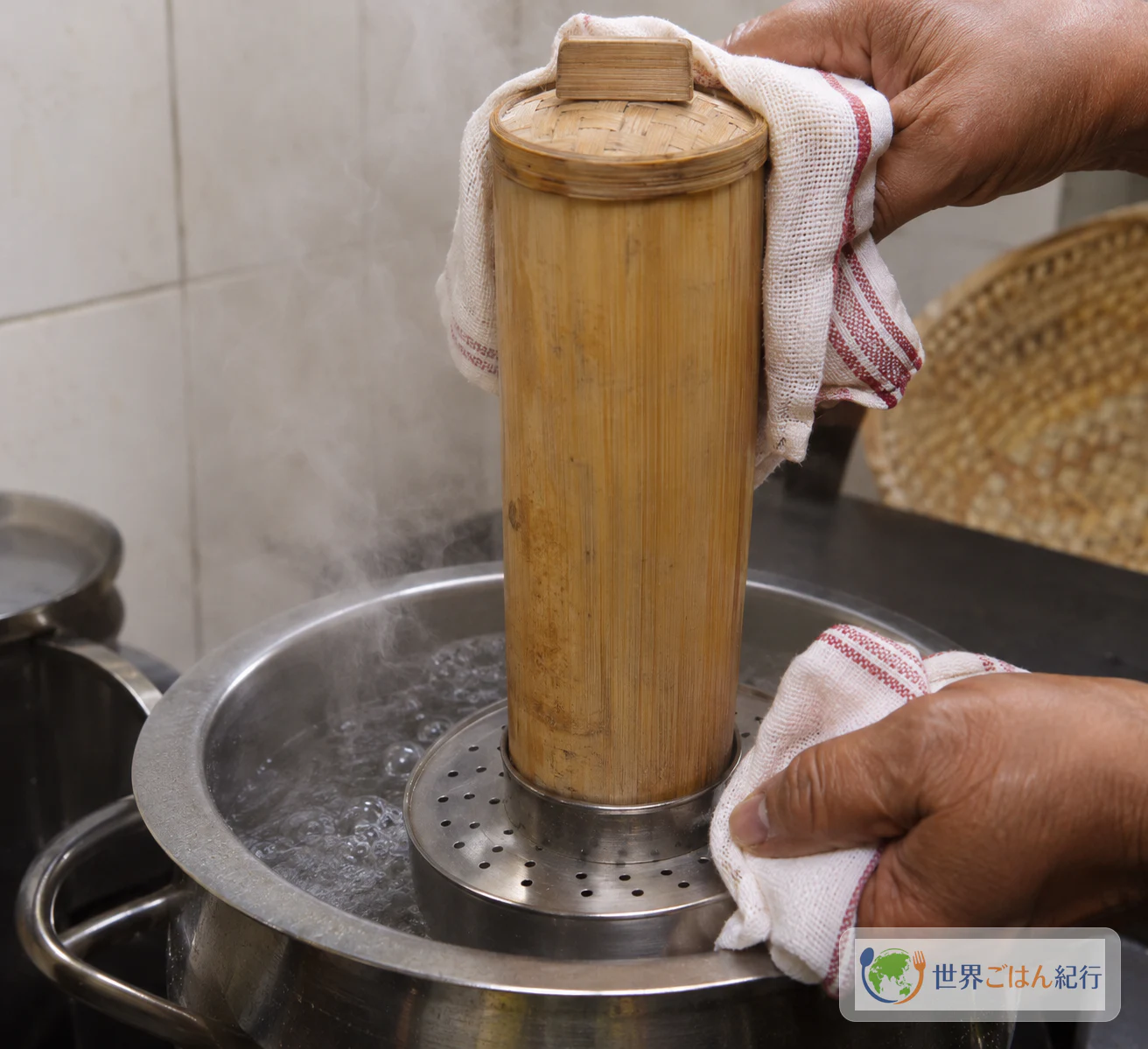
The pot, tube and steam are all hot, so use heat-safe cloths whenever you touch them. Rising steam is normal and expected, but it is not proof that the food is cooked or safe.
When Something Looks Off
| What you notice | What it means | What to do |
|---|---|---|
| The flour starts to take on color | The roast has gone past the light stage this recipe wants | Move it to the bowl before it browns further, and watch it more closely next time |
| The squeezed sample falls apart | The mixture hasn't reached the holding stage | Sprinkle in a little more water, rub again and repeat the test |
| The mixture seems too wet | Too much water went in | This recipe offers no fix, so add the water slowly from the start |
| Steam is rising, but you aren't sure the pittu is done | Steam and the 15-minute figure are guides, not proof | Don't treat either one as a food-safety guarantee |
| You get a different number of pittu | Mould sizes aren't defined | Keep going until the crumbs are used up, as the count isn't fixed |
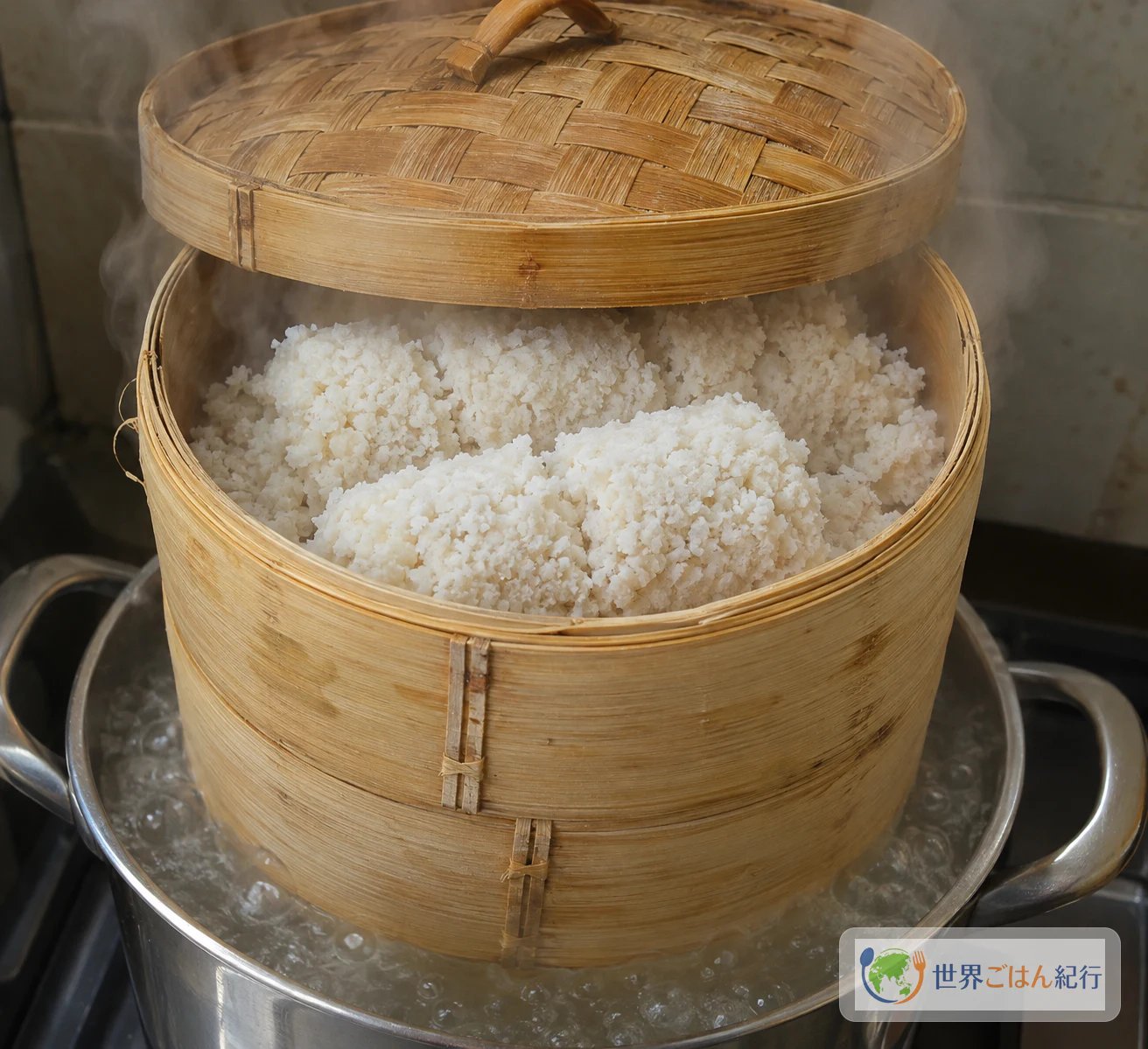
This recipe is for fully steamed pittu, and the crumbs aren't meant to be eaten unsteamed.
Variations: What Changes Beyond This Recipe
Sri Lanka Tourism's description of pittu is broader than this four-ingredient version, and it shows where the dish can vary:
- Flour: Its description covers pittu made with rice flour or kurakkan (finger millet) flour, along with fresh coconut. The amounts and method in this article apply only to rice flour, so they shouldn't be assumed to carry over.
- Tube: It mentions both bamboo tubes and the metal tubes used today. This article uses bamboo throughout, and its steps and images follow that choice.
At the Sri Lankan Table
The plain plate in this article is simply how we present the steamed component. It isn't the only traditional way to serve pittu. Between them, Food Corner and Sri Lanka Tourism mention curry, the relish lunu miris, coconut milk, jaggery and banana as things eaten with it. These are cultural examples only, and this article doesn't cover how to make them.
Sri Lanka Tourism places pittu at breakfast and sometimes at dinner. That is a useful picture of when it may be eaten, but not a rule for every household or region.
Frequently Asked Questions
How much water do I need?
Food Corner lists water only "as required," and we don't add a figure of our own. Sprinkle it in a little at a time and rub it in until you have small moist crumbs and a squeezed sample holds together.
How long does pittu steam?
Food Corner gives about 15 minutes for steaming, along with steam coming from the holes at the top of the tube as a visual cue. Both are guides for this household recipe. Neither is a guarantee of doneness or food safety.
Can I use very fine rice flour?
Food Corner says very fine rice flour is unsuitable, but it doesn't give a particle size or name a product. We suggest ordinary white rice flour as a practical shopping choice, not as a tested equivalent.
Sources
- Amila Gamage Wickramarachchi, "Sri Lankan Pittu Recipe," Food Corner. The sole basis for the ingredient amounts and method, including the crumb and squeeze cues, steaming time, top-hole steam cue, displayed yield, the note on very fine rice flour, and serving pairings. https://foodcnr.com/sri-lankan-pittu/
- Sri Lanka Tourism, "So Rich In Flavours — Pittu." Context on rice and kurakkan flour, fresh coconut, bamboo and metal tubes, crumbly texture, accompaniments, and breakfast and dinner occasions. https://srilanka.travel/culinary-tourism/food-range.php
- Food Corner, "About Me." The author's own account of their background and cooking blog. It is not a culinary credential or independent recipe validation. https://foodcnr.com/about-me/