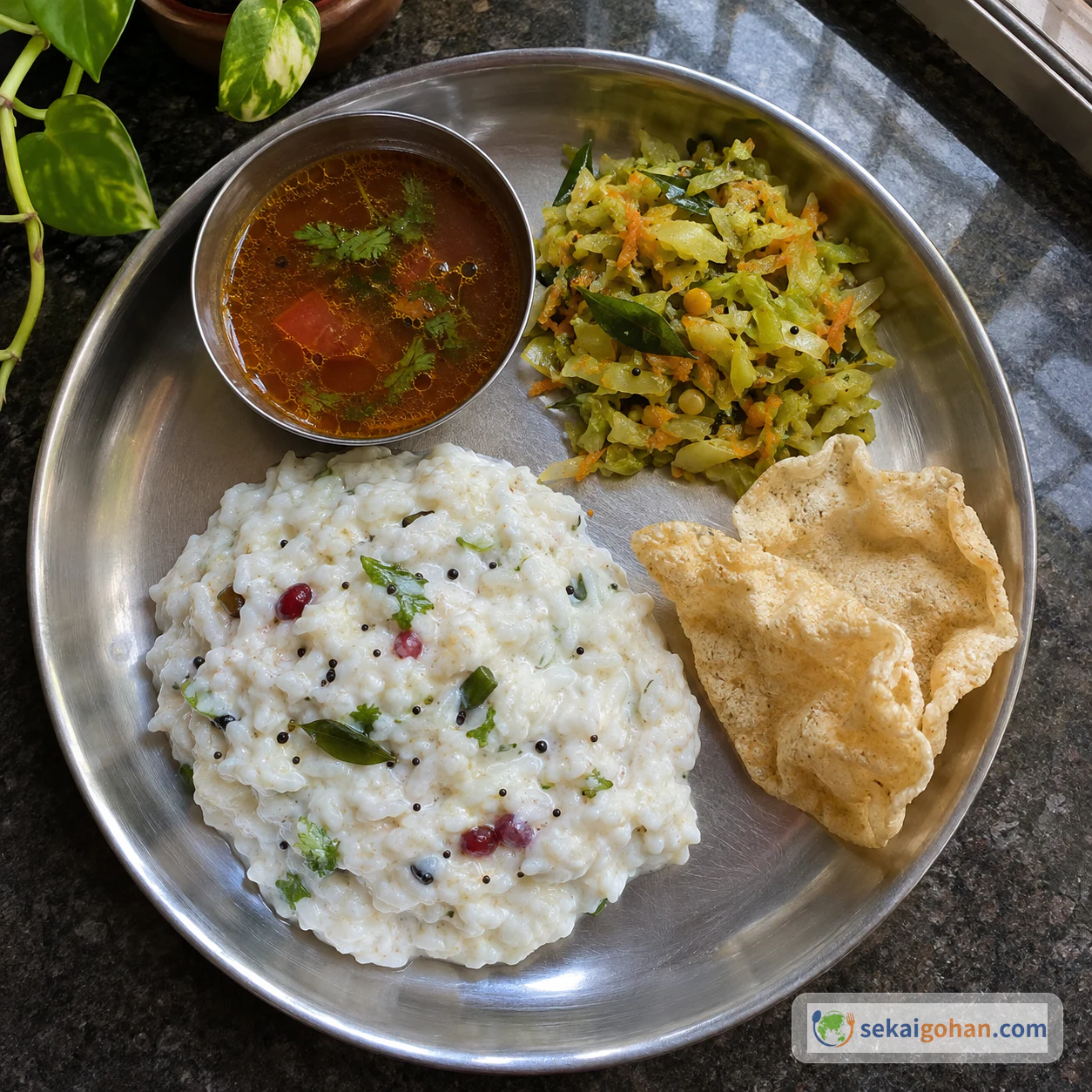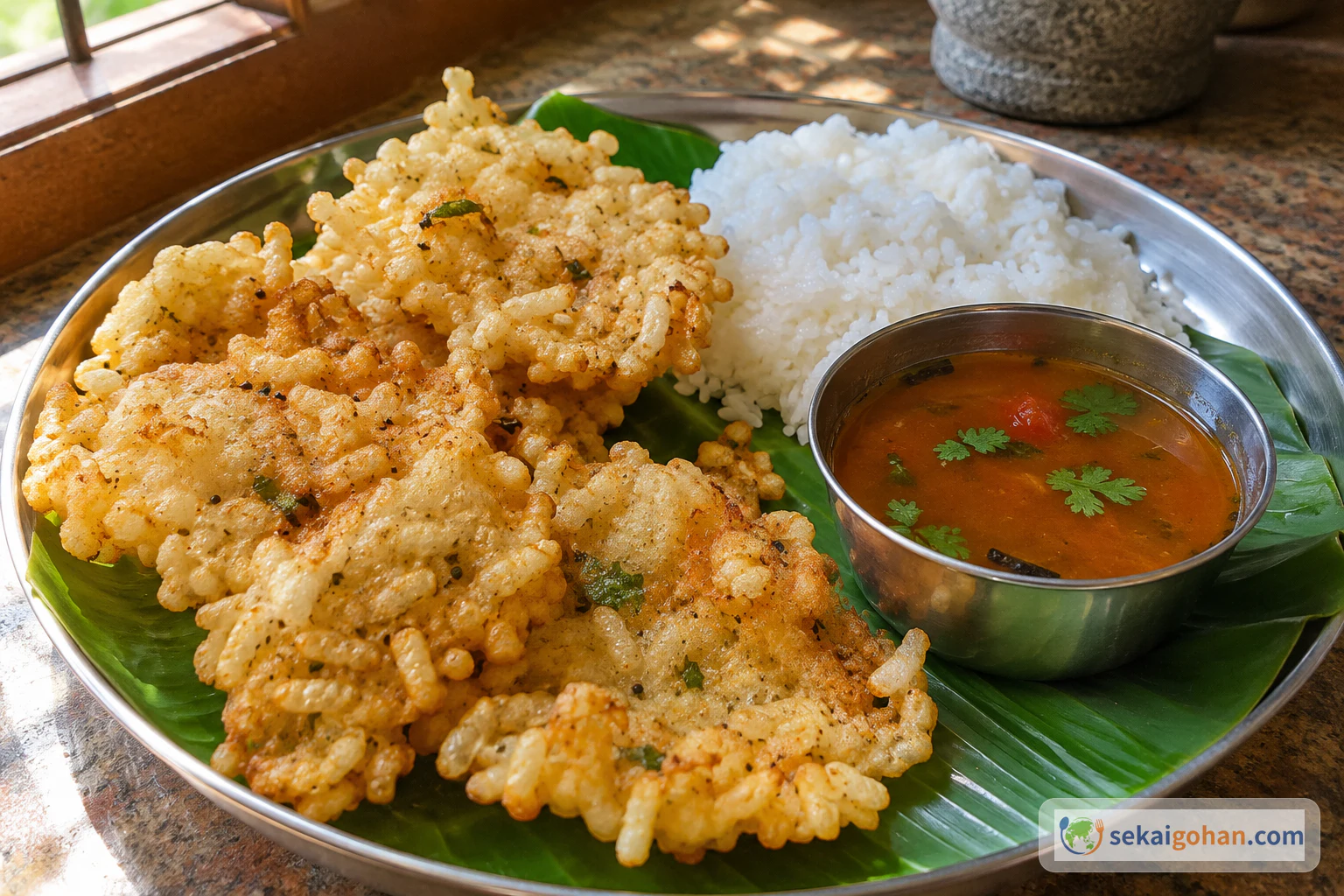
Freshly fried aralu sandige piled on a plate beside steamed rice and a small bowl of rasam
CuisineIndian (Karnataka)

Sandige: Karnataka Sun-Dried Puffed Rice and Ash Gourd Fryums

Aralu sandige from Karnataka, puffed rice and ash gourd mounds dried in the sun and fried. Learn the light-handed mix, the dryness test and frying by sight.

Level: Intermediate

Cooking flow

Cooking steps

STEP 11 / 9

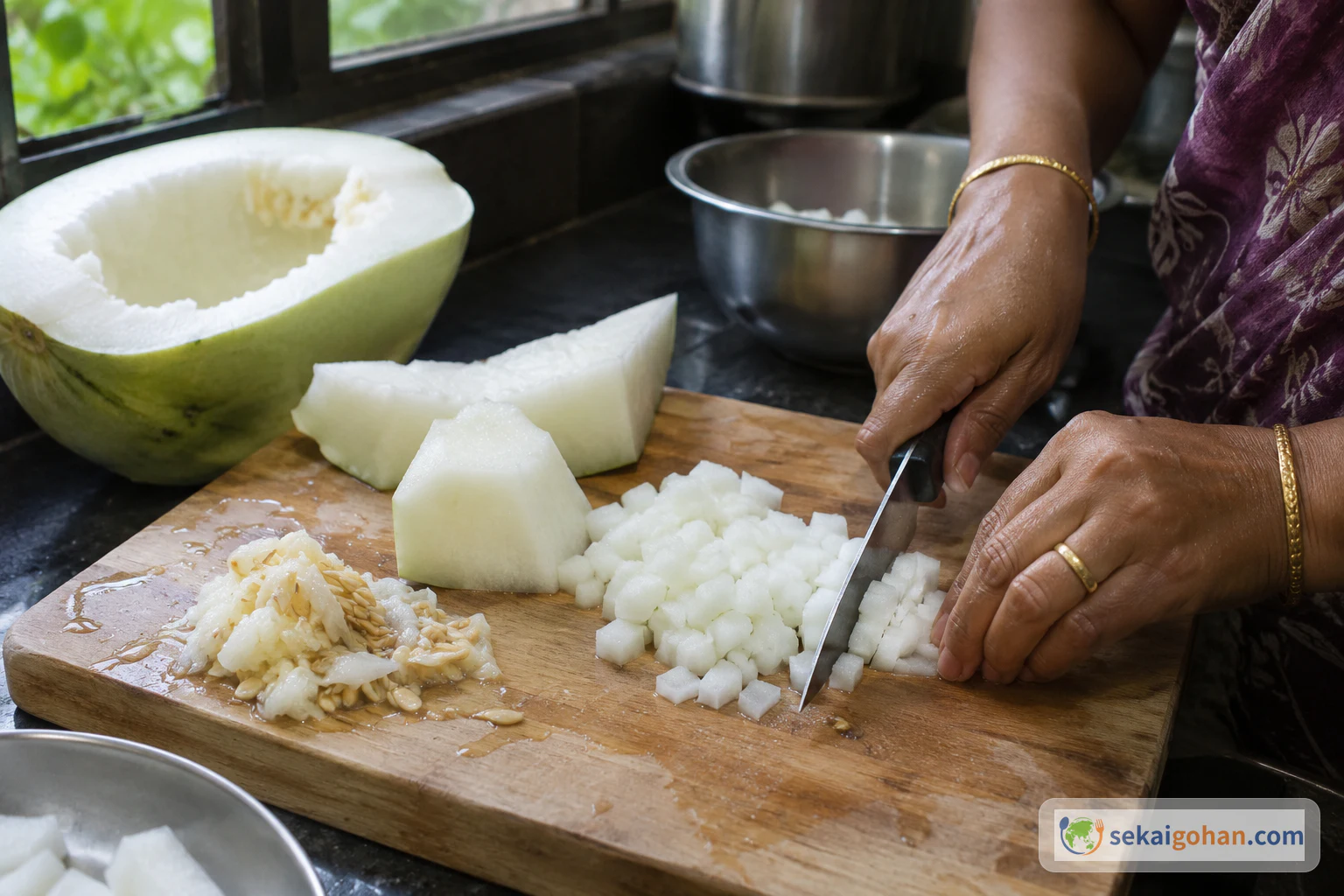
Prepare the ash gourd

Peeled ash gourd flesh being finely chopped on a board, with seeds and pulp set aside
The soft, seedy centre goes; only the dense outer flesh chops into clean small bits

Peel the ash gourd and scoop out the seeds and the soft pith in the centre. Keep only the firm white flesh. Chop it finely, into small, even bits that will spread through the puffed rice instead of sitting in lumps. You are done when you have a neat pile of pale, firm crumbs with no spongy pith left in it.

STEP 22 / 9

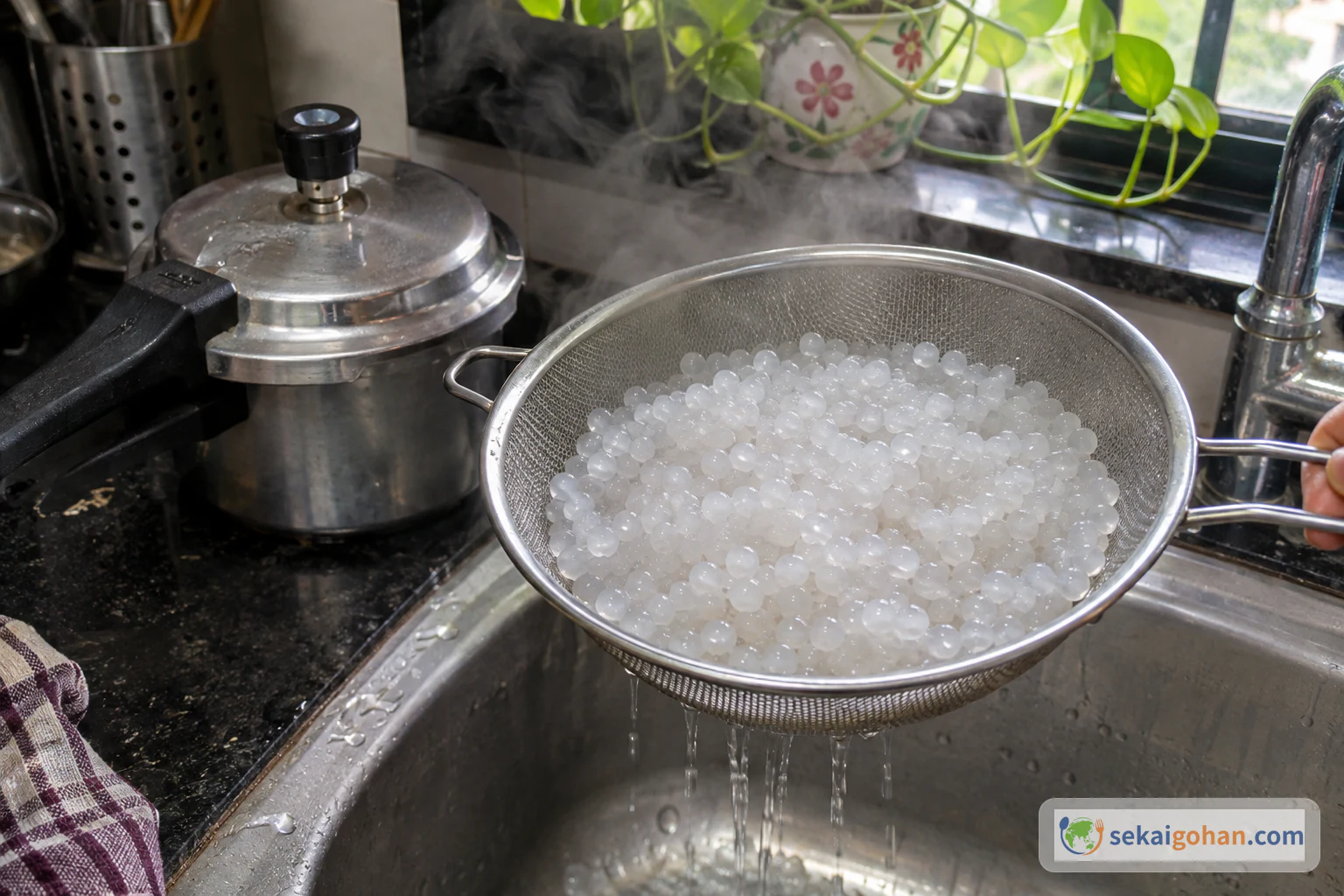
Cook the tapioca pearls

Cooked translucent tapioca pearls draining in a steel strainer beside a pressure cooker
Drain well: water left clinging to the pearls ends up in the mix, where it is not wanted

Cook the sabudana in water in a pressure cooker for one to two whistles, or simmer it in an ordinary saucepan. In a saucepan, keep going until the pearls turn translucent all the way through. Tip them into a strainer and let the excess water drain away. They are ready when they look glassy, feel soft and sticky, and no longer drip.

STEP 33 / 9

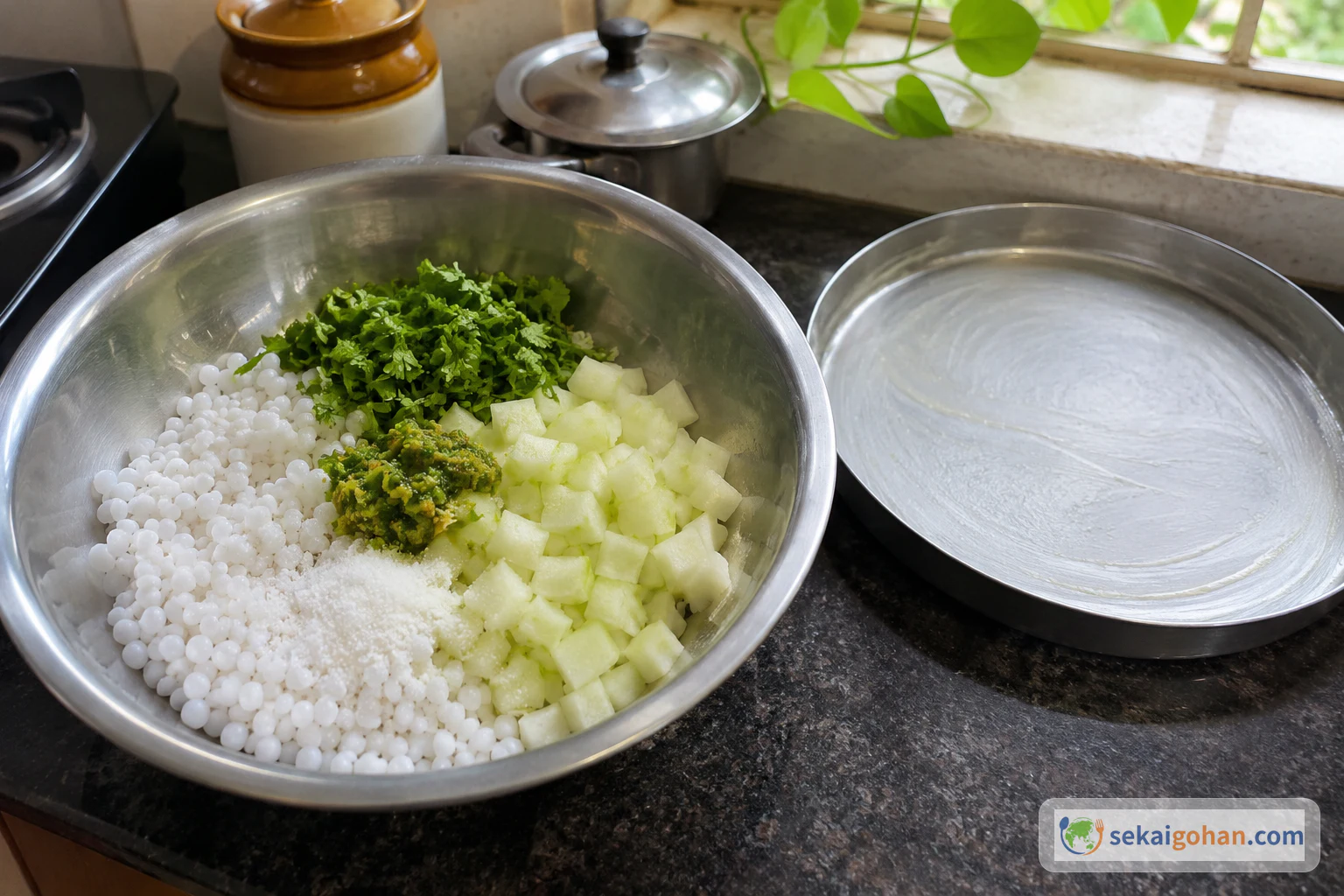
Oil the tray and combine the seasonings

A large bowl of cooked pearls, ash gourd, chilli paste, coriander and salt, with an oiled tray beside it
Have the oiled tray ready now; once the puffed rice goes in, you shape straight away

Lightly oil a large tray or sheet and set it beside your work space. In a large bowl, put the cooked sabudana, chopped ash gourd, green chilli paste, coriander, cumin seeds, asafoetida if using, and salt. Stir them together until the pearls are evenly mixed with the gourd. The bowl should look like a sticky, green-flecked paste with the gourd spread right through it.

STEP 44 / 9

Dampen the puffed rice a handful at a time

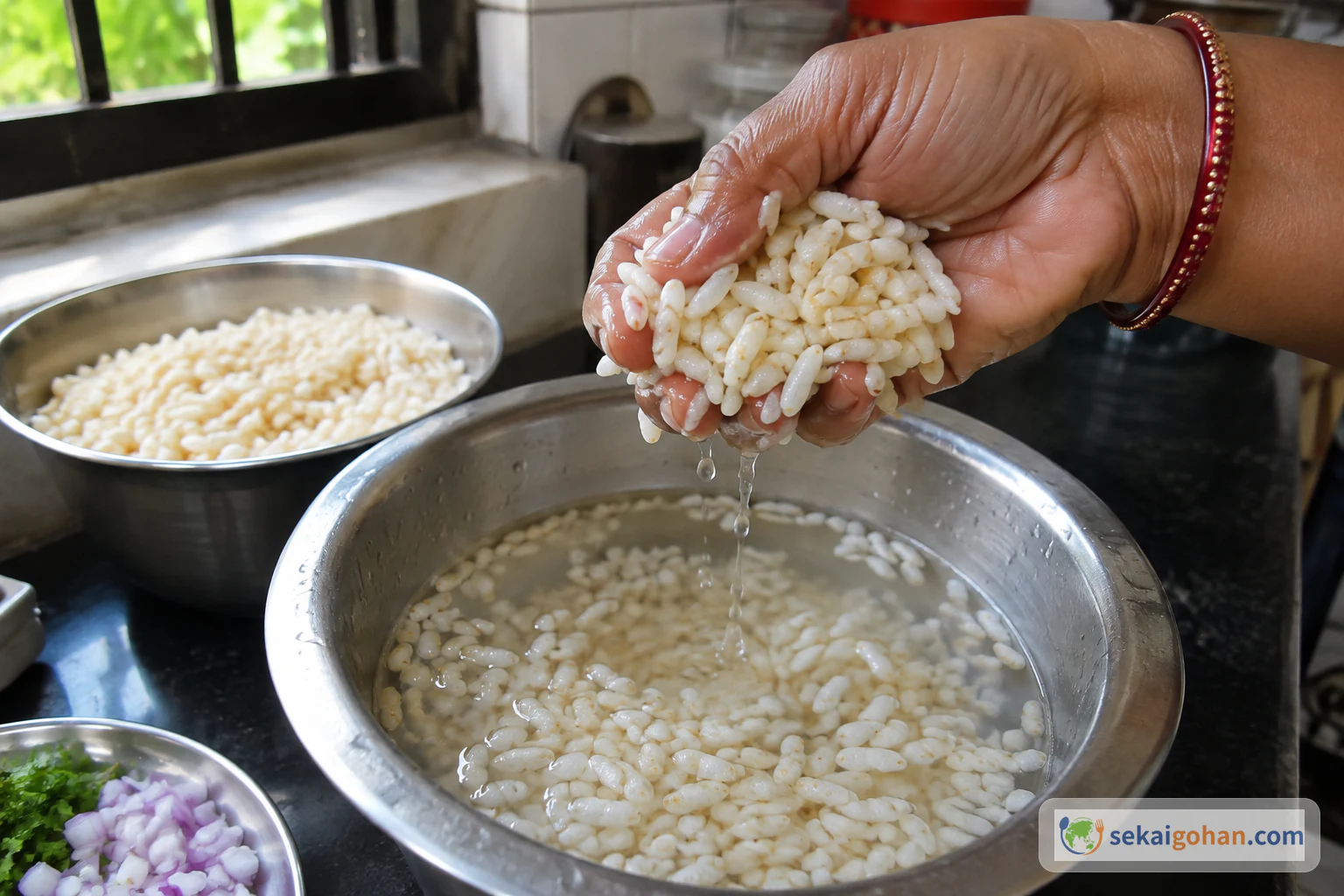
A hand lifting a handful of wet puffed rice from a bowl of water, water running back down
A light squeeze: the rice stays visibly wet but stops dripping

Take one handful of puffed rice and dip it in a bowl of water. Lift it out and squeeze lightly, just enough to stop it dripping, then drop it into the bowl with the seasonings. Repeat until all of the puffed rice is in. Each handful should feel damp and soft but still in separate grains, never mushy.

Small handfuls, light squeeze

Wetting the puffed rice a handful at a time is the move that decides the texture. A big batch dunked at once soaks unevenly and goes soggy in the middle, and a mix that is too wet slumps on the tray and dries dense.

STEP 55 / 9

Fold gently with your fingertips

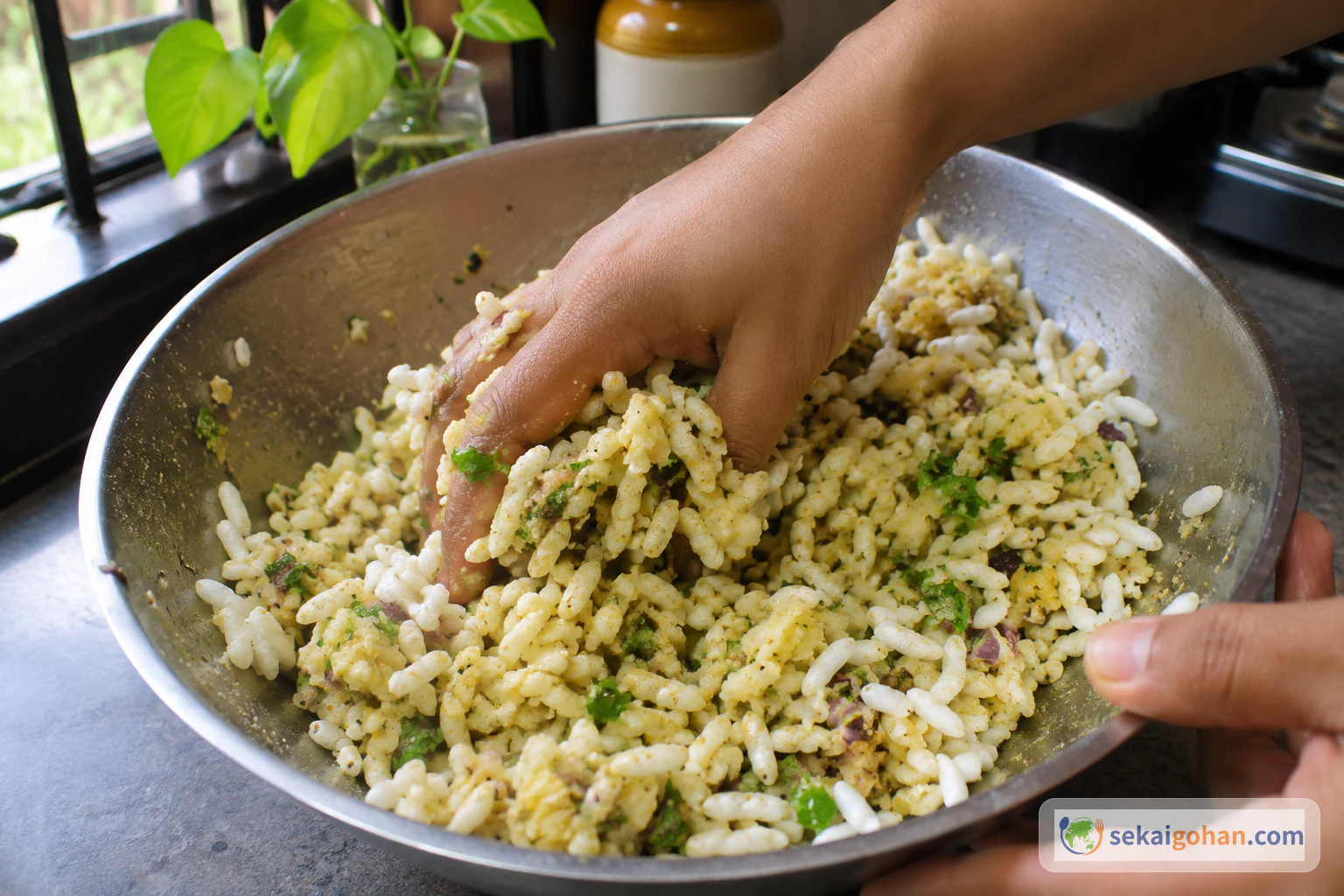
Fingertips folding damp puffed rice into the green-flecked mixture in a large bowl
Loose and airy is right; the mix only needs to cling, not form a dough

Once all the puffed rice is in the bowl, fold it into the seasonings with your fingertips, lifting from the bottom and turning it over. Do not add any more water, and do not press or knead. The sticky pearls and gourd will coat the grains as you turn them. Stop when every grain is flecked with green and the mix gathers loosely when you cup it, with the puffed rice still whole.

STEP 66 / 9

Shape small pyramids on the tray

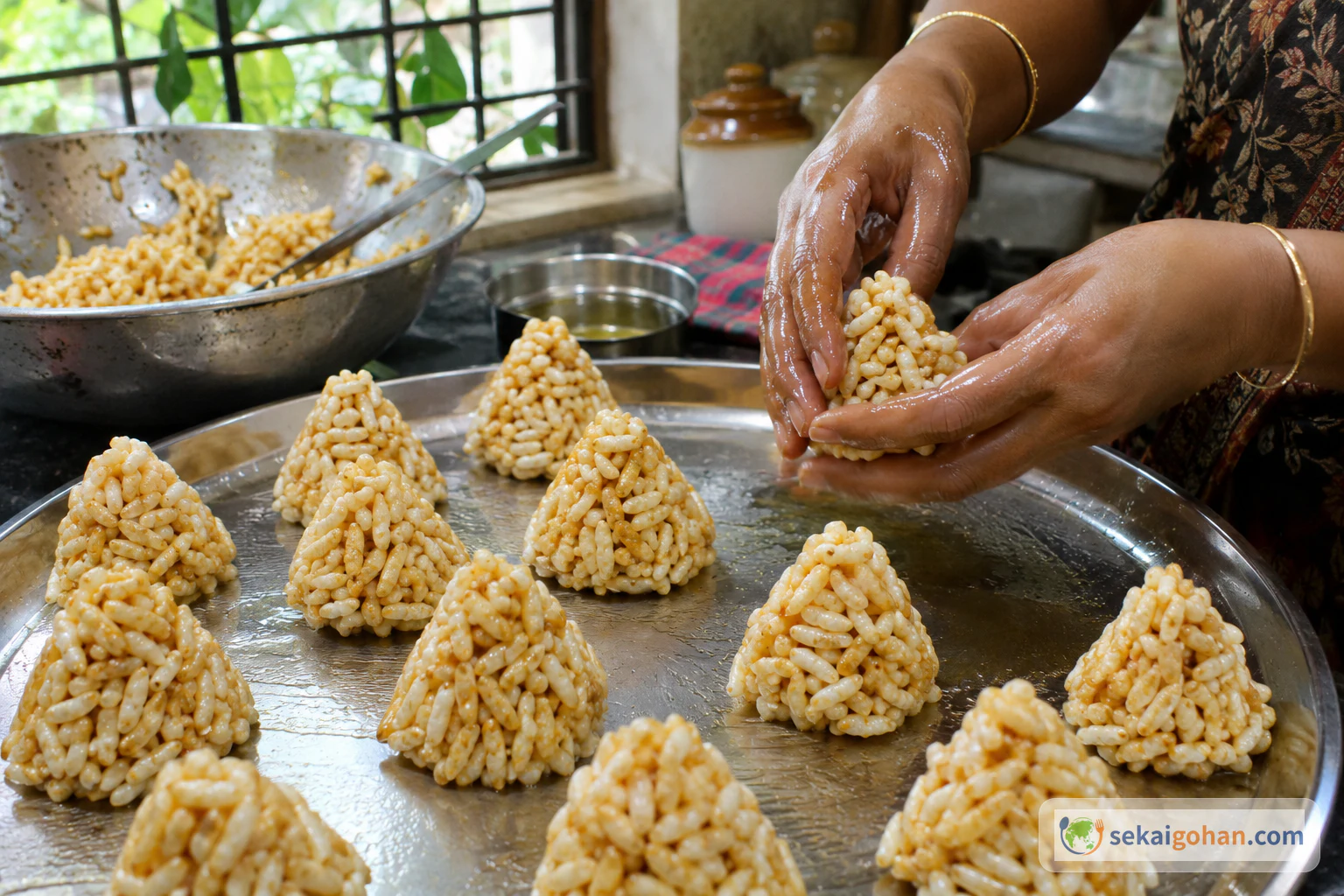
Wet hands shaping small pyramid mounds and setting them in spaced rows on an oiled steel tray
Keep your hands damp so the mix releases cleanly and the edges stay sharp

Wet your hands lightly. Pick up a little of the mix, press it gently into a small pyramid and set it on the oiled tray. Leave space between the mounds so air and sun reach every side. They shrink as they dry, so do not make them too small. Each pyramid should hold its point and its shape when you take your hand away.

Shape for the final size

Judge the size by what you want after drying. Mounds that look generous on the tray come out right; dainty ones dry into crumbs.

STEP 77 / 9

Dry in full sun until bone dry

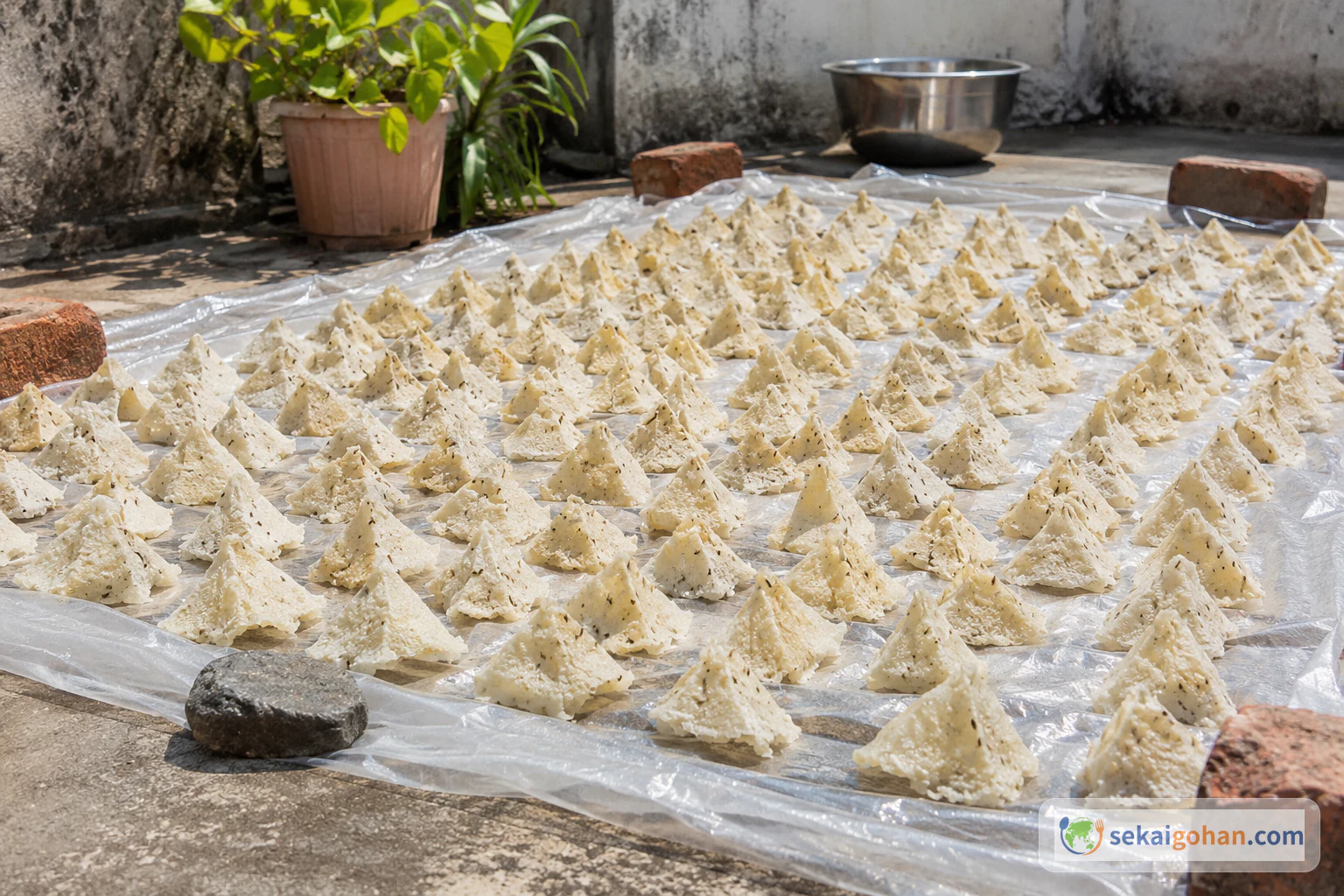
Pale pyramid sandige spread on a weighted plastic sheet drying in bright sunlight
Weight the sheet's edges so wind cannot lift it, and keep the whole surface in the sun

Set the tray or sheet out in bright, direct sun and cover it with a net or cloth against birds, insects and dust. Turn the mounds over partway through so the undersides dry too. Drying takes one to three days, depending on the weather. They are done when they are pale, light and hard, and a piece broken open is dry right to the centre.

STEP 88 / 9

Check every piece and pack them away

STEP 8

Go through the batch before storing it. Any mound that still feels soft, cool or heavy for its size goes back into the sun until it dries through. Pack the fully dried sandige into a clean, dry airtight container and close it tightly. What goes in the jar should be hard, light and completely dry, with no damp centres.

STEP 99 / 9

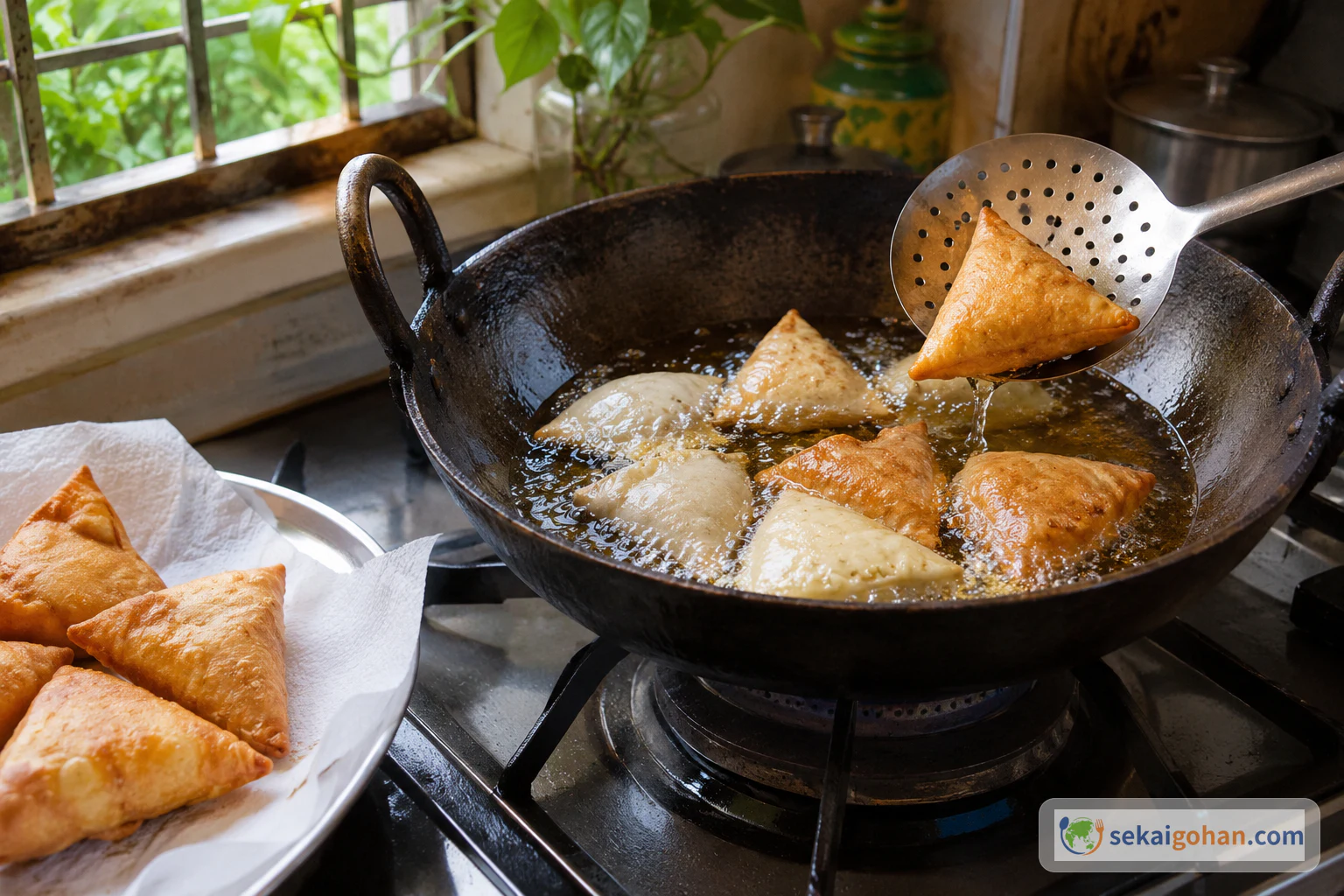
Fry a few at a time

Sandige pyramids puffing in hot oil in an iron kadai, golden pieces lifted onto a paper-lined plate
Pale pieces that are still expanding stay in; lift each one out as it turns golden

Heat oil in a deep pan or kadai and drop in a few dried sandige. They sink, then rise to the surface, puff up and take on colour quickly. Lift them out with a slotted spoon onto a paper-lined plate. They are ready when they have swollen, turned golden.

0 / 0
Ingredients

Ingredients

1 / 1

Ingredients

Ingredient Amount Role
Puffed rice (aralu), plain and unsweetened 10 cups The body of the sandige; light and porous
Tapioca pearls (sabudana) ½ cup Cooked first; the glue that binds the mounds
Ash gourd, peeled, seeds and pith removed, finely chopped 1 cup Moisture and binding
Green chilli paste from 4 green chillies Heat
Coriander leaves, finely chopped 1 bunch Fresh green aroma and colour
Cumin seeds ½ tsp Warm aroma
Asafoetida (hing) a little (optional) Savoury depth
Salt to taste Seasoning
Oil a little, for greasing the tray Keeps the mounds from sticking while they dry
Oil as needed, for deep-frying Frying the dried sandige
0 / 0

In early summer, rows of small white pyramids sit on sheets spread across Karnataka rooftops, baking in the sun while children wave off the birds and insects that come for them. Days later, those hard, pale mounds drop into hot oil, rise to the surface, swell and turn golden quickly. This is sandige, a sun-dried fritter that households make in bulk once a year and fry a handful at a time whenever a meal needs crunch. The version here is aralu sandige: puffed rice bound with tapioca pearls and ash gourd, sharp with green chilli and fresh with coriander, eaten crisp beside rasam rice or curd rice.

Sandige: A Summer's Work for the Whole Year

A rooftop job for the hottest weeks

Sandige belongs to summer because it needs the sun. Families mix big batches, shape them by hand and lay them out on plastic sheets, butter paper or leaves on the roof or in the courtyard. The work is shared, and the youngest members of the household get the most important job: keeping birds and insects off the drying trays. A good stretch of hot weather turns the soft mounds into something that keeps, and the jars filled that season are meant to last until the next summer.

Nothing about sandige is eaten straight off the roof. The dried pieces wait in airtight jars, and when someone wants them, a few go into hot oil. They come to the table as a crunchy side to rasam rice or curd rice, or with tea in the afternoon, the way you might reach for a papad in other parts of India.

Many kinds under one name

Sandige is a family of fryums, not a single recipe. Sabbakki sandige is made from sago, aralu from puffed rice, akki peni from rice flour, avalakki from pressed rice, and there are ragi, godi peni and nirulli versions as well. Coastal kitchens around Udupi and Mangalore, and Konkani households, keep their own kinds. Aralu sandige, made here, is one of the lightest: the puffed rice keeps a porous, airy body that puffs again when it hits the oil.

Sandige, vadam, vethal

Sandige (also written shandige) is the Kannada name. Similar sun-dried fryums are made across Karnataka, Andhra Pradesh and Tamil Nadu, and you will also see them sold or described as vadam or vethal.


Ingredients
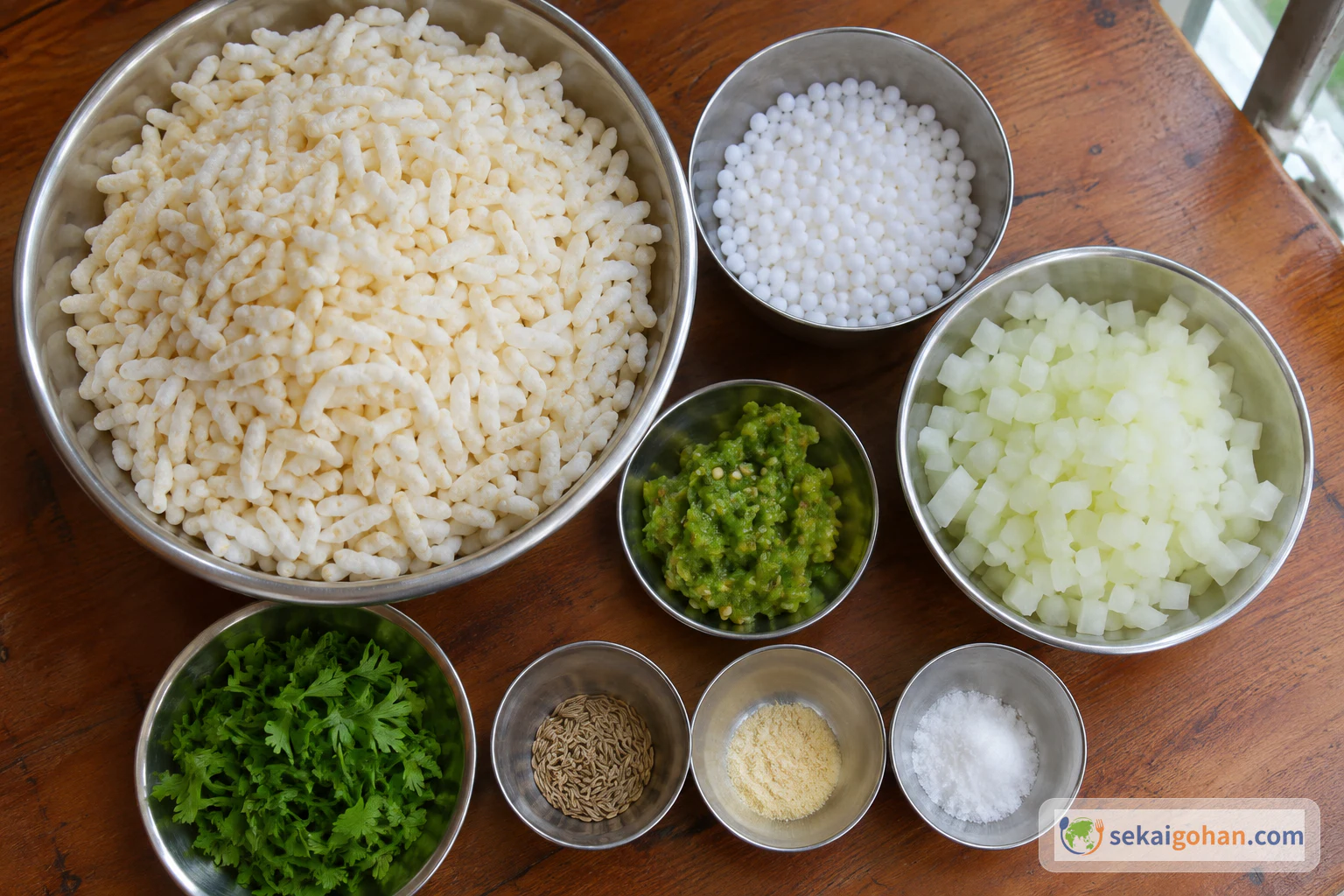
Puffed rice, tapioca pearls, chopped ash gourd, green chilli paste, coriander, cumin, asafoetida and salt laid out in bowls
The puffed rice is by far the biggest pile; everything else is there to bind it and season it
Allergen information

The mix itself contains no wheat, milk or egg. Check the label on your asafoetida and on your frying oil before you cook for anyone with allergies.

Equipment

  • Cutting board and knife
  • Pressure cooker or saucepan, plus a strainer
  • A large mixing bowl and a bowl of water
  • A large tray or sheet, lightly oiled, for shaping and drying
  • A net or cloth cover to keep birds, insects and dust off
  • Airtight containers for storing
  • A deep pan or kadai, a slotted spoon and a paper-lined plate for frying

Choosing and Substituting

Three things decide whether this tastes like Karnataka: unsweetened puffed rice, ash gourd and the clean heat of green chilli. Buy plain puffed rice and skip any flavoured or sweetened kind, because the sugar and coating change both the taste and how the mounds hold together. Ash gourd is the same plant sold as winter melon in Asian shops, and only the firm white flesh goes in.

Tapioca pearls should be the small kind sold as sabudana. Coriander here is the leaf, the same herb sold as cilantro. Asafoetida is the one ingredient you can drop: it adds a savoury, oniony depth, and the sandige are still good without it. Green chillies are the heat and the green flavour together, so keep all four unless you know you want them milder.


Method

The handwork takes about an hour: chop the gourd and cook the pearls first, then mix and shape in one sitting while the mix is fresh. After that the sun does the work for one to three days, and frying happens later, whenever you want to eat them. Choose a run of dry, sunny days before you start.

Drying and frying safety

Store sandige only when they are completely dry. The mix is made with uncooked puffed rice and raw ash gourd, and mounds that are not dry through can grow mould and spoil. Dry them under a cover, away from birds and insects. When frying, slide the pieces into the oil gently, keep children and water away from the pan, and never leave hot oil unattended.

When It Goes Wrong

What you see Why What to do
The mix is wet and the mounds slump flat The puffed rice was squeezed too little, or water was added to the bowl Squeeze each handful until it stops dripping, and add no water to the bowl
The mounds dry hard and dense The mix was pressed or kneaded Fold with fingertips only and shape with a light hand
The dried pieces are tiny They shrank as they dried Shape the next batch larger
The centres are still soft after days outside The weather was not dry or sunny enough Keep drying in the sun until a broken piece is dry right through; do not store them yet
Mould or an off smell in the jar The pieces were stored before they were fully dry Throw that batch away, and check every piece before packing next time

Serving, Variations and Storage

A steel thali of curd rice, rasam, vegetable poriyal and two fried sandige on the side
Sandige sit at the edge of the plate; break one over the rice for crunch in every mouthful

At the table

Fry sandige just before the meal and serve them hot, alongside rasam rice or curd rice. The crisp, salty crunch and the chilli heat are what plain rice and a thin, peppery rasam need. They also turn up with tea in the afternoon, a few at a time on a small plate.

Variations

Avalakki sandige uses pressed rice instead of puffed rice, with its own balance: 2 cups poha, 1½ cups water, 2 green chillies, 1 tsp salt, 1 tsp cumin, curry leaves and 2 tsp black sesame, dried for at least two days. It is a separate mix, so make it as its own batch and do not fold it into the aralu version. Sabbakki sandige is made from sago, and akki peni starts from rice flour.

Storage

Keep fully dried sandige in an airtight container, closed tightly between uses. Fry only what you will eat, and put the rest back at once. If any piece shows mould or smells off, throw it away.
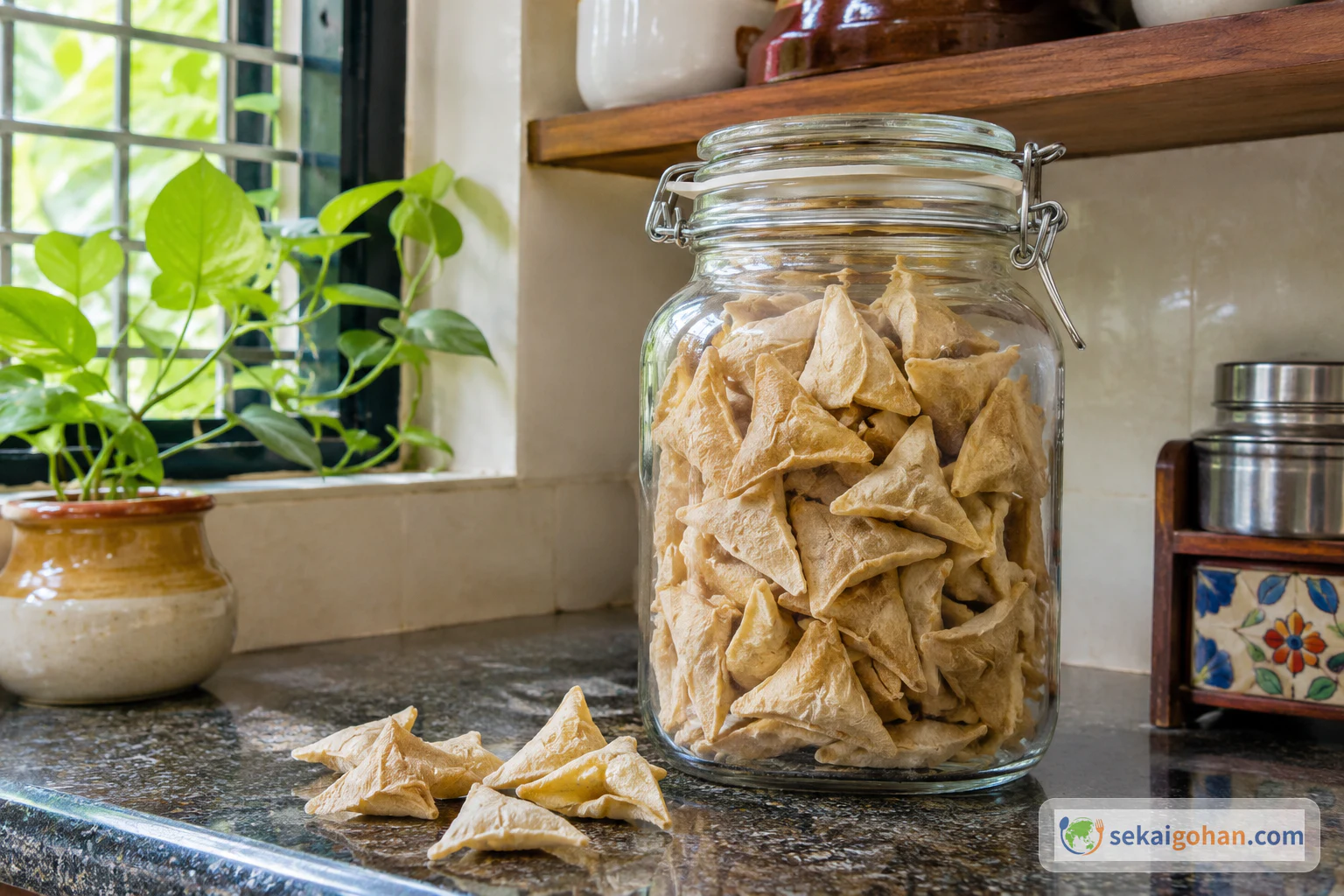
Dried pale sandige pyramids in a sealed glass jar on a kitchen shelf
A tight lid keeps the dry pieces dry; open the jar only to take out what you are about to fry

Frequently Asked Questions

Can I fry them the same day I shape them?

No. Sandige are dried first and fried later; the drying is what lets them puff and crisp in the oil. Fresh mounds are soft and wet, and only fully dried pieces go into the pan.

My summers are humid. Can I still make sandige?

Wait for a stretch of dry, sunny days, since the sun does all the drying. If a batch is still soft at the centre, keep putting it out in the sun and do not store it until every piece is dry through.

Can I skip the asafoetida?

Yes. It adds a savoury depth, but the puffed rice, ash gourd, green chilli and coriander carry the flavour without it.

What oil should I fry in?

Use a neutral frying oil. Check its label if anyone at the table has allergies.
Sources