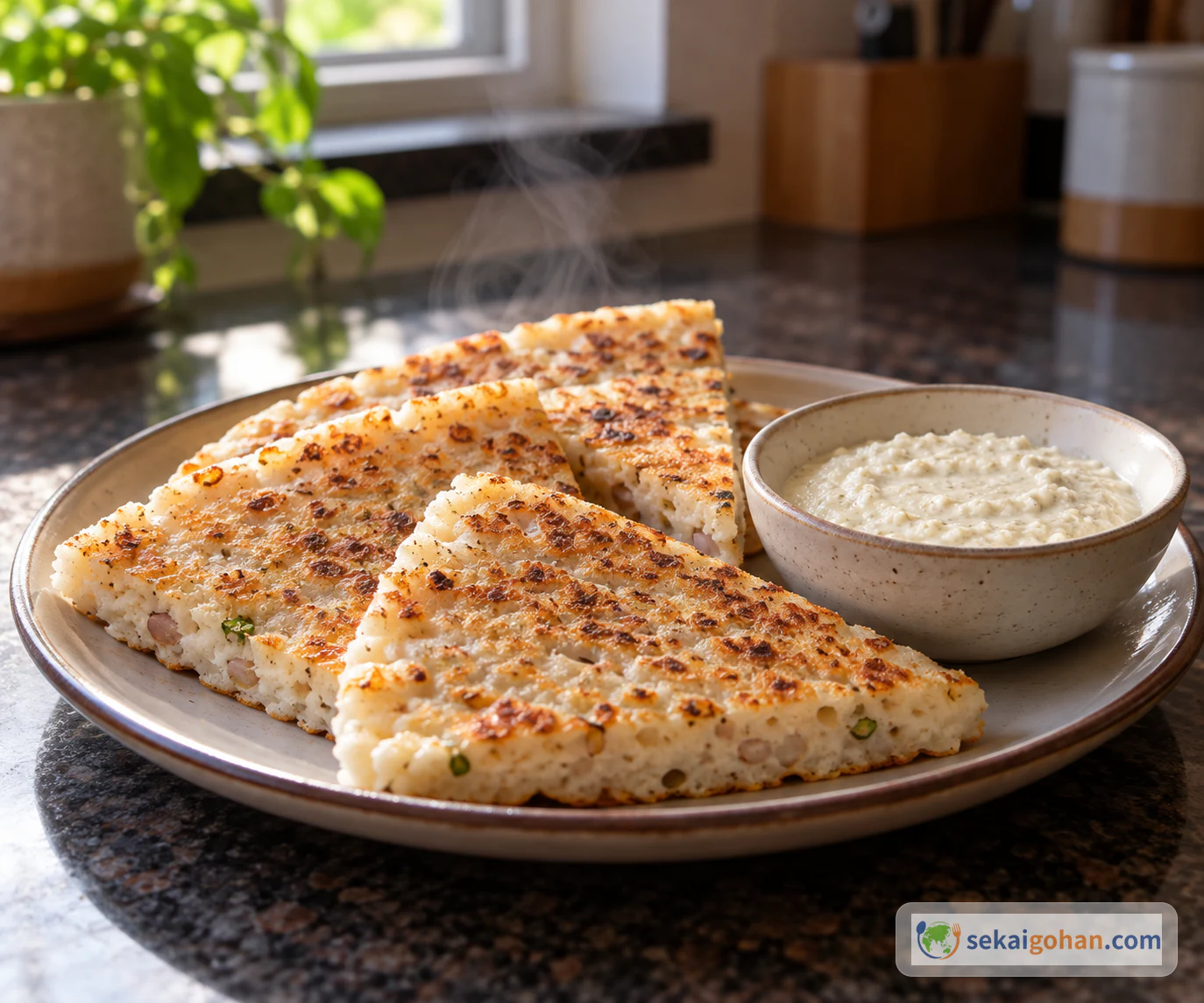
Dibba Rotti: Soaked Separately, Fermented, Then Cooked Slowly Under a Lid
Urad dal and rice rava soak in separate bowls. Only the dal is ground smooth, the rava is squeezed and stirred in, and the batter ferments for 5 hours before ginger, green chillies and cumin go in. Then it cooks slowly in a covered kadai on low heat.
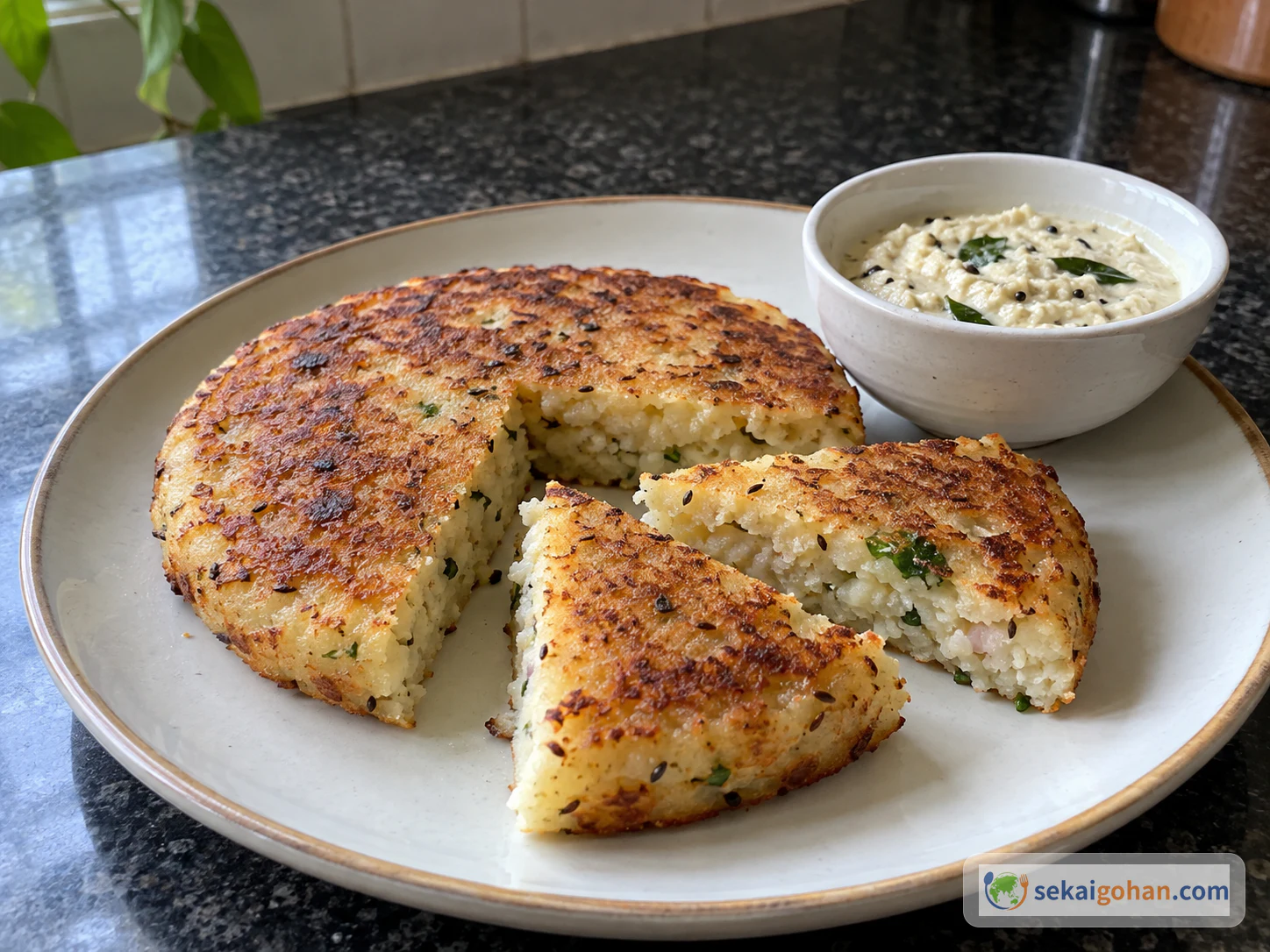
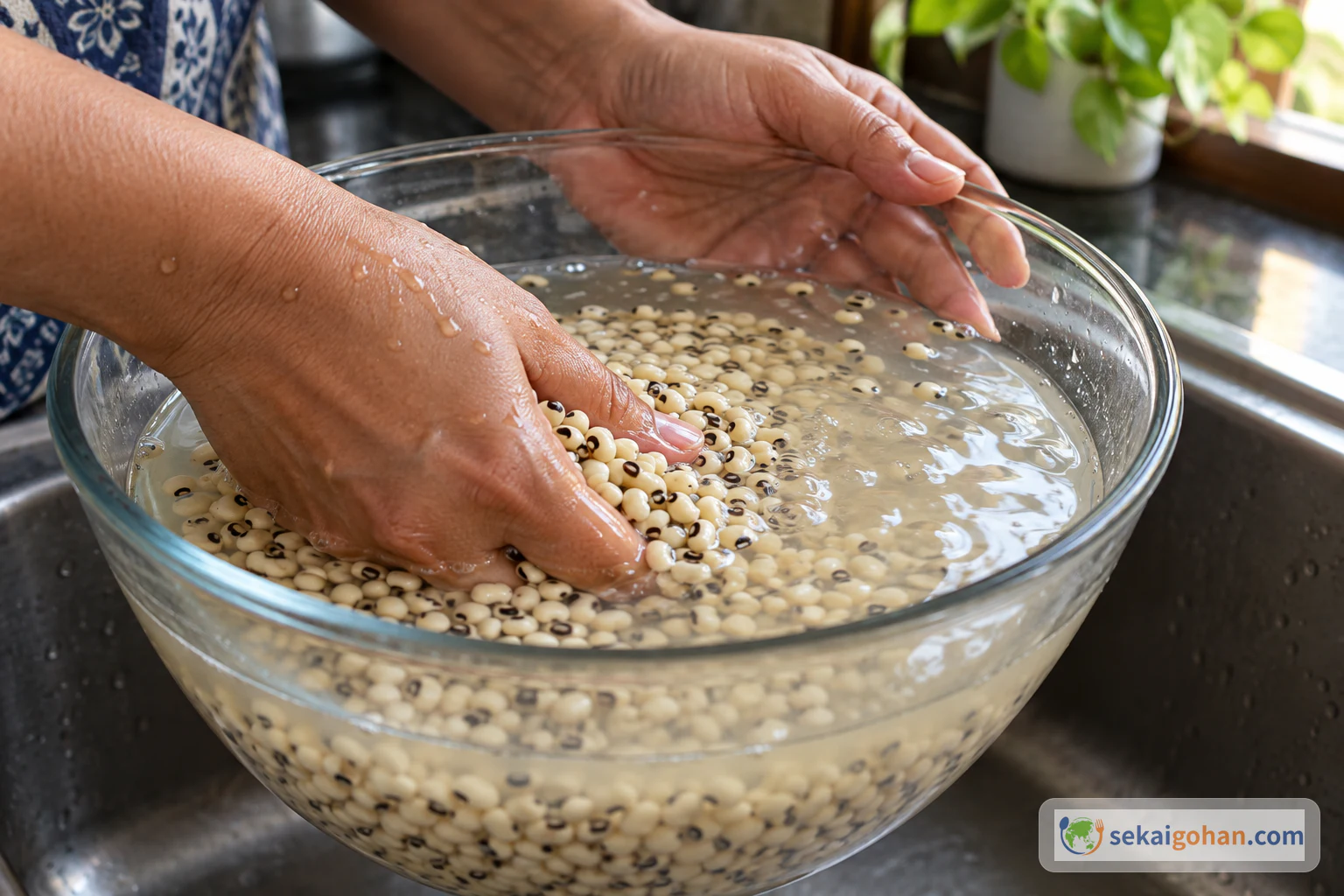
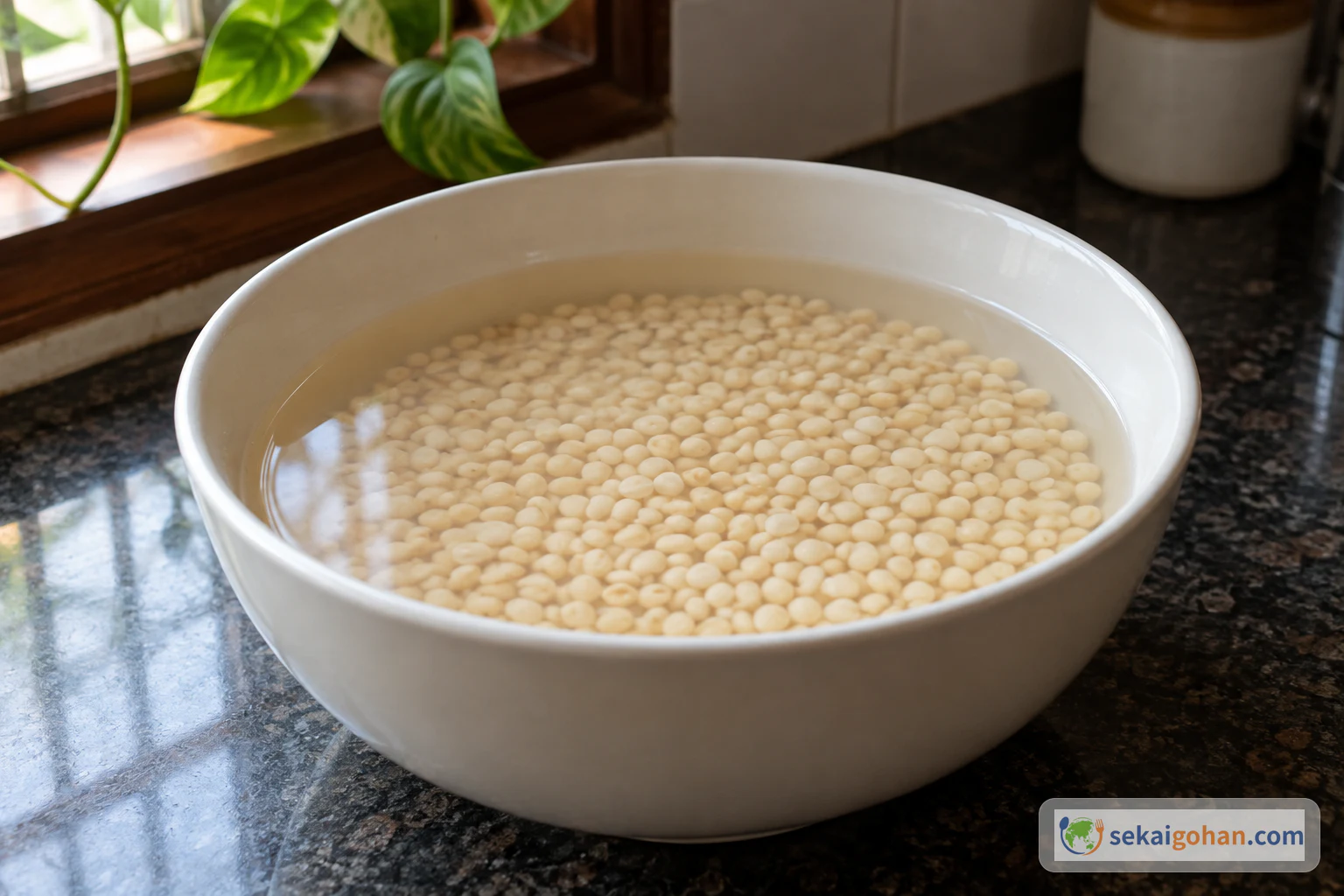
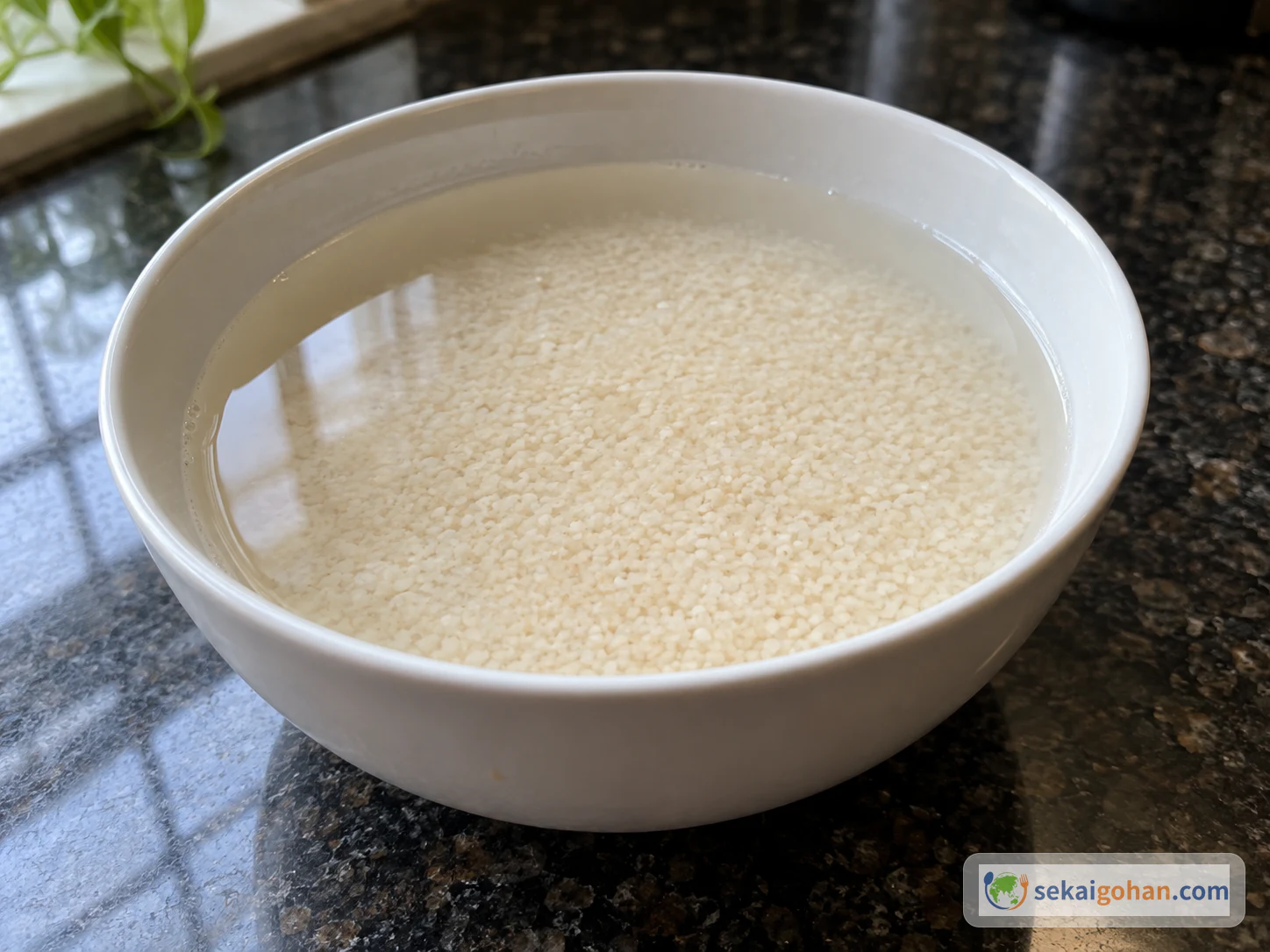
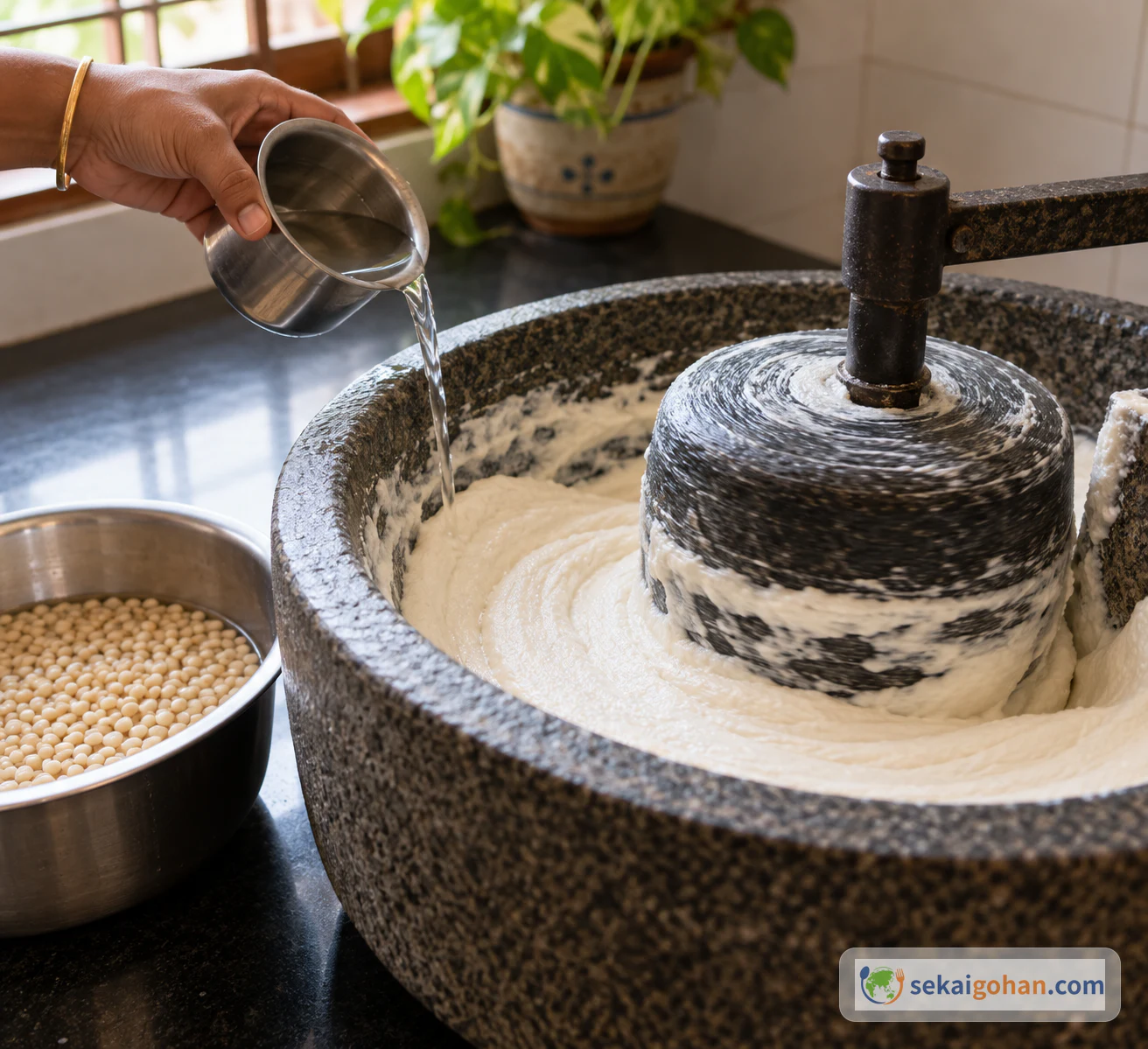
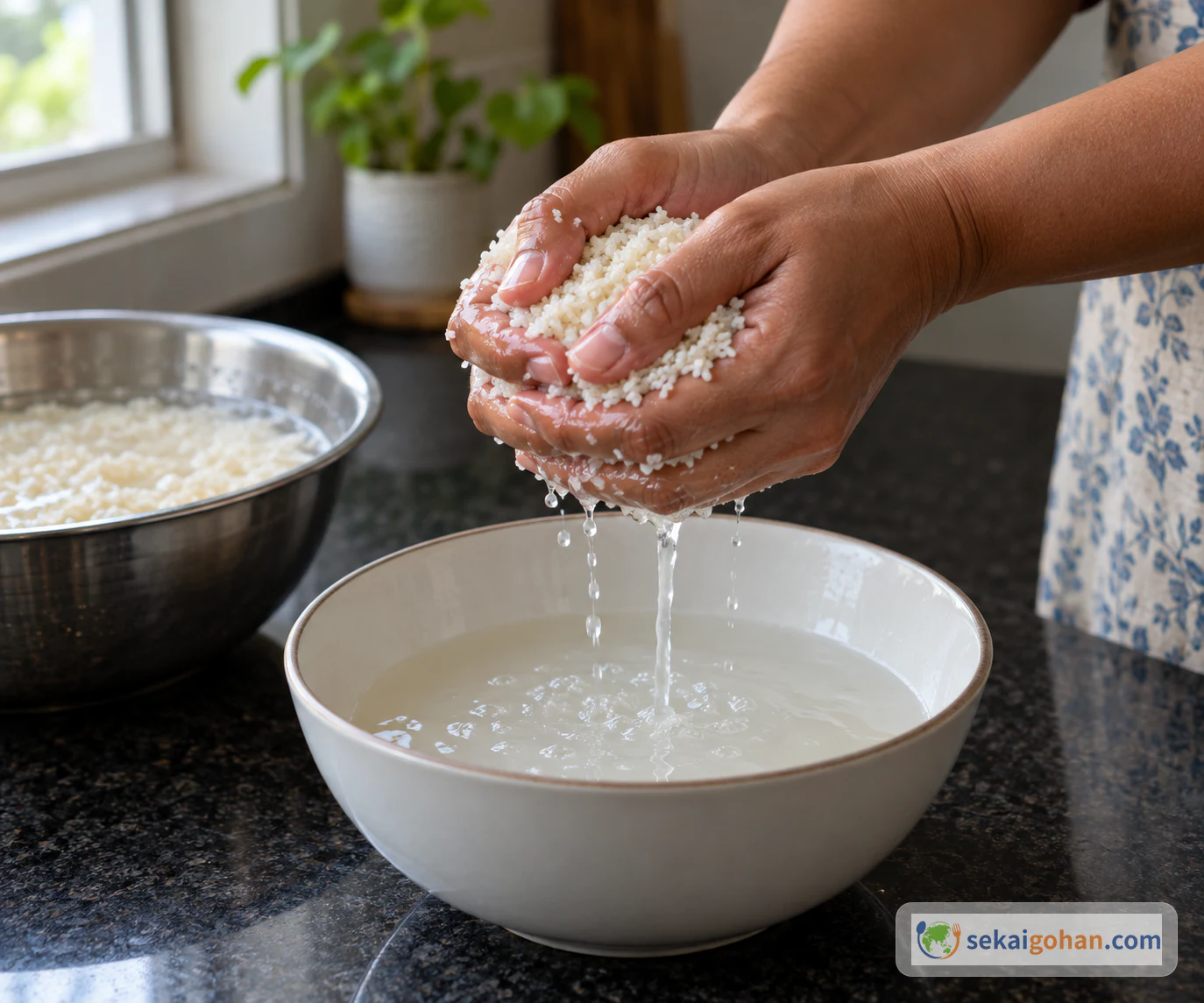
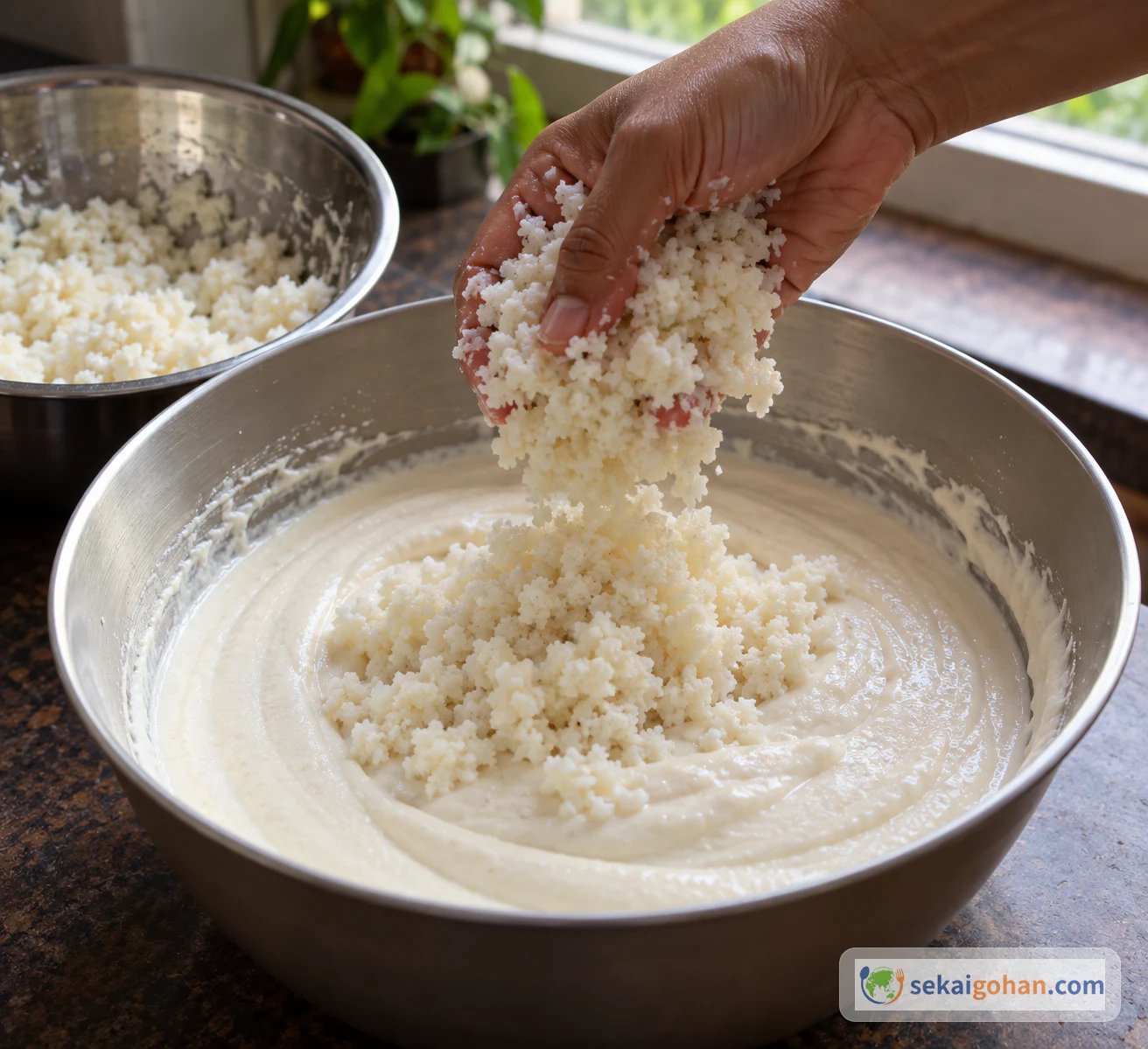
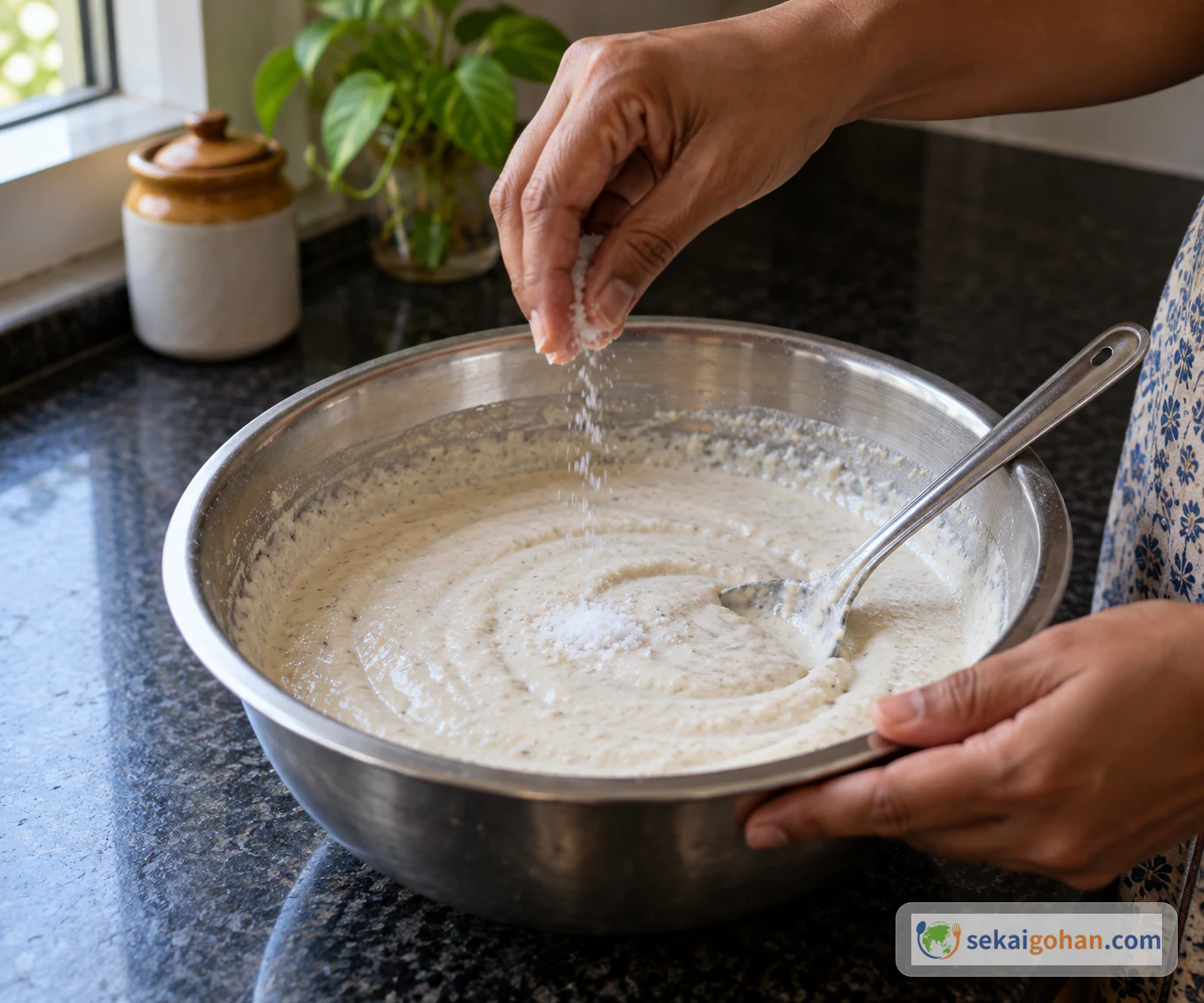
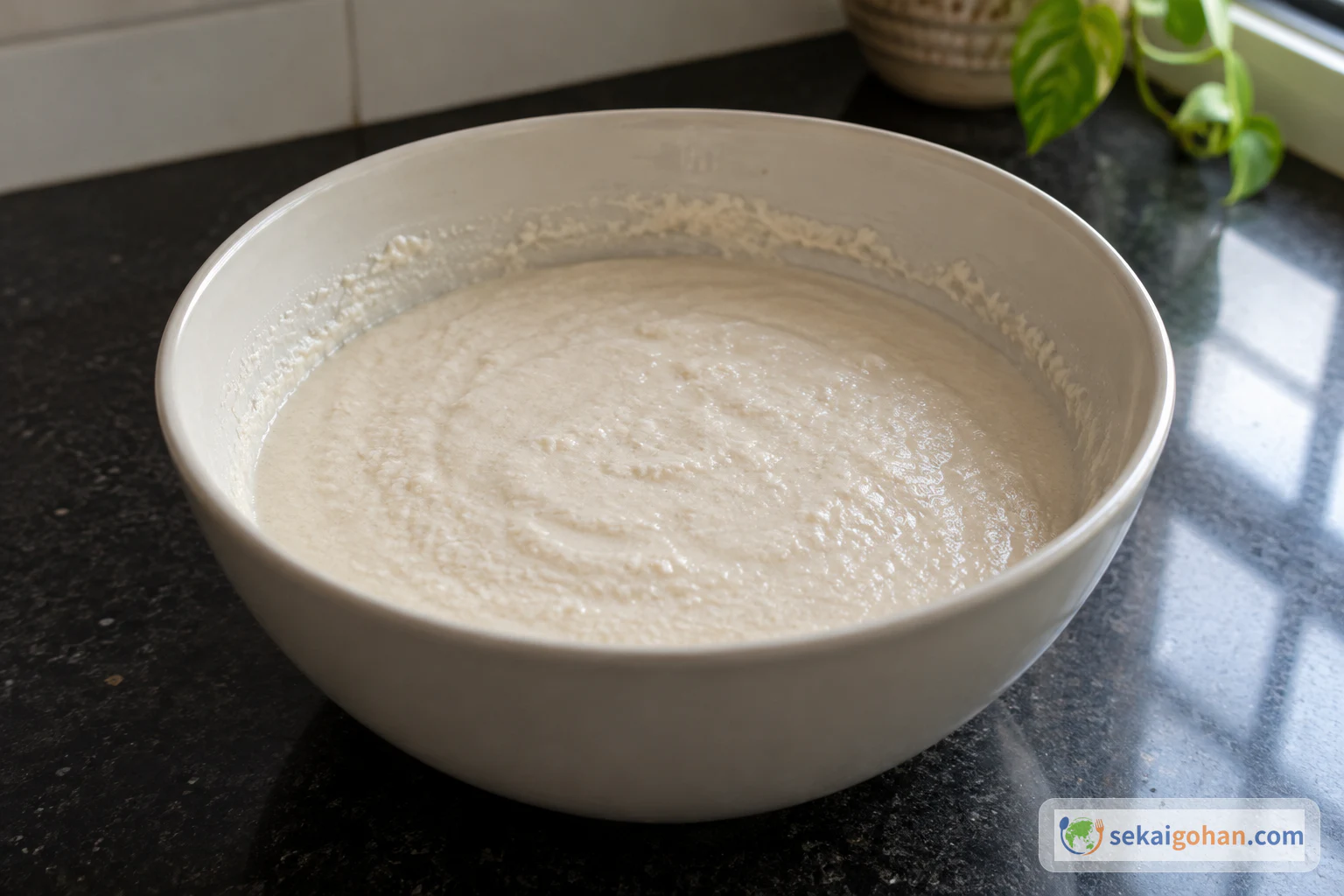
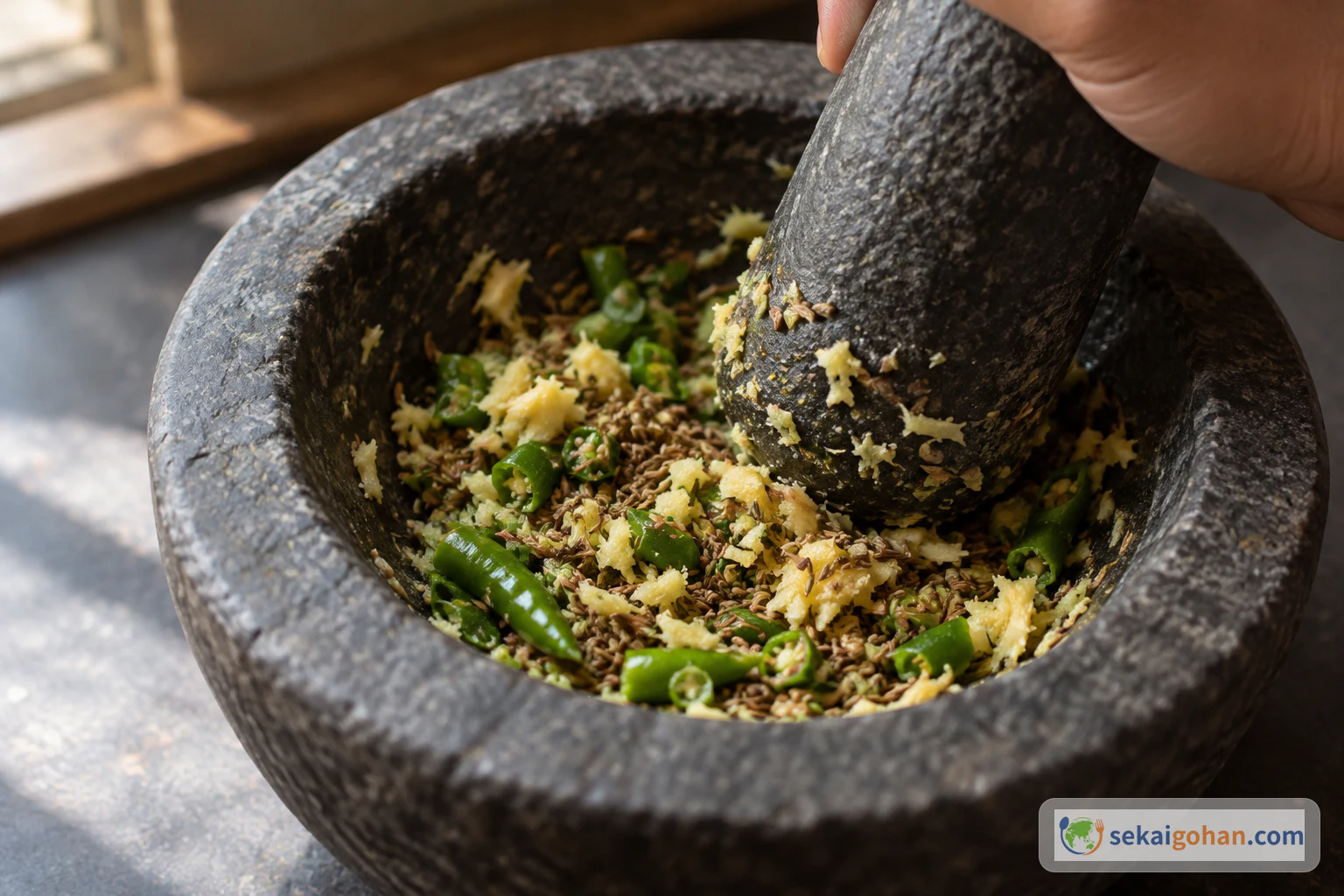
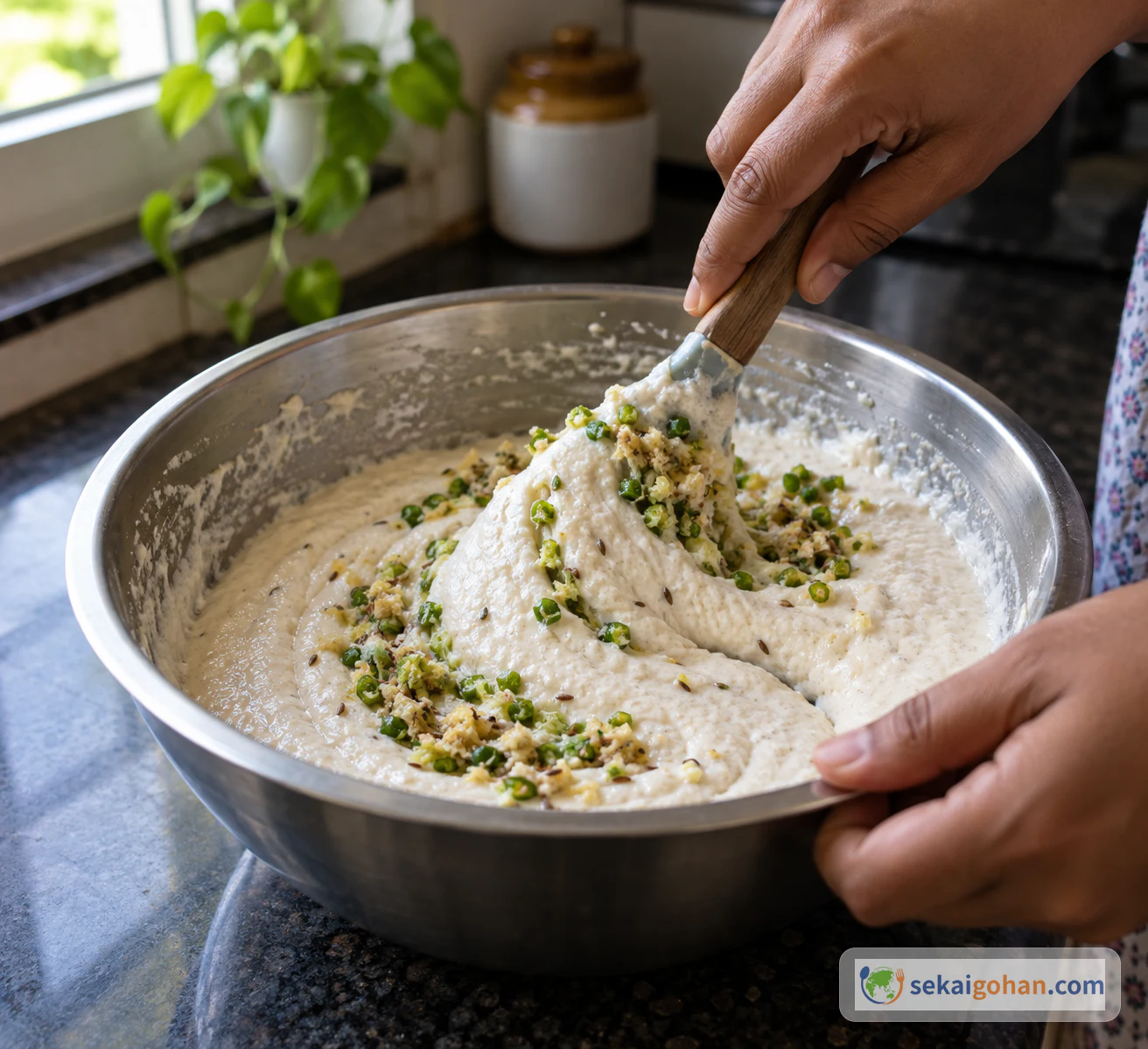
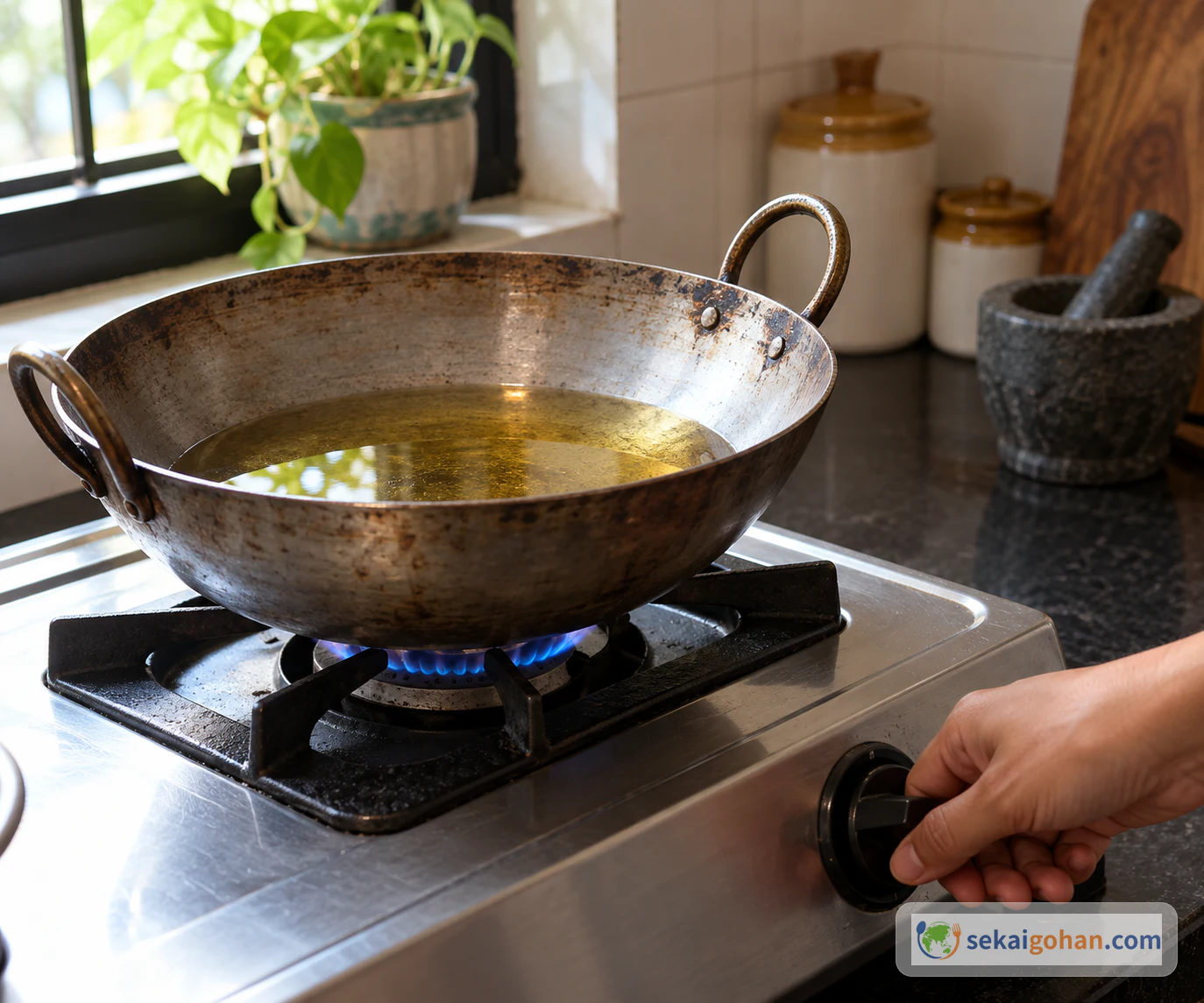
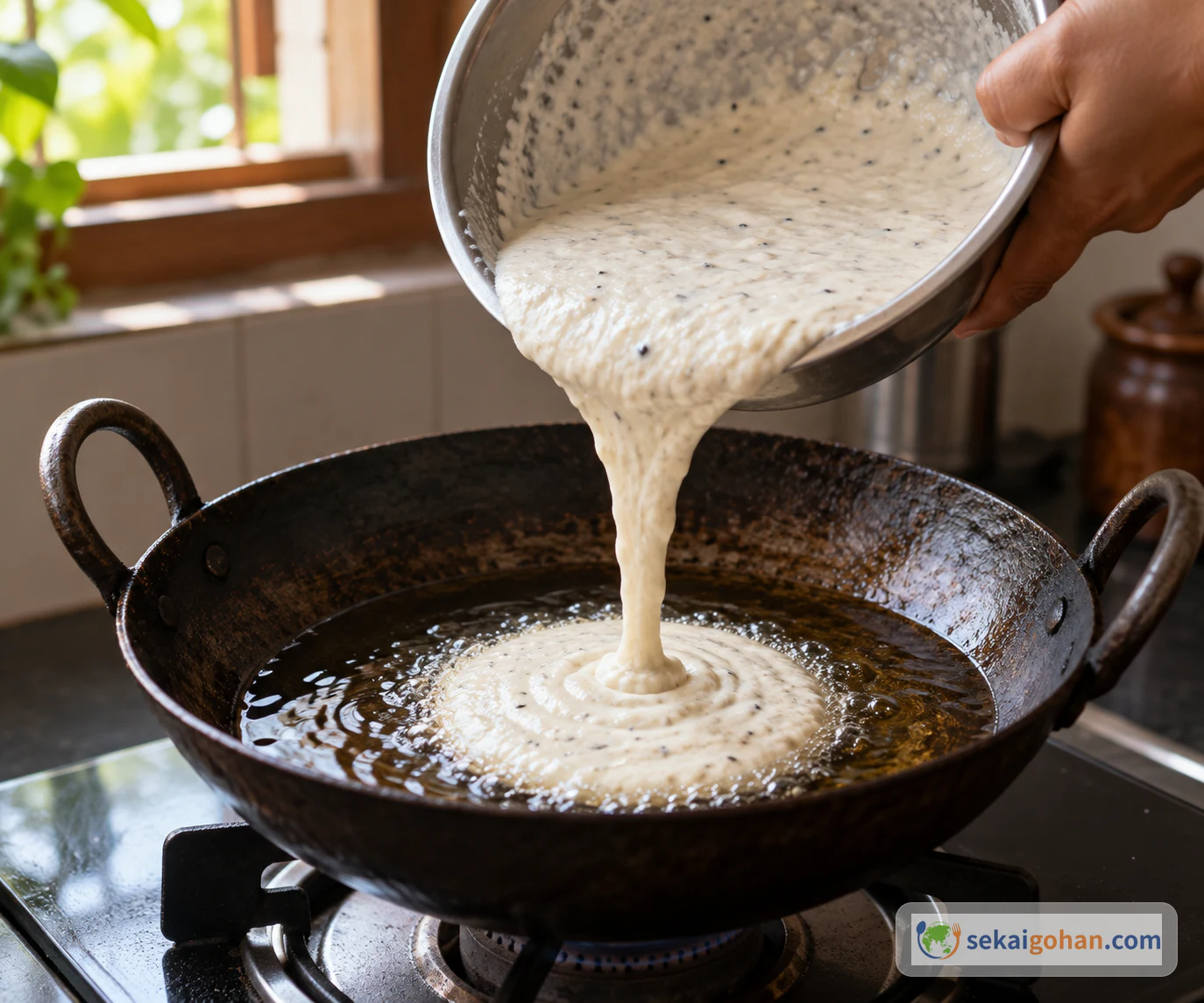
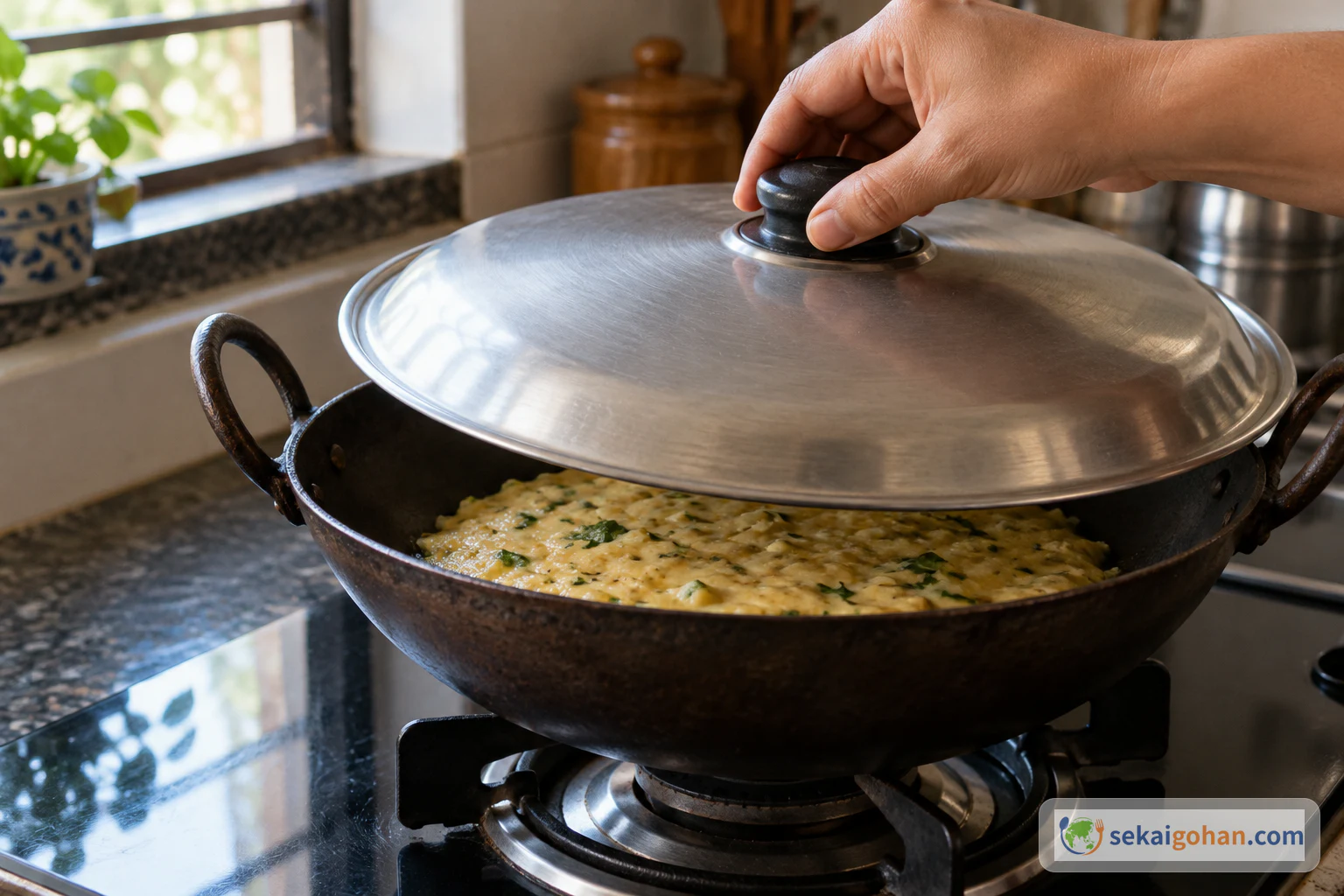
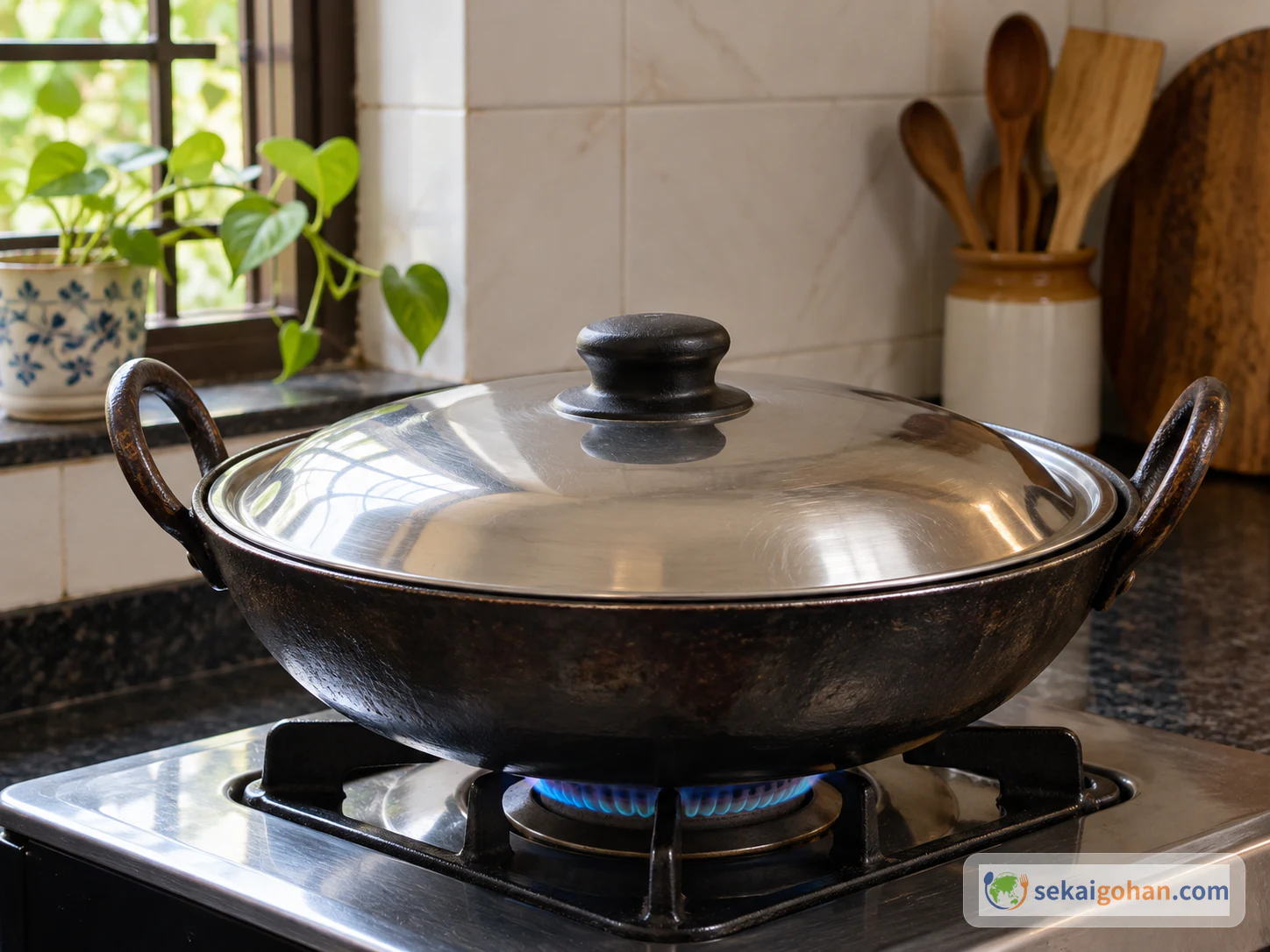
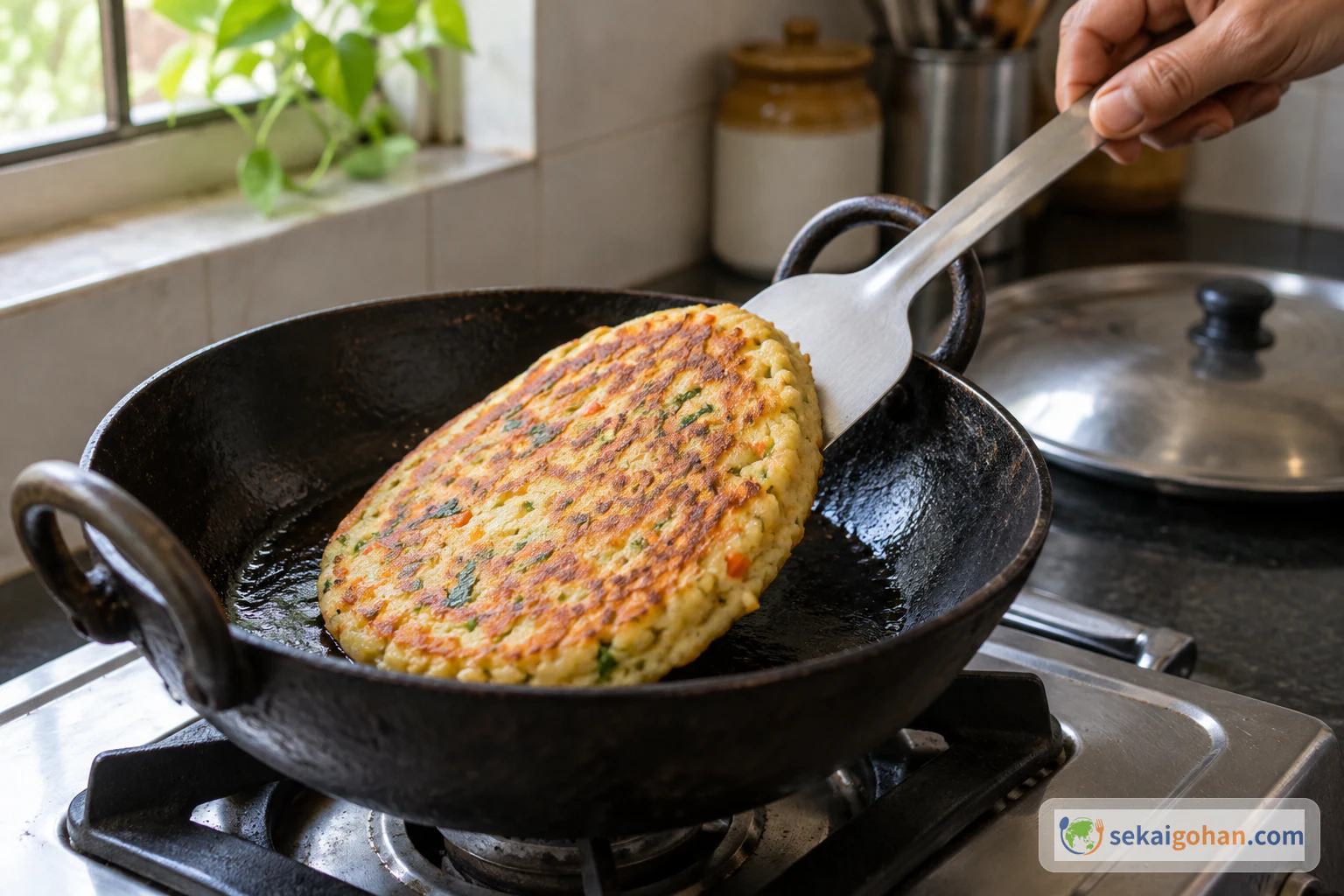
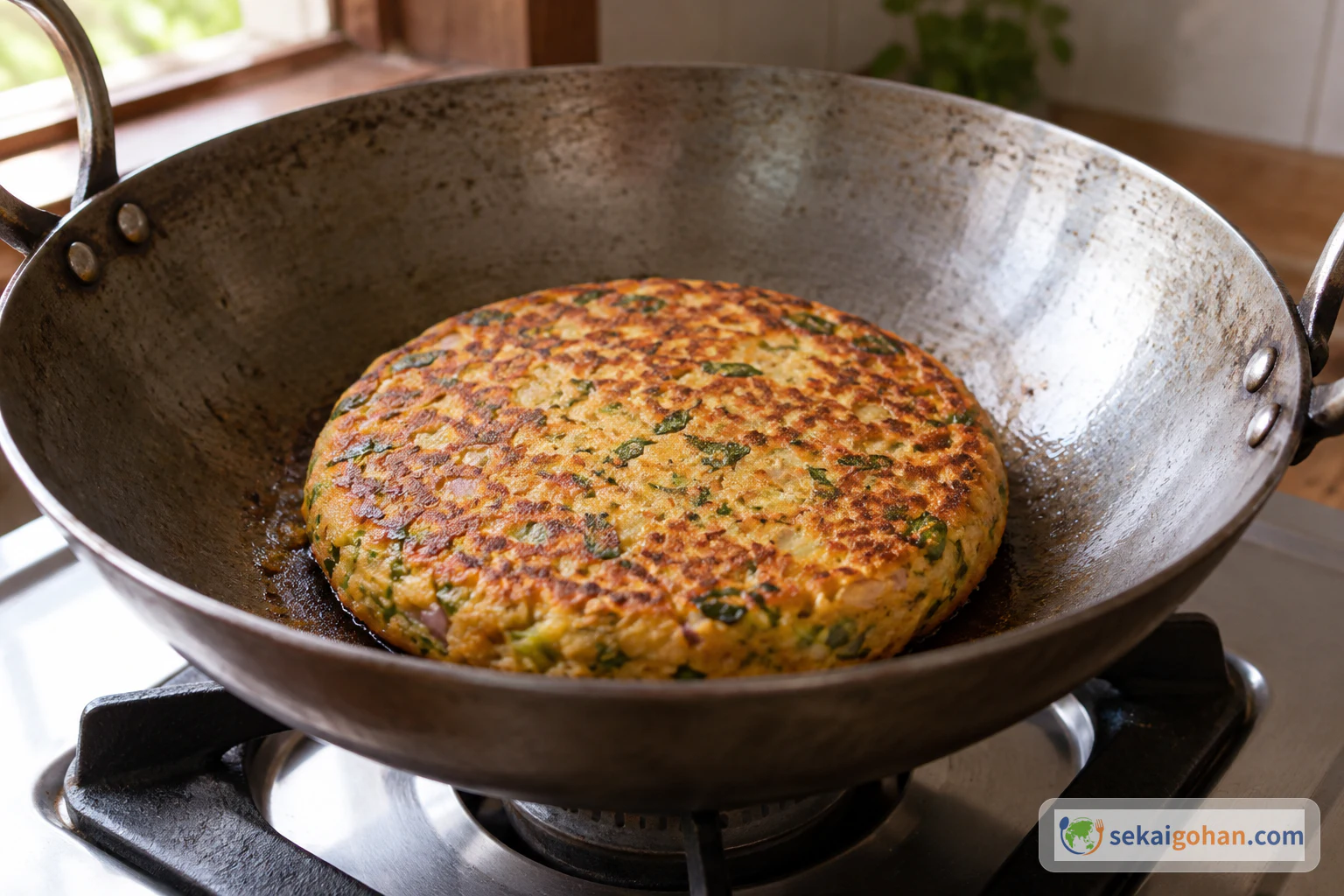
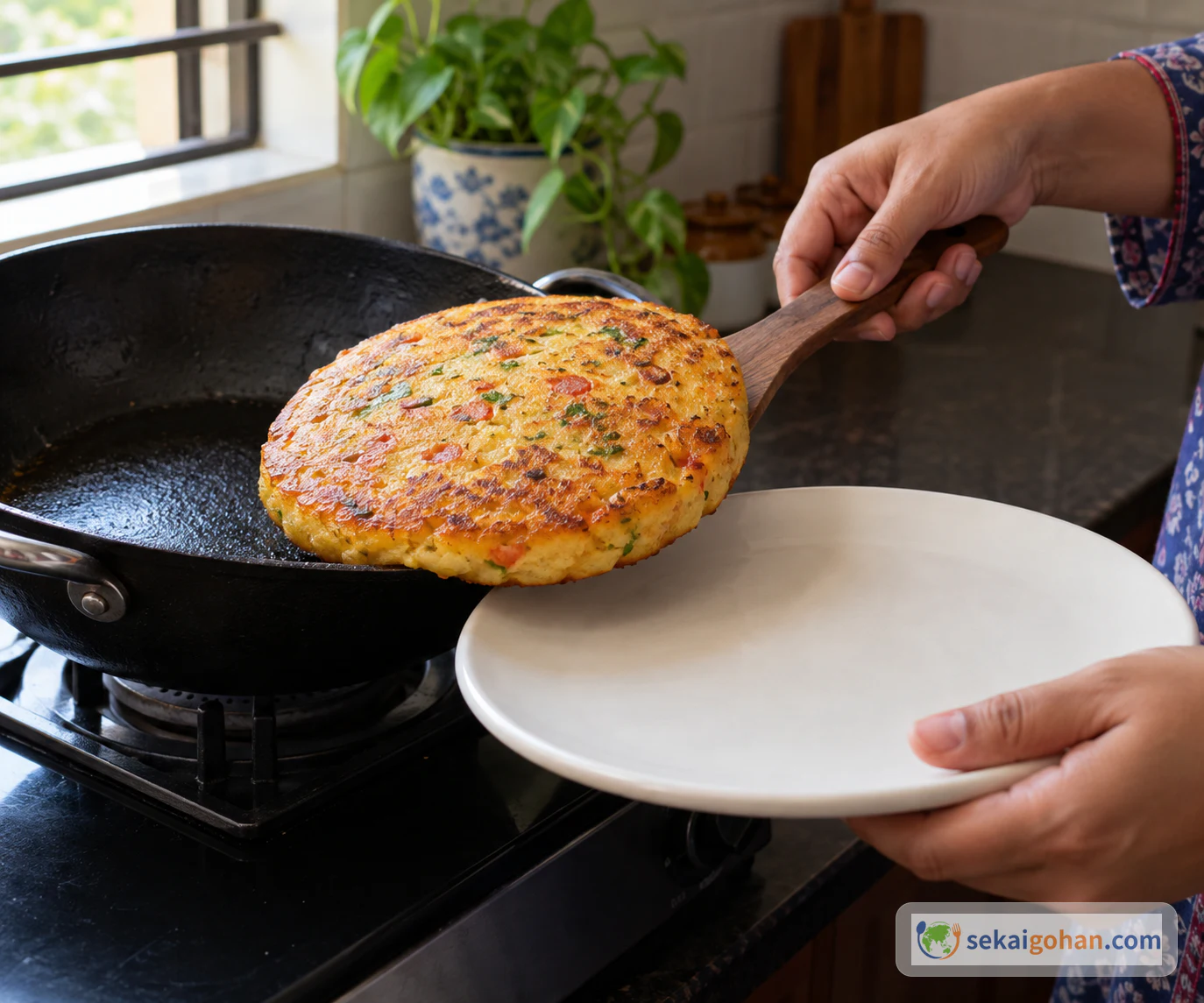
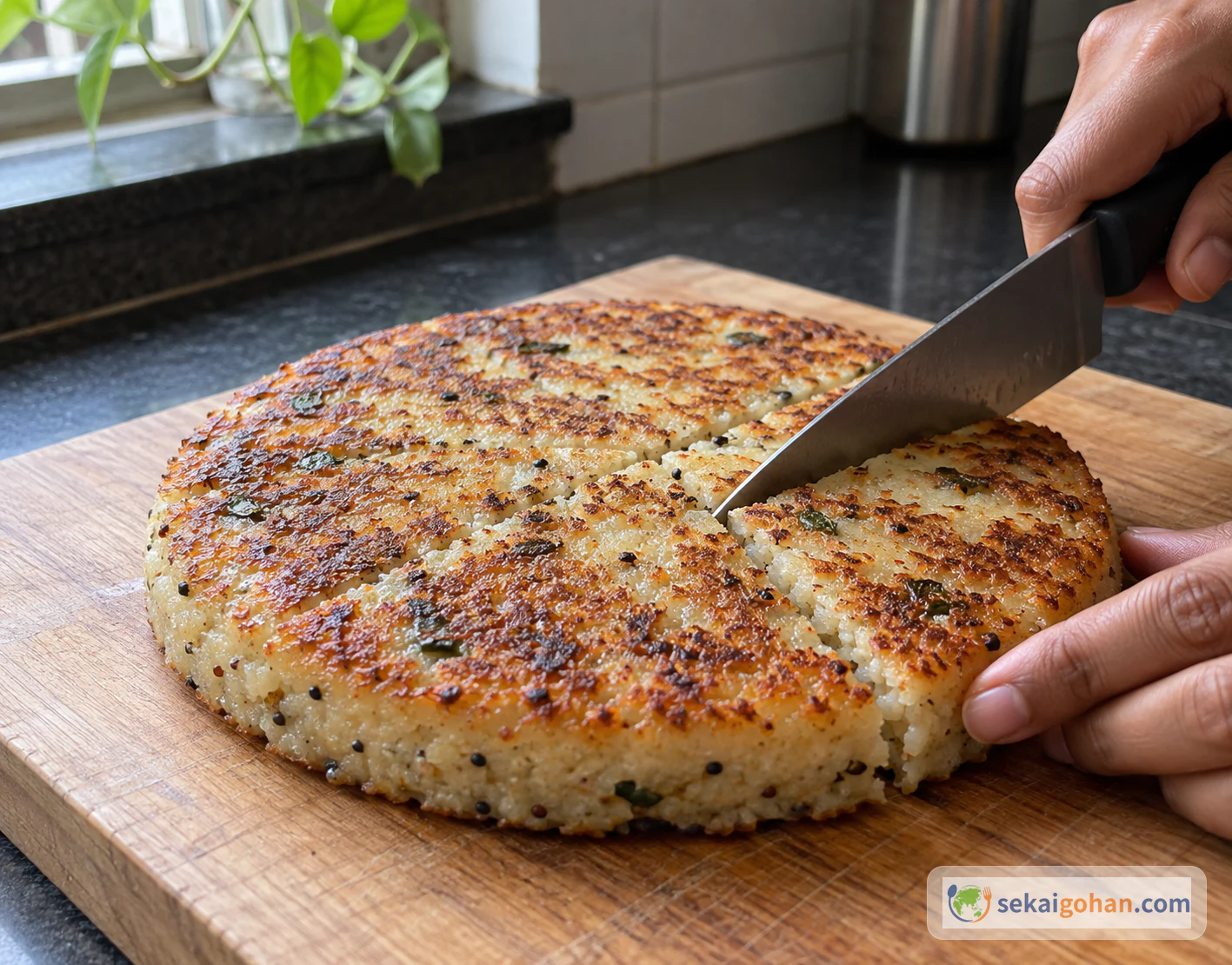
Two bowls sit side by side for six hours. One holds skinless whole urad dal, the other rice rava. The dal is ground with just a little water into a thick, smooth batter. The rava is squeezed and folded in, salt is mixed through, and the batter is left to ferment for five hours. Only then do coarsely ground ginger, green chillies and cumin seeds go in. The batter is poured into hot oil in a kadai, the heat goes down to low, and a lid goes on. When the sides pull away from the pan and the underside has browned, the thick cake is flipped, cooked a little longer, cut into wedges and served hot with coconut chutney.
This article follows one specific version of the dish: the recipe PadhuSankar published on Padhu's Kitchen on 9 July 2019, titled "Dibba Rotti Recipe-Minappa Rotti-Andhra Special." The amounts and steps here come only from that page's 5-hour fermented version. Other recipes for the same dish use different ratios and methods, and their amounts are not mixed in. This recipe has not been kitchen-tested by Sekai Gohan. For more dishes from the same country, see India.
One Version of Dibba Rotti, and What the Name Tells Us
The recipe page gives two names side by side: Dibba Rotti and Minappa Rotti. Another page compared here spells the second name "Minapa Rotti." These spellings show how the dish appears across recipe pages. They do not establish one official name or a single version shared by every region.
The phrase "Andhra Special" is part of the page's title. It is the author's own description. The pages consulted for this article are all recipe pages, not histories, so this article does not tell an origin story, name a birthplace, or describe how the dish fits into festivals or family life. What the recipes do show clearly is the method: soak, grind, ferment, then cook slowly in a covered pan.
Other Dibba Rotti Recipes: Different Ratios, Different Fermentation
Other recipes published under the same name differ in ratios, fermentation and timing. They are listed here only so you can tell the versions apart. None of their amounts are used in this recipe.
| Recipe page | How it differs from the version used here |
|---|---|
| Subbus Kitchen (Sowmya Venkatachalam) | Uses a different ratio (1 cup urad dal, 2 1/2 cups rava). The numbered steps skip fermentation, and the tips suggest an optional 4–5 hour ferment. The card lists 8 rotti. The oil amount on the card and the amount in the steps do not clearly match. |
| Veg Recipes of India (Dassana Amit) | A no-ferment version with a different ratio (1/2 cup urad dal, 3/4 cup rava). Ginger is missing from the ingredient card but appears in the steps. |
| Archana's Kitchen | Does not mention soaking the rice rava. Uses 1 Tbsp cumin. The 30-minute time card does not match the step times. Lists 4 servings. |
PadhuSankar's page also notes that the dish can be made without fermenting, and that the ginger and chillies may be left out. This article sticks to the fully fermented version, with every ingredient in the list.
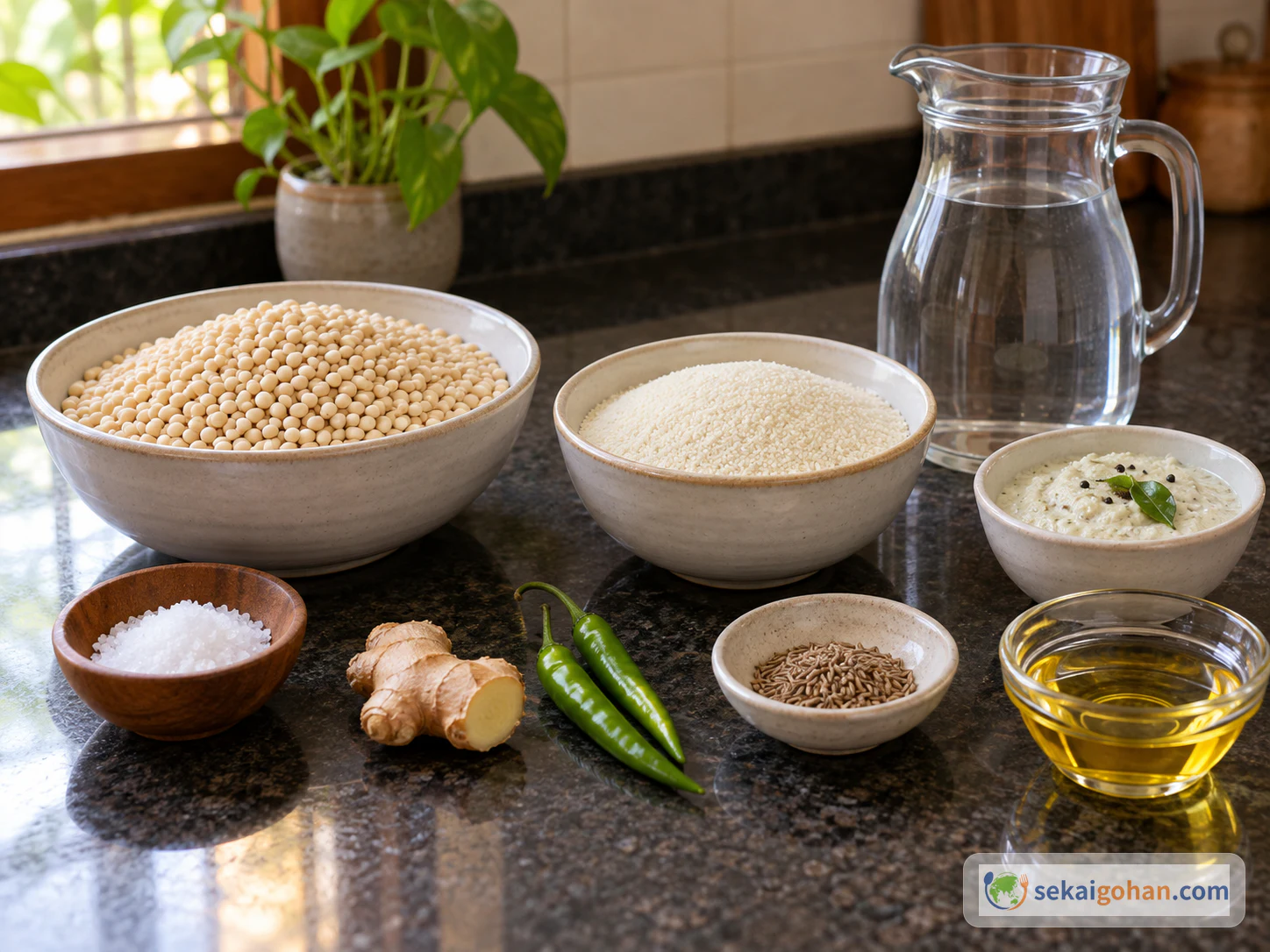
Ingredients
Equipment
- Two bowls, for soaking the dal and the rava separately
- A wet-grinding setup for grinding the urad dal into batter
- Something to coarsely grind the ginger, green chillies and cumin seeds
- A mixing bowl for the batter
- A kadai with a lid
- A spatula for flipping
- A plate, a board and a knife for cutting wedges
Choosing the Dal and Rava
Skinless whole urad dal means hulled urad that is still in whole grains. Don't switch to split dal.
Rice rava is a coarse grain made from rice, also sold as idli rava. It is not the same as wheat rava (semolina), rice flour or whole rice, and none of these should be used as a stand-in. Ready-made idli batter is a different product and is not a shortcut for this recipe.
Whatever cup you use, measure both the dal and the rava with the same one.
What to Check Before Shopping
Check your kitchen for salt, ginger, green chillies, cumin seeds and cooking oil first. The two items you may need to look for are skinless whole urad dal and rice rava / idli rava. Search by those general names and check the label so you get whole, skinless urad and rice-based rava, not wheat. If you don't have coconut chutney on hand, buy some prepared coconut chutney to serve with it.
About Timing and Yield
The steps include two 6-hour soaks and a 5-hour fermentation, so plan the day around them. Use each step's own time as your guide; no combined total is worked out here.
- First side: 10–12 minutes, together with the visual cues: the sides pull away from the pan and the underside is browned.
- Second side: 8–10 minutes.
- Not determined: how many rotti the batch makes, how many servings it gives, the size and thickness of each rotti, the pan diameter, the bowl and ladle sizes, how many bowlfuls the batter gives, and what to do with any remaining batter. Exact amounts of salt and water, the fermentation temperature, and how the 4 Tbsp of oil is shared across more than one panful are also not determined. The 4 Tbsp is the oil amount for this recipe. Don't multiply it per rotti or per bowlful.
Method
Steps 1–6 prepare the batter: soak the dal and rava separately, grind only the dal, then squeeze the rava and combine. Steps 7–10 cover salt, fermentation, and adding the aromatics afterward. Steps 11–19 cover cooking under a lid, flipping, cutting and serving.
Keeping the Order Right
Most of what can go wrong with this recipe comes from changing the order of the steps. These points keep you on track:
- Watery batter: add only a little water while grinding the dal. The batter should be smooth and not watery. There is no exact water amount or grinding time, so judge by the texture.
- Rava not squeezed: squeeze the soaked rice rava before it goes into the batter. Don't add it with its soaking water.
- Aromatics too early: salt goes in before fermentation. Ginger, chillies and cumin go in only after the 5 hours.
- Turning the first side too soon: look for the sides pulling away from the kadai and a browned underside, within the 10–12 minute range. These are cues to watch for, not a guarantee of doneness.
- Too much oil: 4 Tbsp is the oil amount for this recipe. Don't add 4 Tbsp per rotti or per bowlful.
Frequently Asked Questions
How many dibba rotti does this make?
The recipe page doesn't say. A bowlful (5–6 ladles) is how much goes into the pan at one time, but the page gives no ladle size, total yield, number of rotti or rotti size. One panful should not be read as the whole batch.
How long does fermentation take?
The steps give 5 hours. The recipe card shows prep 5 h 10 min and total 5 h 30 min, which does not fit the two 6-hour soaks and the 5-hour ferment in the steps. Plan around the step times. No fermentation temperature is given.
How long should the first side cook?
The recipe card and step card give 10 minutes, and the detailed method gives 10–12 minutes. This article uses 10–12 minutes, together with the cues of the sides pulling away from the pan and a browned underside.
Can I use wheat rava or rice flour instead of rice rava?
The recipe page offers no such substitute, so none is suggested here. Use rice rava or idli rava.
Do I need ice water when grinding the dal?
The author mentions using ice water when grinding in a mixie. That note applies only to grinding in a mixie. The method here uses an ordinary wet-grinding route, so ice water is not part of the steps.
What kind of pan does the recipe use?
The detailed method uses an Indolium kadai. This article does not comment on the material or recommend a particular pan. What matters for the steps is a kadai with a lid.
Can I leave out the ginger and green chillies?
The author notes they can be left out. This recipe includes them in the amounts listed.
Is there a recipe for the coconut chutney?
No. The page suggests serving the rotti with chutney, and coconut chutney was chosen here. It is served as a prepared side, so no chutney amounts or method are given.
Sources
- PadhuSankar, "Dibba Rotti Recipe-Minappa Rotti-Andhra Special," Padhu's Kitchen, 9 July 2019. The recipe used in this article: amounts, separate soaking, grinding the urad dal, squeezing the rava, salting and fermenting for 5 hours, adding the aromatics afterward, cooking in a kadai, flipping, cooking times, cutting into wedges and serving. https://www.padhuskitchen.com/2019/07/dibba-rotti-recipe-minappa-rotti-andhra-special.html
- Sowmya Venkatachalam, "Dibba rotti recipe | Andhra Minapa Rotti," Subbus Kitchen, last updated 4 March 2022. Used for comparison only: a different ratio, numbered steps without fermentation, an optional fermentation note, and an 8-rotti yield. https://www.subbuskitchen.com/dibba-rotti-recipe-andhra-minapa-rotti/
- Dassana Amit, "Dibba Rotti Recipe | Andhra Minapa Rotti," Veg Recipes of India. Used for comparison only: a no-ferment version with a different ratio. https://www.vegrecipesofindia.com/dibba-rotti/
- Archana's Kitchen, "Dibba Rotti/Minapa Rotti Recipe (Pan Idli Recipe)," 17 May 2017. Used for comparison only: a different ingredient list, 4 servings, and time card values that differ from the step times. https://www.archanaskitchen.com/recipe/dibba-rotti-minapa-rotti-recipe-pan-idli-recipe