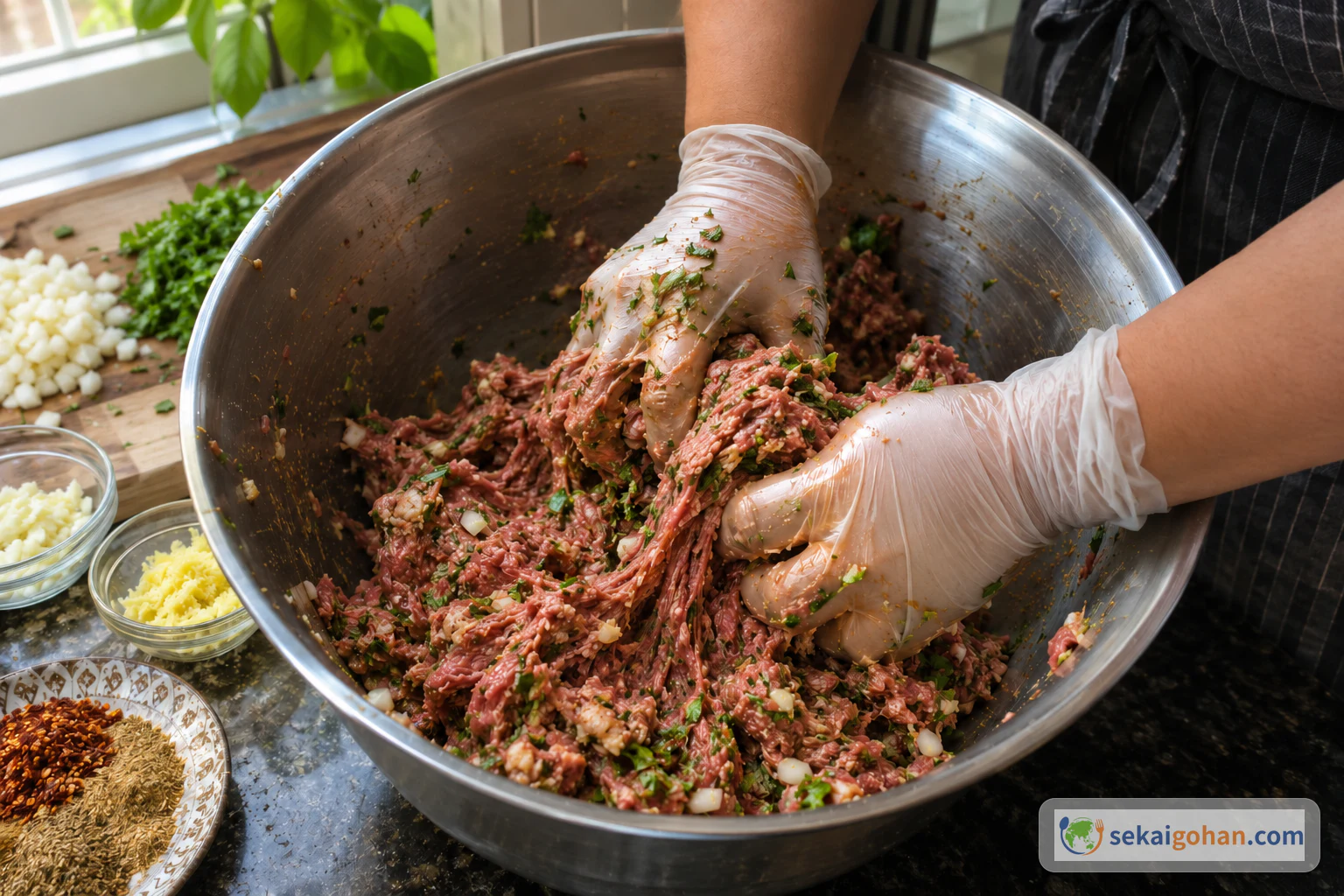
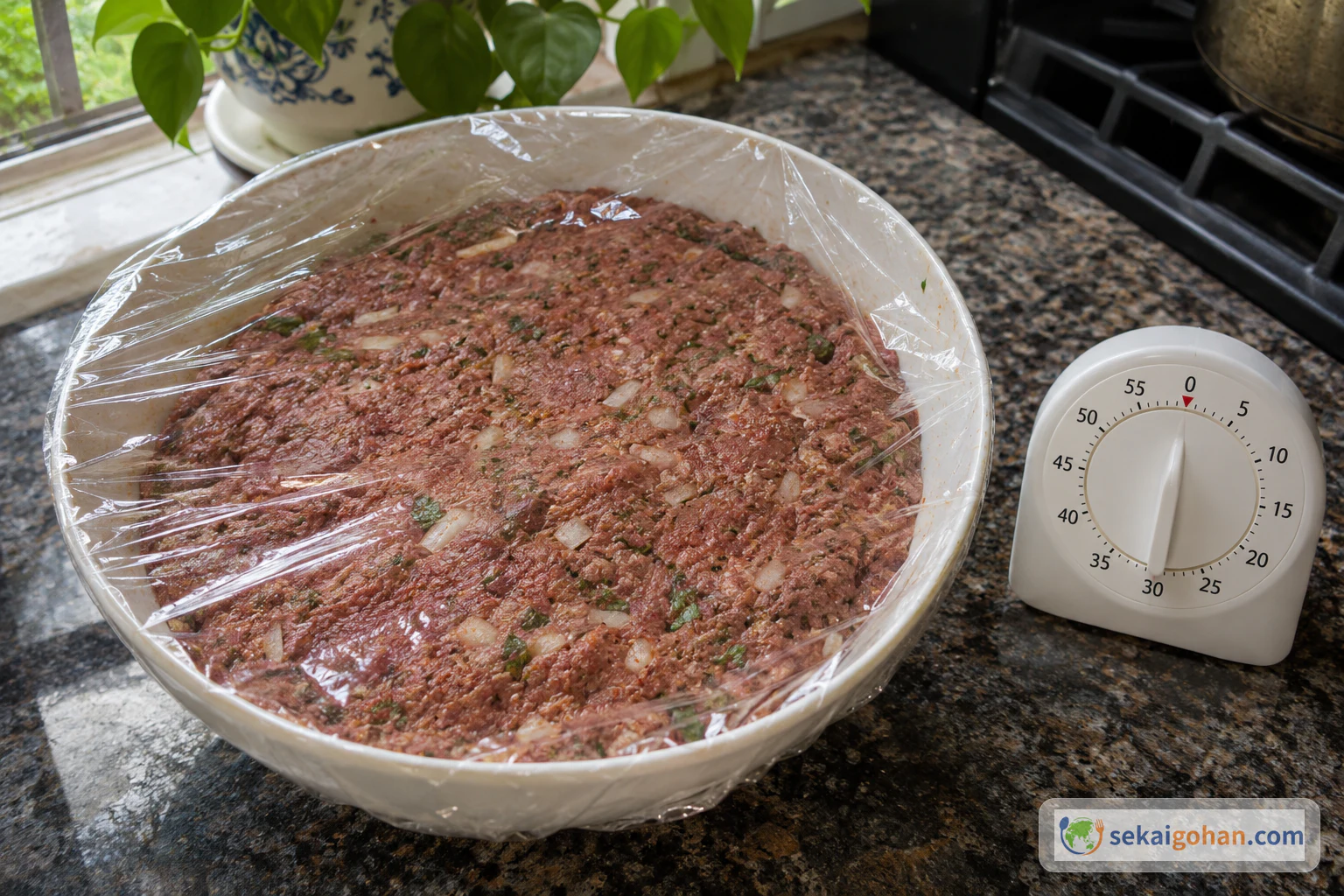
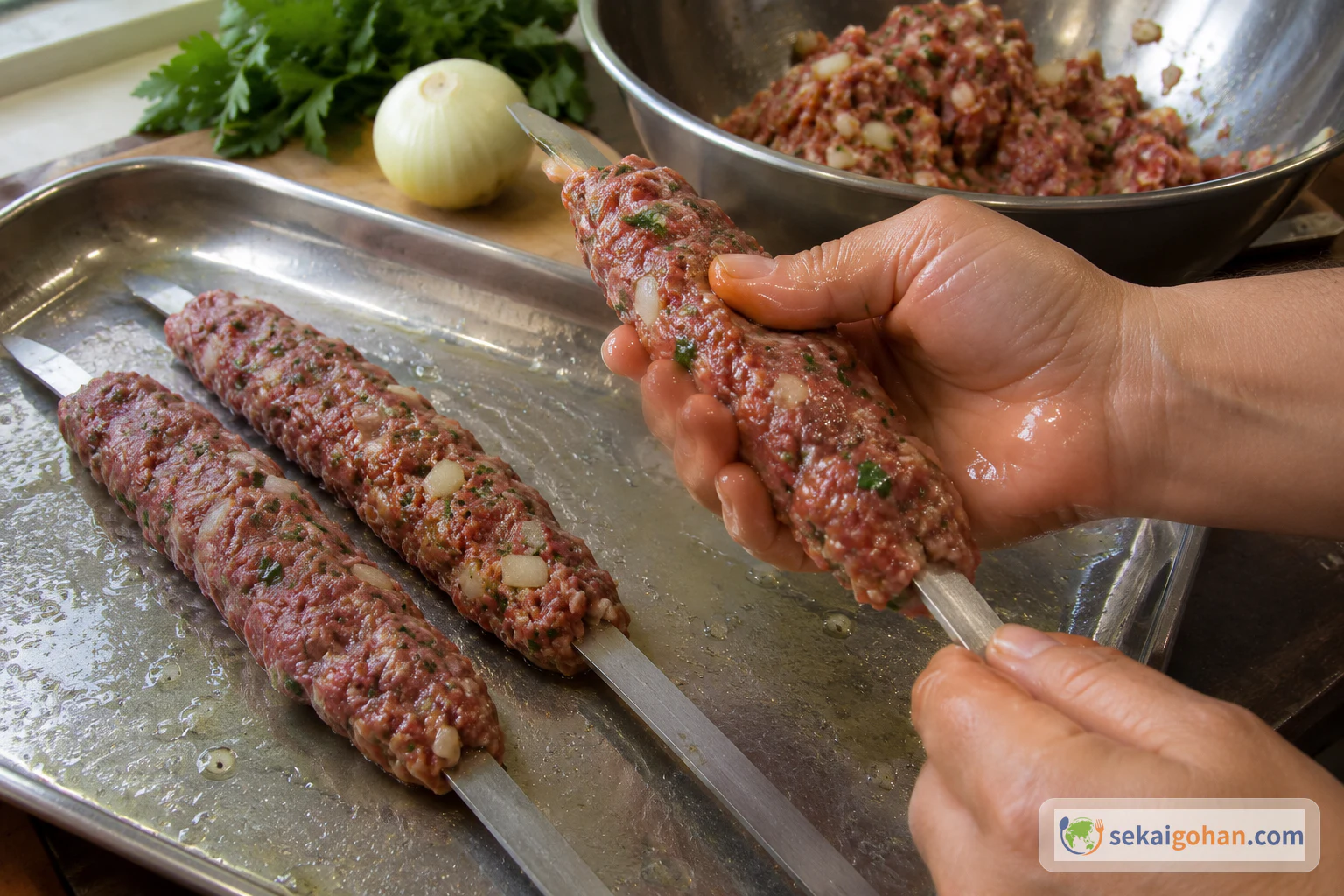
Somewhere in the third minute of kneading, the beef changes under your gloved hands. It stops feeling like loose mince and starts pulling into sticky, lacy strands, flecked all through with green from cilantro, mint and chili. That is the moment a seekh kebab is made. Everything after it, from pressing the meat around a flat skewer to rolling the kebabs in a hot pan until they brown on every side, depends on that sticky mix holding together.
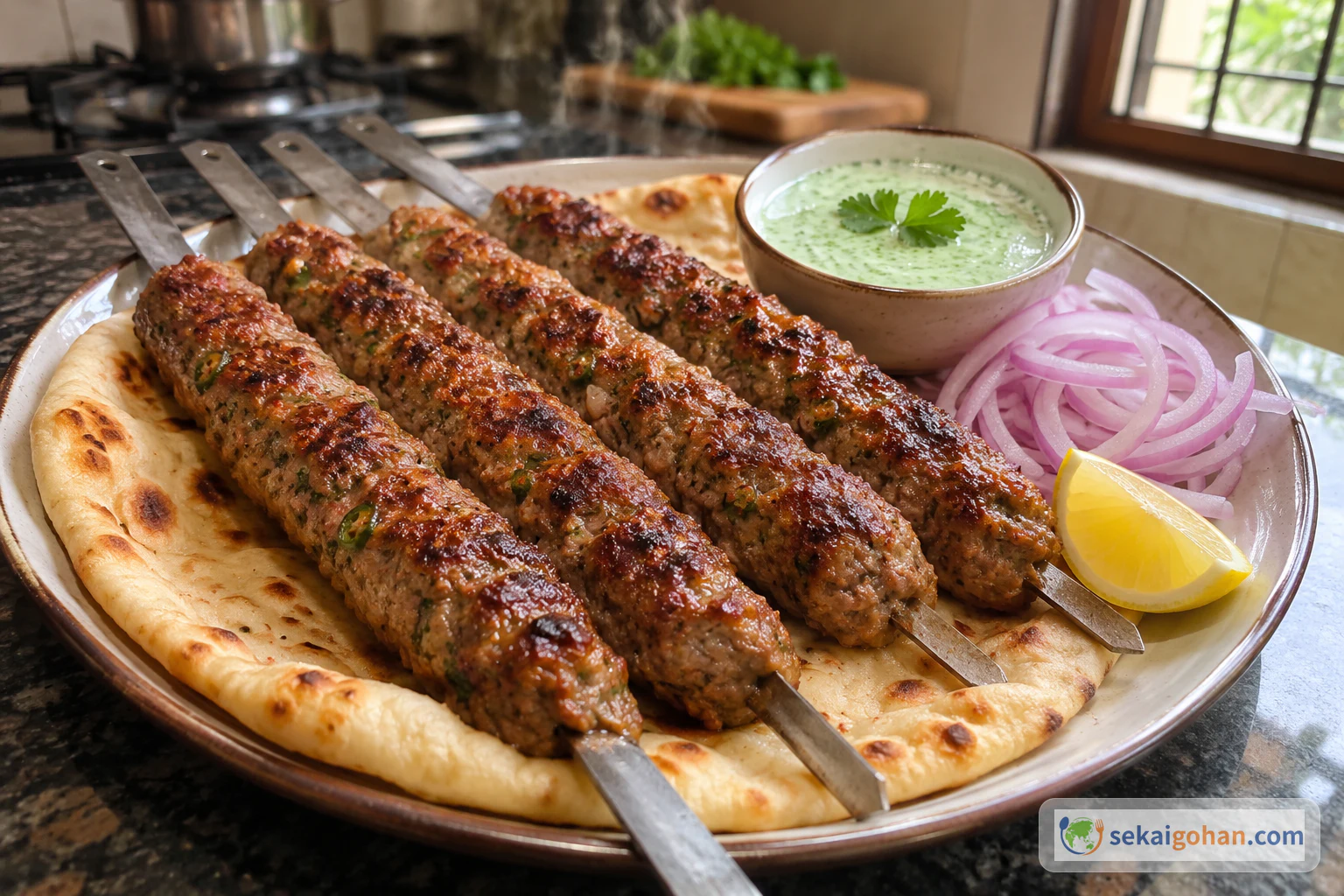
What comes off the skewer is a long, juicy cylinder of spiced ground beef with a browned crust. Toasted coriander and cumin give it depth, the green chilies give it heat, and the fresh herbs keep each bite bright. It is eaten hot, wrapped in naan with cool raita, raw onion and a squeeze of lemon, across Pakistan and the rest of South Asia.
A Kebab Named for Its Skewer
The name says exactly what the dish is. Seekh means skewer, and kebab means meat cooked over charcoal, so a seekh kebab is spiced minced meat pressed onto a skewer and cooked over fire. The dish belongs to the whole Indian subcontinent and is cooked in Pakistani, Indian and Bangladeshi kitchens alike. Where it was first made is not settled, and the name itself carries no date.
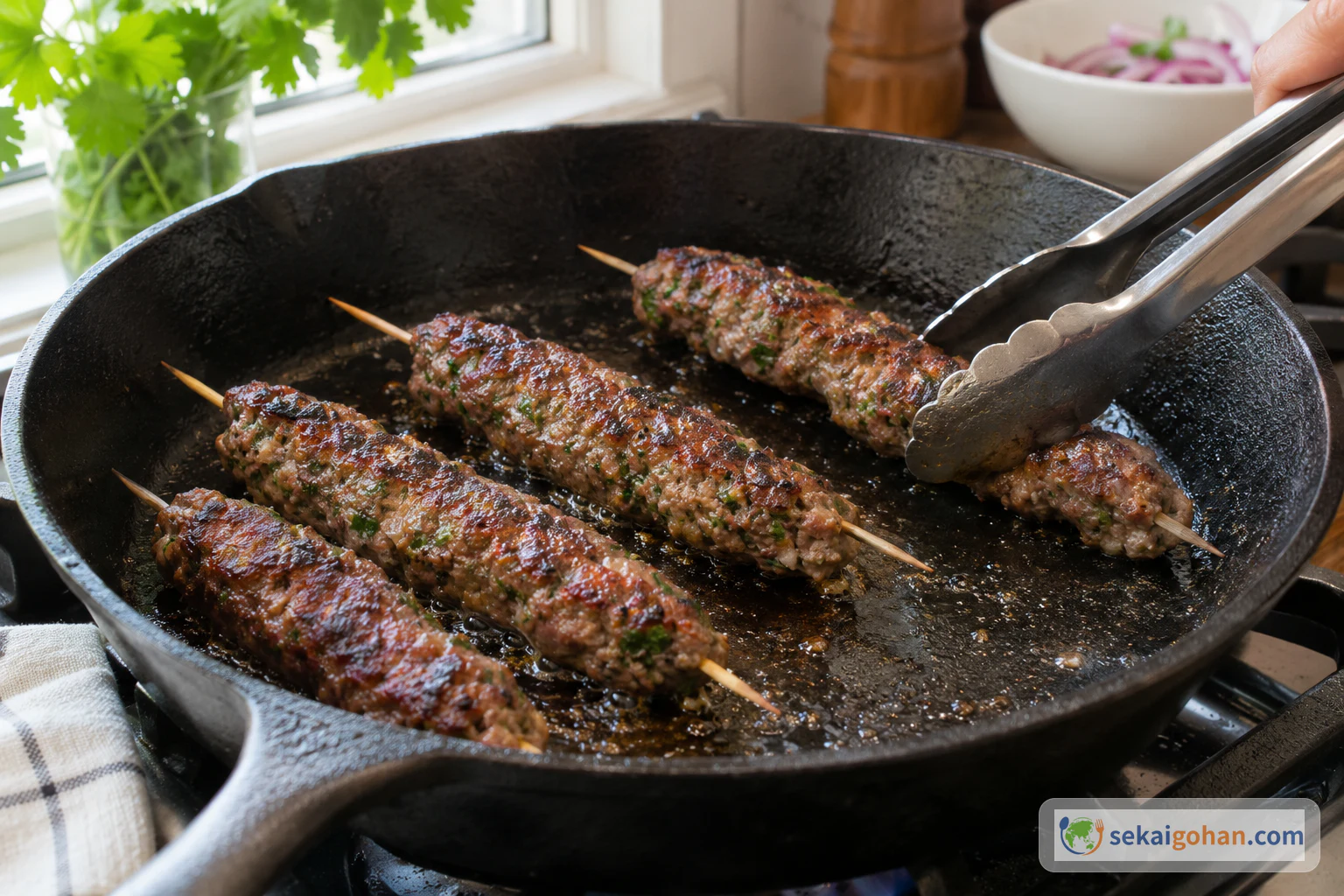
Over a charcoal mangal or inside a tandoor, the long skewers sit over the heat and the fat drips into the coals. At home the same kebab goes into a skillet. Pakistani home cooks fry seekh kebabs in a pan with no charcoal at all, and that is the method here: a wide skillet, a little oil, and kebabs turned again and again until the crust is even.
The meat changes with the border. Pakistani seekh kebabs are usually ground beef, while Indian versions often use lamb or chicken. Across the region, lamb, beef and chicken are all pressed onto skewers, and the family of minced-meat kebabs runs wide, with names such as gola kabab, tunde ke kabab, kakori and gilafi seekh, each its own preparation.
Every household binds it differently
Kitchens disagree about what holds the meat together. One Pakistani home version binds mutton mince with roasted chickpeas and cashews and fries each side in the pan. Another uses beef mince with an egg, fried onion and coconut, shaped into small kebabs and fried. A lamb version from the UK roasts gram flour and works it into the mince before chilling and grilling. The kebab here uses no binder at all. Fat in the beef and long kneading do the holding, which gives a cleaner meat flavor and a juicier center.
Pakistan has another famous minced-meat kebab, the chapli kebab of Peshawar. It is a flat, round patty fried in a pan, with tomato and anardana (dried pomegranate seed) in the mix. A seekh kebab is always a long cylinder shaped around a skewer, and its flavor leans on toasted whole spices and fresh green herbs.
Ingredients (makes 10 kebabs)
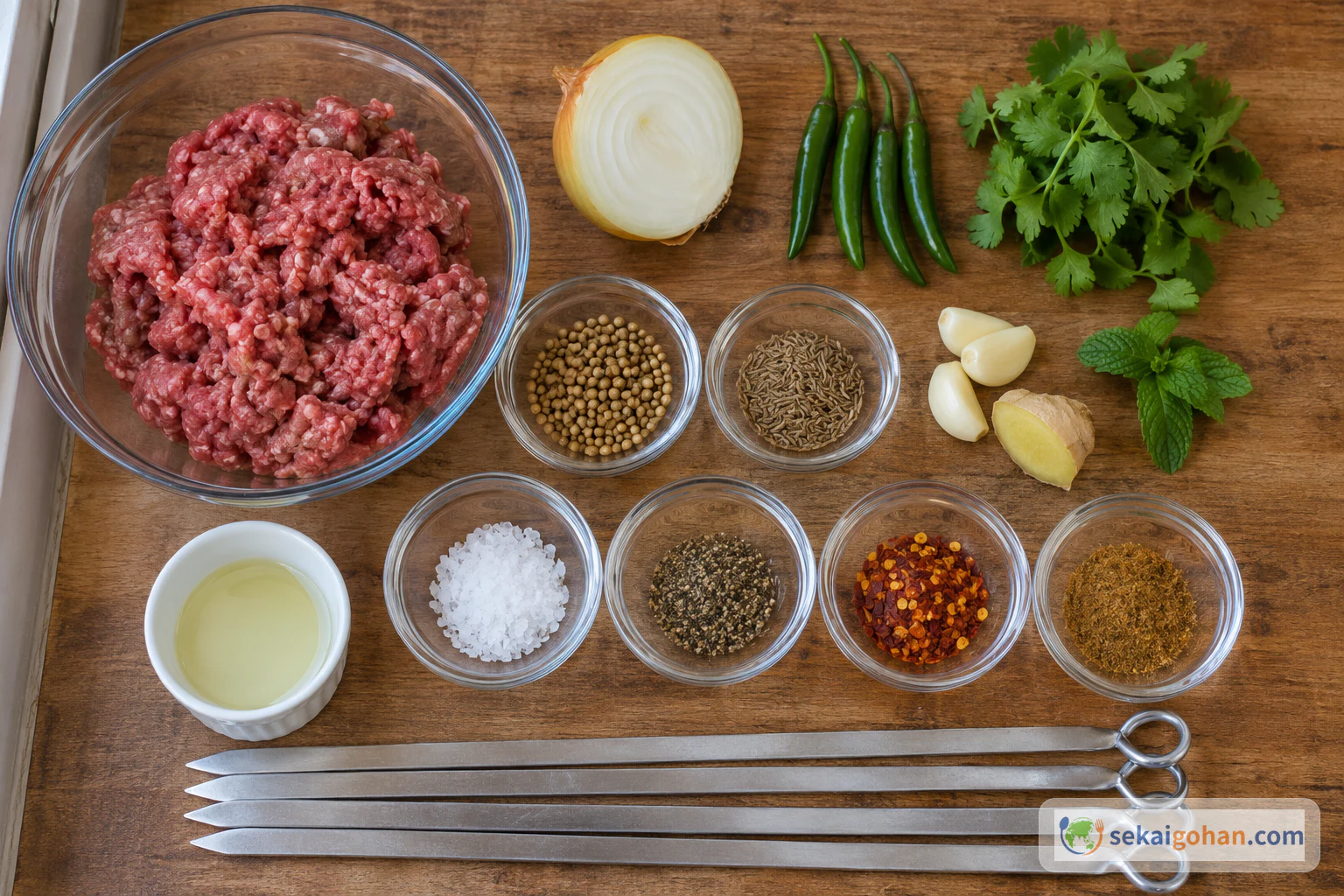
Store-bought garam masala often carries salt, so start at 1¼ tsp kosher salt. Go up to 1½ tsp only when your garam masala is homemade and unsalted. The test-fry in step 5 tells you where you stand before all ten kebabs are shaped.
The kebab itself contains beef and no egg, nuts or dairy. Raita contains dairy and naan contains wheat, so check what you serve alongside. Household versions that bind the meat with egg or cashews are separate recipes; this mix uses neither.
Equipment
- Small skillet for toasting spices
- Spice grinder or mortar and pestle
- Food processor
- Large mixing bowl
- Disposable gloves
- Flat metal kebab skewers (bamboo skewers or long chopsticks work if you have none)
- Large skillet, wide enough to fry without crowding
- Tongs
- Instant-read thermometer
- Paper towels and a plate
Choosing and Substituting
The fat in the beef decides more than anything else. Choose ground beef with about 20% fat. Lean mince falls apart on the skewer and dries out in the pan, because the fat is what binds the kneaded meat and keeps the center moist. Pat the beef dry with paper towels before mixing so the extra moisture does not loosen it.
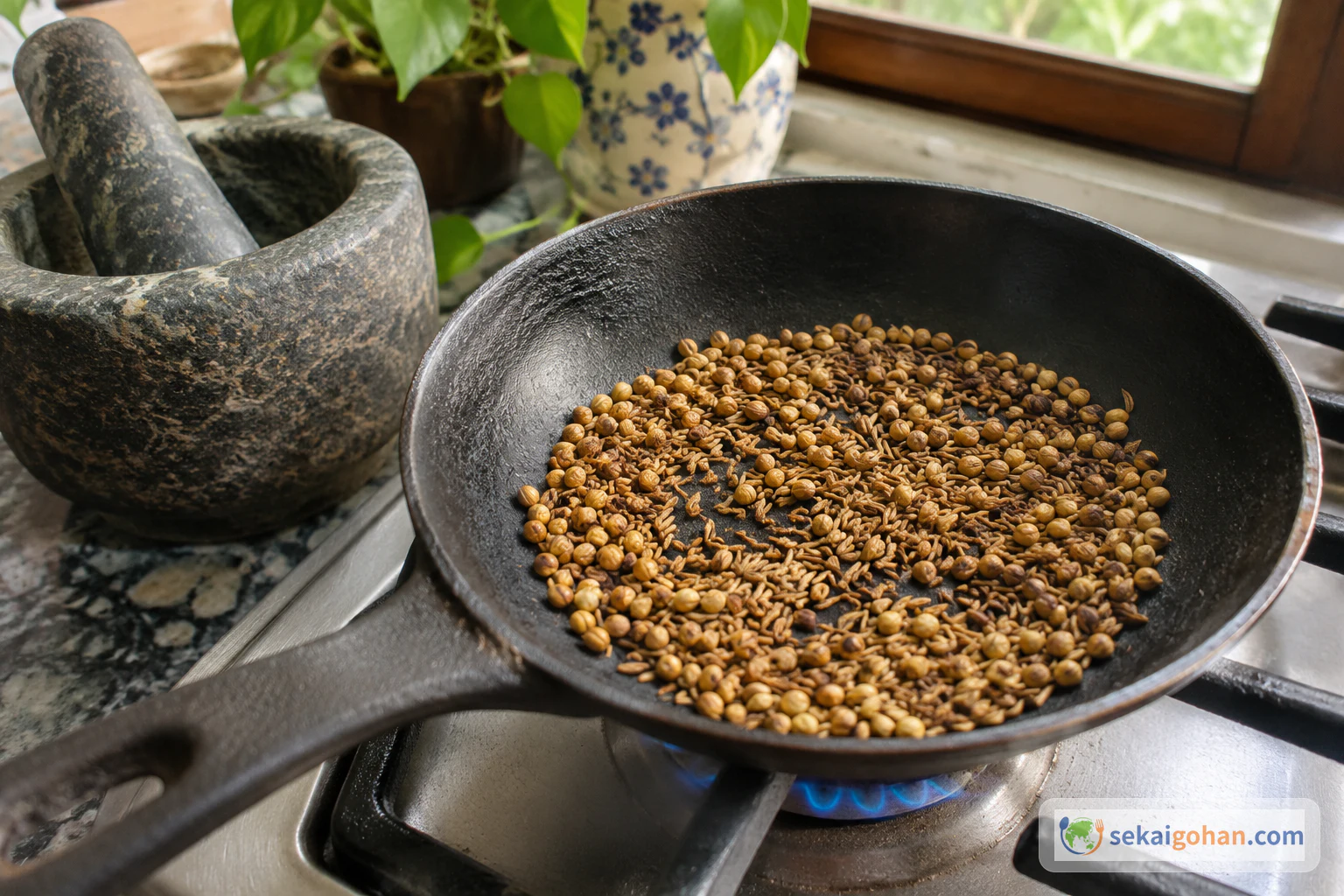
Whole coriander and cumin seeds are worth a trip to a South Asian grocer or an online spice shop, along with good garam masala. Ground coriander and cumin from the supermarket work in a pinch, but the kebab smells flatter, since toasting whole seeds right before grinding is where the deep, warm aroma comes from. Flat metal skewers are also sold at South Asian and Middle Eastern shops.
Small Thai green chilies give a clean, sharp heat. Milder small green chilies or shishito peppers keep the green color and fresh taste but bring far less heat. Cilantro and mint have no real stand-in; they are the bright flavor of the dish, so buy them fresh.
Kosher salt grains vary in size from brand to brand, and table salt is finer still. Do not swap table salt for kosher salt spoon for spoon; use less, and let the test-fry guide you. Papaya paste makes the meat a little more tender and can be left out entirely.
Method: Toast, Knead, Rest, Then Fry Fast
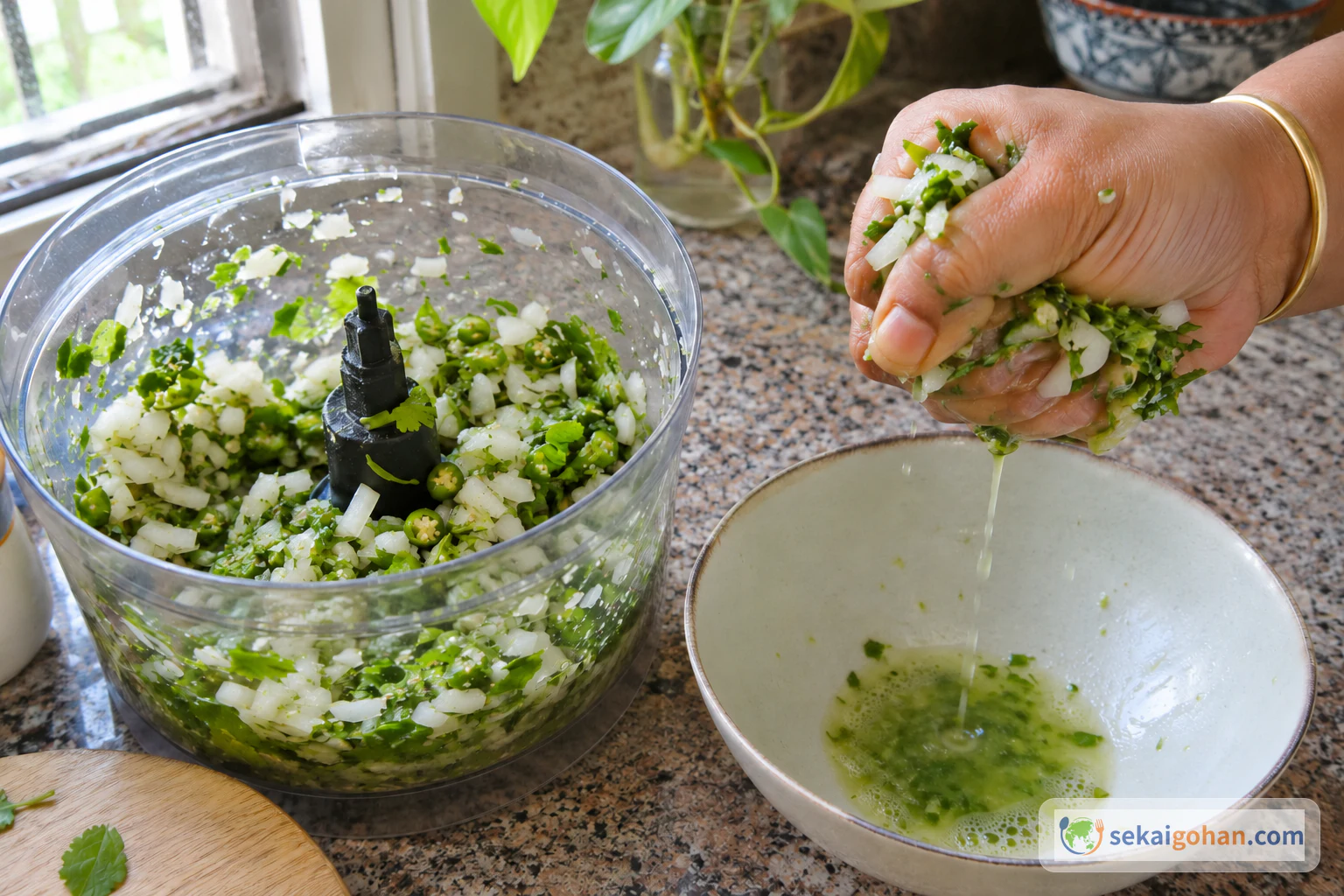
Toast the spices first and grind them while they are still warm; while they cool, pat the beef dry and pulse the herbs. The kneading is the one stretch of real handwork. After that the covered mix rests in the refrigerator, which is your hands-off time, and can wait there overnight. The frying itself goes quickly, so have the skewers, tongs, thermometer and a paper-lined plate ready before the oil goes in.
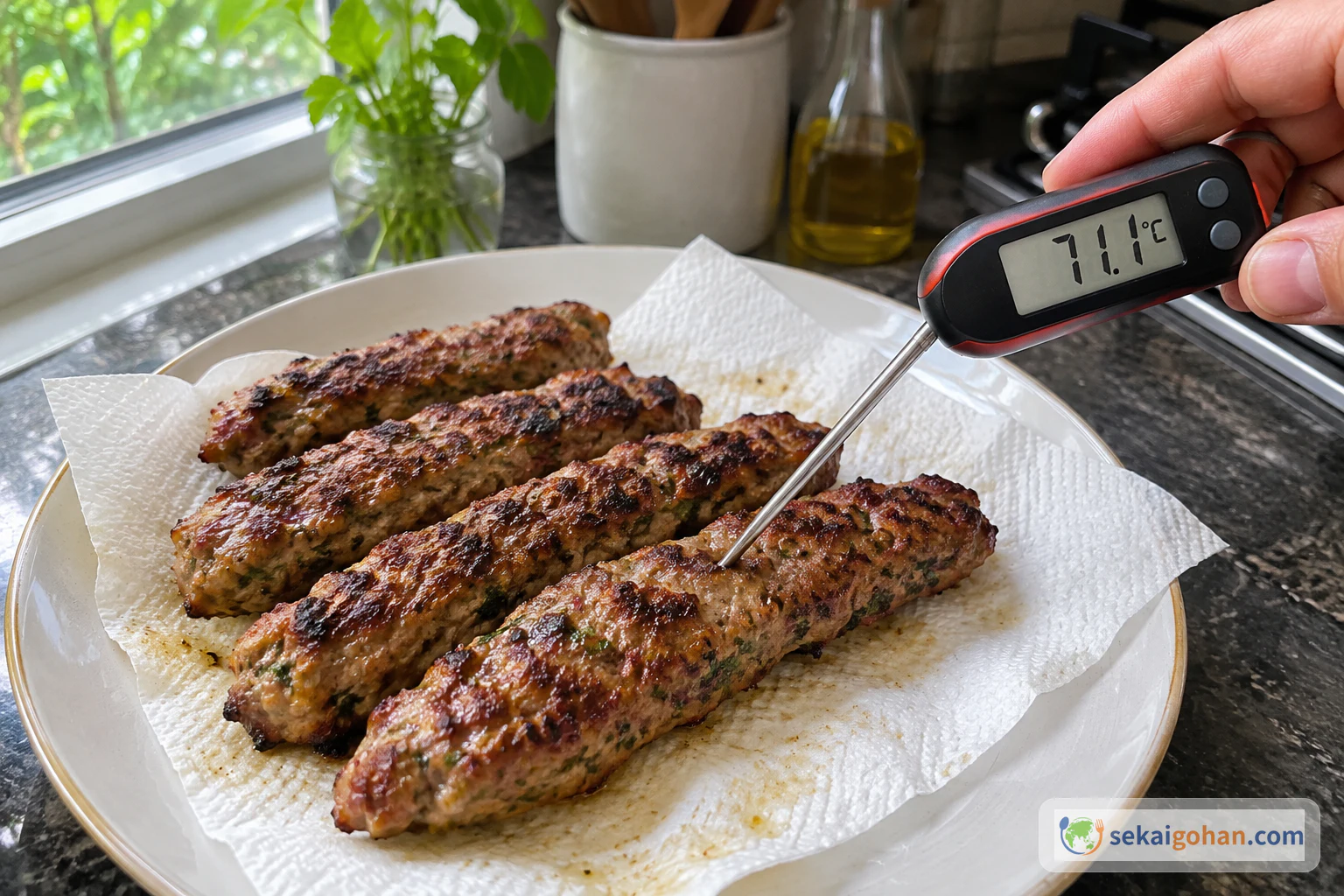
Ground beef is never served rare or medium. Every kebab needs to reach 160°F (71°C) at the center, with no pink, raw-looking meat inside. Wash your hands, gloves, boards and tray after handling the raw mix.
A dark crust can form before the center is done, especially on thicker kebabs. Check the temperature every time instead of judging by the outside color.
When It Goes Wrong
| What you see | Why | What to do |
|---|---|---|
| The meat slides off or cracks on the skewer | The beef is too lean, or the mix was not kneaded long enough | Use 20% fat beef and knead until stringy; knead in a little chickpea flour if it still won't hold |
| The mix feels wet and slack | The onion and herbs were not squeezed, or the beef was not patted dry | Squeeze the aromatics hard by hand and blot the meat before mixing |
| The kebabs come out dry and crumbly | The beef was too lean | Next time choose beef with about 20% fat |
| Pale and gray instead of brown | The pan was crowded or the heat too low | Fry fewer at a time over medium-high heat and keep turning |
| Brown outside, under temperature inside | The crust formed faster than the center cooked | Keep rolling in the pan until the center reads 160°F (71°C) |
| Too salty or flat | Store-bought garam masala added salt, or the salt was measured by a different grain | Adjust after the test-fry, before shaping |
Serving, Variations and Storage
At the table
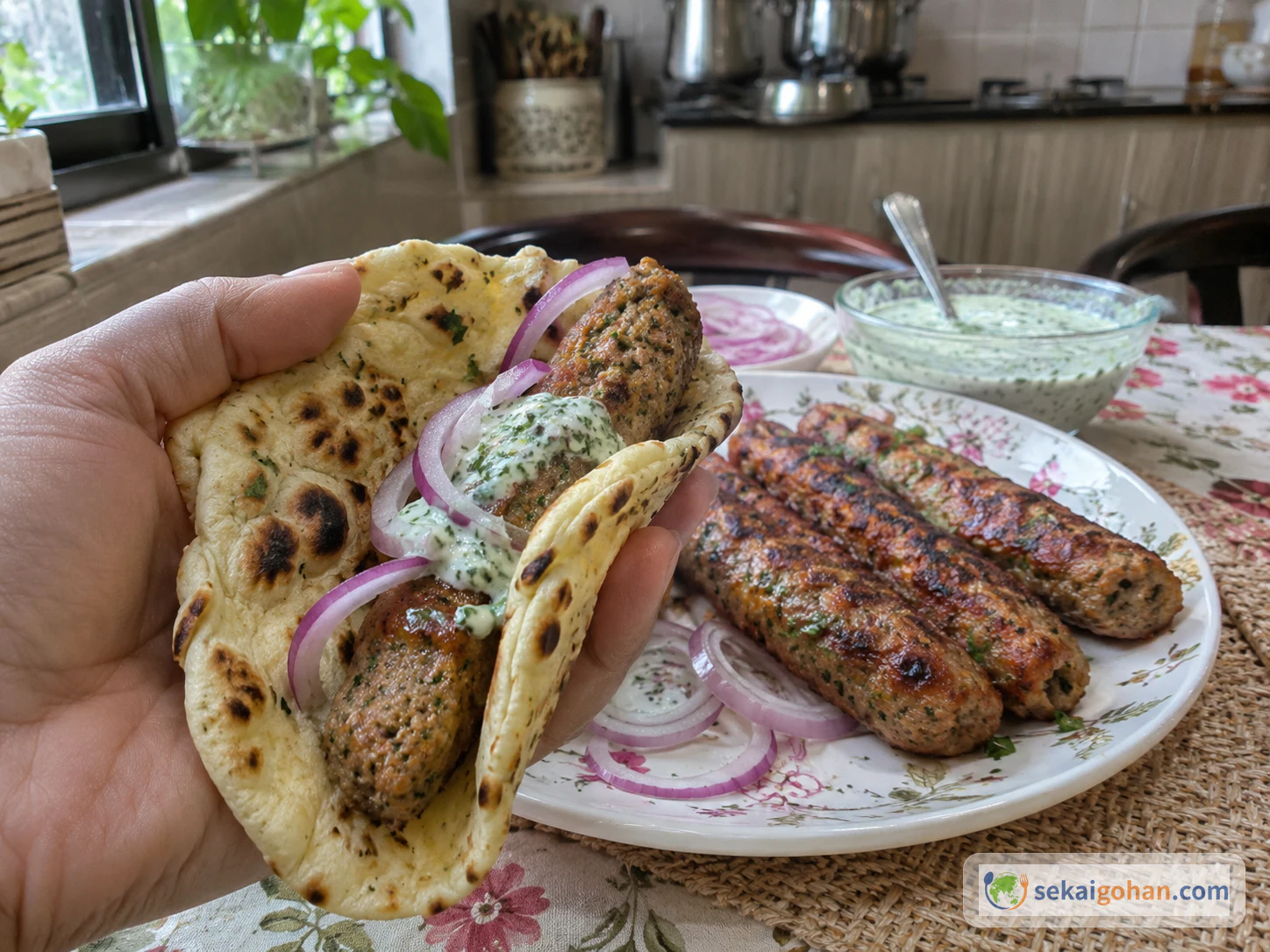
Serve seekh kebabs hot, straight from the pan. Put naan or rice on the table with a bowl of cilantro-mint raita, a crunchy salad of cucumber, tomato and onion, raw onion rings and lemon wedges. Mint chutney is also served alongside. Paratha also works in place of naan.
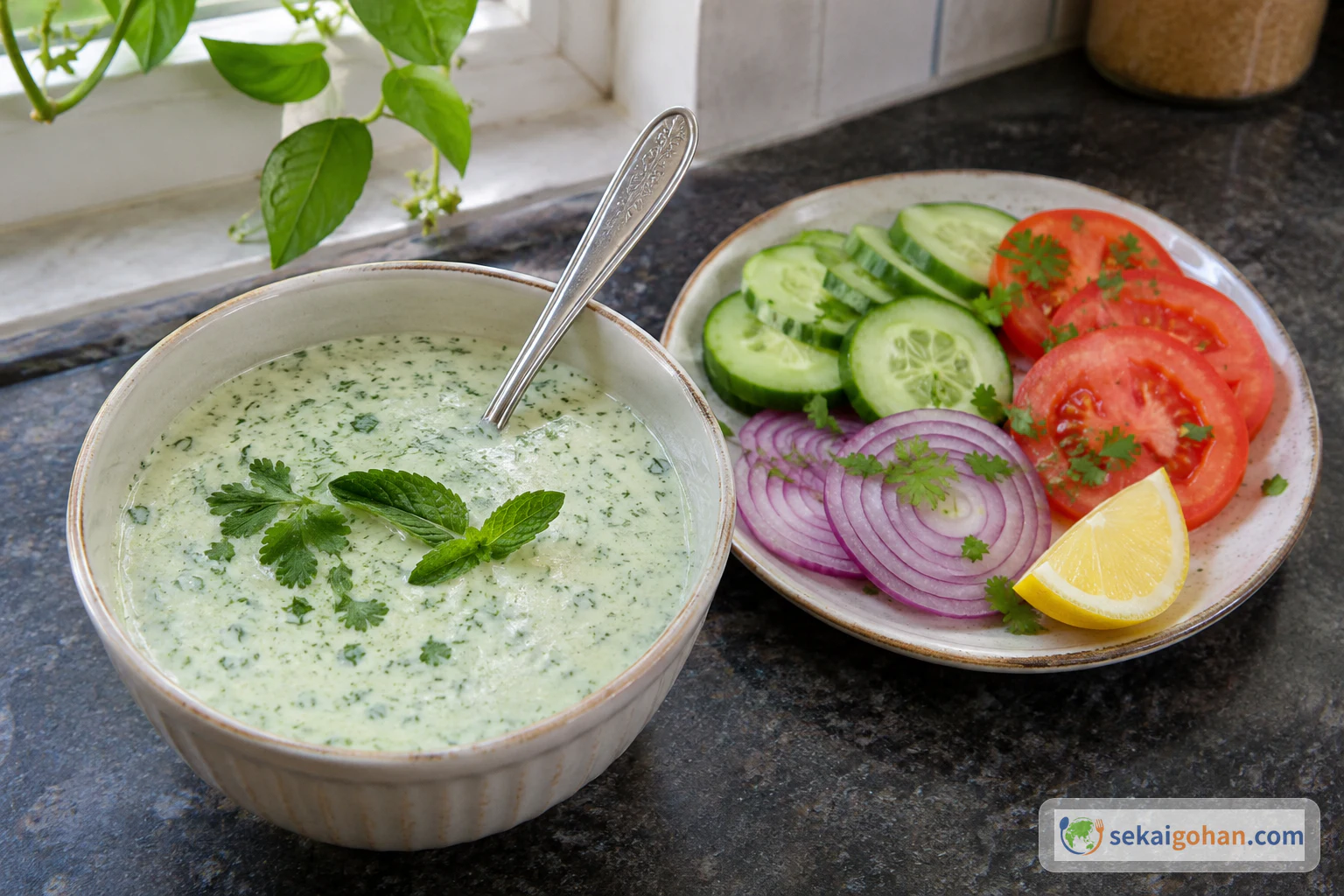
To eat one, slide the kebab off its skewer onto a piece of warm naan. Add raita and onion, squeeze lemon over it and fold the bread around it.
Air fryer and oven
In an air fryer, cook the shaped kebabs at 400°F (205°C) for 4–5 minutes, turn them, and cook for another 3–4 minutes.
In the oven, bake the kebabs at 430°F (220°C) for 8–10 minutes. Then move them to the top rack and broil at 550°F (287°C) for 2 minutes, turn them, and broil 1–2 minutes more to char the outside. A quick sear in a hot pan afterwards gives an extra crust if you like it. With either method, check that the center reaches 160°F (71°C) before serving.
Freezing and reheating
To freeze, shape the raw kebabs and lay them on a tray. Freeze them until firm, then move them to a container and keep them frozen for up to 1 month. Thaw them in the refrigerator before cooking. To reheat cooked kebabs, put a little water in a shallow skillet, add the kebabs, cover and let them steam until hot all the way through.
Frequently asked questions
Do I need a charcoal grill?
No. Pakistani home recipes fry seekh kebabs in a pan. A charcoal mangal or tandoor adds smoke and char, but a skillet gives a fully browned, juicy kebab on an ordinary stove.
How do I make it milder or hotter?
The heat comes from the green chilies, the red chili flakes and the black pepper. For a milder kebab, use fewer chilies and leave out the chili flakes; the herbs and toasted spices still carry the flavor. For more heat, add a little more chili flakes and taste it in the test-fry.
Can I use lamb or chicken instead of beef?
Lamb and chicken seekh kebabs are both common across South Asia. This spice and salt balance, though, is built around beef with about 20% fat. For a chicken seekh kebab, use a recipe made for chicken.