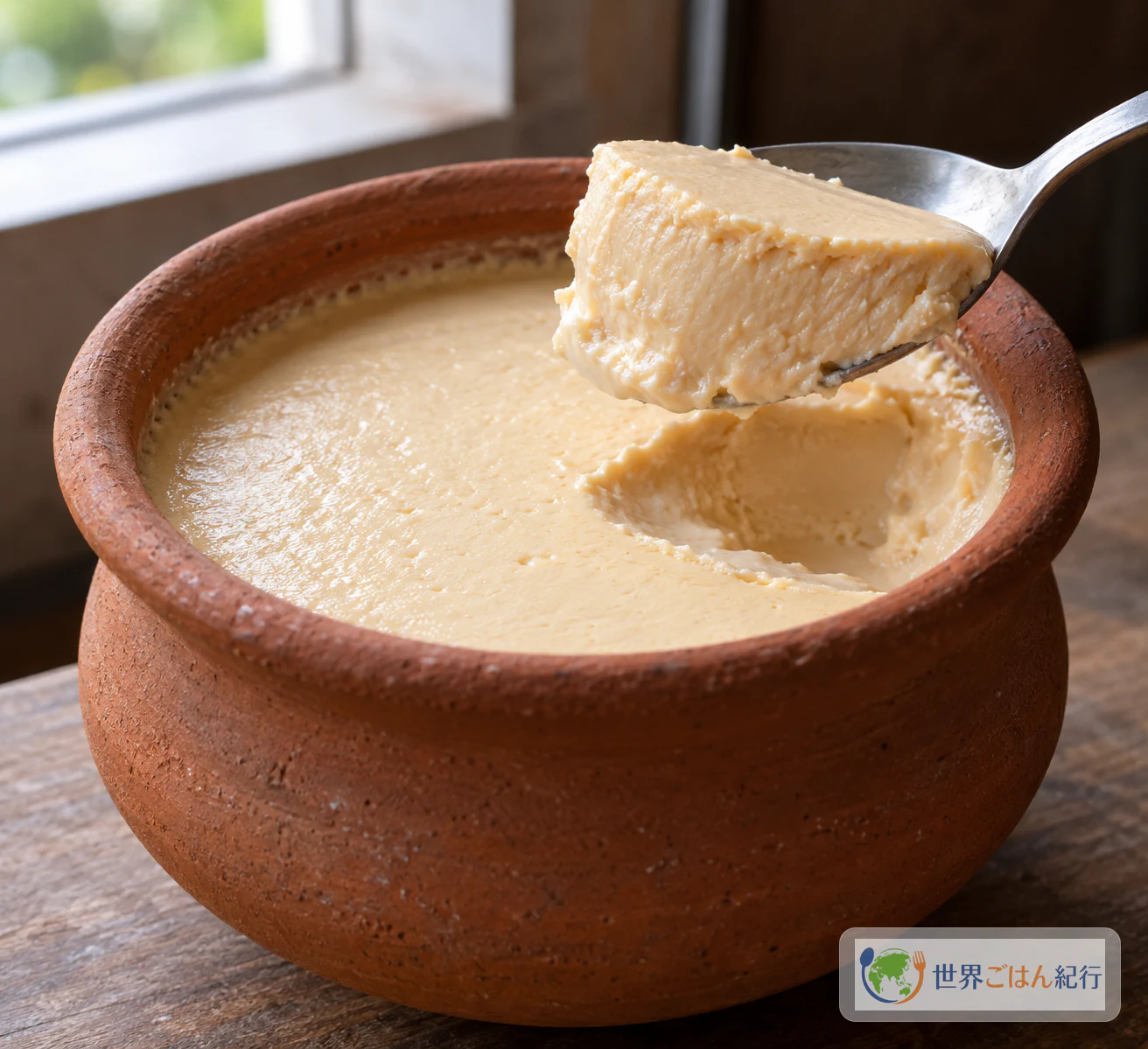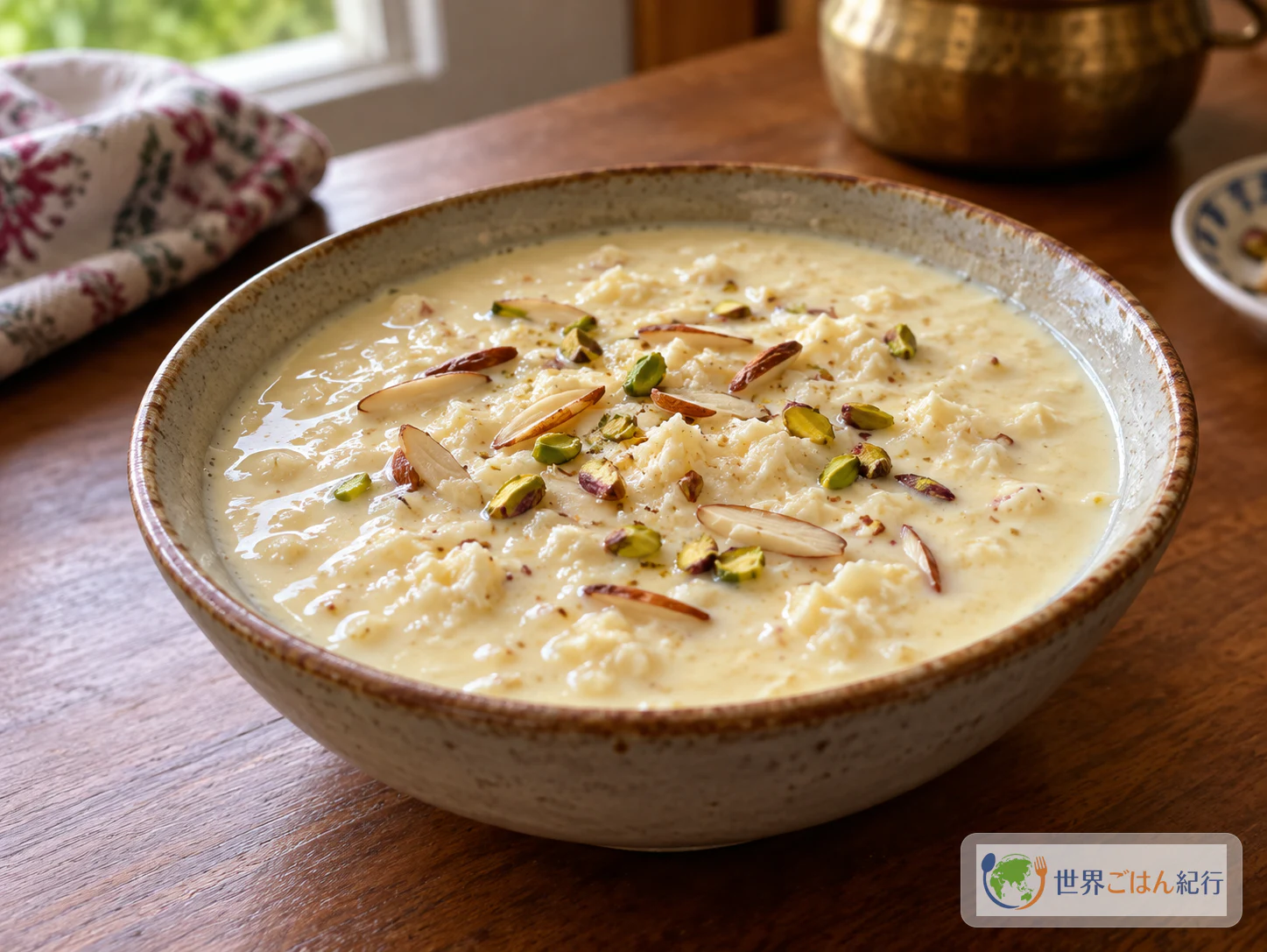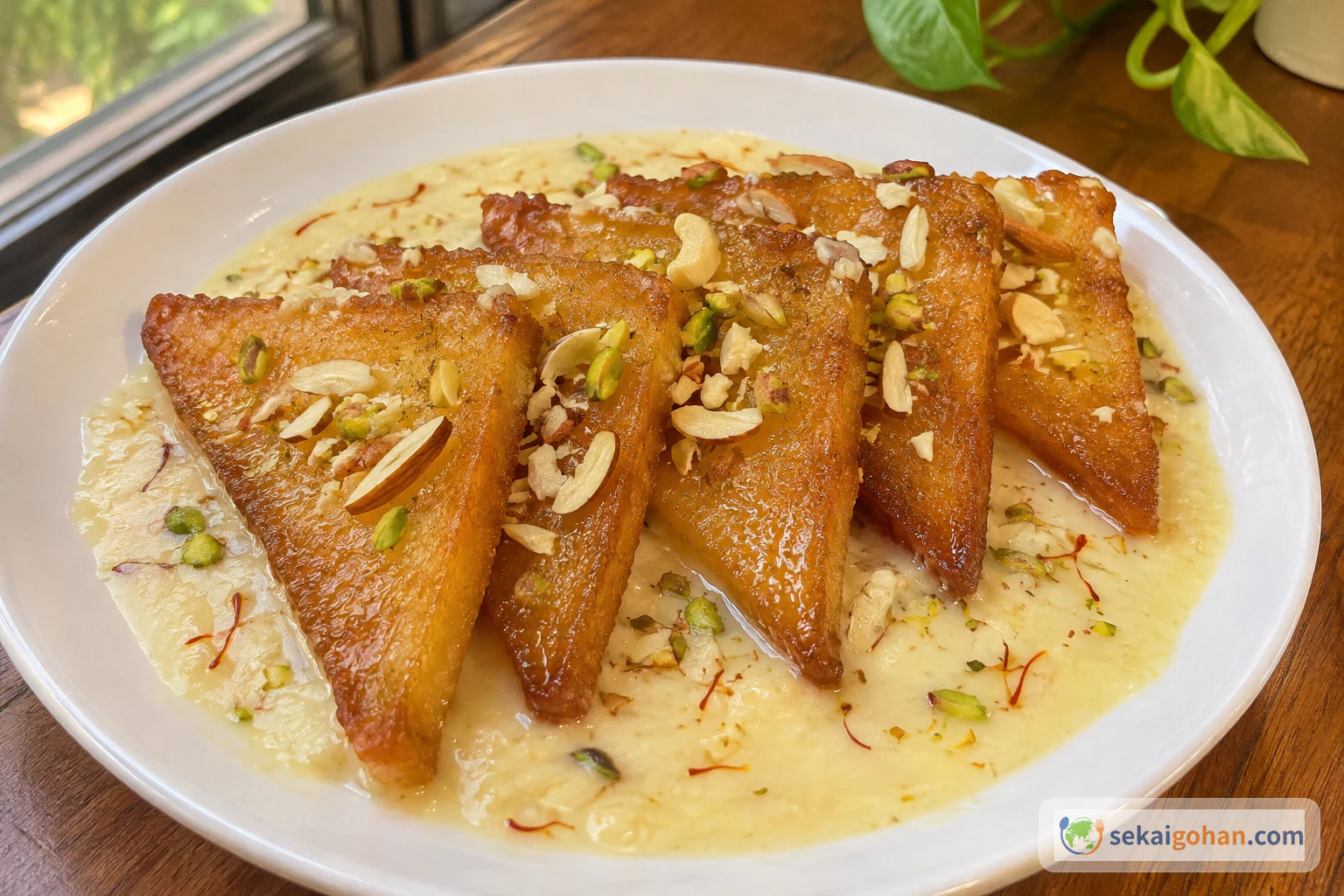
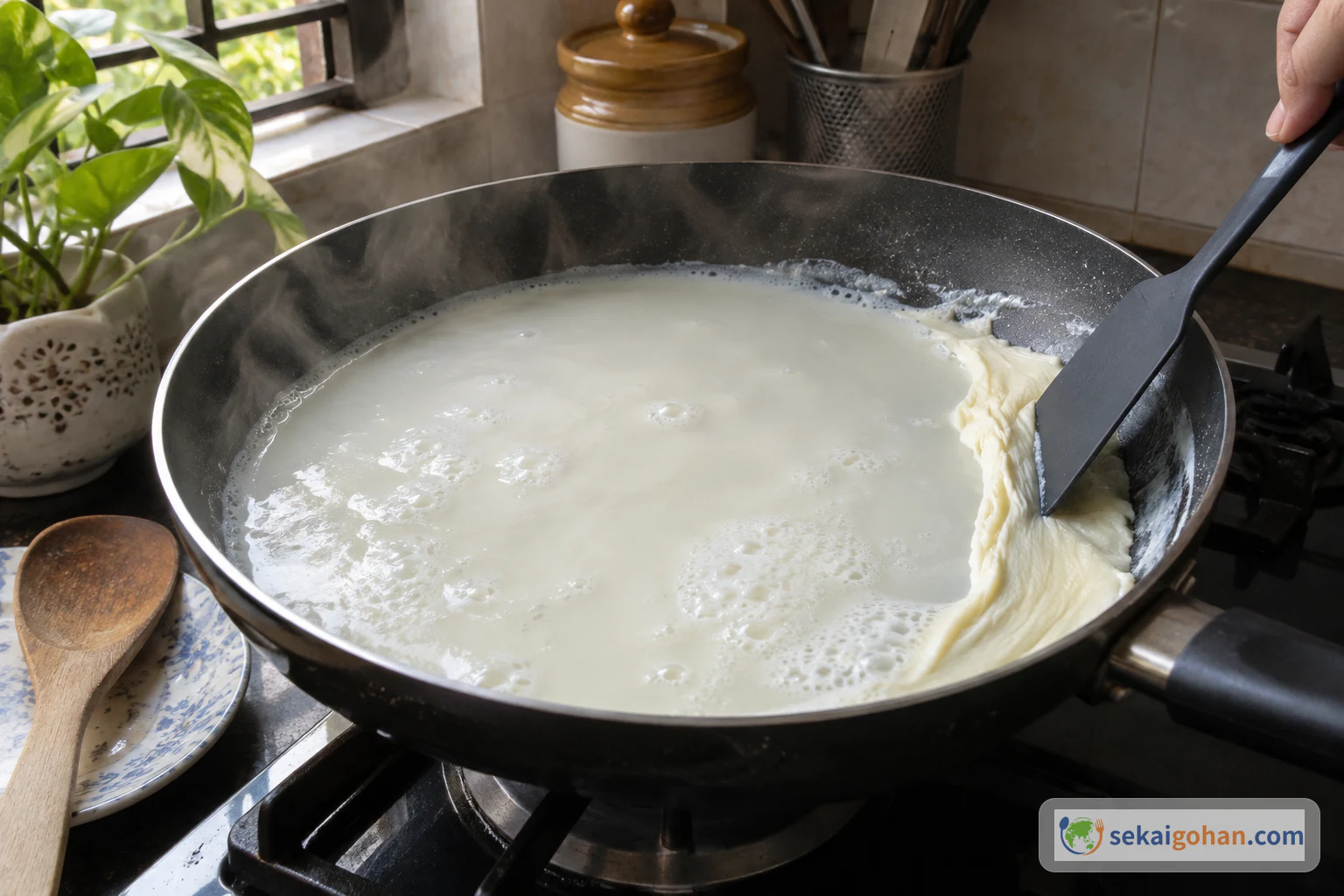
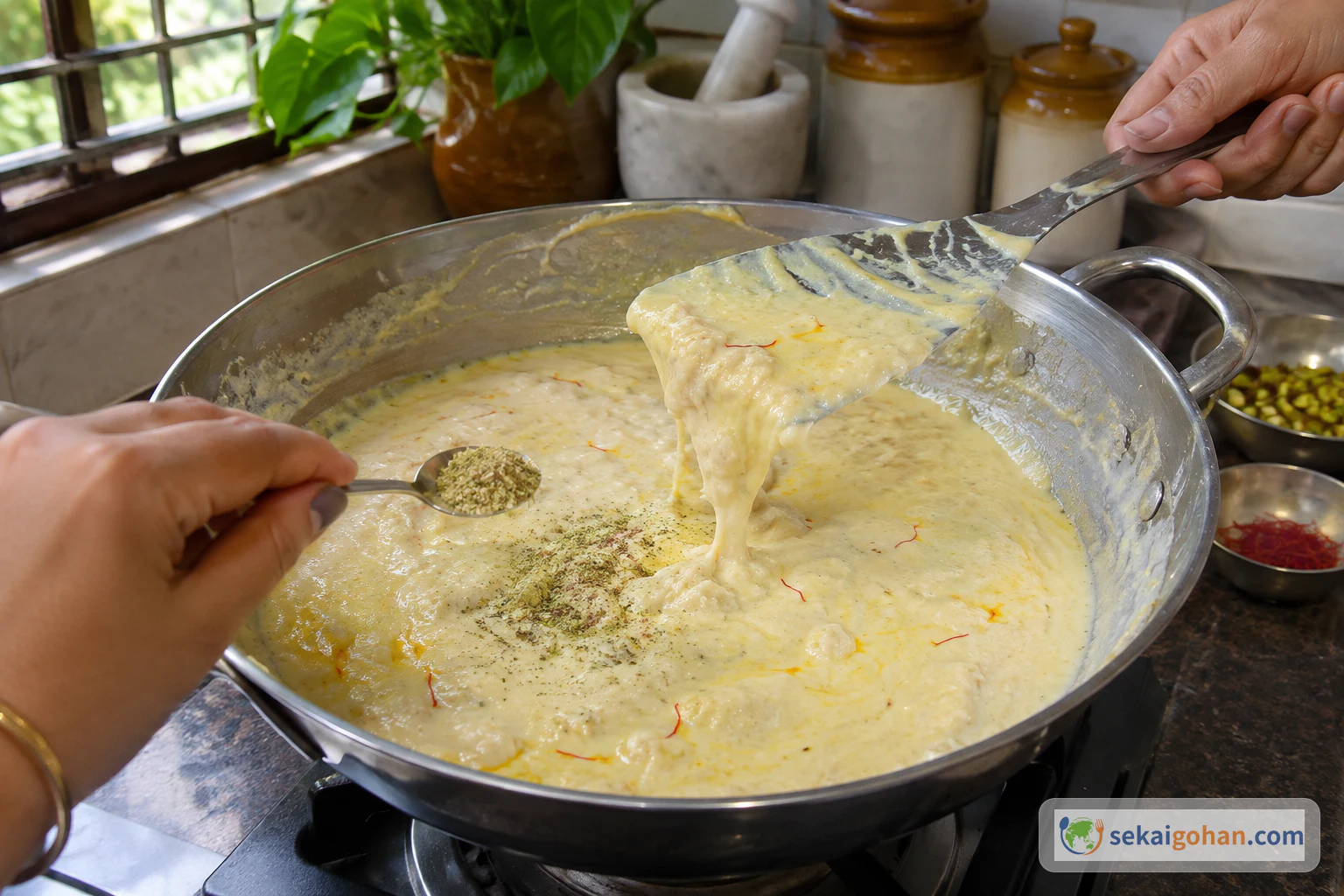
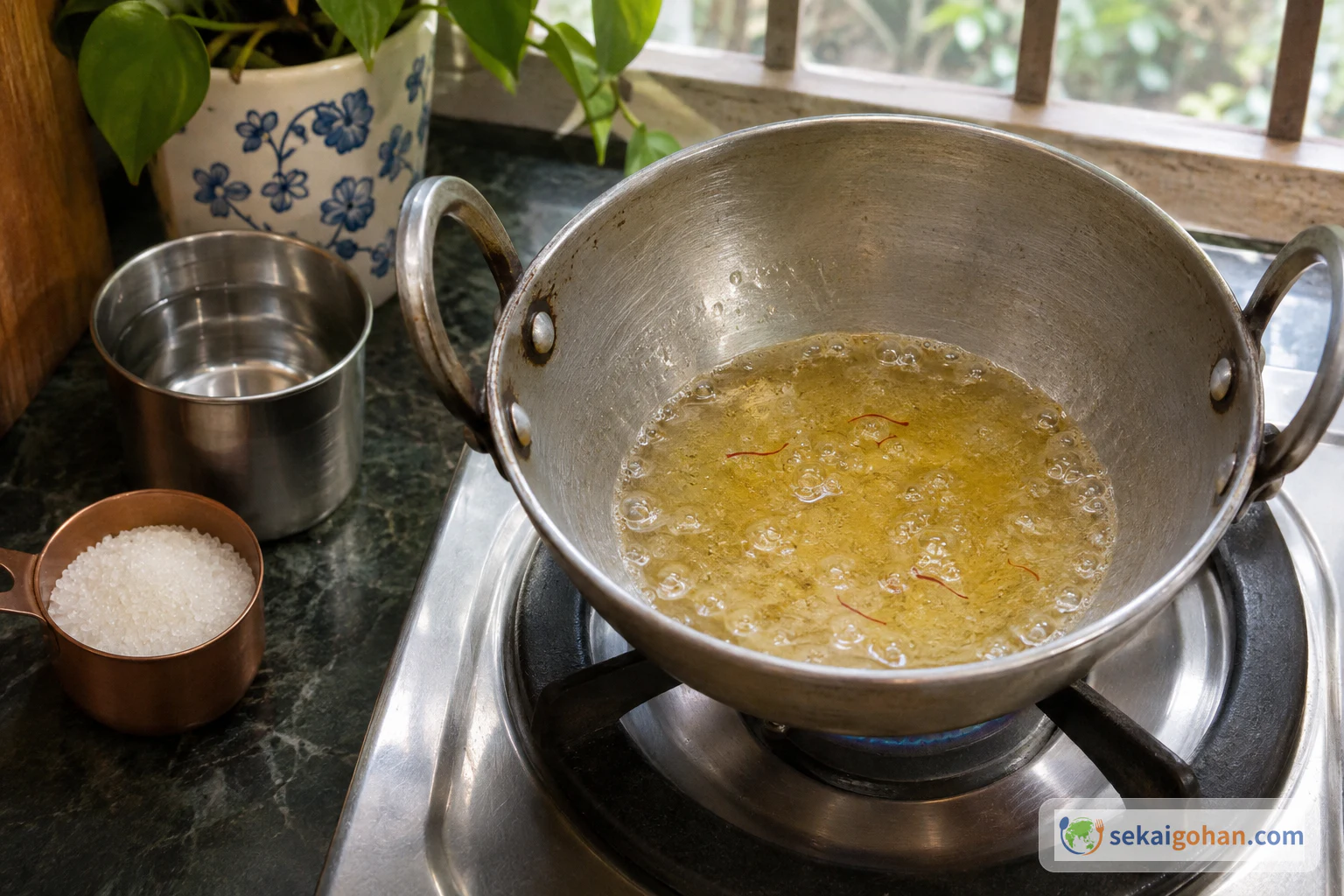
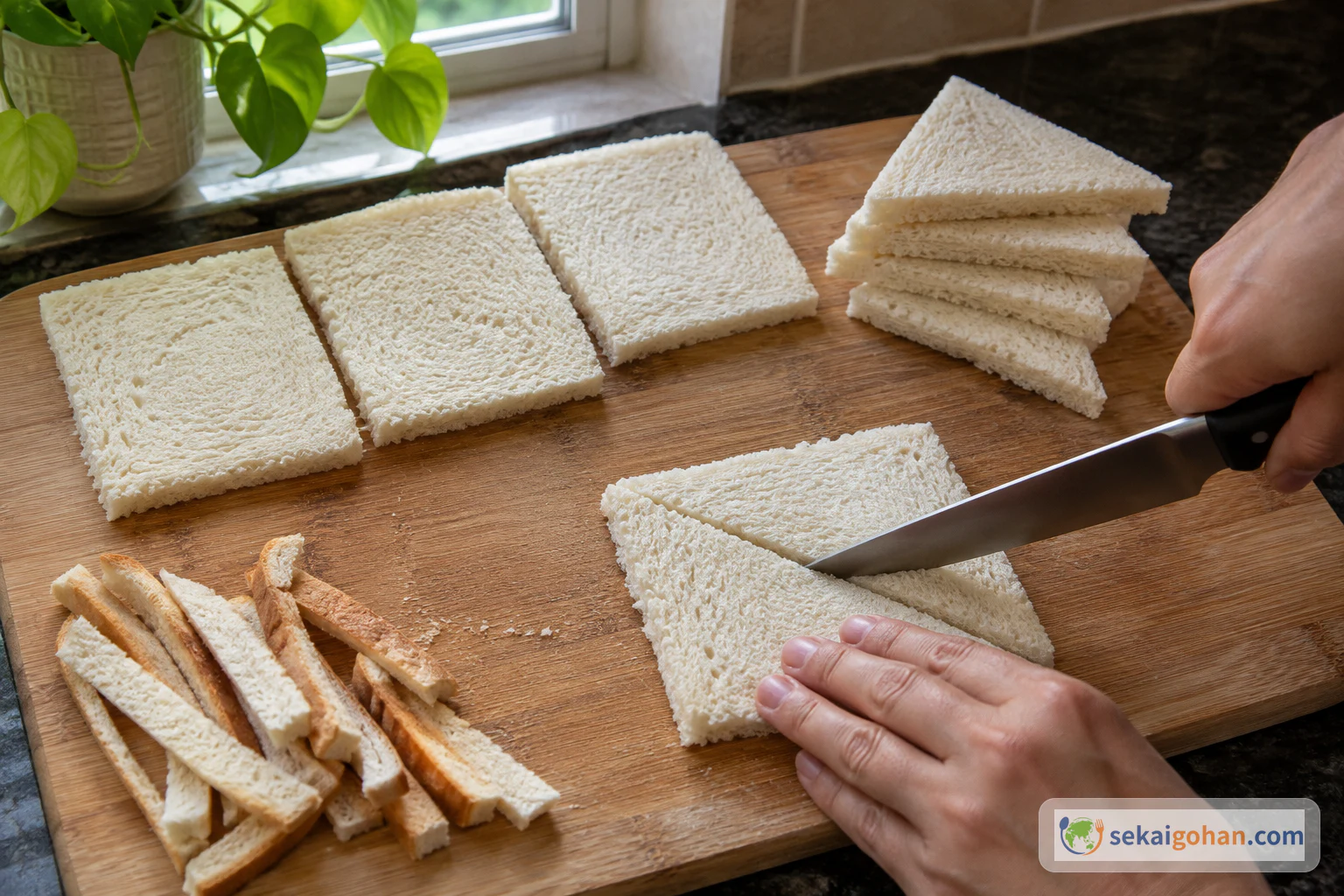
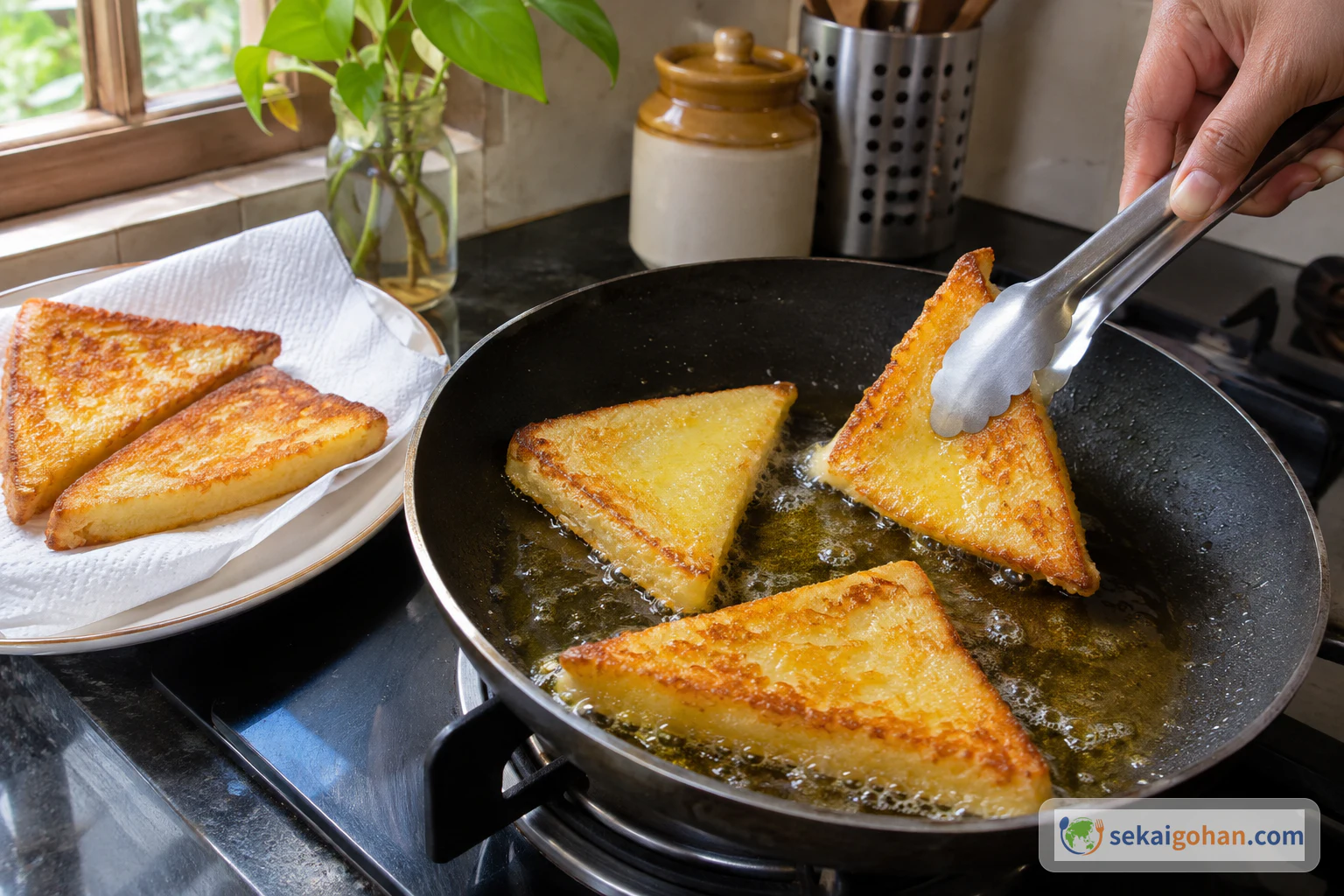
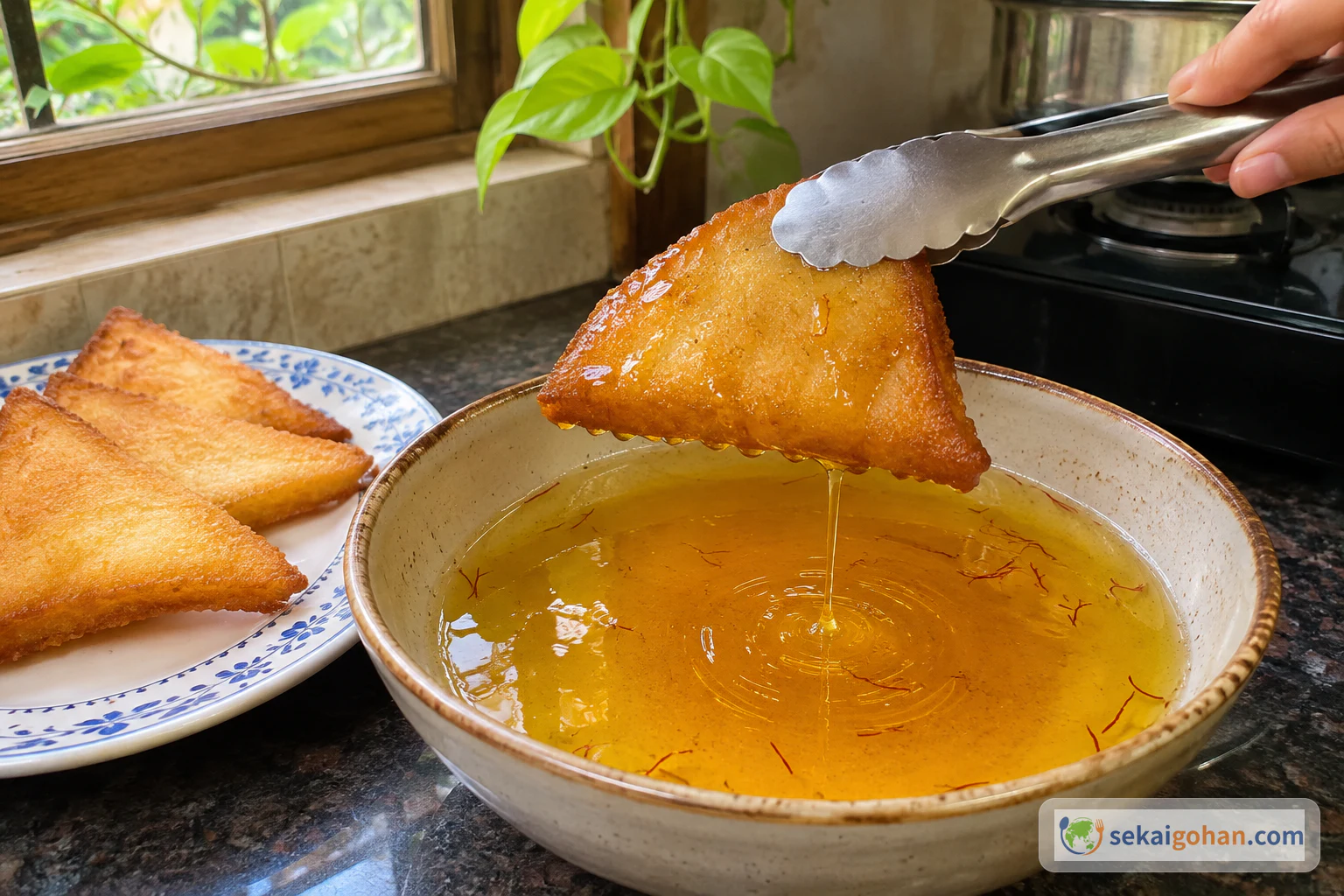
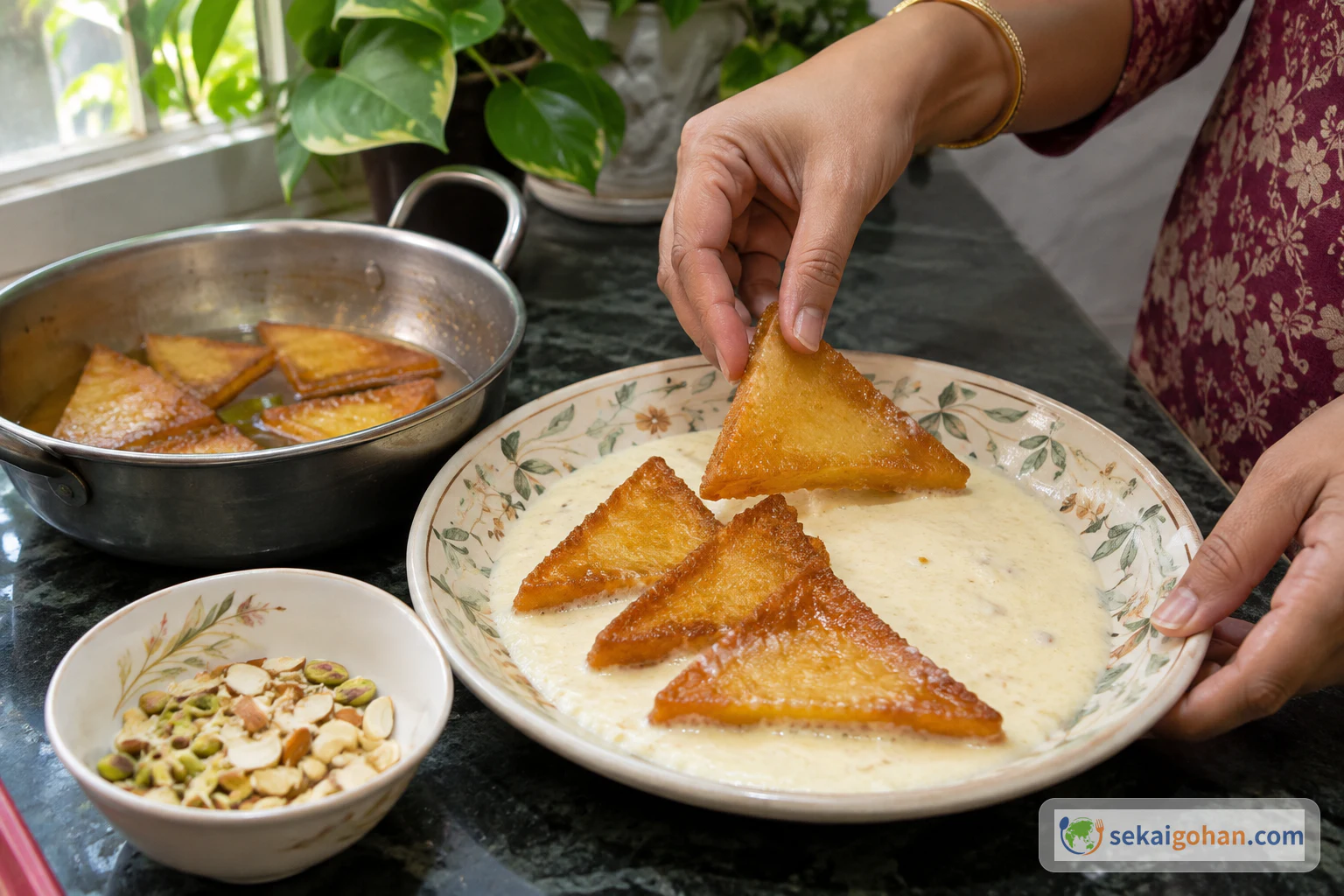
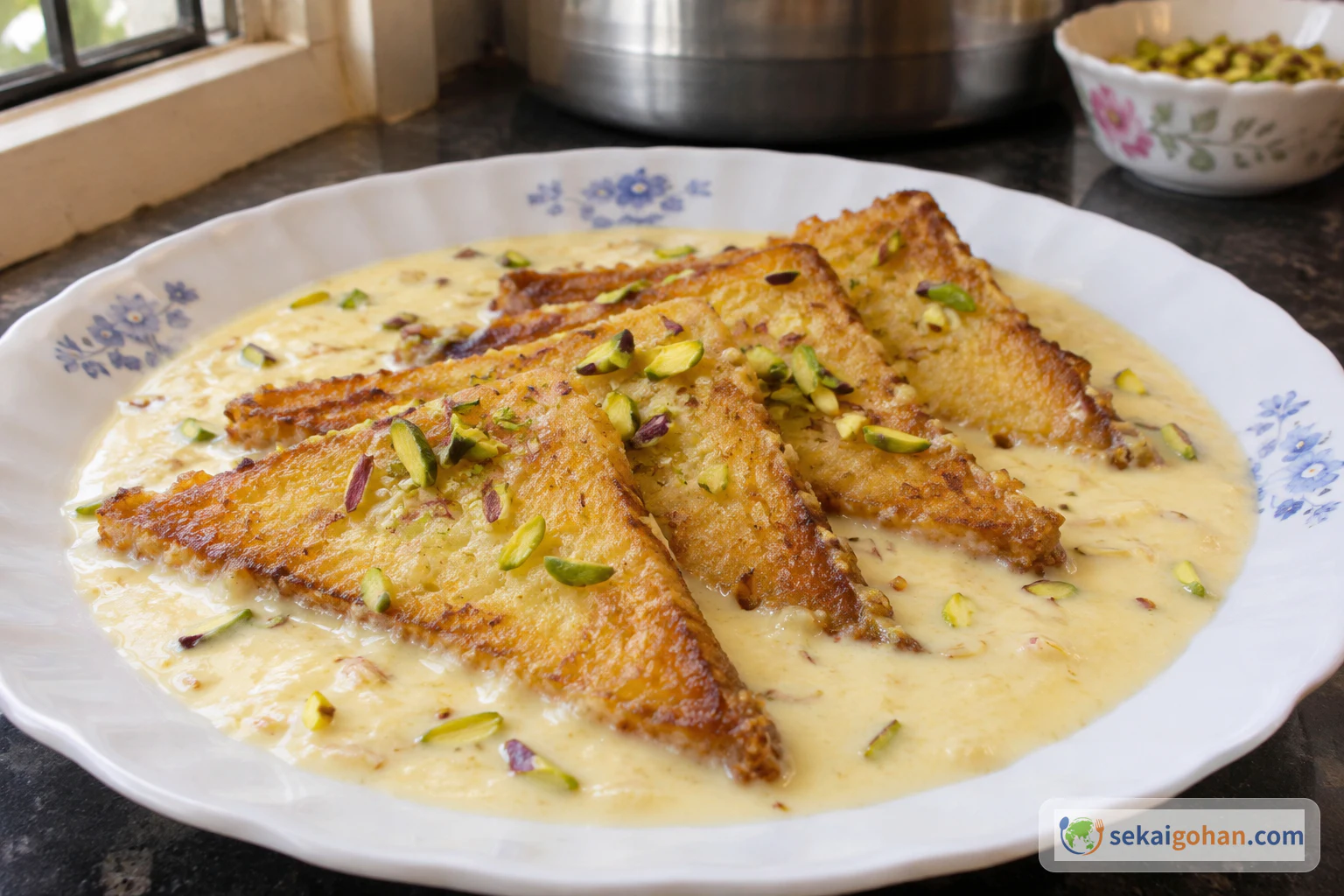
A liter of milk takes a long time to simmer down in a wide pan. Every few minutes a soft skin of cream forms on top, and you push it to the side of the pan, where it collects in pale folds. When the milk has shrunk to a third and turned thick and ivory, you stir all those folds back in with cardamom and saffron. Meanwhile bread triangles hiss in ghee until golden, then come out of the warm syrup shining and dripping. Shahi tukra layers those three things: crisp-edged bread, a thin saffron syrup and grainy, milky rabri on top or underneath. Each spoonful is sweet and rich, scented with cardamom, with the crunch of almonds, cashews and pistachios.
Royal Pieces of Bread: Where Shahi Tukra Comes From
The name explains itself once you translate it. Shahi is Persian for "royal," and tukra (also spelled tukda) is Hindi and Urdu for "piece." Shahi tukra means a royal piece of bread. The dish belongs to the Mughlai repertoire of rich, court-style cooking. It is closely associated with Hyderabad, and it is also published under the name Hyderabadi double ka meetha.
Nobody agrees on how the dish began. One story has it arriving from the Middle East with Babur in the 16th century. Another links it to Egypt's Umm Ali, a bread-and-milk pudding. Others point to Eish es Serny, or to English bread pudding. One account credits the khansamas, the cooks of Mughal kitchens, with the form that survives today: bread fried in ghee rather than set with eggs, then soaked in sweetened milk. Some trace it to the 17th-century Mughal era and suggest it was born in Hyderabad. Where it was first made is not settled, and every one of these stories is told as tradition rather than record.
At the table, and its close cousin
Shahi tukra is a dessert for special days. In India and Pakistan it is eaten at Ramzan and Eid-ul-Fitr, and it is described as a dessert to follow a biryani on special occasions. Its Hyderabadi relative, double ka meetha, takes its name from double roti, a colloquial word for sliced bread. It is usually cut thicker and is a fixture at weddings. Some cooks treat the two as separate dishes. Others treat them as close cousins or as two names for the same dessert. If you like milk sweets, put shahi tukra alongside the slow-reduced milk of doodhpak, the set rice cream of phirni, and the syrup-soaked dumplings of gulab jamun. Each one handles milk or syrup differently. For more of the country's cooking, see India.
Both spellings are in common use, and so are "shahi tukda" and "Hyderabadi double ka meetha" in recipe titles. Try all of them when you search for photographs or regional variations.
Ingredients (serves 6)
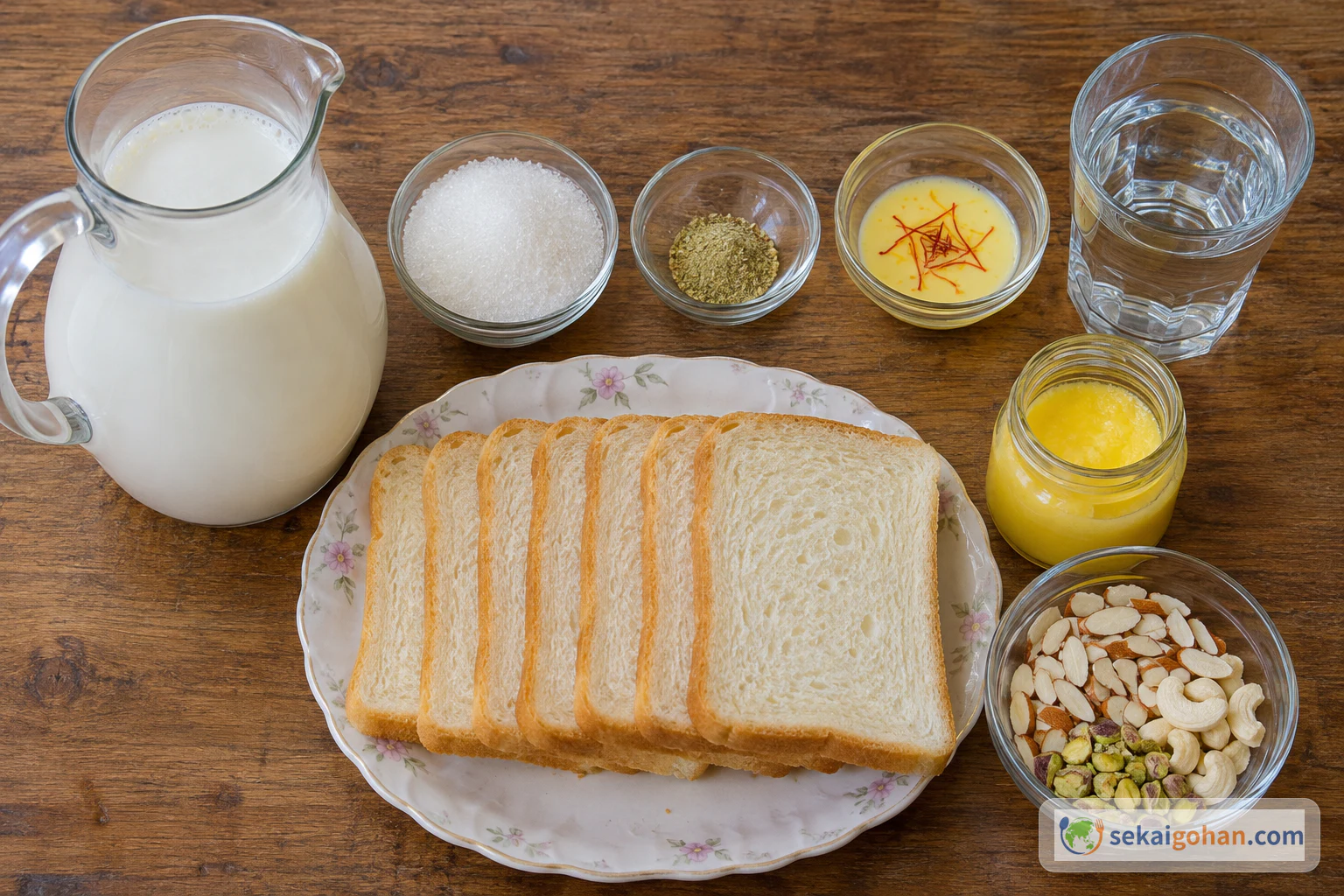
This dessert contains milk (milk, ghee), tree nuts (almonds, cashews, pistachios) and wheat (bread). Sandwich bread can also contain soy, egg or other additives. Read the label on the bread and the ghee, and leave the nuts off any plate for someone with a nut allergy.
Equipment
- Wide, heavy or non-stick pan, for reducing the milk
- Heat-resistant spatula, for pushing the cream aside and scraping the bottom
- Small saucepan or kadai, for the syrup
- Flat frying pan
- Tongs
- Plate lined with paper towel
- Shallow bowl, for dipping
- Bread knife and cutting board
- Serving plates
Choosing and Substituting
Three things to buy: ghee, cardamom powder and saffron. Saffron is expensive, but you only need a pinch for the rabri and a few threads for the syrup. Buy a small jar of whole threads rather than powder so you can see what you are adding. Buy cardamom powder in a small pack.
For bread, use a plain white sandwich loaf, the soft square kind. It fries evenly and soaks up syrup without falling apart. For milk, use whole milk. The fat is what turns into a thick, rich rabri. Buffalo milk works the same way.
| Ingredient | Swap | What changes |
|---|---|---|
| Ghee | Unsalted butter with a little neutral oil | It fries well, but you lose the nutty, toasted aroma of ghee |
| Ghee | Oil | Crisp and golden, with a plainer taste |
| Fried bread | Toasted bread | Lighter and less oily, with less of the fried-bread richness |
| Saffron | Leave it out | The rabri stays white and the dessert loses its floral note. Cardamom carries the flavor alone |
Moist bread soaks up ghee and turns greasy. Lay the cut triangles out on a rack for 3 to 4 hours before frying, and they will crisp in the pan and drink less fat.
Method
Start the rabri first, because it takes the longest and needs you close by. While the milk reduces, you can make the syrup and cut the bread. If you are drying the bread, cut it hours ahead. Fry the bread and dip it only after the rabri and syrup are ready, because the assembled dessert goes soft as it sits. Serve it the moment it comes together.
Reducing milk spits as it thickens, sugar syrup clings to skin and burns, and ghee is hot enough to cause bad burns. Use a long spatula, keep the handles turned in, lower the bread into the ghee away from you, and use tongs, not fingers, for dipping.
When It Goes Wrong
| What you see | Why | What to do |
|---|---|---|
| Brown flecks and a burnt smell in the rabri | Milk caught on the bottom of the pan | Pour the milk into a clean pan without scraping the bottom, then keep reducing over lower heat and stir from the base every time you move the skin aside |
| Rabri runs across the plate like milk | Not reduced far enough | Return it to the pan and keep reducing until it is about a third of the starting volume and falls from the spatula in a ribbon |
| Bread tastes greasy and heavy | The bread was moist and soaked up ghee | Dry the cut triangles for a few hours before frying, and let the ghee heat before adding the bread |
| Bread is dark on the outside, pale inside | Heat too high | Lower to medium and fry in smaller batches, turning as soon as the underside turns golden |
| Bread turns soggy and falls apart | It sat too long in syrup or under the rabri | Dip briefly, assemble right before serving, or spoon the rabri over the bread at the table |
Serving, Variations and Making Ahead
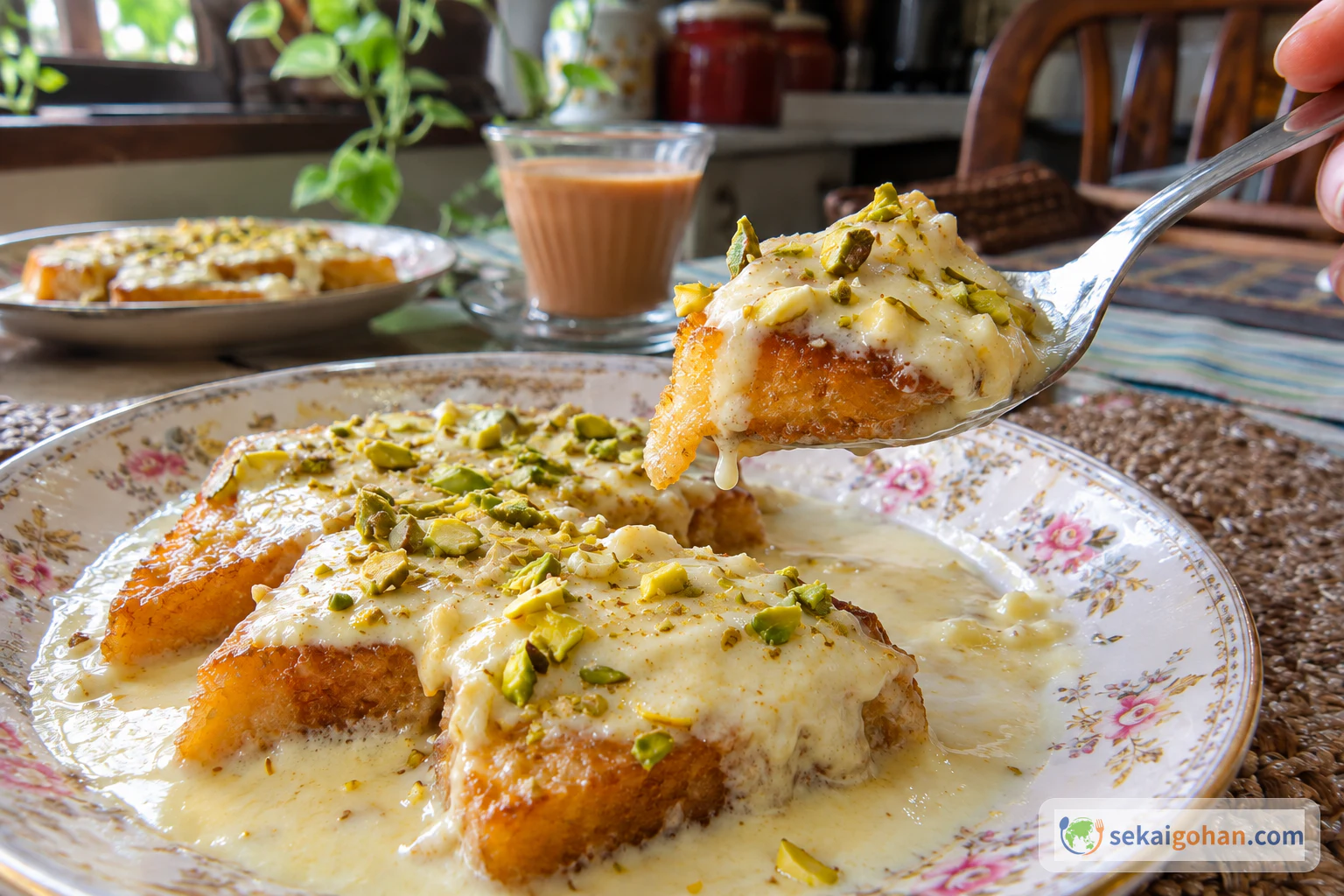
Shahi tukra ends a festive meal. It is served at Eid and after a biryani on special occasions. Bring it to the table as soon as it is assembled. The bread softens as it sits, and the contrast between crisp edges and soft rabri is the whole pleasure of the dish. A small glass of tea suits the richness well.
Variations
- Rabri only, no syrup. Skip the syrup and set the fried bread straight into the rabri. The result is lighter and less sweet, and the bread edges stay crisp longer.
- Toasted bread. Toast the triangles instead of frying them in ghee. It uses much less fat, and the dessert has a cleaner, drier crunch.
- Rabri poured over the bread. Arrange the dipped bread first, then spoon the rabri over the top just before eating. The bread soaks up more milk and tastes softer and creamier.
- Baked, double ka meetha style. One recipe describes double ka meetha as a different method: khoya is placed over the rabri and baked at 355°F (180°C) for 25 to 30 minutes. This is a separate method and is not covered by the steps above.
Making ahead
One recipe makes the syrup and the rabri up to 2 days ahead. That number is a cook's guide, not a tested storage limit: cool them, cover them and refrigerate them promptly, and discard anything that smells or looks off. Fry, dip and assemble on the day you serve, and eat the finished dessert the same day.
Frequently asked questions
Do I need condensed milk for the rabri?
No. Here the rabri is milk reduced with sugar. It tastes clean and milky, and its texture comes from the cream skins stirred back in. Some versions add condensed milk instead. That makes the rabri sweeter and smoother, and you lose some of the grainy texture.
Can I fry the bread in oil instead of ghee?
Yes. Shahi tukra is made with bread fried in either oil or ghee, and both give crisp, golden pieces. Ghee adds the nutty, buttery aroma people associate with the dish. Oil gives a plainer taste, which the cardamom and saffron then carry alone.
Should the syrup reach one-string consistency?
It does not have to. A syrup simmered until slightly thick soaks into the bread lightly and keeps the dessert from being cloying. Some cooks boil it to one-string consistency, where a drop pulled between two fingers forms a single thread. That gives a stickier, sweeter coating.
Is it better to put the rabri under the bread or over it?
Both ways appear in published recipes. Rabri spread on the plate first keeps the tops of the bread crisp and glossy with syrup. Rabri poured over just before eating soaks the bread through and makes every bite creamy. Whichever you choose, pour or plate it at the last moment.