Basundi: Milk Reduced by Half, with Soft Flecks from the Pan's Edge
Milk only, reduced slowly to about half until it coats a spoon thickly. The thin skin that forms at the edge is folded back in rather than thrown away, and sugar and spices go in only near the end.
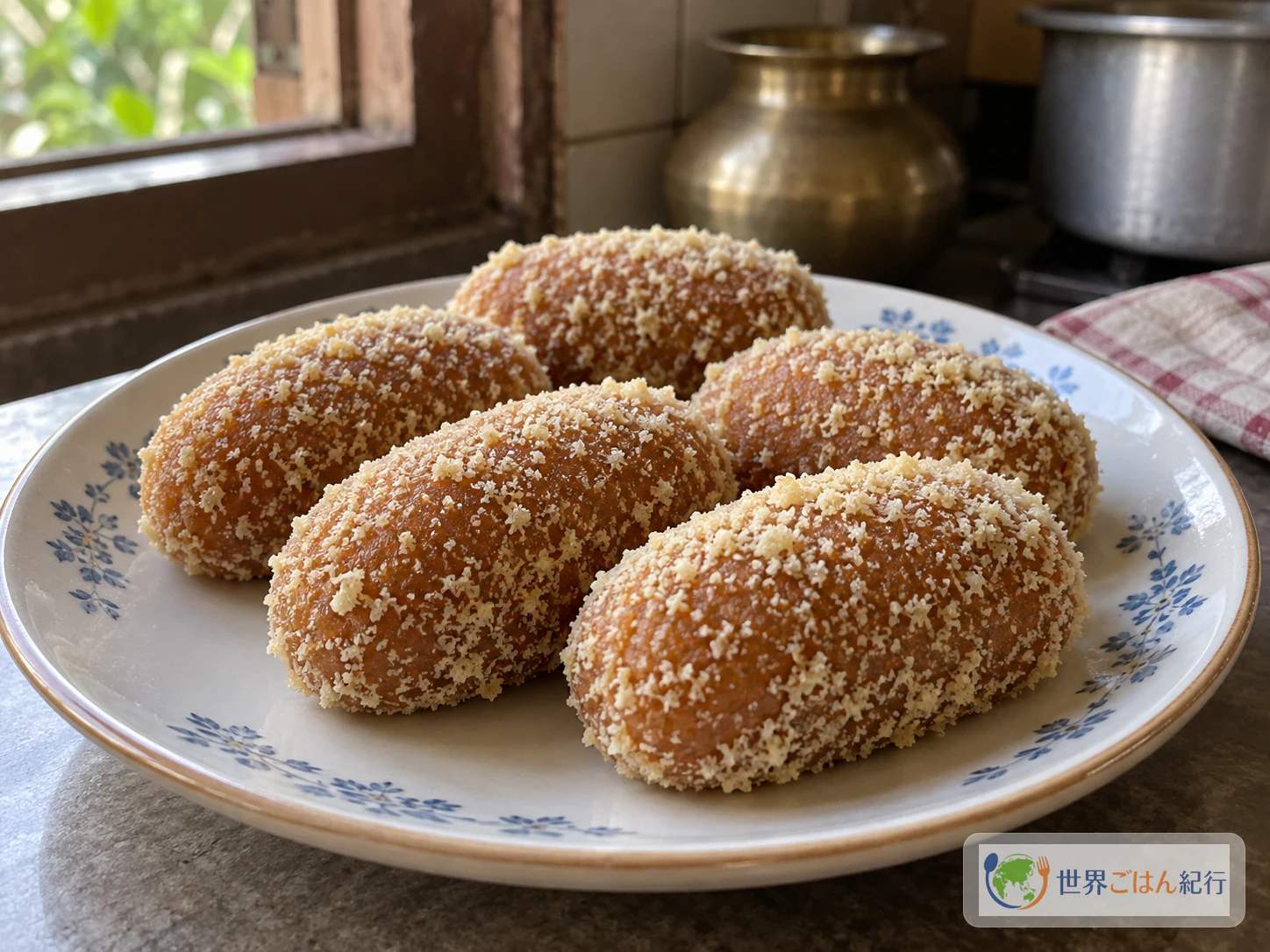
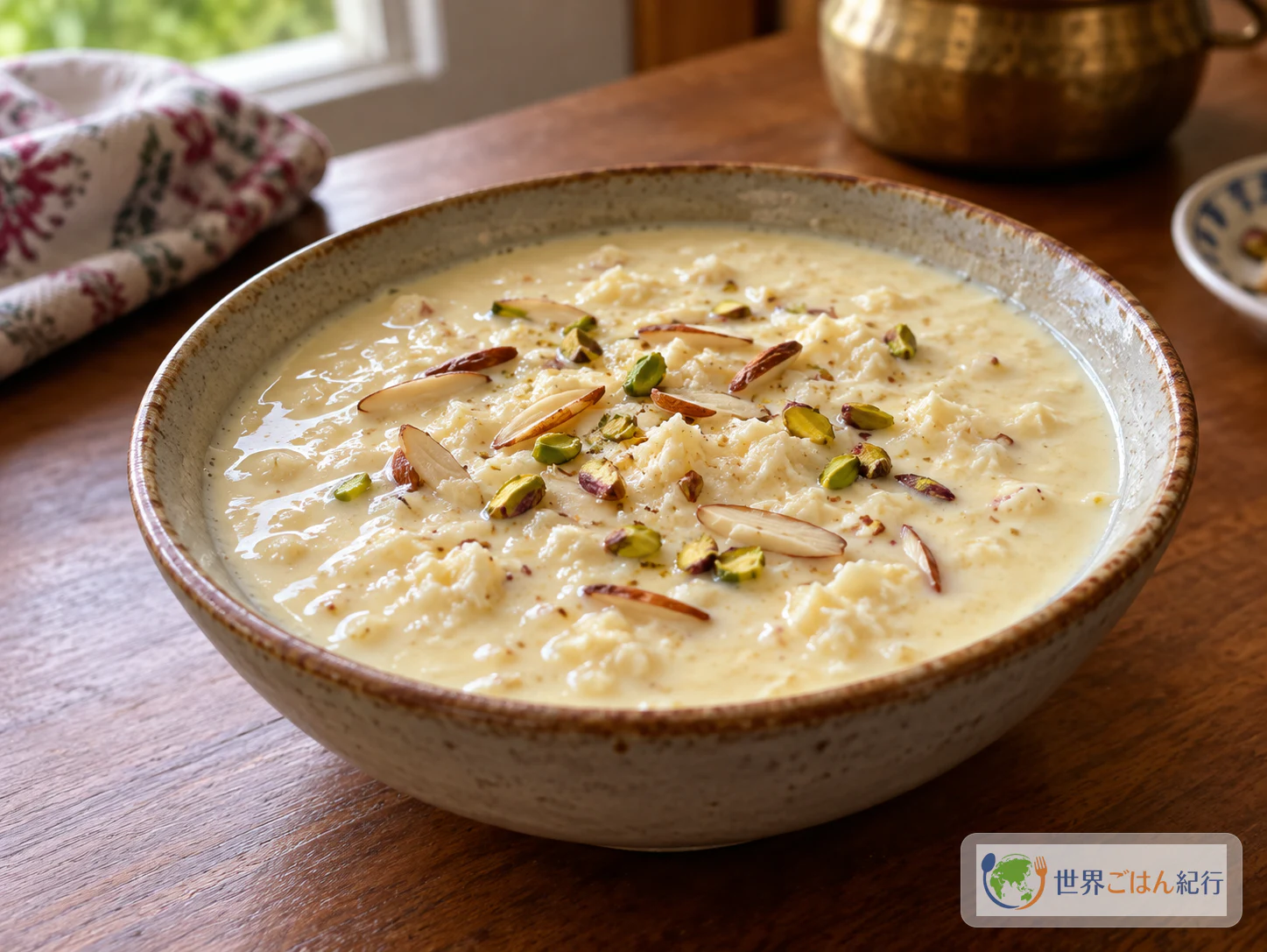
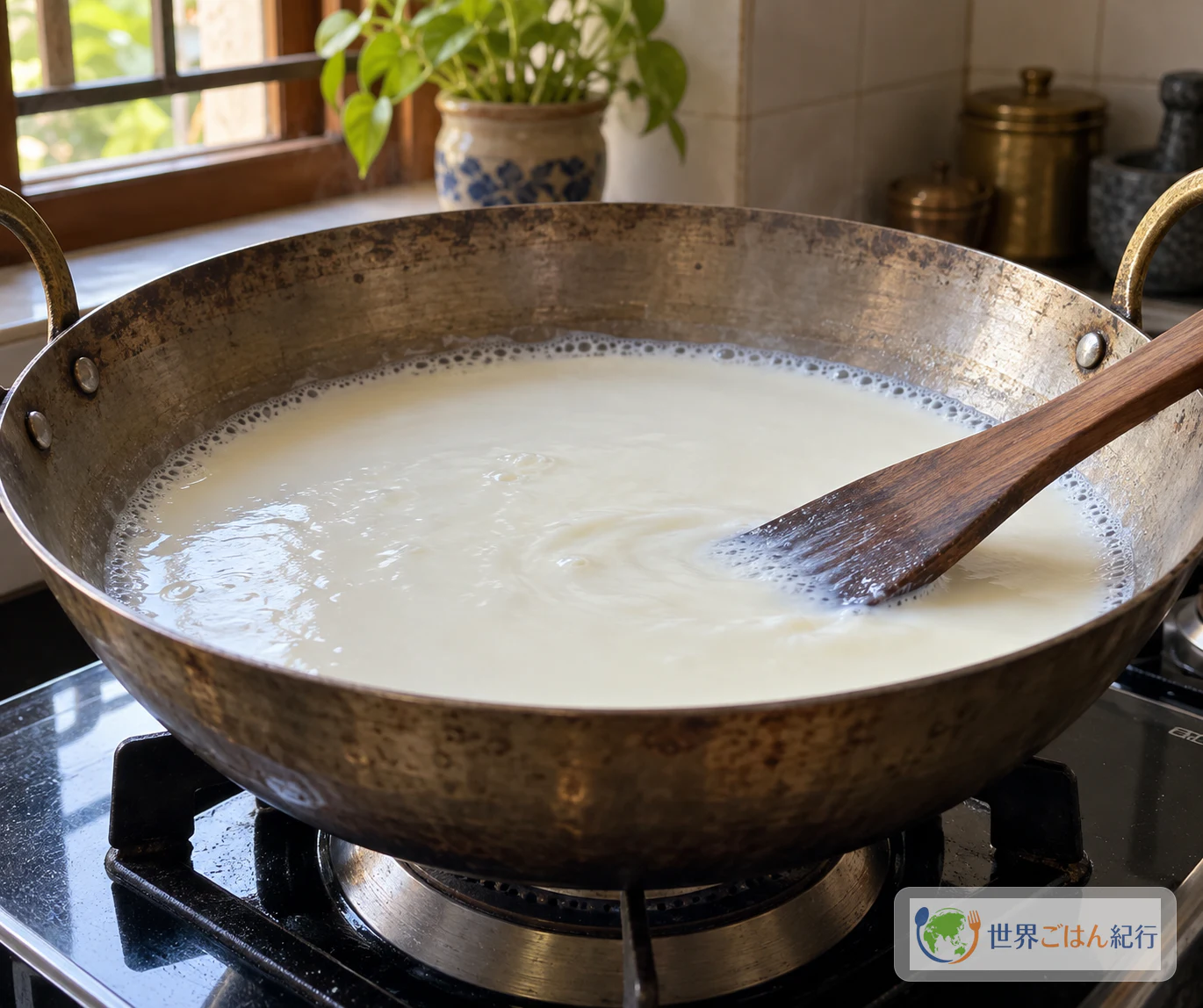
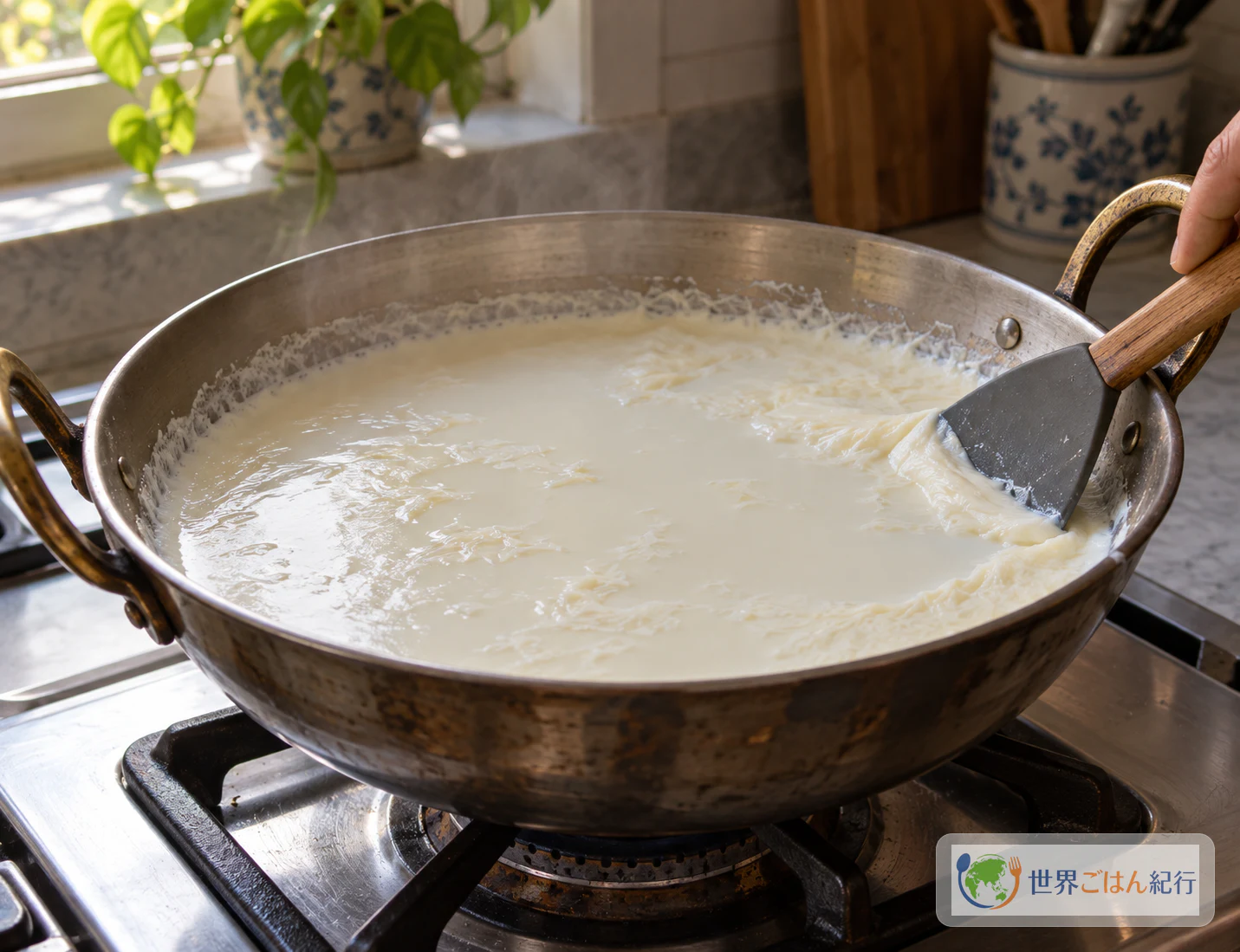
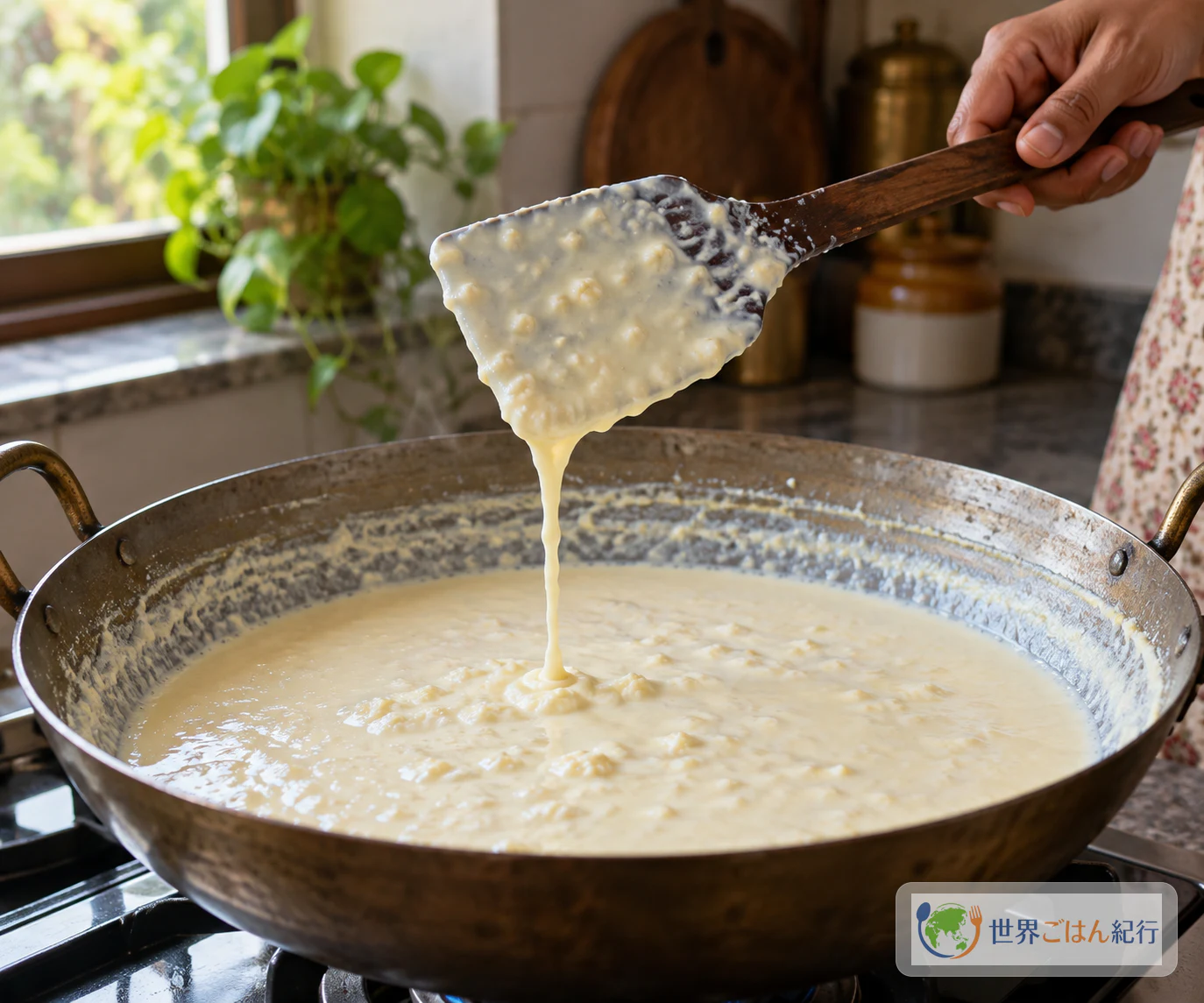
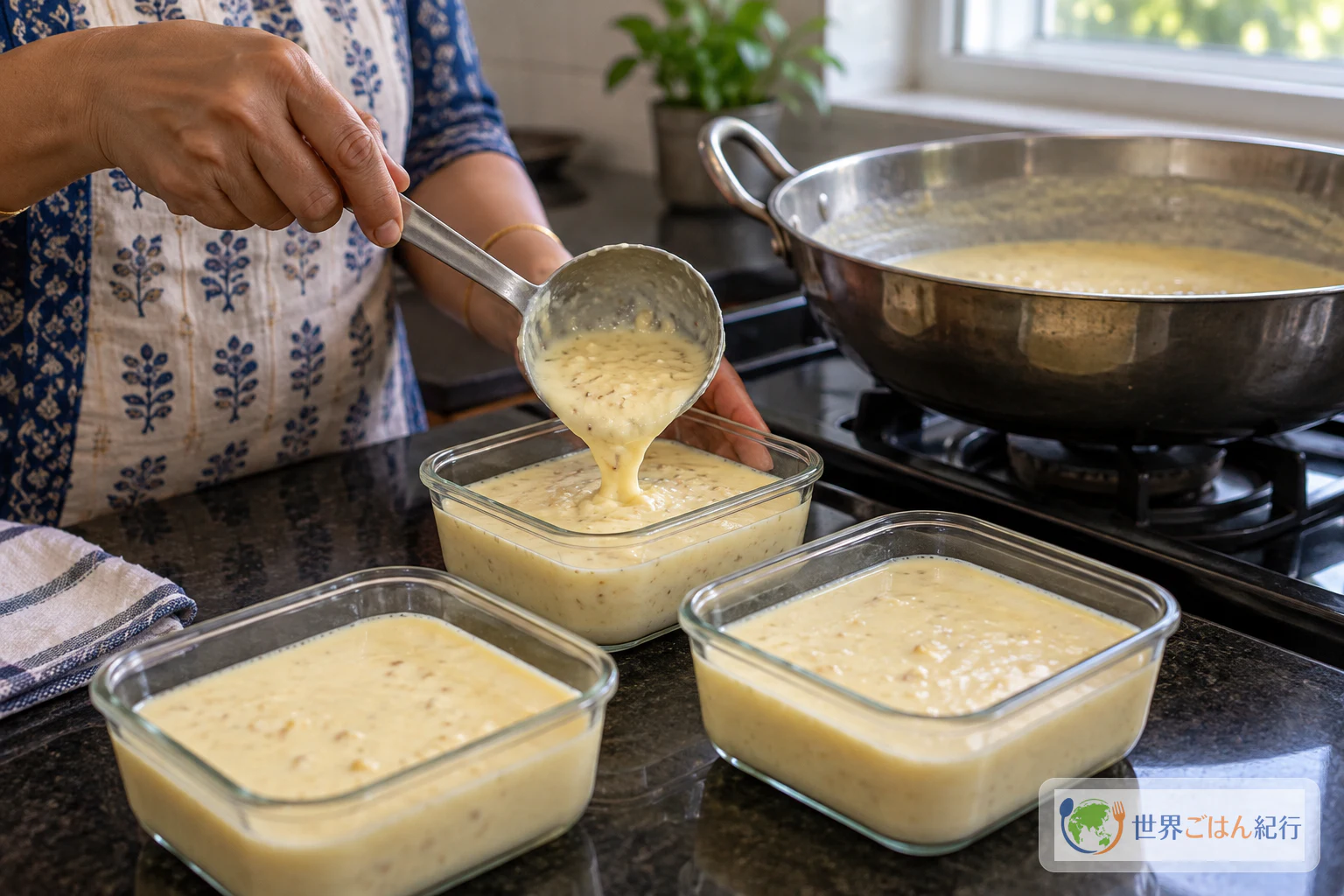
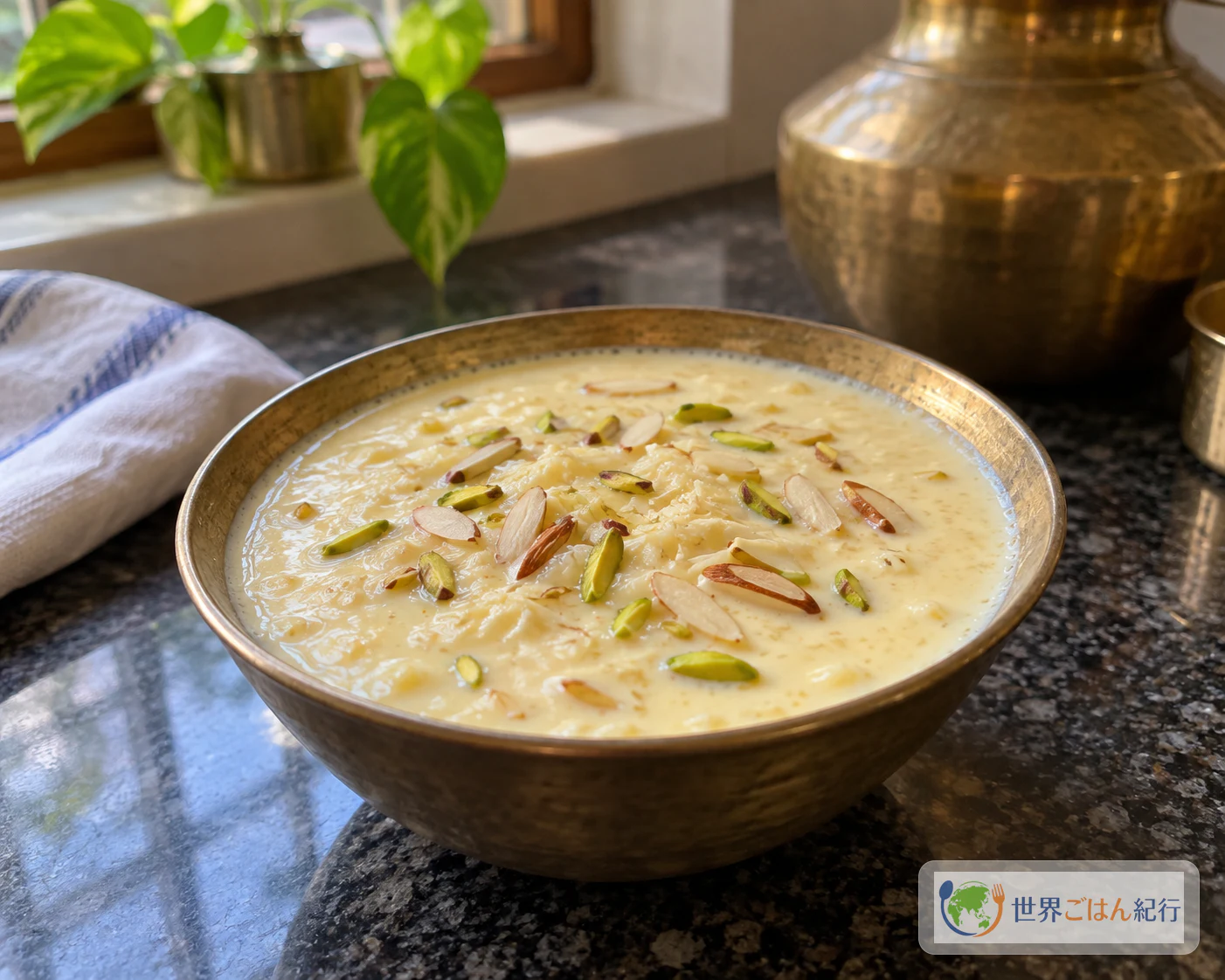
Full-fat milk sits in a wide, heavy pan over low heat. A thin skin keeps forming at the edges, and every few minutes it is pushed back into the milk with a spatula. Little by little the milk darkens to a warm cream color, coats the sides of the pan, and fills with soft, uneven flecks. That is basundi (Gujarati: બાસુંદી; Devanagari spellings such as बसुंदी also appear), a sweet made by patiently reducing milk.
There is no rice and no thickener here. The body comes entirely from evaporation, and the texture comes from the milk skin that is folded back in. A dairy-science paper on basundi describes it as a reduced-milk sweet with soft flakes dispersed through it, popular in western India, especially Maharashtra and Gujarat. This article follows one recipe published as Gujarati Basundi. It is a single version, not a formula that represents every household in the region; other published versions use different amounts and a different order, as shown further down.
This recipe follows its published source and has not been kitchen-tested by Sekai Gohan. The times given are the source's guides; judge doneness by volume and by how the milk coats a spoon, not by the clock alone.
For more dishes from the same country, see the India country page.
Ingredients: Milk, Sugar and Small Amounts of Aroma
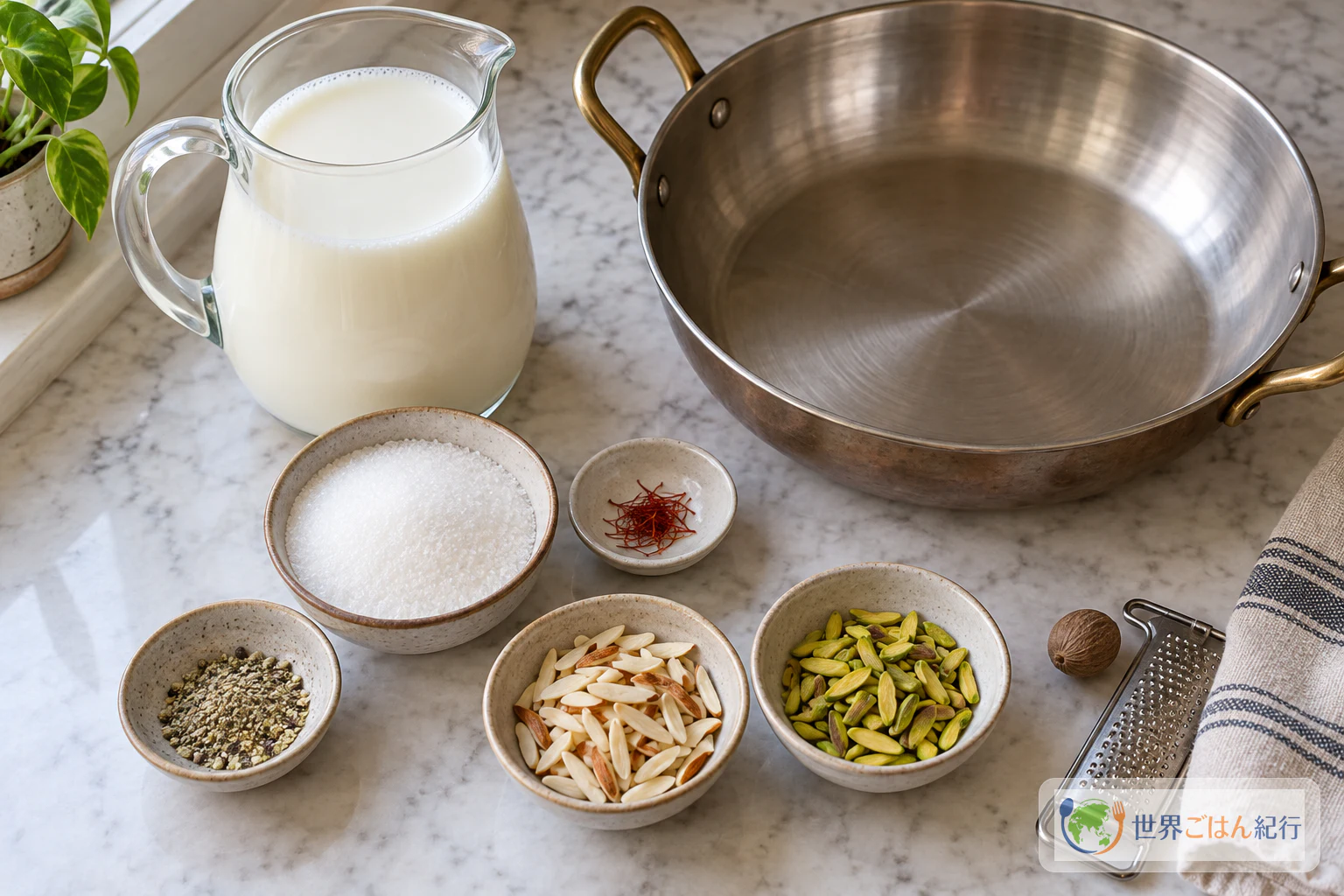
This recipe serves 4.
Equipment
- Wide, heavy-bottomed pan or kadhai (a broad, thick-bottomed saucepan or shallow pot works)
- Silicone or wooden spatula for scraping the base and sides
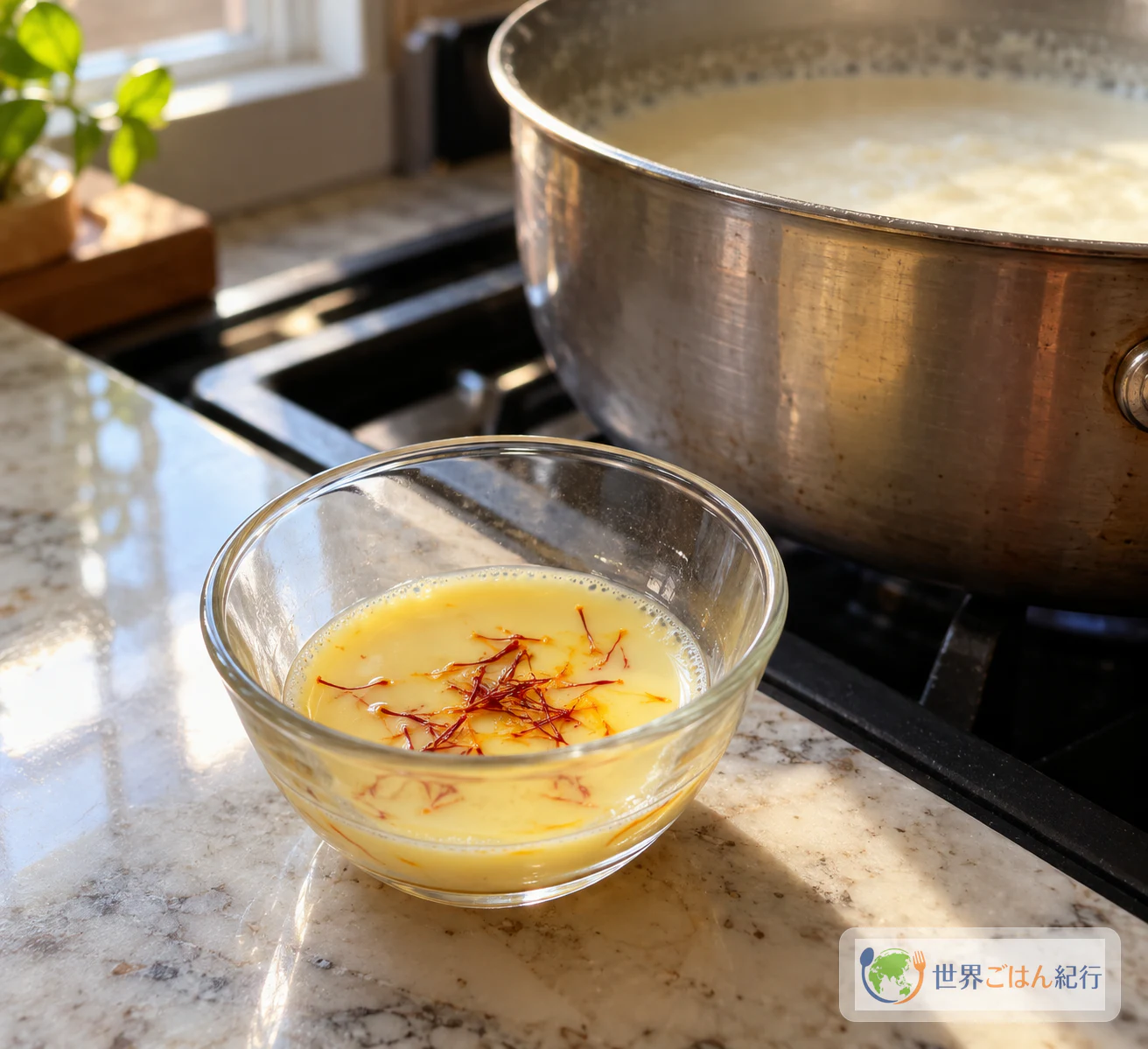
- Small cup for blooming the saffron
- Nutmeg grater (if using nutmeg)
- Clean, shallow containers or small bowls for cooling and serving
Choosing and Substituting
Milk. Use full-fat milk; the richness and body of the finished basundi depend on it. Lower-fat milk changes both. Do not dilute the milk with water, and do not add condensed milk, cream, cornstarch or rice: none of these is part of this recipe.
Saffron. Only a pinch is needed. If you leave it out, the reduction itself still works, but the floral aroma and golden color are lost. No other spice is a direct stand-in.
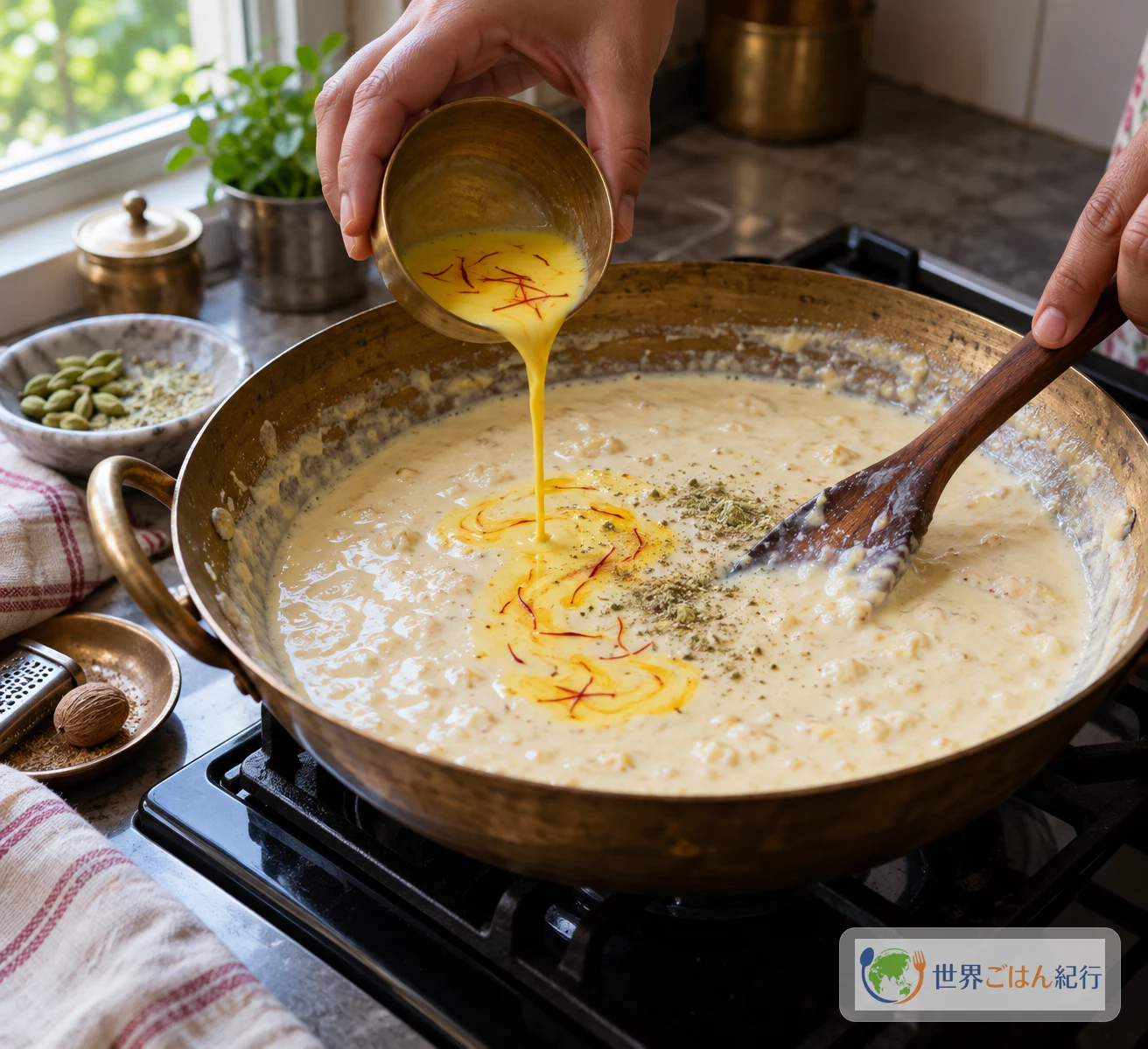
Cardamom. The recipe calls for ground green cardamom seeds measured by the spoon, not whole pods by count.
Pinch and scraping. Use "a pinch" of saffron and "one scraping" of nutmeg.
Nuts. Almonds and pistachios are optional garnishes. Leave them out for preference or allergy.
The pan. A wide surface lets the milk evaporate, and a heavy base helps keep it from catching. A narrower, deeper pot takes longer to reduce and makes scorching more likely, so choose the widest heavy pan you already own before buying anything new.
Milk is the entire base of basundi and cannot be swapped out without turning it into a different dish. Almonds and pistachios are tree nuts. If you are cooking for someone who avoids them, omit both and use clean utensils, bowls and surfaces to avoid cross-contact.
Method: Reduce Slowly, Then Sweeten and Scent at the End
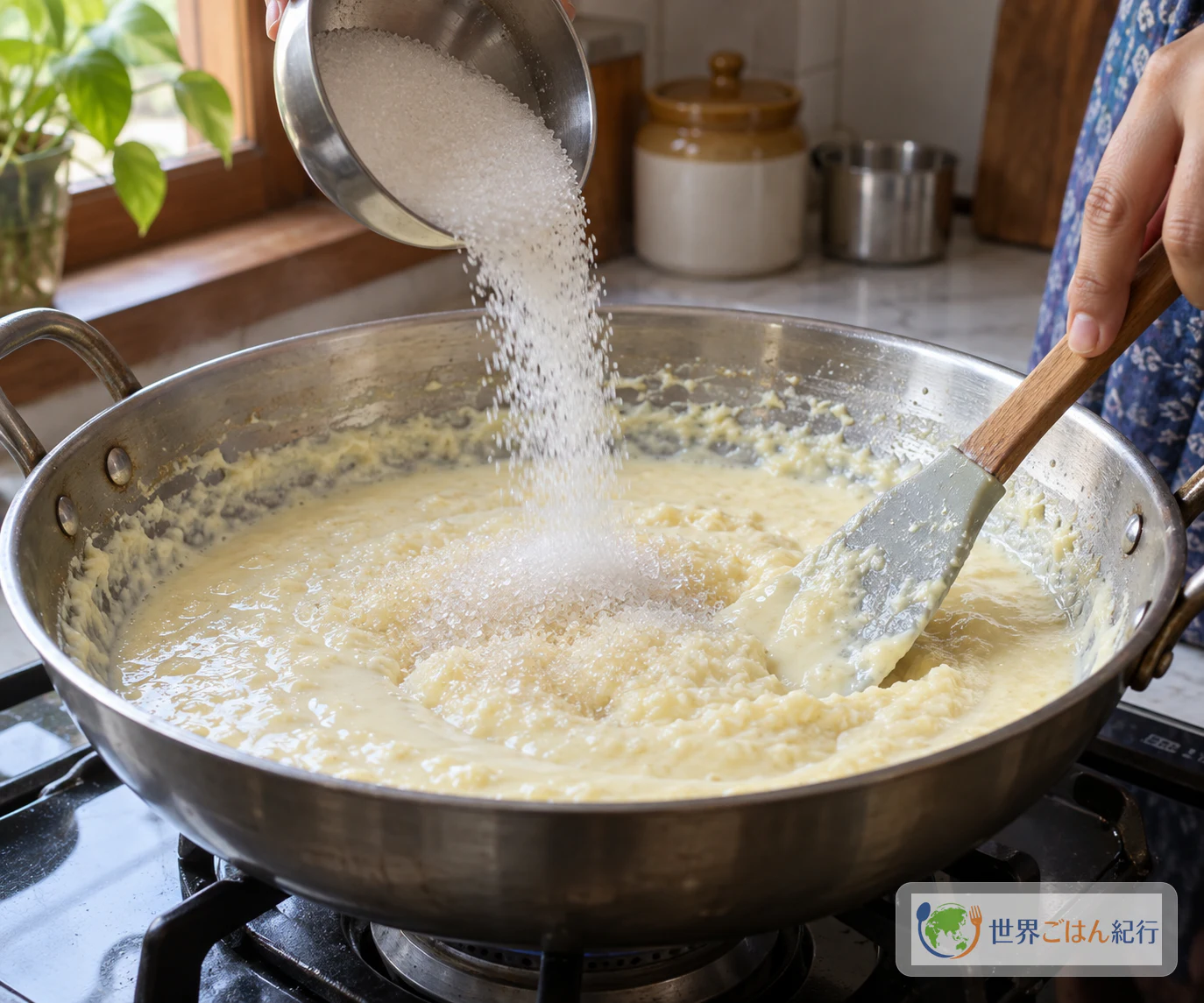
Boil, lower the heat, scrape and fold the skin back in, reduce to about half, and only then add sugar. Saffron, cardamom and nutmeg go in last, just before the heat goes off.
The long reduction is the work of this dish. Allow 45–55 minutes of reducing, then 8 minutes after the sugar goes in, but pan width and stove strength change how fast milk evaporates. Stay near the stove and judge by what you see in the pan.
Keeping It from Scorching, and Knowing When to Stop
These points follow from how milk behaves in the pan. They are general guidance, not quotations from the sources.
| What you see | Likely reason | What to do |
|---|---|---|
| Brown or burnt specks, a scorched smell | Milk solids settled and caught on the base | Lower the heat and scrape the base more often. Don't scrape stuck, darkened bits up into the milk. Next time, use a wider, heavier pan |
| Smooth texture with few flecks | The milk was whisked smooth instead of the skin being folded in | Push the edge skin back into the milk with the spatula instead of whisking hard |
| Darkening after sugar | Sugar added too early, so it caught | Add sugar only once the milk has reduced to about half, as in step 5 |
| Too thick once cold | Reduced too far before chilling | Remember it thickens as it cools; stop at about half volume and spoon-coating |
| Still thin at 55 minutes | Narrow pot or very low heat, so slow evaporation | Keep simmering gently and go by volume and coating, not the clock |
Variations: Other Published Versions, Kept Separate
Basundi is made in more than one way. The versions below are separate recipes with their own amounts and order. Don't combine them with the recipe above; for a first try, follow the Gujarati version as written.
| Version | Milk | Sugar | Nuts and spices | Notable differences |
|---|---|---|---|---|
| Gujarati Basundi (this recipe) | 1.5 L | 100 g | Saffron, ground cardamom, optional nutmeg; almonds and pistachios as optional garnish | Reduced to about half; sugar near the end; nuts only at serving |
| A university regional-cuisine textbook, Maharashtra section | 2 L | 1/2 cup | Cashews, almonds, pistachios, saffron, cardamom | A different reduction amount and a different nut timing; served cold or warm |
| A household recipe site | 1 L | 3 tbsp | 2 cardamom, saffron, several kinds of nuts | Nuts go in during the simmer; reduced to about half; served warm or cold, also with puri |
The textbook's sugar is given in cups, and its weight isn't defined, so it isn't converted here. These versions show that sweetness, nut use and the order of steps differ between published recipes. They don't prove that each one stands for all Gujarati or all Maharashtrian kitchens.
Within the recipe above, the meaningful choices are these:
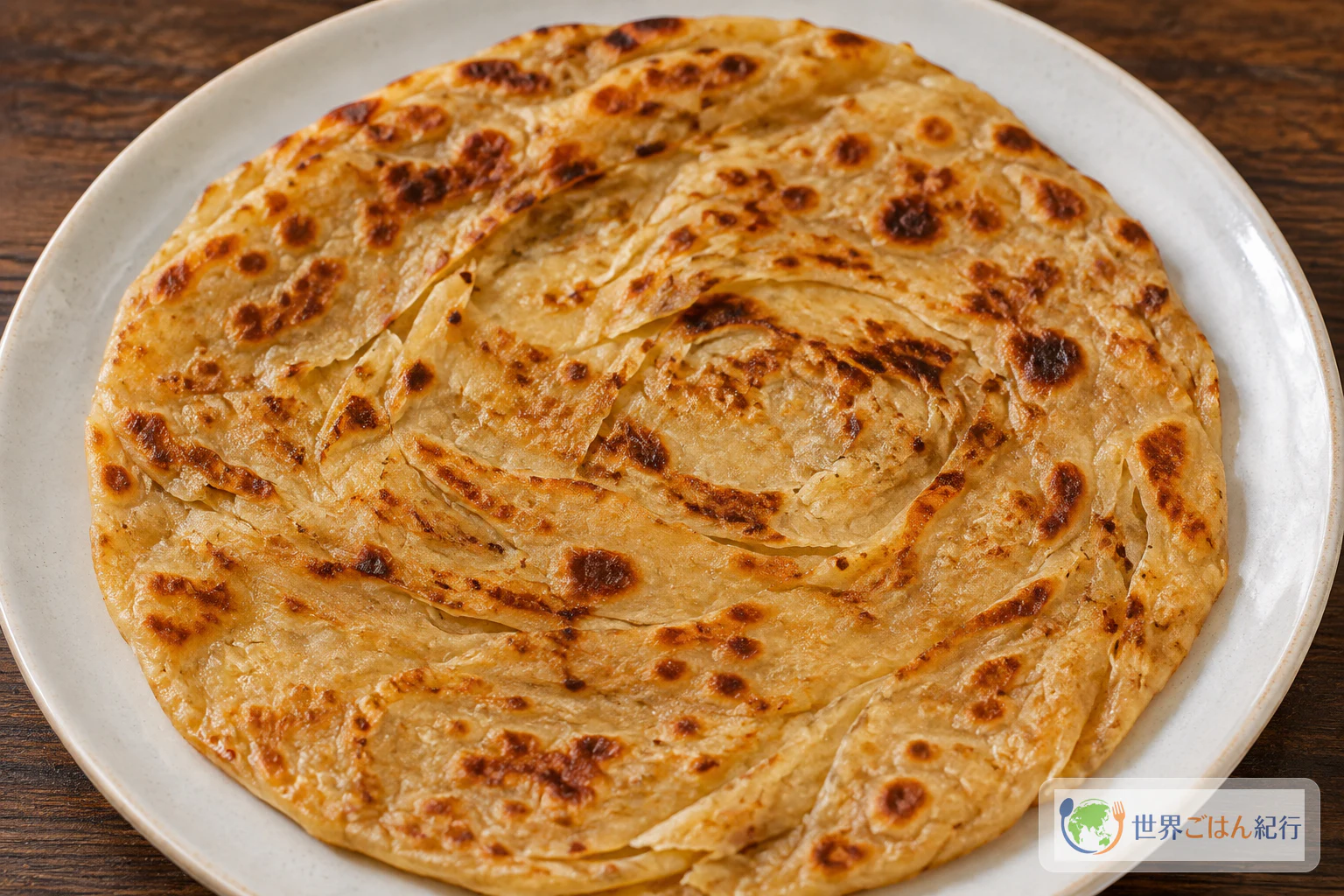
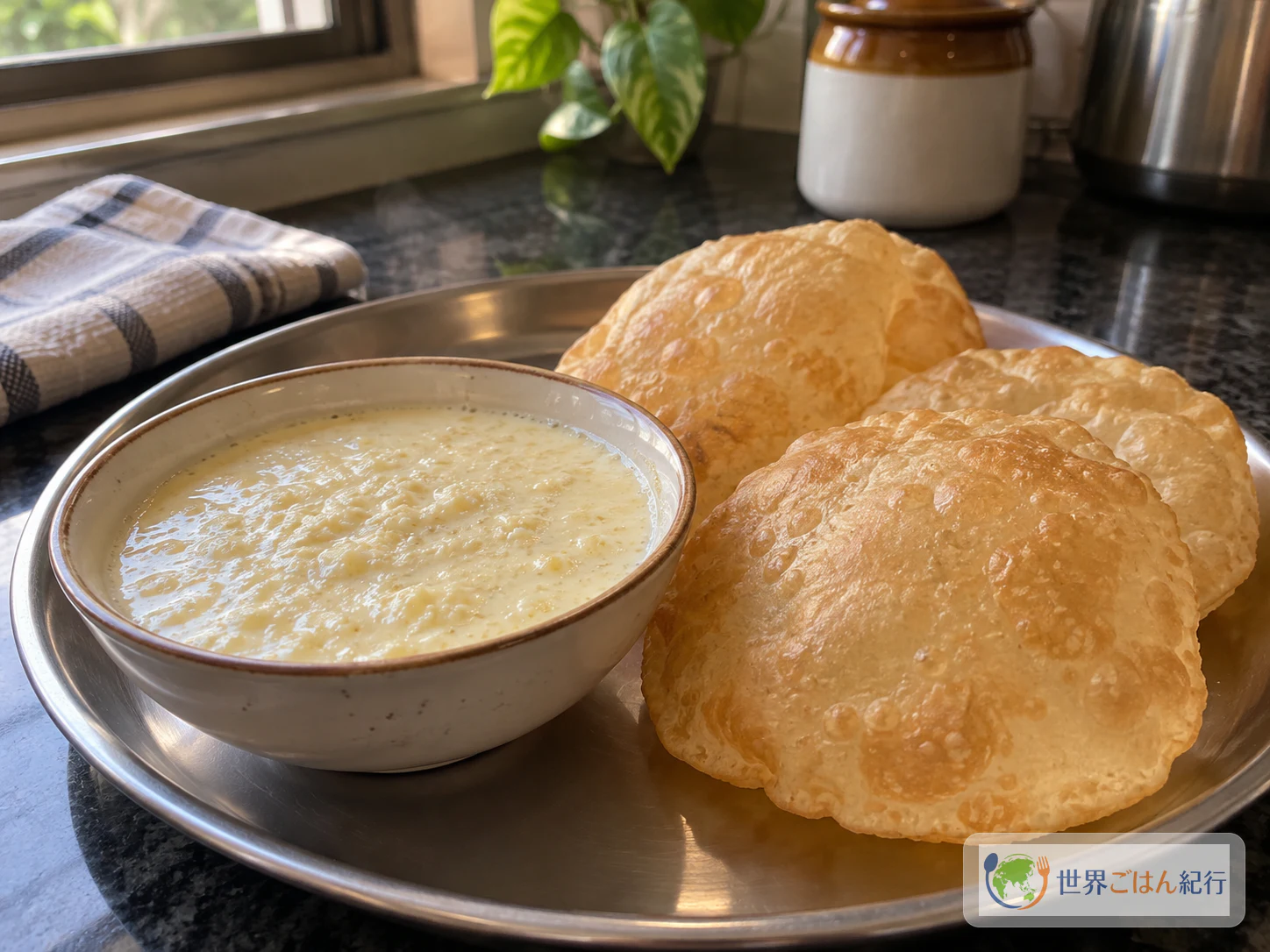
- Cold or warm. The source gives both. Cold, it is thick and spoonable. Warm, it is looser and suits a meal with puri.
- With or without nuts. The almonds and pistachios are optional. Without them, the dish has no added almonds or pistachios; for someone avoiding tree nuts, also check ingredient labels and prevent cross-contact, as noted above.
Basundi at the Western Indian Table
The 2014 dairy-science paper on basundi describes it as common in western India, especially Maharashtra and Gujarat, and notes that in Maharashtra it is often served at ceremonial feasts and festivals. The same paper describes basundi as partially dehydrated milk, from buffalo or cow, with sugar added, heated over direct fire in a karahi, with soft flakes dispersed through the finished sweet. This is how that paper characterizes it, not a full account of how every home makes it today.
What ties these descriptions together is the long reduction. Basundi is not a dish to rush or leave alone. It suits a day when you can stay near the stove and scrape the pan every few minutes. No source here establishes where the dish began or where its name comes from, so this article doesn't guess at either.
Frequently Asked Questions
Is basundi the same as doodhpak?
No. Doodhpak, another Gujarati milk sweet, includes rice. This basundi recipe uses no rice at all; its body comes only from reducing the milk. The same distinction applies to phirni, an Indian rice pudding.
Is basundi the same as rabri (rabdi)?
They are both sweets made by reducing milk, but the sources here don't support calling them identical. Recipes, textures and naming vary, so this article treats basundi as its own dish.
What if I don't have saffron?
You can still make the reduction. The saffron is a small aroma and color accent, so without it the basundi is plainer and paler. No other spice tastes the same.
Can it be eaten warm or cold?
Both. The source recipe serves it chilled in small bowls, or warm alongside puris.
How long does it keep in the refrigerator?
No fixed number of days is given here. Divide it into clean, shallow containers so it cools quickly, cover and refrigerate promptly, don't leave it at room temperature for long, and eat it soon. If serving it warm, reheat only the portion you will eat, heating it through thoroughly.
Sources
- Khaana, "Gujarati Basundi recipe." The adopted recipe: ingredients and amounts, serving count, wide heavy pan, heat sequence, reduction to about half, folding in the milk skin, sugar timing, saffron bloom, chilling, and serving cold or warm with puris. https://khaana.com/recipes/basundi.html
- Chougule, Pawar and Choudhari, "Sensory quality of Basundi prepared by using cardamom and saffron," Research Journal of Animal Husbandry and Dairy Science, 2014. Basundi as a reduced-milk sweet popular in western India, especially Maharashtra and Gujarat; its use at feasts and festivals in Maharashtra; heating in a karahi; and the soft-flake texture. https://researchjournal.co.in/upload/assignments/5_14-16_3333.pdf
- Uttarakhand Open University, "Regional Cuisines of India-I, BHM-502AT." A separate basundi recipe in its Maharashtra section, with different amounts and order. https://uou.ac.in/sites/default/files/slm/BHM-502AT.pdf
- Swayampaaka, "Basundi Recipe | How to make basundi | Milk sweet recipe." A separate household recipe, warm and cold serving, and pairing with puri. https://swayampaaka.com/recipes/desserts/basundi-recipe/
- Ministry of Health, Labour and Welfare, Japan, "家庭での食中毒予防" (Preventing food poisoning at home). Refrigerating chilled foods promptly, dividing leftovers into shallow containers to cool quickly, not leaving cooked food at room temperature for long, and reheating thoroughly. https://www.mhlw.go.jp/stf/seisakunitsuite/bunya/kenkou_iryou/shokuhin/syokuchu/01_00008.html