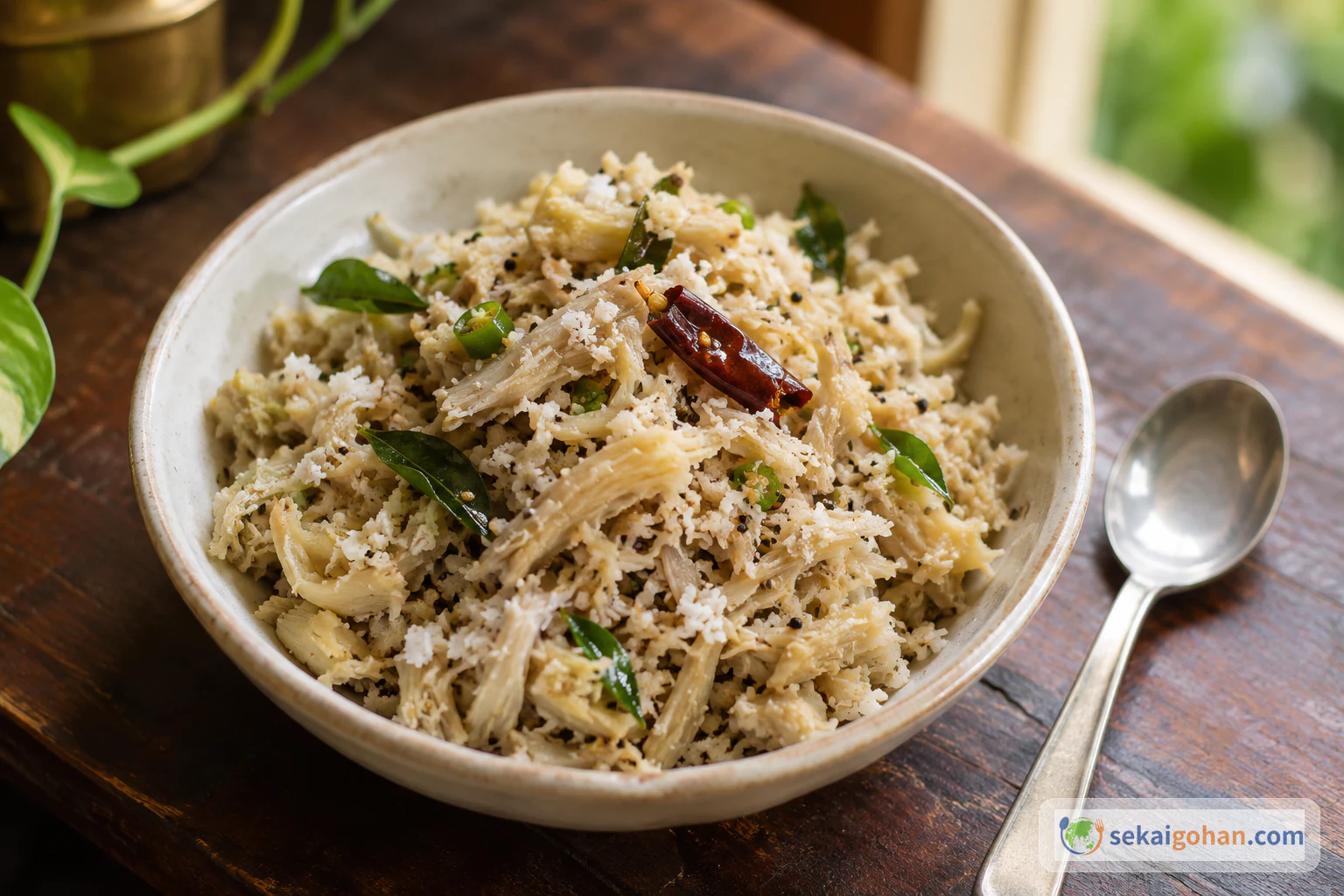
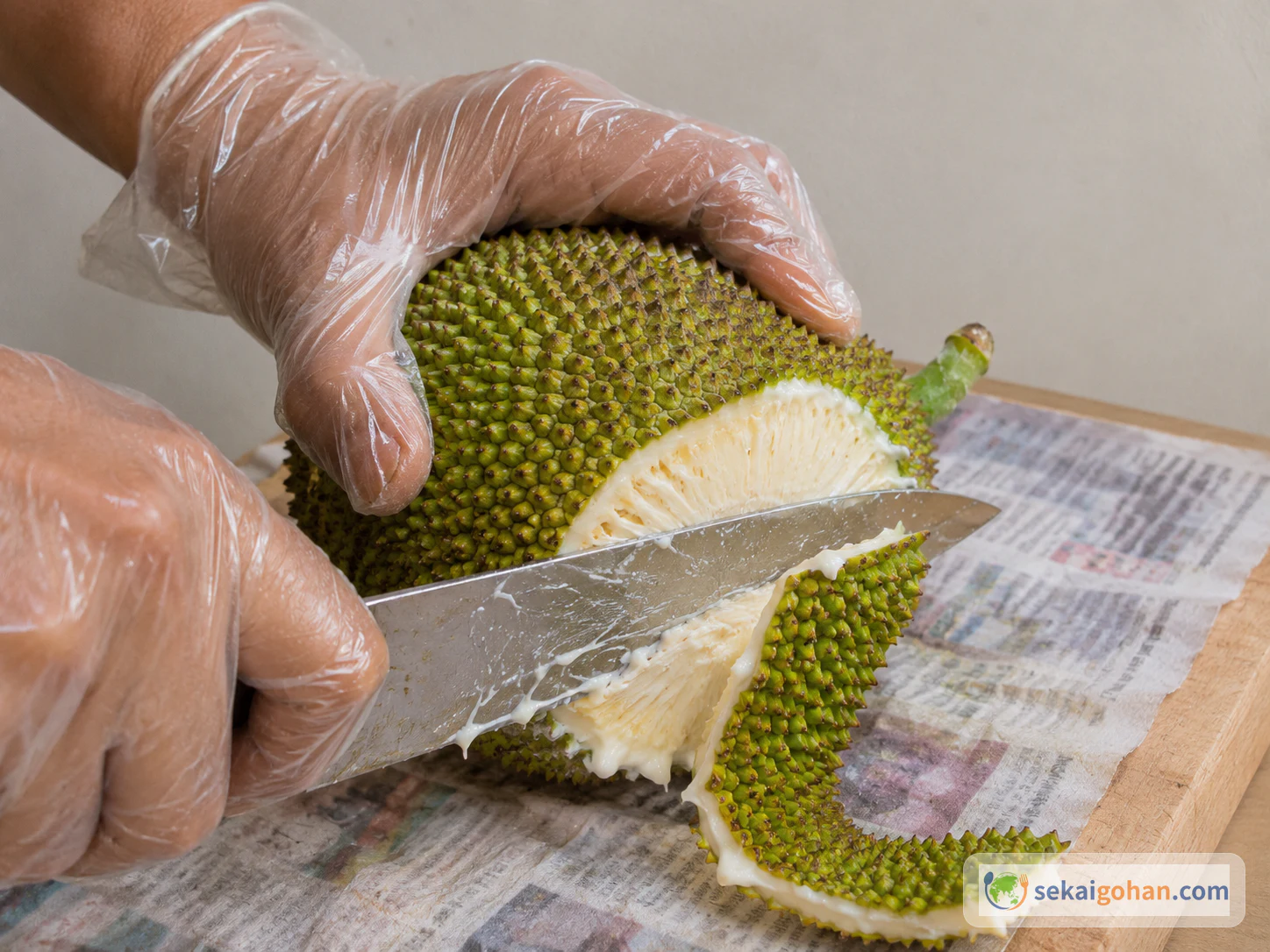
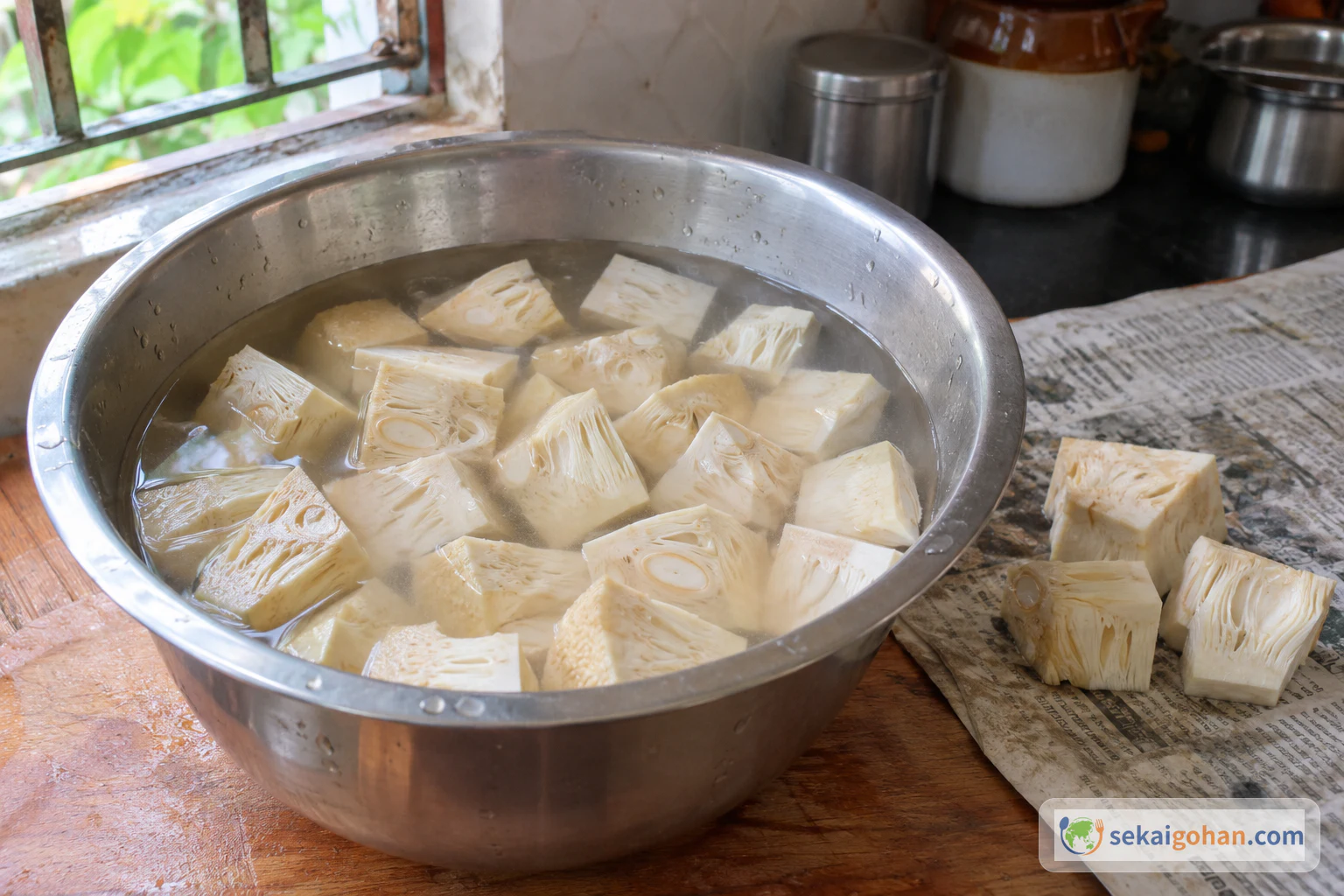
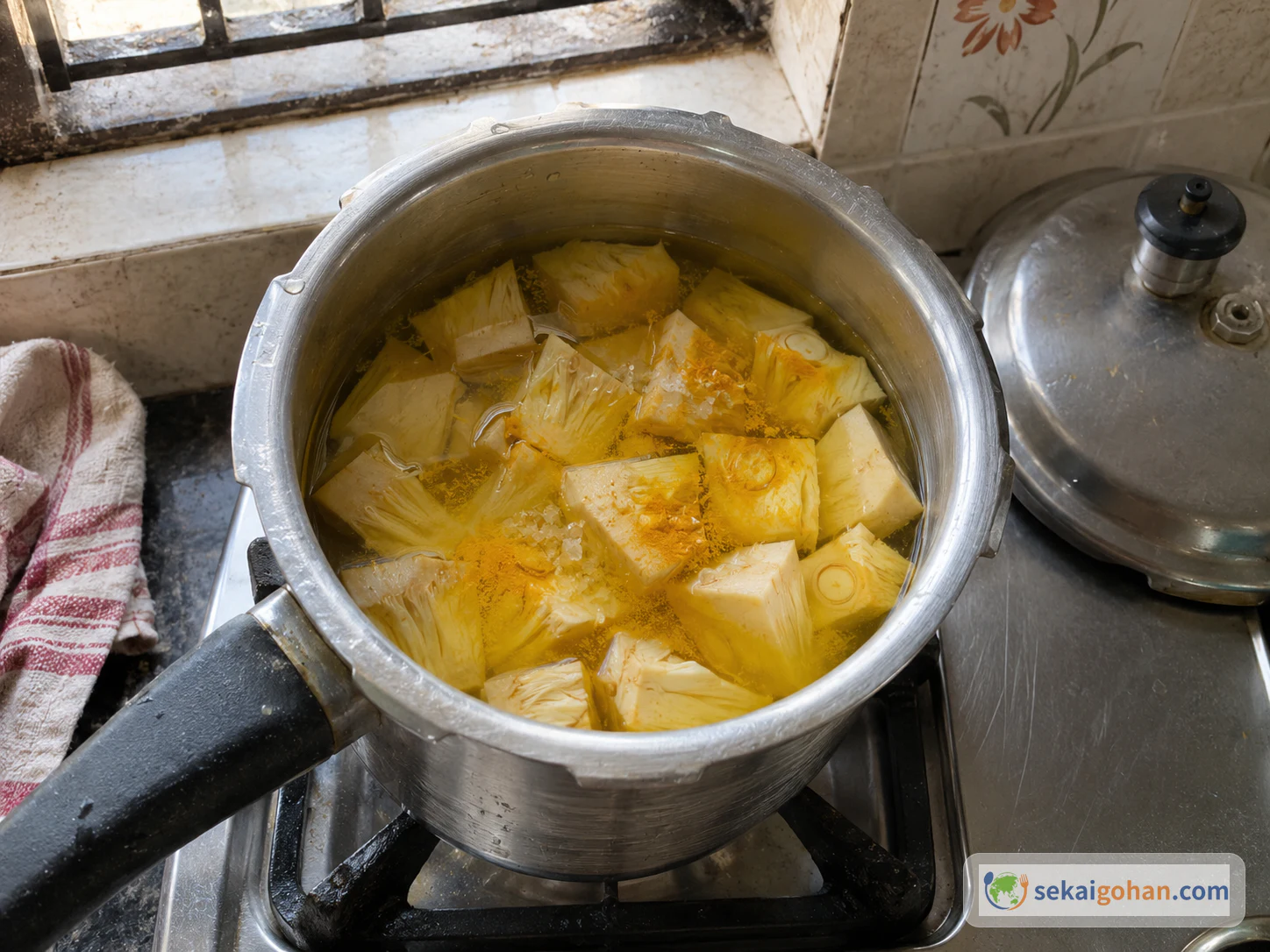
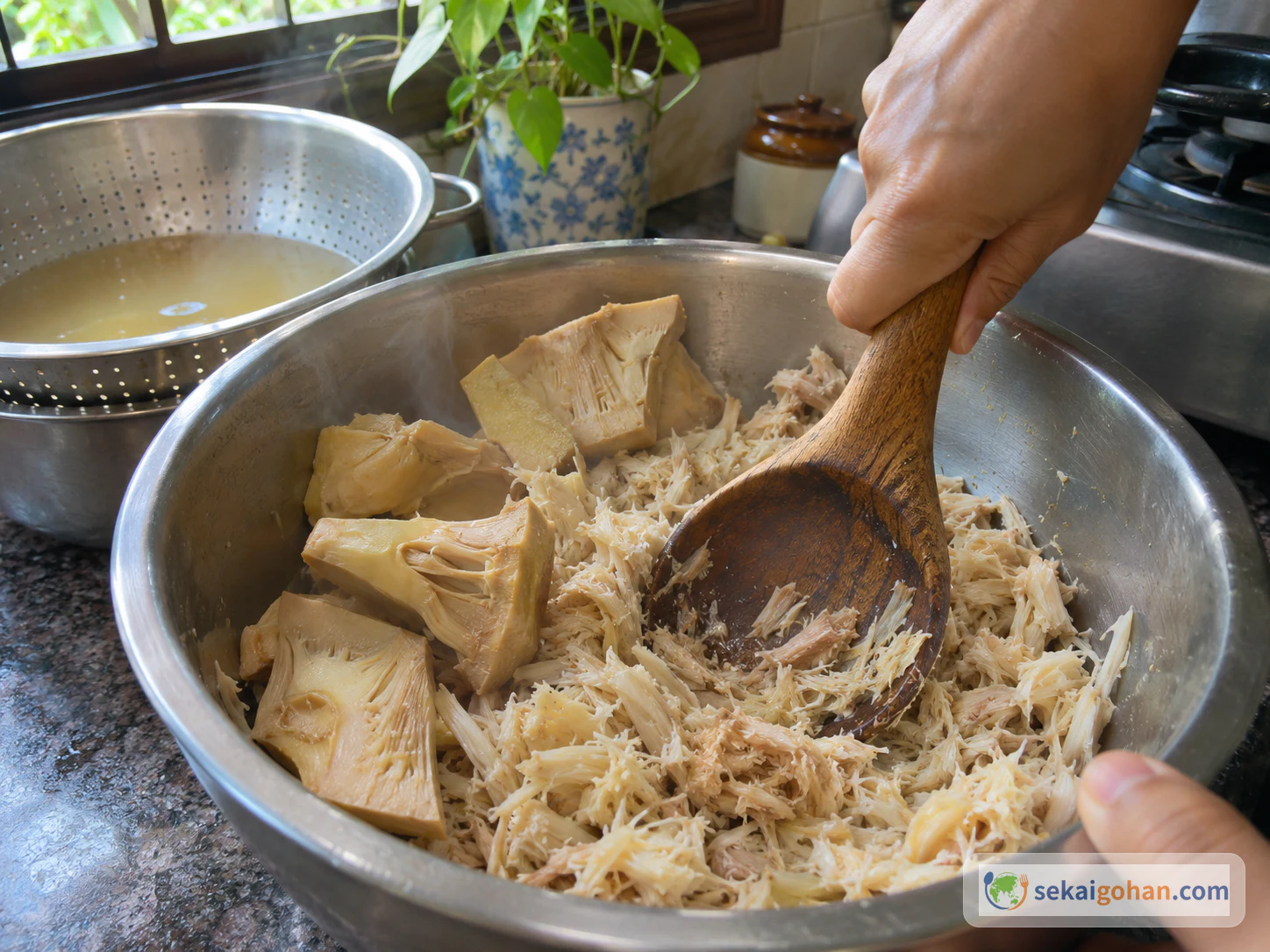
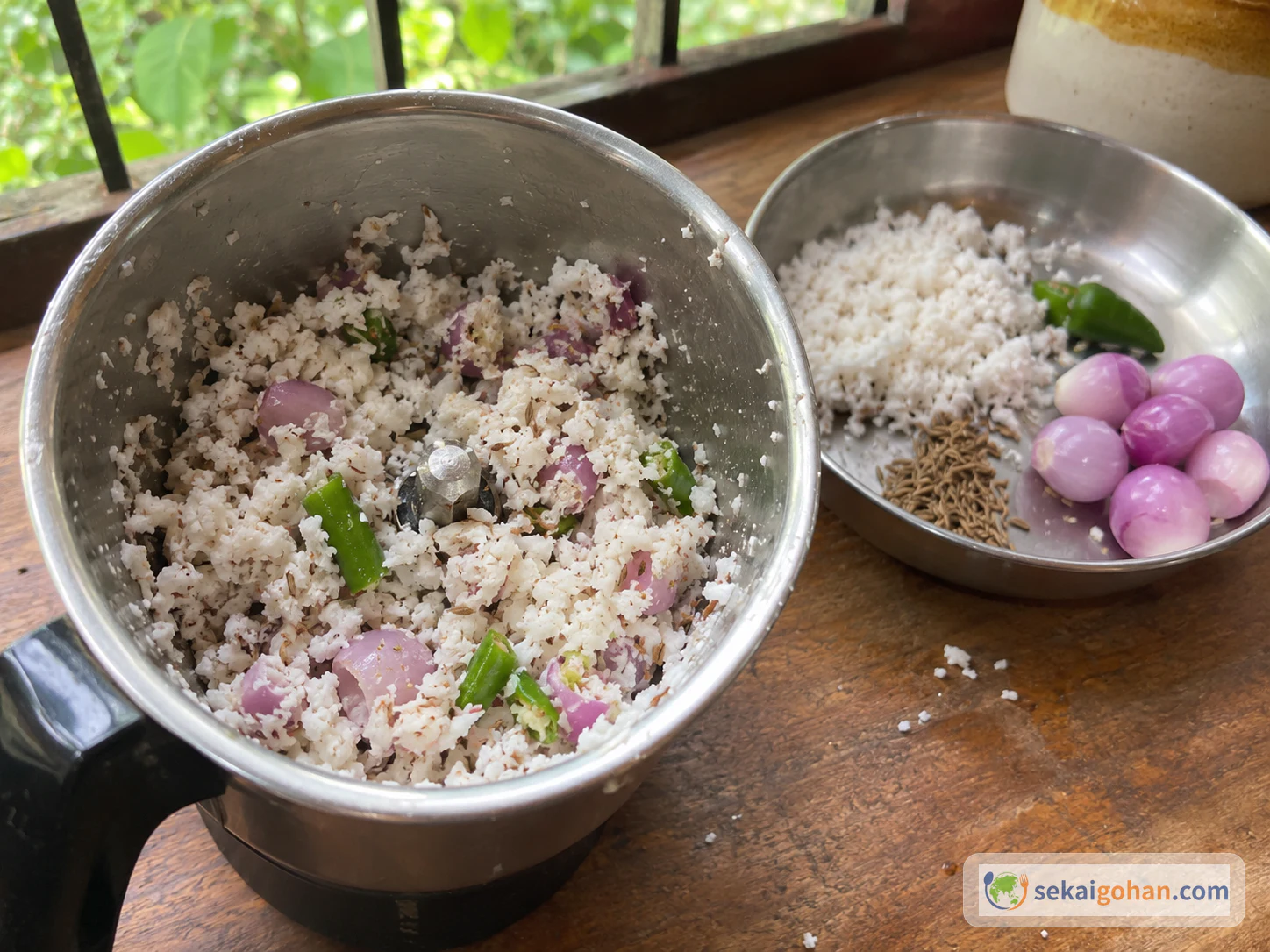
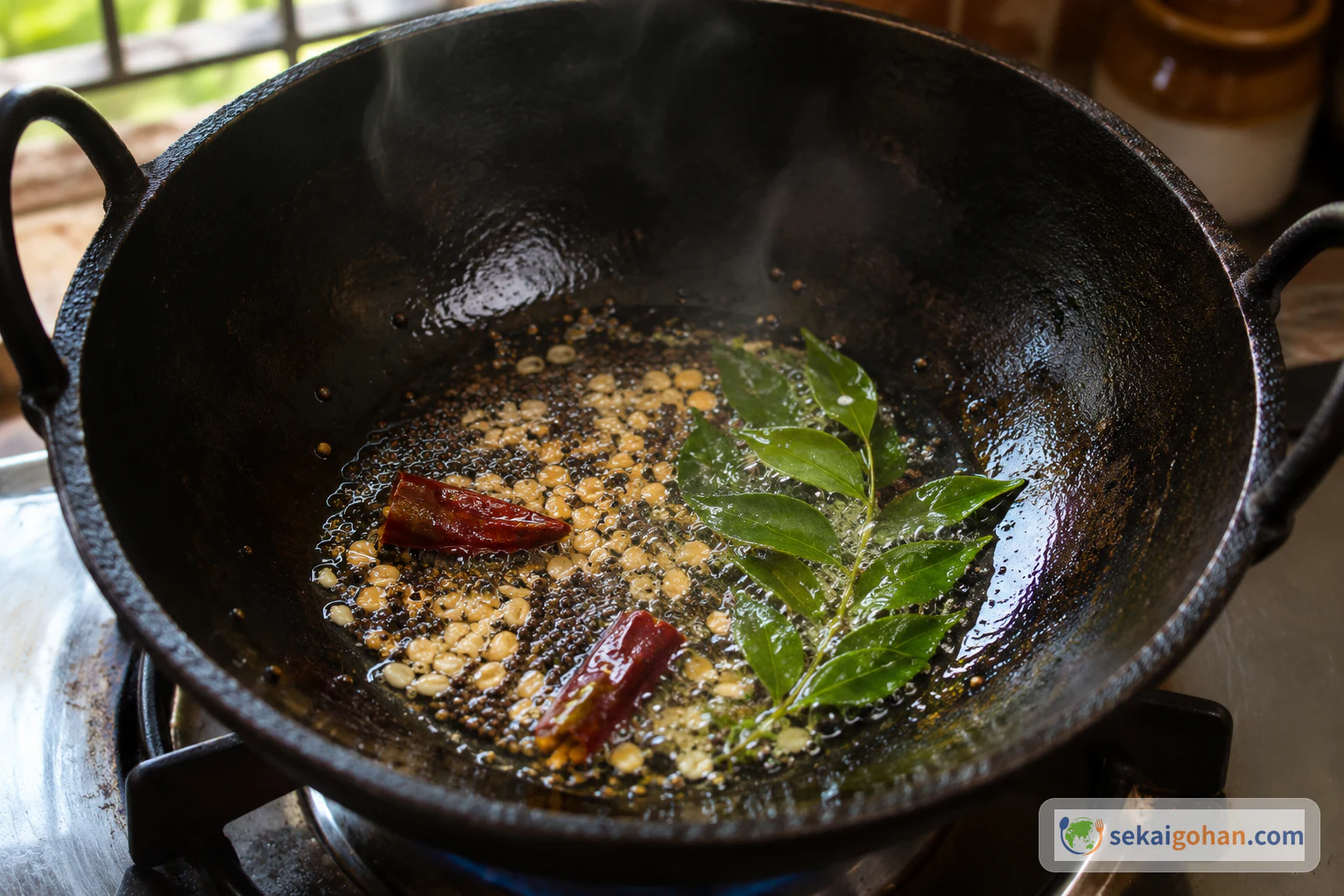
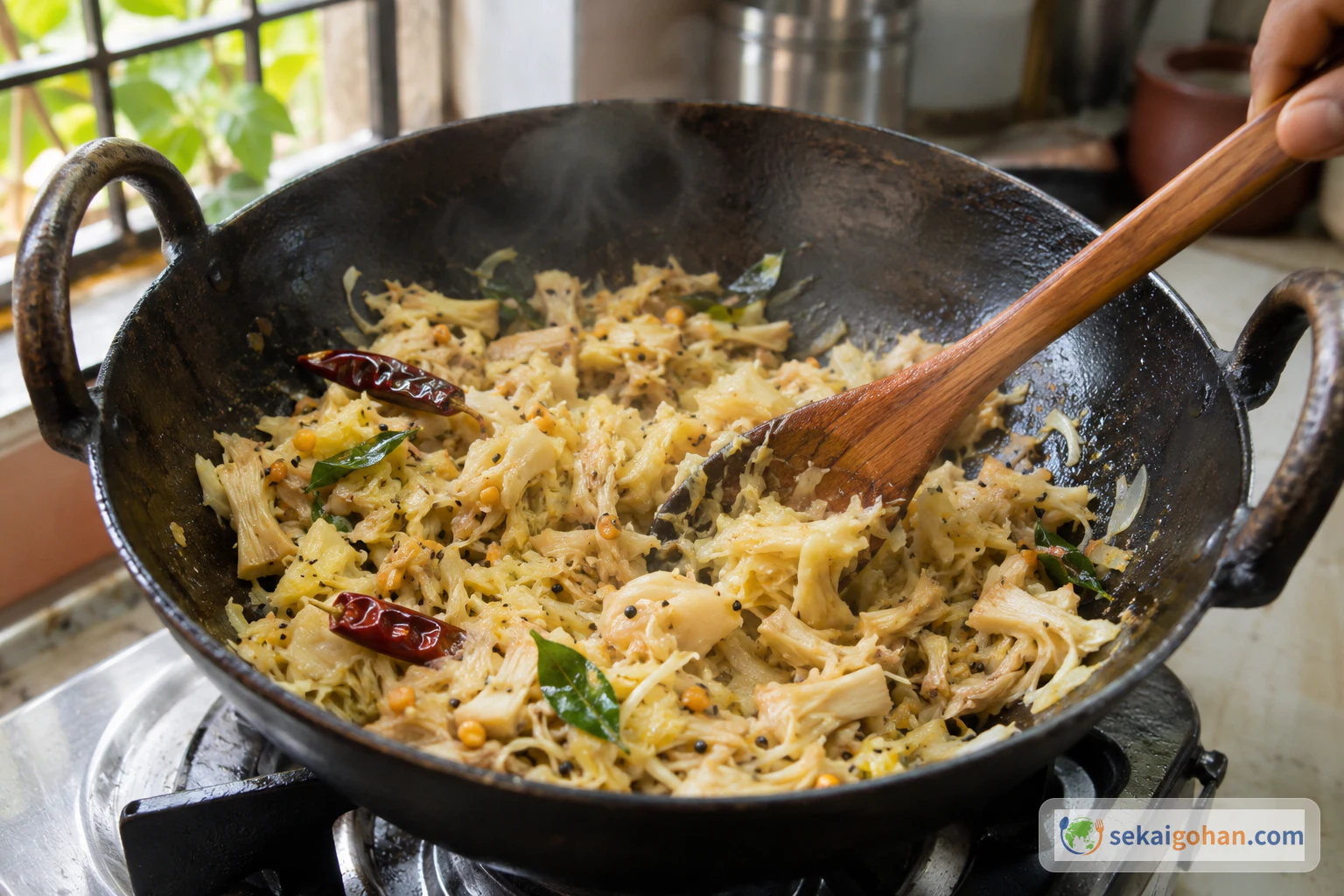
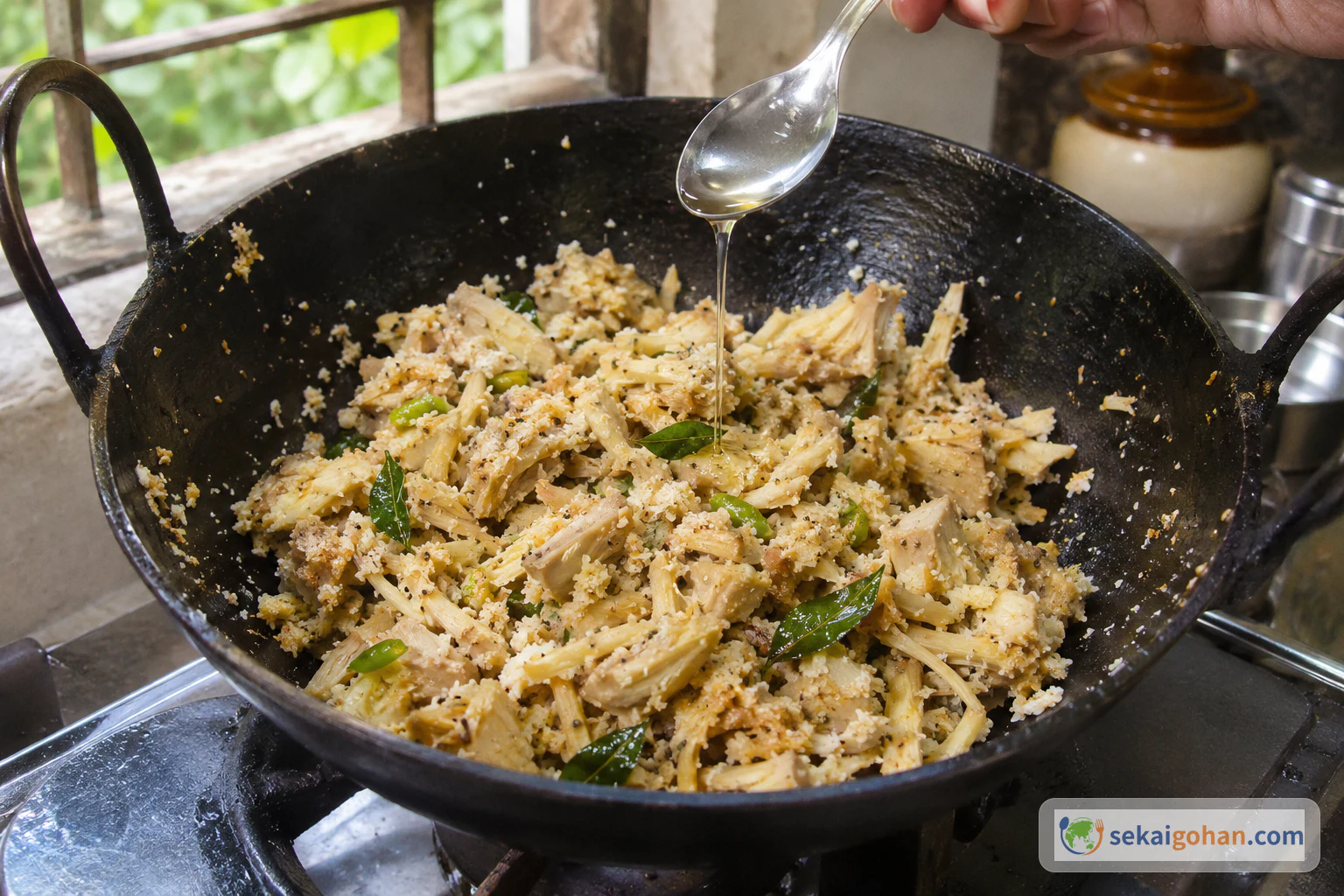
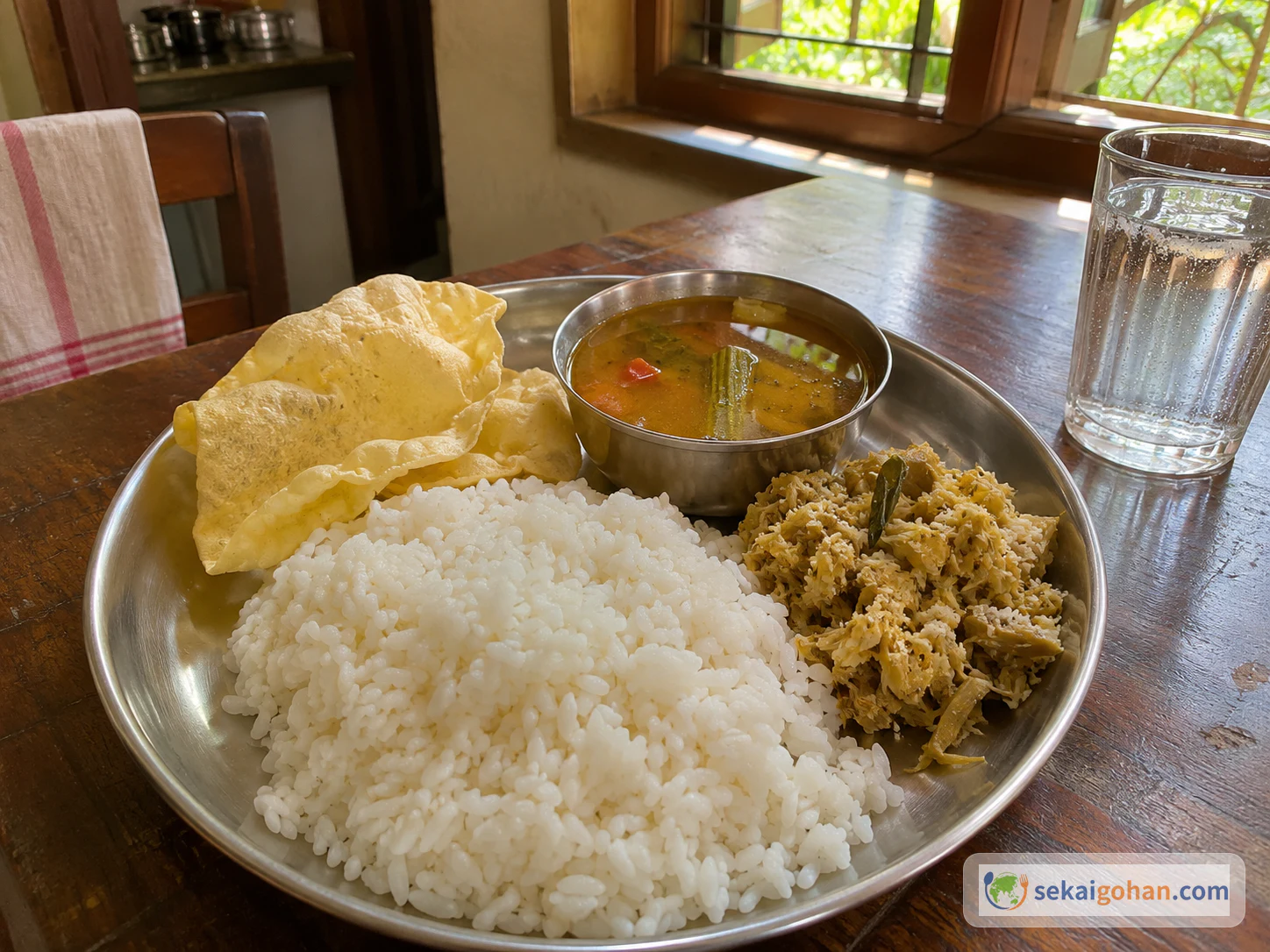
The knife goes through the green, spiny rind and the cut edge beads with white latex that sticks to everything it touches. Under the rind the flesh is pale ivory, and a little later it falls into soft, stringy shreds under a wooden spatula. In the pan, mustard seeds pop in coconut oil, curry leaves crackle, and a coarse mix of coconut, small onion, green chilli and cumin goes in last. Idichakka thoran (ഇടിച്ചക്ക തോരൻ) is what comes out: a loose, dry stir-fry from Kerala, eaten as a side next to steamed rice. The jackfruit itself tastes mild, so the coconut sweetness, the green chilli and the toasted dal around it carry the flavor, and you can still see the fibers of the fruit in every spoonful.
A Fruit Picked Before It Grows Up
In Kerala it is common to have a jackfruit tree in the backyard. The season runs from mid-March to May, and the first fruits of the season are small and young. Those early fruits are the idichakka. They get picked long before they could ripen into the sweet, fragrant yellow pods most people outside the region think of as jackfruit. Jackfruit is Kerala's state fruit. In Wayanad it grows all over household land, and people eat it ripe and also cook it raw in everyday home dishes. The processing units there start work each year when the harvest begins in March.
What matters is how young the fruit is. Idichakka is so young that the seeds inside are still soft, which is why the whole cut piece cooks down to tender shreds. The packaged "unripe jackfruit" sold in many Indian groceries, called kachcha kathal, is further along. It is still green, but its fibers are firmer and it takes longer to cook. Both work for this dish, but they cook differently, and the choosing section below covers that.
In Malayalam, chakka is jackfruit and idichakka is the very young fruit. The name is usually explained by the old way of making the dish: the boiled fruit was pounded in a stone mortar (chakkaya idikaradhu). Kadachakka sounds close but means breadfruit, a different tree, and kadachakka thoran is a different dish.
Where thoran sits on the plate
A thoran is a dry vegetable dish. The word covers all kinds of dry vegetable preparations. The usual pattern is chopped vegetables such as beans, cabbage or radish, cooked with grated coconut, red chilli and turmeric. Thoran is one of the important side dishes in a sadya, Kerala's traditional vegetarian feast. A sadya is served on a banana leaf, with the dishes brought out in turn. Idichakka thoran follows the same pattern, with the young jackfruit as the vegetable. On an ordinary day it sits beside a mound of steamed rice and a ladle of South Indian gravy, with others like it, and you mix it into the rice with your fingers. Every household grinds its coconut mix a little differently, and that is where the dish changes from one kitchen to the next. You will find more of the country's cooking under India.
Ingredients (serves 4)
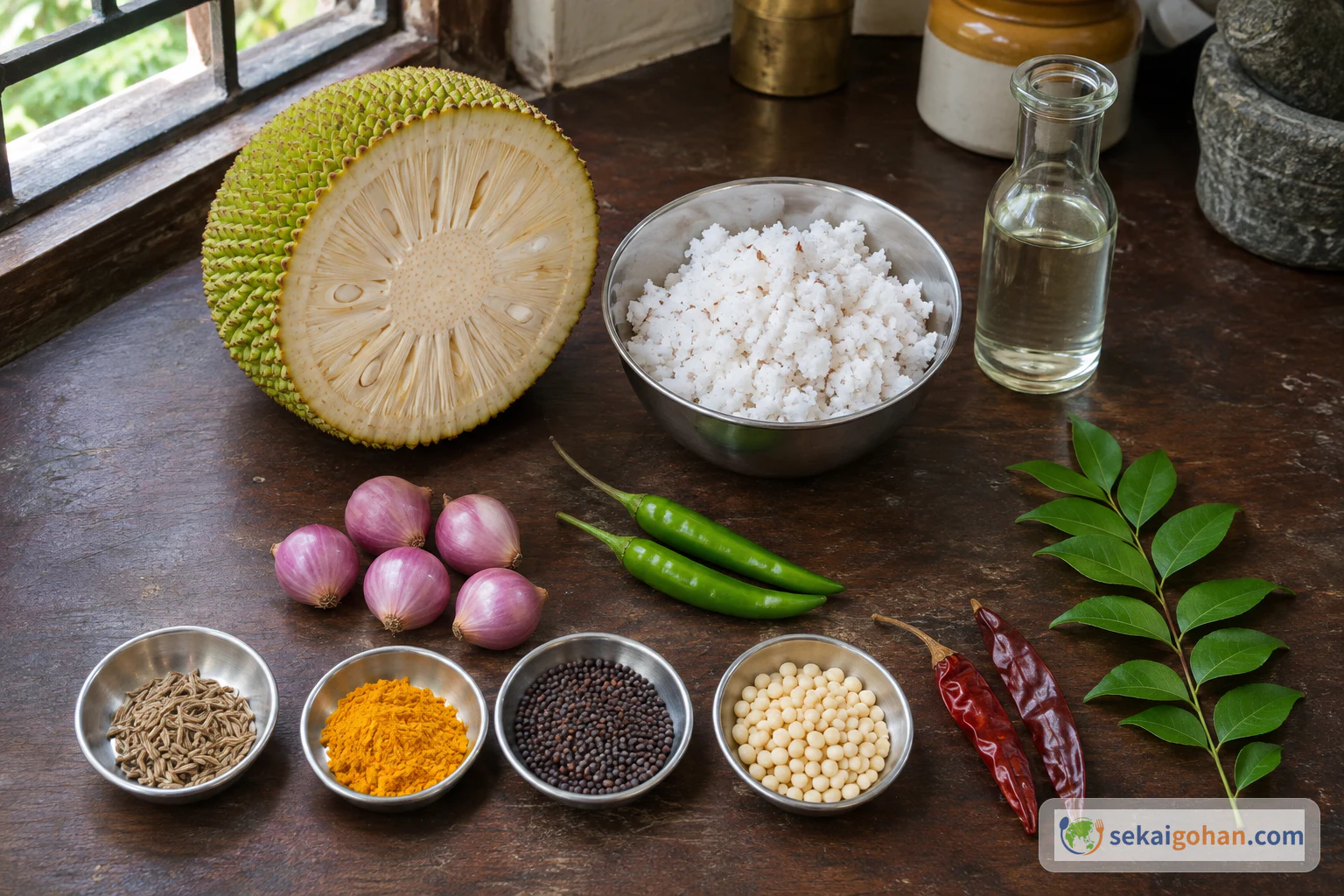
Half a young jackfruit makes a side dish for four. The coconut mix and the tempering are both small amounts, so measure them out before you start cooking. Once the oil is hot, things move fast.
When you cut young jackfruit it gives off a sticky white latex that is hard to get off bare hands, knives and boards. Cover the counter with newspaper, and wear gloves or rub oil over your hands and the knife blade before cutting. Oiled hands and blades slip. Keep the fruit on the board, keep your fingers tucked behind the blade, and cut slowly.
Equipment
- Large knife and a cutting board
- Newspaper to cover the work surface
- Kitchen gloves, or a little oil for your hands and the blade
- A bowl of cold water for the cut pieces
- Small pressure cooker, about 1¼ quarts (1.2 L), or a saucepan
- Colander
- Wide wooden spatula or ladle
- Mixer grinder or small blender
- Heavy-bottomed pan or kadai
Choosing the Fruit and Making Swaps
Get the fruit right first. A small, green fruit with soft seeds inside is the ideal. If you see one at an Indian or Asian grocer during the season, buy it. Away from Kerala, you can use one of three easier options. Each changes the prep a little.
| What you buy | What changes |
|---|---|
| Frozen young jackfruit | The pack is already partly cooked. Instead of pressure-cooking, boil one pack in water to cover with a little salt and turmeric for 10–15 minutes, drain, and pick up at step 4. You skip the peeling and the latex. |
| Canned young green jackfruit | It is packed in brine, and the salt level varies by brand. Drain it, read the label, and taste before adding any salt. |
| Packaged mature unripe jackfruit (kachcha kathal) | The fibers are firmer than idichakka and take longer to soften. Cook it longer, and press-test pieces until they crush easily. |
The rest of the shopping is quick. Fresh grated coconut gives the sweetest, moistest mix. Frozen unsweetened grated coconut comes closest after that. Whole cumin seeds keep more aroma in the grind than ground cumin. If you can't find pearl onions, a small amount of ordinary onion, roughly chopped, takes their place. Thai-type green chillies give the right heat. Brown or black mustard seeds smell closer to the real thing than yellow, though yellow will do. Buy urad dal labeled split and skinned (white), and don't substitute another bean. Ordinary dried red chillies are fine. Fresh curry leaves are worth tracking down, because frozen or dried ones taste much weaker. Neutral oil works for frying, but you lose the coconut-oil aroma the dish is built on.
Method
All the hands-on work comes first. Peel and cube the fruit, keep it in water, and get it into the pressure cooker. While the cooker hisses and the pressure drops on its own, grind the coconut mix and measure out the tempering. From the moment the oil goes into the pan, the whole stir-fry takes only a few minutes, so have everything within reach.
When It Goes Wrong
| What you see | Why | What to do |
|---|---|---|
| The thoran is wet and heavy | The fruit wasn't drained and dried, or the coconut was ground with water | Keep stir-frying in step 7 until no water pools before adding coconut; grind the mix dry |
| It has turned into a paste | The fruit was crushed too hard, or the coconut mix was ground too long | Press the fruit only into shreds; pulse the grinder briefly and stop |
| Bitter, burnt smell | The curry leaves or dal hit oil that was too hot | Let the dal turn golden, then lower the heat to low before adding the curry leaves |
| Firm, chewy lumps of fruit | The fruit was undercooked | Press-test after the pressure drops and cook further until a piece crushes easily |
| Too hot | Too many chillies, or a very hot variety | Seed the green chillies or use fewer next time |
| Cut pieces turned brown | The cubes sat in the air after cutting | Drop each piece into water as soon as it is cut |
Serving, Variations and Storage
At the table
Idichakka thoran is a side dish. It goes on the plate next to steamed rice with a South Indian gravy poured over the rice. Some families serve it with sambar or mor kootan. A spoonful of thoran gets mixed into each mouthful of rice and gravy. Its dry, fluffy texture balances the wet curries, and the coconut softens their heat.
Variations
- No onion, no garlic. One Palakkad family version grinds only coconut and green chilli. The result is cleaner, and the mild jackfruit comes forward. Other families add onion and garlic.
- Garlic in the grind. Some cooks grind garlic and curry leaves into the coconut along with the cumin and chilli. The thoran gets a sharper, more savory edge.
- Boiled in an open pot. Some households prefer an open pot, because a pressure cooker can turn the fruit too soft. You control the texture by testing the pieces as they cook.
- More finishing oil. A few more teaspoons of coconut oil at the end make the coconut aroma stronger and the dish a little richer.
Storing leftovers
Cool the thoran, then store it in an airtight container in the fridge and finish it within 1–2 days. To reheat, warm it in a pan over medium heat with a little coconut oil, stirring until it is hot all the way through and loose again.
Frequently Asked Questions
Can I make it without a pressure cooker?
Yes. Boil the cubes in a saucepan with water to cover, the turmeric and the salt. Use the same press test: keep cooking until a piece crushes easily between your fingers, then drain and carry on from step 4.
How do I get the latex off my hands and knife?
Rub a little oil into the latex before washing, since it comes off more easily that way than with soap and water alone. Oiling your hands and the blade before you cut means very little sticks in the first place, and the newspaper on the counter keeps it off your work surface.
Can I prepare part of it the day before?
Yes. You can keep the cut cubes in their bowl of water in the fridge overnight, or boil the fruit a day ahead. On the day, you only need to grind the coconut, temper the spices and stir-fry.
Will desiccated coconut work?
It will make a thoran, but the dish will be drier and less fragrant than with fresh coconut. Frozen unsweetened grated coconut is the better choice when you can't get fresh. Thaw it fully and grind it dry, just like fresh.