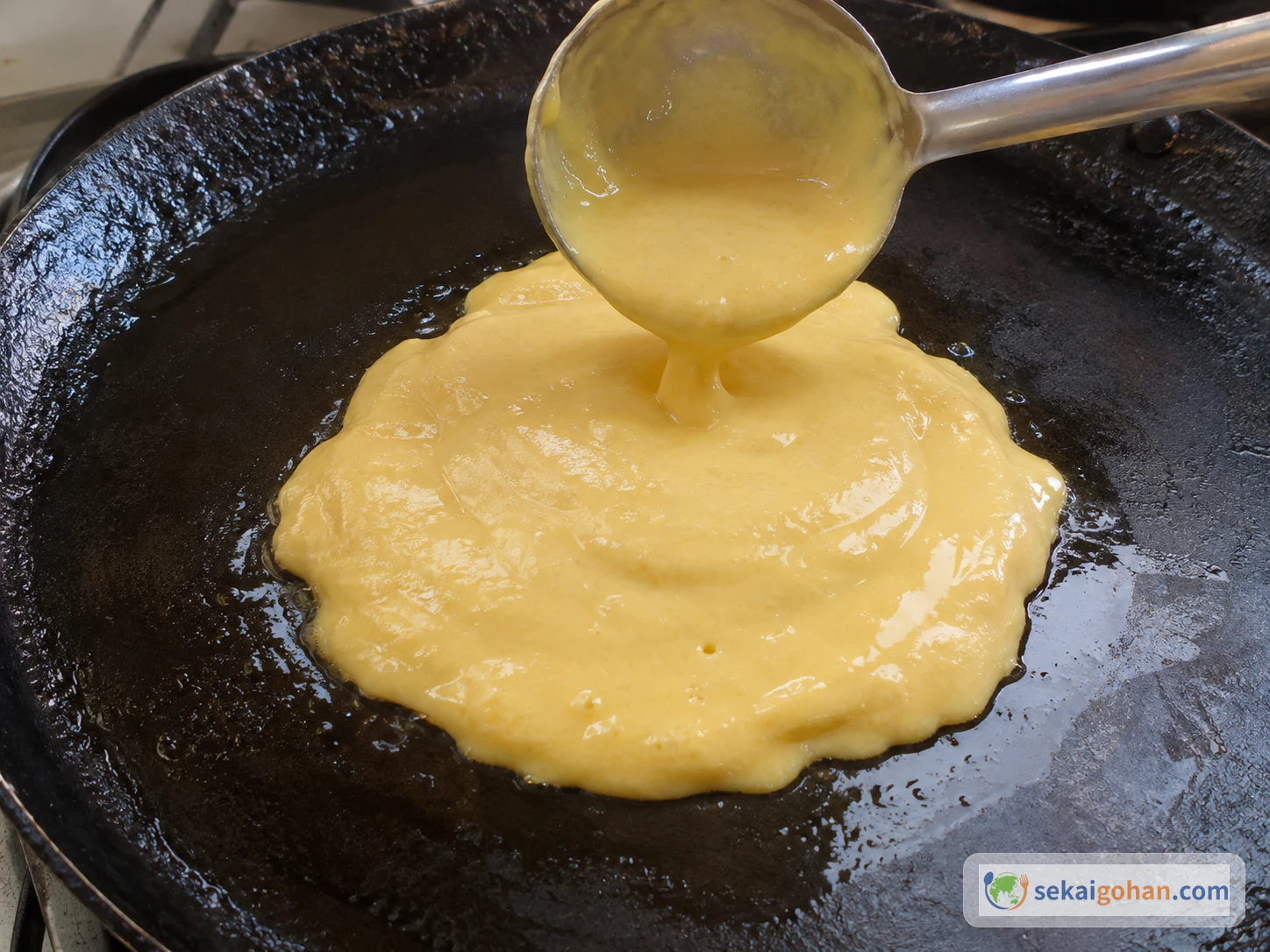
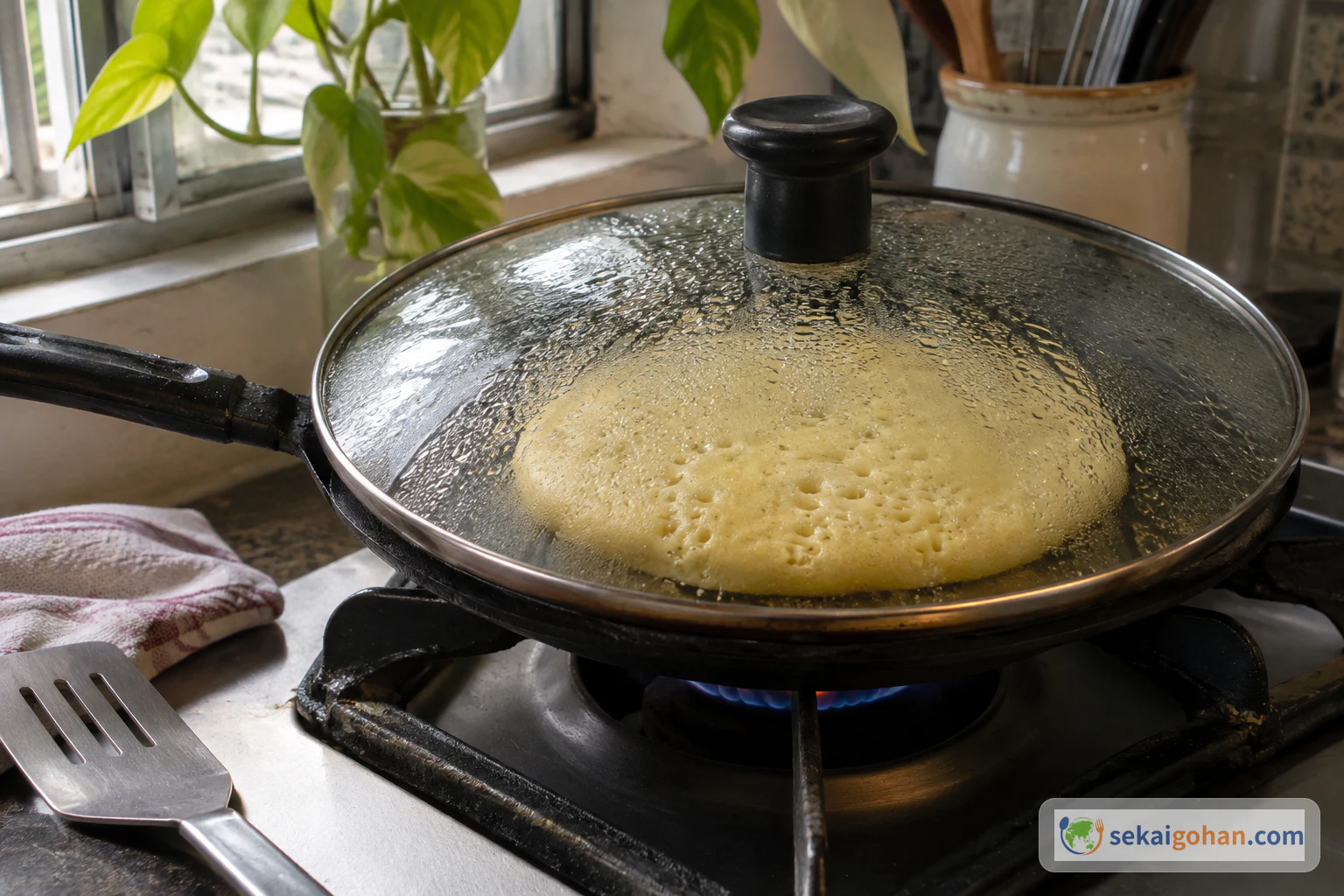
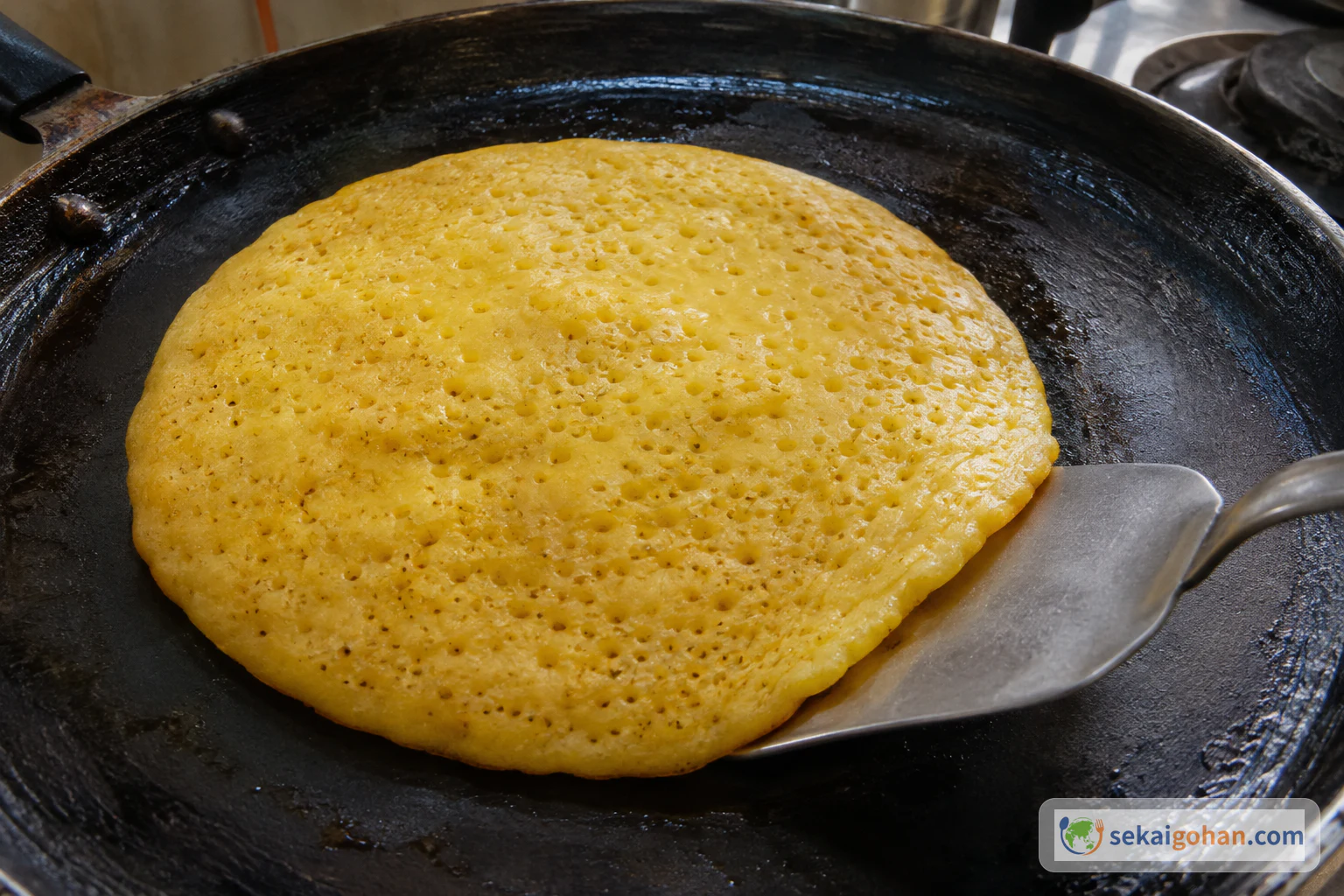
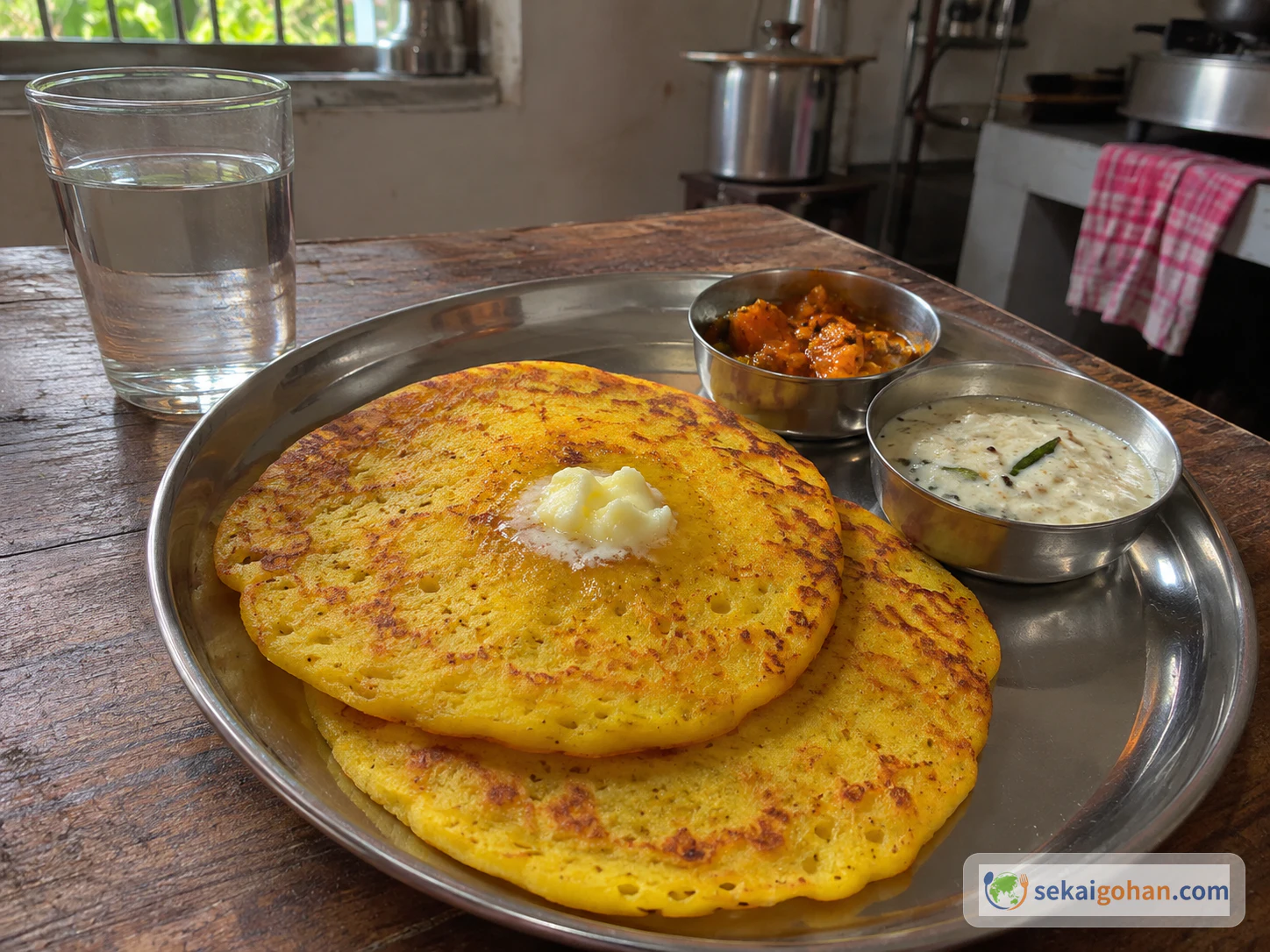
A ladle of thick yellow batter lands in the middle of a hot tawa and spreads out slowly by itself. The lid goes on, steam fogs the glass, and within a few minutes the pale top is covered in small holes. That porous yellow face is surnoli. It is a sweet pancake from Konkani homes, cooked from rice, flattened rice, coconut, jaggery and yogurt that have been ground and left to ferment overnight. It tastes of caramel-dark jaggery and coconut, with a light sour note from the ferment and a faint toasty bitterness from fenugreek. It goes to the table for breakfast or afternoon tea with a pat of homemade butter melting into the holes.
A Yellow, Holey Pancake from the Konkan Coast
Where it is eaten
Surnoli belongs to the Konkani community, and above all to Saraswat Brahmin households. In Saraswat homes in Goa and Mangalore it is a favourite breakfast, served with white butter, a hot mango pickle or lime pickle. Further north, in the Konkan region of Maharashtra, it is everyday food too, eaten as breakfast or as a meal. It belongs to a whole stretch of coastline rather than to a single state, one of the many home dishes that show how much Indian cooking changes from one coastal community to the next.
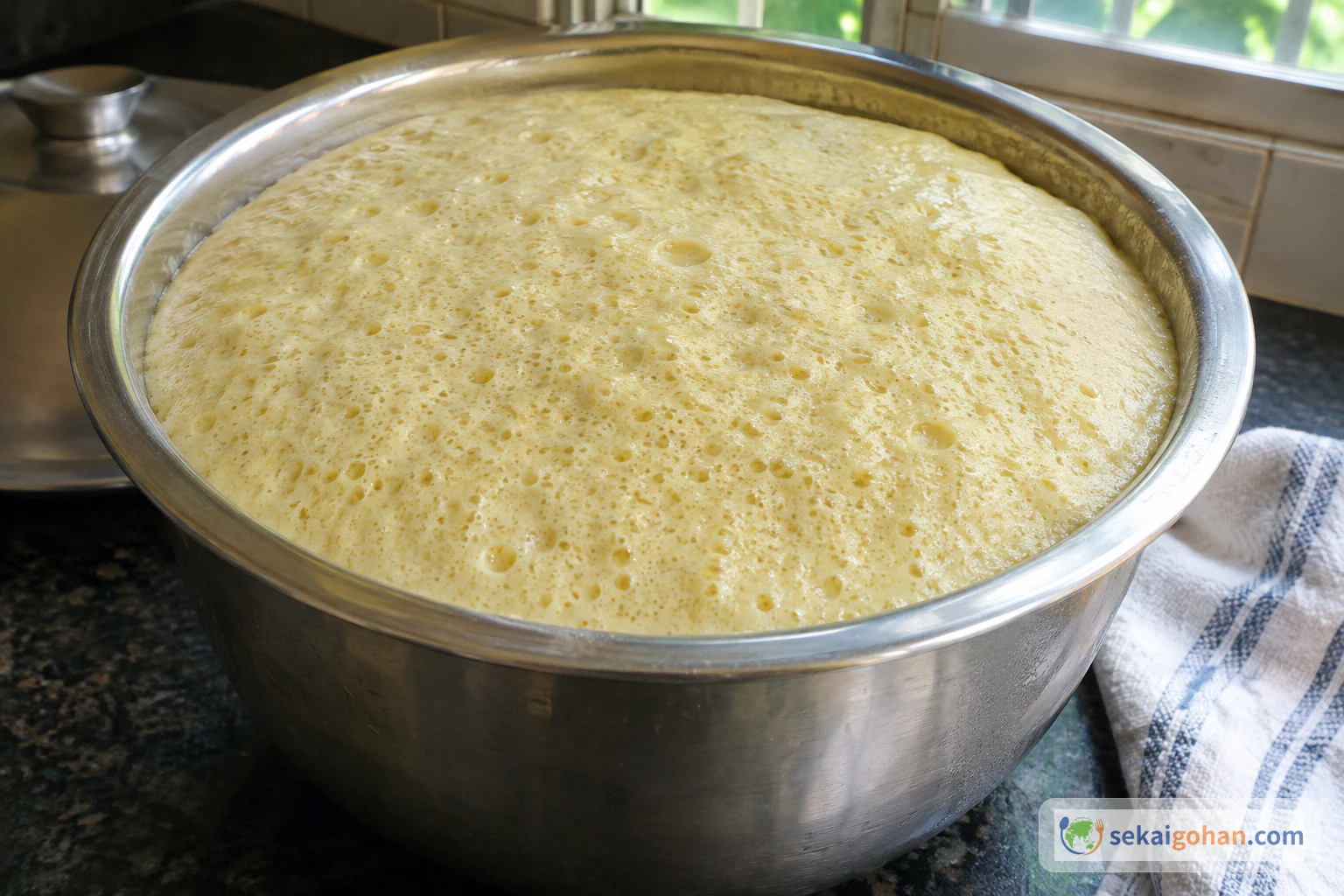
The look is the same wherever you find it: yellow, puffed and full of holes. The colour comes from turmeric. The holes and the rise come from the ferment, as rice, poha and yogurt sour and fill with gas overnight. Batter that has not fermented enough cooks up flat and closed. Jaggery feeds the ferment and also gives the underside its brown colour, which is why it scorches as soon as the heat gets too high.
In Konkani, godu means sweet and polo means dosa, so the sweet pancake is also called godu polo. Made without jaggery it becomes chappe surnali, the savoury kind. In Kannada it also goes by menthe dose. You will see it spelled Surnali in English, and सुरनोळी in Marathi.
One name, many batters
Households that use the same name grind very different batters. Some leave out coconut and yogurt, add a spoonful of cooked rice. Some Konkan cooks in Maharashtra grind only rice, coconut and jaggery, add cardamom in the morning, cook it in ghee and eat it warm with coconut milk. Marathi kitchens talk about two kinds, sweet and salty, and eat the salty one with a potato side dish, a thick coconut chutney and a black bean sambar. One Marathi summer version grinds the white part of the watermelon into the rice. A Mangalore-style batter is spread thin in circles and turned to cook both sides crisp. The recipe here is the thick, covered, one-sided sweet surnoli of Saraswat homes in Goa and Mangalore.
How it differs from dosa and idli
Dosa and idli also start from fermented rice batter, so it is easy to cook surnoli as if it were one of them. A dosa batter has urad dal and is spread paper-thin with the back of a ladle; surnoli uses no dal, and you pour it thick and leave it alone. Idli is steamed in moulds. Surnoli cooks on a griddle under a lid, so the trapped steam sets the top while only the bottom touches the pan. Pour the same batter into an appe or paniyaram pan and it becomes godu appo, small round puffs with a different bite.
Ingredients
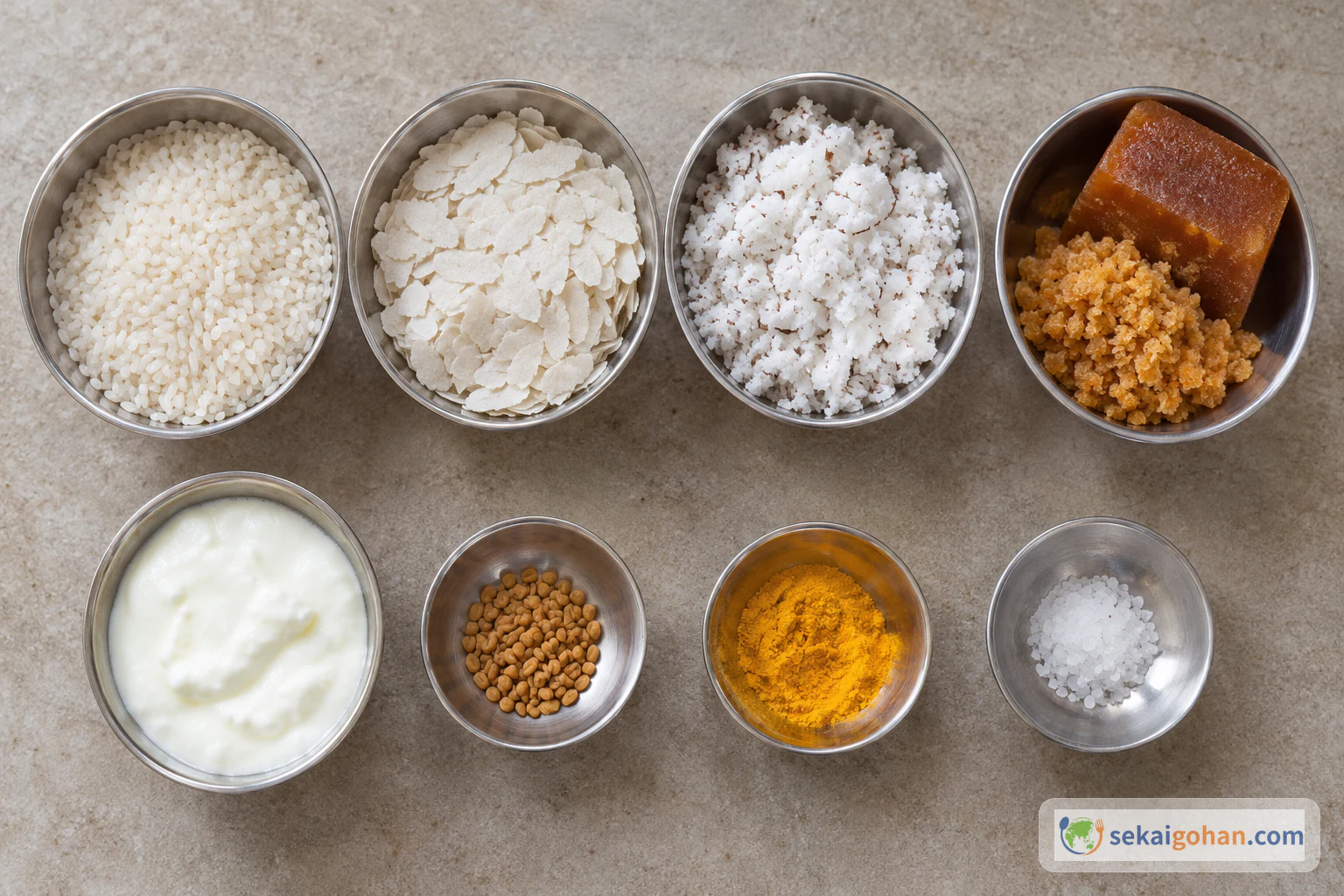
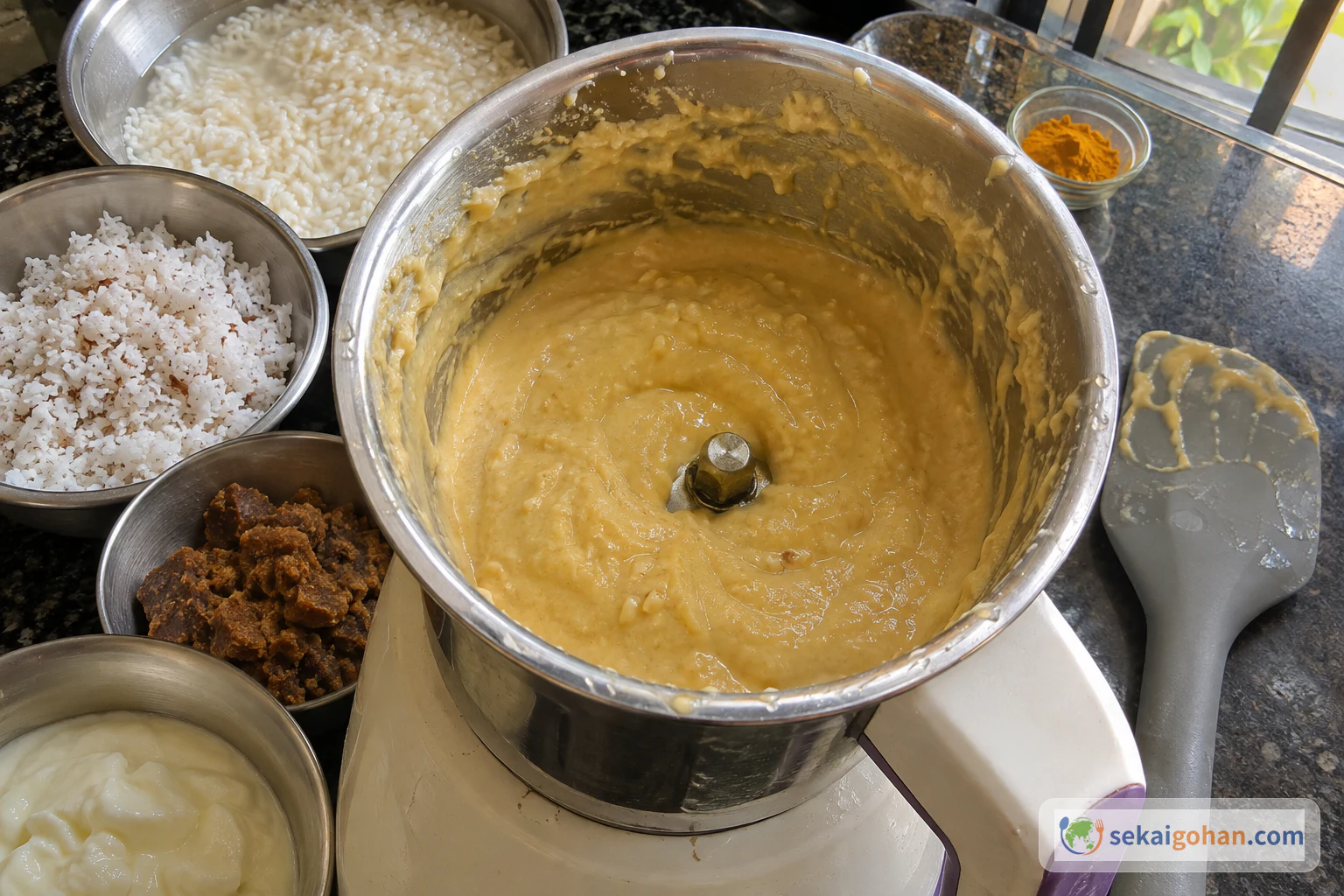
Use as little water as possible when grinding. The soaking water is drained off completely, and only a little more goes in if the blades will not turn. A watery batter ferments slowly, rises poorly and sticks to the pan.
Surnoli contains milk (yogurt, and butter or ghee if you cook with them) and coconut. Packaged grated coconut may be processed alongside nuts, so check the label for cross-contact if anyone at the table has a nut allergy.
Equipment
- Mixer grinder, blender or food processor
- Fine-mesh strainer
- Large bowl with a lid or cover (the batter rises a lot)
- Flat tawa or a nonstick skillet, about 10 inches (26 cm)
- A lid that fits the pan, ideally glass
- Ladle
- Flat spatula
Shopping and Substitutes
Most of what you need is in an ordinary supermarket. Short-grain white rice works well as the base, plain unsweetened yogurt stands in for dahi, and ground turmeric is on every spice shelf. For the coconut, frozen grated coconut is the easiest choice. For the pan, ghee or unsalted butter tastes closest to a Konkani kitchen; neutral oil works and simply adds no flavour of its own.
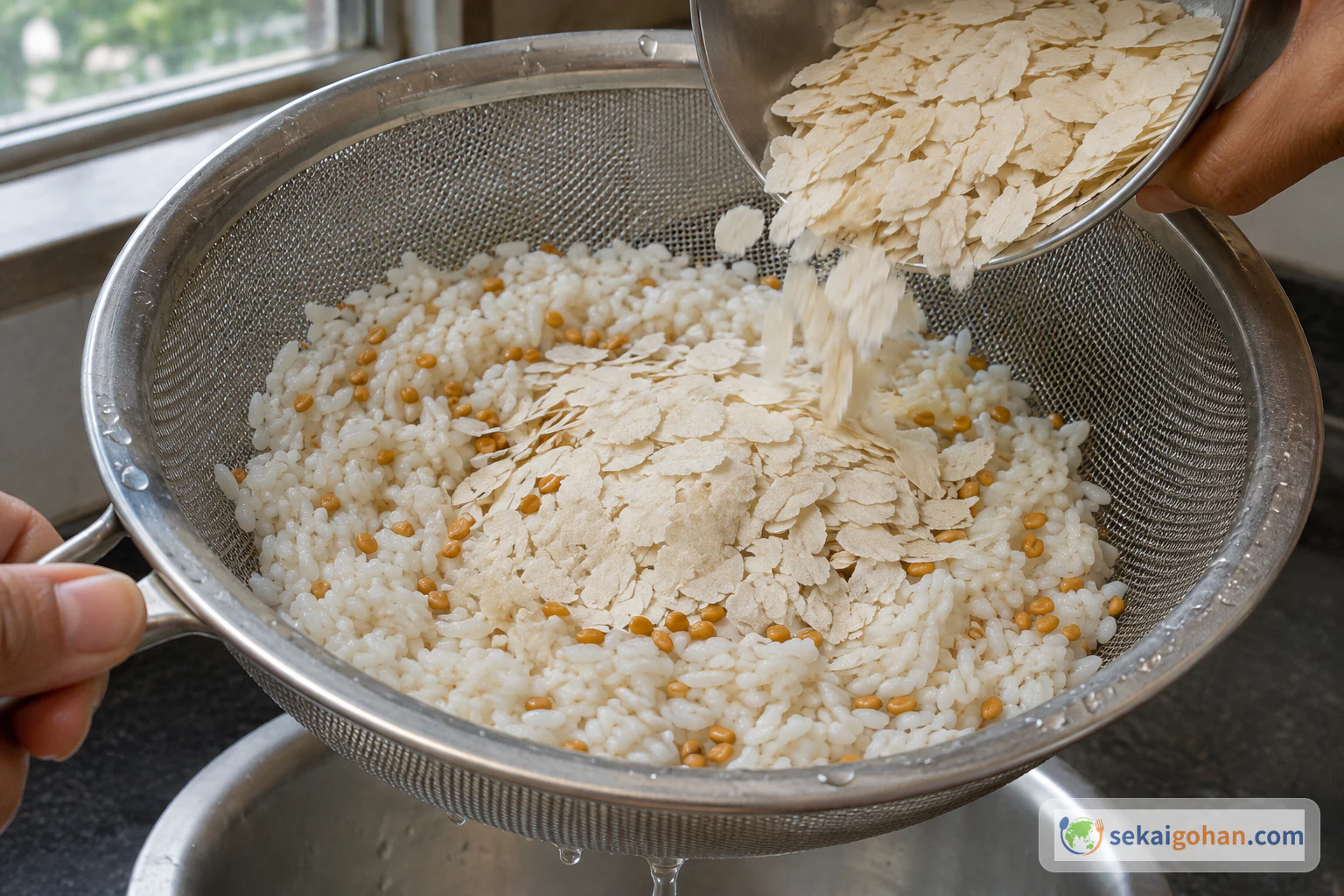
An Indian grocer or an online shop covers the rest. Ask for poha (पोहे), fenugreek seeds sold as methi dana (मेथी दाणे) and jaggery (गूळ). They are usually on the same shelves. Jaggery comes as a powder or as a hard block; the batter needs it grated, so either grate a block or use the powder. Buy both poha and fenugreek; this recipe uses no substitute for either. Poha is what keeps the pancake soft and light. Without fenugreek you lose the toasty note and some help with the ferment.
| Ingredient | Swap that works | What changes |
|---|---|---|
| Jaggery | Unrefined cane sugar or dark raw sugar | Untested swap: colour and aroma shift, you lose some of jaggery's depth of flavour, and the browning comes out different |
| Freshly grated coconut | Frozen grated coconut | Use the same amount; thaw it first |
| Dahi | Plain unsweetened yogurt | None worth noting; a slightly sour yogurt ferments faster |
| Ghee or butter | Neutral oil | No butter aroma |
Method
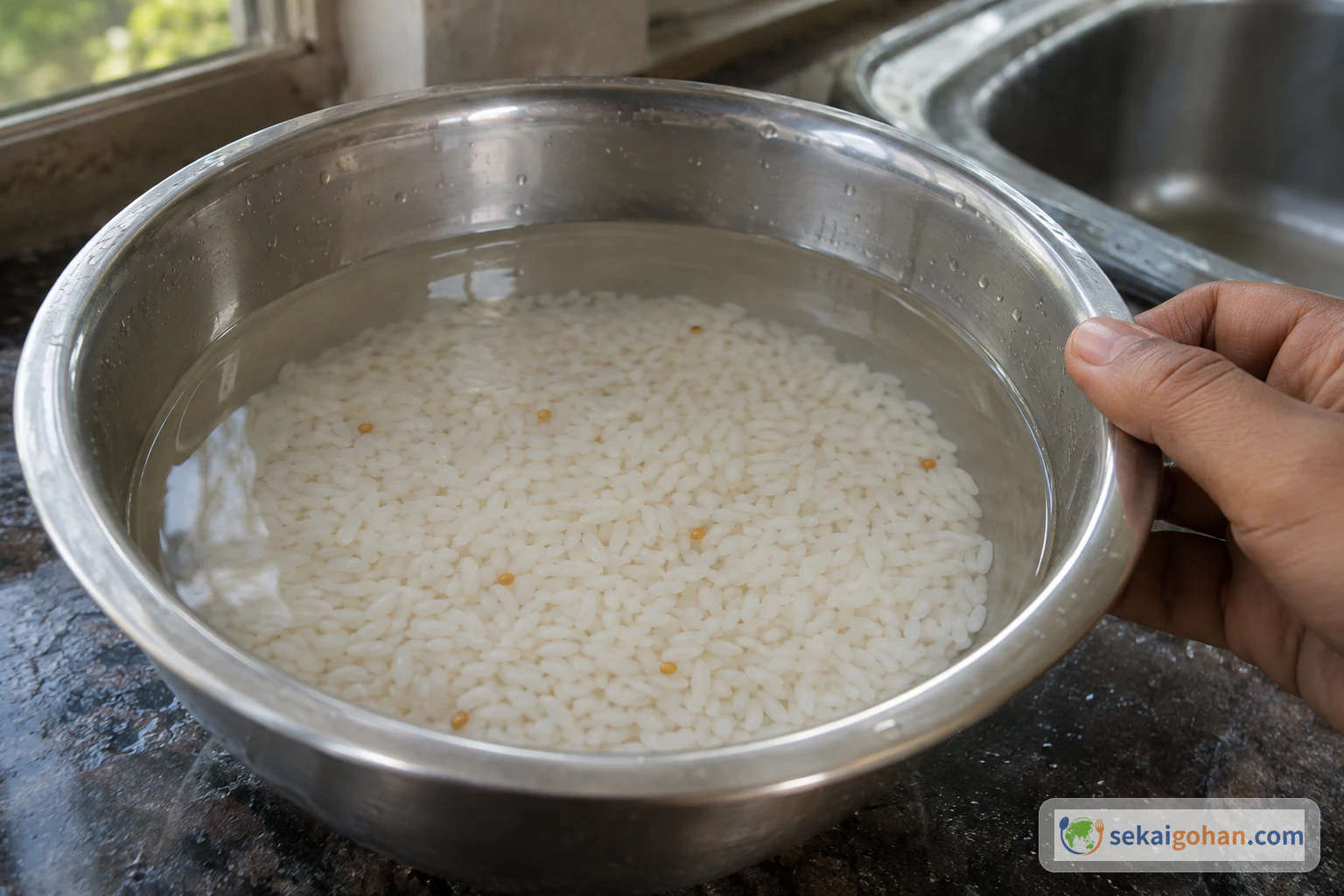
The work splits over two days. In the afternoon or evening before, soak the rice for at least 4 hours, then grind the batter and leave it to ferment for at least 6 hours, usually overnight. That part is all waiting. In the morning, cooking takes about 30 minutes of hands-on work, at two to three minutes a pancake.
The batter sits at room temperature while it ferments, so check it before you cook. If it smells off, or shows mould, a film on top, stringy strands or an unusual colour, throw it away. If you have any doubt at all, throw it away. Cooked food should reach 167°F (75°C) at the centre for at least 1 minute. Serve hot food at 149°F (65°C) or above, and do not leave the batter or cooked pancakes at room temperature for long.
When It Goes Wrong
| What you see | Why | What to do |
|---|---|---|
| Flat, few holes | Too much water in the batter, or it has not fermented long enough | Next time grind with less water; leave it longer in a warmer spot until it is risen and bubbly |
| Bitter taste | Over-fermented, or too much fenugreek or turmeric | Stick to the amounts in the table and do not leave the batter far past the point where it is risen and bubbly. If it also smells off, throw it away |
| Dark underside, raw centre | Heat too high; jaggery burns first | Lower to medium or below and keep the lid on; turn it for 30 seconds to 1 minute if the centre stays soft |
| Sticks and tears | Batter too watery, or not enough fat in the pan | Use less water next time; grease the pan thinly again before each ladle |
| Too sweet | The jaggery is the main sweetness | Use less jaggery next time; the ferment and the colour change with it. Or make the savoury kind |
| Sour or off smell | Spoiled yogurt or a ferment gone too far | Throw the batter away and start again |
Serving, Variations and Leftovers
At the table
Surnoli is breakfast food and afternoon-tea food. The classic plate is white homemade butter (loni) with mango pickle, lime pickle or onion chutney beside it. Some households spread the sweet kind thickly with ghee and sprinkle sugar on top. Others eat it with coconut chutney, or warm with a bowl of coconut milk.
Variations
- Chappe surnali (savoury): grind the batter without jaggery and serve it with coconut chutney and black bean sambar. The ferment's sourness comes forward and it becomes a meal.
- Spicy topping: scatter finely chopped ginger, green chilli and red onion on the batter right after pouring, then cover. The heat cuts the sourness and gives you a savoury snack. Leave the sweet batter as it is.
- Cardamom: stir a little cardamom powder into the risen batter just before cooking. The aroma moves toward sweets.
- Godu appo: cook the same batter in an appe or paniyaram pan. You get small puffs with a crisp shell and a soft centre.
Leftovers
Leftover batter goes into a covered container in the refrigerator as soon as you finish cooking; use it by the next day, because after that it turns bitter. Cook only as many pancakes as you will eat. When you reheat cooked leftovers, heat them until they are 167°F (75°C) or hotter all the way through. Throw out anything that has sat out too long or seems off in any way.
Frequently asked questions
Do I need fruit salt (Eno) to make it puff?
No. A well-fermented batter rises and opens up by itself, so leave it out. If your batter has fermented poorly and you want extra lift, gently stir in ¼ tsp just before cooking and wait 5 minutes before you pour.
How long does it take to ferment in summer or winter?
Six hours is the minimum. In summer the batter can nearly double in 5 to 8 hours. In cool weather it can take 10 to 15 hours. In a cold house, an oven with only the light switched on makes a warm spot. Go by the rise and the bubbles, not the clock.
Can I grind it in an ordinary blender?
Yes. A blender or food processor can stand in for an Indian mixer grinder. Stop often to scrape down the sides instead of adding water to loosen it, and add only a little water if the blades stall. The batter should end up thick and pourable.
Can I cook it in a regular skillet?
A nonstick skillet works well, as long as you have a lid that fits it closely. The lid traps the steam that sets the top, so without one the top stays raw while the bottom browns. A glass lid lets you watch the pores open without letting the steam out.