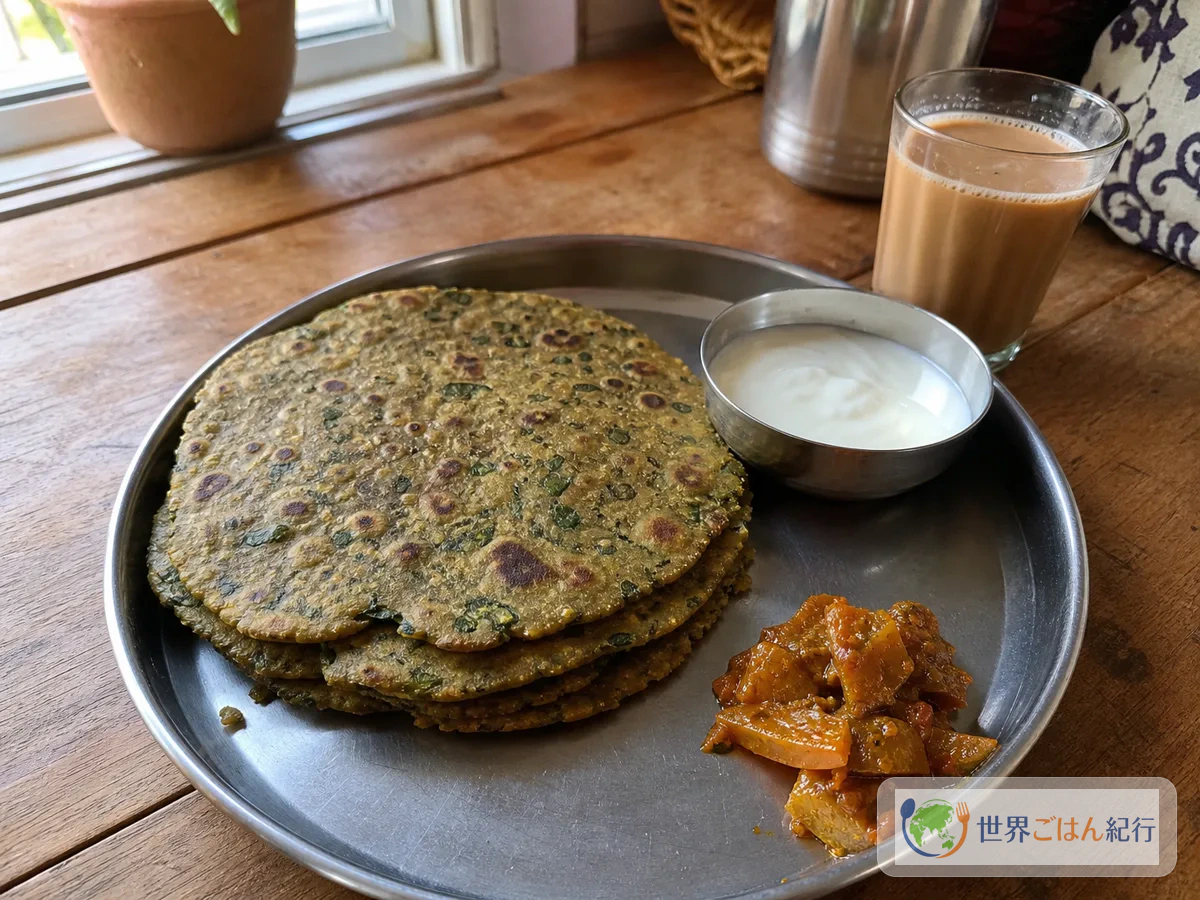
A flatbread that stays good cold beside the chai, built for travel
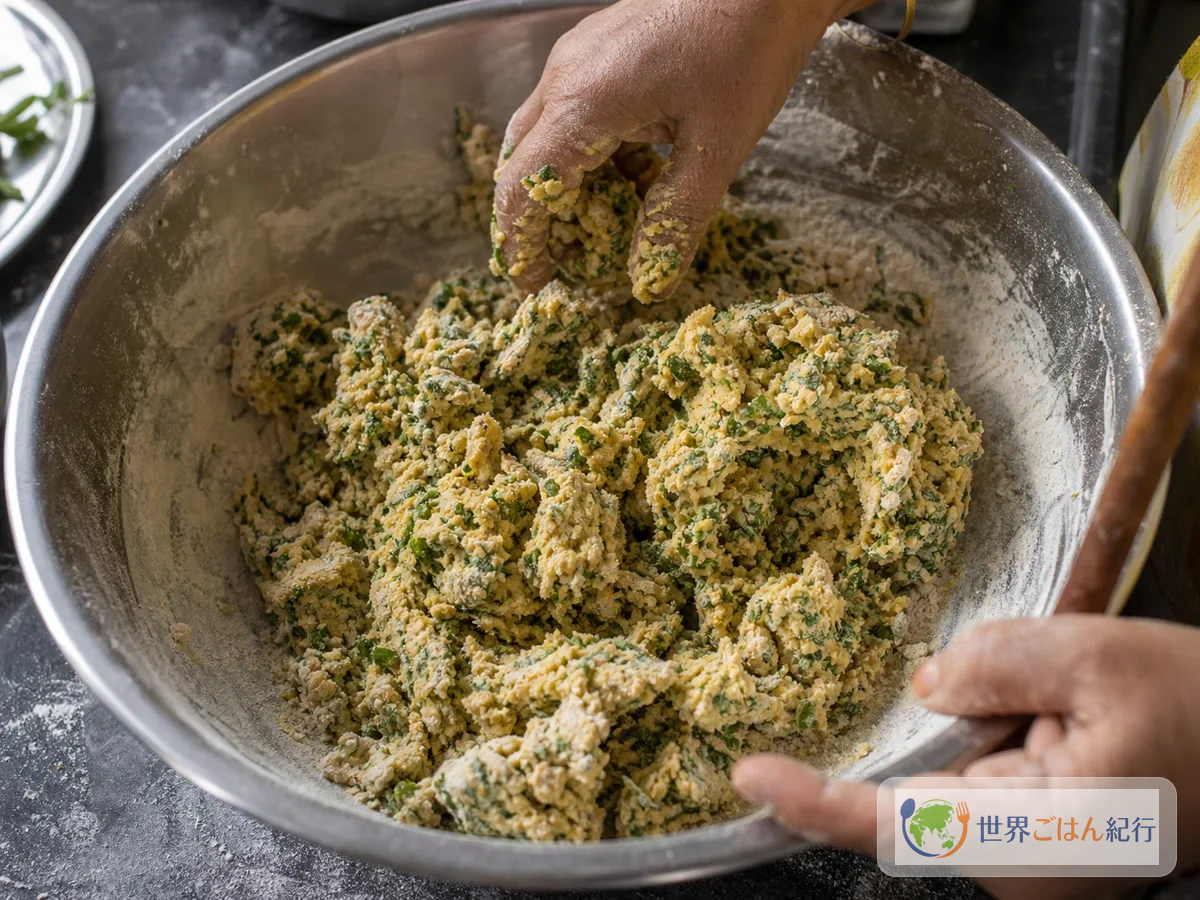
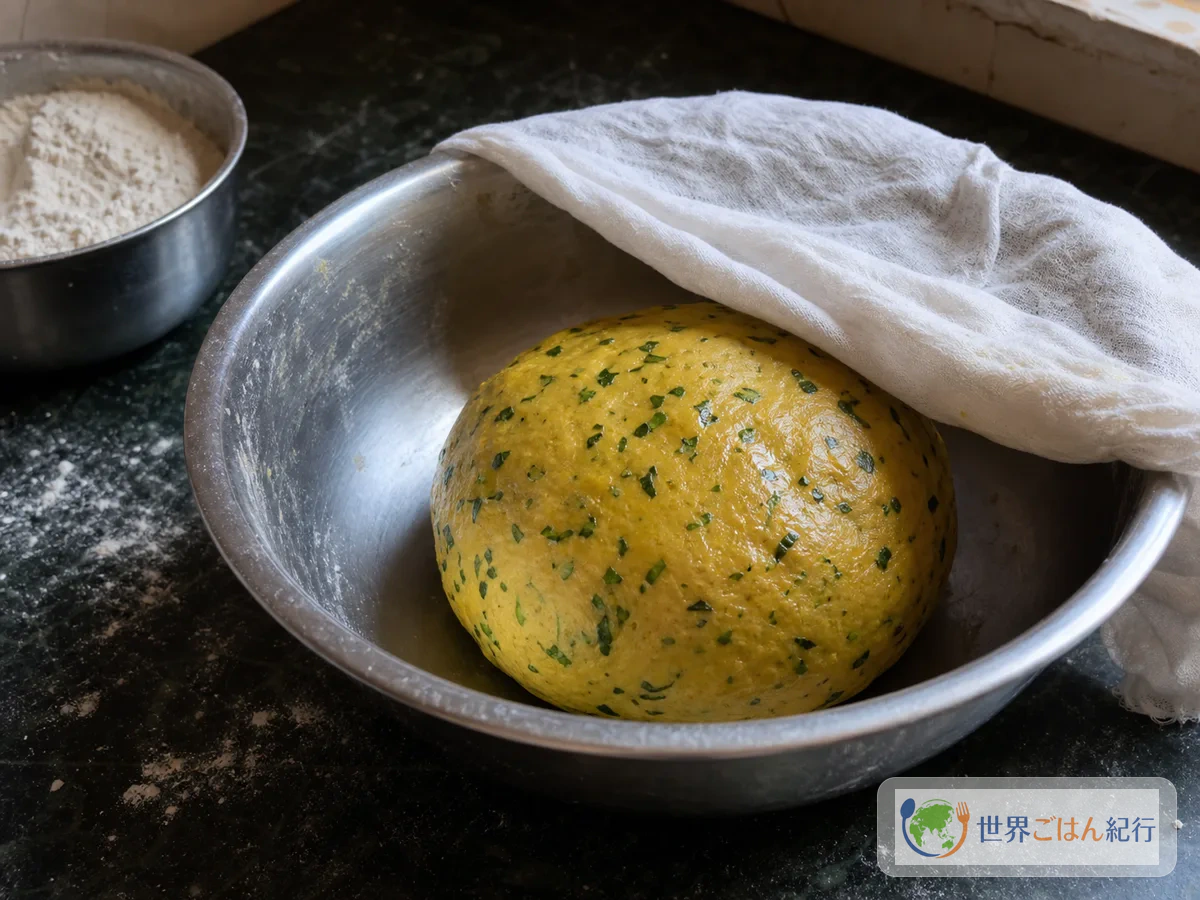
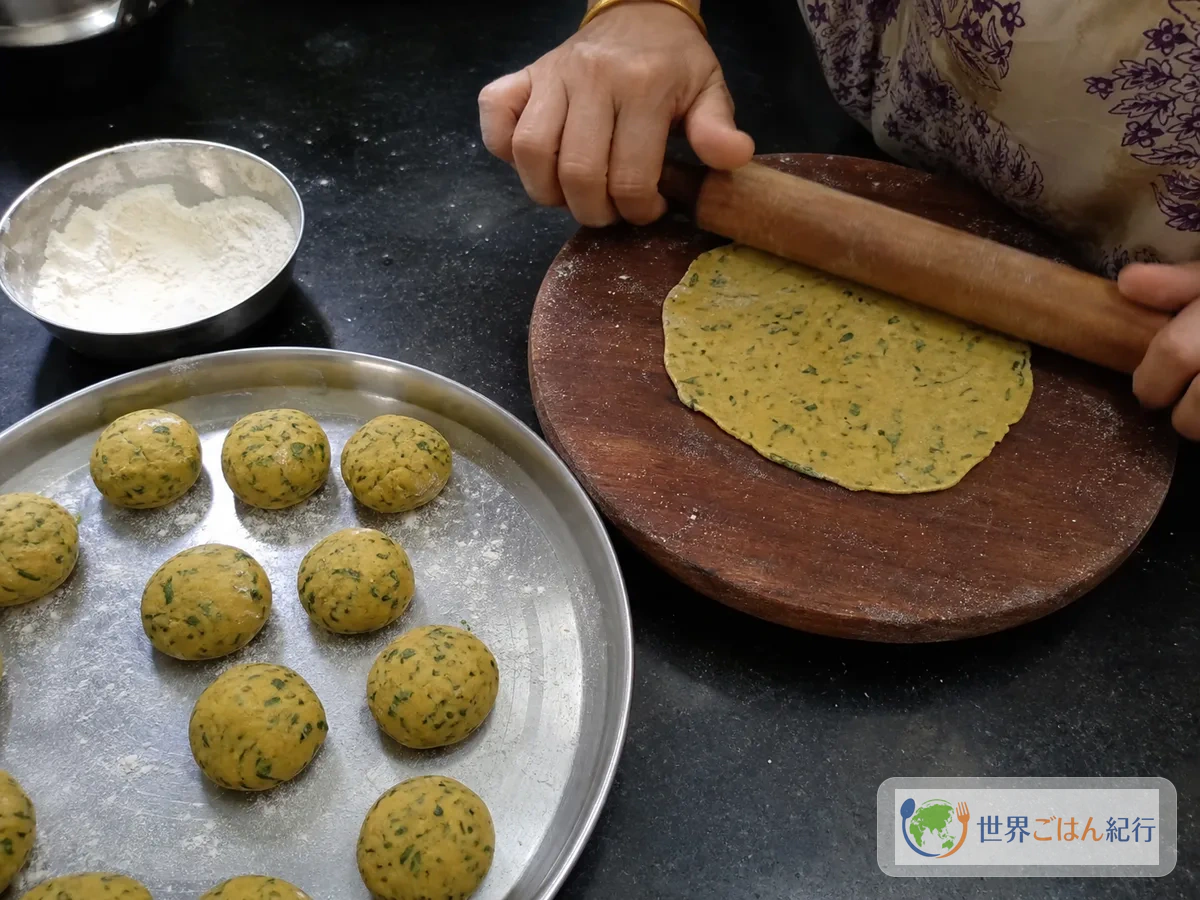
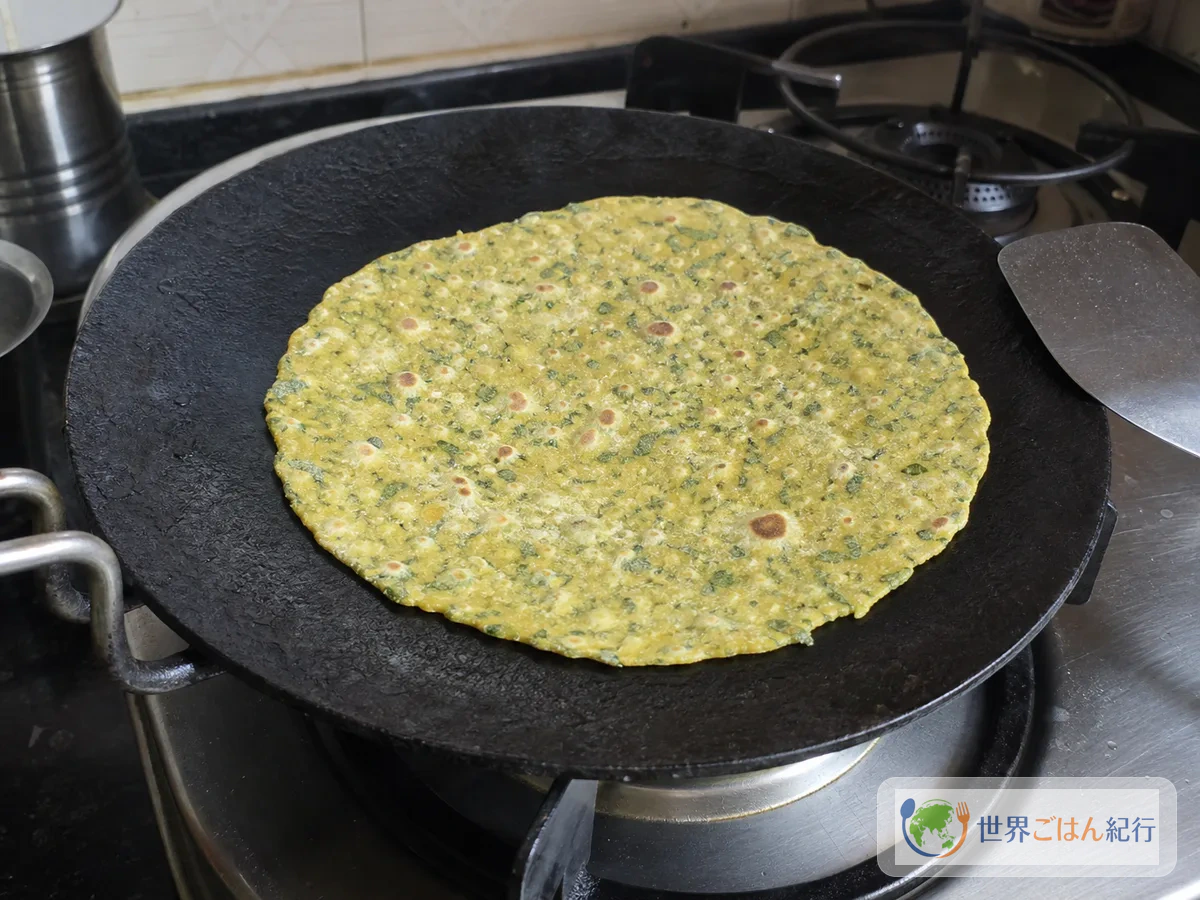
When you knead the dough in the morning kitchen, there is no sign it will puff up large like bread. Mix chopped methi into flour, bring it together moist with yogurt and oil, roll it thin with a rolling pin, and lay it on the skillet. When one side dries, small bubbles rise, and brown spots begin to dot it, the green aroma of leaves and the fragrance of cumin come up.
Thepla (Thepla / થેપલા) is a flatbread loved in Gujarat, in western India. The best known is methi thepla, with methi, or fenugreek leaves, worked in. It looks close to roti or chapati, but because yogurt, oil, and spices go into the dough, it does not harden easily when cold, so it also suits lunchboxes and travel food.
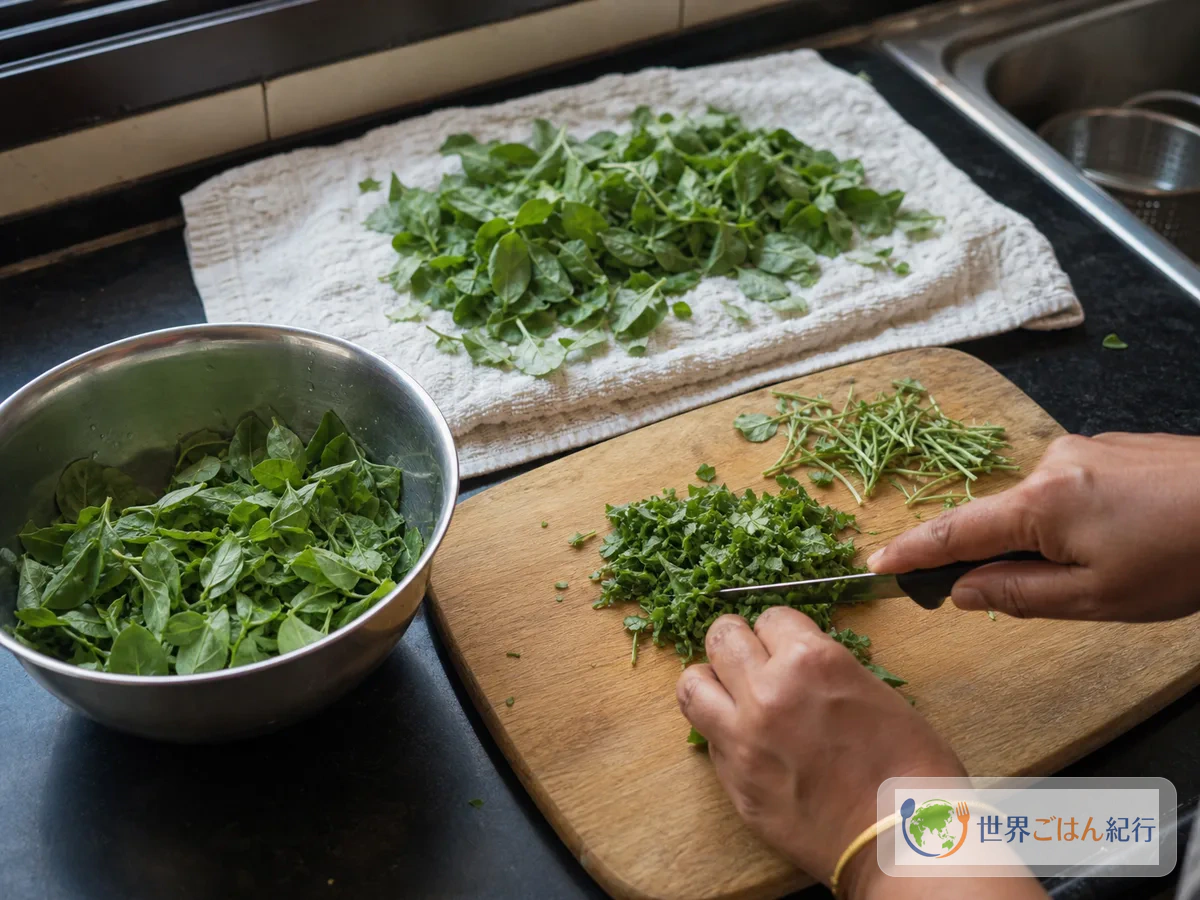
The difficulties when making it elsewhere are getting methi, handling whole wheat flour, and the stiffness from overcooking. Fresh methi comes closest to the original, but many days it isn't at the import store. This article is based on the fresh-methi version, and also gives a mix that makes up the aroma with spinach and kasuri methi. The ideal flour is Indian atta, but mixing regular whole wheat flour and all-purpose flour can also get close to a thin, supple thepla.
In Gujarati it is written થેપલા, and in the English-speaking world it is spelled thepla or methi thepla. This article uses "thepla" as the main spelling for readability and treats the basic form with methi.
How to make it: roll thin, cook briefly
The method is 6 steps. The ingredient amounts are gathered in the next section. Most of the causes of stiffness are too little water, rolling too thick, and overcooking. Keep in mind not to press the dough too hard and to keep the cooking time short.
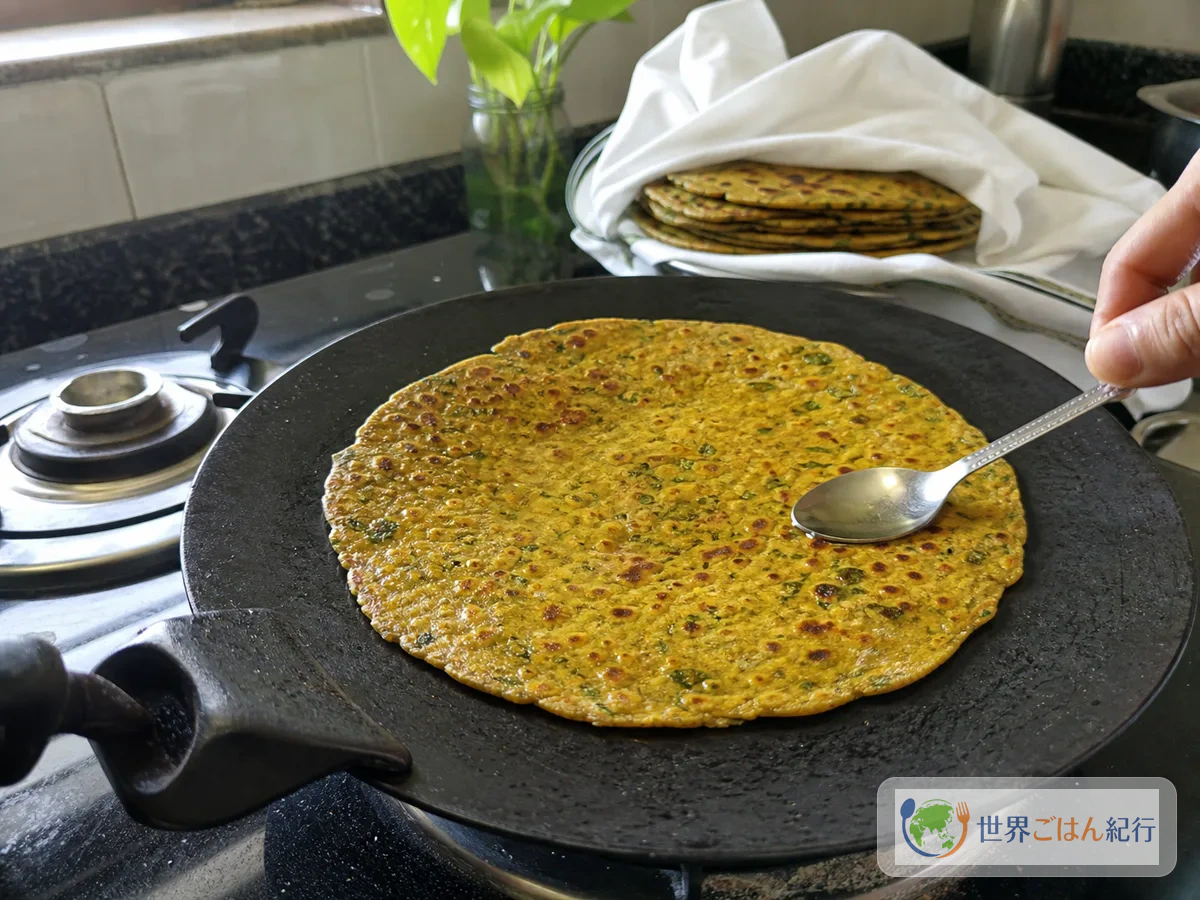
A lot of oil makes it crisp but loses the suppleness typical of thepla. The guide is a total of a little under 1 tsp per piece. When oil starts to pool in the skillet, lightly wipe it with a paper towel before cooking the next one.
Ingredients (makes 8): consider flour, leaves, and sourness separately
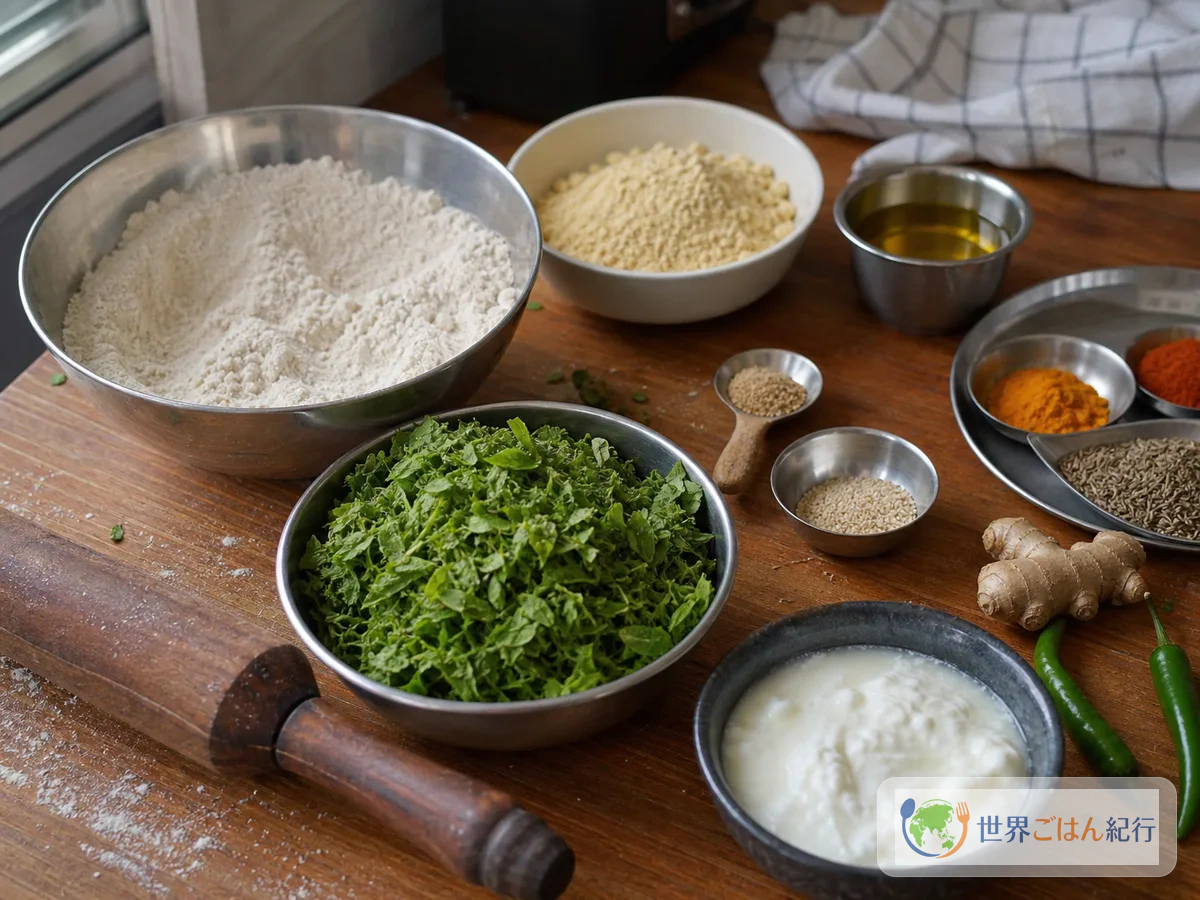
This makes 8 thepla 16–18 cm across. It serves 2–3 as a staple, or 4 as a light meal or side. If you only eat them fresh you can make 6 larger ones, but for storage and lunchboxes the smaller 8 are easier to handle.
This uses wheat, dairy, and sesame. If avoiding dairy, the yogurt can be replaced with 70 g of unsweetened soy yogurt, though the sourness and softness of the dough change a little. If avoiding sesame, leave out the white sesame and increase the cumin to 4 g.
A mix for days without fresh methi
| What you want to replace | A landing point | Amount |
|---|---|---|
| 80 g of fresh methi | Finely chopped spinach with the water squeezed out | 60 g |
| The aroma of methi | Dried kasuri methi, rubbed between your fingers | 3 g |
| Atta | 180 g whole wheat flour plus 60 g all-purpose flour | 240 g total |
| Sourness | Make it up with lemon instead of amchur | 5 ml after cooking |
Made with spinach alone, you get the green color but not the aroma of methi. Mixing in a little dried kasuri methi brings the green bitterness and sweet aftertaste. But dried leaves turn medicinal if overdone, so stopping at 3 g the first time is safest.
What to look for when sourcing: first amchur, cumin, and a rolling pin
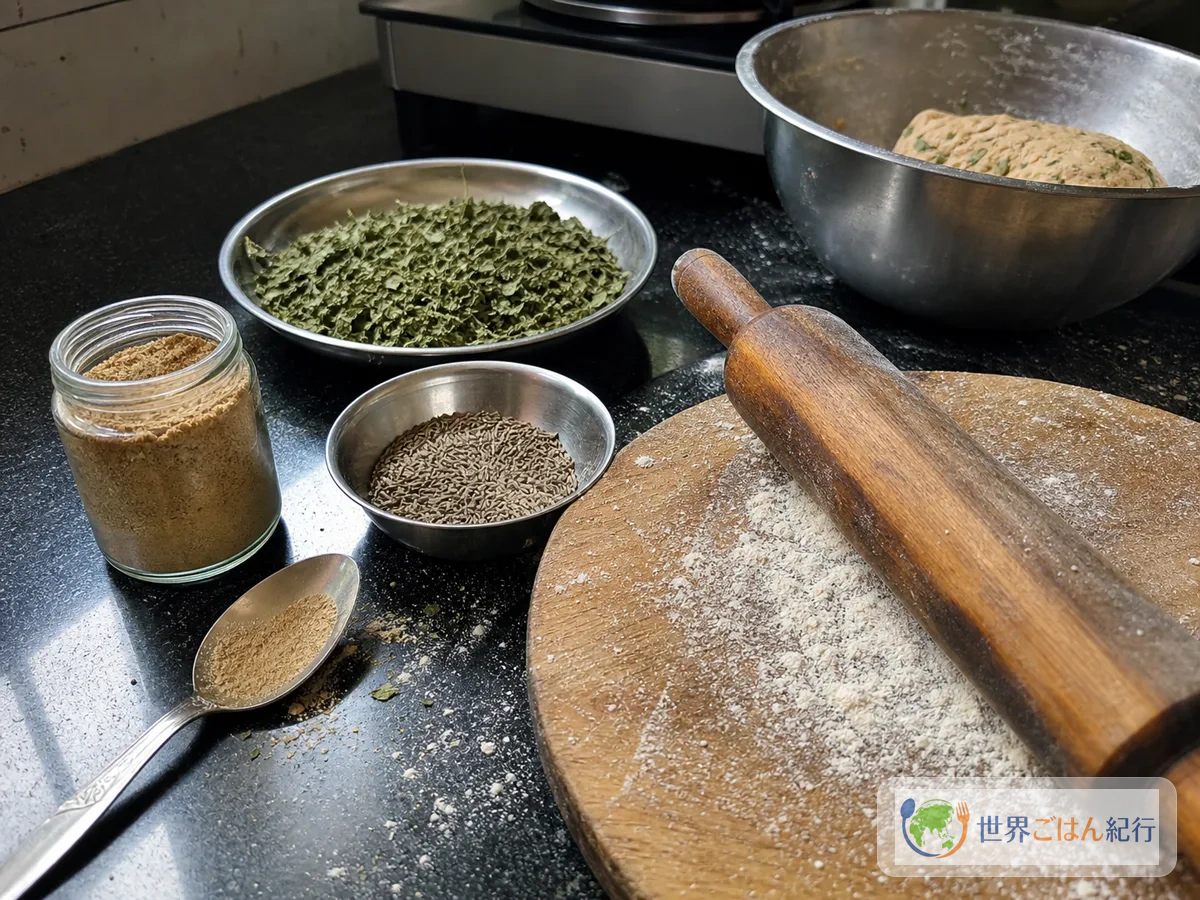
With thepla, the difference comes from sourness and aroma more than from flour and yogurt. The wheat flour, yogurt, and oil you can buy at a nearby grocery store are left out; only ingredients that are easy to reuse if you keep making Indian food are picked.
Amchur is powdered dried mango. Lemon juice also gives sourness, but amchur adds a dry sourness inside the dough without adding moisture. It also goes to chana masala and pani puri, so it is worth keeping if you continue with Indian cooking.
Cumin seeds, put in as seeds rather than powder, give aroma when bitten in the dough. They are also used in dal tadka and aloo gobi, so they are unlikely to be wasted as a first whole spice.
The thinner and more even thepla is rolled, the more supple it cooks in a short time. A wine bottle can substitute, but dough with oil sticks to the counter more than you'd expect, so a light wooden rolling pin steadies the work.
Nutrition guide
This is the guide per piece when divided into 8. It is a home calculation including yogurt, oil, and cooking oil, so it changes with the type of flour and the amount of cooking oil.
| Item | Per piece |
|---|---|
| Energy | about 154 kcal |
| Protein | about 4.6 g |
| Fat | about 5.4 g |
| Carbohydrates | about 23.0 g |
| Fiber | about 3.2 g |
| Salt equivalent | about 0.7 g |
Thepla is a flatbread, so it looks light, but because of the oil and yogurt it is more satisfying than chapati. For dinner, 2 pieces with dal tadka or a vegetable side come together as a staple.
Background: Gujarati homes and packing for travel
Gujarati cooking is a region rich in vegetarian dishes that combine lentils, grains, dairy, and vegetables. The Gujarat tourism board's introduction to Gujarati food culture also treats the overlap of the aroma of turmeric, cumin, coriander, chili, and mustard seed with sweetness, sourness, and heat as its characteristic. Thepla shows this character well. Sourness comes in the dough from yogurt, dry sourness is added by amchur, and heat is placed lightly with green chili and chili powder. Even as a thin flatbread, in the mouth it does not end as "just baked flour."
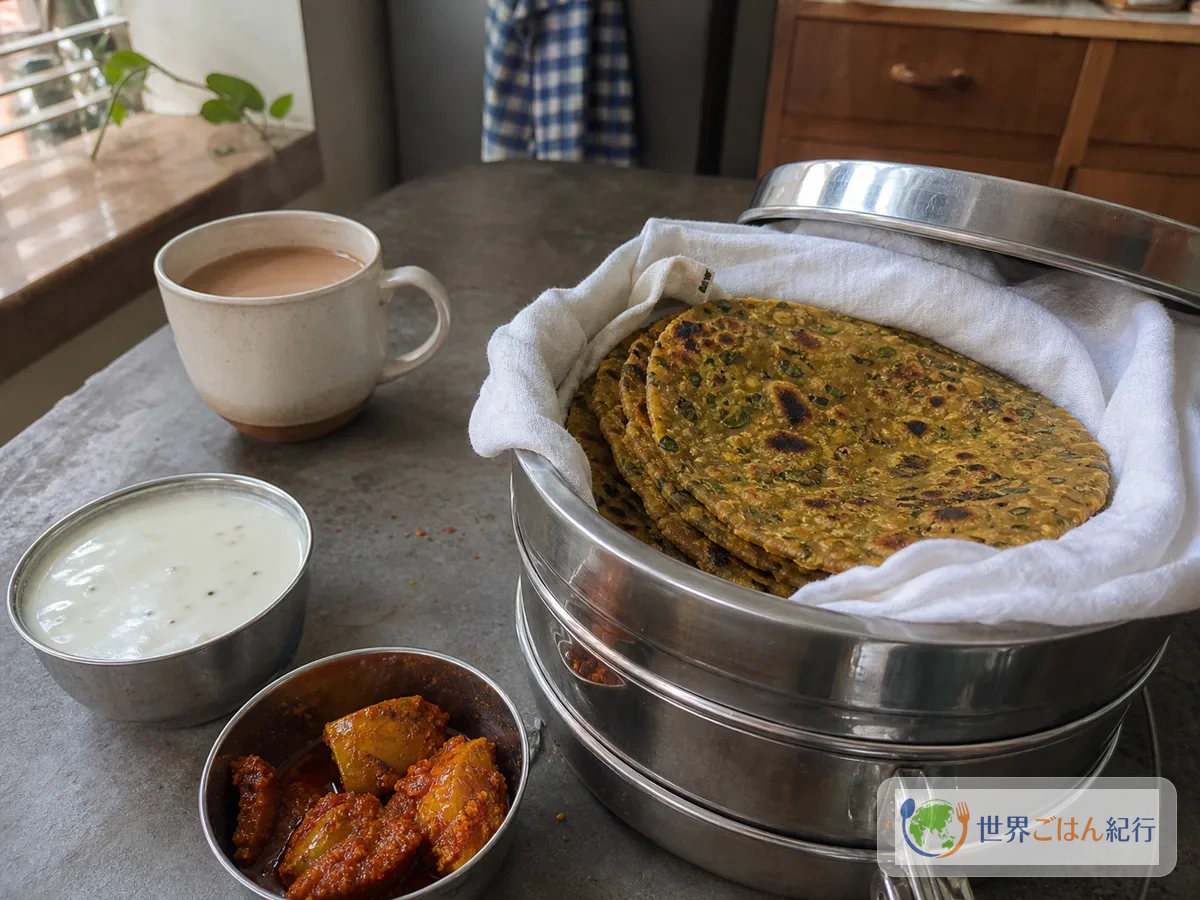
Gujarat Tourism's introduction to thepla describes it as a flatbread eaten at any time of morning, noon, or night, paired with tea, pickle, and raita. The ingredients listed are wheat flour, besan, fenugreek leaves, spices, and white sesame, and as ways of eating it mentions dahi, chundo (a sweet mango pickle), and red garlic chutney. Even if you can't prepare chundo, yogurt, a sweet-sour pickle, and a garlicky side connect the sourness of dairy, the sweet-sourness of pickle, and the bitterness of green leaves within one plate.
What is easy to overlook here is that thepla is not a bread enjoyed only fresh. At the Gujarati table, thepla is one of the breads alongside rotli, bhakri, and puri, and serves as both everyday staple and light meal. The tourism board's food page also touches on keeping snacks such as khakhra and dhebra that are easy to take on journeys, pilgrimages, and holidays. Seen in the same context, thepla shows why oil and yogurt go into the dough, why it is cooked thin, and why it is wrapped in cloth. Its value is not only the aroma fresh but that it resists cracking after cooling.
The origin of thepla is easier to understand as an extension of the flour dishes in Gujarati homes than as a story of one birthplace or inventor. Regional differences show less by city name than in each household's amount of leaves, how oil is brushed, and the pickle served alongside. Some households load up methi, and others mix in bottle gourd or radish. So when making it elsewhere, the core that keeps the dish's name is "cook it thin, add aroma, and make it easy to eat cold," and not treating the type of leaf as absolute is less likely to fail.
Methi is the leaf of fenugreek. Fenugreek seed is used in curry powder, but the leaf has a greener, slightly bitter aroma. Fresh leaves are not always available everywhere. Spinach or similar leafy greens supply the moisture and color of the leaf, and mixing in a little dried kasuri methi brings back the green bitterness and sweet aftertaste. To get closer to the methi version, the fork in the road is not to stop at adding green leaves but to add a little dried leaf.
To keep the local character, be conscious of thinness and keeping quality. Cooked thick it is heavy inside and floury when cold. Too much water makes it easy to roll but easy to tear, and cooking time lengthens and it stiffens. The guide is dough that is soft but can still be lifted from the counter. Wrapping in cloth after cooking is not decoration either. It is a small adjustment typical of travel food: not letting too much surface steam escape, yet not sealing it airtight to make it sticky.
A decision table for moving toward Gujarat in a home kitchen
Once you have made thepla, the next doubt is "how far to move the ingredients toward the local ones." You don't need to make everything an imported ingredient. But if you hold just the aroma of the leaf, the thinness of the flour, and a water level that doesn't crack when cold, it does not become a mere vegetable flatbread.
| Point of doubt | Closer to the local | A landing point elsewhere | Effect on taste |
|---|---|---|---|
| Leaves | Fresh methi | Spinach plus 3 g kasuri methi | The color comes. The bitter aroma is made up with dried leaf |
| Flour | Atta | Whole wheat flour plus all-purpose flour | All-purpose flour makes rolling easier and resists cracking when cold |
| Sourness | Amchur | A little lemon juice after cooking | Sourness inside the dough weakens, but the heaviness lessens |
| Fat | Oil in the dough and in cooking | Keep the dough oil and thin the cooking oil | The dough oil supports keeping quality and softness |
| Tools | Tawa, chakla, belan | Heavy skillet, wooden rolling pin | Keeping the preheat and thinness, home tools are enough |
| How to eat | Dahi, chundo, red garlic chutney, chai | Raita, sweet-sour pickle, a garlicky side, bean curry | Adding sourness, dairy, and a bit of sweet heat keeps it from tiring |
Putting yogurt in the dough is for softness as well as flavor. Kneaded with water alone, it is light fresh but cracks when cold. With yogurt and oil it is a little moister and can be wrapped in cloth and reheated the next morning. On days you lean toward lunchbox or travel use, not browning too deeply makes it easier to restore later.
The idea of swapping the vegetable exists on the Gujarat side too. Gujarat Tourism's introduction to thepla also touches on variations using doodhi, that is bottle gourd, and radish. If using radish, grating it and adding it as is loosens the dough, so sprinkle a little salt, squeeze out the water, and reduce the dough's water by about 20 ml. It becomes something different from the methi version that brings out the aroma of leaves, but the idea of cooking it thin and making it keep well is the same.
If leaving out green chili, keeping just 0.5 g of chili powder keeps the aroma from going flat. To remove heat completely for children, increase the ginger to 10 g and the cumin to 4 g. It is a matter not of heat but of making an outlet for the aroma.
Causes of stiffness and how to fix them
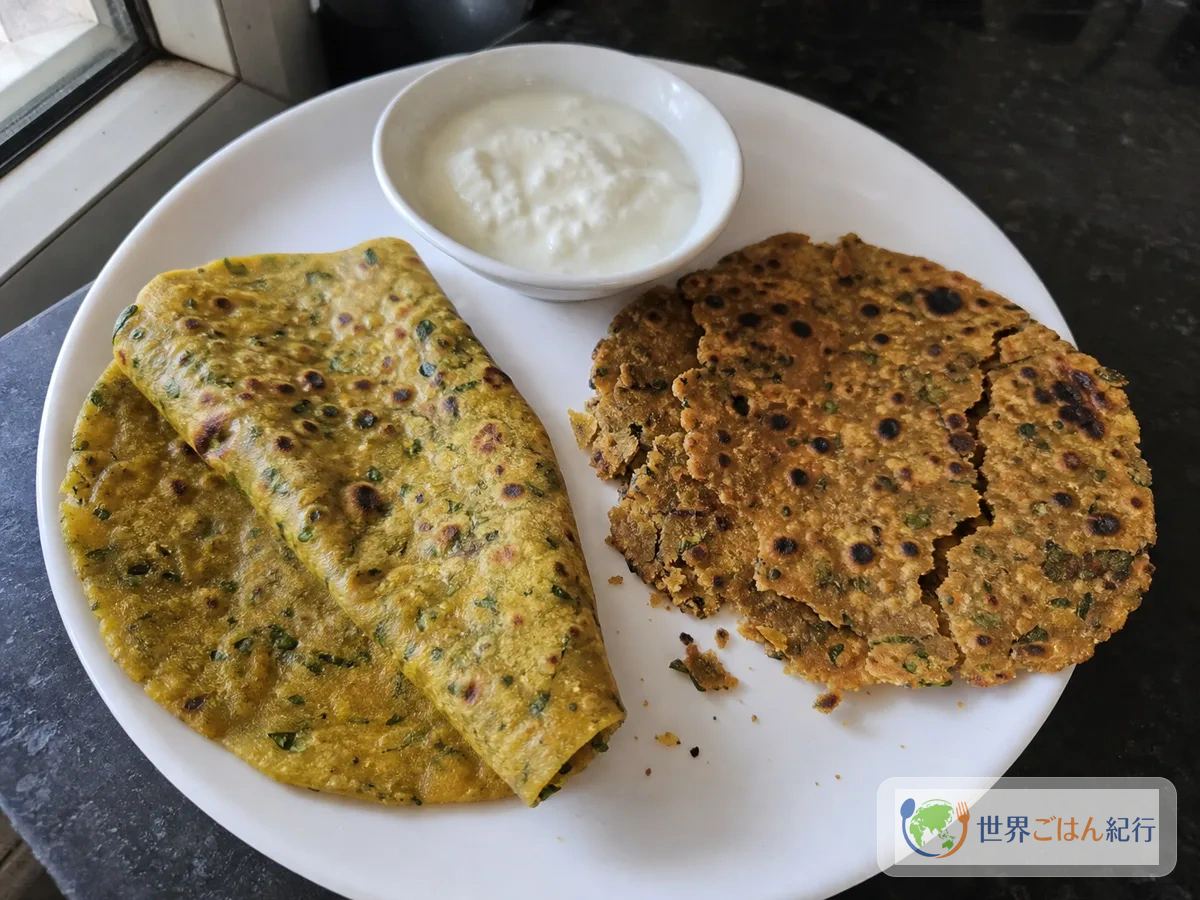
The failures of thepla are more often stiffness than burning. It looks cooked but cracks when cold. One of water, thickness, or cooking time is off.
| Failure | Likely cause | How to fix |
|---|---|---|
| Cracks when cold | Too little water, too much flour added | Next time add 5–10 ml more water and reduce the dusting flour |
| Floury inside | Too thick, or heat too strong so only the surface cooked | Roll to 16–18 cm and dry-roast briefly over medium heat |
| Leaf bitterness is strong | Too much methi or kasuri methi | Start at 80 g of fresh methi and 3 g of dried leaf |
| Oily | Too much cooking oil | Don't let oil pool in the skillet; spread thinly with the back of a spoon |
| Weak aroma | Cumin only as powder, no sourness | Use a little cumin seed and amchur |
Overcooked thepla is easier to eat cut into thin strips beside yogurt than eaten as is. If it has hardened the next day, wrap it in a paper towel wrung out from water and microwave at 600 W for 20–30 seconds. Then wrapping in a dry cloth brings back some suppleness.
How to eat it and storage: connect it to yogurt, pickle, and bean dishes
Freshly cooked thepla has aroma even by itself. But to move toward the local table, adding yogurt or raita, achar, and chai suddenly gives it an outline. The saltiness of a spicy pickle, the sourness of yogurt, and the faint bitterness of methi together turn a thin flatbread from a snack into a plate of food. On a day you can't prepare sweet mango pickle chundo, mixing 40 g of chopped sweet-sour pickled radish with 1/2 tsp of lemon juice, a pinch of sugar, and a little chili flakes can still make the sweet-sour role.
For dinner, setting it beside dal tadka or khichdi fills the gap between staple and side. On a day you want stronger spice, pair it with chana masala. When you want a light flatbread beside fried food, it also connects to samosa and tandoori chicken side dishes.
To store, once the heat has dissipated, stack them one at a time slightly offset and wrap in cloth or paper towels. Room temperature half a day, refrigerator 2 days as a guide. To freeze, sandwich each in plastic wrap and put in a freezer bag for 2 weeks. To reheat, in a skillet over low heat 20–30 seconds per side, or in a microwave at 600 W for 20–30 seconds. Overheating drives off moisture, so the trick is to bring it back briefly. When carrying it, do not wrap yogurt or raita together; put the thepla in paper or cloth and the sides in separate containers. Sealed airtight while warm, a stuffy smell rises before the aroma.
For make-ahead use, stop the browning a little lighter. When you reheat it in a skillet right before eating, color is added there. If browned deeply from the start, reheating the next day dries it too much.
FAQ
Q. What is the difference between thepla and chapati?
Chapati is an everyday flatbread basically made from flour, water, and salt. Thepla has methi, yogurt, oil, and spices in the dough, so it is strongly scented and easy to eat cold. It can be a staple at a meal or a light meal for travel or a lunchbox.
Q. I can't get fresh methi. Can I make it with spinach alone?
You can. But with spinach alone, the aroma typical of methi is weak. Adding 3 g of dried kasuri methi to 60 g of spinach makes up for both the amount of leaves and the aroma. Other leafy greens such as chard also work, but they are watery, so squeeze them well after chopping.
Q. Can I make it without amchur?
Yes. Don't put it in the dough; after cooking, drip 5 ml of lemon juice on a little at a time, which relieves the heaviness. But amchur adds sourness without adding moisture, so it is advantageous for ease of handling the dough.
Q. The dough is sticky and I can't roll it.
You may have added the water all at once. Add whole wheat flour 1 tsp at a time, rest 5 minutes, then roll. Resting lets the flour absorb moisture and makes it easier to handle. Trying to solve it with dusting flour alone dries the surface and makes it stiff after cooking.
Q. What skillet should I use?
A cast-iron skillet or heavy skillet is suitable. A thin nonstick skillet also works, but if the temperature rises too much only the surface burns, so preheat over medium heat and lower to medium-low partway through cooking. It is important not to shallow-fry with a lot of oil.
Q. Is it OK to put in a lunchbox for the next morning?
Let it cool, wrap it in cloth or paper towels, refrigerate, and warm it lightly in the morning; it is easier to handle. Moisture trapped makes the surface sticky, so don't seal it airtight while hot. If adding yogurt or raita, put it in a separate container.