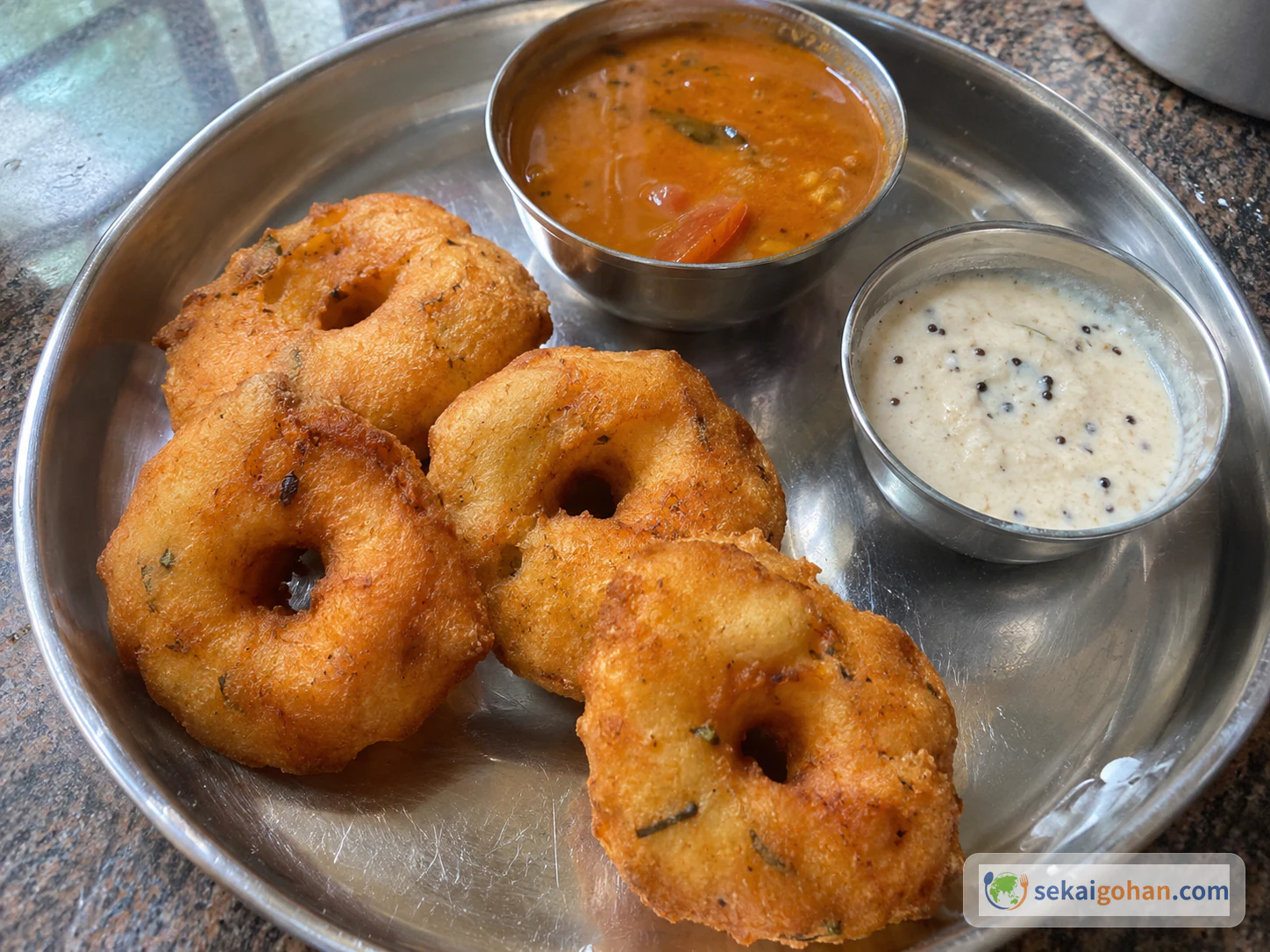
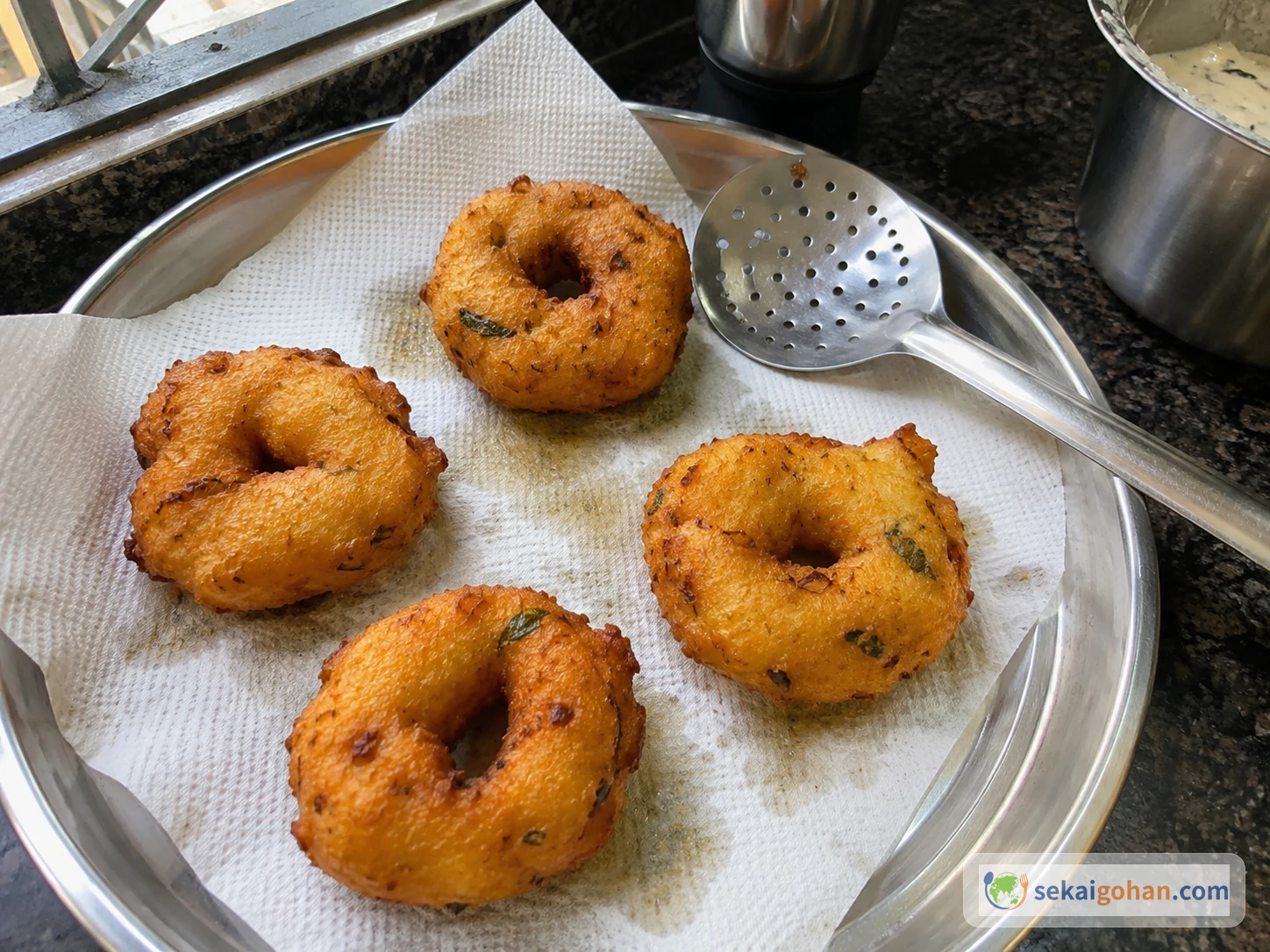
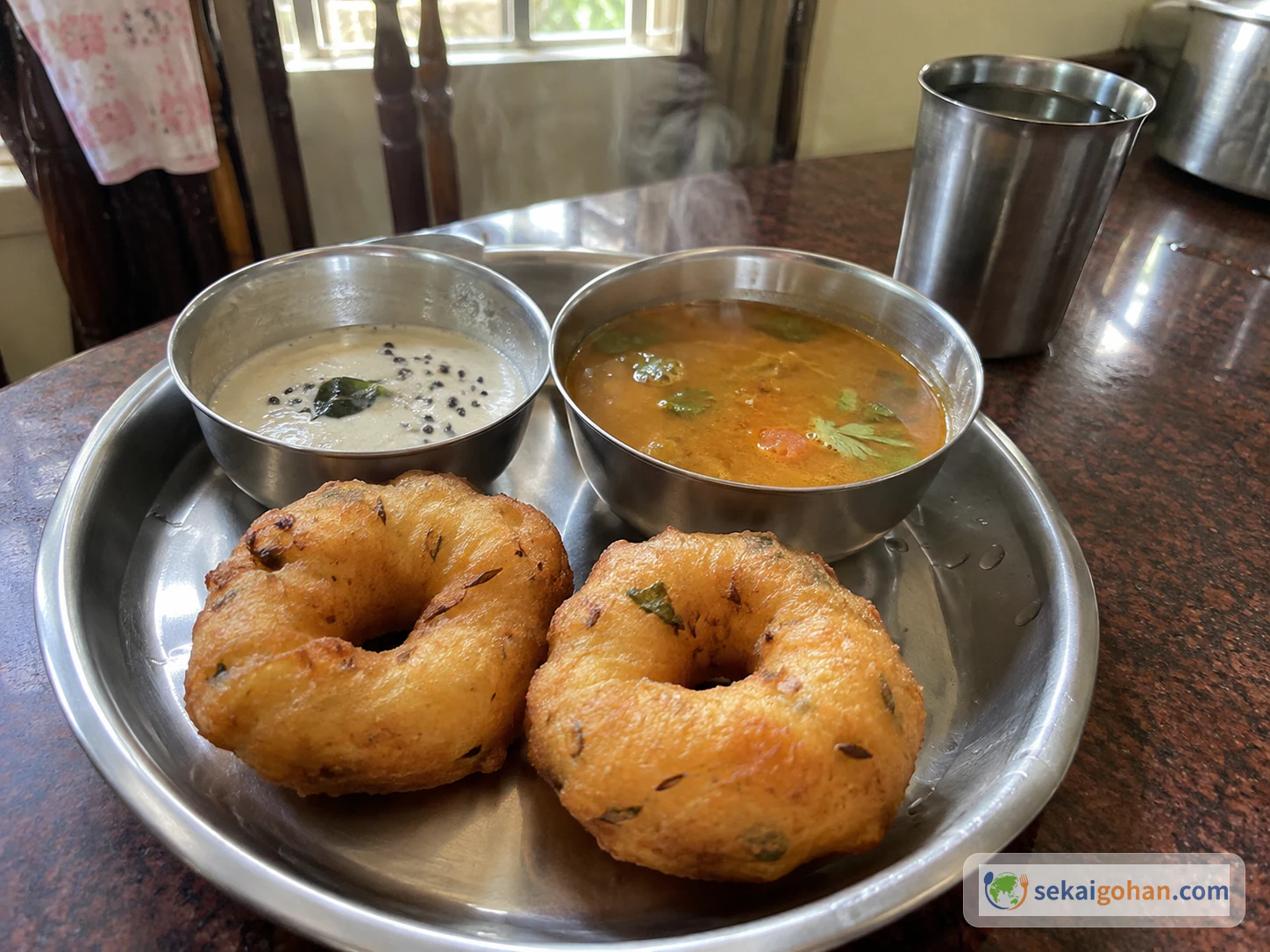
A pale ring of batter slides off wet fingers into the oil, sinks for a breath, then rises with a ring of fine bubbles around it. The underside turns a light gold, the spoon flips it, and a few minutes later it comes out deep gold, crackling at the edge, with steam curling out of the hole in the middle. Medu vada is a fritter of ground skinless urad dal, whipped until it holds air and fried in a doughnut shape. It belongs to the breakfast table of South India. The crust is crisp and the inside is soft and almost springy, with heat from green chilli, a sharp bite of crushed black pepper and the green perfume of curry leaves. It goes to the table hot, with a bowl of sambar and a bowl of coconut chutney.
Breakfast Beside the Idli
Across Andhra Pradesh, Tamil Nadu, Karnataka and Kerala, medu vada is eaten at breakfast or as a snack, and it very often shares the plate with idli. The pairing makes sense on the tongue. The idli is soft and steamed, the vada is crisp and fried, and both are dragged through the same sambar and coconut chutney. Some kitchens serve a peanut chutney instead. In Khammam, in Telangana, breakfast can mean sambar vada. For more dishes from the same country, the India page gathers them in one place.
The name changes as you cross state lines. In Andhra Pradesh the same fritter is garelu; in Tamil Nadu it is medu vadai, or simply vadai; in Kerala it is uzhunnu vada; in Karnataka it is uddina vade. The word medu means "soft" in Kannada, and it describes the inside of a well-whipped vada. Udupi-style restaurants may have carried that name to the rest of the country, though where the dish itself began is not settled.
"Vada" names a whole family of fried snacks. Maddur vada, sold at the railway station in Maddur, Karnataka, since 1917, is a flat fritter made from sooji, maida, ghee, butter and onion. Vada pav is Mumbai street food. Dahi vada and dahi bhalla are soaked and covered in yogurt. The ring of plain urad dal batter here is medu vada.
What changes from kitchen to kitchen
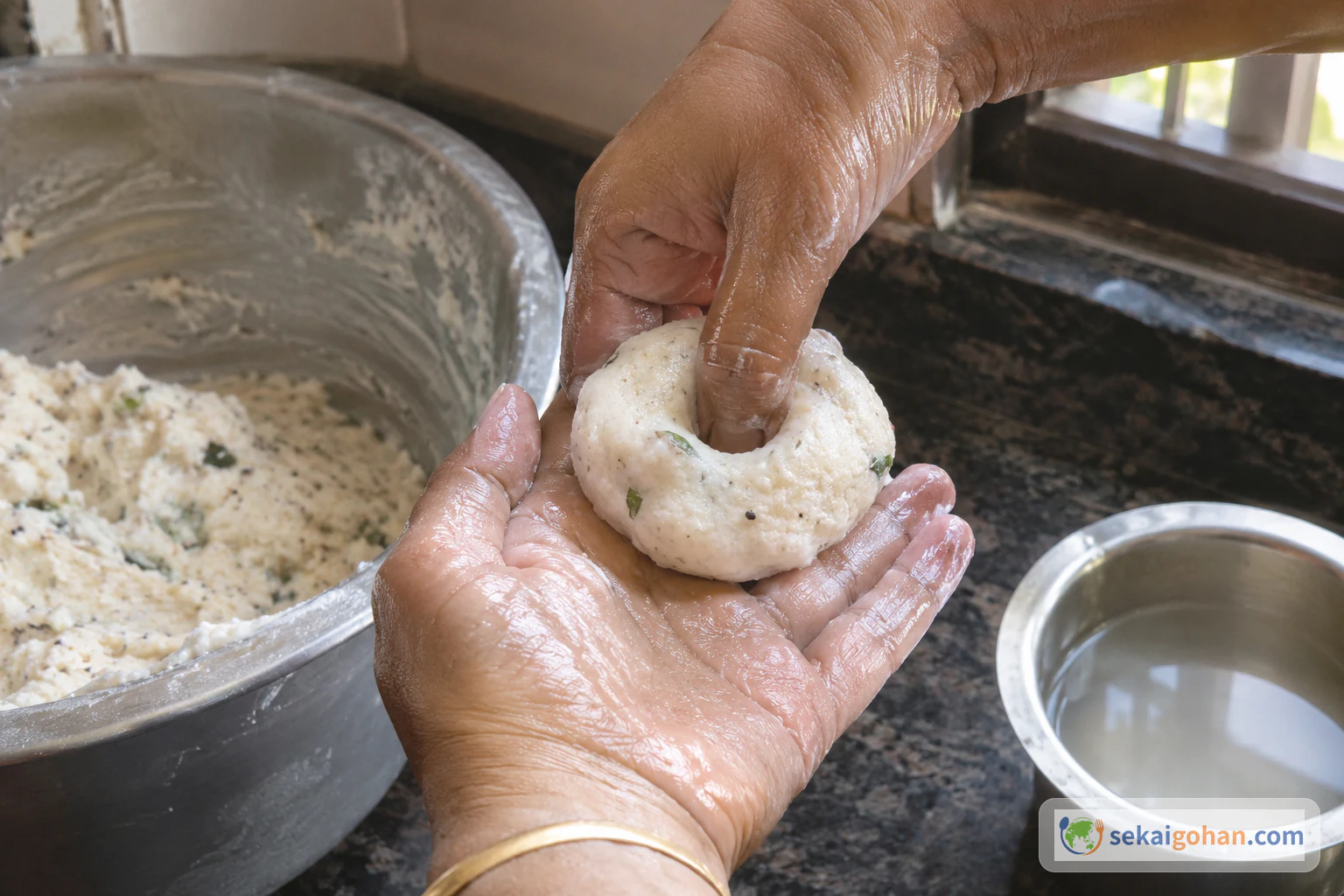
The core never moves: soaked urad dal, ground with very little water, whipped until light. Around that core, households differ. Some leave out the onion, some soak a spoonful of rice with the dal, some add a pinch of hing (asafoetida) or cumin. The shaping changes too. One cook works on a wet palm, another on oiled plastic wrap, another over a tea strainer or a fine sieve. Urad dal is also the base of idli and dosa, but those batters ferment before they are steamed or griddled. Vada batter goes from the whisk straight into the oil, which is why it stays so pale and tastes so clean of the bean.
Ingredients (makes 10)
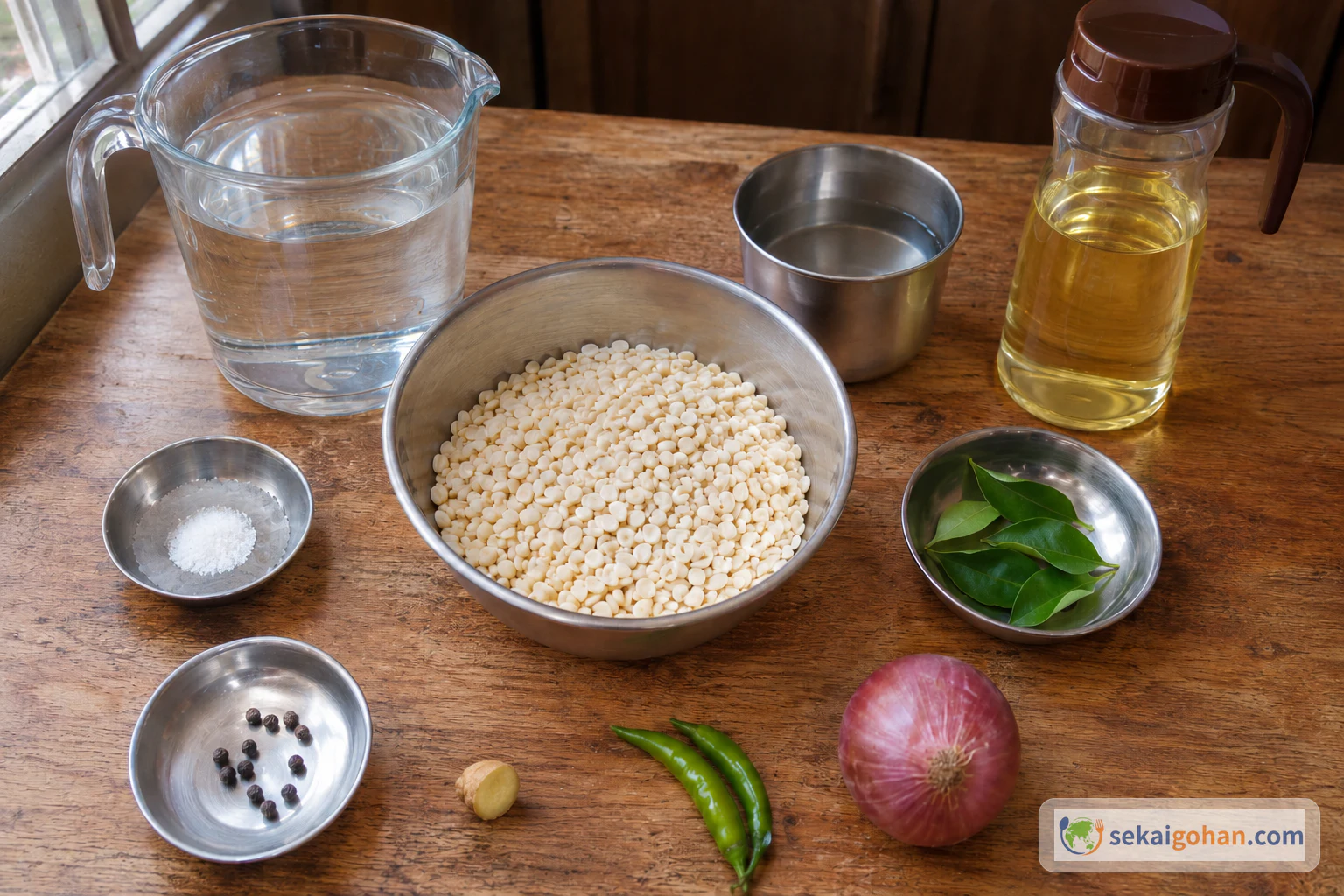
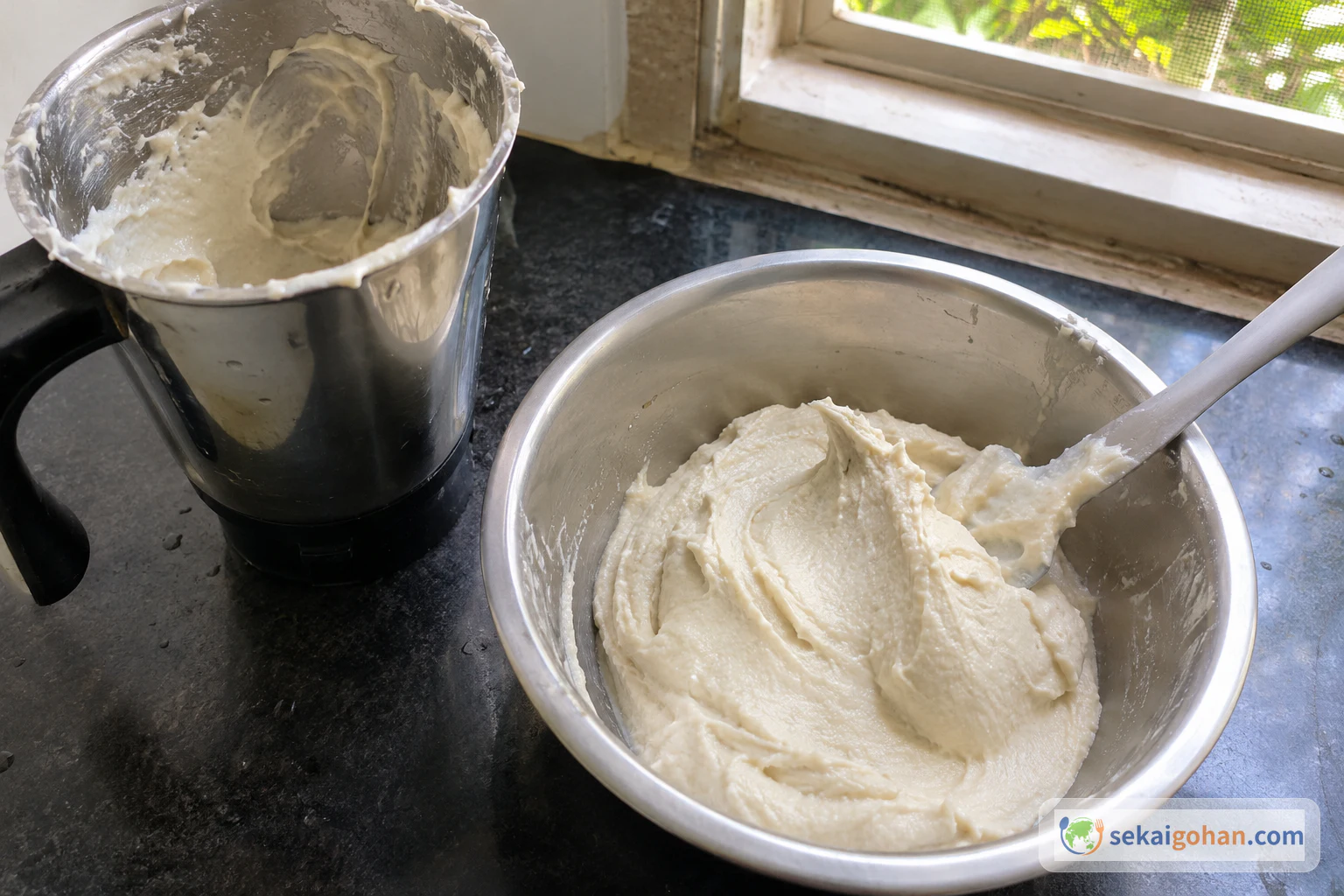
The amount of water in the blender decides the whole dish. With 3–4 tbsp and no more, the batter is thick enough to hold a hole and to trap air when whipped.
Urad dal is a legume. The vada contains no wheat, egg, nuts or dairy. Coconut chutney contains coconut and sambar contains legumes, so check the accompaniments separately, along with the label of the frying oil.
Equipment
- Large bowl for soaking
- Blender or mixer grinder
- Mixing bowl and a balloon whisk, hand mixer or stand mixer
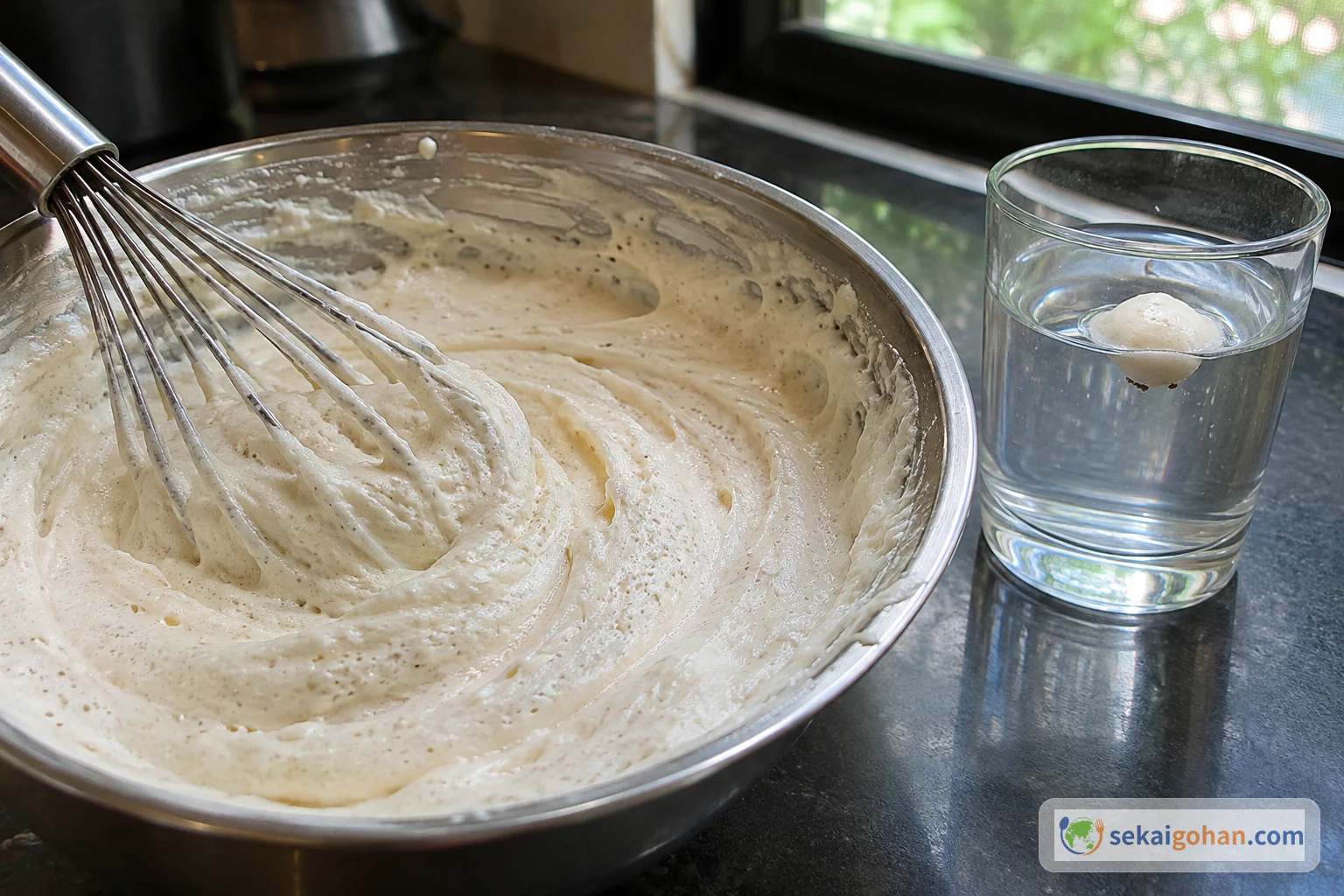
- Glass of water for the float test
- Small bowl of water for wetting your hands
- Plastic wrap, or a tea strainer or fine sieve, for shaping
- Kadai or deep pot for frying
- Slotted spoon
- Plate or tray lined with paper towels
Choosing and Substituting
Look for "urad dal dhuli", the skinless split form, at an Indian grocer or online. It is small and pale cream. Whole urad and the skin-on split kind are different products and are not what this recipe uses. Moong dal, chana dal and soybeans have a different stickiness and do not trap air the same way, so they make a different fritter; this dish needs urad.
The aromatics are forgiving within limits. Fresh curry leaves are best, frozen ones work well, and dried leaves give a much fainter aroma. Use fresh ginger rather than paste from a tube, because the paste brings extra water into a batter that cannot take it. Green chillies vary a lot in heat, so taste one before deciding between one and two. Crush whole peppercorns just before mixing; pre-ground pepper loses the sharp bursts that make each bite lively.
| Keep for the taste of South India | Can be adjusted |
|---|---|
| Skinless split urad dal | Number of green chillies |
| Very little grinding water | Onion in or out |
| Whipping until a blob floats | Fresh or frozen curry leaves |
| Frying fresh and serving hot | Shaping by hand, on wrap or over a strainer |
Method
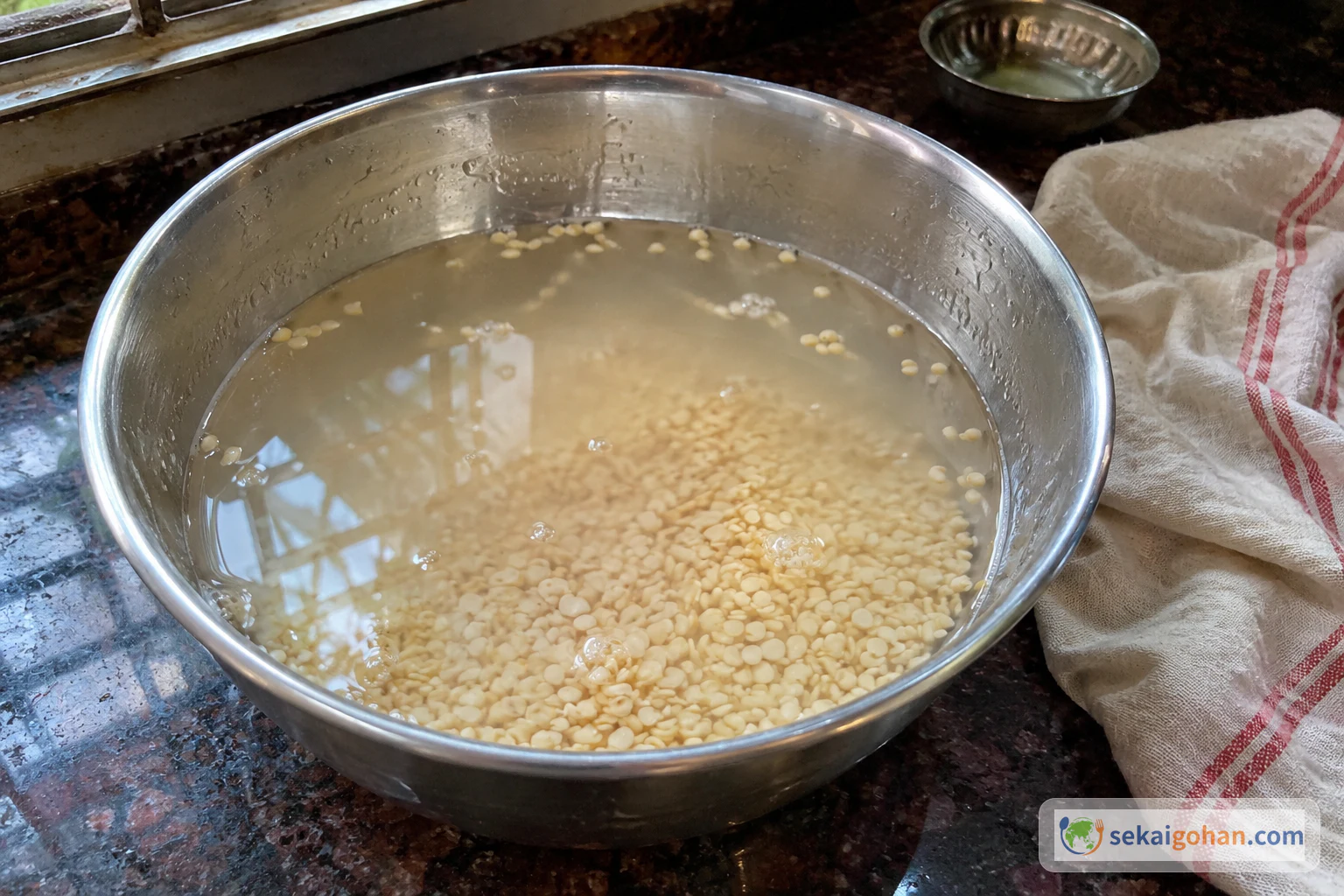
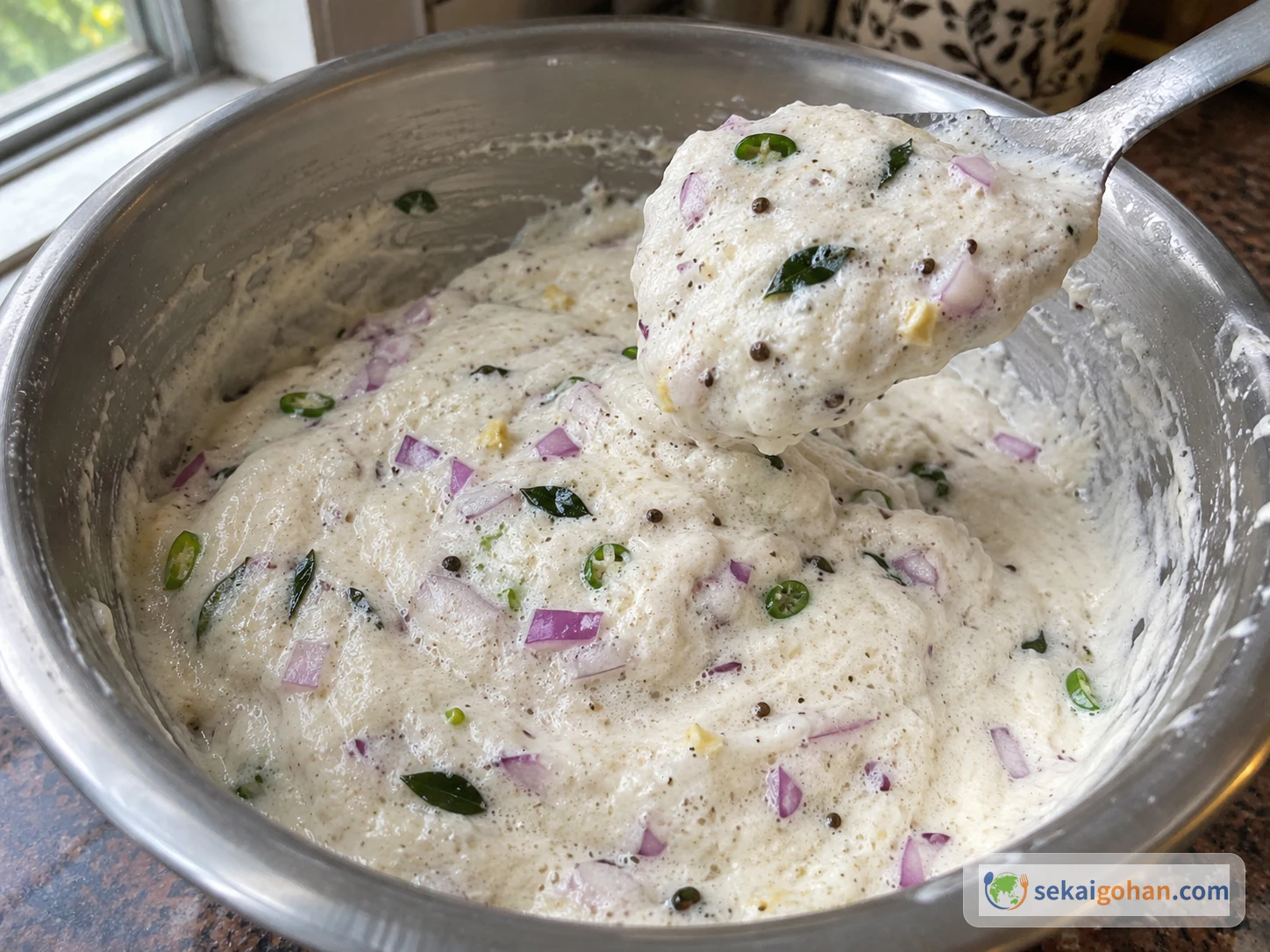
Start the night before by soaking the dal; that is the only long, hands-off stretch. In the morning the work runs in one line without pauses: grind, whip, fold in the aromatics, then shape and fry while the batter is still full of air. Set the pot of oil on the stove before you start shaping so it is ready when the first ring is.
Drop a small blob of batter into a glass of water. If it floats, the batter is ready; if it sinks, keep whipping. Under-whipped batter fries into heavy, hard vada no matter how careful the frying is.
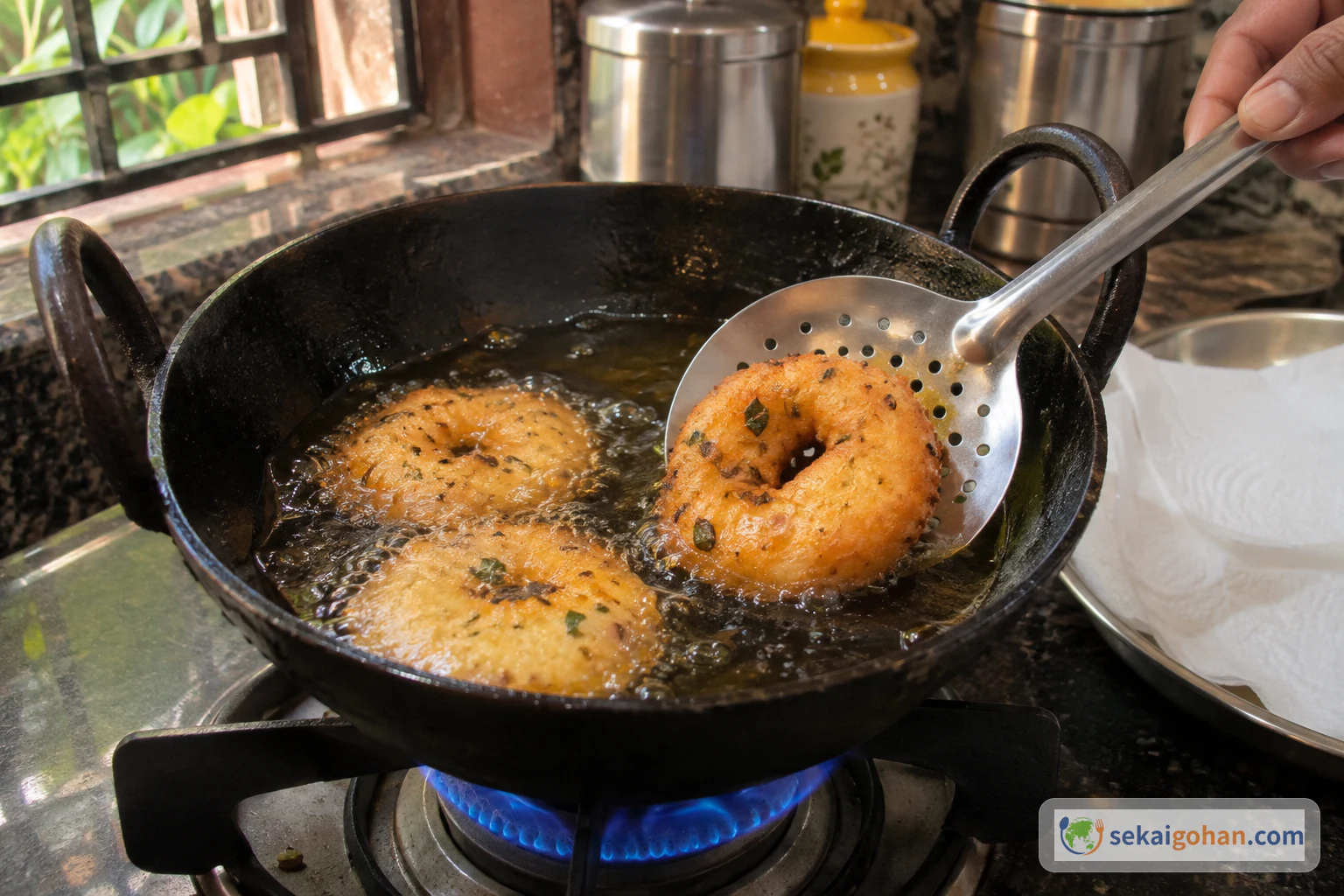
Treat the first ring as your thermometer. If it colours within seconds, the oil is too hot and the inside will stay raw; lower the heat. If it sits pale and soaks up oil, the oil is too cool; let it heat up again.
The batter is wet, so the oil spatters when it goes in. Slide each vada in gently, close to the surface, and keep your face back from the pot. Keep children away from the frying stage, and keep a lid nearby. Any vada that is still raw in the centre goes back into the oil; do not eat it underdone.
When It Goes Wrong
| What you see | Why | What to do |
|---|---|---|
| The batter is loose and will not hold a shape | Too much water went into the blender | Stir in 1 tbsp rice flour to firm it; next time grind with less water |
| The vada fry flat, dense and hard | The batter was not whipped enough | Whip again until a blob floats in water |
| Brown outside, raw in the middle | The oil is too hot | Lower the heat and return underdone vada to the oil until cooked through; never eat a raw centre |
| Greasy and heavy | The oil is too cool, or the batter is loose | Let the oil heat up again between batches; rewhip the batter |
| The hole closes in the oil | Loose batter or a small hole | Make the hole wider and the ring slightly thicker; shape on oiled plastic wrap or over a tea strainer or fine sieve |
| Soft and limp once cool | They were covered while hot | Refry briefly or warm in an air fryer just before eating |
Serving, Variations and Keeping
At the table
Medu vada is breakfast food first, eaten hot from the pot next to idli, with sambar and coconut chutney or peanut chutney for dipping. It also works as an afternoon snack with just chutney. Because the vada itself is mild and peppery, the sambar brings sourness and the chutney brings cool sweetness, and every bite changes depending on which bowl you dip into.
Variations
- No onion. Leaving the onion out gives a cleaner bean flavour, closer to the vada made for festival days and temples.
- A spoonful of rice. Soak 2 tbsp of rice with the dal and grind them together.
- Rice flour. Folding in 1 tbsp of rice flour makes the shell crisper. Too much turns the vada hard.
- Sambar vada. Drop the freshly fried vada into hot sambar and serve them soaked through, soft and saturated.
- Extra aromatics. Chopped coriander leaves, a few cumin seeds or some dried coconut can go in with the other aromatics for a different fragrance.
Keeping leftovers
Vada are best eaten the day they are fried. Let leftovers cool, then refrigerate them in a covered container. Before eating, refry them briefly or warm them in an air fryer to bring the crust back.
Frequently Asked Questions
Can I grind the batter in a small mixer grinder?
Yes. Sprinkle the water in a little at a time instead of pouring it all at once, so the paste stays thick. A mixer grinder batter usually needs longer whipping afterwards, around 7 minutes, until a blob floats in water.
Can I make the batter the night before?
No. Do the soaking the night before and leave the grinding for the morning. The batter is fried straight after whipping; it is not fermented, so it goes into the oil right after whipping.
What oil should I use?
Any neutral frying oil works, as long as there is enough in the pot to float the vada. Sesame oil gives a stronger, nutty aroma to the crust.