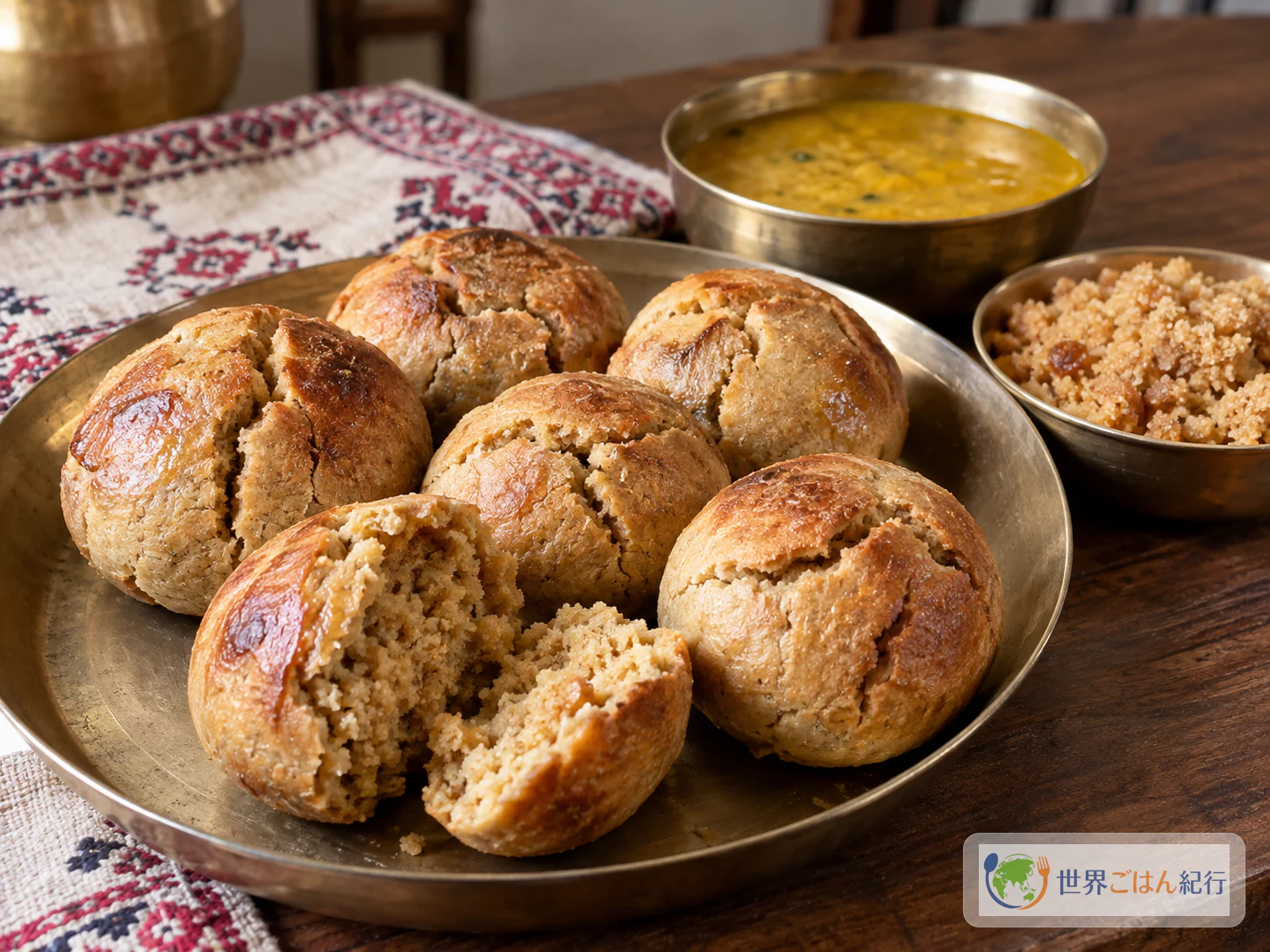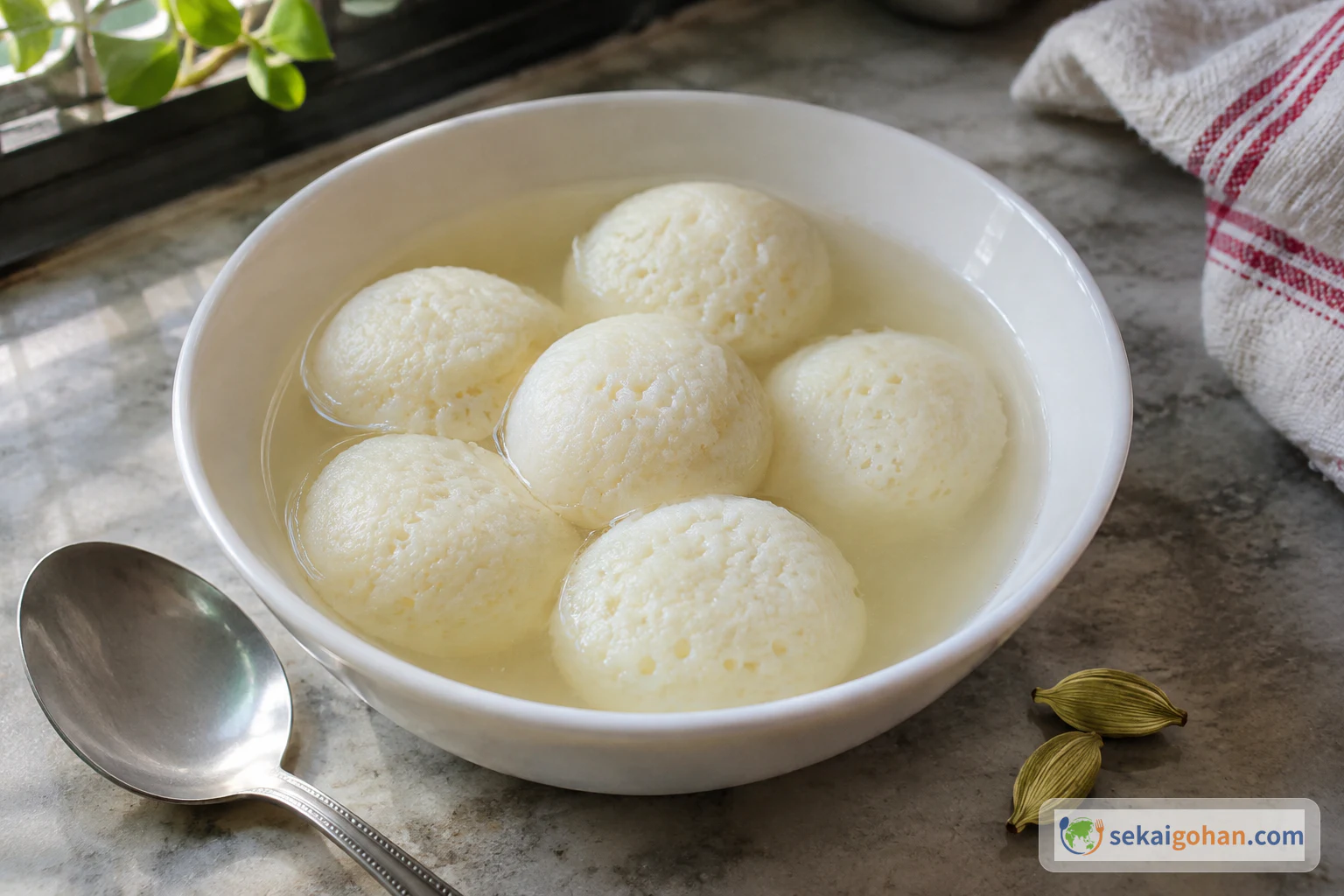
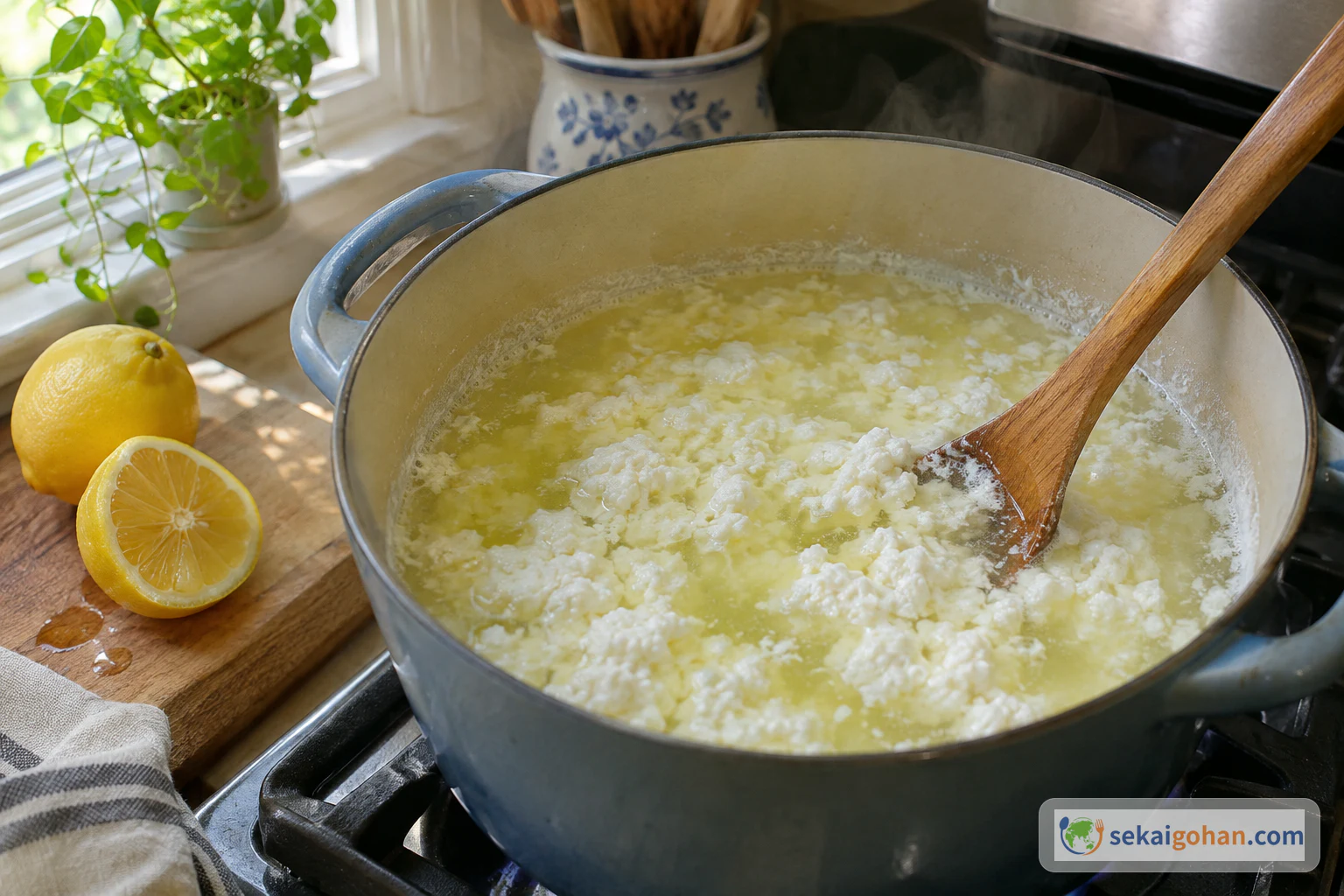
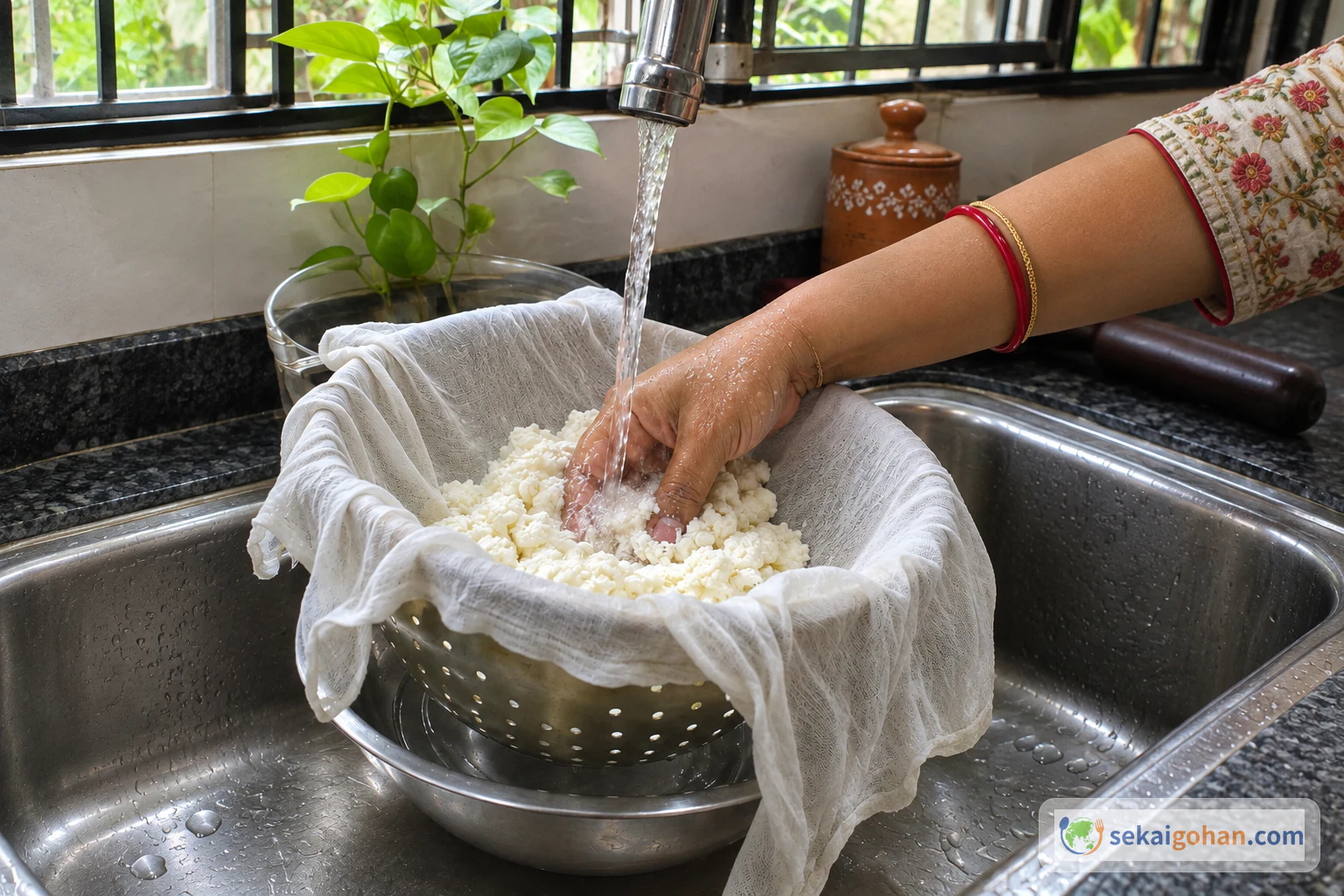
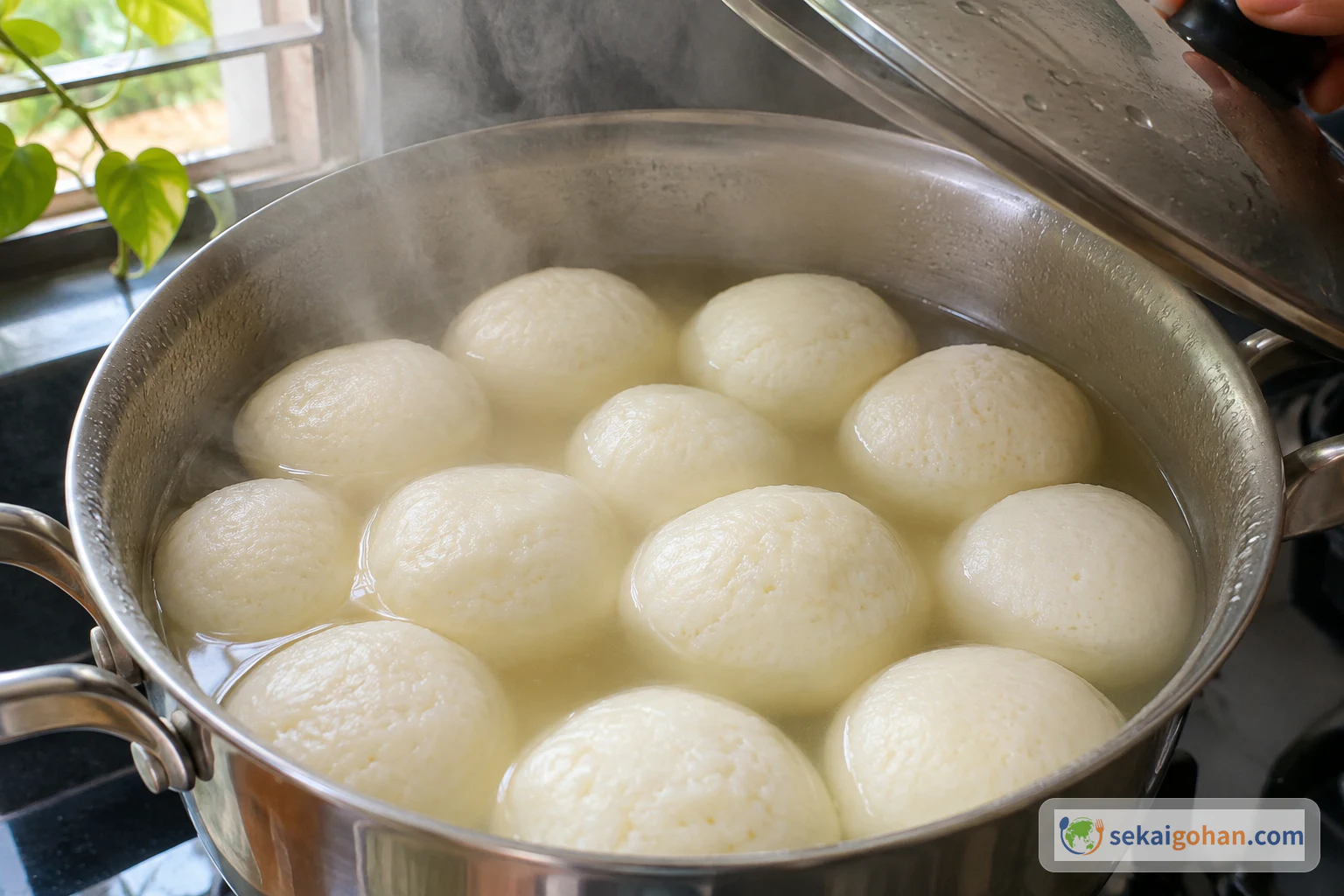
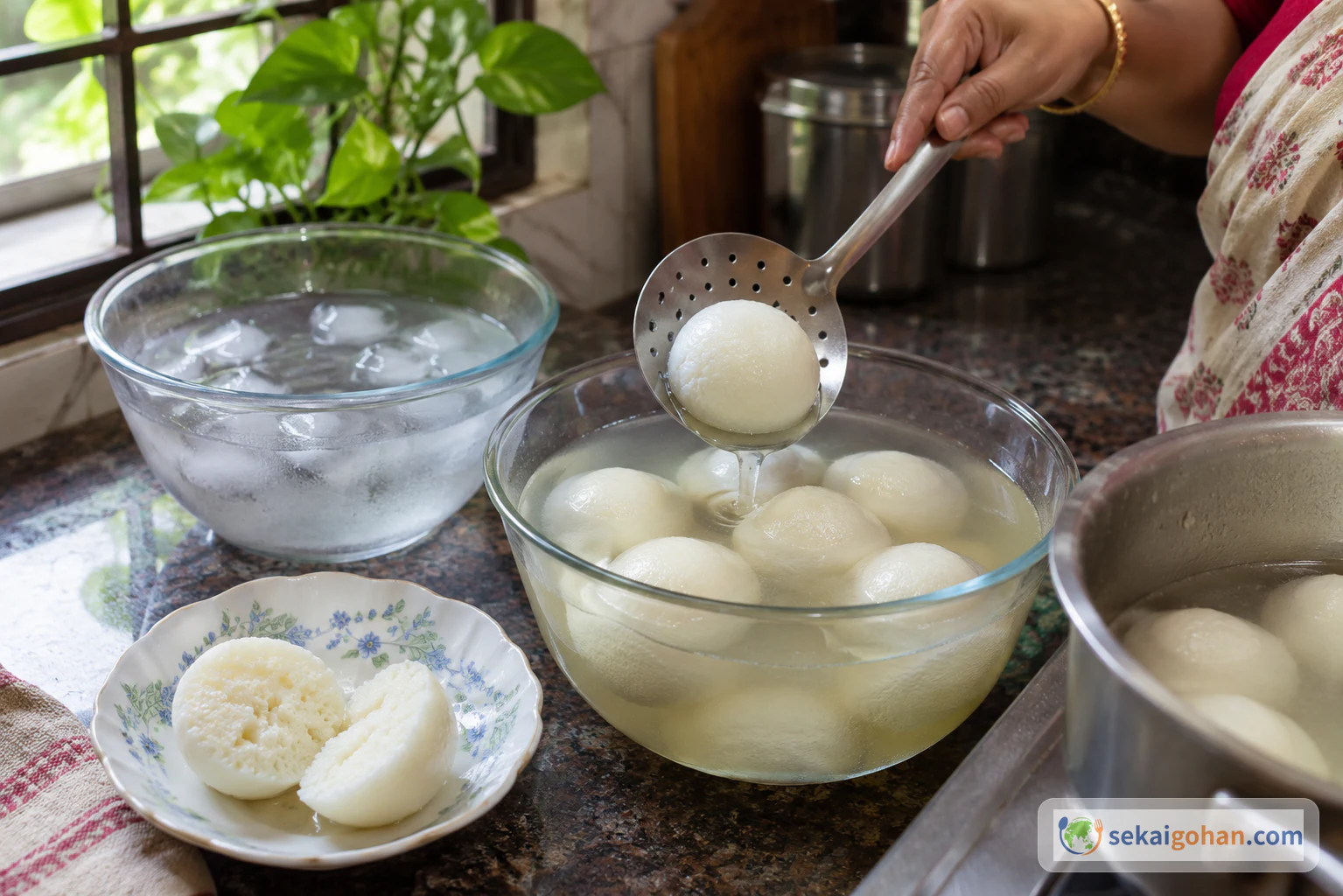
You lift the lid after the long rest and the pot has changed. The small, tight balls you dropped into boiling syrup have swollen into soft white spheres that bob in the clear liquid, and the steam smells faintly of cardamom. That is rosogolla: fresh cheese made from milk and lemon, kneaded smooth, rolled into balls and boiled in a light sugar syrup until it turns spongy. It is eaten cold, and the syrup in each piece runs out when you press it with a spoon.
Rosogolla, Rasagola, Rasgulla: One Sweet, Two Homelands
In Bengali it is rosogolla, in Odia rasagola, and in Hindi rasgulla. All three name the same family of syrup-soaked chhena balls, and you will see every spelling on menus and sweet-shop signs across India.
Rosogolla belongs to eastern India, to West Bengal and to Odisha, and both claim it. Where it was first made is not settled, and the argument is old, public and still warm. Each side tells a story worth knowing before you cook, because the two stories describe slightly different sweets.
The Bengal story
In Kolkata, the sweet is usually traced to Nobin Chandra Das, who is said to have created it in 1868 in the Baghbazar neighbourhood. The K.C. Das name is tied to the next chapter, when rosogolla was put into cans and carried far beyond the city. The Bengal rosogolla is the white, spongy kind this recipe makes: chhena alone, with no starch kneaded in, so the balls take up syrup like a fine sponge.
The Odisha story
In Odisha's account the trail runs to Pahala and to kheer mohana, a cream-coloured sweet that is soft but not spongy. The sweet is linked to the Jagannath temple in Puri and to the Niladri Bije ritual there. Odisha's claim is that it has been offered at the temple for more than 800 years, since the 12th century; that date is part of the dispute, not a settled fact.
Two tags
The quarrel ended up in India's register of geographical indications. Banglar Rosogolla was registered in November 2017, and Odisha Rasagola in July 2019. The Bengal entry records its texture as spongy and its makers stressed that it uses no starch, though whether that line truly separates the two sweets is itself questioned. Odisha also has chhena poda, a baked chhena sweet, which is a different dish altogether.
If you like milk sweets in syrup, gulab jamun sits close to rosogolla on the Indian sweet tray. For milk desserts that go in other directions, try strained-yogurt shrikhand, slow-cooked doodhpak or phirni.
Ingredients (makes 18)
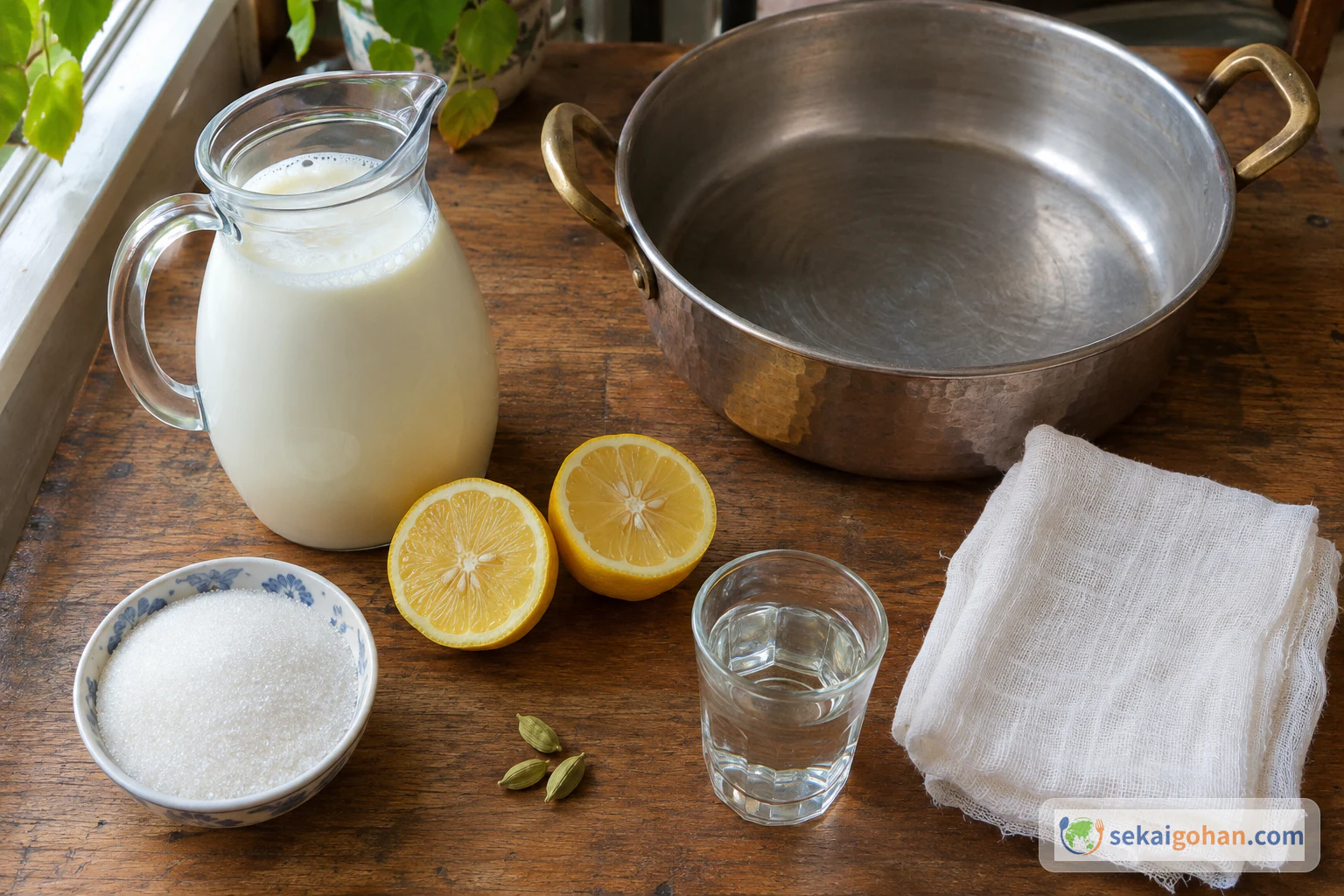
Rosogolla is made from cow's milk and contains milk throughout. The basic recipe uses no wheat or semolina.
Equipment
- Heavy-bottomed pot for boiling the milk
- Colander and a bowl to set it over
- Thin muslin or similar clean cotton cloth
- Wide, heavy pot with a well-fitting lid, for the syrup
- Clean, smooth plate or work surface for kneading
- Skewer
- Slotted spoon
- Serving or storage bowl
Choosing and Substituting
Full-fat milk decides the sponge. Low-fat milk curdles, but the finished balls come out less spongy, so buy whole milk. Ordinary supermarket milk is homogenized and works too, with a small change in heat when you add the lemon (step 1 shows how).
Use plain white sugar for the syrup. Organic or less refined sugar tints the syrup yellow, and the white of the balls goes with it.
Whole green cardamom pods are sold at Indian grocers and online; buy pods, since they come out of the syrup before cooking. Rose water and saffron are optional extras from the same shops. Leave them out and you still have a complete rosogolla.
For the cloth, a thin muslin is best because it lets whey run out while holding fine curds. Some cooks knead a little semolina or cornflour into the chhena as insurance against cracking; the white, spongy Bengal style uses neither, and neither does this recipe.
Method: From Milk to Sponge
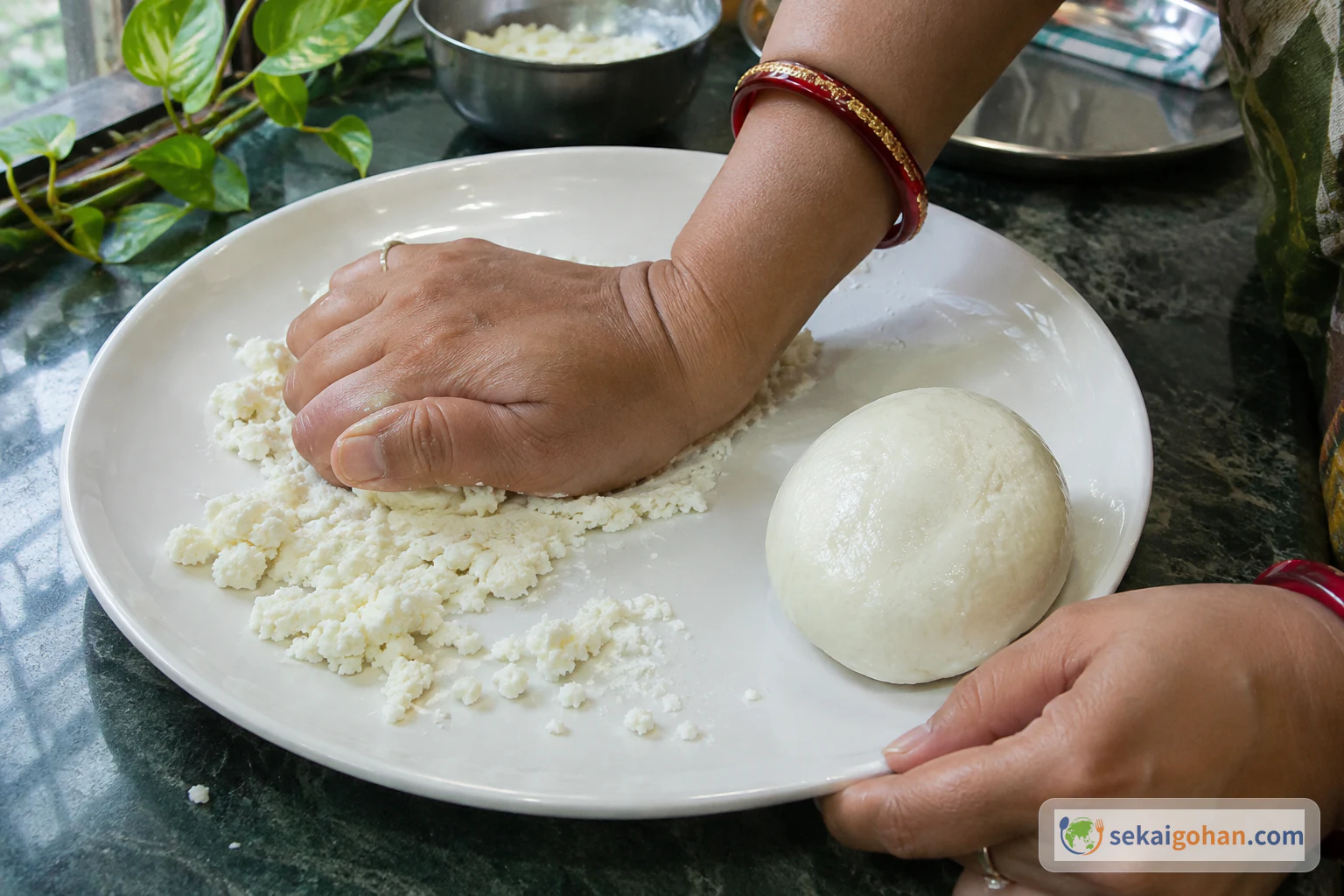
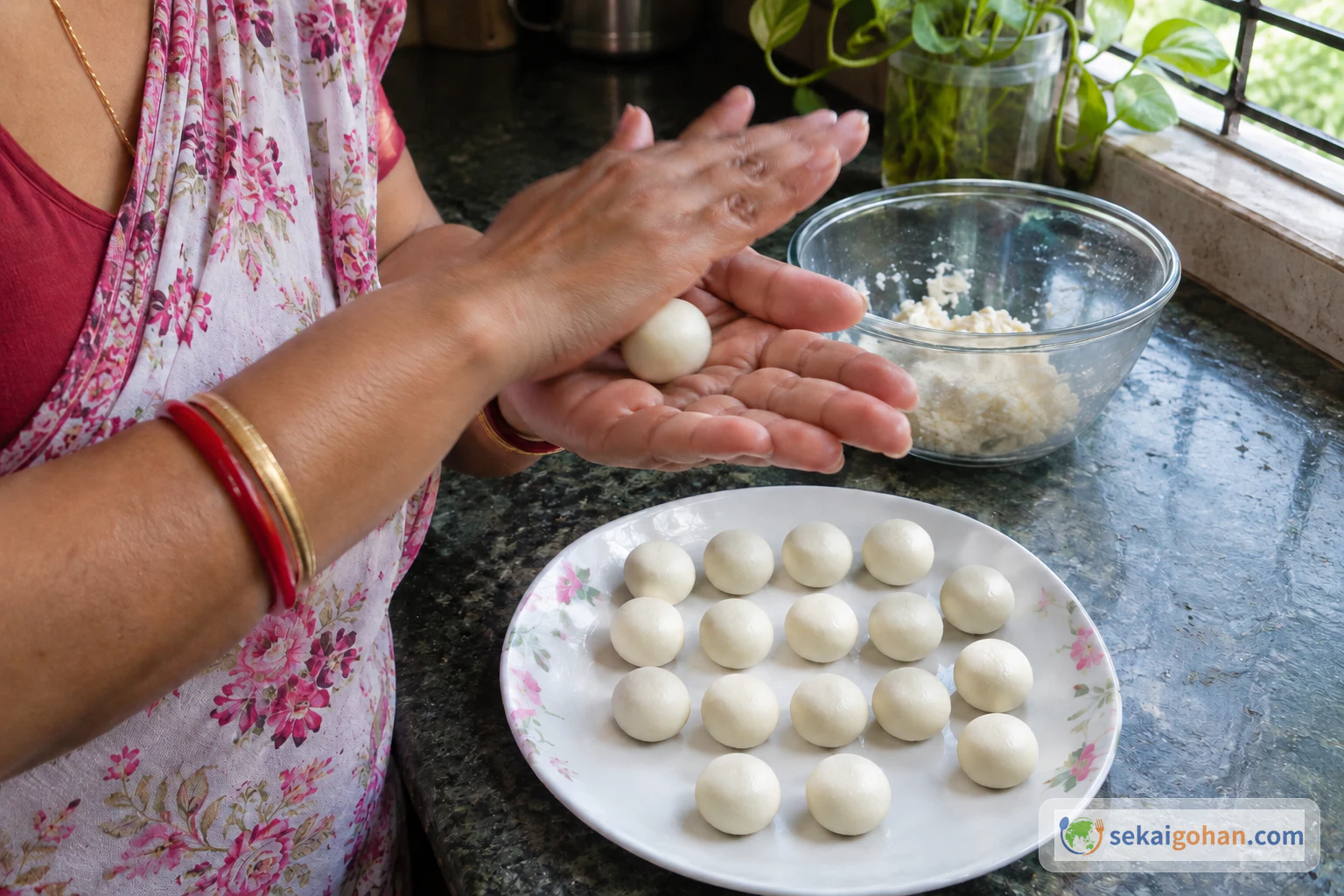
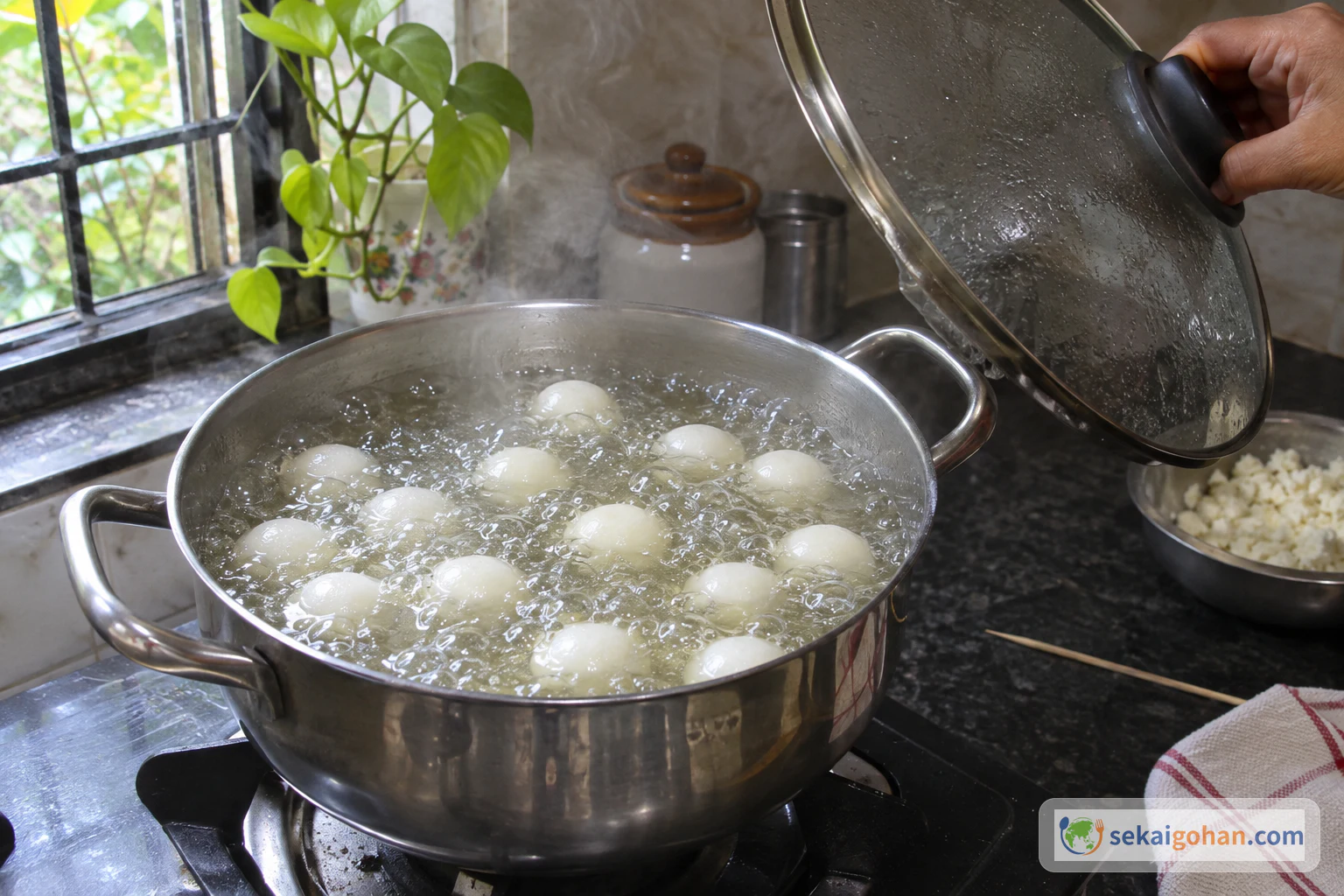
The work falls into three parts. First you make the chhena and let it hang, which is the long hands-off stretch. Then you knead and roll it, which takes only minutes but decides the texture. Last comes the syrup, a short steady boil with the lid on, then a closed-lid rest and a full chill. Have the ice water and the cloth ready before the milk goes on.
When It Goes Wrong
| What you see | Why | What to do |
|---|---|---|
| The milk stays cloudy after the lemon | Not enough acid yet | Add lemon juice a little at a time, up to 3 tbsp in all, until the whey runs clear |
| Balls crack or break apart in the syrup | The chhena was too wet, or the balls had cracks | Hang the chhena until it stops dripping, and roll each ball until the surface is seamless |
| Balls are hard and split | The chhena was too dry | Unwrap it as soon as the cloth stops dripping; crumbly and damp is right |
| Balls shrink after cooking | Over-kneading or too strong a boil | Stop kneading at smooth and keep the syrup at a steady medium boil |
| Balls are rubbery | The syrup boiled too hard | Hold medium heat, and keep the lid on through the rest |
| Balls stay small and dense | The pot was crowded, or the milk was low-fat | Use a wide pot with space around each ball, and full-fat milk |
Serving, Variations and Storage
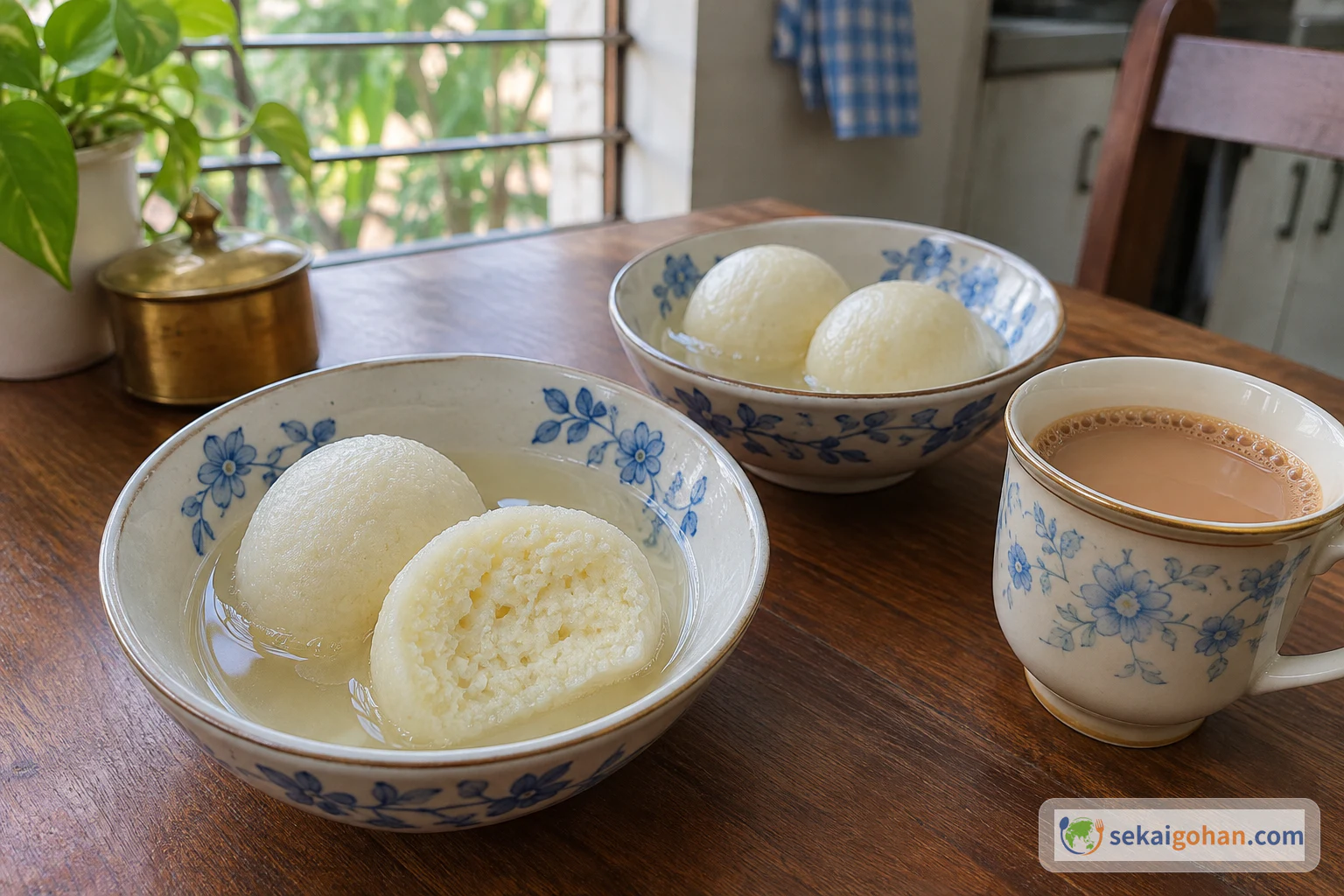
Serving
Serve rosogolla cold, a few to a small bowl with a spoonful of their syrup. Eat them with a spoon; press the edge of the spoon into a ball and syrup wells up from the sponge.
Variations
- Rose water in the syrup adds a floral note over the cardamom and makes the sweet smell more festive.
- A few strands of saffron on top give colour and a soft, honeyed aroma; add them at serving so the balls stay white.
- A heavier syrup, made with the extra sugar in step 10, makes each bite sweeter and the syrup slightly thicker.
Storage
Keep rosogolla in their syrup in a clean, covered container in the refrigerator, and eat them soon. Use pasteurized milk and bring it to a full boil before curdling; raw milk has no place in this recipe.
Frequently Asked Questions
Why do the balls look so small before they go into the syrup?
They swell a great deal in the boiling syrup and during the closed-lid rest. A ball that looks right on the plate turns out too big for the pot and has no room to puff. Rolling them small leaves space for each one to grow.
Do I need semolina or cornflour?
No. Rosogolla made from well-drained, lightly kneaded chhena holds together without starch, and the Bengal style is defined by having none. Some cooks add a little as protection against cracking, which moves the sweet away from the white sponge.
Can I just squeeze the chhena hard instead of hanging it?
Hanging lets the water leave slowly and evenly, so the chhena stays moist and crumbly. Wringing it hard drives out too much at once, and dry chhena makes hard, cracked balls. Squeeze lightly, then let gravity finish the job.
Is rosogolla the same as chhena poda?
No. Both start from chhena and both are loved in Odisha, but chhena poda is baked, while rosogolla is boiled in syrup and served cold. They are separate sweets.