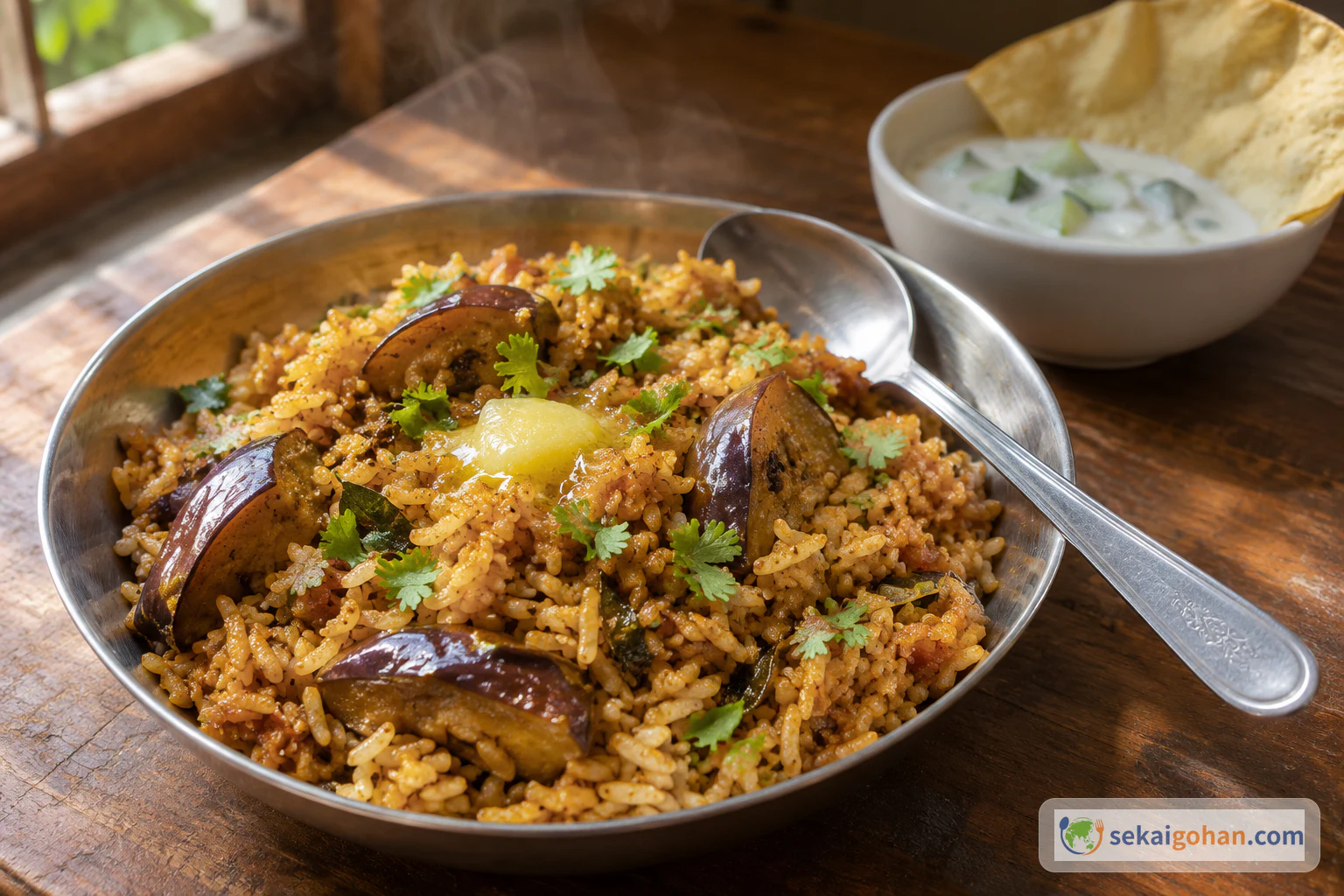
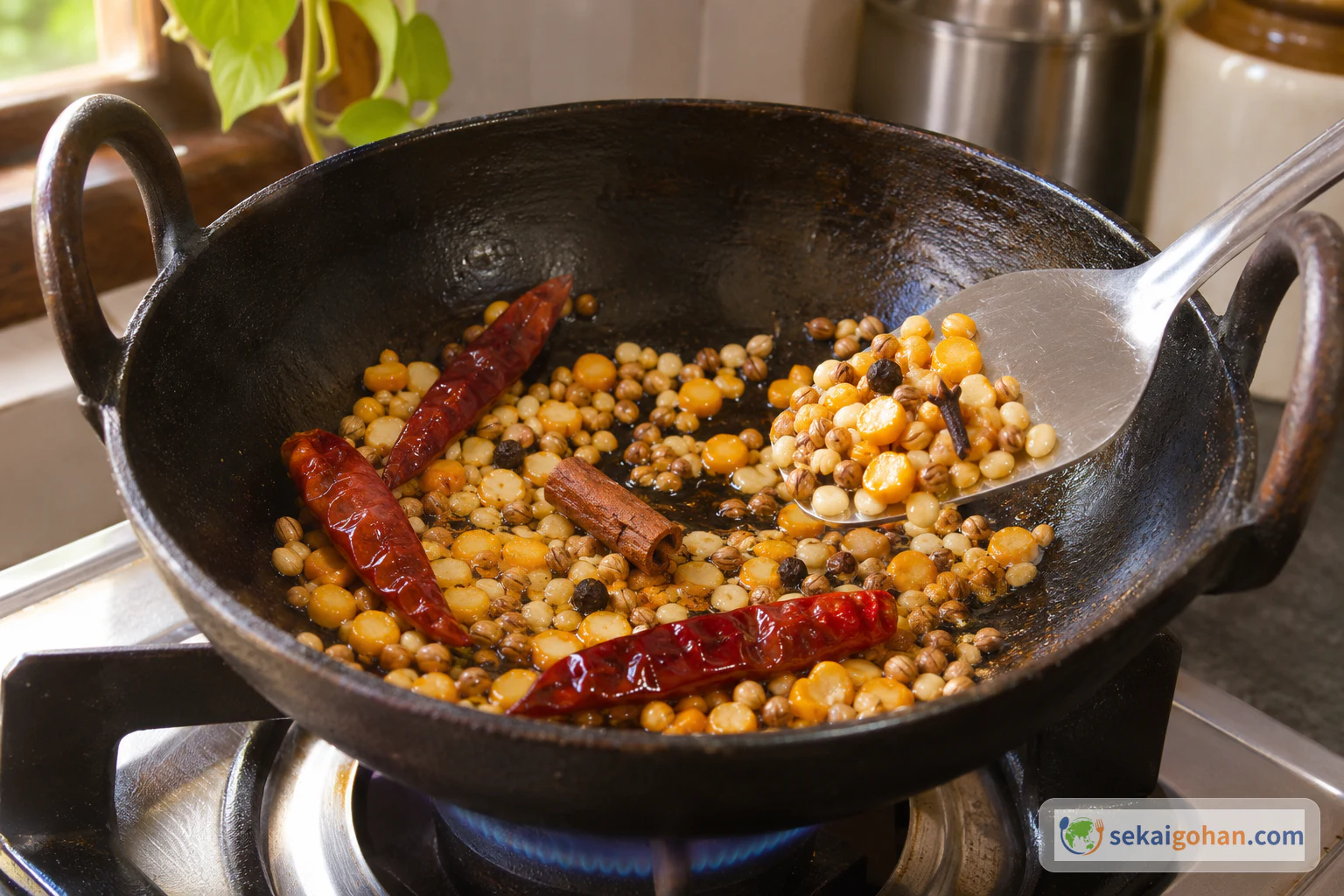
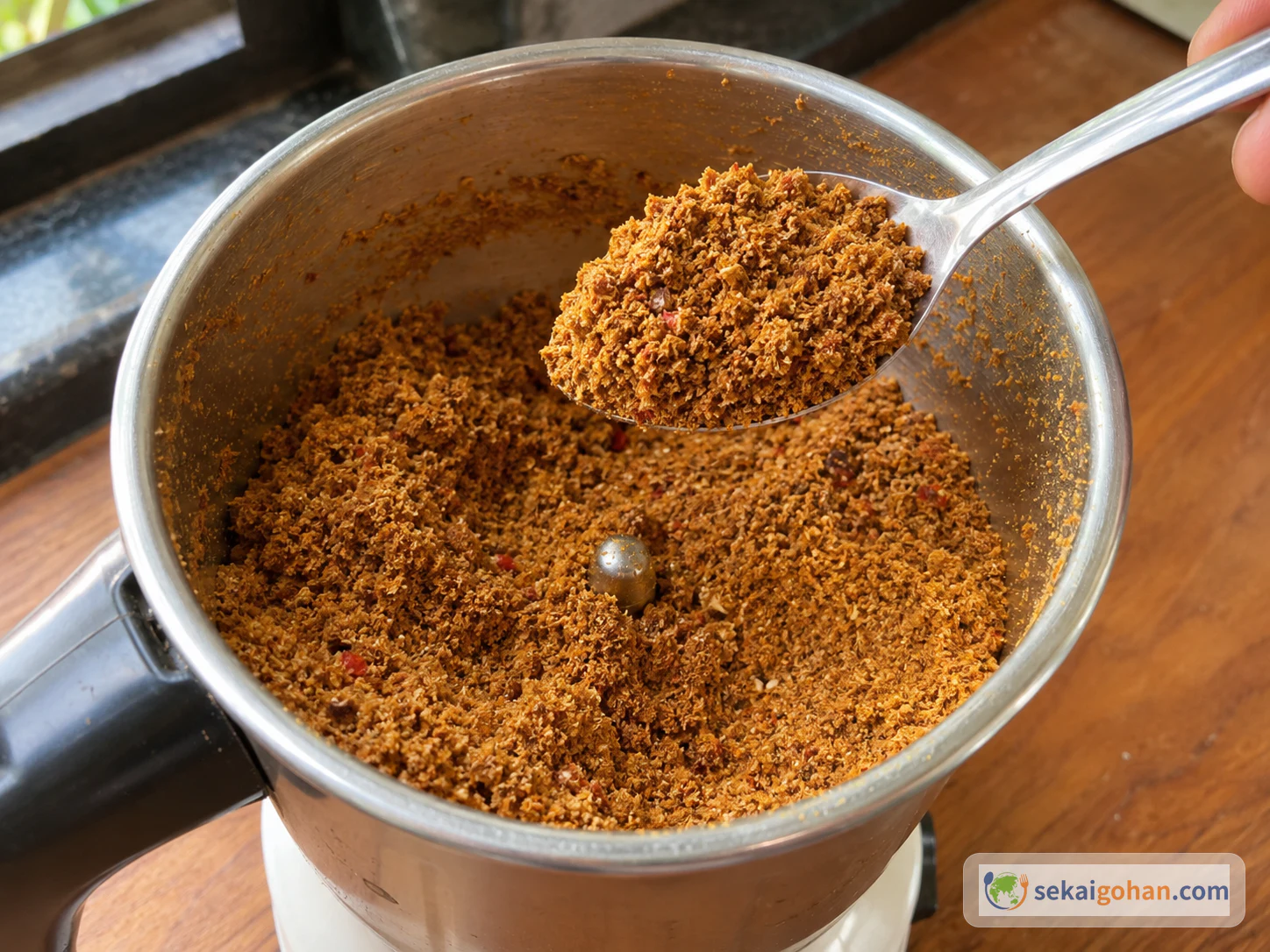
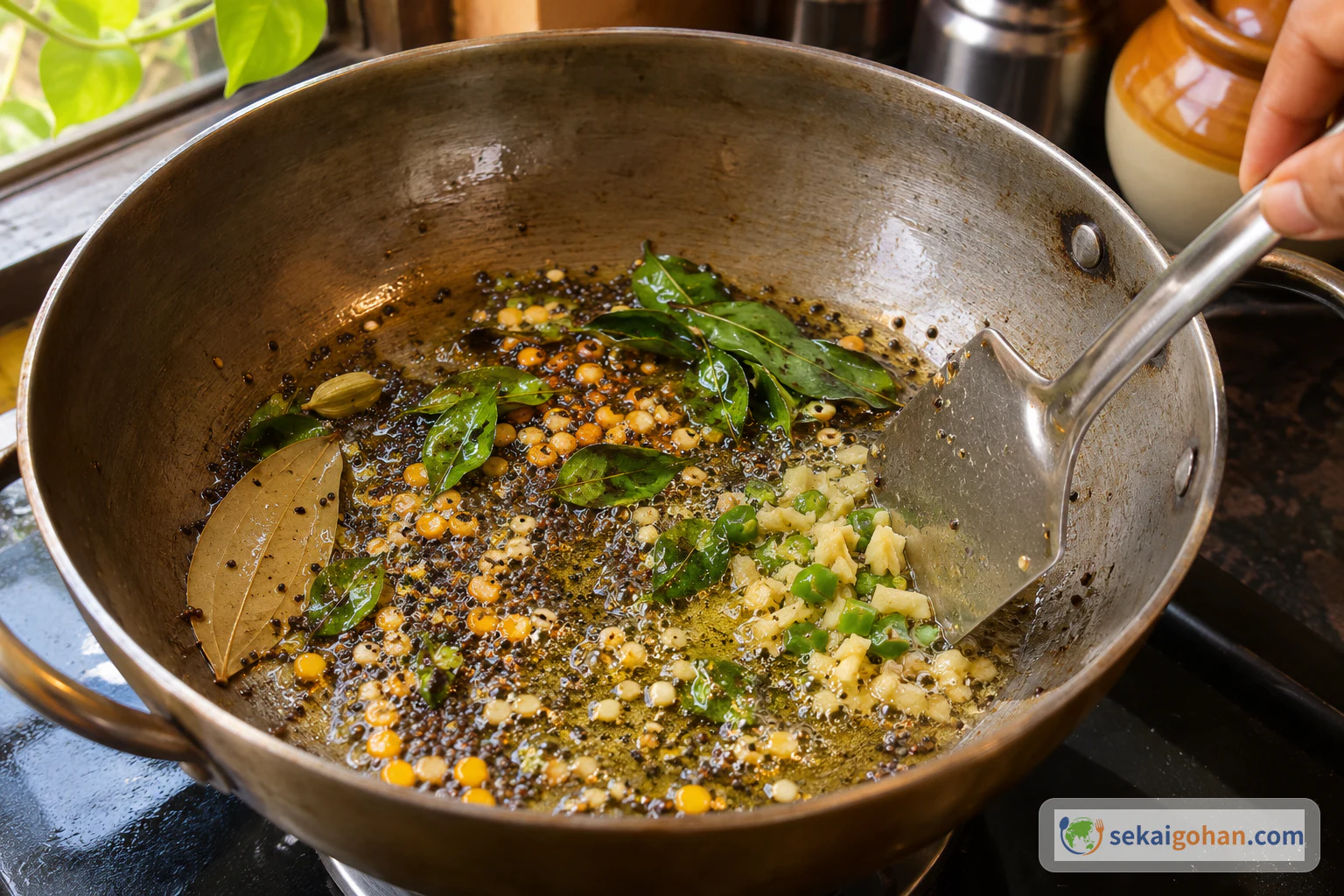
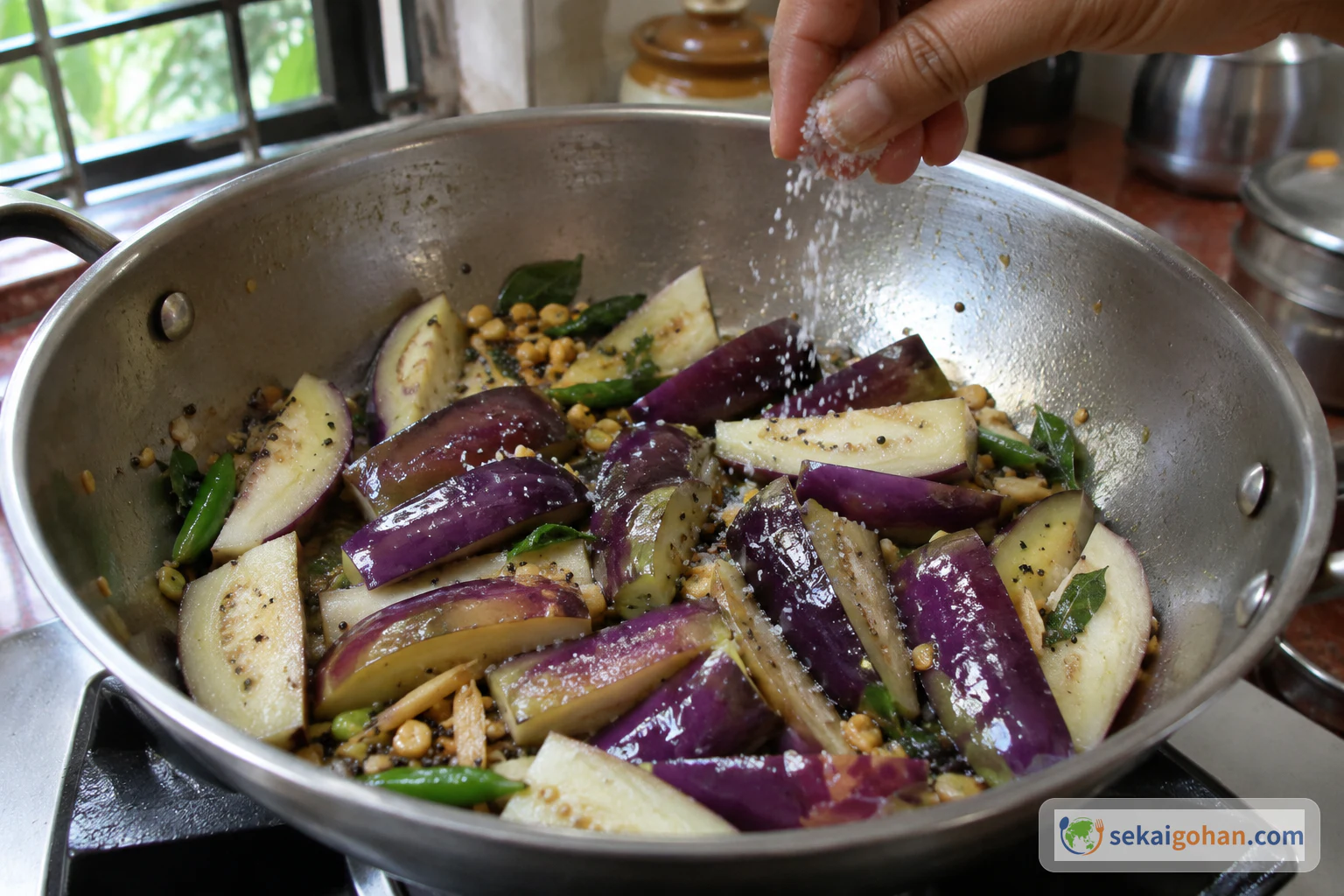
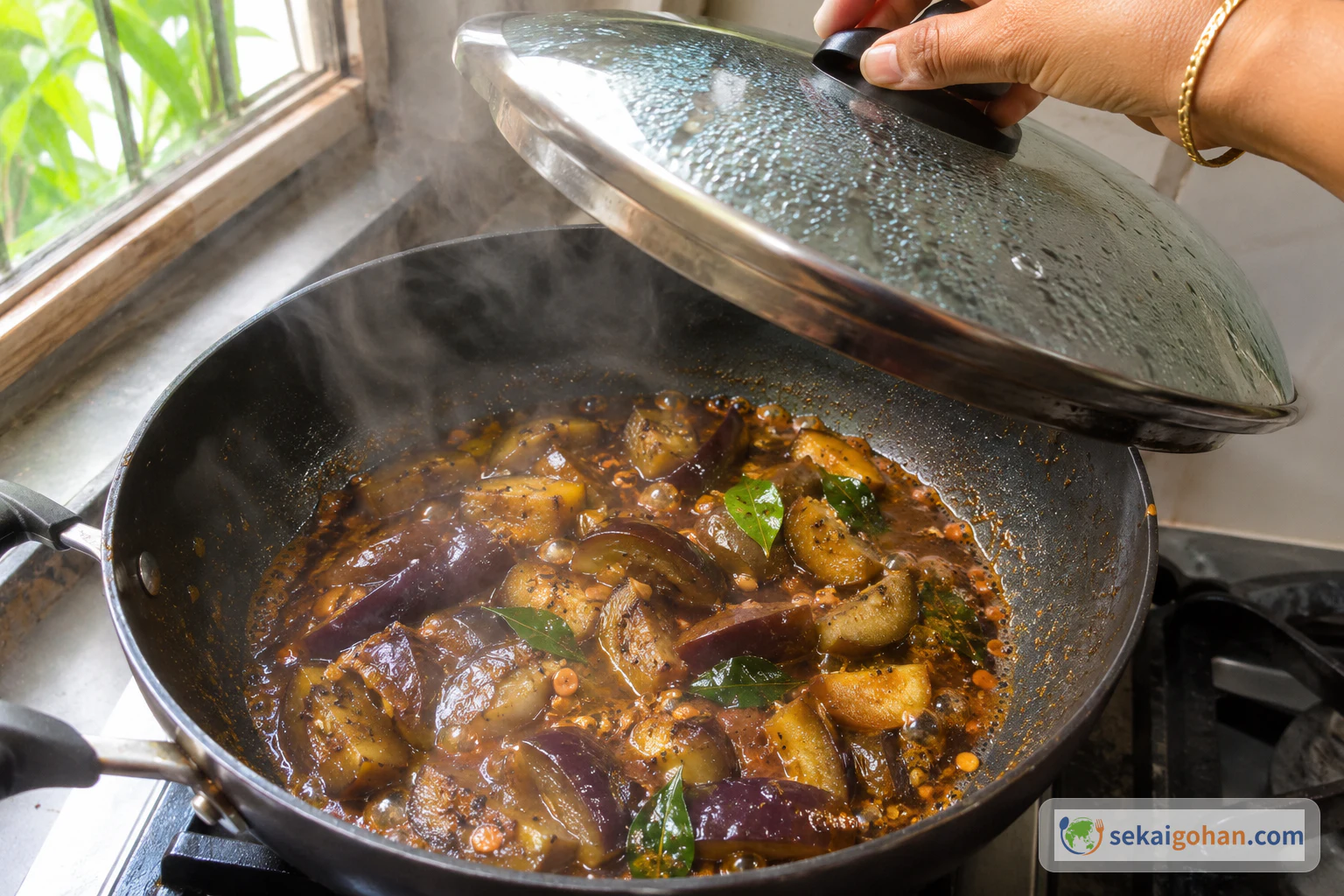
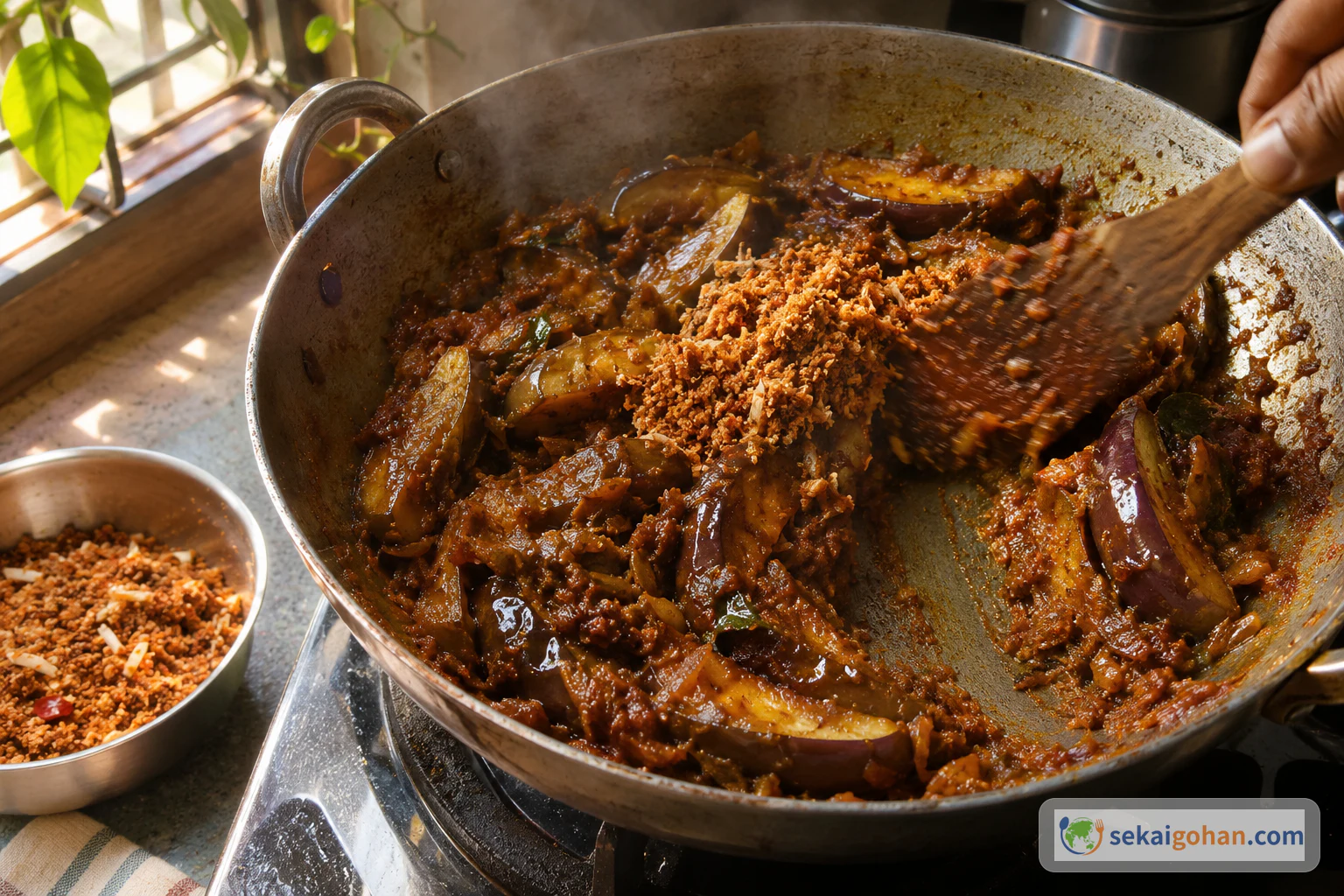
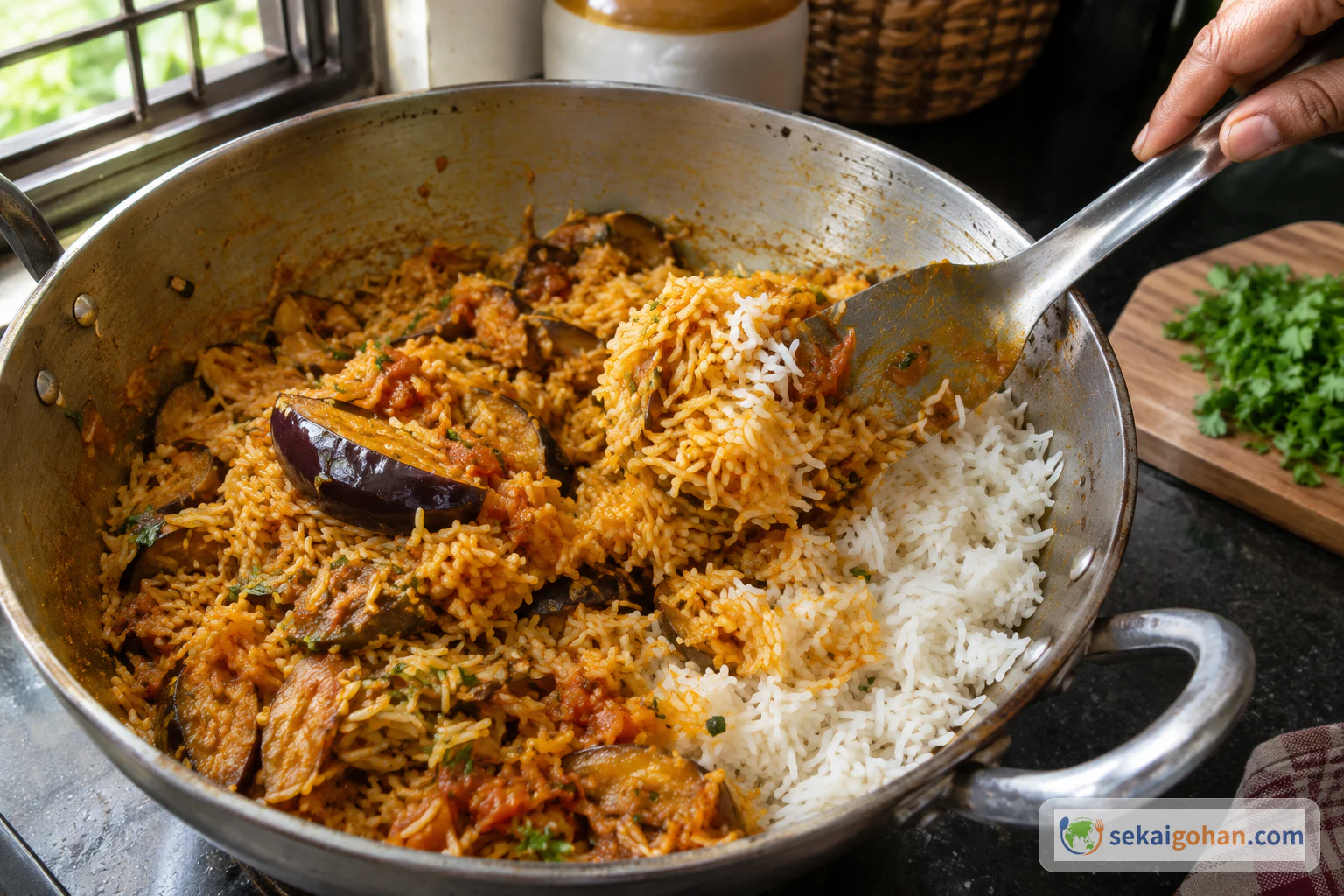
The chana dal goes from cream to gold in a few dozen seconds, the red chilies darken, and the cinnamon and clove start to smell sweet over the dry heat of the pan. Then the flame goes off, the coconut goes in, and the whole kitchen fills with toasted grain and spice. A little later the eggplant drinks up the oil and turns glossy, the tamarind stains it brown, and cooled white rice is folded through until every grain carries the same amber colour. Vangi bath is a rice dish from Karnataka in South India where the eggplant and the rice become one plate, eaten as a meal on its own. It tastes sour from tamarind, rich from dry coconut, nutty from roasted dal, warm from cinnamon and cardamom, with a heat that arrives a beat after the first bite.
Eggplant, Rice and the Word "Bath"
The name is two plain words. Vangi means eggplant, and bath means a seasoned rice dish, so it is also called brinjal rice in English. In Karnataka it is everyday food: a common breakfast, a light tiffin, and a dish that packs well into a lunchbox because it needs nothing poured over it. A cup of yogurt or a crisp papad on the side is all it asks for.
How ordinary it is showed up in Bengaluru in August 2017. On 16 August the first Indira Canteen opened in Jayanagar, part of a plan for 101 low-cost canteens across the city, and the chief minister of the time, Siddaramaiah, said his government cared about vangibath for the poor. The remark appeared in a speech at the opening, and it shows how well known the dish is in the state. It is one of many rice dishes across India that a whole region recognises by name.
Karnataka has a whole shelf of dishes ending in bath. Bisi bele bath, tomato bath and gorikayi rice bath (with green beans) sit next to chitranna and puliyogare as separate rice dishes, each with its own seasoning. Khara bath shares the word but is made with semolina (rava), with no rice at all.
Neighbours with similar names
In Maharashtra there is a vangi bhaat that sounds almost the same and also pairs eggplant with rice, but it is seasoned with goda masala, a different spice blend from a different tradition. This article stays with the Karnataka dish and its coconut-and-dal powder. Hyderabad's bagara baingan also stars eggplant, yet it is a curry, cooked in its own sauce and kept apart from the rice; the vegetable is the only thing the two share.
One name, many powders
The flavour of vangi bath lives in its spice powder, and no two households grind it quite alike. The skeleton stays steady: two roasted dals (chana and urad), coriander seed, dried red chili, dry coconut, and a little cinnamon and clove. Around that, one kitchen adds star anise, another drops the black pepper and uses fenugreek and poppy seed, and another brings in sesame and marathi moggu and finishes the rice with lemon and peanuts, using twice as much rice as eggplant. Plenty of families skip the grinding altogether and buy the powder ready-made; homemade and shop-bought sit side by side in the same kitchens. The amounts below make a single batch of a pepper-and-cinnamon version, with the eggplant and rice in roughly equal company.
Ingredients (serves 4)
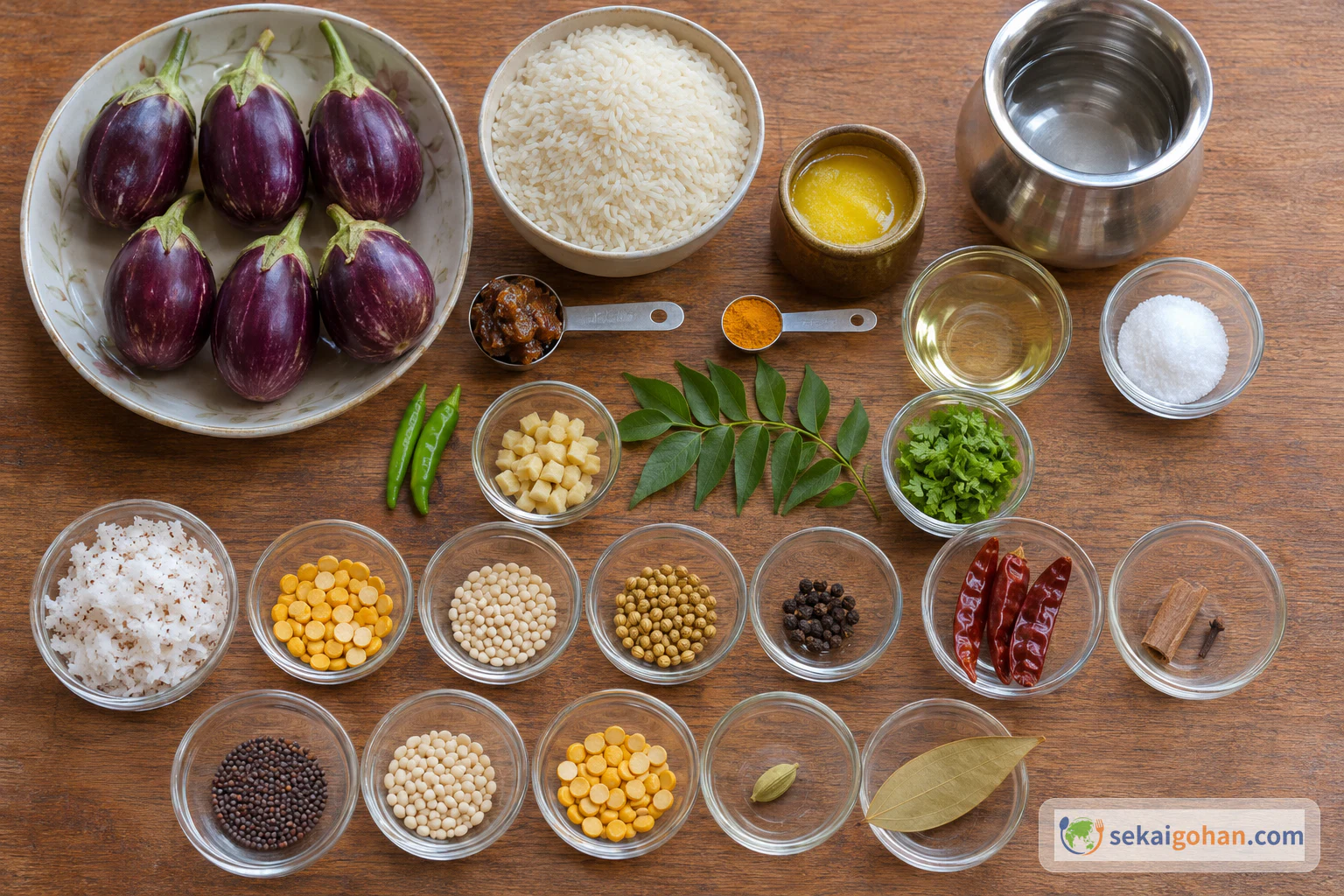
The dals appear twice for a reason. In the powder they are ground and give the rice its toasted, nutty body; in the tempering they stay whole and crunch between the soft eggplant and the rice. The two kinds of ghee do different jobs too: the teaspoon in the rice keeps the grains apart, and the ghee in the tempering carries the spices into the pan.
This dish contains mustard seed and dairy (ghee, and the yogurt raita served alongside), plus legumes in the chana and urad dal. Some households add cashews or peanuts; leave them out for anyone with a nut or peanut allergy. If you use bought powder or desiccated coconut, read the label for nuts, sesame and shared-facility statements.
Equipment
- A heavy, wide pan or kadai with enough depth to fold in the rice
- A small heavy pan for roasting the powder (the same pan works if you wipe it out)
- A spice grinder; a coffee grinder kept for spices works well
- A flat spatula, for folding rice without breaking the grains
- A wide plate or tray for cooling the rice
- A small strainer and bowl for the tamarind
- A pressure cooker or a rice cooker
- One measuring cup, used for both the rice and its water
Choosing and Substituting
An Indian grocer or an online spice shop has everything the supermarket lacks: sona masuri or basmati rice, block tamarind or tamarind paste, chana and urad dal, black mustard seed, curry leaves, biryani leaves, unsweetened dry coconut, cardamom and dried red chilies. Eggplant, ginger, green chilies, coriander leaves, plain yogurt and papad come from any ordinary shop.
Some things must stay for the dish to taste like Karnataka. The tamarind is one: the eggplant simmers in it, and its sourness is what the coconut and chili lean against. The roasted dals and dry coconut in the powder are the other half, and the cardamom and biryani leaf in the tempering give the warm top note that a cook from Karnataka would miss first. The five layers to protect are tamarind sour, coconut richness, roasted dal, chili heat and warm spice.
| Swap | What changes |
|---|---|
| Any low-stick everyday rice for sona masuri | Works well; choose a grain that cooks up separate |
| Sticky short-grain rice | Turns softer and clumps; the grains break more easily when folded |
| Larger long or medium eggplants, weighed to 7–9 oz (200–250 g) | Thin-skinned, watery eggplants soften faster, so check them early in the simmer |
| Tamarind paste (concentrate) for block tamarind | Strength varies by brand; start with a small amount and add to taste |
| Unsweetened desiccated coconut for dry coconut | Works; a slightly lighter, finer richness |
| Dried curry leaves for fresh | Fainter perfume; leaving them out drops one layer of aroma |
| Ordinary bay leaf for biryani leaf | A similar woody note, weaker |
| Clarified unsalted butter for ghee | Works; less nutty fragrance |
| Ready-made vangi bath powder | Saves the roasting and grinding; the flavour follows the brand |
Method
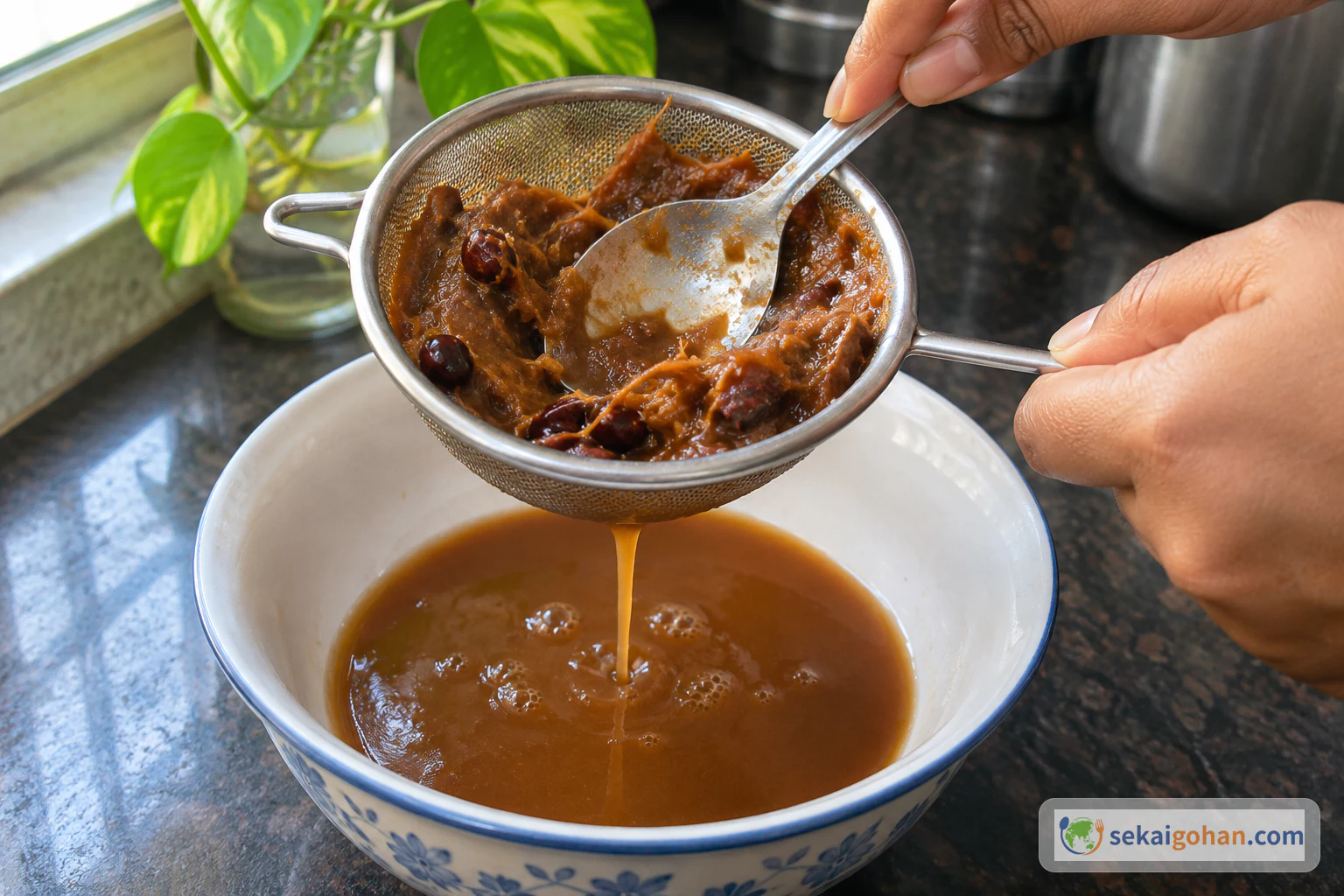
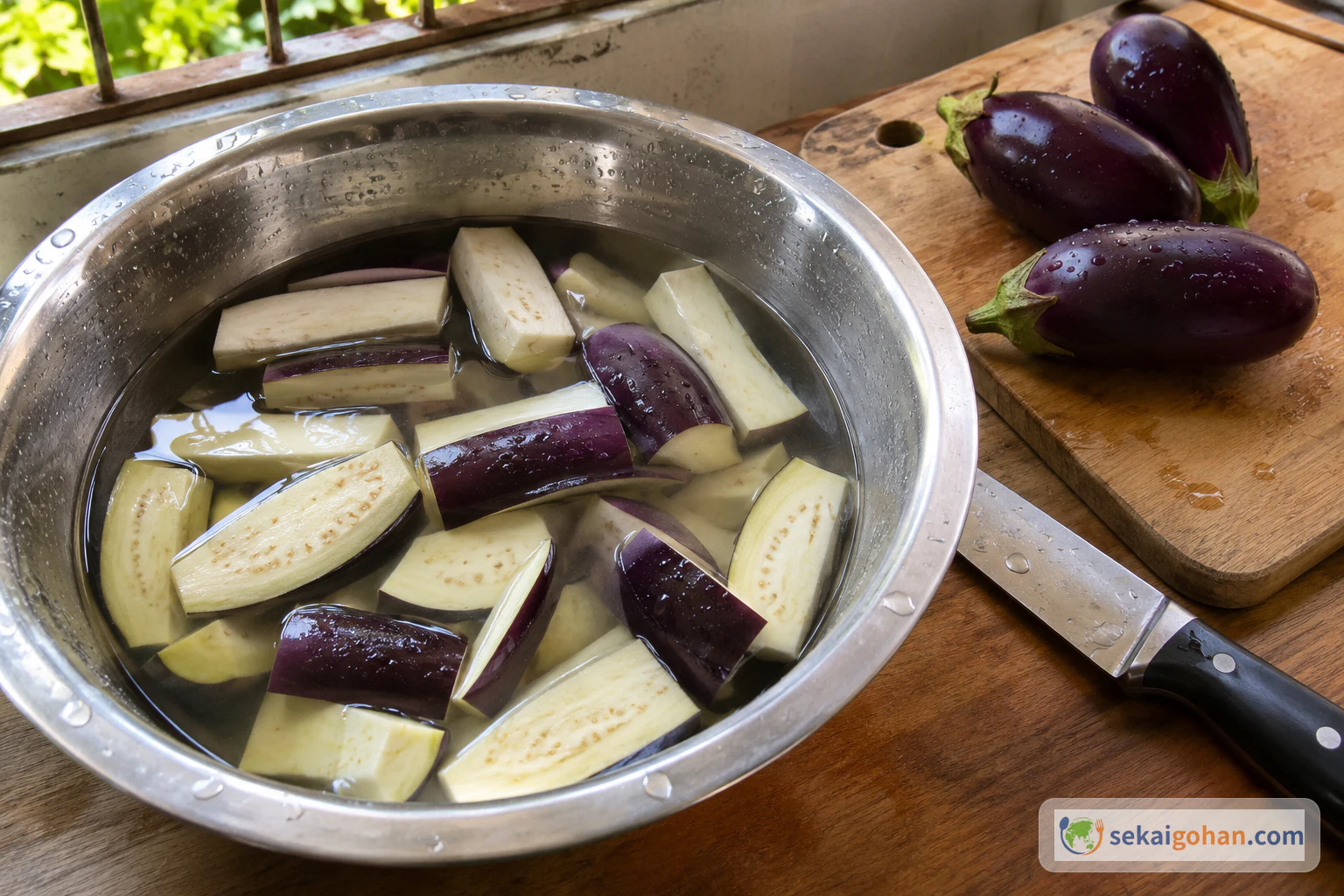
The order matters more than speed. Cook the rice first, because it has to be completely cool before it meets the eggplant. Put the tamarind to soak as soon as the rice is on; it needs 20 minutes, and in that time you cut the eggplant and roast and grind the powder. Once the tempering starts, the rest moves quickly, so have the powder ground, the tamarind strained and the eggplant drained before you heat the oil.
The roasting of the powder is the decisive step of the whole dish. Keep the heat low to medium, keep the pan moving, and add the coconut only after the flame is off. A single batch of scorched dal turns the whole powder bitter, and no amount of tamarind or salt hides it.
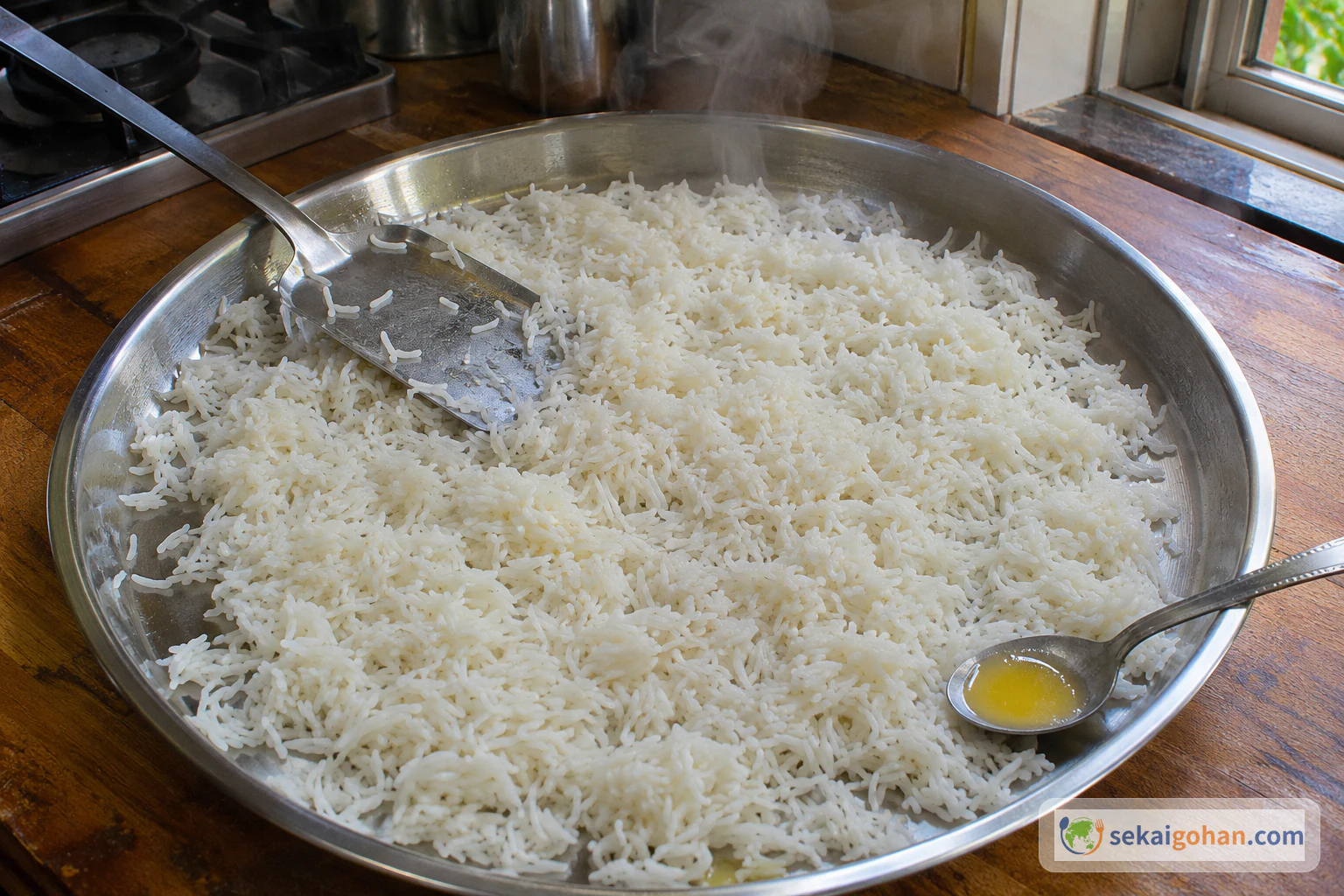
Warm rice breaks and goes mushy the moment you fold it into the masala. Rice that has cooled fully keeps its grains whole and takes the colour evenly. Leftover rice from the day before makes this dish faster still.
Mustard seeds jump when they pop, so keep your face back from the pan. Drain the eggplant well before it goes into the hot oil; wet pieces make the oil spit and can burn your hands and arms.
When It Goes Wrong
| What you see | Why | What to do |
|---|---|---|
| Sticky rice with broken grains | The rice was still warm when you mixed it, or it was cooked with too much water | Cool the rice fully before folding. Next time, cook it with about a tenth less water |
| Bitter or burnt taste | The powder was roasted too hot or too long | Make a fresh batch of powder. Scorched powder spoils the whole dish, so don't use it |
| Eggplant collapsed into mush | A fragile variety, or it simmered too long | Check with a skewer early in the simmer and stop as soon as it slides in. Green and pale purple eggplants break down easily; striped varieties keep their shape |
| Too sour | Too much tamarind | Serve with yogurt or raita. Use less tamarind next time, and never add more sourness than the amount in the ingredients |
| Too hot | The red chilies in the powder | Serve with raita. Next time, use fewer dried red chilies in the powder |
| Flat, dull flavour | Too little salt or too little roasted powder | Add salt a pinch at a time and taste after each, then stir in a little more powder |
Serving, Variations and Storage
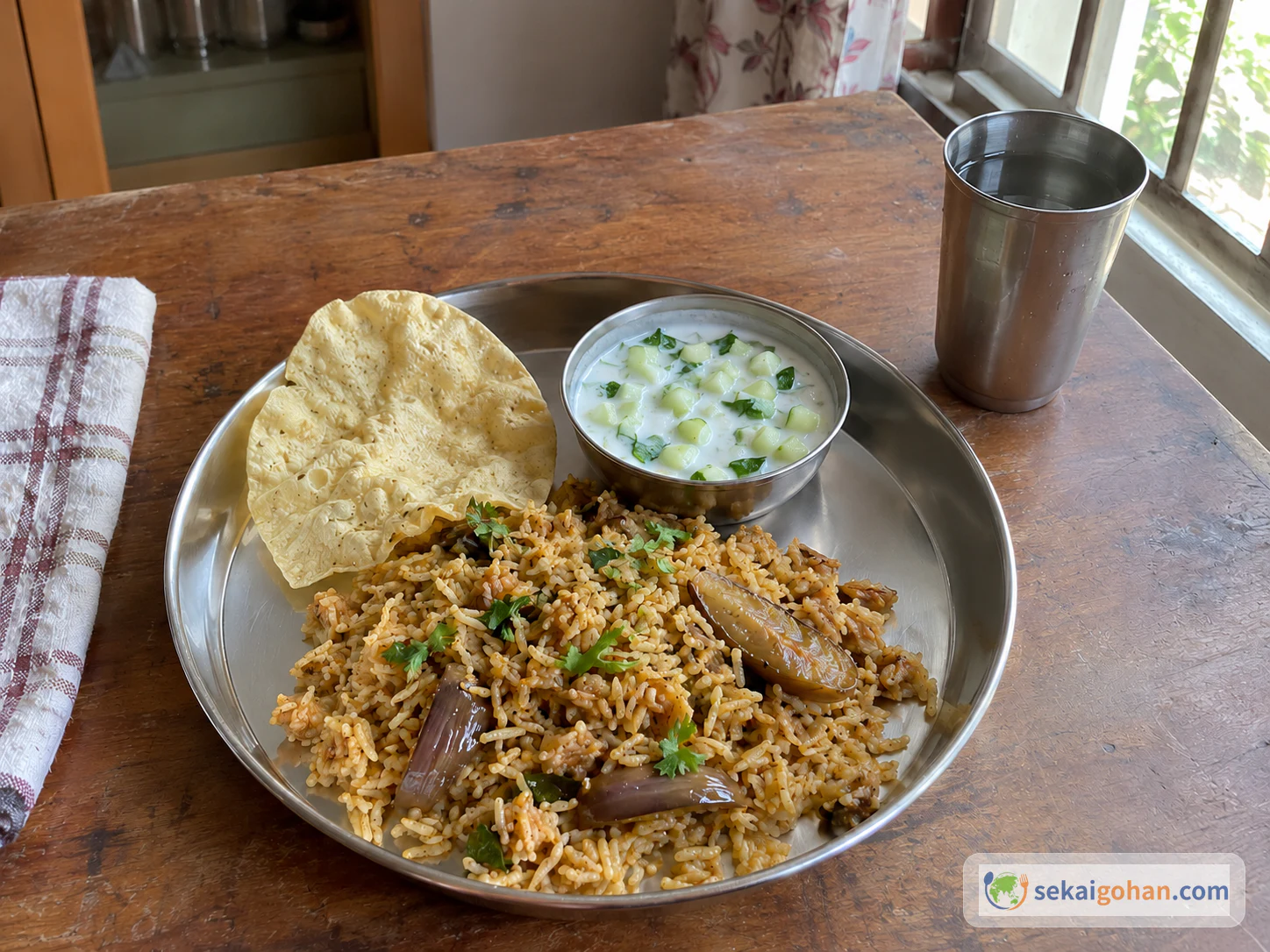
Vangi bath is a complete meal on one plate, so the sides are there to cool and crunch. Raita, plain yogurt with cucumber, is the classic partner; crisp papad, potato chips or a simple salad add the crunch. Curd rice beside it works the same way, with the mild, cool rice taking the edge off the spice. It suits breakfast, a late-morning tiffin or a packed lunch, because it tastes good warm or at room temperature straight from the box.
Variations
- Green beans instead of eggplant. The same powder makes gorikayi rice bath; the beans keep a firm bite, where the eggplant goes soft.
- Capsicum. Bell pepper added with the eggplant brings sweetness and a slight crunch to the soft eggplant.
- Onion and garlic. Add them after the tempering, before the eggplant, for a sweeter, rounder base; the dish without them stays sharper and more spice-led.
- Green peas. An optional extra that is not in the ingredient list above: add some green peas together with the eggplant in step 7 for colour.
The powder itself travels well beyond this dish. Grind extra and use it in palya (a dry vegetable stir-fry) or in a semolina version, rava bath.
Storage
Cool leftovers, then refrigerate promptly in a covered container and eat them the next day. Reheat in a pan until hot all the way through before serving. Don't leave cooked rice sitting at room temperature.
Frequently Asked Questions
Can I use bought vangi bath powder?
Yes. Ready-made powder is common in Karnataka kitchens, and it skips steps 4 and 5. Start with about 2 tbsp, stir it in at step 9, and add more after tasting. Brands differ in heat and salt, so adjust the salt last.
Can I use lemon instead of tamarind?
Keep the tamarind; the eggplant simmers in it, and that is where the dish gets its sour backbone. A few drops of lemon squeezed over a plate at the table brighten it, but keep the total sourness close to what the tamarind gives.
I don't have a pressure cooker. How do I cook the rice?
Use a rice cooker on its normal setting with the water its markings call for, or cook the rice however you usually do. What matters is rice with firm, separate grains, fluffed with ghee and cooled before it goes into the pan.
Is vangi bath vegetarian or vegan?
It is vegetarian as it stands. For a vegan plate, use oil in place of all the ghee and serve it with a salad or papad instead of raita.