Chicken Seekh Kabab: One Pakistani Chicken Kebab, Wrapped on a Skewer
"Chicken kebab" covers many dishes. This article follows one of them: a chicken seekh kabab, where chopped chicken and a home-ground spice mix are wrapped around metal skewers and browned on a tawa. It is one published recipe, not the single national formula for chicken kebab in Pakistan.
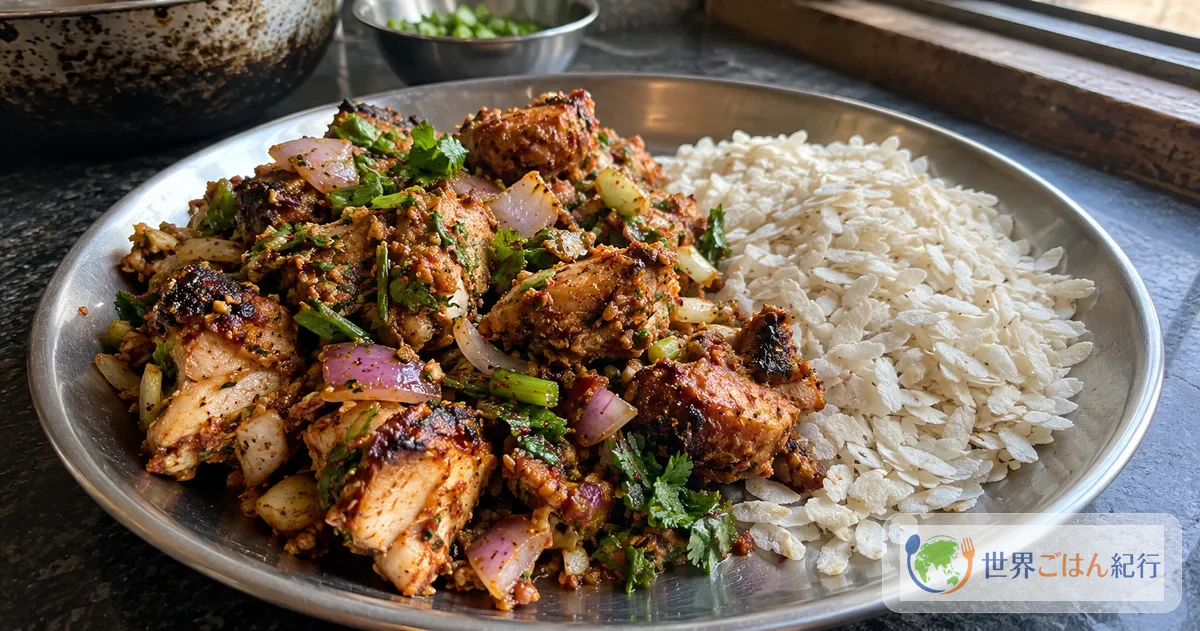
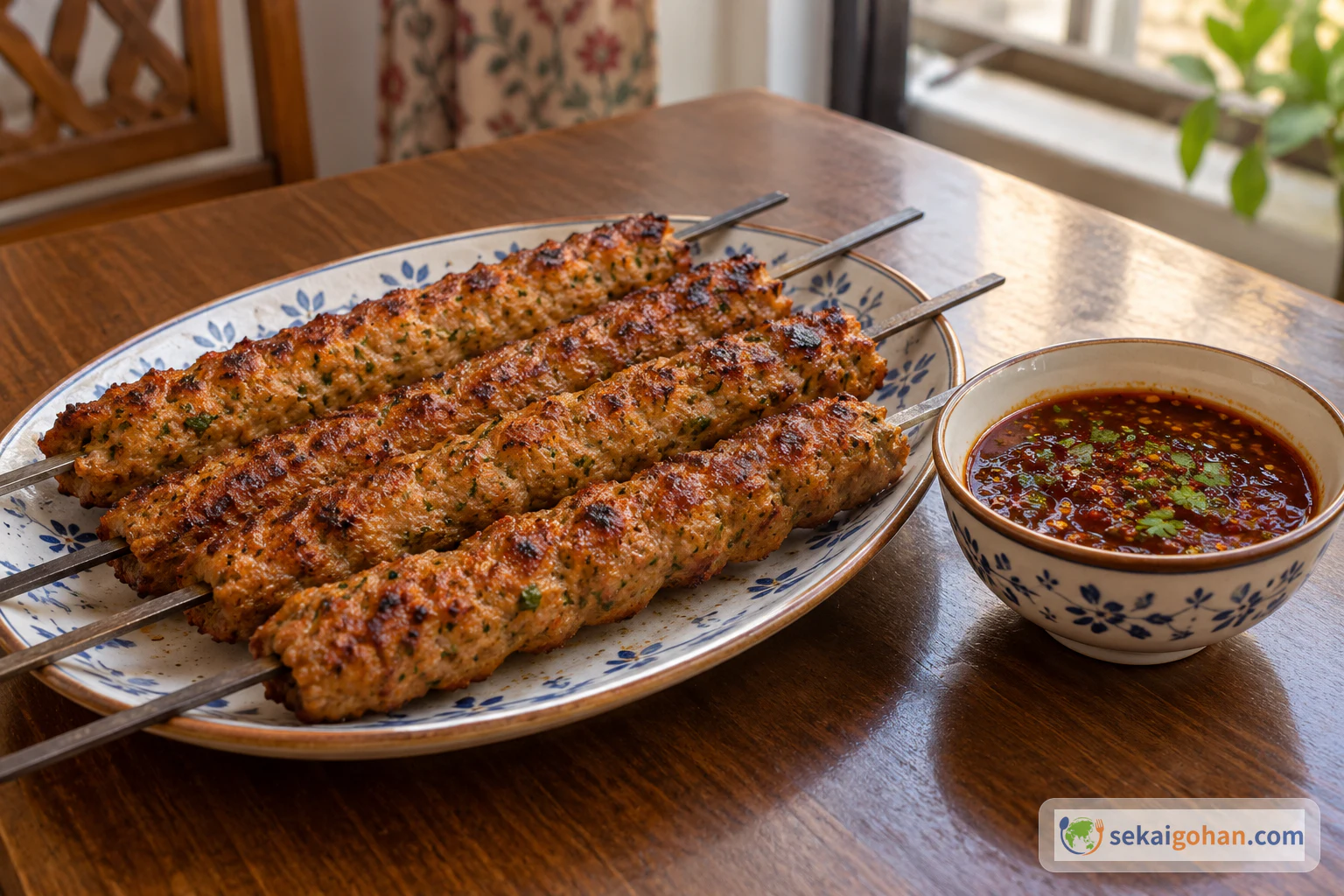
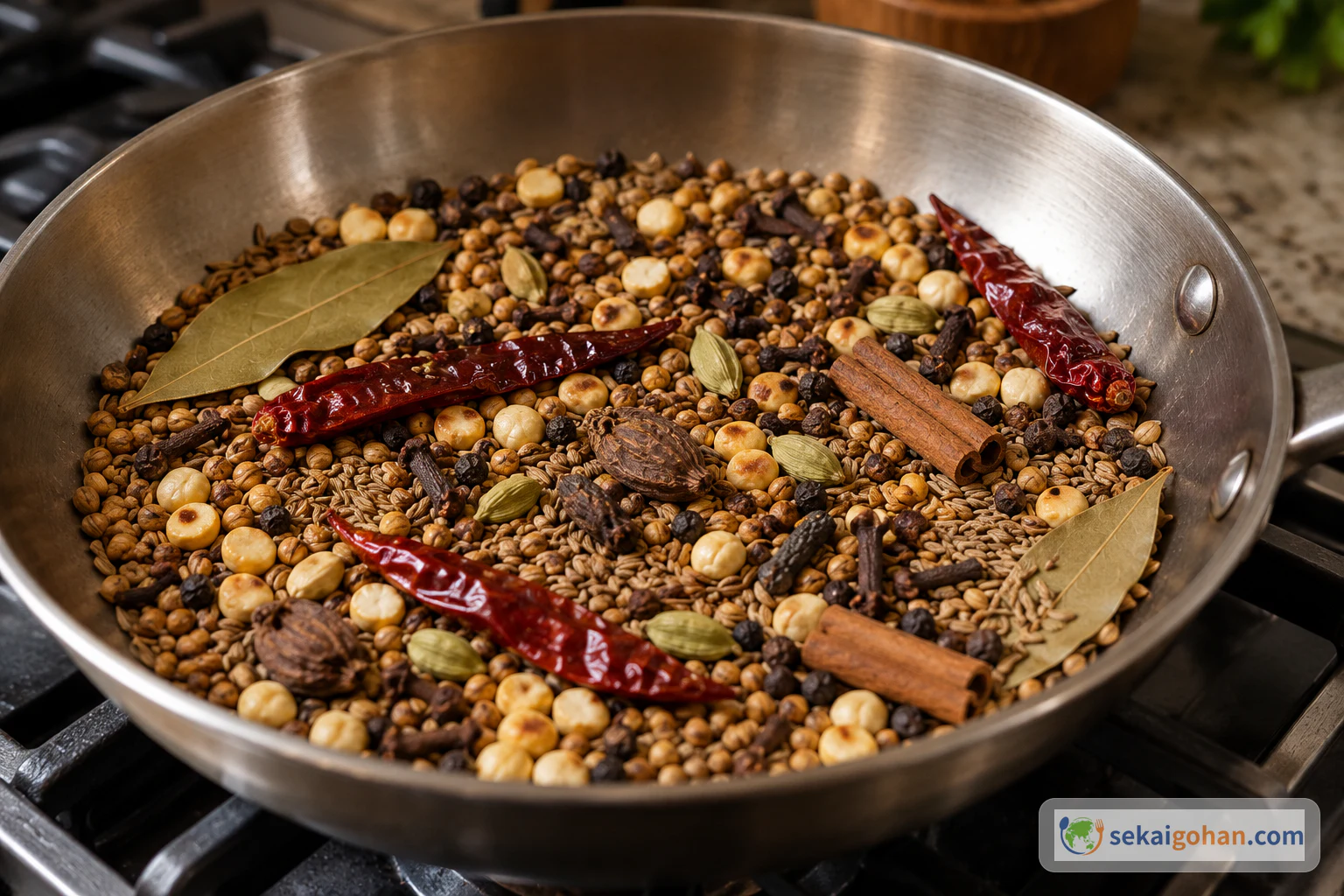
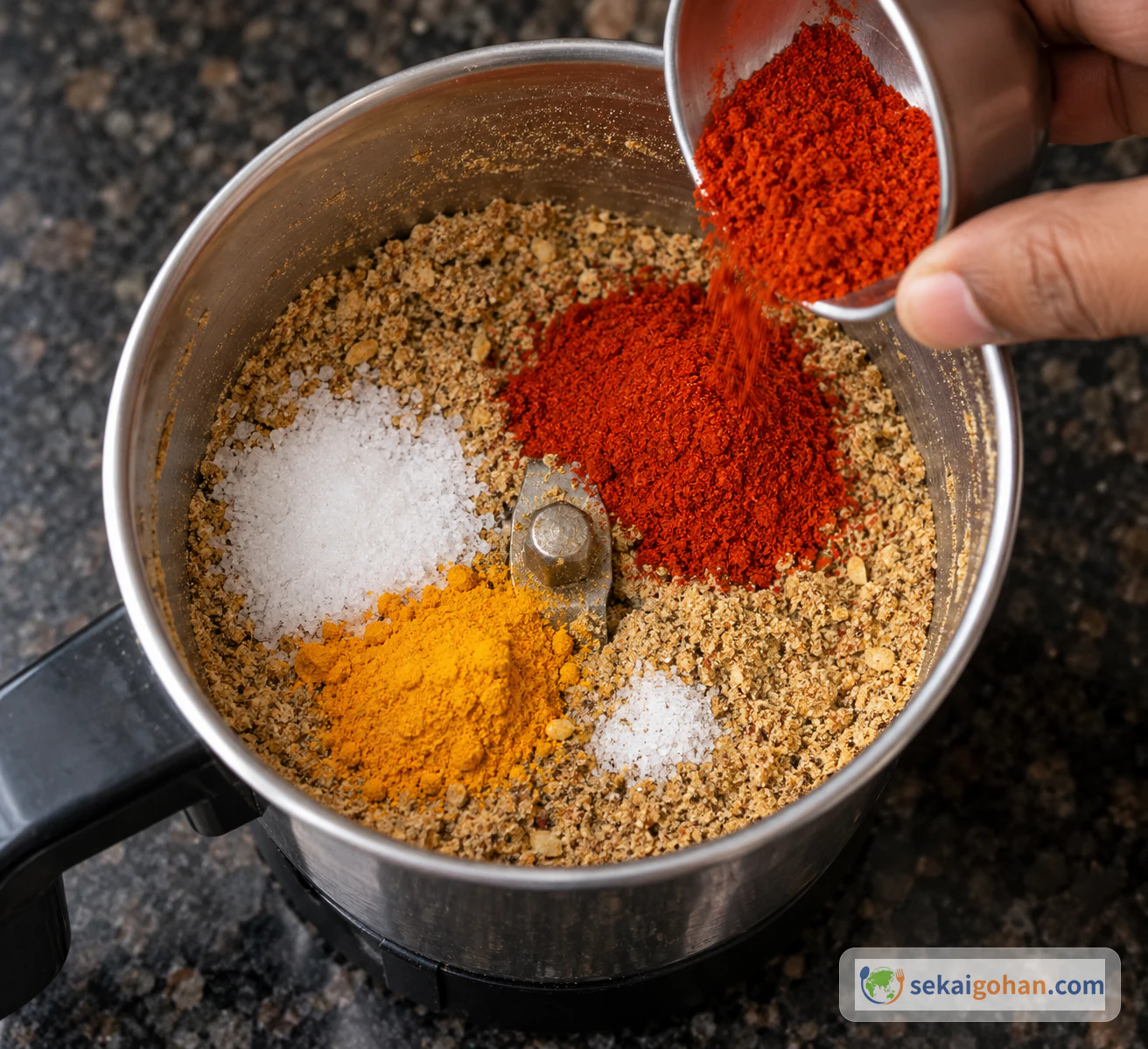
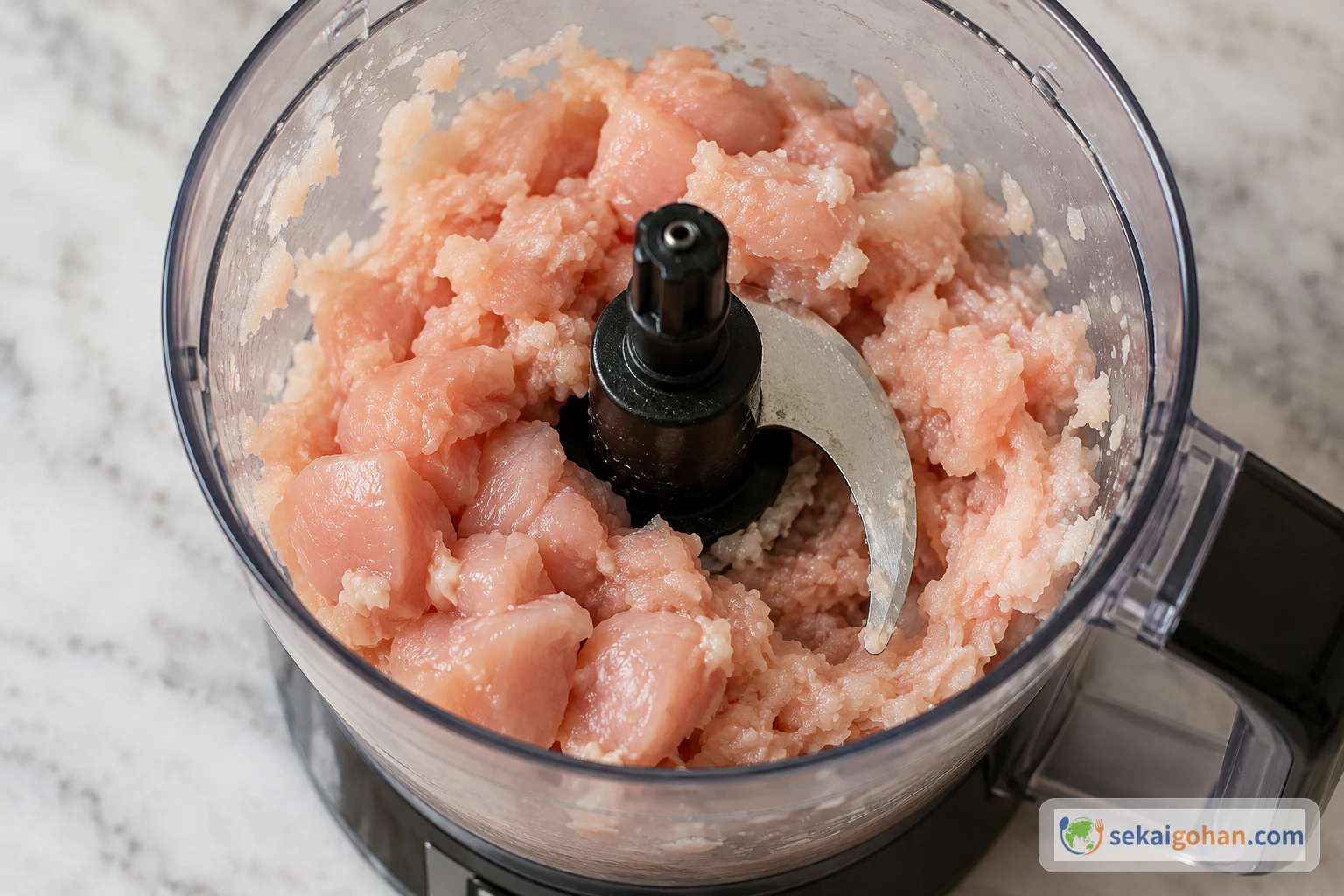
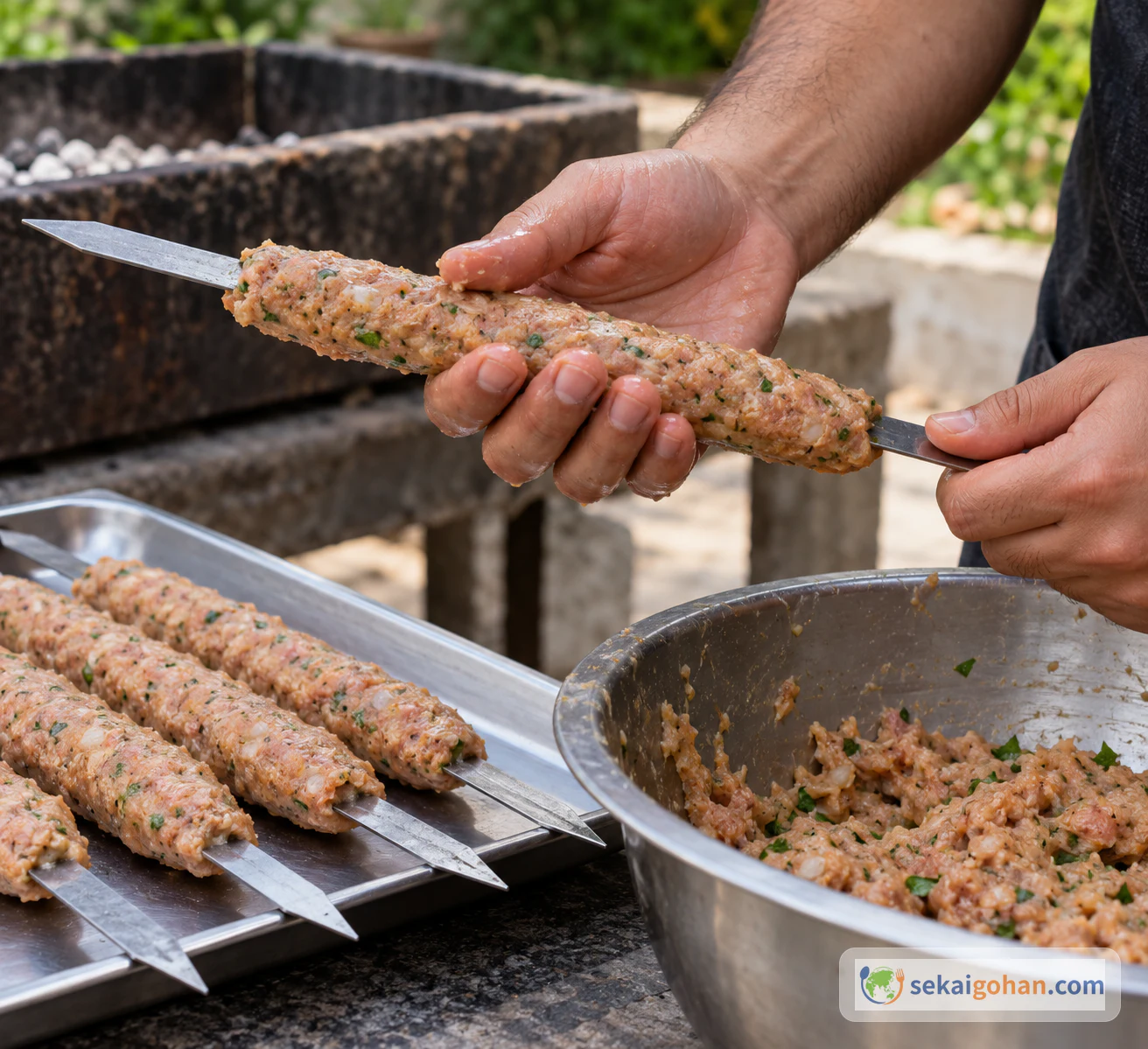
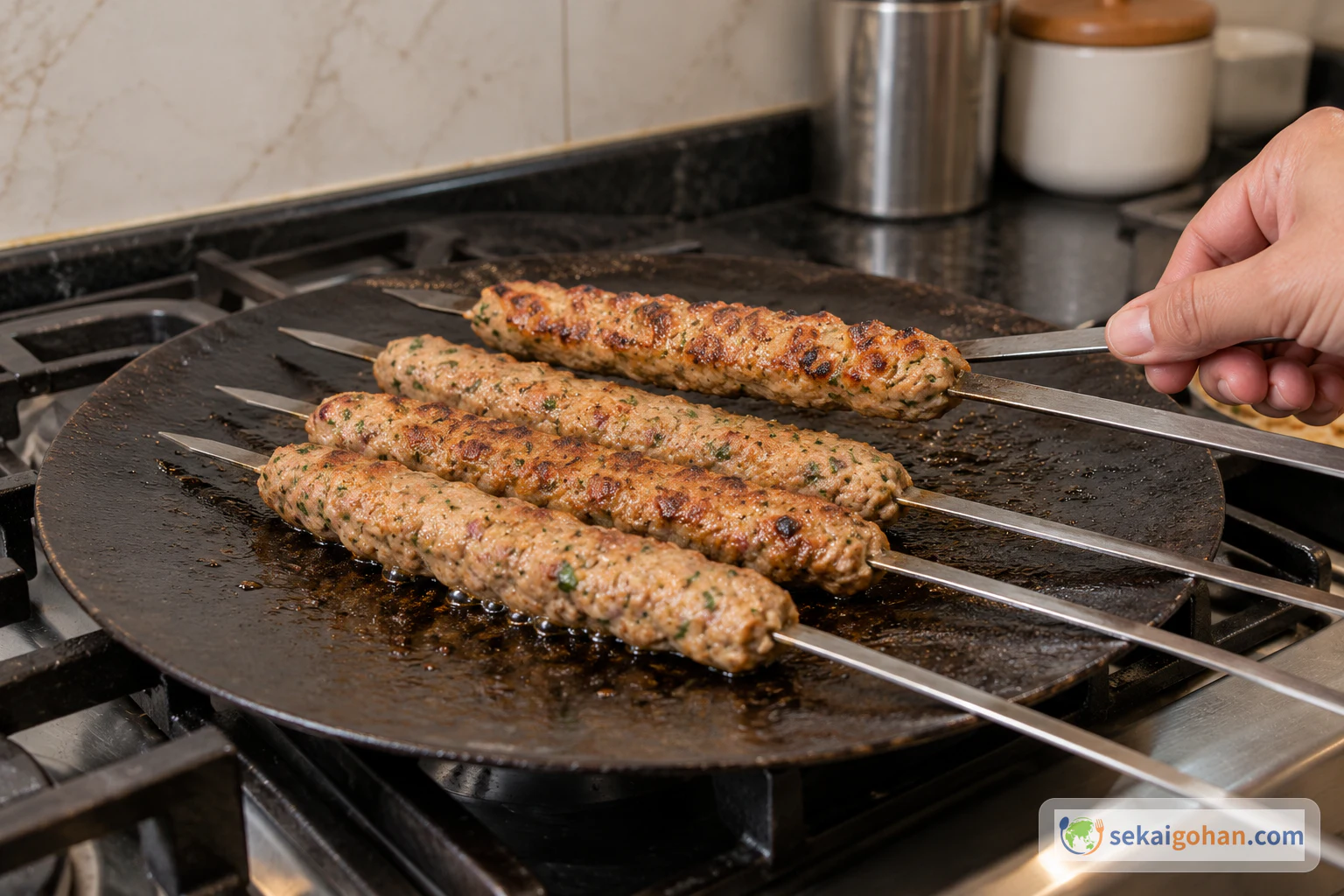
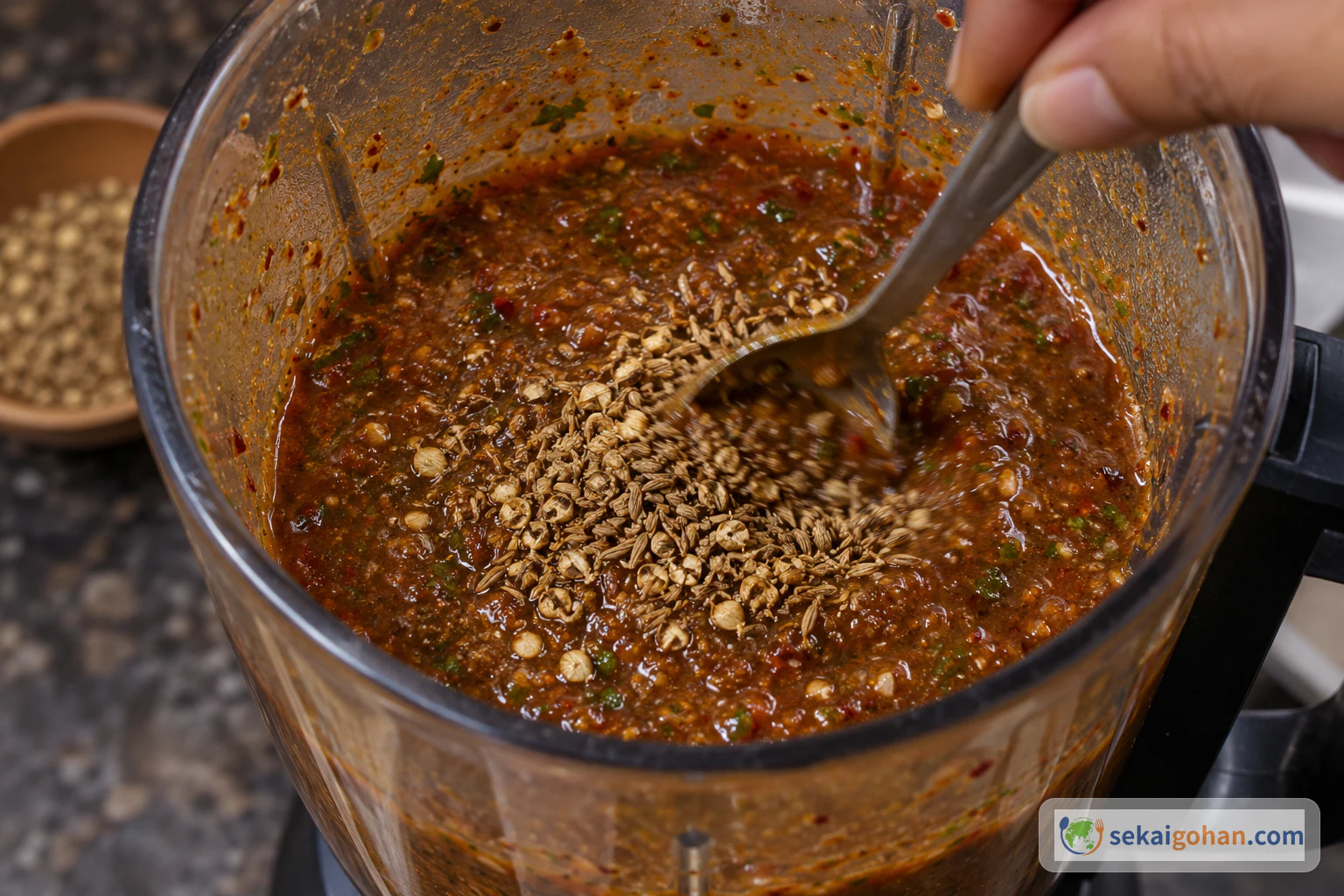
Whole cumin, coriander seed, cardamom and cinnamon toast in a dry pan until their aroma rises. Once ground, that spice mix goes into chopped chicken with onion, green chilies and fresh coriander. The mixture is pressed into long cylinders around metal skewers, then turned on an oiled tawa until every side is golden. That is the picture of the dish this recipe builds.
The version here is "Restaurant Style Chicken Seekh Kabab with Chutney," published by the Pakistani food publisher Food Fusion and credited to Kanwal Mohsin. Food Fusion presents it as a dish for an Eid menu. The same page also gives a tamarind and red chili chutney, which is included here as a separate small recipe. Every amount and step below comes from that one recipe. Nothing has been borrowed from other chicken seekh, reshmi or shami recipes. Sekai Gohan has not kitchen-tested this recipe.
A few details stay exactly as published. The recipe calls for 750g boneless chicken, has you shape 100g portions, and states that it "makes 9–10." It does not explain how those three figures fit together or give a total weight for the mixture, so this article keeps all three as written and does not recalculate them. The recipe also does not name a chicken cut, say whether skin is used, or give a tawa cooking time or oil temperature.
For more dishes from the same country, see the Pakistan country page.
What "Seekh" Means, and Where This Kebab Sits on the Pakistani Table
In Urdu the dish is written سیخ کباب. Arab News explains seekh kabab simply as kabab on a skewer, with the meat shaped around the skewer. The Food Fusion recipe follows that shape: the chicken mixture is wrapped around metal skewers before it is cooked. The name describes the form of the dish. This article doesn't speculate about who first made it, where or when, and it doesn't claim that seekh kabab belongs to Pakistan alone.
The SOCH Outreach Foundation's exhibit on Pakistani meat dishes, hosted by Google Arts & Culture, gives a sense of the wider setting. It lists seekh kabab and reshmi kabab among Pakistan's grilled and barbecued meats, commonly eaten with roti, chutneys and sliced vegetables. It also describes how methods and specialty meat dishes differ from region to region, with dishes such as Balochi sajji and Peshawari chapli kabab known well beyond the places they come from. The same exhibit notes that chicken is a more economical protein in many Pakistani households. Read together, these points suggest a table where grilled meat takes many regional forms, and where chicken is a practical everyday choice as well as a celebratory one.
Food Fusion places this particular recipe on an Eid menu. That describes how the publisher chose to frame it, not a rule about when the dish is eaten. Nothing in these sources says chicken seekh kabab is eaten only at Eid or began as a festival dish. Likewise, one publisher's recipe can't stand in for every household or region. Professional versions published in Pakistan differ noticeably, as the comparison further down shows.
How it differs from other kebabs
| Dish | What it is | How it differs from this recipe |
|---|---|---|
| This chicken seekh kabab | Chopped raw chicken with spices and squeezed vegetables, wrapped on metal skewers and cooked on a tawa | — |
| Bihari kebab | Thinly sliced beef marinated with yogurt, green papaya, mustard oil and spices, then grilled | Sliced beef and a long marinade, not chopped chicken on a skewer |
| Chapli kebab | Minced beef mixed with tomato, onion, anardana and more, shaped into flat patties and pan-fried | Flat patties, not skewered cylinders |
| Chicken karahi | Chicken cooked with tomato in a pot | A stew, not a kebab |
| Shami kabab | In Food Fusion's version, beef mince and split Bengal gram are cooked, dried, ground with herbs and eggs, shaped into patties and fried | The mixture is cooked before shaping; this seekh mixture goes onto the skewer raw |
| Reshmi kabab | A separately named chicken kebab. One published version, from Cooking with Kawish, uses fine chicken mince, cream, cashew paste and mild spicing | None of those ingredients belong in this seekh recipe |
Ingredients: Chicken Seekh Kabab and Tamarind Chutney
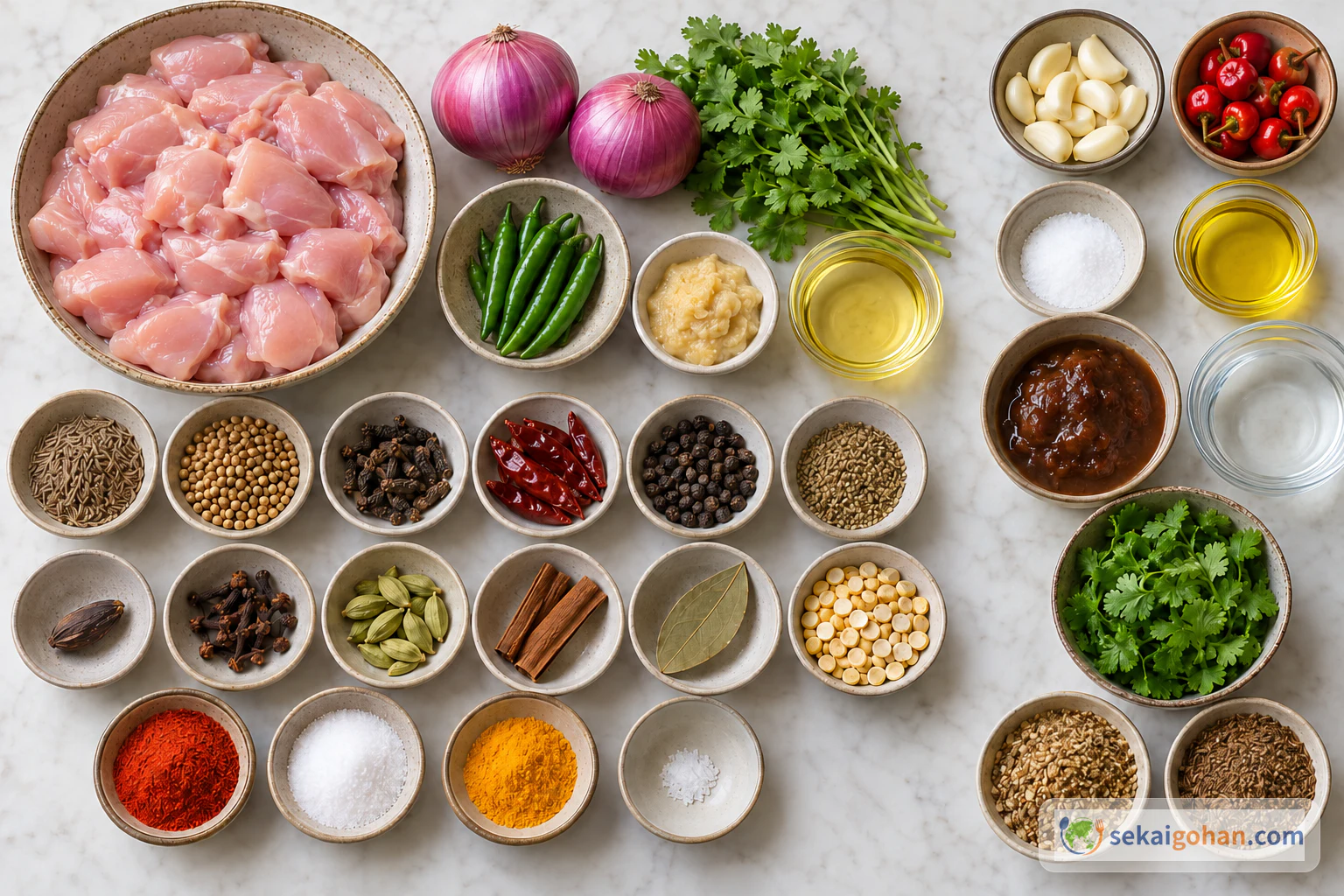
The kebab spices are used in two stages: whole spices for dry-roasting, then powders added for a second grind. The chutney ingredients come last and are marked "for the chutney". Keep its garlic, chilies and coriander separate from the kebab's.
Shopping and Choosing Notes
Onions, green chilies, fresh coriander and ginger-garlic paste are easy to find in most supermarkets. The whole spices are the part that needs care, so it helps to buy from a South Asian grocer and check the labels against the list:
- Cubeb pepper (kabab cheeni) is a different spice from black pepper. Both are used here, so don't use extra black pepper in place of cubeb.
- Black cardamom and green cardamom are two separate ingredients here, one black pod and 2–3 green pods.
- Ajwain, roasted gram (roasted chana) and citric acid (tatri) are usually sold in South Asian shops. Roasted gram is the already-roasted chickpea product, not raw dried chickpeas.
- Tamarind pulp and a generous 1 cup of fresh coriander are needed for the chutney, on top of the 1/2 cup for the kebab.
- Boneless chicken: the cut, and whether to keep the skin, are up to you.
Do not substitute for these spices. Swapping them, for example allspice for cubeb or lemon juice for citric acid, would change the dish. If you make a swap, treat the result as your own variation.
Equipment
- Frying pan or skillet for dry-roasting
- Spice mill or grinder
- Food chopper
- Mixing bowl with a cover
- Metal skewers
- Tawa (a flat griddle pan)
- Blender, for the chutney
- Food thermometer
- Separate boards, utensils and plates for raw chicken and for cooked food
Method: Roast, Grind, Chop, Chill, Smoke, Skewer, Cook
The numbered steps are the cooking directions. The food-safety and charcoal warnings come from U.S. safety authorities, the FDA and the CPSC. They are kept in separate boxes so you can tell which is which.
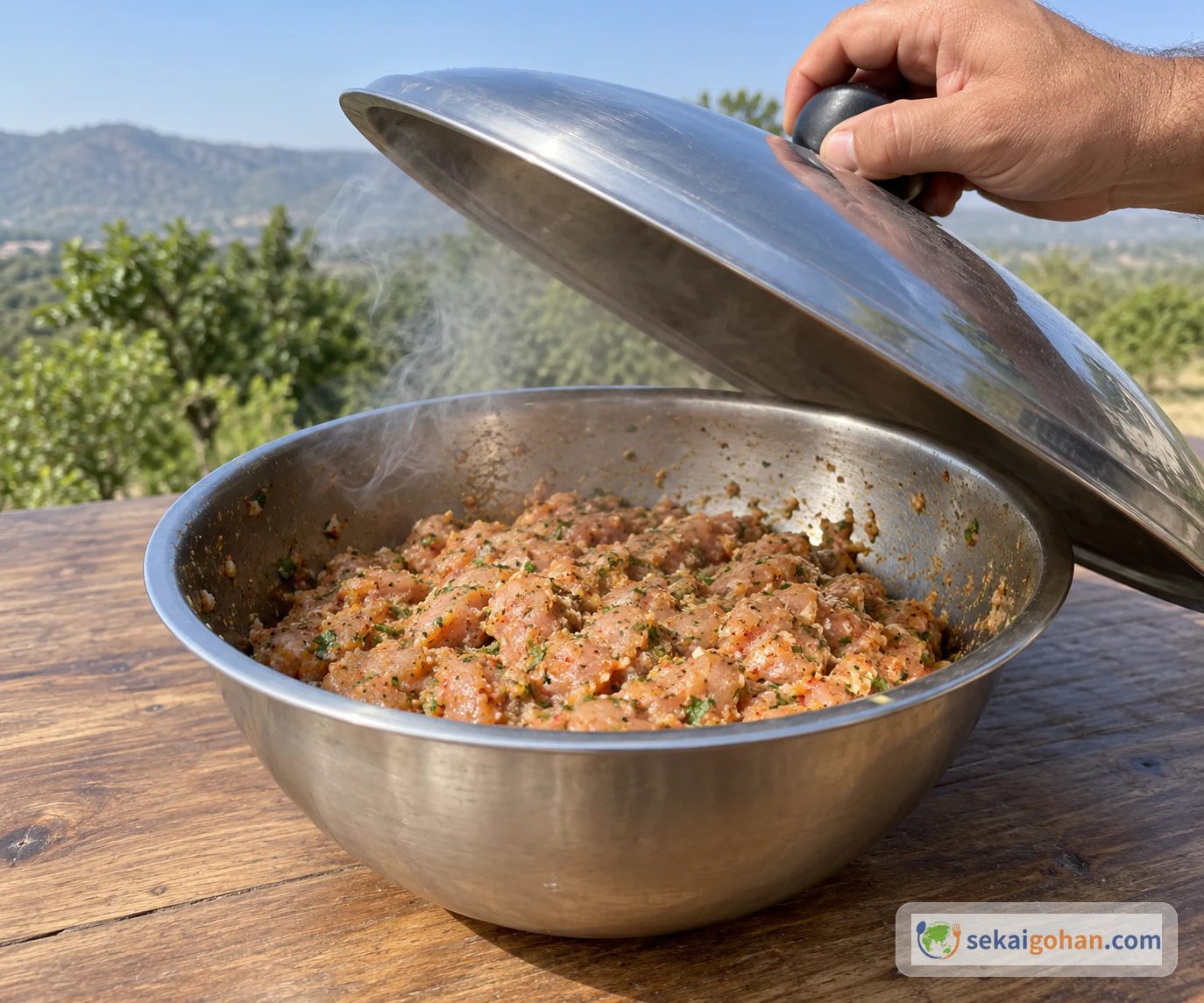
The U.S. Consumer Product Safety Commission warns never to burn charcoal grills indoors, even with ventilation, and to keep grills outside. That applies to the coal-smoke step: do it outdoors only, and never in a kitchen, garage, tent or other enclosed space, even with the windows open. No particular setup for the smoke is described here, and this article doesn't invent one. If you have no safe outdoor space, there is no indoor substitute here. Skipping the step changes the dish.
These points come from the U.S. Food and Drug Administration's general guidance:
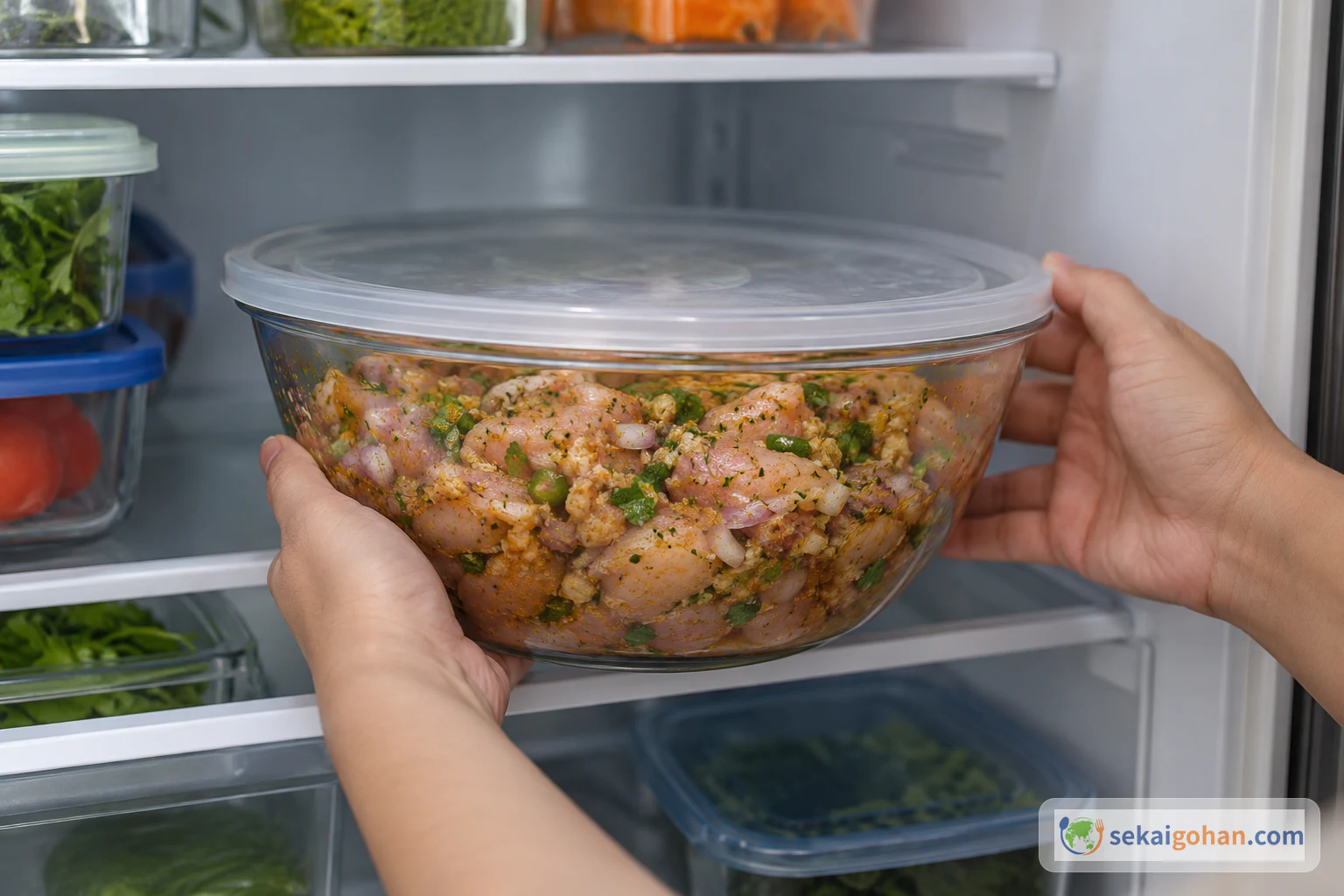
- Always marinate food in the refrigerator.
- Poultry, whether ground, in parts or whole, should reach 165°F, measured with a food thermometer.
- Color and texture are not reliable signs that food is safe, so a golden outside doesn't mean the inside is done.
- Don't reuse a raw-food marinade unless it is boiled first.
Use separate utensils and plates for the raw mixture and the cooked kebabs.
Serving: Kebabs with Tamarind Chutney
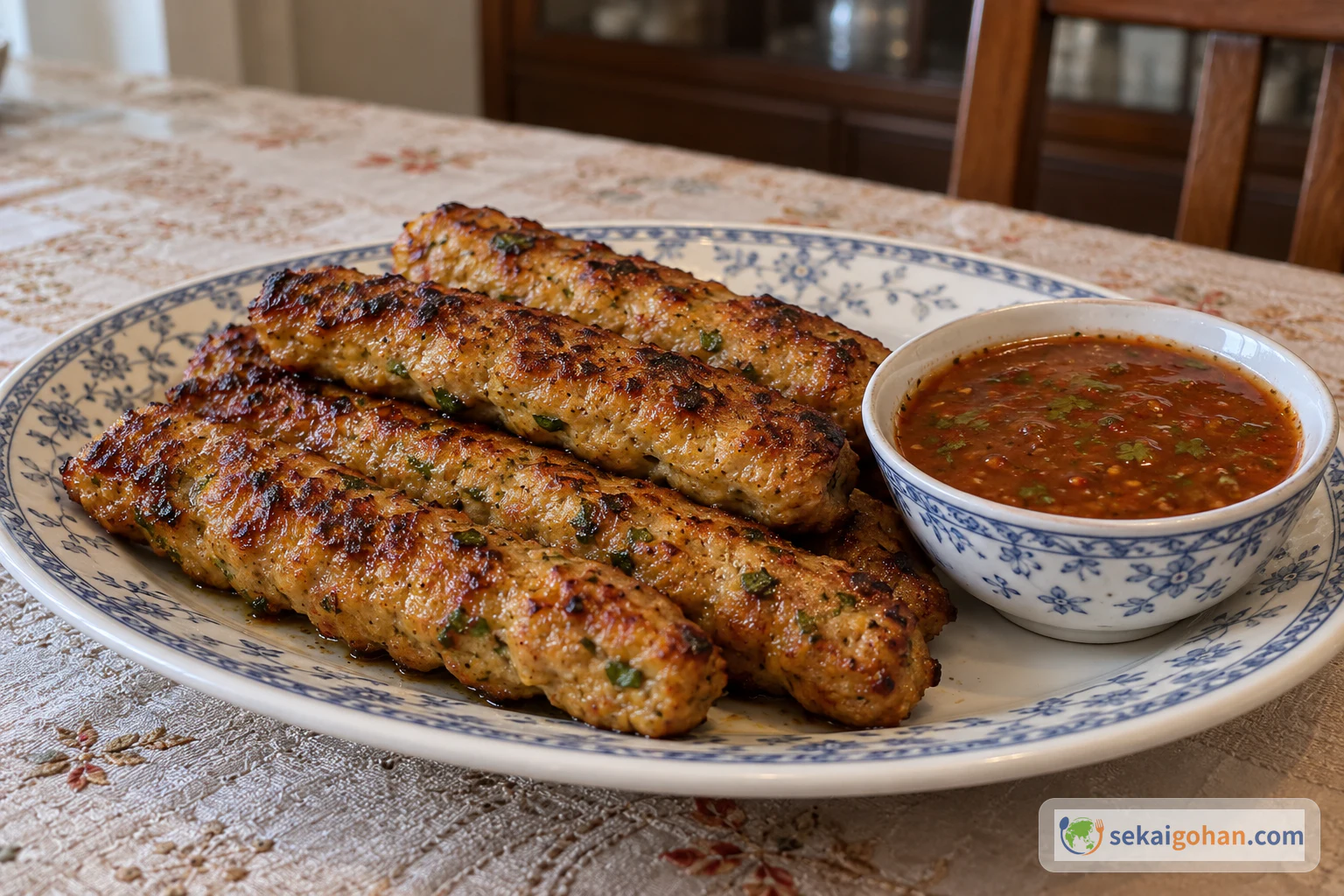
Serve the kebabs with the tamarind and red chili chutney made on the same page. For a wider picture of the Pakistani table, the SOCH exhibit describes grilled meats such as seekh kabab eaten with roti, chutneys and sliced onion, cucumber and tomato. That describes a general habit. The recipe gives no amounts for a side salad, and none are needed to enjoy the kebabs with chutney.
Troubleshooting and Checks
| What you notice | What to check |
|---|---|
| The spices smell flat once ground | Roast them dry, without oil, until fragrant (2–3 minutes), and let them cool before grinding |
| The spice blend tastes off from what you expected | Check that you used cubeb and black peppercorns as two separate spices, and one black plus 2–3 green cardamom pods |
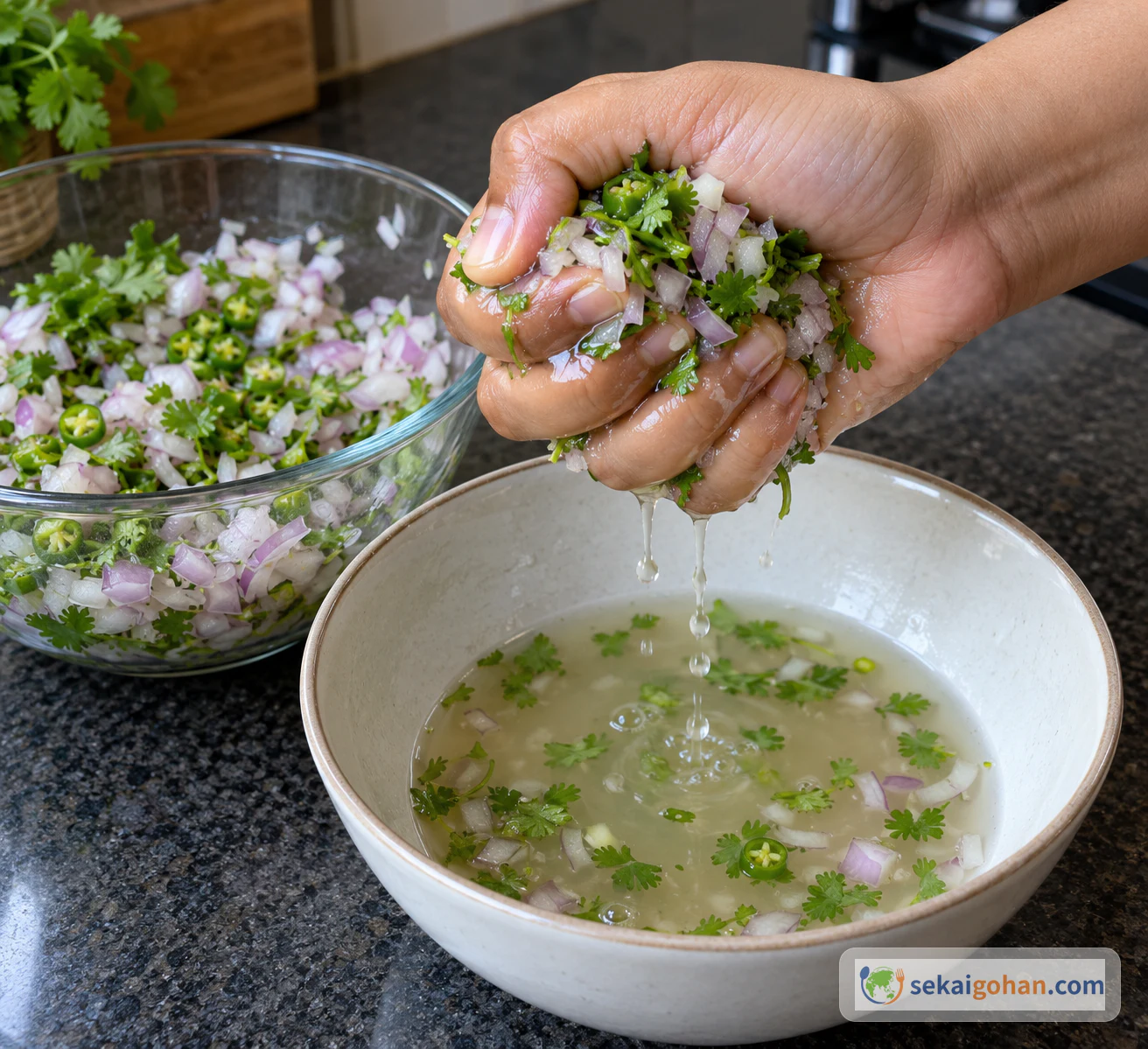
| The mixture feels wet when you shape it | Before mixing, squeeze the chopped onion, chilies and coriander firmly by hand to remove the excess water |
| Your batch doesn't come out to 9–10 skewers of 100g | The recipe lists 750g chicken, 100g portions and "makes 9–10" without reconciling them. Shape 100g portions and count what you get |
| The outside is golden but you're unsure about the inside | Use a food thermometer. FDA guidance is 165°F for poultry, and color alone isn't a reliable test |
How Other Published Versions Differ
Chicken seekh recipes vary from one publisher to the next. A professional recipe from Unilever Food Solutions Pakistan, tagged Pakistani Cuisine, uses chicken mince with added animal-fat mince, fried onions, coriander, green chilies, egg, a commercial coating mix and chicken stock powder. It chills for at least three hours and is then charcoal-grilled on low to medium heat. The reshmi kabab from Cooking with Kawish moves in another direction altogether, with fine mince, cream and cashew paste.
These versions show how broad the family is. If you want this recipe, though, keep its set of whole spices, the second grind, the squeezed vegetables and tawa cooking, and leave out the egg, cream, cashews, yogurt, papaya, tomato or anardana that belong to other dishes.
Frequently Asked Questions
Can I use black pepper instead of kabab cheeni?
The recipe calls for both cubeb pepper (kabab cheeni) and black peppercorns as separate ingredients, and it gives no substitute for cubeb. Using more black pepper in its place would change the spice mix, so look for kabab cheeni at a South Asian grocer.
Is the coal-smoke step optional?
Food Fusion includes it as a step and does not mark it optional. It also doesn't explain how to set up the smoke. Following U.S. CPSC guidance, any charcoal use must be outdoors only, never indoors, even with ventilation. This article offers no indoor shortcut. If you leave the step out, the kebabs will differ from the published recipe.
Why don't 750g, 100g portions and "makes 9–10" add up neatly?
The recipe states all three but does not give a total mixture weight or explain how they relate. They are kept here as published, rather than adjusted to a new count.
Which cut of chicken should I use?
The recipe says boneless chicken and doesn't name a cut or say whether skin is included.
How long does the kebab take on the tawa?
No cooking time or oil temperature is given, only medium heat until golden on all sides. To know when the chicken is safely cooked, FDA guidance is to check that poultry reaches 165°F with a food thermometer rather than relying on color.
Can I keep leftovers?
The recipe gives no storage guidance for the kebabs or the chutney, so none is offered here.
Sources
- Food Fusion, "Restaurant Style Chicken Seekh Kabab with Chutney," recipe by Kanwal Mohsin. The only source for the kebab and chutney ingredients, amounts and order of steps, including the 100g portion and "makes 9–10" notes, and for its presentation as a dish for an Eid menu. https://foodfusion.com/recipe/restaurant-style-chicken-seekh-kabab-with-chutney/
- Unilever Food Solutions Pakistan, "Chicken Seekh Kebab - Recipe." Used only to show that a separately published professional chicken seekh recipe uses different ingredients and methods. https://www.unileverfoodsolutions.pk/en/recipe/chicken-seekh-kebab-R0054213.html
- SOCH Outreach Foundation, "From Grills to Stews: A Meat Lover's Guide to Pakistan," Google Arts & Culture. Context on Pakistani grilled meats, including seekh and reshmi kabab, serving with roti, chutneys and sliced vegetables, regional specialties, and chicken as a more economical protein in many households. https://artsandculture.google.com/story/from-grills-to-stews-a-meat-lover-39-s-guide-to-pakistan-soch/BwUBwAPtRlRgJw?hl=en
- Food Fusion, "Shami Kabab." Used to distinguish shami kabab, a cooked beef and split Bengal gram patty, from this seekh mixture. https://foodfusion.com/recipe/shami-kabab-recipe/
- Cooking with Kawish, "Ultimate 7-Ingredient Reshmi Kabab (Restaurant-Style)." Used only to keep one named reshmi recipe, with fine mince, cream and cashew paste, separate from this seekh recipe. https://cookingwithkawish.com/chicken-reshmi-kabab/
- Arab News, "Ramadan Recipes: Flavorful seekh kabab for a fuss-free iftar." Used only for the explanation of seekh kabab as kabab on a skewer. https://www.arabnews.com/food-health/ramadan-recipes-flavorful-seekh-kabab-for-a-fuss-free-iftar-2060941
- U.S. Consumer Product Safety Commission, "Generators and Engine-Driven Tools." The warning never to burn charcoal grills indoors, even with ventilation, and to keep grills outside. https://www.cpsc.gov/Safety-Education/Safety-Guides/Carbon-Monoxide-Home/Generators-and-Engine-Driven-Tools
- U.S. Food and Drug Administration, "Safe Food Handling." Refrigerator marinating, cooking poultry to 165°F measured with a food thermometer, color and texture as unreliable safety signs, and not reusing raw marinade unless boiled. https://www.fda.gov/food/buy-store-serve-safe-food/safe-food-handling