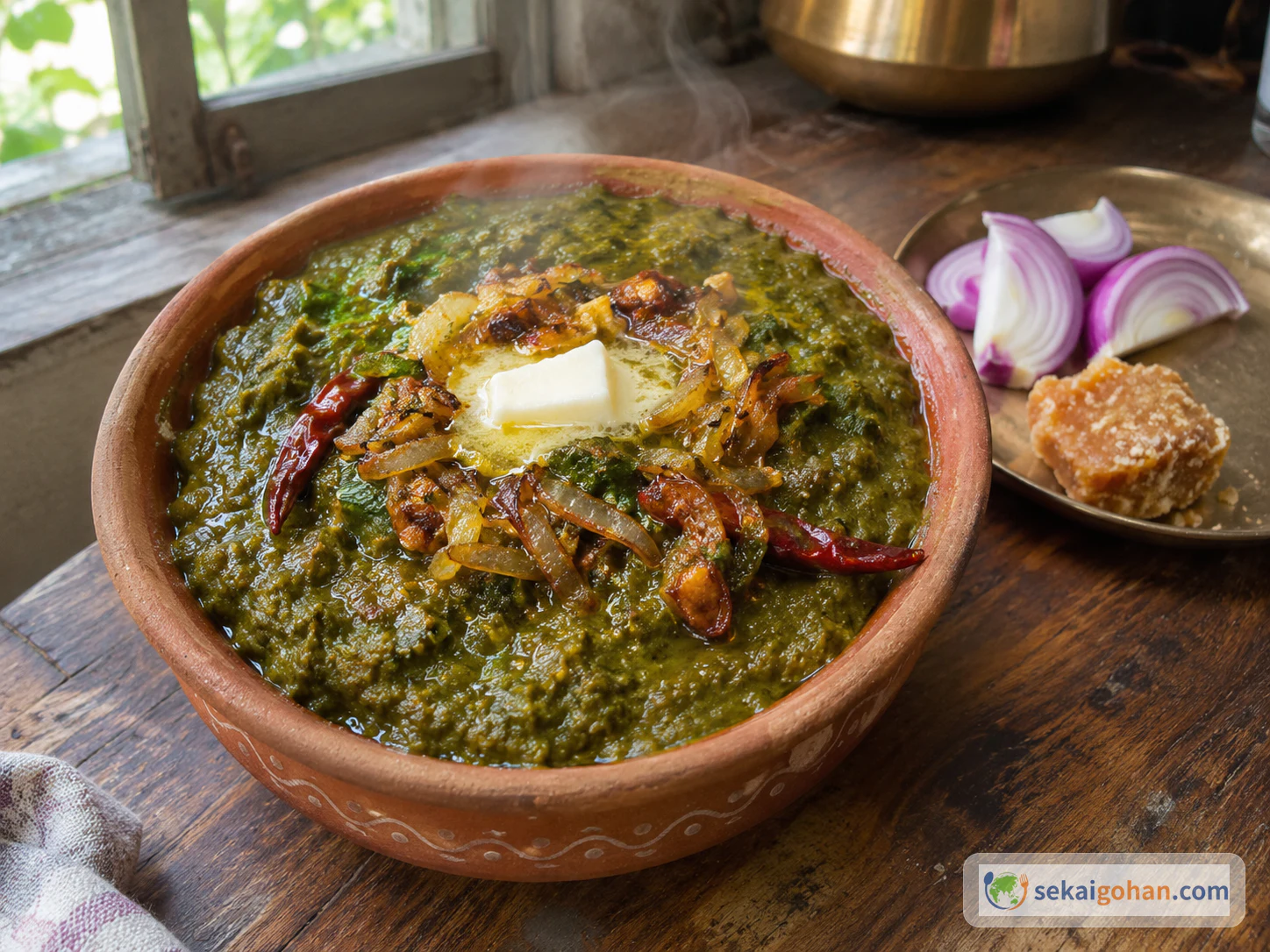
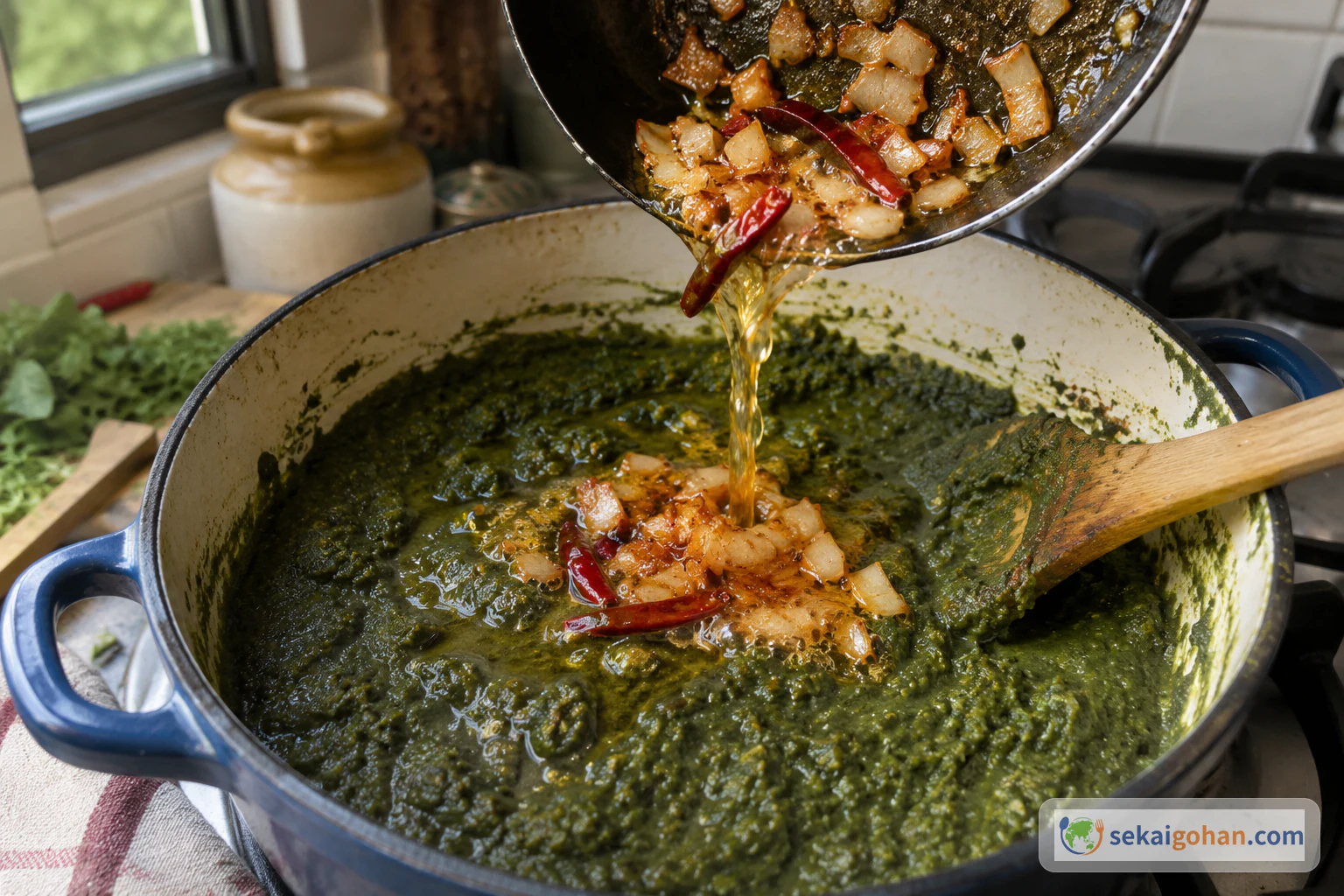
The small pan of ghee tips over the pot and hisses. Golden onion, garlic and two dark red chilies slide into a thick green purée, and slicks of ghee run out across the surface before the spoon folds them in. Sarson da saag is mustard greens and milder leaves cooked very soft, blended coarse, thickened with maize flour and finished with that tadka. It is a winter dish of Punjab, made on both sides of the border, and it tastes peppery, slightly bitter and deeply green, softened by radish and tomato and rounded off by the butter melting on top.
A Winter Pot from Both Punjabs
Mustard greens are a winter crop in Punjab. They go into the ground in November and December, and the saag follows them onto the table. In Pakistani Punjab it is eaten most in December and January, and it travels. One expatriate from Sialkot describes how their mother sends the saag frozen in winter, so the taste of home arrives in the cold months. The dish belongs as much to Indian Punjab as to Pakistan. It is often described as a tribute to the farmers of both Punjabs, and it turns up in the region's folk songs.
The leaf itself explains the method. Mustard greens are tough and bitter raw. Long, soft cooking breaks them down, and spinach or bathua (chenopodium, the goosefoot leaf) goes in alongside them. Those milder leaves are there to steady the mustard, not to water it down. The pot should still taste of mustard first.
Pestles, wooden churners and a long, slow fire
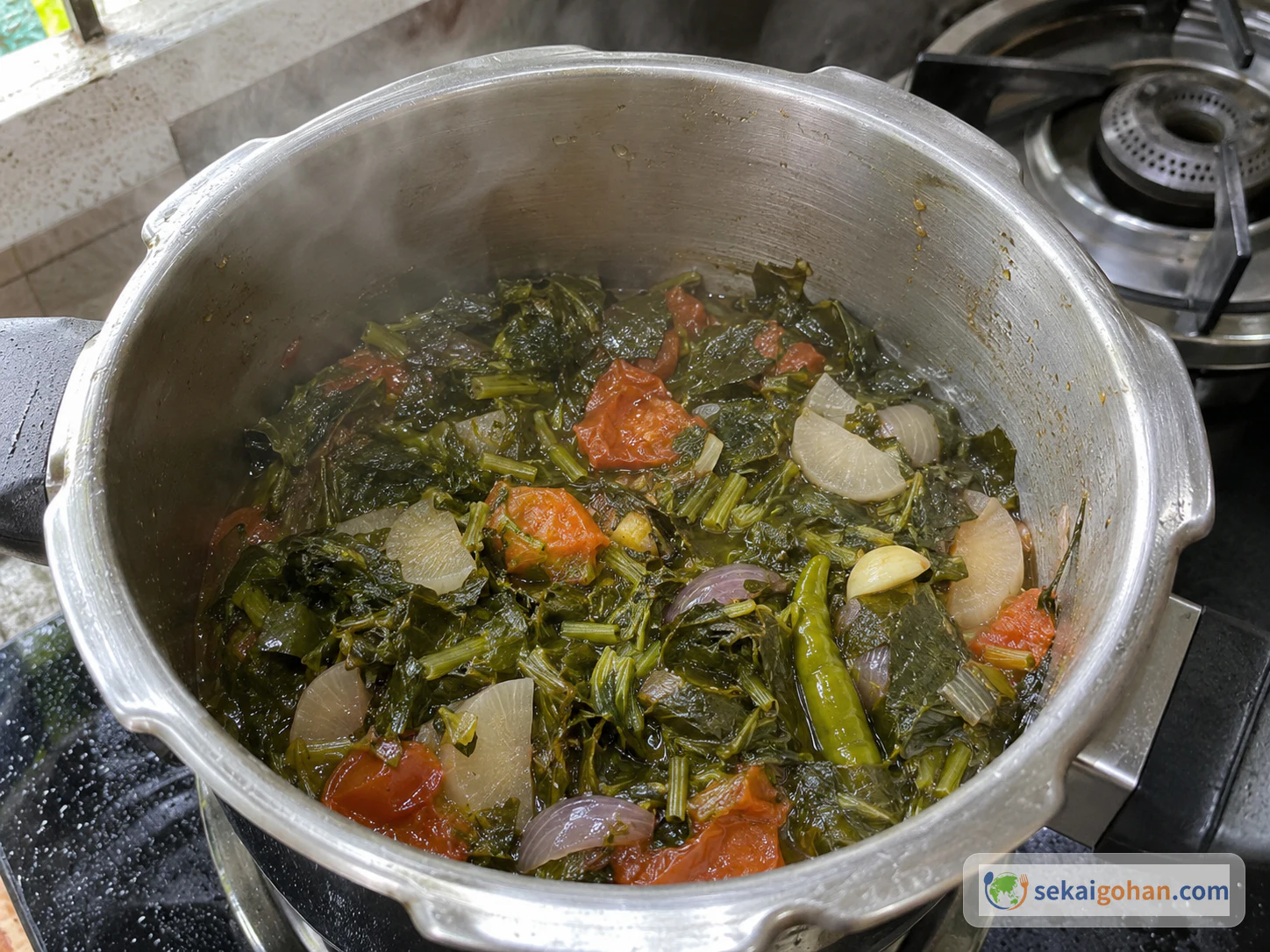
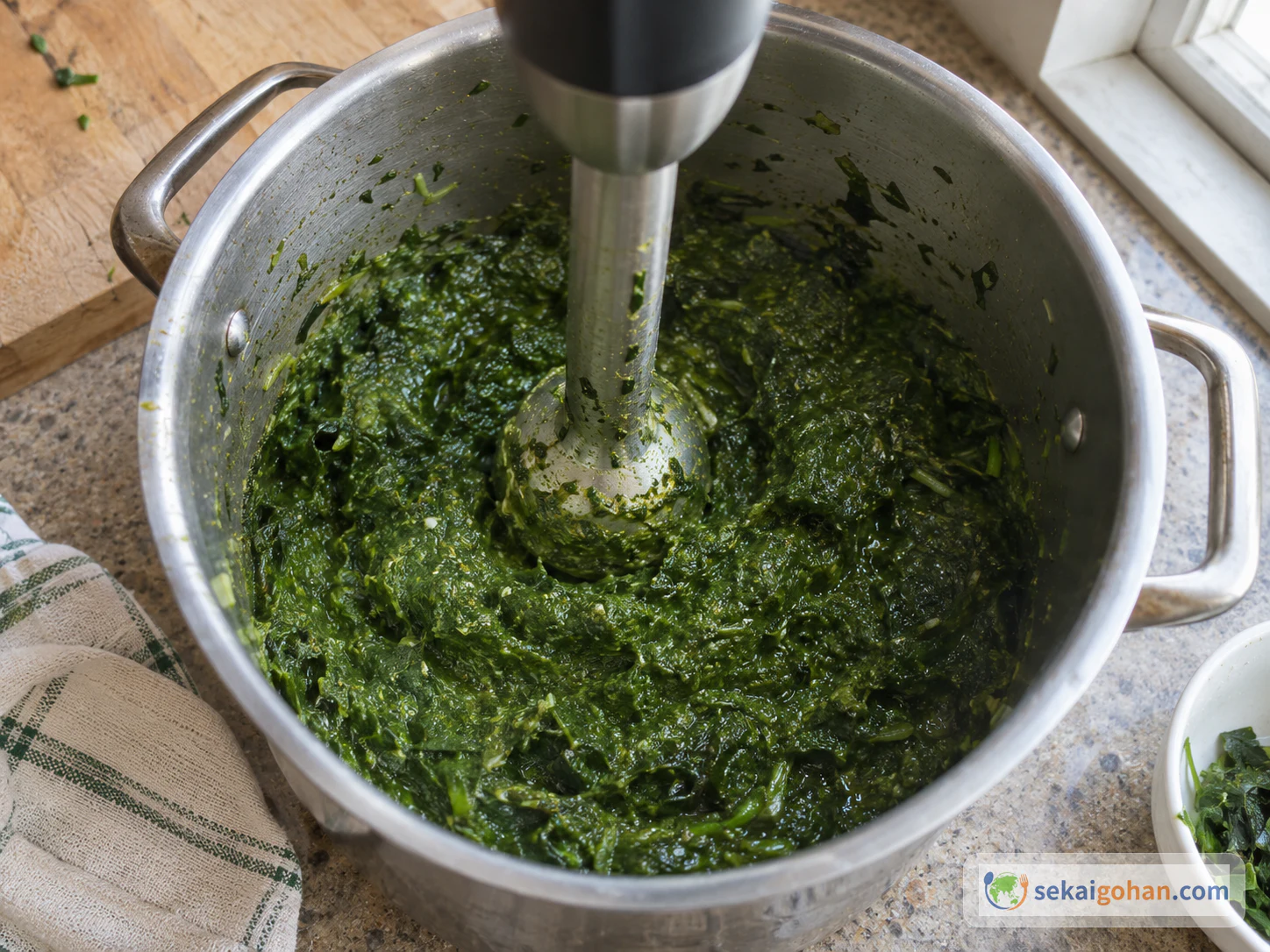
The old way is patient work. Greens such as spinach and bathua are boiled, then pounded with a pestle or churned with a madani, a wooden churning stick, until they break into a rough mash. Traditionally the pot then sits over low heat for six to seven hours. Home cooks today often cook it for about half an hour on medium heat, and a pressure cooker does the softening that once took hours. What has not changed is the texture: coarse, spoonable, with flecks of leaf still visible.
Households differ in the details. Some add fenugreek leaves (methi) or radish leaves to the greens. Some cook the tadka onions to a deep brown; here they stop at light golden. In some kitchens mustard oil brings its own sharp, nose-tingling aroma to the pot. On the table it comes with white butter, raw onion, a lump of jaggery and a glass of lassi, and very often with makki di roti, the cornmeal flatbread it is almost always named alongside.
Sarson is mustard, and saag is greens. The dish is written sarson da saag, sarson ka saag or sarso ka saag. Every spelling means the same pot of mustard greens.
Ingredients (serves 4)
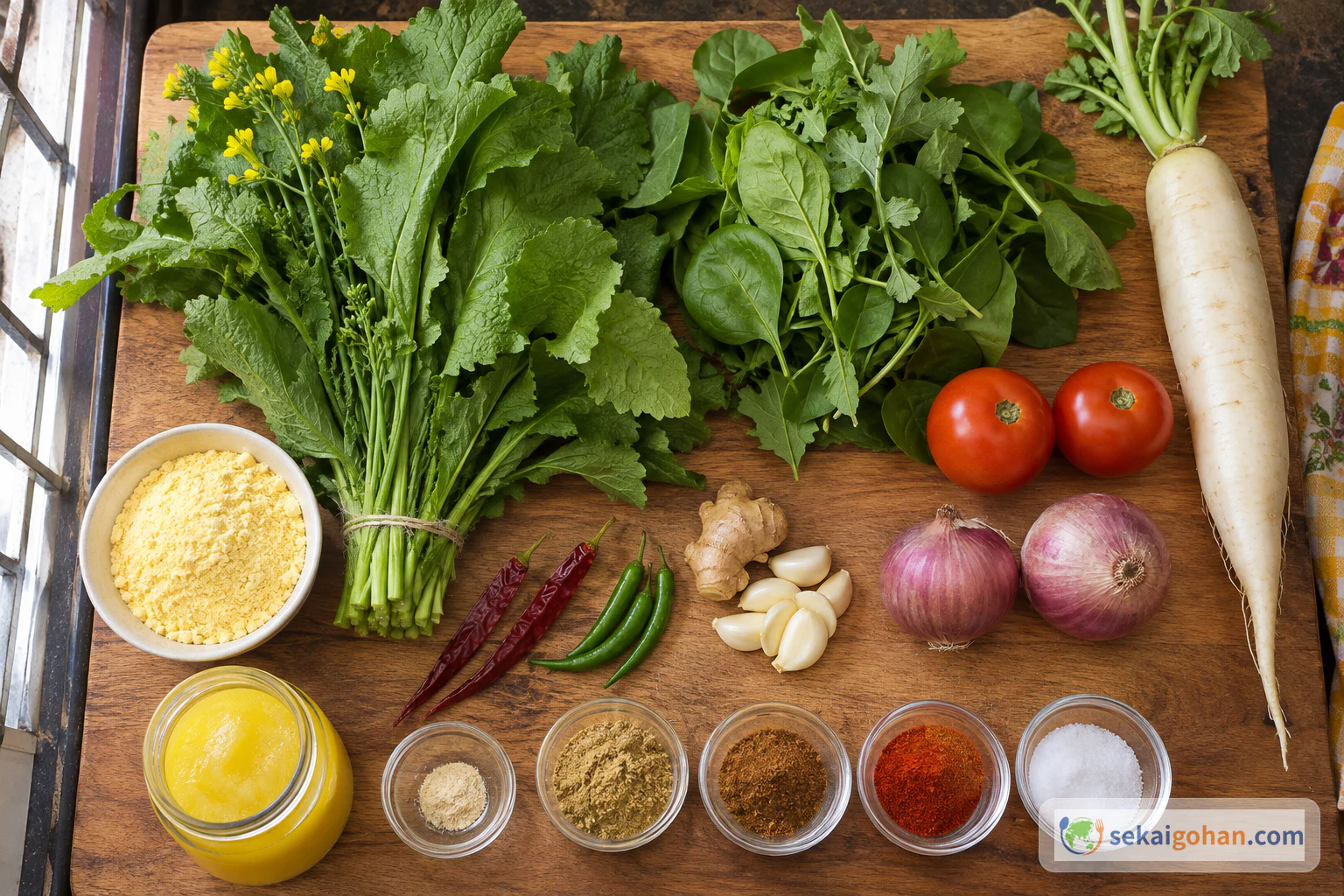
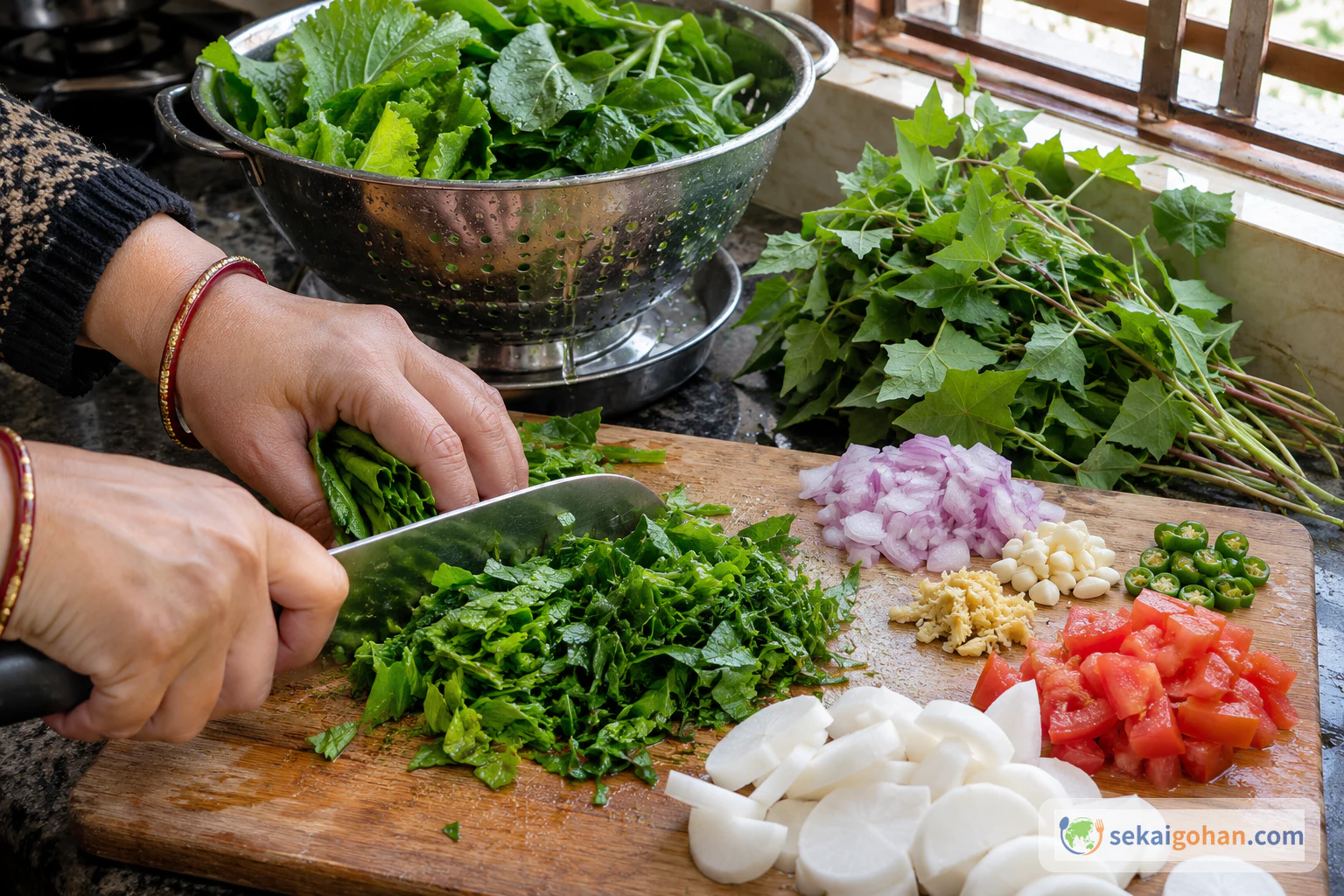
The greens and vegetables all go into the pressure cooker together. The tadka is made separately at the end, with its own garlic and onion.
Ghee is a dairy product. Make the tadka with oil and the saag is dairy-free, but the butter served on top is dairy. Some asafoetida products are blended with wheat, so check the label if you avoid gluten.
Equipment
- Stovetop pressure cooker, electric pressure cooker (Instant Pot) or a heavy lidded pot
- Immersion (hand) blender
- Heavy pot for simmering, if the pressure cooker is not used for this stage
- Small pan for the tadka
- Large knife, cutting board and colander
Choosing the Greens, Flour and Fat
Mustard greens have to lead. If you shop by the bunch, not by weight, aim for about two parts mustard greens to one part milder leaves. Bathua is hard to find outside South Asian grocers. Spinach, turnip greens or collards stand in well. Spinach makes the saag softer and milder, and turnip greens and collards keep more body and bite. Using bathua's stand-ins changes the dish slightly, but the mustard is what makes it sarson da saag.
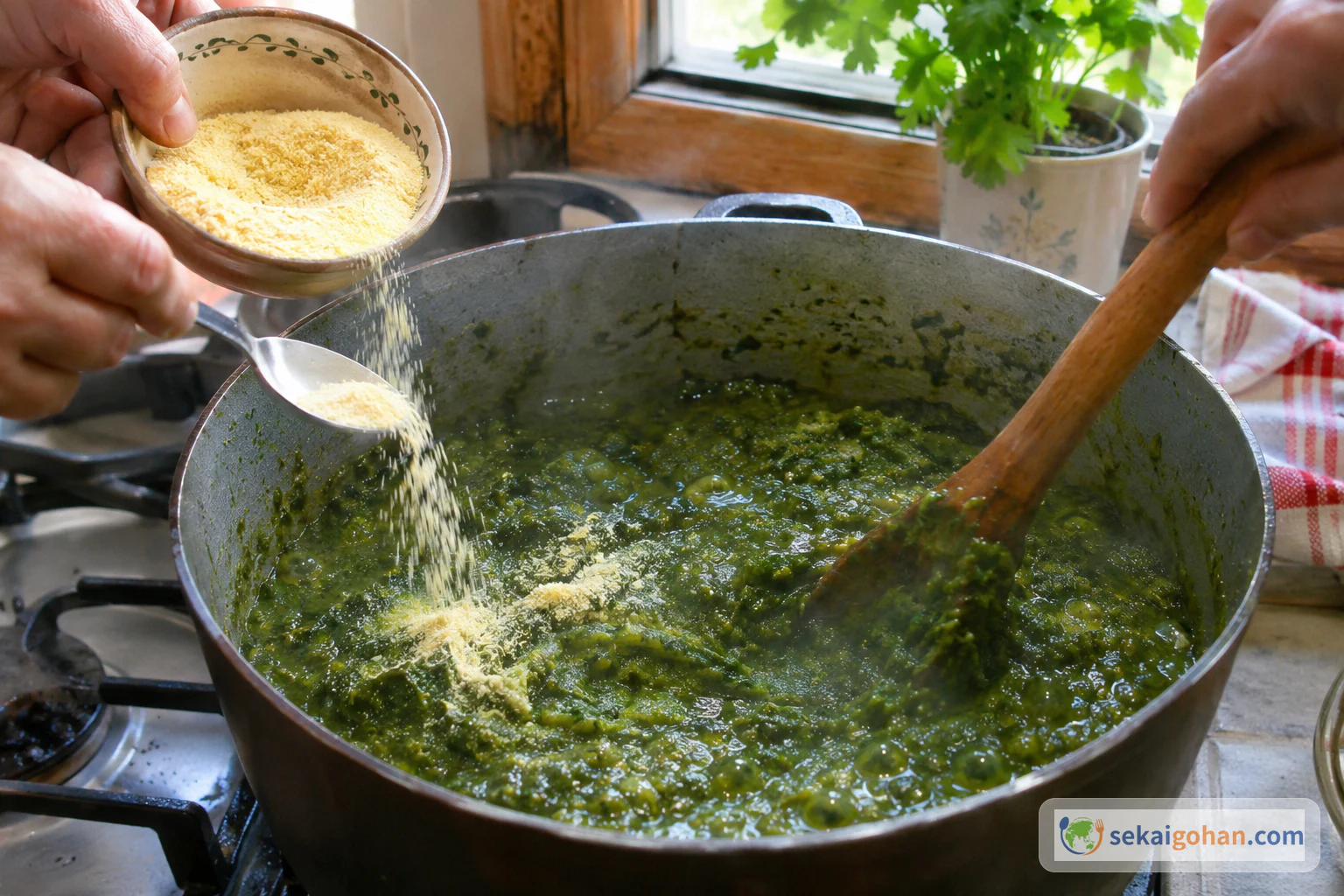
Buy maize flour (makki ka atta) at a South Asian grocer or online. Coarse cornmeal is the closest swap and gives the same gentle thickening with a little more grit. Cornstarch is a different thing altogether and is not a substitute. Look for asafoetida in the same aisle. A little goes a long way. Ghee gives the fullest, nuttiest tadka. Any neutral oil works if you want the pot dairy-free, and the butter at the table will still bring richness.
| Keep for the local taste | Fine to let go abroad |
|---|---|
| Mustard greens as the main leaf | Bathua, replaced by spinach, turnip greens or collards |
| Maize flour or coarse cornmeal for thickening | Ghee, replaced by oil |
| A coarse, textured blend | Exact chili heat, adjusted to taste |
Method
The work comes in three stages. First chop everything and let the pressure cooker turn the leaves soft. Then blend and simmer the saag with maize flour. That simmer is mostly hands-off, apart from a stir now and then. Make the tadka in the last few minutes so it goes in hot and sizzling.
When It Goes Wrong
| What you see | Why | What to do |
|---|---|---|
| Harsh, bitter bite | The mustard greens are strong, with too few milder leaves | Serve with plenty of butter and jaggery today. Next time, raise the share of spinach or other mild greens |
| Thin, watery saag | Too much liquid left after cooking | Simmer uncovered, stirring, and sprinkle in a little more maize flour |
| Small lumps through the saag | The maize flour went in all at once | Stir hard from the bottom while it simmers. Next time scatter it in gradually |
| Catching and scorching on the bottom | Heat too high for a thick purée | Lower to medium-low and stir from the bottom. Leave scorched bits on the bottom of the pot and do not scrape them in |
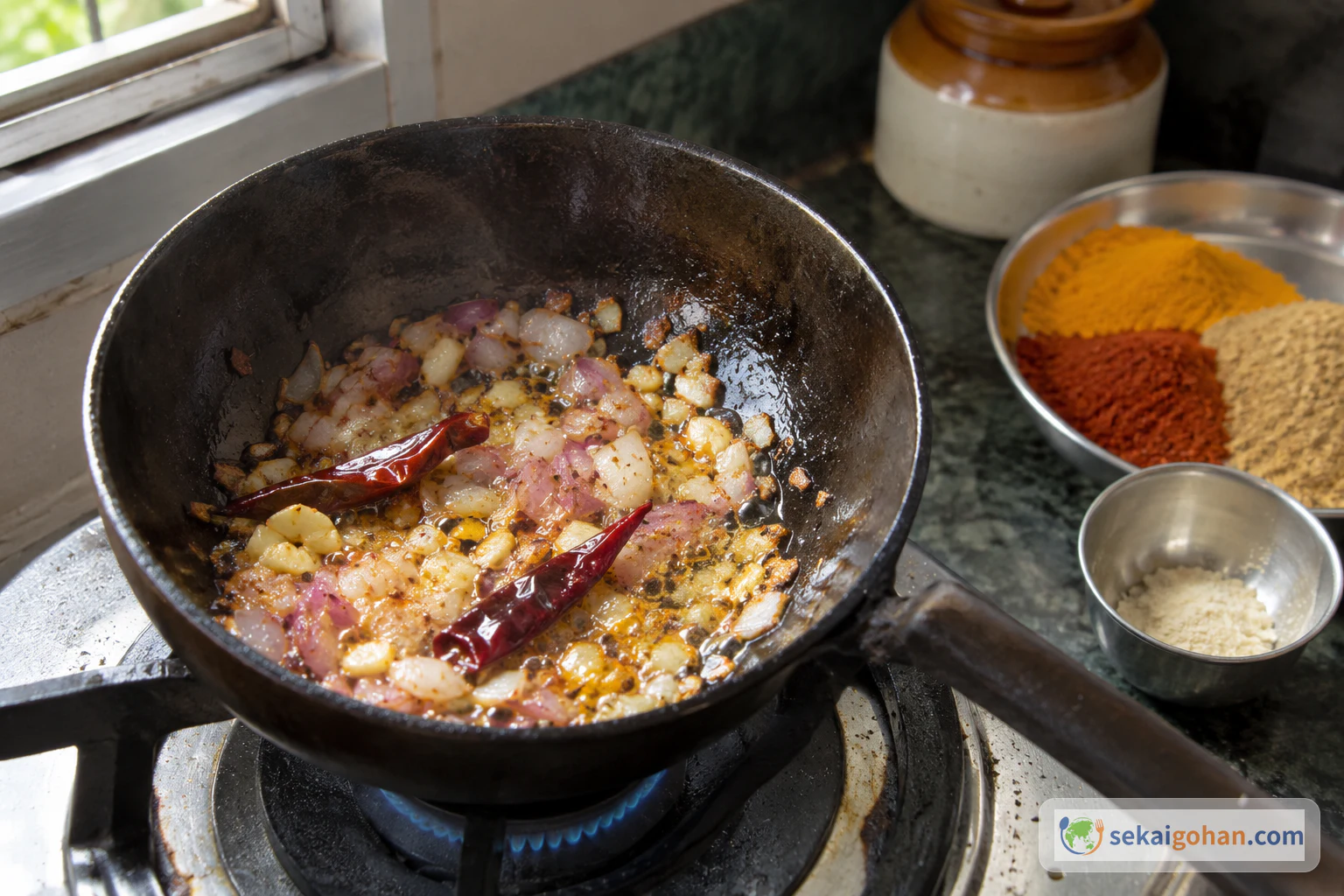
| Bitter, acrid tadka | The garlic burned before the onion went in | Give the garlic only seconds before the onion. If it blackens, start the tadka again |
| Smooth, flat texture | Blended too long | Keep the blending to short pulses next time. The flavor is still right |
Serving, Variations and Storage
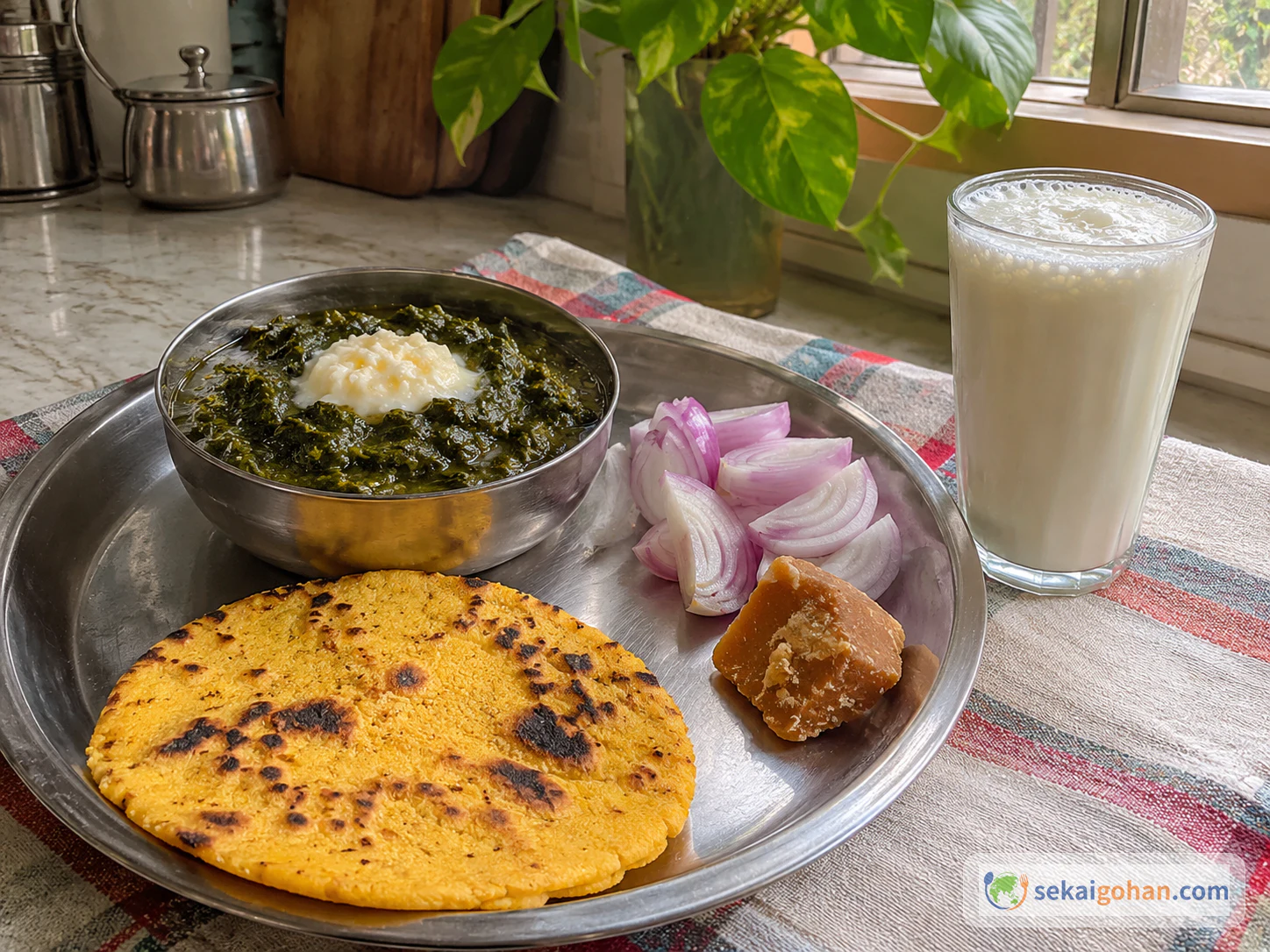
At the table
Spoon the saag into bowls and put a knob of white butter on each, so it melts into a pool as it reaches the table. Set out sliced raw onion, a lump of jaggery and a glass of lassi. The sharp onion and the sweet jaggery between mouthfuls play against the bitterness of the greens. The classic partner is makki di roti, the cornmeal flatbread. Torn pieces scoop up the saag and the melted butter together. It is a cold-weather lunch, eaten through the mustard season.
Variations
- Slow-cooked the old way. Skip the pressure cooker and keep the pot on low heat for six to seven hours, stirring now and then. The greens break down further and the flavor goes deeper and mellower. The shorter home version cooks for about half an hour on medium heat.
- Extra leaves. Add fenugreek leaves (methi) or radish leaves with the greens. Methi brings a bitter, maple-like aroma, and radish leaves add a peppery edge.
- Deep-brown tadka. Fry the tadka onions past golden to a deep brown for a darker, more roasted finish.
- More onion, cornmeal blended in. Some cooks add more onion and blend the cornmeal straight in with the boiled greens instead of sprinkling it in later.
Storage
Let leftover saag cool, then refrigerate it promptly in a covered container. It can also be frozen. Reheat it in a pot over medium-low heat, stirring from the bottom, until it is steaming hot all the way through. Add a splash of water if it has set thick.
Frequently asked questions
How do I make it milder or hotter?
The heat comes from the green chilies and red chili powder in the cooker and the dried red chilies in the tadka. For a gentle pot, use fewer green chilies and less chili powder. For more heat, add more. The dried chilies mostly add toasty aroma, so leave them in either way.
Why put radish and tomato in a greens dish?
They balance the leaves. The white radish cooks down sweet and makes the purée feel lighter. The tomato brings acidity and moisture, which brightens the dark, bitter mustard. Once blended, you do not see either one, but the saag tastes flat without them.
Why does the garlic go in twice?
The two batches do different jobs. The garlic cooked under pressure melts into the greens and gives a soft, round sweetness. The minced garlic fried in ghee for the tadka gives the sharp, toasty aroma you smell first when the bowl reaches the table.