Kappa Puzhungiyathu: Soft Cassava Root and a Sharp, Raw Chile Dip
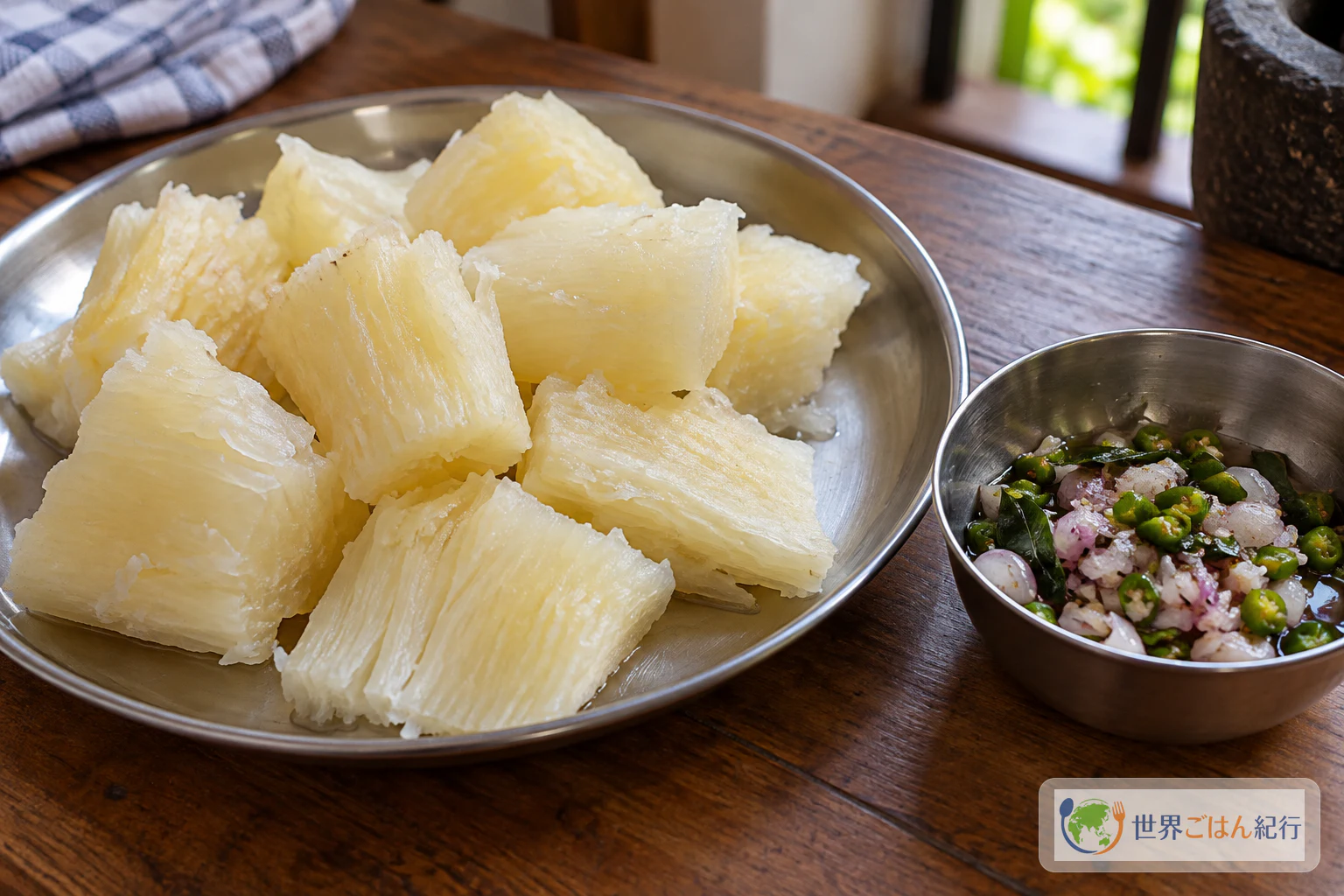
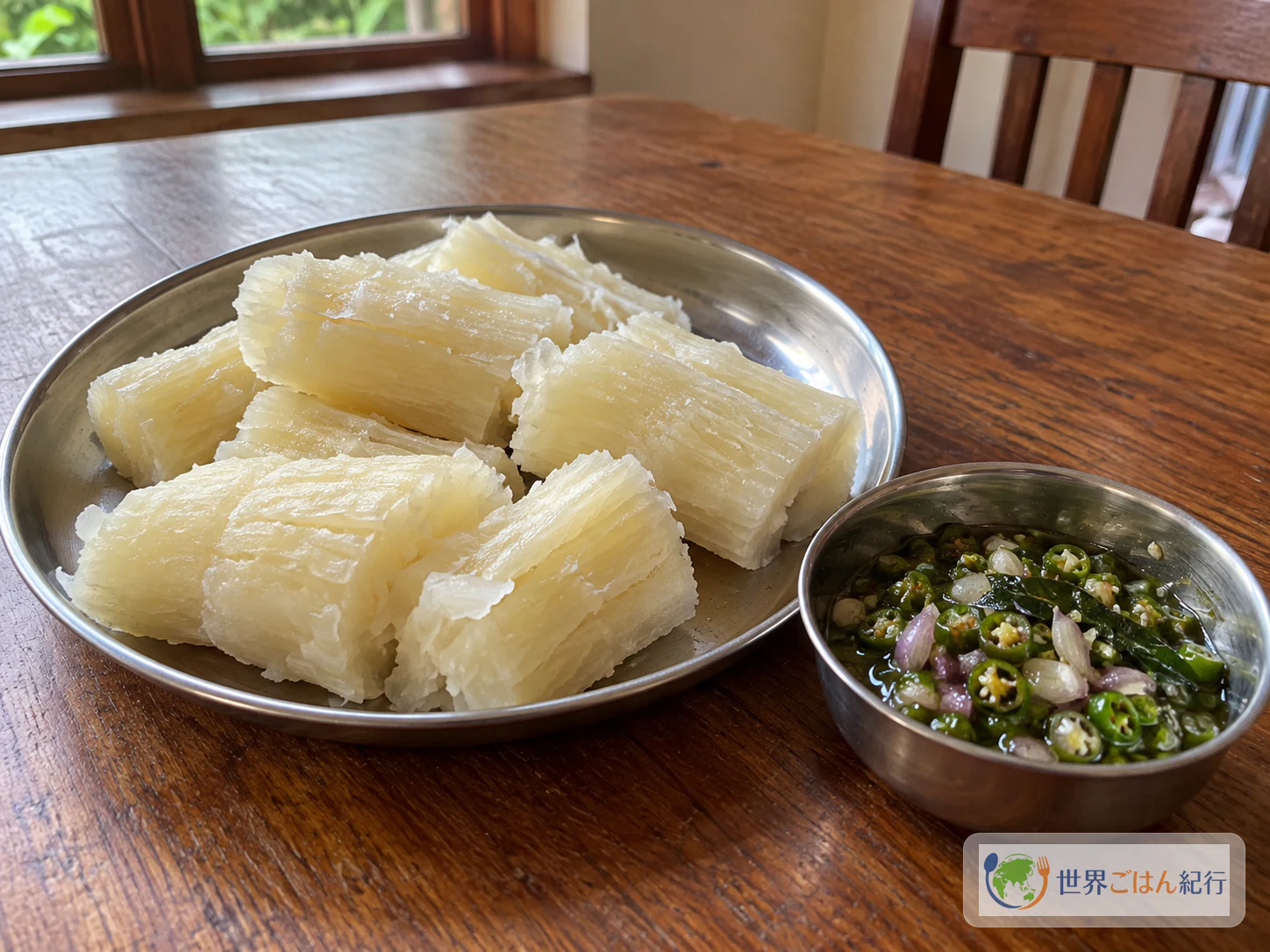
Cassava root boiled until it is very soft and pale, drained completely, and set beside a coarse, uncooked dip of fresh chile, shallot, curry leaf and coconut oil. The root stays mild and starchy, and the dip brings all the heat and fragrance.
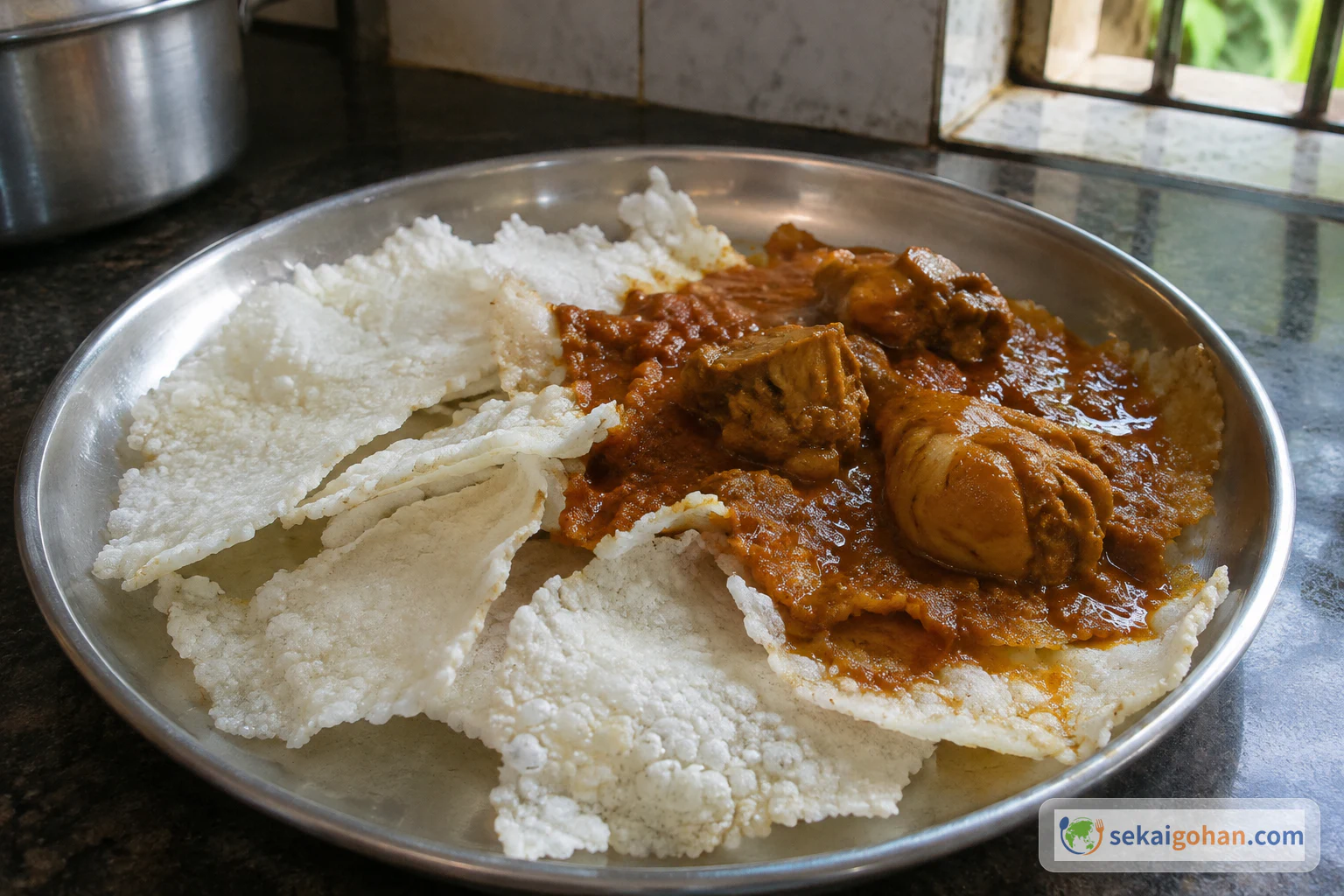
On a Kerala table, a plate of boiled cassava pieces can be the whole point of a meal: soft white chunks, still steaming, next to a small bowl of something green, hot and salty. In Malayalam the cassava root is called kappa (കപ്പ, transliterations vary), and puzhungiyathu refers to this boiled preparation. Kerala recipe writers serve it at breakfast, as an evening snack, or at dinner. Common partners include Kerala fish curry, a kanthari chile dip, or an onion dip. The Kerala Agricultural University also notes that boiled cassava is eaten in Kerala with fish curry or meat.
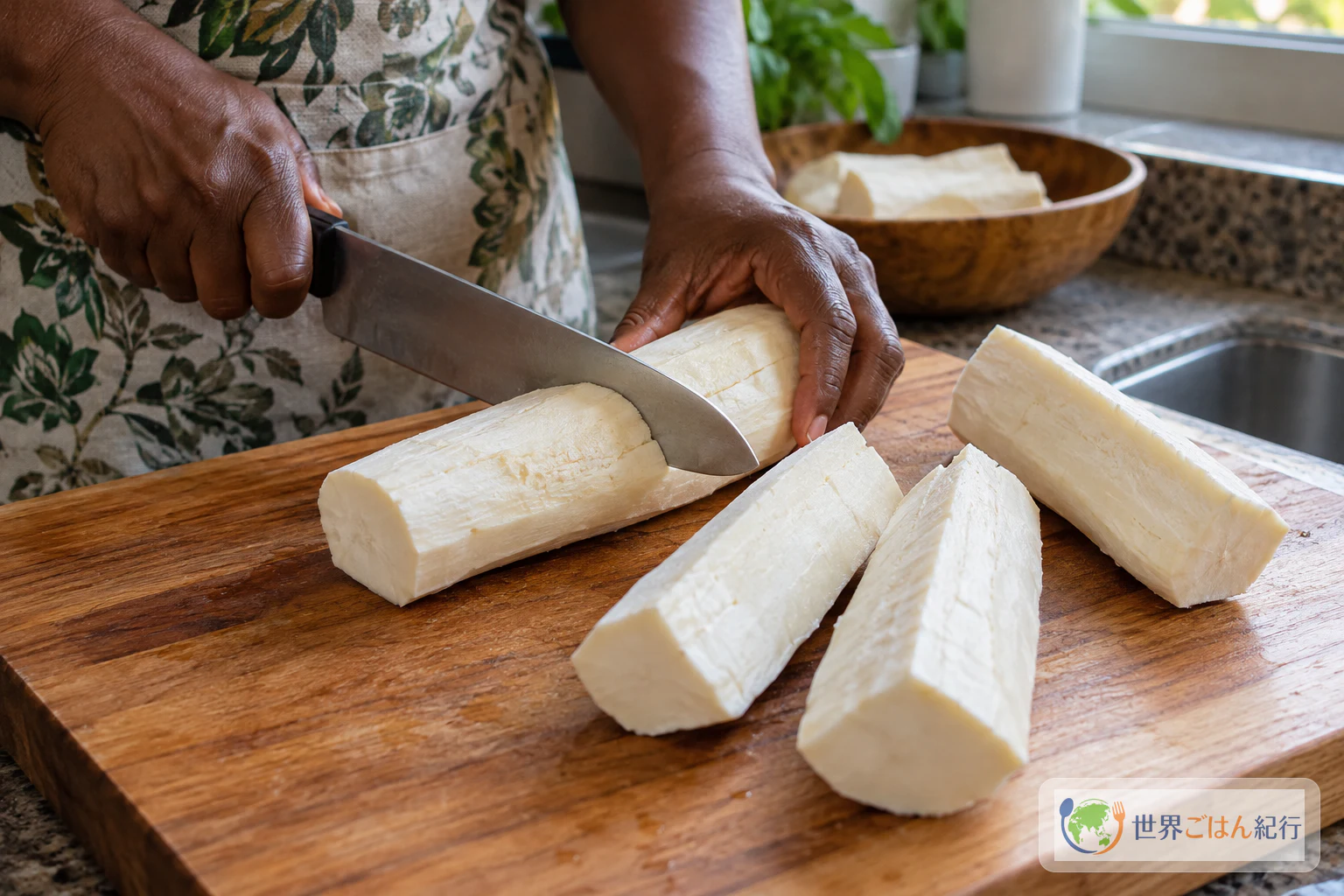
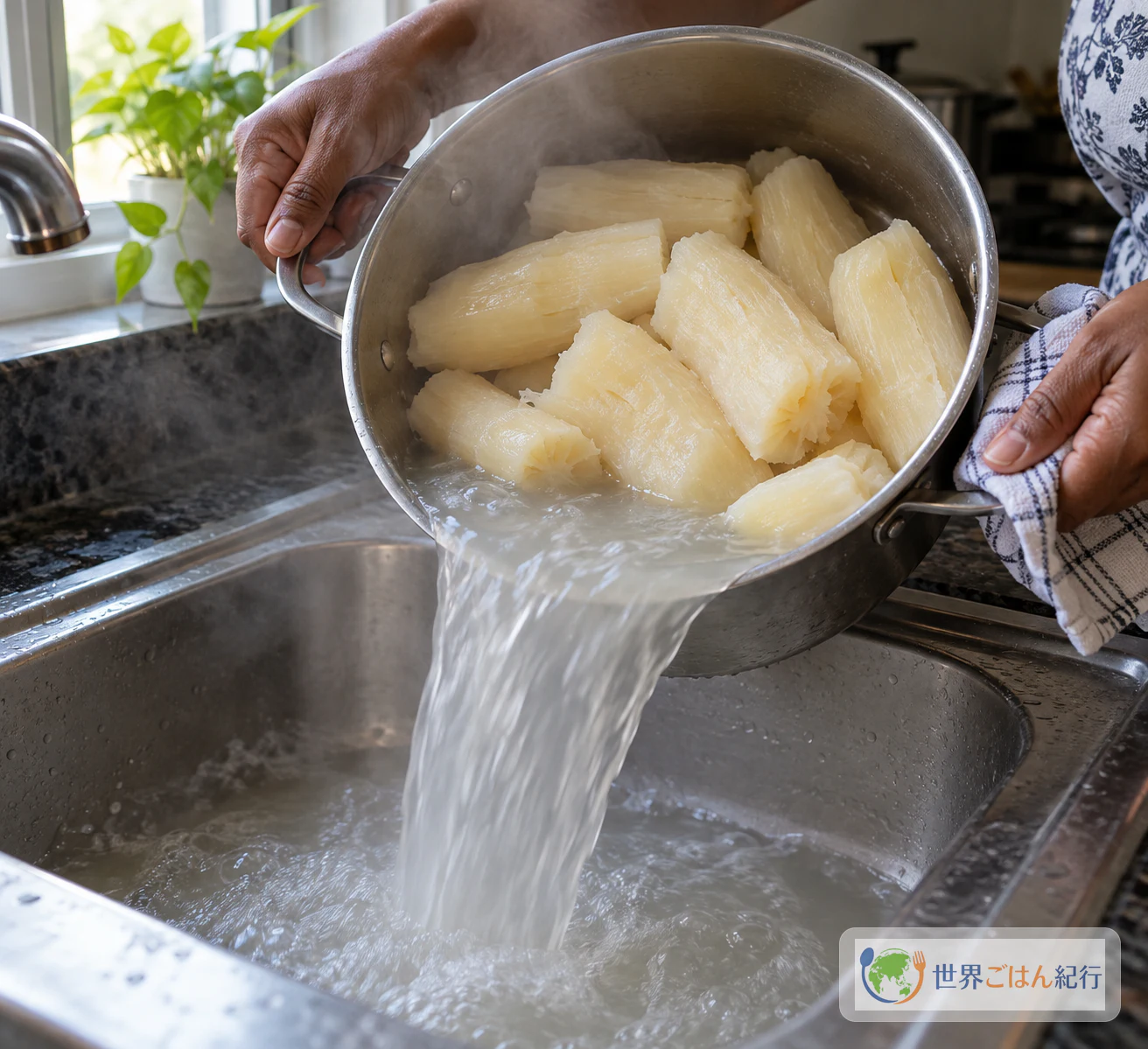
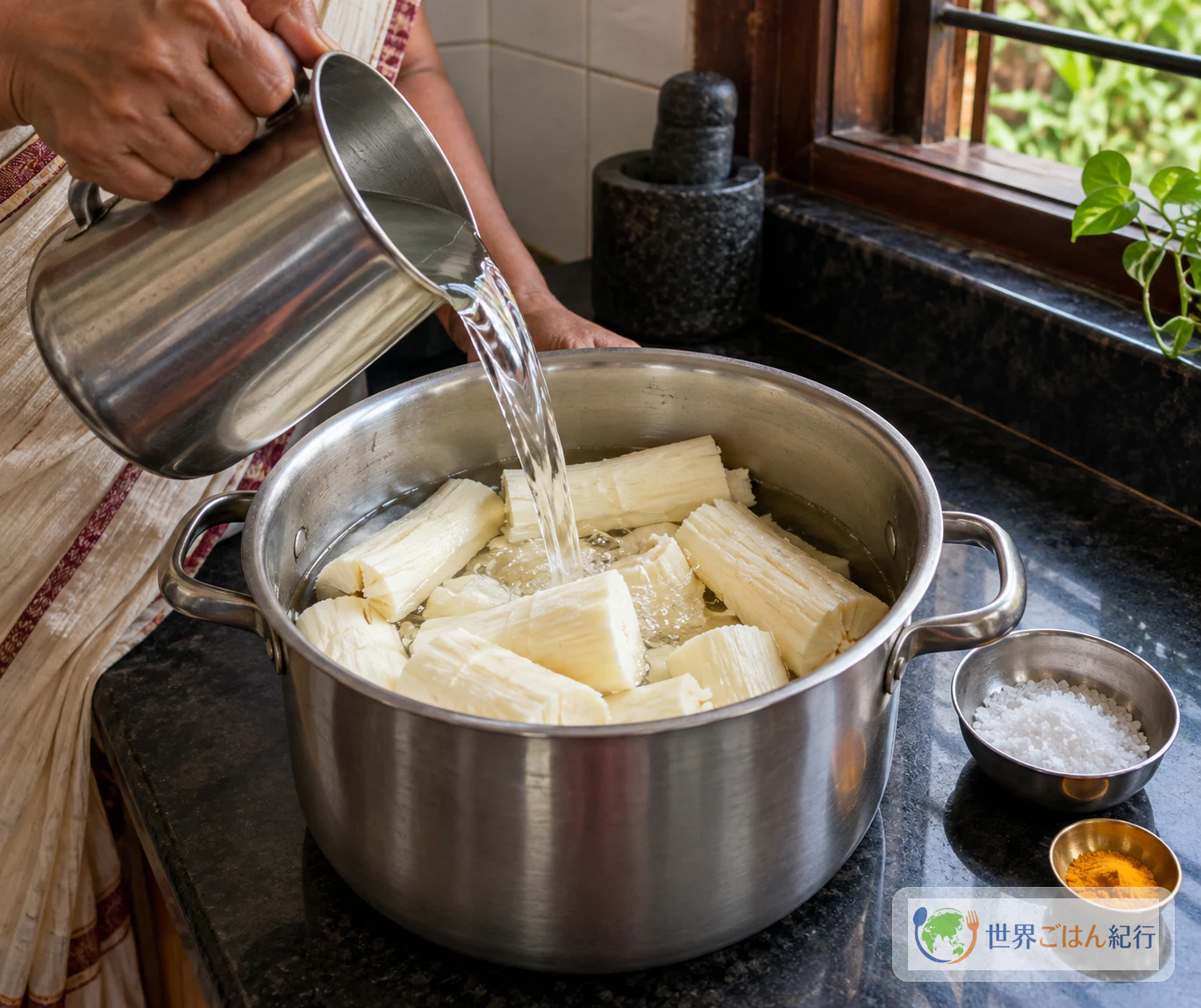
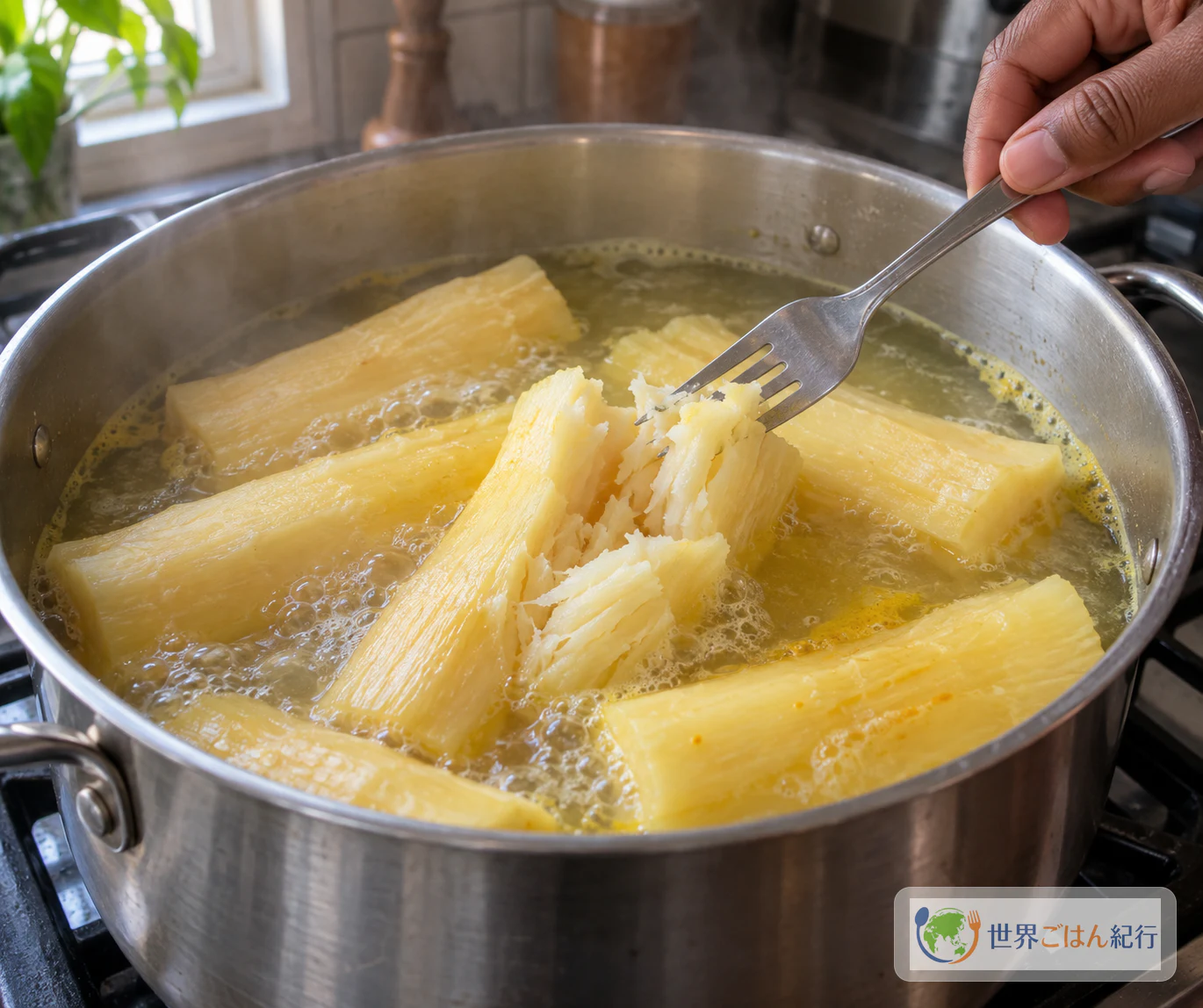
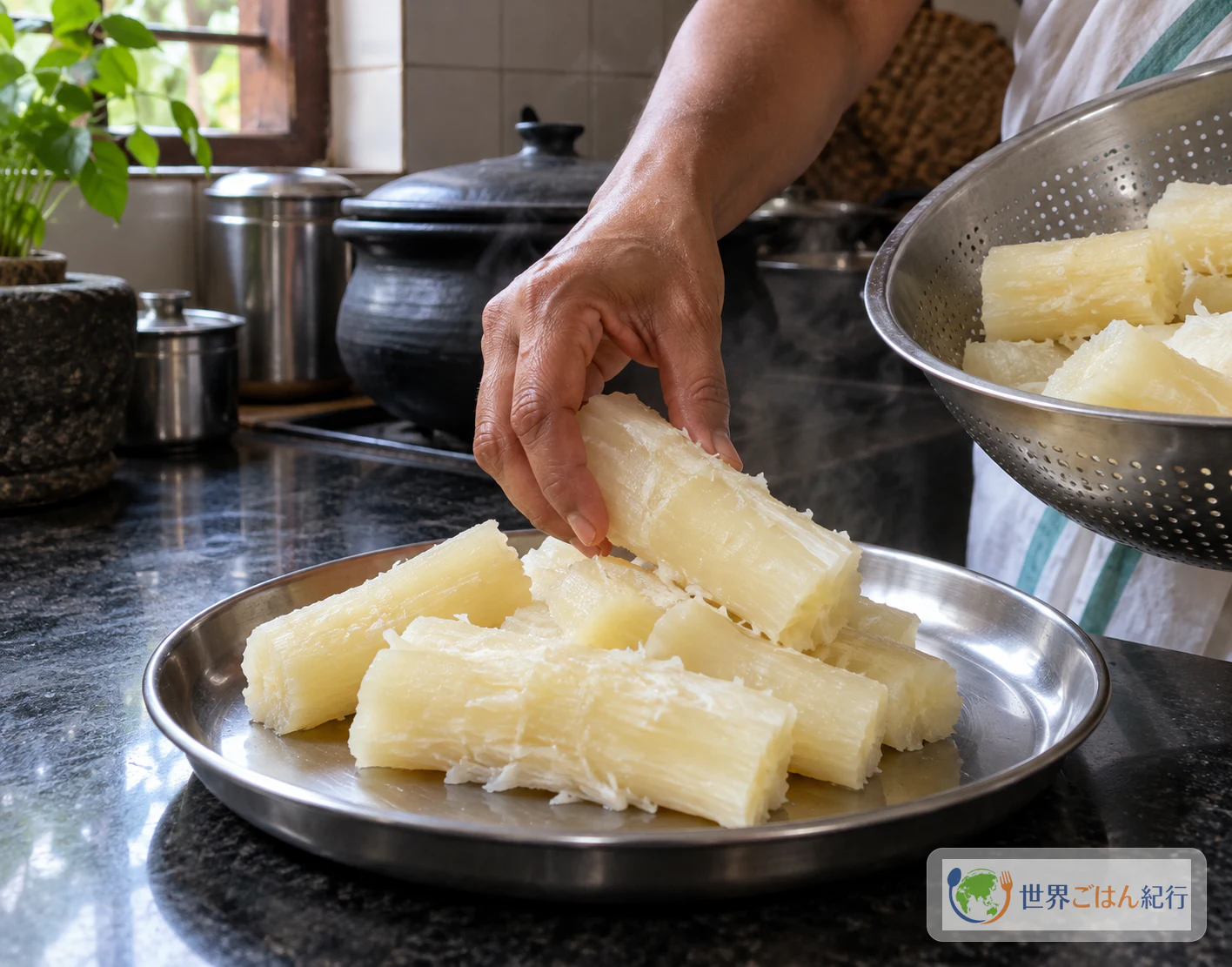
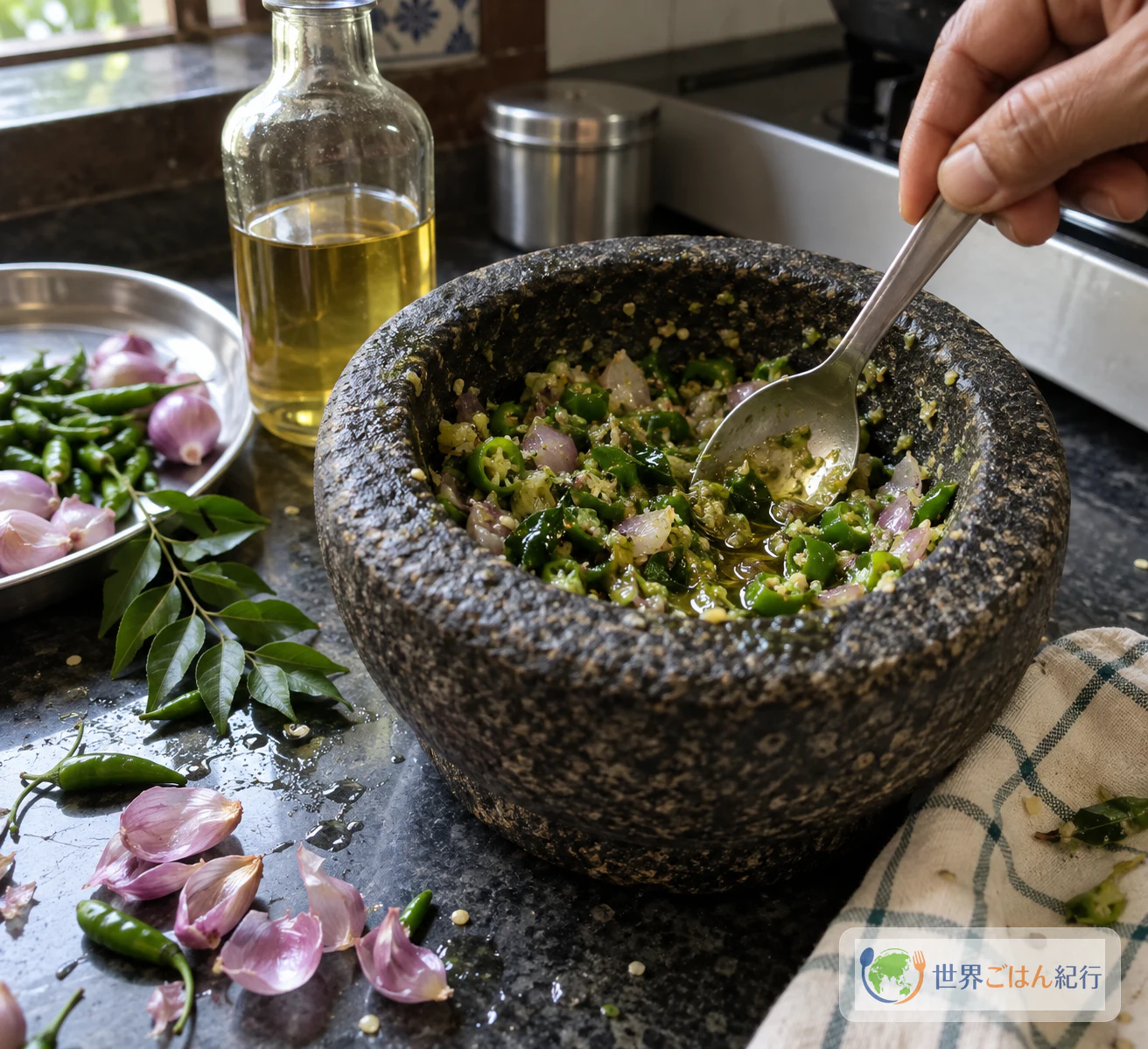
This article follows one Kerala home recipe, Kappa Puzhungiyathu with Kanthari Mulaku Chammanthi from the Kerala food site Kothiyavunu.com. The cassava is boiled once and that water is poured away. The pieces are then cooked in fresh water with salt and an optional pinch of turmeric until very soft. The dip is simply crushed chiles, shallots and curry leaves, loosened with coconut oil and salt. It is one household's version, not the only way Kerala cooks prepare kappa. Sekai Gohan has not kitchen-tested this recipe.
A note on the name: "tapioca" here means the fresh cassava root, not tapioca pearls, tapioca starch or cassava flour. It is also not kappa puzhukku, the mashed cassava preparation, or kappa biriyani, where cassava is cooked with meat. For more dishes from the same country, see the India page.
The recipe lists 10 minutes of preparation and 15 minutes of cooking, and elsewhere describes the dish as ready in less than 20 minutes. Those figures don't agree, and the first boil has no stated duration. Plan around the state of the root: the second boil is given as 10–15 minutes, but the real endpoint is cassava that is very soft all the way through. Larger roots can take longer.
Background: Cassava in Kerala's Kitchens
Cassava is grown across southern peninsular India. The Kerala Agricultural University's crop overview describes it as more than an ordinary vegetable: its cultivation helped address food shortages among lower-income people in Kerala.
The root itself is barely seasoned, with salt in the cooking water and a little turmeric if you like. The flavor comes from what sits beside it. Kanthari mulaku chammanthi is raw and coarse, with fresh small chiles, sharp shallots, curry leaf and the fragrance of coconut oil. It is not a cooked chutney. Fish curry or meat can also go with it at a fuller meal. These pairings are optional, and neither is part of this recipe.
Households and publications boil cassava in different ways. A March 2008 issue of Kerala Calling, a Government of Kerala magazine, includes a recipe by Indu Narayan called Chenda Muriyan. It uses 1/2 kg tapioca cut lengthwise into 3-inch pieces, cooked with salt, a pinch of turmeric and enough water. The water is strained off after a while, and the pieces are cooked until done. It comes with a curd chutney of 1/2 cup curd, 2 green chillies, 1/2-inch ginger, one sprig of curry leaf and salt: grind everything except the curd, then stir in the curd. The same issue covers other tapioca preparations, such as thoran and upmav. That is a separate formula with its own amounts. The recipe below does not borrow from it.
Ingredients: Boiled Cassava and Kanthari Chile Dip
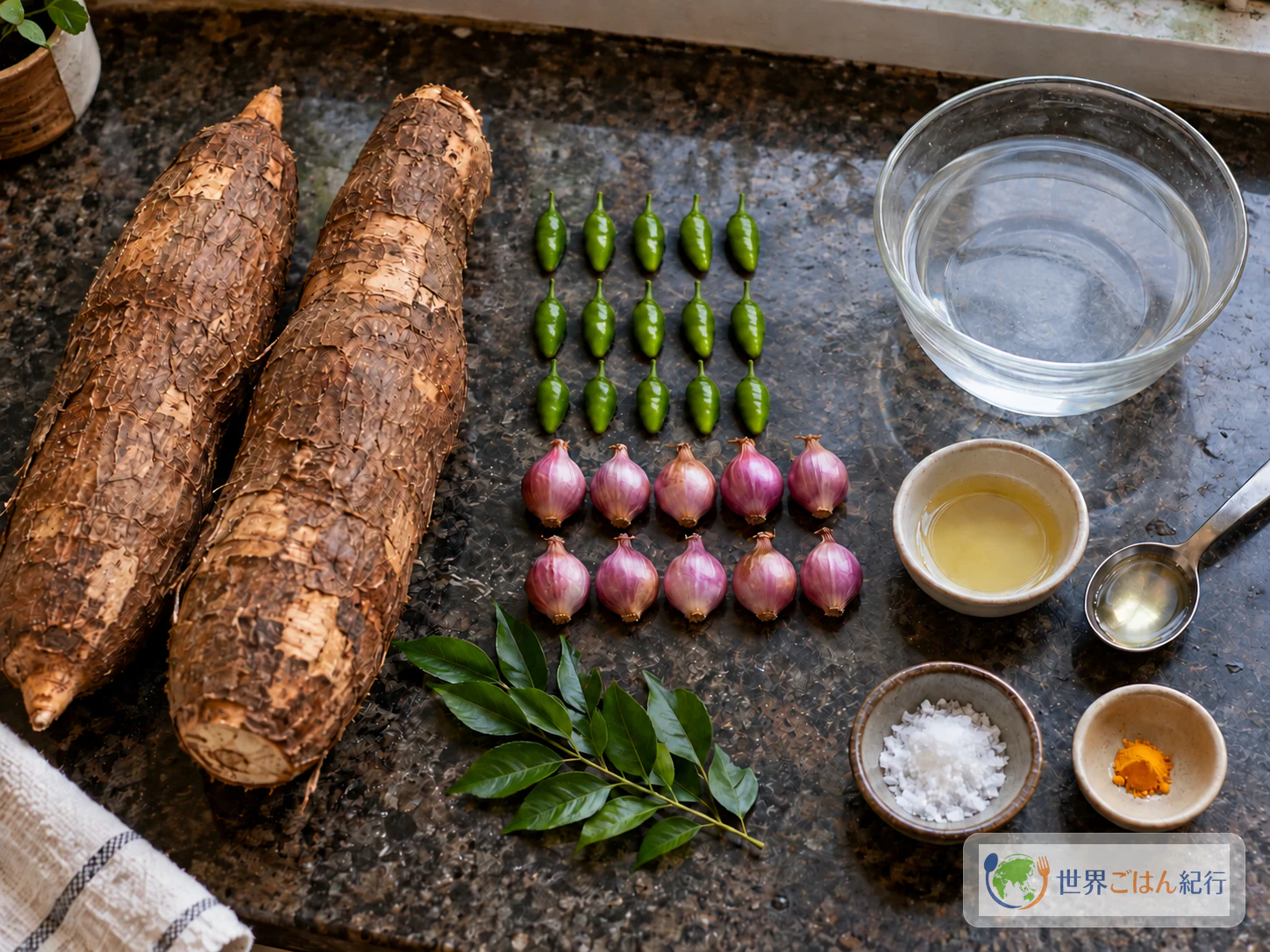
The cassava (serves 4) and the dip (serves 6) are two separate batches. Keep the amounts as they are; they are not meant to be scaled to match each other.
Equipment
- Sturdy knife and cutting board
- Deep pot large enough to cover the cassava pieces with water
- Colander
- Fork or skewer for checking tenderness
- Mortar and pestle, or a small food processor
- Small bowl for the dip
- Serving plate
Choosing Cassava and Substitutes
Cassava root. Buy fresh roots that are firm, intact and clearly sold as edible sweet cassava for cooking. These are often labeled yuca, cassava or tapioca root at Latin American, African, South Asian or Southeast Asian grocers. Pick two large roots rather than weighing out a target. Do not use tapioca pearls, starch or flour in its place. They are different products and cannot stand in for the root.
Frozen cassava. If fresh root is hard to find, packaged frozen cassava is a practical fallback. Use it only if the package identifies it as food-grade and gives cooking directions, and follow those directions. The fresh-root timing in this recipe does not transfer to frozen pieces, and the texture may differ.
Chiles. Kanthari is a small, very hot bird's-eye chile. Ordinary fresh green chiles work in its place, but heat and aroma vary widely between varieties. Taste a sliver first, and start with fewer than 15 if they are fiery. Mild peppers such as shishito won't give the same character.
Shallots. Small Asian shallots are the first choice. A small red onion can stand in, but it is less sharp and less sweet. This is a convenience swap, not part of the Kerala dip.
Curry leaves. Fresh or frozen leaves have the most aroma. Dried leaves are a weaker fallback.
If you can't make the dip. Serve the boiled cassava plainly, or with a Kerala fish curry made from its own recipe. Don't build a substitute dip and call it the original.
Cassava roots can contain cyanogenic compounds, so preparation matters. Sweet cassava is prepared safely by peeling and thorough cooking. Bitter cassava needs much more extensive processing than this simple boil provides, and an unlabeled root should not be assumed to be sweet cassava. Use only cassava sold as food-grade sweet cassava for direct cooking. If a root is unlabeled or of unknown type, do not use it for this recipe. Never taste cassava raw. Peel it completely, cook it until very soft all the way through, and discard both cooking waters. Do not use them in chutney, curry or anything else. This recipe does not make bitter cassava safe.
Coconut oil is used in the dip. If you are cooking for someone who avoids coconut, tell them, and check the labels of packaged ingredients for cross-contact. Optional pairings such as fish curry may contain fish or other allergens.
Troubleshooting: Firm Centers, Cloudy Water, Bitter Roots
| Problem | Likely cause | What to do |
|---|---|---|
| Pieces still firm in the center | Large or older roots; pieces cut very thick | Keep boiling and test again with a fork. Serve only when every piece is very soft all the way through |
| Some pieces soft, others firm | Uneven piece sizes | Take out the soft pieces and keep cooking the rest |
| Cooking water looks cloudy or starchy | Normal starch released from the root | Discard it as in the method. Never keep or reuse either cooking water |
| Thin skin left on the pieces | Peeling stopped at the brown outer layer | Peel away every bit of remaining skin before boiling |
| You don't know what kind of root it is | It may not be sweet cassava | Stop and don't eat it. Buy cassava clearly sold as food-grade sweet cassava for cooking |
| Dip is a smooth paste | Over-processed | Next time, crush by hand or pulse in short bursts. It still tastes good, just less textured |
| Dip is too hot | Very hot chiles | Serve it in small amounts. Next time, start with fewer chiles |
| Dip tastes flat | Not enough salt | Add salt a little at a time and mix again |
Variations
- Green chiles instead of kanthari. Ordinary fresh green chiles are an accepted alternative. The dip becomes milder or hotter depending on the chile, with a different aroma.
- With fish curry. Serve the boiled cassava beside a Kerala fish curry made separately. The cassava stays plain and drained, and the curry is not poured over it in the pot.
- Frozen cassava. Follow the package's cooking directions for food-grade frozen cassava, then serve with the same dip. Timing and texture will differ from fresh root.
- Other boiled-cassava formulas. Chenda Muriyan, with its curd chutney, is a separate dish with its own amounts (see the background section). Mashed kappa puzhukku and kappa biriyani are different dishes again.
Frequently Asked Questions
Is this the same as tapioca pearls?
No. Kappa is the fresh cassava root, peeled and boiled in pieces. Tapioca pearls and starch are processed products extracted from cassava. They are not substitutes for the root in this dish.
Can I taste raw cassava to check it?
No. Cassava contains cyanogenic compounds. A 2015 food-poisoning investigation published in the WHO Western Pacific Region's surveillance journal distinguishes sweet cassava, prepared by peeling and thorough cooking, from bitter cassava, which needs much more extensive processing. Use only known food-grade sweet cassava intended for direct cooking, and never eat it raw.
Why is it boiled twice?
The Kerala recipe this article follows calls for bringing the cassava to a boil, draining that water, then cooking it again in fresh water and draining once more. The Kerala Calling version also strains off the first water partway through. Keep both drains and discard both waters. This article doesn't claim that the double boil makes any cassava safe, and it does not replace choosing the right kind of root.
How long does the second boil take?
The recipe gives 10–15 minutes. Root size changes this, so cook until the pieces are very soft all the way through, and keep going if they aren't. The page's "under 20 minutes" claim conflicts with its own listed preparation and cooking times, so don't count on it.
Can I use green chiles instead of kanthari?
Yes. The recipe names bird's-eye chiles or green chiles. Heat varies a lot, so taste first and adjust how many you use.
Do I need fish curry?
No. The recipe pairs kappa with fish curry as one option, and the Kerala Agricultural University notes it is eaten with fish curry or meat. The chile dip alone makes the plate complete.
Sources
- Sangeetha, "Kappa Puzhungiyathu with Kanthari Mulaku Chammanthi," Kothiyavunu.com. Kerala boiled cassava as a named dish; the recipe amounts, serving counts and sequence (peel, cut into 4–5 pieces, boil, drain, refill with water, salt and optional turmeric, cook 10–15 minutes until very soft, drain); the kanthari chile dip; meal contexts and pairings; and the listed preparation and cooking times. https://www.kothiyavunu.com/2011/11/kappa-puzhungiyathu-with-kanthari/
- Kerala Agricultural University, Centre for e-Learning, "Tapioca (Manihot esculenta)." Cassava cultivation in southern peninsular India, its role in addressing food shortages among lower-income people in Kerala, and boiled cassava eaten with fish curry or meat. https://www.celkau.in/crops/tuber/tapioca/about.php
- Government of Kerala, Kerala Calling, March 2008, "Ethnic Food—Tapioca," recipe by Indu Narayan. The Chenda Muriyan boiled tapioca preparation with curd chutney, and other tapioca preparations including thoran and upmav. https://document.kerala.gov.in/Porteddata/extensionpdf/documents/10180/db575fac-02f1-41b8-8e4e-556380ee5e91.pdf
- Western Pacific Surveillance and Response Journal / WHO Regional Office for the Western Pacific, "Cassava food poisoning, Santa Cruz, Davao del Sur, Philippines, October 2015." Cyanogenic compounds in cassava and the distinction between sweet cassava, prepared by peeling and thorough cooking, and bitter cassava, which requires more extensive processing. https://ojs.wpro.who.int/ojs/index.php/wpsar/article/download/539/851?inline=1