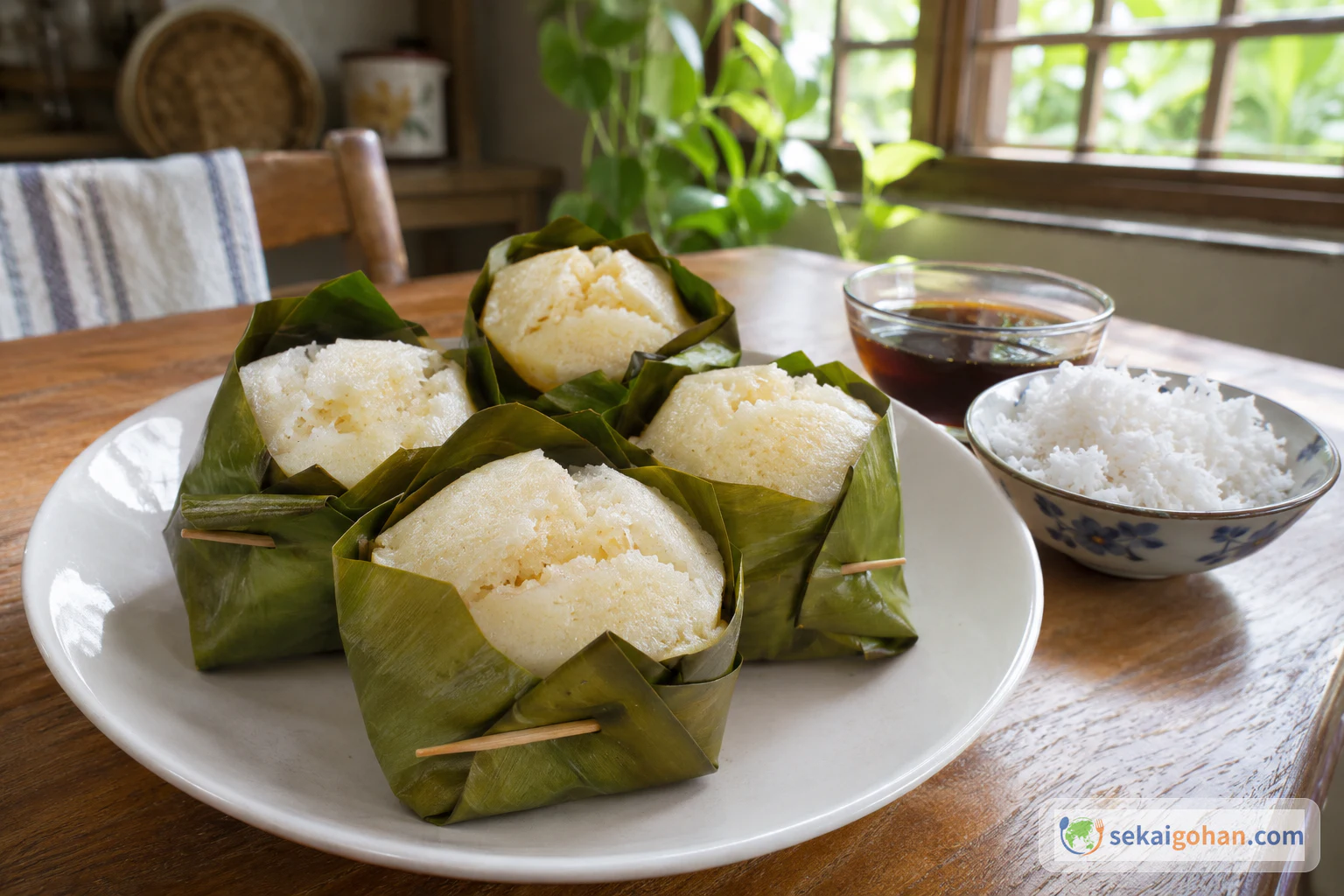
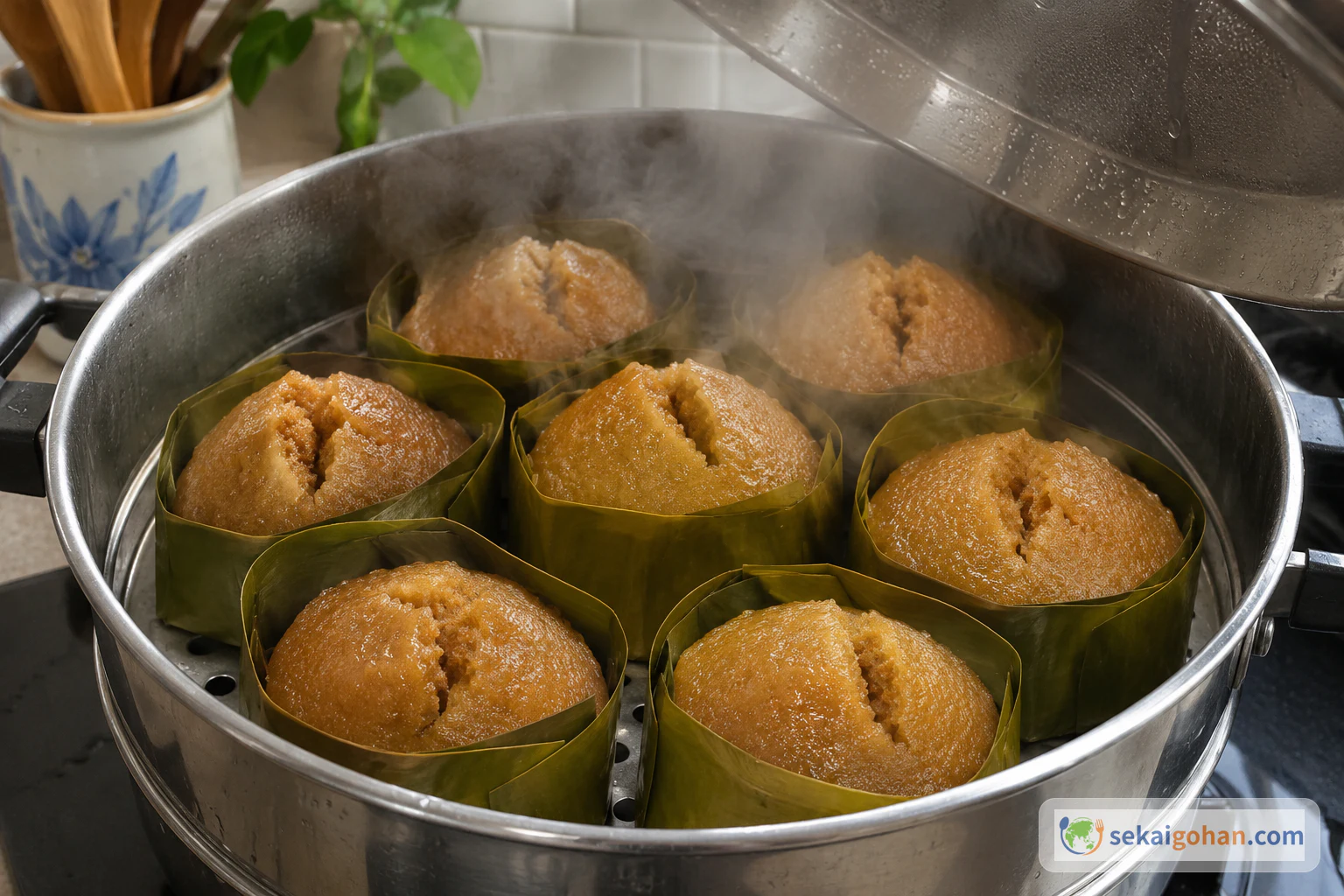
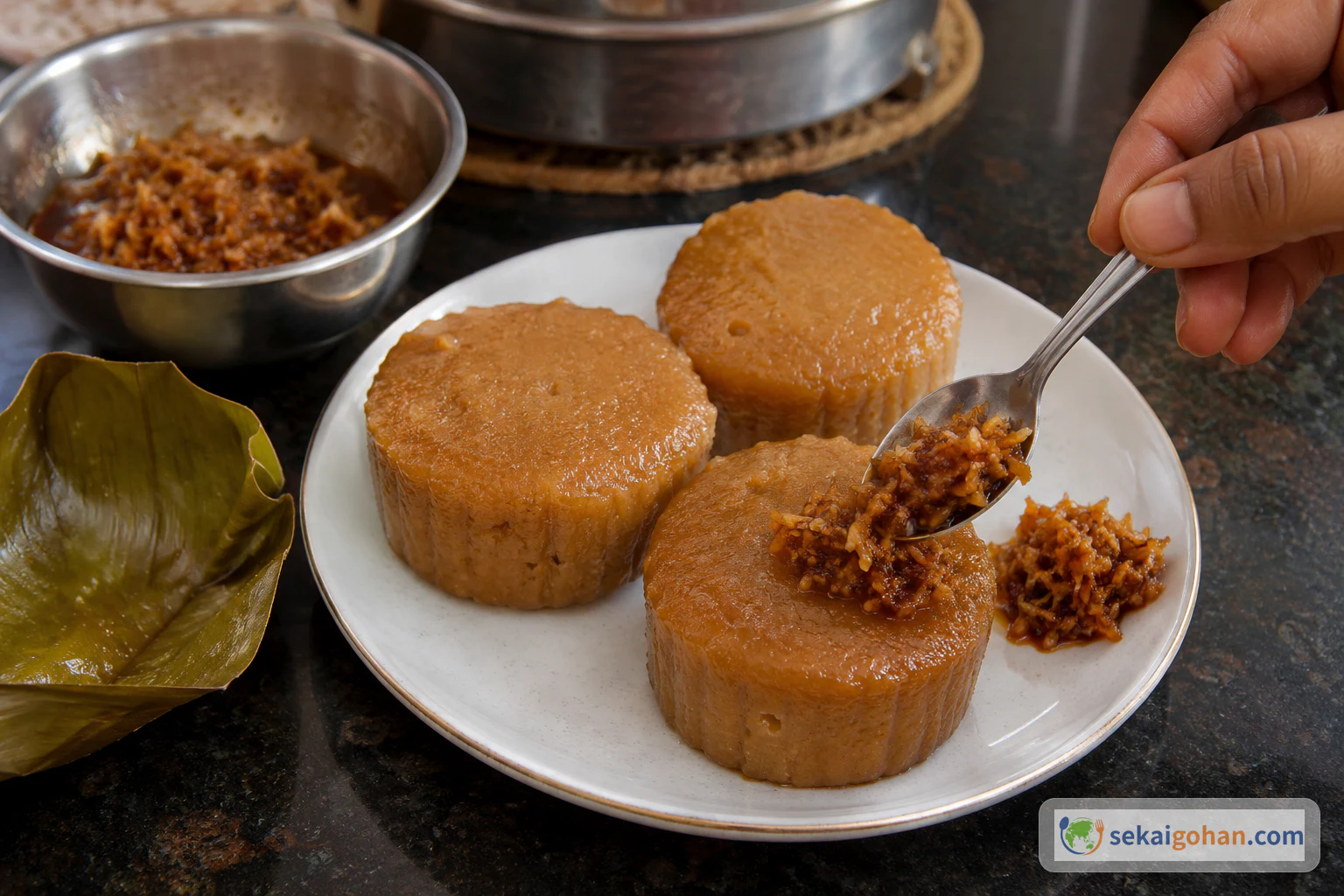
Lift the steamer lid and a cloud rolls off the leaf cups. In each one, the pale batter has risen and split open across the middle, and that crack is the signal to take them off the heat. The cake inside is soft and moist, darkened by jaggery and rich with thick coconut milk. It carries a green note from the leaf it steamed in. On the plate it gets a spoonful of grated coconut stirred with treacle, so each bite is chewy coconut, dark syrup and tender steamed rice.
Seenakku, Wandu Appa and a Cake With Several Names
In Sri Lanka this small steamed cake goes by more than one name. Some sources use seenakku and wandu appa (also spelled wandu aappa) for a cake of rice flour, jaggery and coconut milk, poured into a leaf rolled into a cup and steamed. It also turns up tagged as a "steamed sweet hopper" on the Sri Lankan table.
That history is unclear. One account says the Malay community brought the cake to the island and traces the name to the Malay cheena kuve, "Chinese cake," which would point to a Chinese origin. No second account confirms it, so how the cake first got to Sri Lanka is still open.
The names also overlap with other sweets, and that confuses anyone searching for them. Some lists describe seenakku as a glutinous rice cake served with grated coconut, and that is a different texture from the poured rice-flour batter here. The same lists give wandu appa (or pushnambu) as a rich sweet made from wheat flour and coconut treacle. Both descriptions are in circulation, so check the ingredients and not just the name. The cake in this article is rice flour, coconut water, thick coconut milk and jaggery, steamed in a leaf.
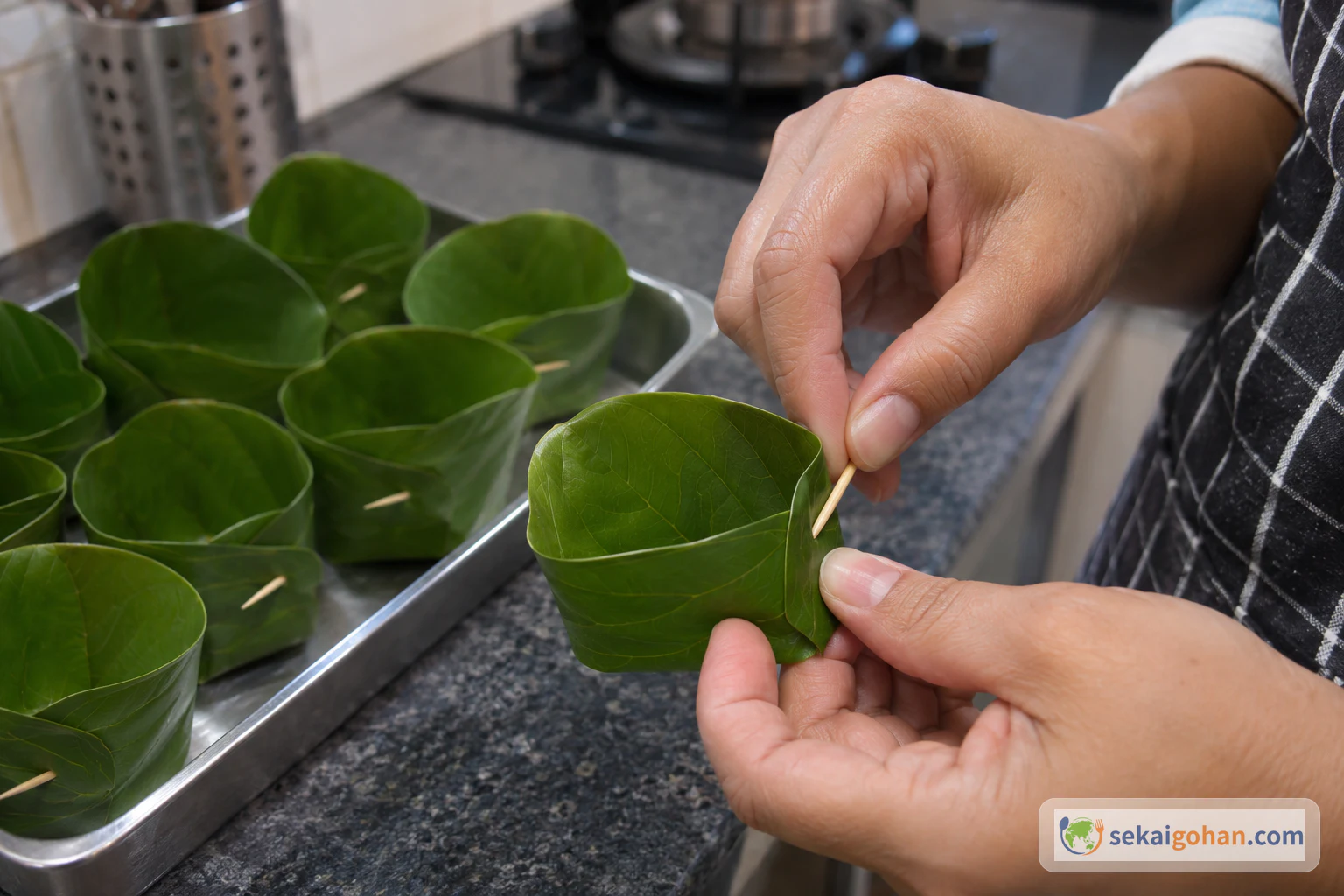
The rolled leaf that holds the batter is called a gotta. The leaf is called kenda kola, also written kanda leaf. The batter takes on the leaf's flavor as it steams, and you lift the cake out of it at the table.
Ingredients
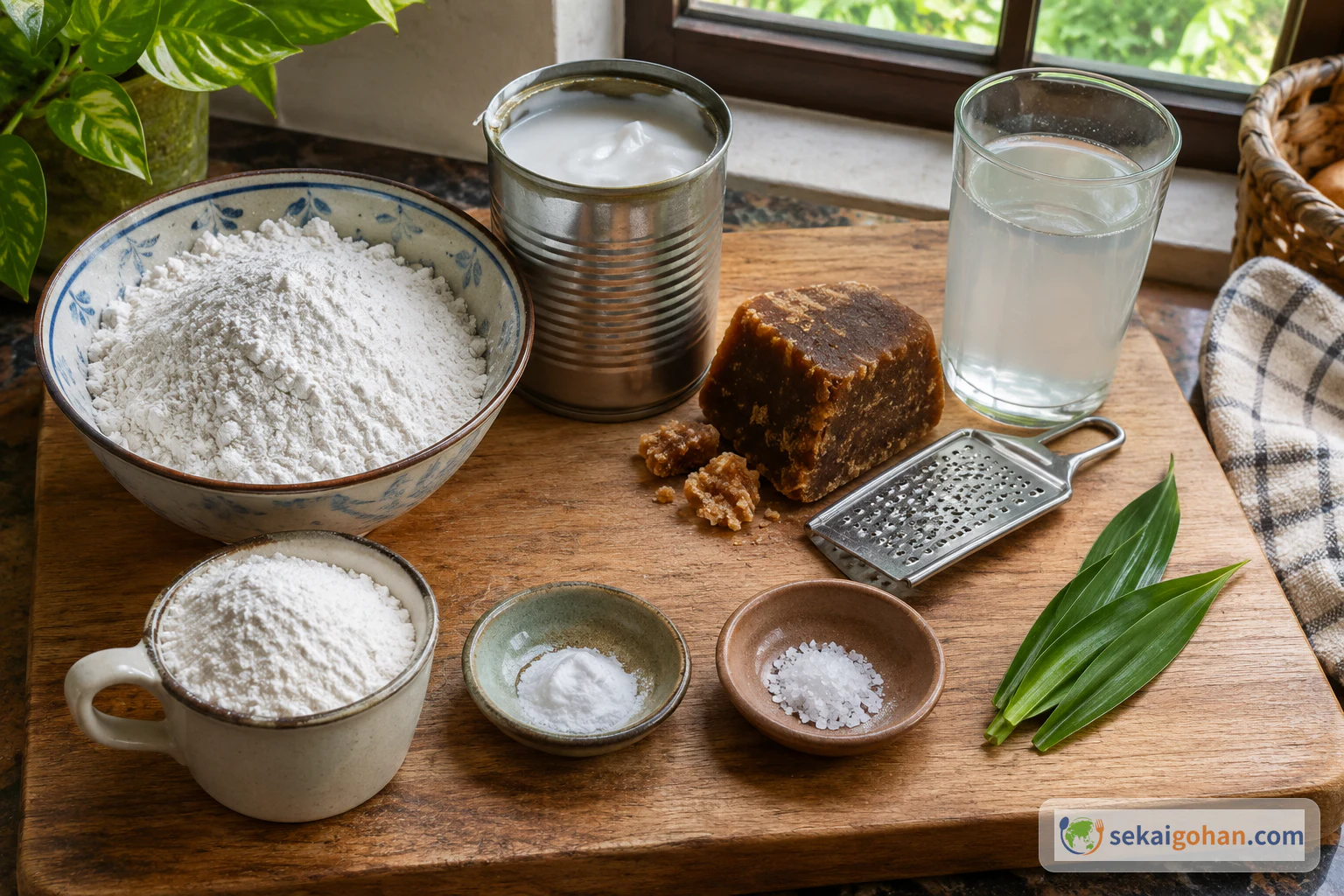
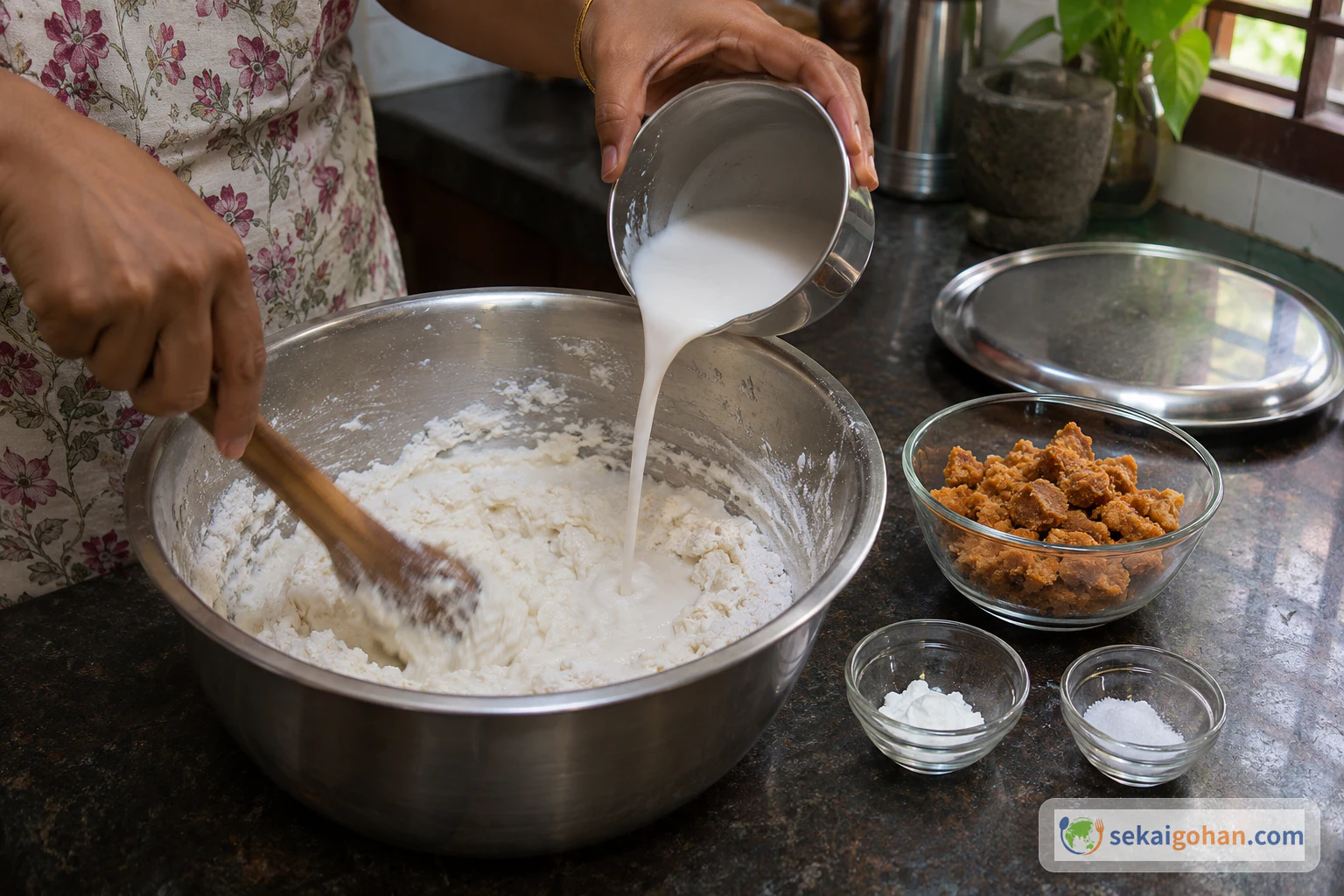
Thick coconut milk gives the batter its weight and its coconut richness, so use the thick kind and not a thin, watery one.
Coconut is in the batter, the coconut water and the topping, so this cake isn't suitable for anyone avoiding coconut. Read the labels on canned coconut milk and packaged coconut water for added ingredients.
Equipment
- Mixing bowl and a sturdy spoon
- Lid or clean cloth to cover the bowl
- Wooden toothpicks
- Steamer basket with a lid, set over a pot
- Tray for the finished leaf cups
- Serving plate and a small bowl for the coconut topping
Choosing and Substituting
Jaggery is worth buying from a South Asian grocer or online. Ground or powdered jaggery dissolves best. A block works too if you grate it finely first. Plain sugar also works and gives a paler, cleaner-tasting cake. Crushed dark brown sugar or Okinawan black sugar (kokuto) is a closer swap, but it makes the cake darker and more strongly molasses-flavored.
For the flour, buy plain rice flour. Glutinous (sweet) rice flour and Japanese rice flours such as joshinko and shiratamako differ in grain size and stickiness, and they pull the cake toward a chewier, gummier texture. Canned or boxed coconut water works well. Plain water also moistens the flour, but you lose some of the coconut flavor.
Kenda kola leaves are hard to find outside Sri Lanka. Banana leaves are the easiest leaf to fold into cups, and Asian grocers sell them frozen. You can also line small heatproof cups with parchment paper and steam the batter in those. Neither one has the flavor of the local leaf, but both give the batter a small, deep cup to steam in.
For the topping, treacle is a dark syrup. If you can't get it, Japanese kuromitsu (black sugar syrup) mixed with the grated coconut gives a similar dark sweetness.
Method
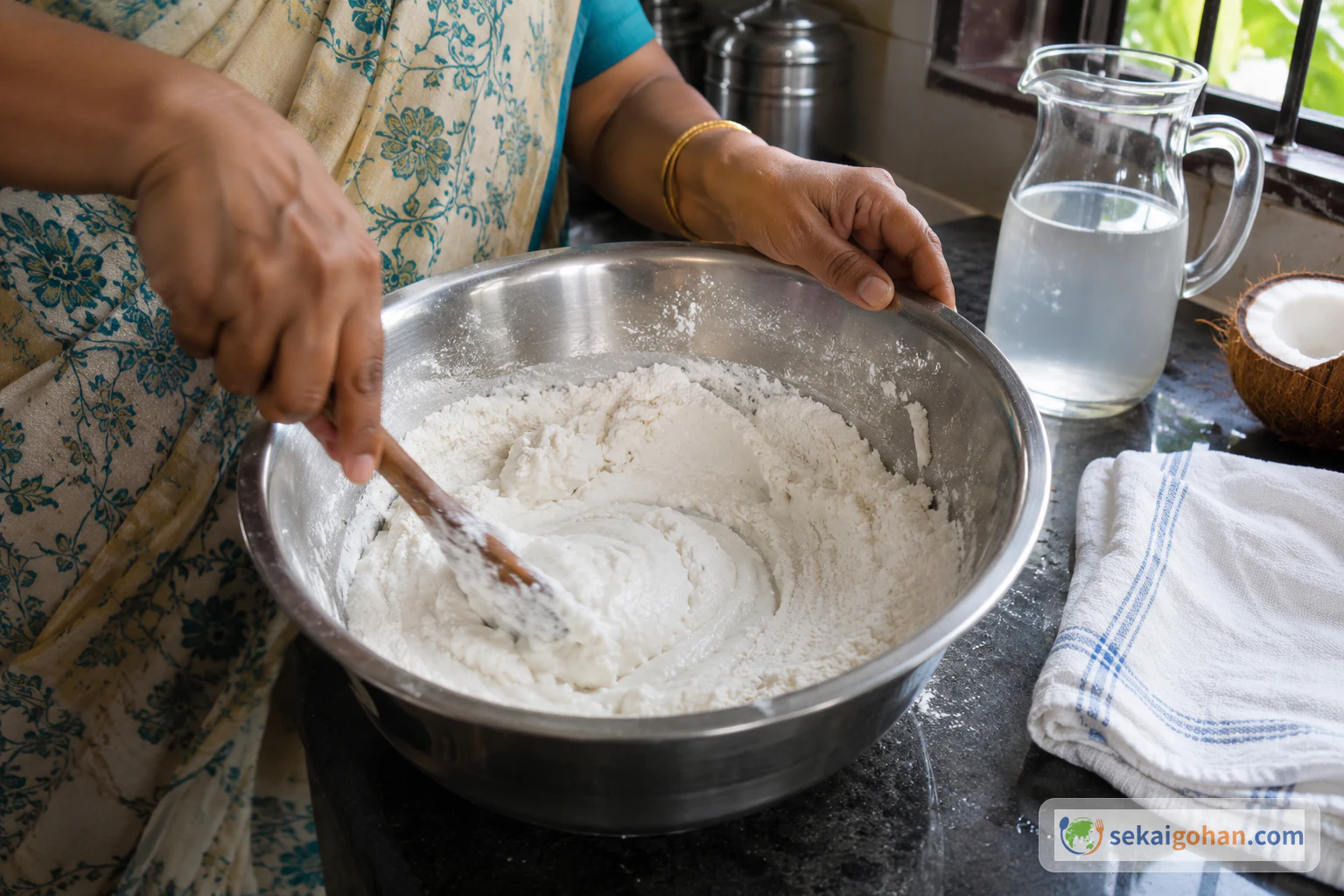
The work is spread over most of a day. Most of that time is resting, so plan around the two rests. Mix the flour and coconut water first, and let it sit for about four hours. Make the batter, then let it rest for about two hours. Fold the leaf cups during that second rest so they're ready when the batter is. Steaming is the last part and the only stage where you need to watch the pot.
Both rests are long, and coconut water and coconut milk spoil if left warm. Keep the covered bowl in the refrigerator, not on the counter. Food-poisoning bacteria multiply in the range of about 20–50°C, so keep the batter at that temperature for as little time as you can. Never leave it out at room temperature for the full six hours.
When It Goes Wrong
| What you see | Why | What to do |
|---|---|---|
| No crack appears and the center is wet | The steam is weak, or the pot is running dry | Bring the water back to a strong simmer, top up with boiling water and keep steaming until the crack opens |
| Batter leaks from the cups | The seam isn't pinned tightly, or the leaf has split | Re-pin with a second toothpick, or nest the cup inside a second leaf before filling |
| Batter is lumpy | The coconut milk went in too fast | Stir hard against the side of the bowl before the second rest. Next time add the milk gradually |
| Cake is dense and doesn't rise | The baking soda was left out or is old | Use fresh baking soda and stir it in well with the jaggery |
| Cake is very dark with a strong molasses taste | Brown sugar or black sugar was used in place of jaggery | For a paler, cleaner flavor, use ground jaggery or plain sugar |
| Water drips onto the tops | Condensation is falling from the lid | Wrap the lid in a clean cloth so it catches the drips |
Serving and Variations
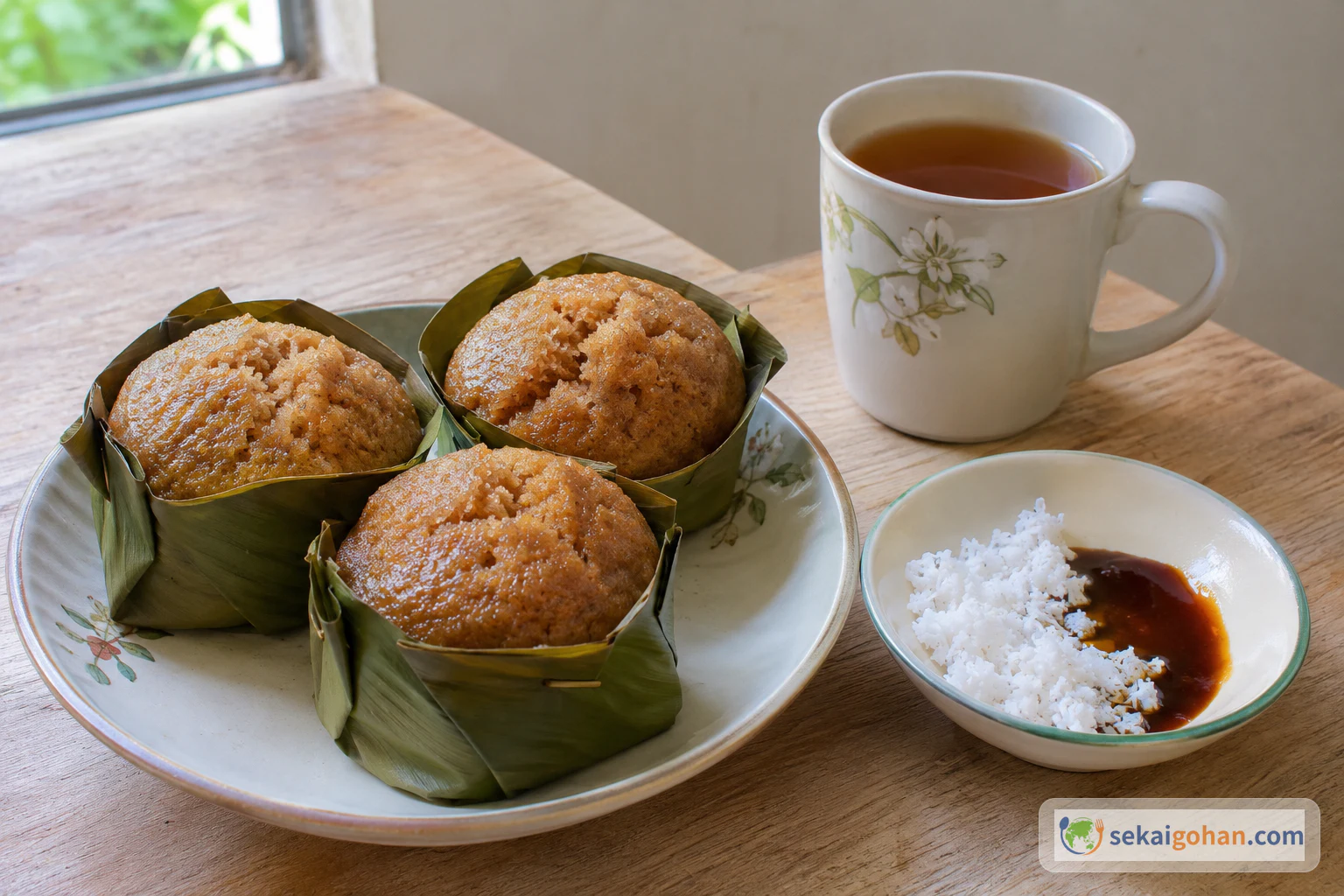
You can serve the cakes still in their leaf cups and let everyone unwrap their own, or take them out in the kitchen and top them there. The coconut and treacle topping is part of the dish. The dark syrup and chewy coconut on top are what finish each bite.
Variations
- Parchment-lined cups: Small heatproof cups lined with parchment give the same deep shape without leaves. The cakes rise and crack the same way, but they have no leaf flavor.
- Black sugar or dark brown sugar: This makes a darker cake that tastes more like molasses and less like the caramel flavor of jaggery.
- No steamer: Set the cups in a wide pot with a little simmering water around them, cover, and steam the same way. Watch for the crack, and keep the water from boiling up into the cups.
- Kuromitsu topping: Mix grated coconut with Japanese black sugar syrup in place of treacle. It gives a similarly dark sweetness.
Storage
Eat the cakes the day you steam them. If you don't eat them right away, let them cool, then refrigerate promptly in a covered container. Don't leave them out at room temperature.
Frequently asked questions
Is this the same sweet as the wandu appa made with wheat flour?
No. The name wandu appa is also used for a rich sweet made from wheat flour and coconut treacle, also called pushnambu. The cake here is made with rice flour and coconut milk and is steamed in a leaf cup.
How many leaf cups will I need?
Fold as many as the batter fills, one leaf for each cup. The number depends on the size of your leaves. Fold a few extra so you have spares if one tears or leaks.
Can I use banana leaves instead of kenda kola?
Yes, as a substitute. Banana leaves are easier to find, but they don't give the flavor of the local leaf. Wipe them clean and dry before you fold them into cups.