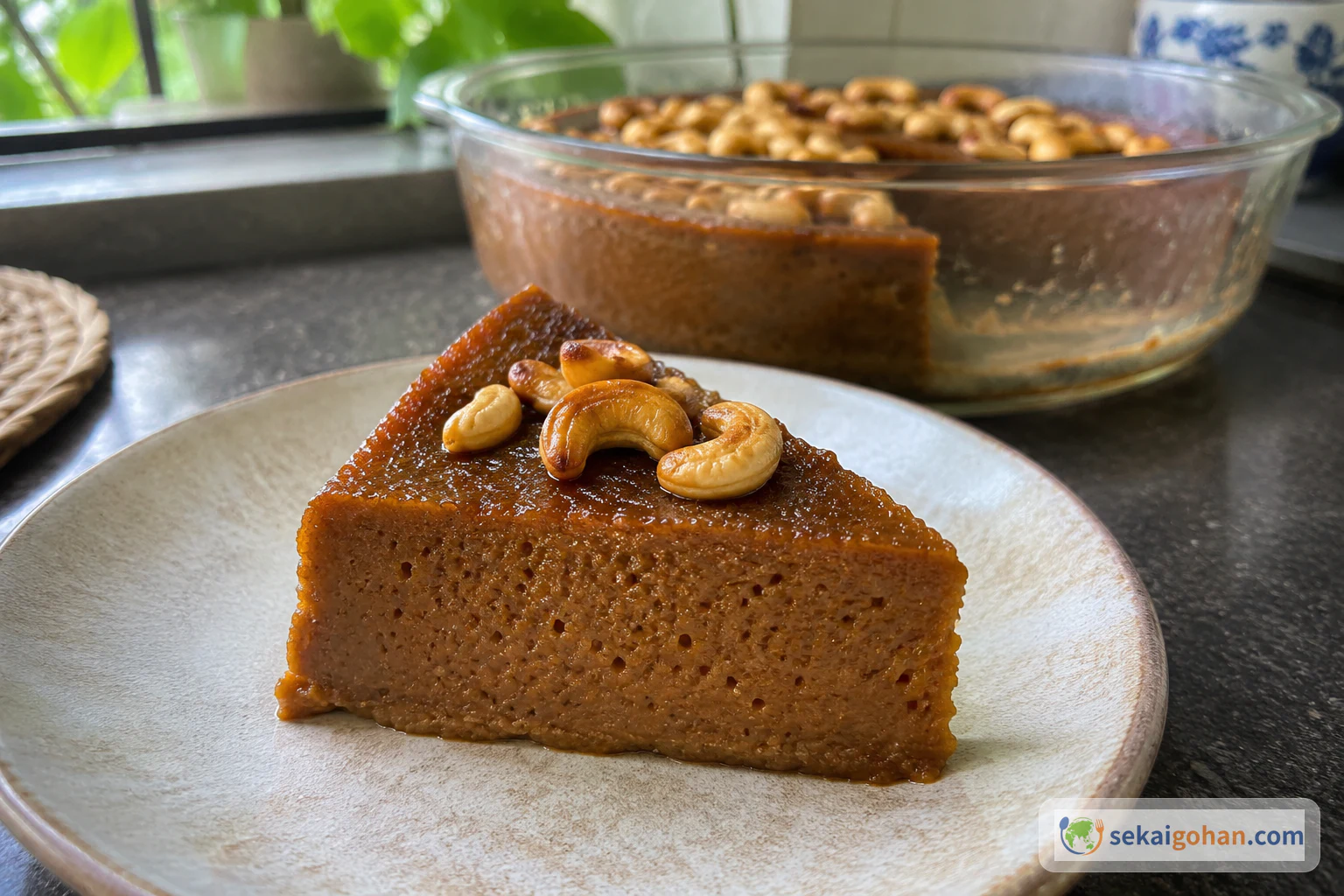
When the foil comes off the dish, a puff of steam carries the dark, smoky sweetness of palm sugar and the cool scent of cardamom. Underneath sits a custard the colour of strong tea, trembling slightly in the middle. Cut into it and the face of the slice is full of tiny pores, each one holding a little jaggery syrup. Watalappam is Sri Lanka's steamed custard of kithul jaggery, coconut milk and eggs. It is set and served in its dish with no caramel turned out over the top, and it tastes deeper and less sugary-bright than a caramel pudding, with the coconut softening the molasses edge of the jaggery.
From a Cup Cake to the Eid Table
A sweet with Malay roots
The usual account places watalappam with Sri Lanka's Malay community, who brought it from Indonesia in the eighteenth century, during Dutch rule. It is often linked to serikaya, the Malay steamed custard of eggs, coconut milk, palm sugar and pandan, and the two are treated as branches of one family. Where it was first made is not settled. On the island, the jaggery took over. Kithul jaggery, made from the sap of the kithul palm, gives the custard its brown colour and its smoky depth, and in Sri Lankan kitchens coconut milk and kithul stand where sweetened condensed milk and sugar stand in other versions.
The name is usually traced to Tamil: vattil, a cup, and appam, a cake, run together into vattil-appam, a cup cake. Another line ties the custard to vla, the Dutch word for custard. You will see it written watalappam, watalappan, vattalappam and vattilappam; in Sinhala it is වටලප්පන්, in Tamil வட்டிலப்பம், and Sri Lankan Malay speakers call it serikaya.
Who makes it, and when
In Sri Lankan Muslim homes, watalappam is the sweet of Eid al-Fitr, the feast at the end of Ramadan. Dishes of it go out to neighbours and to friends of other faiths, and it turns up at weddings, festivals and other gatherings. Non-Muslim households make it too, for celebrations and for guests. In many homes the everyday dessert is a plate of fruit, and watalappam comes out when someone is visiting, on a birthday or at a wedding. It is also sold in supermarkets and served in restaurants, so it is a sweet most people on the island know well.
Households season it differently. Cardamom is the most common spice, sometimes on its own, sometimes with nutmeg, sometimes alongside clove, mace, cumin or cinnamon. In the south some cooks add kaffir lime leaves, or a similar citrus leaf, for a fresh, sharp note. Traditionally it was steamed in small steel bowls, though a single large dish is also used. If you know the island's other jaggery-and-coconut sweet, bibikkan, the contrast is clear: bibikkan is baked into a cake, while watalappam is a soft custard set by steam. For more dishes from the island, including festive ones like kiribath, see the Sri Lanka country page.
Ingredients (serves 10)
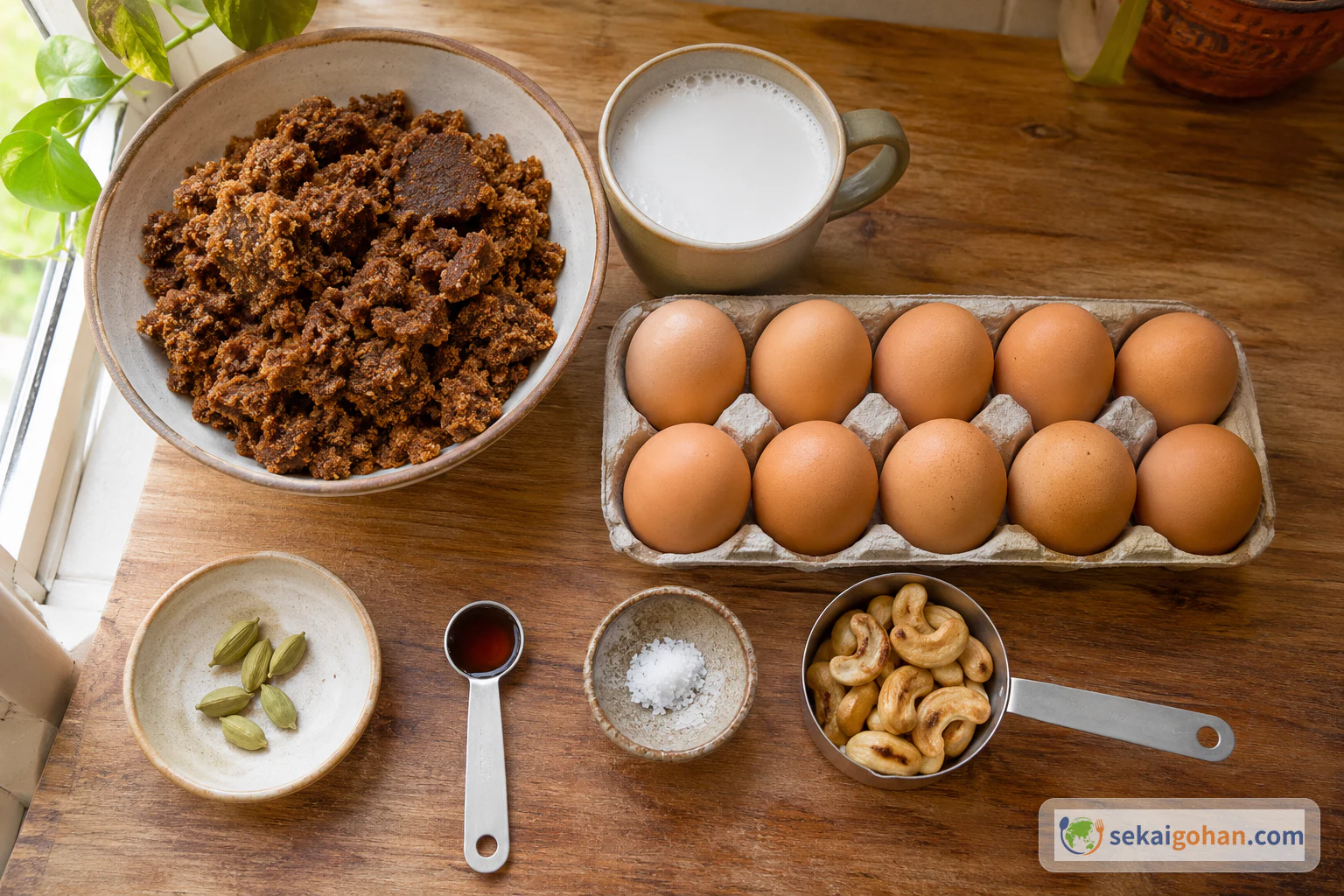
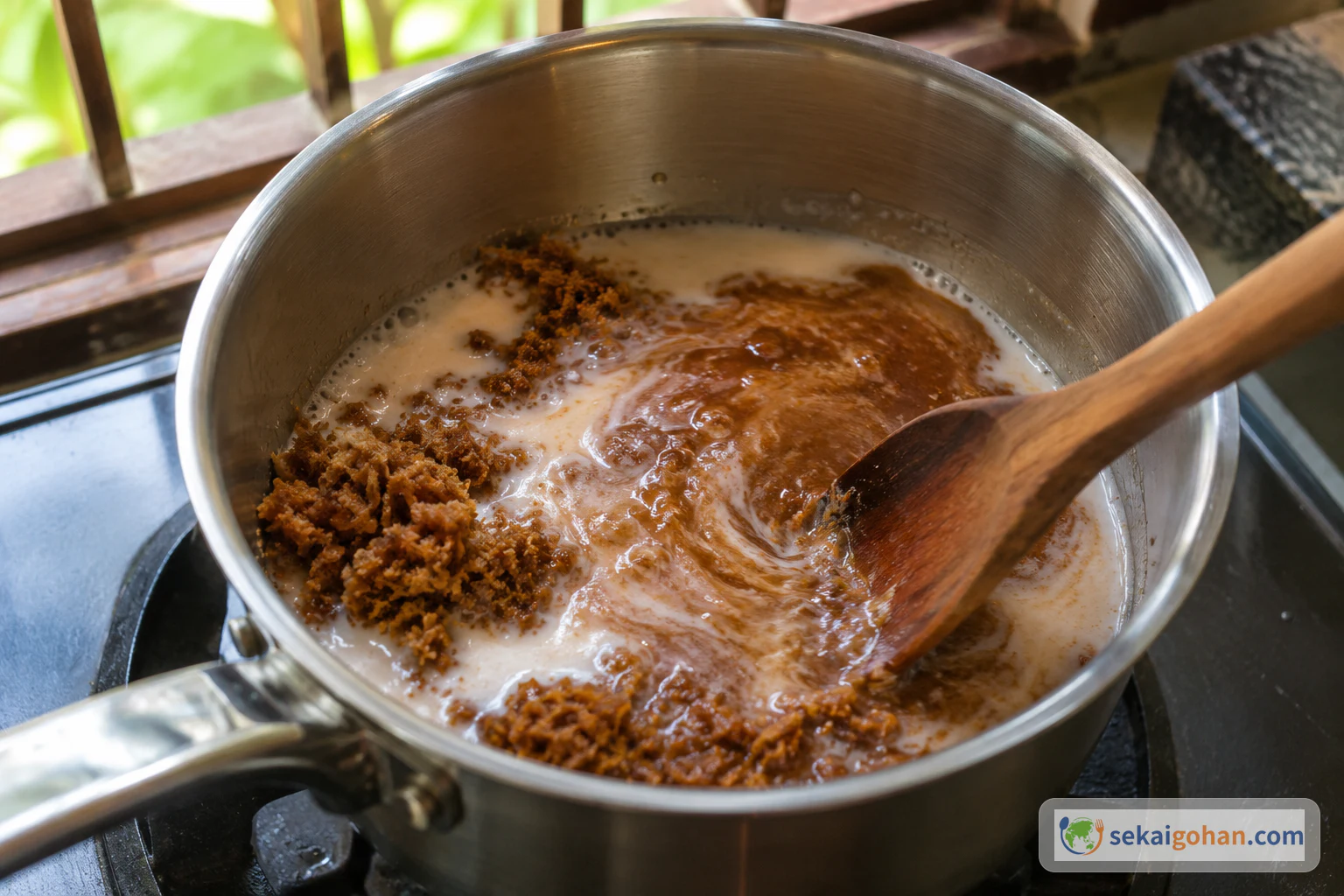
Kithul jaggery comes in hard blocks. Grate it finely before it meets the coconut milk. Fine shreds dissolve evenly, and any undissolved grains end up as sugary specks in the steamed custard.
Watalappam contains eggs, tree nuts (cashews) and coconut. The basic recipe uses no wheat and no dairy.
Equipment
- A grater for the jaggery
- A small saucepan or microwave-safe bowl
- A mortar and pestle
- A large mixing bowl and a hand whisk
- A fine-mesh sieve
- A 1½-quart (1.5 L) heatproof dish or stainless steel bowl that fits inside your steamer
- Aluminum foil
- A steamer, or a large pot with a rack and lid
- A bamboo skewer for the doneness test
Choosing Jaggery and What to Use Instead
Kithul jaggery is worth tracking down at a South Asian grocer or online. Look for pure kithul jaggery, sold as dark blocks. Purity varies, and less pure jaggery makes the custard taste flatter and sweeter. Its smoky, almost treacly flavour is what makes the dessert taste like Sri Lanka. The other ingredients are easy: canned coconut milk, green cardamom pods and roasted cashews are in most large supermarkets.
When there is no jaggery, dark sugars come closest. The two dark sugars below replace the full 1 lb 2 oz (500 g) of jaggery.
| Instead of kithul jaggery | Amount | What changes |
|---|---|---|
| Kokuto (Okinawan black sugar) | 1 lb (450 g) | The closest match in colour and deep sweetness |
| Dark brown sugar | 1 lb (450 g), or 14 oz (400 g) for a less sweet custard | Familiar and easy to find, with a lighter molasses note |
| White sugar | As needed, with about ¼ cup of it caramelized first | Without caramel the custard stays pale; the caramel restores the brown colour |
Each of these makes a good custard, though the smoky depth of kithul comes only from kithul. The cardamom earns its place too: it is the scent that most people on the island associate with this dessert, so keep it even when you swap the sugar.
Method
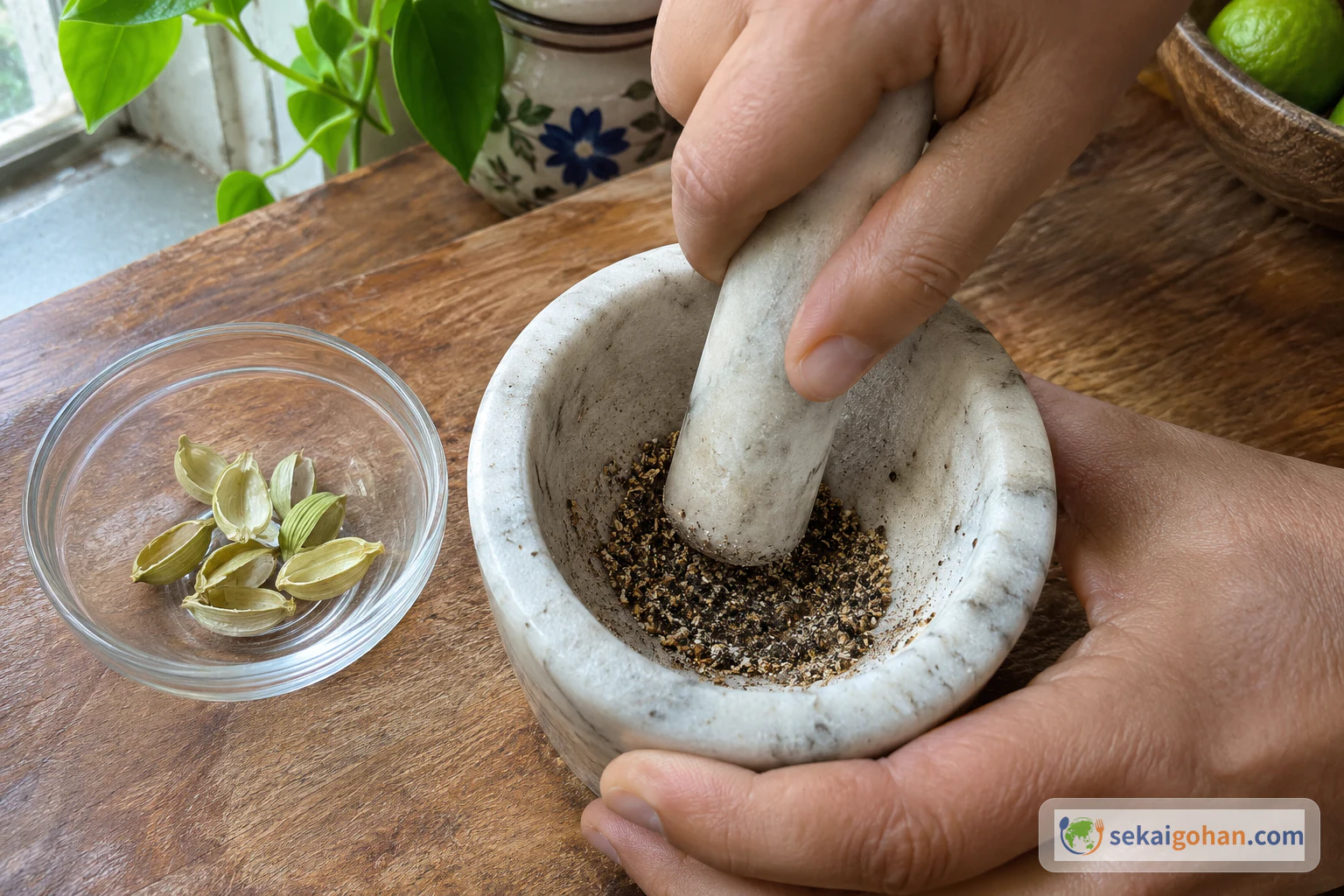
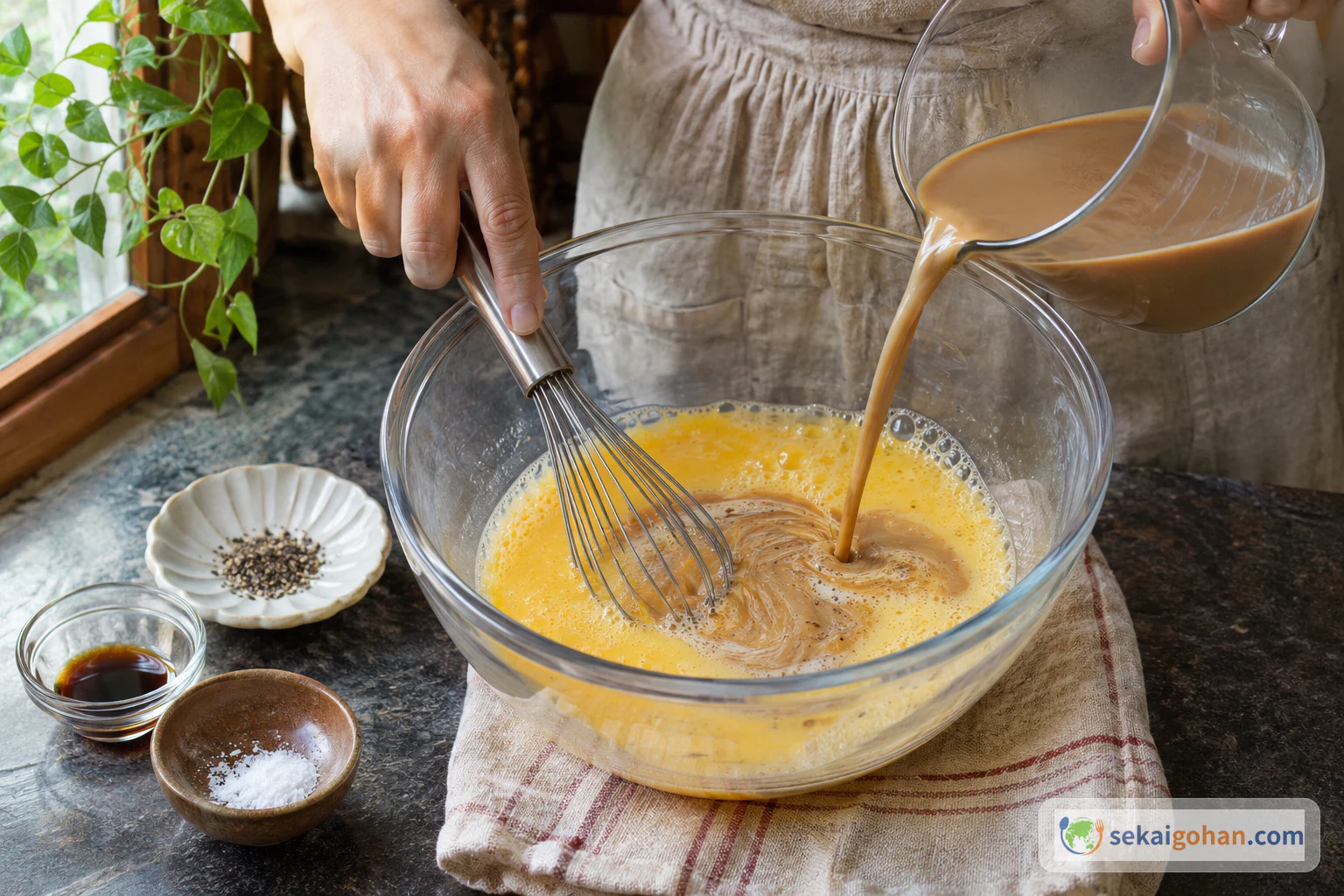
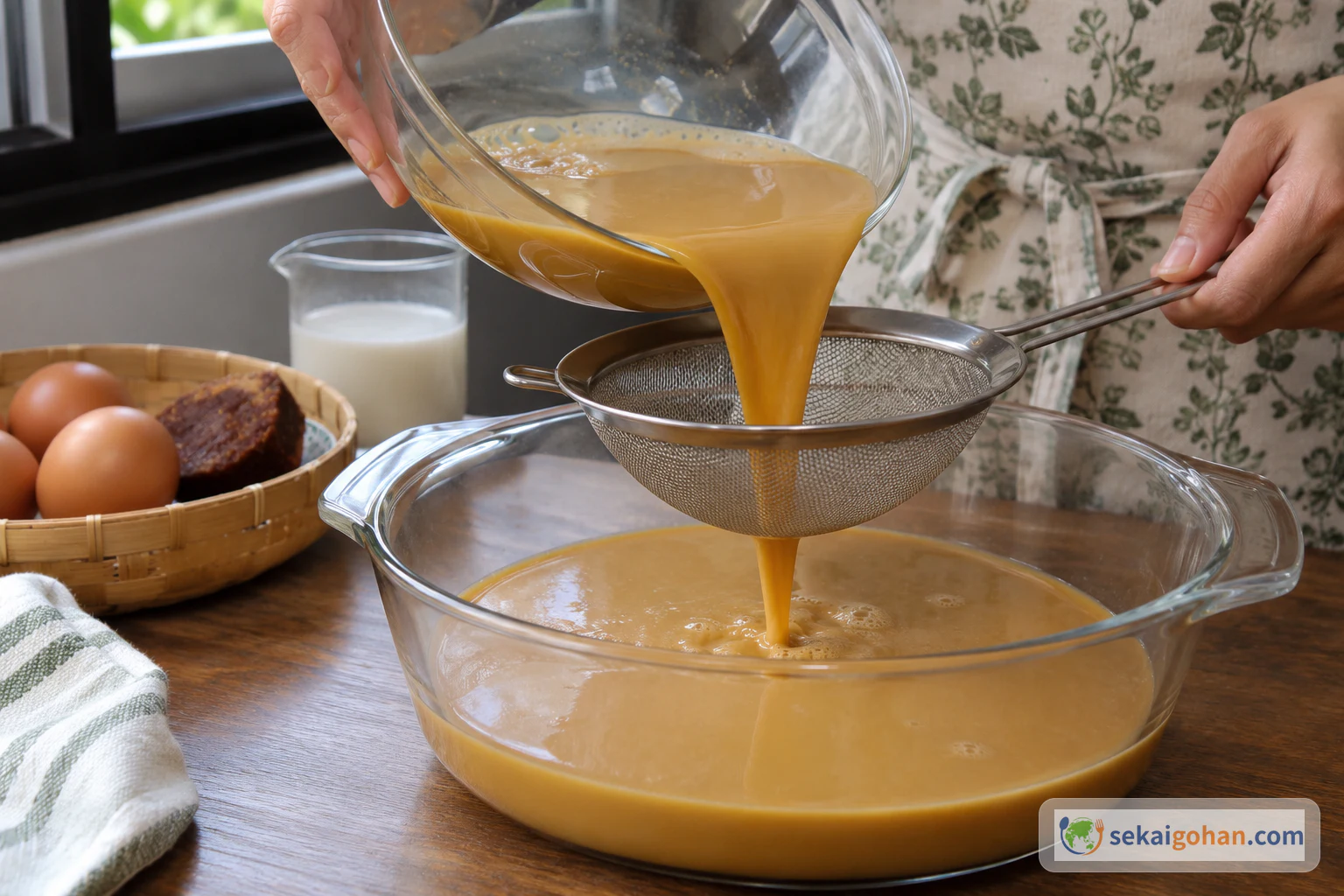
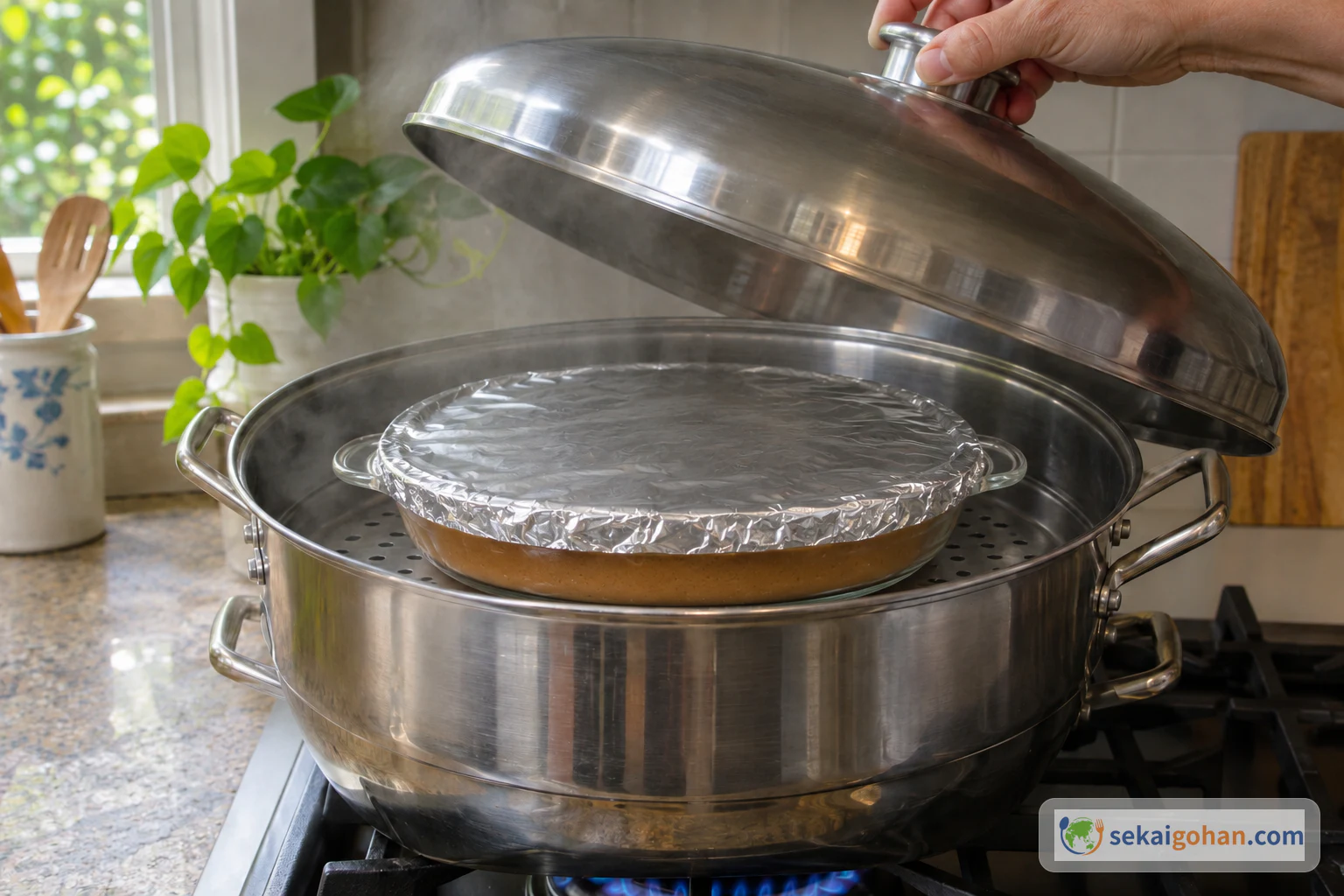
The work happens at the start. Dissolve the jaggery first, because the syrup has to cool before it can meet the eggs. While it cools, grind the cardamom and whisk the eggs. After the custard goes into the steamer you have about forty minutes of hands-off time, then a few hours of chilling before it is ready to eat.
When It Goes Wrong
| What you see | Why | What to do |
|---|---|---|
| The center is still runny after 40 minutes | A deep dish or weak steam | Cover again and steam 15 minutes more, then test with the skewer. Keep going until the center is set; always serve it fully set |
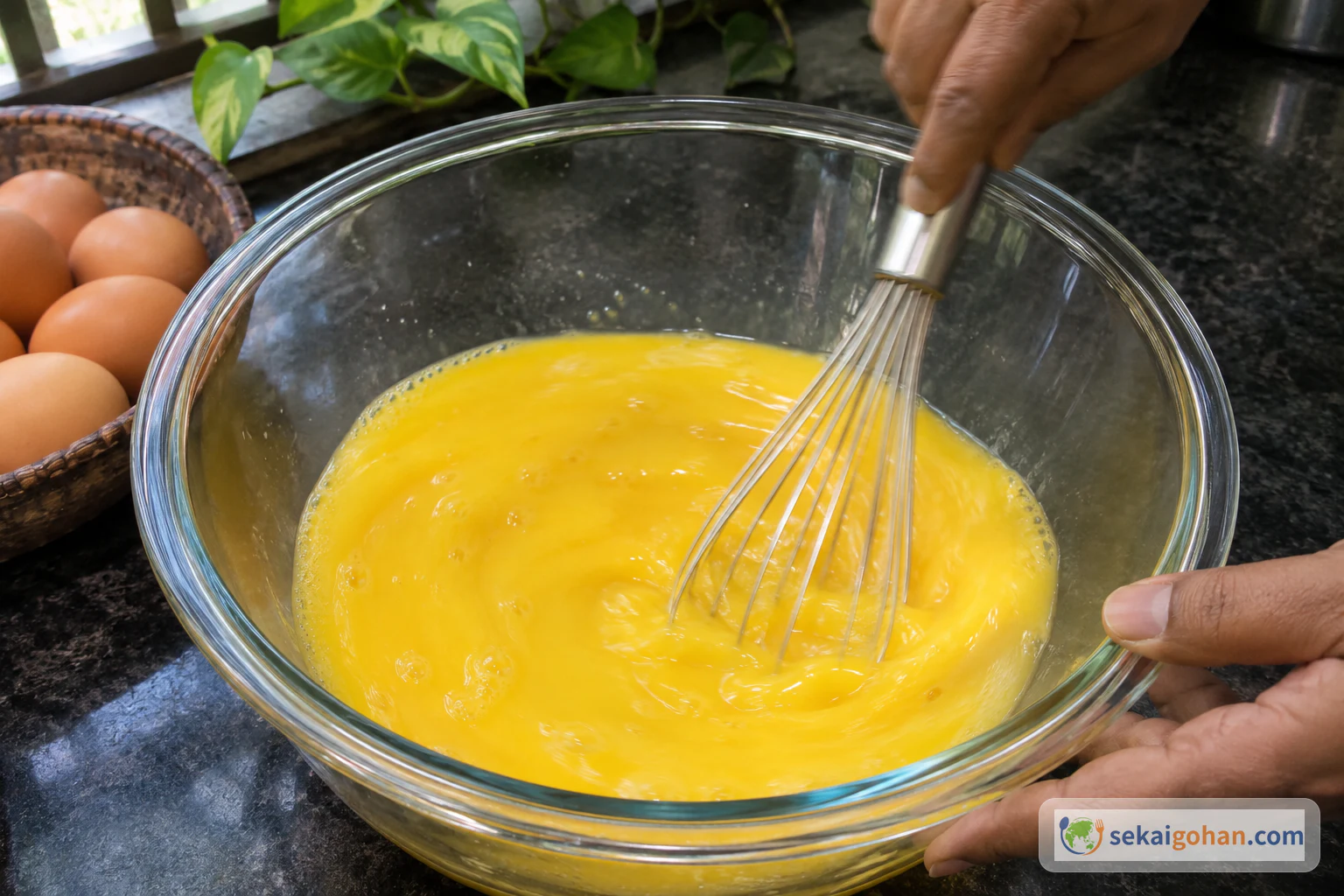
| A spongy layer of big bubbles on top | The eggs were whipped too hard | Next time whisk by hand for 3–4 minutes, stirring rather than beating |
| Grainy curds through the custard | The syrup was still warm when it met the eggs | Cool the syrup completely before combining; straining catches some curds but cannot fix many |
| Gritty specks | Cardamom husks or undissolved jaggery | Use only the seeds, grate the jaggery finely, and always strain |
| Pale colour | White sugar used without caramel | Caramelize about ¼ cup of the sugar to bring back the brown |
| Too sweet, or too flat | The purity of the jaggery, or a heavy hand with sugar | Use pure kithul; with dark brown sugar, drop to 14 oz (400 g) for less sweetness |
Serving, Variations and Storage
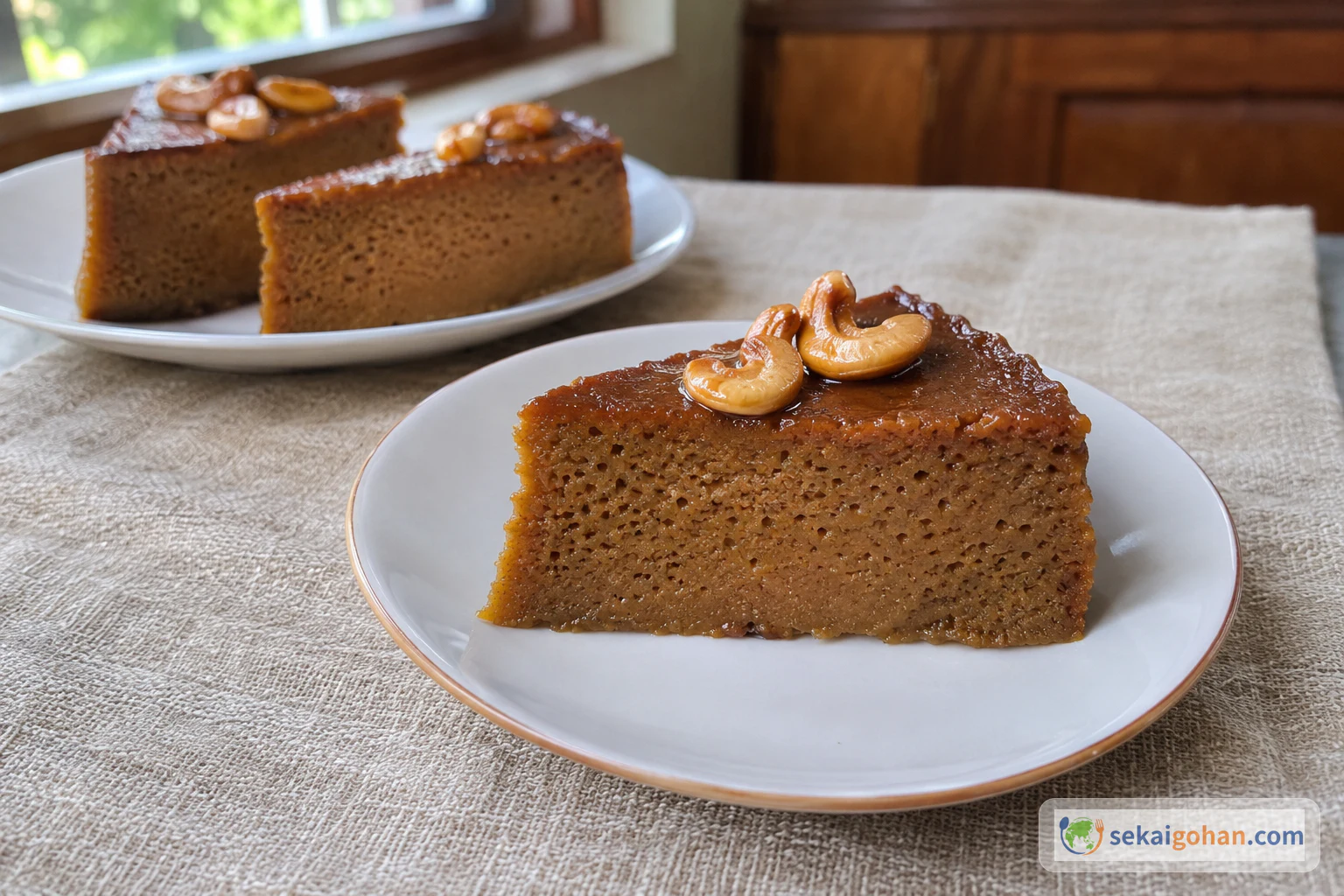
At the table
Watalappam is good warm or chilled. Chilled, it slices neatly and the jaggery tastes darker and cleaner. Warm, it is softer and the cardamom is stronger. Cut it straight from the dish into squares or wedges. At Eid, portions go out to neighbours and friends, and when you have guests it is the sweet you set out for them.
Variations
- Oven water bath. Many Sri Lankan homes have no oven and steam instead. If you have no steamer, set the dish in a tray of hot water in the oven at 350°F (180°C) and bake for at least 45 minutes, until the skewer comes out clean. The texture stays close to steamed.
- Pot and cloth. Set the dish in a large pot of simmering water, wrap the lid in a cloth to catch drips, and steam for at least 45 minutes. The cloth keeps the surface smooth.
- Small cups. Divide the custard among small steel bowls or ceramic cups, the traditional way, for individual portions that set faster.
- Other spices. Add nutmeg to the cardamom, or try equal parts cardamom, mace and cumin; cinnamon and nutmeg take it warmer. A kaffir lime leaf in the southern style adds a fresh citrus edge.
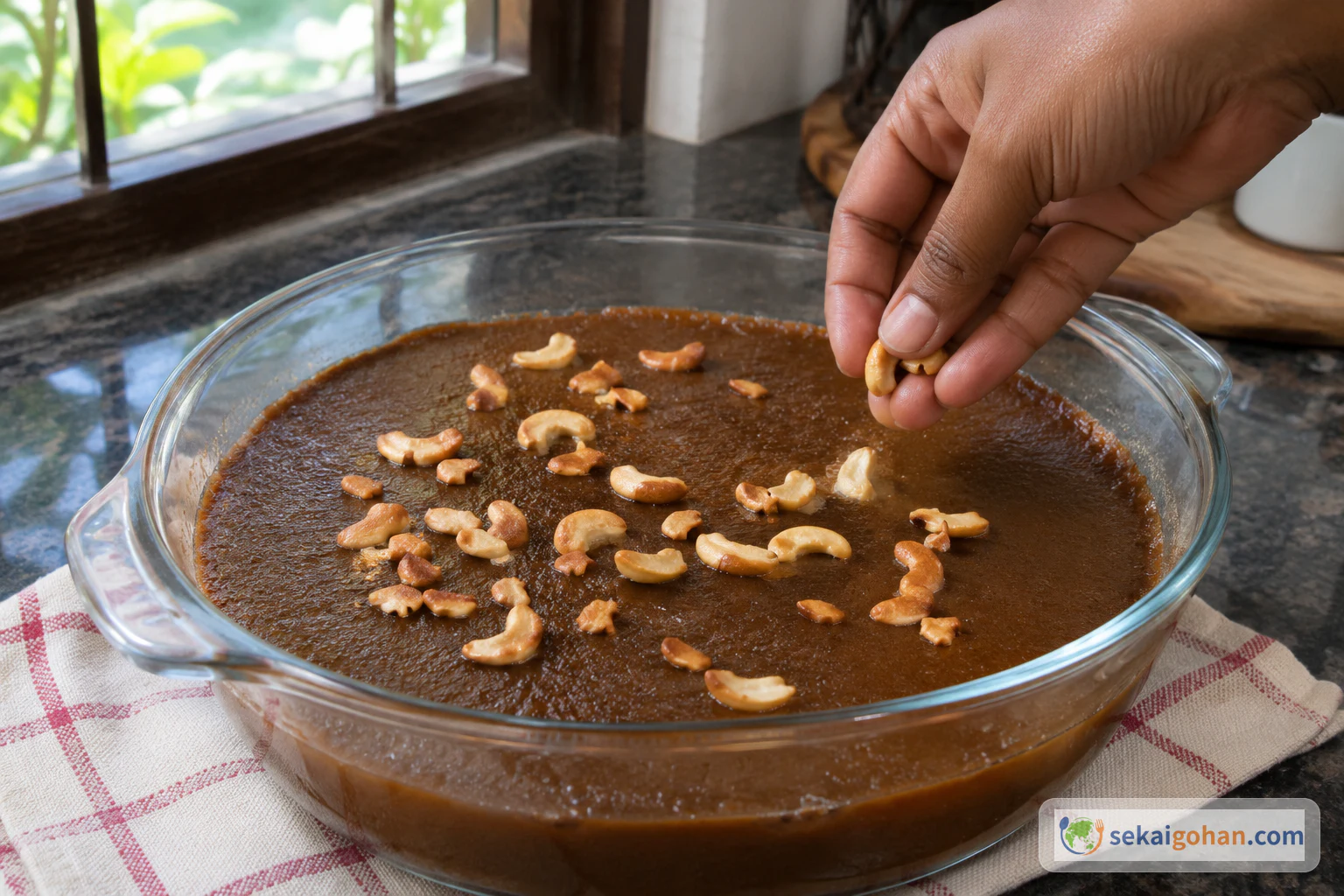
- Other garnishes. Add raisins to the cashews, or top it with pani cadju, honey-glazed cashews, for a sweeter, glossier finish.
Storage
Let the custard cool completely, then cover it and refrigerate promptly. Eat it soon, keeping it chilled until you serve it.
Frequently Asked Questions
How long do small cups take to steam?
Small cups set faster than one large dish. Small steel bowls are checked with a skewer after about 20 minutes. Test each cup in the center, and give any that are still liquid a few more minutes under the lid.
Does canned coconut milk work?
Yes, canned coconut milk is the easy choice. The cream separates in the can, so shake or stir it well until smooth before you measure the cup.
Can I use sweetened condensed milk?
Some versions use sweetened condensed milk in place of coconut milk. The custard turns milkier and sweeter and loses the coconut flavour, and it is no longer dairy-free. The amounts in this recipe are written for coconut milk and have not been adjusted for condensed milk.
Should the eggs be at room temperature?
One home recipe lists the eggs at room temperature, though the main method here does not call for it. What matters most is the syrup: it must be cool before the eggs go in.