Khao Khai Chiao: A Golden, Fluffy Omelet for Hot Jasmine Rice
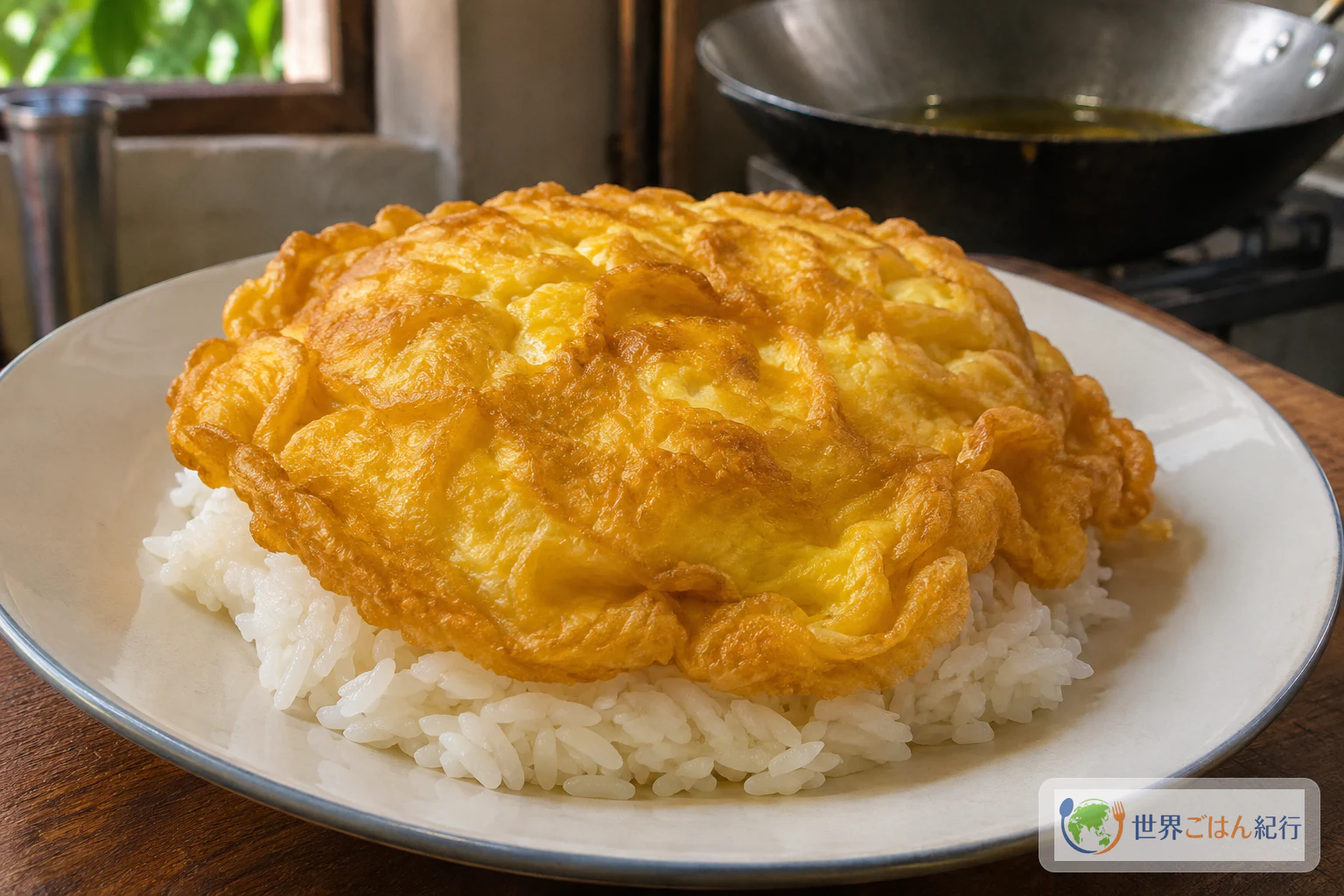
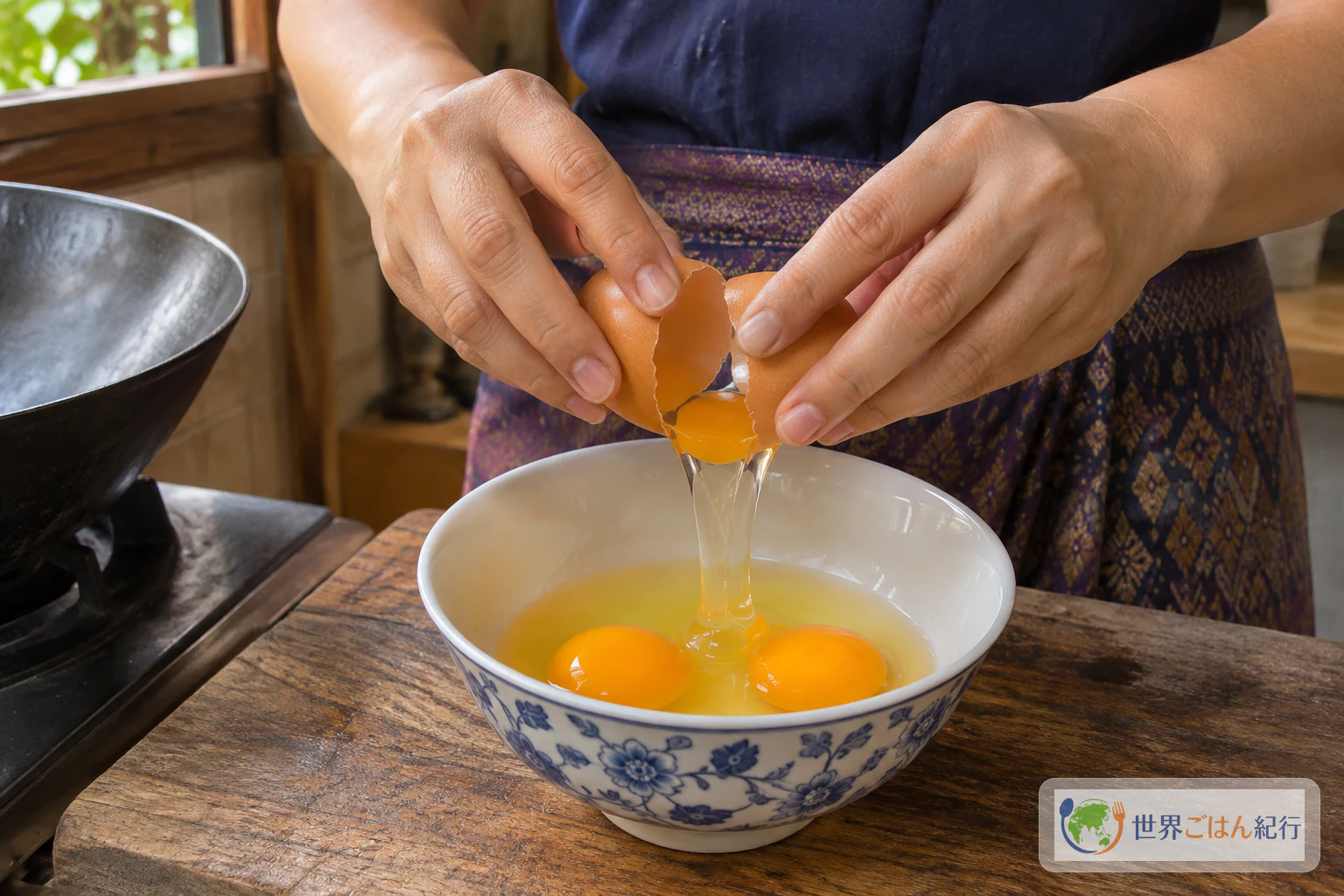
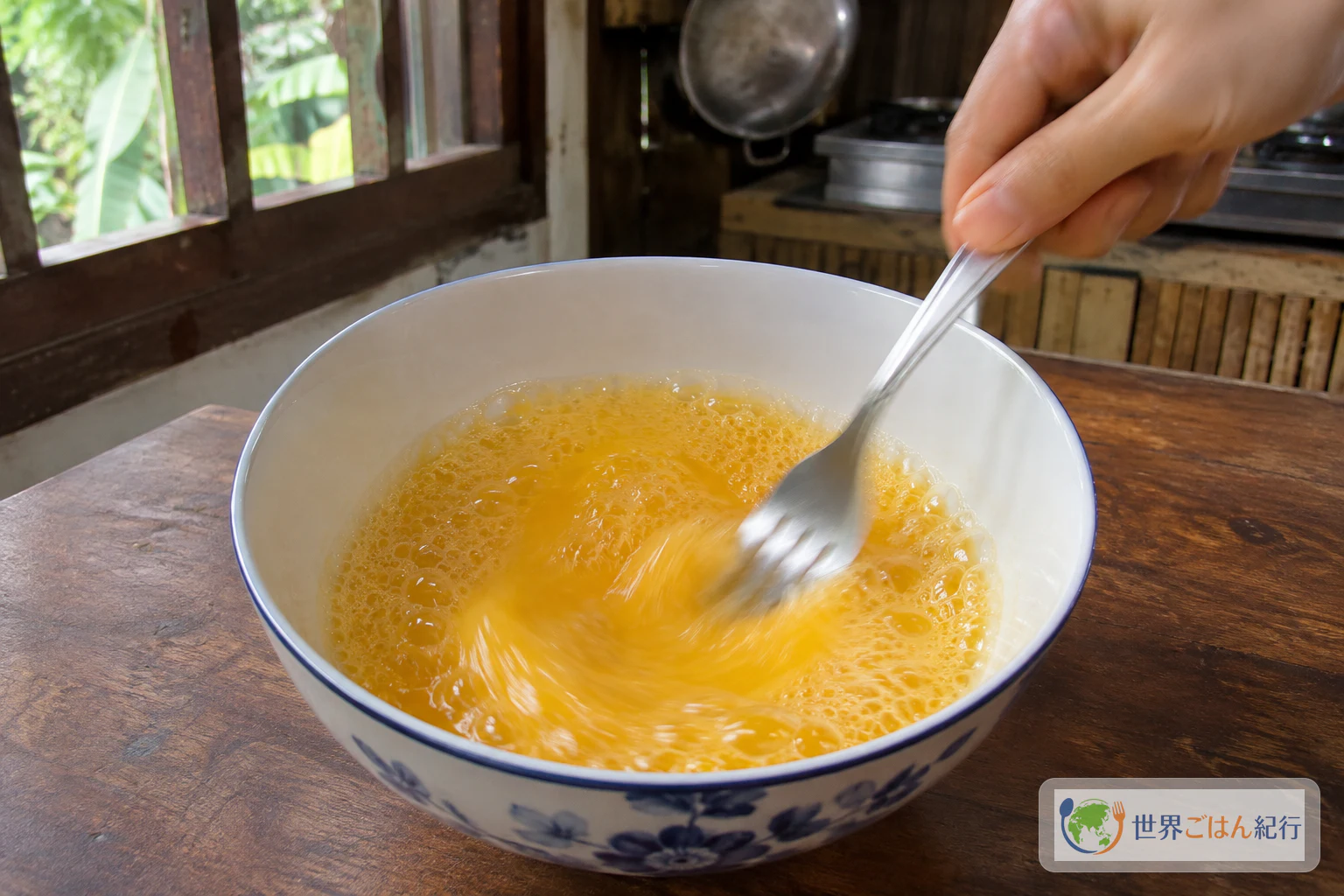
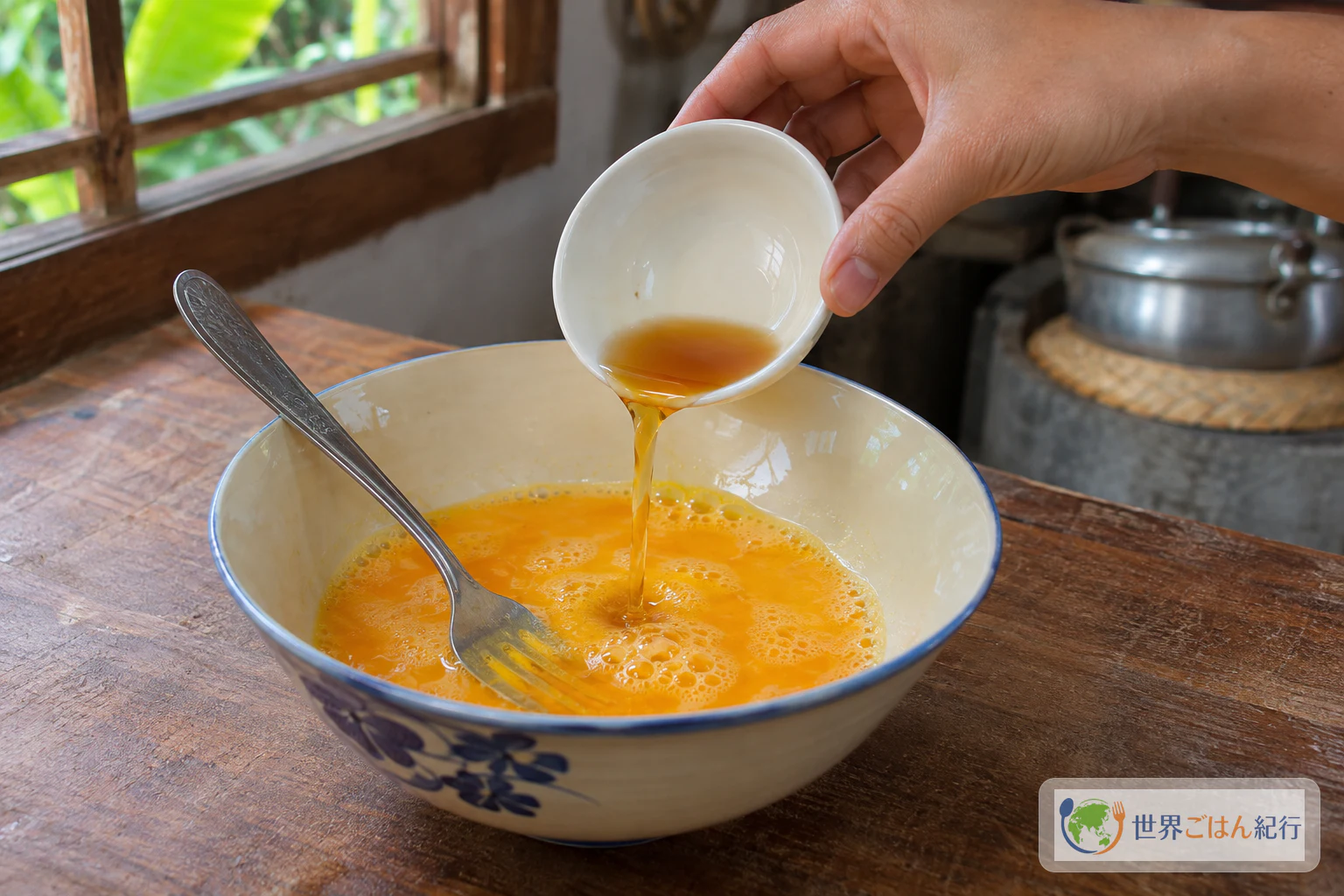
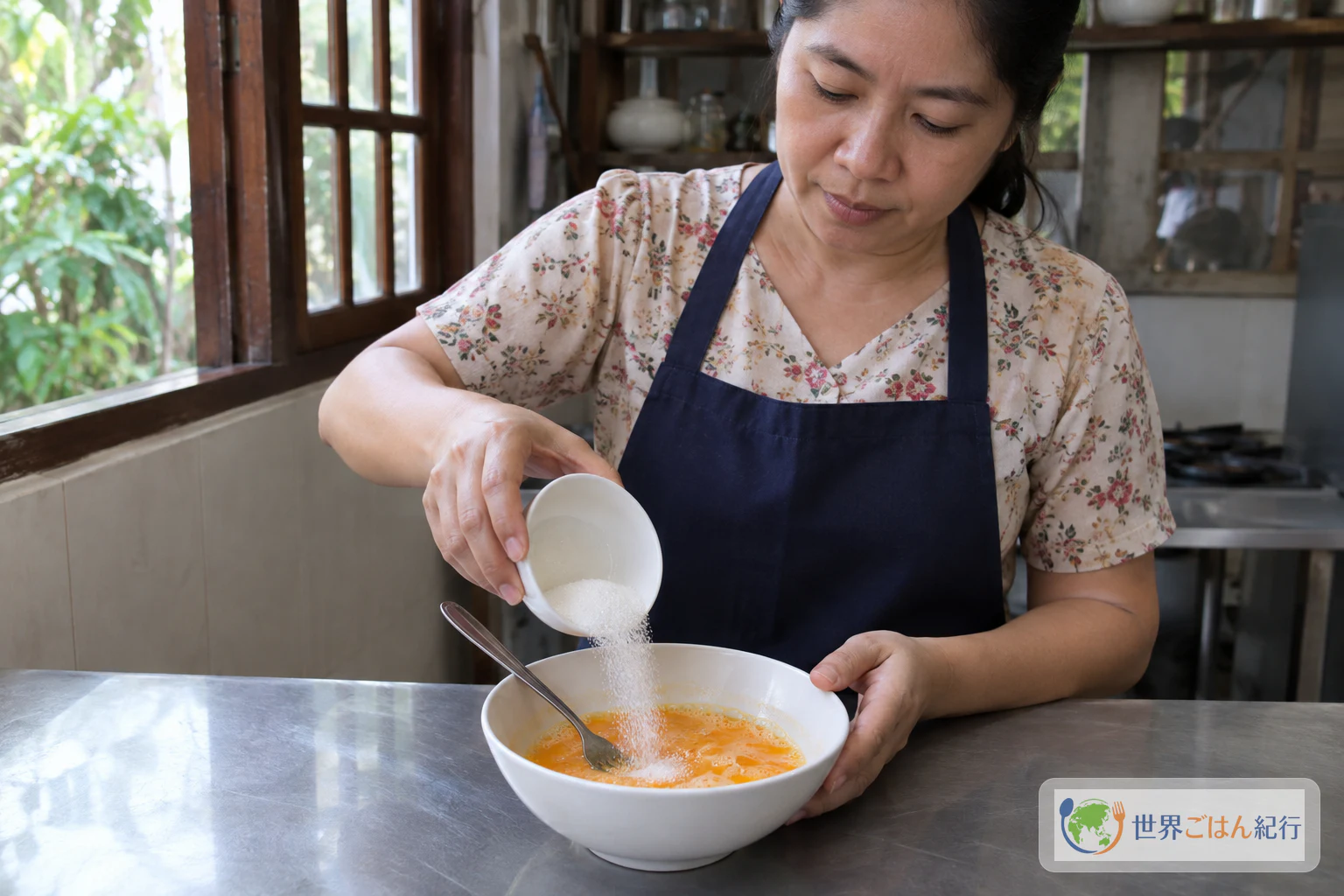
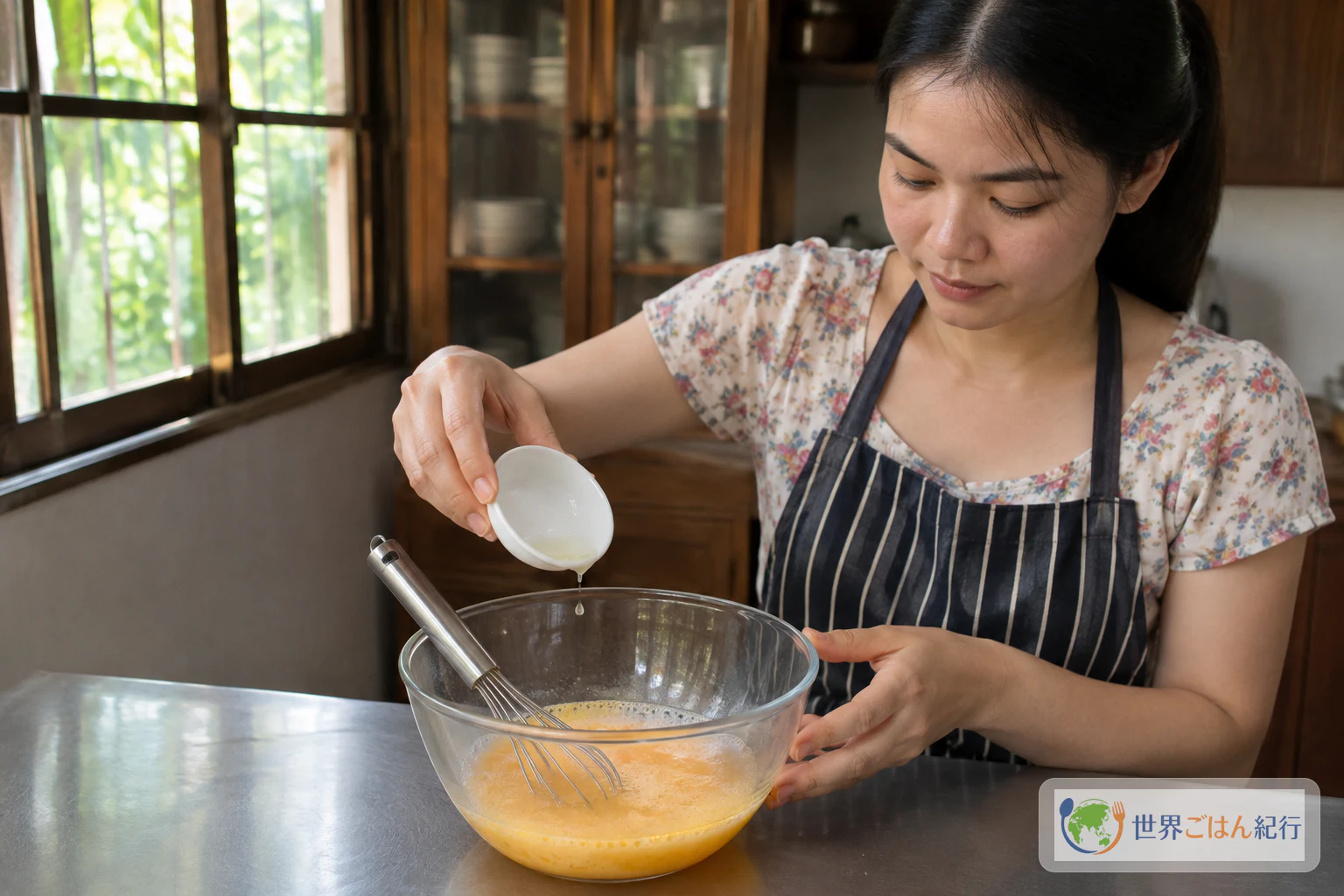
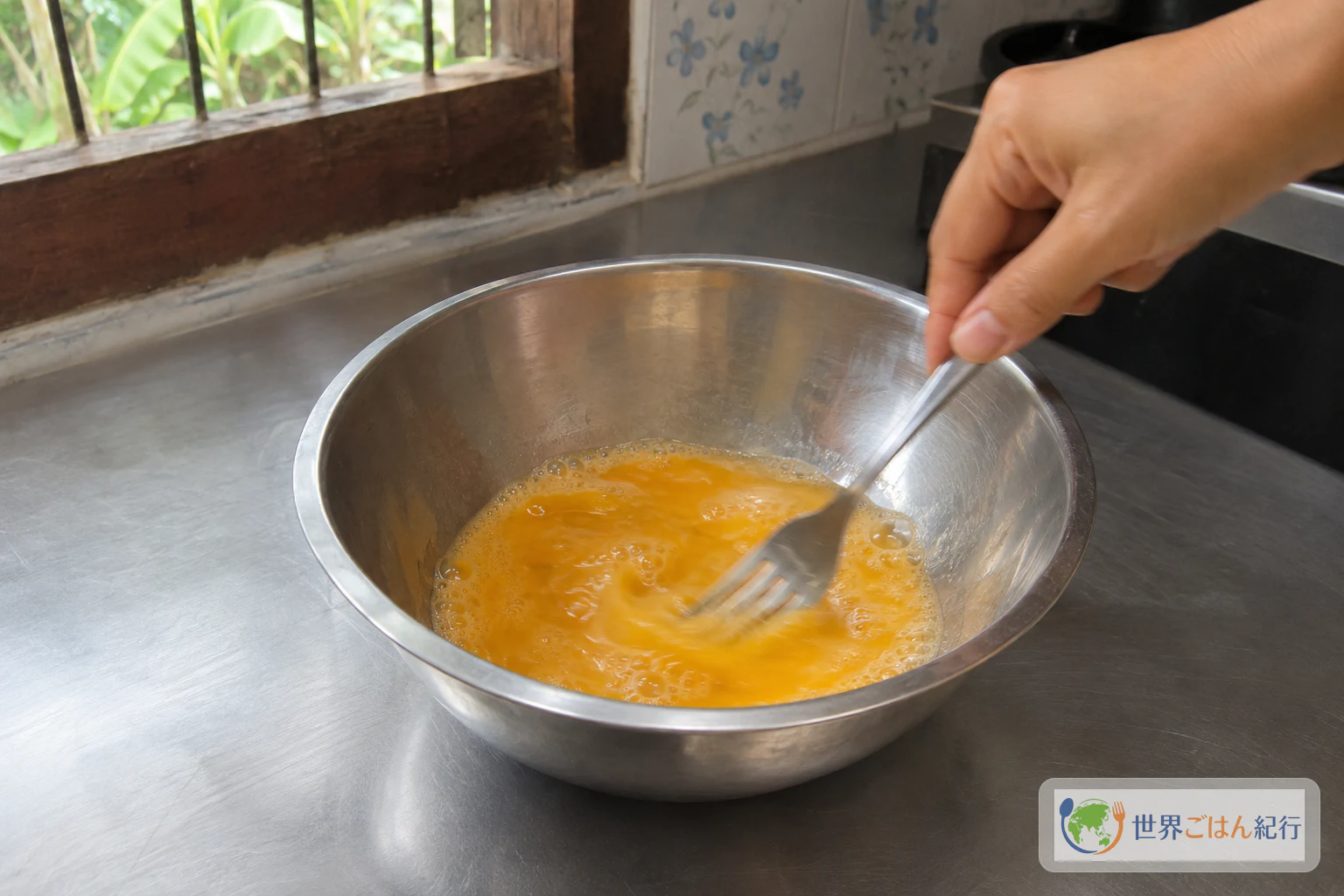
Keep it plain: eggs beaten until bubbles cover the surface, a light seasoning of fish sauce, sugar and a few drops of lime, and hot jasmine rice alongside. There is no filling, garnish or dipping sauce.
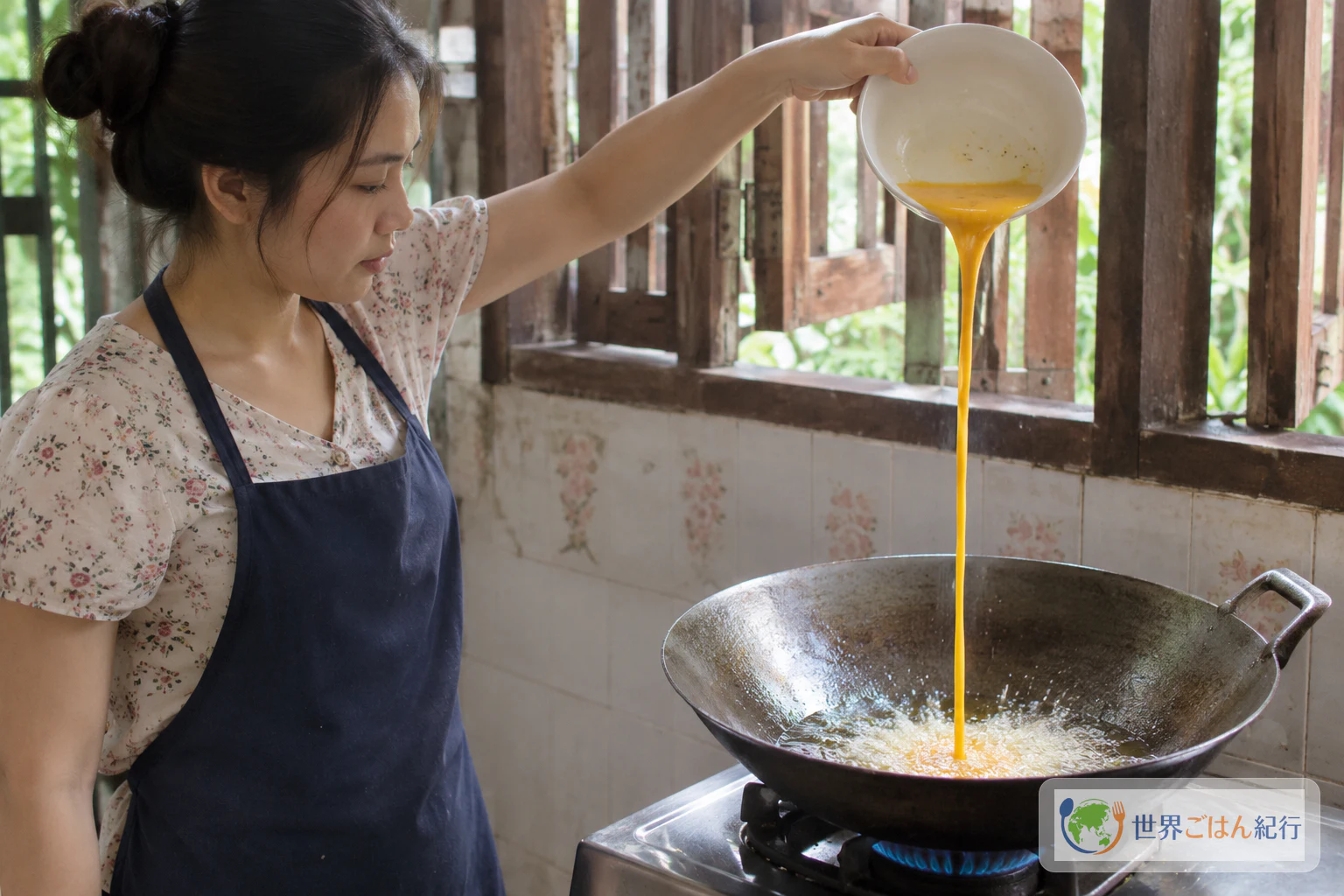
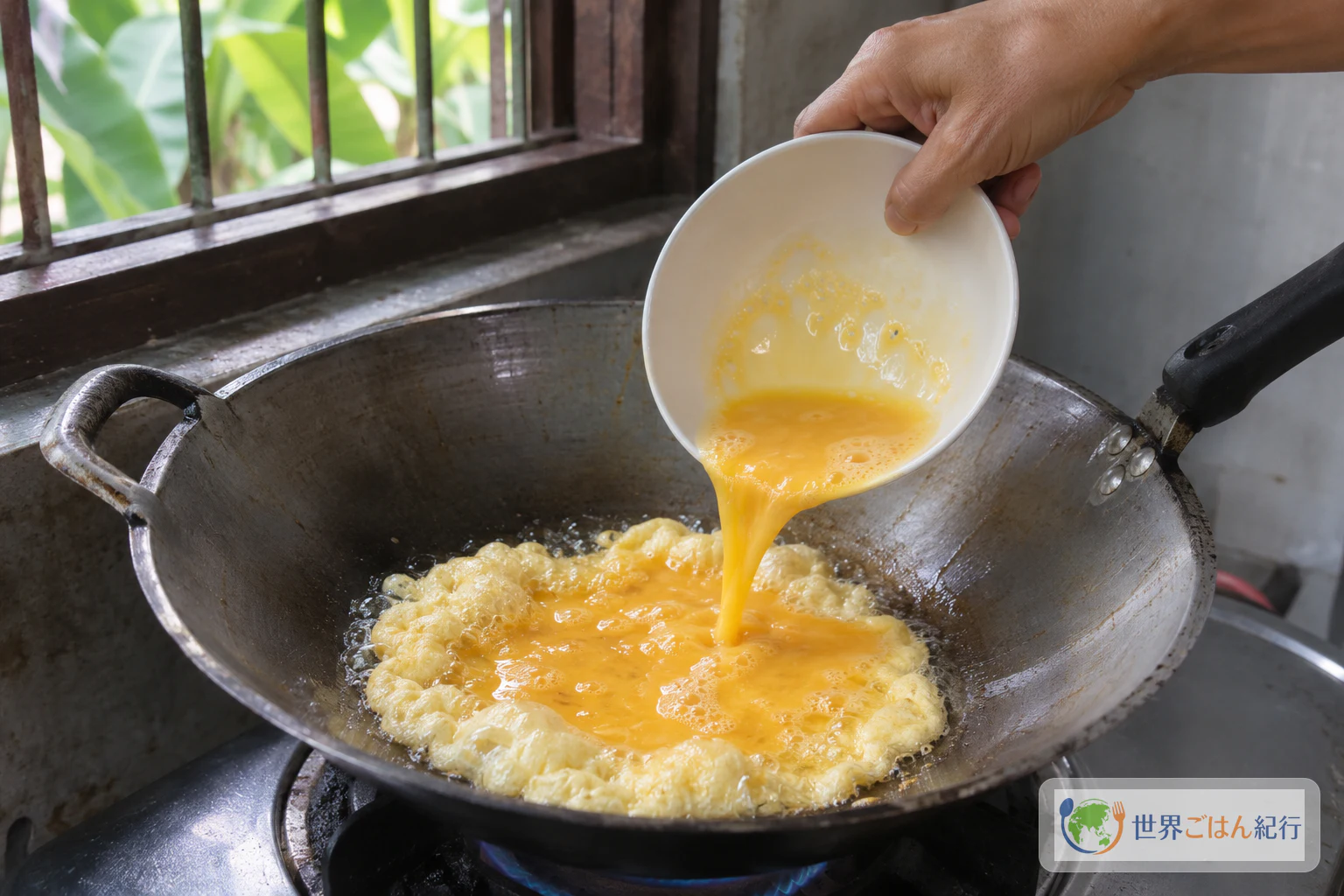
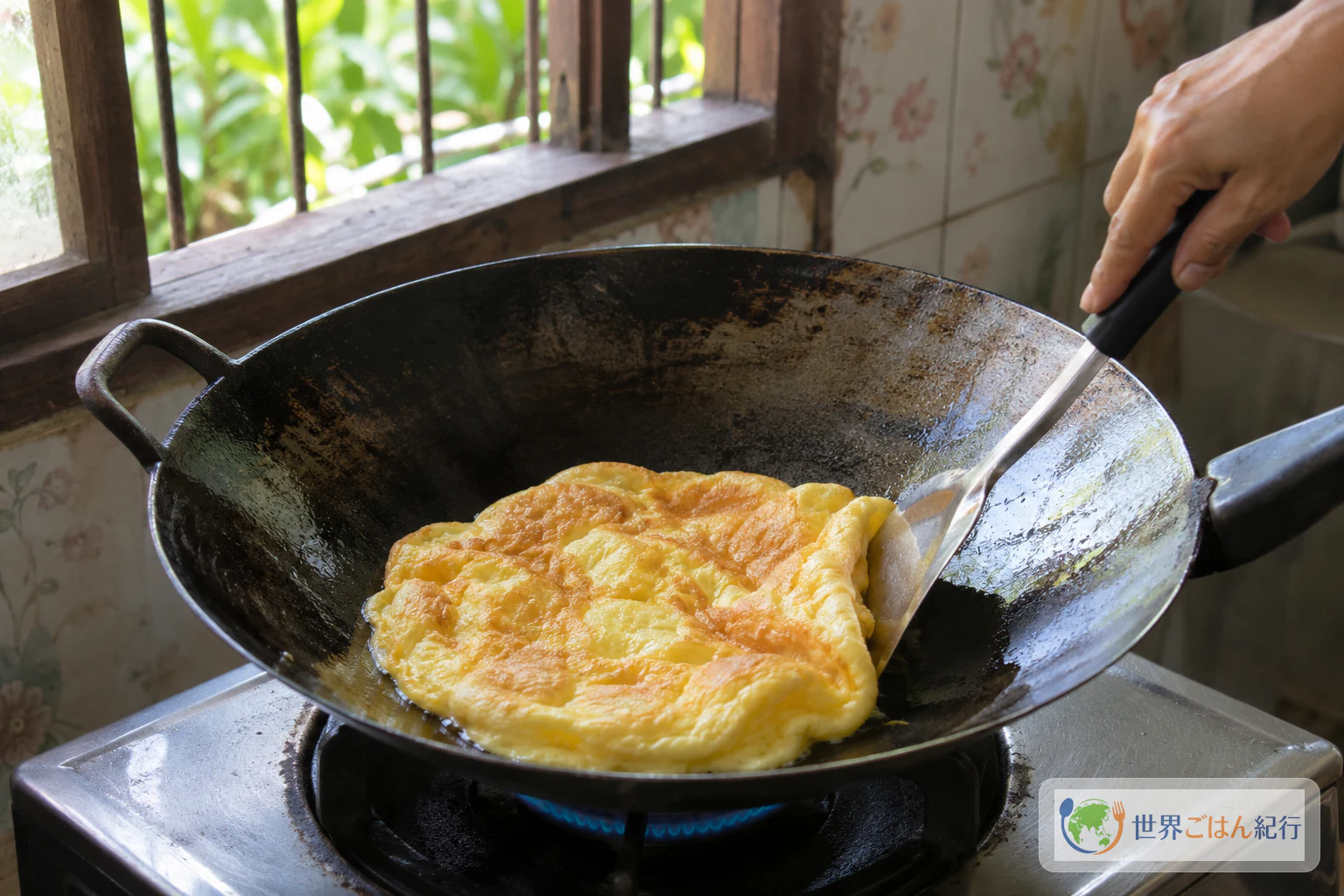
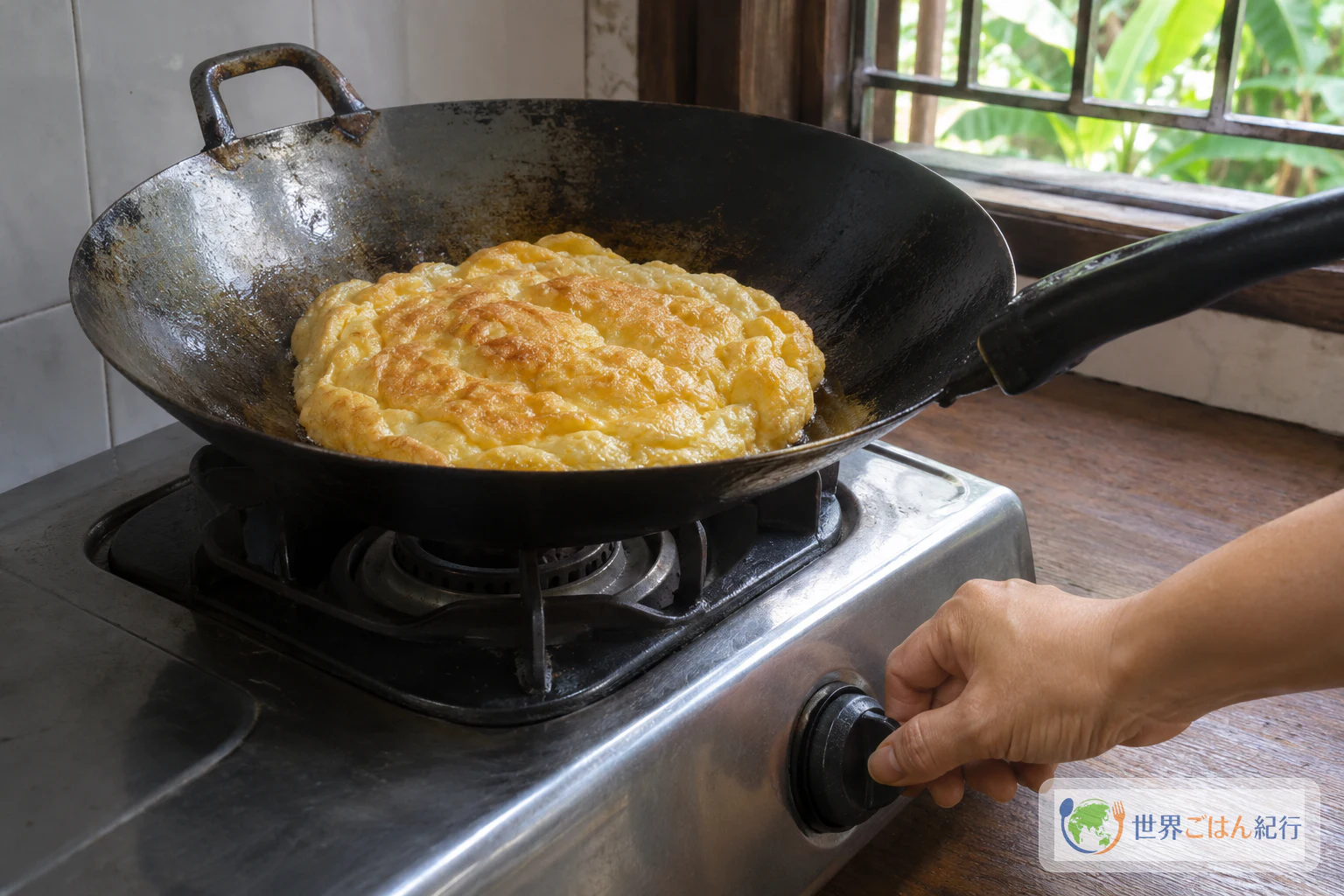
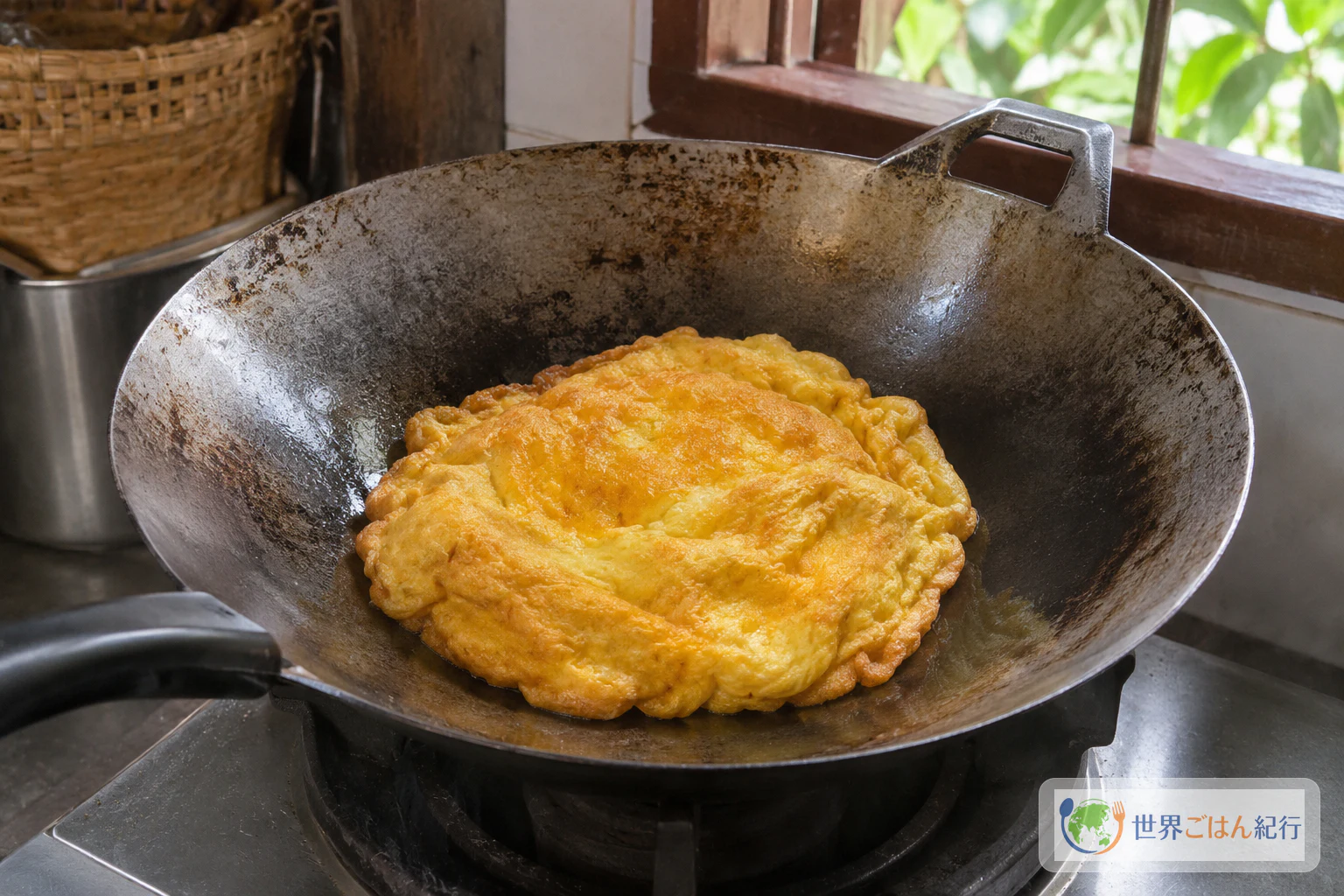
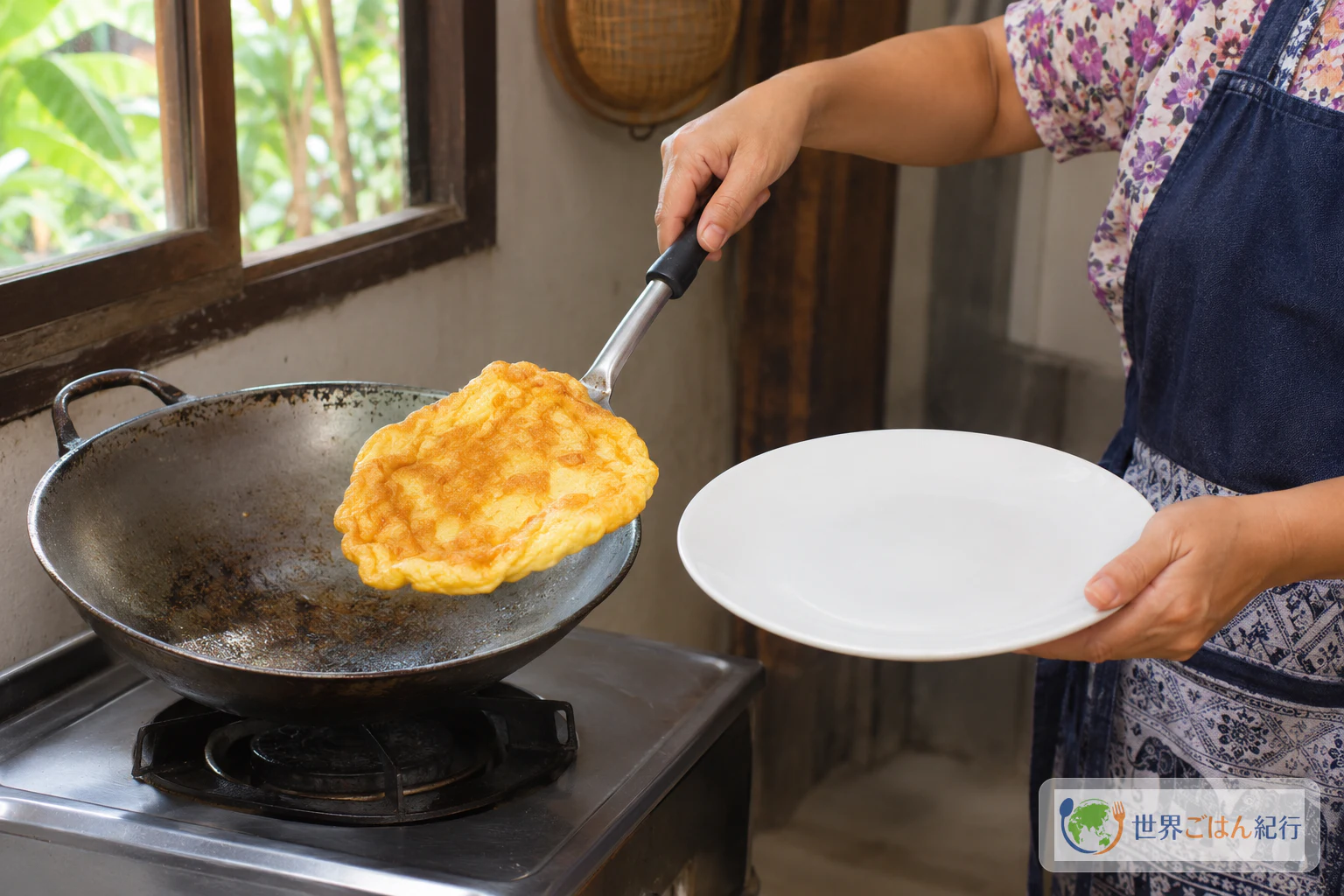
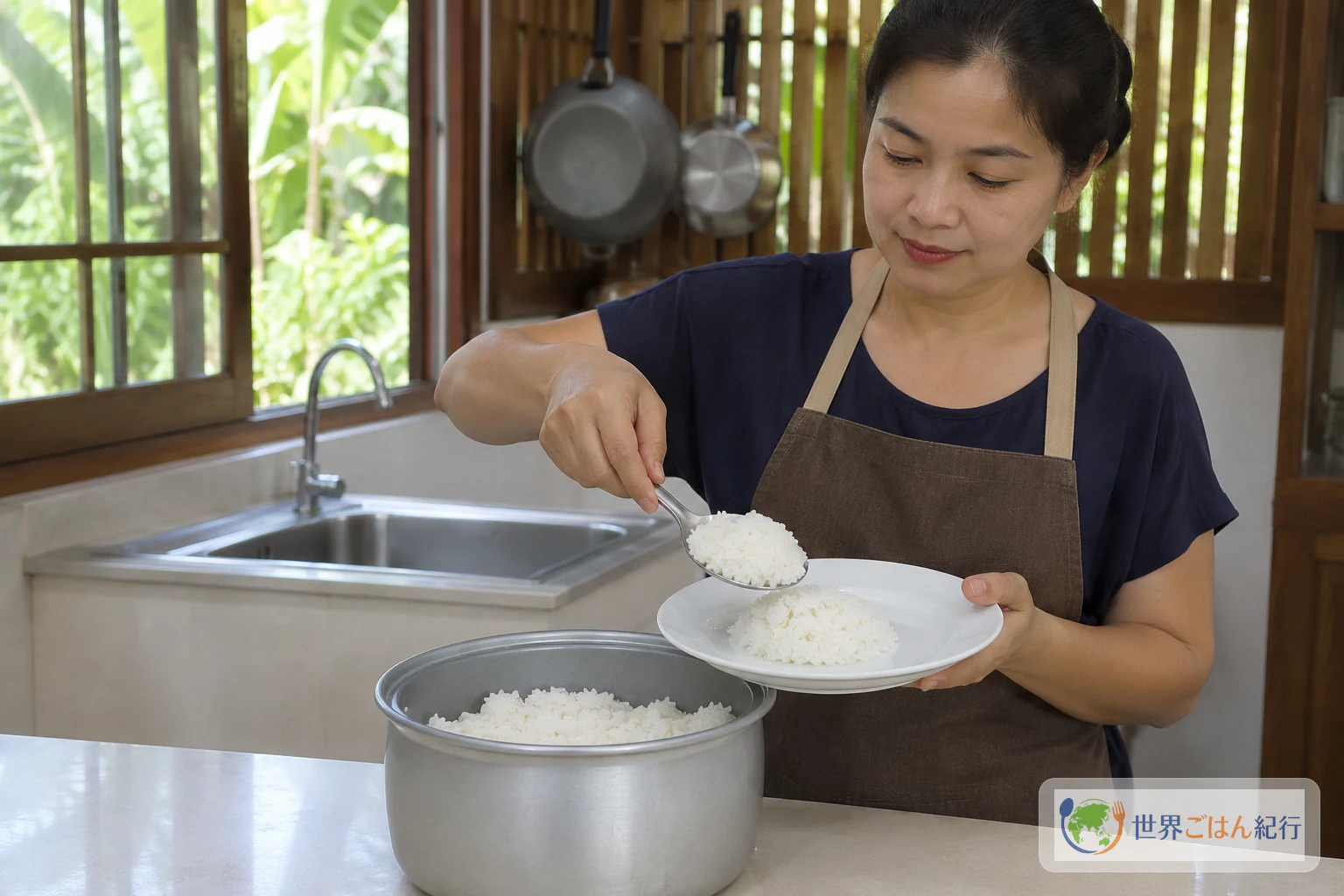
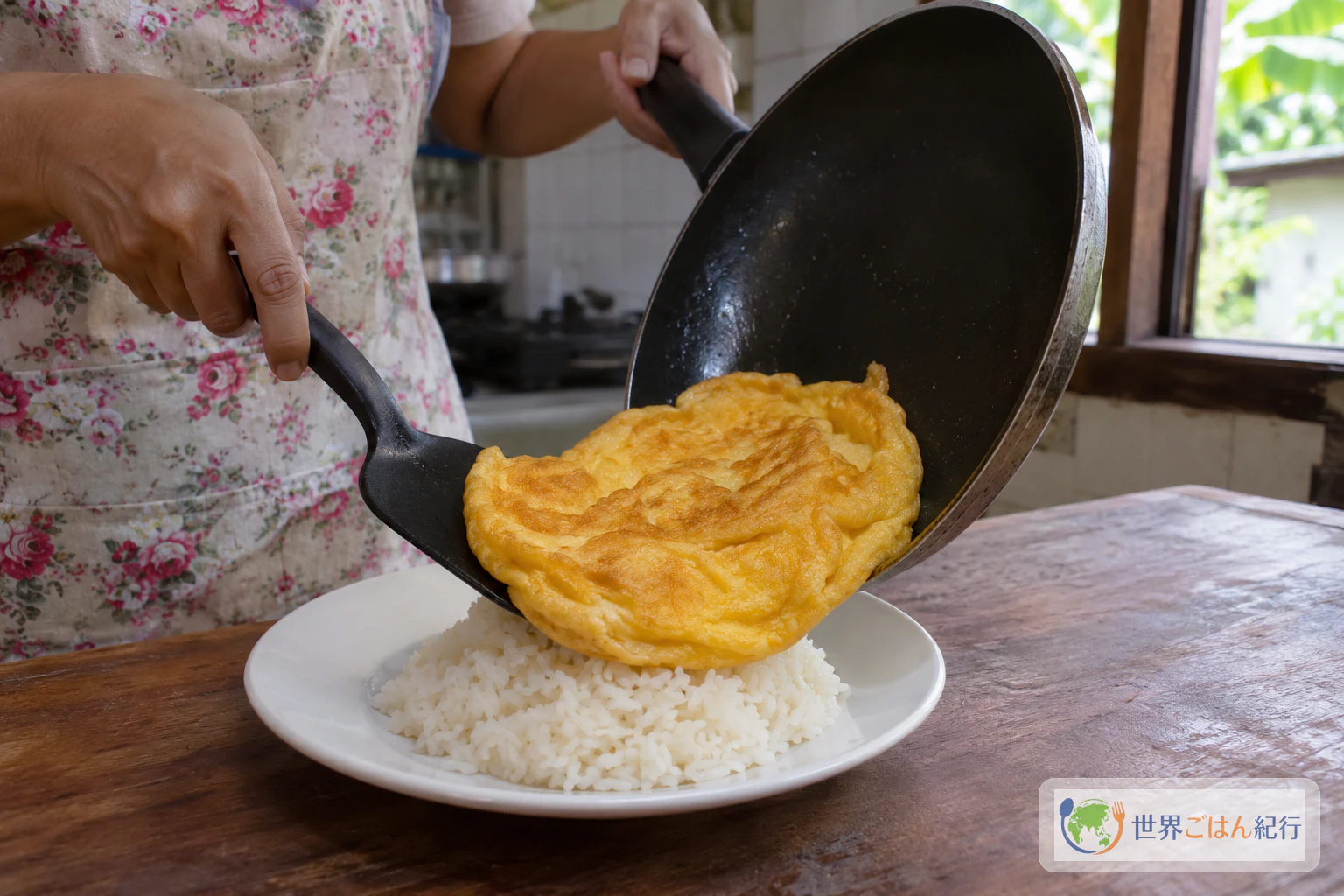
A stream of seasoned egg falls into hot oil in a high-sided wok, starting high and moving lower as the omelet takes shape. It puffs, turns golden and fluffy, and comes out to meet a plate of hot jasmine rice. That is khao khai chiao (ข้าวไข่เจียว), also written khai jiao, from Thailand.
This one-serving version comes from a recipe by chef Duangjaisantisuk Nipaporn of Blue Jasmine, published in a 2018 MICHELIN Guide article by Rachel Tan. That recipe lists red chilies and acacia leaves as optional. They are left out here, so this is the plain egg-and-rice version.
Ingredients for One Serving
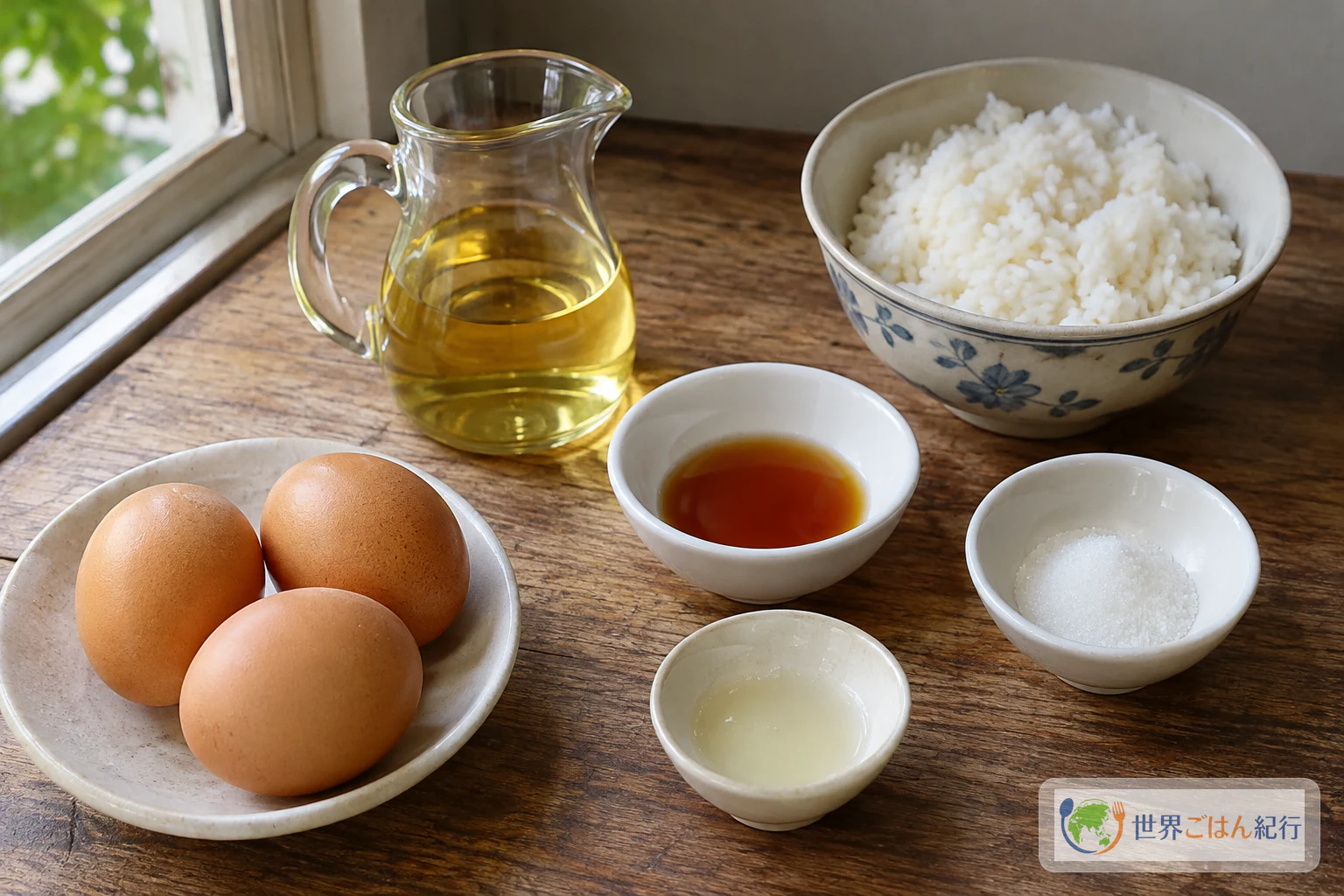
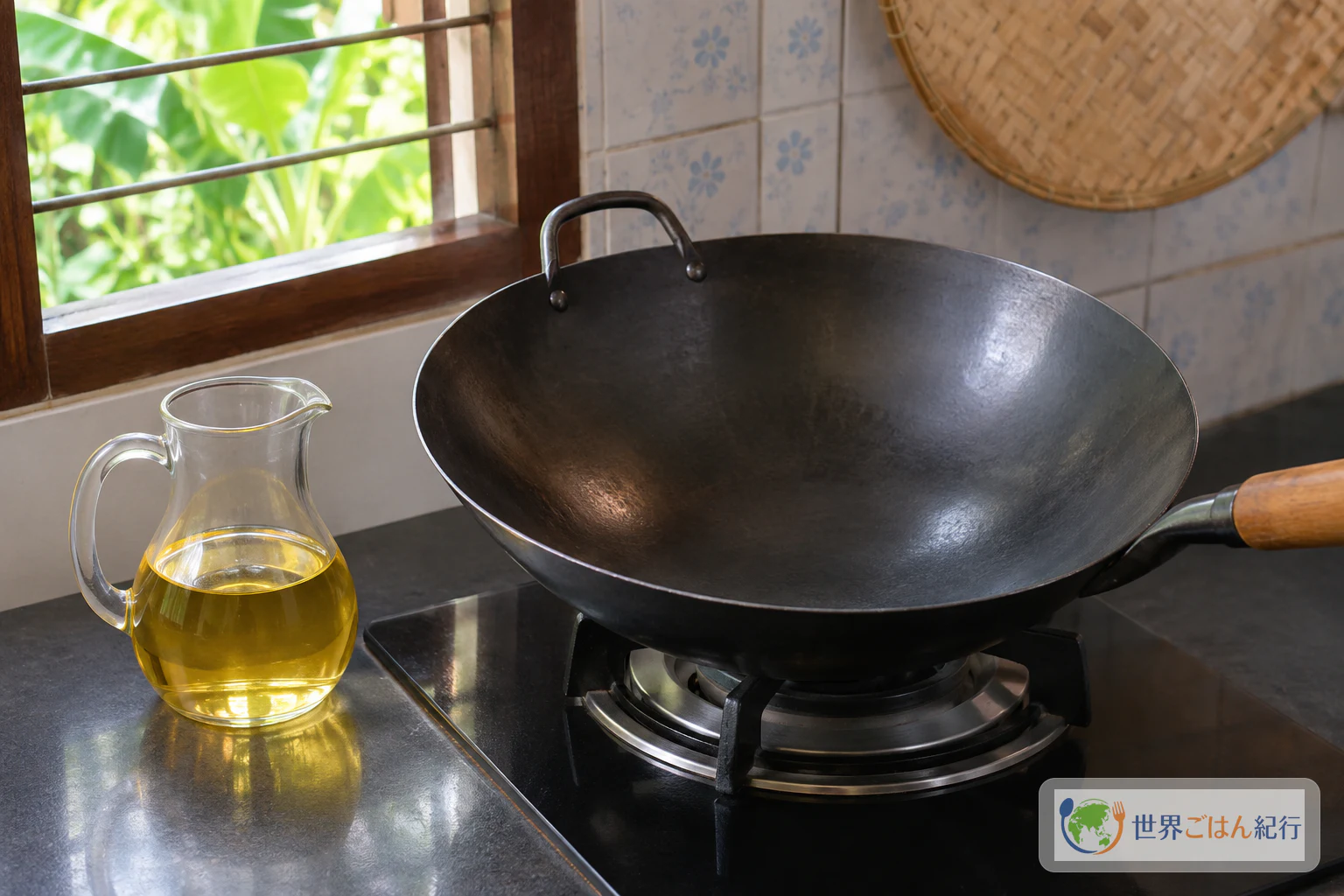
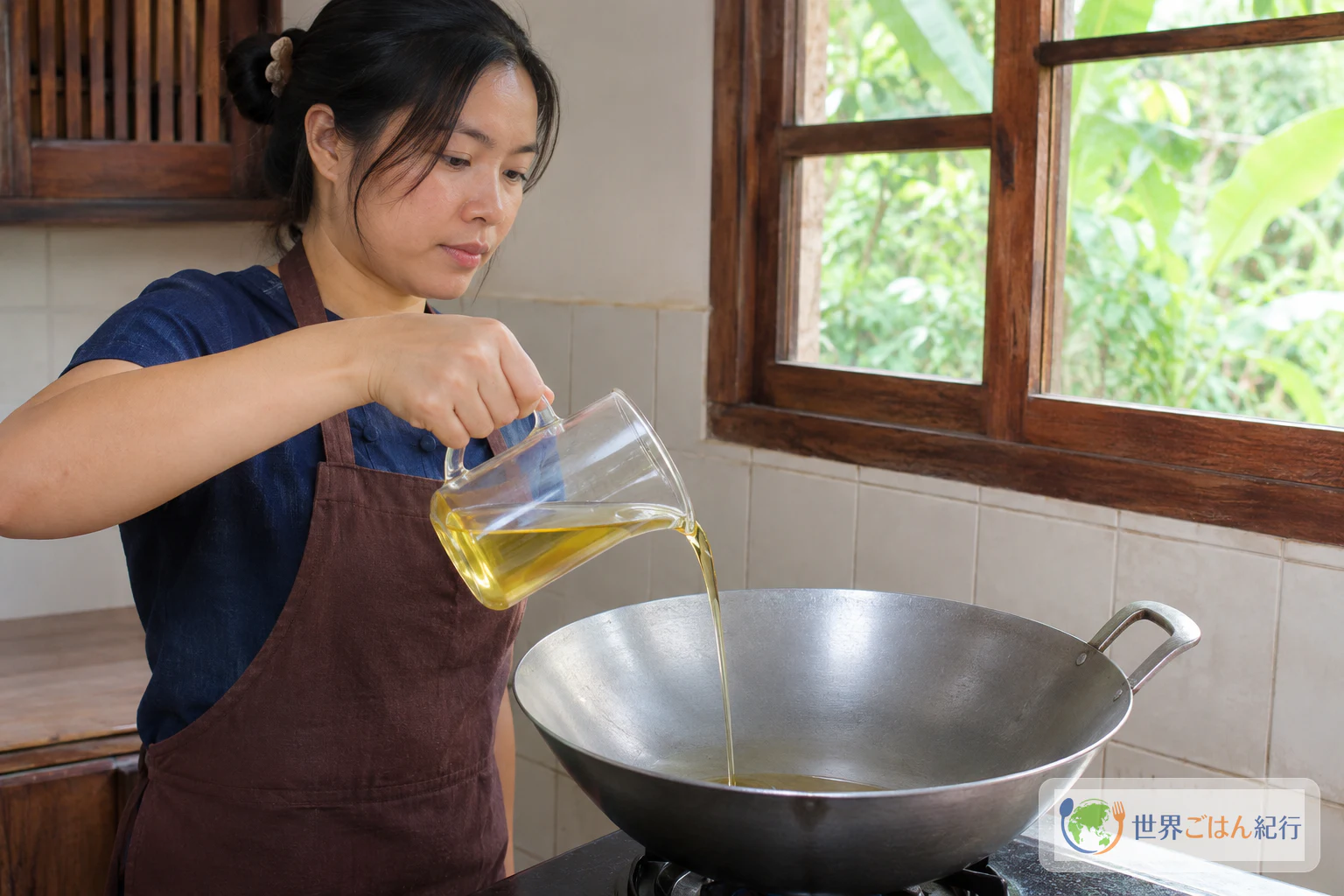
The 200 ml of oil is the amount for frying, and all of it goes into the wok.
Equipment
- Mixing bowl
- Fork
- Small bowls or dishes for the seasonings
- Jug or measure for the oil
- Suitable high-sided wok
- Spatula
- Spoon for the rice
- Plates
Choosing What Goes In: Keep It Plain
Have the jasmine rice cooked and hot before you start on the eggs. Use fresh lime juice, and add only a few drops so it stays a small part of the seasoning.
Choose a wok with high enough sides for 200 ml of frying oil. This version needs no extra ingredients, so there is nothing else to buy or prepare.
Method: From Bubbly Eggs to a Golden Omelet
Hot oil can splash, especially when the egg goes in. Pour with care and keep your hands and face clear of the wok. This is a general reminder and does not guarantee safety.
Troubleshooting: What to Check at Each Stage
These checks come straight from the cues in the method. They can help you find your place, but they do not guarantee a particular result.
| What you see | What to check | What to do |
|---|---|---|
| Few bubbles on the beaten eggs | Whether bubbles cover the surface | Keep beating with the fork before adding the seasonings |
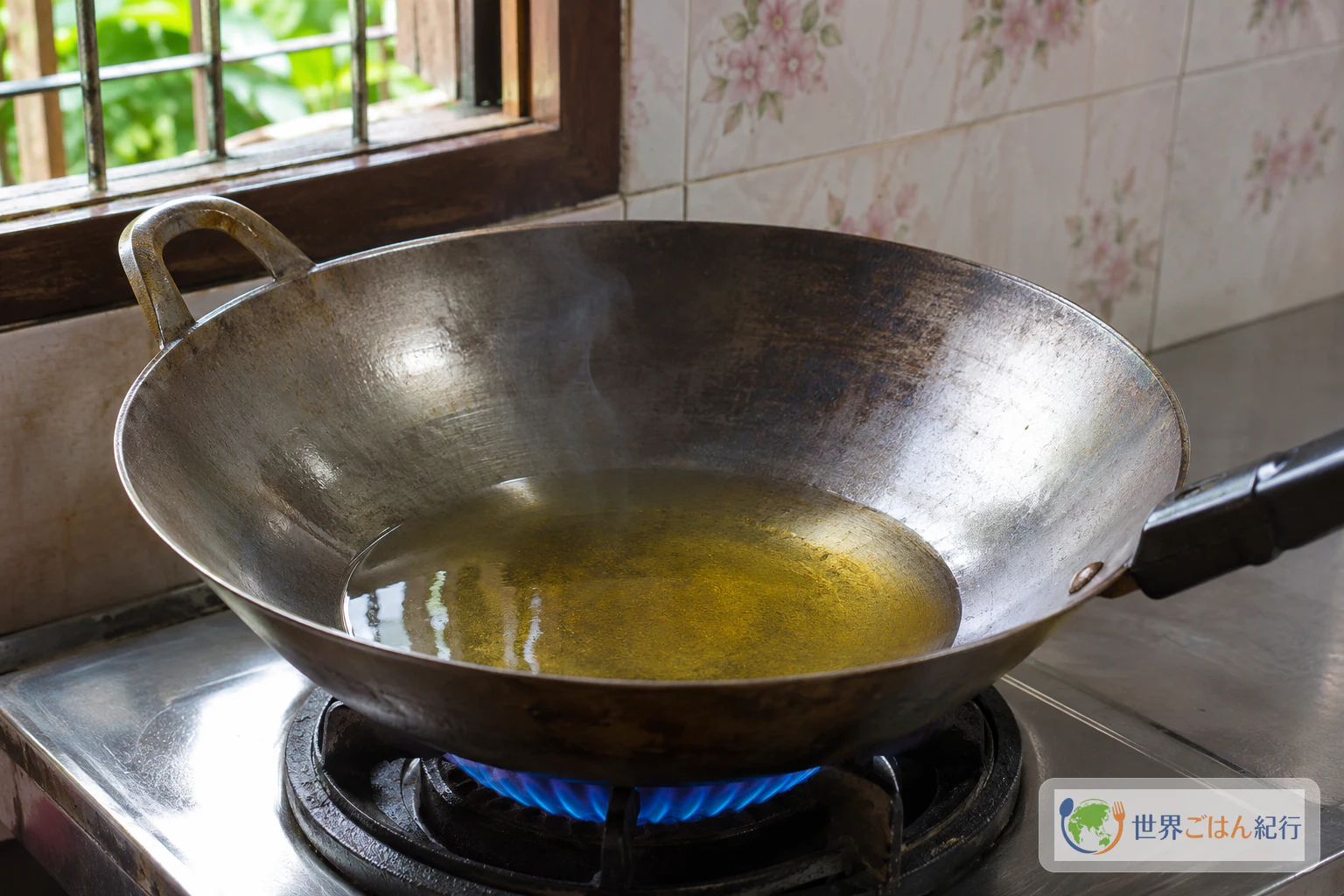
| No smoke from the oil | Whether the heat is on high | Keep heating until the oil just begins to smoke |
| Heavy smoke from the oil | Whether it has gone past the first faint wisp | Turn off the heat and let the oil settle before going on |
| Egg catching on the wok | Whether the omelet is being worked | Fold and manage it with the spatula |
| Omelet has puffed, but the heat is still high | Whether the heat has been adjusted | Lower it to medium |
| Omelet still pale or has raw egg | Color, texture and any uncooked egg | Keep cooking until golden, fluffy and fully cooked |
Background: Variations Beyond This Plain Version
The name covers more than one formula. These recipes were compared with the MICHELIN Guide version, but nothing from them was added to the method above.
| Recipe | Eggs | How it differs |
|---|---|---|
| MICHELIN Guide, with chef Duangjaisantisuk Nipaporn (optional branch) | 3 | Lists 2 red chilies and 300 g acacia leaves as optional; both are omitted here |
| Bon Appétit, by Parnass Savang | 4 | Uses scallions and a sauce with vinegar, gives per-side cooking times, and drains the omelet on paper |
| Real Thai Recipes, by Cee | 1 | Uses white pepper, gives a choice of fish sauce or Thai light soy sauce, fries differently with a 1–2 minute indication, and offers Sriracha and cilantro |
These are separate recipes rather than add-ons, since each has its own proportions and method. If one appeals to you, follow that recipe from start to finish.
Background: Where This Recipe Comes From
The amounts, serving size and method here come from the recipe card in the MICHELIN Guide's 2018 interview-recipe with the Blue Jasmine chef. The card names hot jasmine rice for serving but gives no quantity or cooking method for it, so this article adds neither.
The sources used here support the recipe and the comparison between versions. Sekai Gohan has not kitchen-tested this recipe as a whole. This article makes no claims about the dish's origin, history, nutrition or health effects, and it gives no storage guidance.
Frequently Asked Questions
Does the omelet absorb all 200 ml of oil?
Don't assume it does. The MICHELIN Guide recipe lists 200 ml as the frying amount, and all of it goes into the wok. The recipe does not say how much oil is absorbed or left over, so this article doesn't estimate either.
Do I have to flip the omelet?
This recipe does not call for a flip. It uses a spatula to fold and manage the omelet so it doesn't stick. The per-side times in other recipes belong to their own methods.
How long does it take, and how hot should the oil be?
The MICHELIN Guide recipe gives no cooking time, oil temperature or per-side timing. Use its visual cues instead: oil that begins to smoke, an omelet that puffs, and a golden, fluffy finish. A golden surface doesn't prove the inside is done, so make sure the omelet is fully cooked before you serve it.
When does the lime go in?
The MICHELIN Guide article's narrative mentions lime earlier, but this version follows the order on the recipe card: beat the eggs first, then add fish sauce, sugar and a few drops of lime.
Can I use soy sauce instead of fish sauce?
This recipe uses fish sauce, and no swap is offered here. Real Thai Recipes allows fish sauce or Thai light soy sauce, but only within its own one-egg formula. Thai light soy sauce should not be assumed to be the same as Japanese shiro-shoyu.
Should I drain the omelet on paper?
The MICHELIN Guide recipe has no draining step, so this version goes straight from the wok to the plate. Paper draining is part of the Bon Appétit recipe.
How much rice should I serve?
The recipe doesn't give an amount, so serve as much as you like. Just make sure the rice is already cooked and hot.
Sources
- MICHELIN Guide, "Recipe: Khai Jiao, Fluffy Thai-style Omelette," by Rachel Tan with chef Duangjaisantisuk Nipaporn of Blue Jasmine, 2018. The sole basis for this one-serving recipe's amounts, sequence and visual cues, for hot jasmine rice as the serving item, and for the optional ingredients omitted here. https://guide.michelin.com/en/article/dining-in/recipe-khai-jiao-fluffy-thai-style-omelette
- Bon Appétit, "Khai Jiao," by Parnass Savang. Used for comparison only, as a separate recipe with a different formula, served with rice. https://www.bonappetit.com/recipe/khai-jiao
- Real Thai Recipes / Cee, "Thai Style Omelette." Used for comparison only, as a separate one-egg recipe with different seasoning, frying and topping options. https://www.realthairecipes.com/recipes/thai-style-omelette/