Break Open the Thin Shell and Find the Sweet Mung Bean Inside
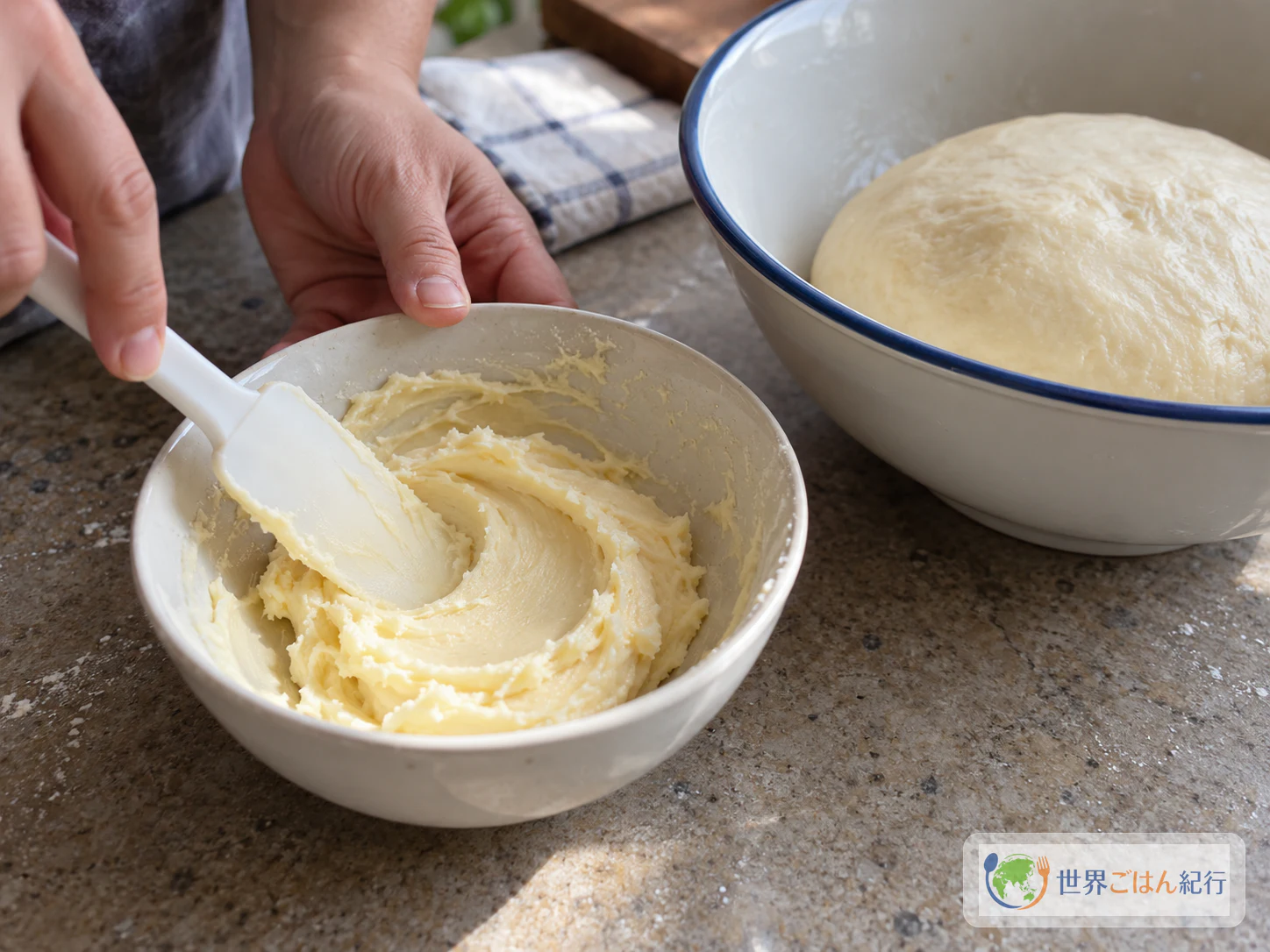
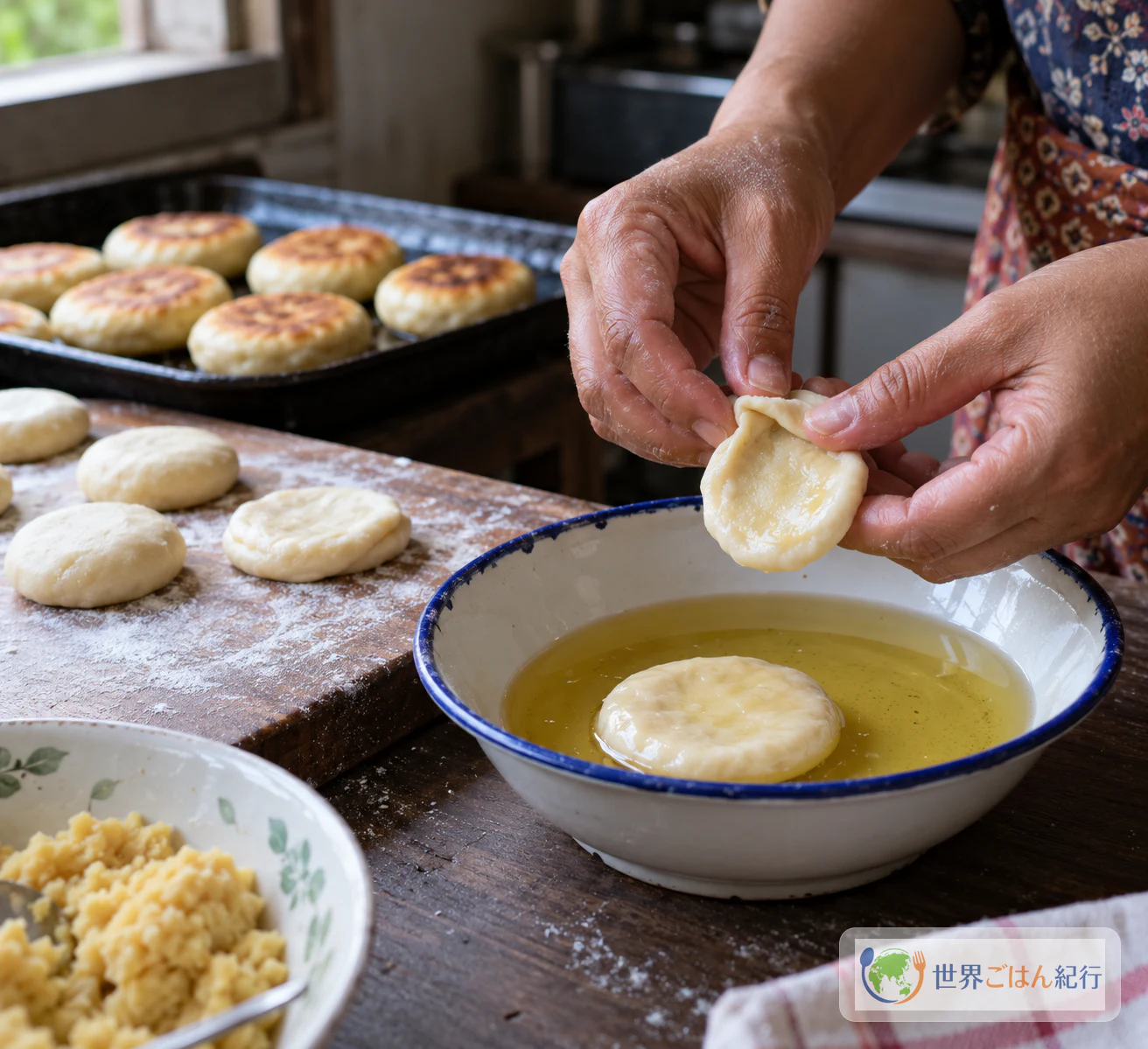
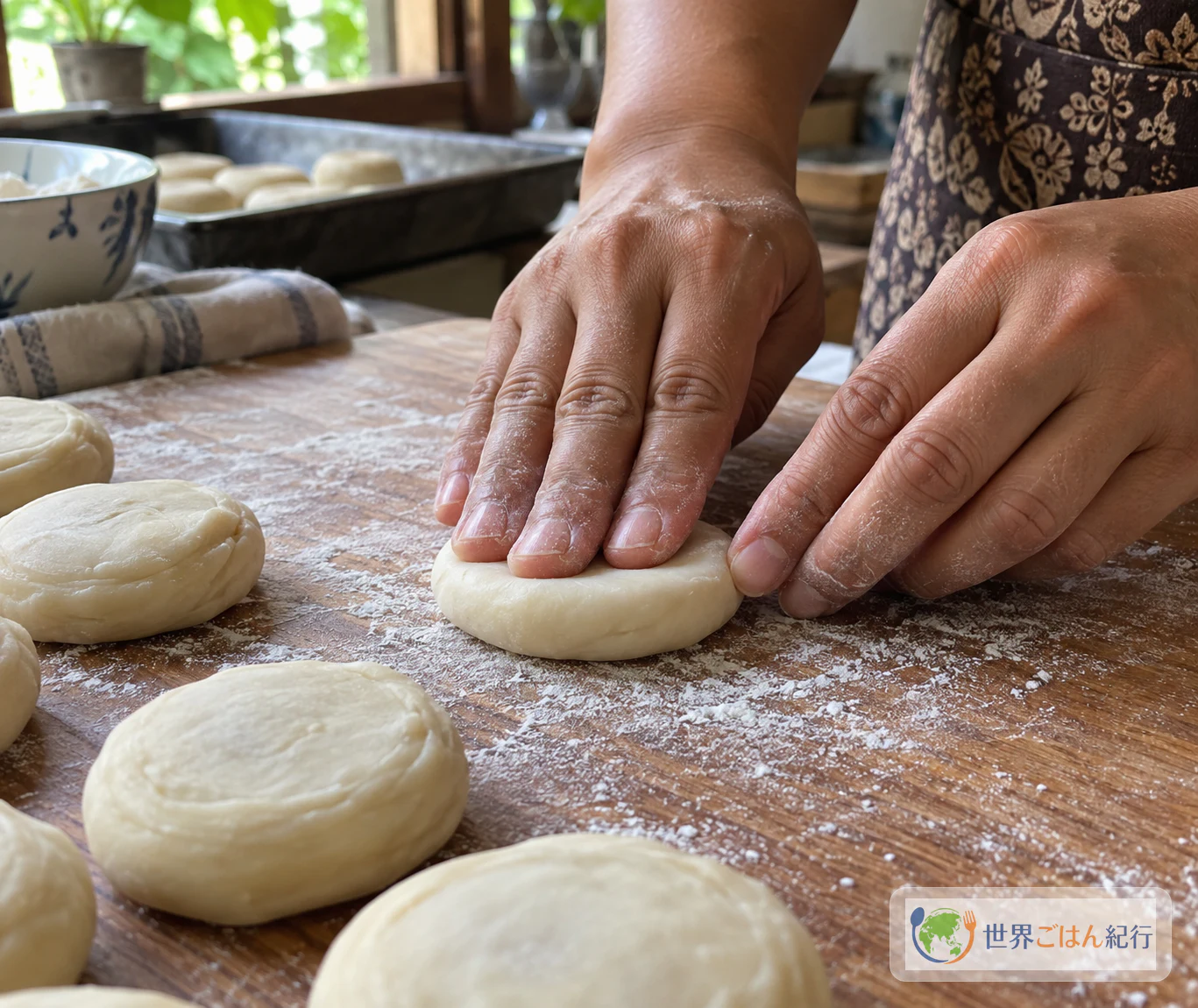
Aim for a smooth, sweet mung bean filling inside a thin shell layered with oil and margarine. Those two contrasting textures are what this recipe is built around.
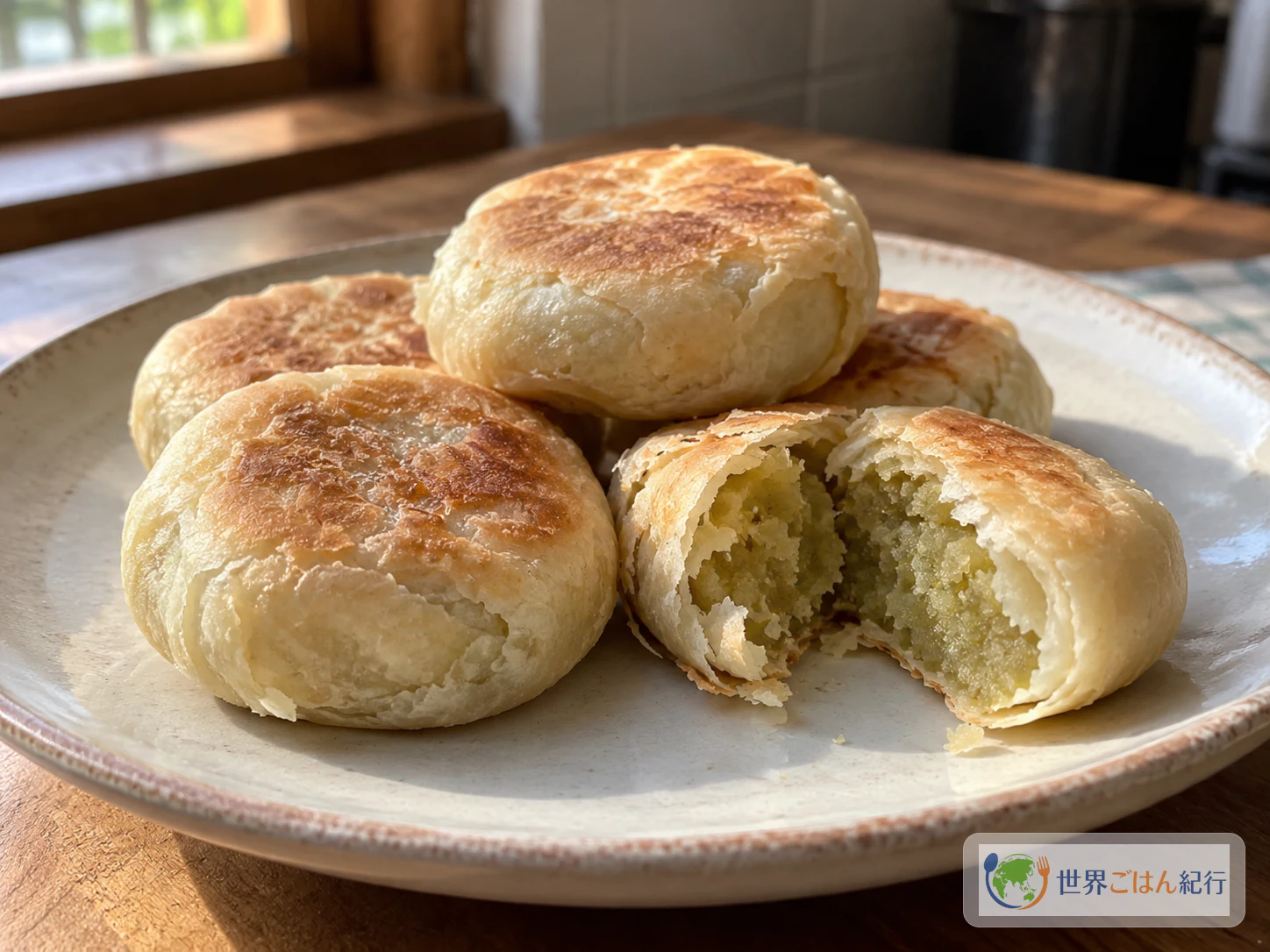
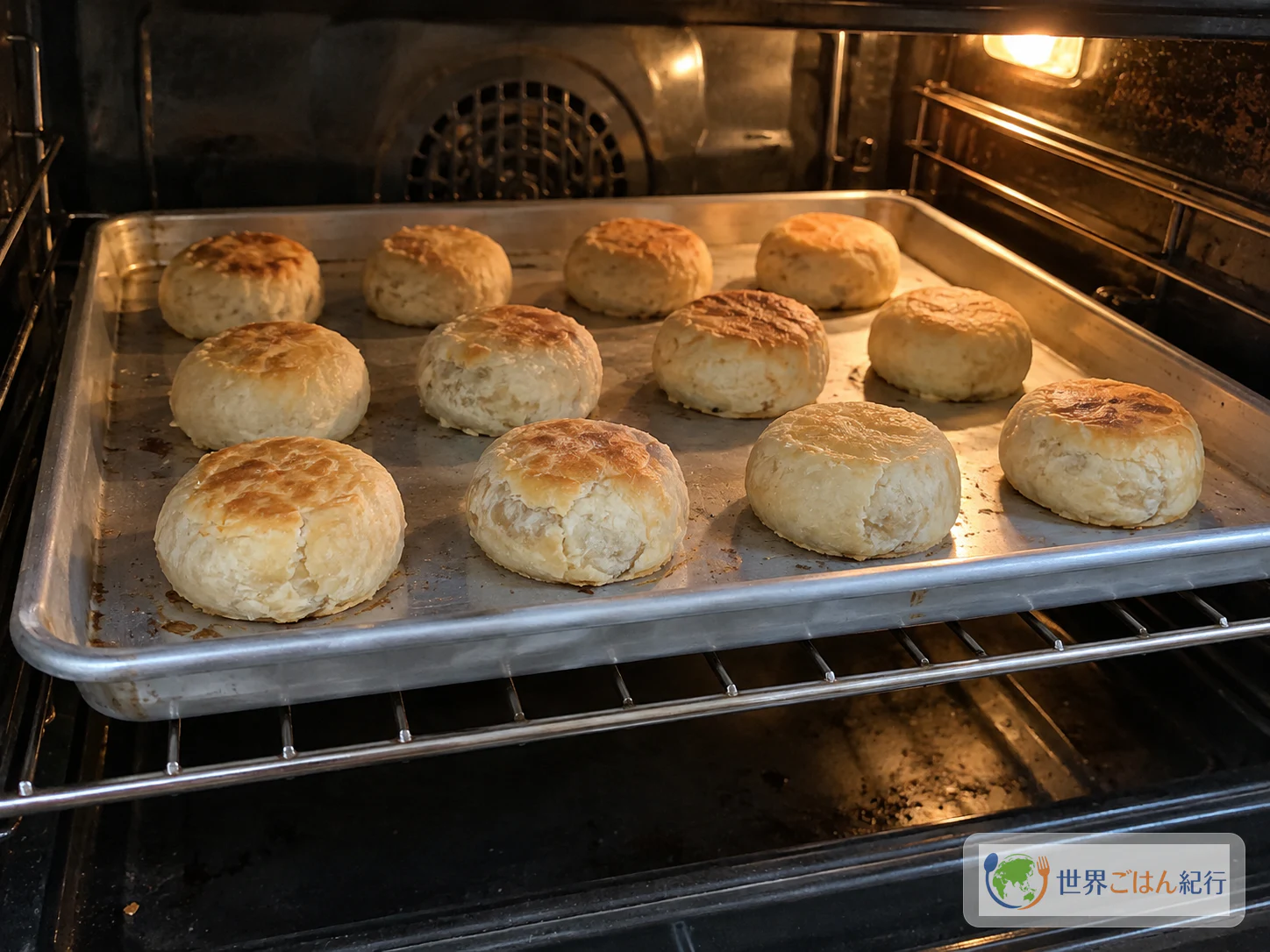
Break a baked bakpia in two and the browned outside gives way to thin layers of wheat pastry, wrapped around a dense, sweet center of mung beans. Bakpia pathok is a small, flattened round pastry from Yogyakarta, made by enclosing a sweet filling in a wheat shell and baking it.
The name points to Pathuk, an area of Yogyakarta that SiBakul Jogja, a small-business platform of the Yogyakarta provincial government, describes as home to household producers and shops known by their numbers. For more from the same country, see our guide to Indonesia.
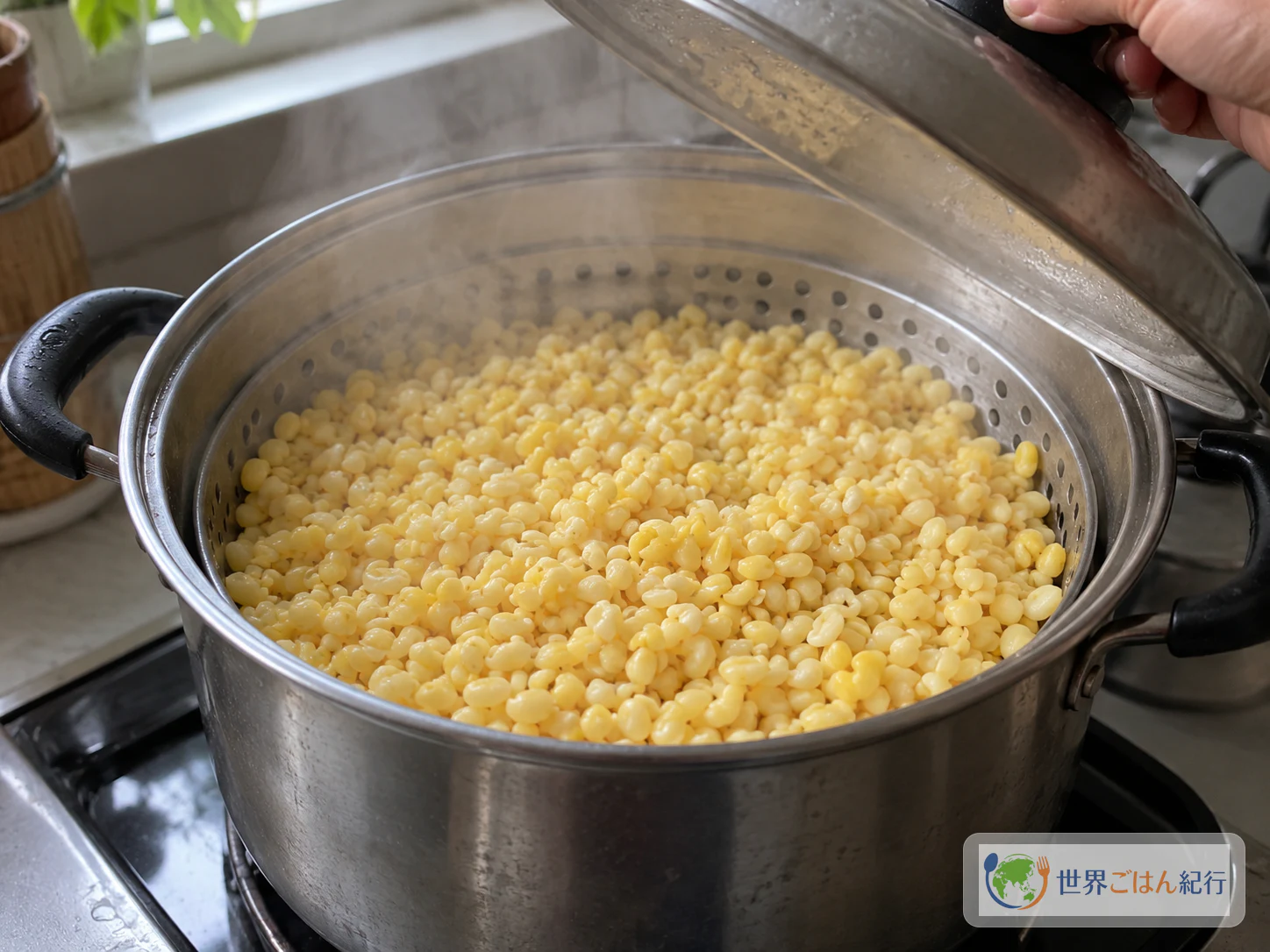
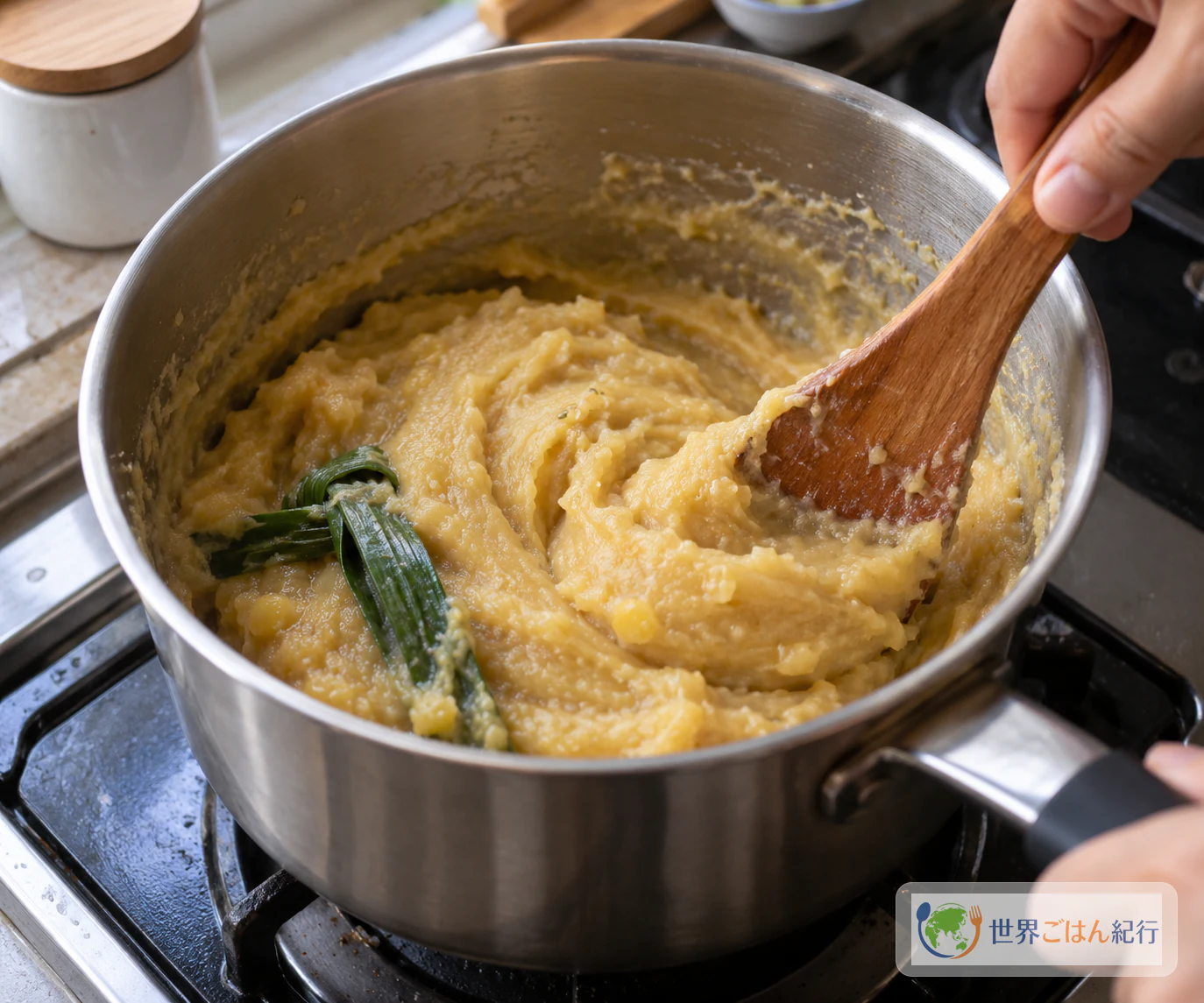
This article follows one formula, the first Bakpia Pathok recipe on the Indonesian kitchen-equipment site Rumah Mesin. Its filling uses peeled mung beans, coconut milk, pandan and two sugars. The same page also has other styles and a second recipe, which are not mixed in here.
This recipe has not been kitchen-tested by Sekai Gohan. Rumah Mesin does not state how many pastries it makes, how much filling goes into each one, or how to adapt the baking to a home oven, so we don't give those figures either. Its 200°C and 15–20 minutes are written for a bakpia oven, so in a home oven they are only a starting point.
Rumah Mesin prints the salt in the main dough as 1/2 sendok makan, and we have kept it exactly as printed. That looks like a lot, but the page alone can't tell us whether it is a misprint.
Ingredients: Filling, Main Dough and Layer Paste
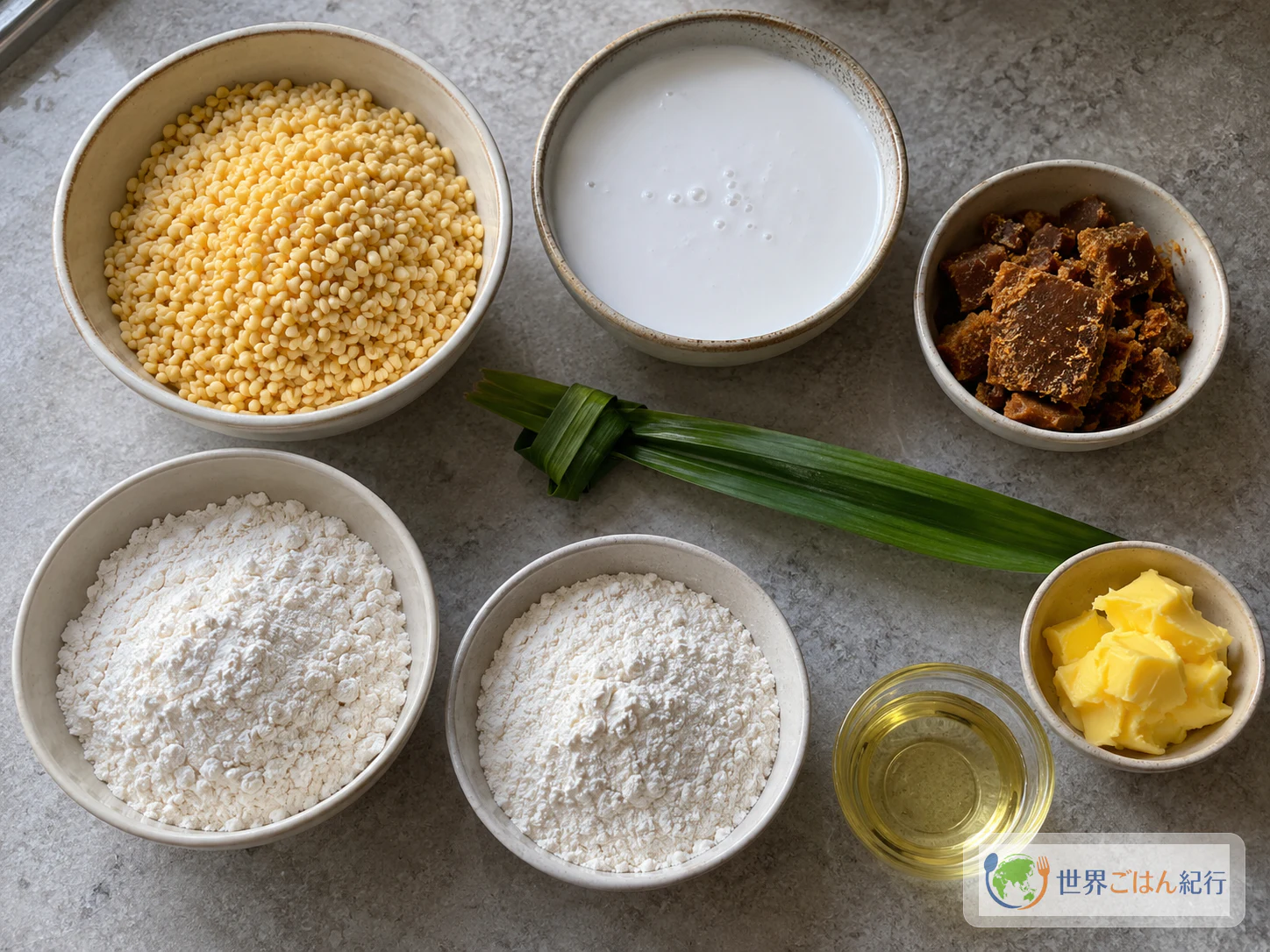
Sdm is sendok makan, the Indonesian tablespoon. Sdt is sendok teh, the Indonesian teaspoon.
Choosing and Substituting
These swaps are our own suggestions for cooks outside Indonesia, and none of them has been tested in this recipe.
| Ingredient | Closest option | What changes |
|---|---|---|
| Peeled mung beans | No direct substitute | Skin-on mung beans change the color and texture, so don't treat them as the same ingredient |
| Coconut milk | Unsweetened canned or carton coconut milk | Thickness varies by product, and how that affects the filling is unverified |
| Palm sugar | Kokuto (Japanese dark brown sugar) | The flavor differs from gula merah |
| Pandan leaf | Leave it out | The filling loses that aroma |
| Low-protein flour | Cake flour | Close, but protein levels differ between products |
| High-protein flour | Bread flour | Close, but protein levels differ between products |
Replacing the coconut milk with a dairy product, or the palm sugar with plain white sugar, takes away the coconut flavor or the depth and color of palm sugar. The result is a different filling from this one.
Wheat is the main allergen to watch for here. Check the labels on margarine and coconut products for milk, soy and other allergens, since these vary by product. Consider cross-contact as well.
Equipment
- Steamer
- Saucepan
- Wooden spatula
- Mixing bowls
- Small separate bowl for the layer paste
- Shallow bowl for the oil soak
- Kitchen scale
- Oven and a plain metal baking tray
Judging the Finish and Fixing Problems
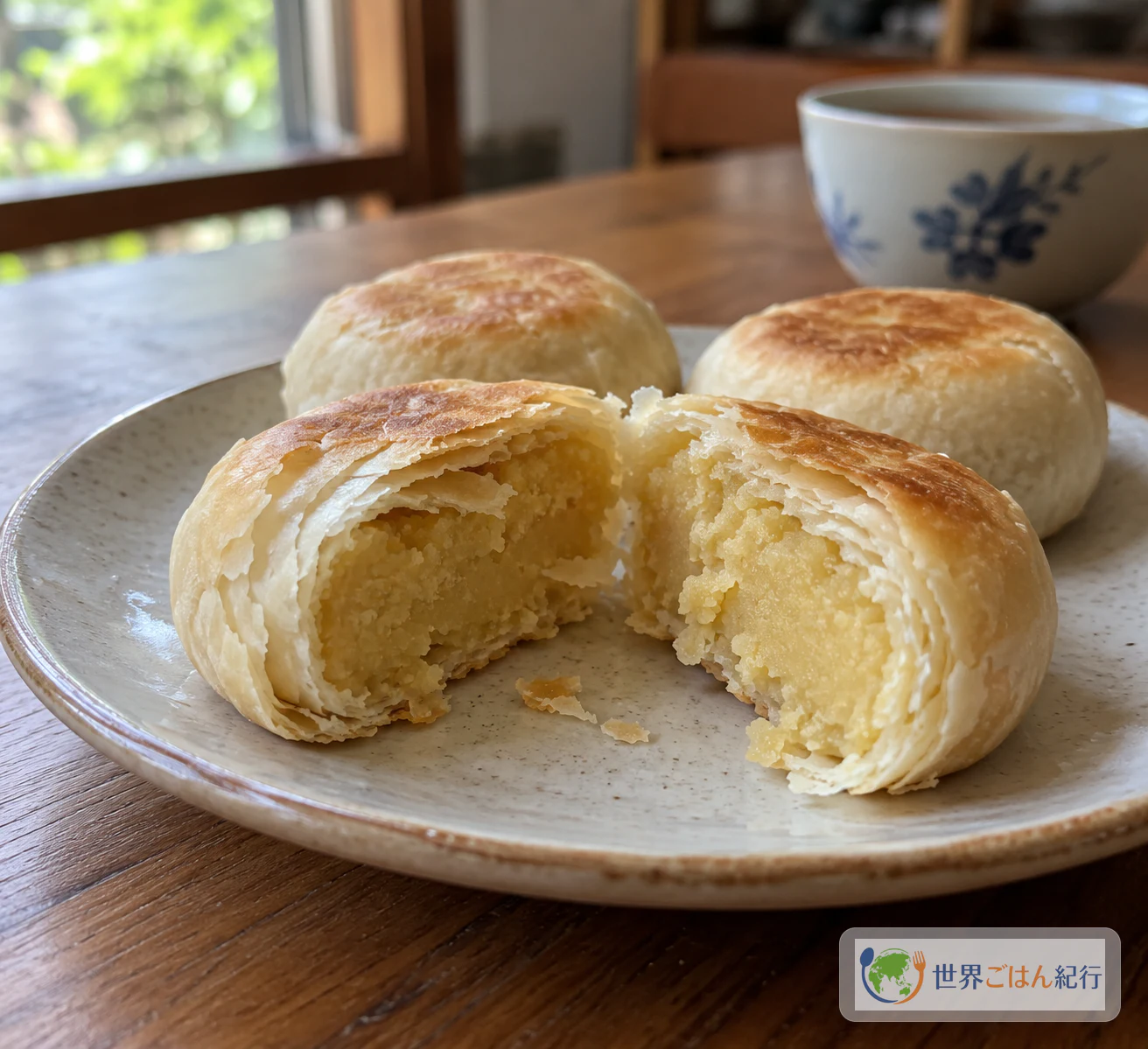
Look for browned color on the outside, closed seams and a filling that holds its shape when a pastry is broken open.
| Problem | Likely cause | What to do |
|---|---|---|
| The filling runs or won't hold a ball | It still has too much moisture | Cook it down further until thick and cohesive. Don't add flour; nothing in this recipe supports it as a fix |
| The layers don't show | The layer paste went on unevenly or too thickly | Spread the paste thin and even on the next batch |
| The dough tears | It was stretched too quickly | Flatten and wrap more gently, without pulling hard. No extra resting time is established for this recipe |
| The color is uneven | Your oven heats unevenly | Turn the pastries so both sides color, and extend the time little by little if needed |
Variations: What Changes If You Adjust
These are options rather than traditional specifications, and we haven't tested them.
- Filling texture: Leaving some bean grains creates a more rustic bite than a smooth paste. This goes beyond the recipe, which aims for a smooth filling.
- Other fillings: SiBakul Jogja lists present-day fillings such as black bean, chocolate, cheese and fruit. Treat these as separate recipes, because this one covers only the mung bean version.
- Oven type: A home oven may color the pastries differently from a dedicated bakpia oven, and the time may differ too.
From Pathuk's Numbered Shops: The Background of Bakpia
SiBakul Jogja presents bakpia as a meeting of Chinese and Javanese food cultures. It traces the name to the Hokkien Tou Luk Pia and explains bakpia as a pastry with a meat filling. In its account, early versions using meat and pork fat were adapted in Yogyakarta, and mung bean filling took their place.
The same article describes household producers in Pathuk and shops that use numbers as their names, with demand rising during holidays. It also lists the wider range of fillings sold today. Part of this history is credited to a study from UGM, but the page doesn't give a full citation, so we treat the timeline as SiBakul Jogja's account rather than settled fact.
Recipes vary as well. Rumah Mesin's page notes that Yogyakarta bakpia comes in several filling and crust styles. Rose Brand, a food brand, publishes a very different version with chocolate filling and a pan-cooked finish. That shows the range of modern bakpia, but none of its amounts or methods are used here. Rumah Mesin is a commercial equipment publisher rather than a heritage authority, so this recipe is one published formula and not a documented traditional household one.
Frequently Asked Questions
Are bakpia Pathok and bakpia Pathuk different pastries?
No, these are spelling variants. This article uses Pathok as its main spelling and keeps Pathuk when referring to the area as SiBakul Jogja writes it.
How many pastries does this make?
We can't say. Rumah Mesin doesn't state a yield or the amount of filling per pastry, and the 10 g dough portions alone aren't enough to work it out.
Is 1/2 sdm of salt in the main dough correct?
That is how Rumah Mesin prints it: "1/2 sendok makan garam." The amount looks large, but the page can't prove or rule out a misprint. We've kept it as printed instead of silently changing it to teaspoons.
Can I bake these in a nonstick pan?
That isn't established for this formula. Rose Brand uses a pan for its own different recipe, but moving that method to this one is untested, so we don't offer it as a step here.
What if I can't find pandan leaf?
You can leave it out, though the filling will lose that aroma.
How long do they keep?
We haven't confirmed a storage period or reheating method, so we don't give one, and we can't promise that they keep well at room temperature.
Sources
- Rumah Mesin, "Resep Bakpia Pathok, Ini Dia Resep Legendanya Untuk Anda." The adopted recipe's amounts, temperature, times and method, and the association of Pathok with Yogyakarta. https://www.rumahmesin.com/resep-bakpia-pathok/
- SiBakul Jogja / Pasar Kota Gede YIA, "Bakpia Pathuk: Sejarah dan Keunikannya." The Chinese-Javanese framing of bakpia, the move from meat and pork fat to mung bean, Pathuk's household producers and numbered shops, holiday demand and present-day fillings. https://sibakuljogja.jogjaprov.go.id/blog/pasarkotagedeyia/bakpia-pathuk-sejarah-dan-keunikannya/
- Rose Brand, "Bakpia Pathok." A separate commercial recipe with chocolate filling and a pan-cooked finish, cited for comparison only. https://rosebrand.co.id/resep/bakpia-pathok