Bubur Baayak: Dough Pressed Through a Sieve into Sweet Coconut Milk
Make a dough that holds together in your hand, press it through the sieve a little at a time, and keep the white coconut sauce separate until serving.
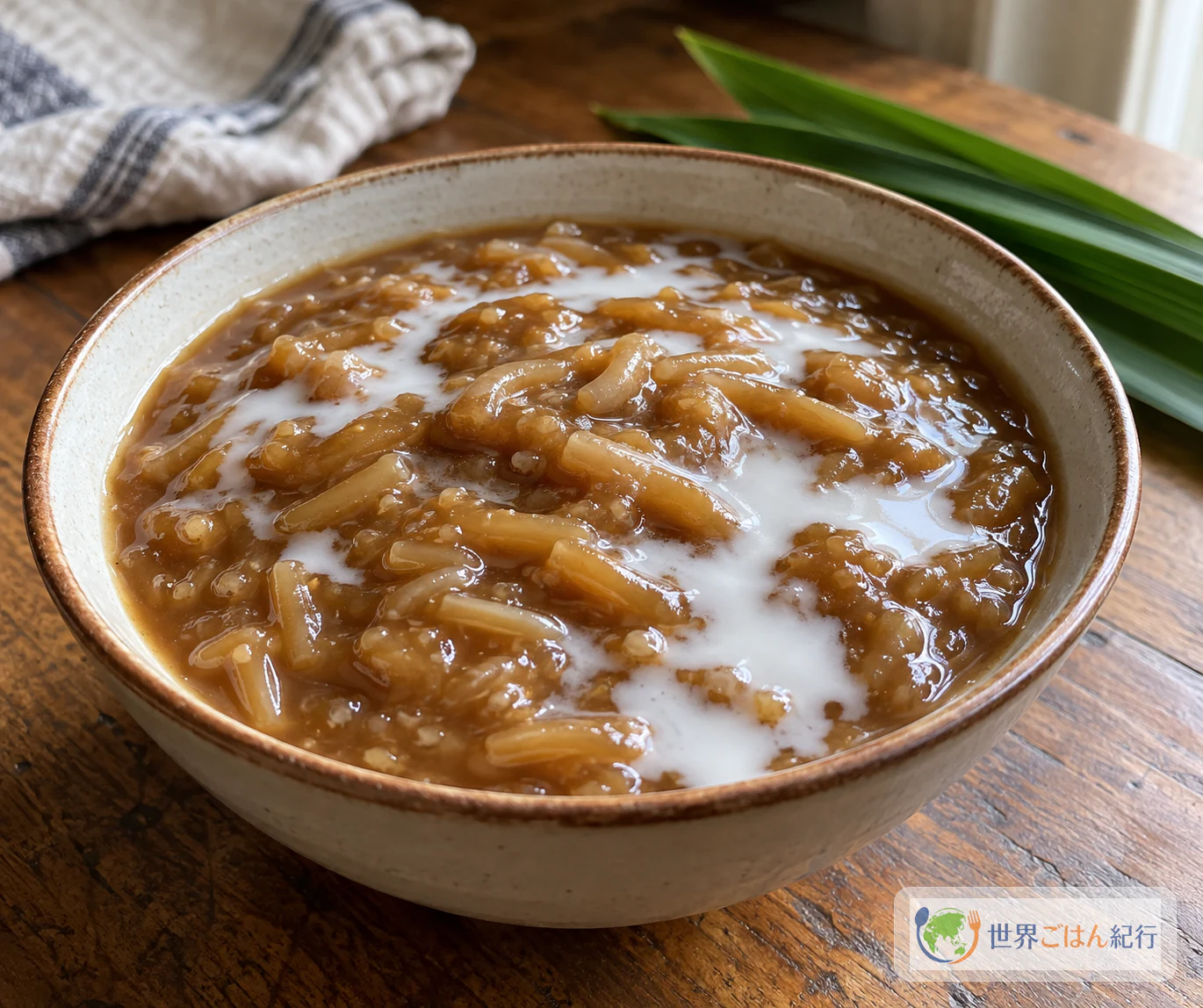
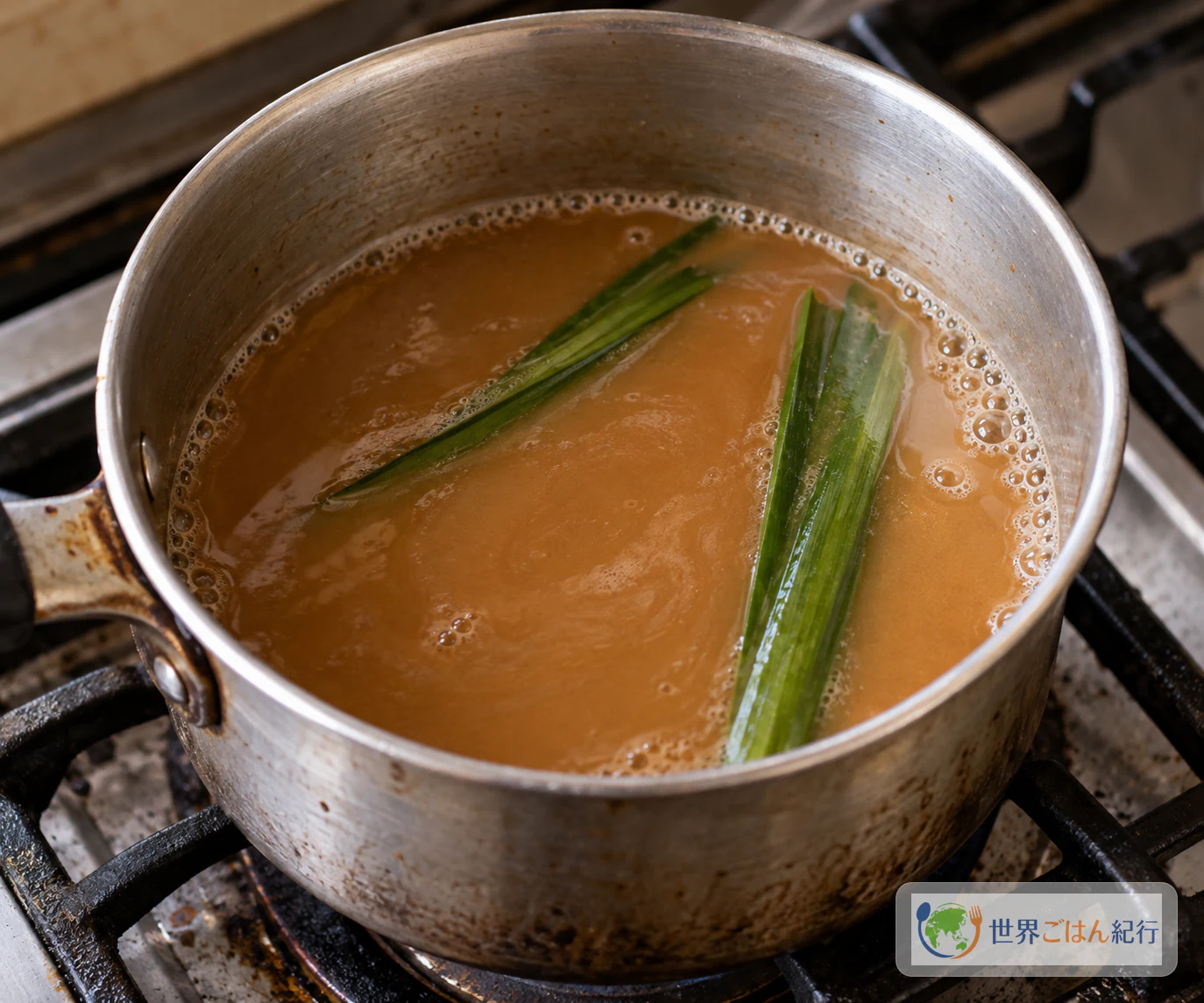
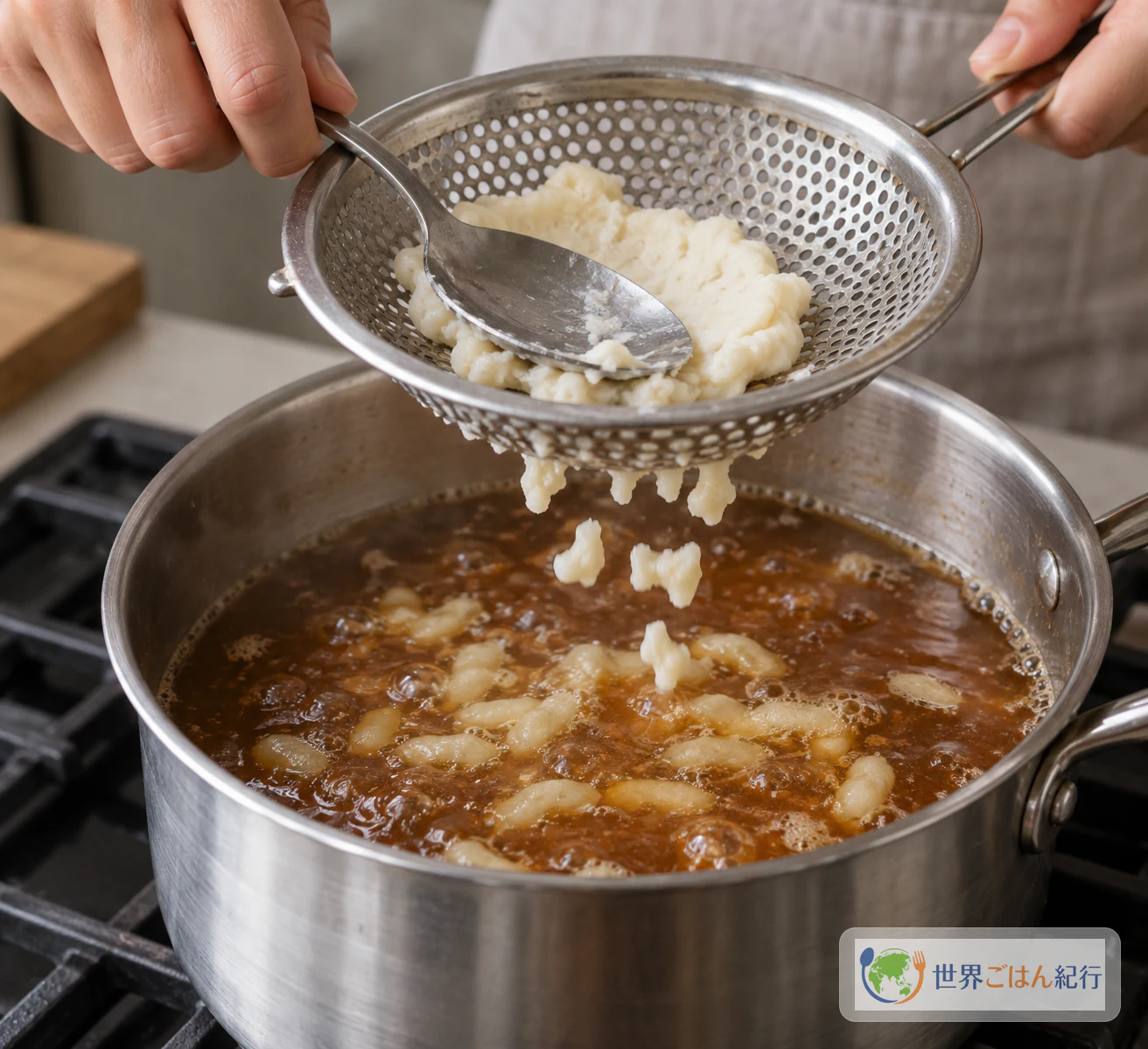
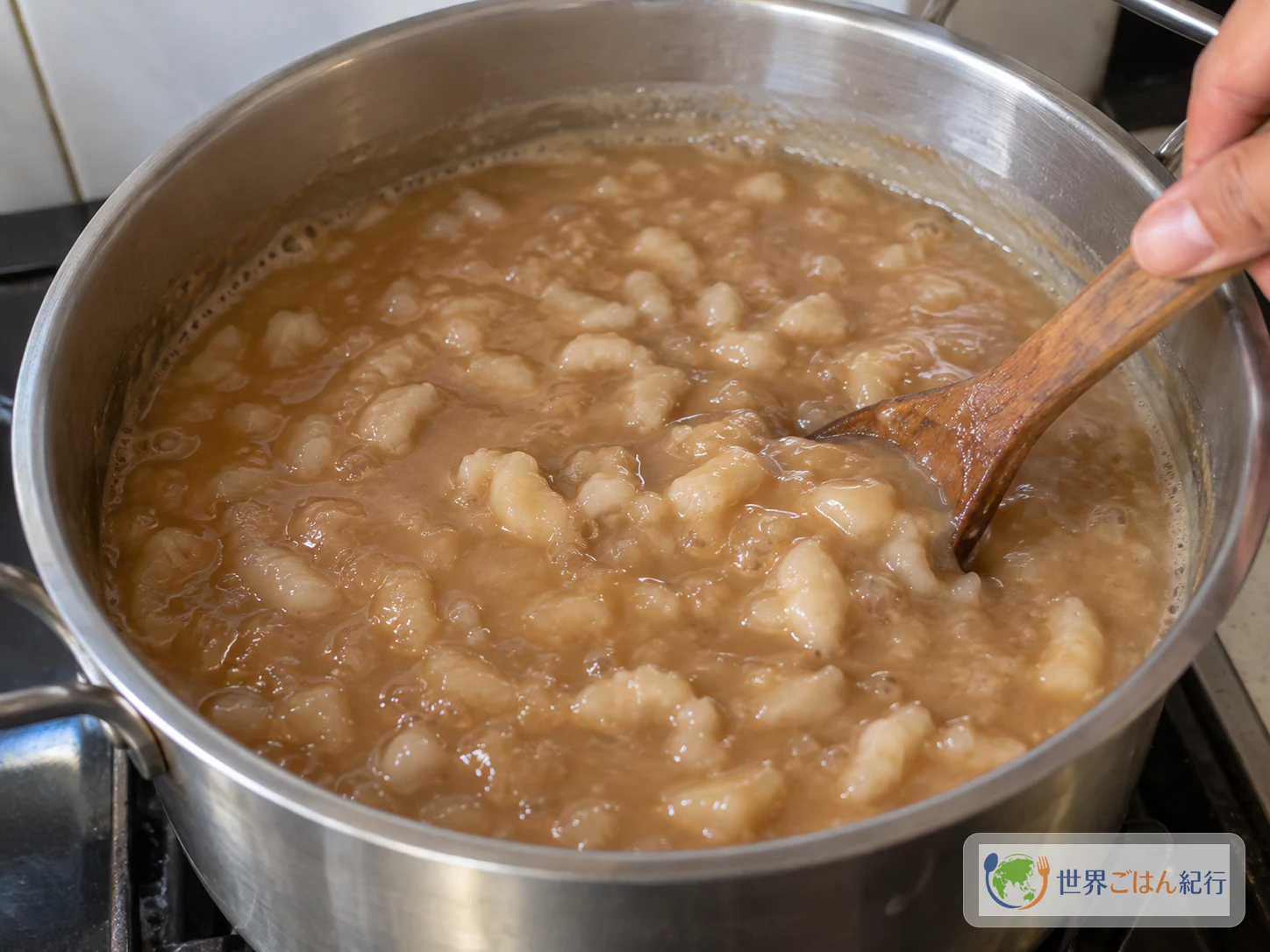
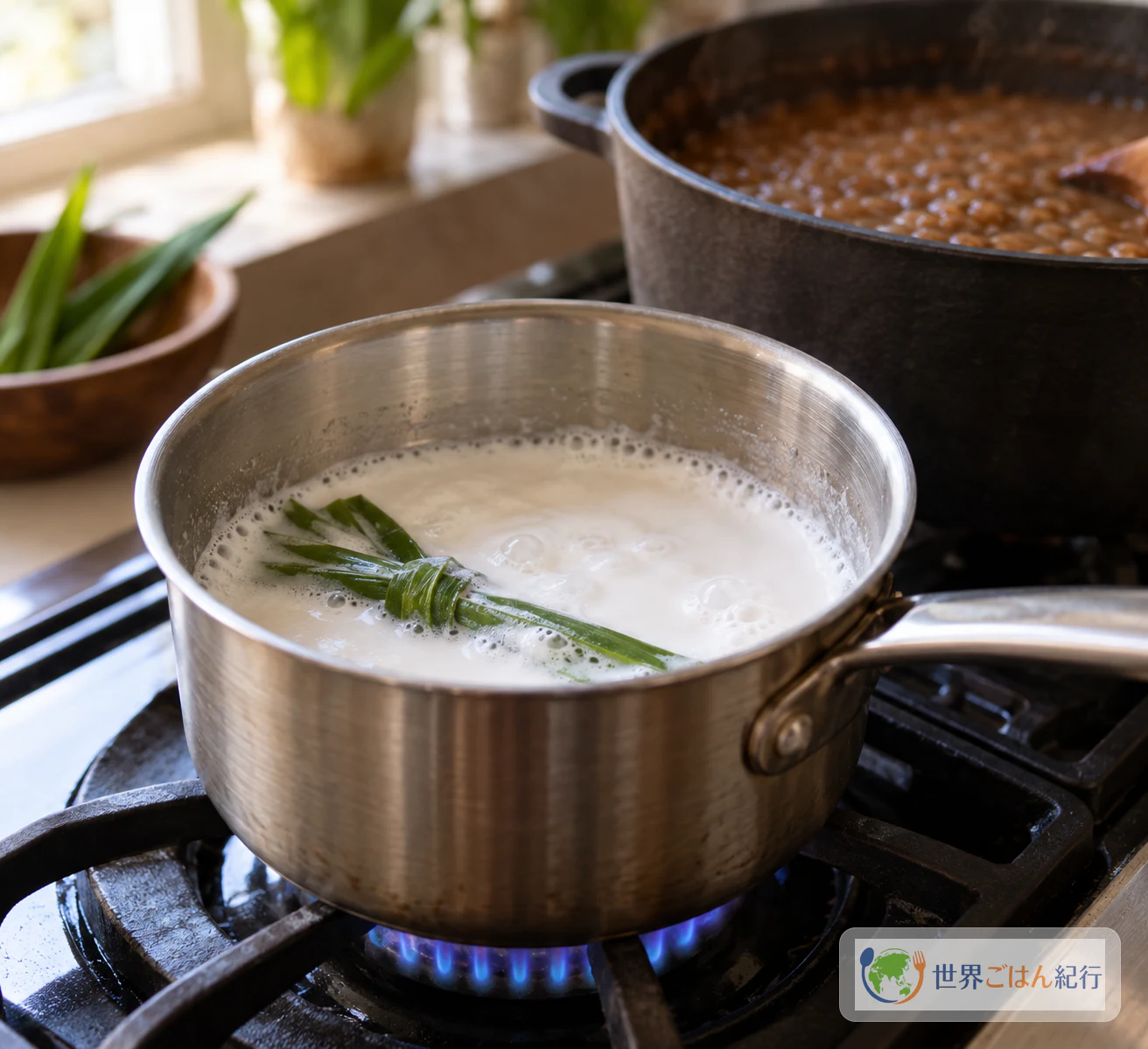
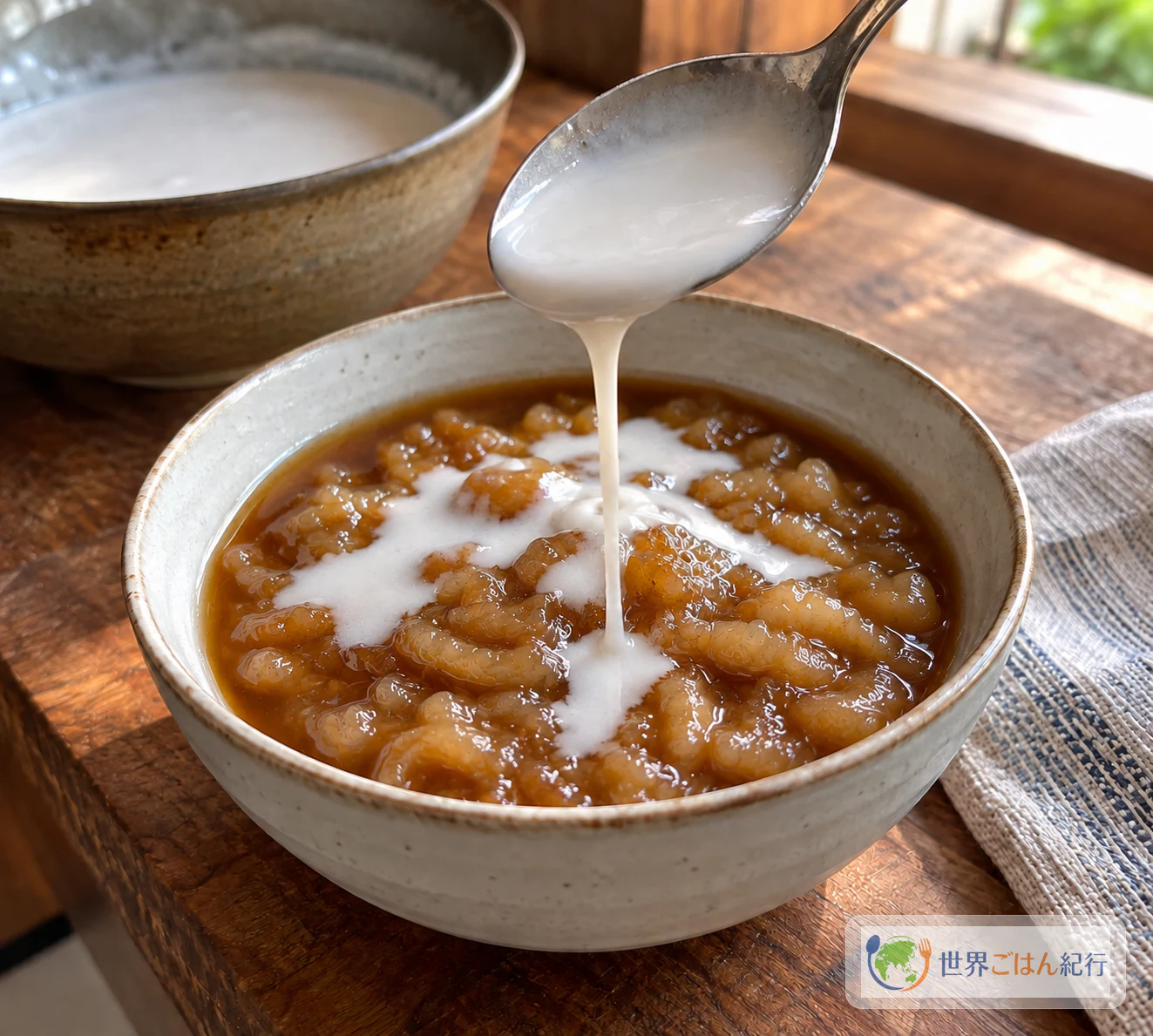
A small lump of pale dough sits on a coarse-holed sieve above a pot of brown, simmering coconut milk. The back of a spoon pushes it through, and short, uneven pieces drop into the liquid. More dough follows, a little at a time, until the pot has cooked and thickened into a sweet porridge. A white coconut sauce, cooked separately with pandan and a pinch of salt, goes over the top in the bowl.
This is bubur baayak, also known as bubur ayak and bubur saring, in a version from Banjarmasin in South Kalimantan. The amounts and method here follow one home recipe posted on Cookpad by a cook who gives Banjarmasin as their location and describes the dish as a Banjar food from home. It is one cook's version, not the only authentic recipe. It pairs the sweetness of gula merah, Indonesian palm sugar, with savory coconut milk. You can explore more of the country's food through our Indonesia page.
We have not kitchen-tested this recipe. The Cookpad post gives no yield, cooking times or temperatures, so none appear here. The step images are illustrations of the written method, not photographs taken in Banjarmasin, and they do not establish the dough's consistency or the size of a spoon measure.
Ingredients: Dough, Sweet Pot and Separate Sauce
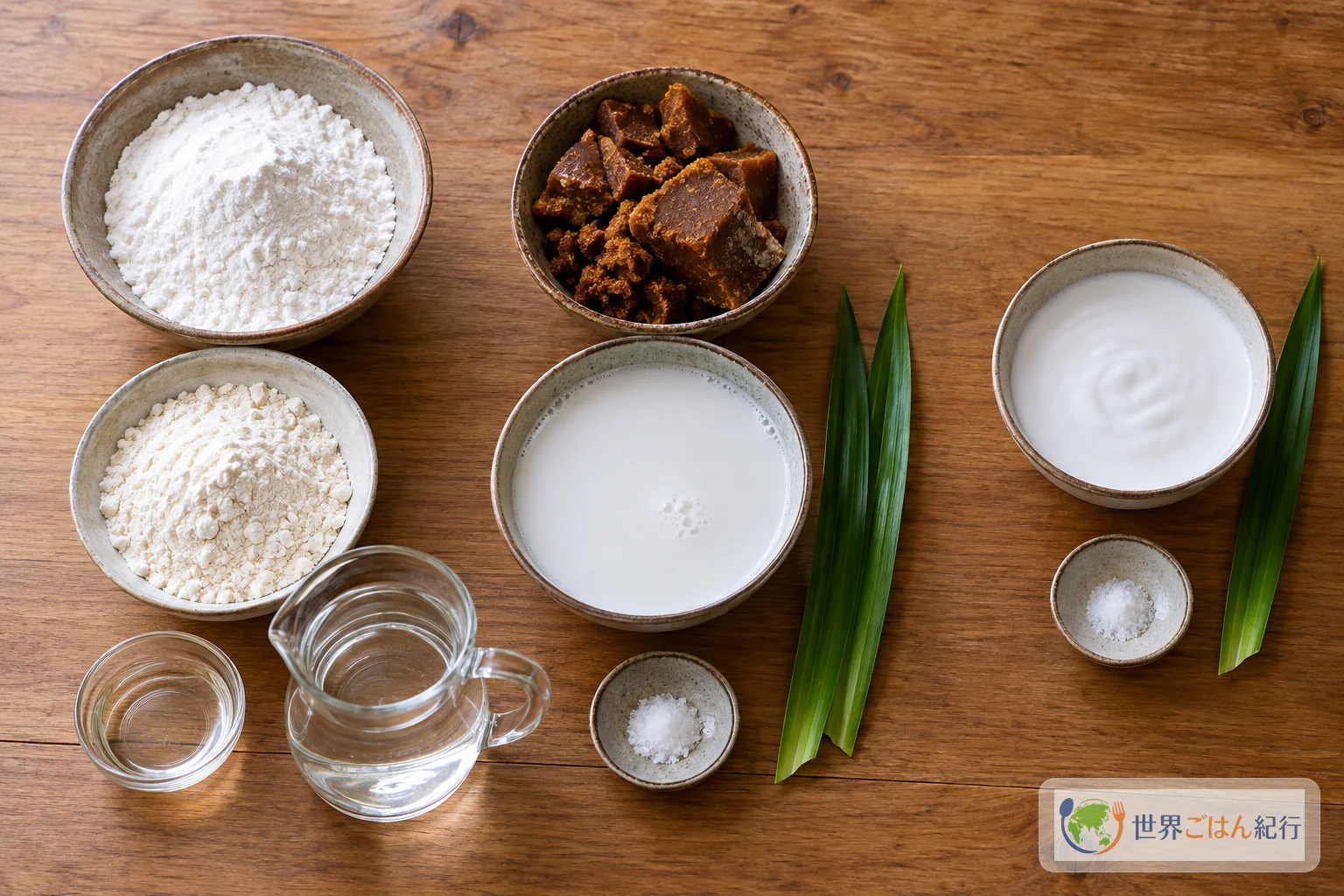
Keep the sauce ingredients out of the pot.
Choosing and Substituting: Limewater, Flour, Sugar and Coconut Milk
Use only limewater sold as food, and follow its label. Do not substitute household slaked lime, industrial lime or any other alkaline product. This dish contains wheat and coconut; check product labels for other allergens and cross-contact.
- Limewater: Food-grade limewater may be hard to find in an ordinary grocery store. Do not replace it with another alkaline product.
- Rice flour: Use ordinary rice flour, not glutinous rice flour.
- Wheat flour: Keep it in this version. Making the dough with rice flour alone would be a different recipe.
- Palm sugar: Look for Indonesian palm sugar. Japanese kokuto is not the same ingredient and will change the flavor.
- Coconut milk: Buy or prepare thin and thick coconut milk as two separate ingredients, because they do different jobs. The thin milk cooks the porridge, and the thick milk becomes the sauce.
- Pandan: Both pots use it. If you can't find it, the dish will move away from this form.
Equipment
- Mixing bowl
- Pot for the porridge
- Small separate pot for the sauce
- Coarse-holed metal sieve (saringan)
- Spoon for pressing the dough
- Spoon for stirring
- Serving bowls
Method: Press, Thicken, Then Pour
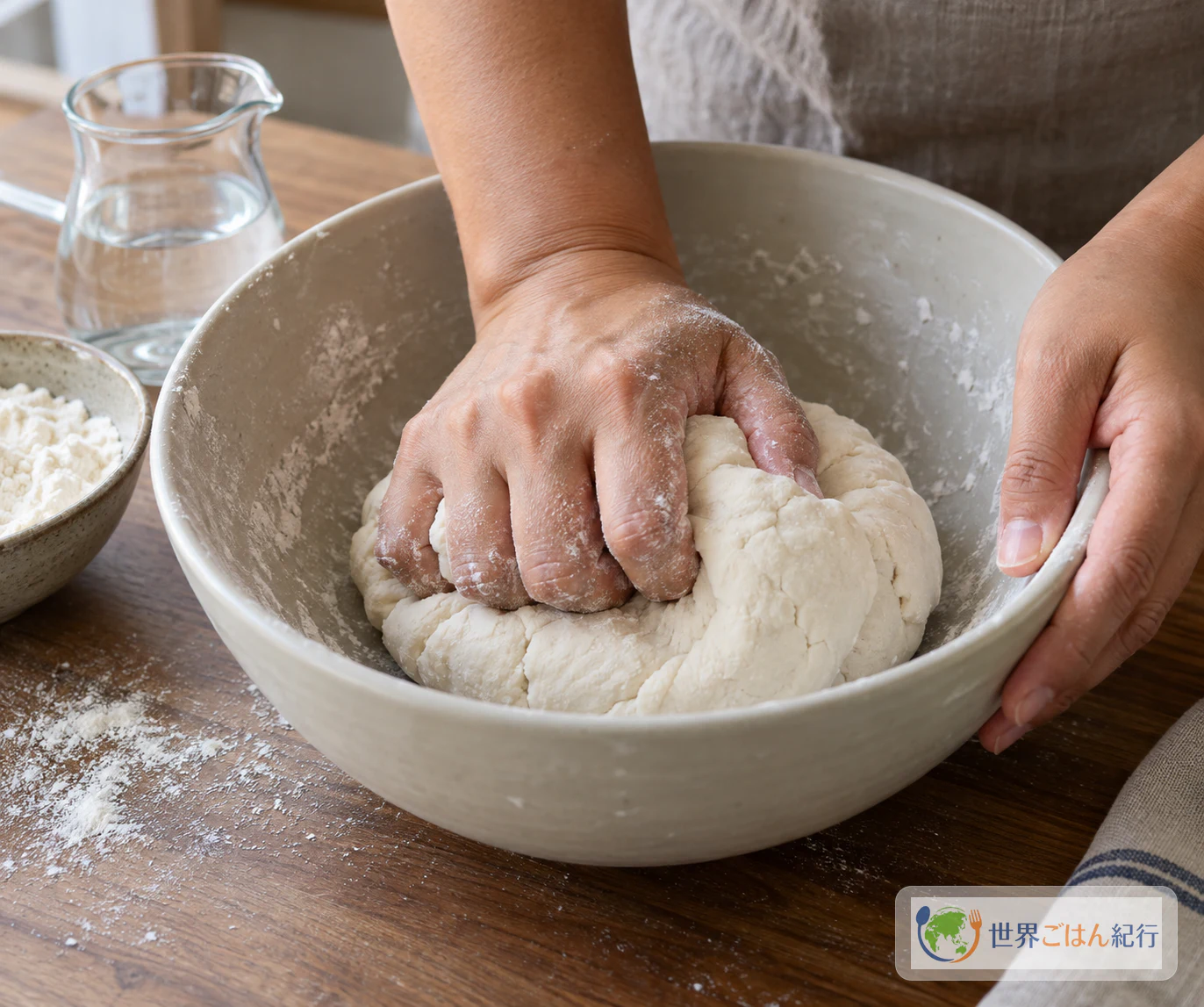
Check the dough by how it feels in your hand, and check the pot by whether the pieces are cooked and the porridge has thickened.
At the Table: Sweet Porridge, Savory Sauce
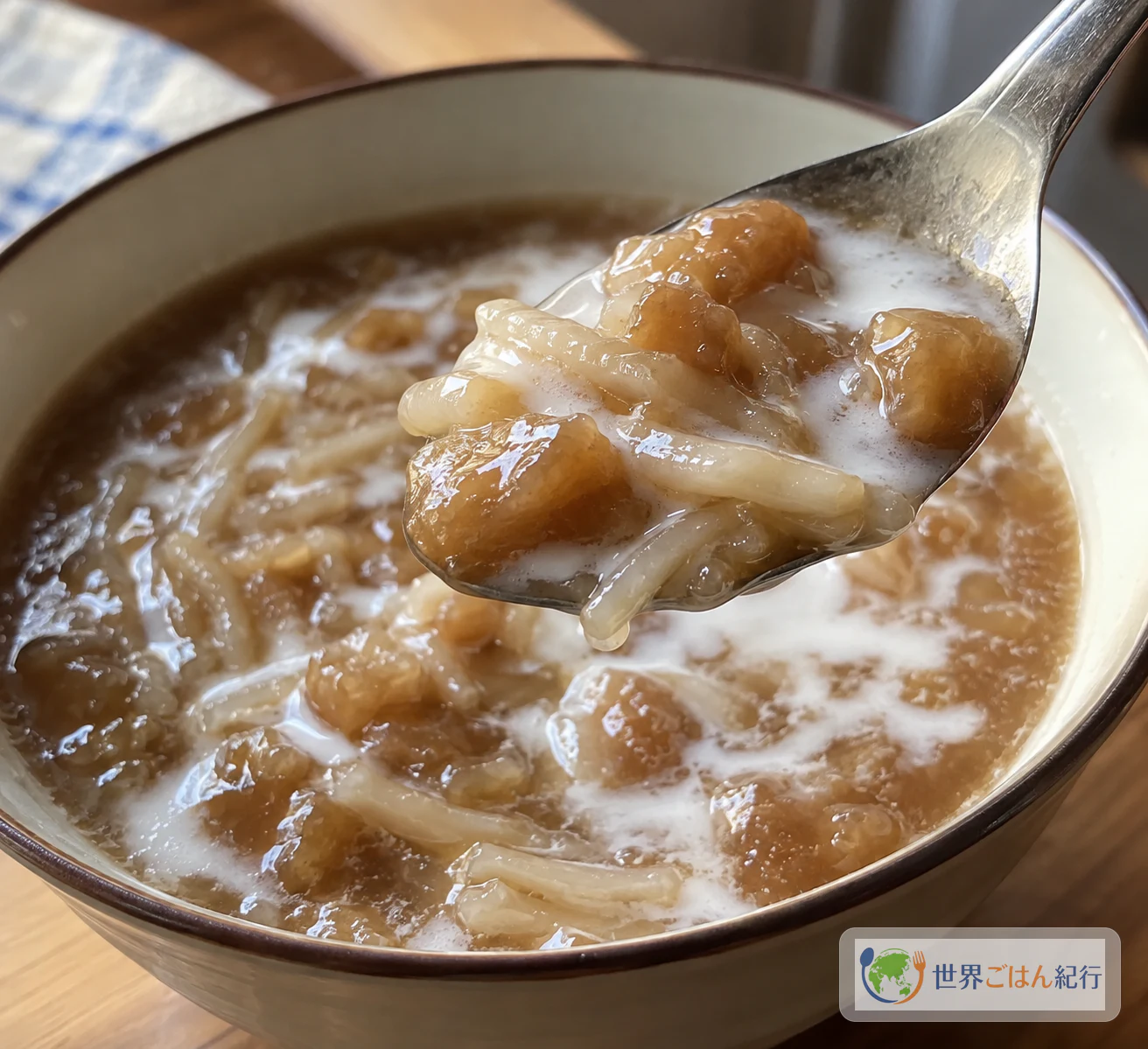
Palm sugar gives the porridge its sweetness, while the coconut milk and salt add richness and a savory edge. Scoop through the sauce and porridge together to get both in one bite.
Troubleshooting: Dough and Pot
| Problem | Likely cause | What to do |
|---|---|---|
| The dough is too firm to press | Too little water | If you have used less than 90 ml, work in more of the water a little at a time |
| The dough runs through the holes | Too much water, or water added too quickly | Add the water gradually next time, stopping as soon as the dough holds together |
| The dough forms long, even noodles | The shape is moving toward cendol | Press small amounts with a spoon so the pieces stay short and uneven |
| The pot is scorching or separating | Heat too high, or the bottom left unstirred | Lower the heat and stir the bottom of the pot from time to time |
Variations: Other Recipes and the Same Name Elsewhere
These are separate versions rather than adjustments to the recipe above, so don't mix their amounts or methods with it.
| Version | What it records | How it differs |
|---|---|---|
| Budaya Indonesia post | Rice flour 200 g, wheat flour 50 g, water 200 ml, kapur sirih 3 sdm, santan 1500 ml, gula merah 150 g, water 100 ml, pandan 2 leaves, white sugar and salt to taste | Different ratios and liquid, with white sugar alongside the palm sugar |
| Sambas Malay bubbur ayak | Rice flour, coconut milk, salt, coconut sugar and water, pressed through a sieve over a pan and then cooked | A vocabulary study with no measured recipe; it does not list wheat flour |
Descriptions of a Jambi Bubur Ayak also exist, using wheat and rice flours pushed through a grater into long shapes. The shared name is not a reason to move ingredients or cultural context from one region's dish to another.
Background: Names, Region and What the Sources Can Support
Wikidata's entry for Bubur ayak gives Banjarmasin as its location and Indonesia as its country of origin, and lists Bubur saring and Bubur baayak as other names. Its statements carry no references, so we treat the entry as a clue to the dish's identity rather than as evidence of its history.
The Budaya Indonesia post, by a contributor named Oase, describes the Banjarmasin and South Kalimantan dish as sweet, rich with coconut milk, grainy and thick. It also connects the Banjar word ayak with sifting or shaking something through a sieve. That post credits other websites and Cookpad, so we report the word's meaning as the contributor's explanation, not as an established origin.
The Cookpad cook recalls neighbors making the dish together in their home region when they were young. That is one person's memory, not evidence of a custom across the region. The cook also notes forgetting to photograph the sieve-pressing stage, which is why that stage is shown here by illustration.
The Sambas study documents a similarly named local food in another Malay-speaking setting. It does not prove anything about where the Banjar version came from. Two practical suggestions in our method are our own and not from the Cookpad post: stirring slowly from the bottom to prevent scorching, and leaving the sauce unmixed in the bowl.
Frequently Asked Questions
If you are unsure about a substitution, check the limewater first. It should always be a product sold as food.
Are bubur ayak and bubur baayak the same dish?
Wikidata links the names, along with bubur saring, under one Banjarmasin entry. However, dishes with similar names can differ by region, as the Sambas record shows. Bubur ayak is also not bubur ayam, a savory dish that simply shares the word bubur.
How many servings does this make?
We can't say. The Cookpad post gives no number of servings, so we don't state a yield.
What is air kapur sirih?
It is the limewater used in this dough. The Cookpad post doesn't name a brand or strength, so use a product sold as food and follow its label. Never replace it with non-food lime.
Why aren't sdm and sdt converted?
They are the units used in the Cookpad recipe, and we don't assign them a fixed volume. For that reason, this article gives no conversion to Japanese or US spoons.
How big should the sieve holes be?
The Cookpad post gives no measurement. Choose a coarse-holed sieve that lets you press the dough through in short, uneven pieces.
Can I use diluted store-bought coconut milk?
The Cookpad cook adds a note with an example of diluting a store-bought product, but we keep that separate from this recipe. The amounts here are simply 500 ml thin coconut milk and 100 ml thick coconut milk.
Can I leave out the pandan or the white sauce?
Both are part of this version, so leaving out either one moves the dish away from this form. We have not verified how the result changes without the pandan or the sauce, so we don't list either as a variation.
How long does it keep?
We don't give a storage period, freezing advice or reheating method, because our sources don't provide reliable guidance on them.
Sources
- Wikidata, "Bubur ayak (Q123503198)." Used to help identify the dish: its Banjarmasin location, Indonesian origin and the other names Bubur saring and Bubur baayak. Its statements carry no references. https://www.wikidata.org/wiki/Q123503198
- Dapur ala mama jasmine / Cookpad, "Resep Bubur Baayak (Khas Banjar)." A home cook's recipe, used for the ingredients, amounts and method, the sweet and savory flavor pairing, and the cook's description of the dish as a food from home. https://cookpad.com/id/resep/13711782
- Oase / Budaya Indonesia, "Bubur Ba'ayak (Bubur Saring)." A secondary post, used for its description of the Banjarmasin and South Kalimantan dish, the contributor's explanation of ayak, and its separate recipe. https://budaya-indonesia.org/Bubur-Baayak/
- Jurnal Pendidikan dan Pembelajaran Khatulistiwa / Universitas Tanjungpura, "Kosakata Makanan Tradisional Melayu Sambas." A vocabulary study, used for the Sambas Malay bubbur ayak and its distinction from the Banjarmasin dish. https://jurnal.untan.ac.id/index.php/jpdpb/article/download/6134/6235