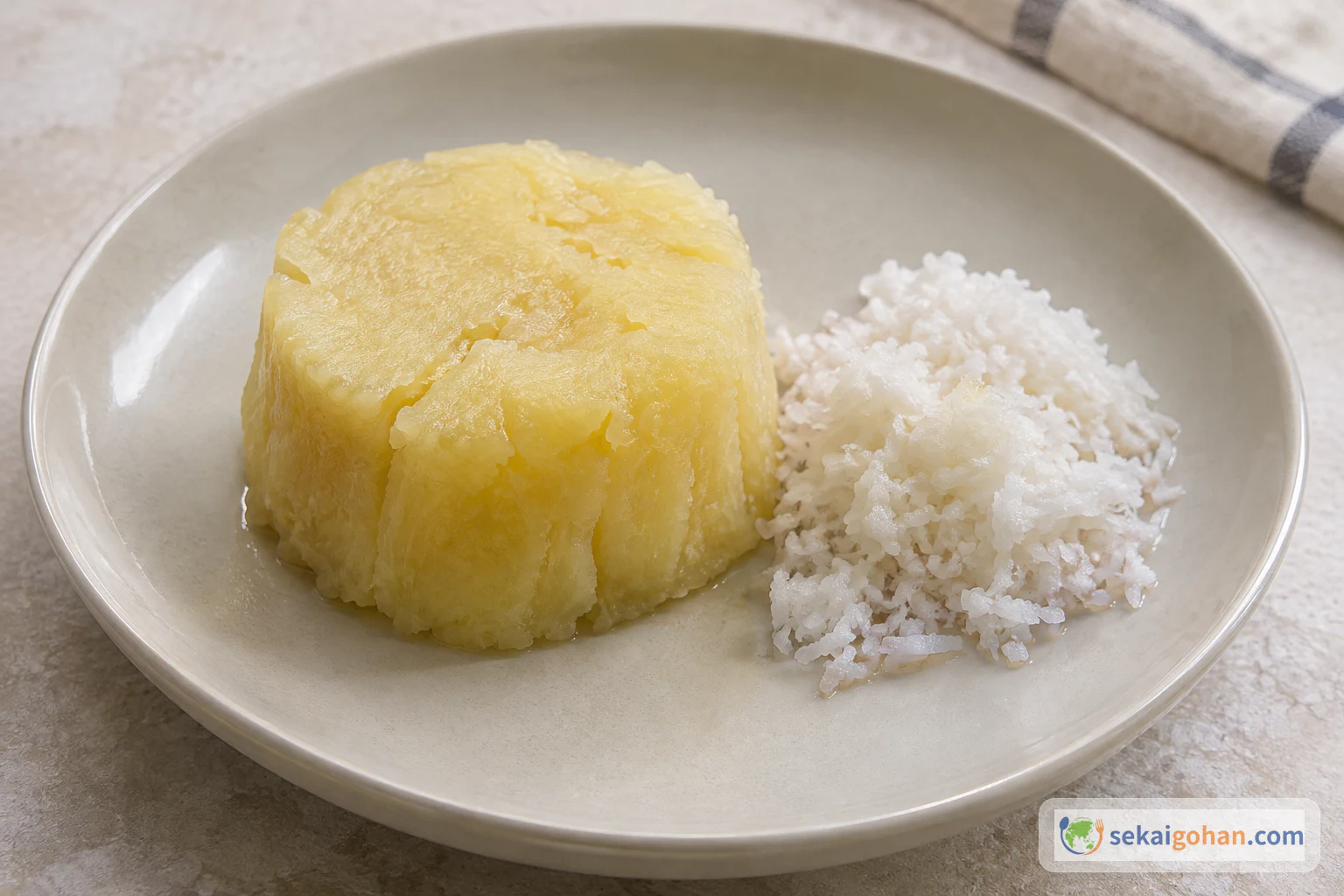
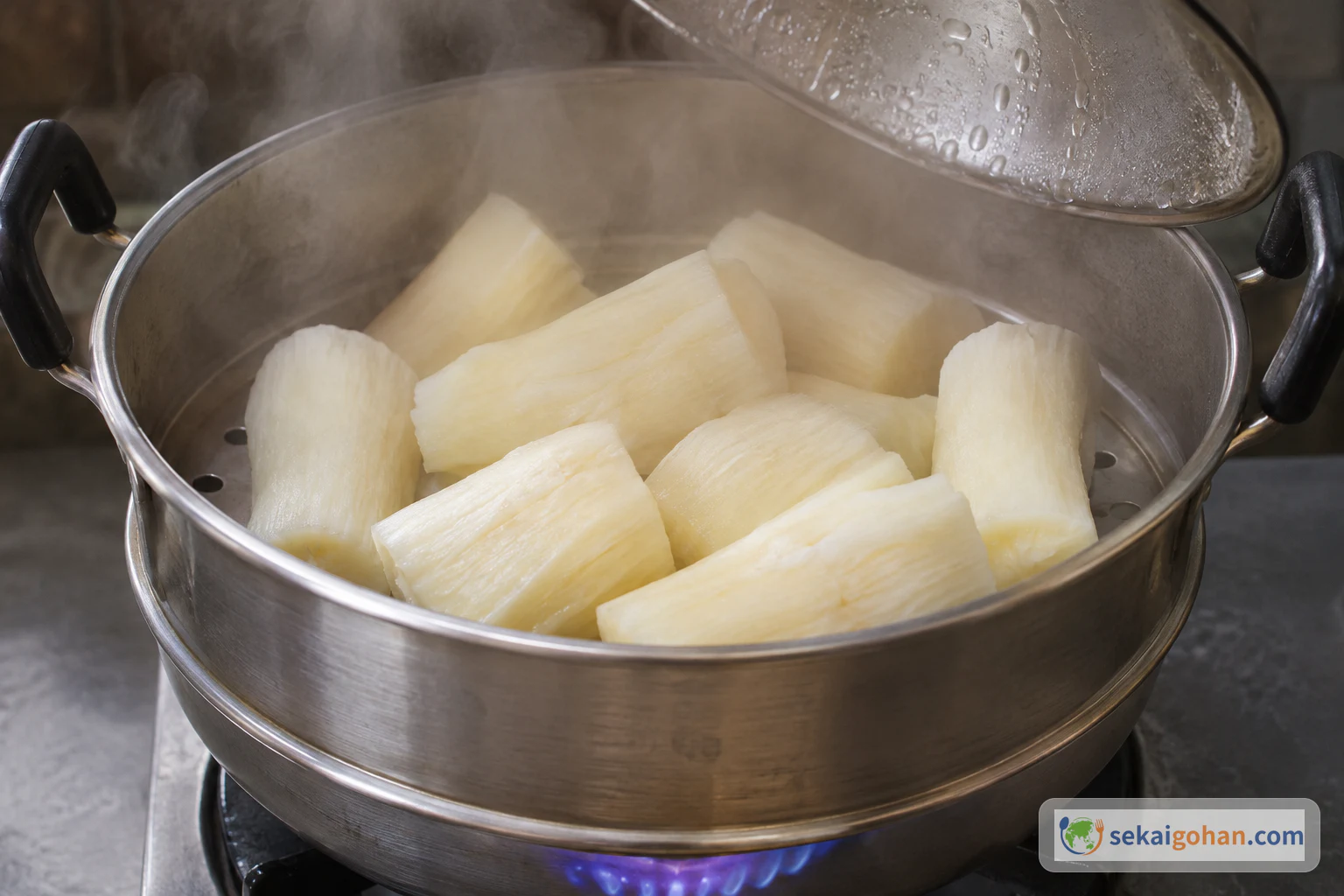
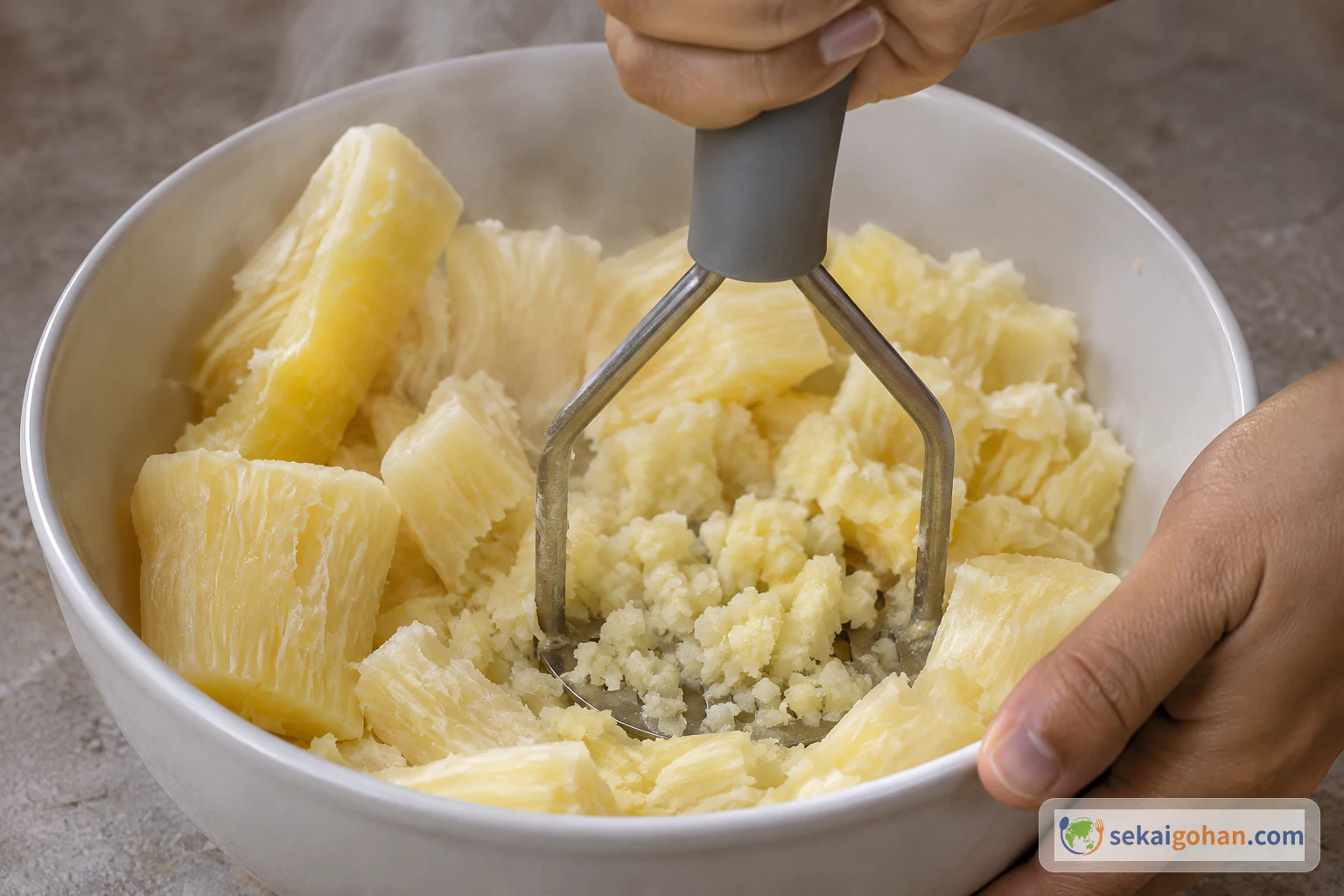
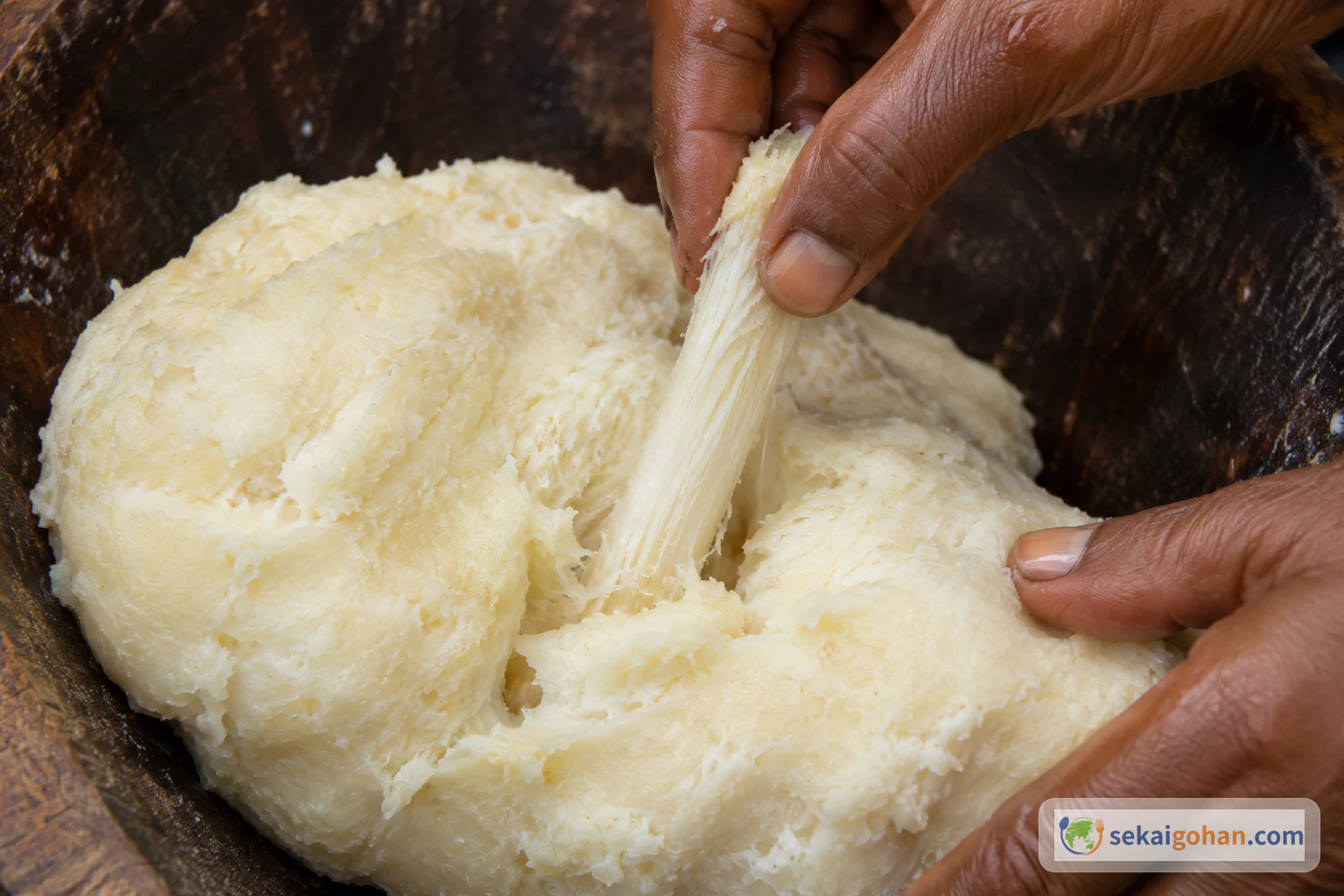
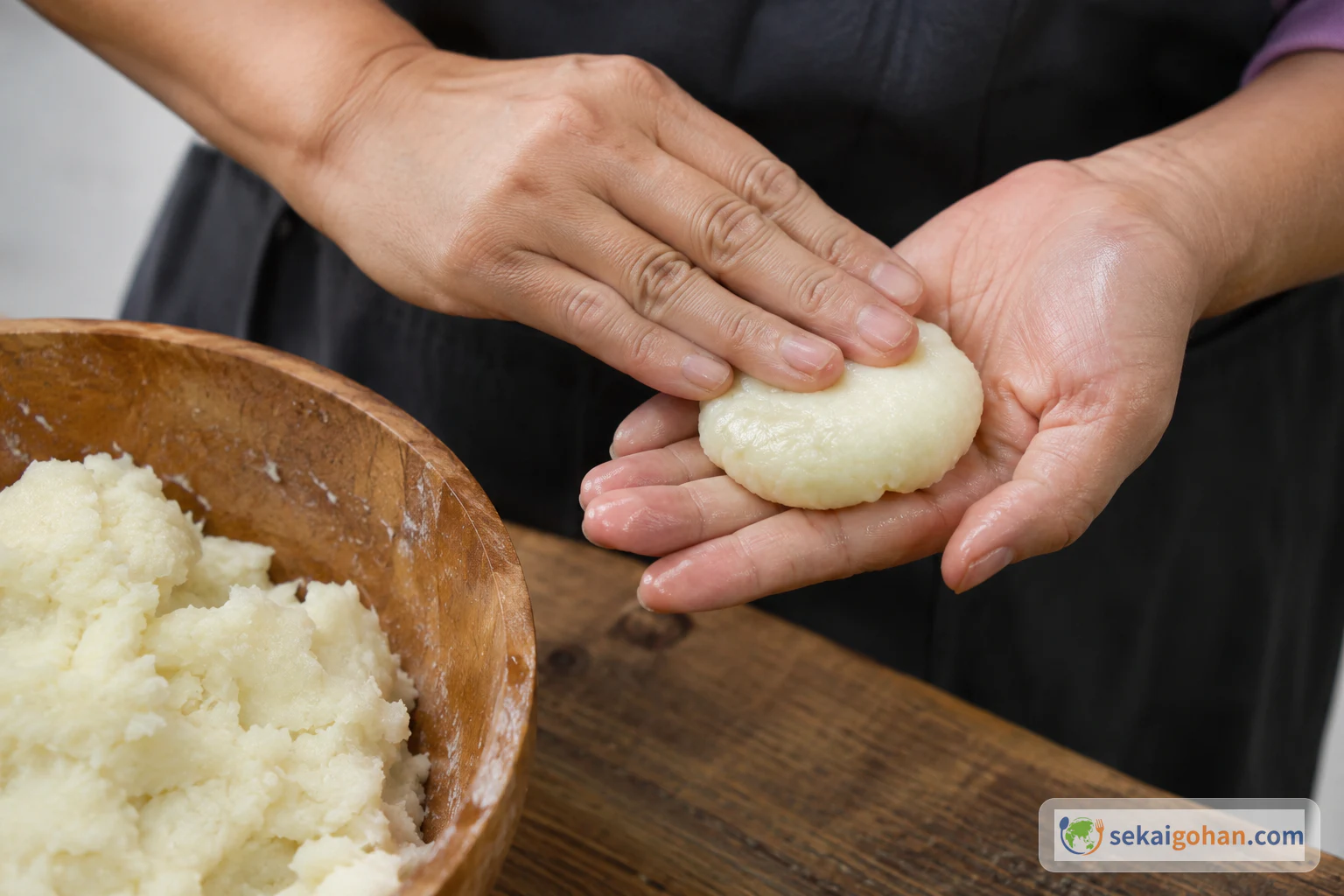
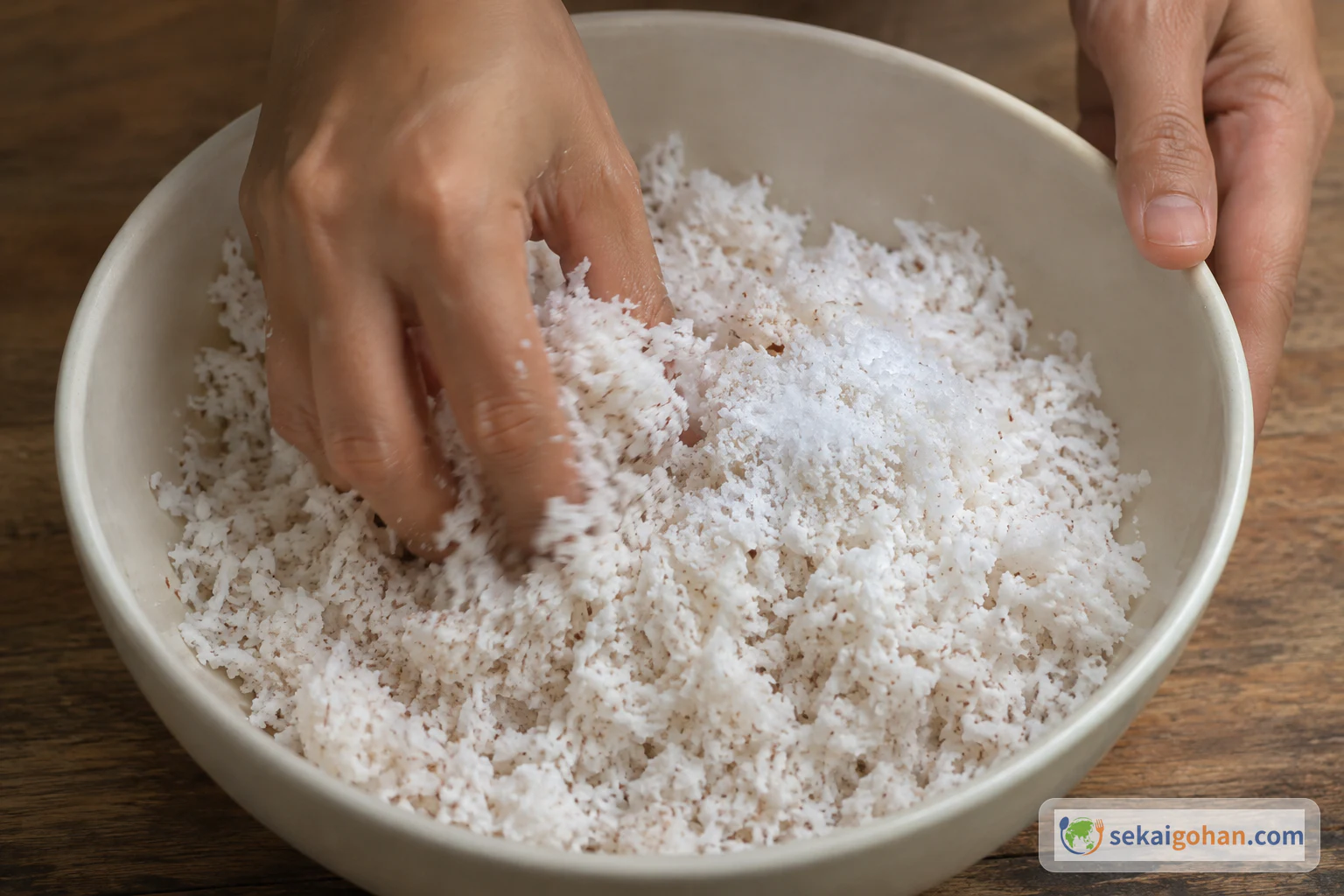
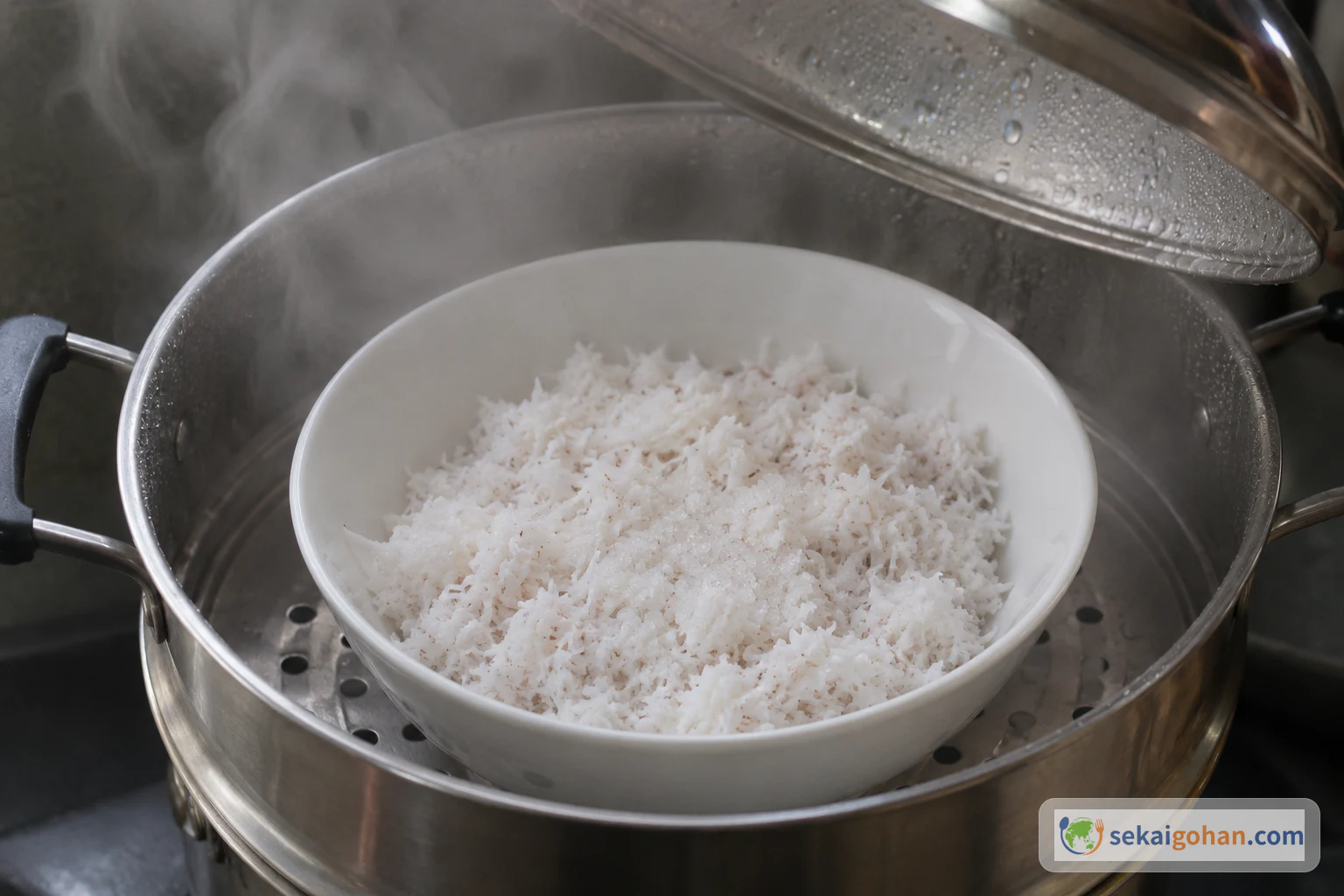
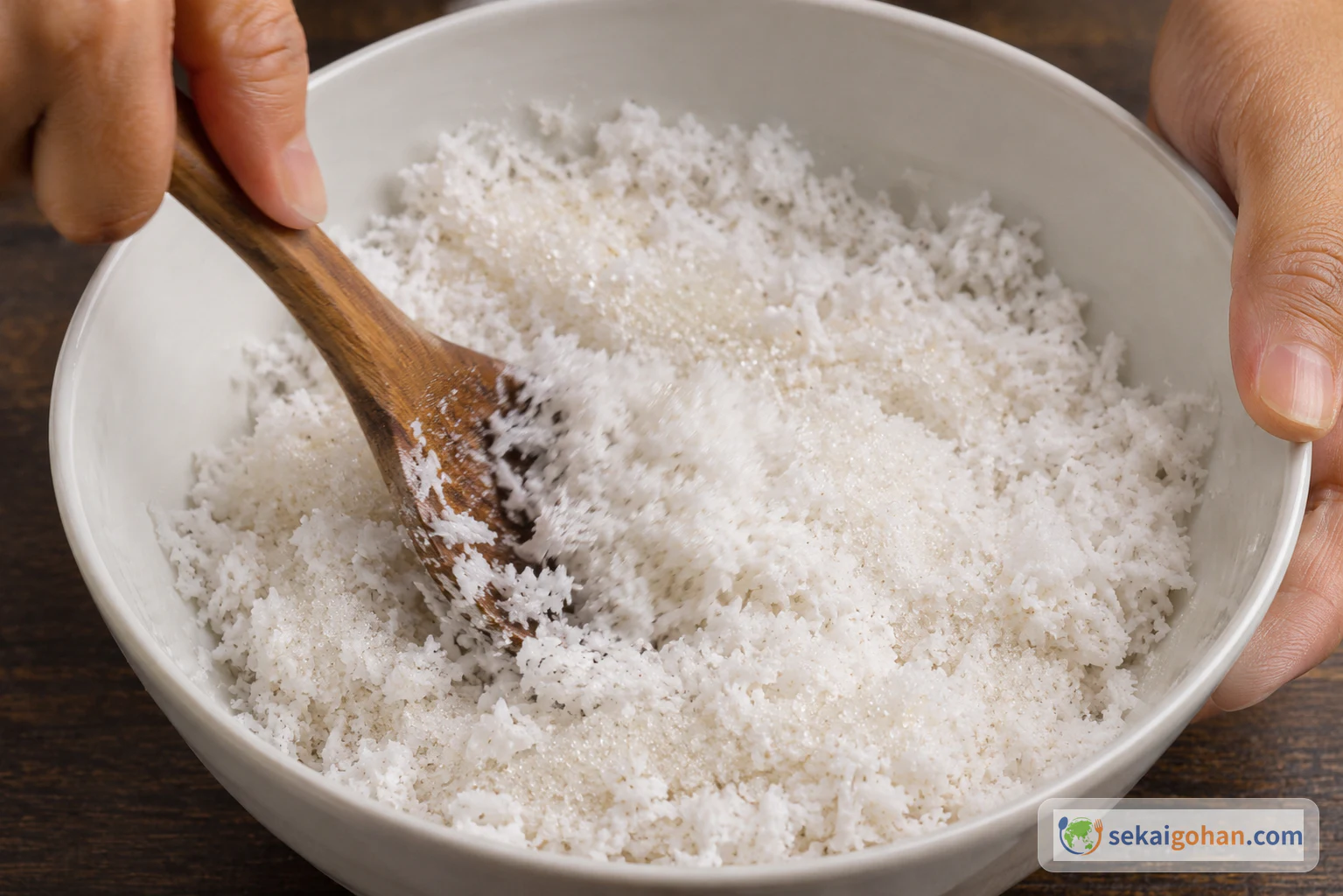
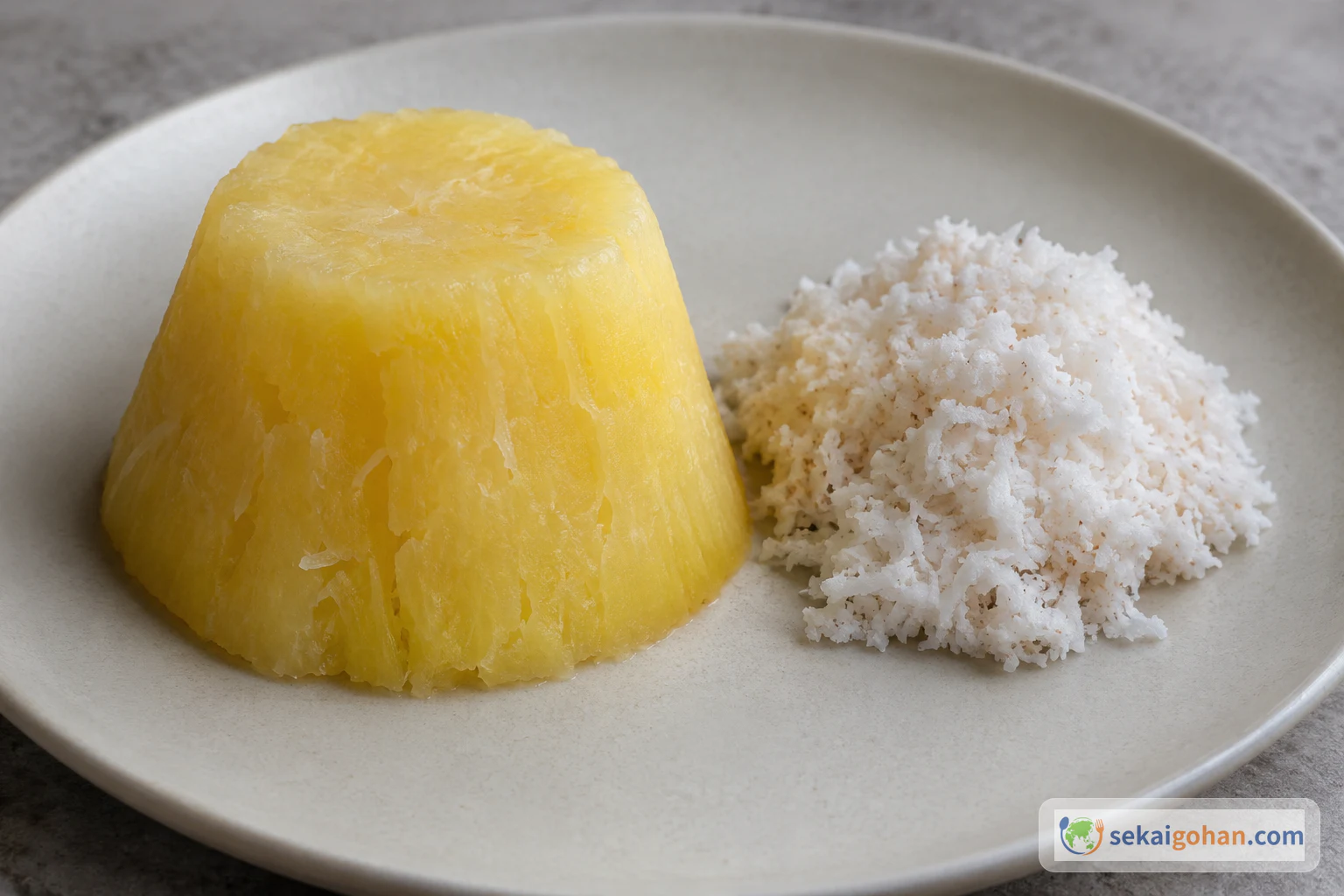
The lid comes off the steamer and the cassava has gone from chalky white to soft and yielding, steam curling off the pieces as you tip them into a bowl. You pound them right away, while they are still almost too hot to touch, until they press together into one smooth mass. Getuk pero is that mass, shaped by hand and set beside a heap of grated coconut that has been steamed with a pinch of salt and sweetened afterwards. The cassava stays plain and earthy, and all the sweetness lives in the coconut, so each bite is mild, starchy and then salty-sweet as the coconut catches up.
A Market Snack Built in Two Parts
The author of the recipe followed here says getuk pero is found in the traditional markets of Jepara, in Indonesia. The pero in the name belongs to this particular snack, and several other cassava sweets carry the getuk name with their own methods and flavours. Where getuk pero was first made and how it got its name are not settled, so the dish is best understood through what goes on the plate.
What sets this version apart is the split. The cassava gets no sugar at all. It is steamed, pounded and shaped on its own, and the coconut is prepared separately, steamed with salt for a short time and only then stirred with sugar. On the plate, the two stay side by side, and the eater brings them together.
Households make it differently. In one family approach, sugar and grated coconut go straight into the hot pounded cassava, and the sweetened mixture is pressed and cut or moulded. In another, half of the coconut is grated and the other half is roasted until charred, then combined with the pounded cassava and sweetened to taste. The version here keeps the cassava clean and the coconut separate, which makes it the simplest to read: you taste cassava, then coconut, then the little bit of salt that ties them.
Two things, kept apart: plain shaped cassava, and sweetened steamed coconut. Mixing them is the eater's job at the table, one bite at a time.
For more dishes from the same country, see the Indonesia collection.
Ingredients
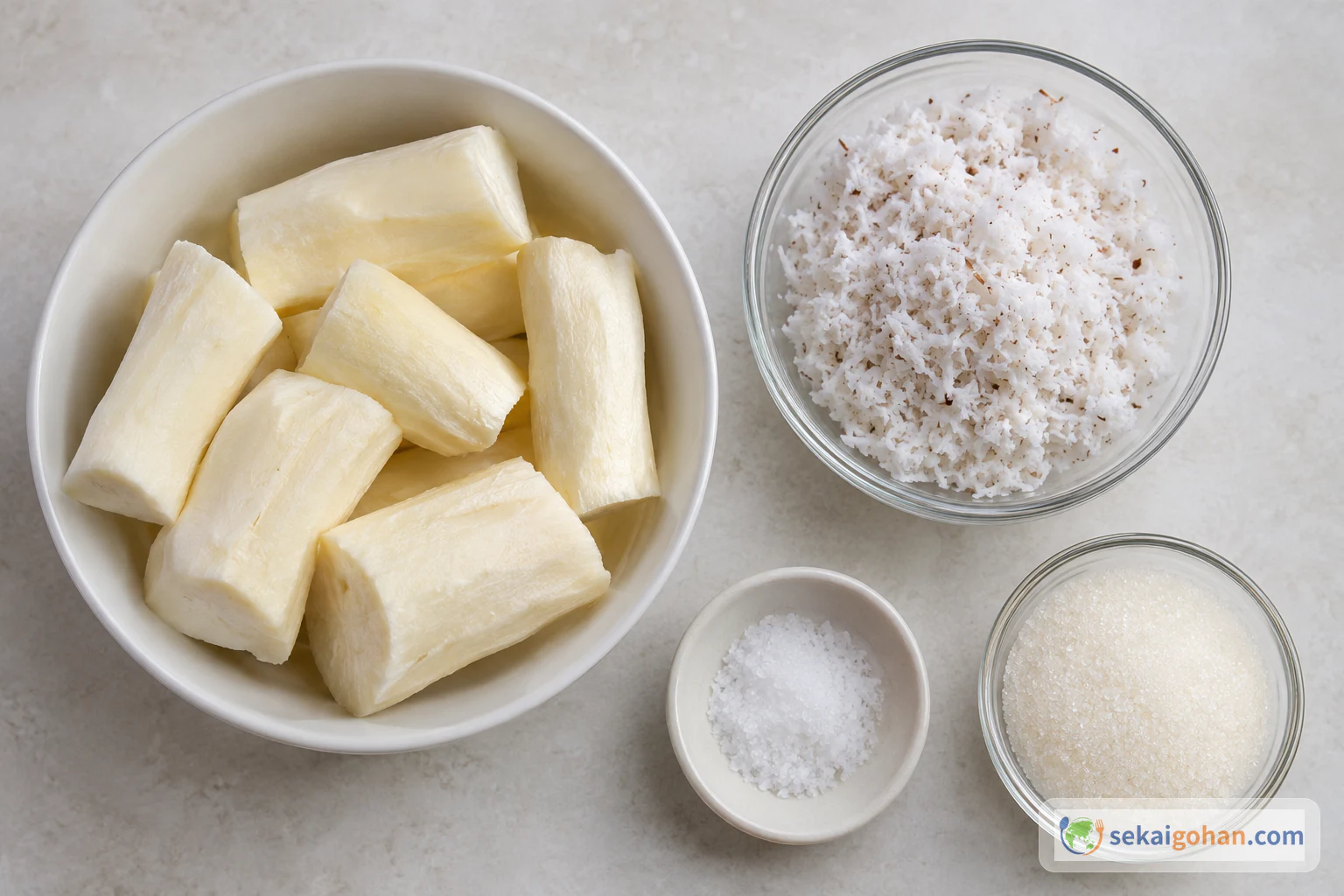
The salt and sugar both belong to the coconut. The quarter teaspoon of salt seasons the coconut before it goes into the steamer, and the sugar waits until the steaming is done.
This snack contains coconut. Check with anyone at the table who avoids coconut before serving.
Equipment
- Steamer with a lid
- Heatproof bowl that fits inside the steamer, for the coconut
- Sturdy mixing bowl
- Masher or pestle for pounding
- Paring knife or vegetable peeler
- Serving plates
Choosing What to Buy
Cassava is the one ingredient that decides the result, because nothing else in the cassava portion hides it. Plan to peel away the whole skin and wash the cassava before steaming.
For the coconut, use grated coconut flesh. It is the only source of sweetness and richness on the plate, so its flavour carries the whole snack. Plain granulated sugar keeps that coconut flavour clear, and it is what this version uses.
To keep the snack tasting the way it does in this version, hold on to three choices: the cassava stays unsweetened, the coconut is steamed with salt, and the sugar goes in only after steaming. Leave out palm sugar, food colouring, butter, margarine and milk. None of them is part of this plate.
Method
The work runs in one line. Steam the cassava first, then pound, clean and shape it while it is still warm. Once the shapes are resting on a plate, mix and steam the coconut, sweeten it, and serve the two together. The only hands-off stretch is the steaming; the pounding has to happen fast.
When It Goes Wrong
| What you see | Why | What to do |
|---|---|---|
| The cassava stays lumpy and will not come together | It was not steamed all the way to tender, or it cooled before pounding | Steam the cassava until it is tender all the way through, and pound straight from the steamer |
| Stringy bits run through the shaped cassava | The core was left in | Work through the mash with your fingers and pull out every fibrous strand before shaping |
| Shapes crack or crumble at the edges | They were pressed too lightly | Press each portion firmly with your hands until the surface closes |
| The cassava tastes sweet and the coconut tastes flat | Sugar went into the cassava instead of the coconut | Keep the cassava plain and put all the sugar into the steamed coconut |
| The coconut tastes salty in some bites and bland in others | The salt was not mixed through before steaming | Rub the salt into the coconut with your fingers until it is spread evenly |
Serving and Variations
At the table
Getuk pero is a snack, eaten the way market snacks are: a few pieces on a plate, picked up by hand, each one dragged through the coconut. Serve the coconut on the side and let each person take as much as they want with every bite. The contrast between the plain cassava and the salty-sweet coconut is the point, so keep the plate uncluttered.
Other ways households make it
- Sweetened dough. Mix the sugar and grated coconut into the hot pounded cassava, then press and cut or mould it. The whole piece turns sweet, and the coconut becomes part of the dough instead of a separate accompaniment.
- Charred coconut. Grate half of the coconut and roast the other half until charred, then combine the coconut with the pounded cassava and sweeten to taste. The roasted half brings a darker, smoky edge to the snack.
Frequently asked questions
What shape should the cassava be?
Any shape you like. Form it by hand into simple pieces; a special mould is unnecessary. Press each piece firmly so it holds together on the plate.
Can I steam the coconut and the cassava at the same time?
Keep them in sequence. The cassava has to be pounded the moment it leaves the steamer, and the coconut needs its own 10 minutes in the steamer, so steam and shape the cassava first, then steam the coconut.
Is getuk pero the same as other getuk snacks?
Several cassava snacks share the getuk name, and each has its own ingredients and method. Getuk pero is its own snack, and the method here keeps it apart from the others: plain cassava with sweetened steamed coconut beside it.