Jamu Is Not the Name of One Drink
This is one sweet-sour drink from the wide jamu family, presented as an ordinary food recipe. It makes no claims about health benefits and is not advice on medicinal use.
Nunuk Sri Rahayu, the Solo-born author of the Cook Me Indonesian recipe used here, remembers jamu through people. The author's grandmother prepared it on Sunday mornings, and neighborhood sellers carried bottles in a basket on their backs, choosing one and pouring from it. That is one person's childhood memory, not a description of how all of Java or Indonesia drinks jamu, but it is a good way into the subject: a row of bottles, and more than one drink to choose from.
Rahayu explains jamu as a general term for preparations made with various plants. So "how to make jamu" has no single answer, and this article does not try to survey the whole family. It makes one specific type, jamu kunyit asam. Kunyit (also kunir) means turmeric, and asam means tamarind.
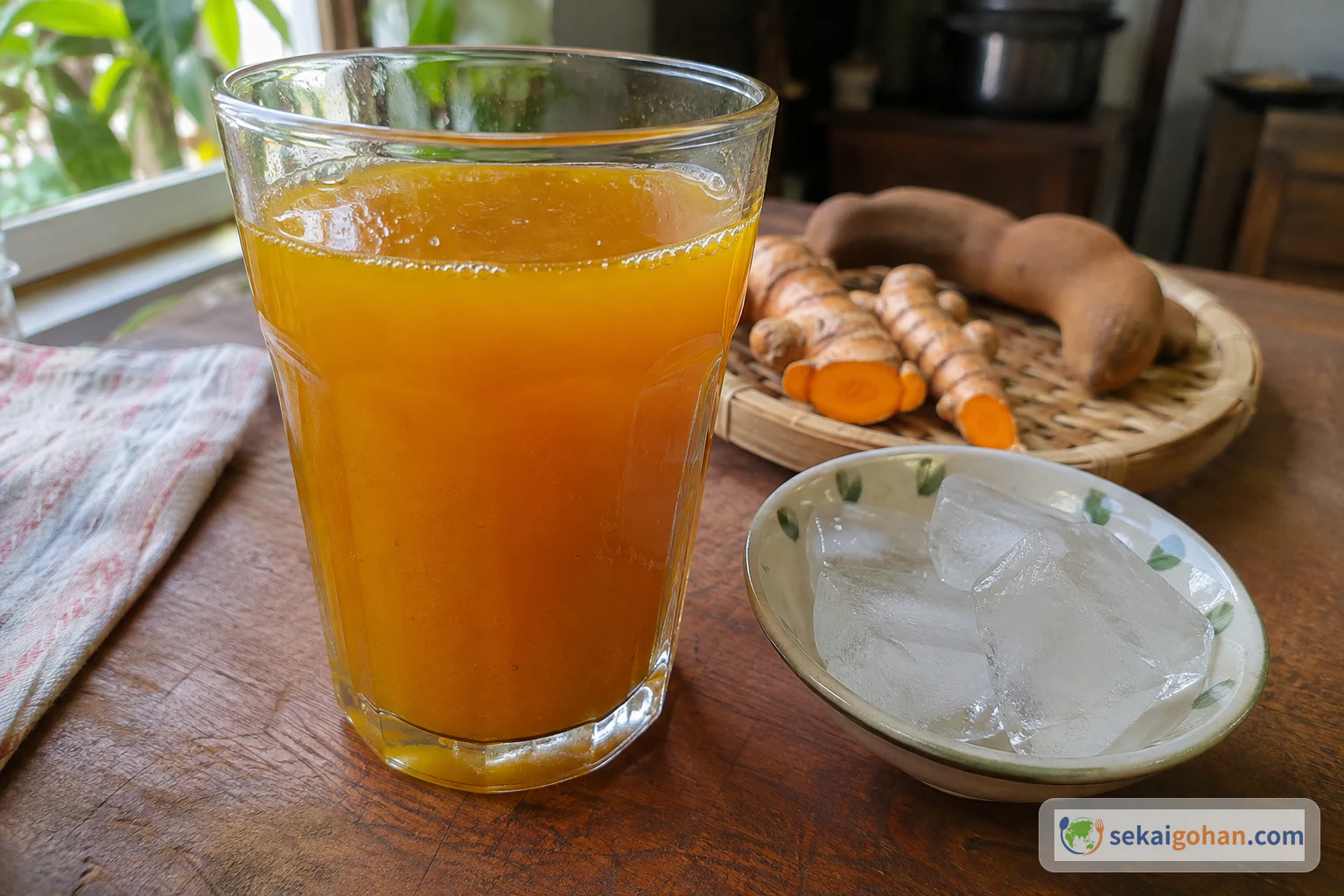
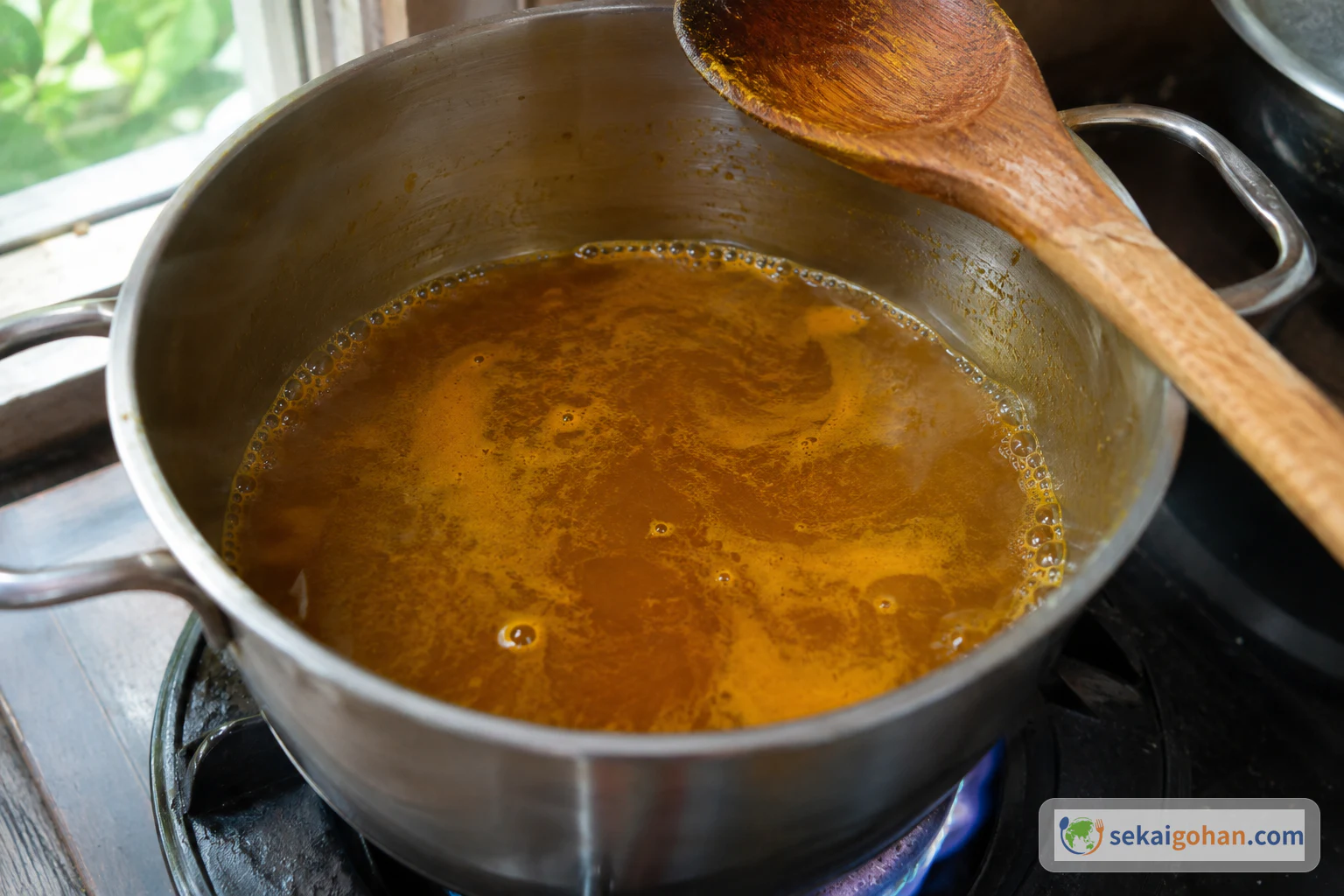
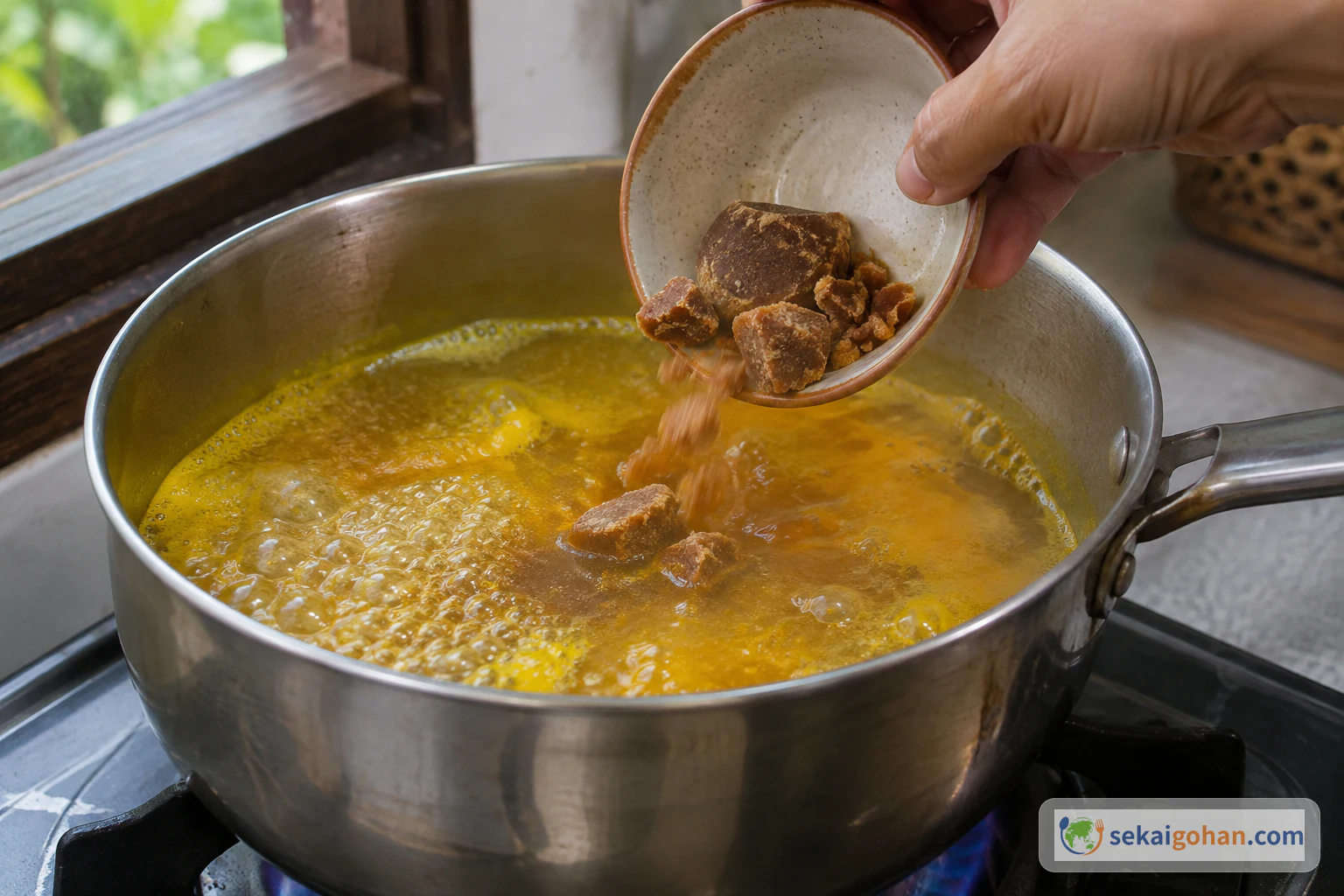
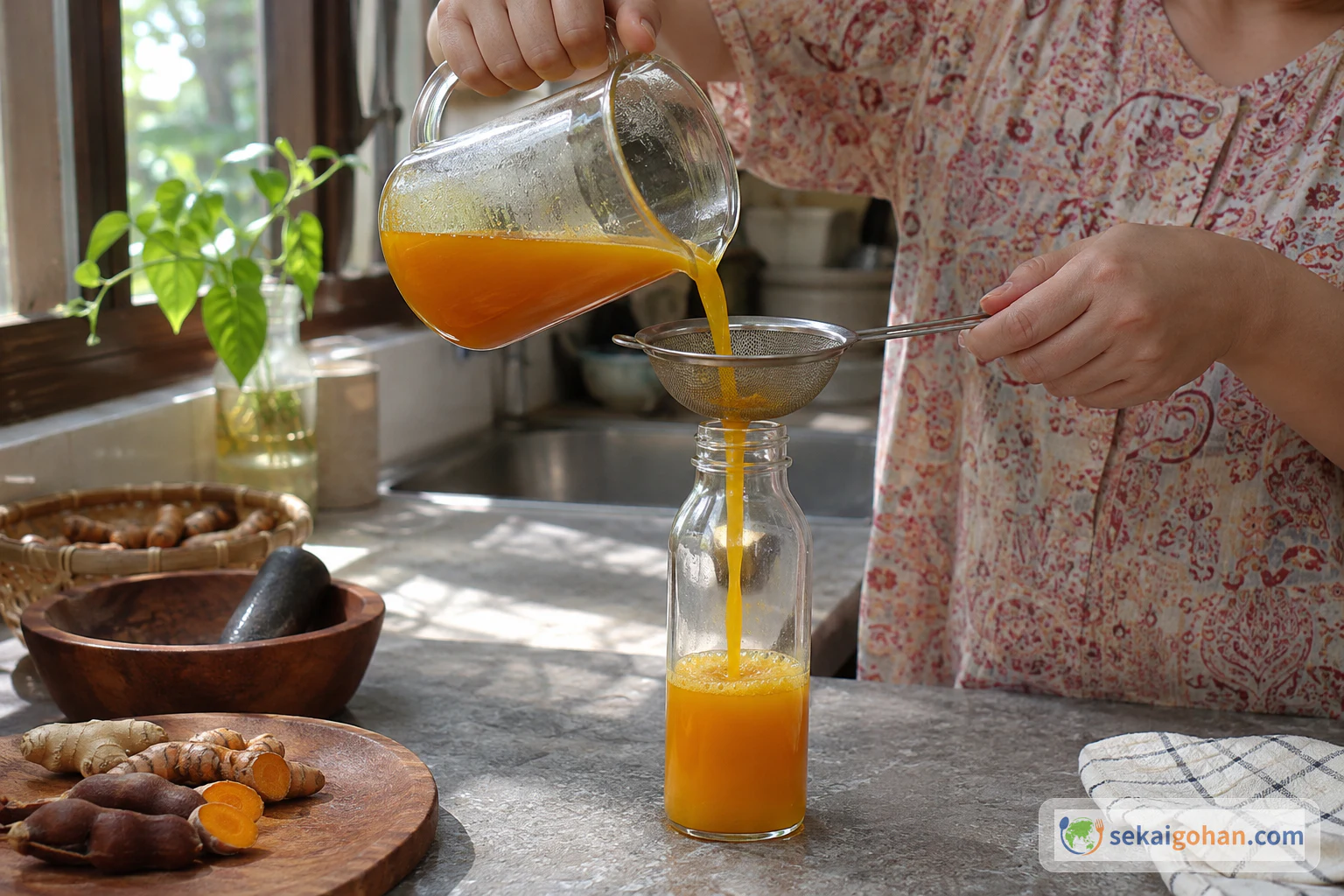
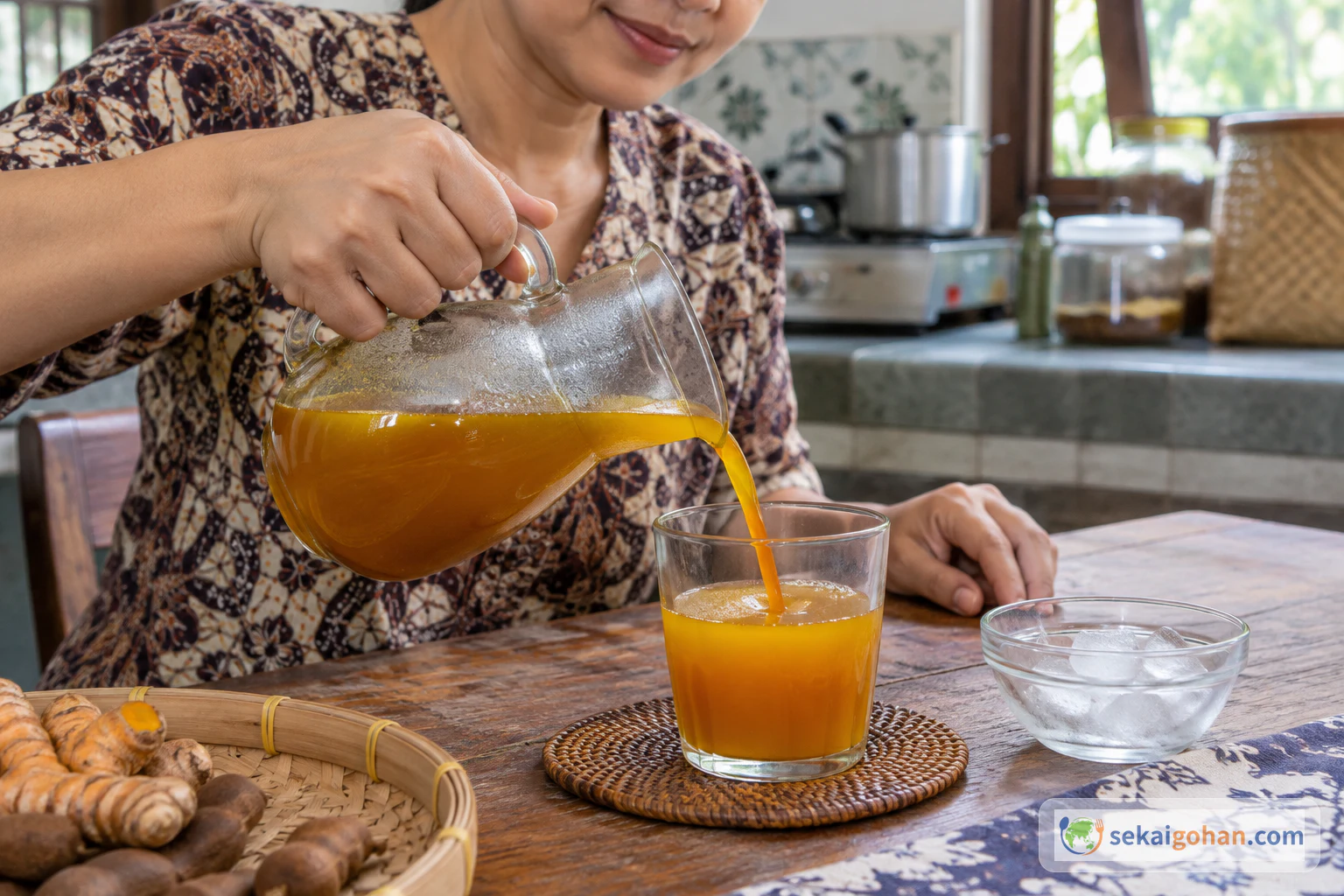
The drink is simmered from fresh turmeric, tamarind and palm sugar. Rahayu describes it as sweet and sour with a strong turmeric flavor, and it is served cold or at room temperature. For more of the country's food, browse our Indonesian recipes.
The formula and order of work come from a single recipe, Cook Me Indonesian's Jamu Kunyit Asam, and this recipe has not been kitchen-tested by Sekai Gohan. Three details are worth knowing before you start:
- Water: the recipe lists 2 L in total, then 500 ml for blending, 100 ml for the tamarind, and the rest for the pot. The 1.4 L figure is our own arithmetic from those numbers, not a separately printed measure.
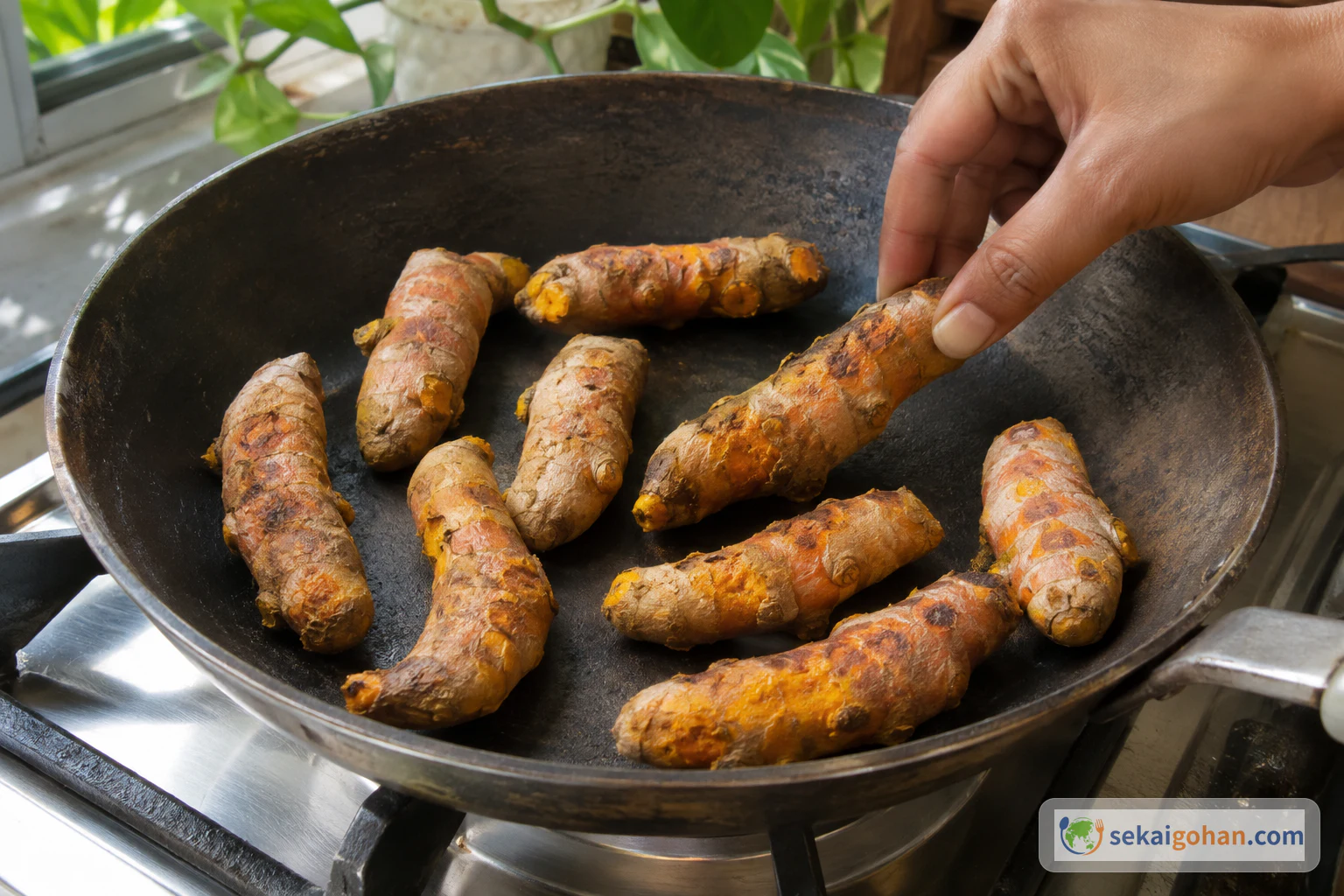
- Pan: the recipe says to roast the turmeric over the stove without naming a vessel. The dry skillet is our choice, and the roughly 3 minutes per side is the recipe's guide, not a time measured in that pan.
- Yield and time: the 6 servings is the recipe's listed count, not a measured bottled volume. The page also lists 15 minutes prep, 30 minutes cooking and 45 minutes total, which are its published figures and may differ in your kitchen.
Ingredients: Fresh Turmeric, Tamarind, Palm Sugar and Water
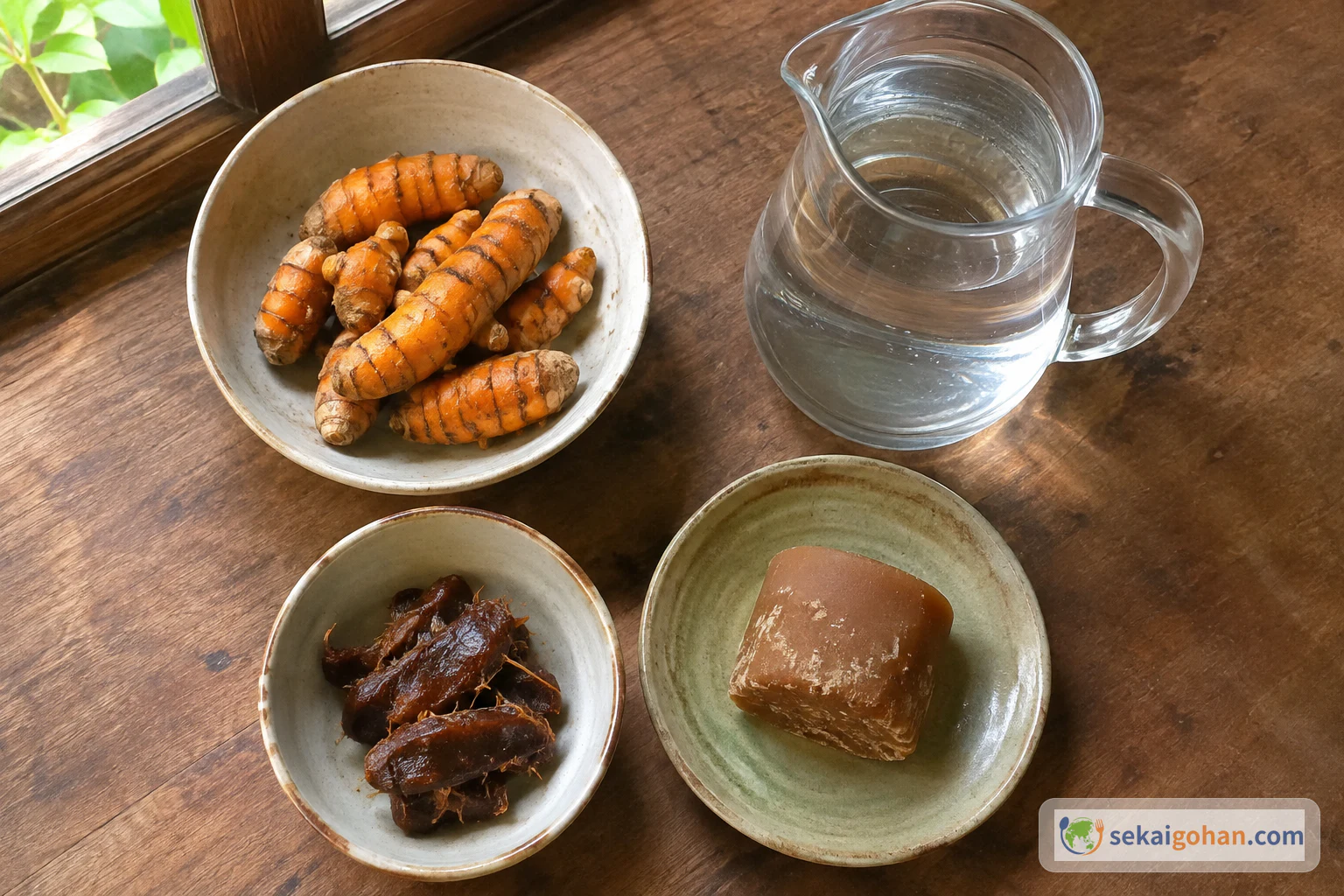
Makes 6 servings.
Choosing and Substituting
Useful names to search for are fresh turmeric or kunyit, tamarind or asam jawa, and palm sugar or gula aren. Import grocers and online shops are the likeliest places to find them.
- Fresh turmeric: use the fresh root. Turmeric powder differs in aroma and moisture, so don't swap it into these amounts as though it were the same thing.
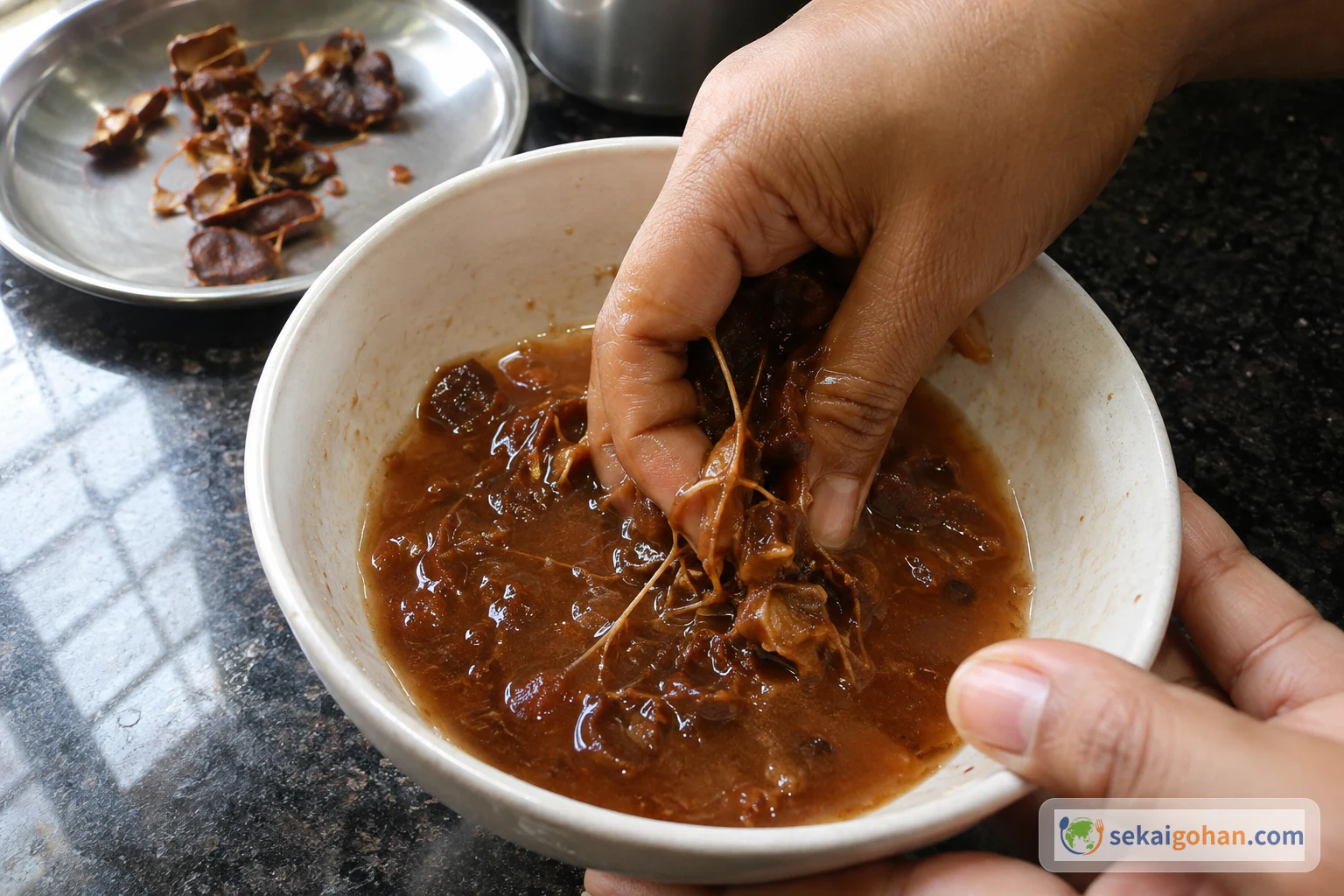
- Tamarind: unsweetened tamarind pulp is a good choice. Check whether it contains seeds and how concentrated it is, because a different product will change the sourness and moisture.
- Palm sugar: a dark sugar such as Japanese kokuto is a possible stand-in, but its flavor and color differ, so the result will be a different drink.
- Other additions: this version has no salt, ginger, lemon, honey or oil.
Check the labels on packaged tamarind and palm sugar if you are avoiding particular allergens, including any cross-contact statements.
Equipment
- Skillet suitable for your stove
- Cutting board that is easy to clean, plus a knife
- Blender
- Small bowl for the tamarind
- Pot
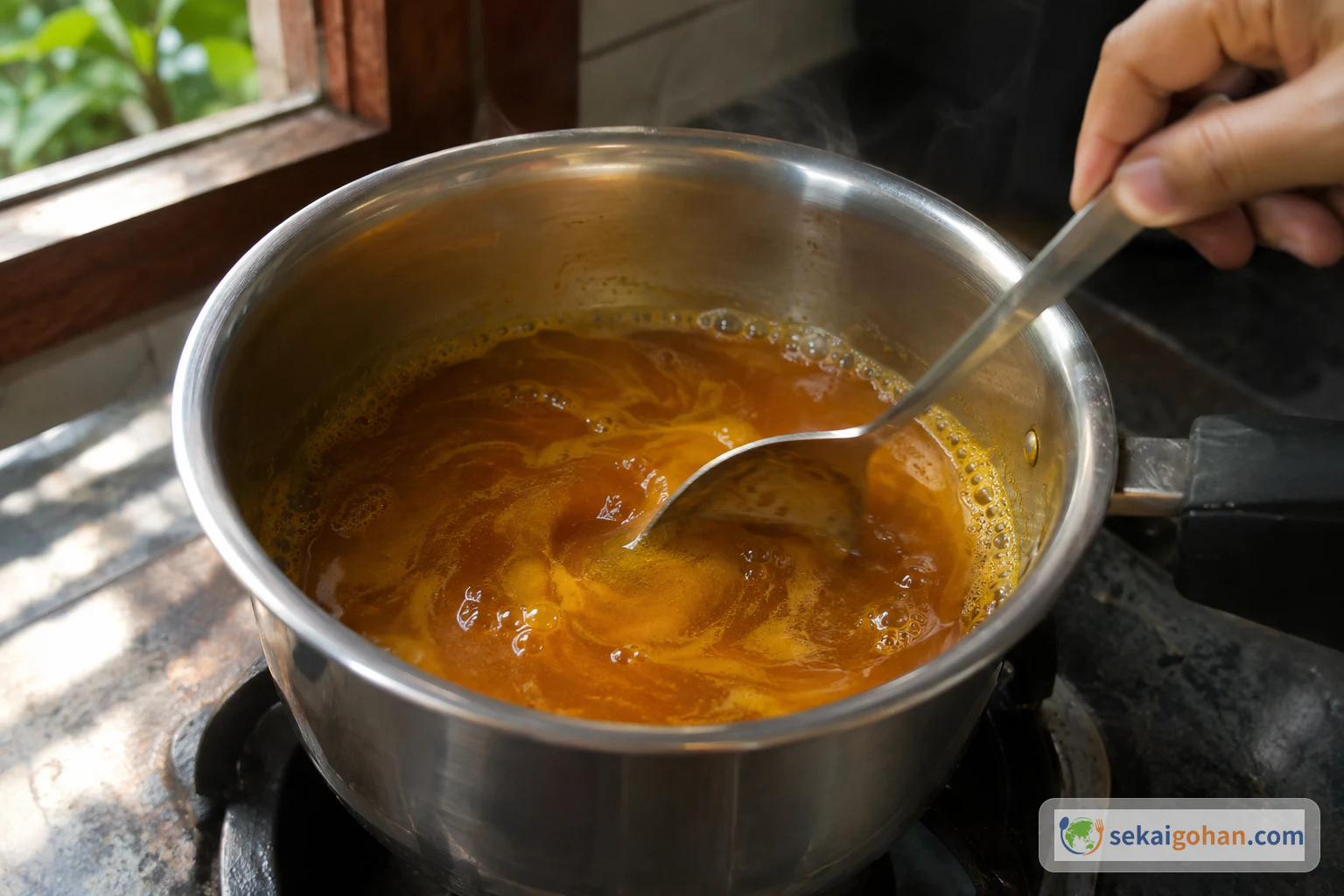
- Spoon for stirring
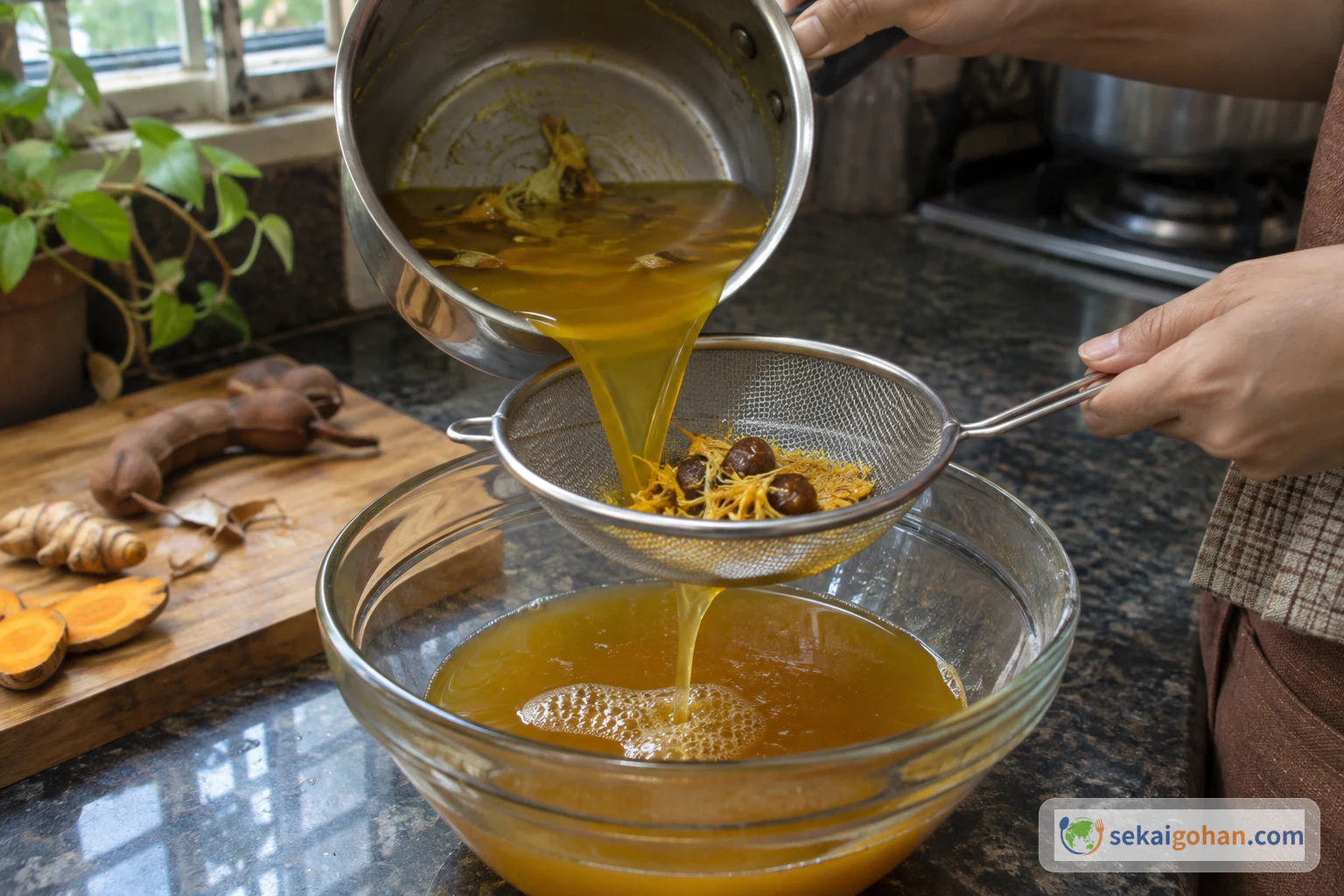
- Fine-mesh strainer and a clean bowl
- Clean glass bottle or other clean container
- Gloves, if you want to protect your hands from turmeric stains
Fixing Common Problems
| Problem | What to look at | What to do |
|---|---|---|
| The turmeric is charring | The roughly 3 minutes per side is only a guide, and pans and stoves differ | Turn or remove the roots sooner. Don't let them blacken |
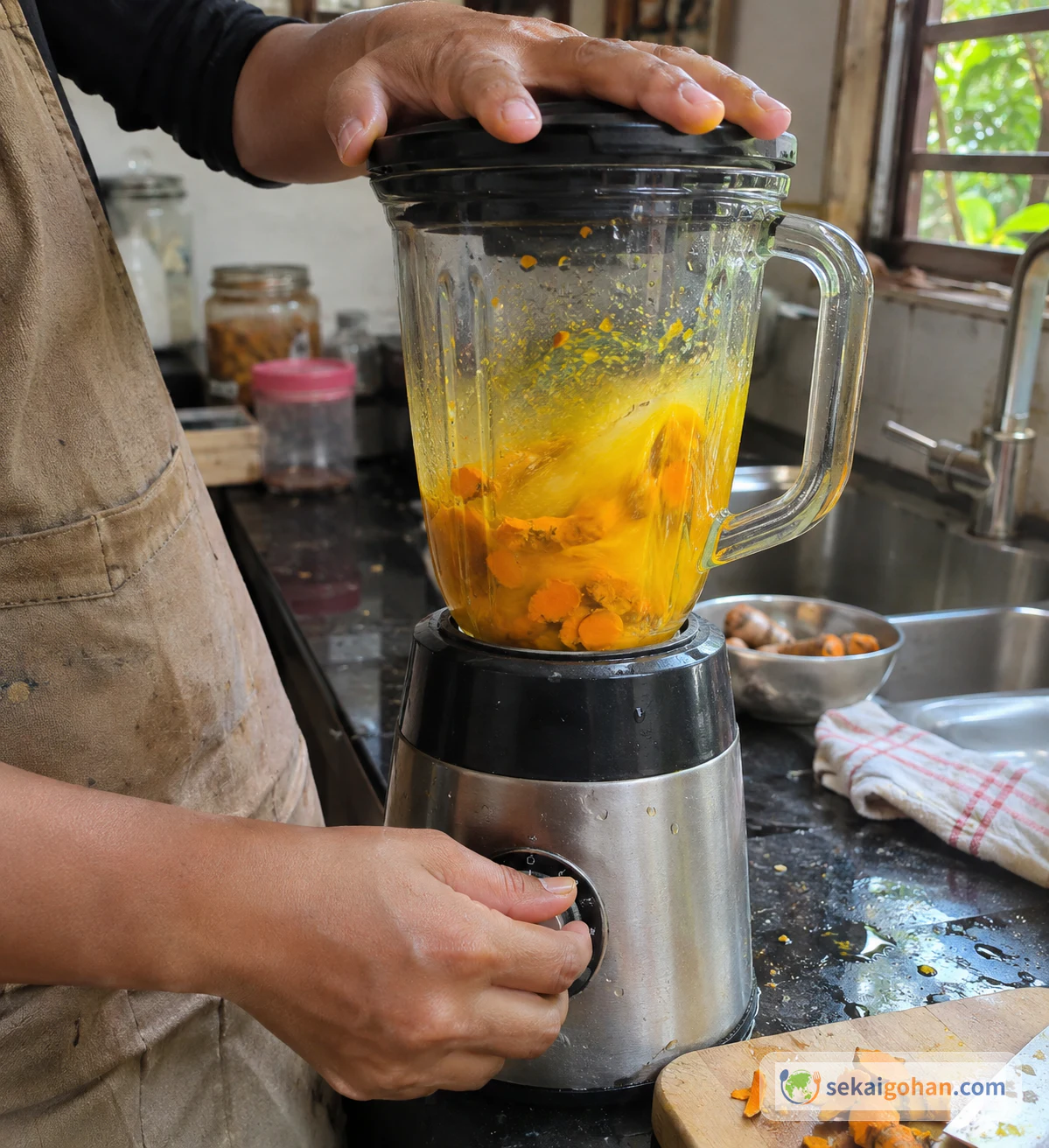
| The blender is struggling | 300 g of root is a lot for a small jar | Chop the pieces smaller, or blend in batches within your blender's limits. Keep to the same 500 ml of water, and blend only cooled turmeric |
| It is more or less sour than you expected | Tamarind products vary in concentration and moisture, and some contain seeds | Note the product for next time, and adjust in the glass with a little water if the drink tastes too strong |
| The sugar is still in pieces | The sugar has not finished dissolving | Keep heating and stirring until it has dissolved |
| It is too sweet | The drink is strongly sweet-sour as made | Add a little water in the glass, which also softens the sourness |
| Hands, boards or cloth have turned yellow | Turmeric stains readily | Next time, wear gloves and use a board and containers that are easy to clean, such as glass |
Storage: Refrigerate Soon, Drink Soon
Don't leave the drink out at room temperature for long after cooking. Once it has cooled, put it in a clean container and refrigerate within 2 hours, or within 1 hour if the room is above 90°F (about 32°C). Keep your refrigerator at 40°F (about 4°C) or below, and drink the kunyit asam soon.
This article gives no number of days the drink will keep and does not describe it as a make-ahead drink. It also offers no guidance on freezing, room-temperature storage or reheating. A bottle does not preserve the drink.
Variations
The first option below is the recipe as given above. The others are our editorial suggestions and have not been kitchen-tested.
- As listed: make it with the full amounts in the table.
- Lighter in the glass: add a little water to your glass to soften the sweet-sour flavor, leaving the pot unchanged. The drink will taste thinner.
- With ice: add ice when serving. It will dilute the drink as it melts.
- Chilled, no ice: refrigerate and pour as is, which avoids any dilution.
- Less sugar: use less palm sugar if you want it less sweet. Treat this as a trial, since the amount and the result are unverified and it is no longer the listed formula.
Kunyit Asam in Context: One Recipe Among Many
The recipe here is one home cook's version, not an official or universal standard. Other Indonesian pages show how much the method can vary:
- A larger batch: a page from the agriculture, food and fisheries department of Sleman Regency gives a much larger formula that also uses white sugar and salt. It extracts the ingredients in more than one pot, and it too dry-roasts the turmeric before peeling.
- A different order: a page from the Bangka Belitung provincial health office dissolves sweetener and tamarind in water first, then adds separately prepared turmeric juice, heats, cools and strains. It also stresses clean tools and ingredients and drinking homemade versions soon.
We use these pages only to show that proportions and methods differ, and have not merged any of their amounts or steps into this recipe. Both pages also discuss health effects, which we have not adopted. We have left out the origin and historical dates of jamu because our sources don't support them.
Frequently Asked Questions
Is jamu another name for kunyit asam?
No. As Cook Me Indonesian's author explains it, jamu is the broad term, and kunyit asam is the one type made here.
Does it taste bitter?
The recipe's author describes this drink as sweet and sour with a strong turmeric flavor. Other kinds of jamu are different drinks, so this description shouldn't be applied to all of them.
Can I drink it warm?
The recipe describes serving it cold or at room temperature, which is what we follow here. It offers no basis for serving it warm, and this article gives no reheating guidance.
Can I change how sweet it is?
Yes, but the two approaches differ. Adding water to your glass leaves the recipe as it is, while using less sugar in the pot makes it a different, untested formula.
How long does it keep?
We don't give a number of days. Some recipe pages mention keeping kunyit asam for days, but that is the authors' advice and has not been validated as a safe deadline. Our storage guidance relies on the general food-safety rules from the U.S. Centers for Disease Control and Prevention: refrigerate within 2 hours (1 hour above 90°F), and keep the refrigerator at 40°F or below. That guidance does not set a storage period for this drink, so we simply suggest drinking it soon.
Can I drink it to improve my health?
This is a food recipe, and we neither assess nor guarantee any medicinal effect. We make no claims about preventing or treating illness, immunity, detoxification, menstrual symptoms or weight loss. We also can't say it is safe during pregnancy, while taking medication or with a health condition, so ask a healthcare professional about your own situation.
Sources
- Nunuk Sri Rahayu, Cook Me Indonesian, "Jamu Kunyit Asam: Turmeric & Tamarind Herbal Drink (Vegan)." The basis for the ingredients, amounts, listed yield and times, order of steps, flavor description, serving suggestions and staining note, as well as the author's explanation of jamu and childhood memories. This is a personal recipe and memoir, not proof of a regional standard. https://www.cookmeindonesian.com/jamu-kunyit-asam-turmeric-tamarind-herbal-drink-vegan/
- Dinas Pertanian, Pangan dan Perikanan Kabupaten Sleman, "Jamu Kunyit Asam Mudah Dibuat dan Kaya Manfaat." Used only as a comparison showing a different scale and method. Its health claims are not adopted. https://pertanian.slemankab.go.id/jamu-kunyit-asam-mudah-dibuat-dan-kaya-manfaat/
- Dinas Kesehatan Provinsi Kepulauan Bangka Belitung, "Efektifitas Kunyit Asam untuk Atasi Nyeri Haid." Used only for its alternative order of steps and its notes on clean tools and drinking homemade versions soon. Its medical content is not adopted. https://drupal.dinkes.babelprov.go.id/efektifitas-kunyit-asam-untuk-atasi-nyeri-haid?qt-artikel=1
- U.S. Centers for Disease Control and Prevention, "Preventing Food Poisoning." The basis for refrigerating within 2 hours (1 hour above 90°F) and keeping the refrigerator at 40°F or below. It does not give a storage period for this drink. https://www.cdc.gov/food-safety/prevention/index.html