

The moment red oil rises, you get closer to a Thai table
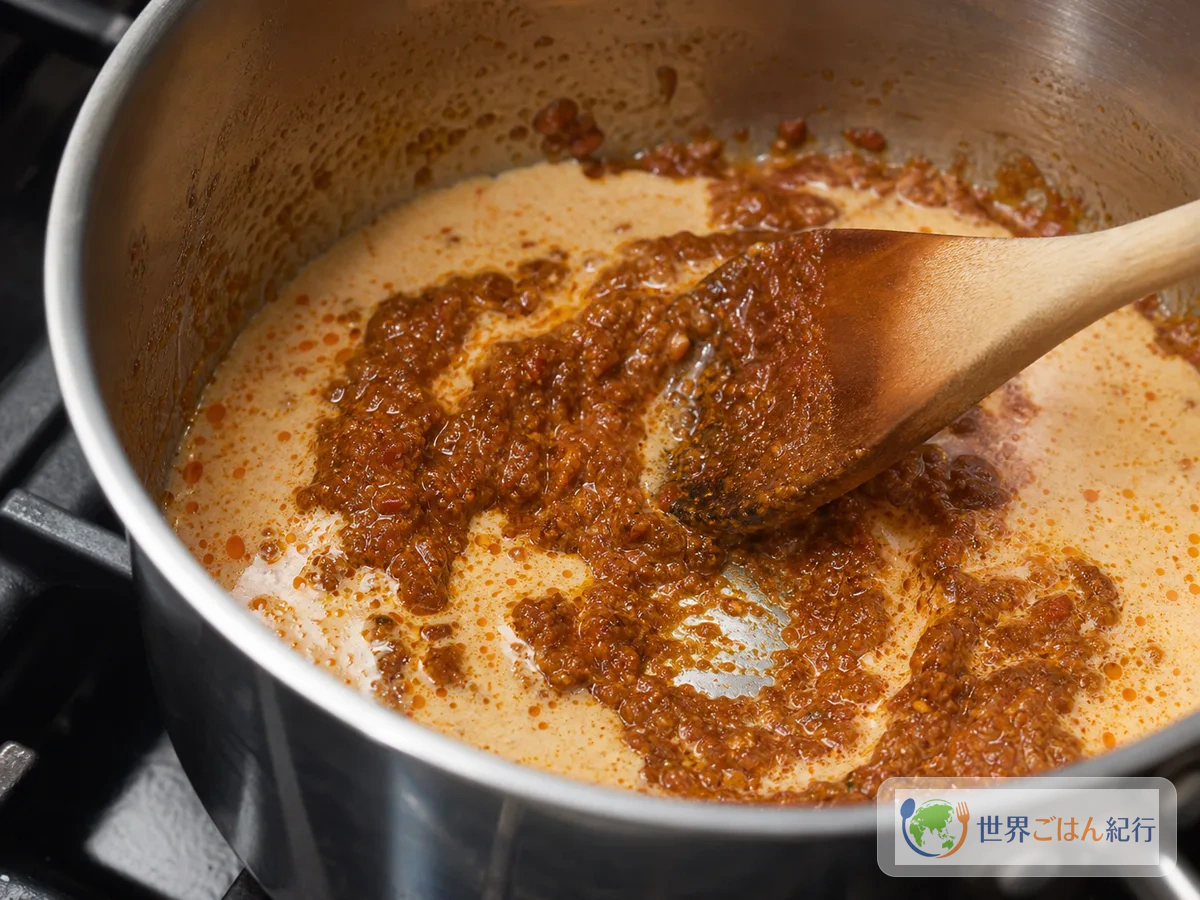
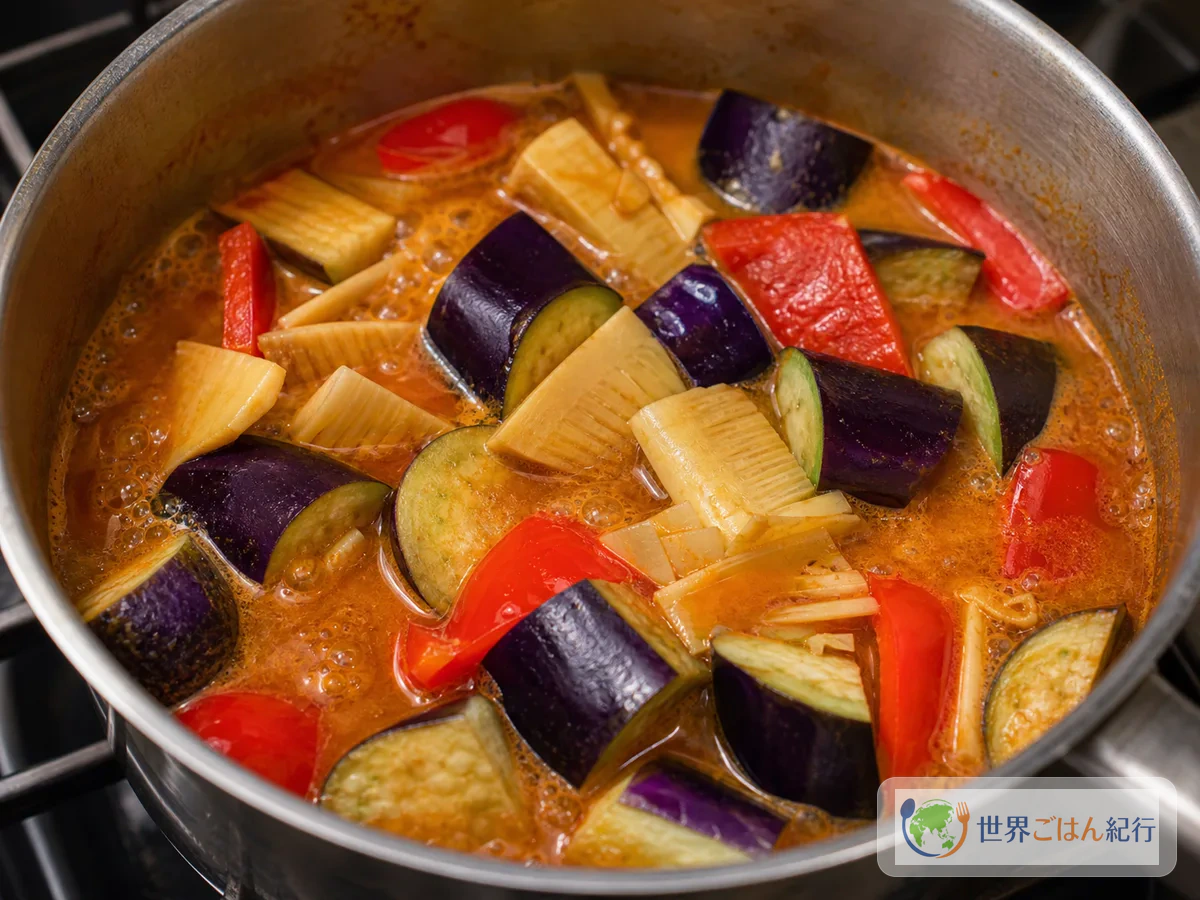
In an evening kitchen, drop the thick part of the coconut milk into a pot and at first it is white, giving off a sweet steam. Add red curry paste and spread it out with a wooden spatula. After a minute, then two, a red-orange oil quietly rises along the sides of the pot. This is where you resist the urge to add water and instead wake the aroma, which is the most enjoyable part of gaeng phet.
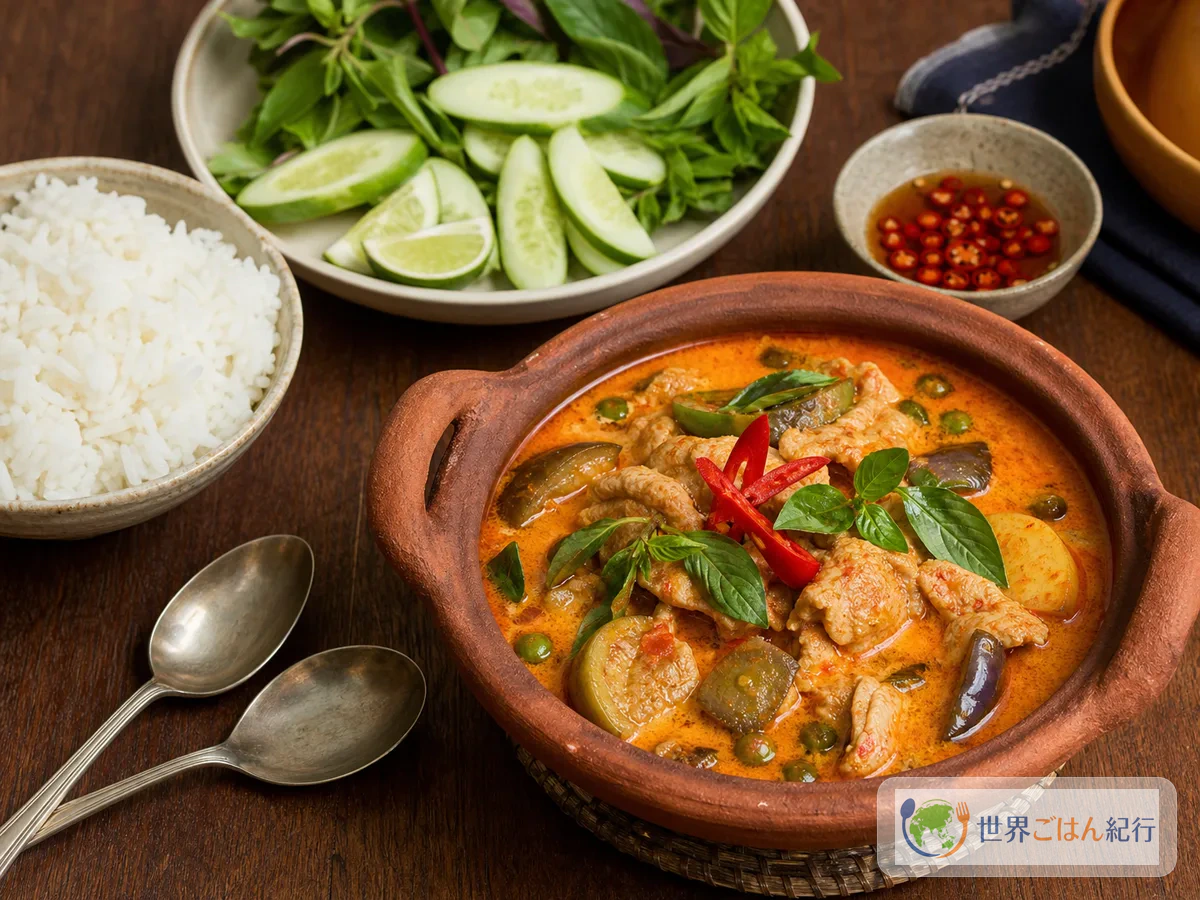
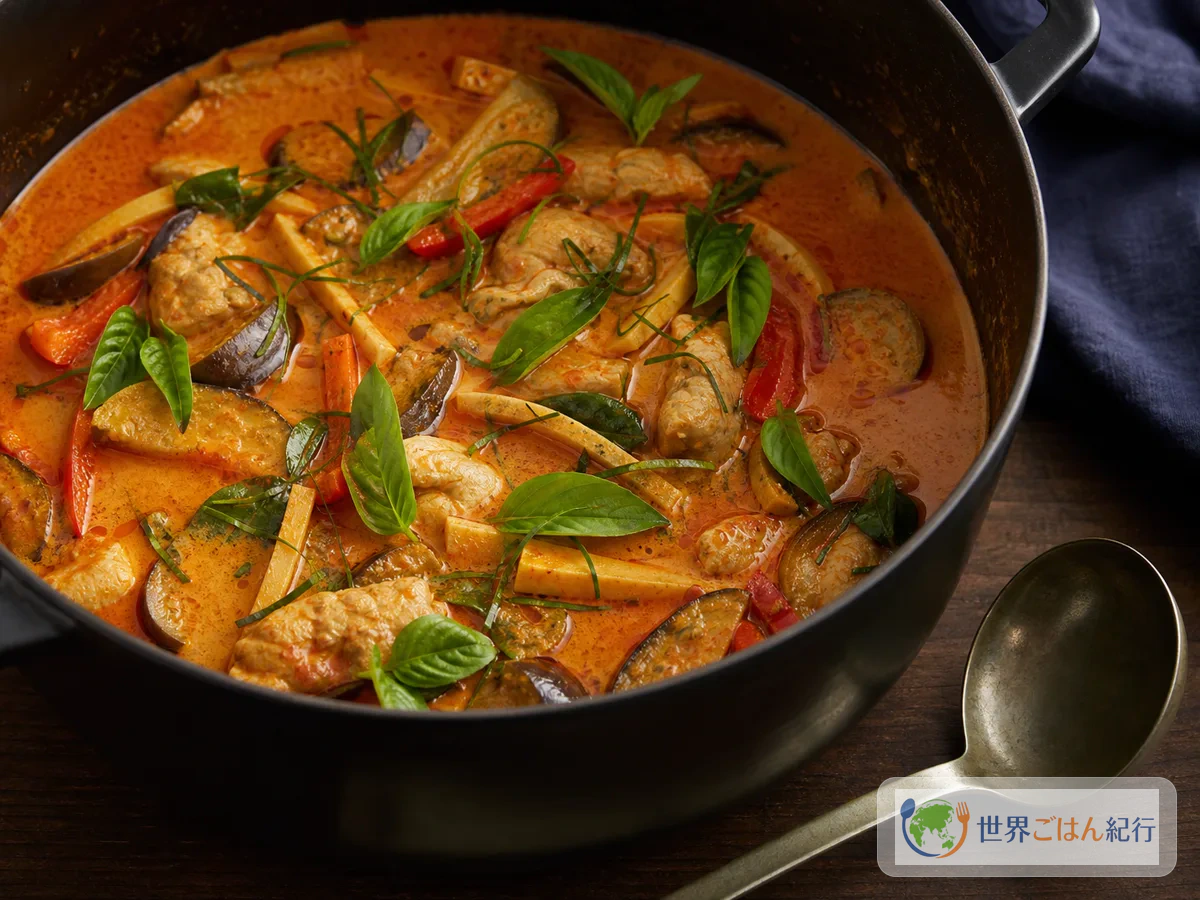
Gaeng phet (แกงเผ็ด / gaeng phet) has a name close to "spicy soup, curry" in Thai. It is often called Thai red curry, and it is made by thinning with coconut milk a red paste of red chilies, lemongrass, galangal, makrut lime zest and leaves, garlic, shallots and more. The heat looks like the star, but in practice it is a dish that layers the sweetness of coconut, the saltiness of fish sauce, the aroma of makrut lime and the green of basil.
If tom yum goong (in Japanese) is a soup that raises sourness and the scent of shrimp at the end, gaeng phet fries the paste first to build the base of the aroma. It needs less preparation of noodles and toppings than khao soi (in Japanese), and the heat is gentler than pad kra pao. In a home kitchen, store-bought paste is fine. But keep to three things: fry the paste in coconut oil, do not cook the eggplant to pieces, and add the basil at the end with the residual heat. Then it is not just a hot curry but gets close to the red aroma you find at a Thai restaurant.
What to protect is frying the red paste until the oil separates, not boiling the coconut milk hard, and not simmering the finishing herbs. The chicken and vegetables can be substituted, but break this order and the flavor blurs.
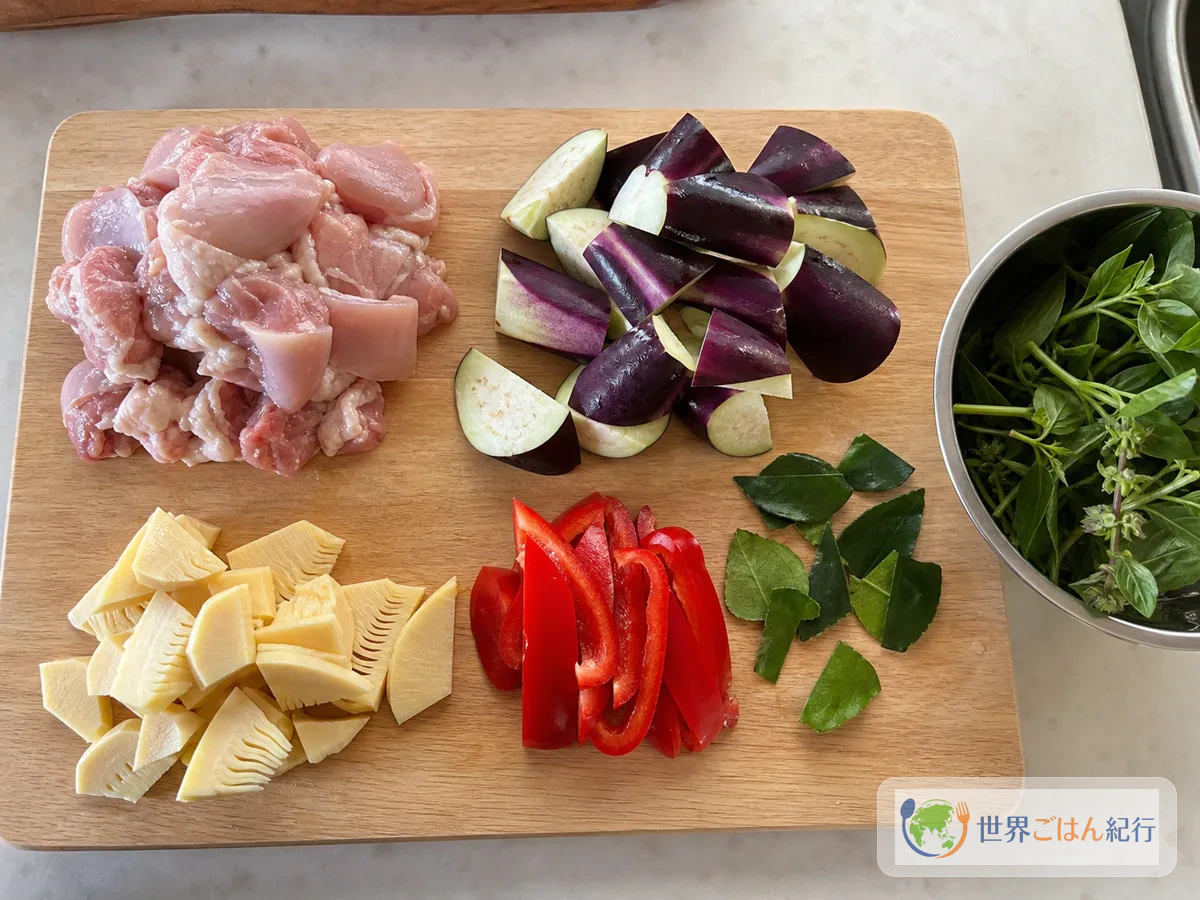
Ingredients (serves 4)
This amount is for 4 people eating it over rice as a full meal. With a hot paste, start from 35 g, and on a day you want aroma before heat, adding chili at the end on a separate plate is easier for a family to adjust.
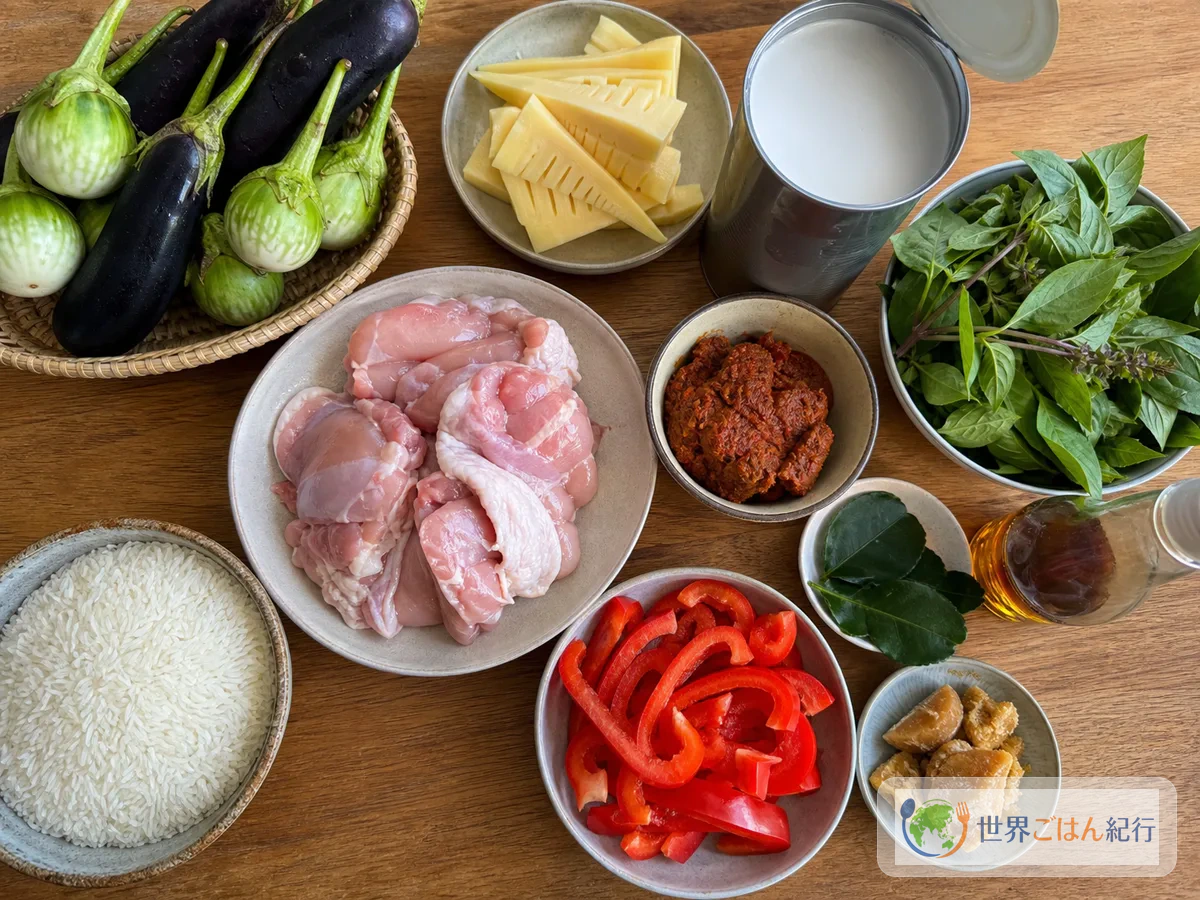
Some store-bought red curry pastes contain shrimp, fish sauce and soy. Fish sauce is also fish-derived. If you have an allergy, check the ingredient label before buying. Cook the chicken to 75°C at the center, or until it is cooked white through.
What to look for when shopping
What decides the flavor of gaeng phet is the paste, the makrut lime leaves and the fish sauce, which are hard to find at a neighborhood store. Coconut milk can sometimes be bought at a big supermarket too, and a can on hand also goes into laksa and amok.
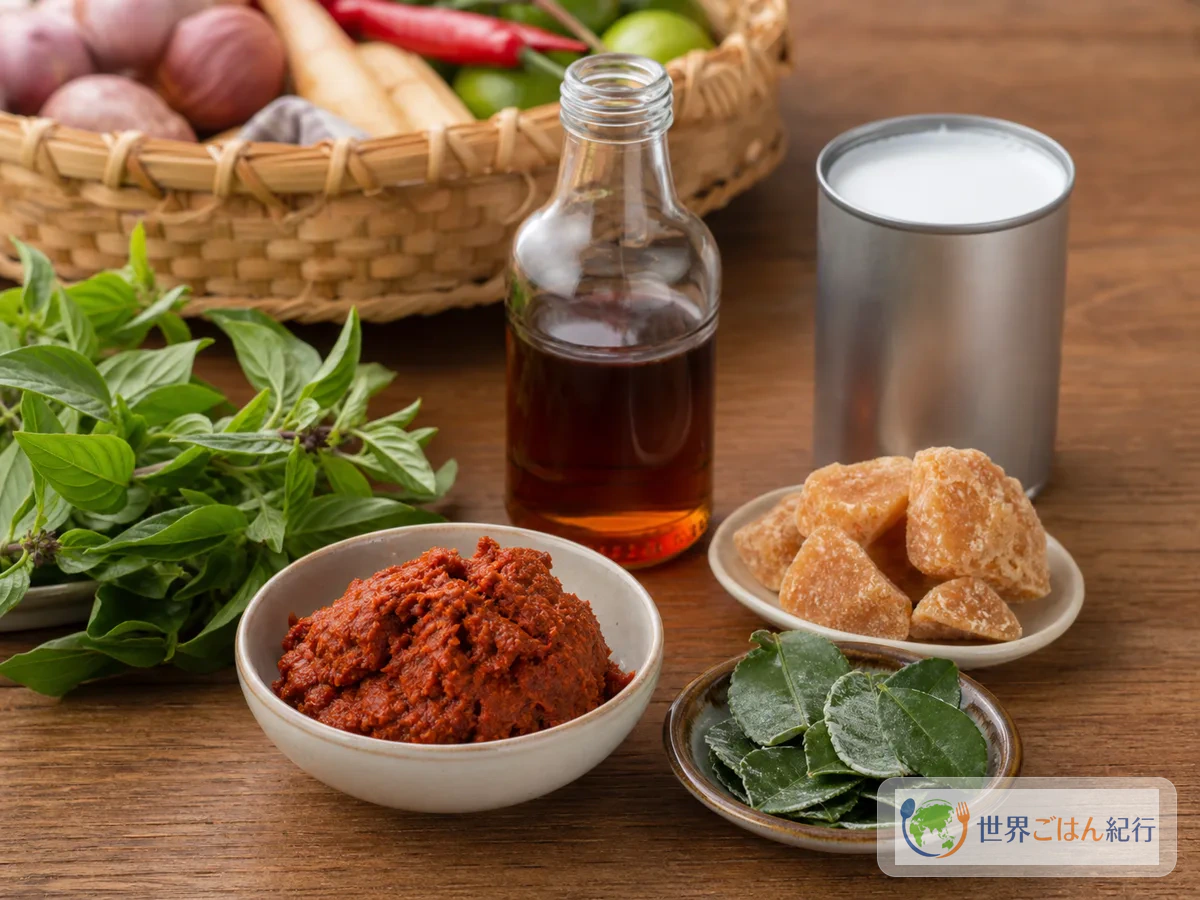
| Priority | What to buy | Why | Where leftovers can go |
|---|---|---|---|
| 1 | Red curry paste | The base of the red aroma and heat. Substitute and it easily becomes a different dish | Stir-fried chicken, fried noodles, a khao soi-style soup |
| 2 | Makrut lime leaves | Adds a green citrus fragrance so the curry does not turn heavy | Tom yum goong, steamed fish, stir-fries |
| 3 | Fish sauce | Adds the savor of fish sauce that salt alone cannot give | Pad kra pao, som tam, pad thai |
| 4 | Coconut milk | The key to bringing out the oil and frying the paste. The canned type is steadier | Laksa, amok, coconut braises |
The first thing worth looking at is the red curry paste. Large jars or bags are cheaper per gram but lose aroma after opening. The first time, choose a small one and use up the rest early from the refrigerator, and it is easier to keep the aroma until the next dish.
Makrut lime leaves can be left out, but with them the way the aroma rises changes a notch. Frozen ones are easy to use one leaf at a time and can be used again in tom yum goong (in Japanese).
Coconut milk affects the step where the oil is brought out. If the oil does not separate with a carton, switching to a can makes the aroma come out more steadily.
Fish sauce takes care of the savor that salt cannot give. A small bottle is enough, so do not replace it with soy sauce alone; add it, even in small amounts.
Method: wake the paste in oil, and do not cook the eggplant to pieces
Gaeng phet has a clear order: cut, fry, simmer, finish. Weigh the paste and seasonings and cut the ingredients before you start, so you can move on before the paste scorches.
Tasted from the pot alone, it seems a little salty and a little sweet. Over rice it dilutes just right, so before it is done, check by putting a little curry on 1 tsp of rice, and you are less likely to go wrong.
A table of branches for getting closer to the authentic one in a home kitchen
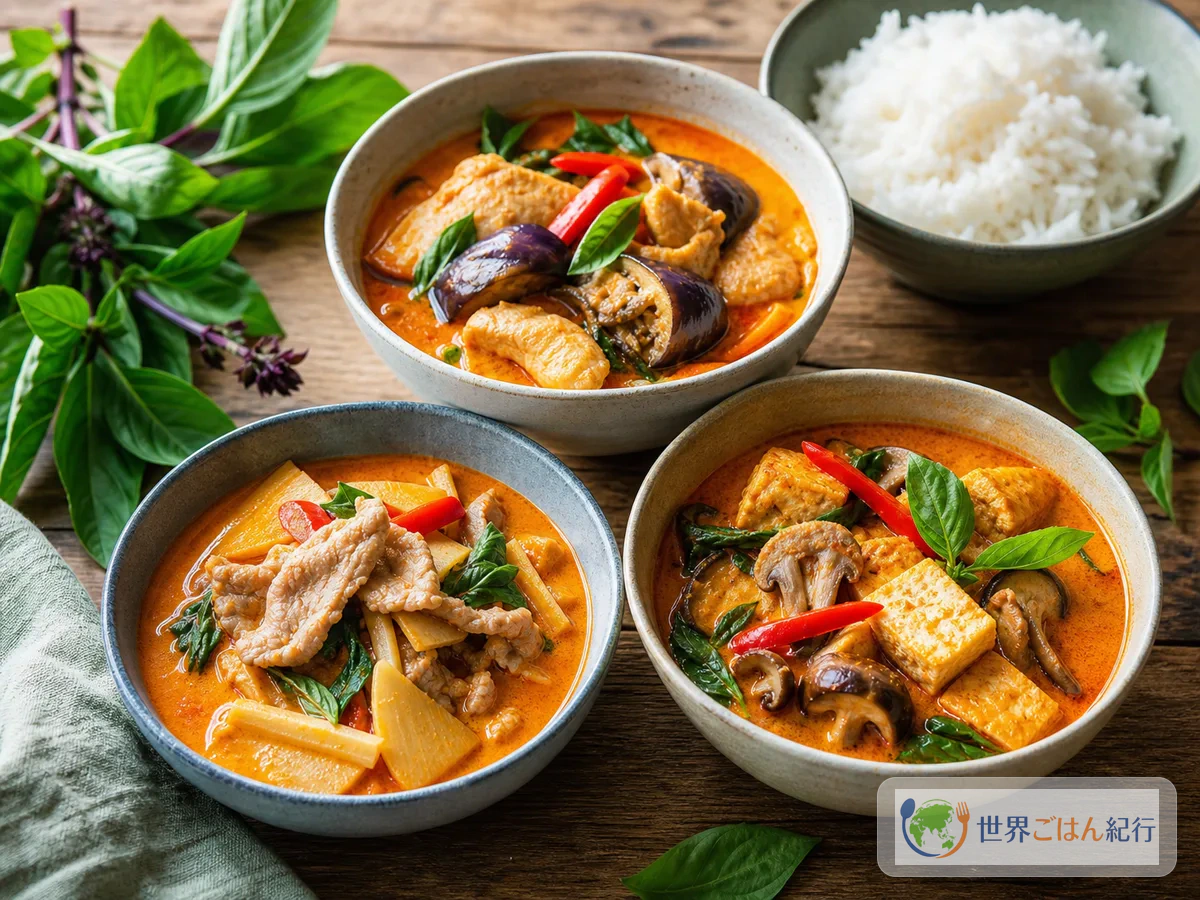
Gaeng phet gives plenty of freedom in the ingredients. But simmer every ingredient the same way and the chicken turns tough and the vegetables fall apart. Change the order to suit how the meat and vegetables cook, and it becomes quite steady at home.
| Ingredient to change | How to use | Cooking guide |
|---|---|---|
| Chicken breast | Slice on the bias and add at the same time as the last vegetables | 5–6 minutes over gentle medium-low heat. Stop when white through to the center |
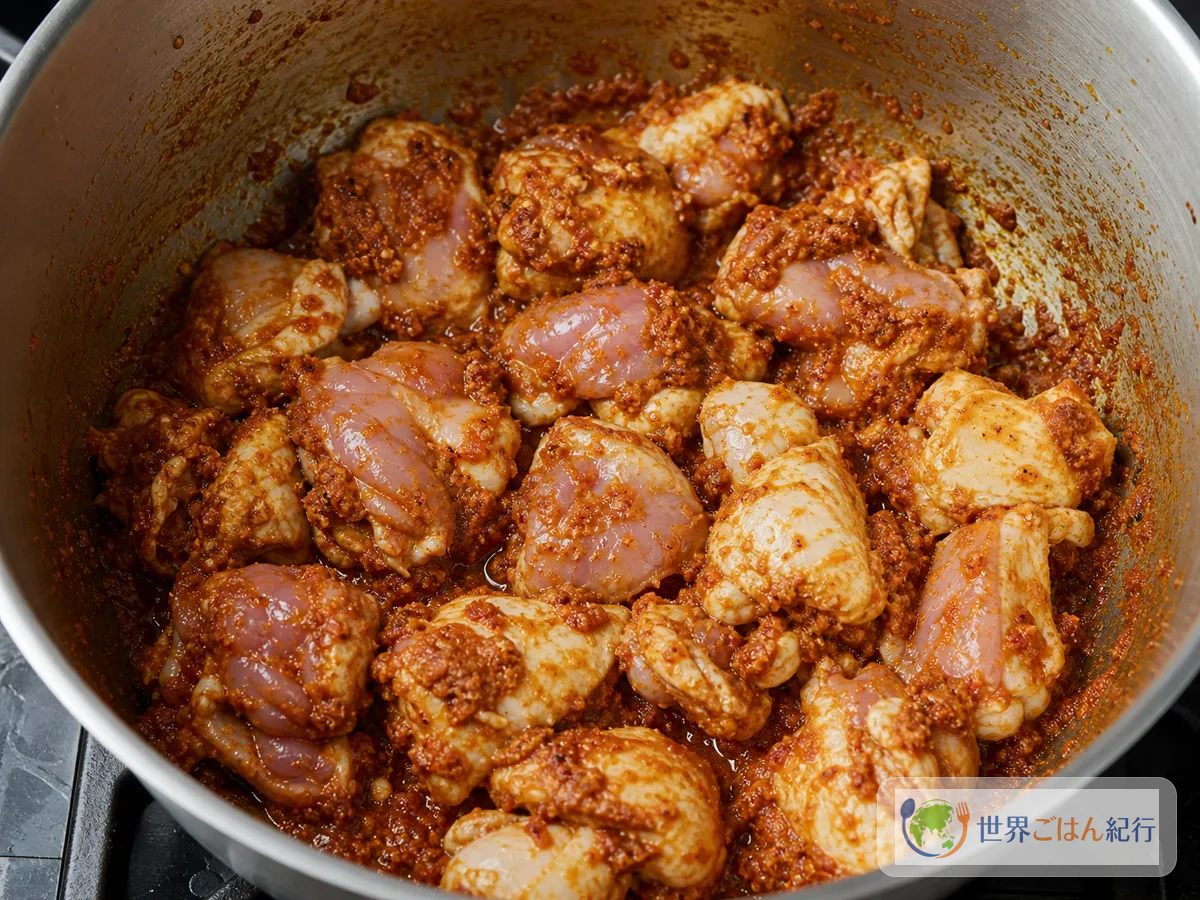
| Thinly sliced pork | Cut 3 cm wide and coat with the paste in place of chicken | Simmer after the surface changes color over medium heat |
| Thick fried tofu | Cut into 3 cm cubes and add at the same time as the vegetables | 5 minutes over gentle medium-low heat. It is enough for the surface to take on the sauce |
| Kabocha squash | Cut 1.5 cm thick and add after the chicken | Simmer about 10 minutes until a chopstick goes in easily |
| Thai eggplant | Cut in quarters and soak in water | Around 5 minutes. Do not overcook once the skin is glossy |
| No bamboo shoots | Substitute 100 g king oyster mushrooms | Cut 7 mm thick and add at the same time as the eggplant |
In local recipes, people sometimes make the red paste itself. Pounding dried red chilies, lemongrass, galangal, makrut lime zest, garlic, shallots, salt and shrimp paste gives a strong aroma, but gathering the ingredients is hard in a home kitchen. If you use store-bought paste, just adding makrut lime leaves and basil gives depth to the aroma. Rather than making everything from scratch, knowing where adding something changes the flavor is more useful in an everyday kitchen.
Even if you want to move toward a sweet-and-sour direction like pad thai, there is no need to squeeze a lot of lime into gaeng phet. Add sourness with the cucumber at the table and a light side dish, and finish the pot with the round heat of coconut, chili and fish sauce.
Causes of failure: not red, watery, too hot
Failures with gaeng phet come from heat and order more than from missing ingredients. Not red, watery, only hot, eggplant gone dark: for these four, it is easier to fix by looking at what is happening in the pot.
The red oil does not come out
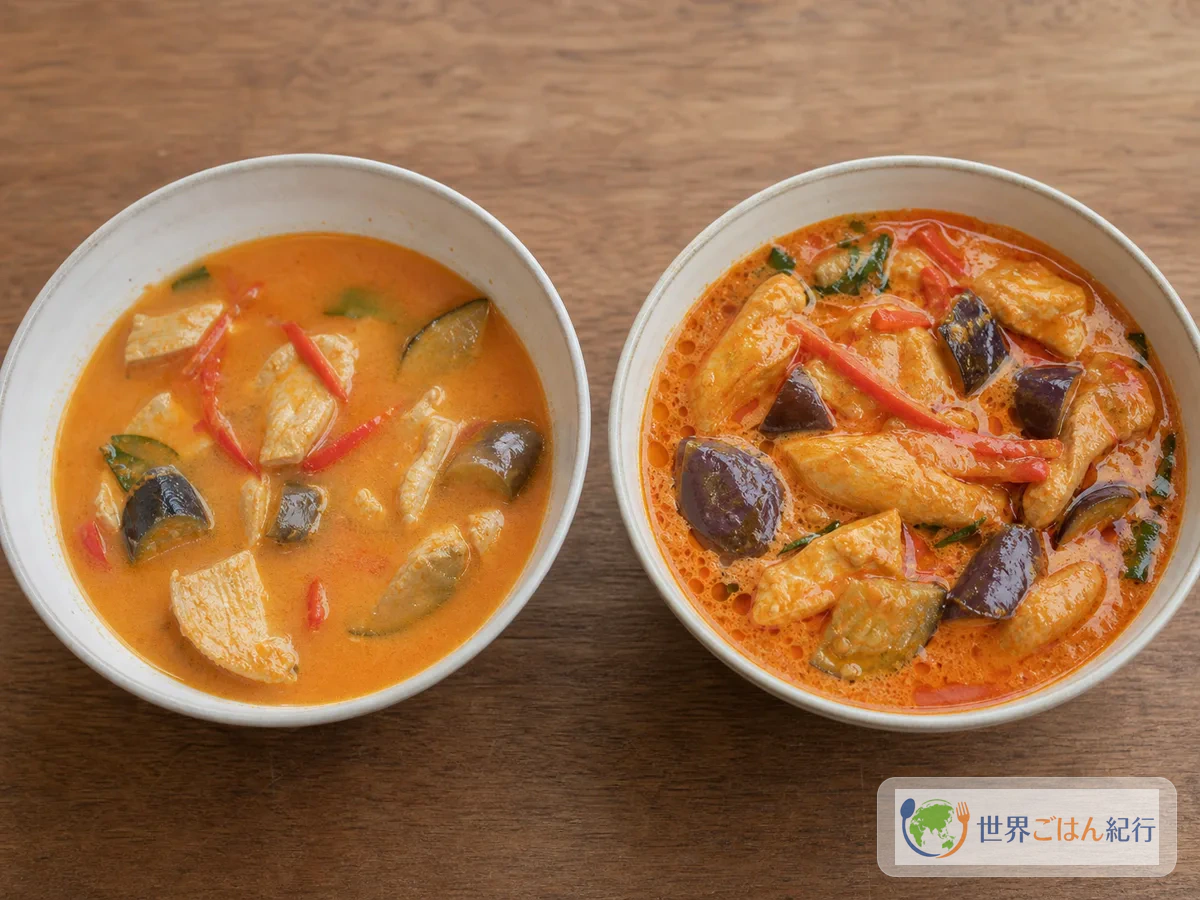
The canned coconut milk may be evenly emulsified, or the heat may be too low. Before adding the paste, reduce the coconut cream over medium heat for about 2 minutes, and if the oil still does not appear, add 2 tsp vegetable oil and fry. What matters is not bringing out a lot of oil but driving off the raw edge of the paste and rounding the aroma.
Watery
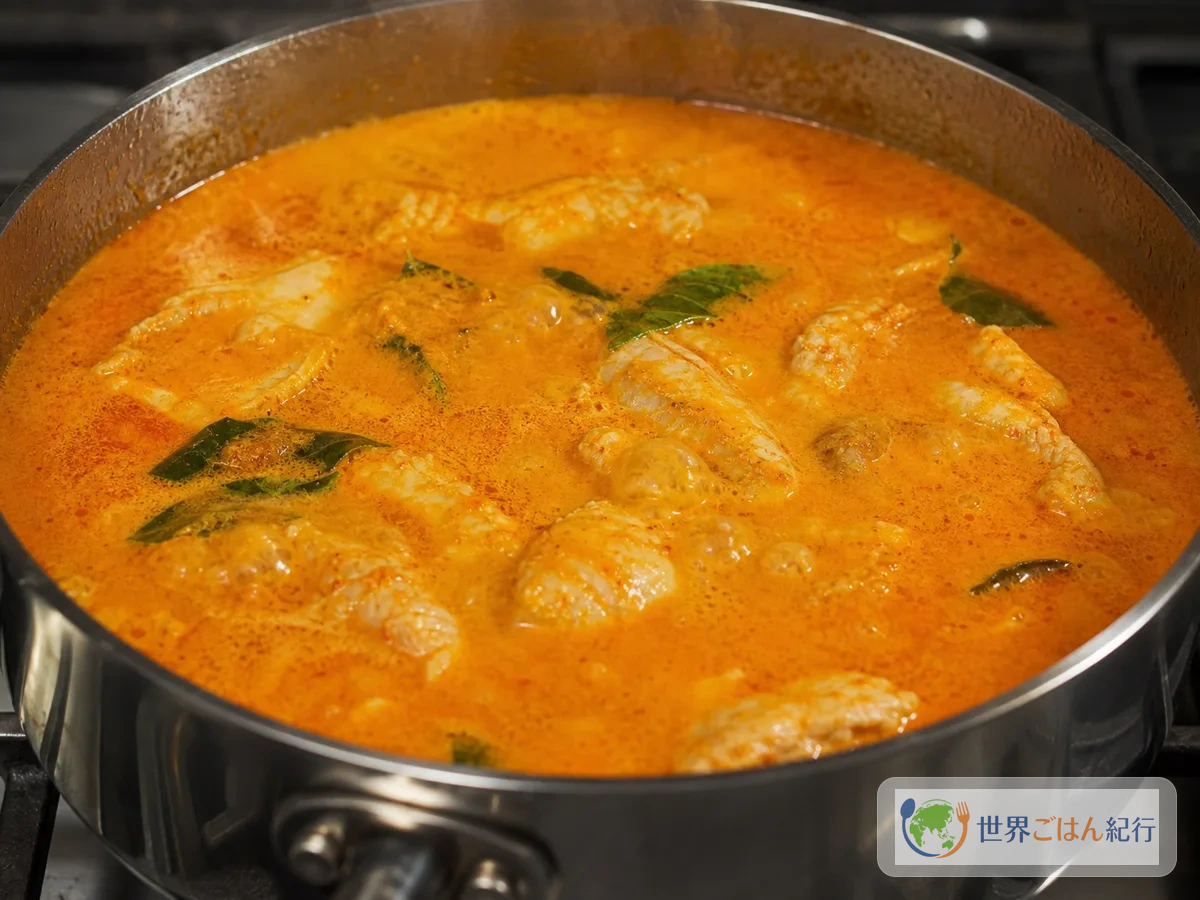
You added too much water, or the vegetables released moisture. Without a lid, simmer 3–5 minutes over gentle medium-low heat and wait until red oil returns to the surface. If you add fish sauce first it is just salty, so reduce the liquid first and adjust the salt at the end.
Too hot
Adding sugar alone will not remove the heat. Add 100 ml coconut milk, 50 ml water and 1 tsp fish sauce and simmer 3 minutes over gentle medium-low heat to blend it all. Next time, use 35 g paste and add chili at the table, and you are less likely to fail.
The eggplant turns dark and falls apart
You cut the eggplant too small, or simmered it long from the start. Cut it in 3 cm chunks and add it after the chicken is cooked. Japanese eggplant is softer than Thai eggplant and soaks up the cooking liquid, so stopping when the skin is glossy and the center is just beginning to soften preserves the color and the texture.
Storage, eating it the next day, and FAQ
Gaeng phet is good the next day, but stored with the rice it absorbs moisture and turns heavy. Just separating curry, rice and herbs changes the aroma when you reheat.
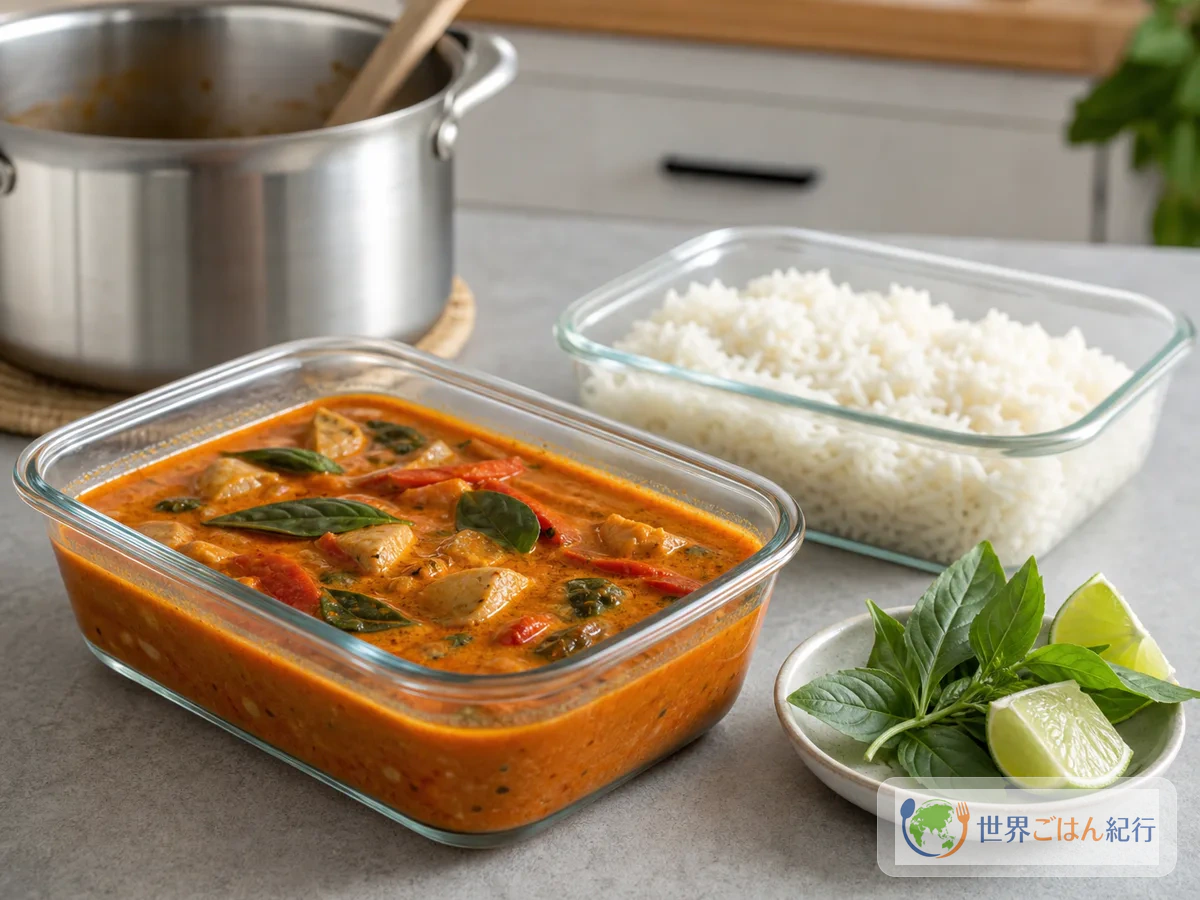
Cool the curry a little, put it in a clean container and finish it within 2 days in the refrigerator. To reheat, warm over low heat for 5–7 minutes, stirring so as to scrape the bottom of the pot, and do not boil hard. In a microwave, warm 2 minutes at 600 W, stir once, and 1 minute more. It is ready to eat when the chicken is hot through to the center and red oil has returned to the surface.
To freeze, freeze only the curry, up to 2–3 weeks. Eggplant goes soft after thawing, so if you plan to freeze, using more bamboo shoots or thick fried tofu keeps the texture. Do not freeze the basil; add it after reheating.
What about children or family members who cannot take heat?
Reduce the paste to 25 g and increase the coconut milk to 500 ml. If adults add chili or fish sauce at the table, you can adjust within the same pot. Increasing sugar too much to dilute the heat makes a sweet curry, so diluting with coconut milk is more natural.
Can I make it with green curry paste?
You can, but as a dish name it moves closer to green curry (in Japanese). The aroma of green chilies, basil and makrut lime comes forward, so it is a different dish from the round toasty aroma of red chilies. On a day you are making a red curry, use red curry paste.
Does it go with Japanese rice?
It does. Japanese rice is sticky, so putting a little less curry over it makes it easier to eat. Thai rice has a light aroma, and the heat and the coconut oil loosen easily, so on a weekend when you want to move toward the authentic one, jasmine rice suits.



