Mageli: Small Round Mung Bean Fritters from Balikpapan
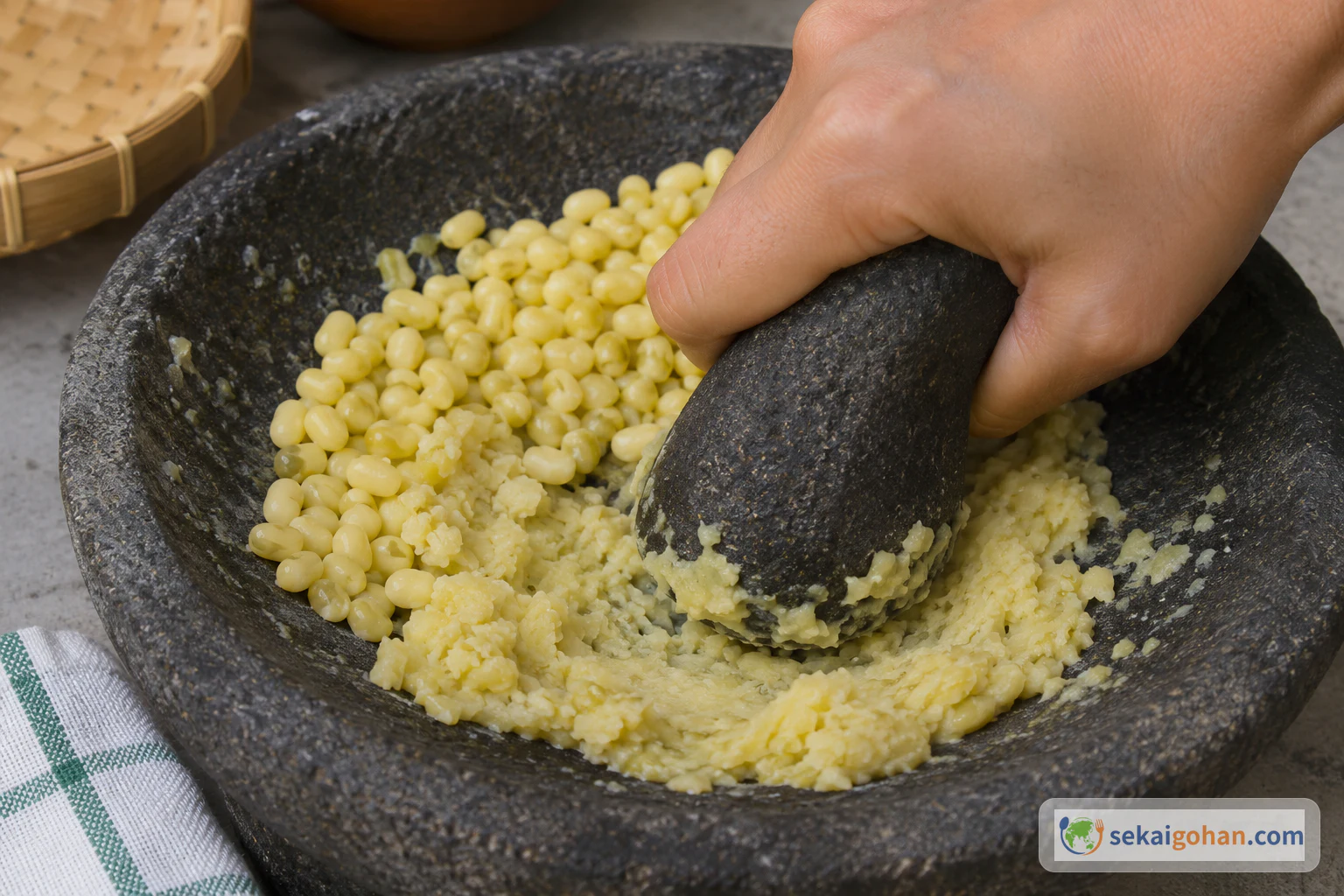
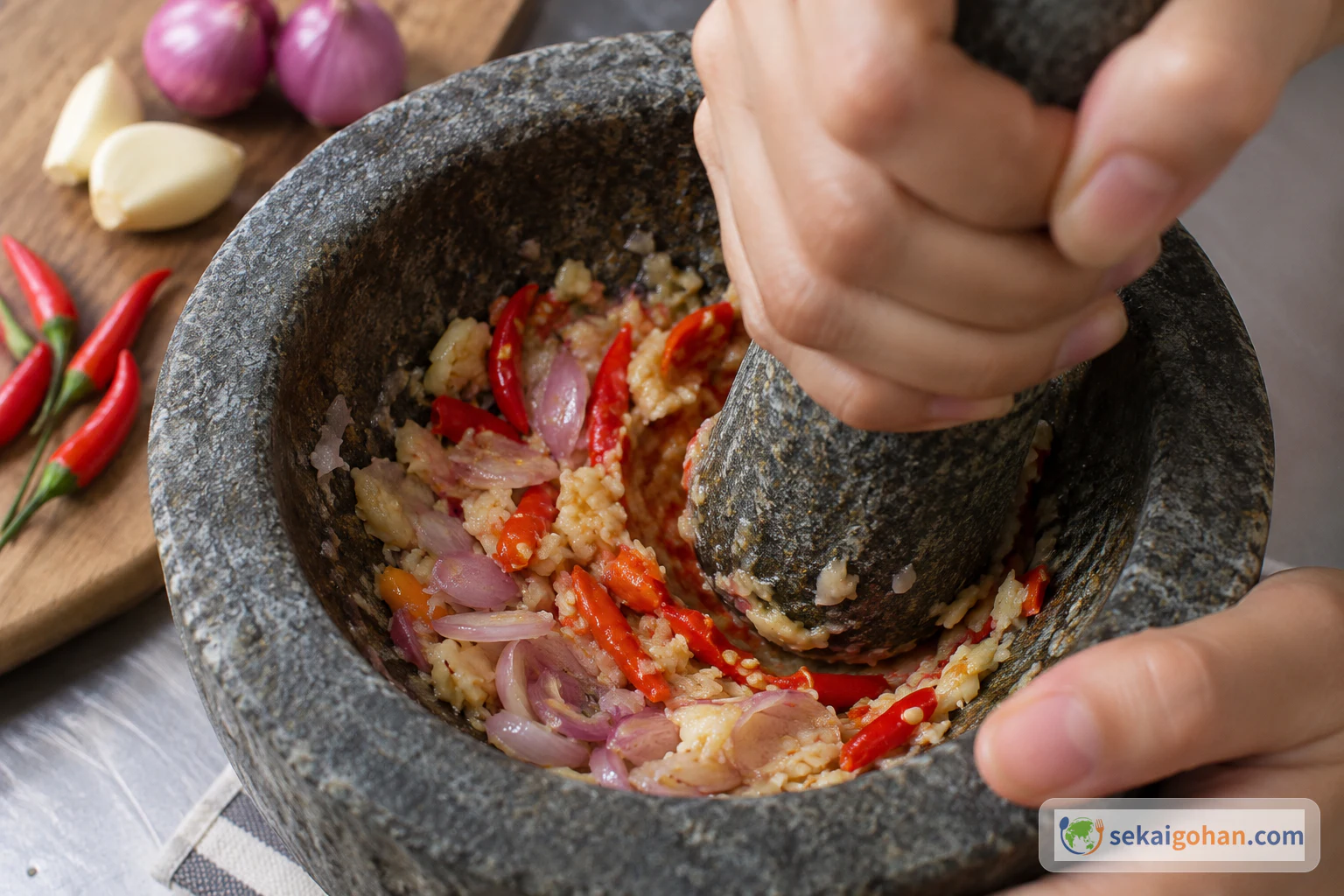
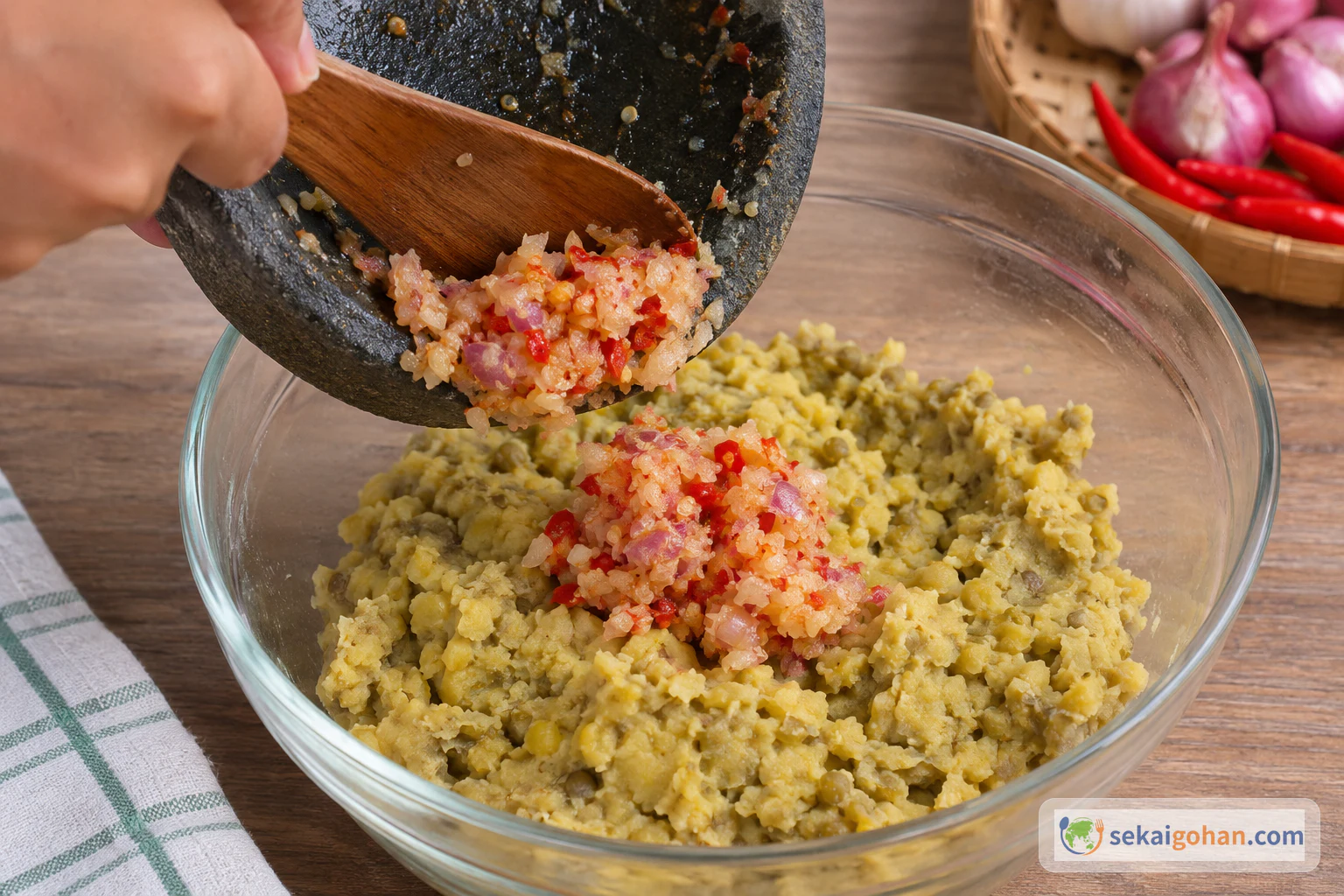
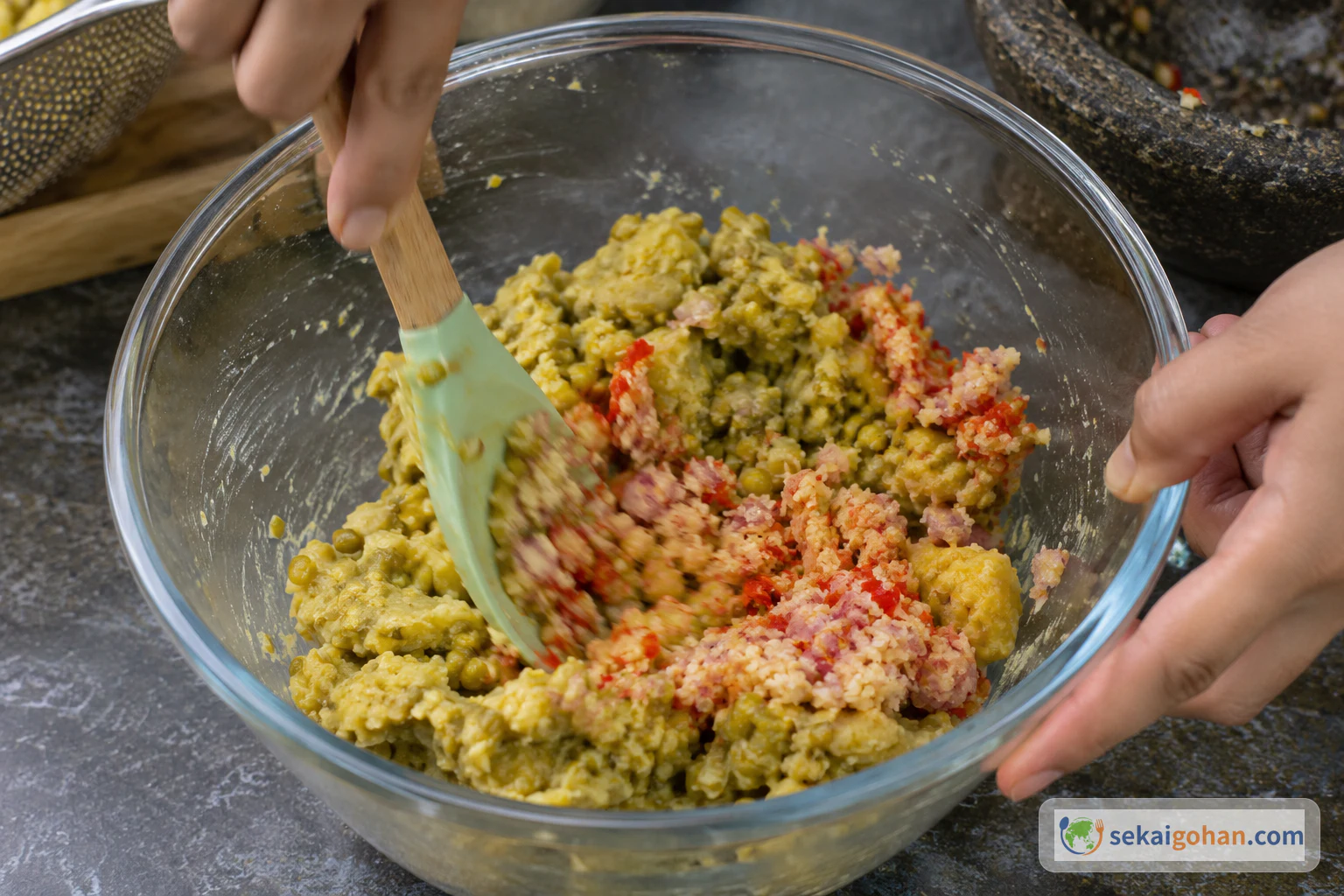
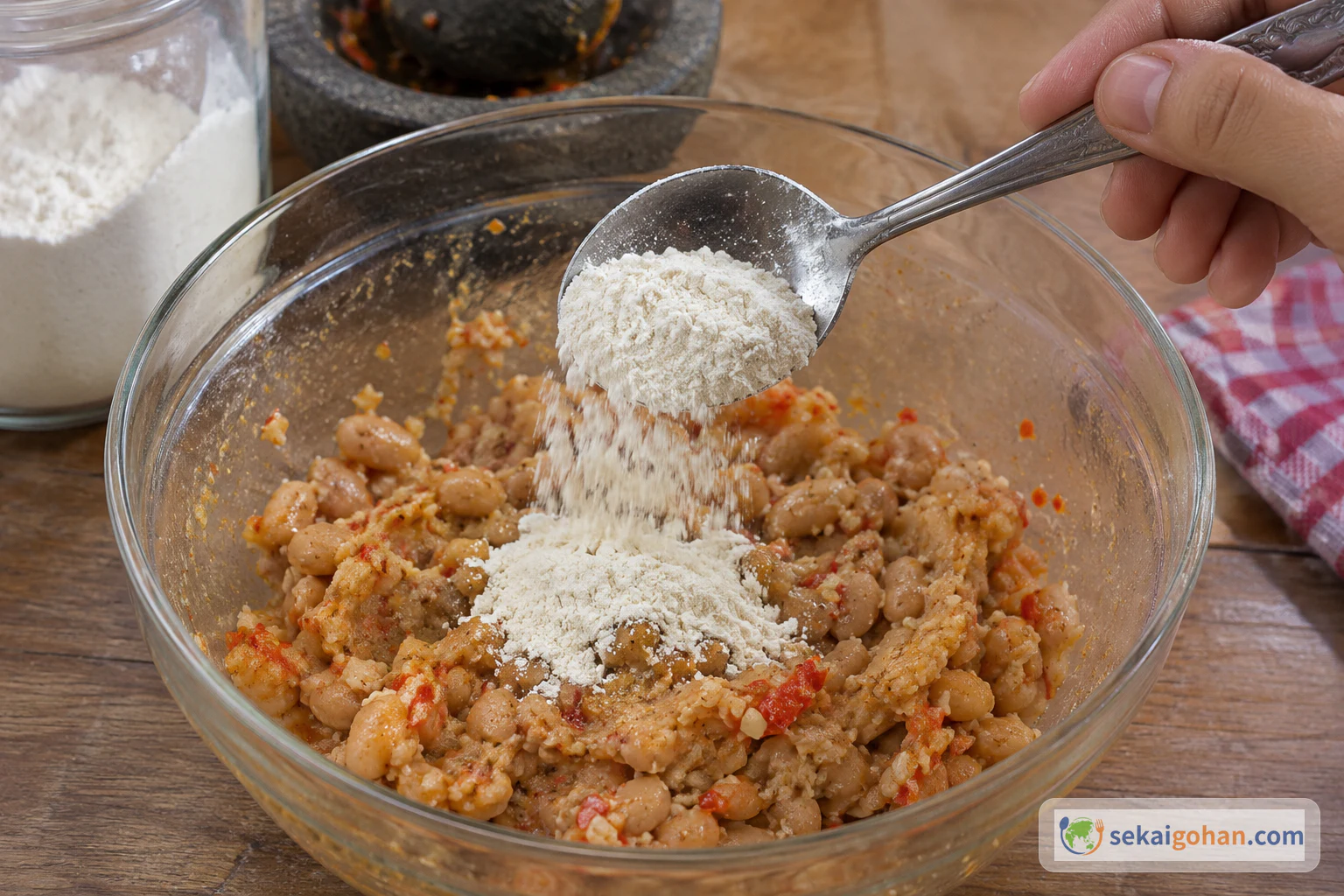
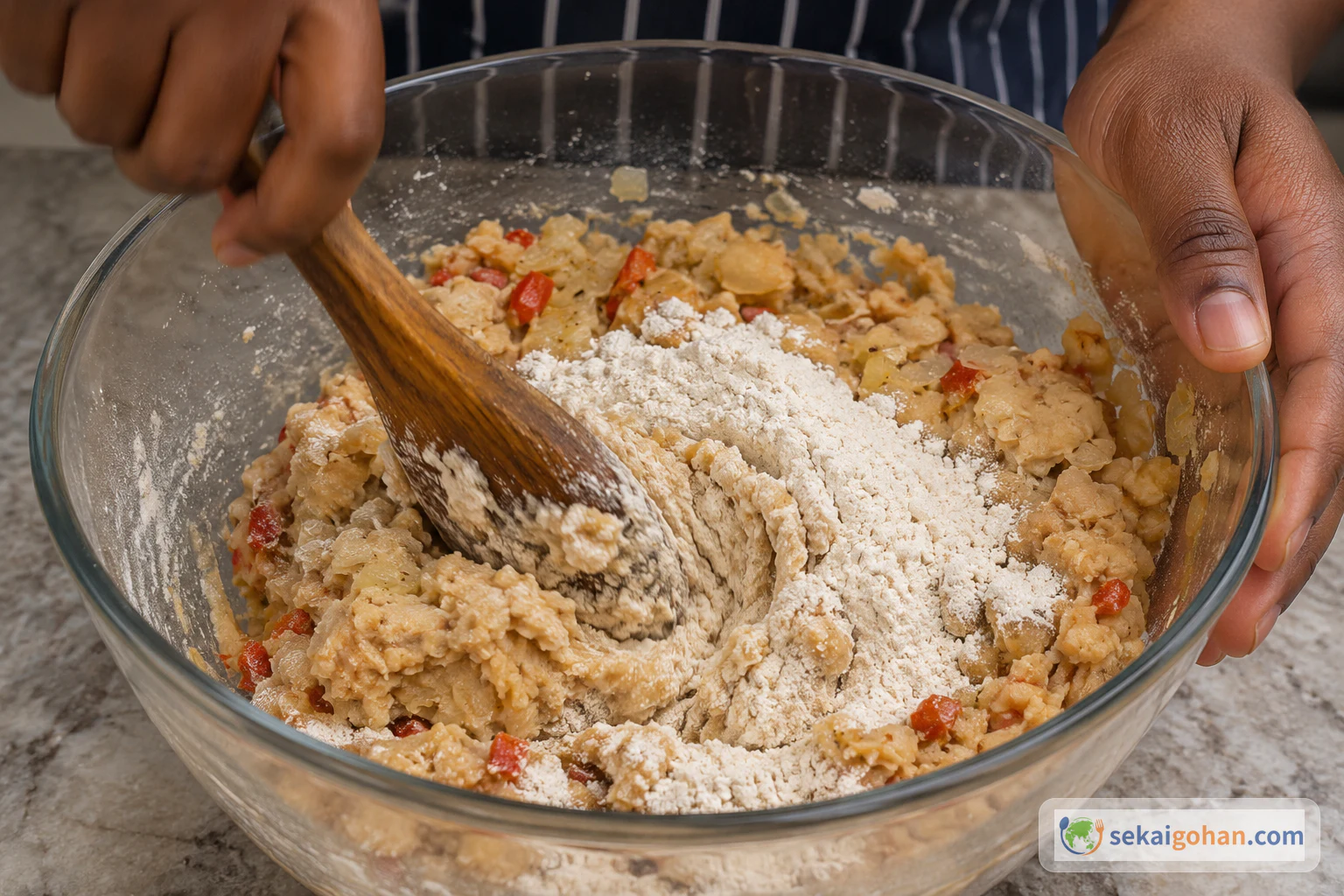
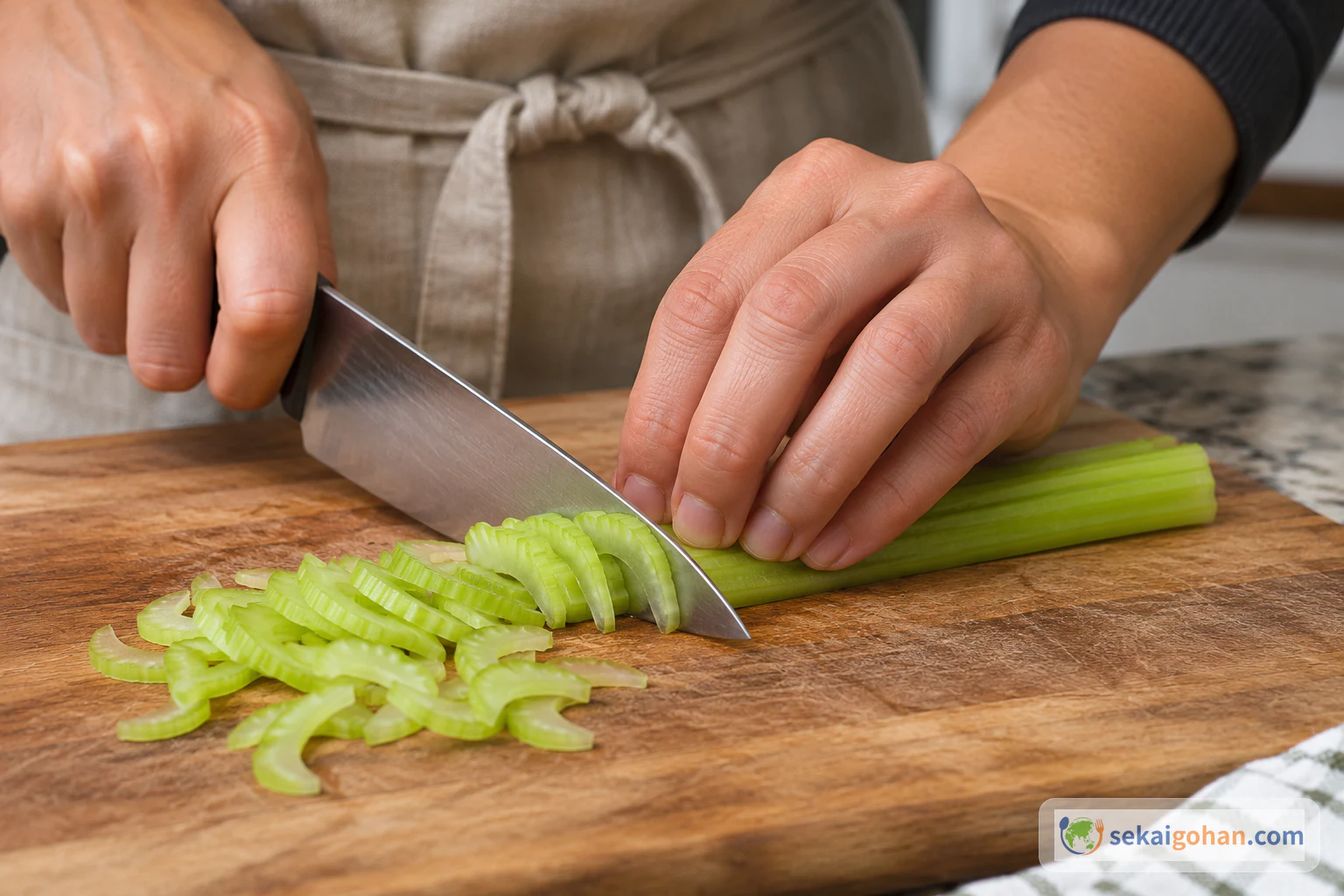
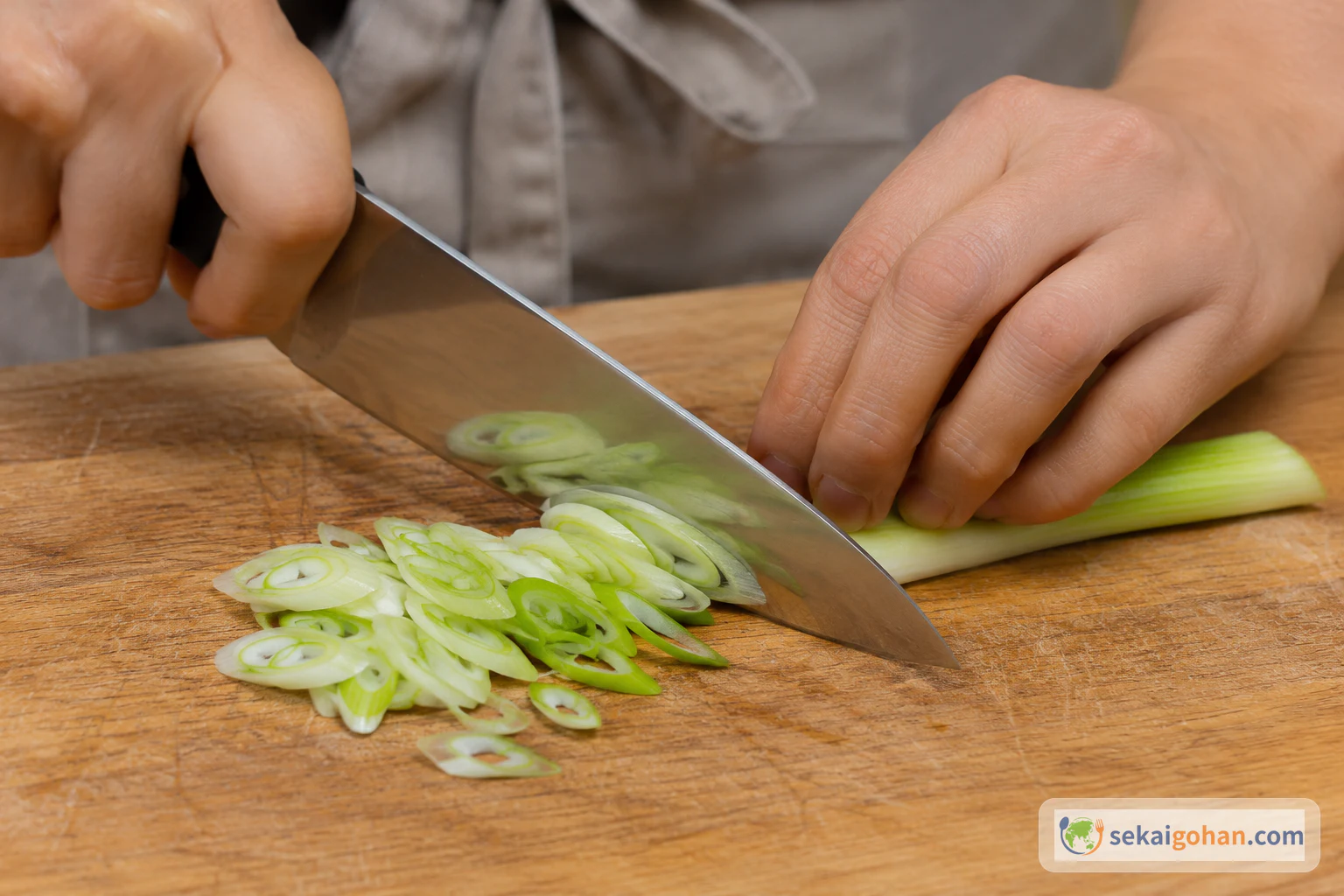
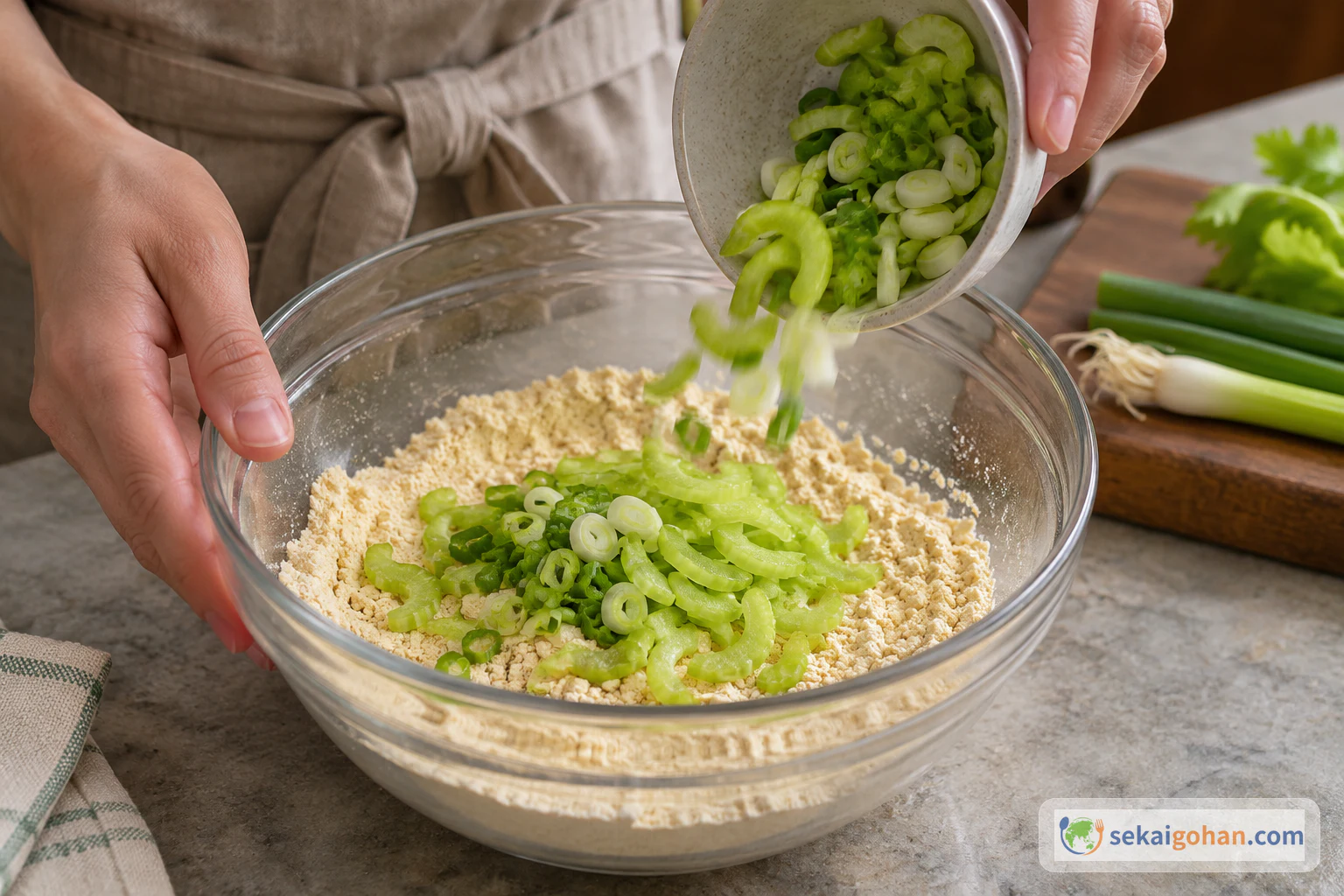
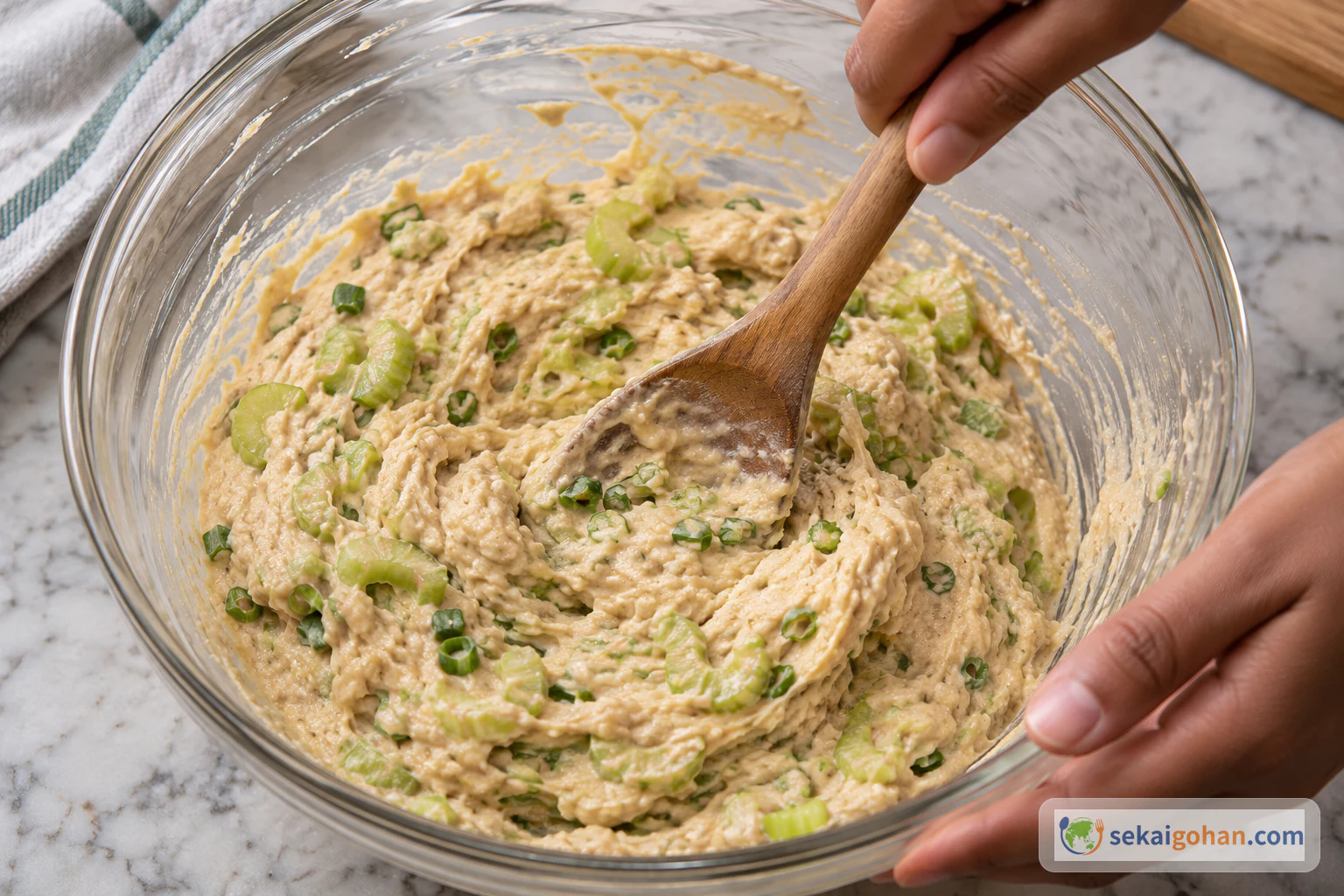
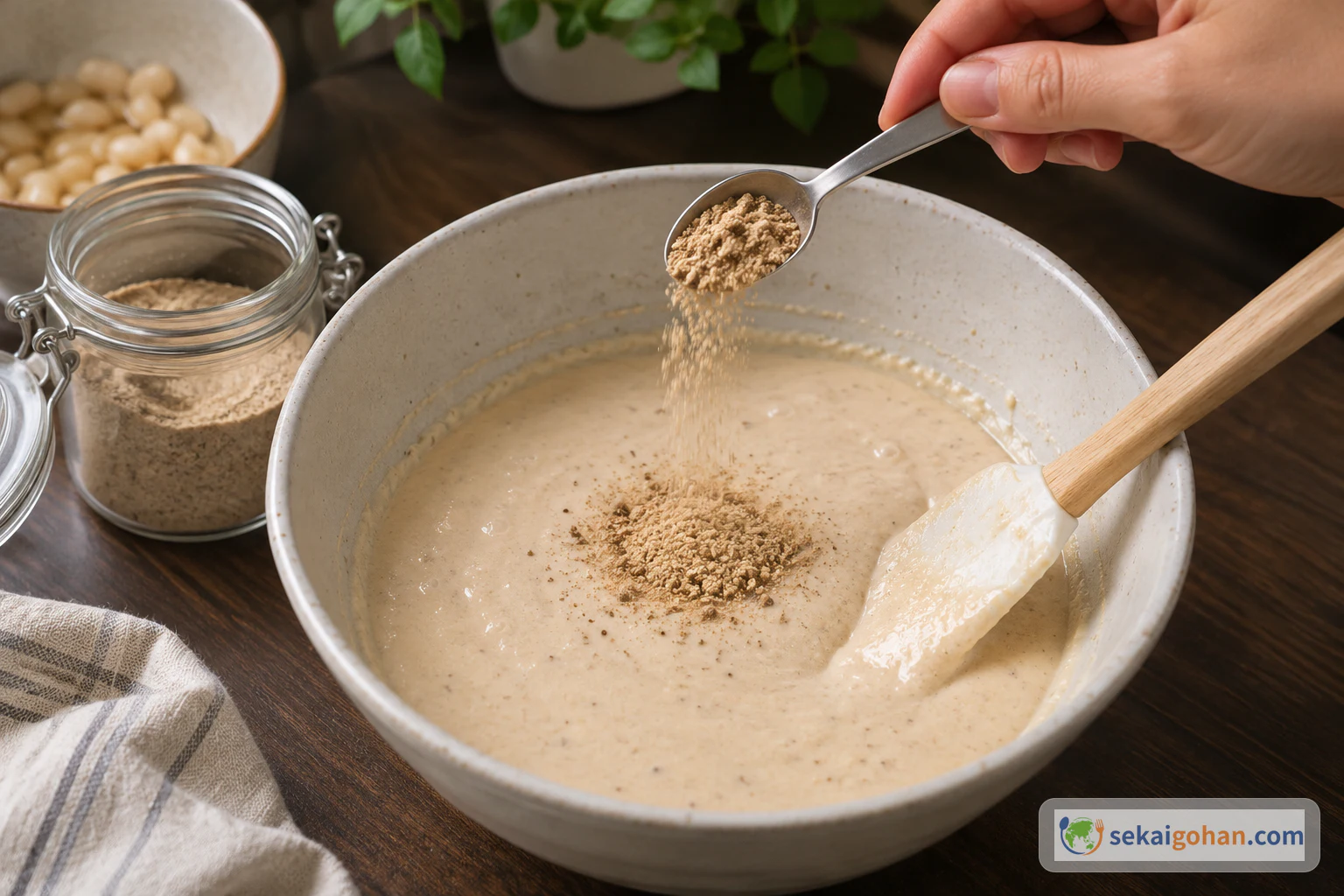
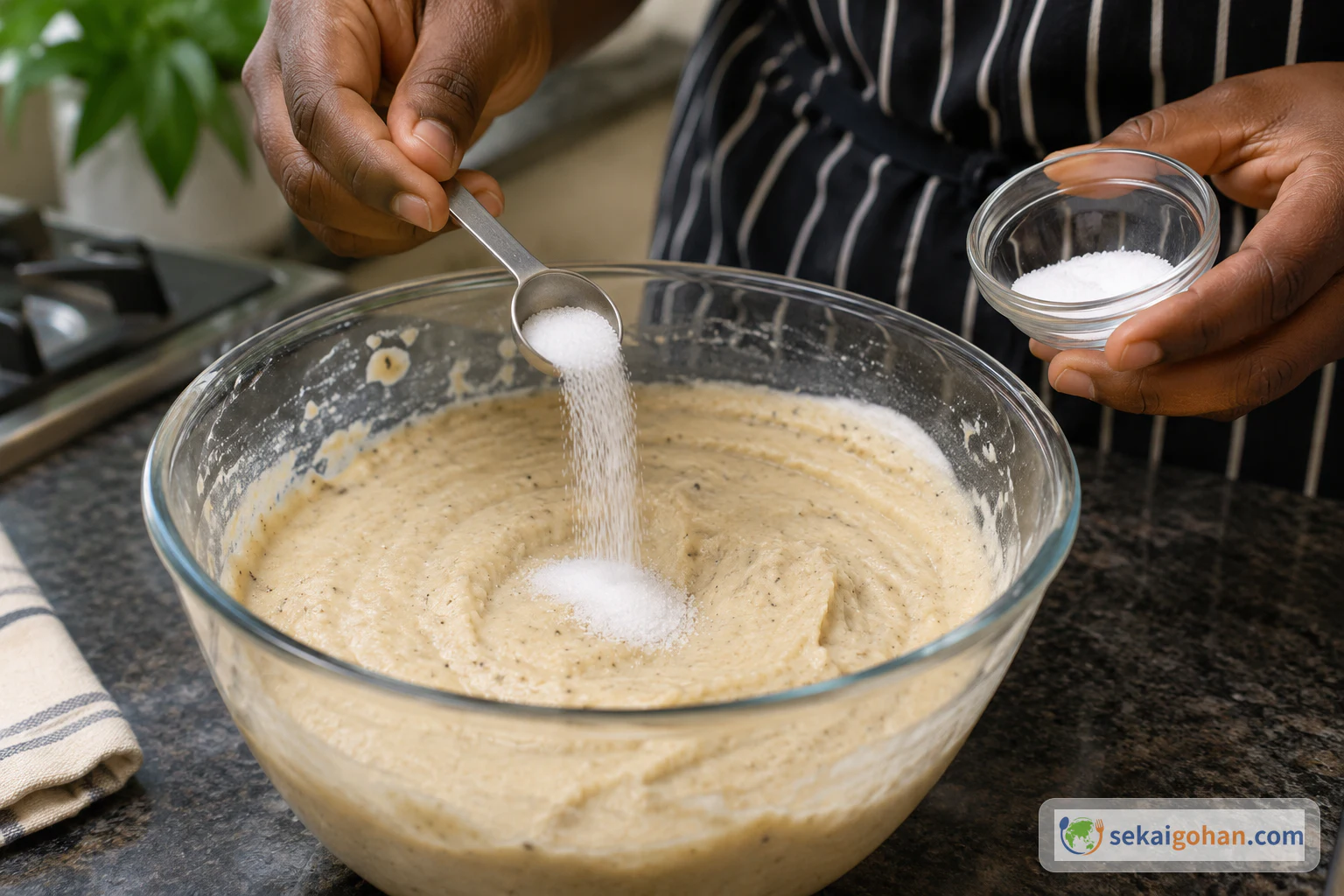
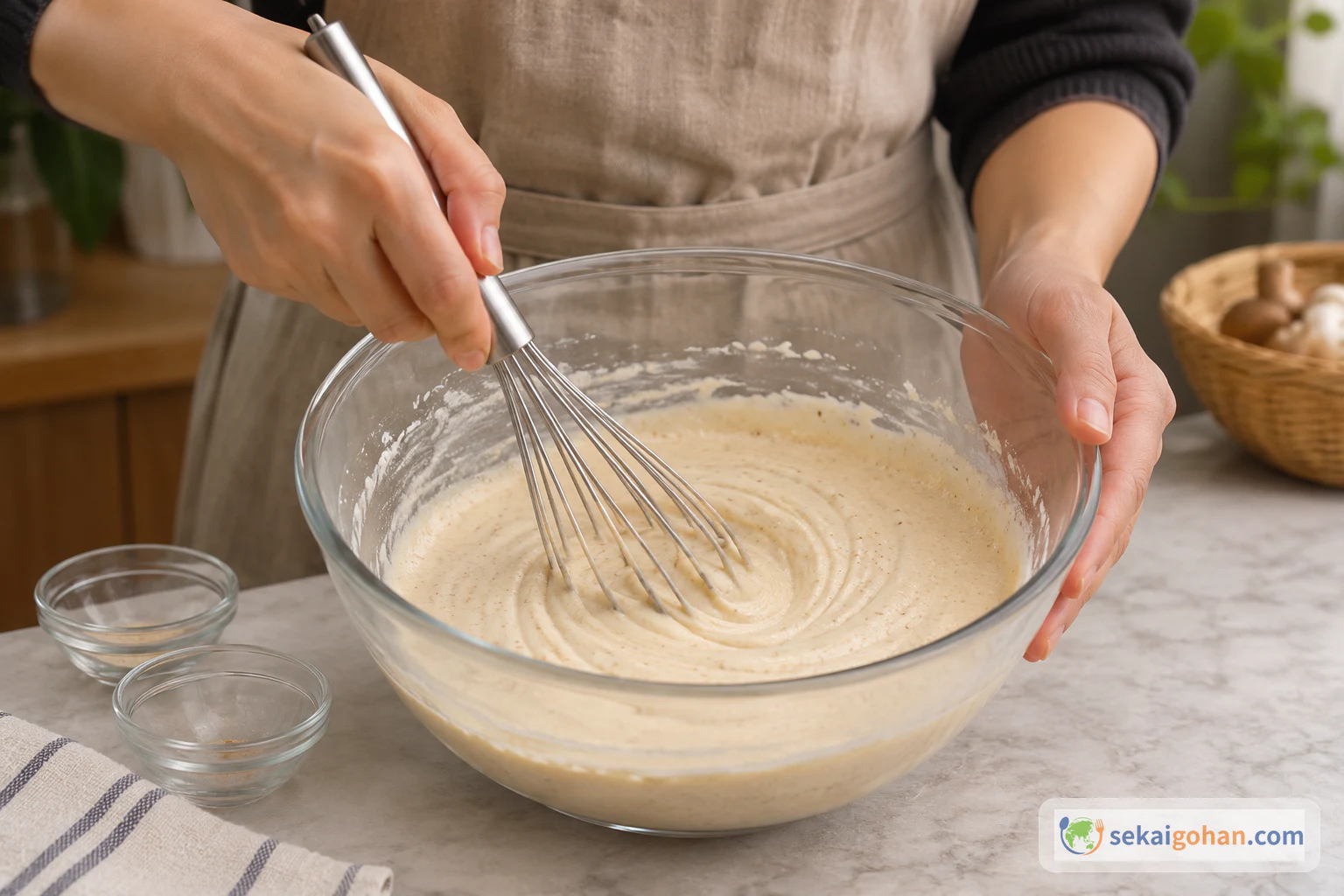
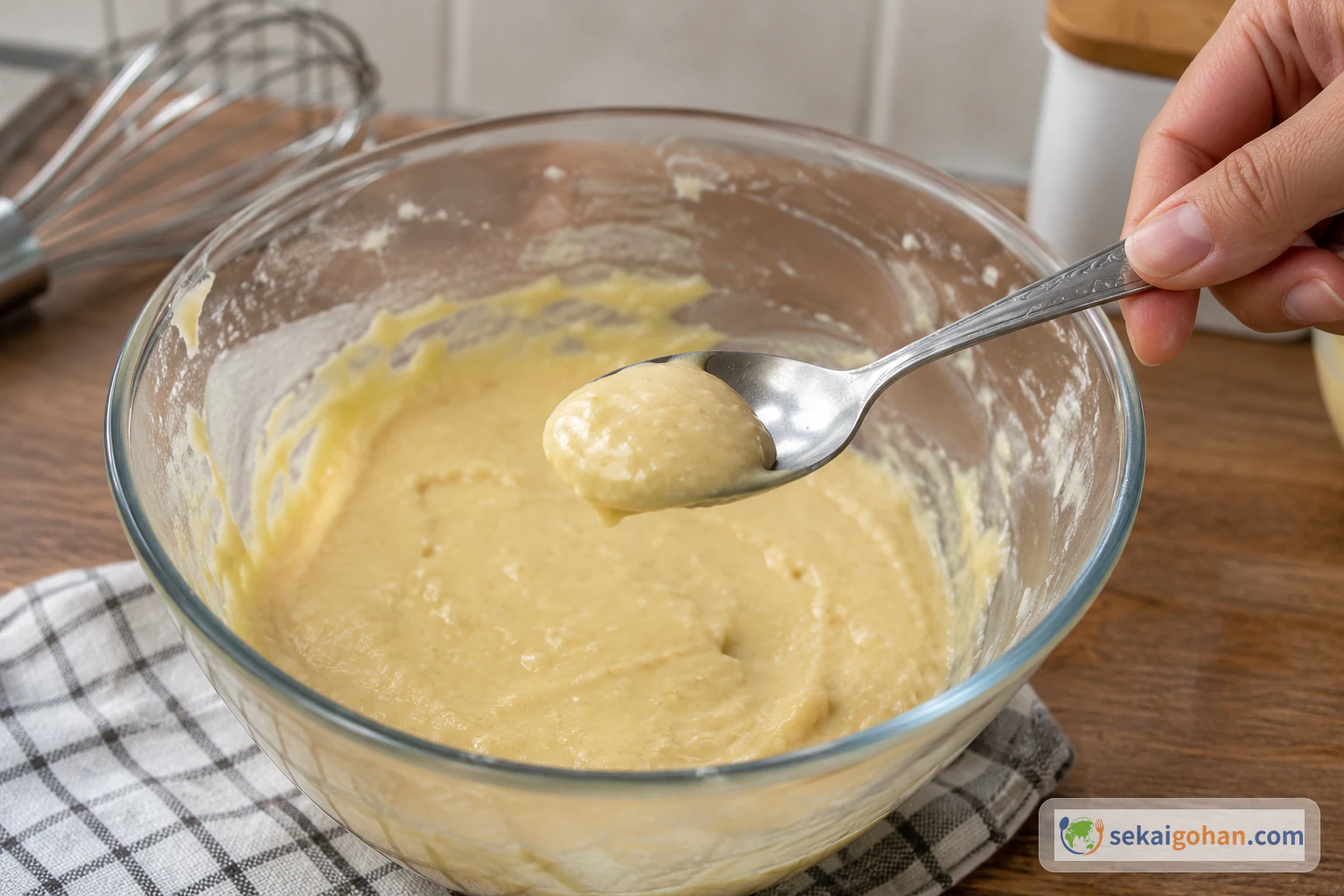
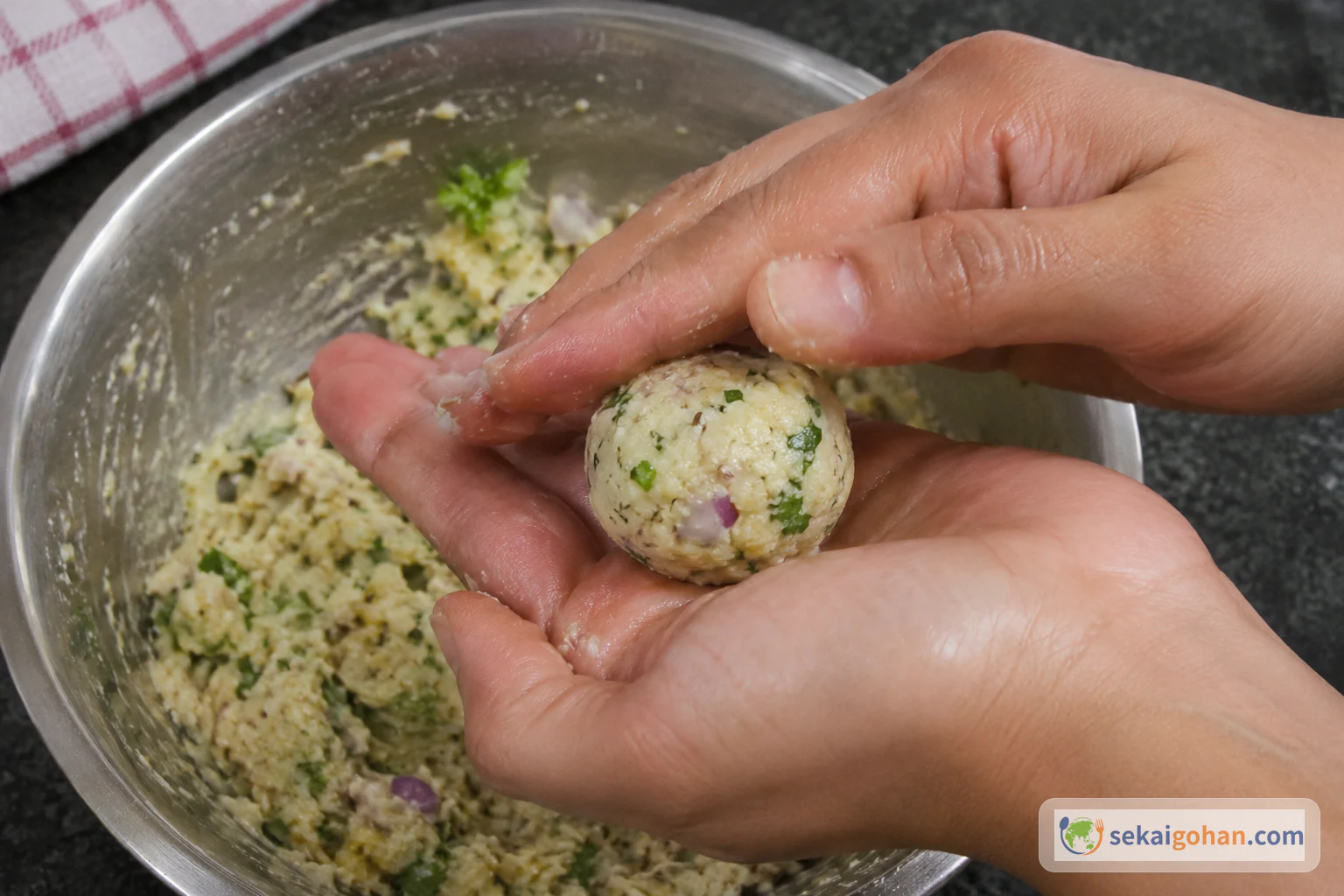
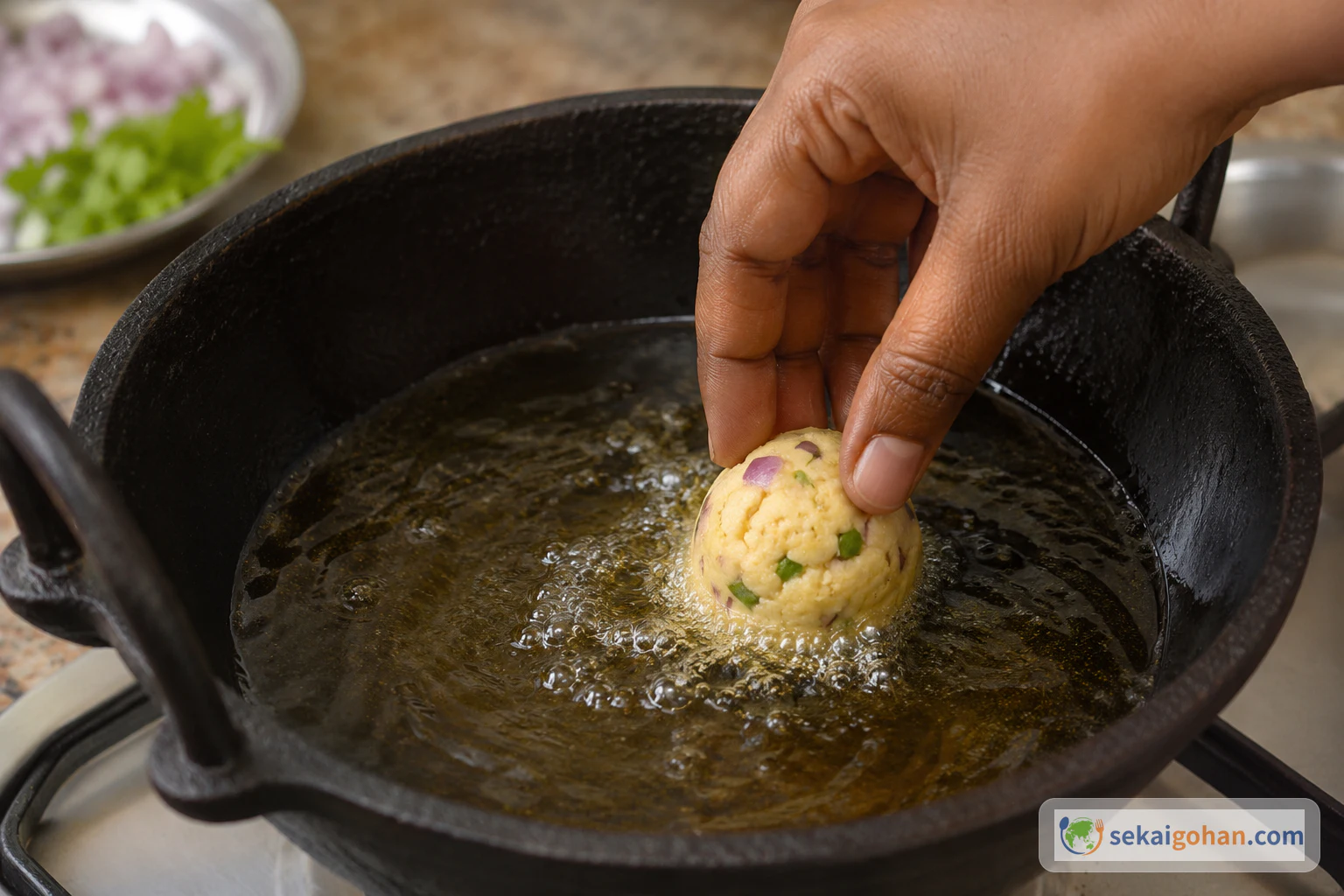
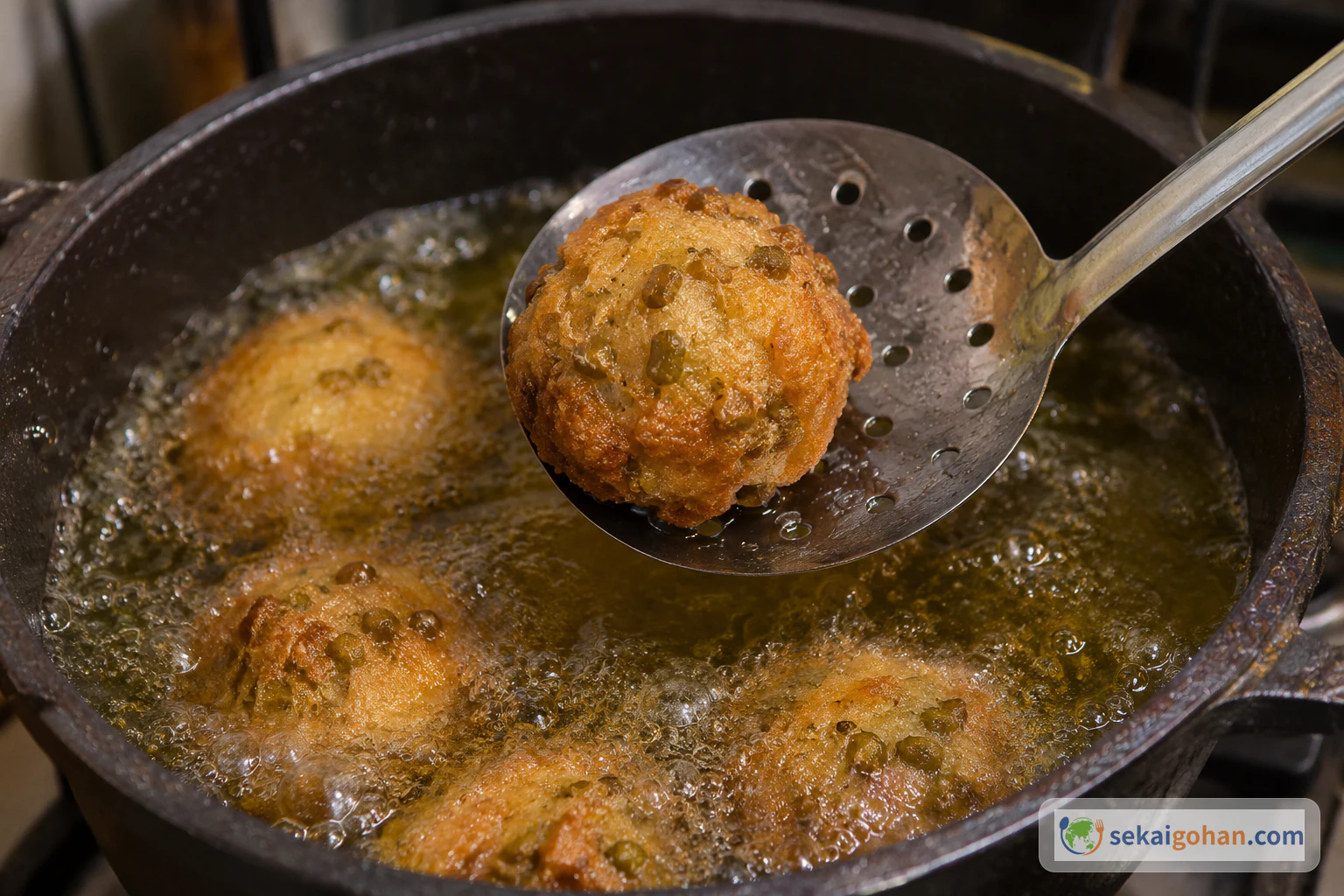
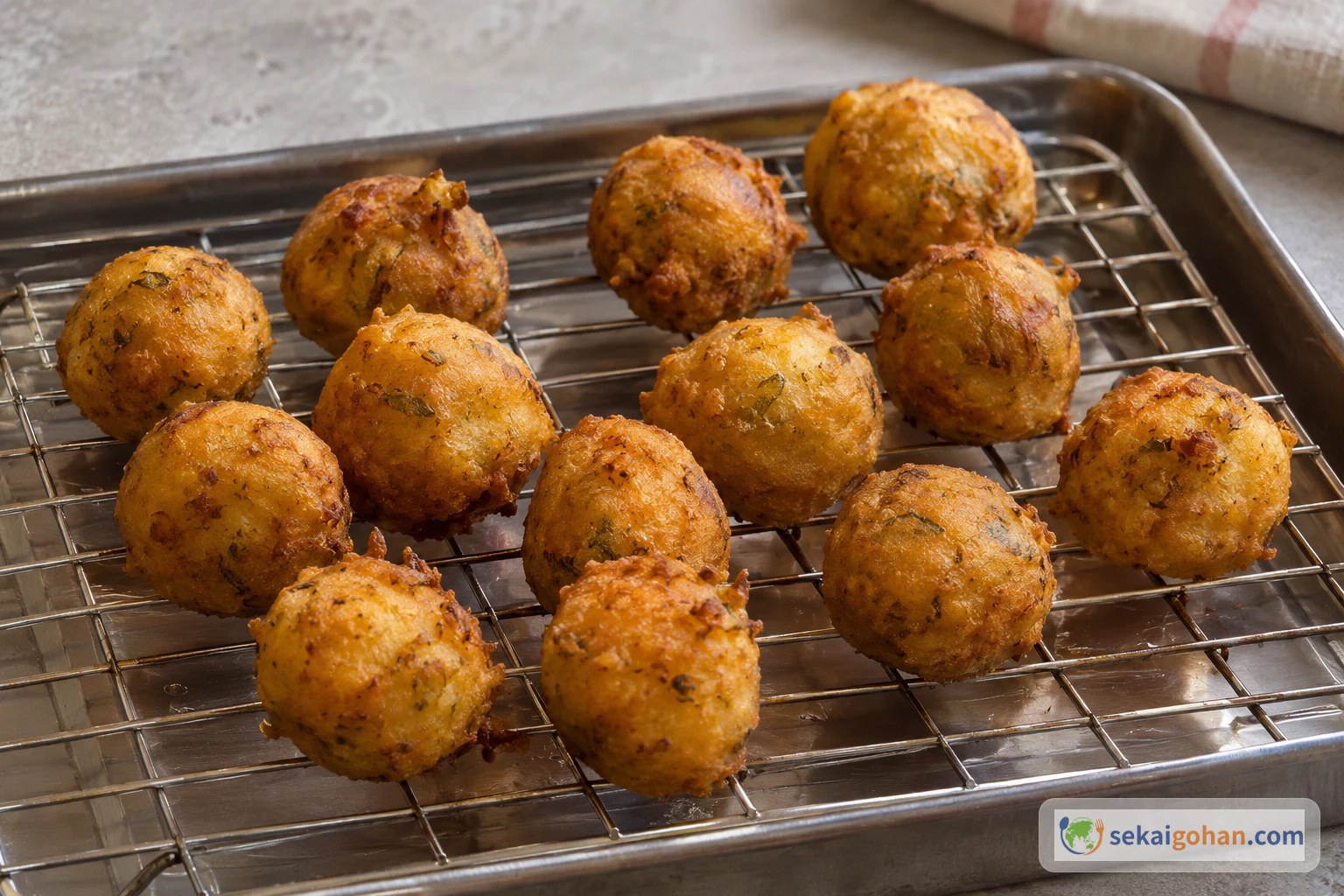
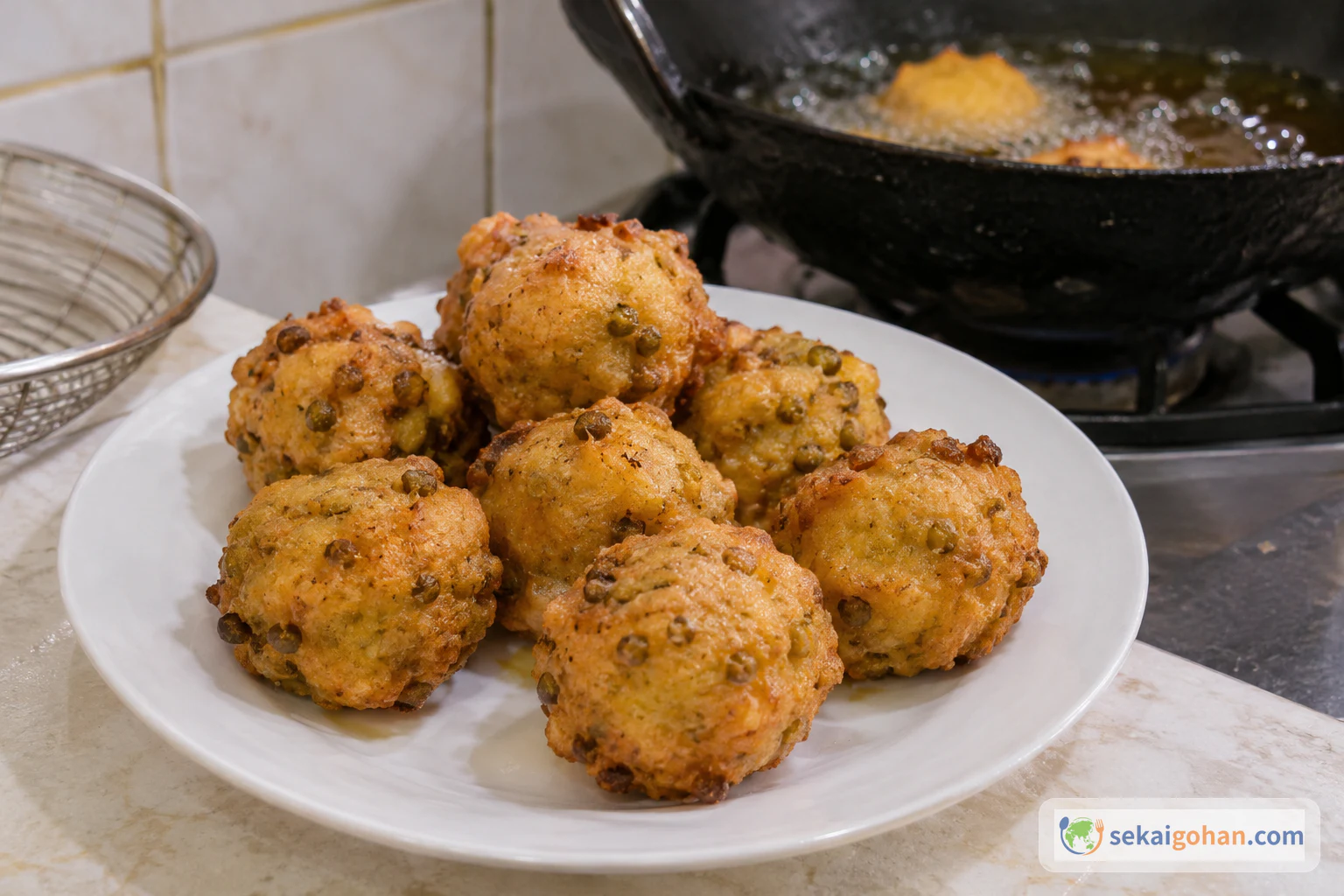
Mash soaked mung beans with garlic, shallot and chili, stir in a little flour, sliced celery and scallion, then roll the batter into small round balls and fry them. They are served plain, with no sauce.
Bunna (@alaBunna), a home cook in Balikpapan, came across mageli on sale in the city, and their family asked them to make it at home. Bunna tried it three ways: with flour, with boiled and mashed potato, and with no flour at all. The version they posted on Cookpad for their own use is the one with flour, and that is the version on this page. Bunna also thanks an earlier Cookpad cook, Suzanmomduor, for the idea.
Mageli is a snack from Balikpapan, Indonesia, and you can explore more of the country from our Indonesia page. The ingredient list is short: the beans are mashed in an ulekan, the Indonesian mortar Bunna used, and each portion is rolled into a ball rather than pressed flat.
We have not kitchen-tested this recipe. The amounts and order of work are Bunna's. Three food-safety measures are our own editorial additions, not Bunna's instructions: soaking the beans in the refrigerator, leaving out the taste of raw batter, and checking the center of a fritter with a thermometer. "Why the Safety Steps Differ from Bunna's Post" below explains each one. We also added a reminder to wash the celery, scallion and chilies well under running water.
Ingredients for Balikpapan Mageli
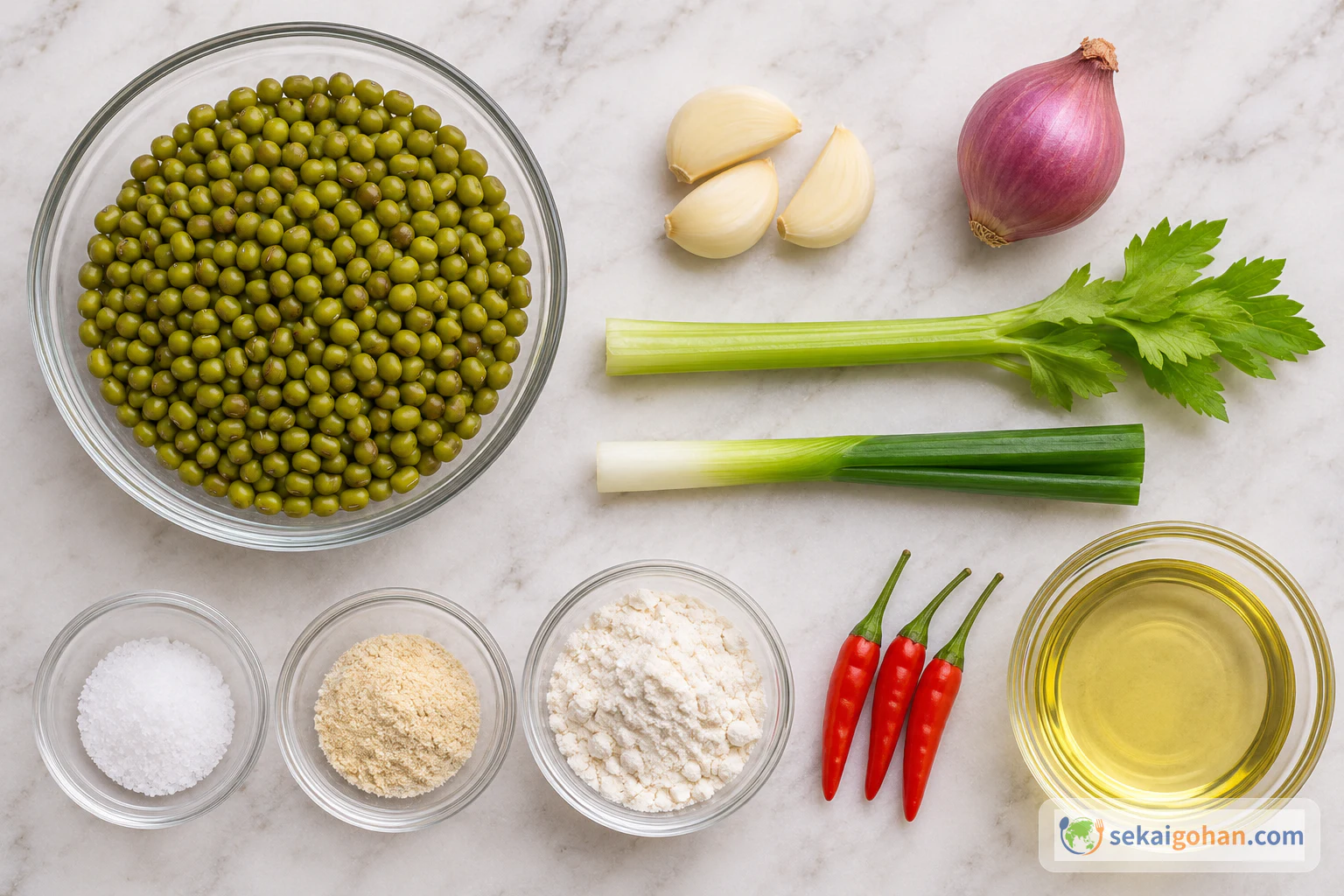
Wash the celery, scallion and chilies well under running water before using them.
Equipment
- Bowls
- Colander
- Mortar and pestle (ulekan)
- Knife and cutting board
- Tablespoon and teaspoon
- Pan for frying
- Slotted spoon
- Draining rack and tray
- Calibrated food thermometer
Choosing and Measuring
We have no tested substitutes for any of these ingredients. This batter contains wheat flour, so it is not suitable for anyone avoiding wheat.
Method: From Overnight Soak to Plain Fried Fritters
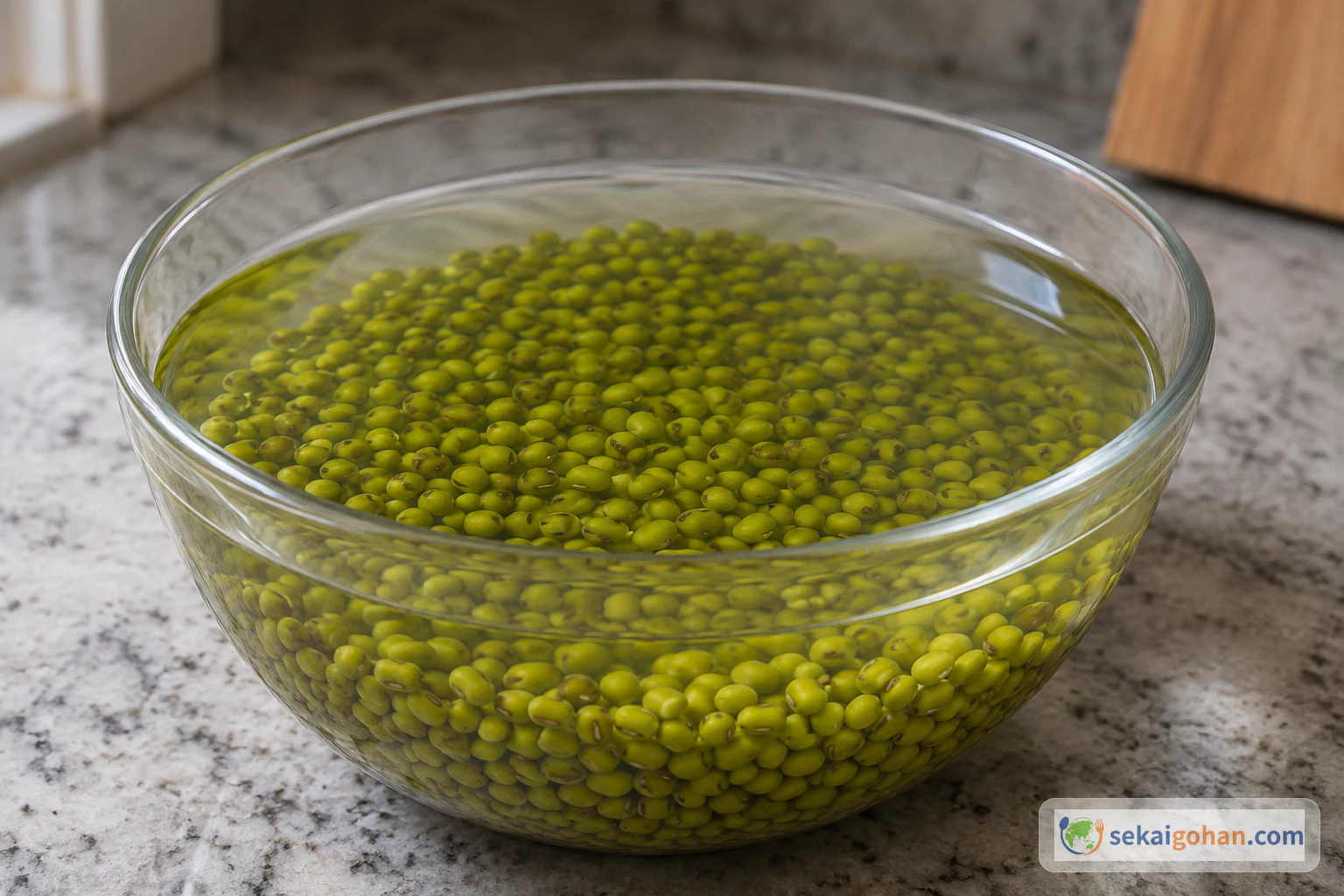
Soak the beans in the refrigerator. Do not taste the raw batter. A brown outside does not show that the center is cooked, so have a calibrated food thermometer ready for step 22.
Start the night before. Watch the fritters as they fry and measure the center.
Troubleshooting
These notes come from the recipe's method and safety guidance, not from test batches.
| What you notice | What to look at | What to do |
|---|---|---|
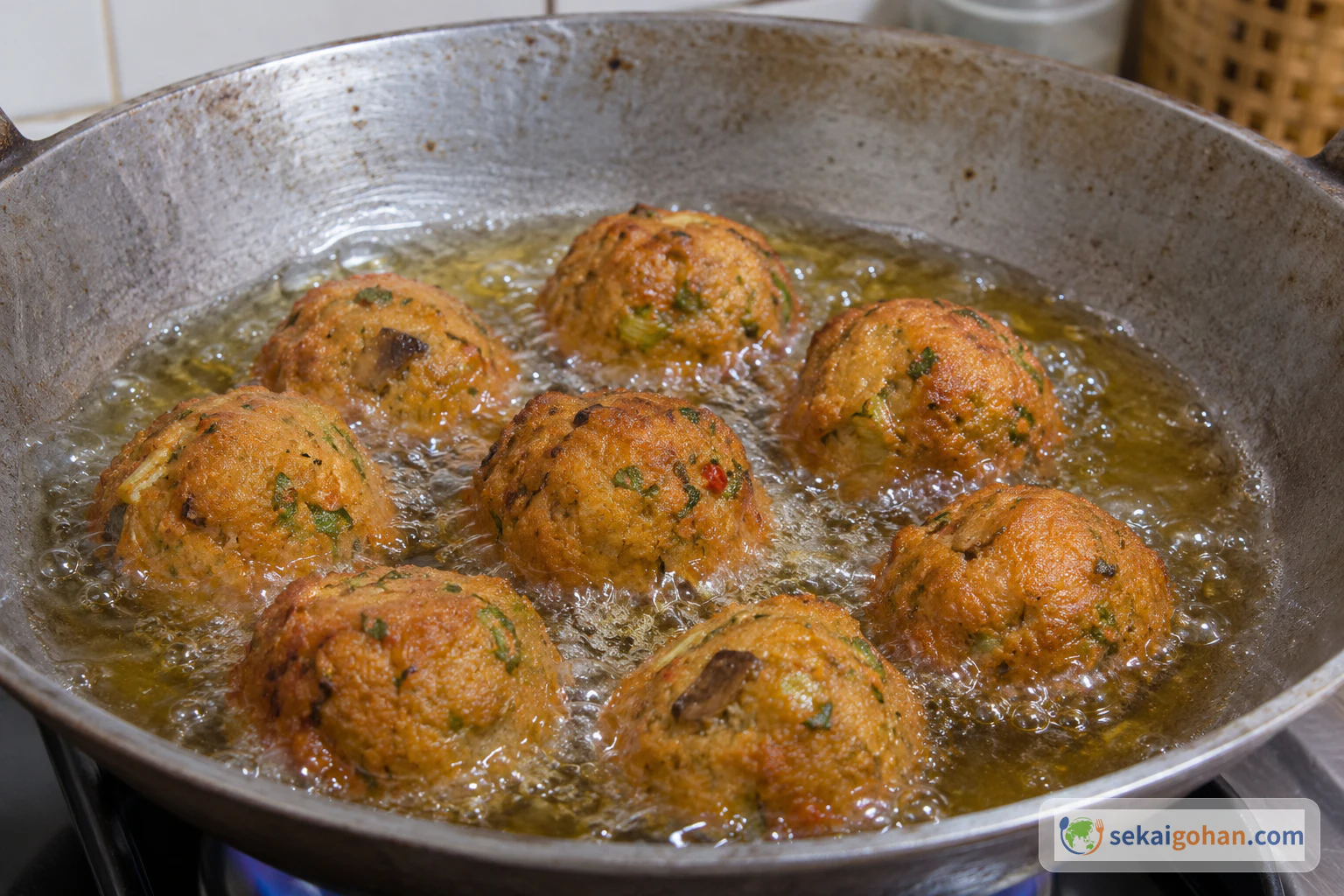
| The outside is brown, but the center is below 75°C | Color does not show that the center is cooked | Keep frying. Count at least 1 more minute only after the center reaches 75°C or higher |
| The balls are hard to measure | They are small | Choose the largest ball for the check |
| The fritters look flat | The portions may have been pressed down | Roll the next ones into round balls. Slight unevenness and a small flat spot from frying are fine |
| The seasoning seems off | Raw batter should not be tasted | Judge it from a finished fritter and adjust the next time you make the recipe |
Variations and What This Recipe Leaves Out
Bunna's post describes a few other directions, and other published versions go further. We don't give amounts for any of them here, because amounts from one version shouldn't be mixed into another.
- Potato or no flour: Bunna tried a version with boiled, mashed potato and another with no flour, then chose the flour version for their own use.
- Blender: Bunna's post allows for a blender as another option, but the mortar is what Bunna actually used, so that is what we describe.
- Accompaniments: iNews mentions serving mageli with ketupat or sambal. Bunna notes that they did not make peanut sauce, so this recipe has none.
- A different bean: iNews describes mageli as a mung bean snack, but the recipe it presents uses kacang tolo instead.
Mageli in Balikpapan: What the Sources Show
The published sources agree on the outline of the dish: mageli is a Balikpapan snack of mung beans, mashed, seasoned and fried. Frisian Flag Indonesia describes it this way in a recipe roundup, and iNews calls it a spicy, savory Balikpapan snack. We found no reliable account of where mageli began, so we offer no origin story here.
Published versions differ quite a bit in their amounts:
- Bunna (Cookpad, used here): 20 sdm mung beans, 1 shallot, 1/2 scallion stem, 1.5 tsp salt and 1 sdm flour.
- Fimela (an editor's recipe): 20 sdm mung beans, 2 shallots, 1 scallion, 1 tsp salt and 2 tbsp flour, though its written steps don't clearly say when the flour goes in.
- Frisian Flag Indonesia: 40 sdm beans and 4 sdm flour, with different amounts of aromatics.
- Suzanmomduor (Cookpad): 250g beans, with most seasonings left to taste and the garlic given loosely as "1 bonggol." This cook is based in Palangkaraya and says they learned the dish from relatives in Balikpapan.
We chose Bunna's version because it comes with a first-hand account of trying three approaches and choosing one.
Why the Safety Steps Differ from Bunna's Post
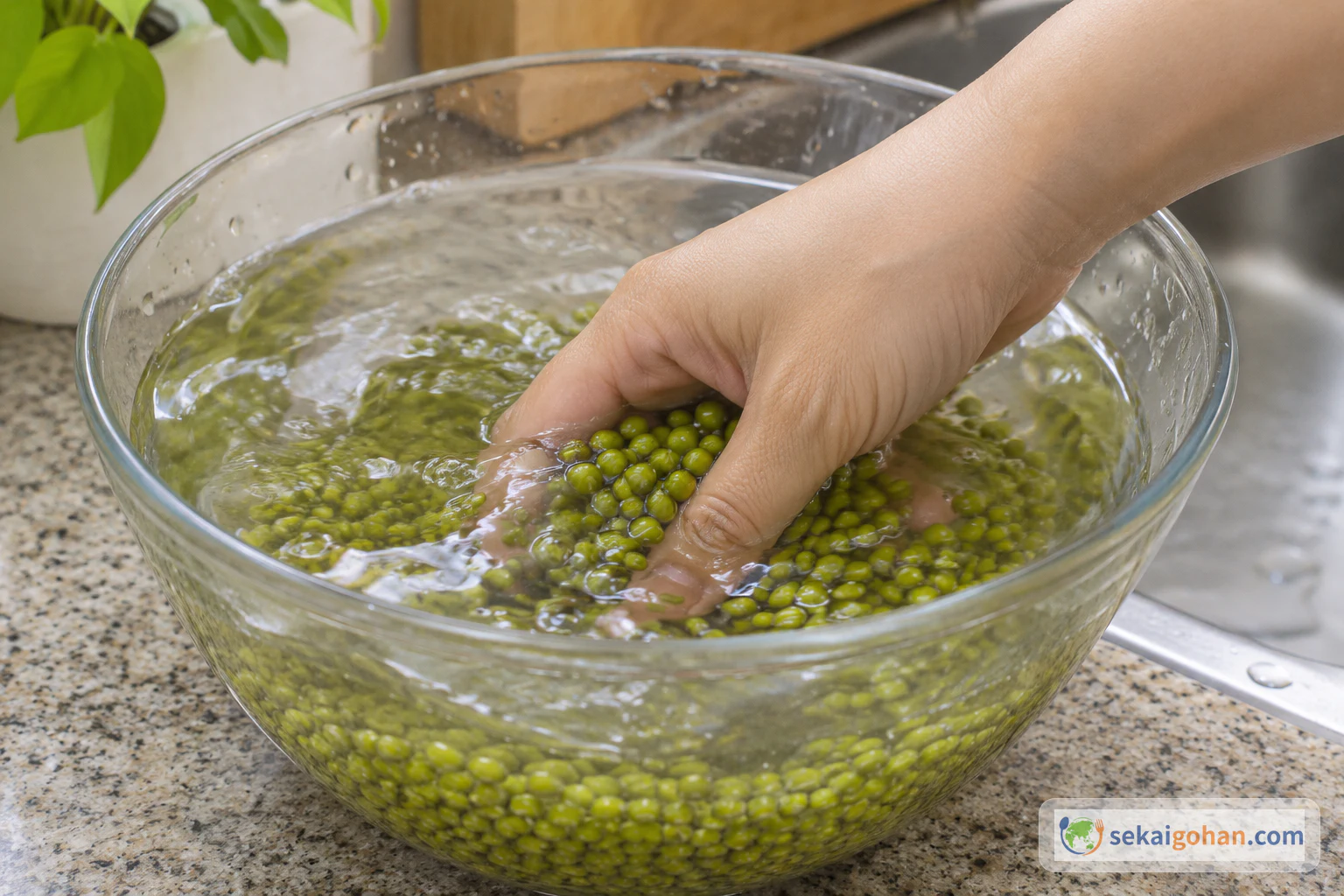
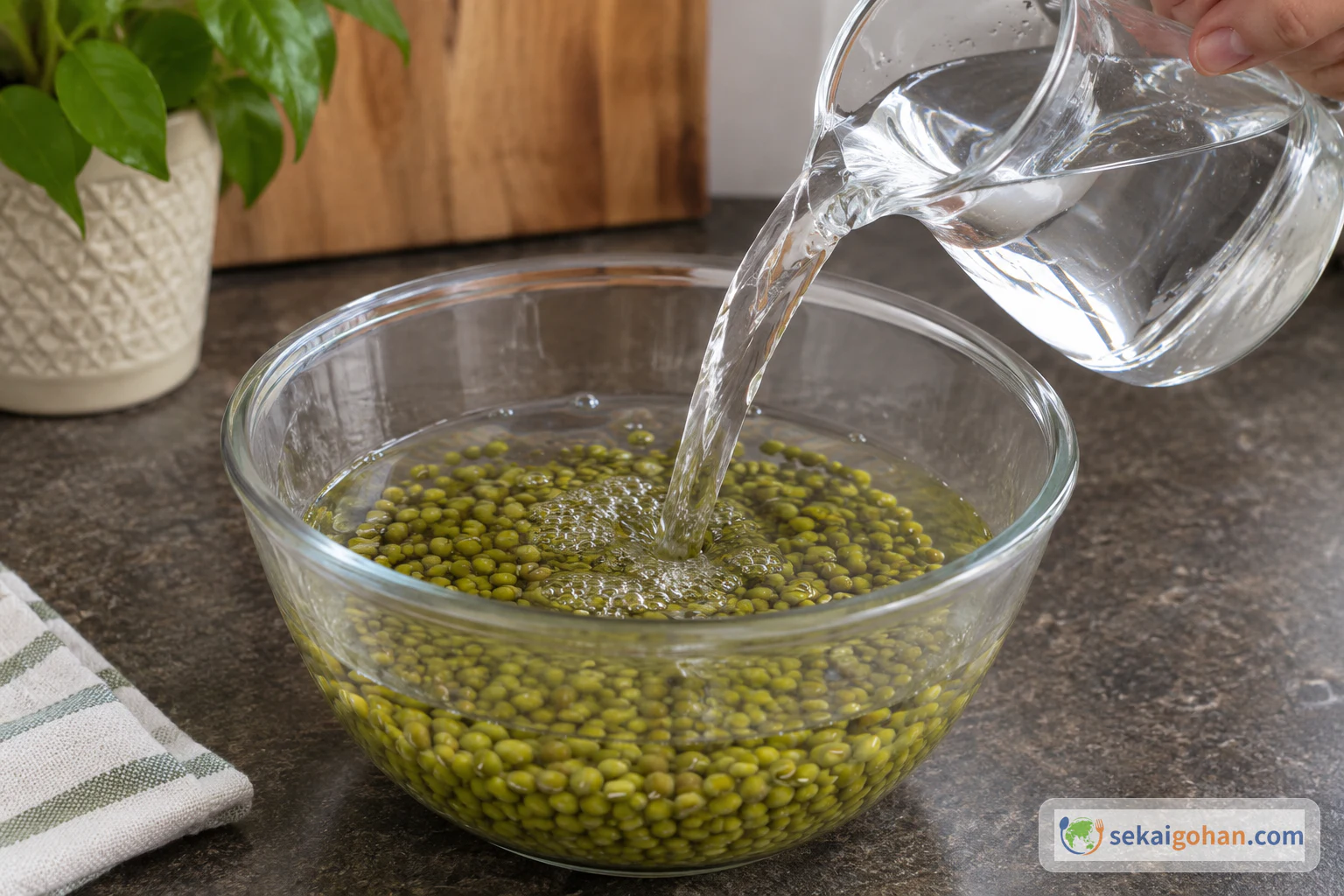
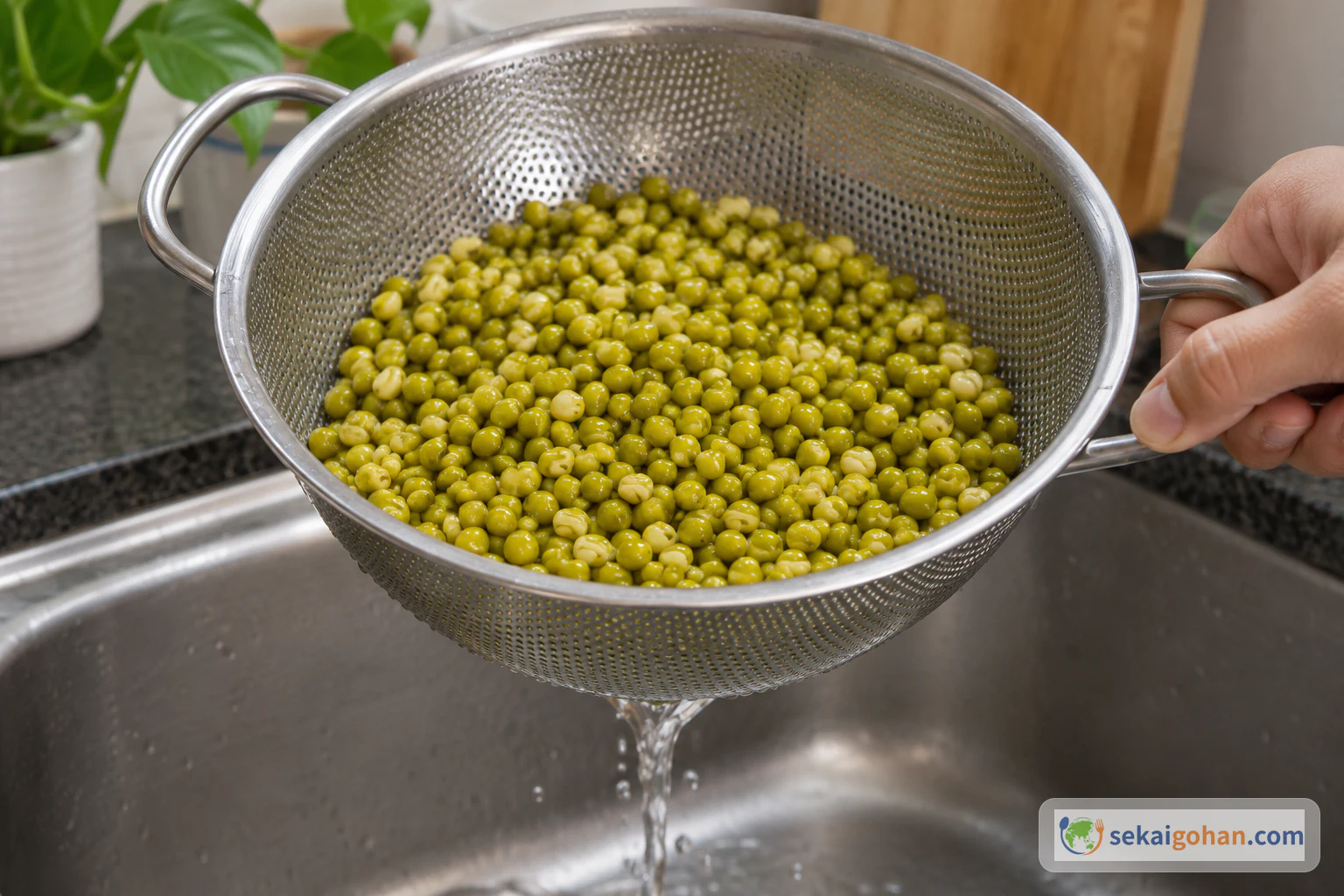
Soaking. Bunna says to soak overnight and gives no temperature. University of Maine Cooperative Extension advises an overnight soak of dried beans in the refrigerator for 6 to 8 hours or overnight, then discarding the soaking liquid and rinsing with cold water. That guidance covers dried beans in general, not mung beans or mageli specifically. Applying it here is our decision, and Bunna does not say they refrigerated the beans.
Tasting. Bunna's post includes a tasting step, which we left out. The US Food and Drug Administration explains that flour is a raw food, that cooking is the only reliable way to make it safe, and that raw flour, dough and batter should not be tasted.
Checking the center. We found no public standard written specifically for small fritters of mung beans and flour. The closest we found is Japan's hygiene manual for large-scale cooking facilities, excerpted in a Ministry of Health, Labour and Welfare council document from around 2010; we did not read the manual's current text. It calls for the center of cooked food to reach 75°C for at least 1 minute, or an equivalent or stronger treatment. For fried food, it describes measuring the center at three or more points with a calibrated thermometer and continuing to heat for at least 1 more minute once all of them reach 75°C.
That is a commercial standard. Scaling it down to one measurement on the largest ball in a home kitchen is our editorial judgment, not something the manual says. Bunna's post does not give an oil temperature or frying time, and we found no reliable figures for them, so we don't offer any.
Frequently Asked Questions
How many fritters does this make?
Bunna's post lists 17 pieces. That is the author's stated yield, which we have not counted or verified. The 1/2 sdm scoop is a guide to size and does not guarantee a particular count.
Should I measure the 20 sdm of beans dry or soaked?
Bunna's post doesn't say, and it doesn't specify a spoon size either. That is why we give no weight and don't convert the amount.
Can I soak the beans at room temperature?
We don't recommend it here. Bunna's post gives no temperature, and the University of Maine guidance we follow describes refrigerated soaking. That guidance does not address room-temperature soaking.
Can I skip the thermometer?
We don't have another verified way to check the center of these fritters. A brown exterior doesn't show that the center is cooked, so we recommend using a calibrated thermometer.
Why are they round instead of flat?
Bunna rolls each 1/2 sdm portion of batter into a round ball, so that is the shape we follow. A little unevenness from shaping or frying is normal.
Do I need a sauce?
No. Bunna did not make peanut sauce, and this recipe is served plain. iNews mentions ketupat or sambal as accompaniments if you want to serve something alongside.
Has this recipe been tested?
Bunna reports trying three versions and posting this one. We have not kitchen-tested it ourselves, including with the added safety steps.
Sources
- Bunna (@alaBunna), "79. Mageli Khas Balikpapan," Cookpad. The main recipe: the author's account, all ingredient amounts and the method. https://cookpad.com/id/resep/12988968
- Suzanmomduor, "Mageli Kacang Hijau," Cookpad. Used for comparison only: a variant learned, by the author's account, from relatives in Balikpapan. https://cookpad.com/id/resep/12081392
- Febi Anindya Kirana, "Resep Mageli, Gorengan Kacang Hijau khas Balikpapan," Fimela. Used for comparison only; its amounts are not used in this recipe. https://www.fimela.com/lifestyle/read/4516220/resep-mageli-gorengan-kacang-hijau-khas-balikpapan
- Frisian Flag Indonesia, "16 Olahan Kacang Hijau, Mudah Dibuat untuk Berbuka Puasa." Used for its description of mageli as a Balikpapan mung bean snack and for comparison; its amounts are not used in this recipe. https://www.frisianflag.com/milkpedia/manfaat-minum-susu/uniknya-olahan-makanan-dari-kacang-hijau
- Vien Dimyati, "Cara Membuat Mageli, Camilan Legendaris Pedas Gurih Khas Balikpapan," iNews.id. Used for its description of the snack, the mention of ketupat and sambal, and its kacang tolo recipe as a point of comparison. https://www.inews.id/travel/kuliner/cara-membuat-mageli-camilan-legendaris-pedas-gurih-khas-balikpapan
- U.S. Food and Drug Administration, "Handling Flour Safely: What You Need to Know." Used for the guidance that flour is a raw food and that raw flour, dough and batter should not be tasted. https://www.fda.gov/food/buy-store-serve-safe-food/handling-flour-safely-what-you-need-know
- University of Maine Cooperative Extension, "How to Store and Cook Dried Beans." Used for refrigerated overnight soaking, discarding the soaking liquid and rinsing with cold water; this is general dried-bean guidance. https://extension.umaine.edu/food-health/?p=10770
- Japan Ministry of Health, Labour and Welfare, council document s0301-4b_10, excerpting the Hygiene Management Manual for Large-Scale Cooking Facilities (大量調理施設衛生管理マニュアル). Used for the 75°C, 1-minute center-heating standard and its procedure for fried food; this is a commercial standard, and applying it to home-fried fritters is our editorial judgment. https://www.mhlw.go.jp/shingi/2010/03/dl/s0301-4b_10.pdf