A Braise the World Acknowledged: CNN's "Most Delicious Food"
In 2011, CNN Travel announced the "world's most delicious foods" from a poll of readers around the world. Among dishes nominated from more than 50 countries, the one that took first place was rendang. Not French or Italian cooking, but a braise kept for hundreds of years by a small ethnic group in West Sumatra was recognized as the world's best flavor.
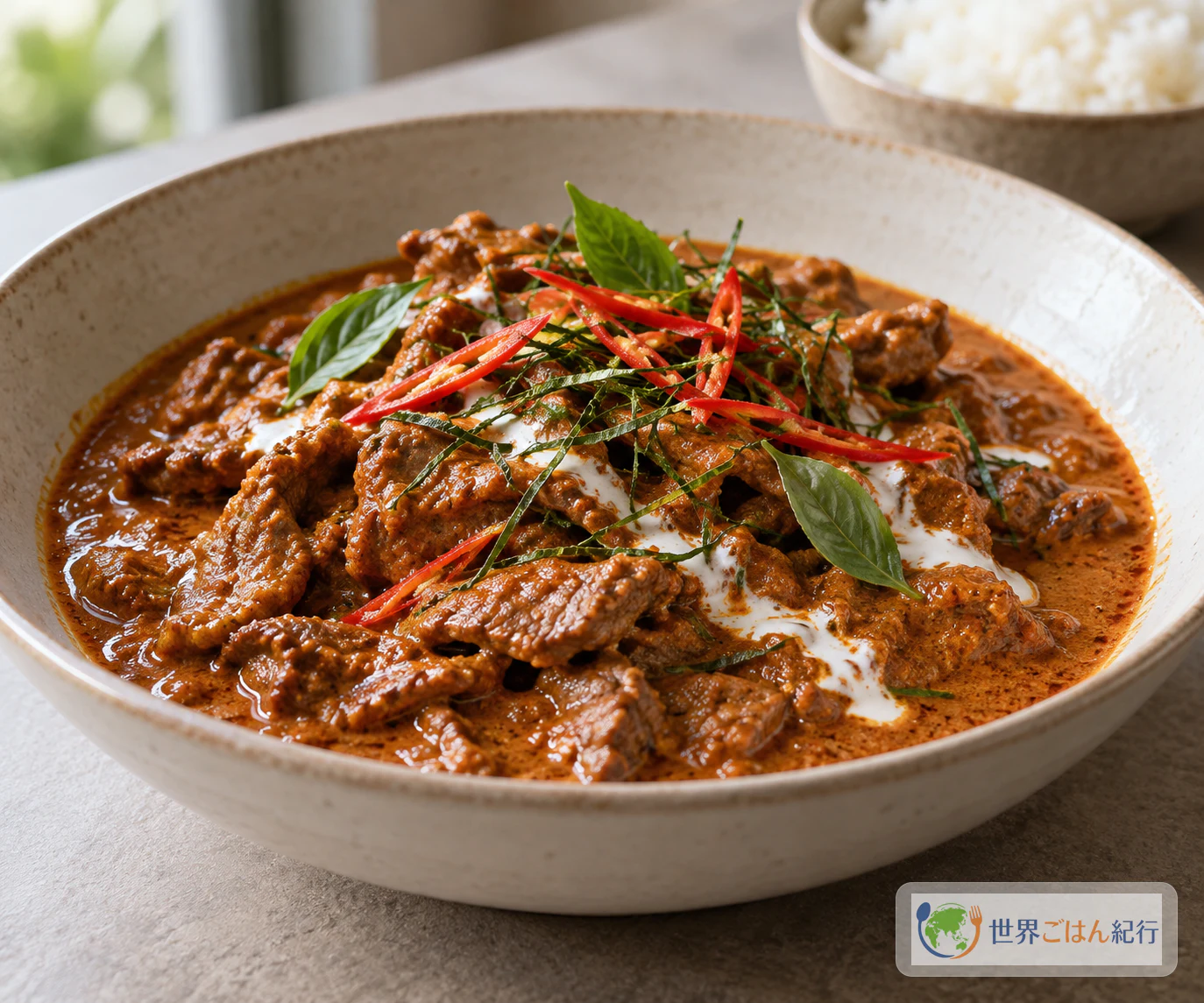
What is rendang? In a phrase: "beef simmered in coconut milk and spices for 3–4 hours until the liquid is cooked down completely". Unlike an ordinary stew, its defining feature is that the liquid is driven off entirely. The coconut milk evaporates, the coconut oil separates, and that oil slowly fries the meat. A braise that finishes "dry".
A traditional beef braise of the Minangkabau people of West Sumatra, Indonesia. Beef is cooked down for 3–4 hours with coconut milk, galangal, lemongrass, chile, turmeric and over a dozen other spices. Its mark is that the liquid evaporates completely, leaving a dry finish.

Ingredients (serves 6)
This dish contains coconut milk (a tree nut) and candlenuts. People with nut allergies should be careful. It uses no wheat, egg or dairy.

Instructions
STEP 1: Make the spice paste, bumbu (20 min)
Nine tenths of rendang's flavor is decided by this spice paste. The traditional Indonesian way is to grind it in a stone mortar (cobek), but a food processor does the job well.
- Remove the stems from the red chiles and leave the seeds in (remove half to lower the heat)
- Roughly chop the shallots (or onions)
- Put the garlic, galangal, ginger, turmeric and candlenuts all in the food processor
- Add 2–3 tbsp water and process for 1–2 minutes until it is a smooth paste
Galangal is a rhizome called "kha" in Thai and "laos" in Indonesian. It looks like ginger but is harder, with a distinctive piney aroma. It is essential to the flavor of rendang, so I don't recommend substituting ginger. Look for it in the freezer section of an Asian grocery.

STEP 2: Cut the beef (10 min)
- Cut the beef into 3–4 cm cubes. If too small it falls apart in the braise; if too large it is slow to cook
- You don't need to remove the connective tissue. Long cooking turns it to gelatin, which adds body and richness

STEP 3: Fry the spice paste (10 min)
- Heat 2 tbsp vegetable oil in a large pot (a heavy pot is best)
- Add all the spice paste and fry over medium heat for 5–8 minutes until the moisture cooks off, the color deepens and the oil separates
- Bruise 3 lemongrass stalks about 3 cm from the base and add them to the pot
- Lightly tear 5 kaffir lime leaves by hand and add them (cutting the veins releases more aroma)

Spice paste burns easily. Keep stirring constantly with a wooden spoon over medium heat. Burnt paste turns bitter and can't be saved. When the oil begins to separate from the paste and a sweet aroma rises, move on to the next step.
STEP 4: Add the beef and coconut milk (5 min)
- Add the 3–4 cm beef cubes to the pot and coat them with the spice paste
- Pour in all 800 ml coconut milk at once
- Add 2 tsp salt, 1 tbsp brown sugar and 2 tsp tamarind paste
- Raise the heat to high and bring to a boil once

STEP 5: Simmer slowly for 3–4 hours
This is the heart of rendang. Don't hurry; keep the heat so that only the bottom of the pot bubbles gently as you cook it down. Boiling hard makes the meat tough and burns only the spices on the bottom.
- Once it boils, lower to low to medium-low heat and simmer uncovered. If large bubbles rise on the surface the heat is too high. A lid keeps the moisture in so it won't finish dry
- Every 30 minutes, stir by turning from the bottom in big sweeps. Run the wooden spoon along the pot bottom, pushing the meat from the outside toward the center so it doesn't break up. After 2 hours, when the liquid has reduced, check every 15 minutes
- After 1 hour: the coconut milk has halved and the meat begins to take on a pale brown. The sauce is like a loose curry, and this stage is called "kalio"
- After 2 hours: the liquid has reduced further and clear oil begins to float in spots on the surface. The color turns brown, and running a wooden spoon along the bottom leaves a line for a moment
- After 3 hours: nearly all the water has evaporated and the oil sizzles at the bottom of the pot, pan-frying the meat. The spices coat the meat thickly and the color approaches dark brown to nearly black
- To finish, add 200 ml coconut cream and coat everything without crushing the meat, cooking 15–20 minutes more. Cook down until the whiteness of the cream is gone and the sauce clings to the surface of the meat again
The "still has liquid" state partway through the simmer is called kalio. Kalio is a finished dish in its own right, and if you like a milder taste you can stop at this stage. Cooking it until the liquid is completely gone and it is "dry" is rendang. Going from kalio to rendang takes another 1–2 hours.

STEP 6: Finish (5 min)
- It is done when the surface of the meat is coated in oil and has turned dark brown to blackish brown
- Remove the lemongrass and kaffir lime leaves (you can leave a few for decoration)
- Taste and adjust with salt

The Science of Rendang: Why Driving Off the Water Tastes So Good
The two-stage change of coconut milk
Coconut milk is an emulsion of water and fat. With long heating, the water evaporates first. The remaining fat (coconut oil) covers the meat and drives the Maillard reaction on its surface at high temperature. This two-stage change from "braising to pan-frying" is the secret of rendang's complex flavor.
Fat-soluble spice compounds
Many of the aroma compounds in galangal, lemongrass and turmeric are fat-soluble. Coconut oil dissolves these compounds and carries them into the meat. This is why you get a depth of flavor that a curry simply boiled in water can't give.

History: The Flavor Kept by a Matrilineal Society
West Sumatra's matrilineal society
The origin of rendang lies with the Minangkabau people of West Sumatra, Indonesia. Known as the world's largest matrilineal society, the Minangkabau have a distinctive culture in which property passes from mother to daughter. Within this society, rendang is essential to every important ritual: weddings, funerals, harvest festivals and religious events.
Minangkabau men have a tradition of leaving home on a journey called "merantau", going to other lands to do business or study. Rendang developed as food to carry on such journeys. As a preserved dish with the moisture driven off, it was a valuable food to support journeys of many days in an age without refrigeration.
Padang food (masakan Padang)
The Minangkabau food culture spread across Indonesia as "Padang food". Padang restaurants (rumah makan Padang) are everywhere from Jakarta to Bali. Their distinctive style is that a dozen or so dishes in small plates are set on the table and you pay for what you eat.
The way Padang food is served is unlike anything else in the world. When customers sit down, before taking an order the staff bring trays of a dozen or more dishes stacked up an arm. All the plates are set on the table and customers eat as much of what they like as they like. Plates left untouched are simply returned and offered to the next customer. This system is called "hidang" and embodies Minangkabau hospitality.
The shock of CNN's "world's best dish"
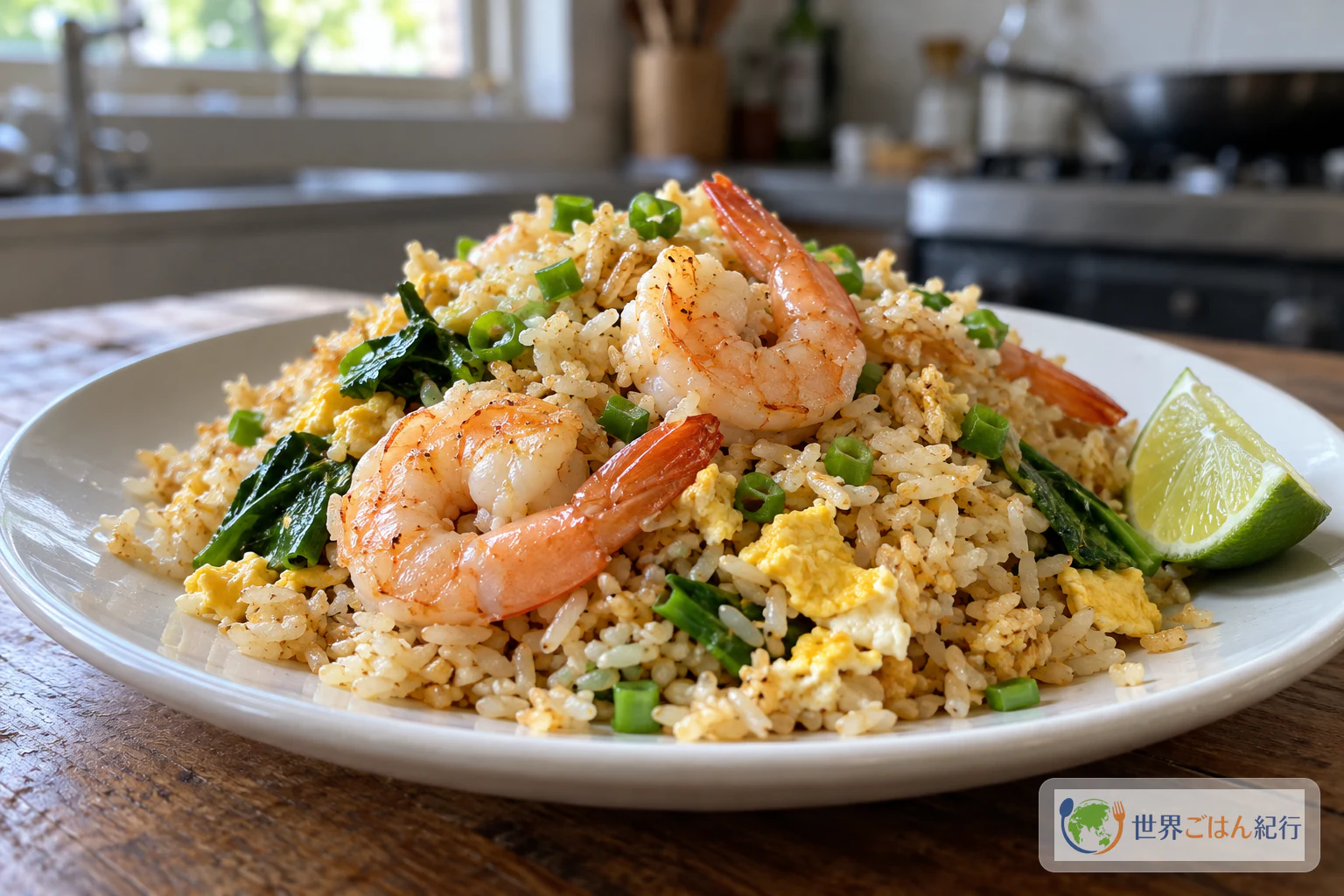
In CNN Travel's 2011 reader poll, rendang took first place. Second was nasi goreng (also from Indonesia). The result became a great source of pride within Indonesia.
Rendang and religious occasions
The Minangkabau are mostly Muslim. Rendang is an essential dish for important Islamic holidays. At Eid al-Fitr (the festival after the fast) and Eid al-Adha (the festival of sacrifice) in particular, large amounts of rendang are made and shared with relatives and neighbors. At weddings there is a tradition in which the groom's family prepares rendang and gives it to the bride's family. This act of "giving rendang" is the highest hospitality, expressing respect and welcome to the other party.

Five Tips to Avoid Failure
1. Use a heavy pot
A thin pot burns easily on the bottom. A cast-iron pot such as a Dutch oven or a multi-ply stainless pot is best. A wok, close to the Minangkabau's traditional cookware, can also be used.
2. Keep the heat at "lowish medium"
If you rush it on high heat, the outside burns while the inside is still firm. Drive off the water slowly over lowish-medium heat. Not hurrying is the iron rule of rendang.
3. Stir once every 30 minutes
Stirring too often breaks the meat up. Once every 30 minutes, stir by scooping from the bottom. Especially in the later stage (when the liquid has reduced) it burns easily, so shorten the interval to 15 minutes.
4. Always use full-fat coconut milk
Light coconut milk lacks fat and won't give rendang's characteristic dry finish. Choose a can where you can see the firm top layer (coconut cream) when you open it.
5. It is best eaten the next day
Rendang is much better the next day than freshly made, as the spices settle into the meat. Making it the day before, resting it in the refrigerator overnight and reheating it the next day is common sense in Indonesian homes.
Rendang Variations
Rendang daging (beef rendang)
The most standard variation, introduced in this article. In Minangkabau tradition water buffalo meat is used, but beef is common today.
Rendang ayam (chicken rendang)
A milder version made with chicken. The cooking time is half that of beef (1.5–2 hours). Bone-in chicken thighs are best. Recommended for people trying rendang for the first time.
Rendang telur (egg rendang)
A vegetarian version in which hard-boiled eggs are simmered in rendang's spice paste and coconut milk. The spices soak all the way into the center of the egg, and a beautiful cross-section appears when cut.
Bamboo shoot rendang
A vegetarian version cooking bamboo shoots by the rendang method. Popular in the mountain areas of West Sumatra. The texture of bamboo shoots goes well with the spice paste.
Jackfruit rendang
Young jackfruit cooked by the rendang method. Jackfruit, with its meat-like texture, goes extremely well with the spice paste. It has drawn attention in recent years as an authentic vegan rendang.
Rendang ikan (fish rendang)
A variation made with red-fleshed fish such as tuna or bonito, popular in coastal areas. The cooking time is shorter, 1–1.5 hours. Fish breaks up easily, so stir less often and shake the pot to move everything.
More Dishes to Cook
- Indonesian cuisine guide: Continue with another dish from the same country's table.
- Mie goreng: Continue with another dish from the same country's table.
- Nasi goreng: Continue with another dish from the same country's table.
- Bagea: Looking at the sago sweets of eastern Indonesia connects Indonesia's starch culture beyond rice and meat.
- Klappertaart: Moving on to the coconut sweet of Manado in North Sulawesi widens the Indonesian table to a sweet plate.
- Num banhchok: Uses similar ingredients and aromas from the same region.
- Hủ tiếu: Uses similar ingredients and aromas from the same region.
Frequently Asked Questions
Q1. What is the difference between rendang and curry?
The biggest difference is "liquid". Curry has ingredients sitting in a soupy liquid, while rendang drives off the liquid completely. The cooking method differs too: rendang goes through the two-stage change of braising and then pan-frying. The flavor is richer than curry.
Q2. Can I shorten the time with a pressure cooker?
You can soften the meat in a pressure cooker, but the step that is the essence of rendang, driving off the water, can't be skipped. A realistic method is to cook for 1 hour in a pressure cooker, then open the lid and drive off the liquid as in an ordinary pot. Total time can be cut to 2–2.5 hours.
Q3. Is it better after resting overnight?
Yes. Rendang is better the next day than freshly made, as the spices settle into the meat and the flavor deepens. It keeps 3–5 days in the refrigerator, and gets richer each time it is reheated. In the freezer it keeps 1 month.
Q4. Can I make it without galangal?
Galangal is the core of rendang's flavor. Omit it entirely and it becomes a different dish. If you really can't get it, ginger plus a little black pepper and grated lemon zest can approximate the mood, but it is inadequate as a substitute. I recommend buying frozen galangal online.
Q5. Which cut of beef is best?
Shank is best. It is rich in collagen and turns to gelatin with long cooking, giving a melting texture. Next is short rib or brisket, with a good balance of fat and lean. Lean cuts such as round or tenderloin turn dry with long cooking and are unsuitable.
Q6. How do I store rendang?
In the refrigerator it keeps 5 days in an airtight container. In the freezer it keeps 1 month. Divide into portions, wrap in plastic wrap and put in zip bags to freeze. Reheating in a pot over low heat is best. A microwave works too, but edges tend to harden. Adding a little coconut milk when reheating brings back the moistness.
Summary: Three Hours of Patience Produce the World's Best Flavor
Rendang is a dish worthy of the title "most delicious food in the world". The depth of its flavor comes from the patience of slowly cooking down coconut milk over 3–4 hours and evaporating the liquid completely.
The biggest challenge elsewhere may be getting galangal and kaffir lime leaves, but online shopping solves that, and frozen products keep for a long time. After that it is only time and patience: over low heat, keep stirring slowly until the water is gone. The world's best flavor waits at the end.
If you are interested in Southeast Asian cooking, try the Indonesian cuisine guide and nasi goreng too. As dishes that also use coconut milk, laksa and nasi lemak are good matches. To enjoy the art of spice use, comparisons with biryani and tagine are interesting. Other spicy Southeast Asian dishes recommended are som tam, pad thai, gapao and adobo.
Sources
- Owen, Sri. Indonesian Food and Cookery. Prospect Books, 2006.
- World's 50 Best Foods, CNN Travel