Dangke: Milk, Papaya, a Coconut Shell and a Banana Leaf
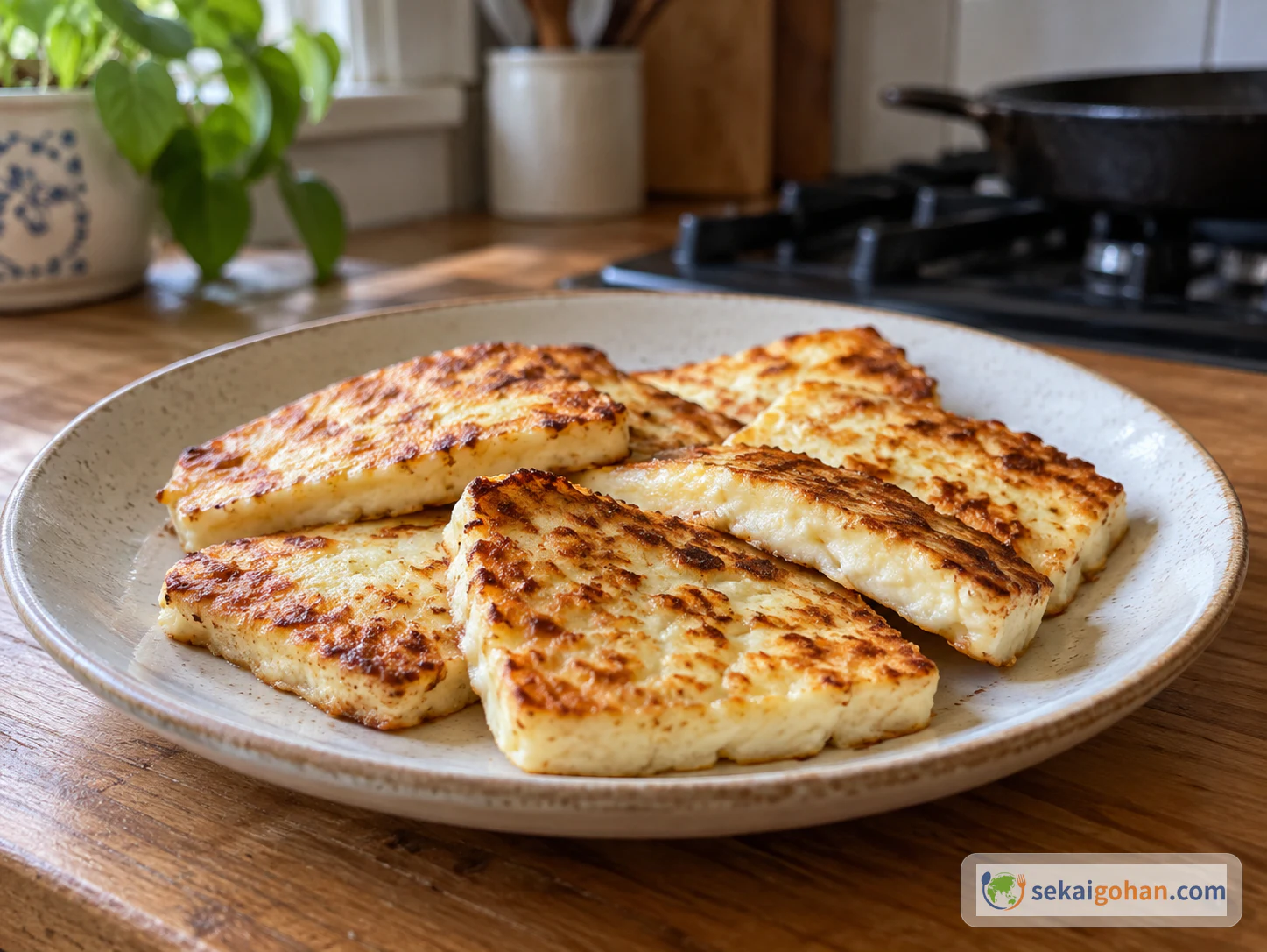
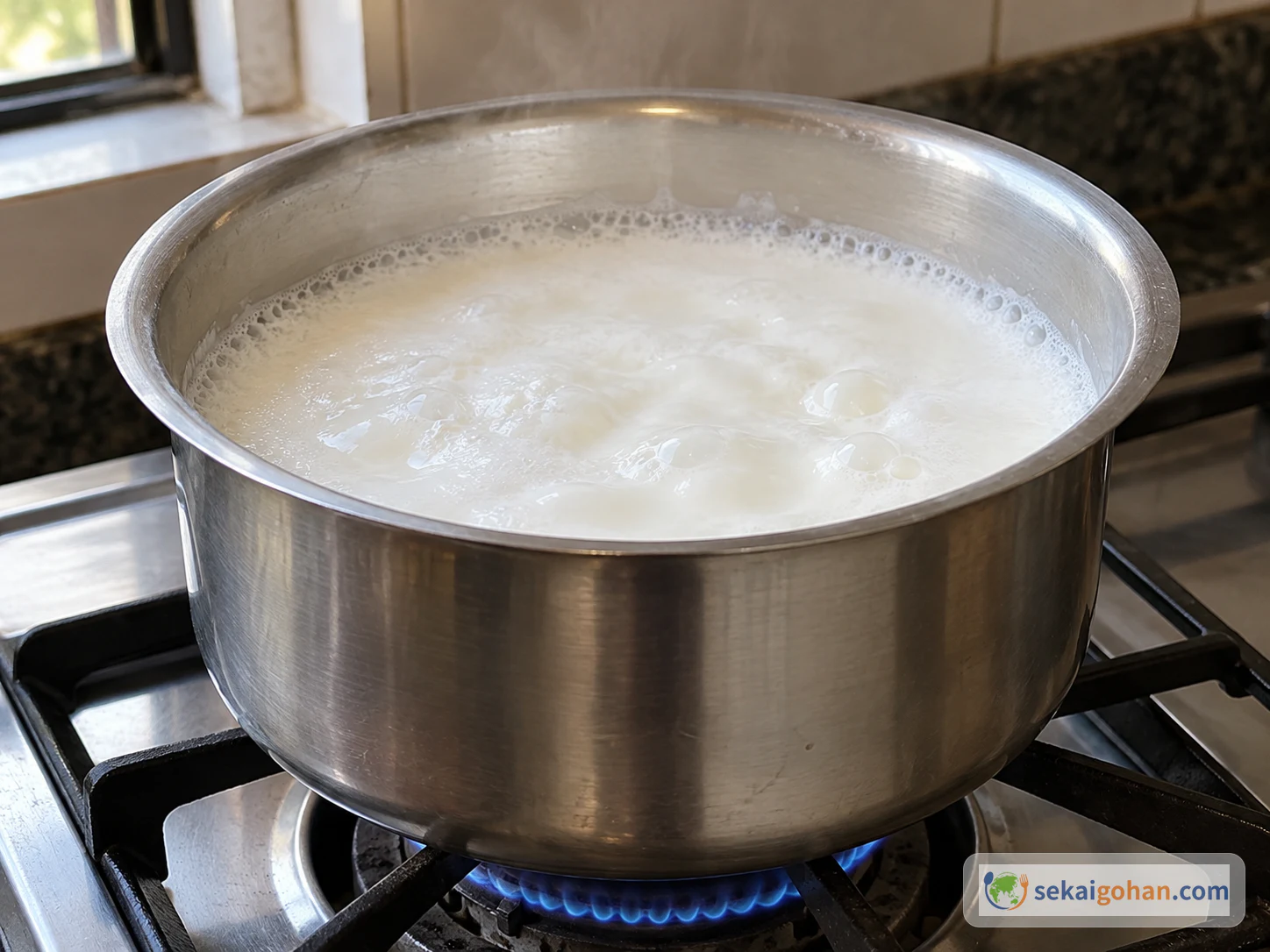
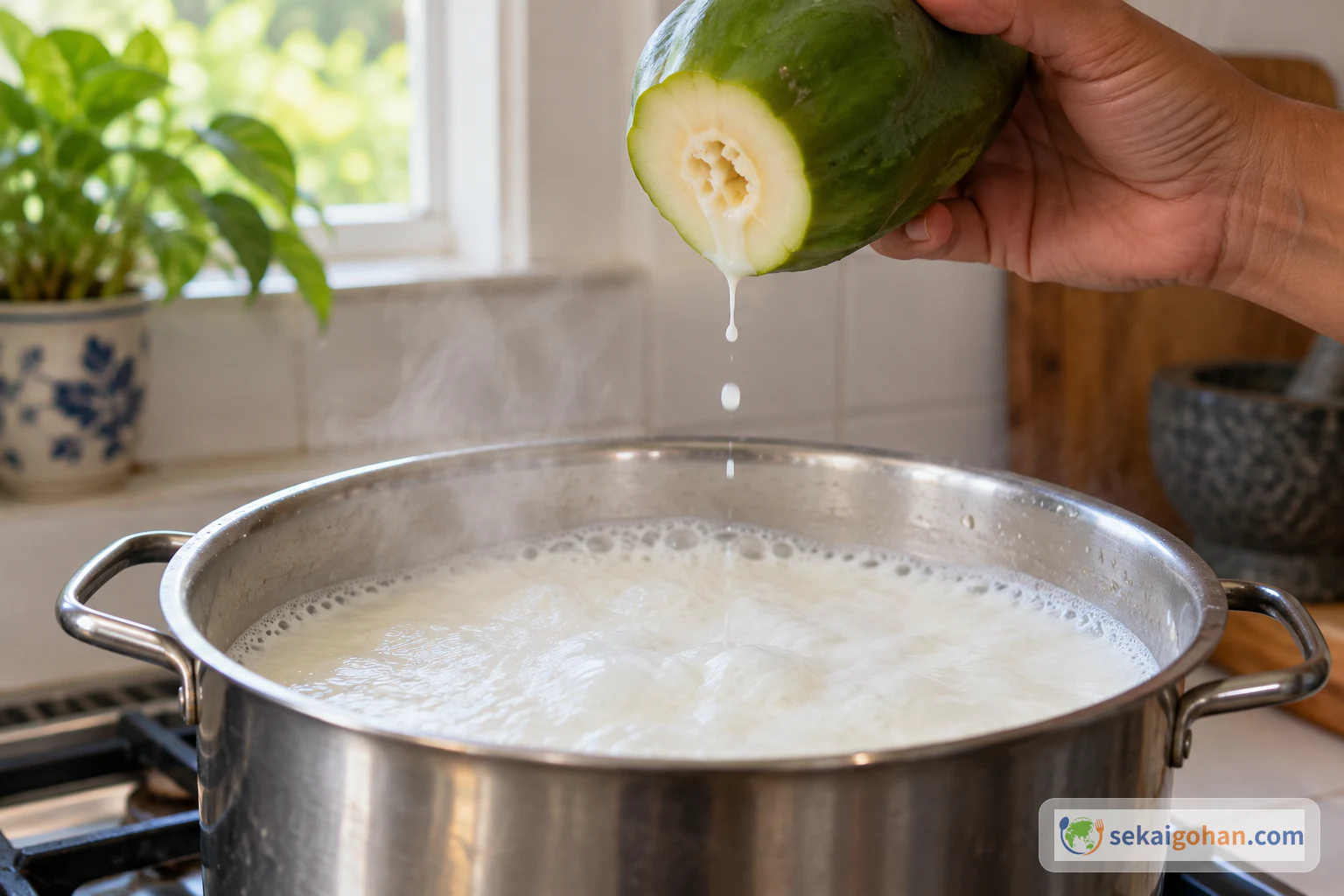
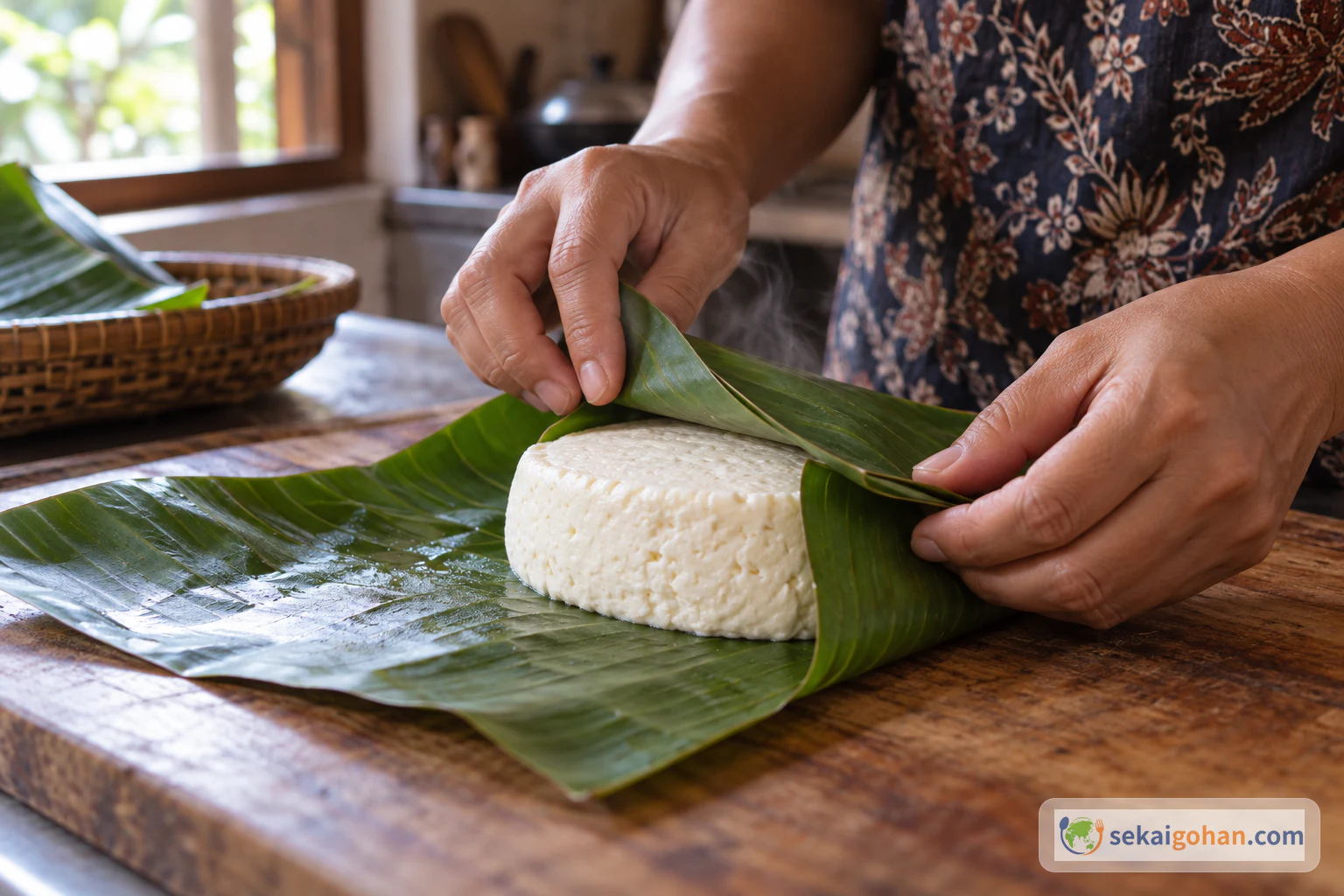
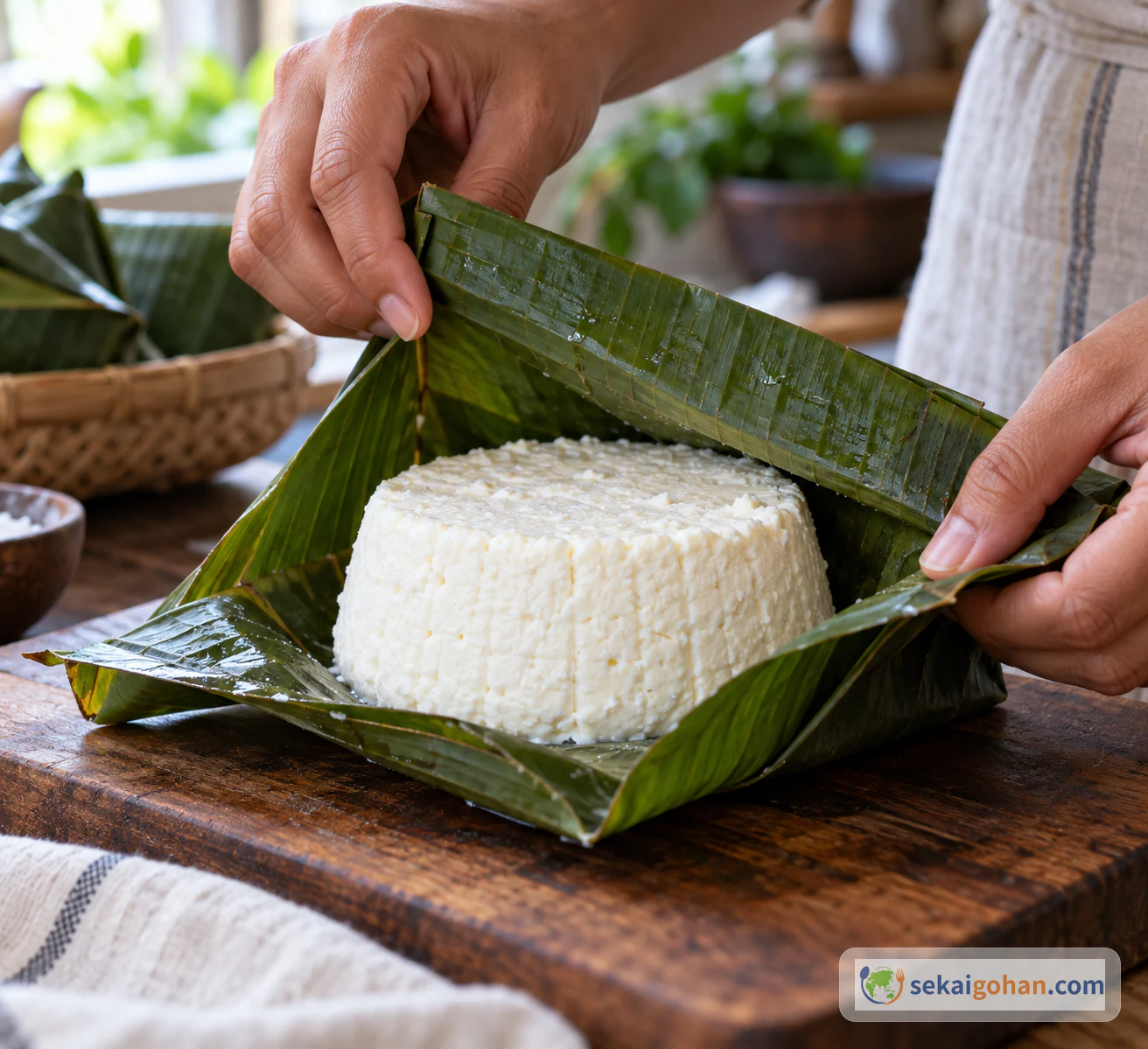
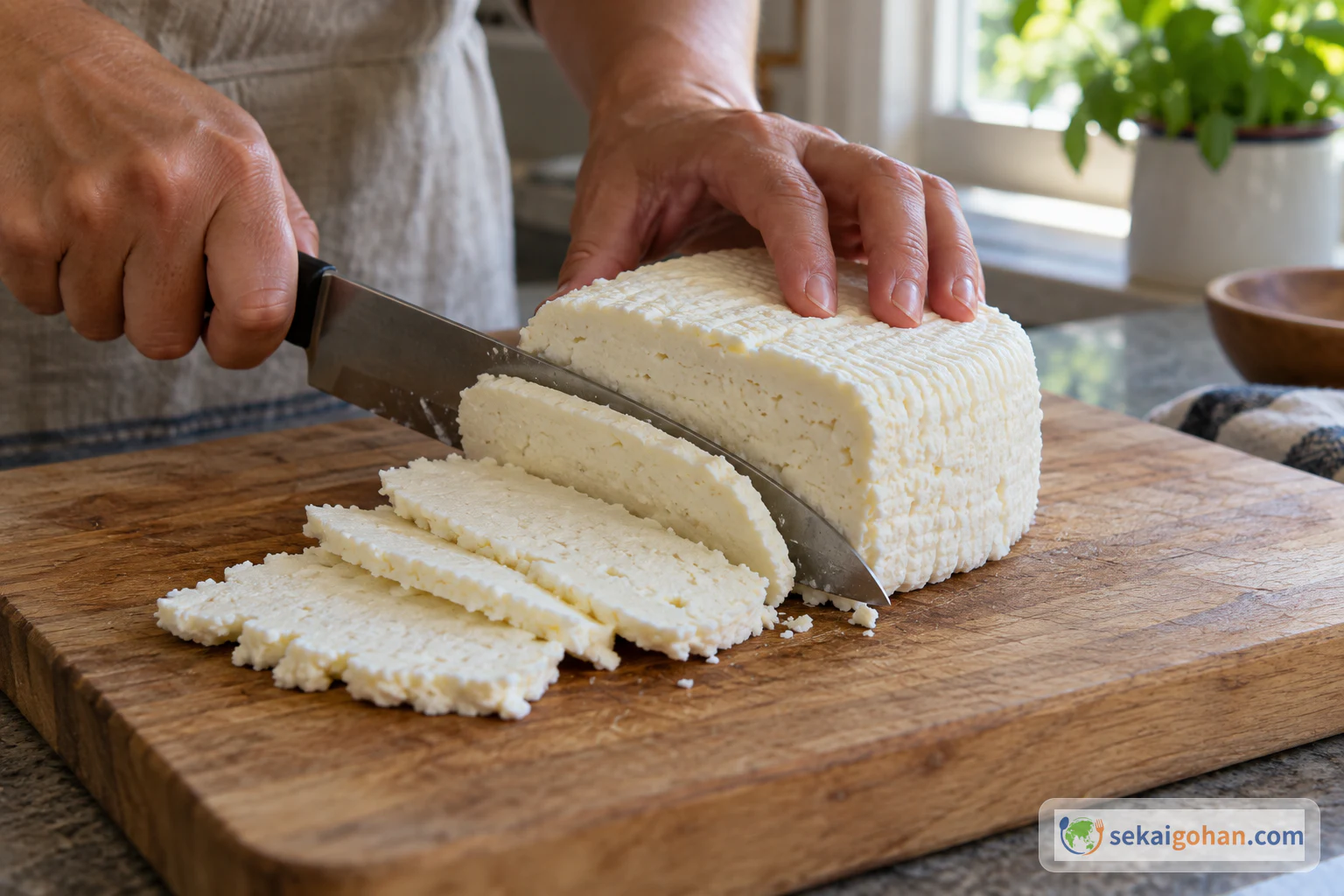
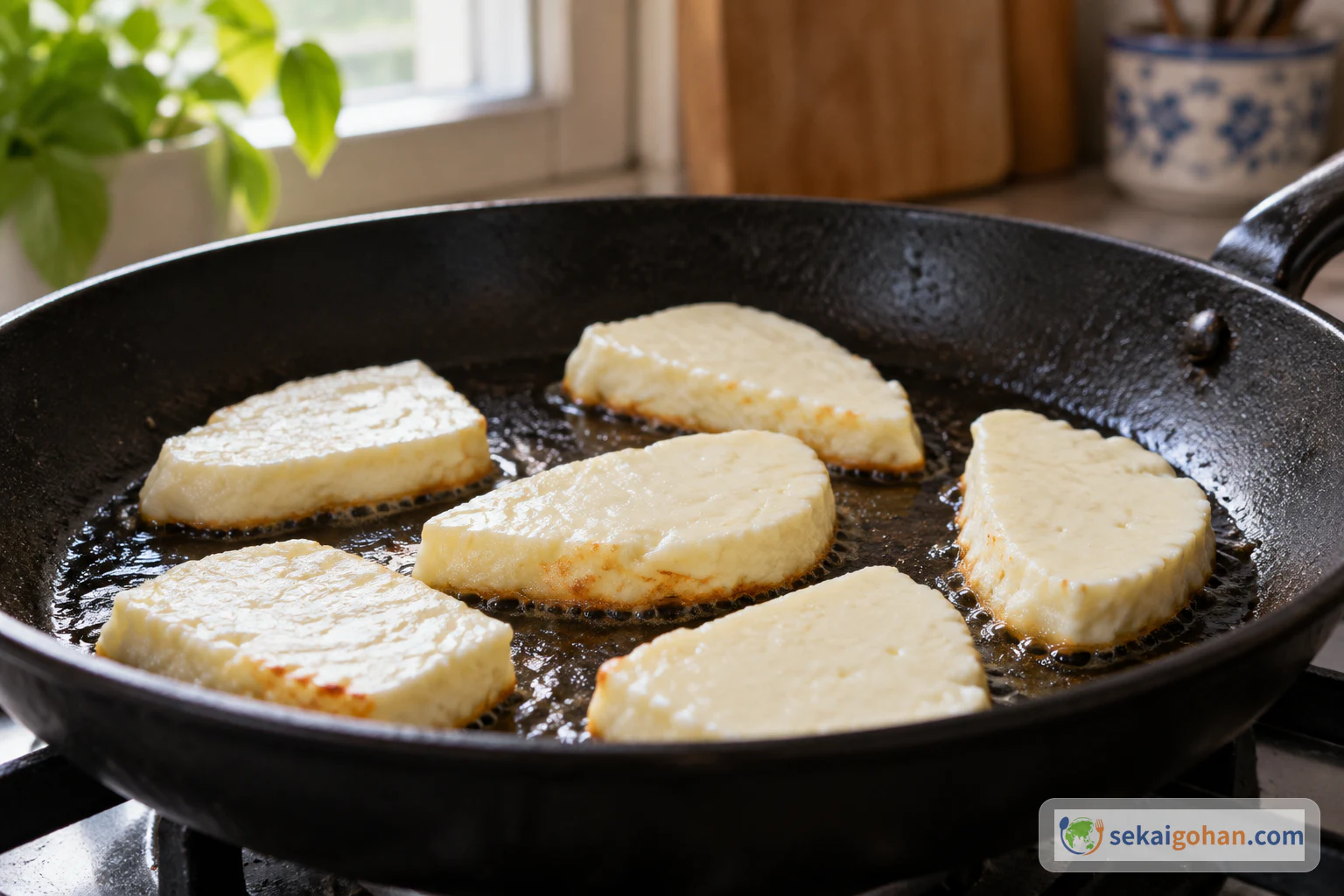
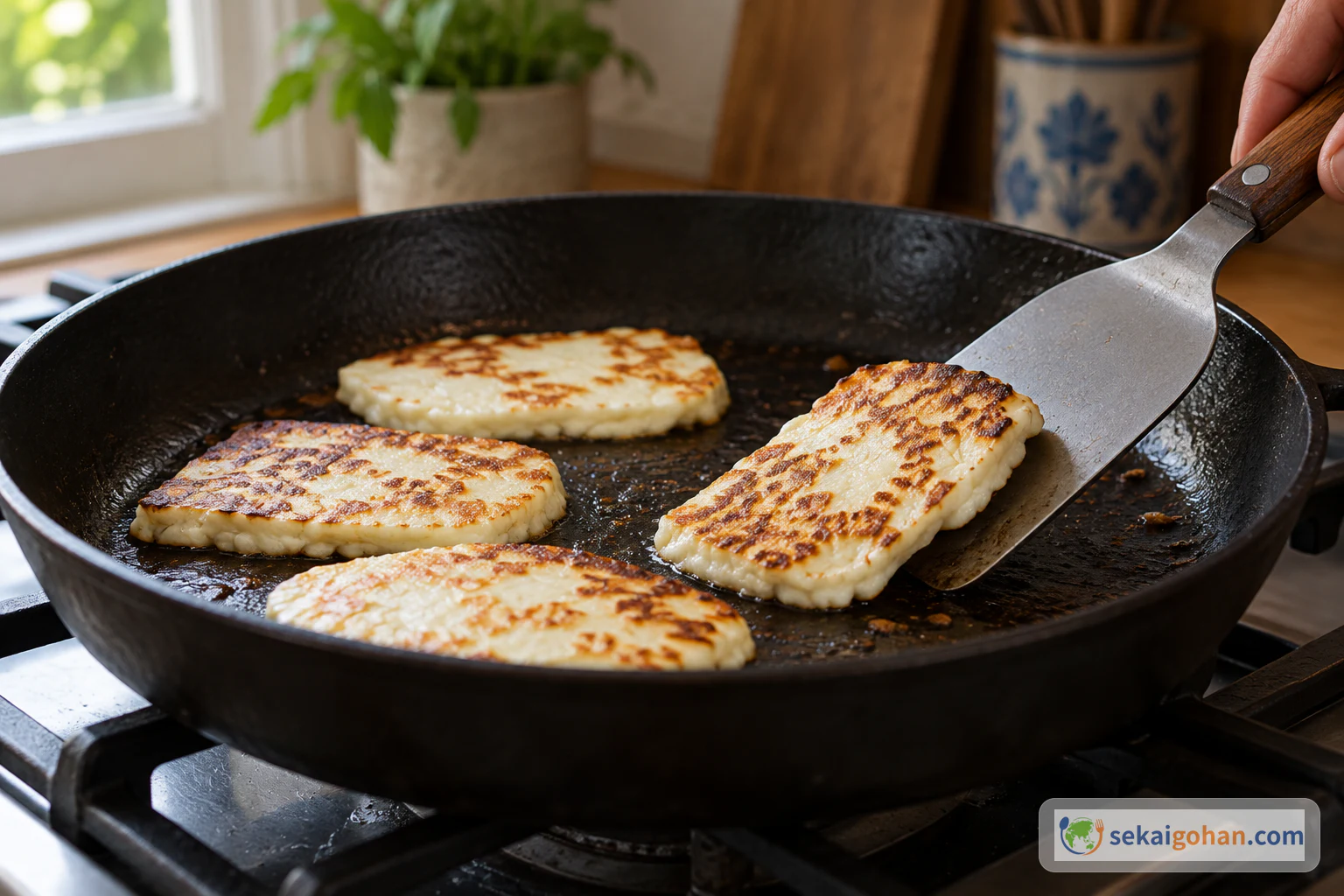
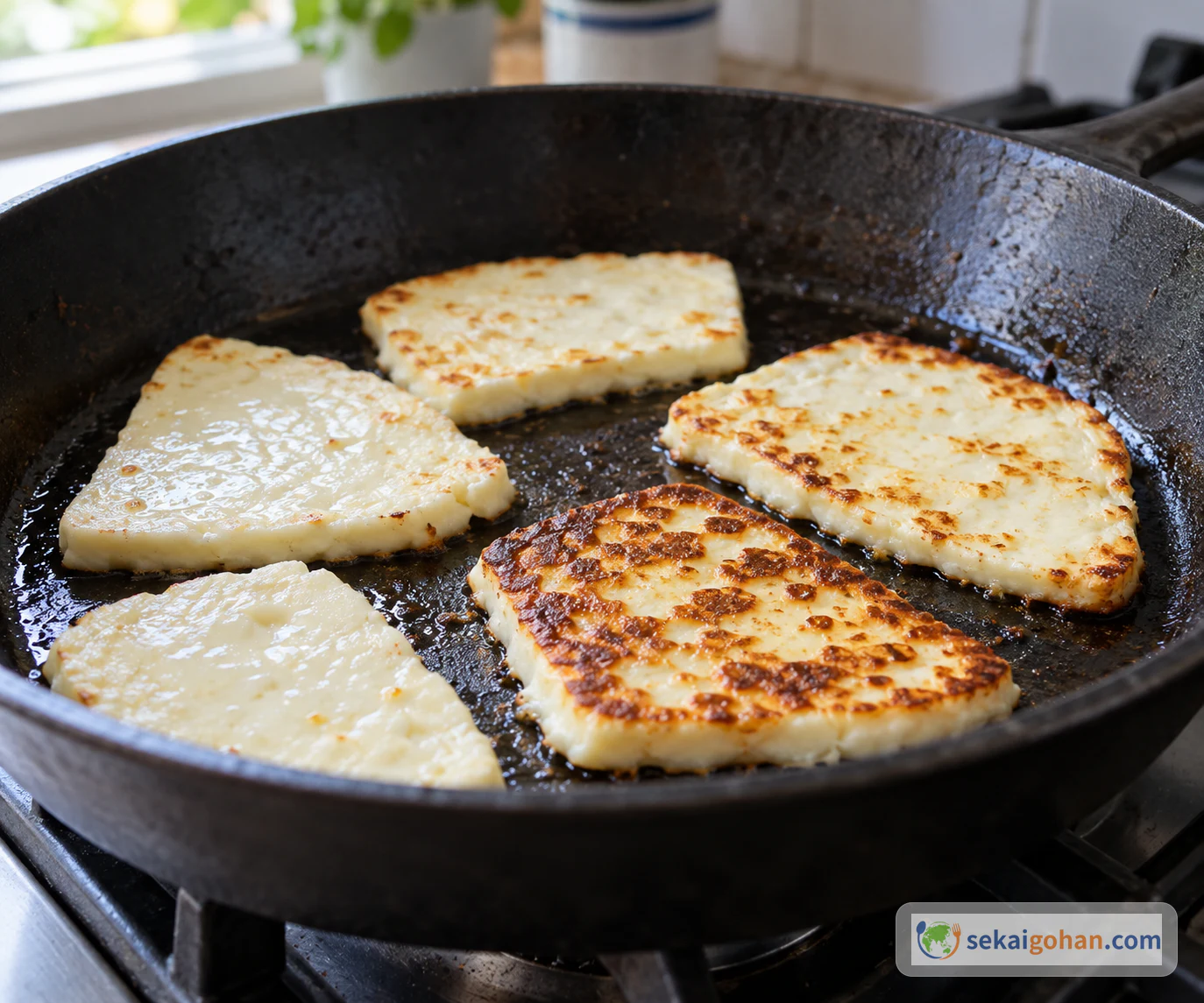
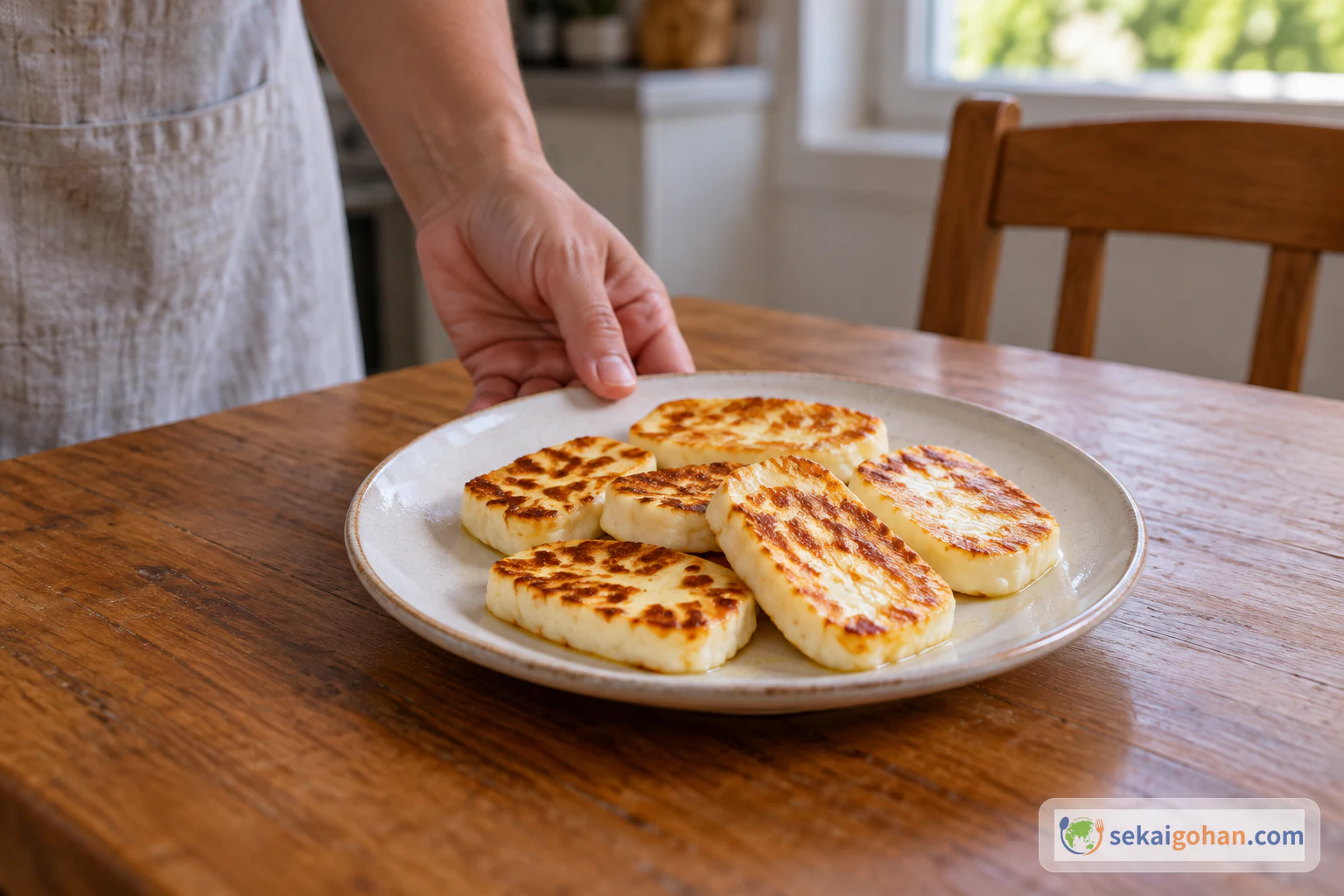
Boil the milk gently, add the papaya coagulant while it boils, press the curds in coconut-shell molds and wrap them hot in banana leaves. To eat, slice thin and roast both sides golden brown.
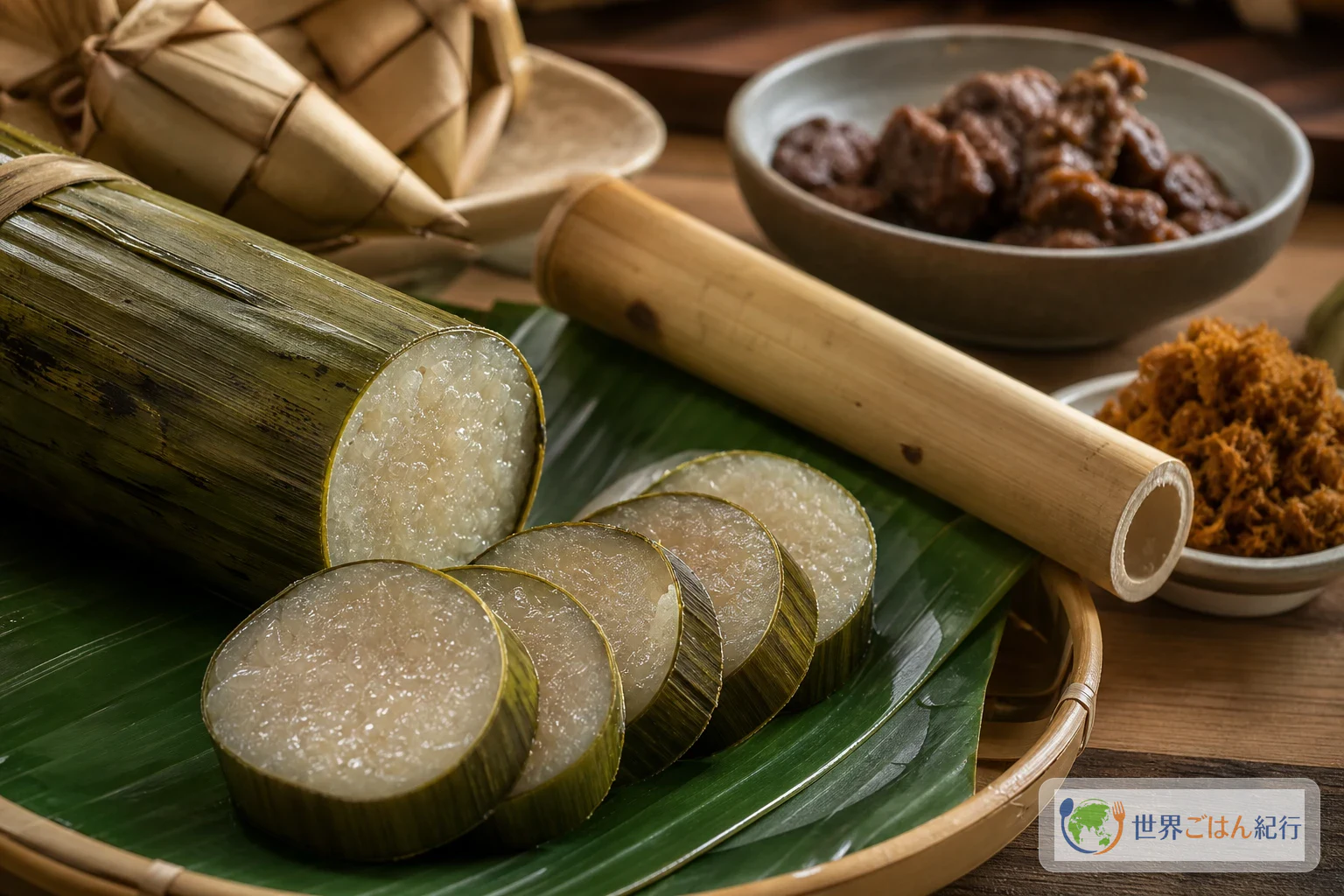
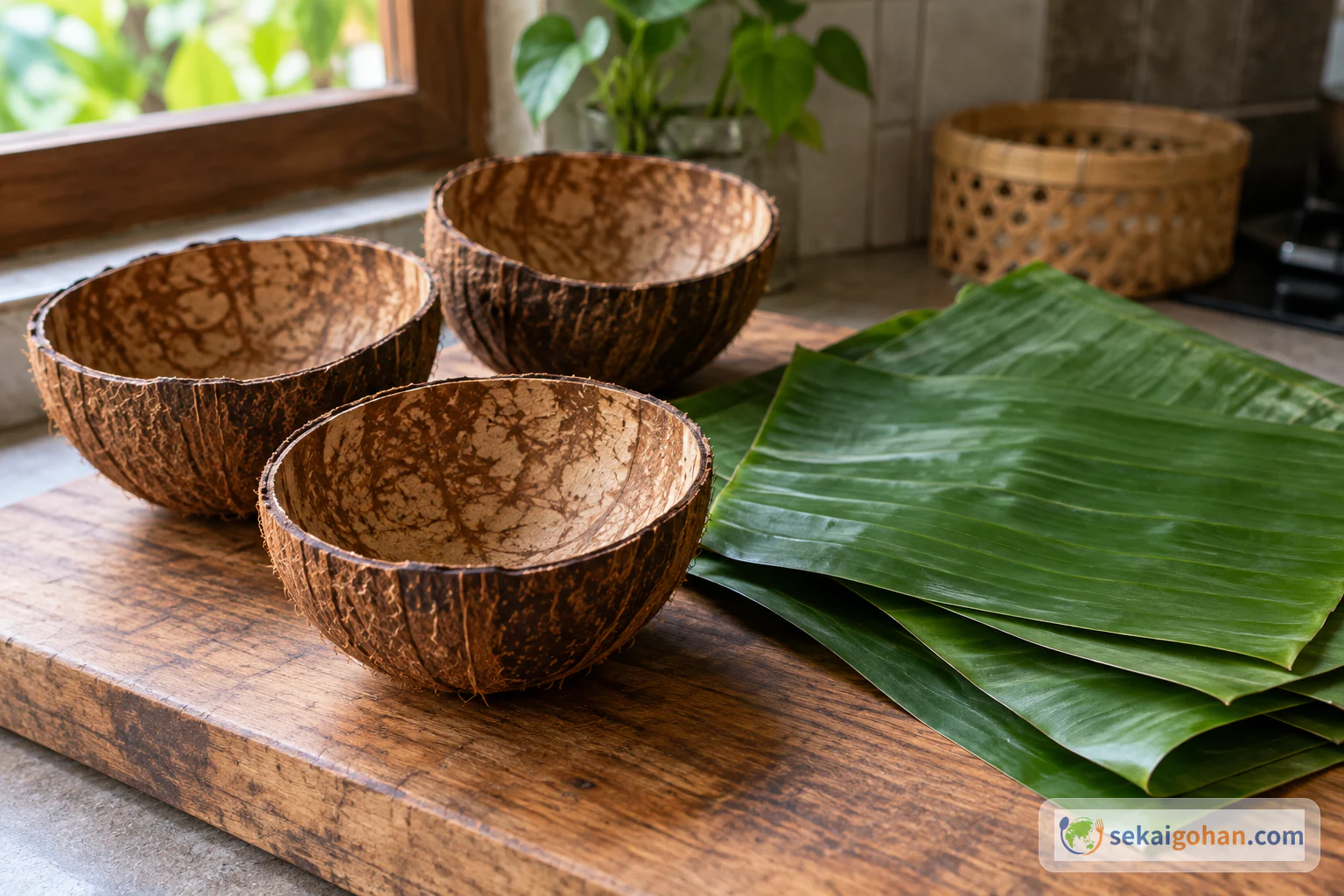
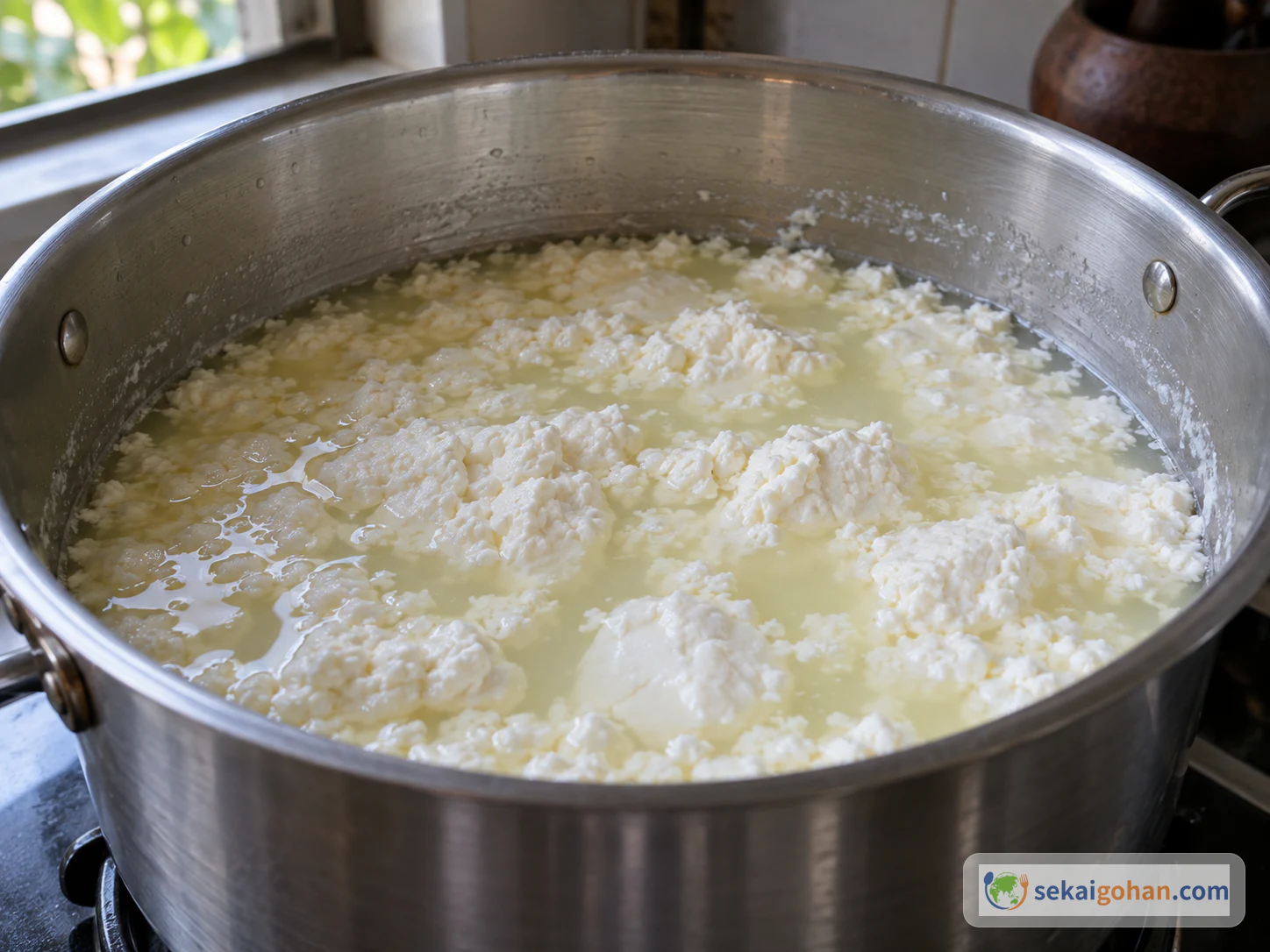
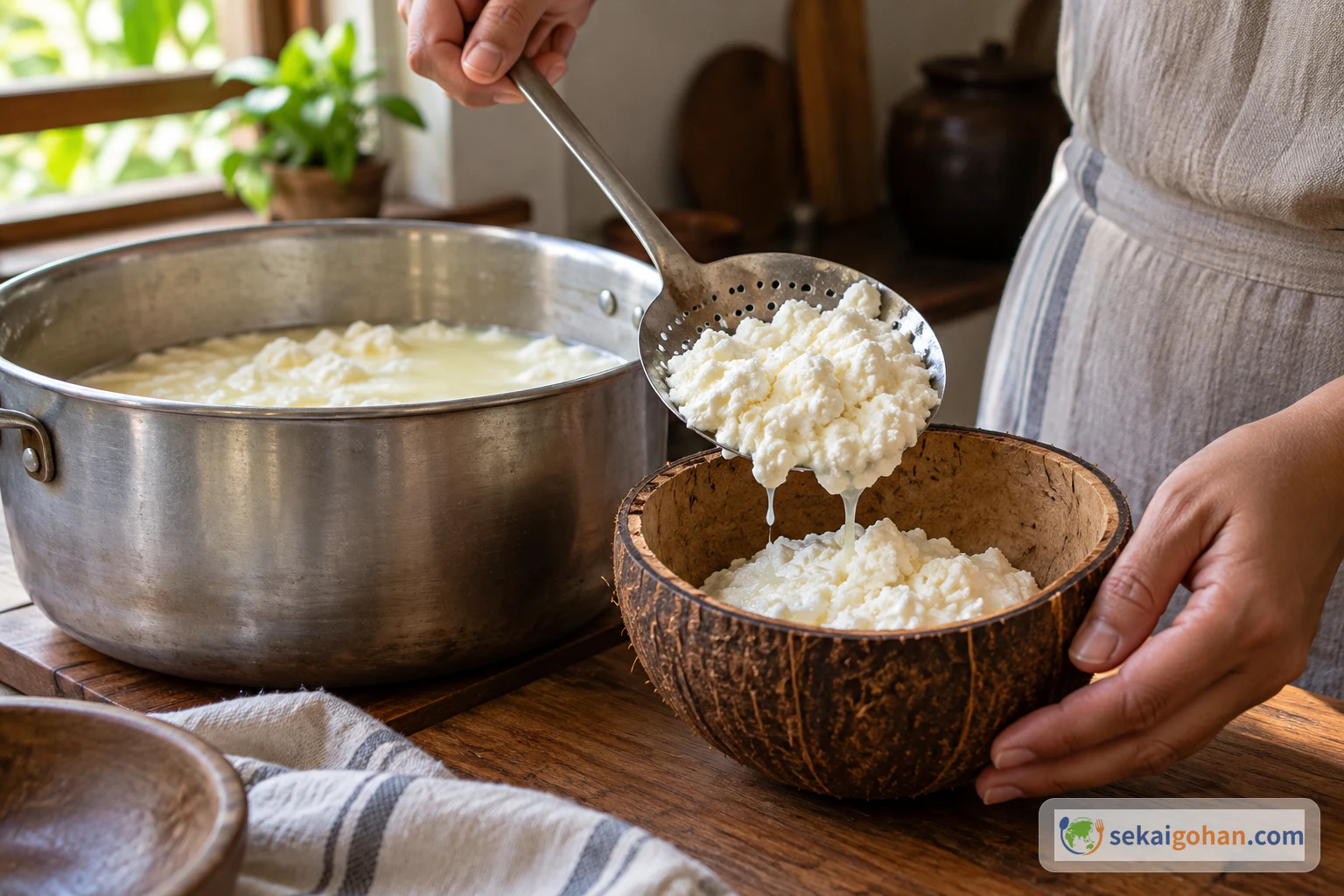
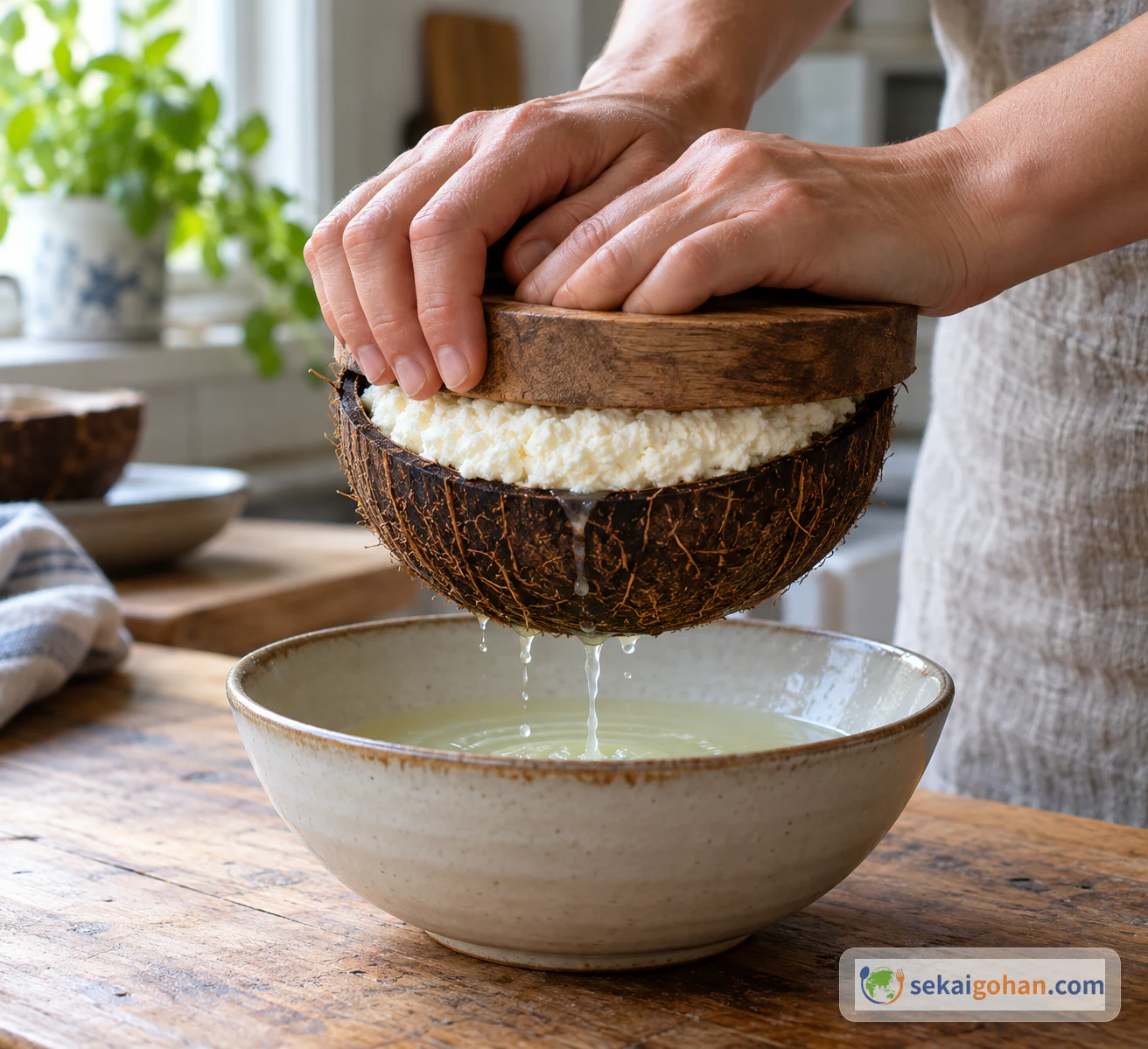
A pot of milk comes to a boil over low heat. Papaya latex goes in while it is still boiling, the milk gathers into soft curds, and the curds are packed into halved coconut shells and pressed until the whey runs out. While the shaped curd is still hot, it is wrapped in banana leaf. That is Dangke, a dairy product tied to Enrekang in South Sulawesi, Indonesia, as described in the Ensiklopedia Produk Pangan Indonesia, an encyclopedia of Indonesian food products compiled by PATPI, the Indonesian Association of Food Technologists.
This article follows one specific version: the Dangke recipe printed in that book, with the way of eating it described in the same chapter, thin slices pan-roasted on both sides until golden brown. It is not presented as the single standard for all Dangke, and other versions exist that use different amounts and extra ingredients.
The book's recipe is written for 5 liters of milk and 1/2 sendok makan (an Indonesian tablespoon) of papaya coagulant, and reports a yield of four pieces of Dangke weighing 330–350 g each. That yield is the book's figure, not a home measurement and not a number of servings. This recipe has not been kitchen-tested by Sekai Gohan.
Two choices here are ours rather than the book's. The recipe line says only "milk"; the chapter mentions cow or buffalo milk, and we use plain commercial pasteurized whole cow milk as a practical home purchase. The book also mentions several forms of papaya coagulant (fresh fruit latex, leaf juice and dried crude papain powder) without tying the 1/2 sendok makan to the strength of any one form; we chose fresh papaya fruit latex. The book gives no numeric temperatures, heating, setting or pressing times, shell sizes or slice thickness, so the method below works from the states it describes: a low-heat boil, curds that have formed, pressing, wrapping while hot, and golden brown.
Dangke is made from milk. Anyone avoiding dairy should not eat it.
Ingredients: 5 L Milk and Papaya Latex
Choosing the Milk and the Coagulant
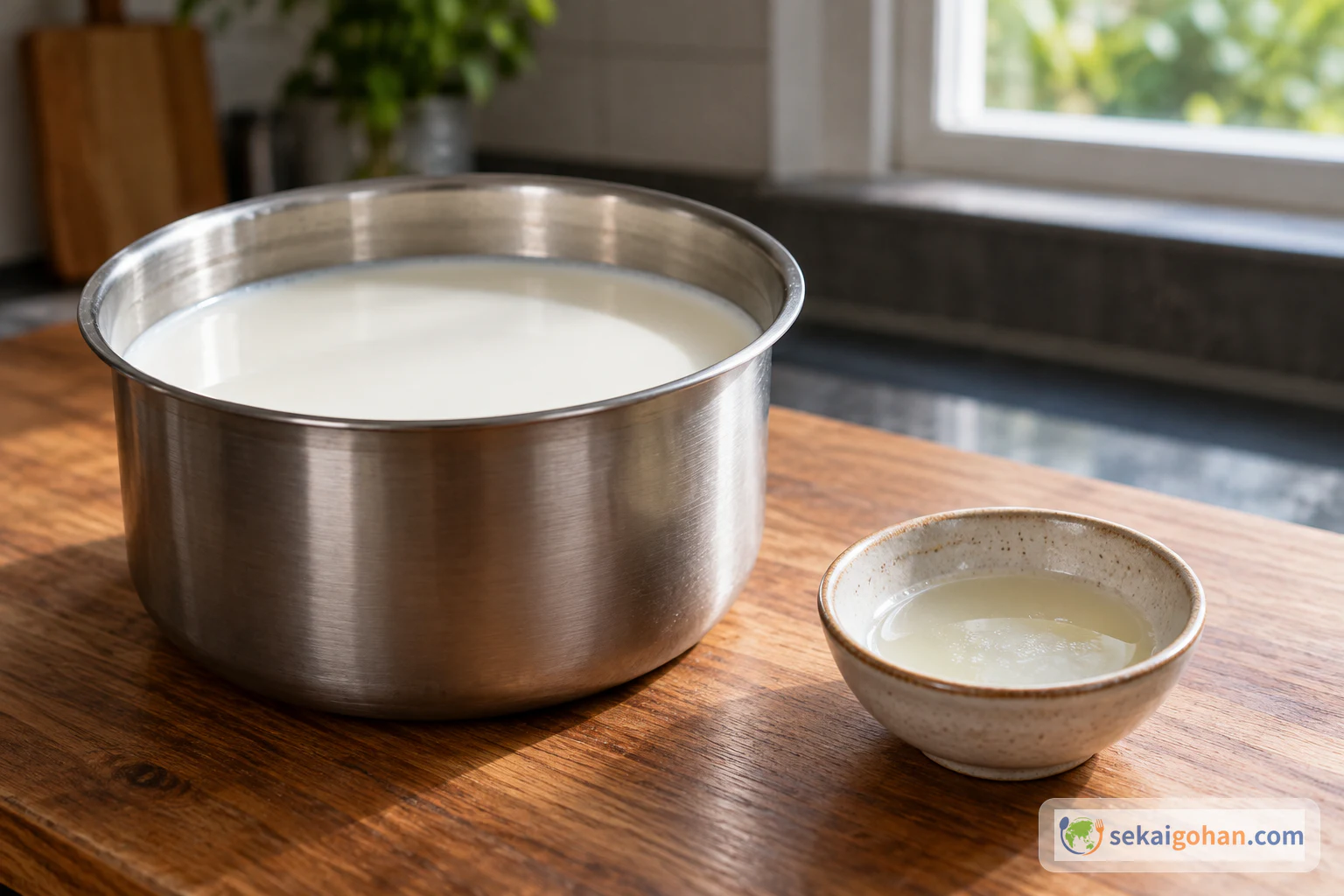
- Milk: Buy plain pasteurized whole cow milk. Do not switch to skim milk, goat milk, sweetened condensed milk or coconut milk.
- Coagulant: Use fresh latex from papaya fruit. Sendok makan is the Indonesian tablespoon; keep the measure at 1/2 sendok makan.
- No same-amount swaps: Papaya leaf juice, dried crude papain powder and commercial papain are different forms with different strengths, and no equivalent amount is given here. Do not use them at the same amount as the fruit latex.
- Nothing extra: No salt, oil, lime juice, rennet or citric acid goes into this recipe.
Equipment
- A large pot for 5 L of milk
- Coconut-shell molds
- Banana leaves for wrapping
- A spoon for moving the curds
- A knife and cutting board
- A skillet
- A flat spatula
Method: From Boiling Milk to Golden Slices
Steps 1–7 make the fresh Dangke. Steps 8–13 are the way of eating it: slice, roast both sides, serve.
When Things Don't Go to Plan
The book gives no numbers for heat, time, pressing force or slice thickness, so there is little here to adjust by the clock. What you can control is the order and the states.
| What you notice | What to check | What not to do |
|---|---|---|
| Curds are slow to form or few form | That the milk was boiling when the latex went in, and that the milk is plain whole milk | Don't add lime, salt, rennet or extra latex as a fix. No extra amount or heating time is given for this recipe |
| The curd is very wet in the mold | Whether it was pressed until the whey separated | Don't skip the press. No pressing time or force is given, so judge by the whey separating |
| Slices brown on one side only | That each slice was turned and roasted on the second side | Don't deep-fry instead; this is a pan-roast |
The biggest unknown is the coagulant itself. Fresh papaya latex varies, and its strength at 1/2 sendok makan is not specified. If the milk sets poorly, the cause may lie in the latex rather than in your technique, and this recipe offers no measured correction.
Other Versions of Dangke
These are separate recipes, not tweaks to the version above. Each keeps its own ingredients and should not be mixed into the PATPI recipe.
| Version | What it uses | How it differs |
|---|---|---|
| Gita Flozia's household recipe on Cookpad (Makassar, 2021) | 1 L fresh cow milk or canned milk, 3 ml papaya sap, 100 ml lime juice, 5 g salt | Includes lime and salt; the milk is gently stirred over a low flame; wrapped in foil or banana leaf; served as is or optionally fried |
| Papaya leaf juice | Mentioned in the PATPI book as a coagulant form, and in a Budaya Indonesia community entry | Unmeasured; not equivalent to fruit latex |
| Dried crude papain powder | Mentioned in the PATPI book as a coagulant form | No strength or equivalent amount given |
| Duri version in a Mustikarasa transcription | Fresh cow milk, water and a papaya stalk; heated, stirred, pressed and served with rice | The ingredient list and method give different water amounts, and the papaya-stalk amount is unclear |
| Laboratory study (Indian Journal of Agricultural Research, 2024) | Dried papaya latex diluted to a crude-papain solution, with dose and temperature treatments | A research method, not a home recipe; its temperature conditions differ between abstract, methods and conclusion |
Dangke in Enrekang and South Sulawesi
Both the PATPI encyclopedia and the Indonesian Ministry of Tourism's Jadesta listing connect Dangke to Enrekang in South Sulawesi, and both mention cow or buffalo milk. Jadesta describes it as a boiled local product. The Budaya Indonesia community entry describes curdling milk with papaya-leaf juice and pressing it in coconut shells, the same mold that appears in the PATPI recipe and in laboratory work on Dangke. Recipe writers and researchers sometimes call it a cheese: the Cookpad recipe is titled "Dangke (Keju Susu)" and the 2024 study refers to "Dangke-cheese."
The PATPI book was first printed in August 2017 by IPB Press (ISBN 978-602-440-183-2) and is a collection of entries by food-technology experts. PATPI's announcement of the free PDF describes Volume 1 as containing 134 product entries by 94 authors. That web announcement is dated 1 April 2023, which is when the PDF was posted, not when the book was published. The Dangke chapter's contributor is Abu Bakar Tawali of PATPI's Makassar branch (printed p. 39). The recipe and method are on printed p. 37, and the slicing and pan-roasting on p. 38.
The book says that adding the coagulant during the boil, rather than before heating, gives a higher yield. That is the book's statement, not something measured for this article. The book lists Dangke among fermented products, but the recipe itself only heats, curdles and presses the milk, with no culturing or ripening step, so none is added here.
For more of the country's cooking, see our Indonesia page.
Frequently Asked Questions
How many people do the four pieces serve?
The book reports four pieces of Dangke at 330–350 g each from 5 L of milk. It does not give a number of servings, and it does not say how much you get after slicing and roasting. Treat four as a count of pieces, not of people.
Can I use papaya leaf juice or dried papain at the same amount?
No. The book mentions fresh fruit latex, leaf juice and dried crude papain powder, but it does not tie the 1/2 sendok makan to the strength or concentration of any form. That is why no same-amount swap is offered, and no conversion between forms is given.
Should I add lime, salt or oil?
Not to this version. The PATPI recipe and its way of eating include none of them. The Cookpad recipe with lime juice and salt is a different author's recipe and is not combined with this one. The book also gives no oil amount or instruction for the pan-roast; that doesn't mean the method is guaranteed to work without oil, only that none is specified.
How long should I heat and press it?
The book gives no times and no numeric temperatures for heating, setting, pressing or roasting. Go by the states it describes: boiling over low heat, curds formed, whey pressed out, wrapped while hot, golden brown on both sides.
How long does Dangke keep?
This article does not give storage times or reheating guidance. The book prints a separate historical storage note drawn from a 1978 study. It is not part of the fresh recipe and is not current food-safety guidance, so it is not repeated here.
Is Dangke fermented?
The book groups it with fermented products, but the recipe used here has no fermenting, culturing or ripening step. It is milk heated, set with papaya latex and pressed.
Sources
- PATPI (Perhimpunan Ahli Teknologi Pangan Indonesia) / PT Penerbit IPB Press, Ensiklopedia Produk Pangan Indonesia: Kumpulan Berbagai Teknologi Produk Pangan Indonesia, Vol. 1, first printing August 2017, ISBN 978-602-440-183-2. The Dangke chapter (printed pp. 36–39): the Enrekang/South Sulawesi context; the 5 L milk and 1/2 sendok makan papaya coagulant recipe with its reported yield of four pieces at 330–350 g each, its method, and its statement on adding the coagulant during the boil (p. 37); slicing thin and pan-roasting both sides until golden brown (p. 38); and contributor Abu Bakar Tawali, PATPI Cabang Makassar (p. 39). https://patpi.or.id/wp-content/uploads/2023/04/Ensiklopedia-Produk-Pangan-Indonesia_Jilid-1.pdf
- PATPI, "Ensiklopedia Produk Pangan Indonesia Jilid 1." The publisher's announcement: the book was compiled from PATPI's food-technology experts, Volume 1's 134 entries and 94 authors, and the 2023 web posting date. https://patpi.or.id/news/ensiklopedia-produk-pangan-indonesia-jilid-1/
- Indonesian Ministry of Tourism, Jadesta, "Dangke." Enrekang/South Sulawesi local product context, cow or buffalo milk, and a boiled preparation. https://jadesta.kemenpar.go.id/paket/dangke
- Gita Flozia, "Dangke (Keju Susu)," Cookpad, 2021. A separate household recipe from Makassar using 1 L milk, 3 ml papaya sap, 100 ml lime juice and 5 g salt. https://cookpad.com/id/resep/14552621
- Ratmawati Malaka et al., "Physicochemical Properties of Dangke-cheese by Different Temperature Processing and Papaya-latex as Coagulant," Indian Journal of Agricultural Research 58(5), 2024, pp. 911–916. Laboratory work with dried papaya latex, a crude-papain solution, dose and temperature treatments, and coconut-shell molding and pressing. https://arccjournals.com/journal/indian-journal-of-agricultural-research/AF-882
- Imam Taufik, "Dangke," Budaya Indonesia, 2012. A community entry describing milk with papaya-leaf juice and pressing in coconut shells, without measured amounts. https://budaya-indonesia.org/Dangke
- "DANGKE (Duri)," Mustikarasa, Part 5, Wikisource transcription. A separate Duri version with milk, water and a papaya stalk, served with rice; its water amounts conflict between the ingredient list and method. https://id.wikisource.org/wiki/Mustikarasa/Bagian_5