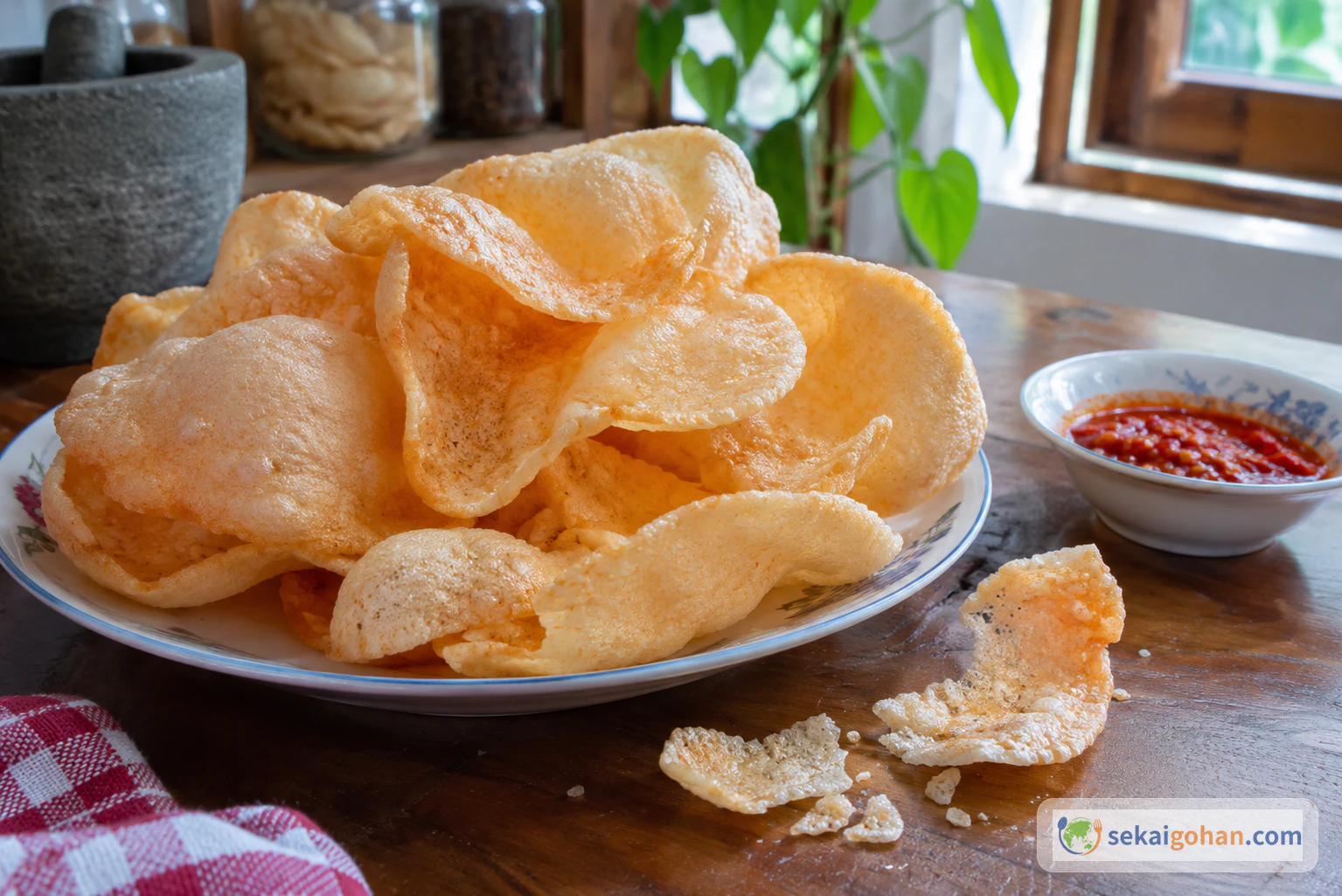
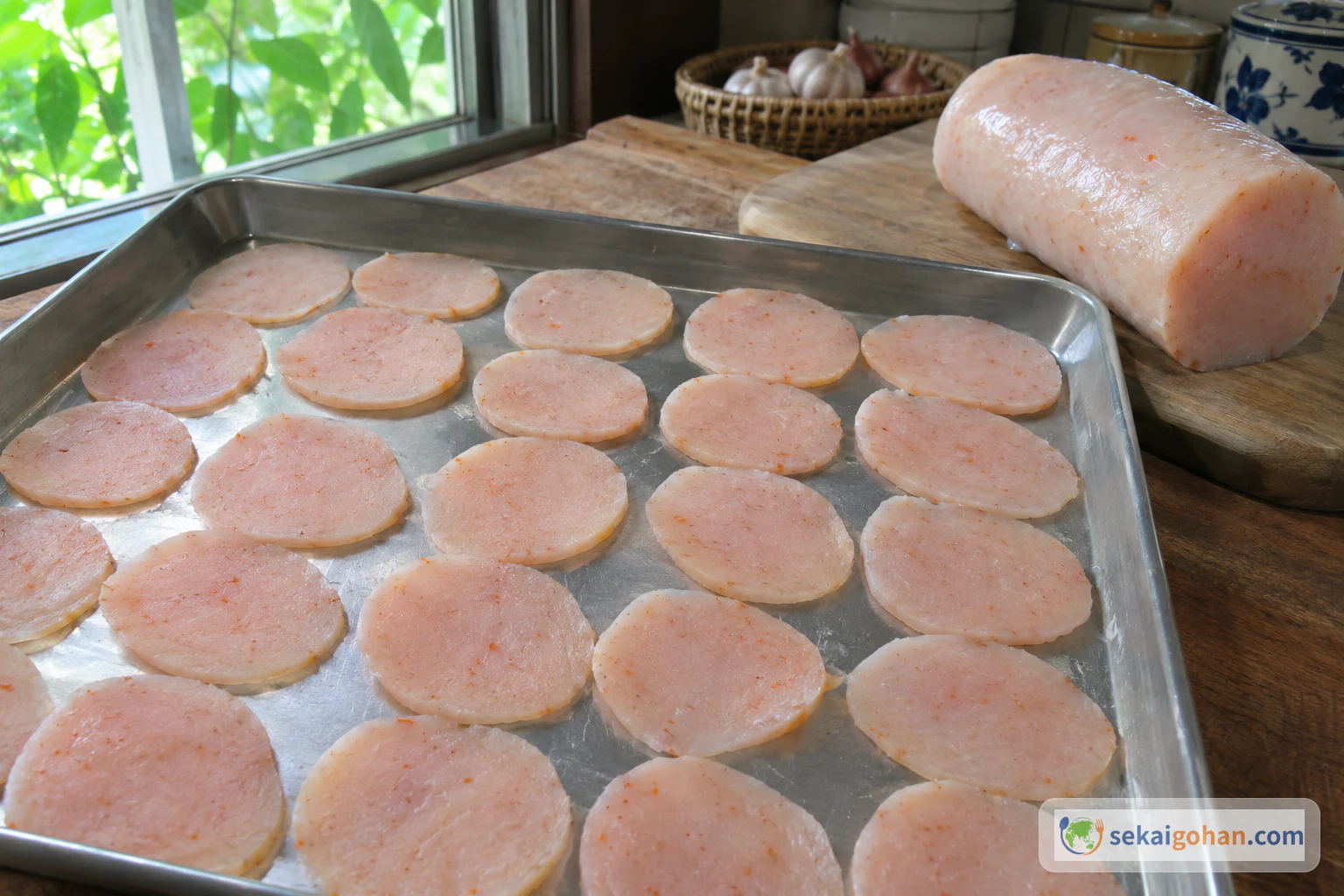
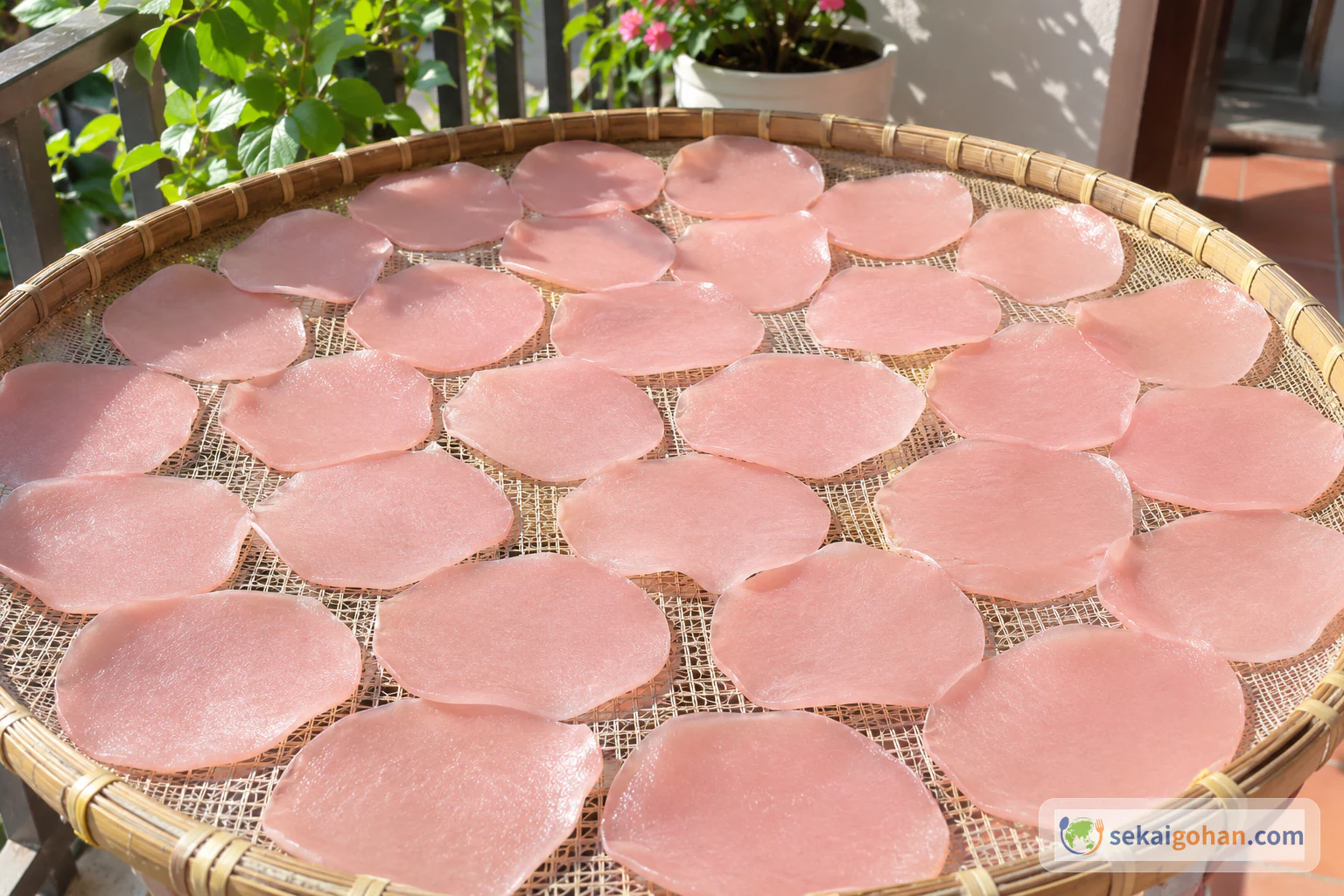
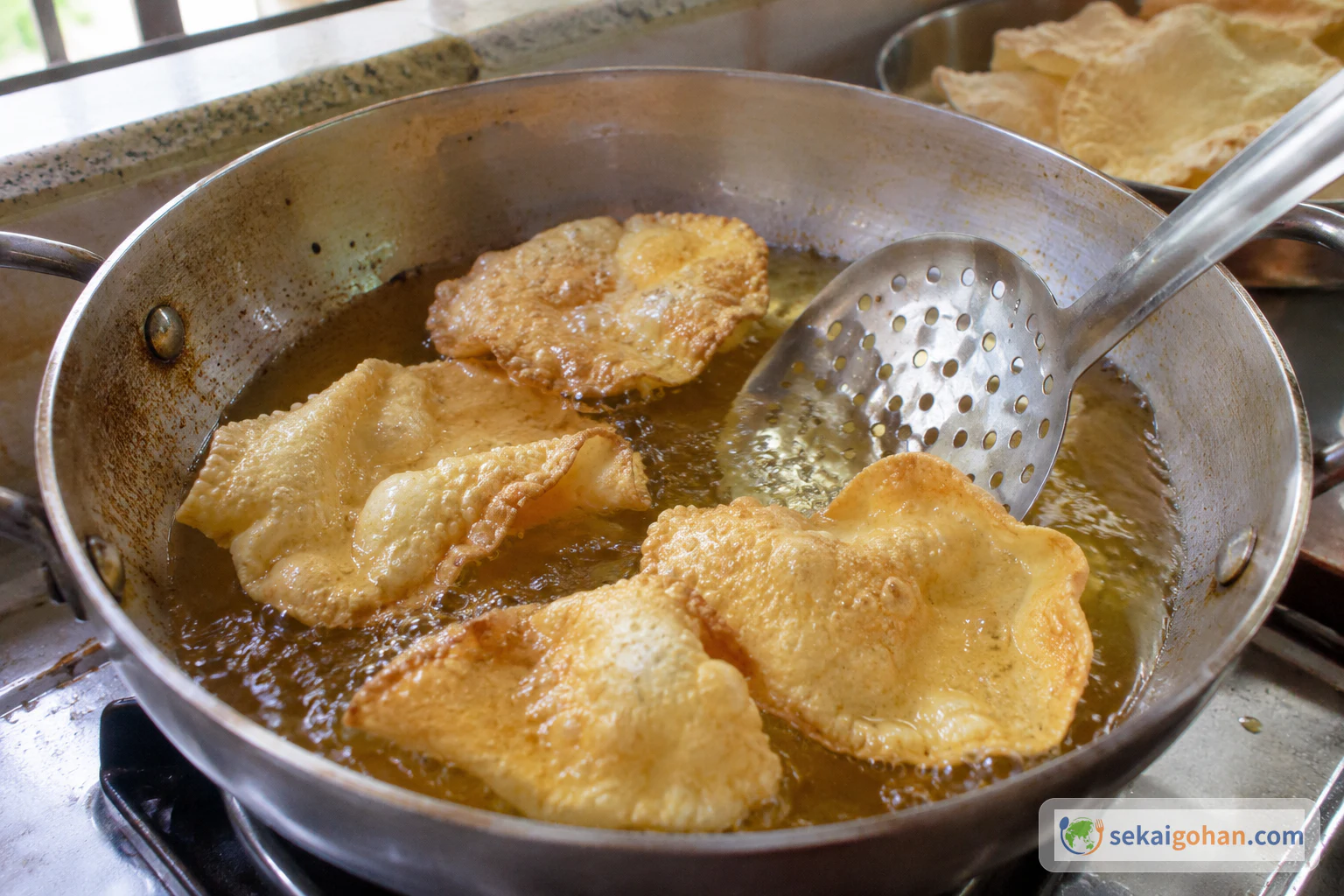
A thin, hard, slightly translucent disc slides into hot oil and, within moments, swells, curls and turns pale gold, crackling as it rises to the surface. That is the moment kerupuk udang is made, and everything before it is patient preparation. These are Indonesian shrimp crackers made from fresh shrimp, garlic and tapioca. The dough is steamed in a long roll, sliced thin and dried in the sun, then fried to order. At the table they snap loudly and taste of shrimp and garlic, salty with a faint sweetness, and they go beside rice and sambal, or straight into a hand as a snack.
A Cracker From Fresh Shrimp, Cirebon Style
Across Indonesia, kerupuk is a whole family of crackers rather than one recipe. Some are built on fish, some on squid, some on dried shrimp ground to a powder, and each has its own method. This one belongs to the fresh-shrimp and tapioca branch: raw peeled shrimp blended into a paste and bound with tapioca starch, in a style described as typical of Cirebon. How far this exact formula travels beyond Cirebon home kitchens is not settled, so take it as one clear regional style rather than the national standard.
The work follows a long arc, and it shows in the cracker. Steaming sets the shrimp and starch into a firm, sliceable log. Sun-drying pulls the moisture out of each slice until it is hard as a chip of glass. Frying then turns the last trapped moisture to steam, and the slice puffs into an airy, crisp cracker many times its dried size. Skip or rush any of these stages and the frying will not work.
Kerupuk lives on the side of the plate. It sits next to rice and sambal at an everyday meal, gets crumbled over chicken rice porridge (bubur ayam), and in the Sundanese dish seblak, dried kerupuk is soaked and simmered until soft and chewy, an entirely different use of the same cracker. Keep a jar of dried slices and you can fry a handful whenever a meal needs crunch.
Kerupuk is the Indonesian name for this family of crackers, also spelled krupuk. Udang means shrimp, so kerupuk udang names the main ingredient directly. A style "khas Cirebon" is one presented as typical of Cirebon.
Ingredients
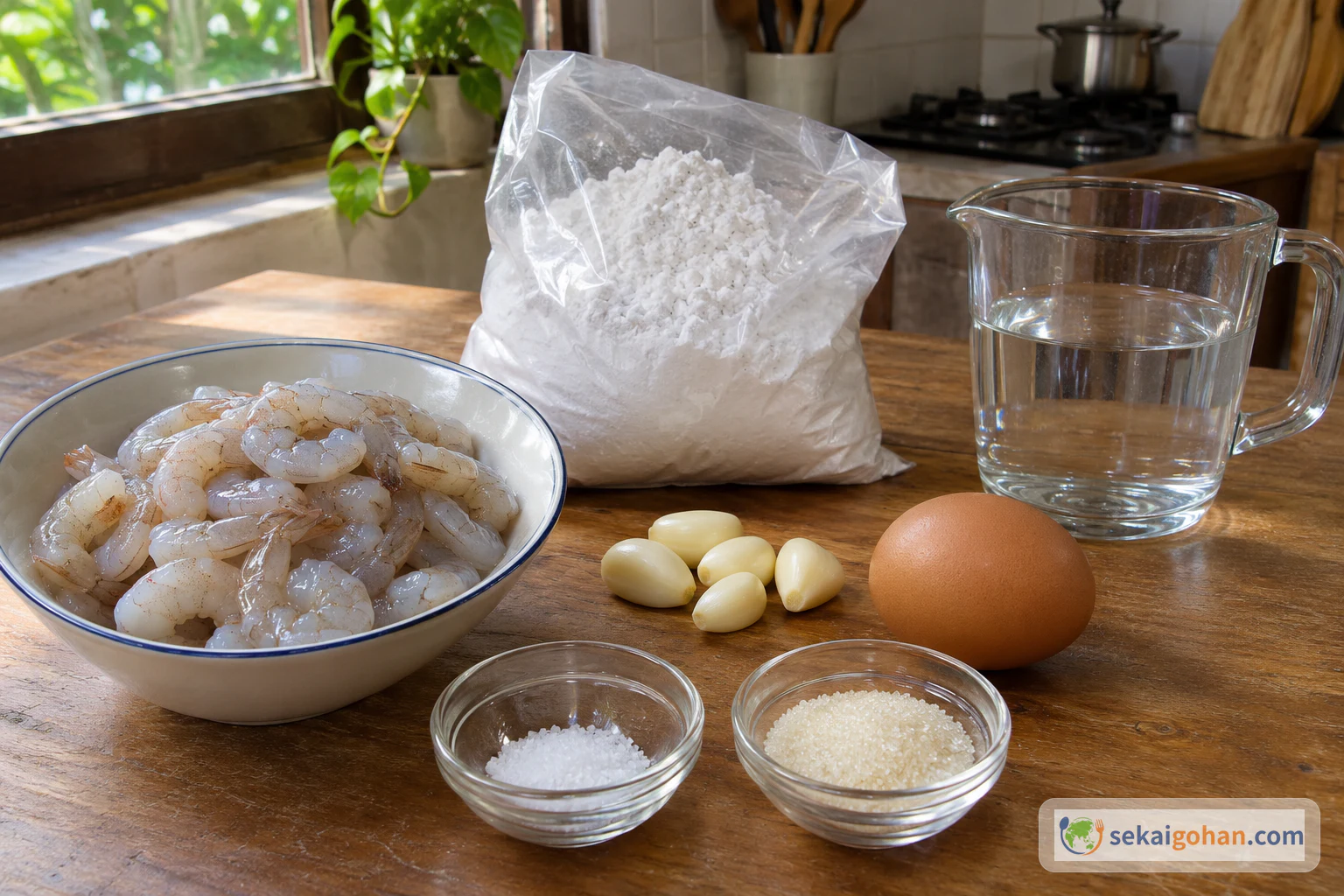
The shrimp and tapioca go in at equal weights, and that ratio is what gives these crackers their strong shrimp flavor. Weigh the shrimp after peeling, not before.
This recipe contains shrimp (crustacean shellfish) and egg. Fried kerupuk also often shares oil with other foods, so check with guests who have shellfish allergies before serving crackers from a shared fryer.
Equipment
- Blender or food processor
- Large mixing bowl
- Banana leaves or food-safe plastic wrap, for wrapping the roll
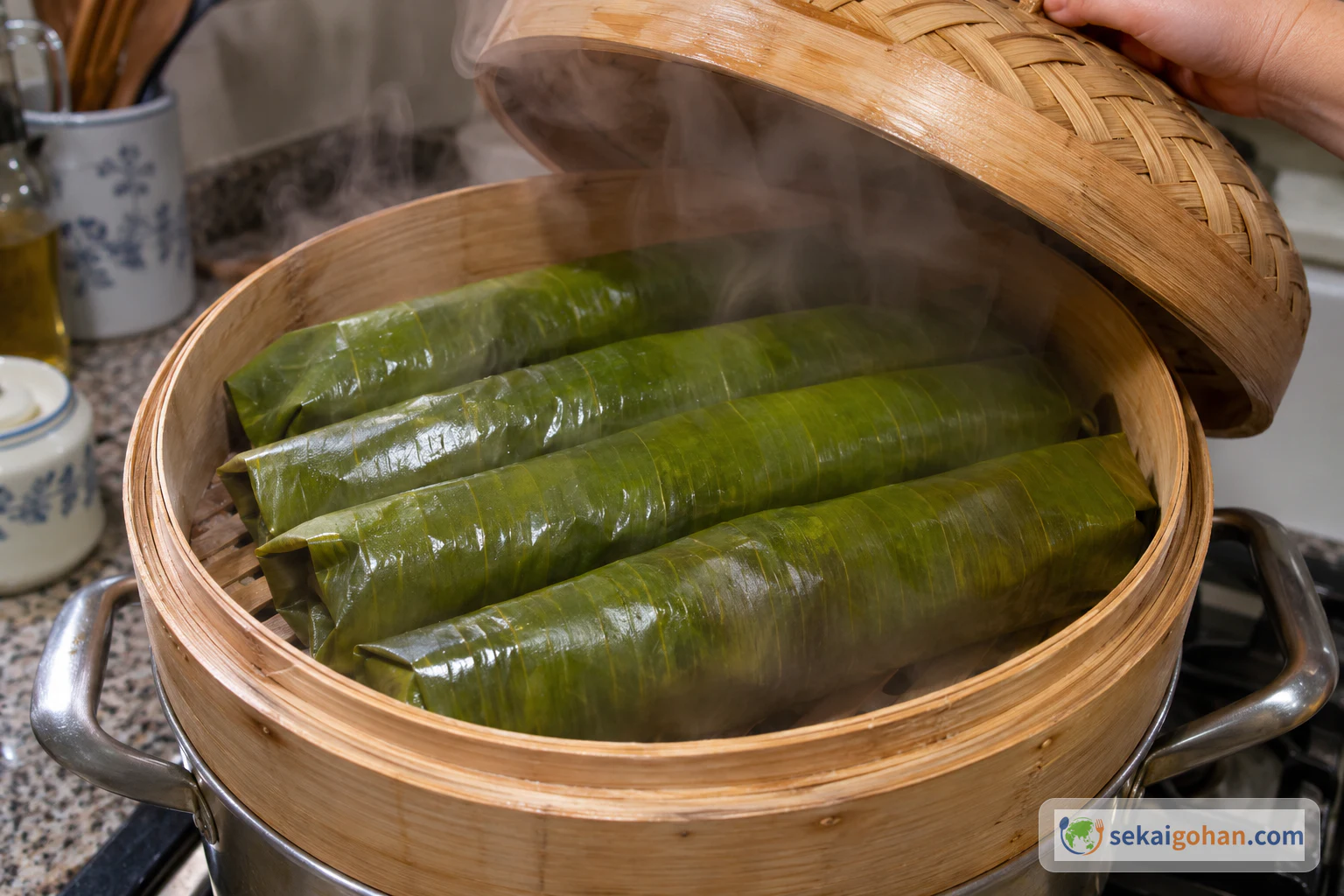
- Steamer large enough to hold the roll, with a kettle of extra boiling water
- Cutting board and knife kept only for raw shrimp, plus a second board and a sharp knife for slicing
- Mesh drying rack or wide colander
- Deep pot or wok for frying
- Slotted spoon and a tray lined with paper towels
- Airtight container
Buying and Swapping
Tapioca flour is the one thing to track down. Look for bags labelled tapioca flour, tapioca starch or tepung tapioka at Asian grocers or online. Stick with tapioca. Cornstarch and potato starch are different starches, and swapping them in at the same weight changes how the dough steams and how the slices puff, so don't replace it one for one.
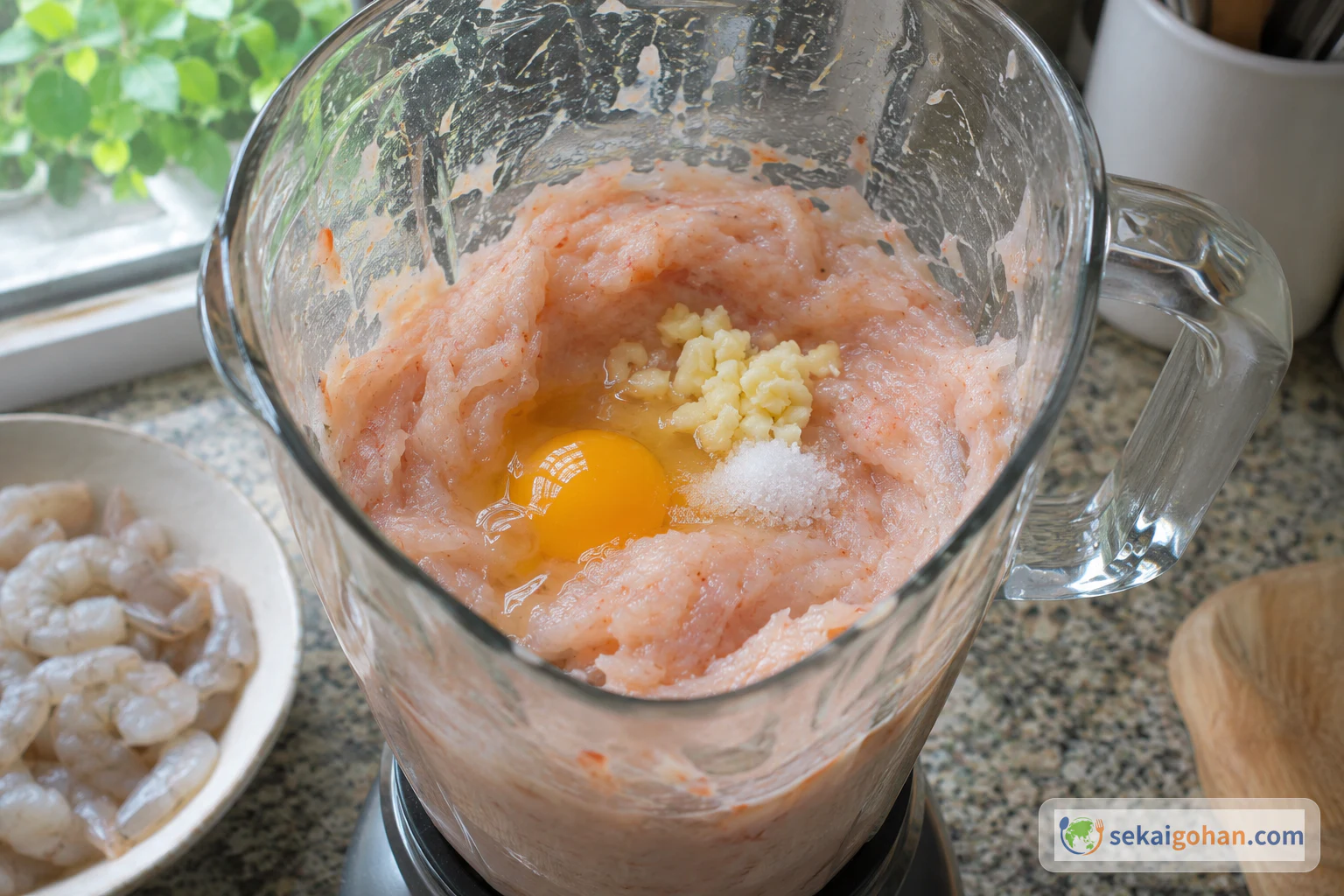
Buy fresh, raw shrimp and peel them yourself, or buy them already peeled. Keep them refrigerated until the moment they go into the blender. Raw, not cooked, shrimp is what makes a paste that binds with the starch. Garlic, egg, salt and sugar come from any supermarket.
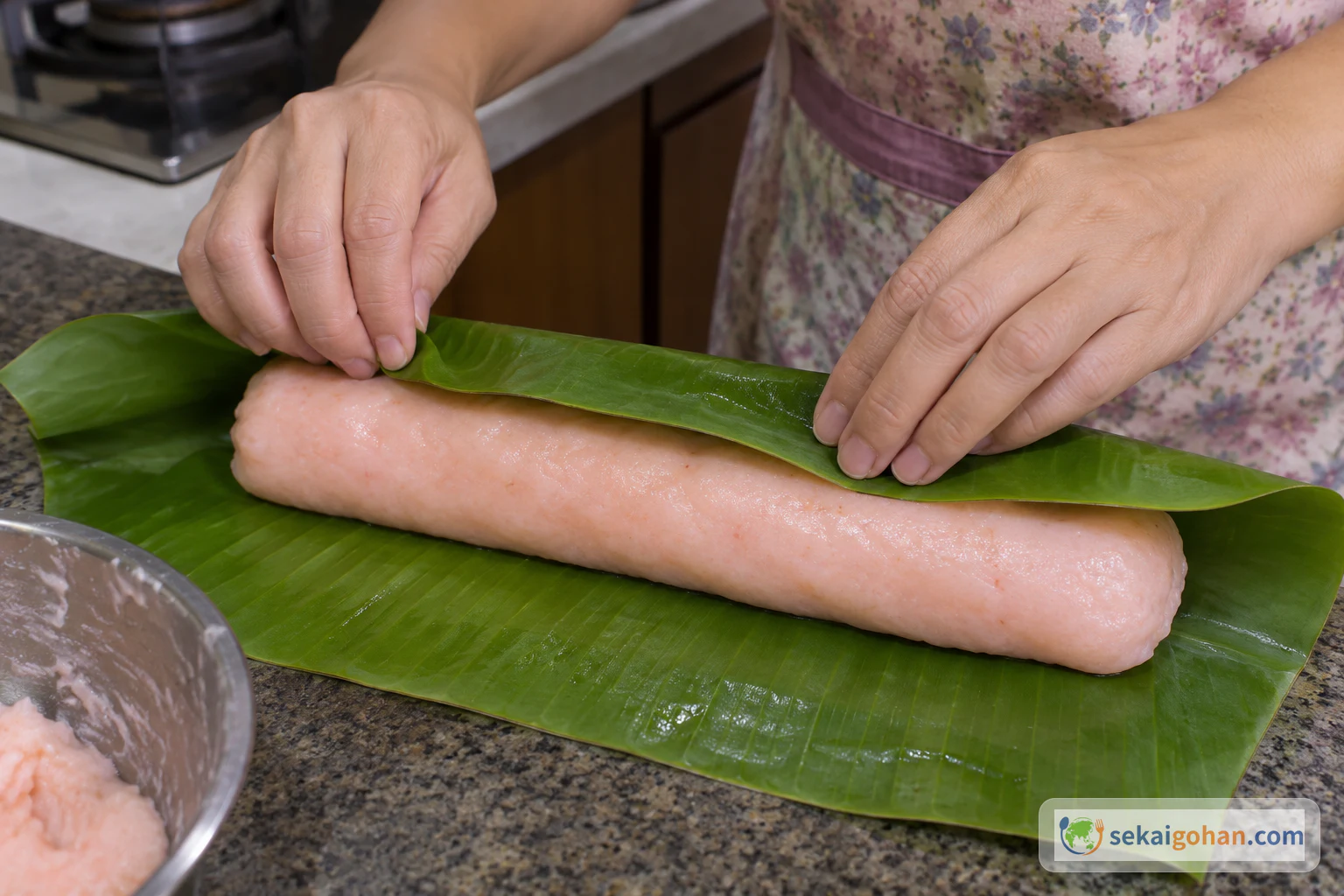
For wrapping, banana leaves and plastic wrap both work. Choose banana leaves if you can get them, and use plastic wrap on days you can't. Either one just needs to hold the roll in a tight, even shape through the long steam.
Method
The work happens in stages, with long gaps between them. Blending and kneading take the most hands-on time. Then the roll steams for about three hours while you keep the steamer topped up. After it chills, you slice it, and the slices spend as long in the sun as the weather needs. Frying comes last and takes only moments per batch, so you can fry the whole lot at once or keep dried slices and fry a few at a time.
Treat raw shrimp the way you treat raw meat. Keep it in the refrigerator until you use it, and give it its own board, bowl and knife. Wash the blender, bowl and your hands well after the shrimp paste is wrapped and in the steamer.
Lower the slices into the oil gently, close to the surface, and fry in small batches to limit spattering. Keep children and pets away from the pot, and never leave hot oil unattended.
When It Goes Wrong
| What you see | Why | What to do |
|---|---|---|
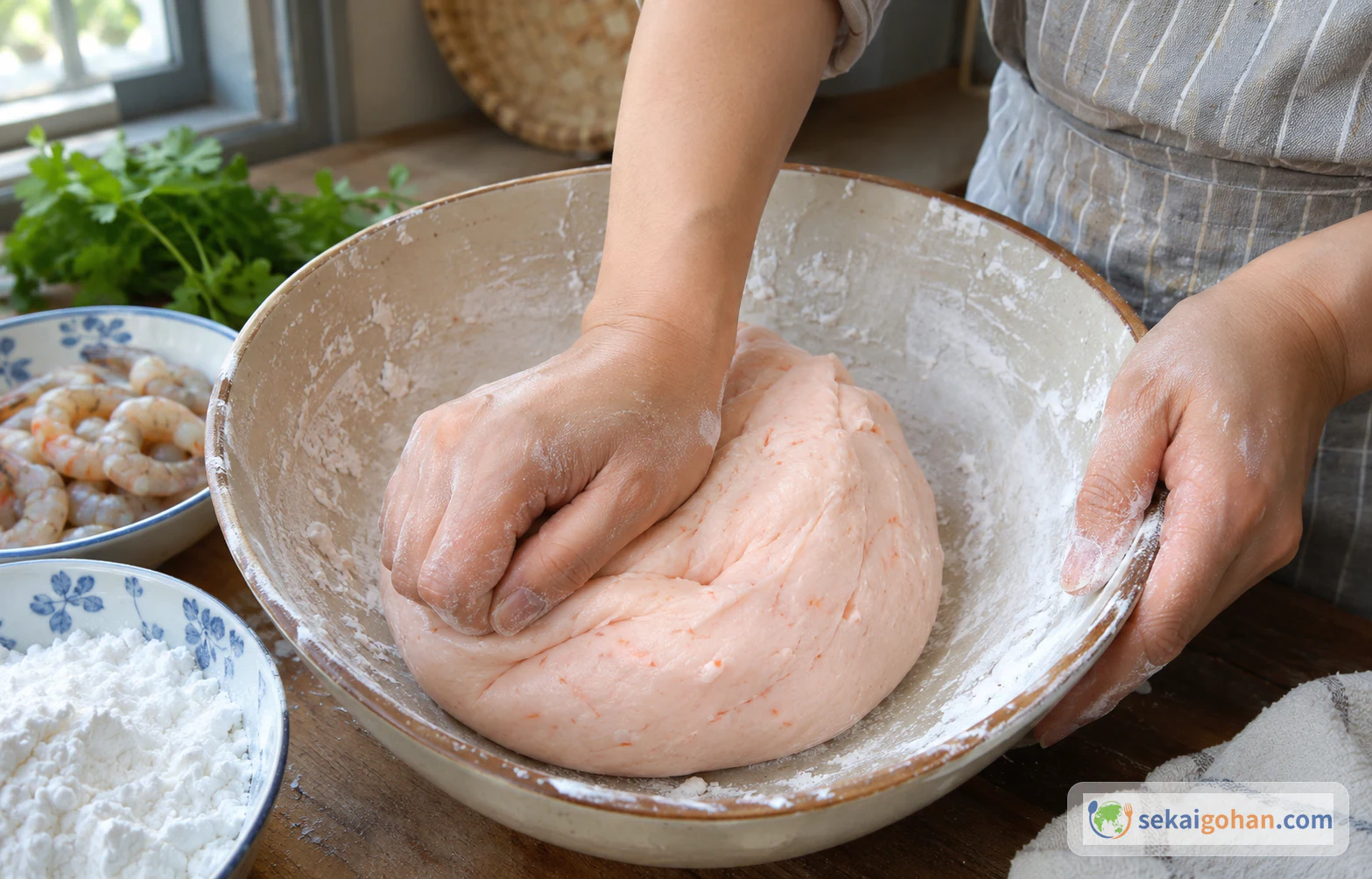
| The dough is sticky and clings to your hands | Too much water went in at once | Knead longer before adding more water; next time hold back water and add it in small pours |
| The center of the roll is still translucent after steaming | The roll isn't cooked through yet | Rewrap and keep steaming, then cut again until the center is white and opaque |
| The steamer boils dry partway through | Three hours of steam uses a lot of water | Check the level regularly and top up with boiling water from a kettle |
| Slices squash or tear under the knife | The roll is still warm and soft | Chill it longer in the refrigerator until firm right through |
| Some slices dry while others stay soft | Slices are uneven in thickness, or some sat in shade | Cut evenly, spread them in one layer in full sun, and keep drying the soft ones |
| Oil spatters hard when slices go in | Too many slices at once, or slices still damp | Fry a few at a time, and only fry slices that are fully dry |
Serving and Storage
At the table
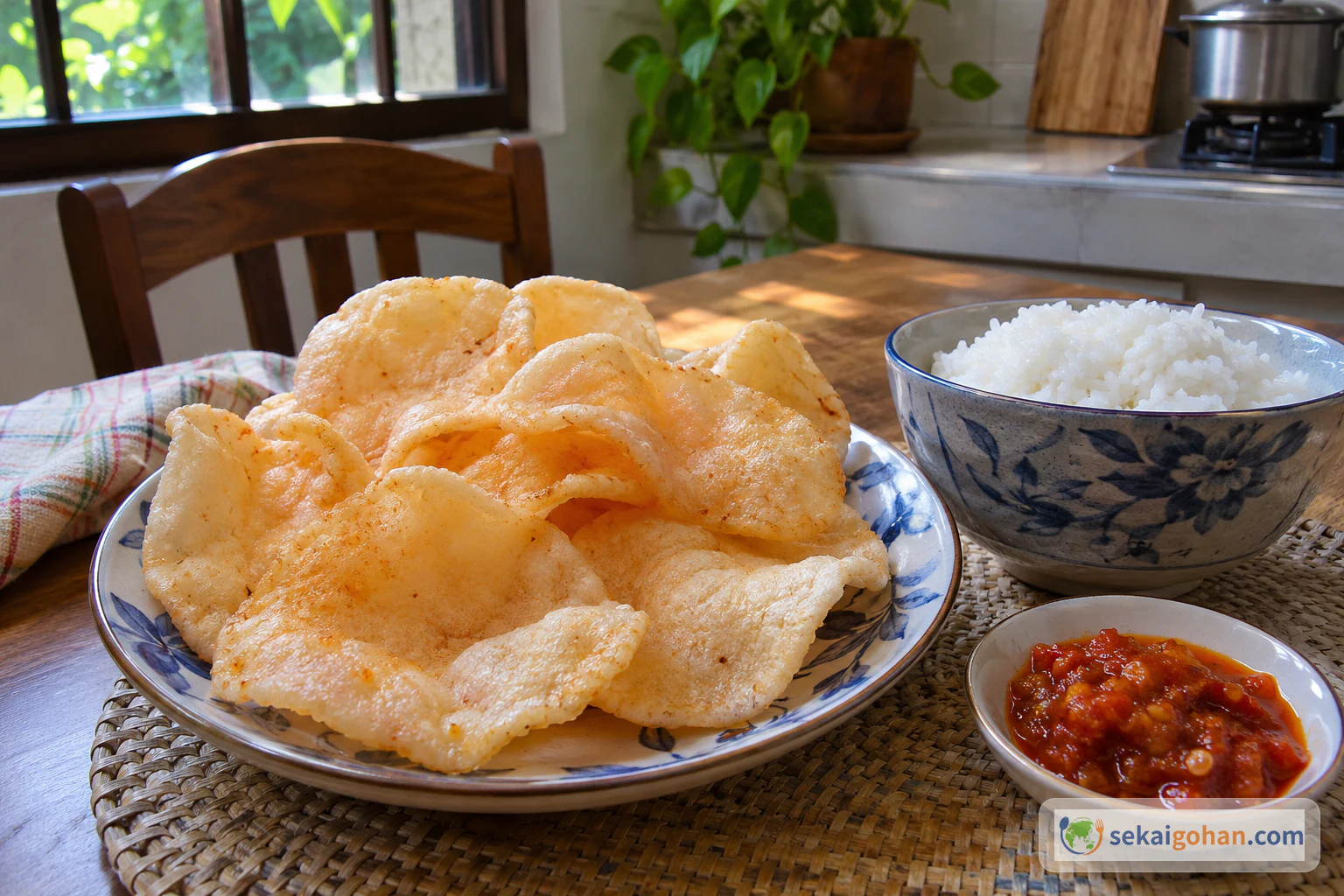
Put a plate of fried kerupuk next to steamed rice and sambal and let everyone break off pieces as they eat; the crunch against soft rice is the point. Crackers also go on top of rice porridge just before eating, and they make a good snack on their own with a dish of chili sauce. Fry close to mealtime so they reach the table at their crispest.
Keeping dried slices
Dried, unfried slices are the form to keep. Once they are completely dry, pack them in an airtight container and store them away from humidity, then fry a handful whenever you want them. Damp air softens the slices and spoils the puff, so seal the container well after each use.
Frequently asked questions
Is this the same as the shrimp crackers sold in bags?
They are close relatives. Making them from fresh shrimp at equal weight to the starch gives a cracker with a pronounced shrimp and garlic flavor.
How long does the sun-drying take?
Sun and humidity decide it, so watch the slices, not the clock. Hot, dry, sunny weather goes fastest, and cloudy or humid days slow it down. Keep going until every slice is hard and dry through to the center.
Banana leaf or plastic wrap?
Both hold the roll in shape through the steam. Banana leaf and plastic wrap are both fine, and plastic wrap is the easy option when you can't find leaves. Whichever you use, wrap snugly and close the ends so no water gets in.
Can I fry only part of the batch?
Yes. Fry as many dried slices as you need and keep the rest sealed in an airtight container away from humidity. Fry the stored slices exactly as in step 7.