
Next to the white rice, West Sumatra lines up one dish at a time
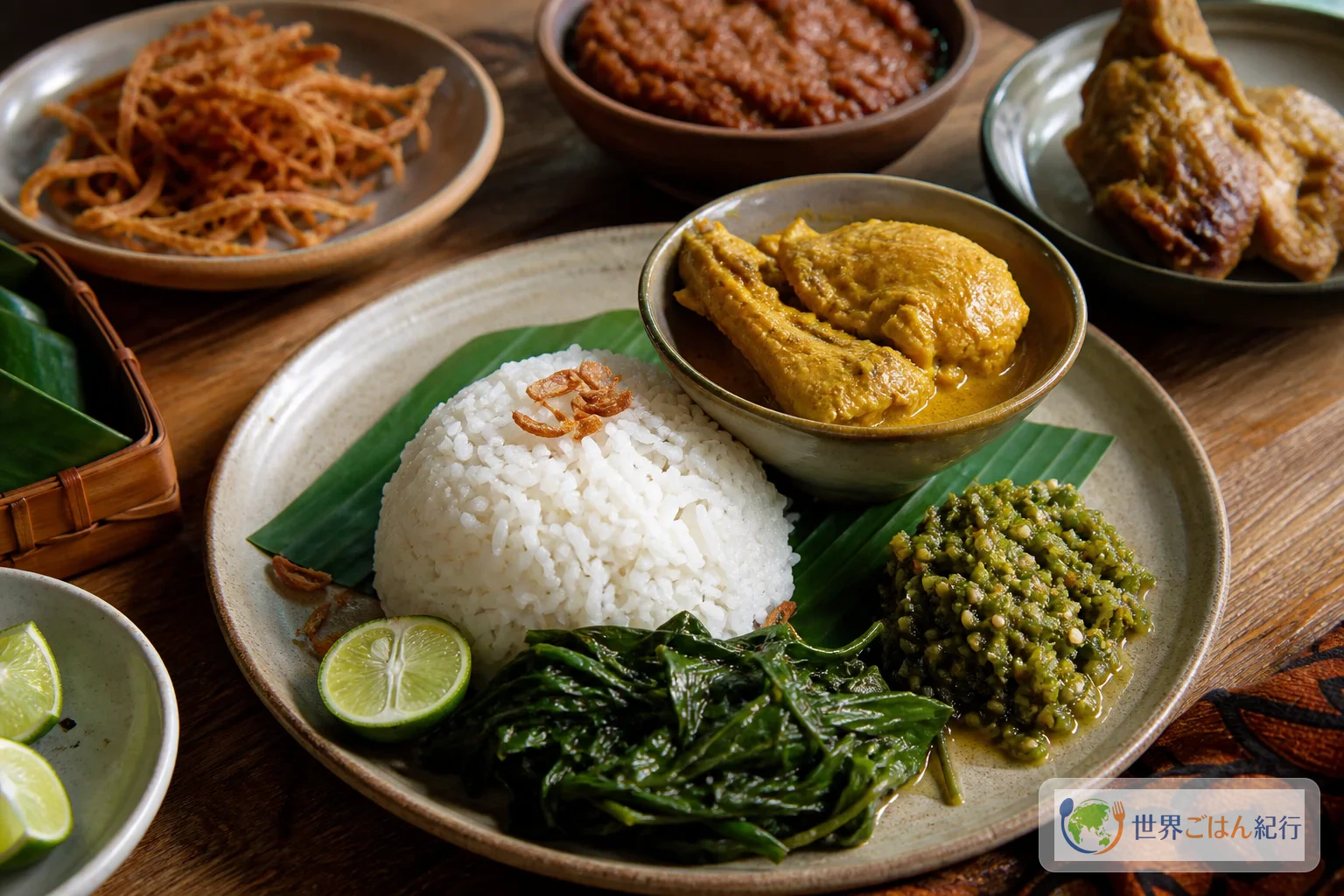
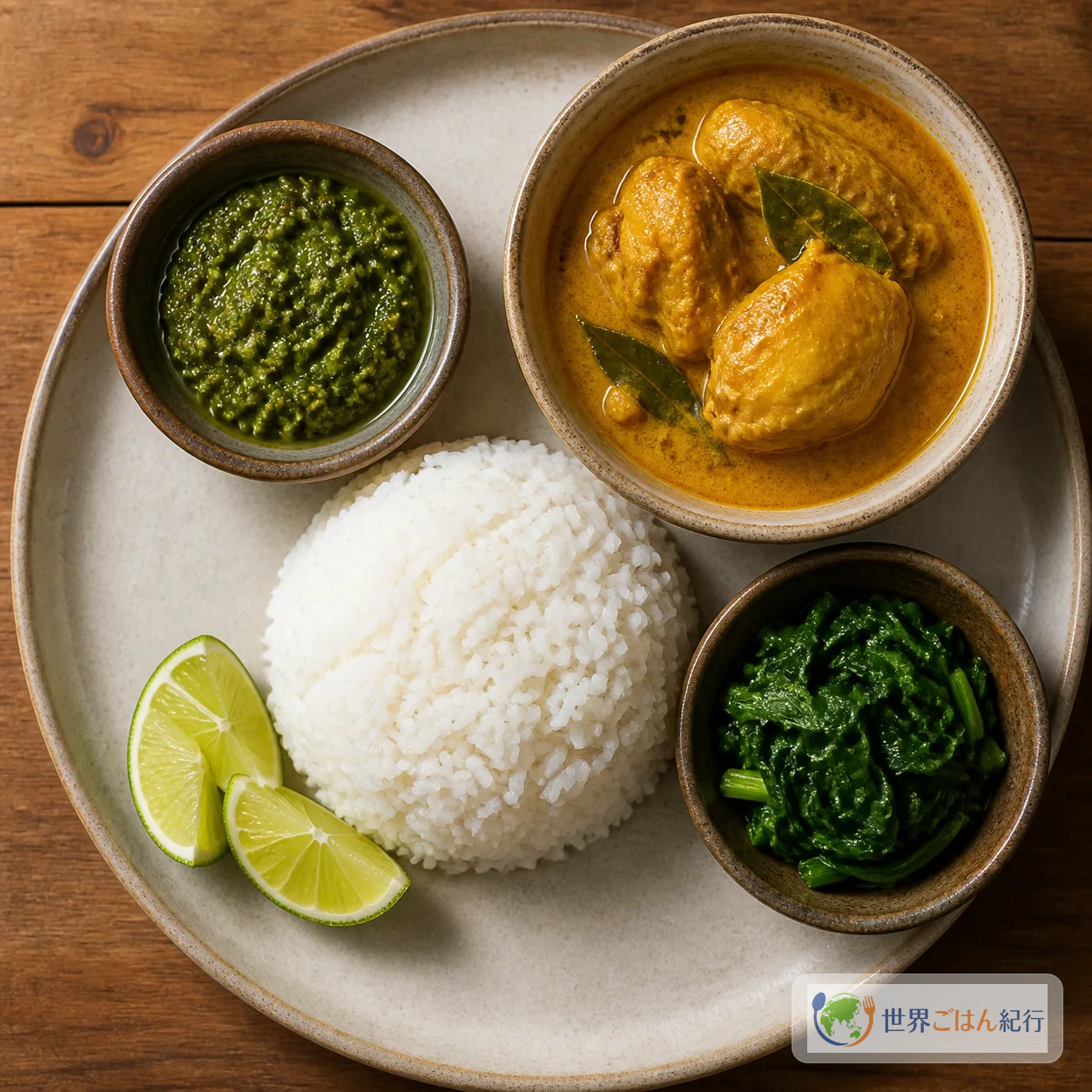
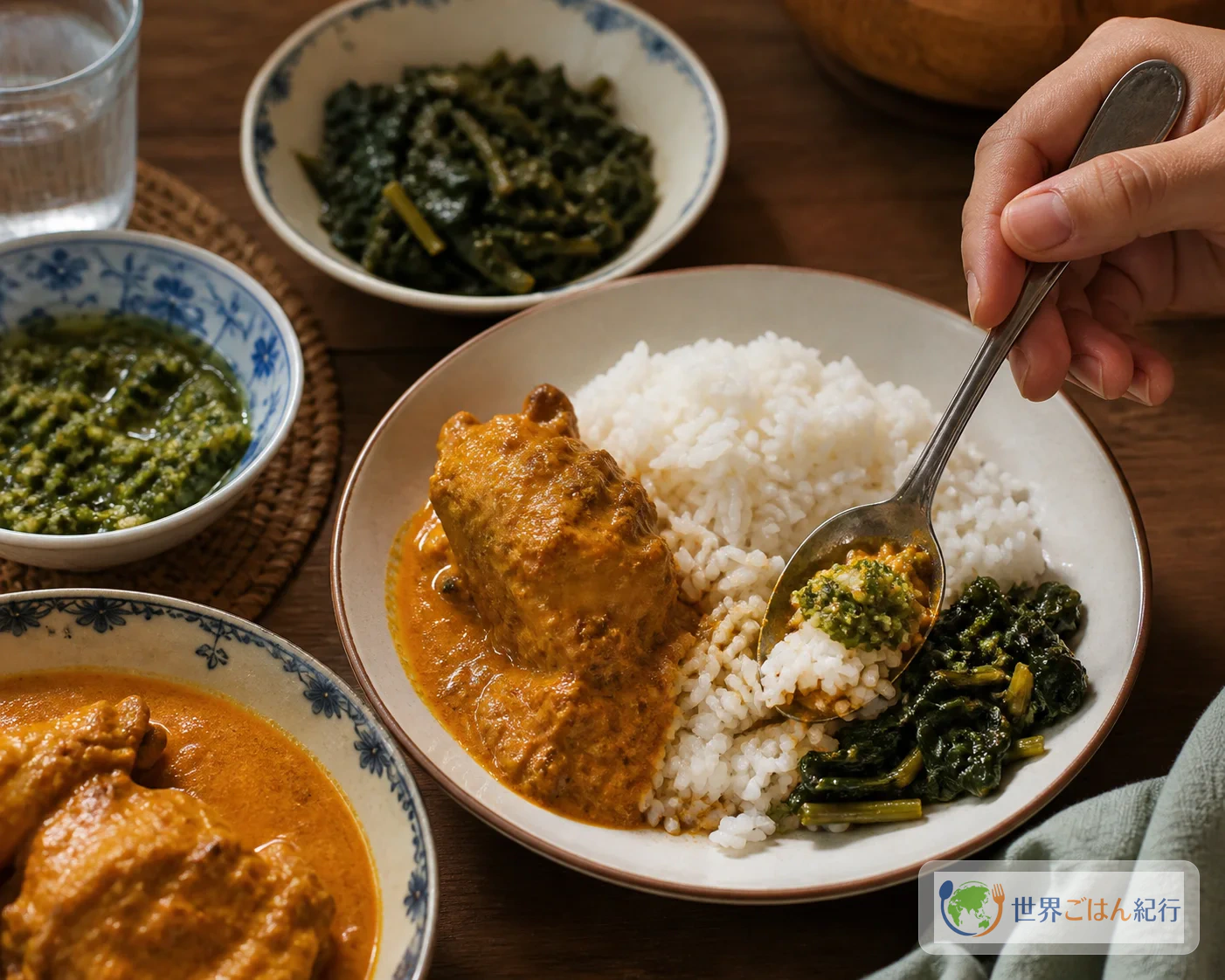
Beside a plate of rice go yellow chicken gulai, a green chili sambal and a pile of soft, wilted greens. The first bite brings the sweetness of coconut and chicken, the next the bright aroma of green chilies, the one after that the gentle bitterness of the greens. White rice takes in the heat and the richness, so the flavor keeps changing direction on the same plate.
Nasi padang isn't the name of one fixed dish so much as a way of eating: white rice served with a choice of Minang dishes from the province of West Sumatra, Indonesia. Padang is the name of West Sumatra's capital, but the food itself comes out of Minangkabau food culture. Some restaurants let you pick dishes from the display at the front; others set many small plates on the table and charge for what you eat.
At home there's no need to reproduce a restaurant's number of dishes. In fact, making four separate elements, white rice, a saucy gulai, something spicy and greens, makes the way nasi padang is eaten easier to see. This is not meant to stand in for any single West Sumatran menu; it's a home version that assembles elements commonly found there in a home kitchen. Not reducing the chicken gulai too far, and not stirring the sambal into the pot, keeps the plate in a state where you can choose flavors as you eat.
Among Indonesian rice dishes, it differs from Jakarta's fragrant nasi uduk (in Japanese) and Solo's chicken-broth rice nasi liwet (in Japanese) less in how the rice is seasoned than in the idea of "choosing side dishes and layering them." To dig into West Sumatran dishes one at a time, there's also rendang (in Japanese), cooked down in a thick coconut sauce, and sate padang (in Japanese), skewers served with a yellow sauce.
Turning what happens in a Padang restaurant into four dishes at home
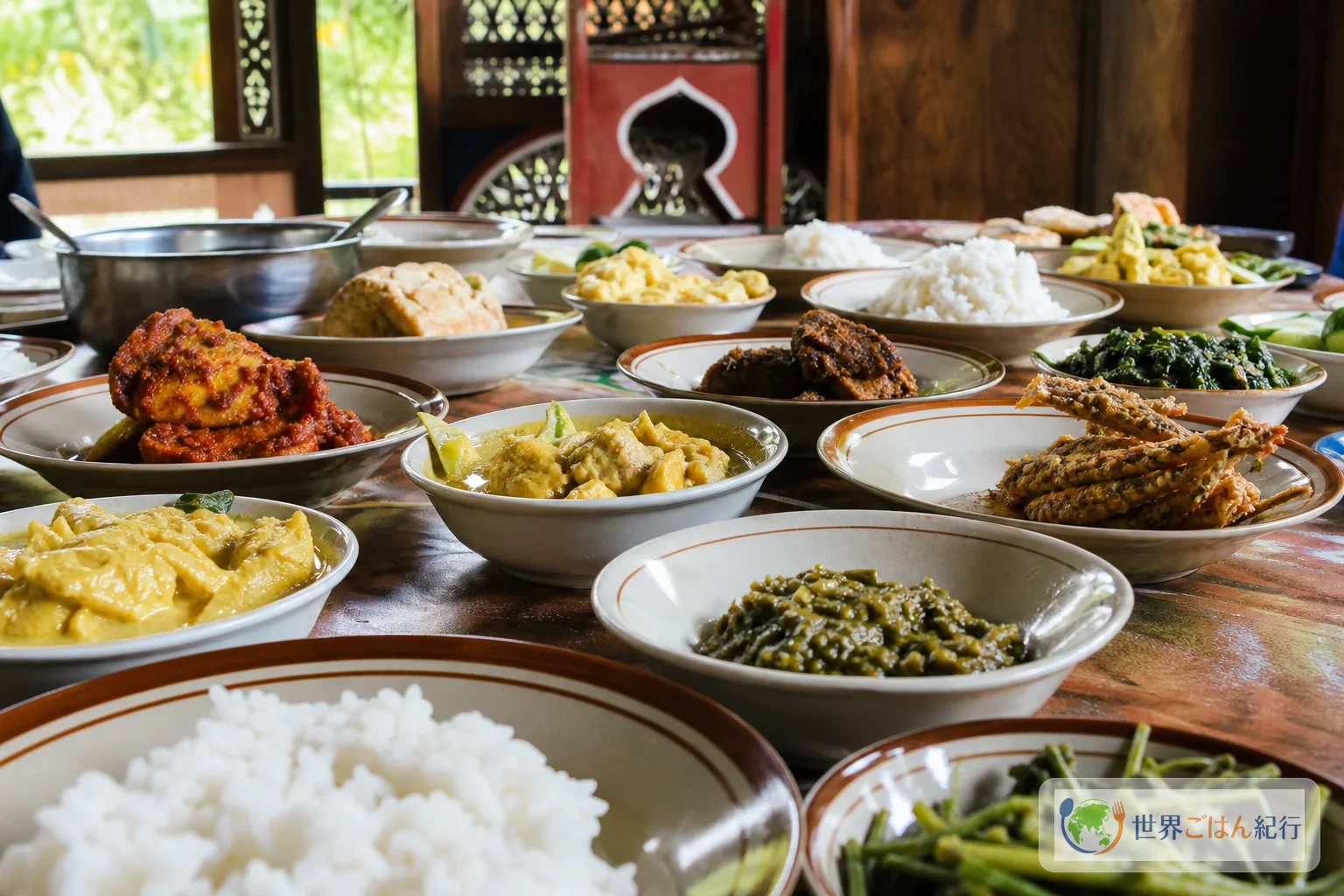
At Padang restaurants, two styles are well known: looking at the dishes in the window and ordering one at a time, or having dishes laid out on the table and choosing which ones to eat. In the second style, servers carry plates stacked along their arms and turn the table into a small banquet. When you recreate it at home, what matters isn't the number of plates but setting the dishes out without mixing them, so each person can change the combination with every bite.
Minang restaurant names and dish names carry local words and family names. In the glossary of one research paper, rumah makan is treated not just as a large restaurant but as a word that covers small eateries too, and Rumah Makan Minang refers to an eatery serving Minang food. The sign above the door and the dishes in the window become a place that shows the food culture of people who moved away from home.
The Minangkabau have a tradition called "merantau," leaving home to work elsewhere, and Minang eateries became places that linked culture and livelihood in the places people moved to. The reasons West Sumatran food became known across Indonesia and abroad as "Padang food" can't be reduced to it simply being spicy. Flavors that travel well, several side dishes that suit white rice, and a system that lets you choose at the restaurant came together, and it has worked its way into everyday lunches.
For this home version, chicken gulai is the centerpiece. Some tables include rendang made with beef simmered for hours, gulai of offal or fish, and fried dishes too, but chicken needs little prep and lets you compare the richness of the coconut sauce with the heat of the sambal in the same meal. For the greens, rather than reproducing the cassava leaves used locally, easy-to-find komatsuna keeps the role of a leafy side.
Ingredients (serves 4)
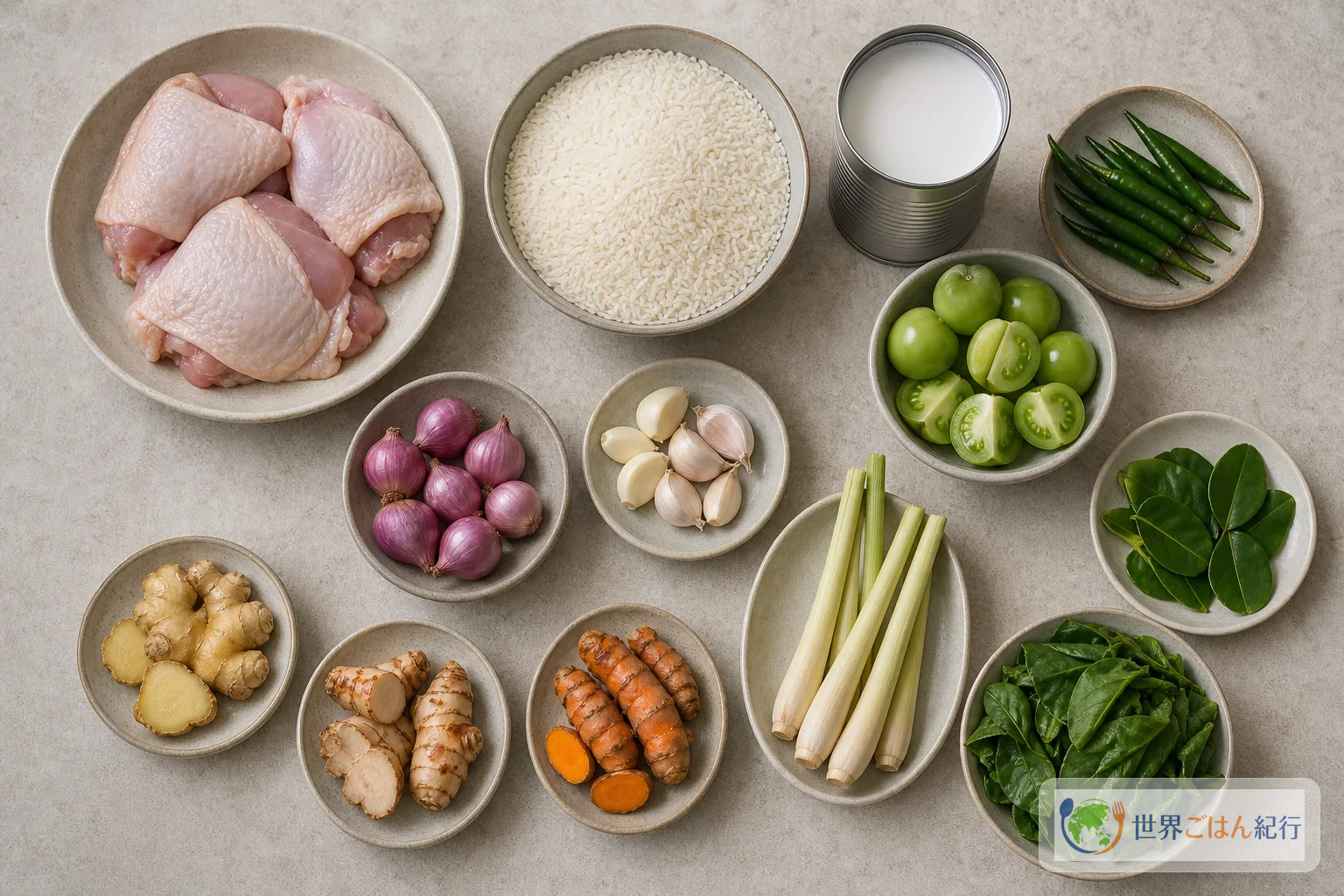
It may seem that adding more dishes brings you closer to a real restaurant, but starting with lots of ingredients leaves you short of burners and storage containers. For 4 servings, keep it to chicken gulai, sambal lado mudo, greens and white rice. Use boneless chicken thighs for the gulai, and make the sambal with green chilies and green tomatoes, which make it easy to control the heat.
This recipe uses coconut, chicken and nuts. Store-bought sambals and spice mixes may contain shrimp, wheat, soy or nuts. If you have allergies, check the product labels, and don't force the candlenuts in.
Separate the aromatic core from the everyday shopping
Chicken, rice and greens are available at any ordinary supermarket. The things worth seeking out are cooking-grade coconut milk and a tool for making the spice paste. For coconut milk, choose a canned product, not a coconut milk beverage, where you can check the volume and the ingredient list. If you'll cook two or more coconut dishes, cans are worth buying; if you're improvising a substitute just this once, reduce the liquid rather than reaching for cow's milk.
Check that it's a 400 ml can, that it's meant for cooking, and that it doesn't contain much in the way of thickeners or sweeteners beyond coconut and water. A sweetened beverage makes it hard to balance the saltiness of the gulai with the heat of the green chilies.
Galangal, makrut lime leaves and candlenuts can sometimes be found at specialty or Southeast Asian grocery stores. Galangal is the one ingredient whose aroma softens noticeably if you replace it with ginger. On days you want to prioritize the local aroma, buy a small amount frozen and keep it sliced in portions so you're not stuck with fresh produce you can't use up.
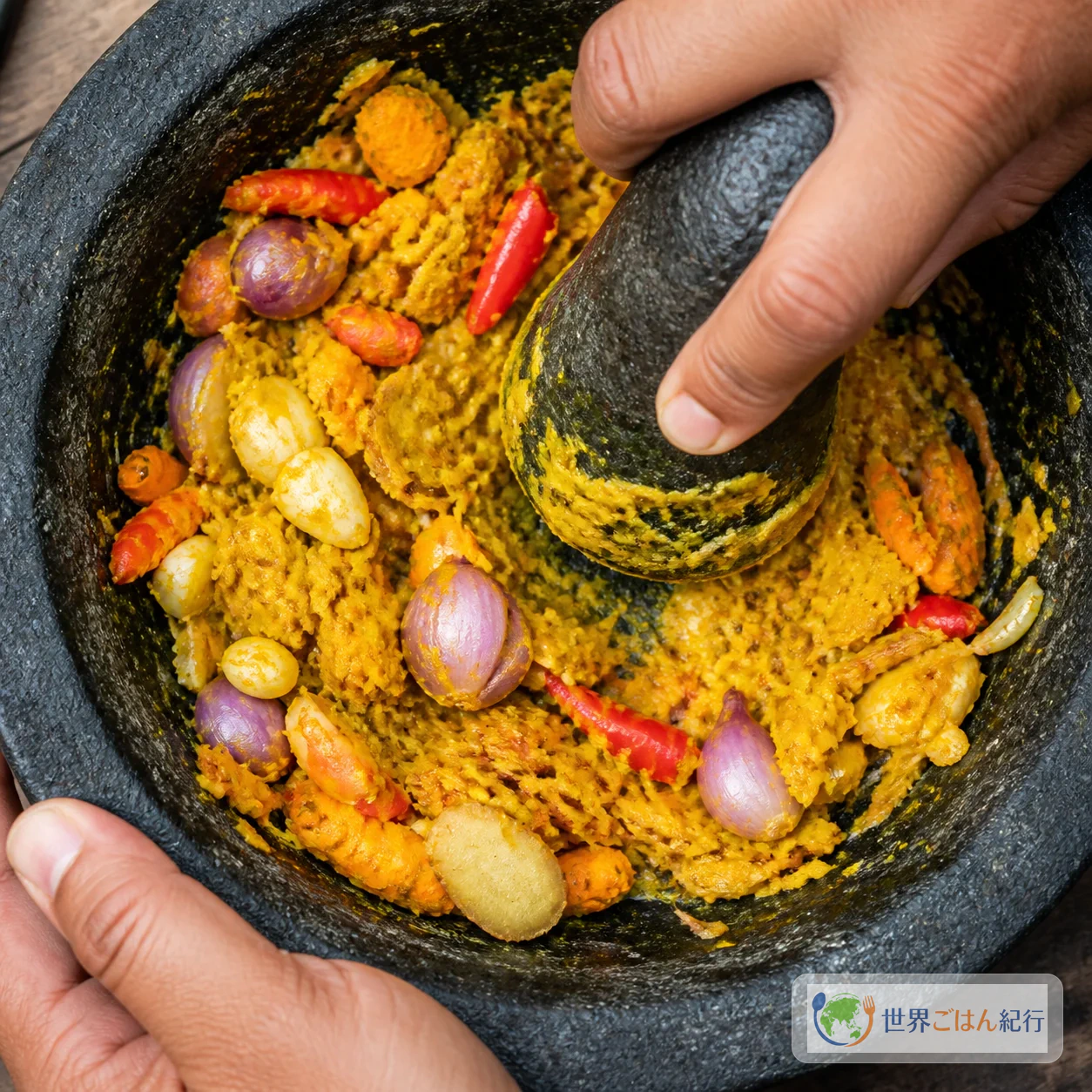
Coarsely pounding the aromatics in a stone mortar leaves a little fiber and makes it easier to see how fast the aroma moves into the oil. You can make the dish with a food processor too, and a mortar you already own works just as well, so a dedicated stone mortar is only worth considering if you plan to cook this often and want to cut down on chopping.
Instructions: finish the gulai and sambal while the rice cooks
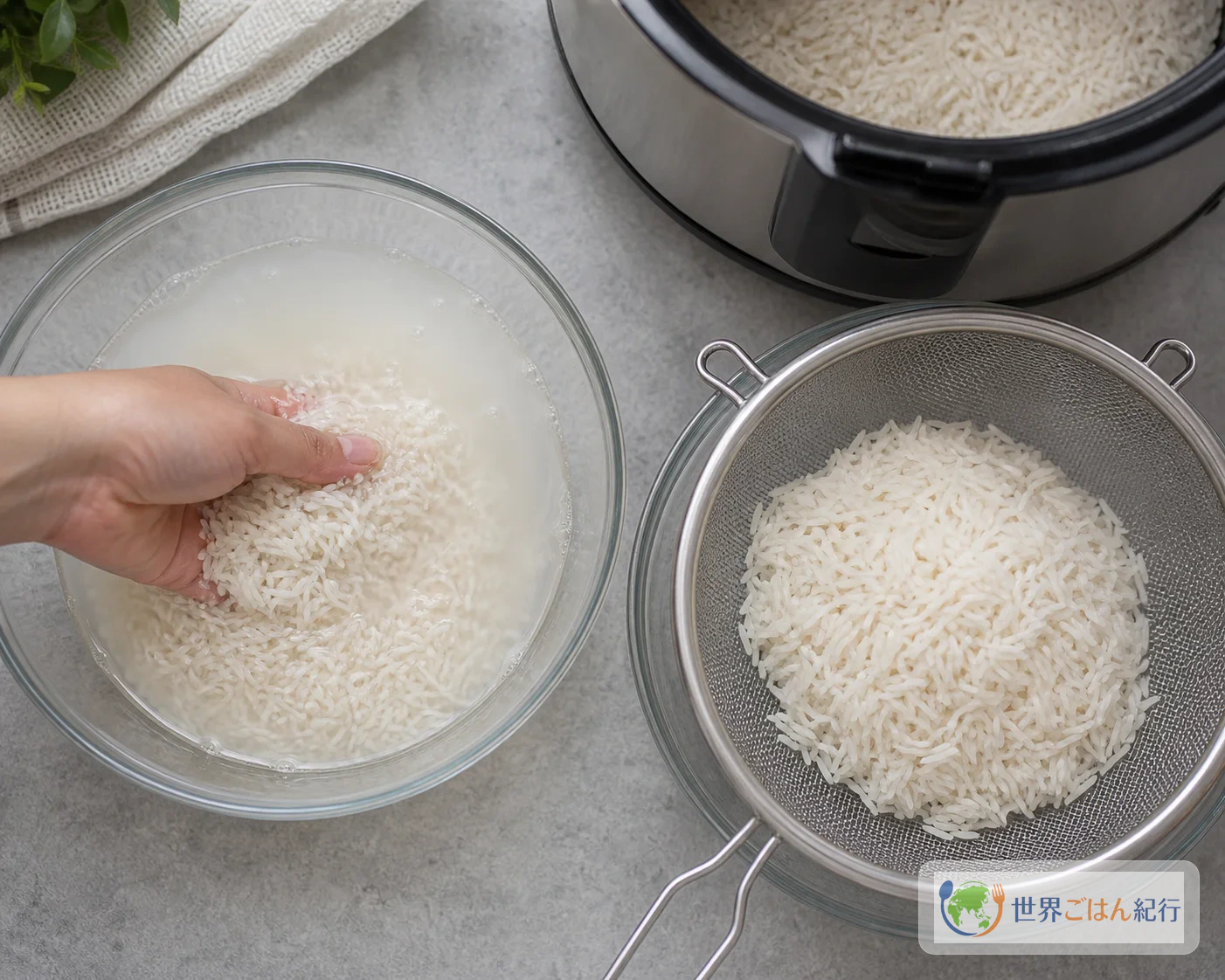
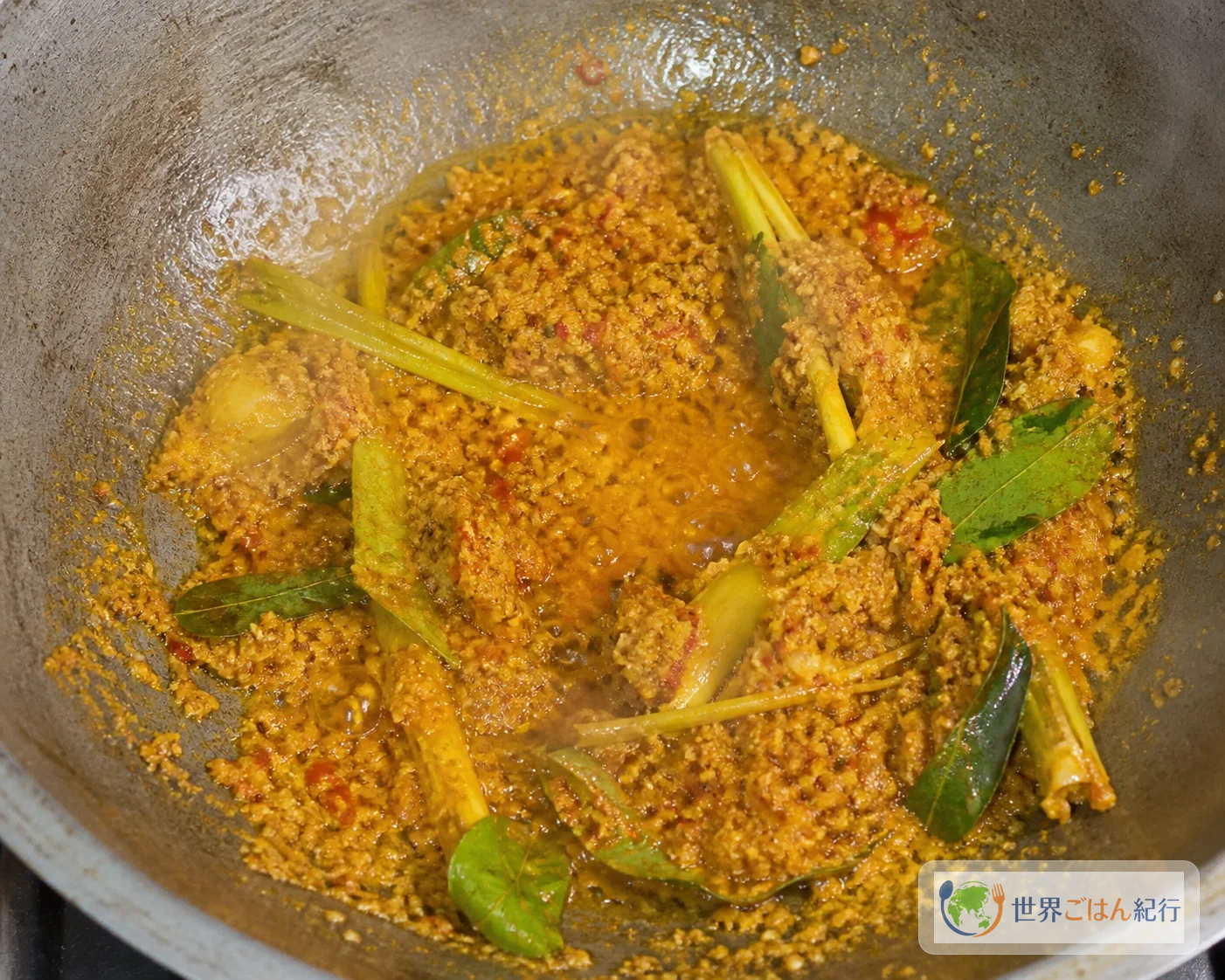
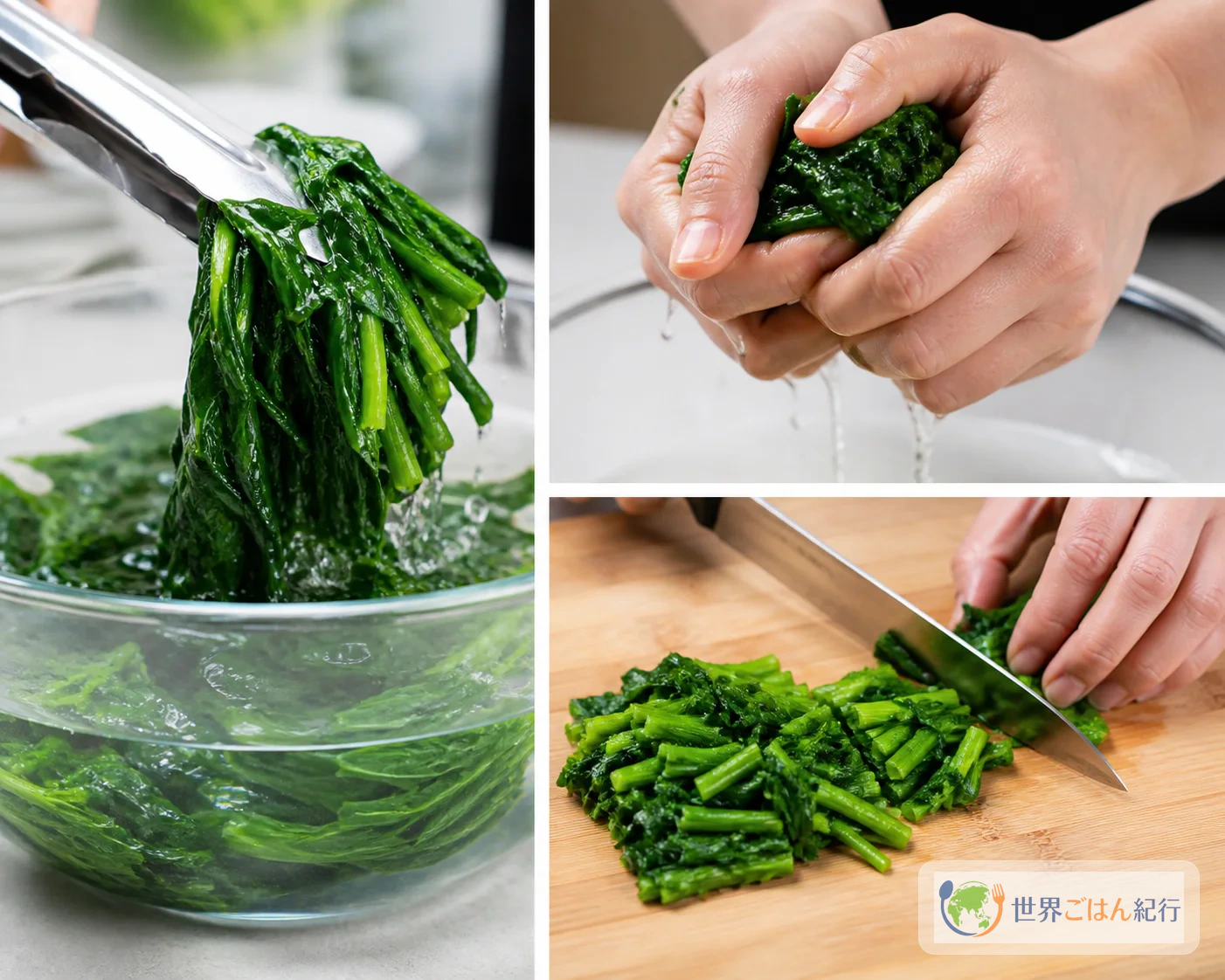
Chicken gulai spends a long time simmering on low heat, so start the rice first and the meal won't bottleneck before serving. Make the sambal last while tasting for heat, and blanch the greens just before bringing everything to the table. Keep cutting boards and chopsticks that touched raw chicken away from the rice and greens. Don't wash the chicken; if the juices bother you, pat it with paper towels.
4 tips for bringing the flavor closer to a local table
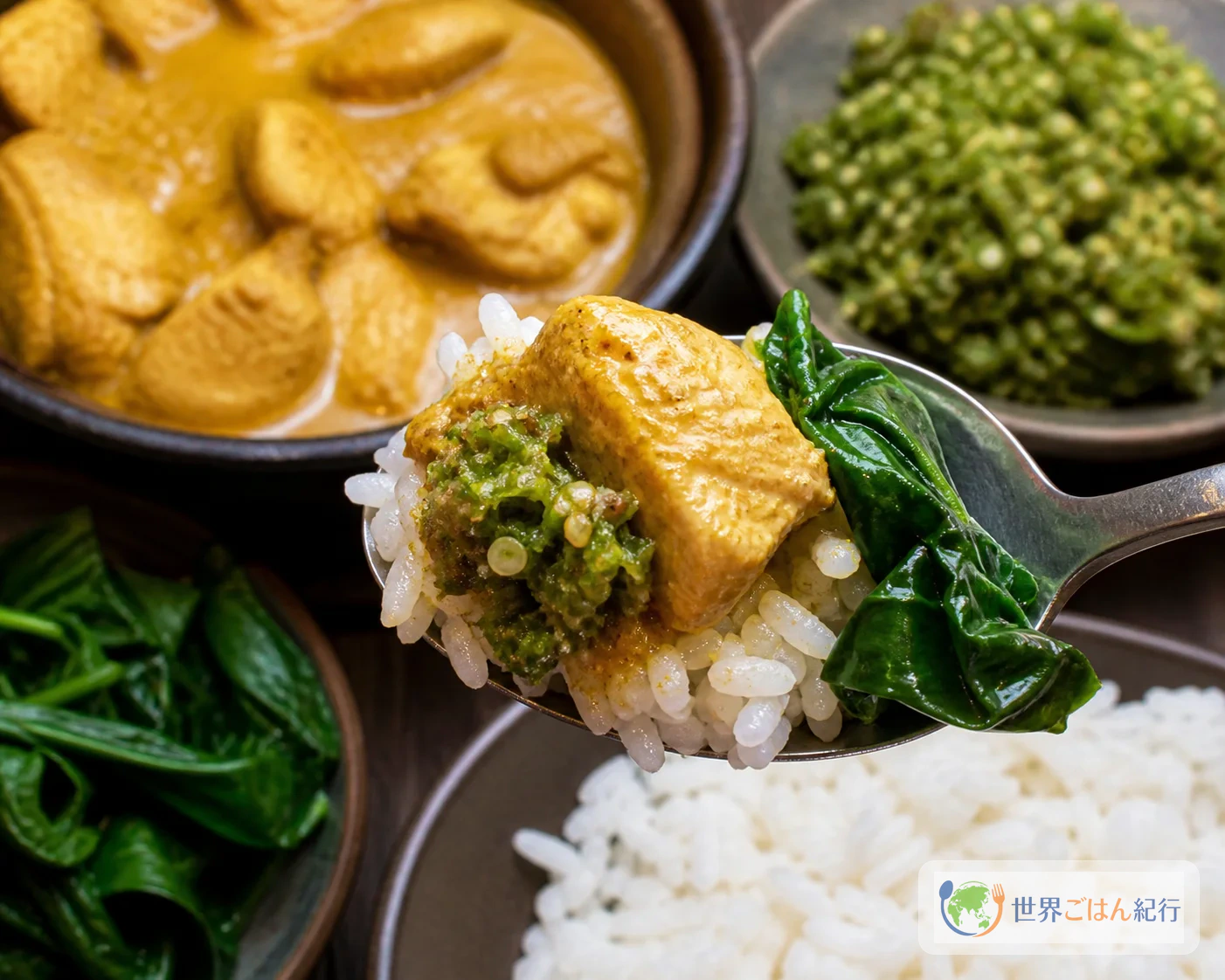
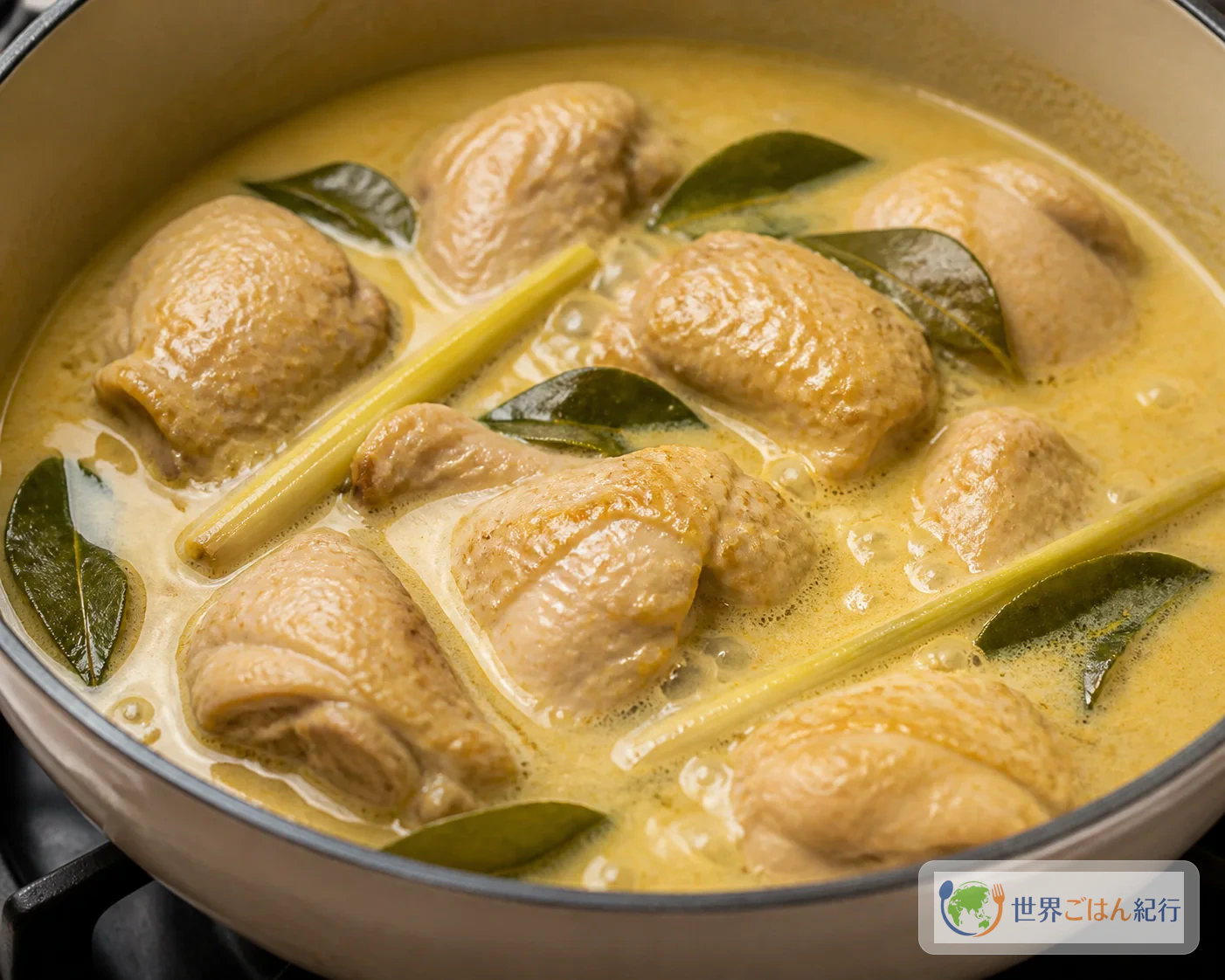
If you bring it to a hard boil after adding the coconut milk, the oil and liquid separate and the surface turns grainy. Keep the heat low enough that bubbles keep forming at the edges of the pot, and adjust only the thickness of the sauce once the chicken is cooked.
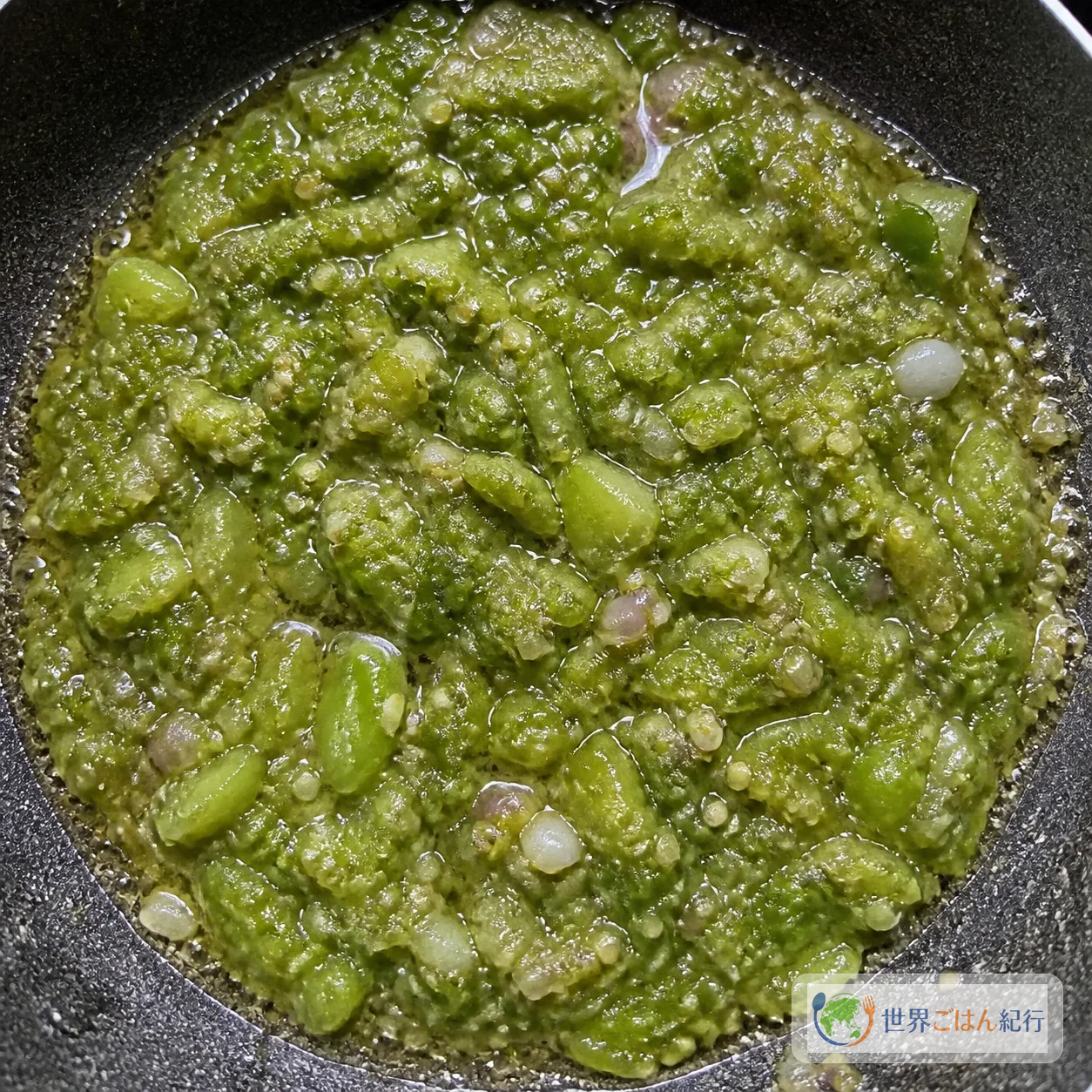
Sambal lado mudo is a small dish for enjoying the aroma and acidity of green chilies. Stirred into the gulai, the heat covers even the coconut aroma of the chicken. When people who love heat and people who don't are sharing a meal, serving it on the side is the easiest way.
Candlenuts give the sauce roundness, but there's no need to go out of your way to buy them. If substituting macadamia nuts, choose unsalted and unsweetened, and leave them out for anyone who can't eat nuts. Thickening with cornstarch or similar gives a texture that's nothing like gulai.
Cook the rice first, keep the gulai on low heat, and make the sambal and greens toward the end, and the greens keep their color and the sambal its aroma. If you keep everything warm the whole time, the greens weep and the oil in the sambal comes forward more than the heat.
Regional differences: tell Padang and Kapau apart by how they're served, not by the dish names
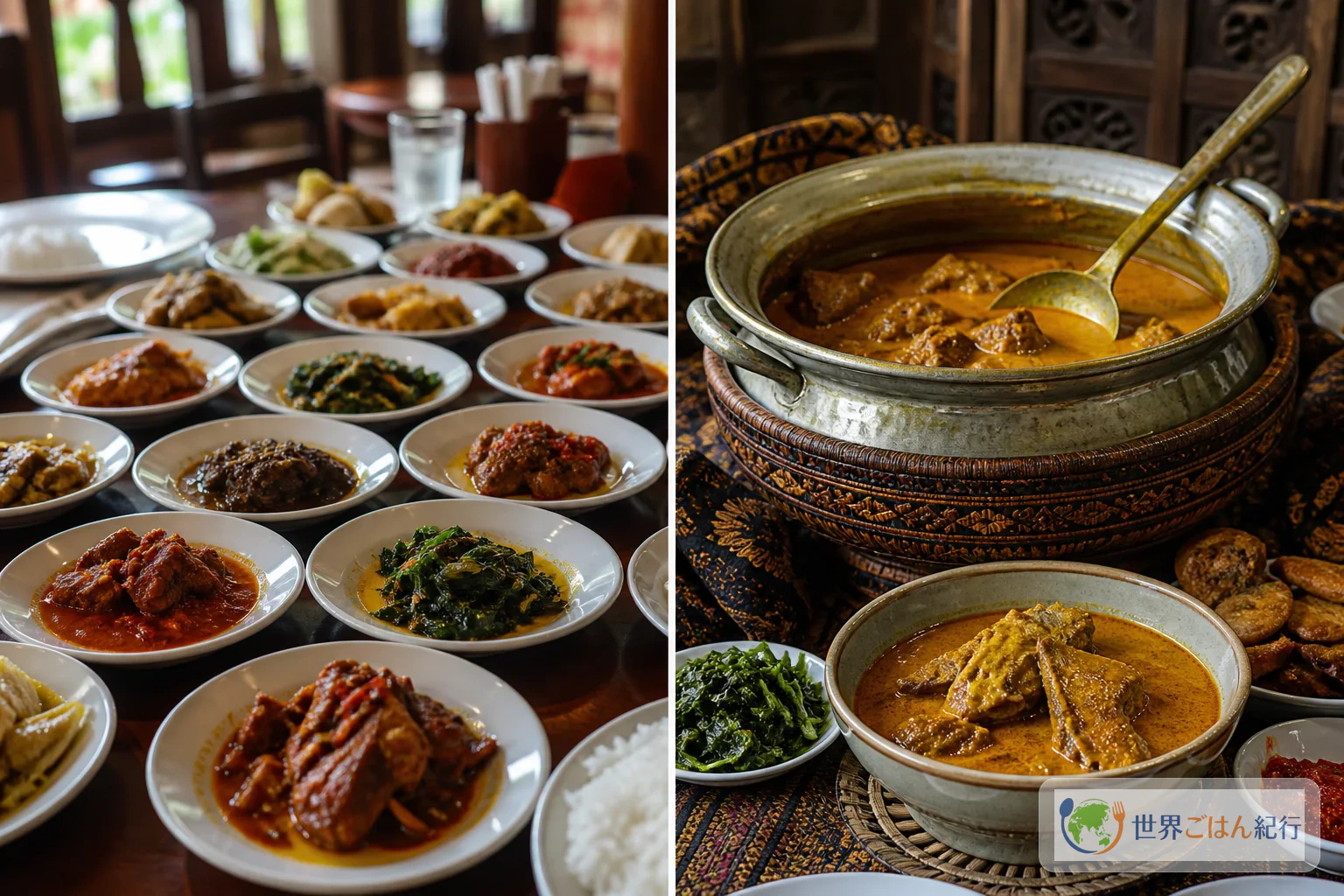
Look into the food of West Sumatra and you'll notice that nasi padang and nasi kapau dishes look very similar. Both pair white rice with Minang dishes, combining gulai, stews, sambal and vegetables. Rather than defining the difference by a single ingredient, it's more accurate to look at how they're served and how the regional dish names are used.
At Padang restaurants, both a style where customers look at the dishes out front and choose and a style where many plates are set on the table are described. Nasi kapau, meanwhile, is introduced as food from around Bukittinggi, with dishes similar to nasi padang but a different impression in how it's served. Translated to a home table, think of Padang as a table of many small dishes to choose from, and Kapau as a table where regional dishes are enjoyed served a different way, and the distinction holds.
The dishes themselves vary by region and by restaurant. Greens might be cassava leaves; fruit might be young jackfruit; mains range from chicken and beef to fish and offal. Presenting local nasi padang as one fixed set erases that range. The chicken, greens and green sambal here are four dishes chosen for availability and contrast of flavor.
Some sources translate "gulai" as curry, but the Minang term can't be treated as exactly the same as the English word curry, because the aromatics, coconut, meat or vegetables and the thickness of the sauce change from dish to dish. When cooking it at home, too, don't flatten everything with curry powder; aim to let turmeric, coriander, cumin and lemongrass each come through.
In a home kitchen: ingredients to swap, aromas to keep
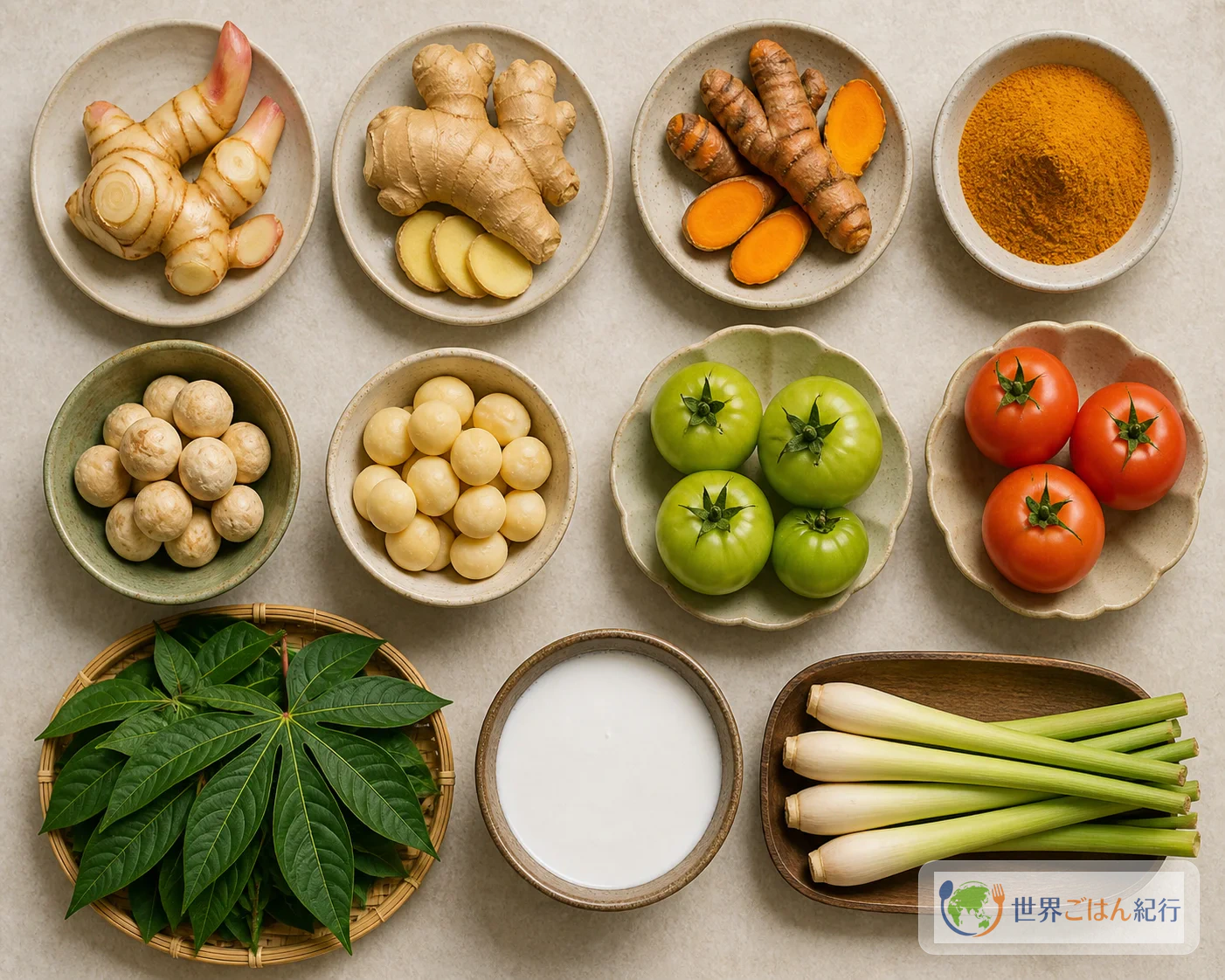
When making it at home, rather than buying every ingredient as an import, keep only the ones that define the dish's backbone.
| Ingredient / element | Closer to local | Practical substitute | What changes |
|---|---|---|---|
| Coconut milk | Rich cooking-grade canned | Also canned; adjust with water | Aroma and richness of fat remain |
| Galangal | lengkuas | A little extra ginger | The earthy, citrus-like aroma weakens |
| Candlenuts | kemiri | Unsalted macadamias, or omit | The sauce's round richness weakens |
| Fresh turmeric | kunyit | Ground turmeric | Color holds, but the fresh, earthy aroma fades |
| Makrut lime leaves | daun jeruk | A little lemon zest | The leaf's bitterness and depth of citrus aroma change |
| Green tomatoes | tomat hijau | Firm tomatoes + lime | The green acidity becomes rounder |
| Cassava leaves | daun singkong | Komatsuna, spinach | Texture and gentle bitterness change |
In order of priority, keep the coconut milk, the color of turmeric, the citrus aromas of lemongrass and makrut lime leaves, and the practice of serving the heat on a separate plate. Even if you swap galangal or candlenuts, gulai keeps its shape as a simmered dish. On the other hand, swapping coconut milk for cow's milk and building the aroma with curry powder alone pushes it toward a very different dish.
Jasmine rice holds the shape of its grains well, but Japanese short-grain rice works too. Reduce the water and think of it as a home version with slightly stickier rice. With other Thai rice or basmati, follow the package directions and be careful not to pour too much gulai sauce over the rice. Keeping the sauce on a separate plate affects the texture more than the type of rice.
5 variations from the same four dishes
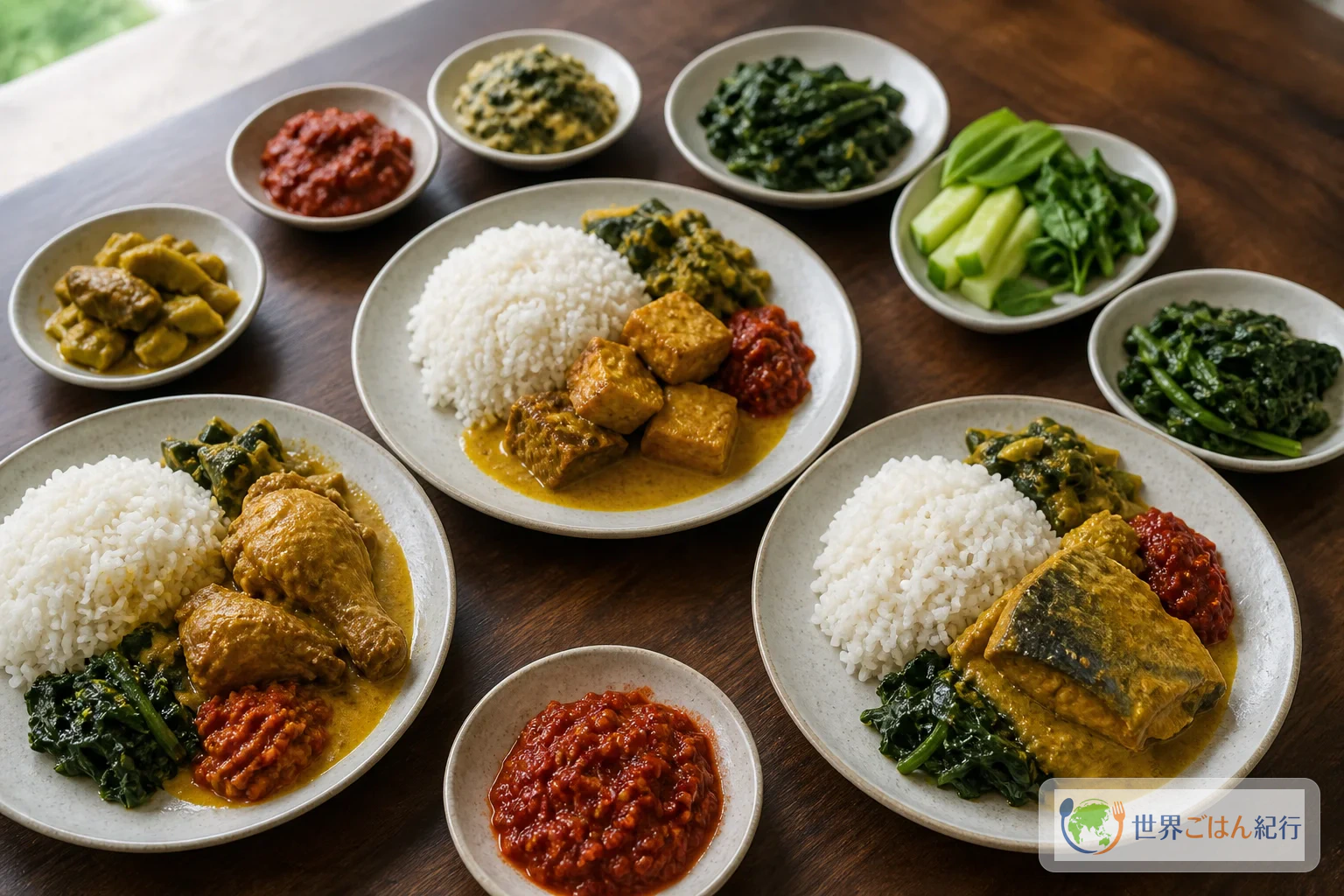
1. Tofu and fried tofu gulai
Swap the chicken for 400 g thick fried tofu (atsuage), adding the coconut milk after frying the aromatics. Fried tofu holds its shape and soaks up the gulai, so about 10 minutes of simmering is enough. Even when making it plant-based, check whether store-bought sambal contains shrimp.
2. Make it a sour fish simmer
If using 600 g white fish instead of chicken, don't simmer it from the start; simmer the aromatics and coconut milk for 15 minutes, then add the fish. Use more lime and play the coconut's sweetness against acidity. The fish breaks apart easily, so shake the pot rather than stirring.
3. Serve a red sambal on the side
Swap the green sambal for one made with red chilies, tomatoes and garlic. Keep the gulai and greens the same and change only the red heat, and the meal changes character without remaking the main. Even when turning up the heat, set some aside to adjust before adding more chilies.
4. Add young jackfruit, Kapau style
If you can find it, simmer young jackfruit in stock and coconut milk and serve it in a small dish separate from the chicken. If using canned, avoid jackfruit in sweet syrup; choose it packed in water and rinse well. This adds another main, so it's better for a weekend after you're used to the flavors of the four dishes than for your first nasi padang.
5. Pair leftover gulai with noodles the next day
Thin leftover gulai with a little hot water and pour it over cooked rice noodles or udon. Store the sambal and greens separately and combine them when eating. Thinning a big batch for noodles from the start loses the concentration you want with rice, so warm only what you need and then adjust.
Fixing a split sauce, wateriness or too much heat
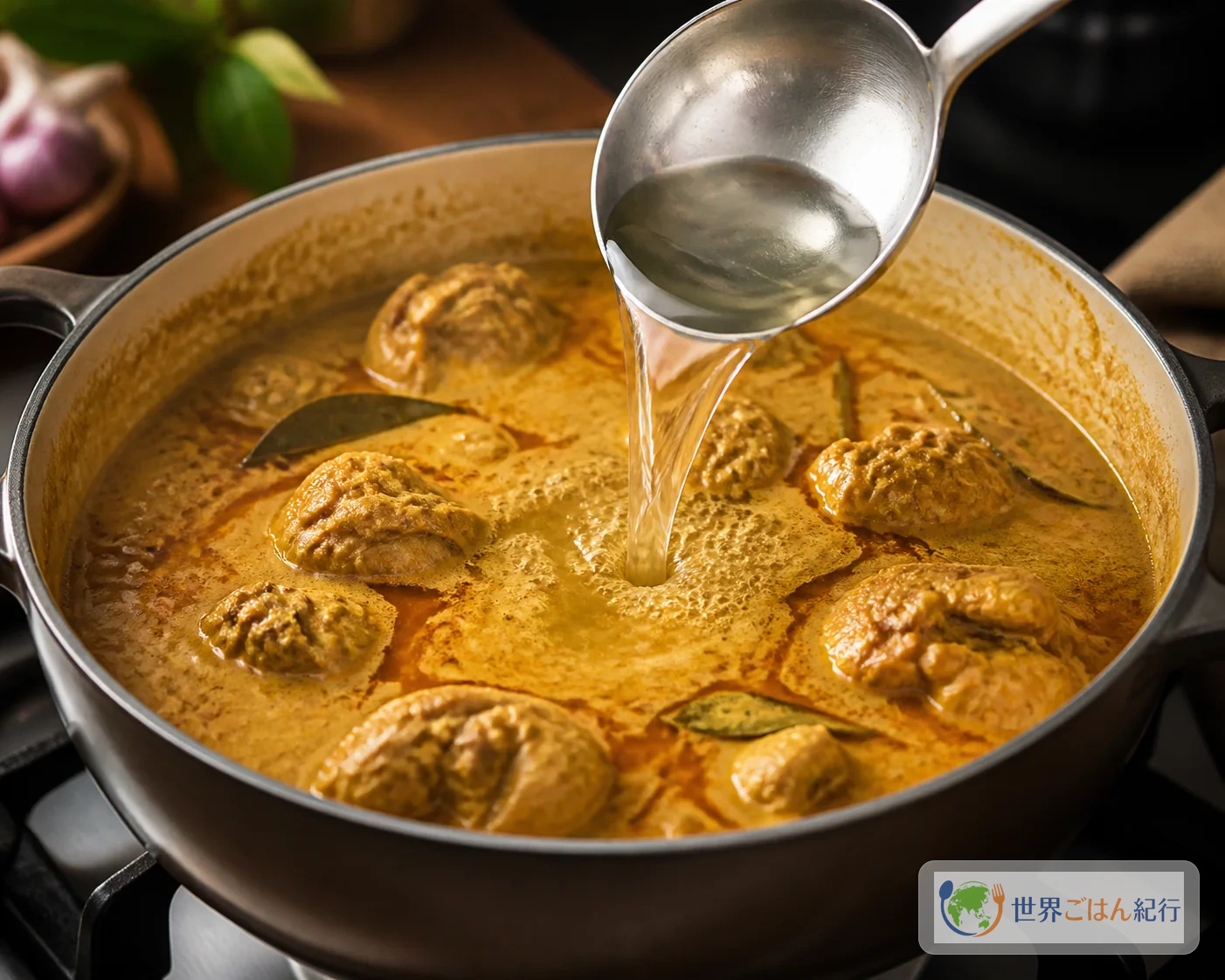
The sauce split
Turn off the heat, add 2 tbsp hot water and stir slowly with a wooden spatula. Return to low heat and warm for 3 minutes without boiling, and the liquid and oil will come together somewhat. Even if the oil doesn't fully reincorporate, it's fine as a sauce to eat with the chicken. Avoid reducing it further over high heat, which makes it separate more.
The gulai is watery
Remove the chicken and simmer the sauce alone uncovered over low heat. Cook in 5-minute stretches until dragging a wooden spatula leaves a trail for a moment, then return the chicken. Thickening it suddenly with potato starch loses the light, flowing sauce of gulai, so cook off the water with time.
The gulai is too salty
Thin it with hot water, not coconut milk, 50 ml at a time. Aim for it to taste right with the chicken and rice, without making it too bland on its own. Serving it with unsalted white rice and greens spreads out the saltiness of each bite.
The sambal is too hot
Mix in extra green tomatoes, fried onion and a little oil, bit by bit. Trying to cancel the heat with sugar alone turns it into a sweet paste, so adjust with acidity and the amount of vegetables. You can also set aside the hottest portion in a separate dish instead of mixing it all in, and add it back later.
The chicken is tough
Even thighs get tough over high heat with too little liquid. Add 100 ml hot water, set the lid ajar and simmer on low for another 10 minutes. Stop when the meat starts to come apart, checking that it's cooked through to the center. Washing chicken to make it tender is something to avoid, both for hygiene and texture.
Store and reheat with the four dishes kept separate
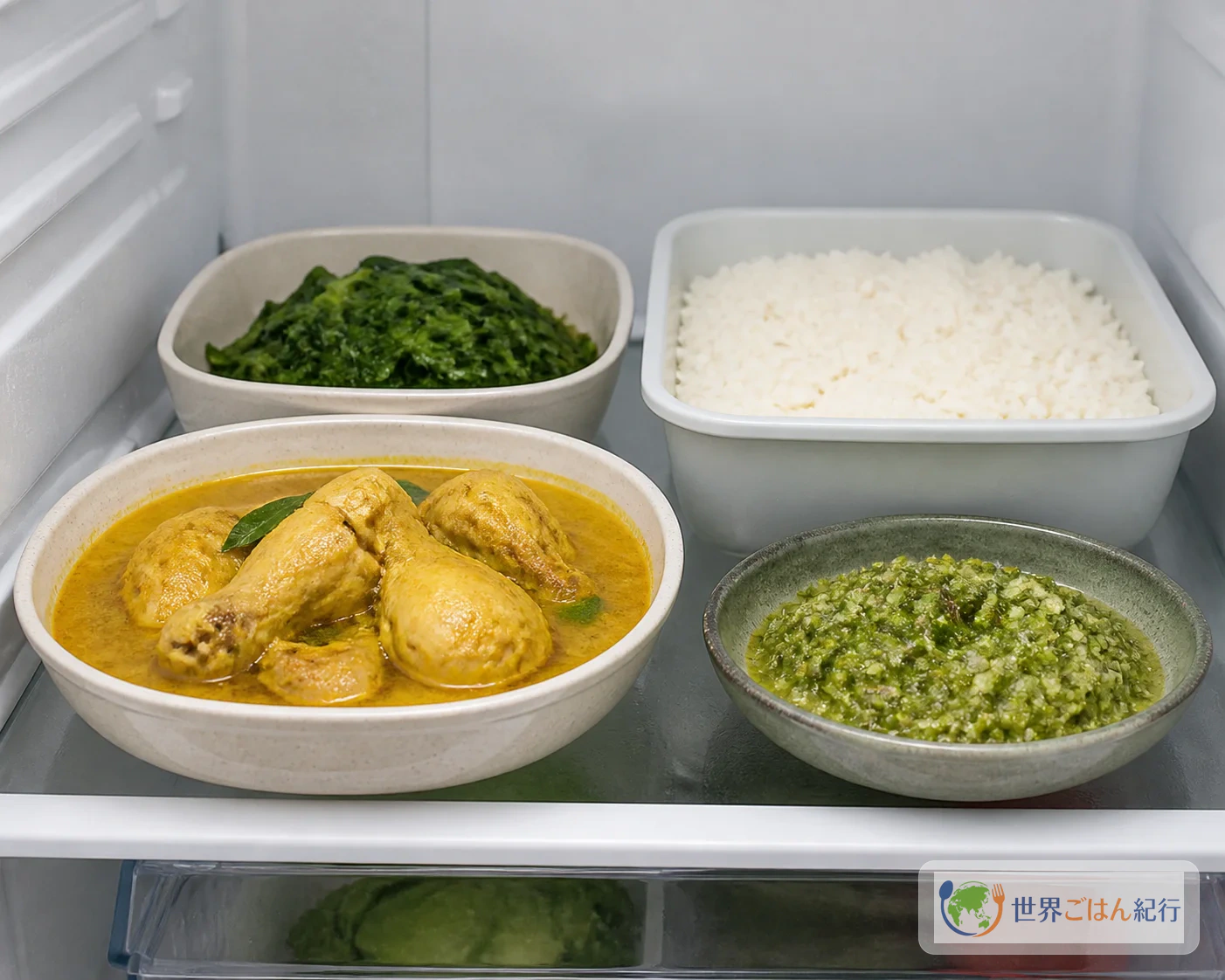
If you can't finish everything, move the gulai, sambal, greens and rice into separate clean containers. Don't leave them at room temperature for long while they cool; divide into shallow containers, cool, then refrigerate. Reheat the gulai over low heat, adding a little hot water so it doesn't boil. The sambal can be eaten cold, but if the oil has solidified, let it warm at room temperature for a bit before stirring.
Because this uses chicken, don't share storage containers or cooking chopsticks with those used for raw meat. Japan's Ministry of Agriculture, Forestry and Fisheries advises not washing chicken, not letting raw meat touch other foods, and cooking until the center reaches at least 75°C (167°F) for at least 1 minute. Don't push storage time, and don't eat anything with an off smell, a slimy surface or a bulging container. If freezing, freeze only the gulai in single portions, and don't refreeze after thawing.
FAQ
Is nasi padang one specific dish?
Rather than one fixed dish, it's a style of meal: white rice served with a choice of Minang dishes from West Sumatra. The combination of rendang, gulai, fried dishes, fish, vegetables and sambal changes by restaurant and region. The chicken, greens and sambal here are a combination that makes that style manageable at home.
How is it different from nasi kapau?
Both pair West Sumatran dishes with white rice, but they differ in how dishes are served at the restaurant and in the local table. It's easier to picture Padang as choosing from small dishes laid out for you, and Kapau as dishes ladled from large pots or a counter. They can't be clearly divided by ingredients alone.
What if I don't like coconut milk?
It's the main texture of chicken gulai, so leaving it out entirely makes it a different stew. The safest approach is to reduce the coconut milk to 300 ml and increase the water to 350 ml, keeping the aromatics. Cow's milk and cream behave differently in aroma and with acidity, so don't treat them as equivalent substitutes.
I can't find green chilies.
Combine 80 g shishito peppers with however many green chilies you can find. Without green chilies you can make the sambal with red chilies, but you'll lose the green color and fresh aroma. If you use jarred sambal oelek, treat it as a separate condiment, knowing it will taste different from green sambal lado mudo.
How do I check that the chicken is cooked?
Cut into the thickest part and check that the center is white and the juices run clear. To be more certain, measure the internal temperature and cook to at least 75°C (167°F) for at least 1 minute. Don't wash raw meat or cut greens on the same cutting board, and wash utensils that handled the chicken with detergent before moving on.
Sources
- Indonesia Travel「Padang」 https://www.indonesia.travel/id/id/destination/sumatra/west-sumatra/padang (accessed and checked August 25, 2026)
- Indonesia Travel「Makanan Khas Suku Minangkabau, Ada Rendang sampai Dadiah」 https://www.indonesia.travel/id/en/travel-ideas/gastronomy/makanan-khas-minangkabau (accessed and checked August 25, 2026)
- Parobs「Gulai Ayam Padang」 https://www.parobs.org/gulai-ayam-padang (accessed and checked August 25, 2026)
- Daily Cooking Quest「Sambal Lado Mudo (Green Chili and Tomato Relish)」 https://dailycookingquest.com/sambal-lado-mudo-green-chili-and-tomato-relish.html (accessed and checked August 25, 2026)
- Cook Me Indonesian「Sambal Ijo: Green Sambal (Vegan)」 https://www.cookmeindonesian.com/sambal-ijo-green-sambal-vegan/ (accessed and checked August 25, 2026)
- Corry Liana, Wisnu, Eko S. Hermawan「The Origins of Padang Cuisine and an Economic Impact of Minangkabau Peoples in Surabaya」, Atlantis Press 2021 https://www.atlantis-press.com/proceedings/ijcah-21/125967561 (accessed and checked August 25, 2026)
- Oktavianus「Landscape of Cultural Identity at Rumah Makan Minang」, JATI 24(2), University of Malaya 2019 https://jpmm.um.edu.my/index.php/jati/article/download/19466/11045/46372 (accessed and checked August 25, 2026)
- 農林水産省「鶏料理を楽しむために~カンピロバクターによる食中毒にご注意を!!~」 https://www.maff.go.jp/j/fs/campylobacter.html (accessed and checked August 25, 2026)
- Wikipedia「Nasi padang」 https://en.wikipedia.org/wiki/Nasi_padang (accessed and checked August 25, 2026; supplementary check of terms and serving styles. Safety information in this article follows the Ministry of Agriculture, Forestry and Fisheries)



