Sweet coconut steam, with the green scent of chili rising through it
On a rainy evening you cut pork belly into small pieces and drop them in a pot. Garlic, ginger and onion go in, then the coconut milk, and the kitchen suddenly smells like Southeast Asia. The moment the green chilies hit the pot, something a little dangerous rises out of the sweet steam. You think: good thing I cooked extra rice.
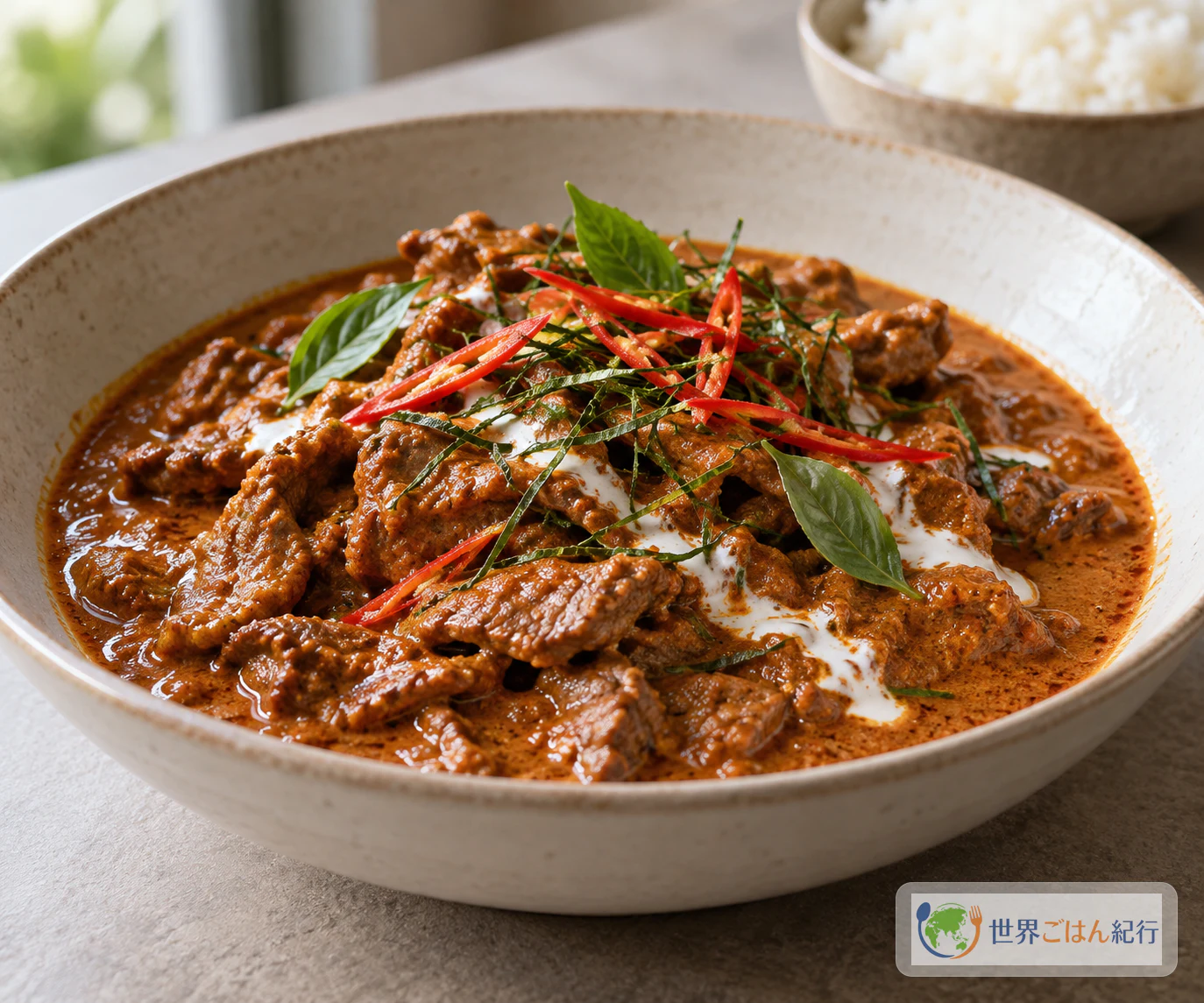
Bicol Express (Bikol Express) is a Filipino stew of pork, chilies, coconut milk and bagoong alamang, a fermented shrimp paste. In the local language it is also called sinilihan, from the word for chili. It looks like a dish that leans entirely on heat, but its real core is a triangle: heat, the roundness of coconut, and the salt of fermented shrimp.
Three things trip up a home cook: bagoong, the chilies, and the thickness of the coconut milk. Bagoong can be hard to find outside Filipino shops. Green chilies vary in heat by season. Canned coconut milk differs in richness from brand to brand, and if you reduce it too far the oil separates.
This recipe uses pork belly or shoulder, unsweetened canned coconut milk, and fish sauce with dried shrimp in place of bagoong. If adobo and sinigang are the doors into Filipino sourness and soy sauce, Bicol Express is the door into coconut and chili. If someone at the table avoids spicy food, you can still serve it by splitting up how the chilies go in.
The name Bicol Express is widely used in English. Bicol is the region of southern Luzon, and Express is said to come from the name of the train linking Manila and the Bicol area. The dish's origin is not a single story, though. It is easiest to understand as a chili-and-coconut dish of the Bicol region that Manila's restaurant culture made famous.
Background: Bicol heat and a Manila name
The Bicol region is known for using chilies and coconut more than most of the Philippines. On an island nation coconut is an everyday cooking fat, and in Bicol chili heat is layered on top. Bicol Express belongs to the same family as laing, dried taro leaves simmered in coconut milk, and the wider group of vegetable and chili dishes cooked in gata (coconut milk).
The name "Bicol Express" itself, though, is usually described as a name that spread from Manila rather than one that arose naturally in a Bicol village. Panlasang Pinoy and Esquire Philippines report the account that Cely Kalaw, a cook in Manila's Malate district, popularized the dish in the 1970s and named it after the train. Pepper.ph also says the origins are disputed and describes the dish as something like Bicol's ginataang sili or sinilihan given a more memorable name.
The point is not to decide a contest between Manila and Bicol. The flavor's roots are in Bicol's coconut and chili cooking; the name and the dish's urban popularity were pushed along by Manila's restaurants. For a home cook, it helps more to know what to protect than to settle the argument.
Protect three things: don't remove the heat entirely, don't turn the coconut milk into a sweet cream sauce, and add the savory depth of fermented shrimp in some form. With those three in place, even ordinary sliced pork and fish sauce make a convincing Bicol Express.
| Core of the dish | Local ingredient | Practical substitute |
|---|---|---|
| Heat | siling haba, siling labuyo | Green chilies, a few shishito peppers, red chili |
| Roundness | gata, kakang gata | Unsweetened canned coconut milk, a little coconut cream |
| Fermented saltiness | bagoong alamang, balao | Fish sauce + dried shrimp, or a little miso |
| Main meat | Pork belly, pork shoulder | Thin-sliced pork belly, pork shoulder, pork scraps |
Ingredients (serves 4)
This serves 4 with plain rice, and the stew is finished a little strong. The heat level is medium-hot. If you want chilies to take the lead, as they do locally, add more green chilies at the end.
Umami and seasoning
| Seasoning | Amount | Substitutes & notes |
|---|---|---|
| Bagoong alamang | 2 tbsp | Best if you can get it. Very salty, so taste as you go |
| Fish sauce | 1 1/2 tbsp | Substitute when you have no bagoong |
| Dried shrimp | 2 tbsp | Minced. Supplies the umami that stands in for bagoong |
| Miso | 1 tsp | Only if you have no bagoong. Too much pushes the dish toward Japanese flavors |
| Sugar | 1 tsp | Just enough to support the sweetness of the coconut |
| Black pepper | a pinch | To finish |
| Lime or lemon | a few wedges | Squeezed at the table to taste |
This dish contains pork, fish and shellfish (bagoong, fish sauce, dried shrimp), and depending on the product soy (miso, some fish sauces). If someone has a shrimp allergy, leave out the bagoong and dried shrimp and build umami with a little fish sauce, or with salt and miso.
How to think about bagoong substitutes
Bagoong alamang is a paste of fermented small shrimp. It is not just salt: it brings shrimp umami, fermented aroma and a touch of sweetness. So when you substitute, think separately about saltiness, seafood savor and fermented depth.
| Substitute | Best for | Flavor |
|---|---|---|
| Fish sauce + dried shrimp | Most recommended | Brings seafood aroma and keeps the Filipino character |
| Fish sauce alone | Quick cooking | Cleaner, a little thinner in body |
| Miso + salt | Avoiding shrimp | Gives fermented notes but drifts toward Japanese flavor |
| Oyster sauce | A sweeter result | Adds umami but tastes closer to Chinese cooking |
Ingredients and tools for this dish
If you can't find bagoong, fish sauce plus dried shrimp builds the core of the flavor. It also works in sinigang, pancit and gapao, so if you keep cooking Filipino food, a bottle of fish sauce earns its place.
Choose unsweetened canned coconut milk. Sweet coconut drinks and sweetened baking cream do not suit a stew meant for plain rice.
Because Bicol Express is reduced, a deep pot is easier to handle than a shallow skillet. A thin-bottomed pot scorches the coconut easily.
Method: sauté first, then reduce the coconut gently
Some cooks put everything in the pot at once. Here the aromatics and pork are sautéed first, because that makes the pork smell cleaner, keeps the coconut milk from separating, and makes the chili heat easier to read. Panlasang Pinoy also notes that sautéing the aromatics and pork before simmering brings out flavor.
If all the chilies go in at the start, the heat has nowhere to retreat. Put in a few to simmer, add more at the finish, and add more again at the table. In three stages, people who like heat and people who don't can share the same pot.
Branch table: getting closer to the original in a home kitchen
You don't need every ingredient to be the local one. But some substitutions change the direction of the dish.
| Ingredient in doubt | Closer to local | Practical at home | Judgment |
|---|---|---|---|
| Pork | Diced pork belly | Pork shoulder, sliced pork | The leaner the cut, the lighter the dish and the less rich |
| Coconut | Thick gata, coconut cream | Unsweetened canned coconut milk | Nearly irreplaceable. Milk or heavy cream makes a different dish |
| Bagoong | bagoong alamang | Fish sauce + dried shrimp | The closest substitute, if no one has a shellfish allergy |
| Chili | siling haba, siling labuyo | Green chili, shishito, red chili | Removing it entirely weakens the Bicol character |
| Finish | Plain rice, extra chili | Any rice, a little lemon | Ordinary rice is fine. Acidity is optional |
Coconut milk is the one thing you should not swap. Replacing it with milk or soy milk gives "pork in cream sauce" and erases the outline of Bicol cooking. If you dislike coconut, it's more natural to start with other Filipino dishes such as adobo or pancit canton than to force this one.
Bagoong can be substituted. Fish sauce and dried shrimp together bring fermented seafood umami and a saltiness that suits plain rice. Miso is handy, but too much pushes the stew toward a Japanese pork-miso soup. Keep it to 1 tsp at most and adjust the saltiness with fish sauce or salt.
The chilies need not be as many as the dish's reputation suggests. If heat is new to your household, start with 3 green chilies and no red chili. Offer chopped chili or chili oil at the table so children and people who avoid heat can eat from the same pot.
Troubleshooting: separating, too hot, flat
Most failures with Bicol Express come down to heat control and salt. With so few ingredients, a hard boil or adding fish sauce all at once is hard to fix.
| Problem | Cause | Fix |
|---|---|---|
| Coconut separated | Boiled hard, reduced too far | Lower the heat, add 2 tbsp water and stir gently |
| Too hot | Too many chilies at the start | Adjust with coconut milk, a little sugar and plain rice |
| Too bland | Weak bagoong substitute, not enough salt | Add fish sauce 1 tsp at a time |
| Too salty | Added bagoong or fish sauce all at once | Add coconut milk or boiled pork |
| Tough meat | Lean meat simmered hard | Simmer 15 more minutes on low. Add a little water for shoulder |
| Greasy | Pork belly very fatty | Blot the excess fat after sautéing |
When it is too hot, I don't recommend just adding water. Water dilutes the heat a little, but it also blurs the richness and saltiness of the coconut. Adding a little coconut milk, or boiled pork or fried tofu, brings the flavor back.
If it separates, don't stir hard in a panic. Coconut milk can release oil when heated, and some oil on top is natural in Filipino cooking. If it turns grainy, lower the heat, add a little water or coconut milk, and bring it back slowly from the bottom of the pot.
Because this dish uses pork, cook it through to the center. If the center of a piece is still red after simmering, cook it longer. Don't leave the pot at room temperature for long; move leftovers to a shallow container and refrigerate promptly.
Serving and menu: plain rice, a sour soup, a sweet dessert
Bicol Express is hard to finish without plain rice. Tasted alone, the sauce is rich, hot and salty. Over rice, the coconut fat, pork umami and chili spread out just right.
For a Filipino menu, a small bowl of sour sinigang keeps the mouth from feeling heavy. On days you want more starch, a small serving of pancit canton works. For a sweet finish, sapin-sapin, made with glutinous rice and coconut, goes well.
As other Southeast Asian coconut dishes, Malaysia's nasi lemak, Indonesia's rendang (in Japanese) and Brazil's moqueca baiana make good companions. If you have leftover canned coconut milk, knowing what to cook next makes shopping easier.
When you cook for a family, don't make the whole pot too hot. Finish the pot with fewer green chilies, and put chopped green chili, lemon and fish sauce in small dishes on the table. People who like heat add it to their plates; people who don't can lean on plain rice and an egg. For a Filipino shared dish, adjusting a little at a time at the table works better at home than having everyone endure the same heat.
| Occasion | Combination | Why |
|---|---|---|
| Weeknight dinner | Bicol Express, plain rice, vinegared cucumber | Acidity lightens the rich main |
| Filipino menu | Bicol Express, sinigang, sapin-sapin | Heat, sour and sweet are kept separate |
| Guests | Bicol Express, pancit, adobo | Shared platters are easy to serve |
| Milder heat | Fewer green chilies, lemon, boiled egg | Rounds off the heat so it's easier to eat |
Storage and reheating: over rice the next day, or sealed with egg
Refrigerated, it keeps about 2–3 days. Because it contains pork and a seafood seasoning, let it cool slightly the same day and move it to a shallow airtight container. Avoid putting the whole pot in the refrigerator, since the center cools slowly.
You can reheat in the microwave, but the coconut milk separates more easily. A small pot is better. Warm it over low heat with 1–2 tbsp water or coconut milk, and stop at a gentle bubble without boiling; the oil and sauce come back together more easily.
The simplest next-day meal is to put it over hot rice. A fried egg on top rounds off the heat and makes a good breakfast. If only a little is left, it is also good set with egg over rice, spooned over boiled potatoes, or simmered again with fried tofu.
You can freeze it, but the texture suffers. The coconut milk separates and the pork fat turns white and firm. If you freeze it, spread single portions thin, and after thawing rewarm slowly in a small pot. It satisfies more as "rich coconut pork crumble" over rice than if you try to restore it to freshly made.
FAQ
Q1. Can I make it without bagoong?
Yes. 1 1/2 tbsp fish sauce, 2 tbsp minced dried shrimp and 1 tsp miso get you quite close. You won't fully reproduce the fermented-shrimp aroma of bagoong. Making it with the substitute the first time, then looking for bagoong at a Filipino grocery or online if you like it, is a perfectly good path.
Q2. How hot is authentic?
For a dish of the Bicol region, a clearly hot version is natural. But it is home cooking, so the right heat depends on who is eating. Starting with 3 green chilies and letting the heat lovers add more at the table is the safe route.
Q3. Can I use sliced pork?
Yes. Sliced pork toughens if simmered too long, so shorten the simmer to 25–30 minutes. If the pork is lean, add 1 tsp oil or a little more coconut cream to give the sauce body.
Q4. I don't like coconut milk. Can I use milk?
I don't recommend it. With milk or heavy cream it becomes a different cream stew, not a Filipino Bicol dish. If you dislike coconut, try a soy-and-vinegar dish such as adobo instead.
Q5. Can I make it for children?
Yes. Swap the green chilies for shishito peppers and leave out the red chili. Let adults add chopped chili or chili oil at the table. Bagoong and fish sauce are salty, so it is safer to serve children's portions first, before seasoning is adjusted.
Summary: a dish to eat for roundness and fermentation, not just heat
If you remember Bicol Express only as "the fiery Filipino dish," you miss something. It is hot, certainly. But there is coconut milk to take the chili's heat, the fermented umami of bagoong that salt alone can't give, and a home-cooking design that is completed by plain rice.
You don't need perfect bagoong or local chilies on your first try. Unsweetened coconut milk, pork, green chilies, fish sauce and dried shrimp are enough to put Bicol-style steam in your kitchen. If you then want more heat, more fermentation or more richness, move one ingredient at a time toward the local version.
Cook the rice, add a sour sinigang or a simple vinegared salad, and finish with something sweet like sapin-sapin. Then Bicol Express stands up not as a single hot stew but as one part of a Filipino table.
Sources
- Panlasang Pinoy, "Bicol Express Recipe" (consulted for ingredients, method, history, and the handling of bagoong and coconut milk)
- Pepper.ph, "Bicol Express (Pork Belly in Spicy Coconut Sauce)" (consulted for the dish's origin, Bicol's chili and coconut cooking, and the disputed accounts of its beginnings)
- Esquire Philippines, "The Contentious Origins of Bicol Express" (consulted for Cely Kalaw and the account of its spread in Manila)
- Wikimedia Commons, "Category:Bicol Express" (checked for image licensing and file descriptions)