
In the steam, rice turns into the star
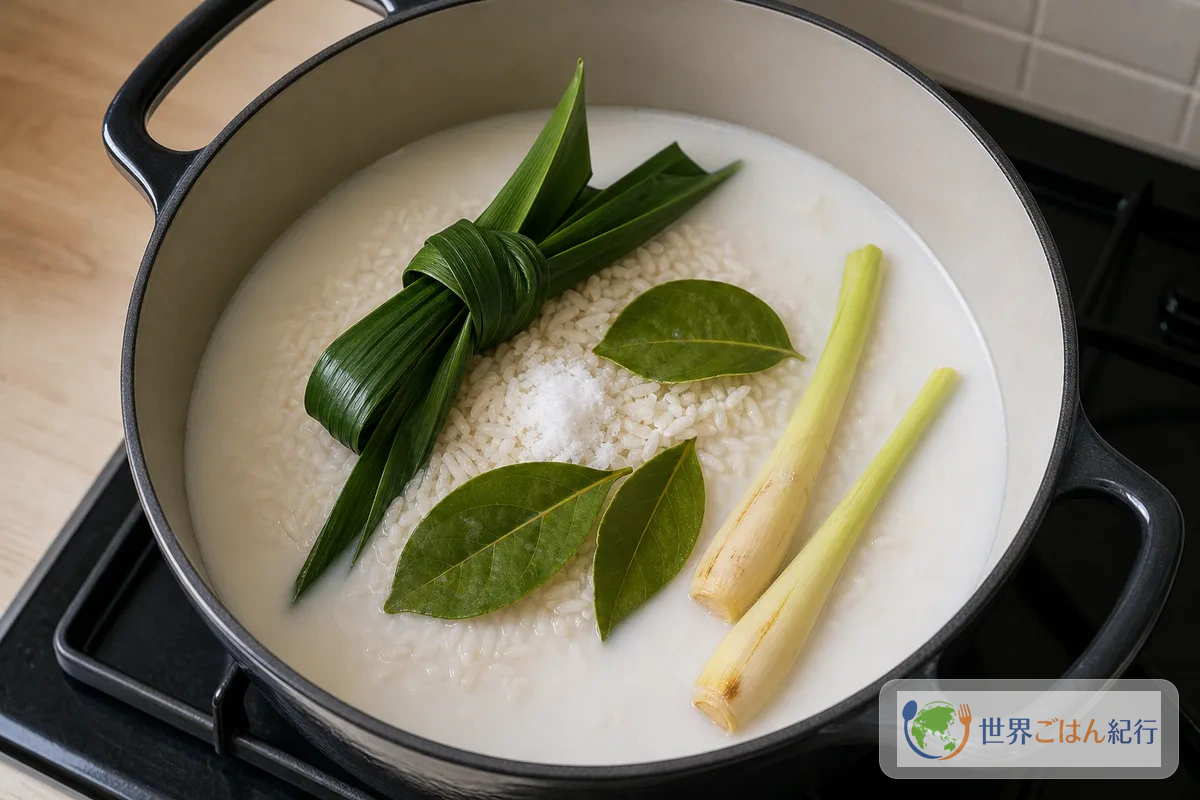
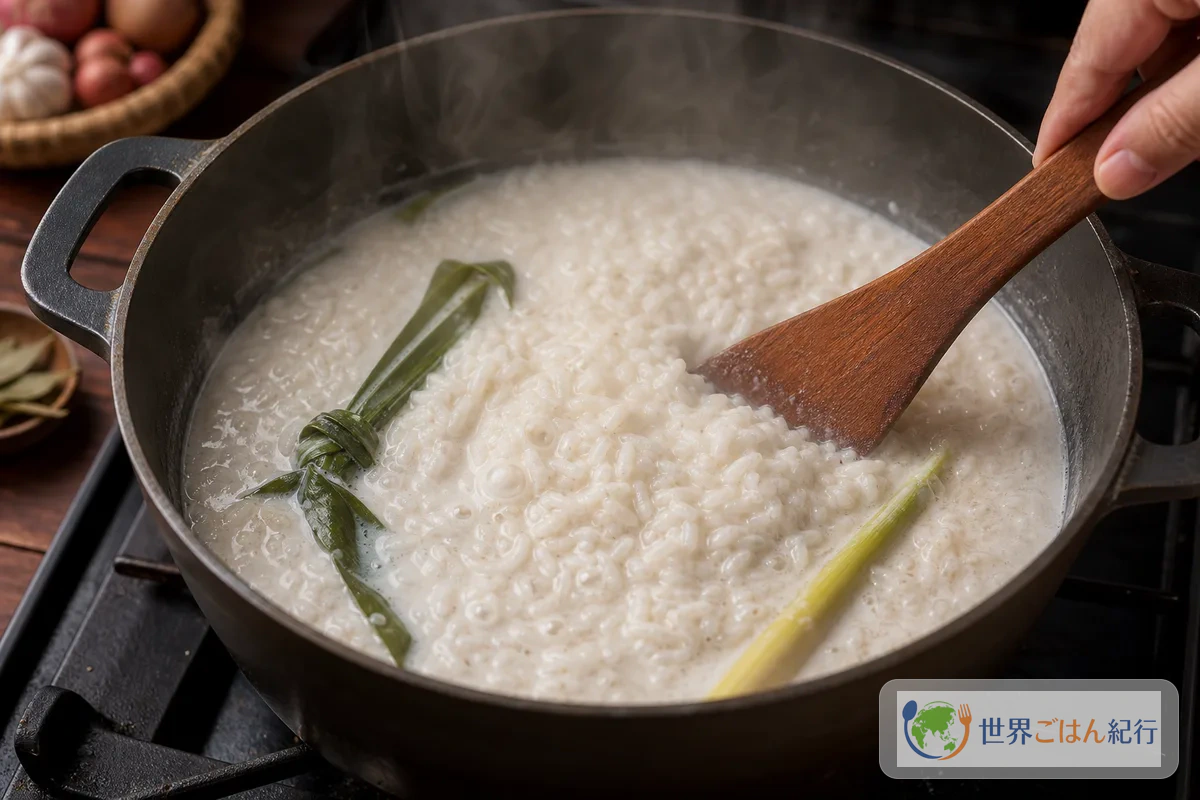
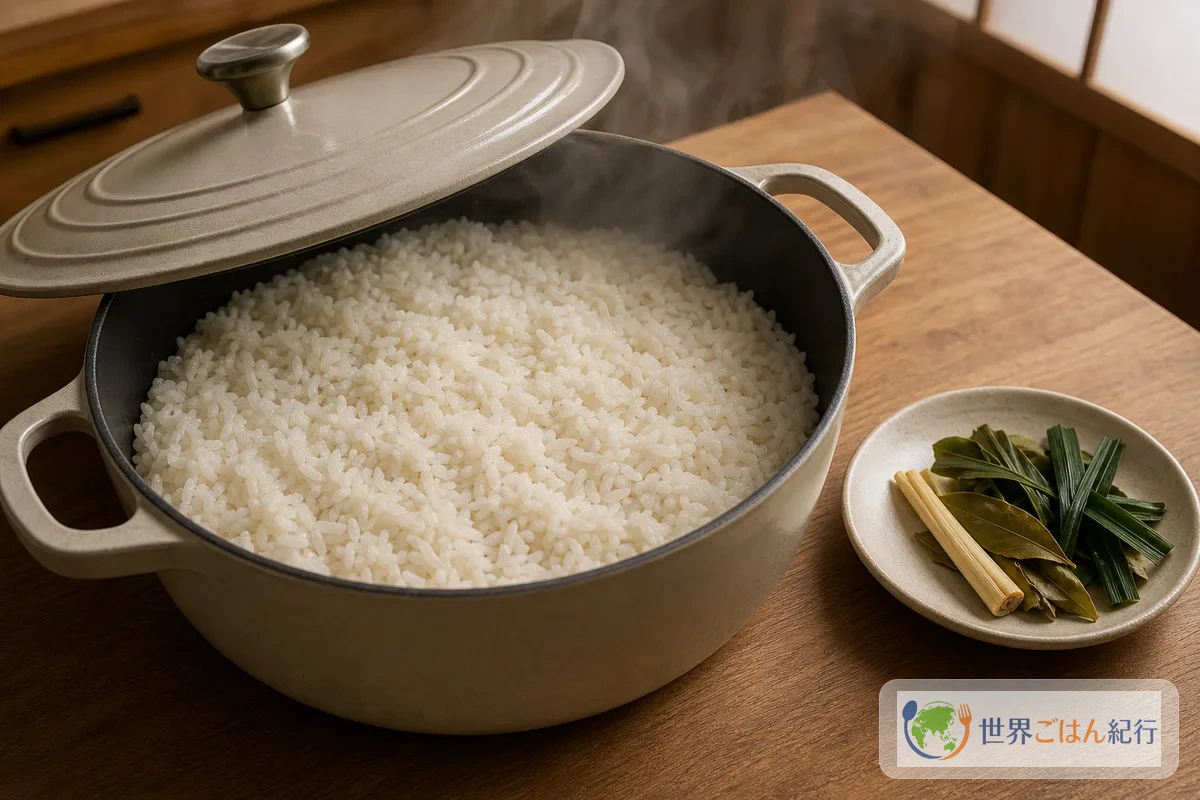
The moment you lift the pot lid a little, the sweet scent of coconut milk meets the green fragrance of bruised lemongrass and galangal. The white rice is still white, yet it is clearly unlike everyday rice. Nasi liwet is an Indonesian fragrant rice dish for tasting exactly that change.
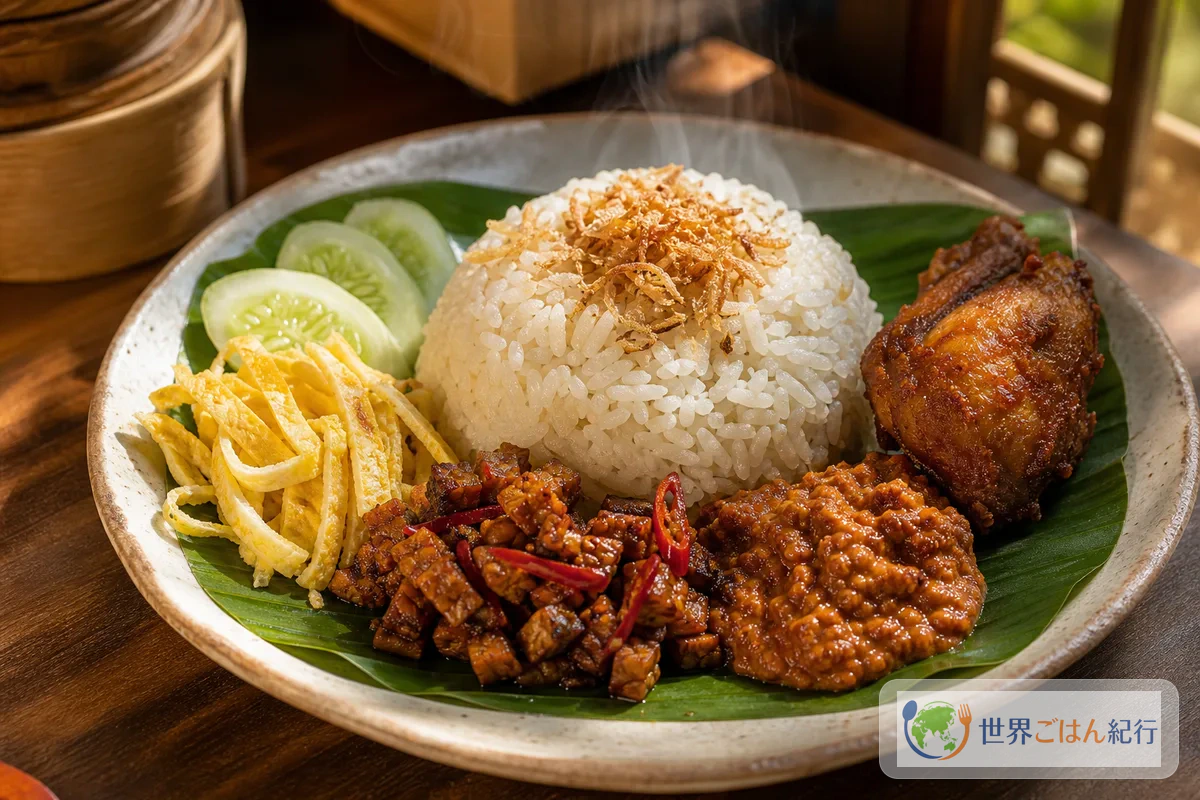
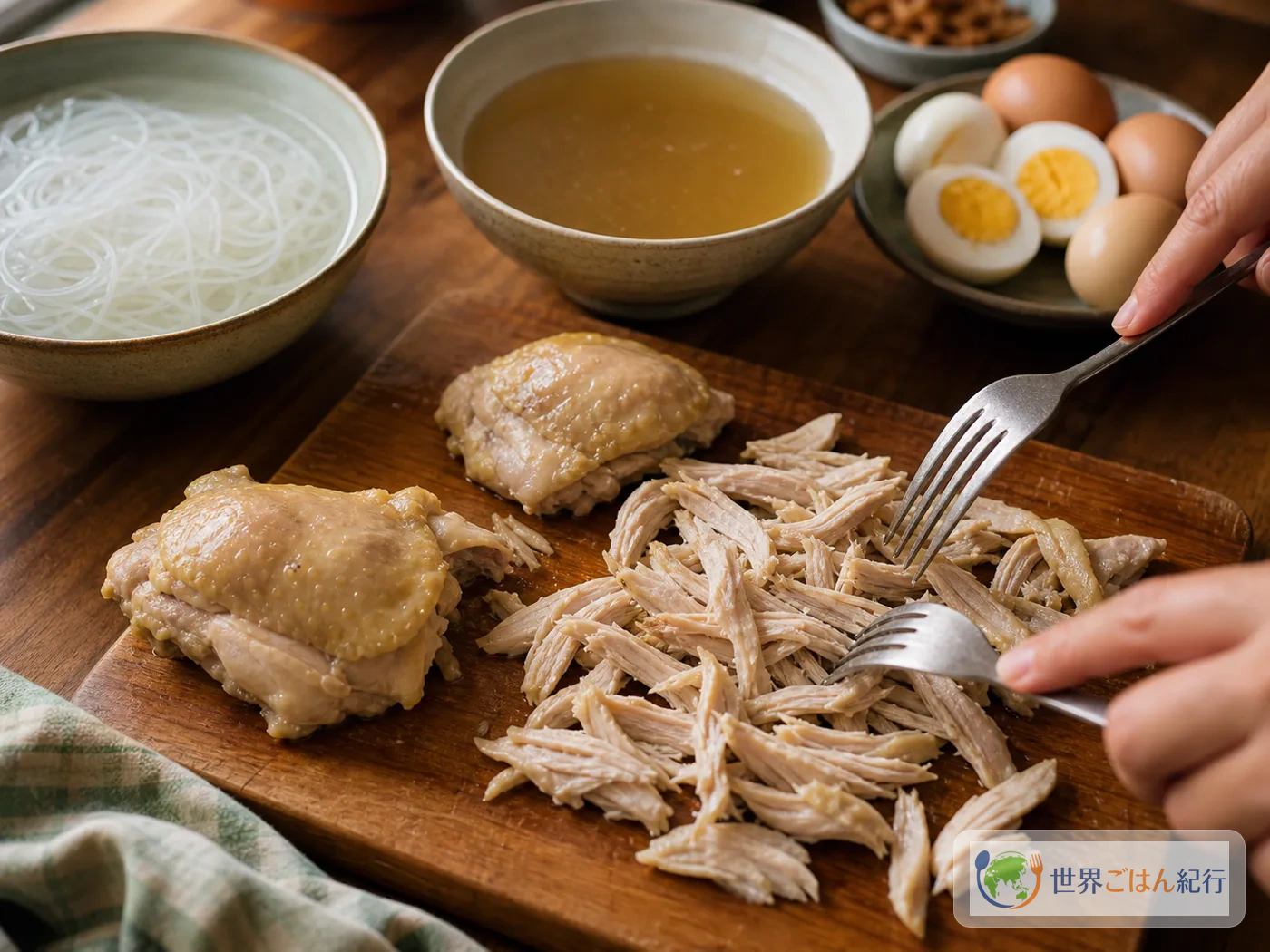
Nasi liwet is a dish in which nasi is rice and liwet is treated as a word tied to the way rice is cooked in a pot. In Solo (Surakarta) in Central Java, it is known as a plate of rice cooked in coconut milk and chicken broth, accompanied by shredded chicken, thin omelet strips, sambal and vegetables. In the Sundanese region of West Java, there's also a form in which rice and aromatics are cooked together in the pot, and a banana leaf is spread out for everyone to gather around and eat.
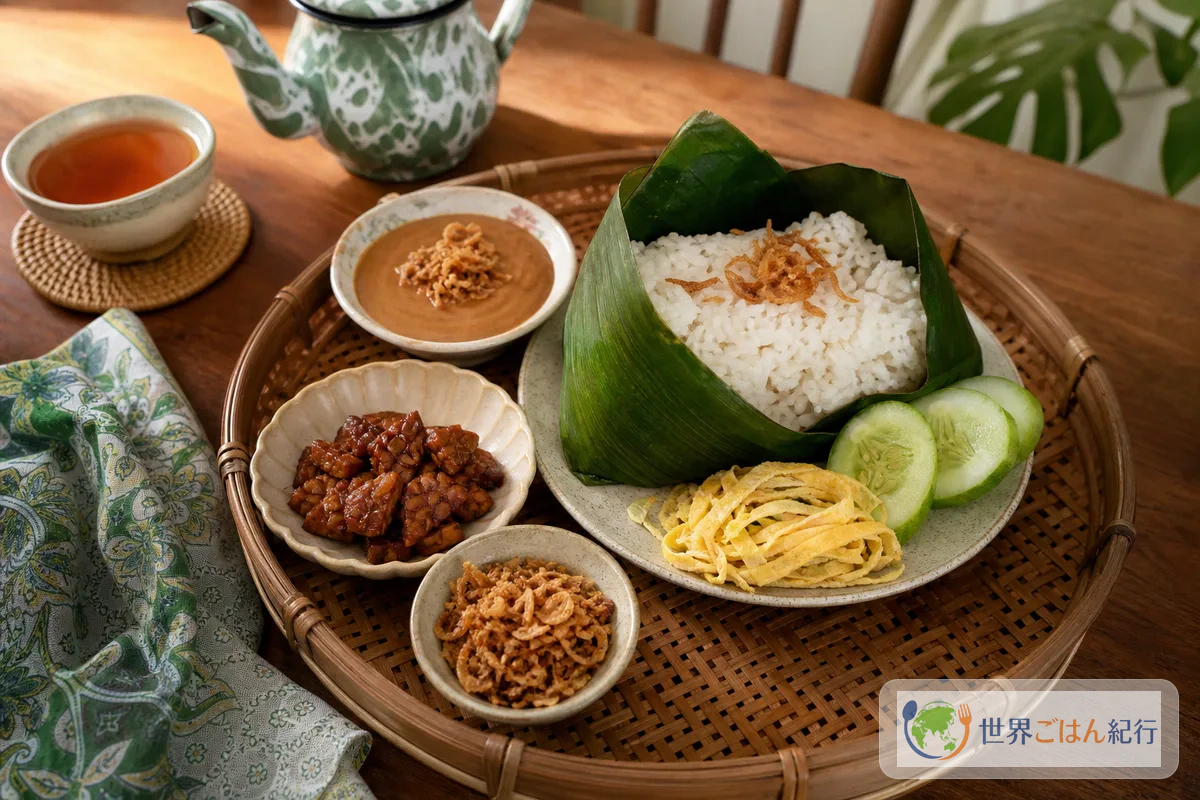
The hard part of making it isn't the long list of ingredient names but the liquid. More coconut milk makes the aroma richer but the rice heavier. Too much chicken broth leaves a white liquid at the bottom and keeps the grains from standing up. This article makes the pot method the basis and boils it down to a home version cooked with a small broth from poaching chicken, coconut milk, lemongrass and galangal.
Among other Indonesian rice dishes, there's nasi uduk, close to a Jakarta breakfast. Nasi uduk gives more the impression of preparing the rice itself as fragrant rice, whereas nasi liwet feels like building the whole meal, including chicken, egg and sambal. The way rice is handled is the opposite of fried rice such as nasi goreng (in Japanese). Rather than crisping cold rice over high heat, you let raw rice absorb aroma.
The local spelling is nasi liwet. In English you may also see "nasi liwet" written in other variants; this article uses "nasi liwet" throughout. Galangal is called lengkuas in Indonesian, lemongrass is serai, and salam leaf is daun salam.
The local table that links Solo's night meal and the Sundanese pot
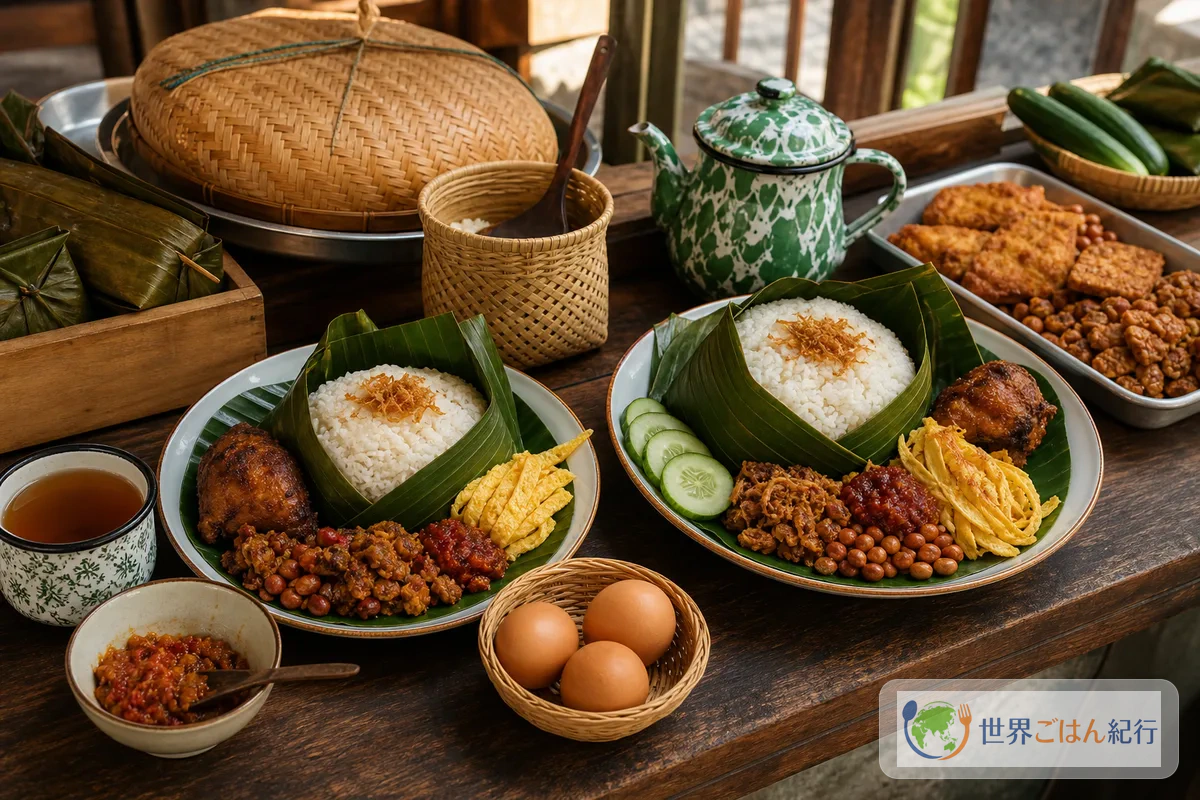
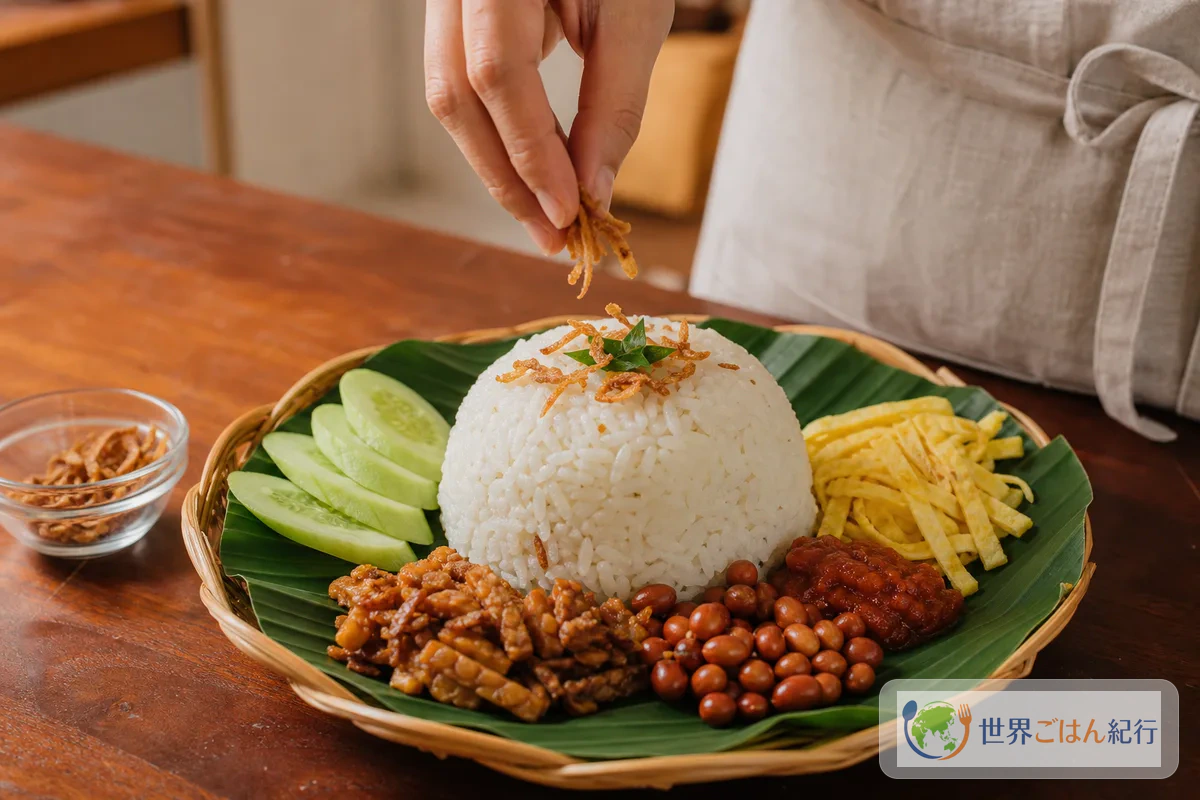
Nasi liwet isn't a dish that points to one fixed way of plating. In Solo, the form often described is softly cooked coconut-flavored rice with shredded chicken, thin omelet strips, a vegetable dish of simmered chayote (labu siam) and a small dish of thick coconut sauce. It also has the impression of a dish eaten at a night stall, taking a little more effort than everyday white rice yet not as far away as palace food.
In the Sundanese region, by contrast, nasi liwet Sunda tends to be a dish in which the very act of cooking the rice in a pot is the center of the table. Garlic, red onion, lemongrass, galangal, salam leaf and sometimes salted fish or chiles are cooked together, and once it's done everyone gathers around the pot or the banana leaf. It's tied to contexts of eating together outdoors, such as ngeliwet and botram. In other words, it's easy to understand if you think that Solo's nasi liwet puts its weight on the finish of the plate, and Sundanese nasi liwet on the time spent around the pot.
In a home kitchen, you don't need to force a clean split between the two. This article uses Solo's chicken-broth-and-coconut rice as the core and brings up the galangal and lemongrass in the Sundanese manner. Chayote is hard to find, so add lightness with cucumber, and if needed round out the vegetables with a quick simmer of zucchini or leafy greens. If you have no salam leaf, use just one bay leaf, and don't add more leaves so the bay aroma doesn't overpower.
Jasmine rice is the easiest to work with. But it's not a dish to give up on the day you only have short-grain rice at home. If you use short-grain rice, reduce the liquid a little and accept the result as a "chewier home version." What to keep is the coconut milk, the chicken broth, the aroma of lemongrass or galangal, and the way of eating with sambal on a separate plate to adjust the heat. Hold on to these and it still makes a nasi liwet table even if the ingredients change a little.
Ingredients (serves 4)
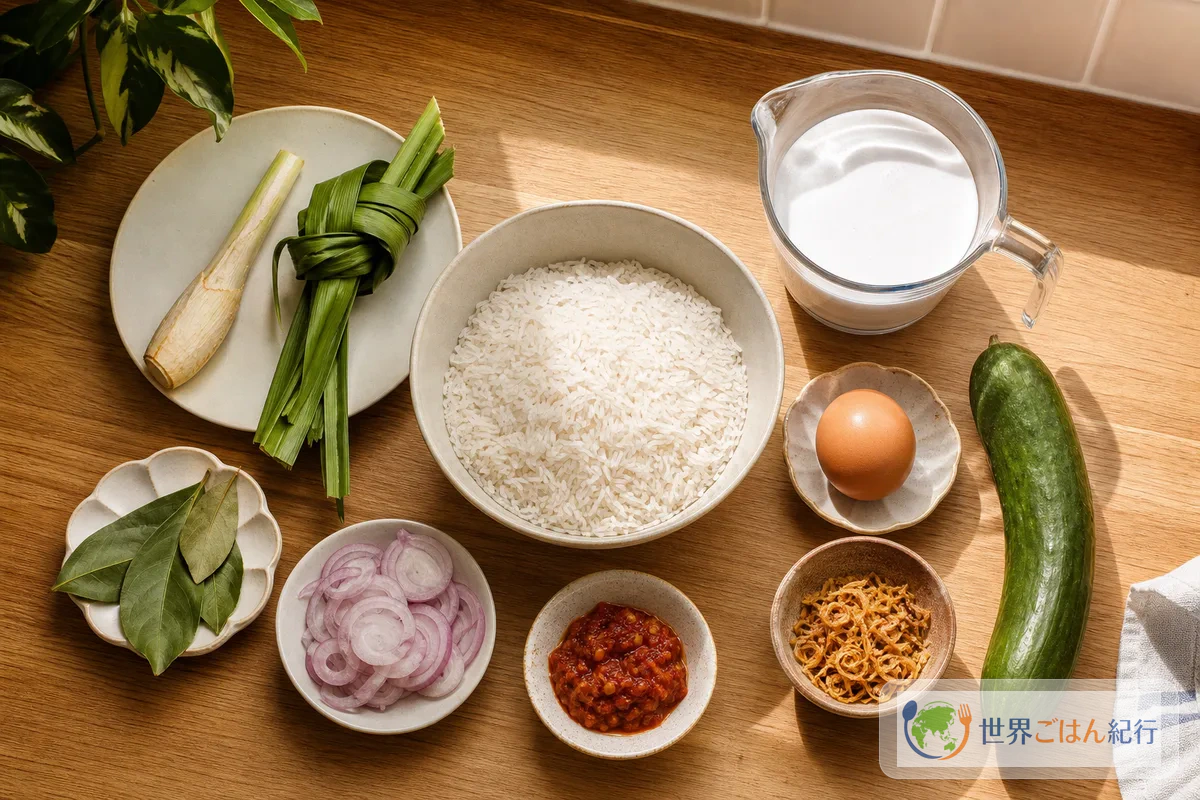
This dish may use chicken, egg, coconut and seasonings containing soy. Some store-bought sambal and fried onions are made in facilities that handle shrimp, wheat or nuts. If there are food allergies, check the ingredient label of each product.
Nasi liwet is a dish for tasting the aroma of rice. If you mix sambal into the rice from the start, the scent of coconut and chicken broth is hidden. Put the heat at the edge of the plate and add it a bite at a time.
Shopping: look only for the ingredients that build aroma
The things worth seeking out at a specialty grocer or online for nasi liwet aren't the rice or chicken. The hard-to-find ones nearby are coconut milk, galangal, sambal and fried onions. You don't need to gather everything at once, but with coconut milk and sambal on hand, a rice dish moves quickly toward the Indonesian table.
Coconut milk decides the rice's aroma and mouthfeel. Beverage-type products tend to be thin, so canned milk meant for cooking is easier for calculating the liquid.
Galangal is harder than ginger and gives an aroma somewhere between citrus peel and earth. You can cook the rice without it, but if you want to move toward the Indonesian aromatic character of nasi liwet, it's a high priority.
Sambal is used not only to make it spicy but to cut the sweetness of coconut. Placing it on a separate plate, rather than in the pot, so you can adjust at the table makes it easier to keep the rice's aroma.
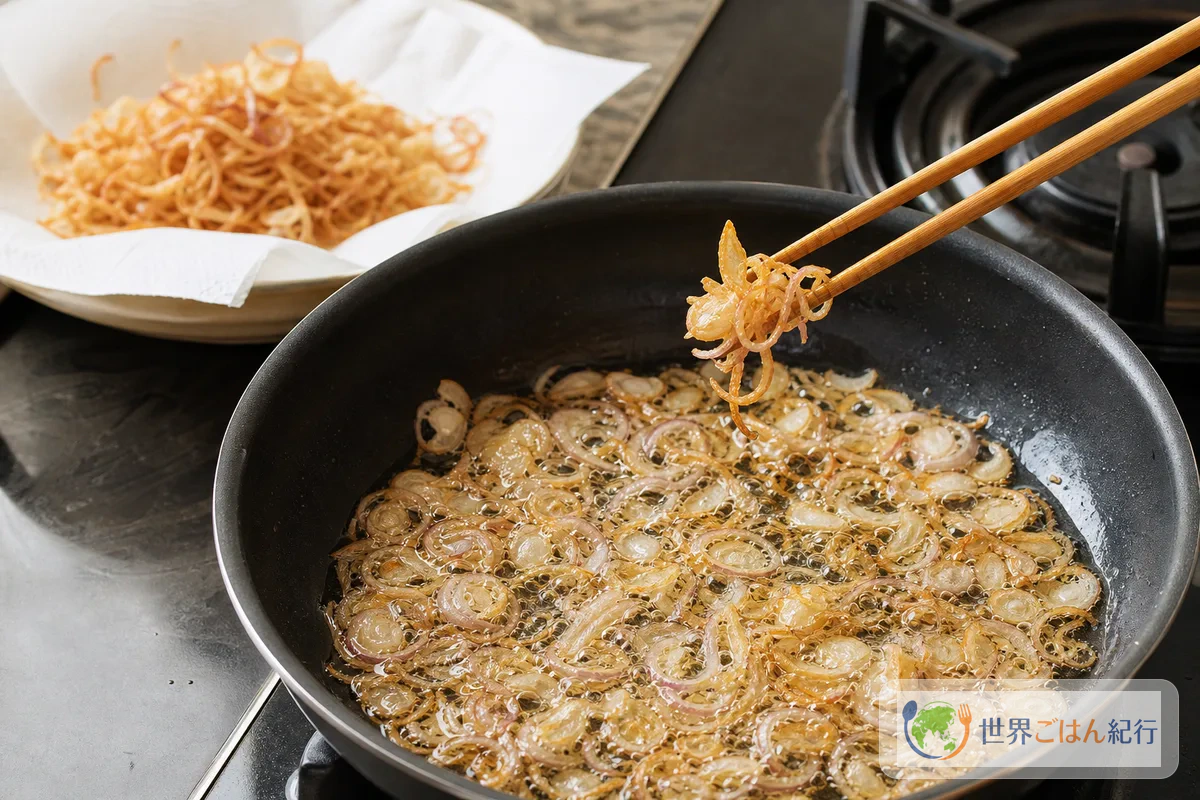
You can make fried onions yourself. But if you're serving it for breakfast or a night meal, store-bought gives a more stable toasty finish. They go into soto ayam (in Japanese) and ayam goreng (in Japanese) too.
Method: cook the rice in chicken broth and add the heat on the plate
A heavy pot lets you adjust while watching coconut milk scorching and how much liquid remains. A pot is recommended the first time. The liquid for a rice cooker is gathered after the steps.
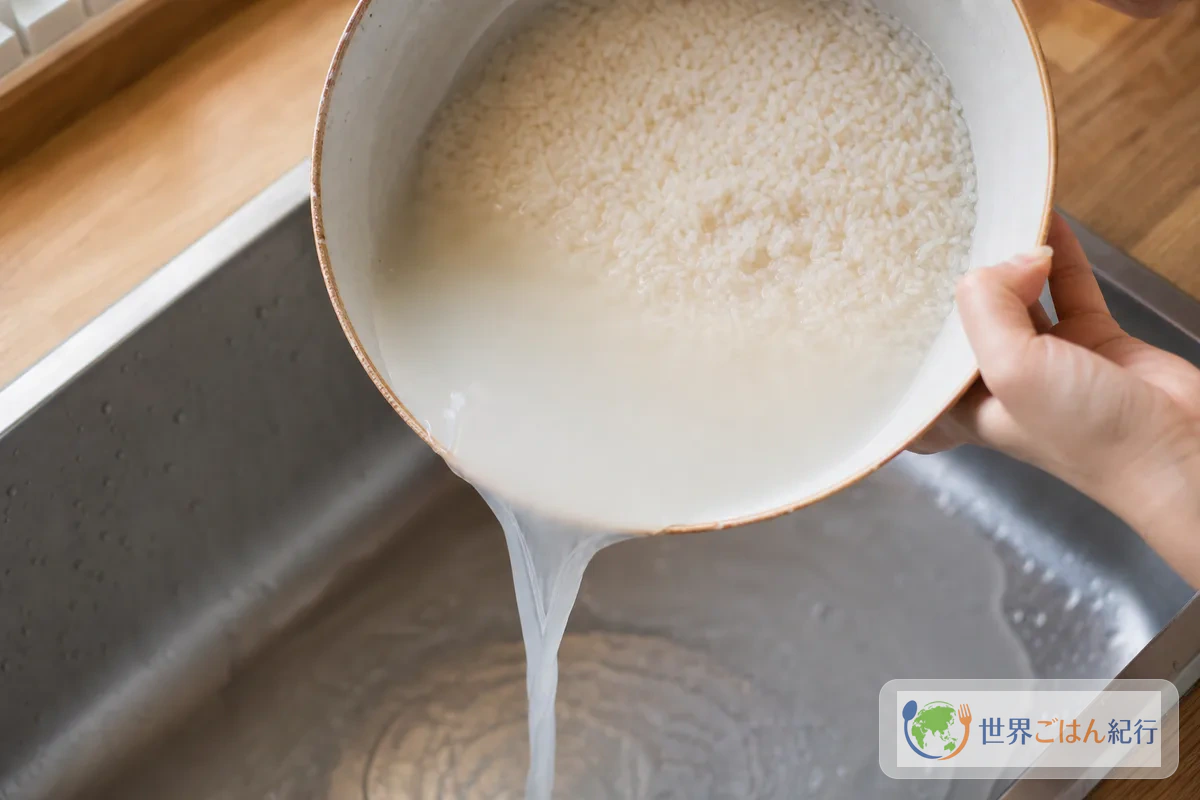
Put 2 cups rice, 280 ml chicken poaching liquid, 180 ml coconut milk, 2/3 tsp salt, 1/2 tsp sugar and the aromatics in and cook normally. Do just the step of opening the aromatics in oil in a small pot, then put them in the inner pot, and the aroma comes up. For short-grain rice, reduce the poaching liquid to 250 ml, and if the rice comes out soft, reduce it by another 2 tbsp next time.
A decision table for getting closer to the local version in a home kitchen
| Where you hesitate | Closer to local | Realistic home solution | Direction to avoid |
|---|---|---|---|
| Rice | Long-grain rice, jasmine rice | Jasmine rice. With short-grain rice, reduce the liquid | Cooking short-grain rice with the normal amount of water |
| Broth | The liquid from poaching chicken | Add water to the poaching liquid to make 300 ml | Making it strong with granulated bouillon alone |
| Aromatics | serai, daun salam, lengkuas | Lemongrass, one bay leaf, galangal | Using many bay leaves and moving toward Western flavors |
| Accompaniments | Shredded chicken, thin omelet, chayote, sambal | Chicken, egg, cucumber, sambal | Mixing the heat into the rice |
| Table | Gathering around a banana leaf or pot | Mound it on a big plate with the heat on a separate plate | Omitting all the accompaniments and making it like plain white rice |
The order to keep for nasi liwet is rice liquid, coconut, chicken broth, aromatics and heat. Banana leaf and chayote are fun to have, but making them essential for the first time makes shopping heavy. On a day without banana leaf, plating on a dish is fine. If you want to add aroma, setting plenty of fried onions on top of the cooked rice is more effective.
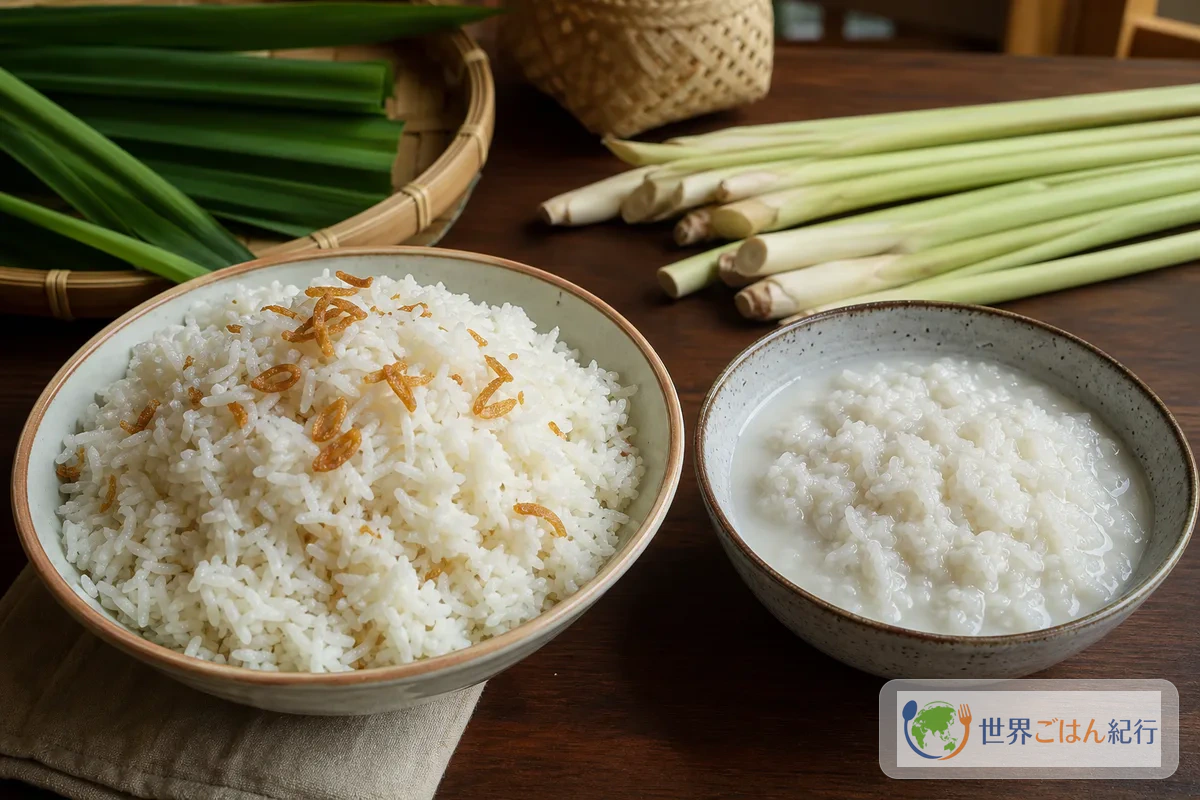
When you make it with short-grain rice, it will be a little chewy rather than fluffy. That is not a failure. But too much liquid turns it into coconut porridge. For 2 cups of short-grain rice, start with 250 ml chicken poaching liquid and 180 ml coconut milk, and if it's hard after steaming, sprinkle 2 tsp hot water over it and steam 5 minutes more. You can still add water afterward, but you can't take back water you put in too much.
Why it fails: watery, weak aroma, scorched bottom
| Symptom | Cause | Fix |
|---|---|---|
| Watery at the bottom | Too much chicken poaching liquid or coconut milk | Take off the lid, warm 2 minutes over low heat, turn off the heat and steam 5 minutes |
| Grains break | Stirred too much while cooking | After it boils, only trace the bottom |
| Weak aroma | Lemongrass not bruised, too little galangal | Split the base of the lemongrass and slice the galangal thin |
| Bitter | Fried the onions too dark | Lift out at a pale gold and finish with residual heat |
| Scorched bottom | Pot too thin, "low heat" too strong | Use a heavy pot and drop to the lowest heat once it boils |
The most common failure is not wanting to waste the chicken poaching liquid and putting all of it in. For 2 cups of rice, start with a total of around 520 ml of liquid. For jasmine rice, 300 ml poaching liquid and 220 ml coconut milk. For short-grain rice, bring the total down to around 430 ml. If you go by the rice cooker's markings, the fat of the coconut milk isn't counted and the bottom tends to turn heavy.
When the aroma is weak, look at the state rather than the amount of herbs. Lemongrass doesn't give off aroma unless bruised and stays in the pot as a stick. Galangal, if thick, passes on its aroma poorly, so slice it thin to about 2 mm. Salam leaf and bay leaf push the rice toward Western flavors when their aroma is strong, so rather than adding more, first adjust the strength of the coconut and chicken broth.
Storage and eating it the next day
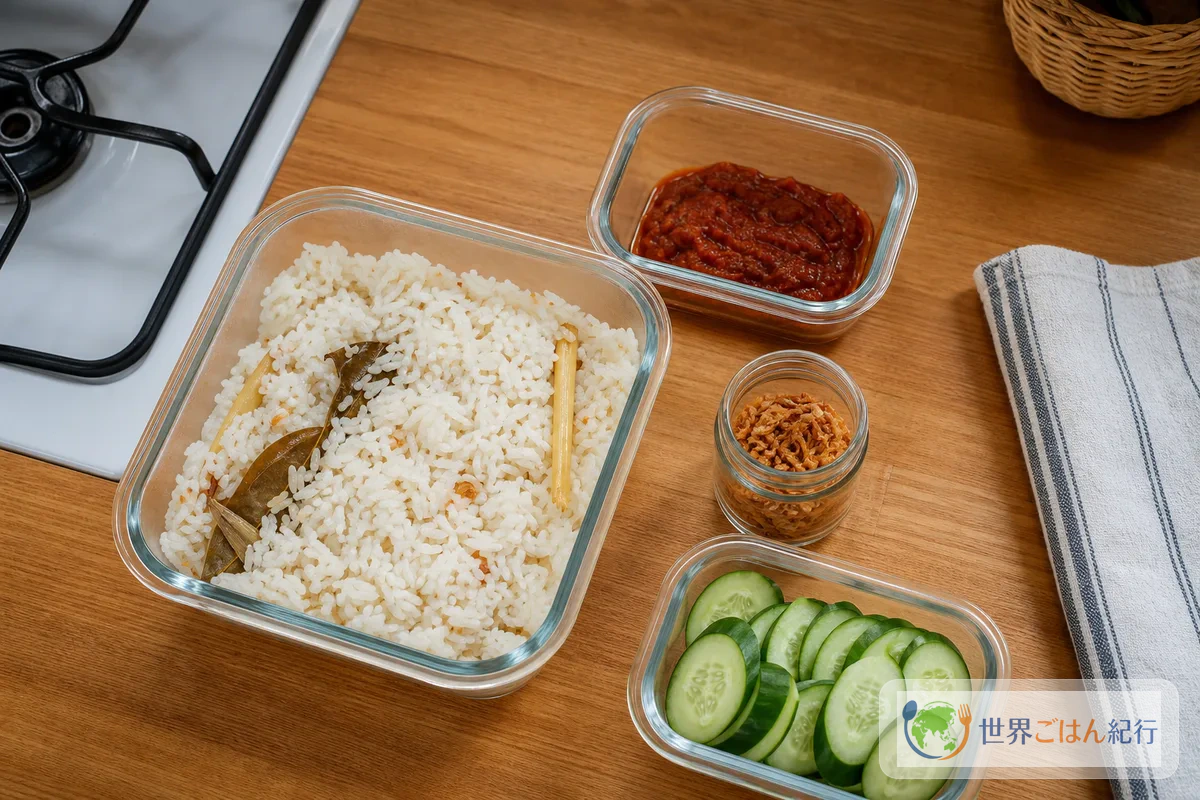
Once nasi liwet has cooled slightly, spread it in a shallow container and refrigerate. The storage guideline is 2 days. Chicken and rice may share a container, but always separate the sambal, cucumber and fried onions. If you refrigerate fried onions on top of the rice, they absorb moisture and lose aroma.
To reheat, put one portion on a heatproof plate, sprinkle on 2 tsp water, cover loosely with plastic wrap and heat in a 600 W microwave for 1 minute 20 seconds. If the rice is still hard, add 10 seconds at a time. To bring it back in a skillet, warm 1 tsp oil over low heat, add the rice and cover for 30 seconds, then uncover for 1 minute. Tossing it over high heat like fried rice drives off the aroma, so only warm it.
The next day, adding heat with sambal substitute takes away the fridge smell. On days you want more chicken, serving a bowl of slightly warm soup in the spirit of the shredded chicken in soto ayam (in Japanese) makes it easier as a breakfast. If you want to add a sweet seasoning, put a small amount of kecap manis at the edge of the plate. Mixed through the whole rice, it moves toward a sweeter fried rice than nasi liwet.
FAQ
I have no salam leaf. Can I use a bay leaf?
Yes. But bay leaf tends to push the aroma toward Western flavors, so use only one for 2 cups of rice. Rather than adding more, bruising the lemongrass well and slicing the galangal thin gets you closer to an Indonesian aroma.
Can I make it without galangal?
Yes. Using 5 g sliced ginger makes up the warm aroma. But with ginger alone it tends to become a mild chicken rice. If you'll continue with Indonesian cooking, galangal can also go into ayam goreng (in Japanese) and rendang (in Japanese).
It turns sticky when I use short-grain rice.
It's very likely too much liquid. For 2 cups of short-grain rice, start with 250 ml chicken poaching liquid and 180 ml coconut milk. If it's hard after cooking, sprinkle on 2 tsp hot water and steam for 5 minutes. Starting with more liquid makes the outline of the grains disappear easily.
Can I leave out the chicken?
Yes. In that case, use 300 ml water instead of the poaching liquid and raise the salt slightly to 3/4 tsp. If it feels lacking, use more fried onions and sambal and add a boiled egg. It isn't a complete local reproduction, but it works as fragrant rice.
What's the difference from nasi uduk?
Both cook rice with coconut, but nasi uduk has a stronger impression of a Jakarta breakfast that pairs fragrant rice with accompaniments. For nasi liwet, chicken broth and shredded chicken come forward in Solo, and eating around the pot in the Sundanese region. In a home kitchen, paying attention to the chicken broth sets it apart from nasi uduk.
Does it taste better with the sambal mixed in from the start?
I don't recommend it. Mixing heat into the rice makes the coconut and chicken broth aroma harder to see. Putting it at the edge of the plate and mixing in a little with each bite makes the amount of heat easier to adjust. A separate plate is especially safer at tables where someone doesn't like spice.
Sources
- TasteAtlas, Nasi Liwet: https://www.tasteatlas.com/nasi-liwet
- What To Cook Today, Nasi Liwet Sunda: https://whattocooktoday.com/nasi-liwet-sunda.html
- Wikipedia, Nasi liwet: https://en.wikipedia.org/wiki/Nasi_liwet
- Wikipedia, Sundanese cuisine: https://en.wikipedia.org/wiki/Sundanese_cuisine



