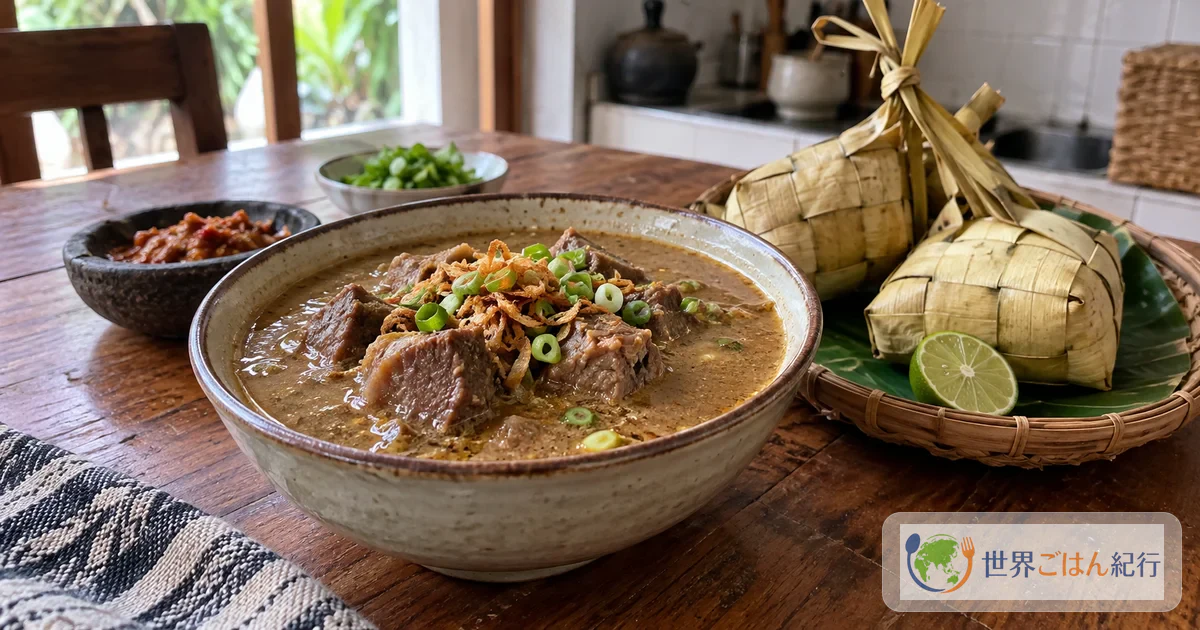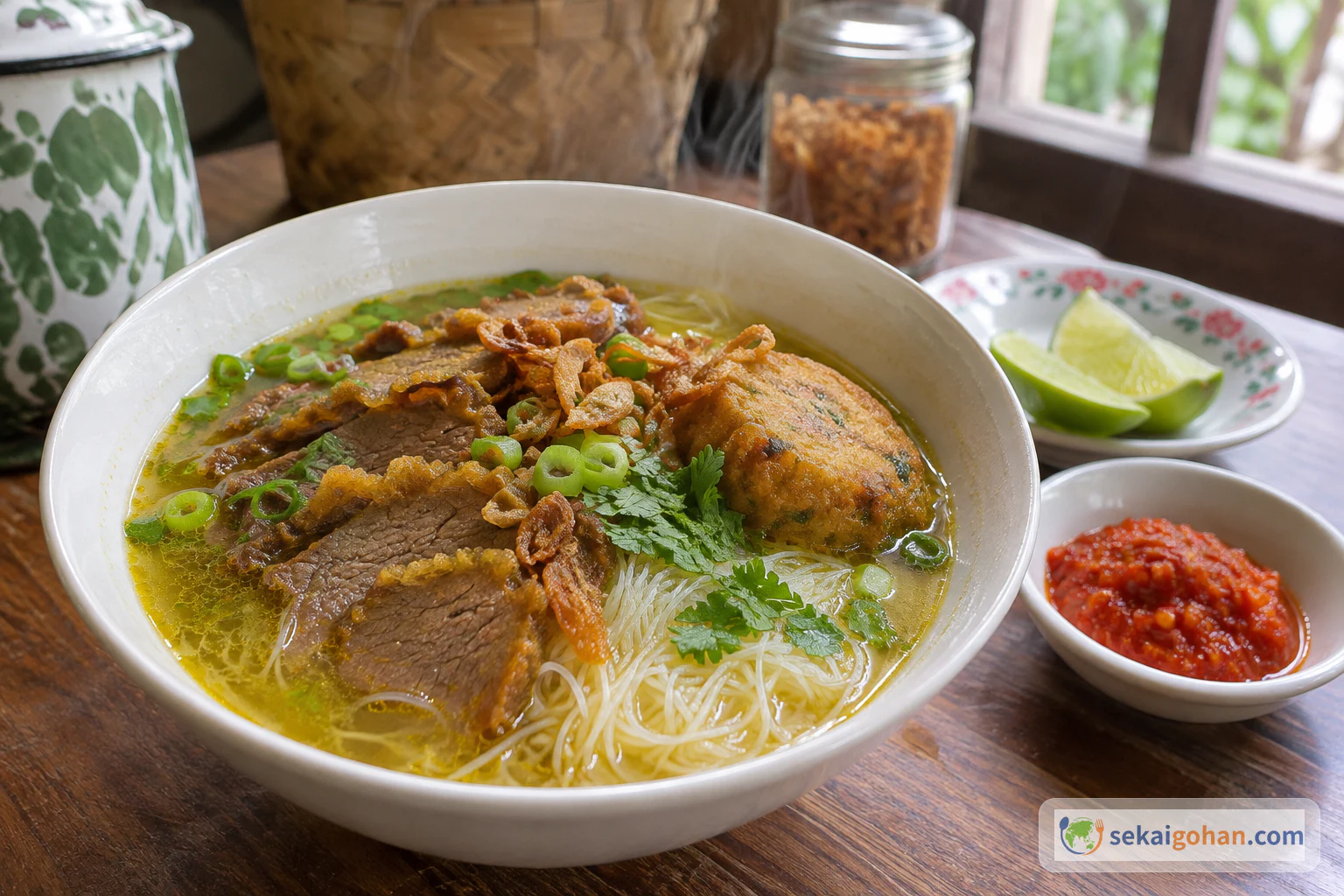
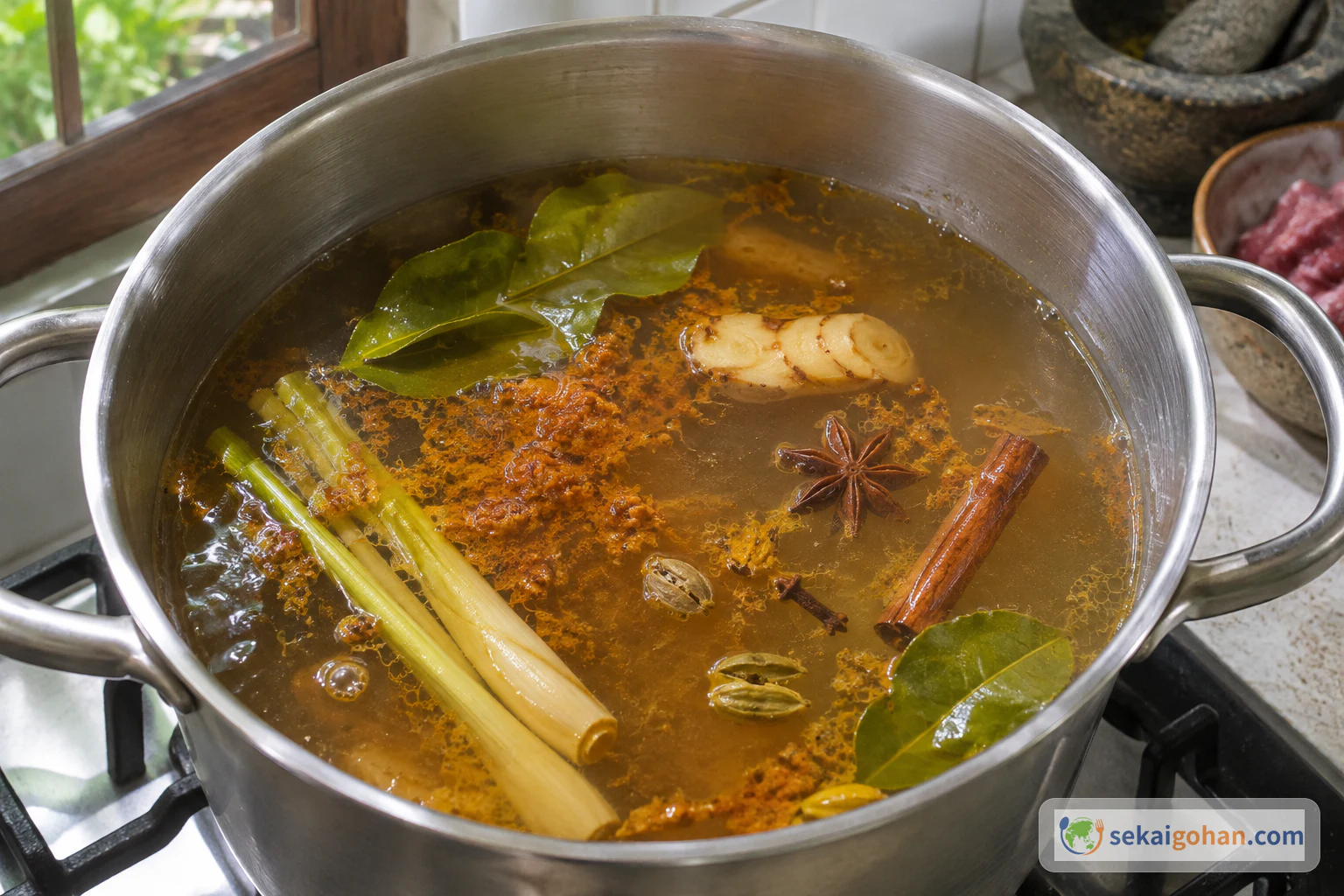
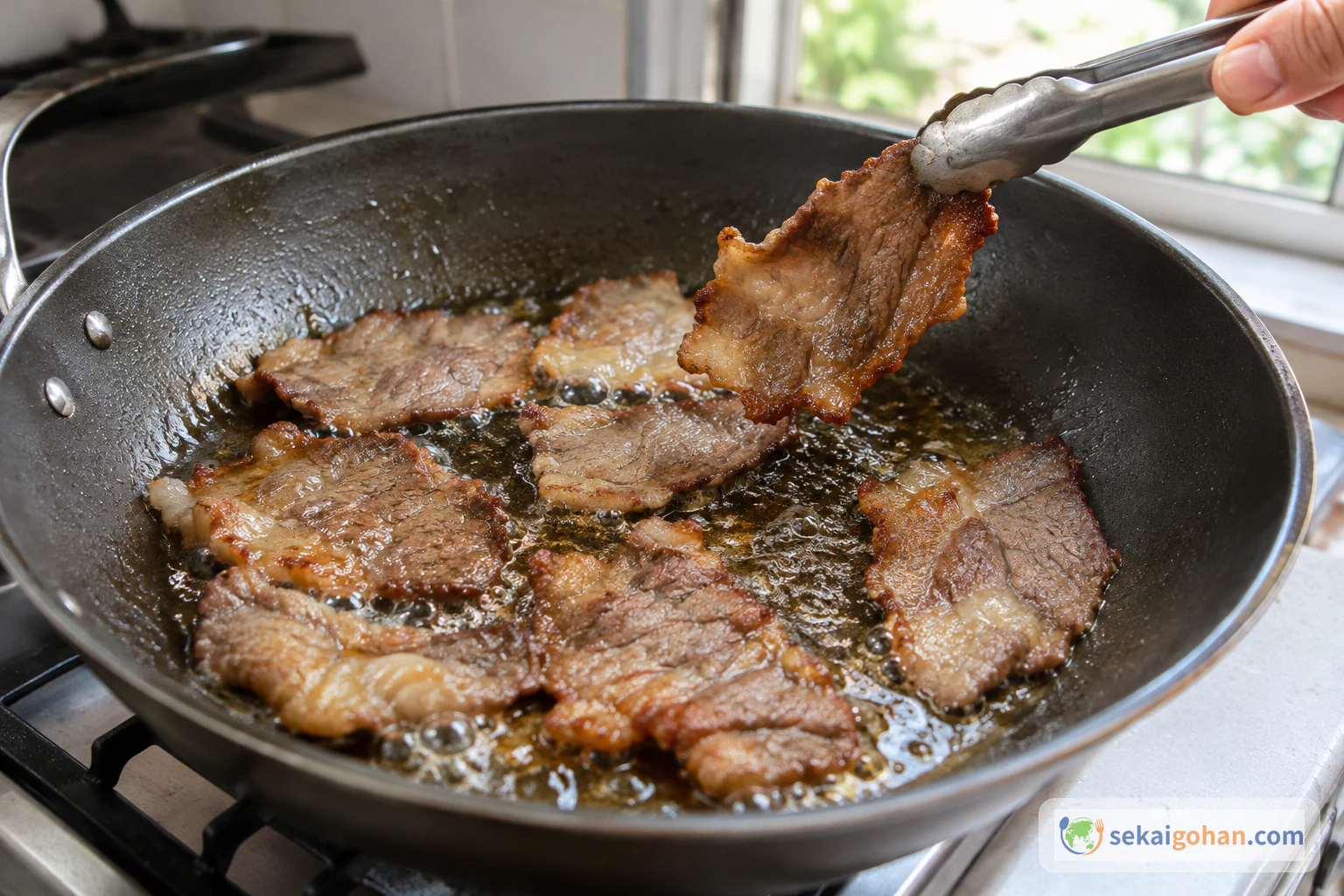
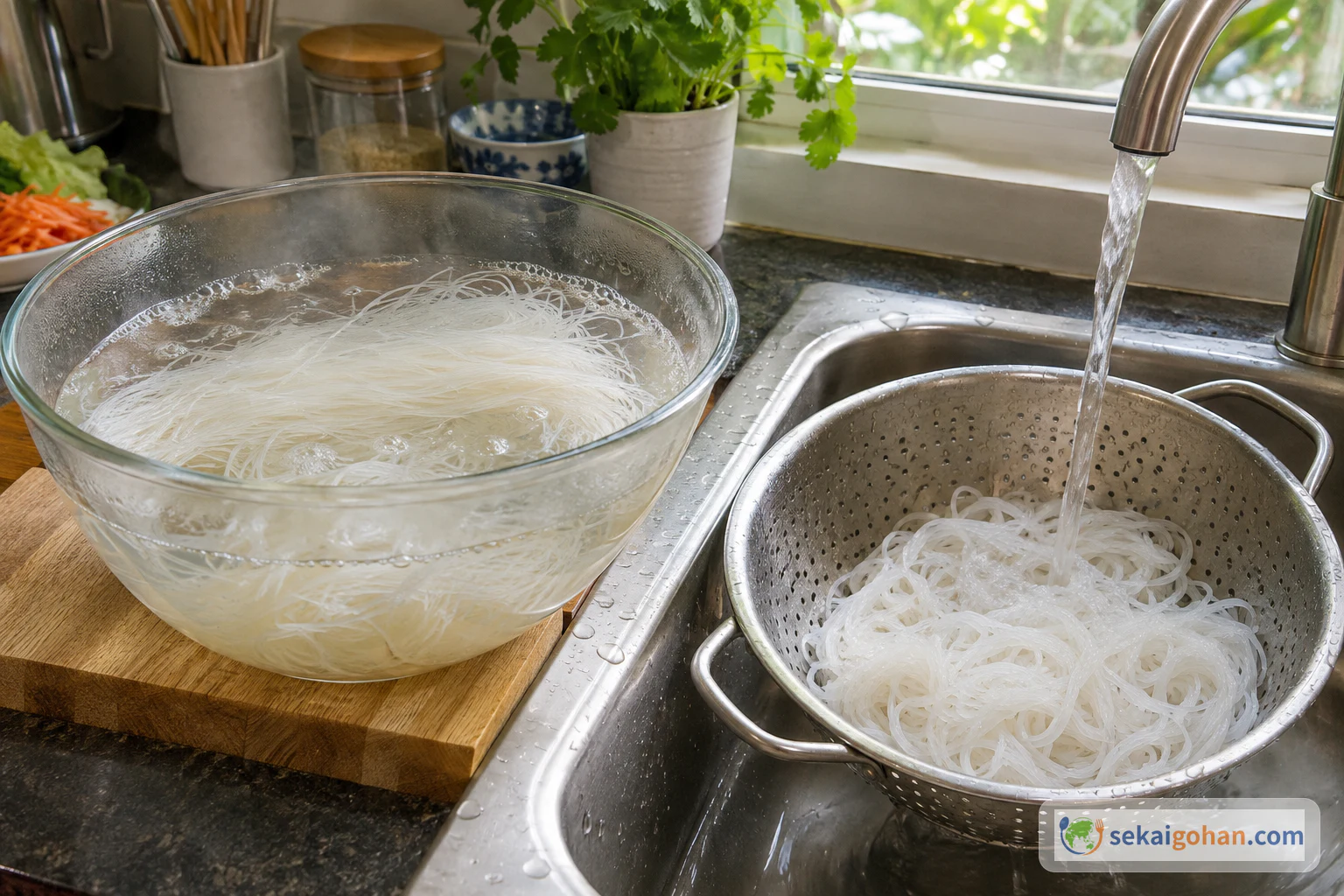
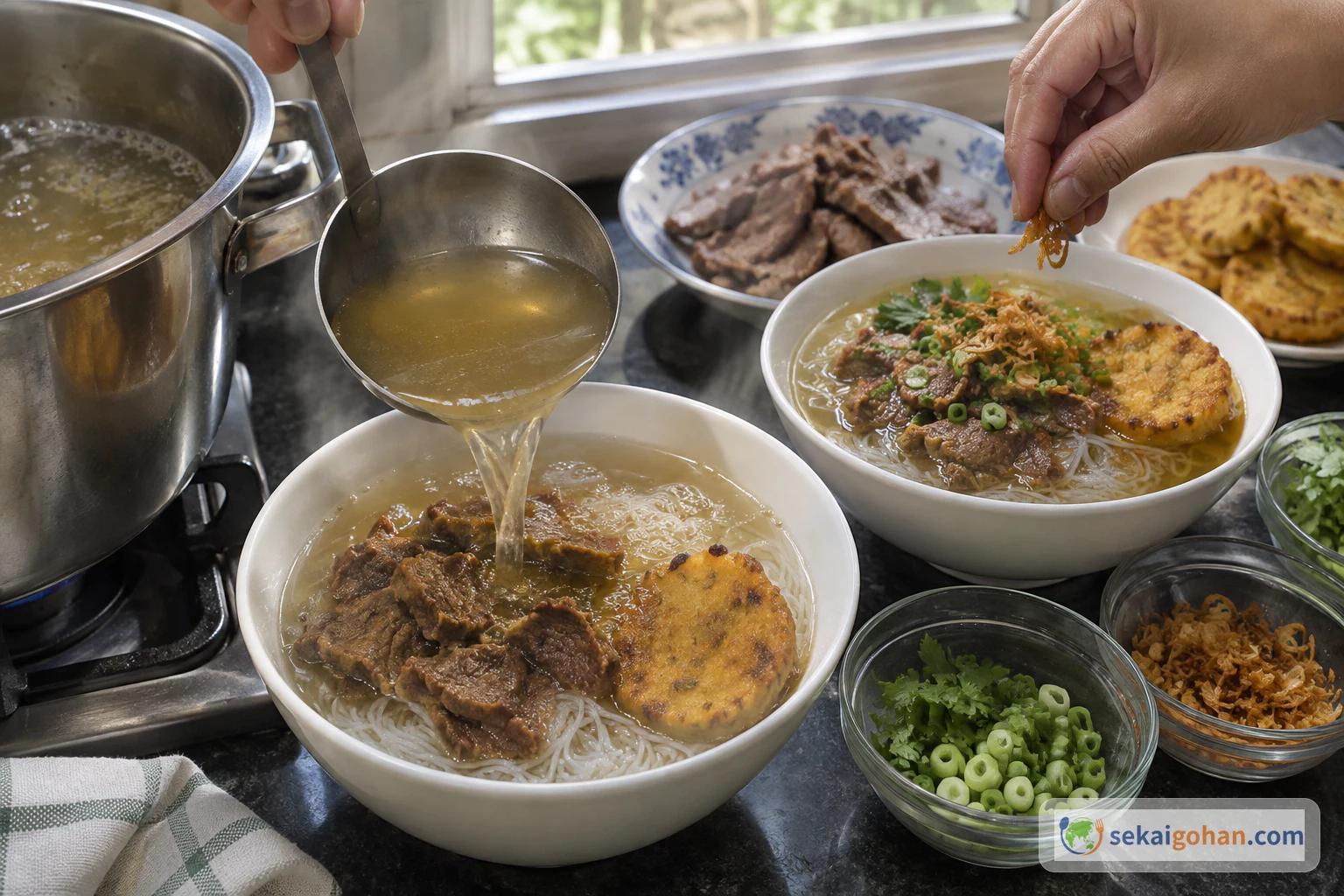
The broth goes in last. The bowl already holds a nest of white rice vermicelli, a few slices of beef fried until their edges are crisp and dark, and one golden potato cake. Then a ladle of boiling, clear golden broth goes over the top. It smells of lemongrass, cinnamon and star anise, and it sinks the noodles while the beef hisses for a moment at the edges. Scallion, celery and fried shallots float on the surface, and lime and red sambal wait beside the bowl.
This is soto Padang, the beef soup of the Minangkabau people of West Sumatra. It is heavily spiced but light, because it has no coconut milk at all. The broth tastes warm and peppery, the fried beef adds a salty crunch that softens as you eat, and each person makes the bowl sharper or hotter at the table.
Padang's Clear Beef Soto
A soup family with many branches
Soto is the name for a whole family of Indonesian soups, and there are many of them. Indonesia counts around 75 kinds of soto across 22 of its 34 culinary regions, and each region changes the meat, the broth and what goes on top. Where soto began is not settled. One account says soto came into Indonesia in the 19th century through Semarang, and Denys Lombard's hypothesis names caudo, a Chinese meat soup, as one possible ancestor. Wherever it started, it now turns up all over Indonesia in very different forms.
So the name alone tells you little. Soto ayam is built on chicken in a yellow broth. Soto Betawi, from Jakarta, is a beef soto clouded white with coconut milk or milk. Coto Makassar, from the other end of the country, is dark and full of offal. Soto Padang is a clear beef broth, and in West Sumatra that clarity stands out. Padang cooking leans heavily on coconut milk, and this soup leaves it out completely. It belongs with the soto of Java, Surabaya and Madura instead, which are also made without it.
What makes the Padang bowl different
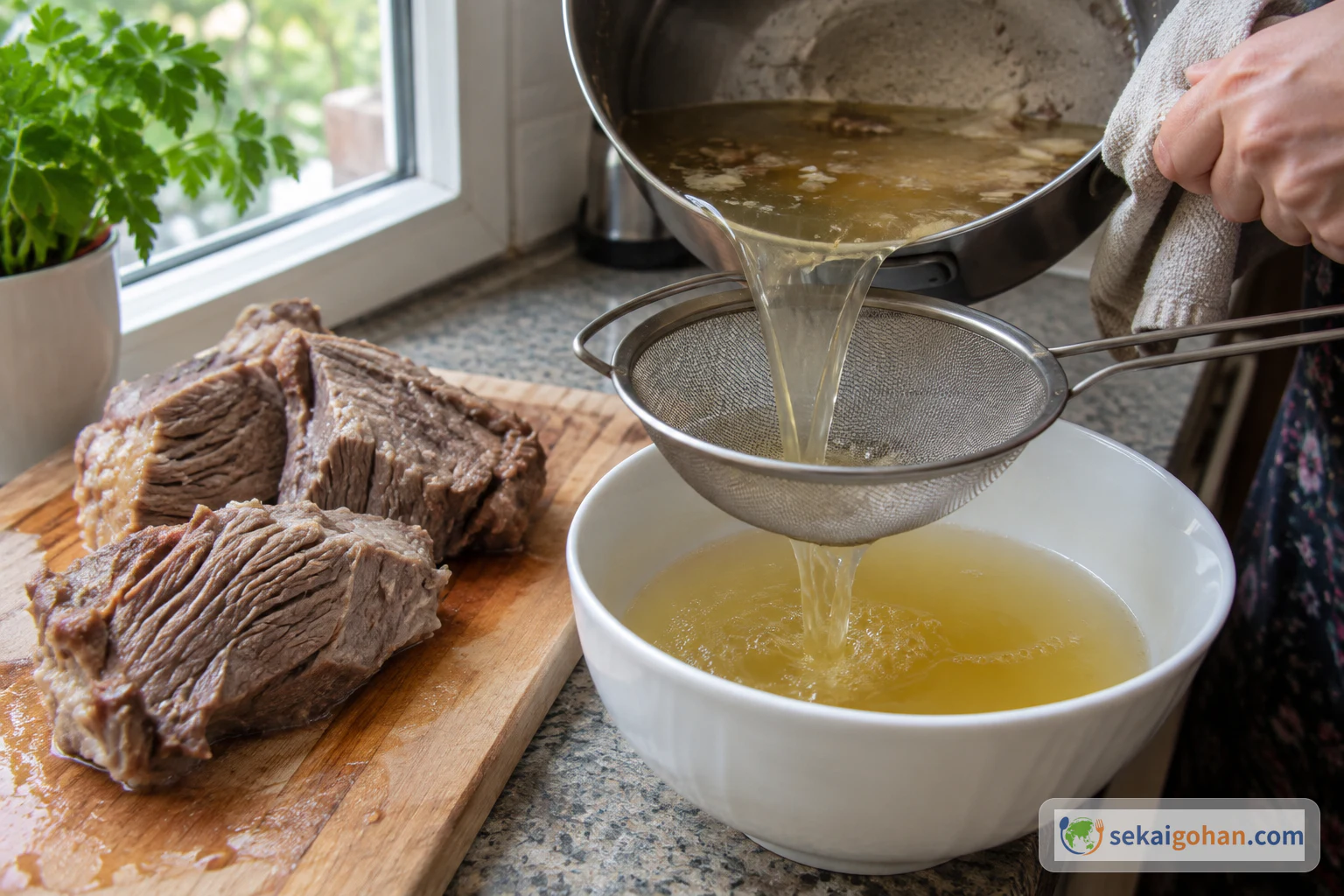
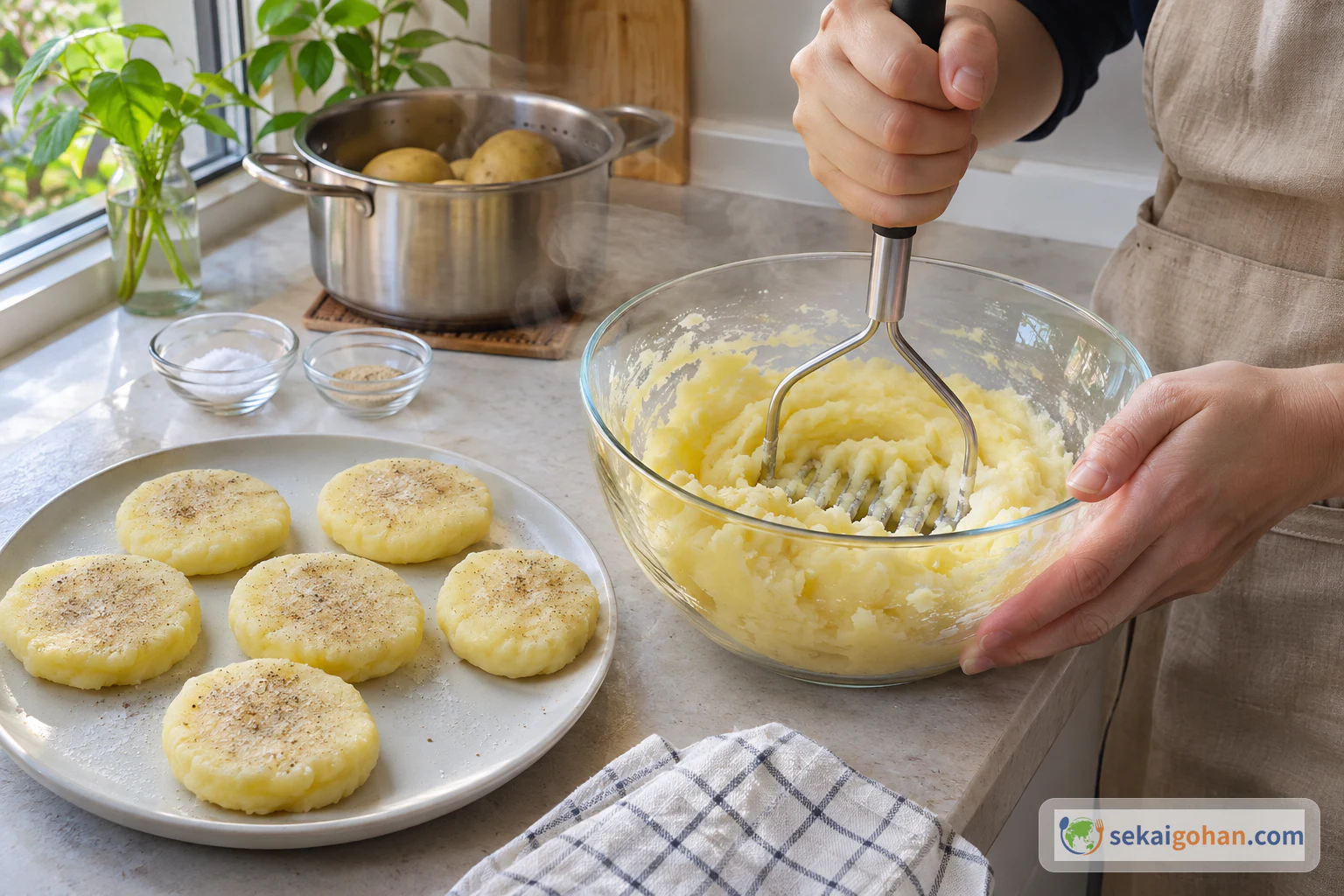
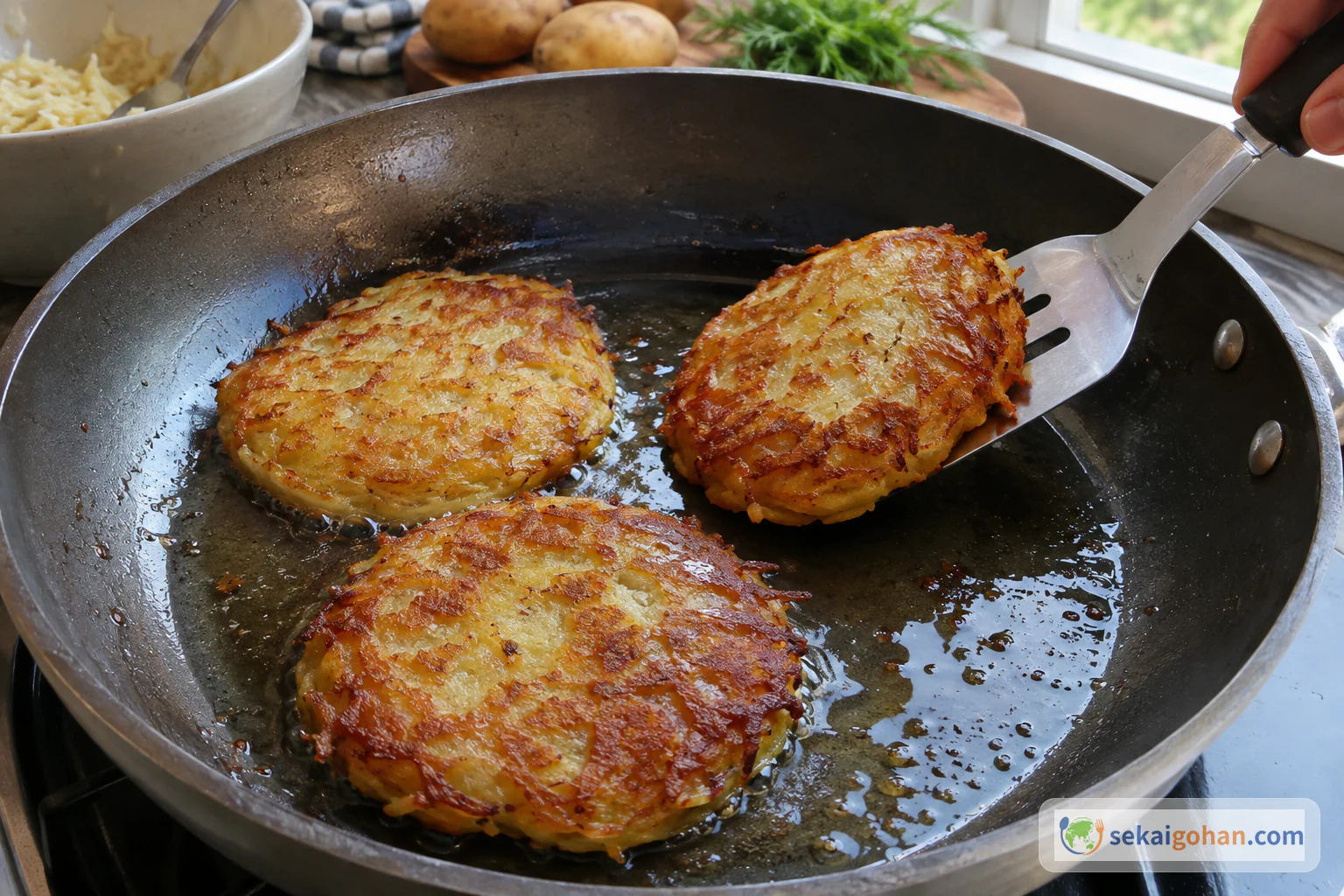
Three things set this bowl apart from other soto. The first is the spice load. Soto Padang is known as the soto with about sixteen spices, and the broth carries them without turning heavy. The second is the beef. It is simmered until tender, sliced thin and fried until dry and crisp, in the style of dendeng, while the inside stays soft. The water it simmered in becomes the broth, so one piece of meat gives you both the soup and the topping. Few other soto use fried meat. The third is the potato cake, perkedel kentang, which sits in the bowl. That is also rare among soto.
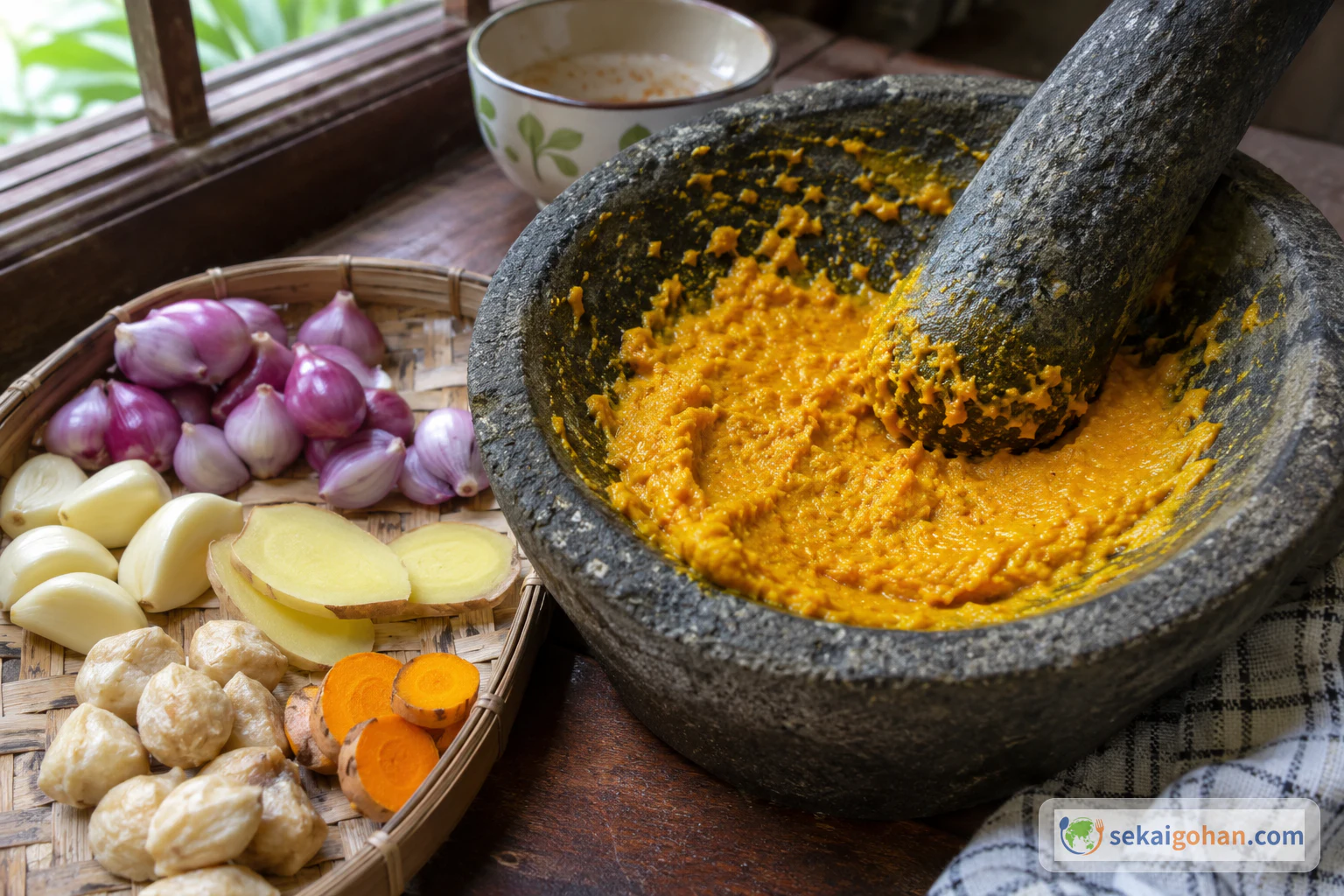
The list usually given for soto Padang is galangal, lemongrass, cardamom, garlic, shallot, sugar, ginger, pepper, candlenut, salam leaf, clove, cinnamon, nutmeg, star anise, scallion and celery. Count everything in the ingredient table below and you land close to that list. Some come in as whole aromatics, some are ground into the paste, and the last two go on as a fresh garnish. Cardamom is this recipe's own addition to the whole-spice set: the 2 pods are an editorial choice because cardamom belongs to the usual list.
Where it is eaten
In Padang, soto stalls sell it from morning to night, and it is sold in cities across Indonesia. Soto Simpang Karya, Soto Taluak Tampuruang, Soto Garuda and Soto Bopet Rajawali are Padang names that come up in these accounts. In Jakarta, Soto H. St. Mangkuto has served it on Jalan Pintu Air in Pasar Baru since 1966, and the family was already selling soto in Padang from 1942. The same city also gives Indonesia sate padang, skewers in a thick yellow sauce, and nasi padang, the spread of dishes served with rice. Soto Padang is Padang's soup.
Ingredients (serves 6)
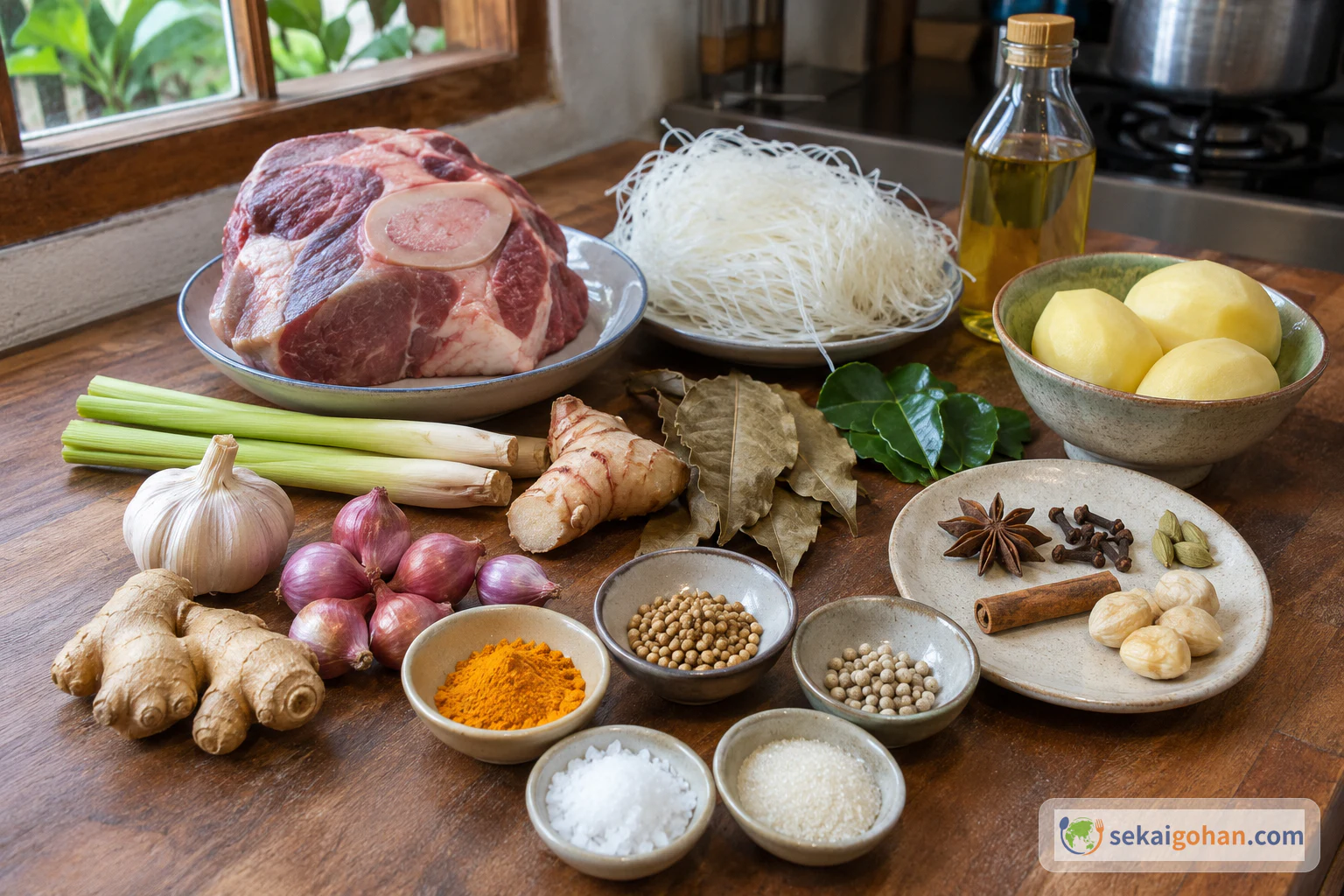
Salt, white pepper, garlic and oil each go in at more than one stage. The table shows how each one is divided, so measure them into separate small bowls before you start.
Candlenuts, and the macadamias or cashews you can use in their place, are tree nuts. Kecap manis usually contains soy and wheat. Celery is an allergen in its own right. Read the labels on rice vermicelli, fried shallots, sambal and crackers, because ingredients and shared-facility statements differ by brand.
Equipment
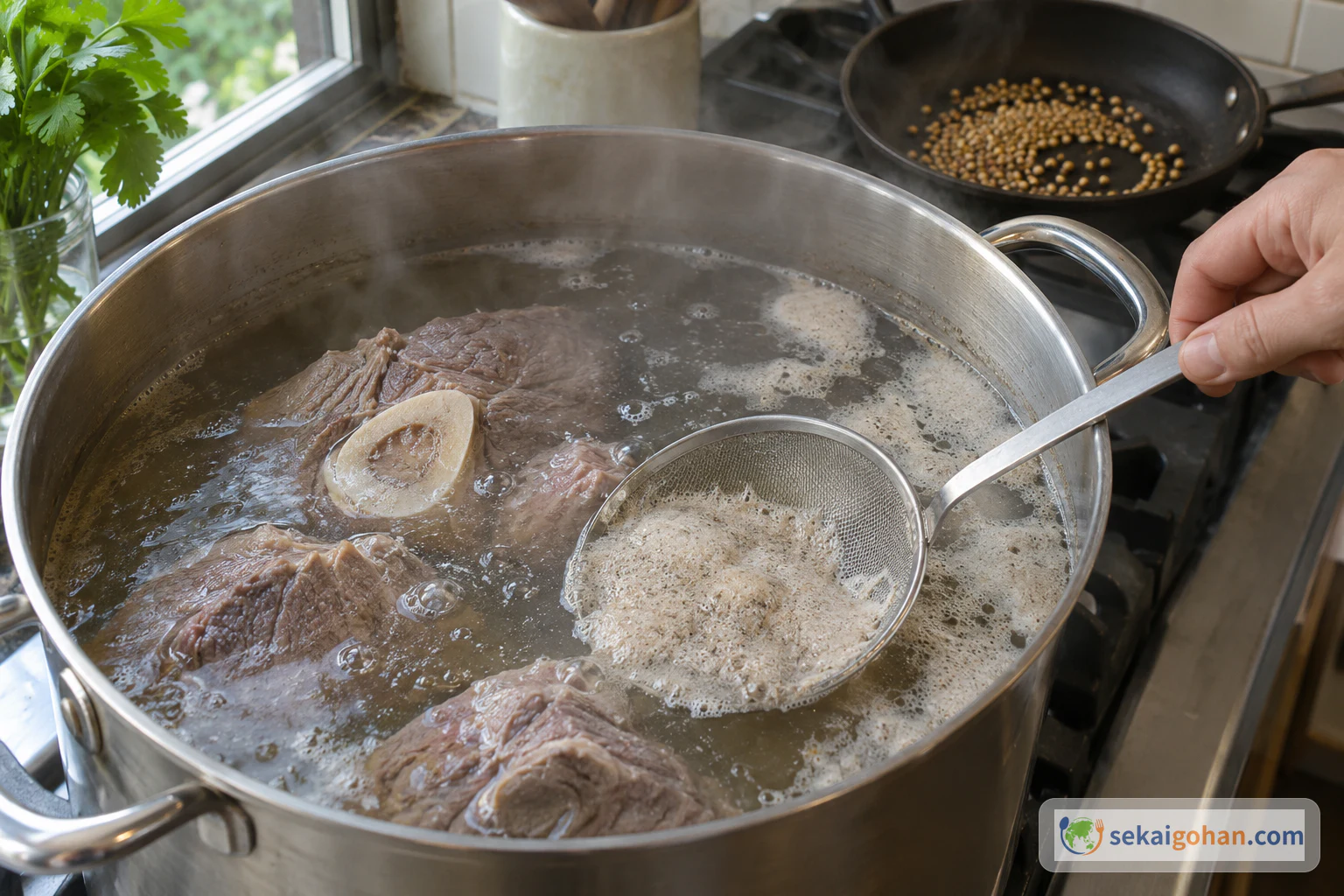
- A stockpot of at least 5½ quarts (5 L), so the beef, water and foam have room
- A fine-mesh skimmer or ladle for the foam
- A fine-mesh sieve and a large bowl for straining the broth
- A mortar and pestle, or a small food processor, for the spice paste
- A wide skillet for shallow-frying the potato cakes and beef in a single layer
- A wire rack or paper-lined plate for draining
- A saucepan and a potato masher
- A heatproof bowl and a colander for the vermicelli
- A sharp knife and a cutting board
Shopping and Substitutions
Go to an Asian grocer or shop online for the noodles, the leaves and the candlenuts. Most of the rest is available at an ordinary supermarket. The noodle is the one swap that changes the dish. Buy rice vermicelli (bihun), the thin white noodle made from rice flour. Glass noodles (soun), made from starch, look similar on the shelf, but they turn slippery and clear in the bowl. That moves the dish away from the Padang version.
Rice vermicelli lists rice or rice flour first. If the bag lists mung bean, pea or potato starch, it is glass noodles. Put it back.
For the rest, here is what each swap changes:
| If you can't find | Use | What changes |
|---|---|---|
| Beef shank | Beef brisket, beef tenderloin, or bone-in chicken | Bone gives the broth its body, so boneless cuts make a thinner soup. Chicken makes a different, lighter soto |
| Galangal | Ginger | Warmer and sharper, without galangal's piney, earthy edge |
| Salam leaves | Bay leaves | A different, more resinous herbal note. The broth still works |
| Makrut lime leaves | Frozen or dried makrut leaves | Frozen keeps more aroma than dried |
| Lemongrass | Frozen lemongrass or paste | Aroma strength varies a lot between forms, so taste the broth |
| Candlenuts | Macadamias or cashews | Close in richness. Still a tree-nut allergen |
| Ground turmeric | A piece of fresh turmeric | Brighter and more earthy |
| Coriander seeds | Ground coriander, same amount | Less nutty than seeds you toast yourself |
| Shallots | Small onions | Sweeter and less sharp |
| Palm sugar | White sugar or dark brown sugar | White is neutral. Dark brown adds a faint caramel |
| Lime | Lemon | Different fragrance, same job |
| Fried shallots | Store-bought fried onions | Fine. Check the label for wheat |
| Kecap manis | Soy sauce sweetened with dark brown sugar | A thinner, less syrupy sweetness |
Store-bought sambal is very different from brand to brand. If you want the Padang flavor, make sambal lado from the short recipe in the serving section.
Method
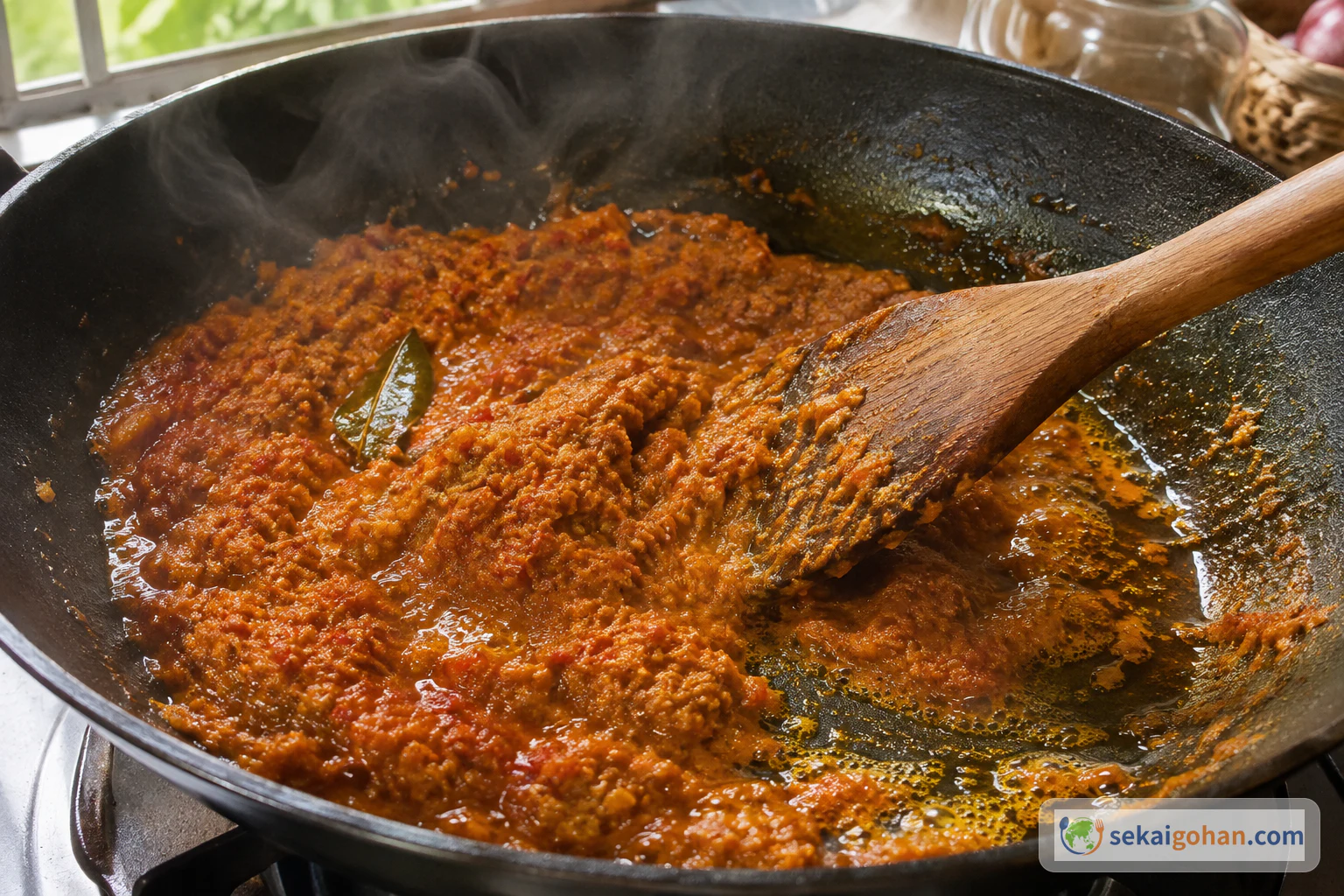
The broth sets the pace. Once it is skimmed and down to a bare simmer, you have about two hands-off hours. Use them to boil and fry the potato cakes and to grind and fry the spice paste. The beef can only be sliced after it has cooled, so the frying of the beef, the noodles and the assembly all come at the end, close to serving.
When It Goes Wrong
| What you see | Why | What to do |
|---|---|---|
| Cloudy broth | Foam was left in the first minutes, or the simmer was too hard | Next time, skim through the whole first boil and keep the simmer barely moving |
| Beef shrinks and chews tough | Slices are too thick, or cut along the grain | Slice ⅛ inch (3 to 4 mm) thick, across the grain |
| Fried beef is greasy or leathery | Too many slices at once, oil not hot enough, turned too often | Pat the slices dry, wait for the sizzle, fry in a single layer and turn once |
| Potato cakes crumble in the pan | Potatoes were mashed after cooling, or the oil was too cool | Mash while hot, let the shaped cakes rest about 10 minutes, and fry over medium-high heat |
| Paste scorches | Heat too high, or not stirred enough | Stir constantly over medium-high heat and stop as soon as the oil separates |
| Vermicelli turns mushy | Left in the hot water too long | Drain the moment it turns translucent white and rinse under cold water at once |
Serving, Variations and Storage
At the table
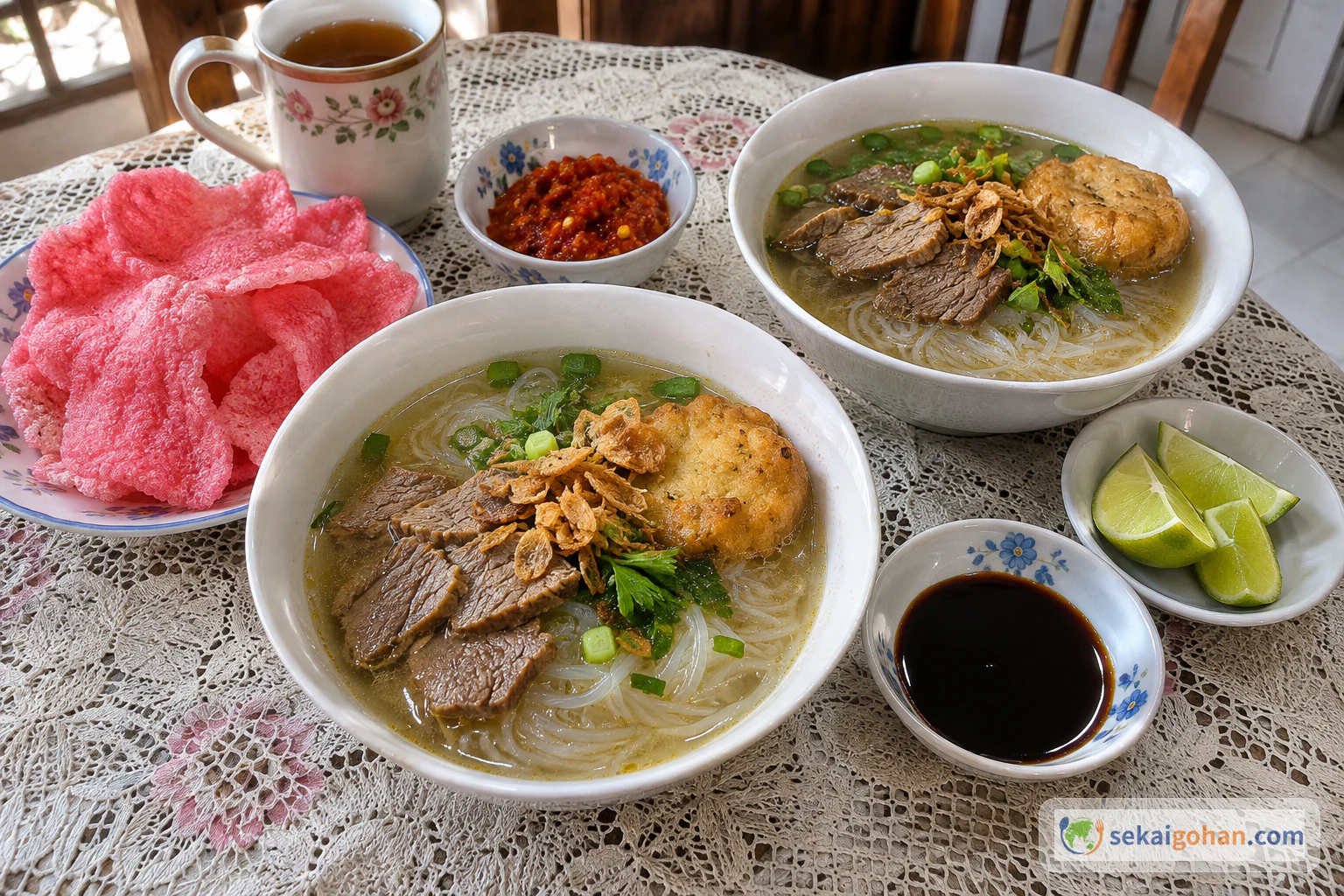
Soto Padang is seasoned in the bowl by each eater. Lime wedges go on the table, and a splash of vinegar is also sometimes used for the same job. Sambal lado, the red chili sambal of West Sumatra, brings the heat. Pink-red sago crackers sit in a pile beside the bowls for crunching between spoonfuls. For a long time the soup came without kecap manis. Now many stalls set out the sweet soy sauce for diners who like it sweeter, the way soups are eaten in Java.
To make sambal lado, boil or steam 10 red curly chilies, 5 bird's-eye chilies and 1 clove garlic until soft. Grind them with salt and a little hot water into a coarse, bright red sauce.
Variations
- Chicken soto Padang. Use bone-in chicken in place of the beef and keep the same paste and whole spices. This is a common home version, and the broth comes out lighter.
- With beef lung. Some cooks boil beef lung (paru sapi) with the beef, then slice and fry it alongside. They consider that bowl closer to the Padang one, and it adds a deeper, livery crunch.
- Glass noodles. Soun in place of bihun is common in home kitchens. The noodles turn slick and transparent, and the bowl feels more slippery than chewy.
- Sweeter at the table. A spoonful of kecap manis darkens the broth and turns the peppery spice toward sweet. Add it to your own bowl, never to the pot.
Storage
Store each part separately. Cool the strained broth, then refrigerate it promptly in a covered container and use it within 2 to 3 days as a rough guide. Always bring it back to a full boil before serving. The fried beef is at its best fried just before serving, because reheating dulls the crisp edges. Fry only what you will eat that day. Potato cakes keep in the refrigerator in a covered container and come back crisp after a brief shallow-fry. Soften the vermicelli fresh for each meal.
Frequently Asked Questions
Do I need a thermometer for frying?
No. Listen instead. Drop in one beef slice, and if it sizzles sharply right away, the oil is ready. If it only bubbles weakly, wait and try again before you add the rest.
Is soto Padang spicy?
The broth itself is warm rather than hot, from white pepper, ginger and the whole spices. The real heat is the sambal at the table, so each person sets their own level. If you are cooking for children, serve the sambal on the side and keep it there.
What are the red crackers served with it?
They are sago crackers, pink to red in color, eaten on the side rather than in the soup. They go by more than one name in Indonesia, including kerupuk sagu merah muda and kerupuk merah wayang. If you can't find them, any plain crisp cracker gives you the same crunch between spoonfuls.
Can I add tomato or boiled egg?
Some recipes add tomato wedges, boiled eggs and shrimp chips. These are additions from outside the Padang bowl, and they push the clear, spiced broth toward a different soup. For the Padang taste, keep the bowl to noodles, fried beef, potato cake and garnish.