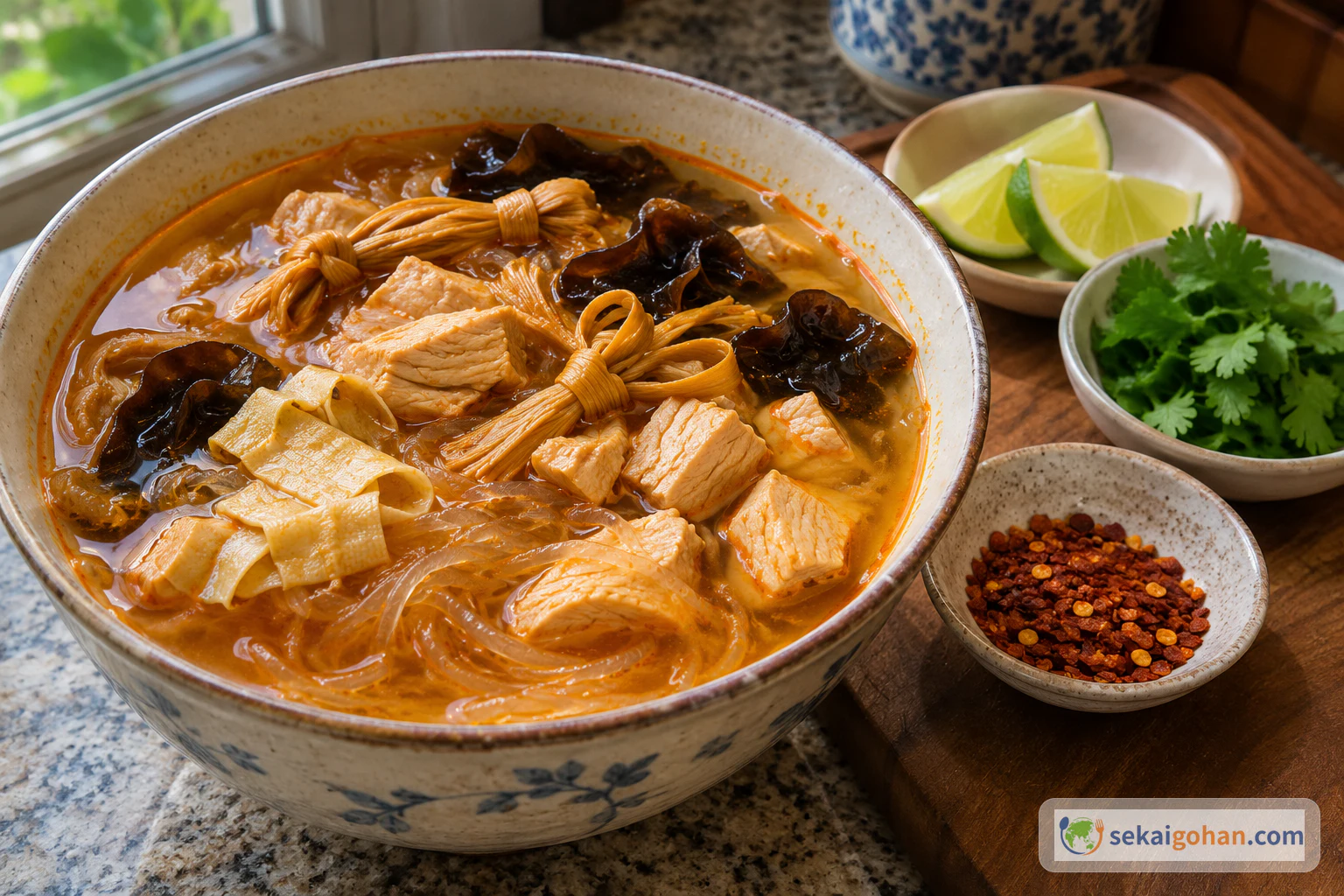
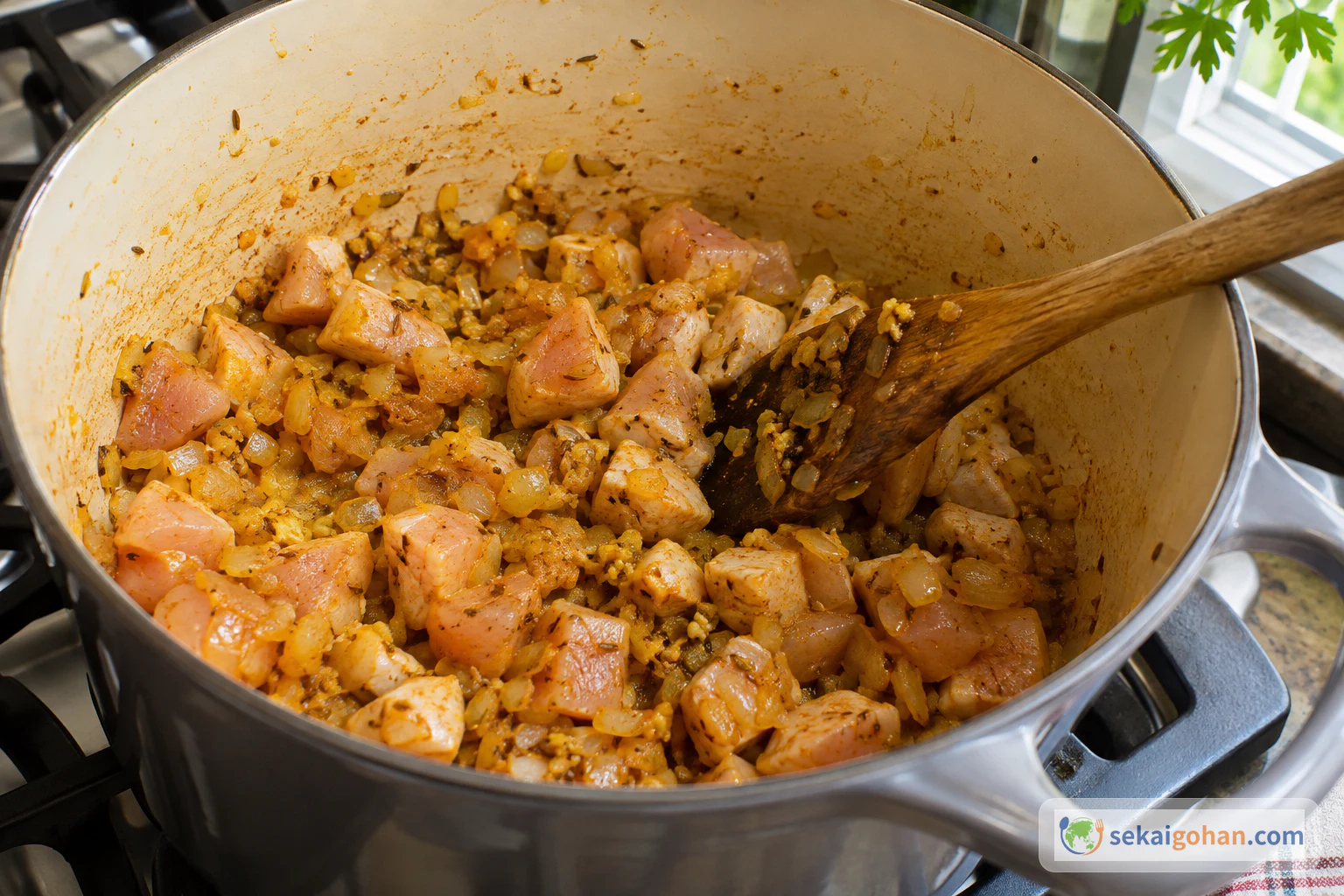
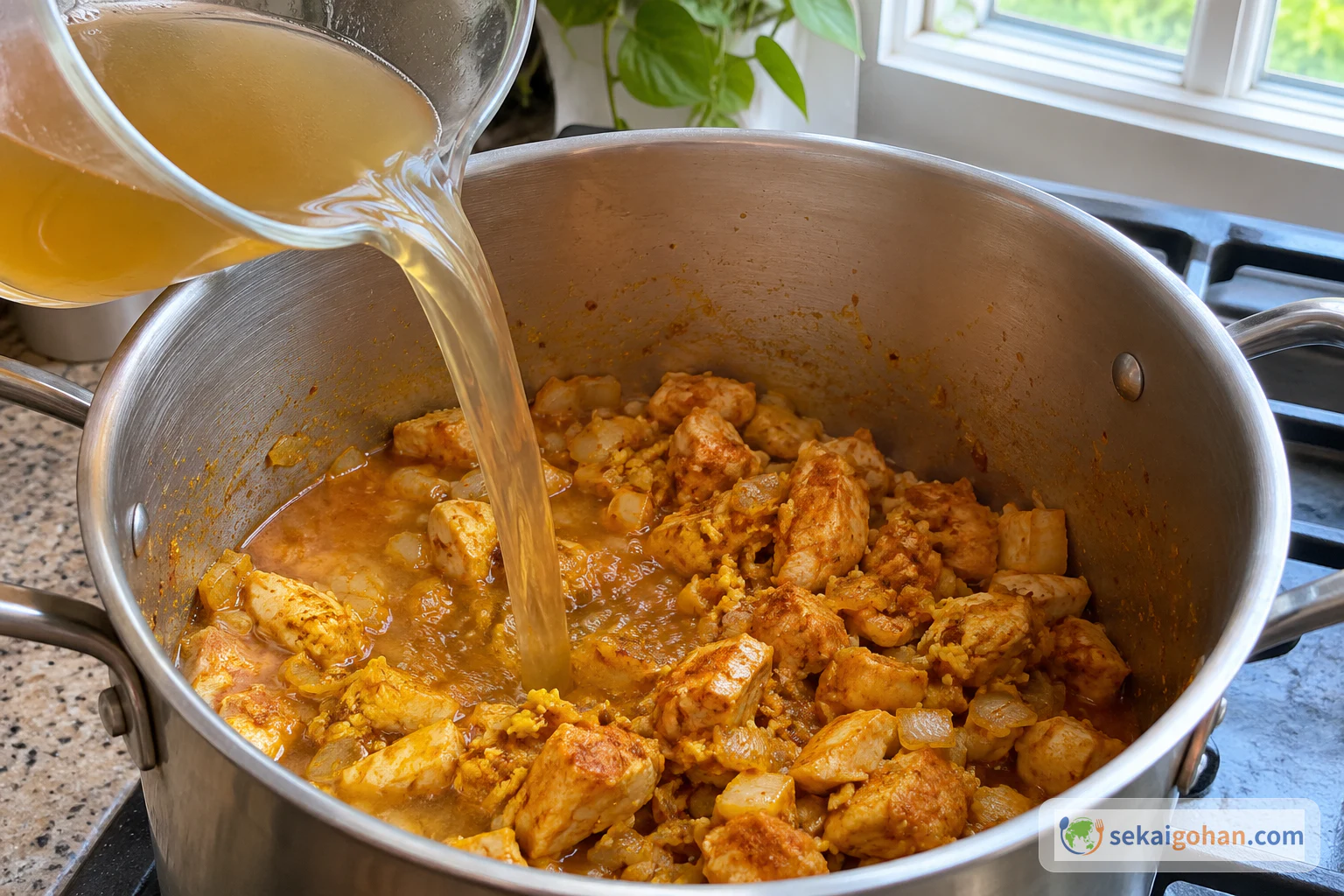
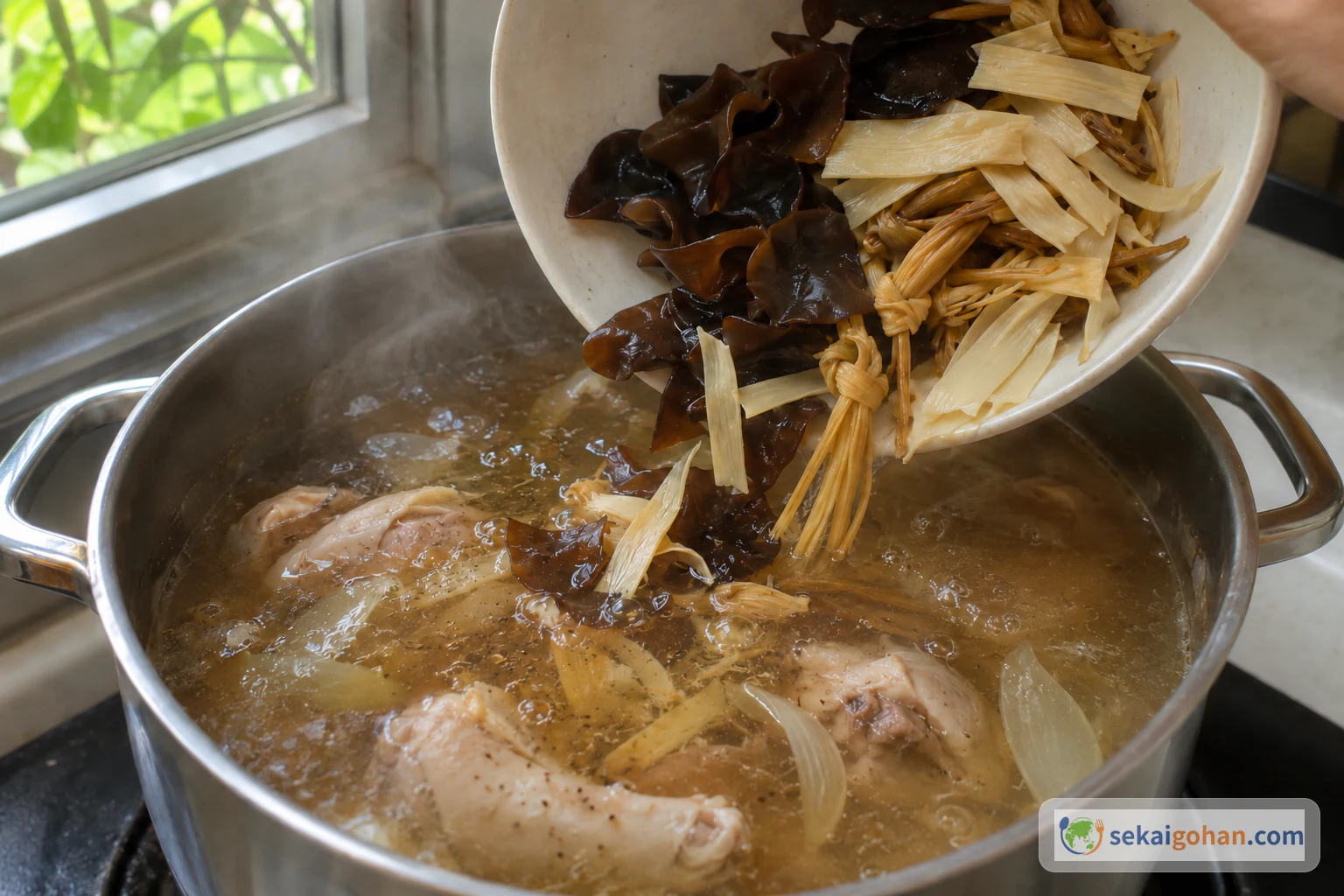
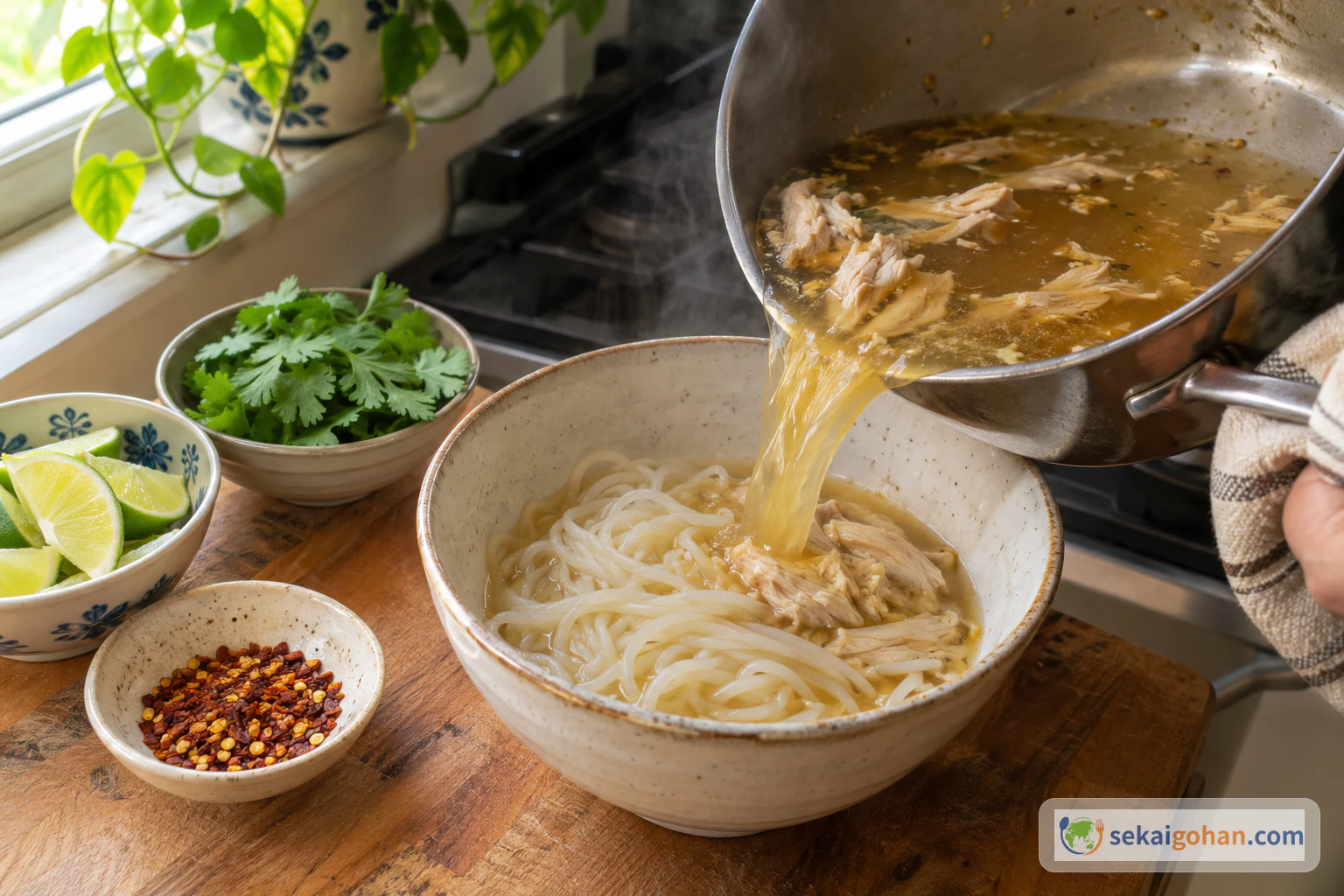
Steam rises from a large pot of broth tinted golden by turmeric and paprika, with small cubes of chicken, dark ribbons of wood ear mushroom, little knots of dried lily bud and strips of soybean sheet moving through it. A tangle of translucent noodles waits in each bowl, and the soup is ladled over the top. This is kyar zan hinga, a Burmese chicken and glass noodle soup, finished at the table with lime wedges, cilantro and roasted crushed red pepper flakes, which each person adds to taste.
About Kyar Zan Hinga
You'll see the dish under several spellings, including kyar zan hinga, kyazan chet and "Kyar Zan Hin Khar." It's a soup for special occasions, served at a monastery or at home, and a monastery cook's version can earn real praise for its flavor. Plenty of people come to it slowly; one cook didn't like it as a child and grew to appreciate it later in life.
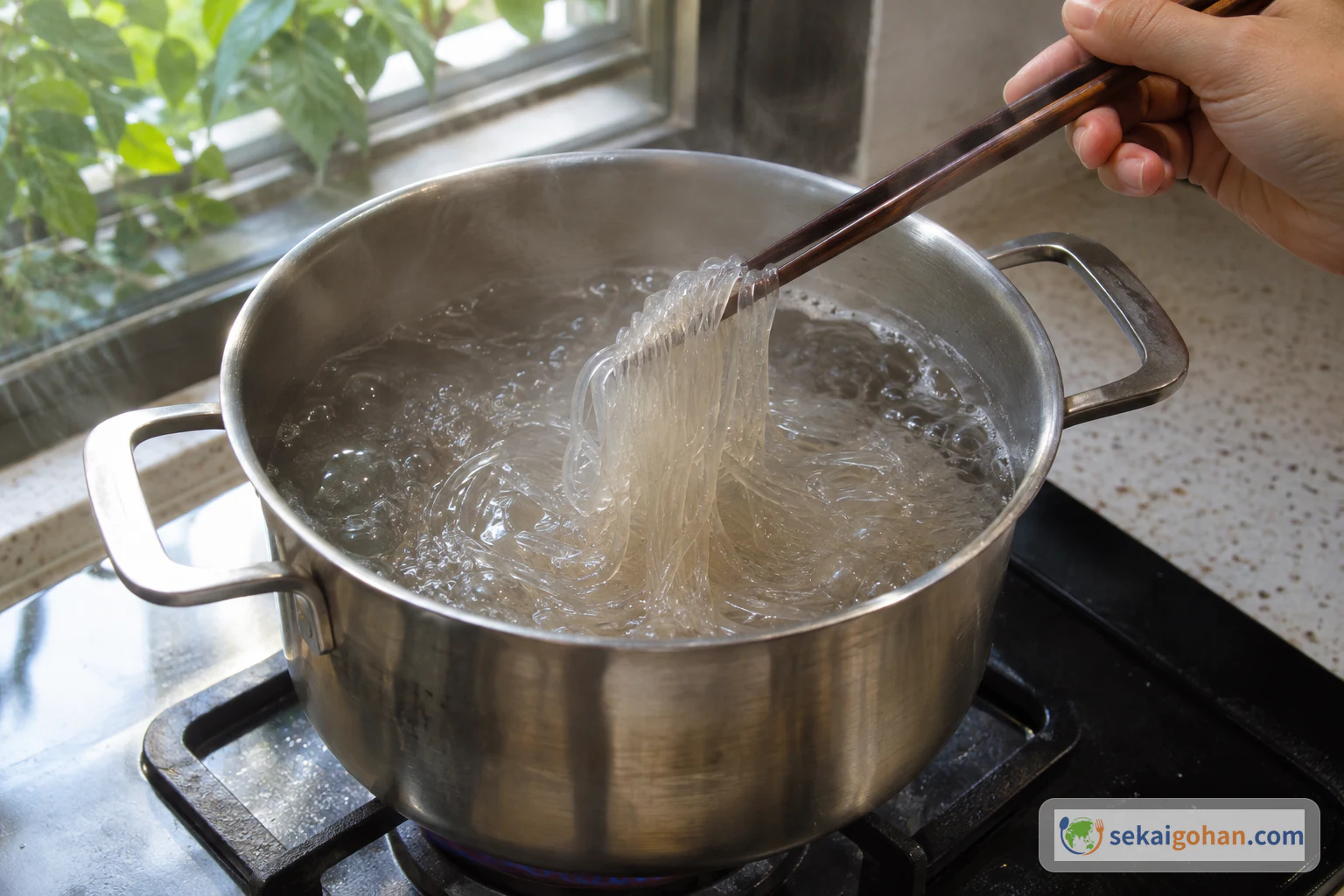
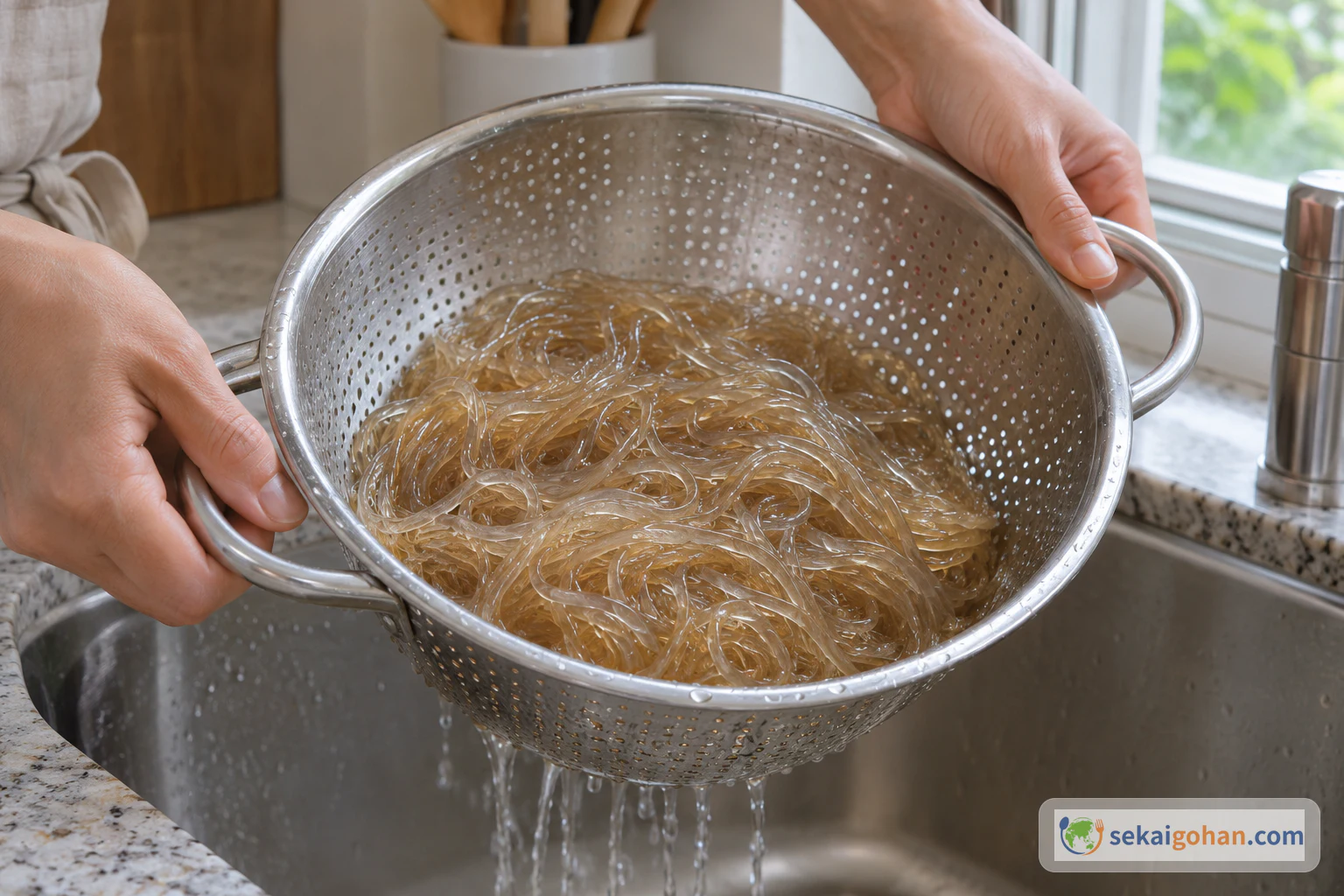
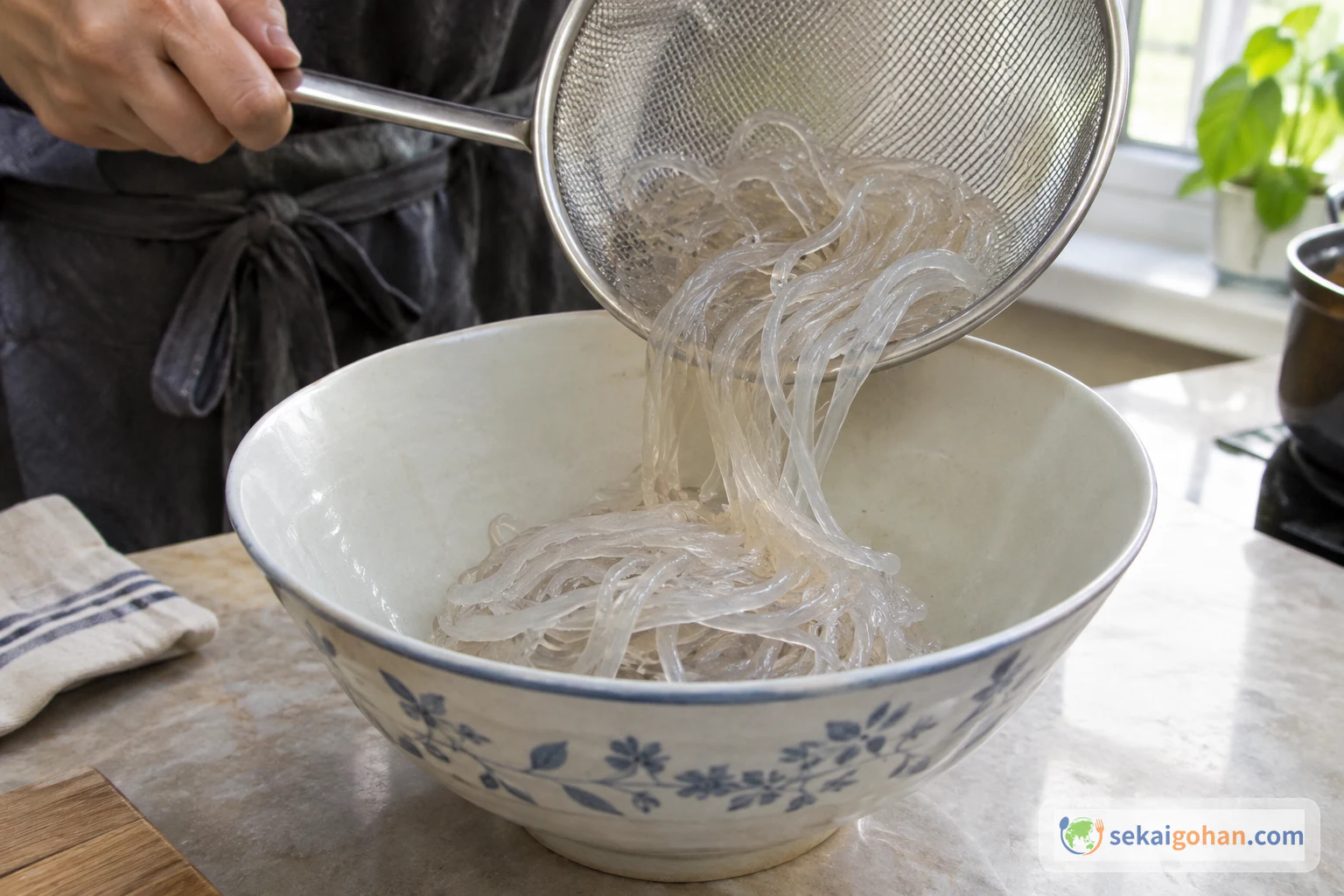
The pot and the noodles are kept apart until serving. The chicken, wood ears, knotted lily buds and strips of yuba all cook together in one big pot of seasoned broth, while the noodles cook in their own pot. The noodles go into the bowl first, then the hot soup goes over them.
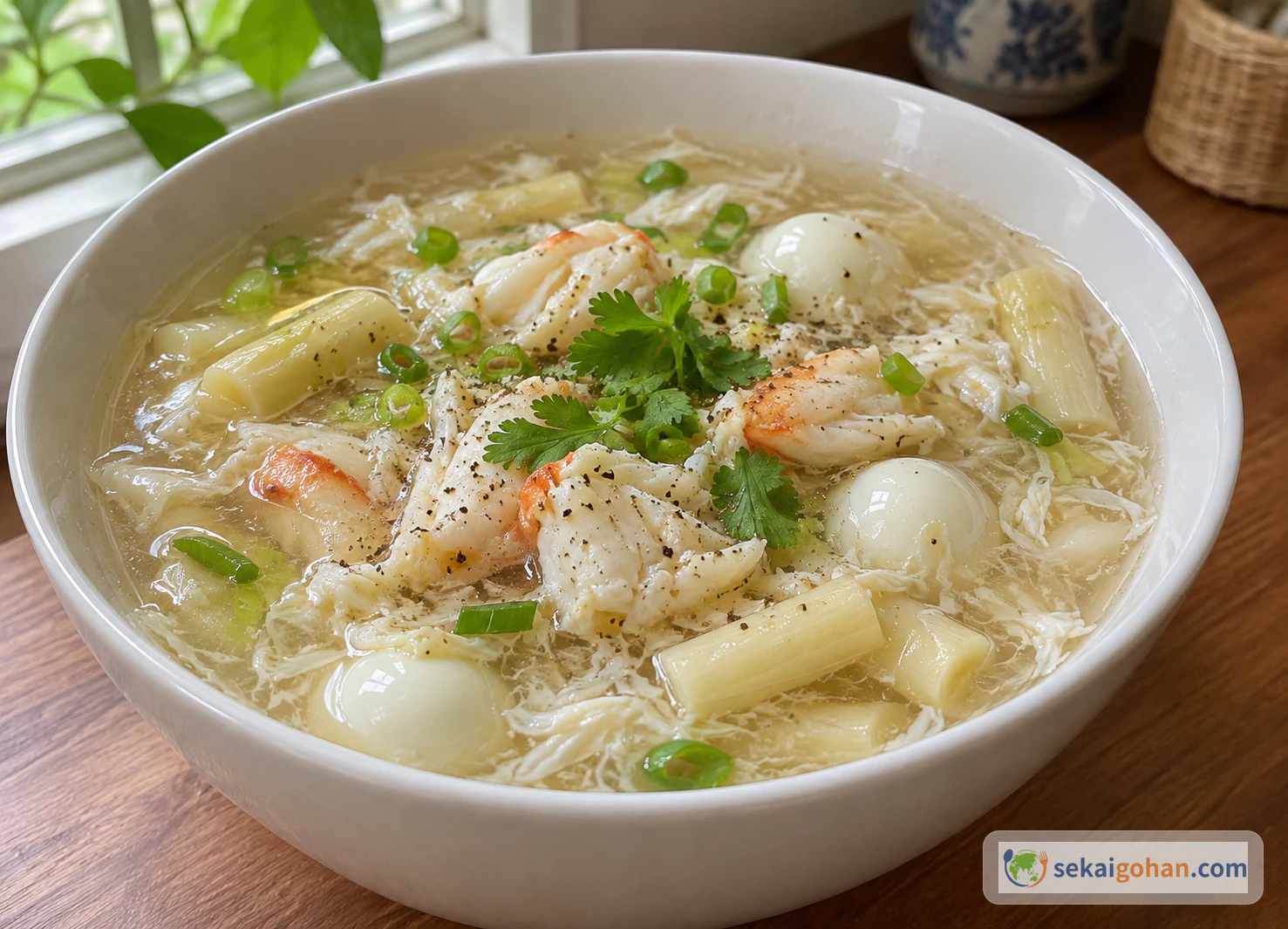
Cooks vary it freely. Some use bean vermicelli and add quail eggs and small onions, and others change the stock, the marinade and the toppings. For more dishes from the country, see our Myanmar recipes and food culture page.
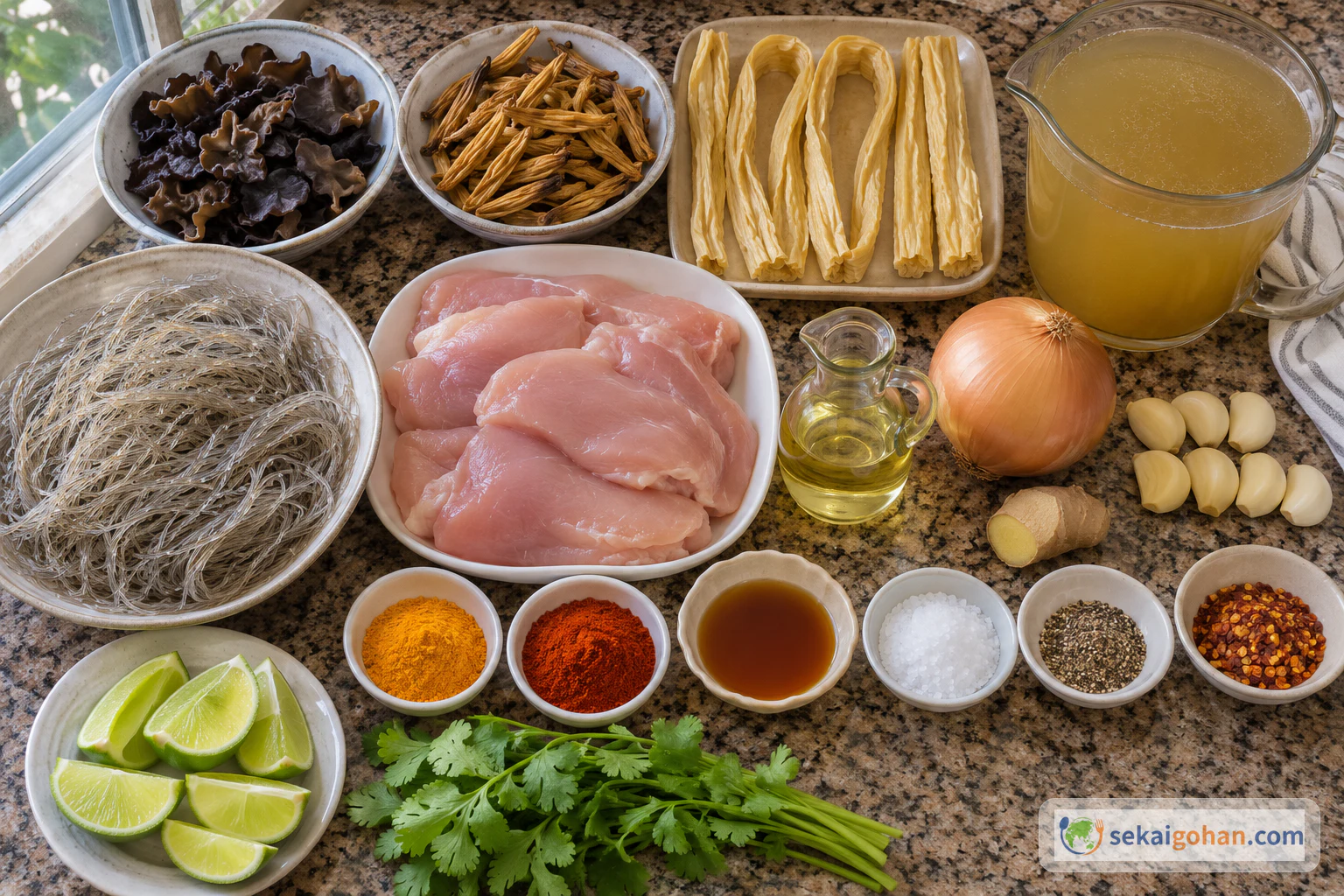
Ingredients
Equipment
- 3 heatproof bowls, one for each dried ingredient
- Kettle or pot for heating water
- Strainer for draining the soaked dried goods
- Knife or kitchen scissors, and a cutting board
- A separate cutting board and knife for raw chicken
- Large pot (big enough for 15 cups of broth plus the chicken and dried goods)
- A second pot for cooking the noodles
- Colander
- Large soup bowls
- Food thermometer, for checking the chicken
Choosing Noodles, Dried Goods and Broth for Kyar Zan Hinga
Noodles: use dry sweet potato cellophane noodles rather than thin green bean noodles, since they're more substantial. A thinner noodle gives you a different soup. Check the bag's ingredient list and cooking directions, because cooking time varies by product.
Dried lily buds: buy dried lily buds sold as food for cooking, with a clear food label and ingredient list. Never use fresh lilies, florist flowers, wild plants or anything whose label doesn't clearly identify it as food.
Dried wood ear mushrooms: choose a packaged food product labeled as dried wood ear (sometimes sold as cloud ear). Don't use wild-picked mushrooms.
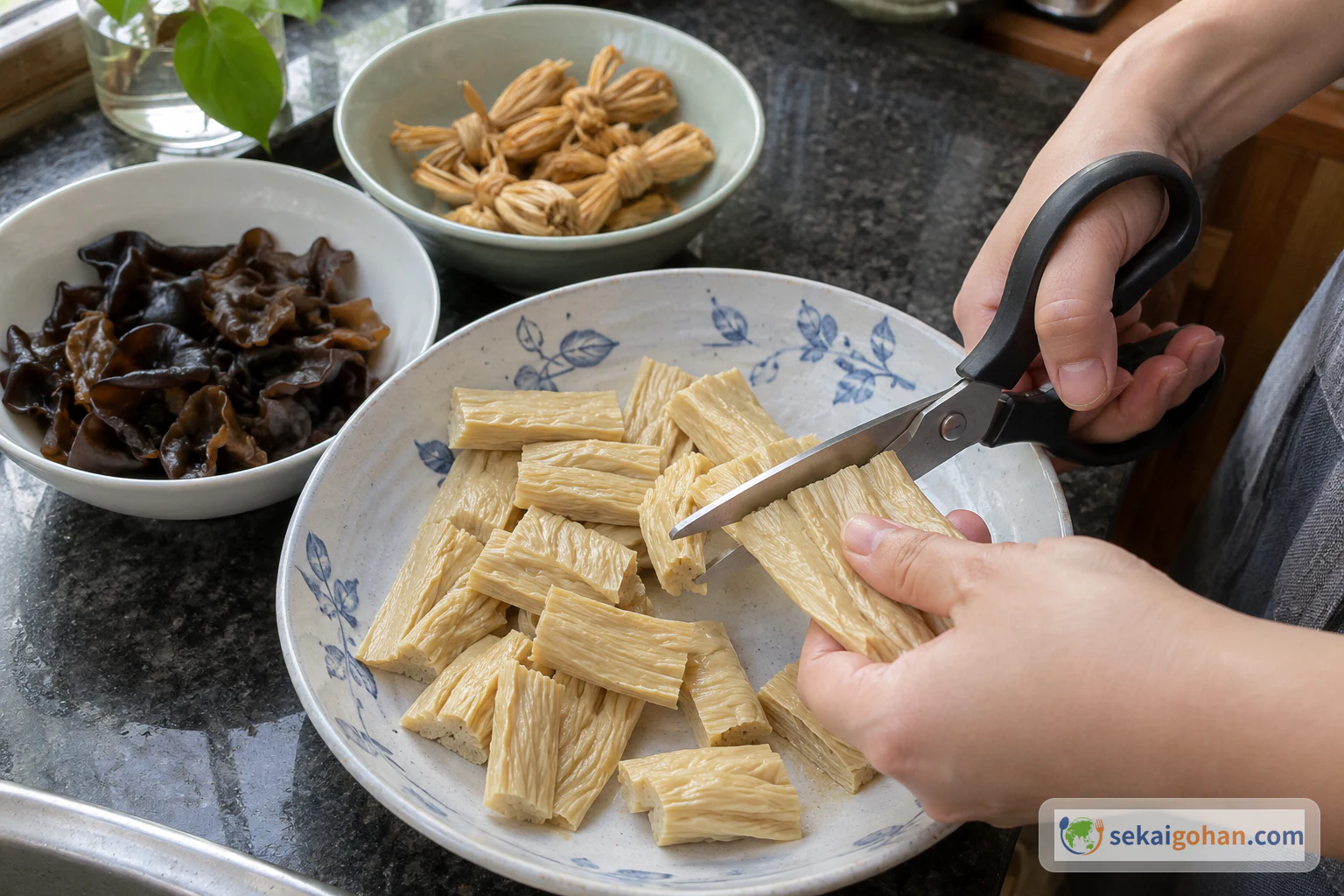
Soybean sheets (yuba): choose a dried soybean product with a food label. Shapes vary between products; this recipe uses 4 lengths, which is 2 U-shaped ribbons.
Broth: use no-salt chicken broth, so the fish sauce and your own salt set the seasoning.
Fish sauce contains fish, and soybean sheets are made from soy. Check the labels on every packaged product, including the broth, noodles and pepper flakes, for these and other allergens.
Method: Soak, Sauté, Simmer, Then Build Each Bowl
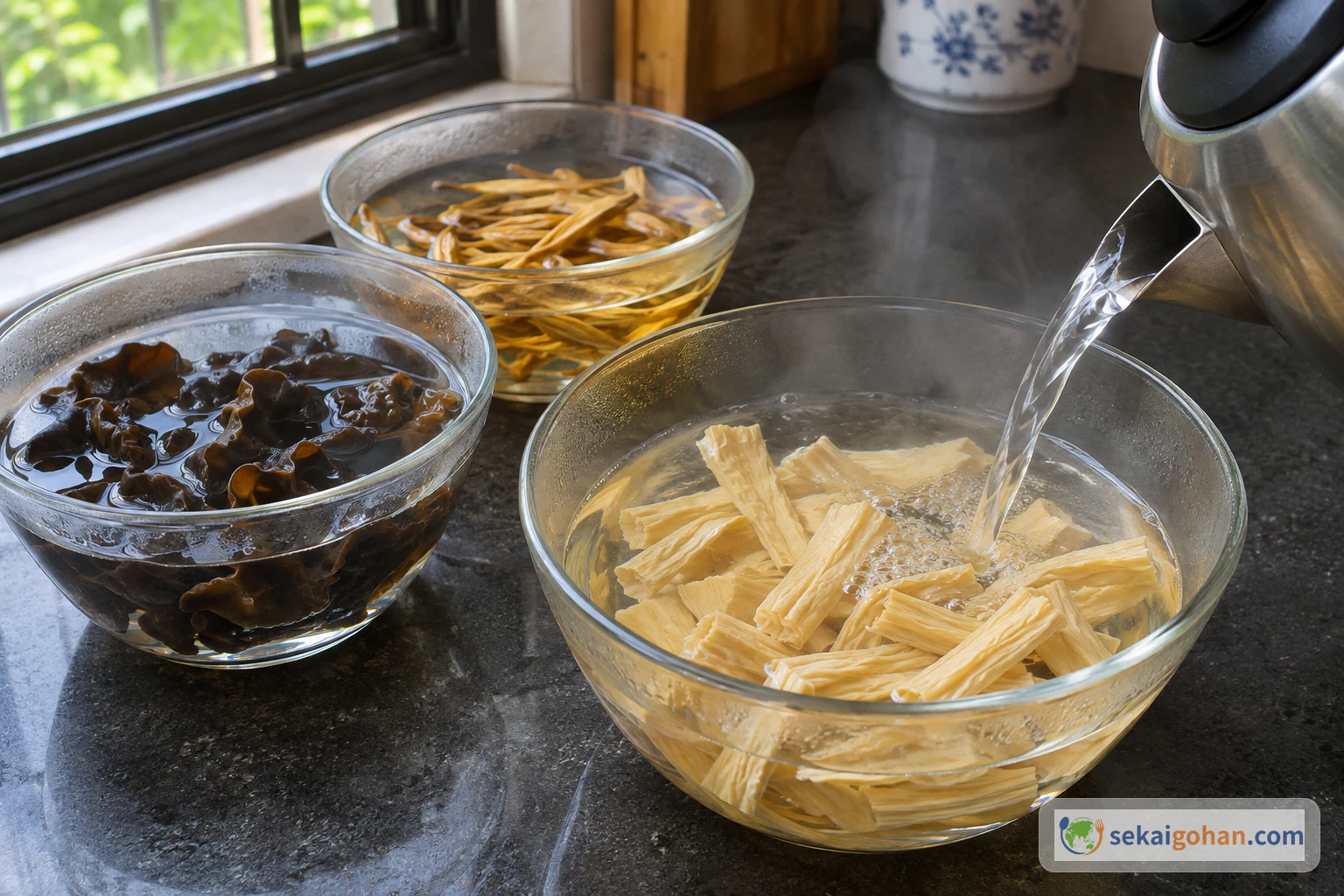
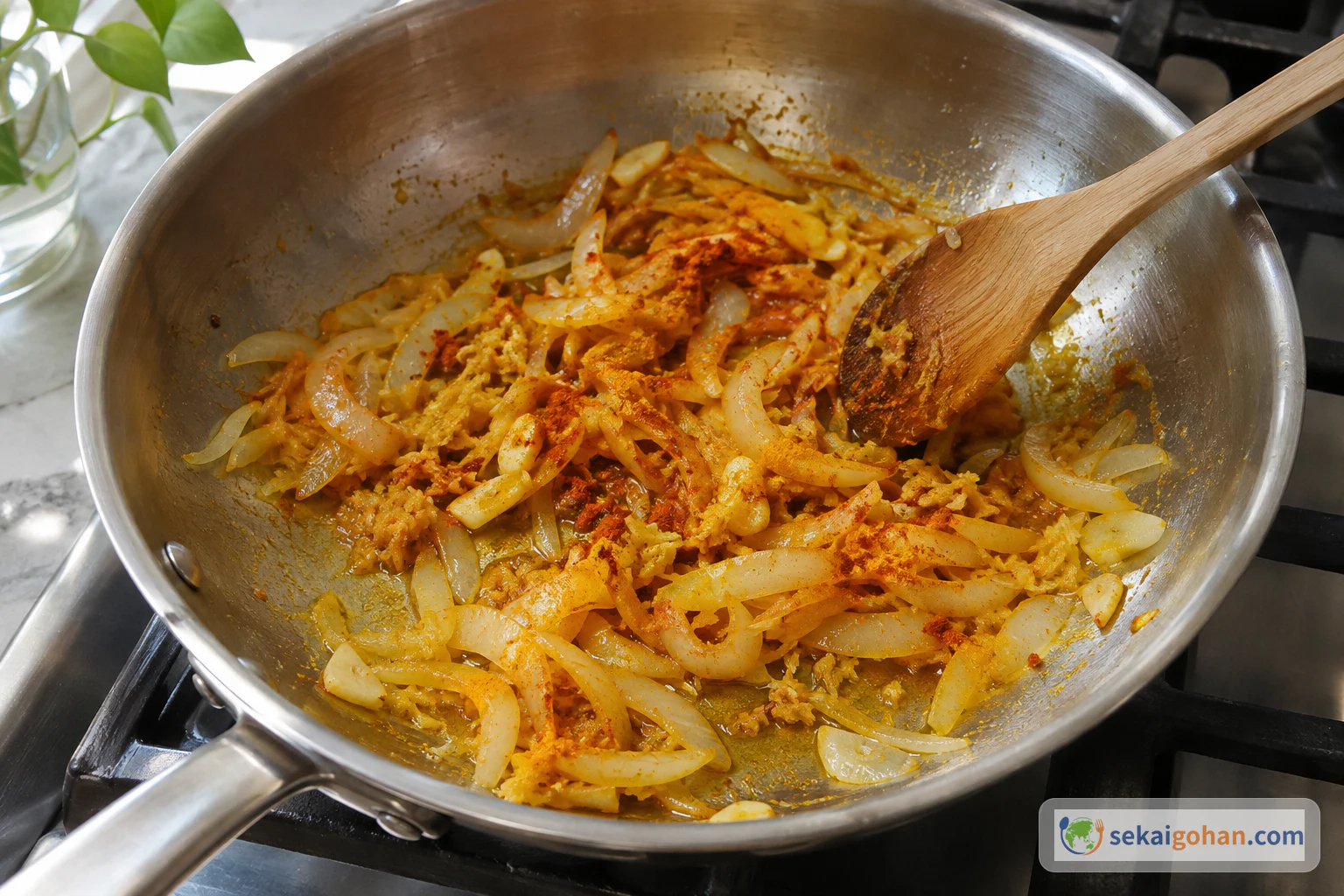
Dried goods first, then the aromatics and chicken, then broth and dried goods together. The noodles are cooked and drained on their own and only meet the soup in the bowl.
Food Safety and Fixes for Kyar Zan Hinga
Chicken
Cook poultry until the center of the thickest piece reaches 167°F (75°C) and stays there for at least 1 minute. The sauté time alone doesn't guarantee this, so check with a thermometer. Keep raw chicken refrigerated, and don't let hands or utensils carry it to other food.
Dried wood ears
Wash them under clean running water and soak them in a clean container. Soak at room temperature for no more than 2 hours; for anything longer, use the refrigerator. Use soaked mushrooms as soon as possible, and discard them if they're slimy or smell off. A doubtful or unidentified product isn't safe to eat, however it's soaked.
When something looks off
| Situation | What to do |
|---|---|
| The soaked wood ears are slimy or smell strange | Discard them. Rinsing or cooking won't make them usable |
| The only lily buds you can find have no food label | Skip them until you can buy a labeled food product |
| You're unsure whether the chicken is cooked | Check the thickest piece: 167°F (75°C) at the center for at least 1 minute. Keep cooking until it gets there |
| You have green bean noodles instead of sweet potato noodles | The soup will turn out lighter and different; sweet potato cellophane noodles are the ones to use |
| The noodles are sitting in the soup pot | Keep them separate: cook, drain and place them in the bowls, then pour the soup over |
Frequently Asked Questions
Is 15 cups of broth really right?
Yes, that's the amount the recipe calls for. The recipe doesn't say which cup standard it means, so it isn't converted to milliliters.
Can I use any glass noodle?
Dry sweet potato cellophane noodles are the ones to use. Thinner, less substantial green bean noodles or other noodles make a different soup.
Is sautéing the chicken for 10 minutes enough?
Not on its own. The 10 minutes is one stage of cooking, so check that the center of the thickest piece reaches 167°F (75°C) and stays there for at least 1 minute, and don't taste the chicken before then.