
Draw thin lines in a pan and your kitchen becomes a street stall
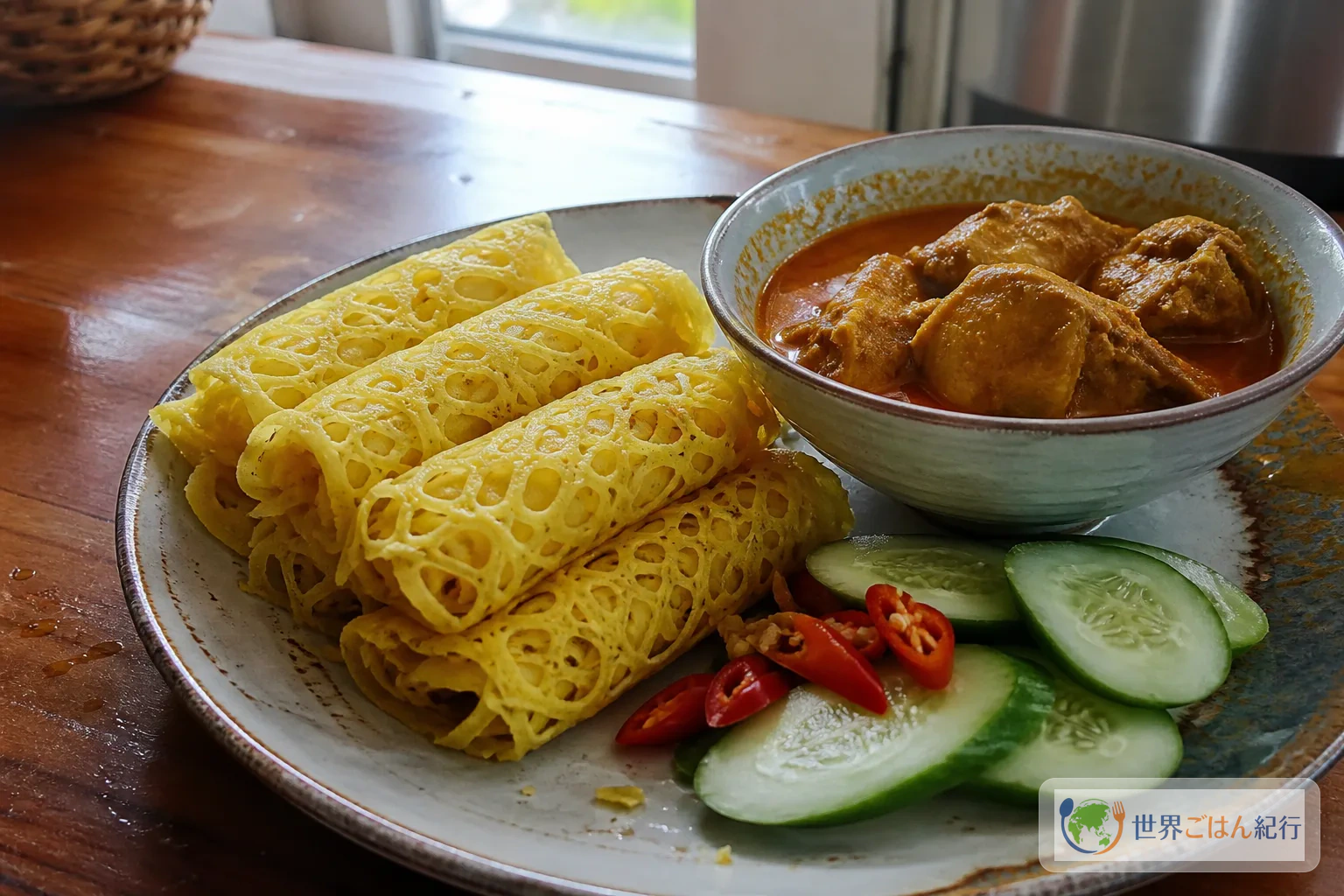
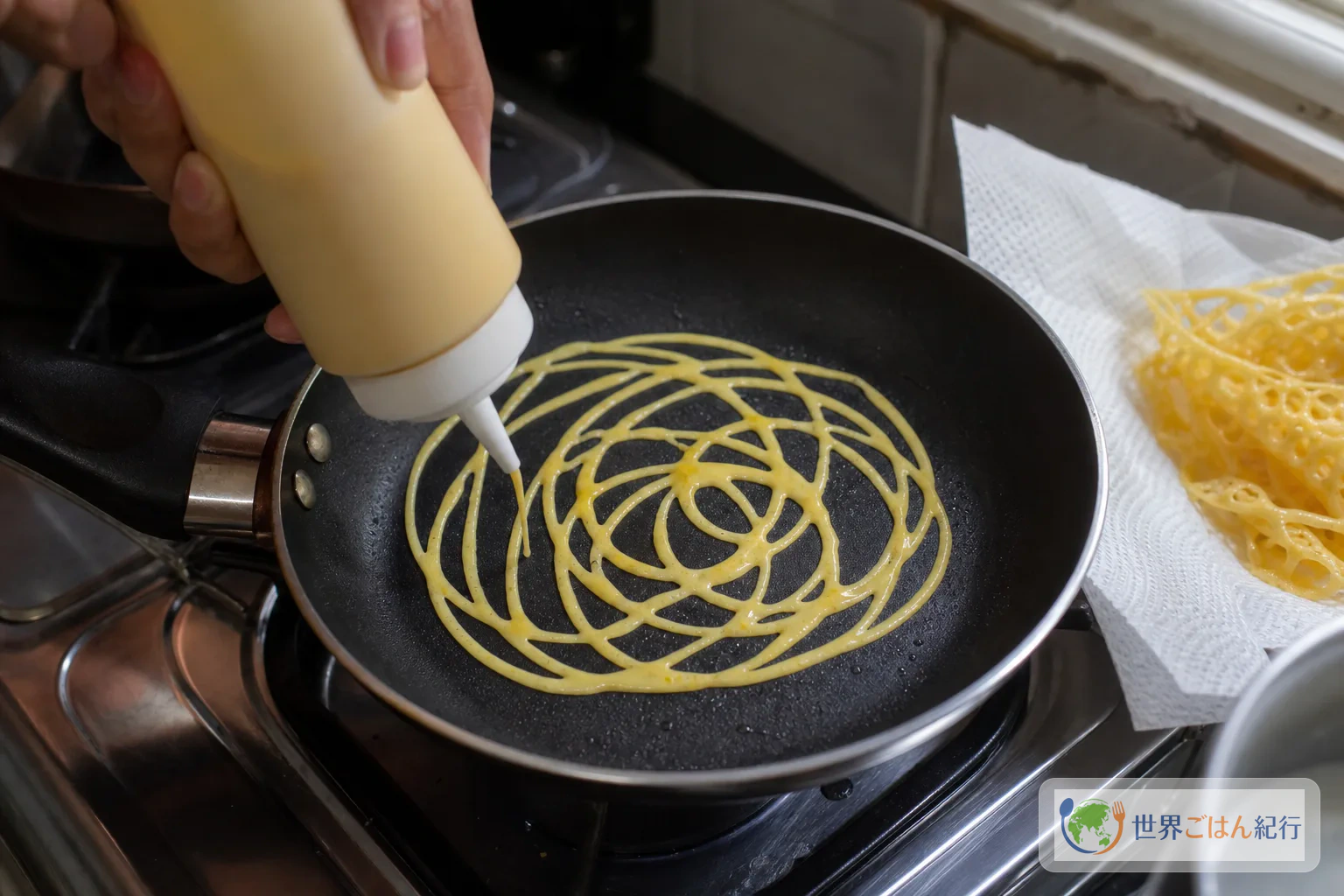
Pour yellow batter into a bottle and swirl it over a hot frying pan. For the first few seconds it looks like you are just drawing thin lines. But as the lines overlap, holes remain, and the edges dry a little, it suddenly becomes a single sheet like fabric lace. Roti jala is not a roti that you knead; it is a roti that you pour and cook.
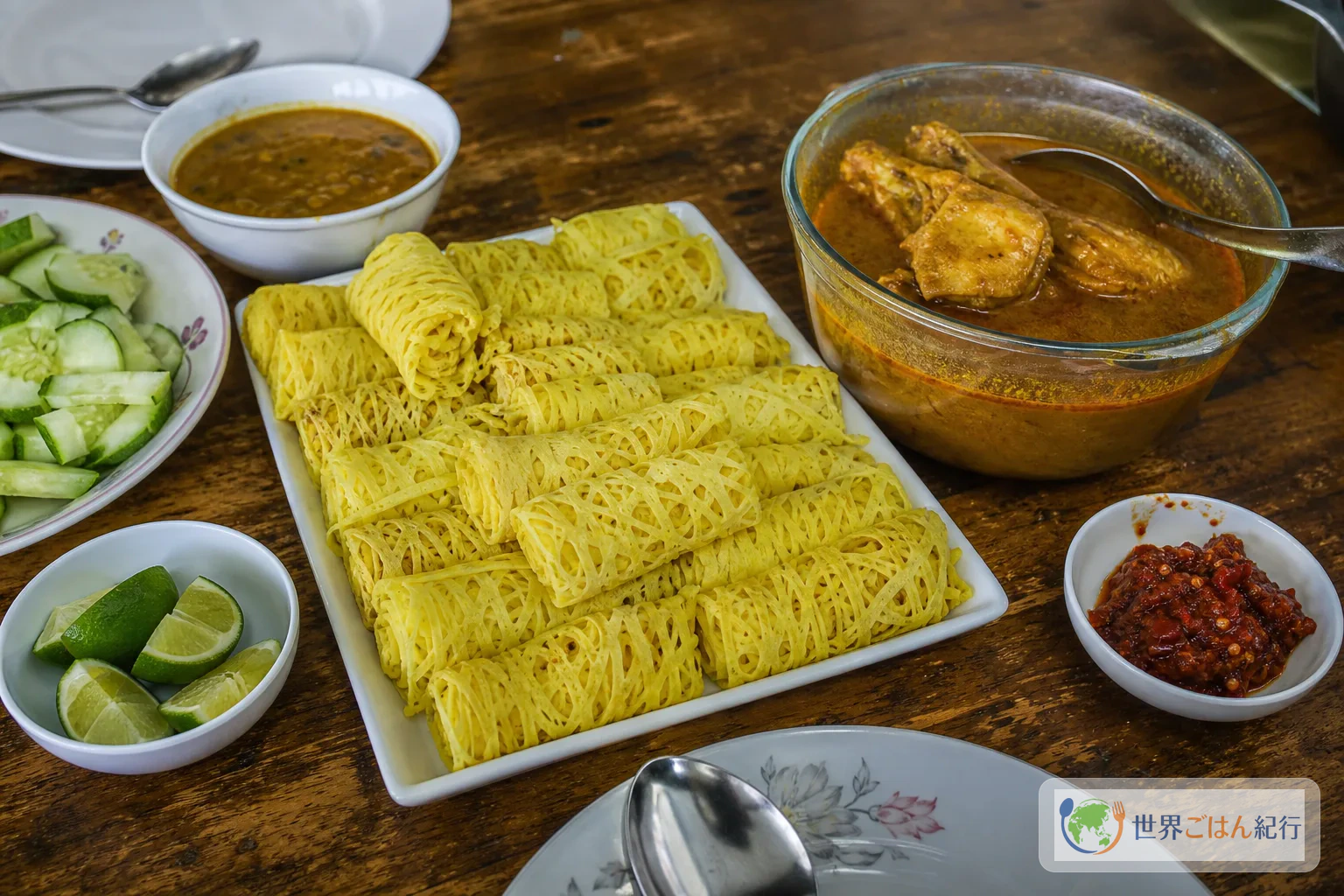
Roti jala is often translated from Malay as "net bread" or "lace roti." A loose yellow batter is made from flour, egg, coconut milk, and turmeric, then dropped in thin streams into a frying pan through a special perforated cup or a bottle. In Malaysia it is served with chicken curry or dal and is introduced as a dish seen at family tables, gatherings, and meals during Ramadan.
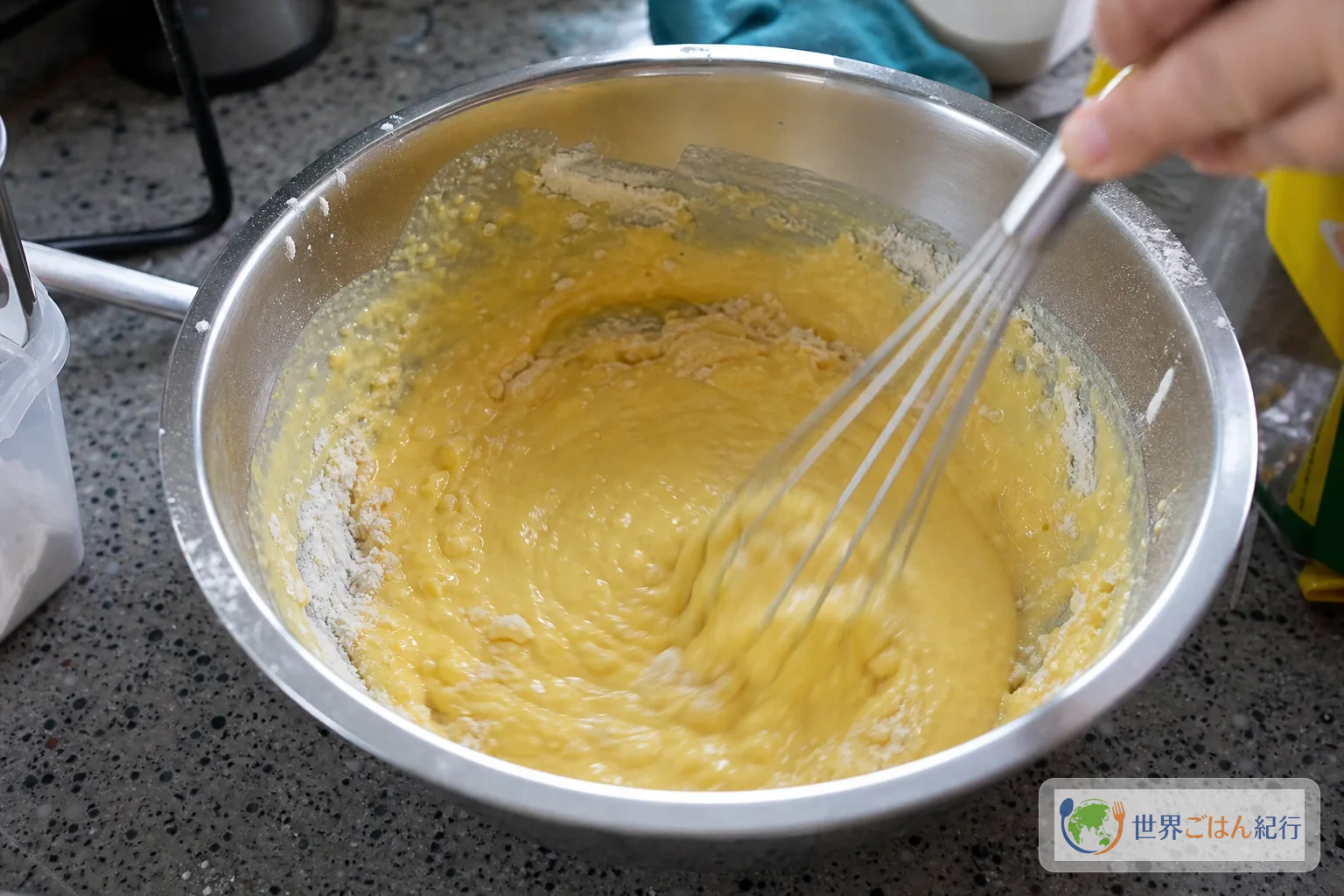
In a home kitchen, what makes cooks hesitate is less not having the special cup than the thickness of the batter. Too thick and the lines come out fat, the holes close, and you get something like a thin yellow omelet. Too thin and the lines break and fall in dots into the pan. In this article, without a special cup, you use a clean dressing bottle or squeeze bottle, and the quantities are enough to make the chicken curry as well.
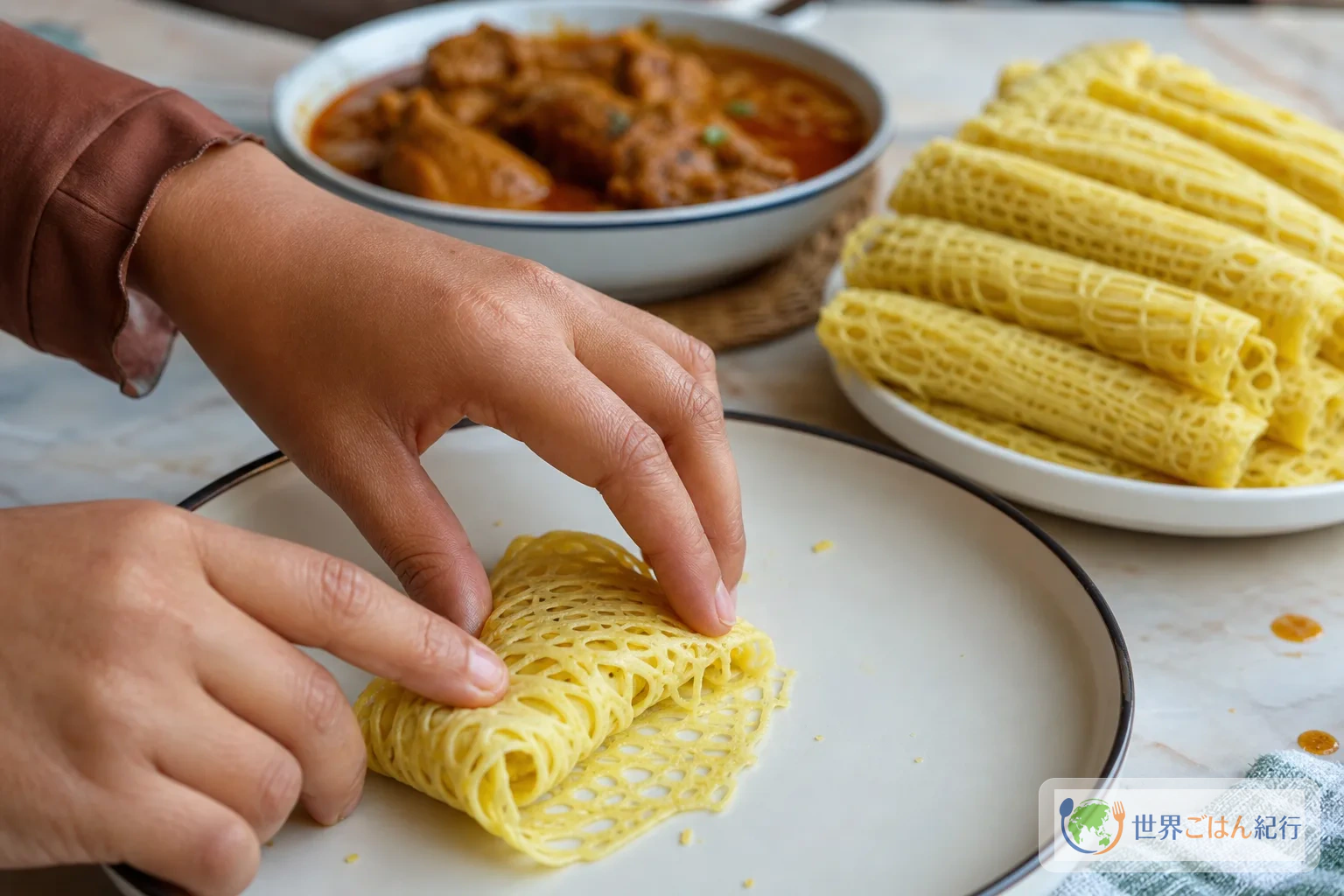
Roti means bread and jala means net. The name varies in spelling, and this article uses "roti jala" as the dish name. Unlike roti canai, where you stretch the dough by hand to build layers, this is a thin sheet with holes left in it, rolled up and dipped in curry.
Different from roti canai, and different from a crepe
Roti jala looks showy, but as a dish it is quite practical. It is cooked thin, so it cooks fast, curry gets into the lace, and it is light to pick up by hand. At Malaysian tables it sits between staple and side, alongside chicken curry, beef curry, dal, sambal, and cucumber.
| Compared dish | Method | Texture | Served with |
|---|---|---|---|
| Roti jala | Loose batter dropped in thin lines and cooked | Soft lace, light | Chicken curry, dal |
| Roti canai | Dough rested in oil, stretched thin and cooked | Layered, toasty outside | Curry, dal, sugar |
| Dosa | Fermented batter spread thin and cooked | Crisp edges | Sambar, chutney |
| Crepe | Batter spread round and cooked on both sides | No holes, supple | Sweet or savory fillings |
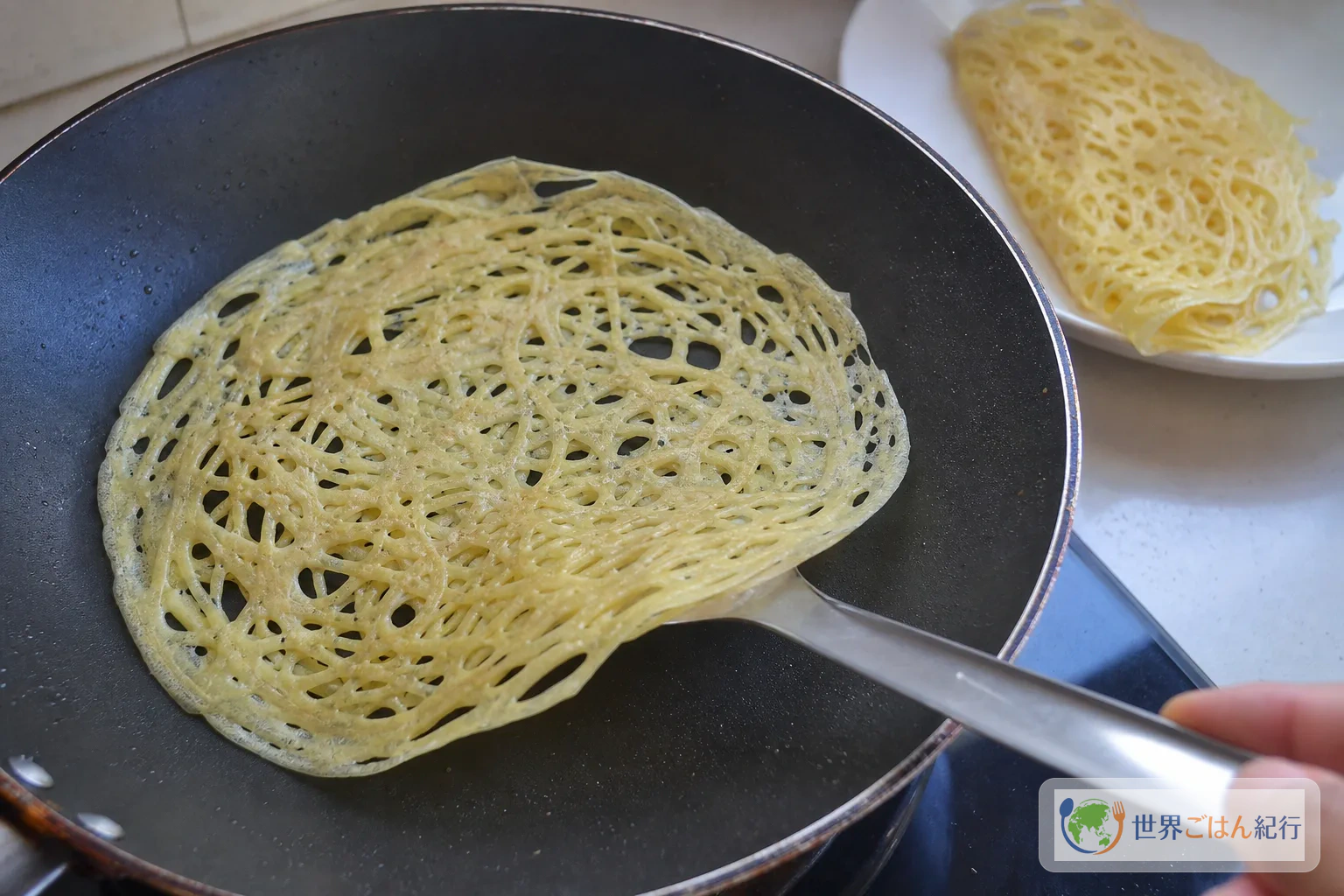
What makes it roti jala is leaving the holes. This is not a dish for strong browning. It is enough when the surface dries and sets enough to lift. Overcook it and the lace goes hard and cracks when rolled.
Ingredients (serves 4, including the curry)
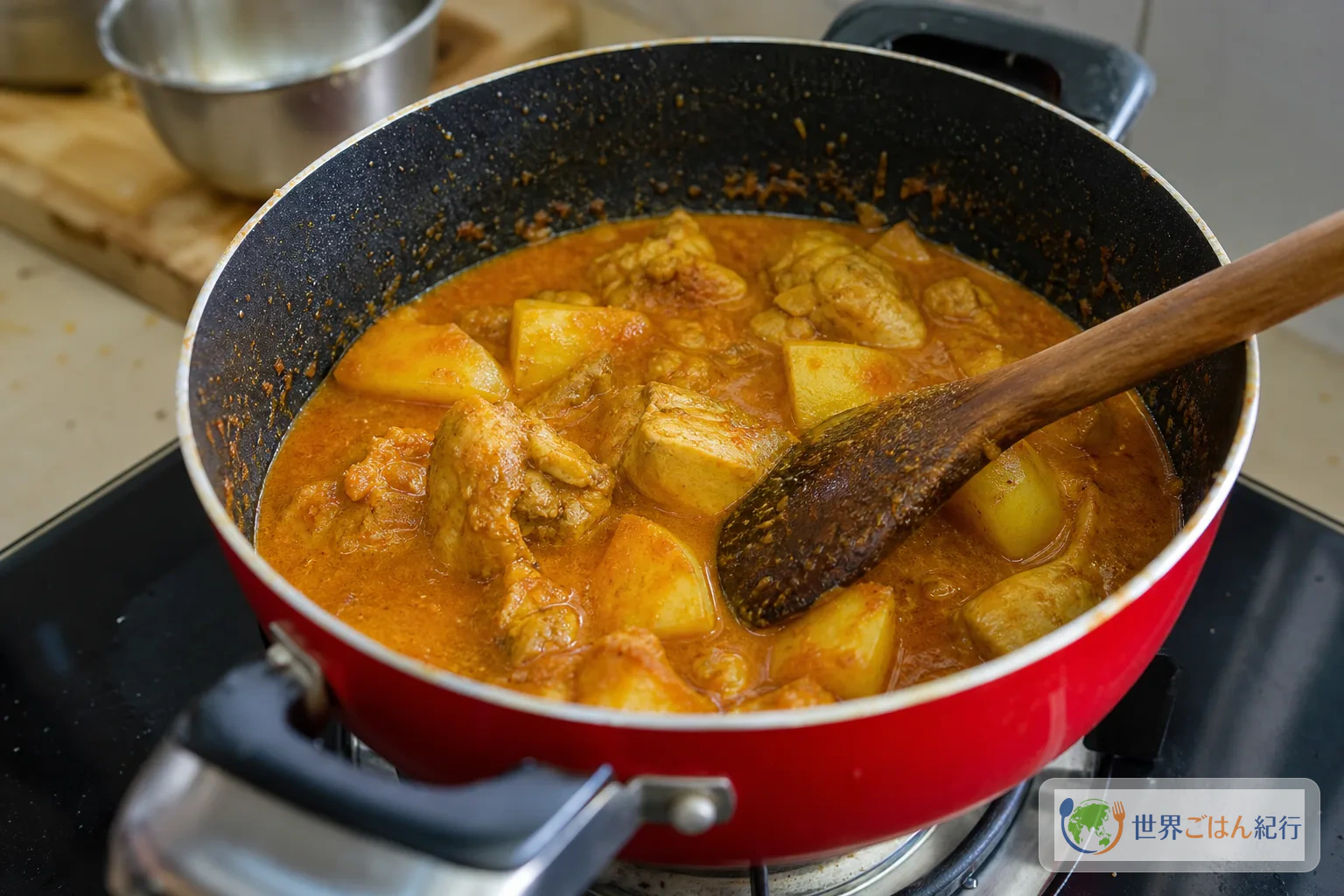
Roti jala alone is a snack, but with chicken curry it becomes dinner. The coconut milk is divided to use up one 400 ml can: 200 ml for the batter and 200 ml for the curry.
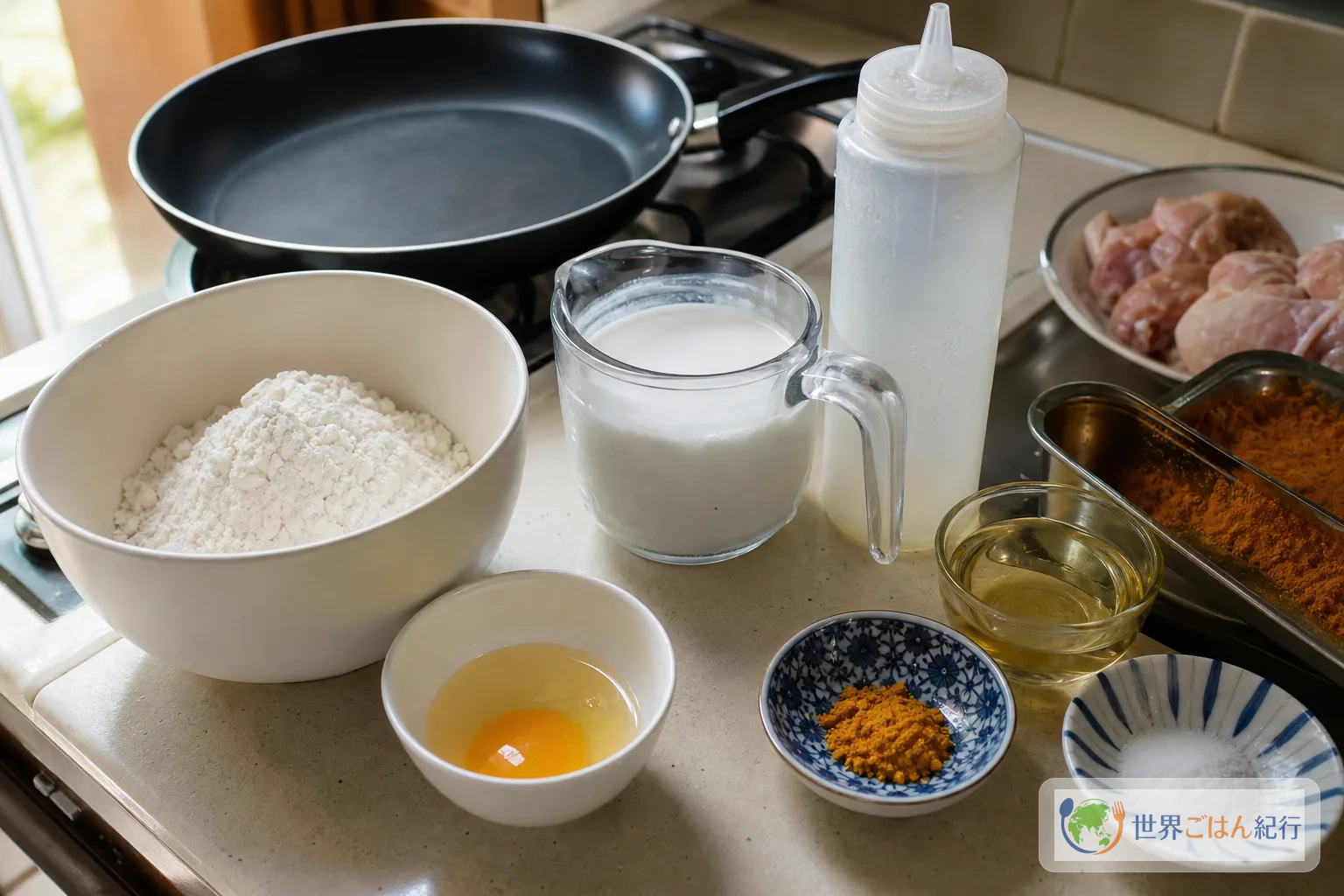
This dish contains wheat, egg, chicken, and coconut. Some commercial curry powders and sambals contain wheat, milk, or soy, so if you have allergies, check the ingredient labels.
Shopping: look only for what changes the local character
Flour, eggs, chicken, onion, and potatoes are all fine from a regular supermarket. What is worth looking for online or at an import grocery is turmeric, which decides the color and aroma, canned coconut milk, and a heavy frying pan that reduces uneven browning. A special roti jala cup is handy if you can find one, but a clean squeeze bottle is enough the first time.
Turmeric does more than color: it adds to a floury wheat batter a little of the aroma that runs from South Asia to the Malay Peninsula. If you stop at 1/2 tsp, the yellow comes through and the bitterness is less likely to.
Using up one can of coconut milk makes shopping easy. It softens the batter and rounds off the curry, so use the canned cooking kind, not a beverage type.
Roti jala is not cooked to strong browning. A pan or skillet that holds its temperature well, with a thin film of oil, helps the lines set partway.
Nutrition guide
| Per serving, approximately | Value |
|---|---|
| Energy | about 590 kcal |
| Protein | about 27 g |
| Fat | about 30 g |
| Carbohydrate | about 55 g |
| Fiber | about 4 g |
| Salt equivalent | about 2.6 g |
This is a guide including the chicken curry. For a light meal, halve the roti jala and serve the curry in a small bowl so it is not heavy. Because it uses coconut milk and oil, rather than cutting calories, serving it with cucumber or greens to make it easier to keep eating keeps the satisfaction.
How to make it: leave the holes, and roll it soft enough not to crack
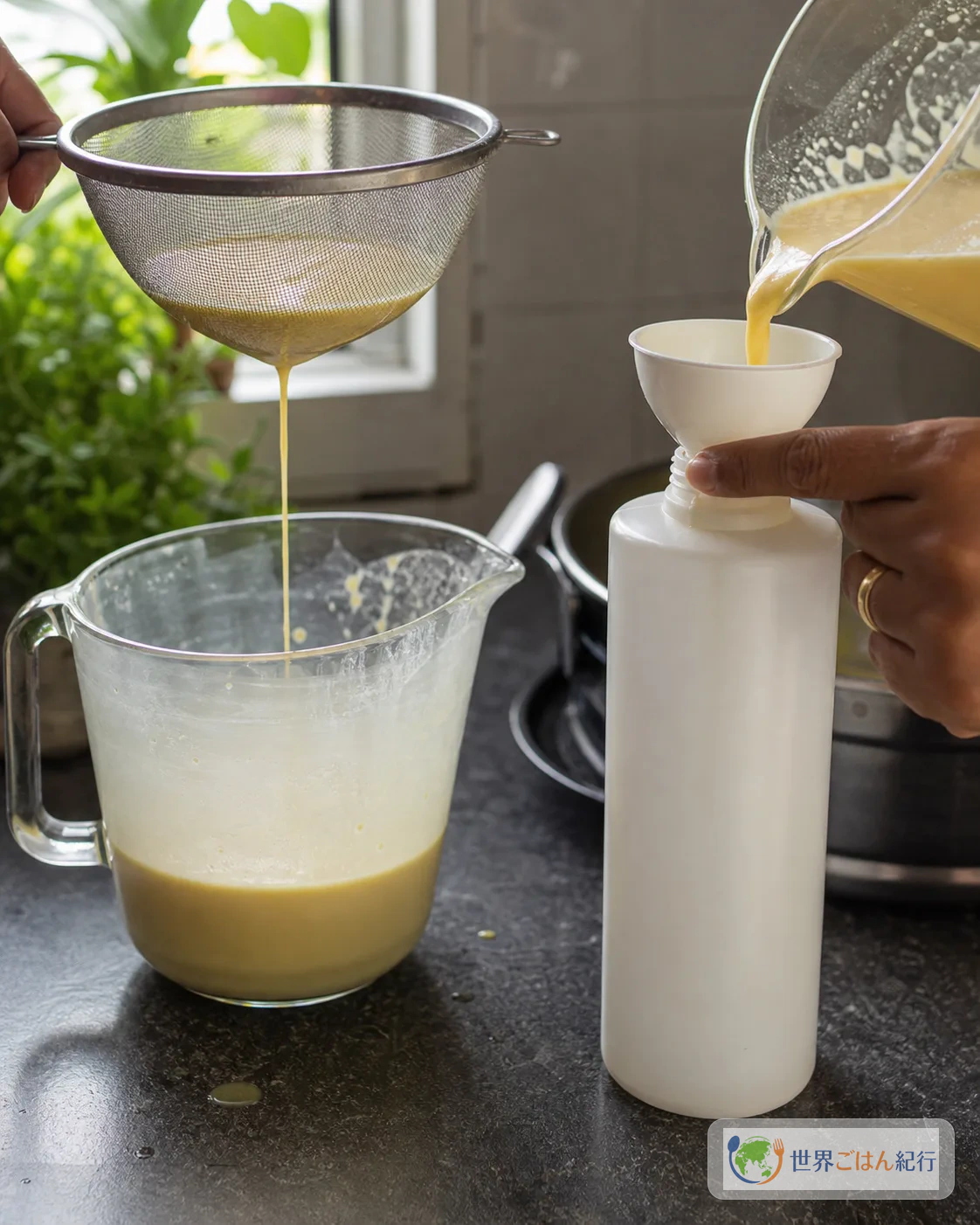
Roti jala failures gather in three: the batter clogs, the lines break, and it cracks from overcooking. Sifting the flour, straining the batter, and resting it for 10 minutes already cut clogging considerably. When cooking, use heat a little below medium in a lightly oiled frying pan, and cook one side only.
What you judge on the first sheet is not the browning. If the lines are thick, the holes few, or the batter spreads across the pan, the batter is too thick or the hole too big. Try these three one at a time: add 1 tbsp water, make the bottle's hole smaller, or raise the heat a little. That will show you the cause.
Branching points for getting close to the real thing in a home kitchen
| Where you hesitate | Closer to local | Realistic choice at home | Direction to avoid |
|---|---|---|---|
| Tool | A perforated roti jala cup | A squeeze bottle with a 1.5–2 mm hole | Dropping thick lines through a big hole |
| Flour | Ordinary wheat flour | Sifted all-purpose flour | Making it heavy with bread flour alone |
| Yellow | A pale yellow from turmeric | Stop at 1/2 tsp | Adding too much to deepen the color |
| Curry | Chicken curry or dal | Home curry powder and coconut milk | Pairing it as is with a thick, roux-style curry |
| Oil | Lightly wiped on, one side cooked | Wipe with a paper towel | Using lots of oil and shallow-frying |
Before buying a special cup, check the holes on the bottles you already have. If you have a dressing bottle, honey bottle, or narrow-spout sauce bottle, you can test it well enough. Making several holes looks authentic, but a single hole is easier to control the first time.
For the curry, a thin chicken curry or dal suits better than a thick roux curry. Since liquid goes into the gaps of the lace, a curry that runs a little is easier to eat. If you have time, the sambal served with Malaysia's nasi lemak and the handling of coconut in laksa are good references.
Failures: lines break, holes vanish, it cracks when rolled
| Problem | Main cause | Fix |
|---|---|---|
| Lines break partway | Batter too thin, or the bottle's hole too small | Dissolve 2 tsp flour in 2 tsp water and add it |
| Lines thick, holes gone | Batter too thick, hole too big, or too much drawn | Add 1 tbsp water and reduce to about 35 ml per sheet |
| Sticks to the pan | Too little oil, or the pan too cool | Preheat 2 minutes over medium-low and wipe thinly with oil |
| Burns | Pan too hot, or cooked too long | Lower the heat and check the surface gloss at 45 seconds |
| Cracks when rolled | Overcooked, or dried out on the plate | Don't flip, and lay a cloth over them after cooking |
| Curry is heavy | Roux-like and too thick | Add 2 tbsp water at a time and warm it until loose |
Roti jala is not meant to be a neat circle. If the lines are a little uneven but there are holes and it rolls soft, it is a success. If the lines are packed perfectly closed, it will not take up curry and becomes like a crepe. What matters at the table is that it comes apart softly when you tear it by hand.
Storage and reheating
Drying out is the biggest enemy of cooked roti jala. Once cooled, wrap 2 to 3 rolls at a time in plastic wrap; as a guide, refrigerate until the next day and freeze for 2 weeks. If freezing, wrapping them rolled keeps their shape better after thawing.
When reheating, add a little steam. From the refrigerator, put it on a plate, mist lightly with water, lay plastic wrap loosely over it, and microwave at 600 W for 30 to 40 seconds. From the freezer, thaw in the refrigerator for half a day and warm the same way. Re-cooking in a frying pan dries the lace and makes it easy to crack, so the microwave or a steamer suits better.
The chicken curry keeps 2 days in the refrigerator and 3 weeks in the freezer as a guide. When reheating, use low heat and do not boil hard, so the coconut milk does not separate. The next day the curry will be thicker, so adding 2 tbsp water or coconut milk returns it to a consistency that clings to the roti jala.
If you are bringing it to a gathering or serving at staggered times, carry the roti jala and the curry separately. Roll the roti jala after they cool completely, wrap in plastic wrap, and put in a lidded container. Put in the same container as warm curry, and steam softens the lace and crushes the holes. Warm only the roti jala lightly in the microwave just before eating and return the curry to low heat in a small pot, and the softness returns to near freshly made.
More Malaysian dishes to make alongside
Roti jala is a doorway into "flour dishes and curry" within Malaysian cooking. To go in the direction of stretching dough, roti canai; toward a coconut-based staple, nasi lemak; and for noodles in coconut soup, laksa is close. To end the meal with a sweet bowl, connect to bubur cha cha (in Japanese), which brings taro and sweet potato together in coconut milk, and you can see the difference between staple and dessert from the same coconut.
For the same street-stall feel, char kway teow, flat rice noodles stir-fried over high heat, has a different kind of smokiness. As a snack from the Singapore side, roti john (in Japanese), which combines egg and bread, also goes well with curry and chili sauce.
Frequently asked questions
Can I make it without a special roti jala cup?
Yes. A clean squeeze bottle, dressing bottle, or fine-spout sauce bottle is enough. A hole of 1.5 to 2 mm is easiest to handle, and a single hole gives more control over the lines at first. A special cup puts out several lines at once, so it is quicker, but if the batter's thickness is wrong, it clogs more easily.
Can I make it without coconut milk?
You can, but the aroma and softness typical of roti jala are weaker. For the batter, replace with 200 ml milk and 220 ml water. For the curry, leave out the coconut milk, cut the water by 50 ml, and add 2 tbsp milk at the end to round it out a little. But if you are aiming for the local character, using canned coconut milk is the shortcut.
Can I make the batter the day before?
If making it the day before, put the strained batter in a sealed container in the refrigerator. The next day the flour will have absorbed moisture and thickened, so before cooking add 1 to 2 tbsp water and return it to a consistency that drops thin from the bottle. It contains egg, so don't leave it at room temperature, and cook it all within the day after making.
Why don't you flip it?
Flipping makes the lace harder and more likely to crack when rolled. Roti jala is made of thin lines, so cooking one side for 45 to 60 seconds cooks it through. Once the surface gloss is gone and it lifts with a spatula, that is enough. Softness that folds takes priority over browning.
Can I serve it with a store-bought curry roux?
You can eat it, but the thickness is strong and it does not get into the lace easily. If you use it, use less roux, loosen it with water or coconut milk, and cut the ingredients small. To keep roti jala's lightness, a thin chicken curry like the one here, or a lentil dal, suits it.



