Bánh Bò Nướng: A Browned Crust Around Tunnels of Coconut and Pandan
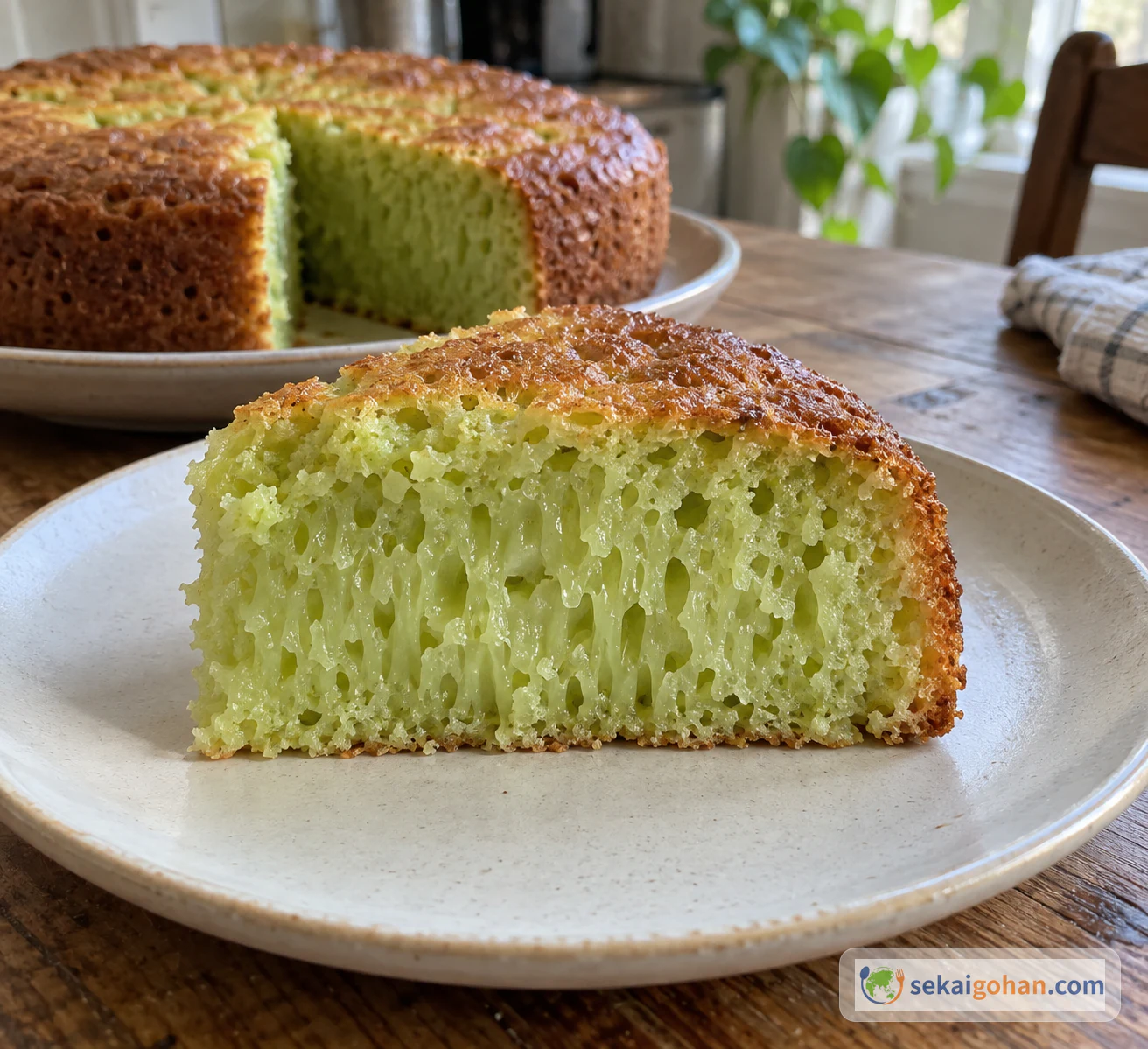
A thin browned crust, a pale pandan-tinted crumb, and a cut face full of irregular tunnels running upward through the cake. Coconut milk and pandan carry the aroma; tapioca flour gives the springy, slightly chewy bite.
Slice a bánh bò nướng and the inside looks nothing like an ordinary sponge. Below a thin, browned edge, the crumb is threaded with holes that stretch upward through the cake, which is why it is often called Vietnamese honeycomb cake. The flavor comes from coconut milk and pandan, and the texture from tapioca flour rather than wheat.
This article is about the baked version, bánh bò nướng, made in a 20cm round tin. It follows one recipe from start to finish: "Val's Vietnamese honeycomb cake (bánh bò nướng)" as published by SBS Food. That recipe uses Australian measures, where a tablespoon is 20ml, so the spoon sizes matter more than usual here.
The honeycomb is the goal, but no recipe can promise exactly how the tunnels will form in your oven. What this one can do is keep the formula, the tin and the handling exactly as the source gives them.
What Bánh Bò Nướng Is: Baked, Not Steamed
Bánh bò covers more than one cake, and the baked and steamed versions are different things. Hungry Huy distinguishes bánh bò hấp, the steamed type, from bánh bò nướng, the baked type, and describes the baked cake's browned edges, its honeycomb cross-section and its coconut and pandan flavor. If you are looking for a soft, steamed bánh bò, this is not that recipe.
Helen's Recipes classifies bánh bò nướng as a traditional cake of southern Vietnam. A travel and food guide, GoVietnam.travel, describes bánh bò thốt nốt from the Mekong Delta in the south, made with palm sugar, coconut and rice flour and presented as a market sweet. That guide is a secondary, independent source rather than a primary record, so treat it as one regional example, not as the story of every bánh bò.
The English name is sometimes given as "cow cake." On Hungry Huy, the author offers thoughts on the name but makes clear they are a personal guess, and no firm historical source on the name's origin was found. This article leaves the etymology open.
For more of the country's cooking, see the dishes from Vietnam.
Ingredients: The Full SBS Food Recipe for a 20cm Tin
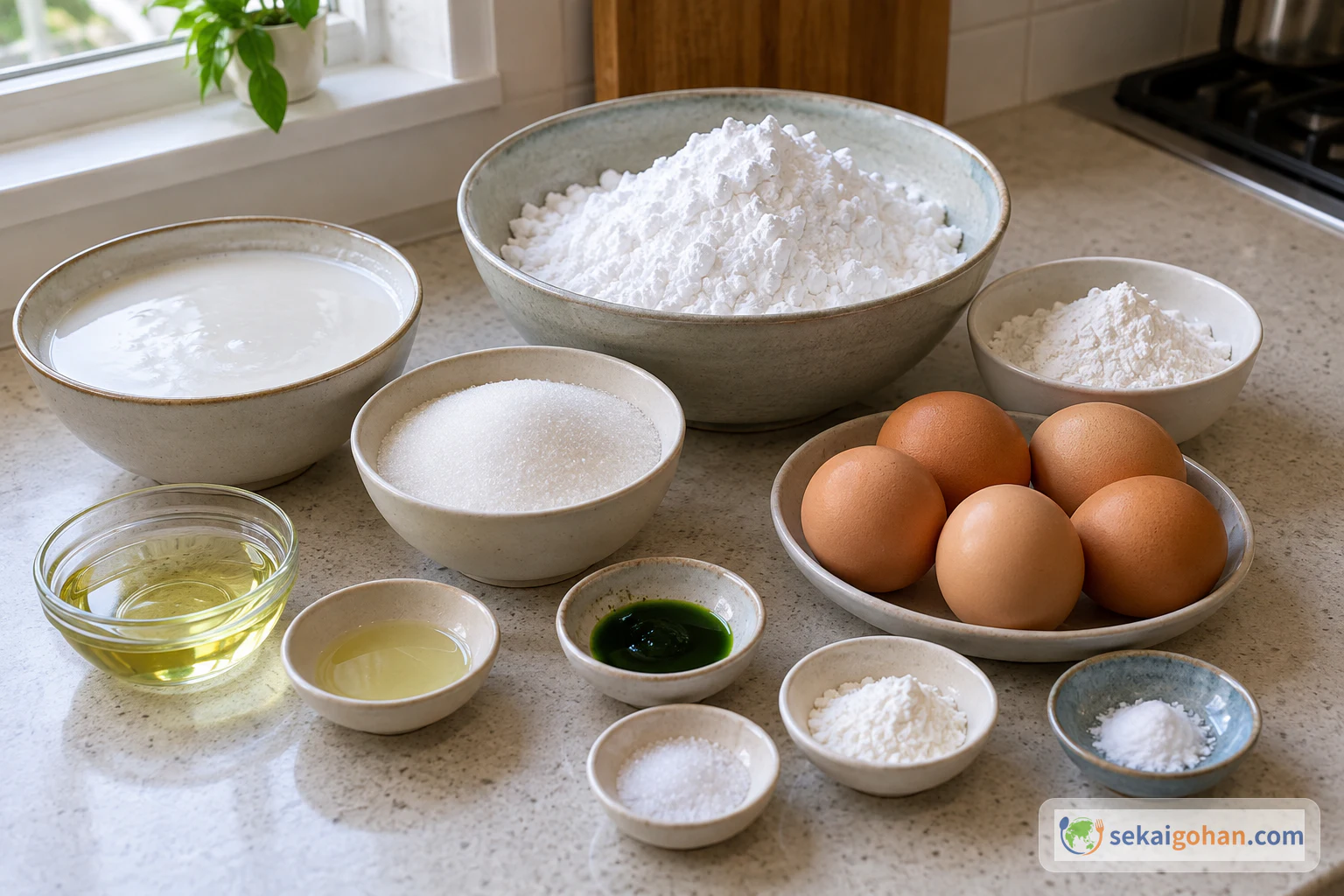
These amounts make 10 servings.
These are Australian measures: 1 cup = 250ml, 1 tablespoon = 20ml, 1 teaspoon = 5ml, and large eggs of 55–60g. The oil for the batter is one Australian tablespoon, so 20ml. If your tablespoon holds 15ml, as the Japanese one does, measure 20ml rather than one level spoon. Where grams or milliliters are given, use those.
Choosing Tapioca Flour, Pandan Paste and the Leaveners
Tapioca flour. This is tapioca starch, and it carries the texture of the cake. Don't swap in potato starch or cornstarch at the same weight; they are different starches and are not recommended here.
Rice flour. Use plain rice flour. Glutinous (sweet) rice flour is a different product and is not a substitute.
Pandan aroma paste. Look for it at Asian grocers. Pastes vary in strength and water content between products, and fresh leaves or a thin, watery extract are not the same thing, so don't replace the 1/2 tsp of paste with an equal amount of either. Because products differ, the shade of green you end up with is not a measure of whether the cake is right.
Cream of tartar and bicarbonate of soda. The recipe uses the two together. Don't leave out the cream of tartar, and don't replace it with baking powder.
The two oils. Measure the 20ml for the batter separately from the oil you brush on the tin. Don't take the tin oil out of the 20ml.
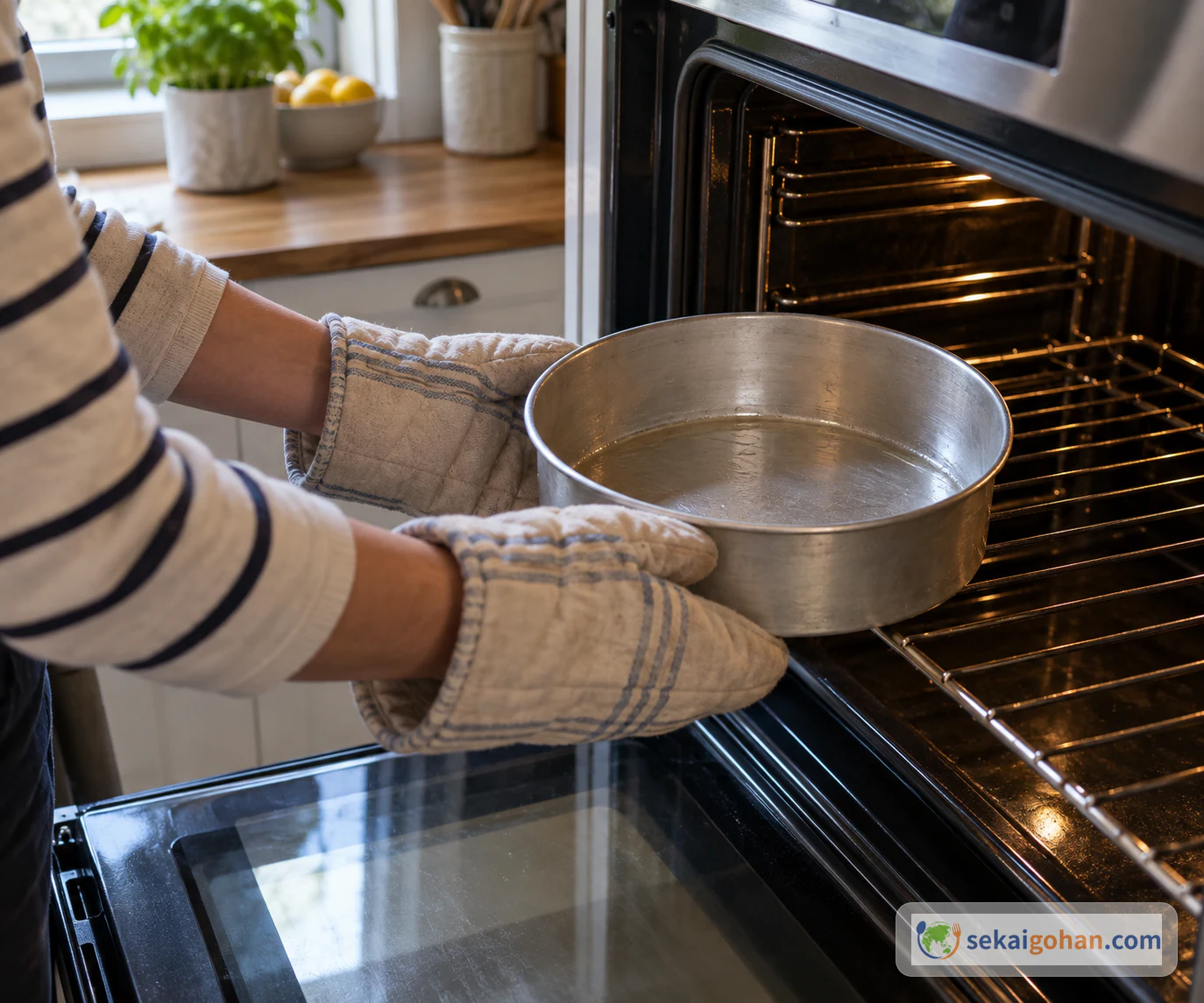
This cake contains eggs. The SBS Food recipe lists no dairy, but check the label on your pandan paste and other packaged ingredients. The tin goes into the oven empty to preheat and the batter is poured into it hot, so keep oven mitts on whenever you handle it.
Equipment
- 20cm round metal cake tin, not non-stick (a plain tin, not a bundt pan)
- Oven
- Microwave and a heatproof container for the coconut liquid
- Large mixing bowl and a second bowl for straining
- Whisk
- Sieve for sifting the flours
- Fine-mesh sieve for straining the batter, and a spatula or spoon for scraping it
- Wire rack
- Small knife for loosening the edges
- Oven mitts
Method: Hot Tin, Gentle Batter, Upside-Down Cooling
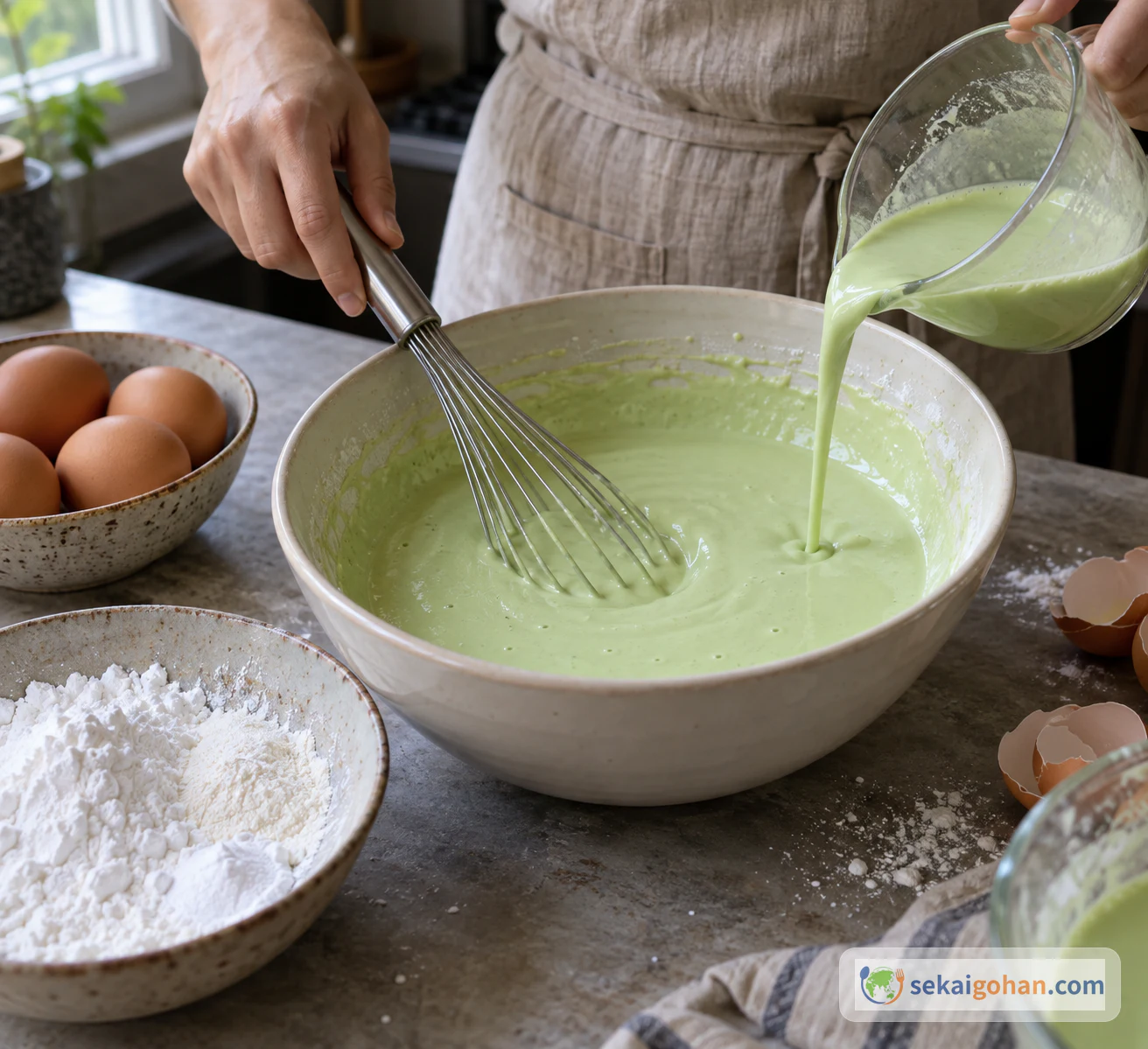
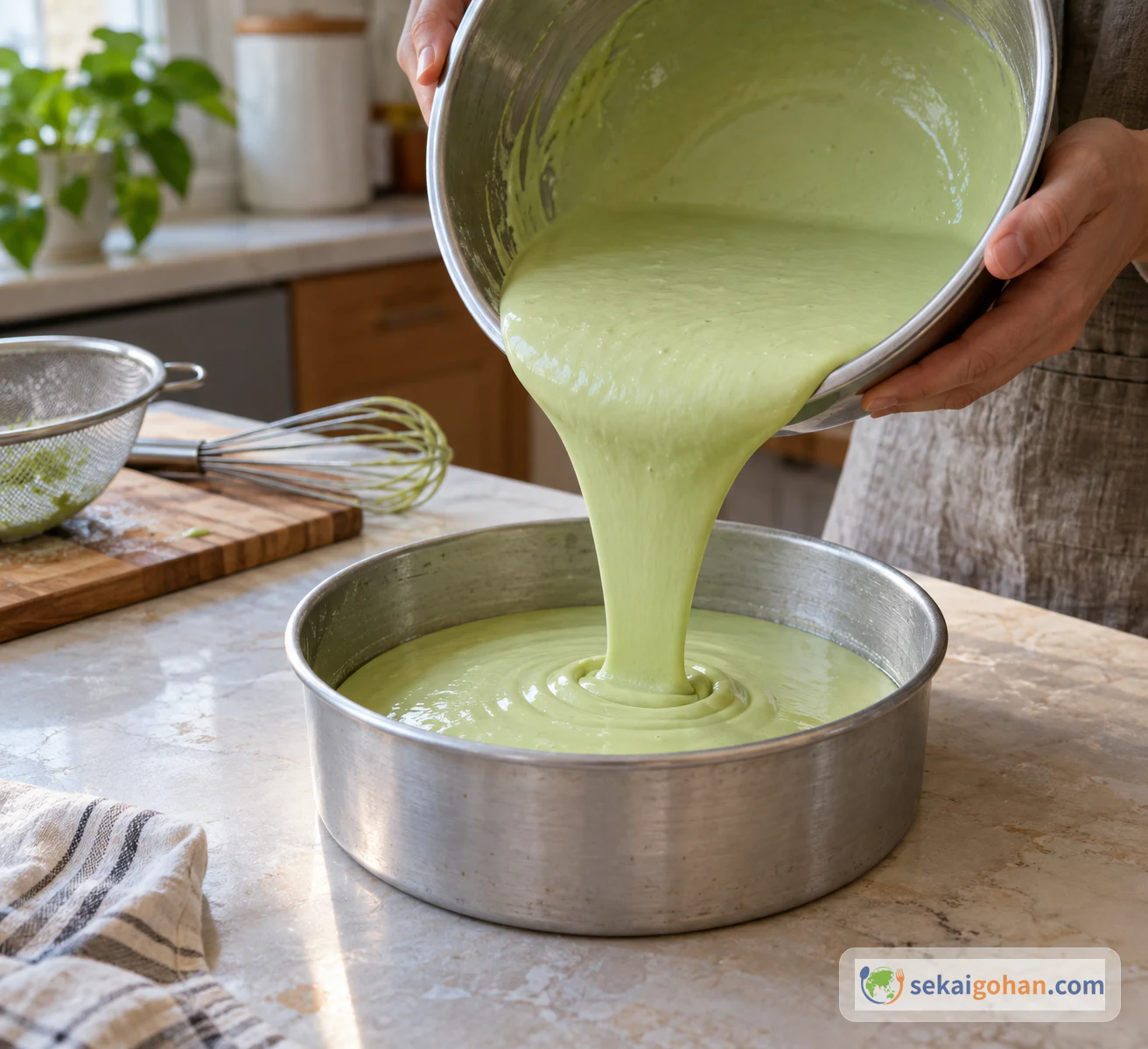
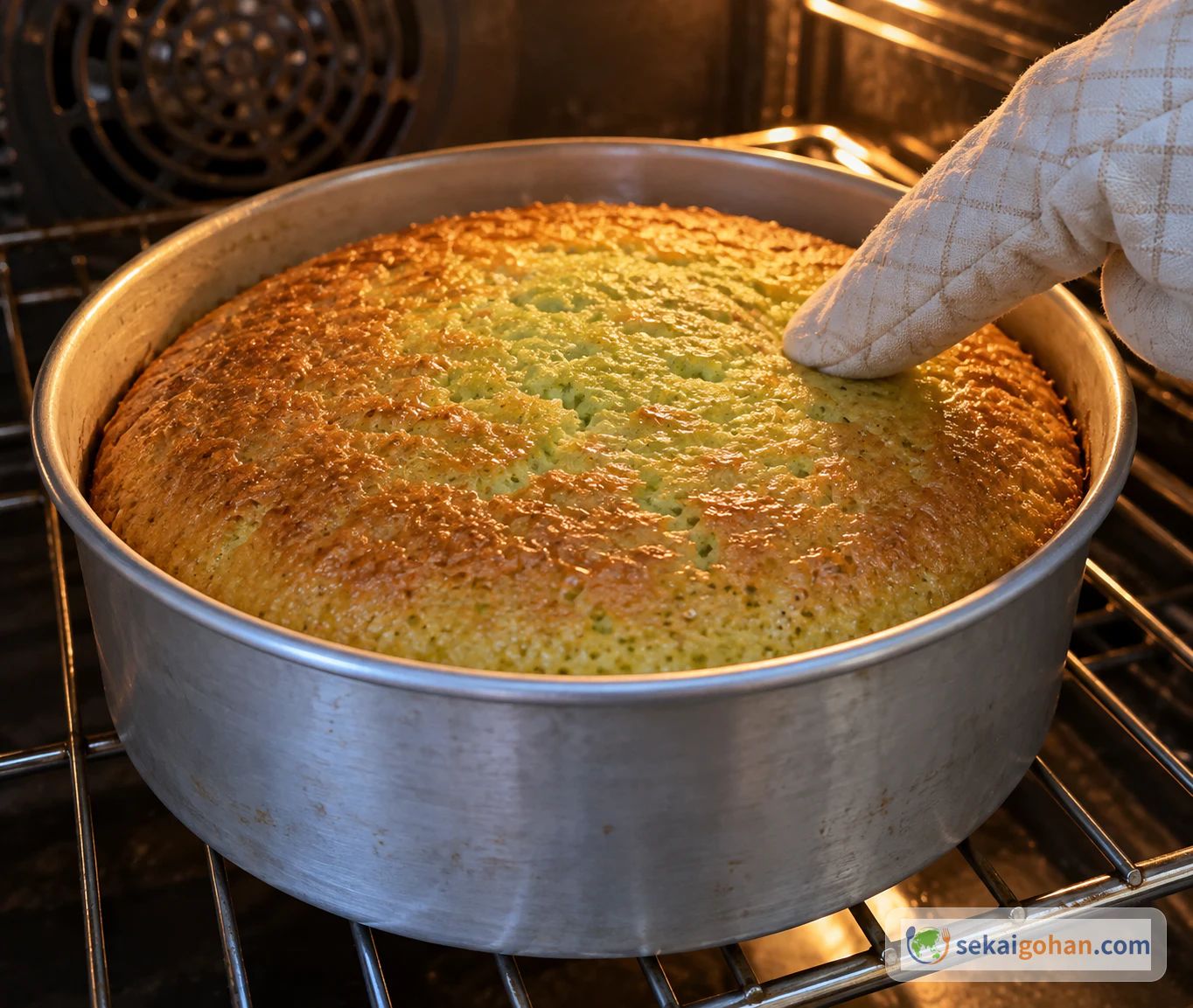
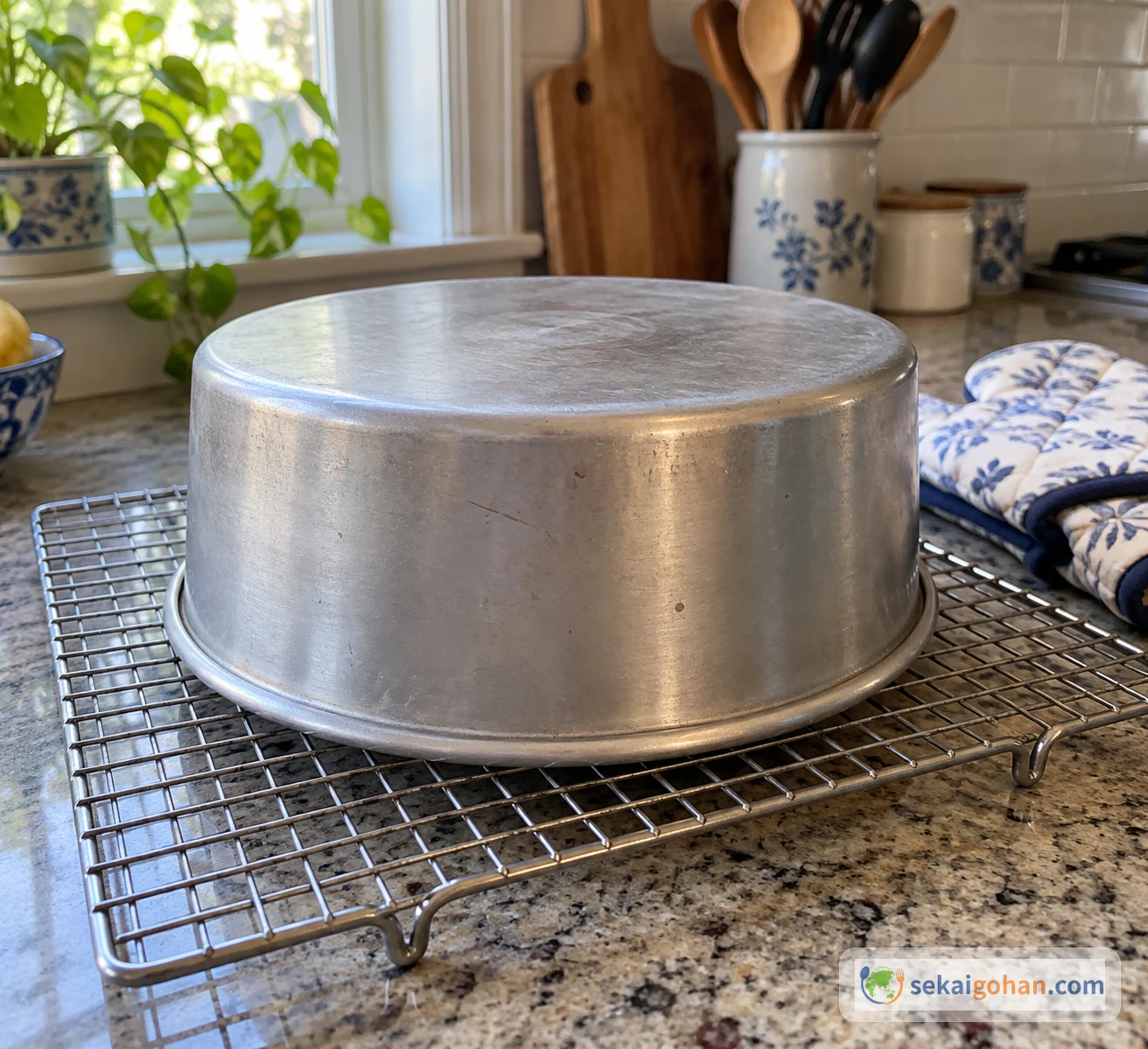
This recipe has not been kitchen-tested by Sekai Gohan. The tin is heated first, so have everything measured before you turn on the oven.
Checking the Crumb: Fixing Common Problems
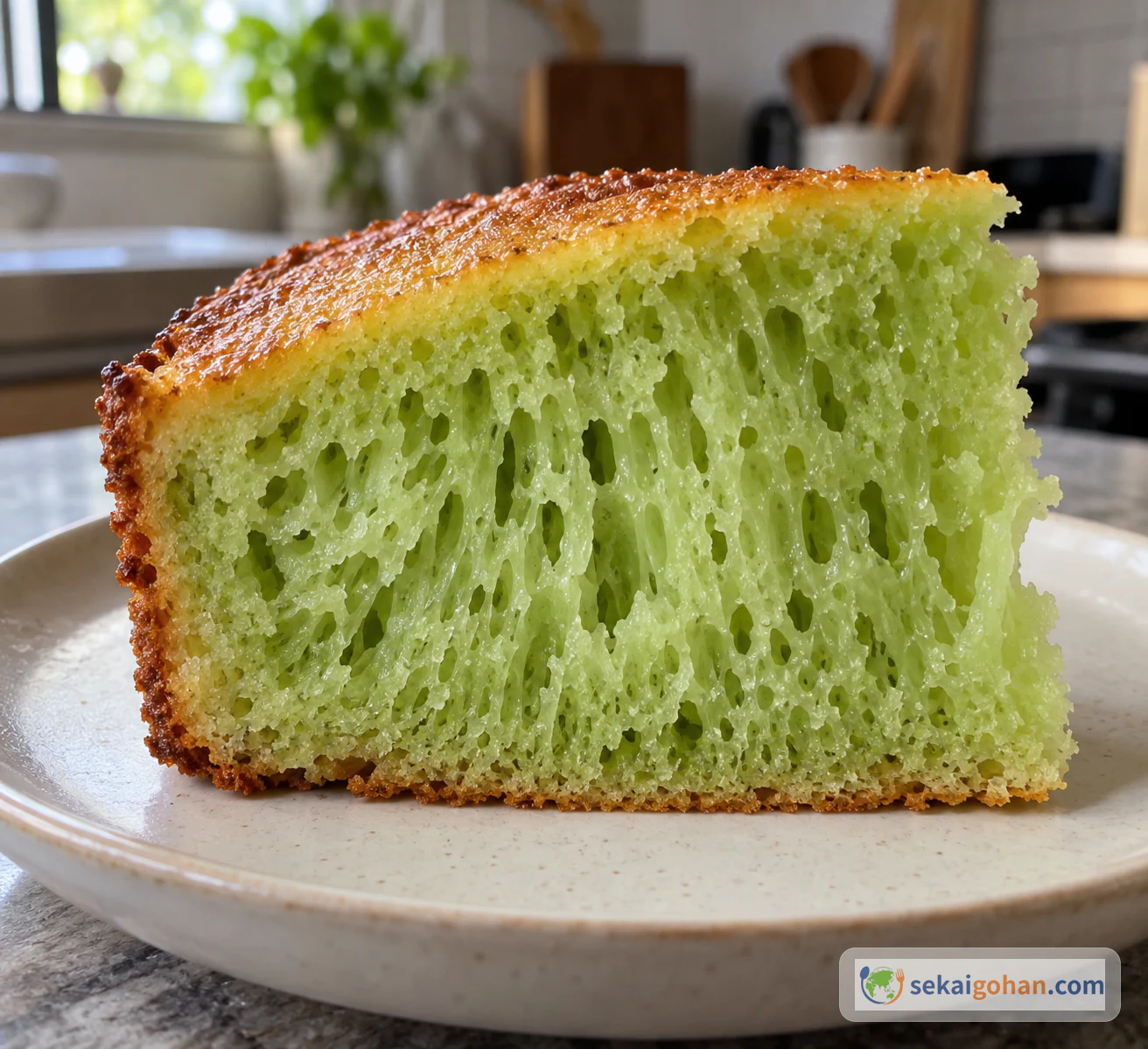
A finished bánh bò nướng has a thin browned crust and a pale pandan-tinted crumb with irregular holes stretching upward. They are not a neat hexagonal grid like a real honeycomb, and the pattern varies from cake to cake.
| Problem | What to check | What to do |
|---|---|---|
| The holes are uneven or few | Whether the formula, tin, leaveners or handling drifted from the source | Return to the SBS Food formula, the 20cm non-stick-free round tin, both leaveners, and mixing without whipping. Don't add leaveners or temperatures from other recipes. There is no guaranteed result |
| Lumps in the batter | Whether the flours were sifted and the batter strained | Sift the flours in, strain the whole batter, and scrape the batter from the underside of the sieve into the bowl |
| The cake sticks or sinks | When it was inverted and unmolded | Invert in the tin straight after baking, and unmold only once it has cooled completely |
| The color is lighter or darker green than expected | The strength of your pandan paste | Pastes differ by product; keep the 1/2 tsp and don't judge the cake by its color |
| The batter is a little thin on oil | Whether a 15ml spoon was used | The batter oil is 20ml (one Australian tablespoon) |
Serving and Storage
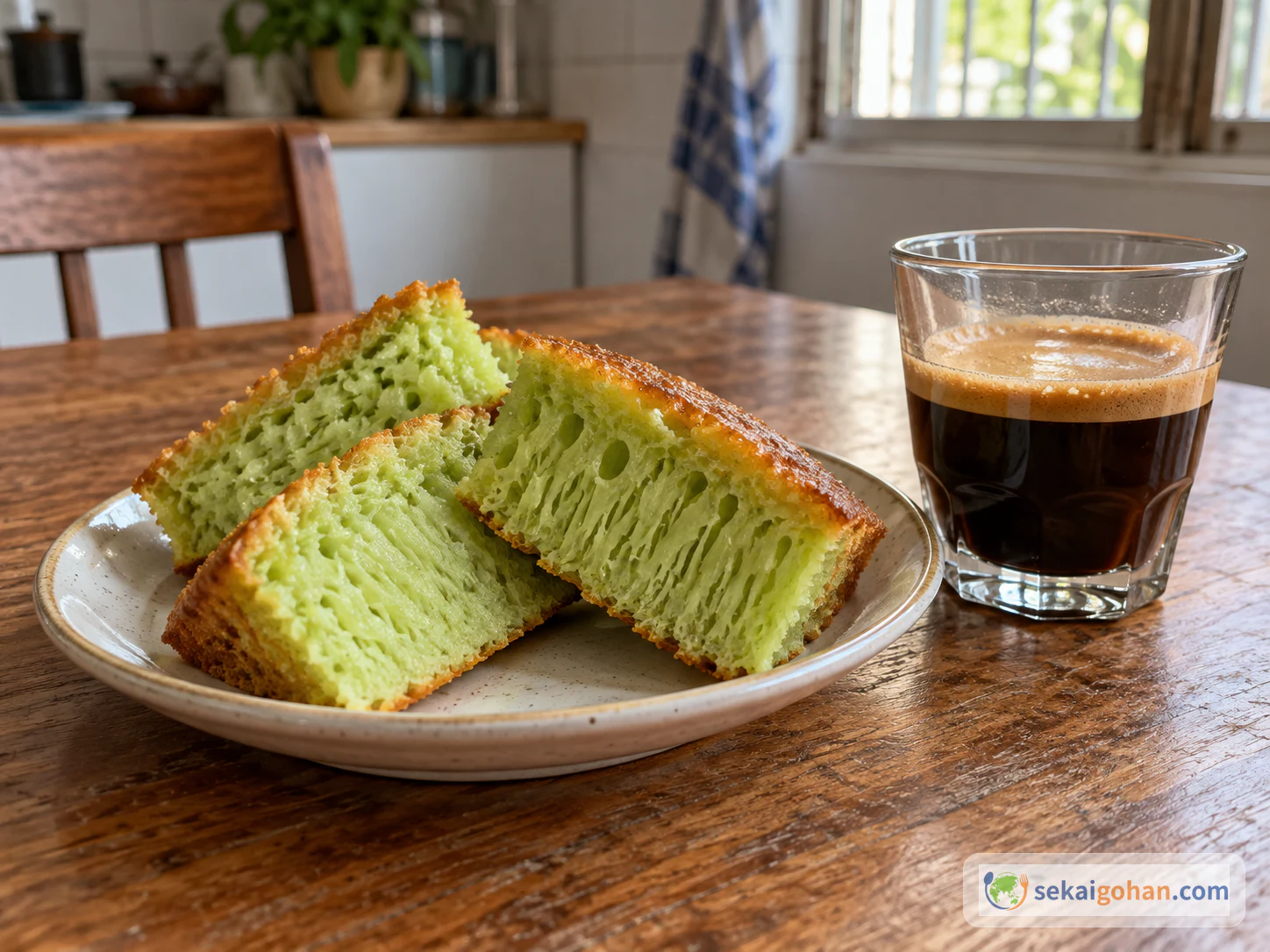
Hungry Huy describes eating slices with Vietnamese coffee. That is one example, not a rule for every table. The cake needs no sauce, topping or decoration.
The sources differ on storage, and this article does not establish a safe storage period or recommend room-temperature holding. Cool the cake completely as the recipe requires, then serve it freshly made. Storage and reheating guidance would require separate verification; the source's storage note is not a safety guarantee for your conditions.
Variations: Related Cakes That Are Separate Recipes
The variations below are different cakes or different recipes. Don't mix their ingredients, tins, temperatures or times into the method above.
- Bánh bò hấp (steamed). Hungry Huy treats the steamed type as a distinct version of bánh bò. It is cooked differently and has a different texture; it is not made by steaming this batter.
- Bánh bò thốt nốt (palm sugar). GoVietnam.travel describes this Mekong Delta sweet made with palm sugar, coconut and rice flour. Palm sugar is not part of the recipe above.
- Other baked versions. Helen's Recipes gives a different baked formula, with 200ml coconut milk, 200g sugar, 6 eggs, 240g tapioca starch and single-acting baking powder, baked at 175°C for about 45 minutes. Food Network Kitchen's version uses 7 eggs, a bundt pan and 375°F. If you want to try them, follow each recipe on its own.
- Pandan products. Different pastes give different strengths and shades. Stick with paste at the listed amount rather than switching to leaves or a watery extract.
Frequently Asked Questions
What is the difference between bánh bò hấp and bánh bò nướng?
Hấp is the steamed type and nướng is the baked type. This article covers only the baked cake, following the SBS Food recipe.
Can I use potato starch or cornstarch instead of tapioca flour?
Swapping them at the same weight is not recommended. Tapioca flour carries the structure and bite of this cake.
Can I use my usual tablespoon?
Check its size. The source uses Australian measures, where a tablespoon is 20ml. A Japanese tablespoon is 15ml. For the batter oil, measure 20ml.
Does the cake have to be bright green?
No. Pandan pastes differ in strength, so the color varies. Use the listed 1/2 tsp and judge the cake by the bake and the crumb, not the shade.
How long does it keep?
No safe storage period is established here. This article covers serving the cake freshly made after the required complete cooling, not keeping it at room temperature. Do not treat either recipe author's storage preference as a verified safety limit.
What does the name mean?
The origin of the name is not settled. The explanation on Hungry Huy is the author's own guess, and this article does not treat it as fact.
Sources
- SBS Food, "Val's Vietnamese honeycomb cake (bánh bò nướng)," recipe by Poh Ling Yeow, credited to Val. The recipe followed in this article: all ingredients and amounts, Australian measures (cup 250ml, tbsp 20ml, tsp 5ml, eggs 55–60g), the 20cm round tin that is not non-stick, oven temperatures and baking time, mixing, straining, dropping the tin, inverting to cool, and the storage note. An Australian home recipe, not a standard formula for all of Vietnam. https://www.sbs.com.au/food/recipe/vals-vietnamese-honeycomb-cake-banh-bo-nuong/xsav0xkn5
- Helen's Recipes (Helen Le), "Honeycomb Cake – Banh Bo Nuong." The classification of bánh bò nướng as a traditional southern Vietnamese cake, and a different baked formula used here only for comparison. https://helenrecipes.com/recipe-28-banh-bo-nuong-vietnamese-honeycomb-cake/
- Hungry Huy (Huy Vu), "Bánh Bò Nướng Recipe (Vietnamese Pandan Honeycomb Cake)." The distinction between steamed and baked bánh bò, the browned edges, honeycomb cross-section and coconut-pandan flavor, the example of eating slices with Vietnamese coffee, caution about storage, and the author's own guess about the name. https://www.hungryhuy.com/banh-bo-nuong/
- GoVietnam.travel, "Bánh tằm khoai mì, bánh bò thốt nốt." An example of bánh bò thốt nốt from the Mekong Delta made with palm sugar, coconut and rice flour. An independent travel and food guide, used only as a regional example. https://govietnam.travel/food/banh-bo-2/banh-tam-khoai-mi-banh-bo-thot-not/
- Food Network Kitchen, "Bánh Bò Nướng (Pandan Honeycomb Cake)," recipe courtesy of Andy Liang. A different version with a bundt pan, 7 eggs and 375°F, used here only for comparison. https://www.foodnetwork.com/recipes/food-network-kitchen/banh-bo-nuong-pandan-honeycomb-cake-21239487