
On a Celebration Day in the Kitchen, a Meat Roll Comes Out of the Steam
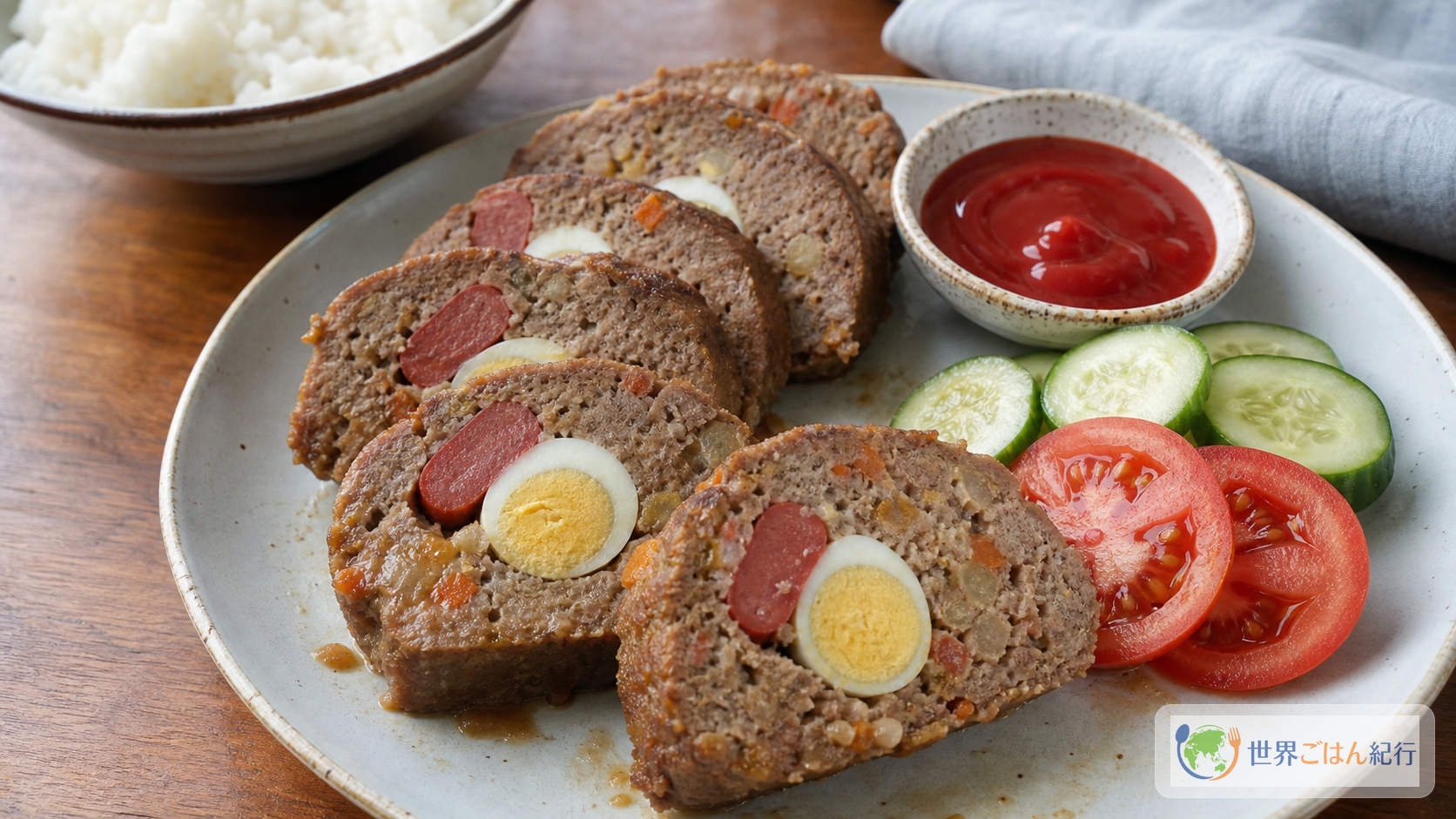
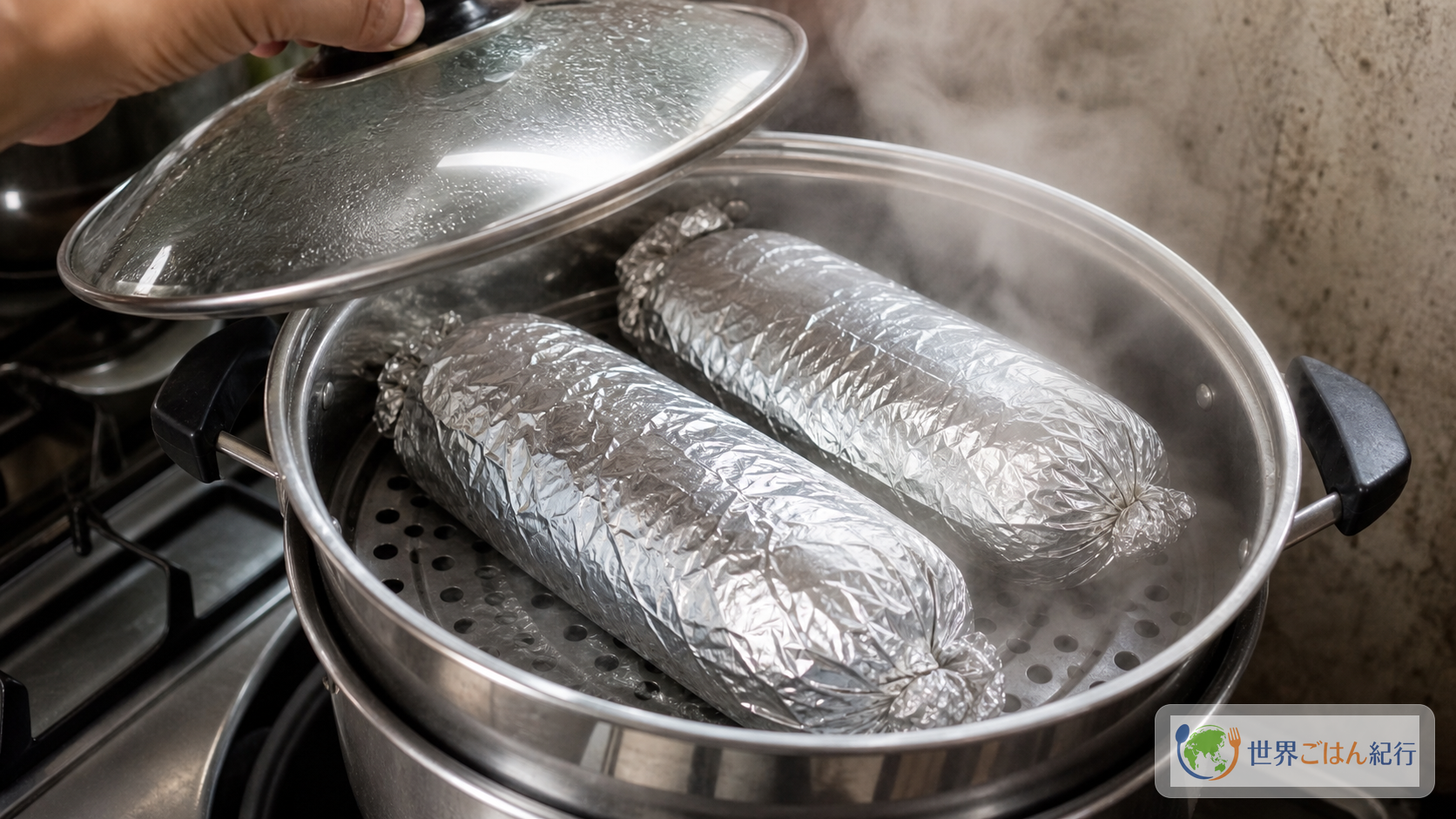
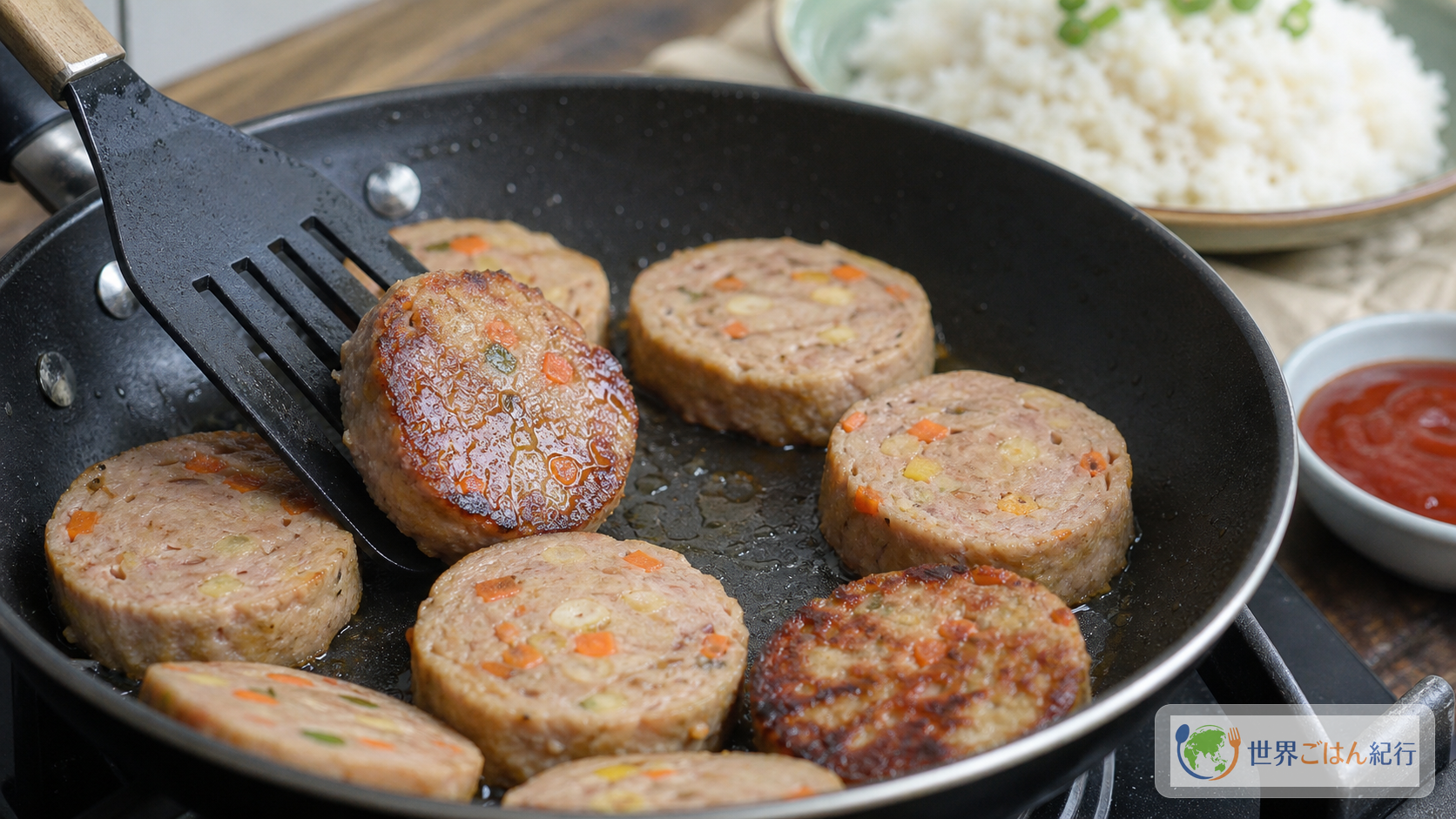
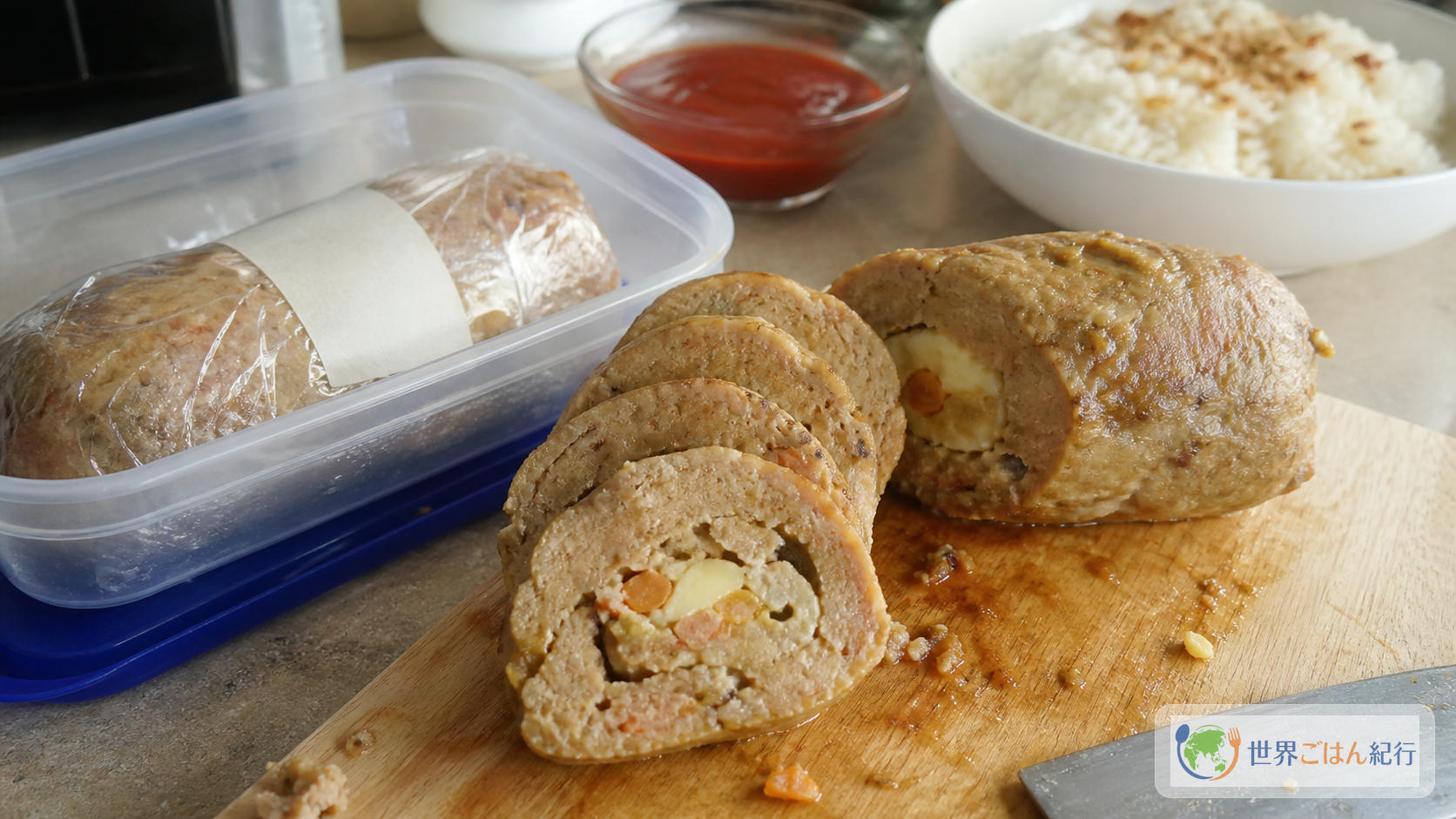
Lift the lid of the steamer a little, and the juices and the sweet-and-sour smell of pickles rise from the foil tube. Before it is cut it is a plain silver package, but let it cool a little and slice it, and the yellow of the egg, the red of the sausage and the orange of the carrot appear on the cut face. Embutido is a meat dish that, on a Filipino table, is the kind where "if you set it on a platter, people gather naturally."
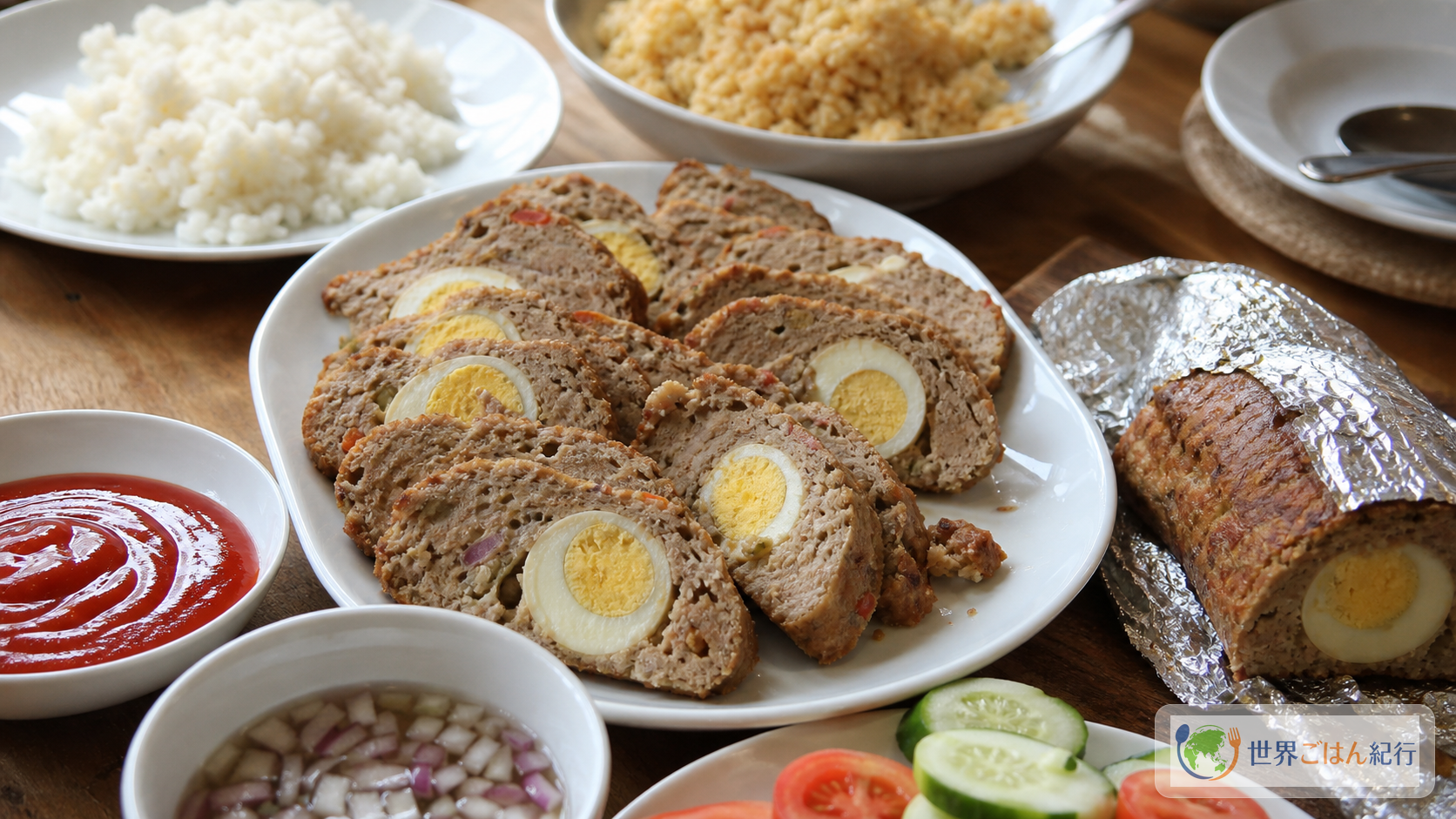
Embutido is a word that in the Spanish-speaking world broadly refers to cased sausages and stuffed meats, but Filipino embutido is a home meat roll in which ground meat is rolled around a core of egg and sausage, wrapped in foil and steamed, without a casing. Panlasang Pinoy also presents the Filipino version as a dish wrapped in aluminum foil and steamed, not a baked meatloaf. In Kawaling Pinoy's explanation too, the basis is ground pork mixed with carrot, sweet pickle, raisins and so on.
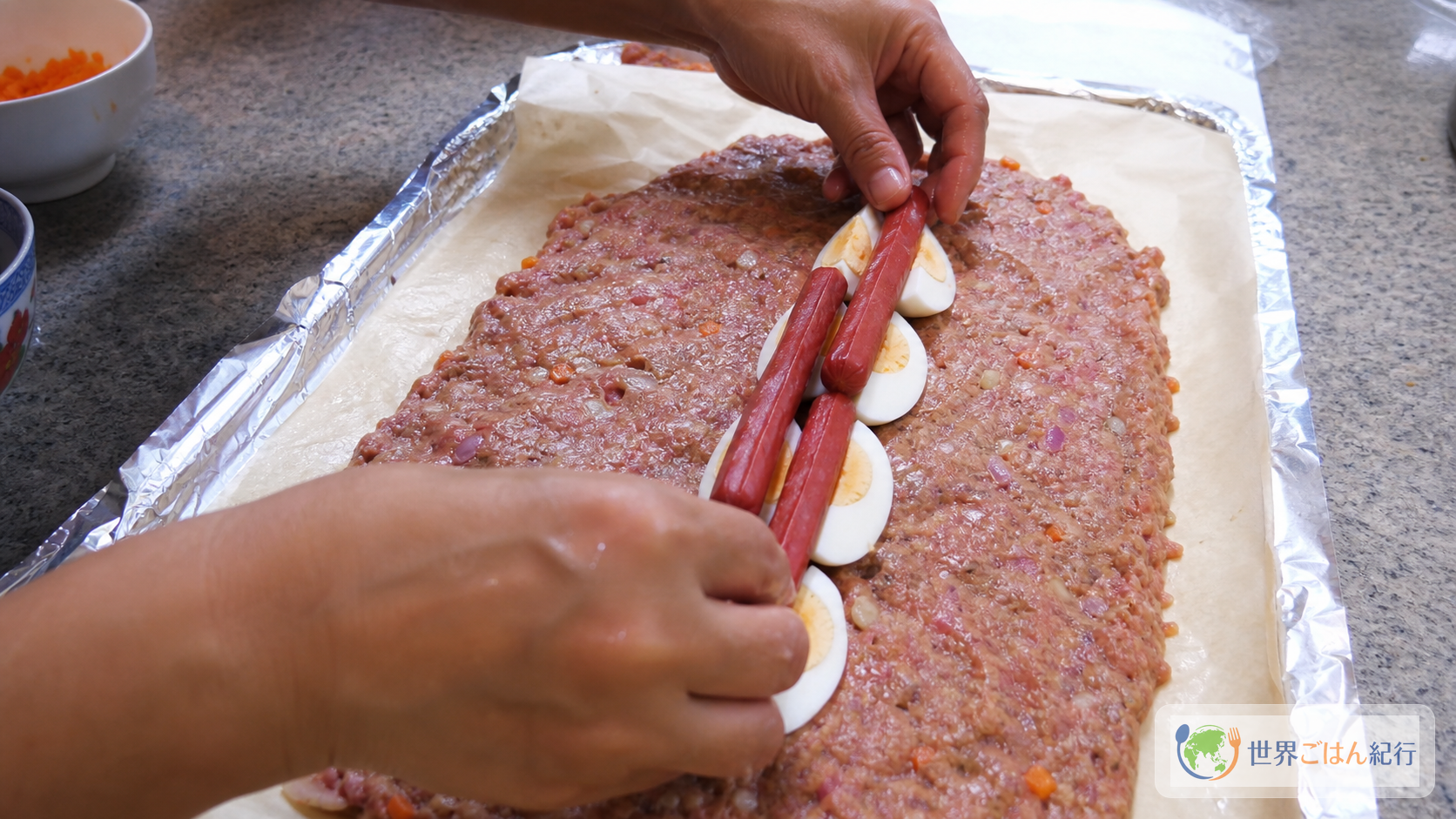
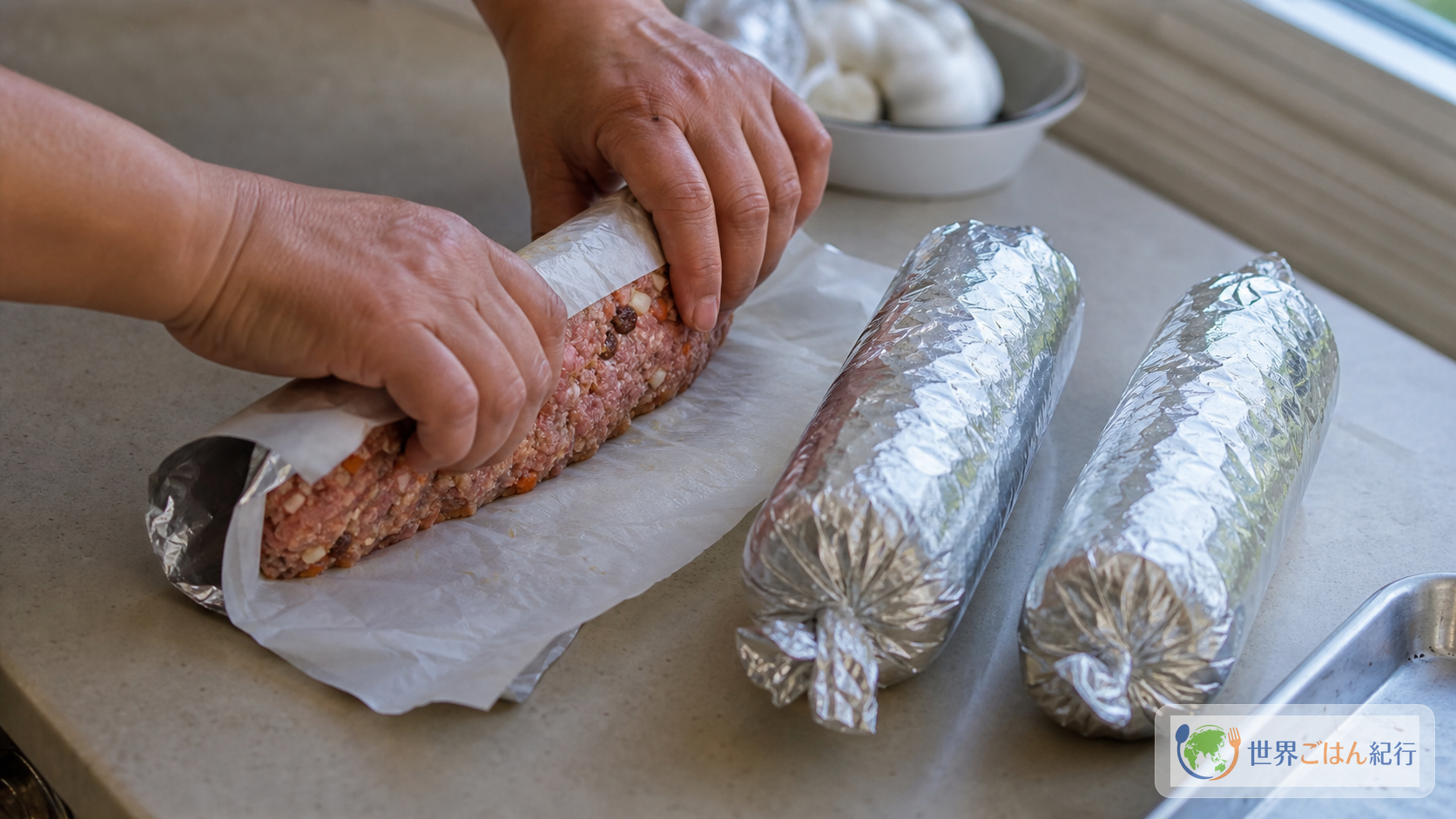
What is hard when making it in a home kitchen is the sequence more than the flavor. Don't make the meat mixture too loose. Put the egg in the center. Steam it once wrapped, and let it rest rather than cutting it right away. Because it is ground meat, check the internal temperature. Keep these four, and without any special equipment you can get quite close to the sweet-and-salty character of a Filipino celebration dish and the fun of its cross-section.
It works whether you lean it toward rice and egg like longganisa, or toward a party platter to share like lumpiang shanghai. The savory aroma of fat is not as strong as lechon, but with sweet ketchup and a small bowl of vinegar, it makes plain white rice go down very easily. Set beside pancit canton or adobo (in Japanese), the celebration platter becomes much more Filipino at once.
What Is Embutido? A Spanish Name and a Filipino Home Dish
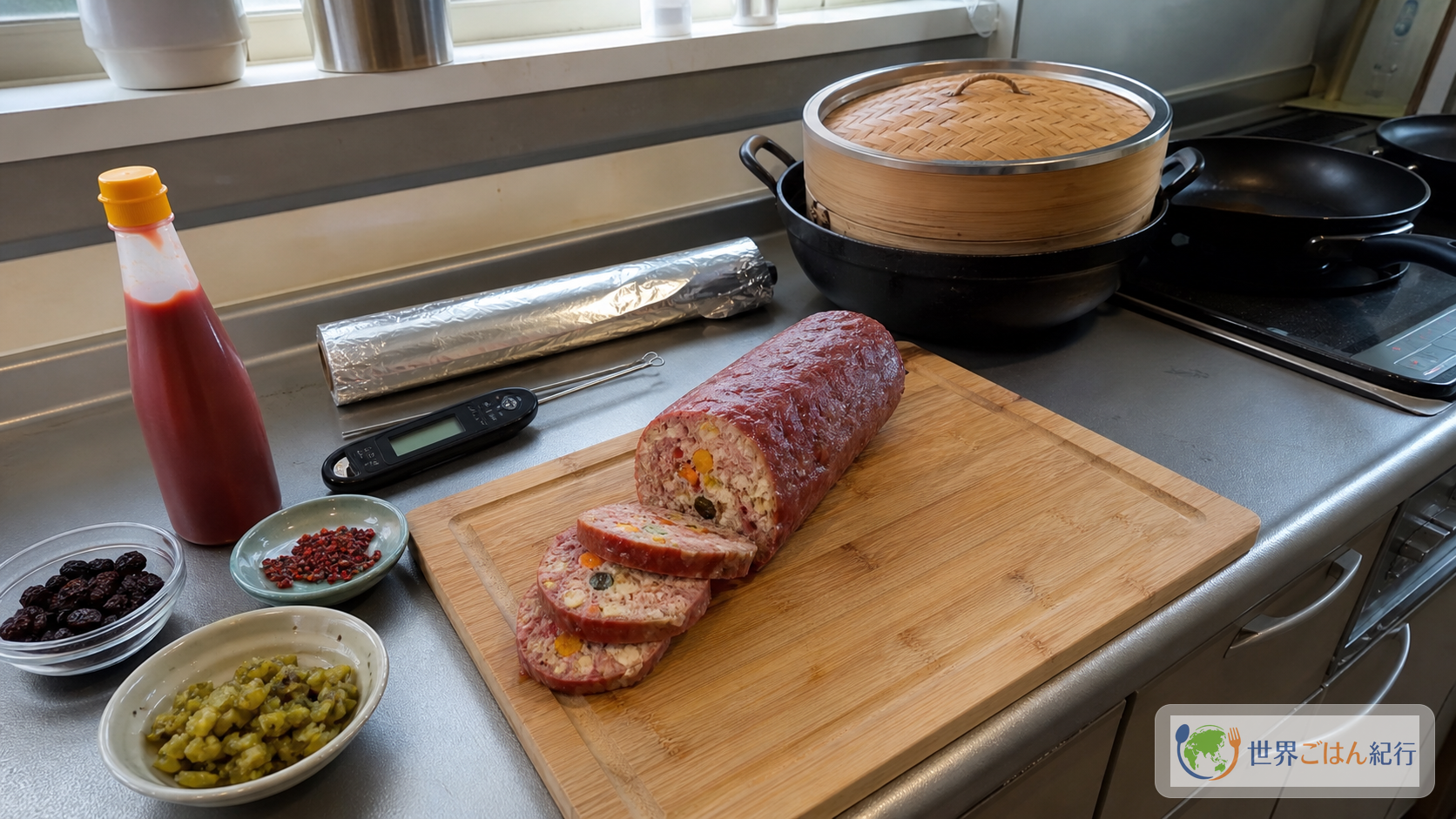
If you were to explain embutido simply, it is "Filipino steamed meatloaf," but calling it just meatloaf makes it a little thin. It is not baked in a loaf pan in the oven; a foil-wrapped tube is steamed, cooled and cut into rounds. With a boiled egg or sausage at the center, a pattern appears when you cut it. Sweet pickle and raisins go in, and banana ketchup or a sweet sauce is served alongside. These points are what make it a Filipino table.
The name comes from the Spanish embutido. In the Spanish-speaking world it is used to mean sausages and stuffed meats, but as a Filipino dish, rather than a Spanish sausage transplanted unchanged, it is more natural to think that meat dishes from the colonial era onward, canned and processed meats, and home steamed dishes mixed to make today's celebration meat roll. TagalogLang also explains that the name derives from the Spanish word for "sausage," while the Filipino version is closer to a meat roll.
It is often served on Noche Buena, the table of Christmas Eve night, and on days when people gather, such as birthdays and fiestas. A good thing about it is that it can be steamed the day before and kept in the refrigerator. You can serve it simply by slicing before guests arrive, and if you lightly pan-fry the slices, you get a toasty note as well. This is why it also suits year-end and potluck occasions.
| Elements often seen locally | What to keep | What can be substituted |
|---|---|---|
| Ground pork mixture | Use ground meat that is not too lean | Mix in up to 30% ground beef and pork |
| Sweet pickle and raisins | Put sweet-sour notes inside the meat | If you have no pickle, a little chopped pickled shallot |
| Core of boiled egg and sausage | Makes the cross-section and the substance | The sausage need not be Filipino-style |
| Wrapped in foil and steamed | Shape into a tube and cook with steam | Line the inside with parchment |
| Banana ketchup | Add a sweet red sauce at the table | If you have none, ketchup with a little vinegar |
When making it, you don't need to search too hard from the start for the "authentic red hot dogs" or "sweet Filipino cheese." What to protect is putting sweet-sour notes into the ground meat, steaming it in a tube, making a center that shows when you cut it, and putting a sweet sauce and something sour on the table. The meat and eggs themselves, on the other hand, are fine from your ordinary shop.
Ingredients: Embutido Made With Ordinary Ground Pork
This makes two tubes of about 20 cm, for 6 servings. It is a quantity to slice and serve on a platter. A family of four can comfortably finish it by eating one tube that day and using the other for breakfast or a lunchbox the next day.
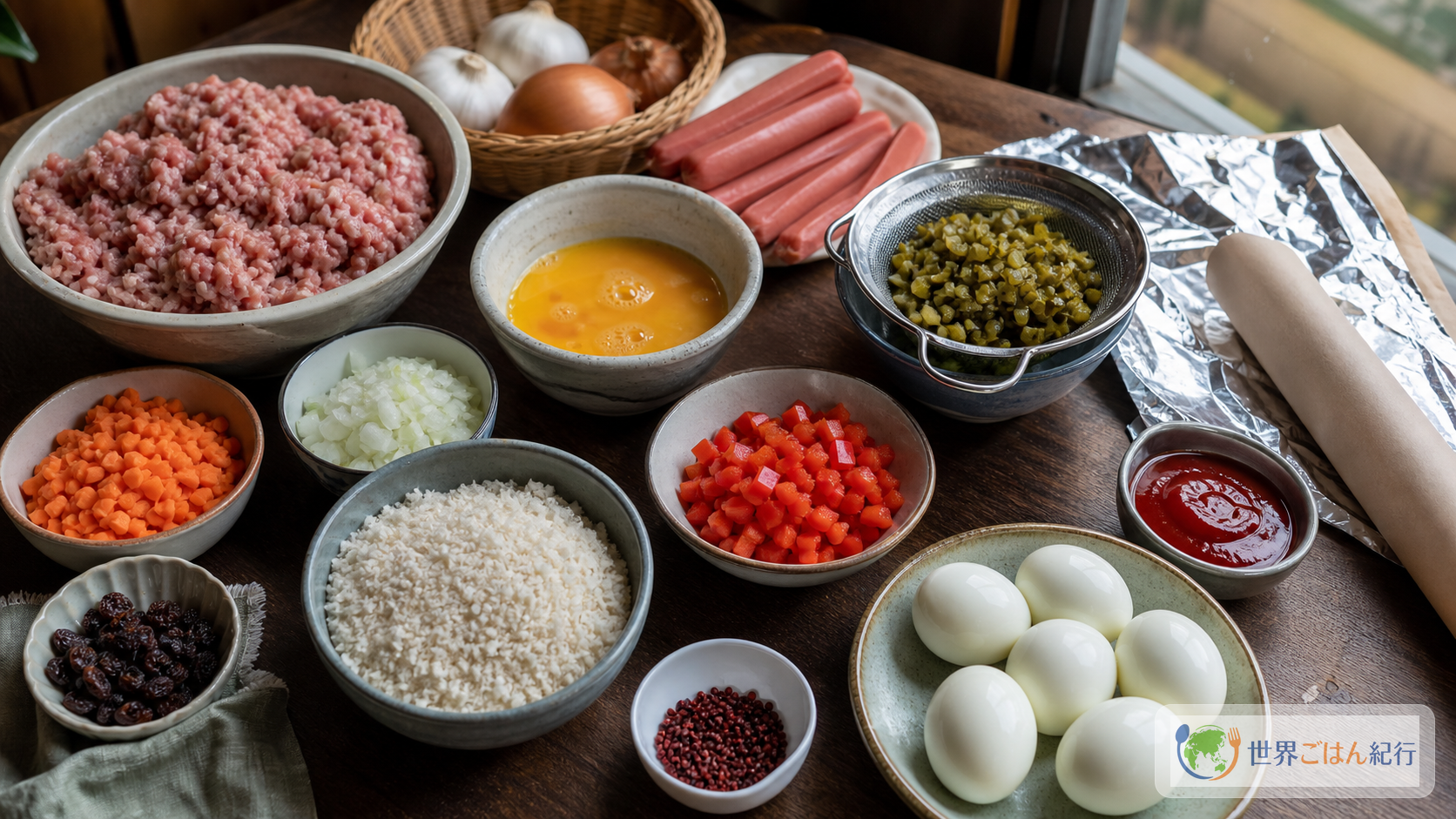
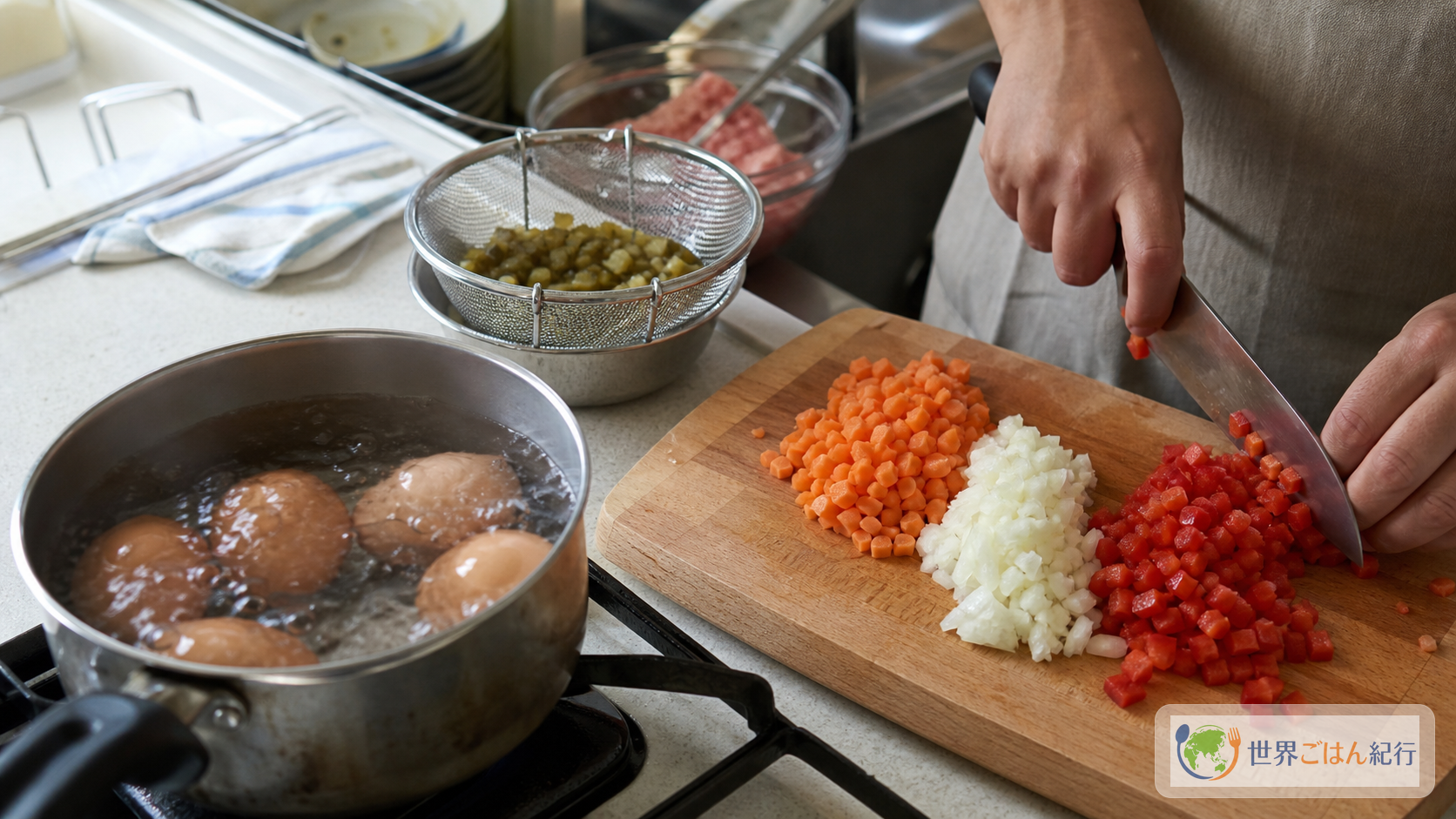
Put the oil and annatto seeds in a small pot and warm over low heat for about 2 minutes. When the oil turns orange and small bubbles appear around the seeds, turn off the heat and strain. Scorching the seeds black brings out bitterness, so don't use high heat. Annatto oil plays more of a role of color than of aroma, so if you don't have it there is no need to force an alternative spice; making up the red with banana ketchup is enough.
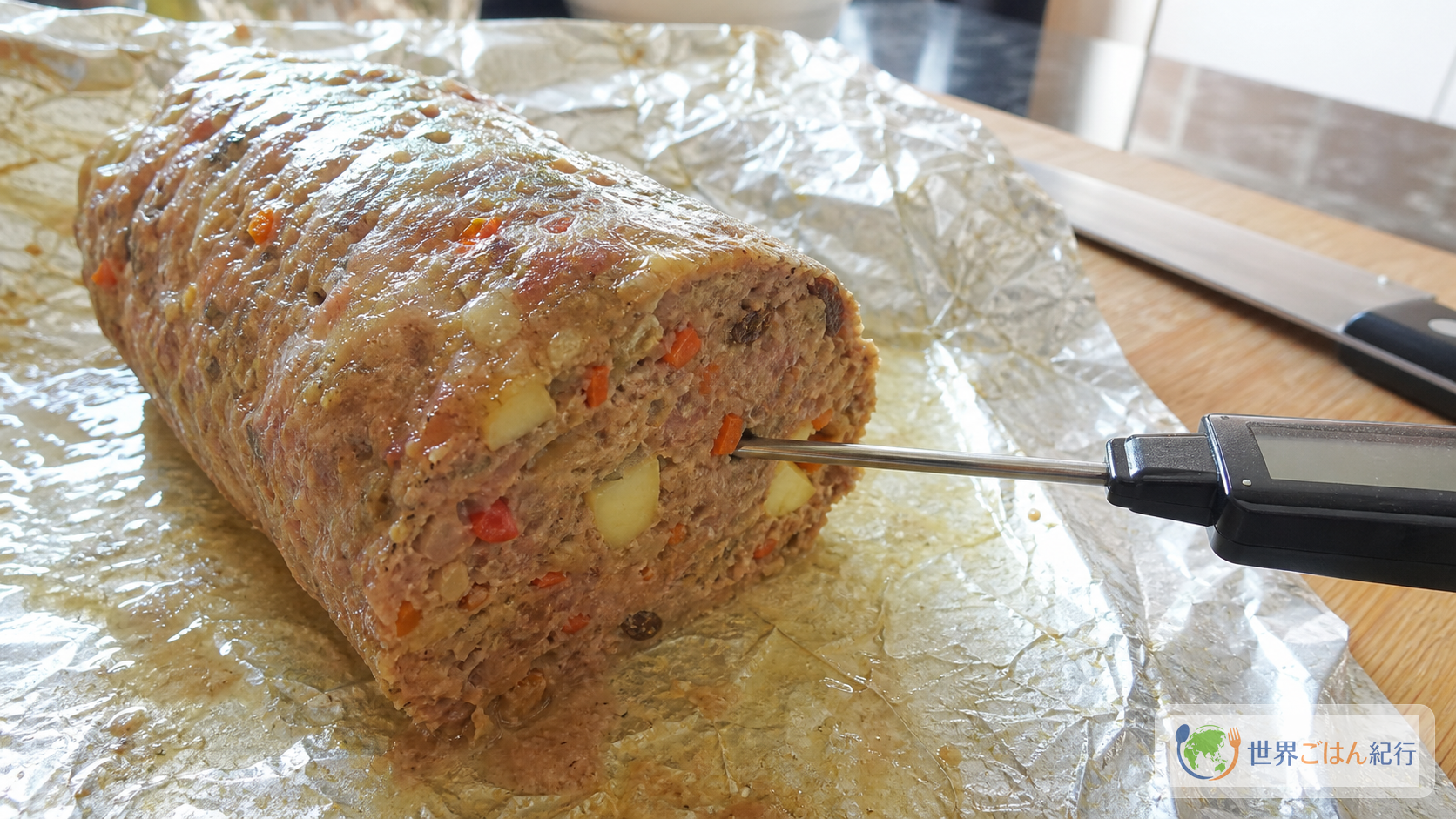
This recipe uses pork, eggs, breadcrumbs and sauces that may contain wheat, and soy sauce that contains soy. Because bacteria can get into the center of ground meat dishes, cook it through fully, aiming for an internal temperature of 71°C or higher. Do not reuse the bowl, spatula or cutting board that touched the raw meat for the cooked meat roll or the serving plate.
What is worth looking for specially is the Filipino seasonings that tend not to be in ordinary supermarkets, and a tool to check doneness. Ground pork, eggs, sausage and cheese are fine if you choose them at your usual shop.
Instructions: Mix, Roll, Steam, Then Cool
With embutido, the result depends less on the work of mixing the meat than on cooking through after rolling and on how it is rested. Cut right after steaming, the juices run and the cross-section collapses. Check the temperature, let it cool slightly, and cut only after it has cooled a little. Just by not rushing here, you get the neat slices of a celebration dish.
Just after steaming, the meat juices are hot and the breadcrumbs have not finished holding their moisture. Cut hot, the cross-section collapses and gaps form around the egg. Letting it cool 20 minutes and then briefly chilling lets the meat and filling settle so it slices thin. If you want to eat it warm, it is neater to slice it first and then lightly pan-fry it.
Branches That Prevent Failure: Deal With Wateriness, Collapse and Rawness First
Failures in embutido come from the moisture and doneness of the meat mixture more than from small differences in seasoning. Because sweet pickle, vegetables, egg and ketchup go in, it is a dish that tends to have more water than hamburger. If you force a loose mixture into a roll, hollows form while steaming and the egg alone comes out when you cut it.
| Symptom | Likely cause | How to fix it |
|---|---|---|
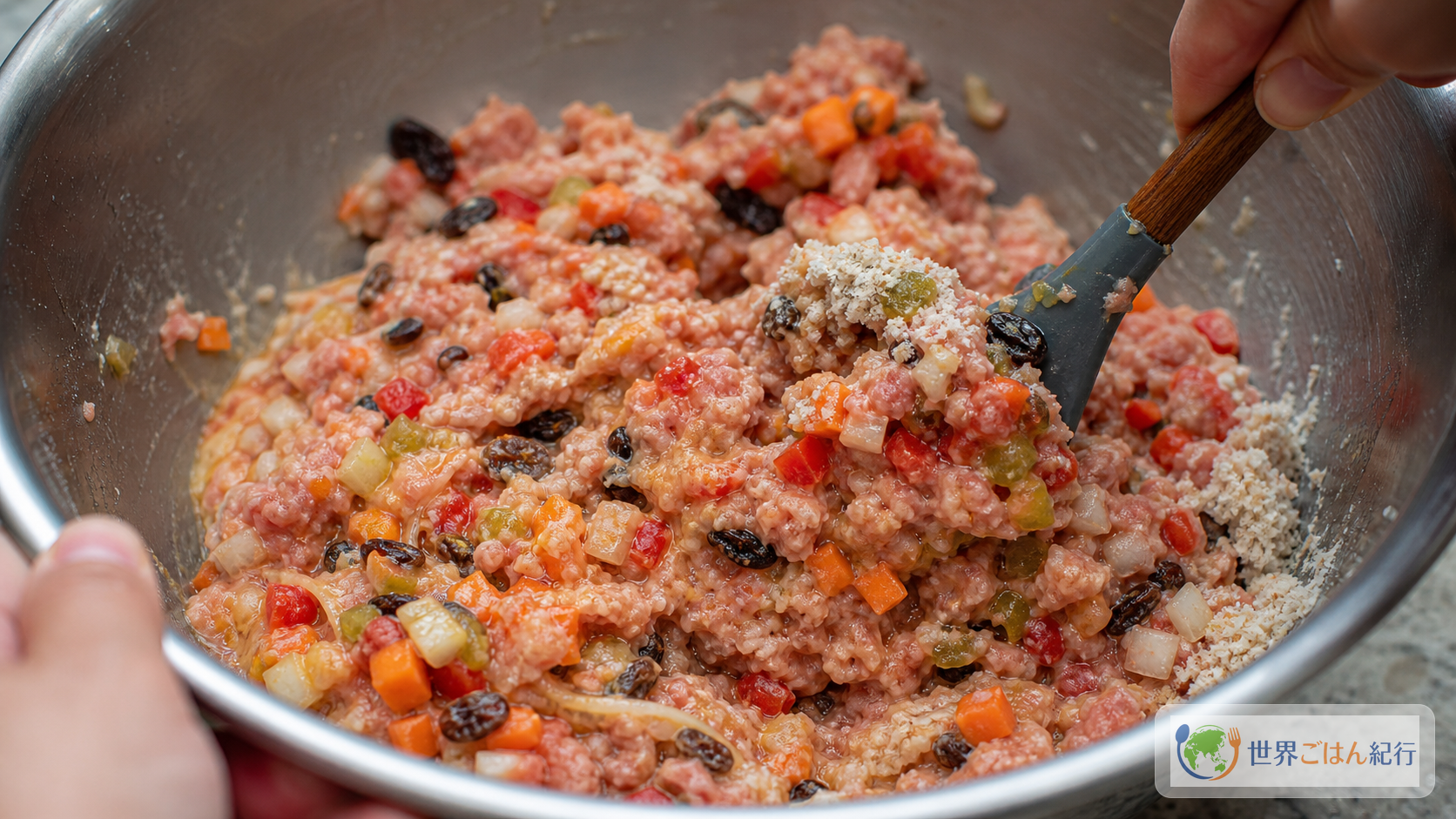
| Sags even before rolling | Pickle or onion is too wet | Add 2 tbsp breadcrumbs and rest 20 minutes in the refrigerator |
| Collapses when cut | Cut right after steaming | Allow 20 minutes of cooling and at least 15 minutes in the refrigerator |
| Red in the center | Tube is too thick, steam is weak | Keep to 6 cm or less in diameter and steam over medium heat where the steam doesn't break |
| Juice leaks from the foil | Single-layer wrap, weak twist at the ends | Double the foil and place the core 2 cm in from the ends |
| Too sweet | Too many raisins and ketchup | Serve a bowl of vinegar and use 30 g raisins next time |
| Color looks dull | No annatto, not browned | 2 tsp annatto oil, or slice and brown over medium heat |
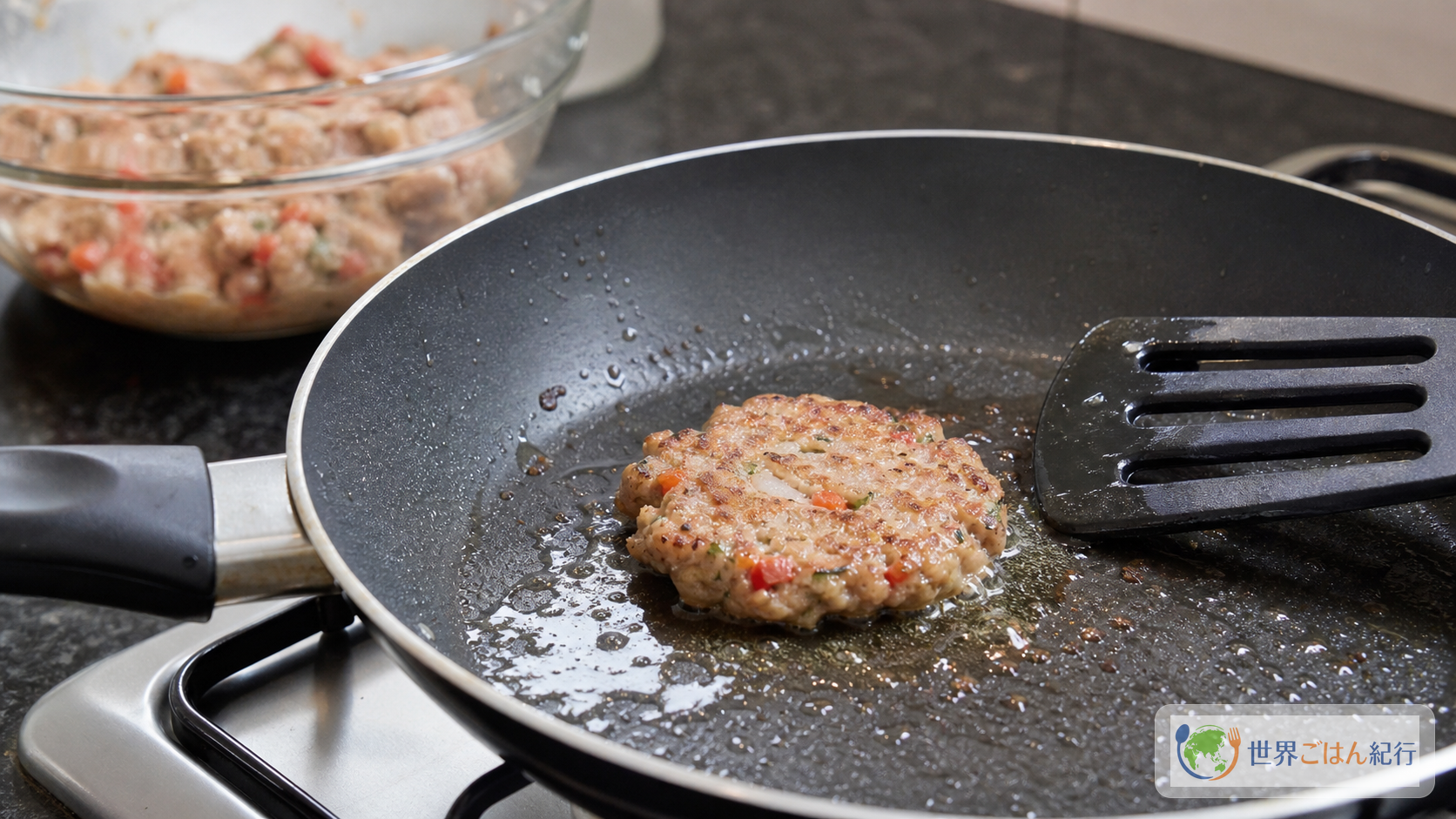
Adjusting the seasoning after steaming all of the mixture is too late. The small test cooking in step 3 looks like a bother but is the most effective step. While keeping the sweetness characteristic of Filipino home cooking, if you are eating it with plain white rice, a somewhat clearer saltiness keeps it from going blurry at the table.
Another important point is to think about temperature and color separately. Ground meat with annatto or ketchup can look slightly red in the center. Conversely, it can be brown and still not hot enough. FoodSafety.gov gives a guide of cooking ground meat and sausage to 160°F, about 71°C. Embutido is a thick tube, so it is easiest to check by inserting the thermometer from the side to the center.
Storage, Menu and FAQ
Put steamed embutido in the refrigerator within 2 hours of cooling slightly. Keep it in foil in an airtight container for 3 days in the refrigerator. If storing it already sliced, the cut faces dry out easily, so put the slices in a container without stacking and warm them in a frying pan the next day. If freezing, wrap the tube in plastic wrap and put it in a storage bag, for about 2 weeks. Thaw overnight in the refrigerator; if you are in a hurry, remove the foil, put it on a heatproof plate, cover loosely with plastic wrap and microwave at 600 W, checking every 2 minutes.
For the menu, white rice, garlic rice, a small bowl of vinegar and banana ketchup are the basics. If you add vegetables, refreshing ones like cucumber, tomato and boiled cabbage suit it. Because it is a sweet meat roll, pairing it with a spicy coconut stew like Bicol express (in Japanese) or a sour soup like sinigang, even among Filipino dishes, keeps the table from getting heavy. For breakfast, you can also put it on rice with tortang talong or a fried egg.
Frequently Asked Questions
Q. Can I bake it in the oven?
A. You can, but I recommend a steamer the first time. In the oven, bake it still wrapped in foil at 180°C for 45 to 55 minutes and check that the internal temperature is 71°C or higher. Putting it in a loaf pan changes how the moisture escapes, so the moistness typical of the Filipino home version comes out more easily in a steamer.
Q. What if I don't have banana ketchup?
A. For the mixture, you can substitute 2 tbsp ordinary ketchup mixed with 1/2 tsp vinegar and 1 tsp sugar. For the table, mixing 4 tbsp ketchup with 1 tsp vinegar and 1/2 tsp sugar gives a somewhat closer sweet-sour note. However, the round sweetness special to banana ketchup is different, so if you will keep making Filipino dishes, one bottle will get reused.
Q. Can I leave out the raisins?
A. Yes. The sweet bits are gone, so increase the pickle to 70 g or add 1 tsp sugar to the mixture. If someone in the family dislikes raisins, making just one of the tubes without raisins makes it easy to divide at the table.
Q. Can I use ham instead of sausage?
A. Yes. For ham, folding it to 1 cm width as the core makes fewer hollows than cutting it into long strips. The red line in the cross-section shows better with sausage, though. If you use ordinary frankfurters, they can be salty, so reduce the salt in the mixture to 3/4 tsp.
Q. Is it all right in a lunchbox?
A. If you pack it, steam it the day before and refrigerate, and the next morning slice it and pan-fry both sides over medium heat. Let it cool before putting it in the lunchbox and pack the wet sauce in a separate container. Avoid hot weather or days of carrying it a long time, and use an ice pack.
Local Sources Consulted
- Panlasang Pinoy, "Pork Embutido (Steamed Filipino Meatloaf)": confirmed the Filipino version as a dish of ground pork mixed with vegetables, cheese and raisins, wrapped in foil and steamed.
- Kawaling Pinoy, "Pork Embutido (Filipino-style Meatloaf)": confirmed the combination of ground pork, carrot, sweet pickle, raisins and so on, and its place as a home meatloaf.
- TagalogLang, "Recipe: Embutido (Filipino Meatloaf)": confirmed the spellings Embutido and Embotido, the Spanish origin of the name, and its description as a Filipino-style meat roll.
- FoodSafety.gov, "Cook to a Safe Minimum Internal Temperature": confirmed the safe internal temperature for ground meat and sausage, 160°F, about 71°C.
Embutido is not a dish that pushes with flashy spices. Put sweet pickle and raisins in the meat mixture, roll in egg and sausage, steam, and cool before cutting. The steps are a few more, but the sense of "I made this" when it is laid out on a plate is large. If you go on to make more Filipino food, linking to lumpiang shanghai, fried for light snacking, longganisa for breakfast, and lechon as the star of a platter lets you use the same banana ketchup and annatto without waste.



