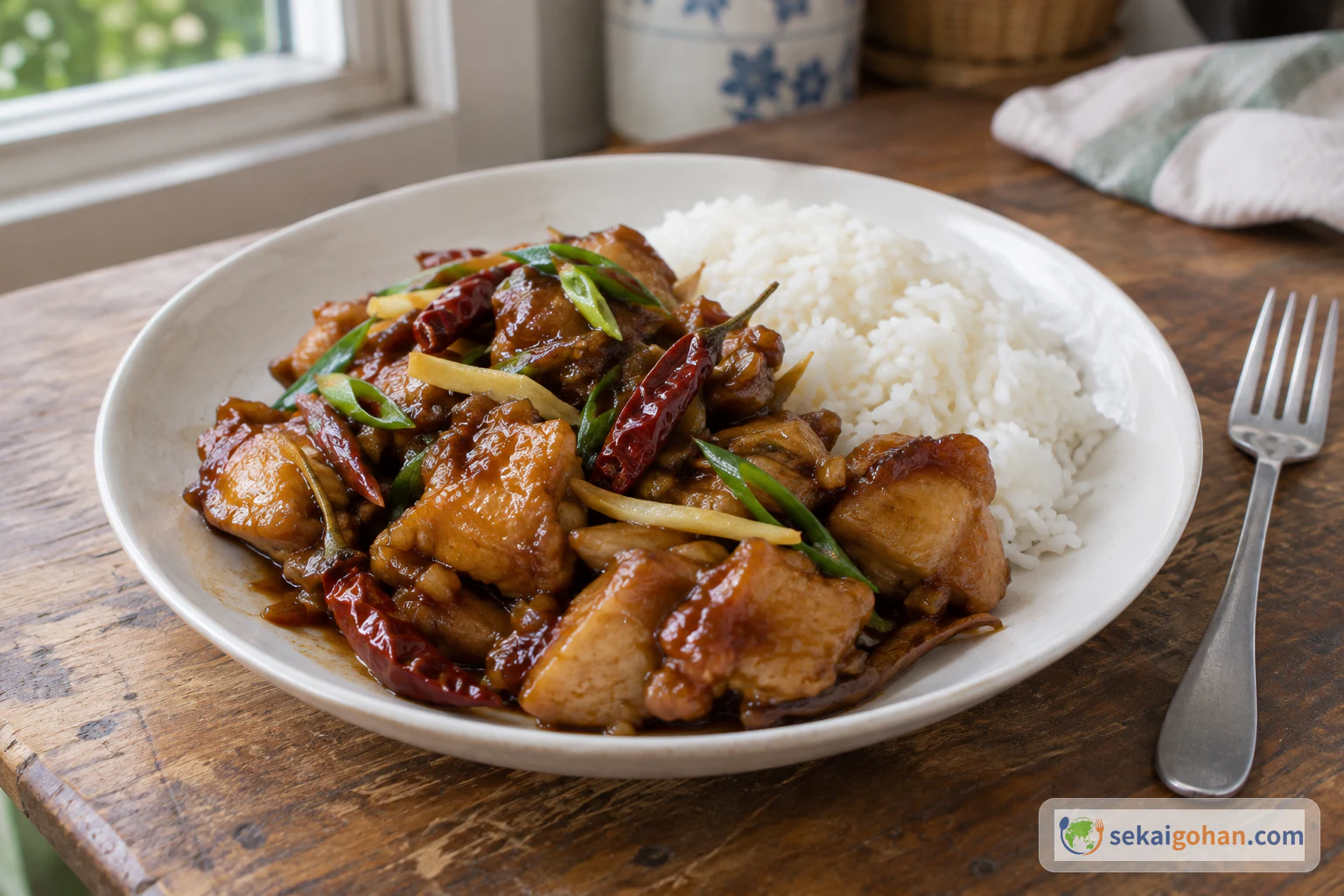
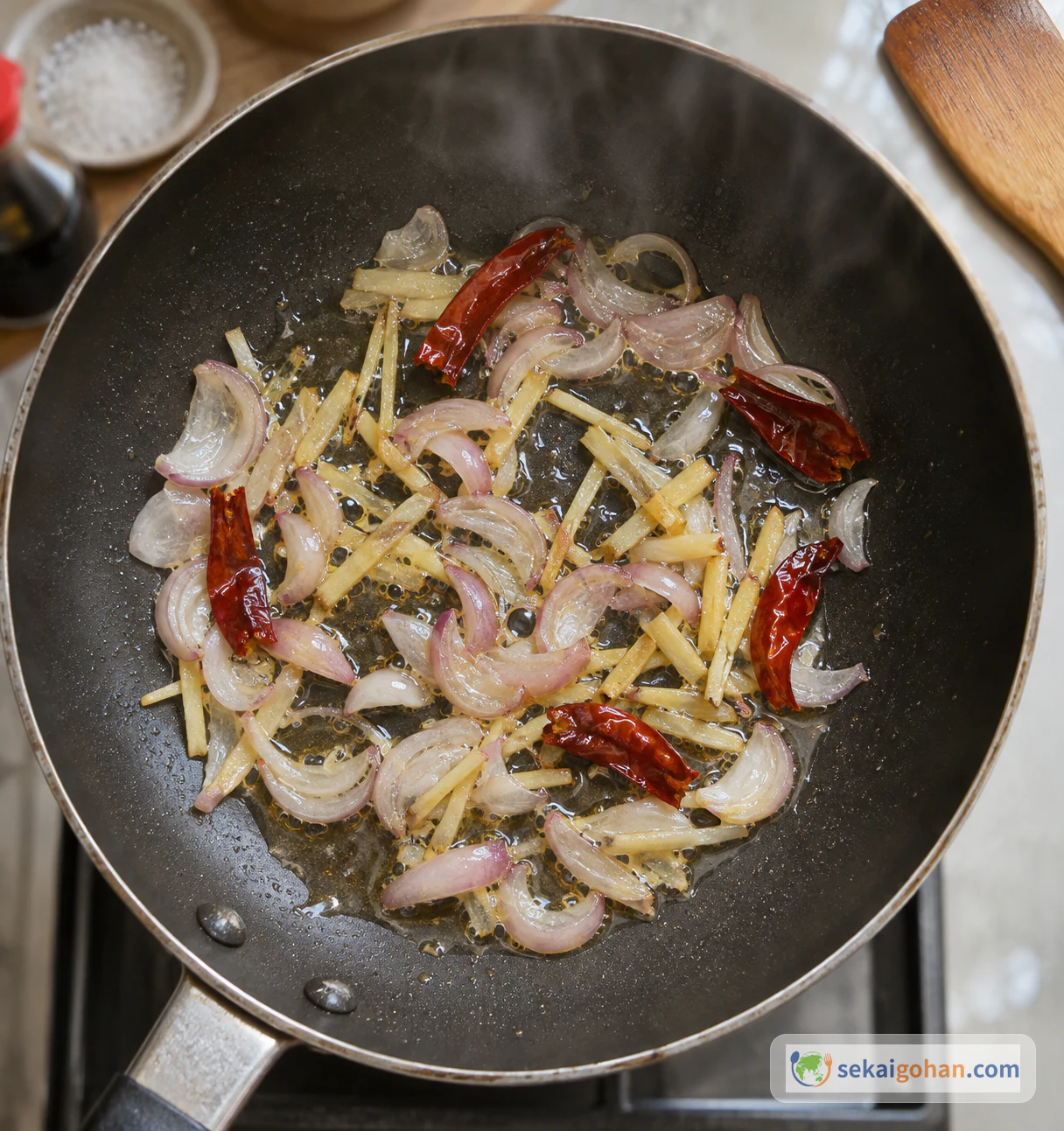
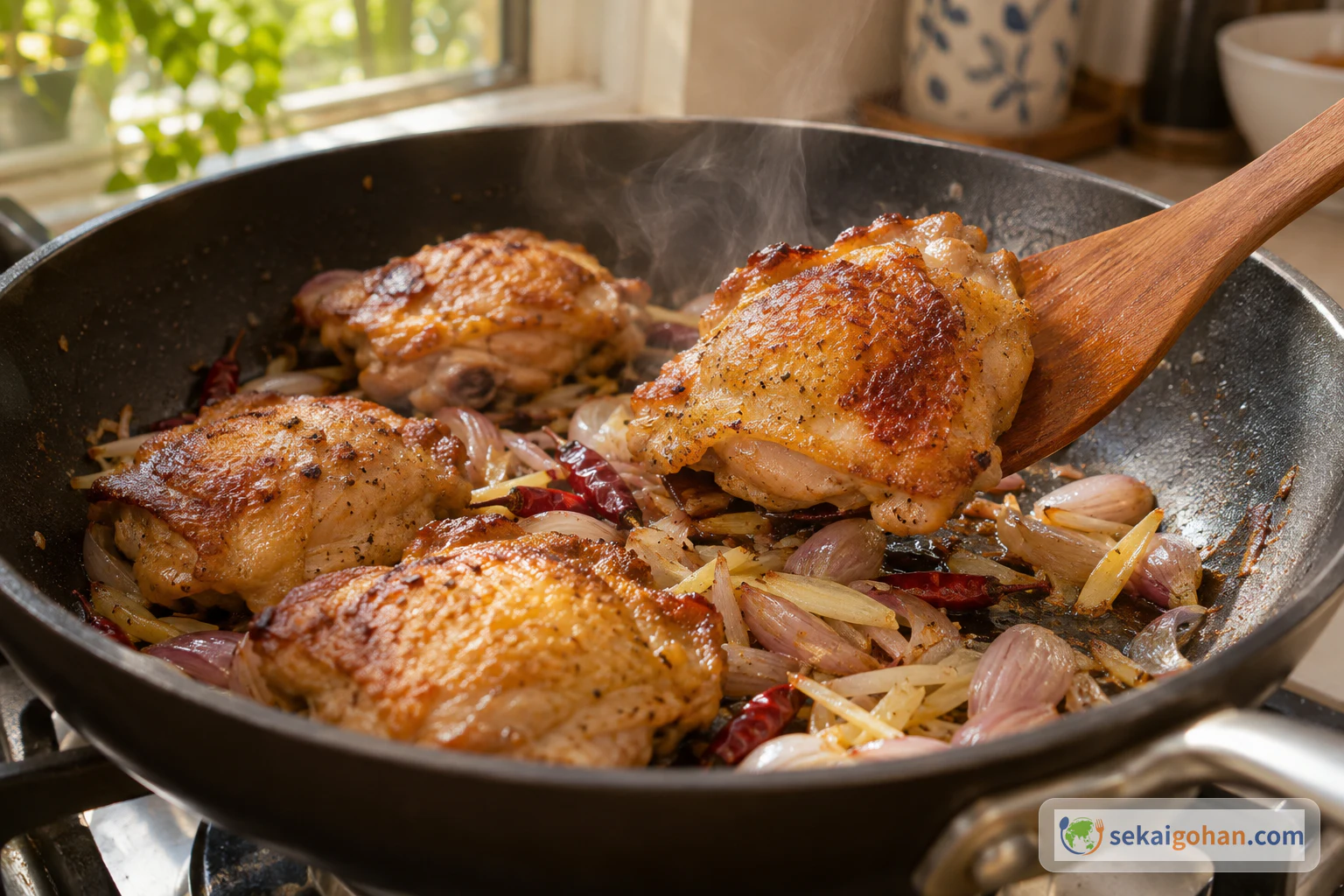
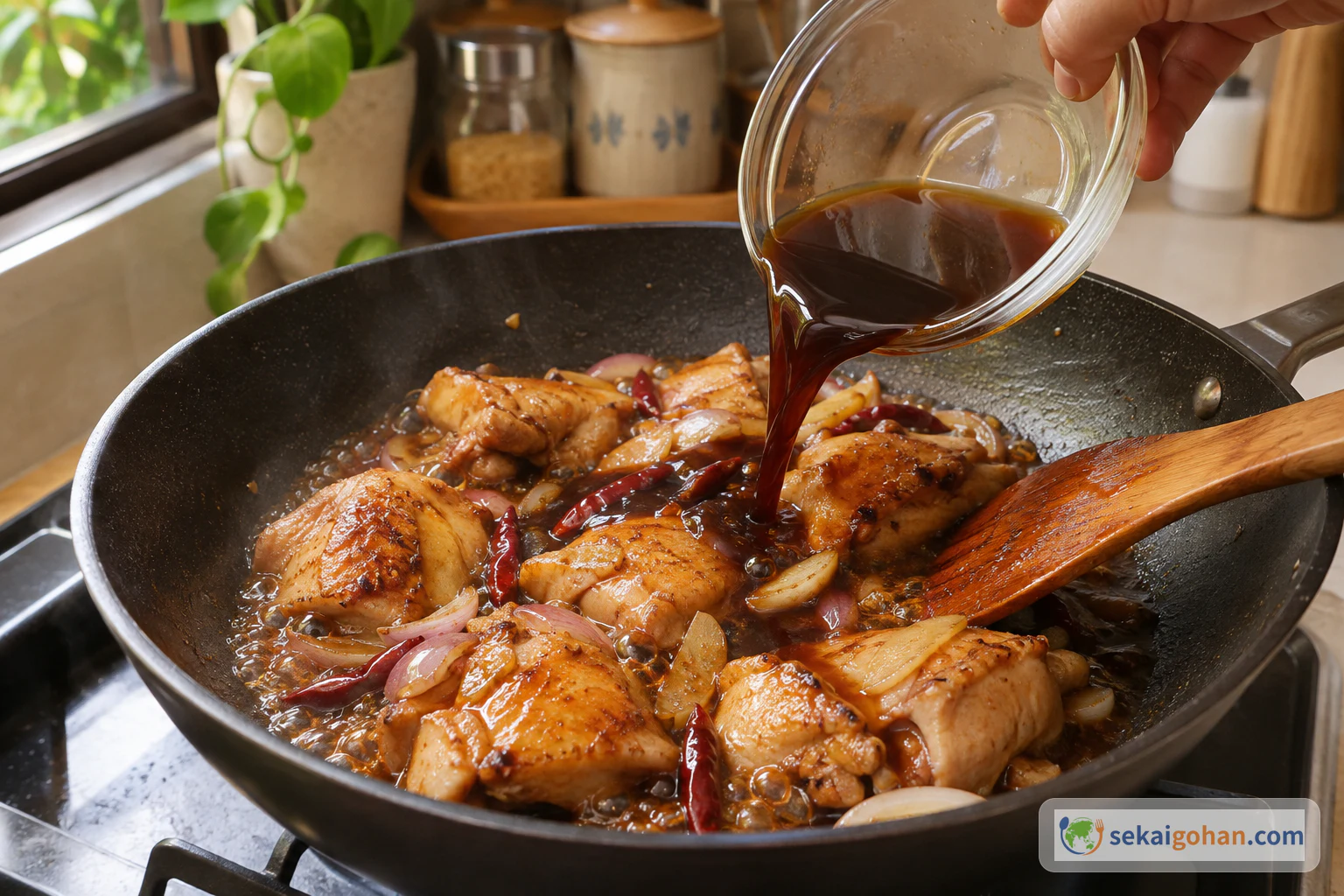
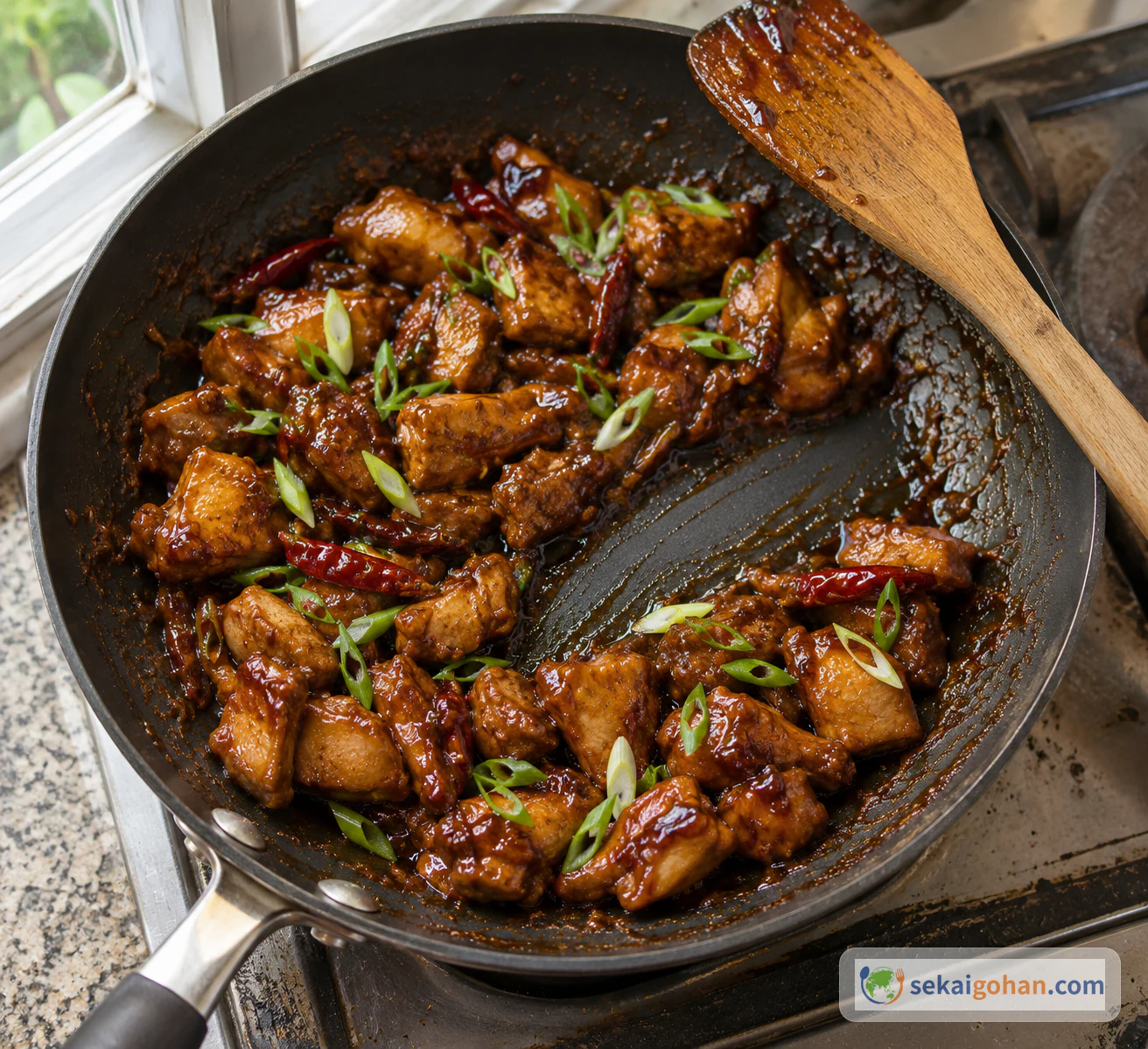
The small bowl of dark sauce goes into the pan of browned chicken, and for a minute or two everything bubbles quietly. Then the liquid stops looking like liquid and becomes a glaze, shiny and nearly black, clinging to every piece along with slivers of ginger and soft red chillies. In Malaysia this is ayam masak sos tiram, chicken finished in oyster sauce. It is a home dish for an ordinary weeknight, served over white rice. It tastes salty-sweet and deeply savoury, with the warmth of ginger and a smoky heat from dried chilli running through it.
Sos Tiram at the Malaysian Table
In Malay, sos tiram simply means oyster sauce. On its own the phrase names the bottle in the cupboard. Malaysian home cooks also use it to name a whole group of dishes: you put the main ingredient in front of the phrase and you get a dinner. Ayam masak sos tiram is chicken cooked in oyster sauce. Sotong masak sos tiram is squid, and daging masak sos tiram is beef. Chicken is the one cooked here.
"Masak" means "cooked", so ayam masak sos tiram reads as "chicken cooked in oyster sauce." In everyday speech it gets cut down to just sos tiram, and the main ingredient is understood from context.
A Hong Kong sauce in a Malaysian pan
Oyster sauce has a well-known origin story. It is usually set in Hong Kong in 1888, when Lee Kum Sheung let a pot of oyster soup cook down too far and ended up with the first oyster sauce. Whatever the real history, the sauce became a base seasoning for Chinese Malaysian stir-fries. Its balance of salt and sweetness makes it useful as a marinade and as a finishing sauce, and this dish uses it both ways. It also gives colour and savoury depth together, which explains the near-black gloss on the finished chicken. The same quality has a weakness. Oyster sauce loses its savoury depth when it boils hard over high heat, so it goes into the pan near the end.
Fried first, or braised soft
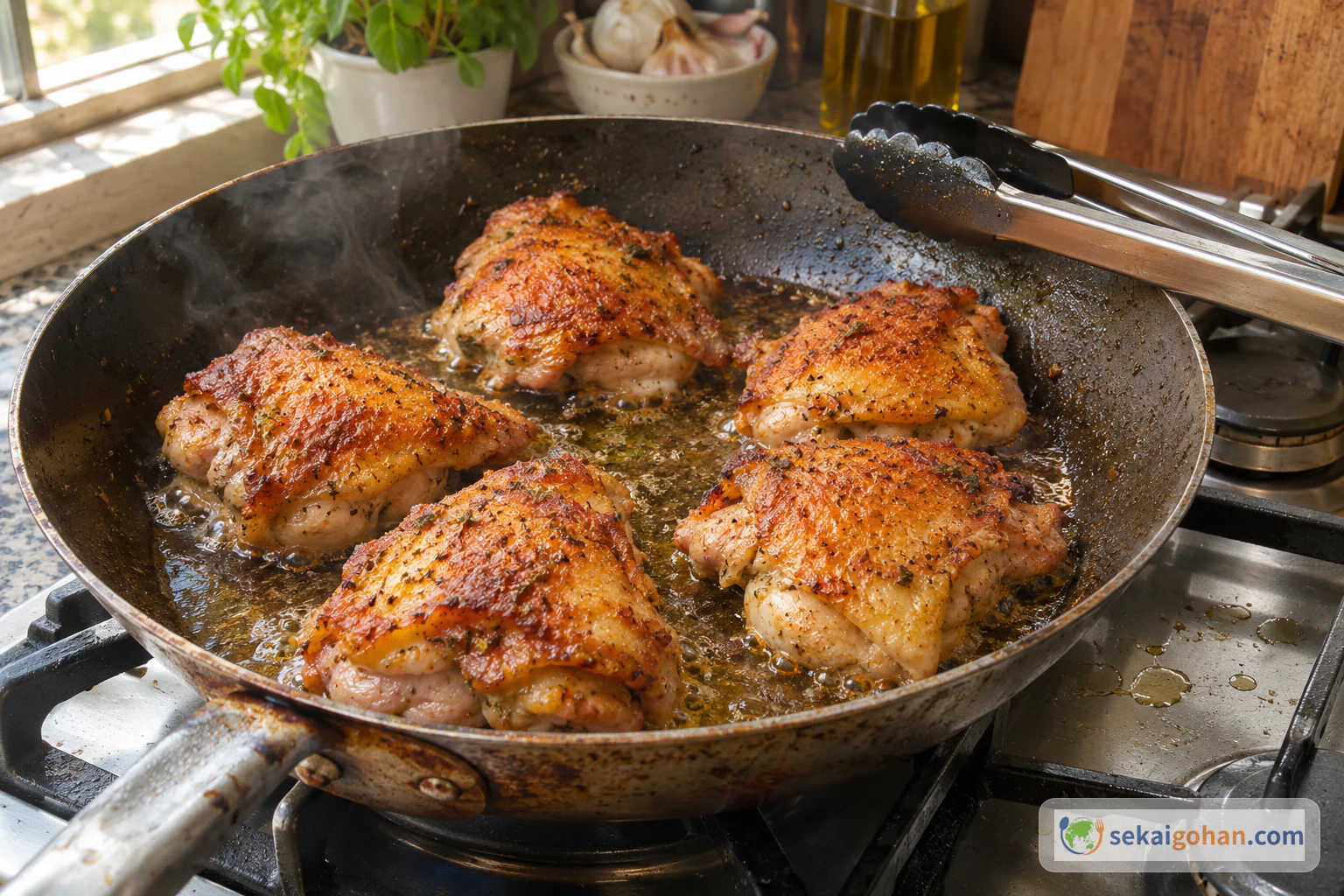
Two styles share the name. In the Malay style, used in this recipe, the chicken is fried until crisp at the edges and then tossed in a short oyster-sauce gravy, so each piece keeps a browned crust under the glaze. In the Chinese style, the chicken is braised covered in a pot until tender. It is seasoned with light and dark soy sauce, oyster sauce and a cornstarch slurry, and cooked with garlic, spring onion, onion and carrot, for a result that is savoury but still sweet. The two use different seasoning amounts and should be made as separate recipes. Some households go further and add canned button mushrooms and tomato to the Malay style. Whichever pot a family cooks, the dish belongs to the everyday food of Malaysia: few ingredients, not much time, and a sauce bottle that is already open.
Ingredients (serves 2 to 3)
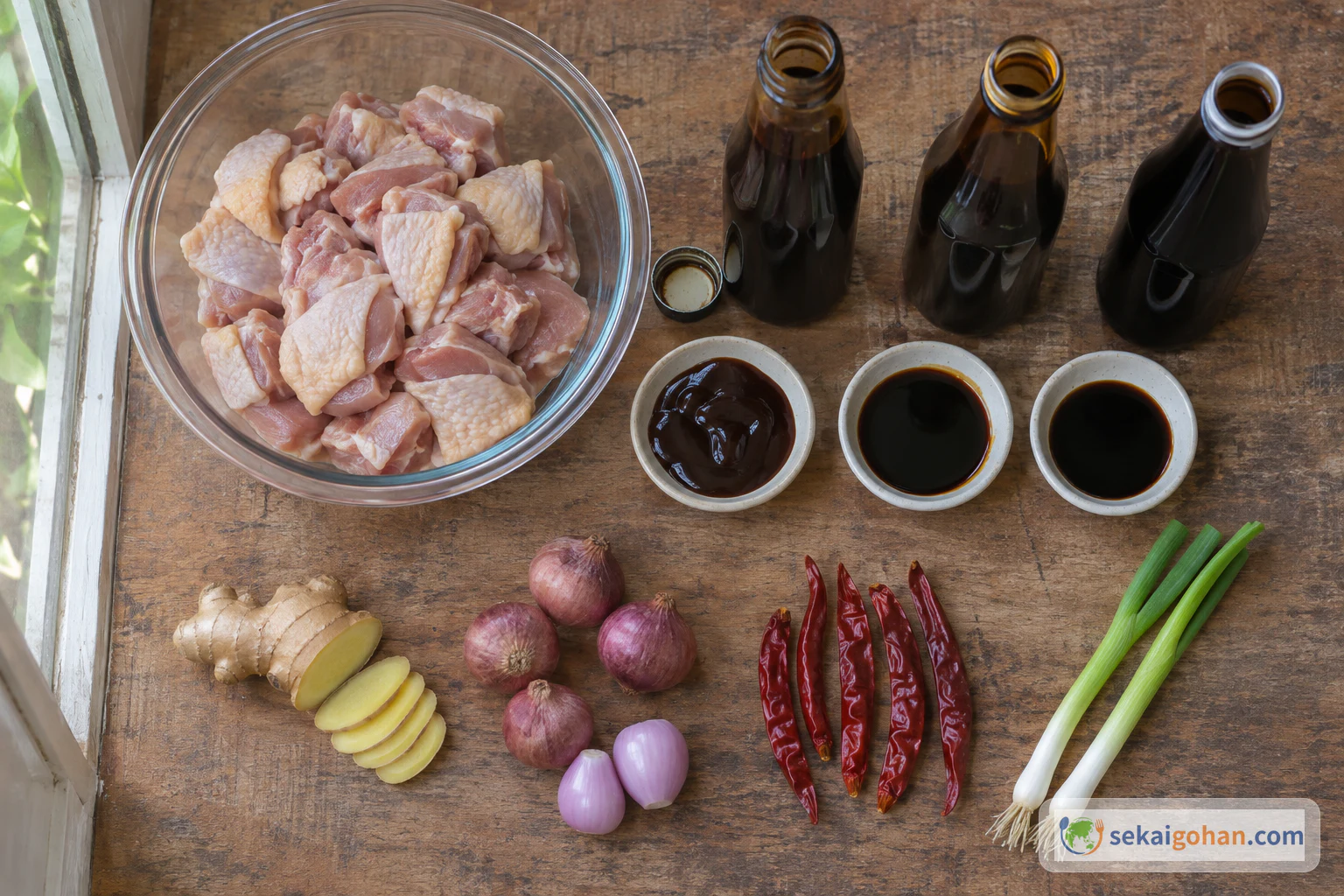
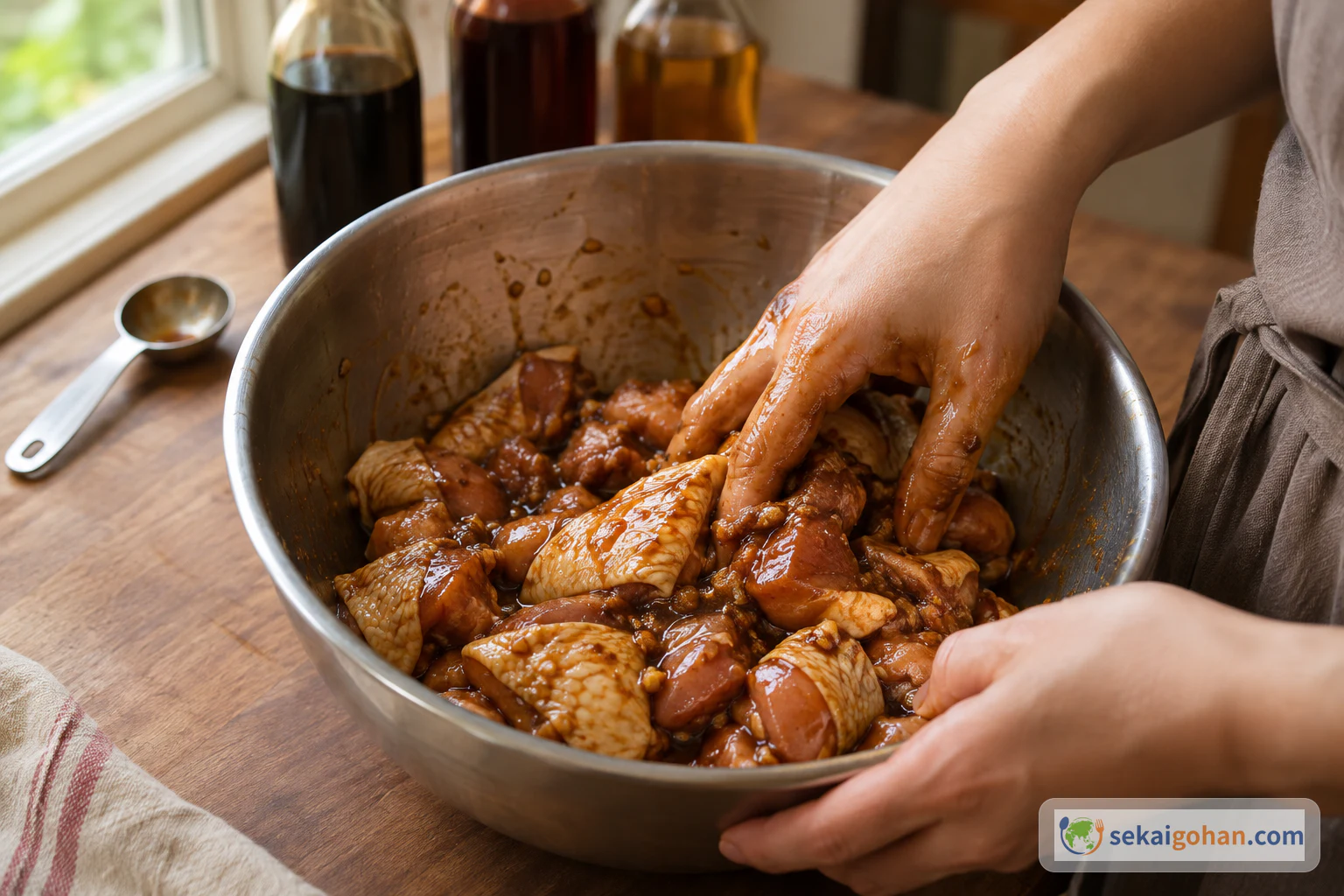
The ingredients come in three groups: a marinade for the chicken, a short sauce for the end, and aromatics for the pan. Oyster sauce appears twice, once in the marinade and once in the sauce. Measure each separately. The amounts below are complete, and there is no added salt or sugar.
Oyster sauce is made from oyster extract and is a shellfish allergen. Many brands also contain wheat flour. The soy sauces contain soy, and many contain wheat. The dish contains chicken. Read the label of every sauce before you buy, especially when cooking for someone with a shellfish or wheat allergy.
Equipment
- A 10- to 11-inch (26–28 cm) frying pan or a wok
- Measuring spoons
- A mixing bowl for the marinade and a small bowl for the sauce
- Tongs or a spatula
- A cutting board and knife used only for raw chicken
- A kitchen thermometer, for checking the centre of the chicken
Choosing and Substituting
Most kitchens already have oyster sauce, and an ordinary supermarket bottle works. Look on the label for oyster extract in the ingredients. Some bottles sold as oyster sauce are only "oyster flavoured" and taste flatter. The two Malaysian soy sauces are the ones that send you to a Southeast Asian or Chinese grocery, or an online shop. Each does a different job, and neither is the same as an all-purpose soy sauce.
| Ingredient | What it does | If you can't get it |
|---|---|---|
| Kicap manis | Thick, sweet soy that gives the glaze its sweetness and body | 1 tbsp regular soy sauce plus 1 tsp sugar. Sweet enough, but less shine and thinner body |
| Kicap pekat | Dark soy for colour. In the same family as Chinese dark soy, though not identical | 1 tbsp regular soy sauce. The colour comes out noticeably lighter |
| Shallots | Small red shallots that soften and sweeten quickly | ½ medium onion |
| Fresh ginger | The main fragrance of the pan | Ginger paste from a tube works, but the aroma is weaker |
| Dried red chillies | Heat with a smoky, toasted note | 2–3 fresh red chillies, or ½ tsp ground red chilli. Fresh chillies taste brighter and lose the smokiness |
Kicap manis and kicap pekat are what make the glaze taste Malaysian. If you are buying one, buy both. They keep, and they go into other Malaysian and Chinese stir-fries and noodle dishes, so the bottles get used up.
Method
Mix the finishing sauce in its small bowl while the chicken marinates. That half hour is also when to cook the rice, so everything is ready together. After that, the cooking goes quickly in one pan: fry the chicken, take it out, fry the aromatics, put the chicken back, and finish with the sauce. Keep the sauce bowl and the spring onion next to the stove before you heat the oil.
Do not rinse raw chicken. Use a separate board and knife for it, keep it away from cooked food, and wash your hands after touching it. Cook the chicken until the centre reaches 167°F (75°C) for at least 1 minute: the meat is white and opaque all the way through and the juices run clear. Lay the marinated pieces into the hot oil with the edge facing away from you, because the sugary marinade spits.
Oyster sauce loses its savoury depth when it boils hard over high heat. Add it only after the chicken is cooked through and back in the pan, keep the heat at medium, and stop when the sauce turns glossy.
When It Goes Wrong
| What you see | Why | What to do |
|---|---|---|
| The sauce is black and bitter | The oyster sauce boiled too long over high heat | Add the sauce only at the end and keep it at medium for 1–2 minutes. Turn off the heat as soon as you smell scorching |
| The dish is watery | The chicken went into the pan wet, or the sauce went in before the crust formed | Leave the pieces alone until they brown. Add the sauce only after the chicken is back in the pan |
| Too salty | The salt from the oyster sauce and soy sauces adds up | Keep exactly to the amounts in the table and add no salt |
| The chicken is tough | Overcooked, or pieces cut too thick | Cut pieces to an even thickness. Take them out as soon as the centre turns white and reaches 167°F (75°C) for 1 minute |
| Too spicy | The chilli seeds were left in | Remove the seeds and pith. Next time use fewer chillies |
| The aroma is weak | The ginger and shallots were undercooked | Fry them until the shallots are translucent before putting the chicken back |
Serving, Variations and Storage
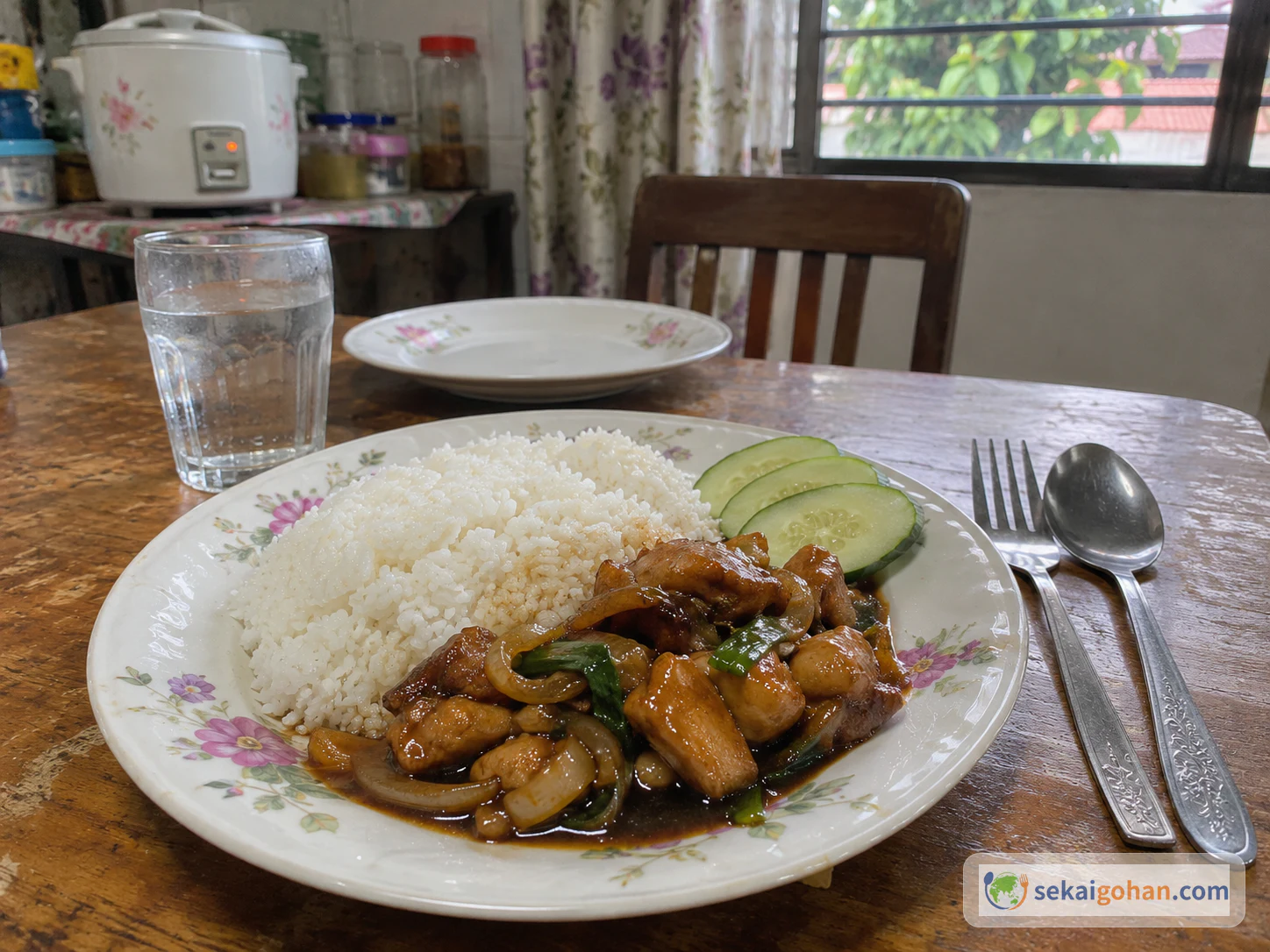
At the table
Serve sos tiram over plain steamed white rice, so the rice soaks up the last of the glaze. Thin slices of raw cucumber and a bowl of clear soup go well alongside and balance the saltiness and sweetness. It is a weeknight dish, ready by the time the rice is cooked, and it is just as easy to cook for two as for three.
Variations
- Mushrooms. Add a 3½ oz (100 g) pack of shimeji to the aromatics in step 4. Brown them first so their water cooks off. They add an earthy note and some extra sauce.
- Squid and shrimp. Replace the chicken with 7 oz (200 g) squid and 5 oz (150 g) peeled shrimp, and cook them only briefly. The squid is done in 1–2 minutes, as soon as it turns white and curls. The result is lighter and sweeter, and close to sotong masak sos tiram.
- Less sweet. Cut the kicap manis to 2 tsp and add no sugar. The glaze is less shiny, and the flavour moves from sweet-savoury toward salty-savoury.
- Rice-bowl style. Add about 3½ tbsp (50 ml) extra water to the sauce and cook 30 seconds longer after it goes in. Spoon the chicken and its looser sauce over a bowl of rice.
Storing leftovers
Let the chicken cool, then put it in a clean, airtight container in the refrigerator and eat it by the next day. You can freeze it, but the texture suffers. Reheat in a frying pan or the microwave until hot all the way through. If the sauce separates, stir in 1 tsp water.
Frequently asked questions
Can I use chicken breast?
Yes. Cut it to an even thickness and fry it for a shorter time than thigh, because breast dries out quickly. Take it out as soon as the centre is white and reaches 167°F (75°C) for 1 minute.
What can I use if someone has a shellfish allergy?
Use a vegan oyster sauce made from mushrooms. It tastes lighter. Soy sauce with a little mushroom stock and sugar also gets close, though neither gives the depth of real oyster sauce, so expect a different dish. Check the label of every sauce for wheat as well.
How do I keep it mild?
Remove the seeds and pith from the dried chillies, and use 2 or 3 instead of 5. You keep the smoky chilli aroma with much less heat.
Does it need salt?
No. The oyster sauce and the two soy sauces provide all the salt. Taste only after the glaze has formed, and serve with plain rice to soften the saltiness.