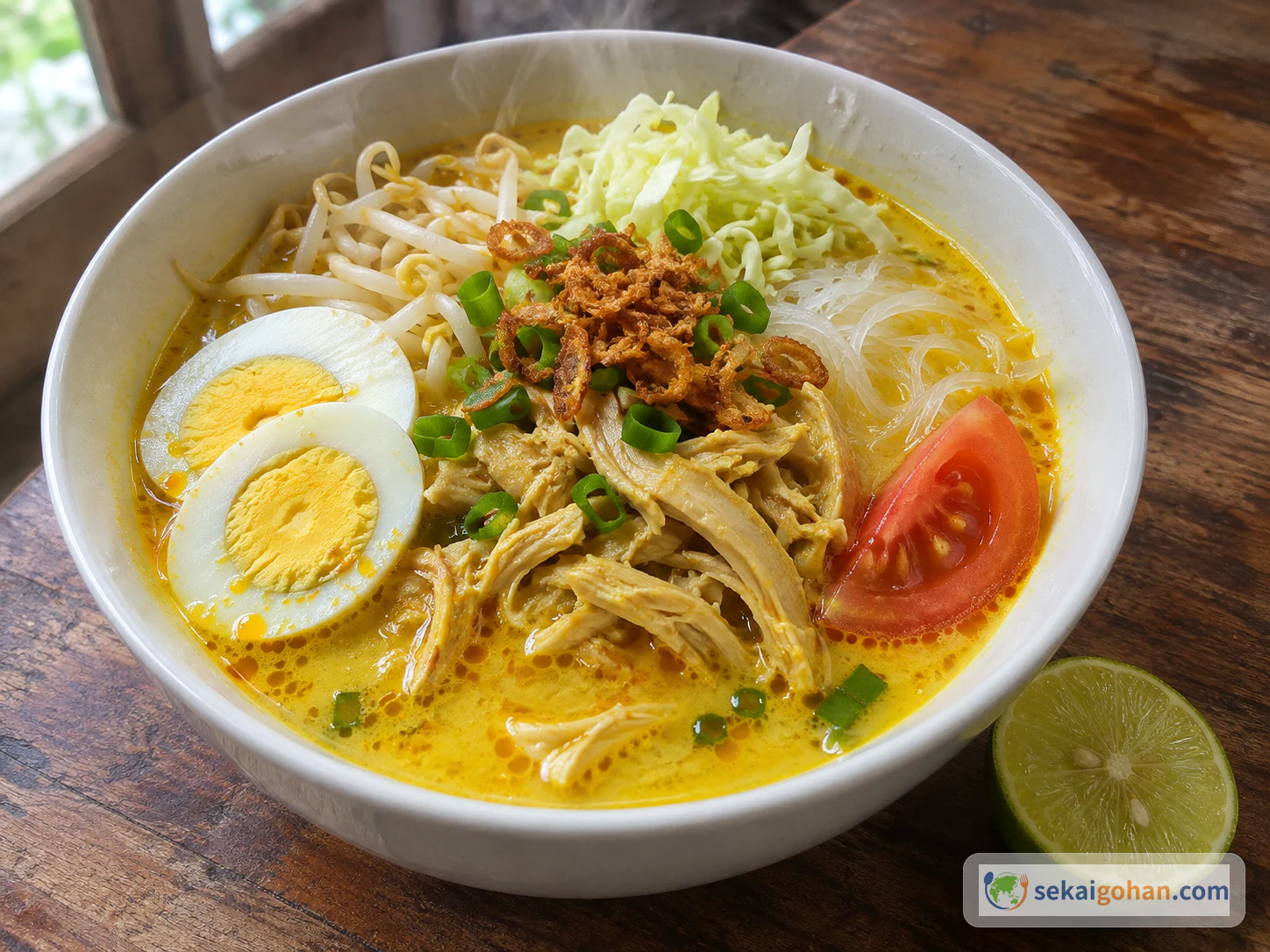
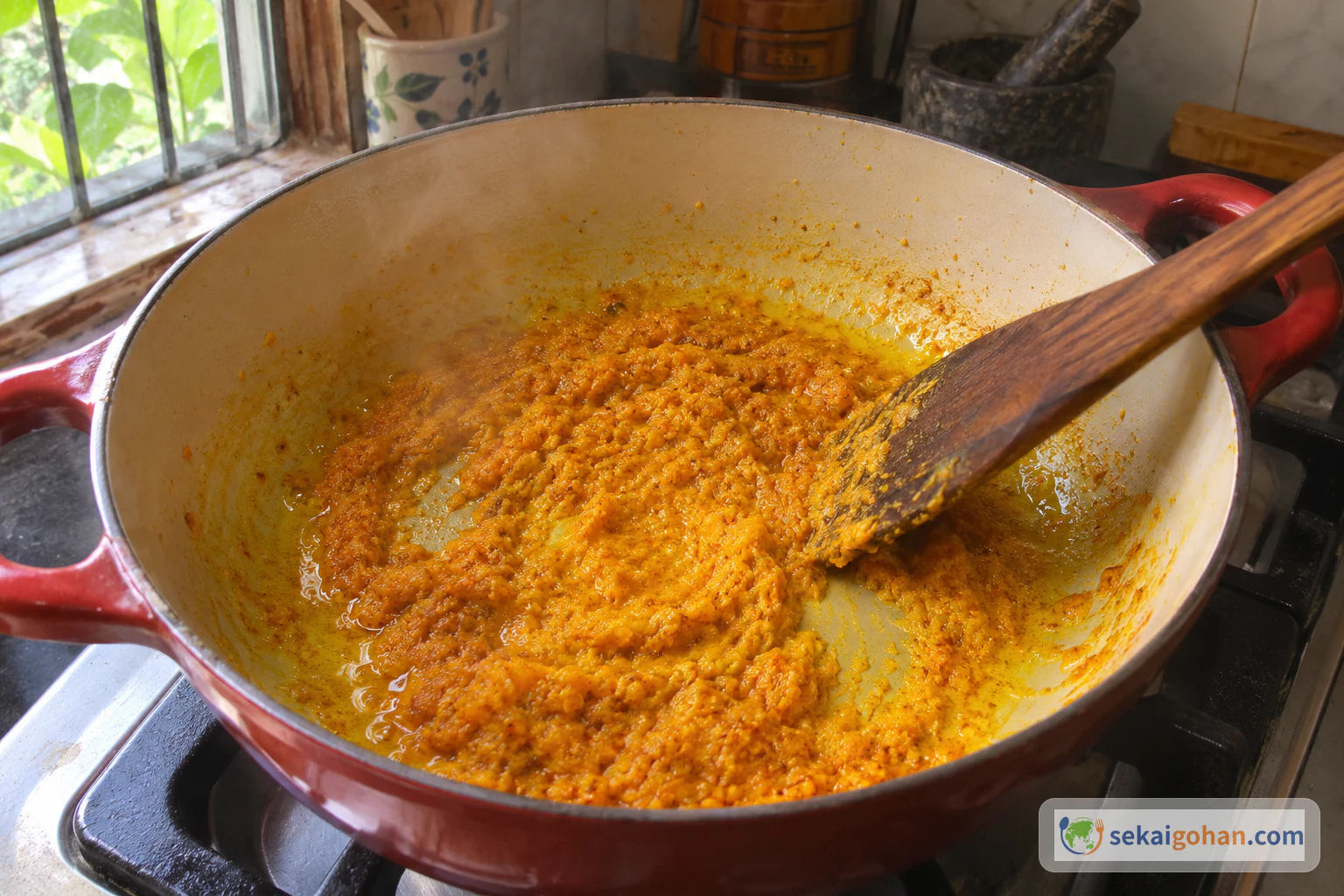
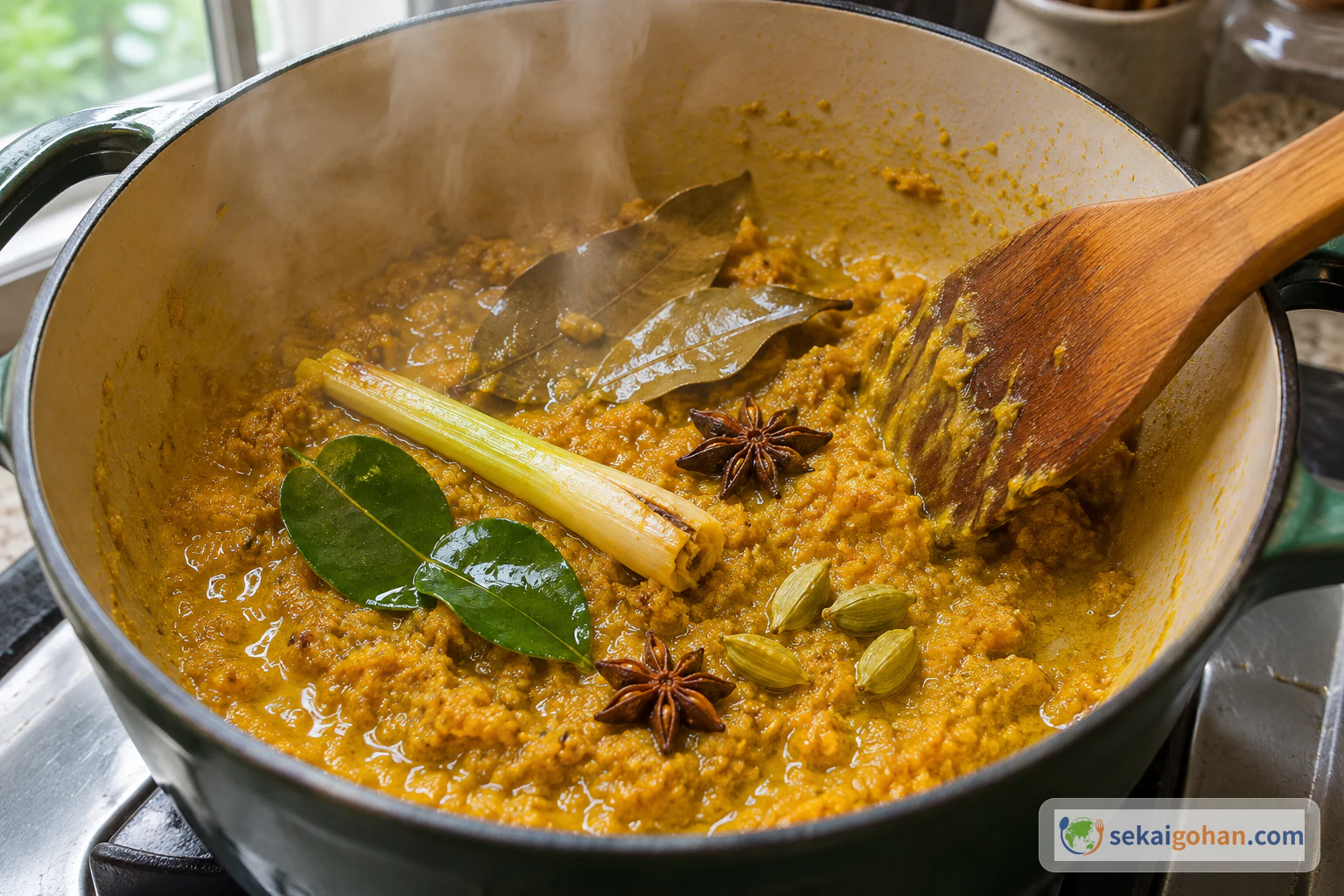
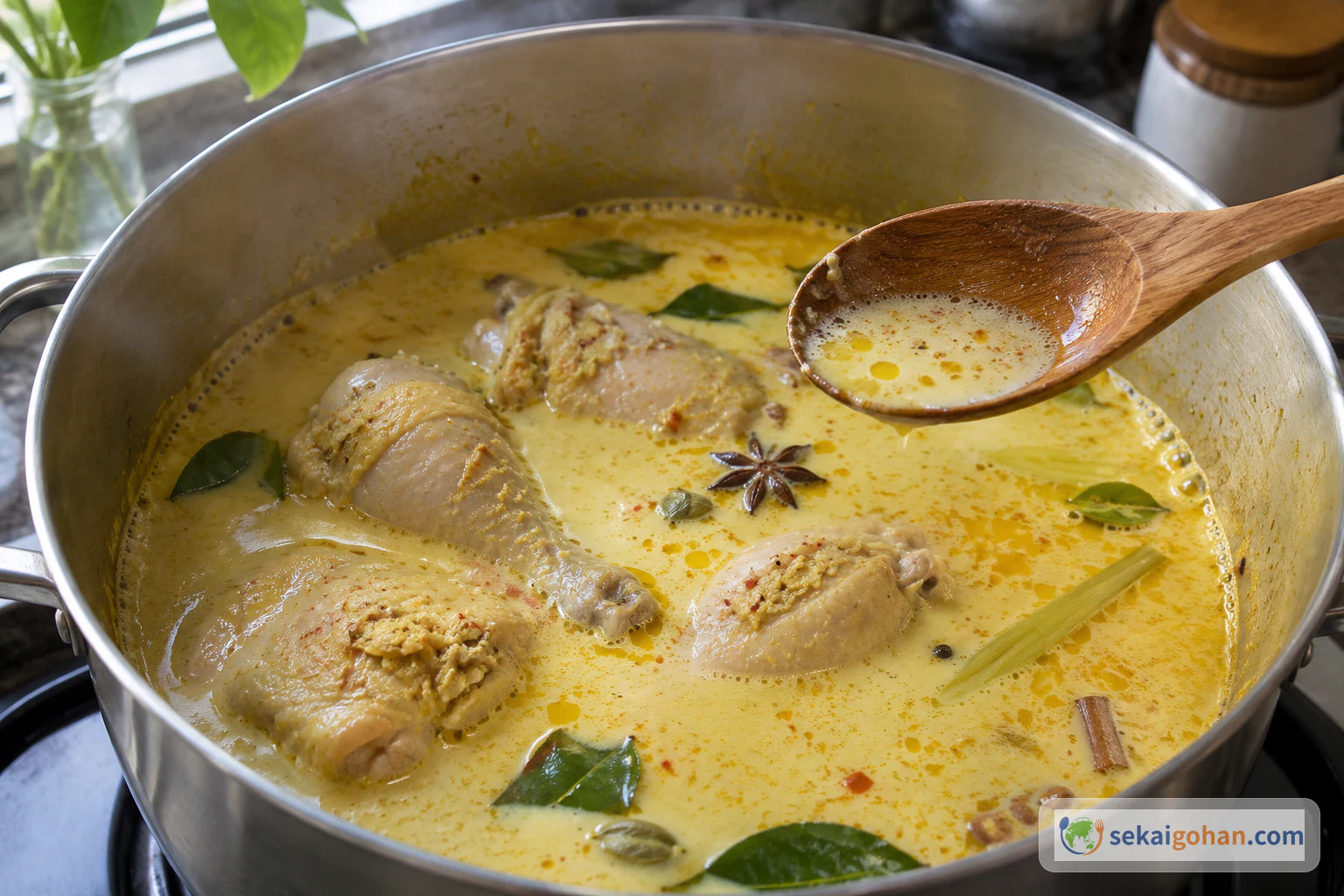
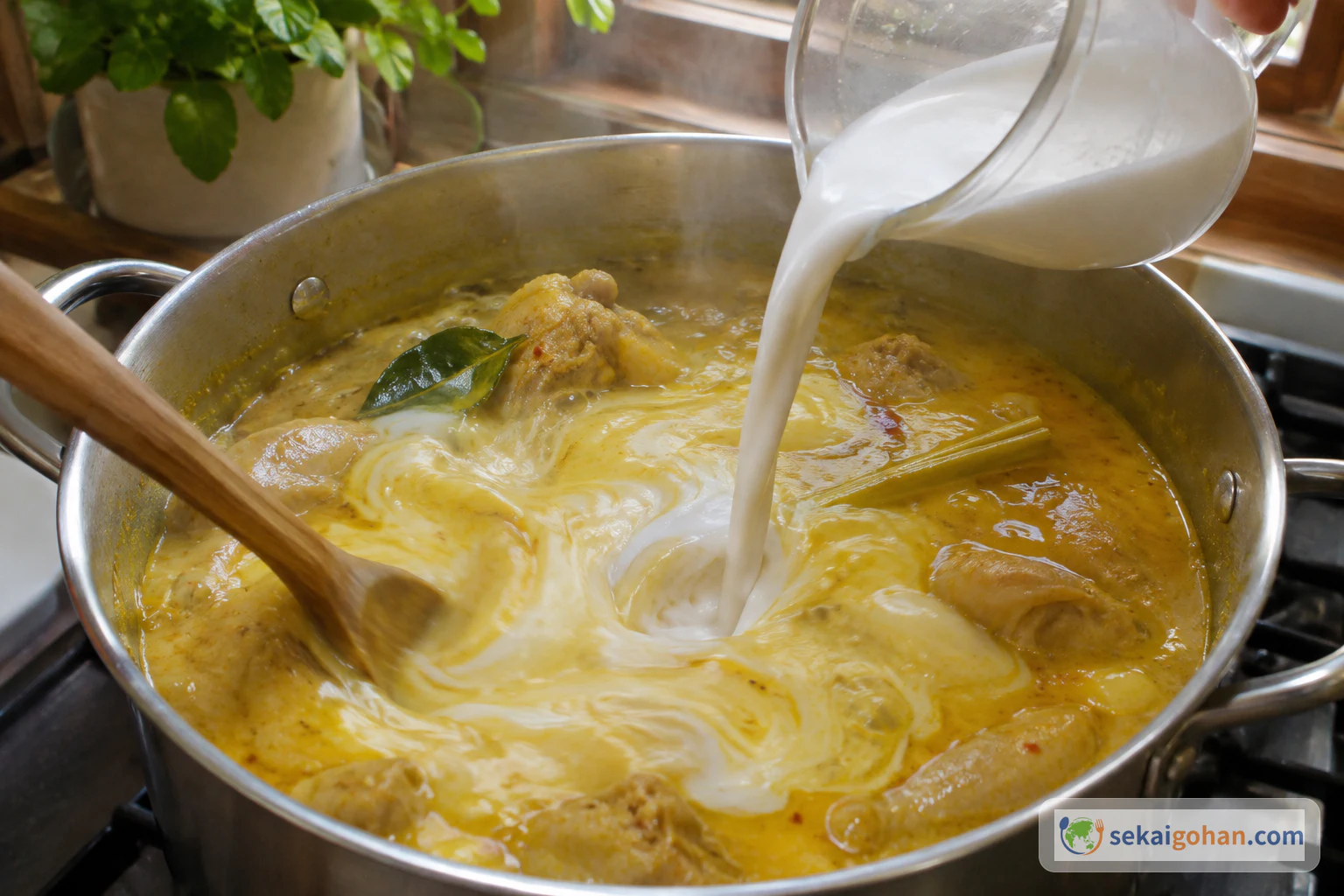
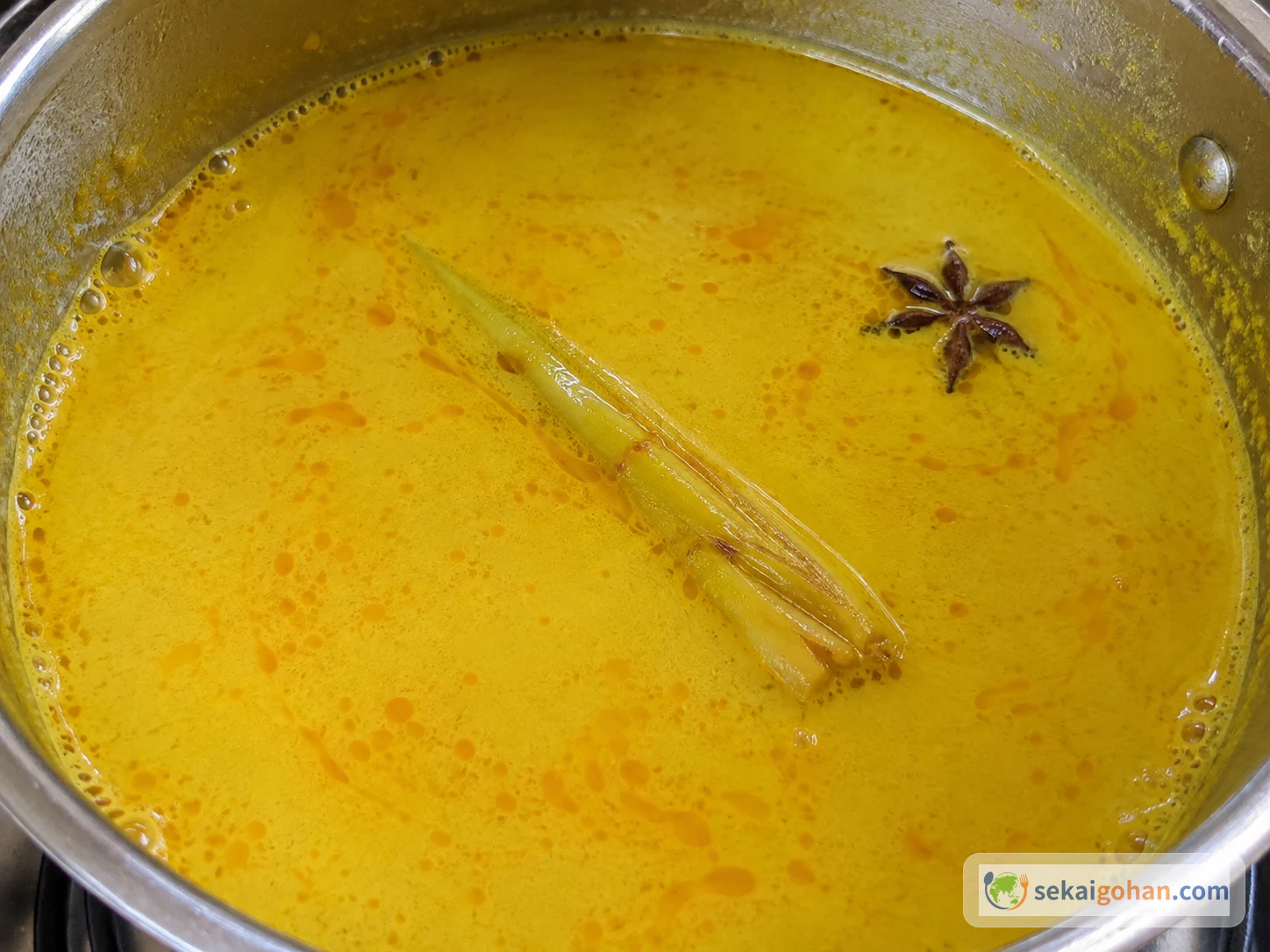
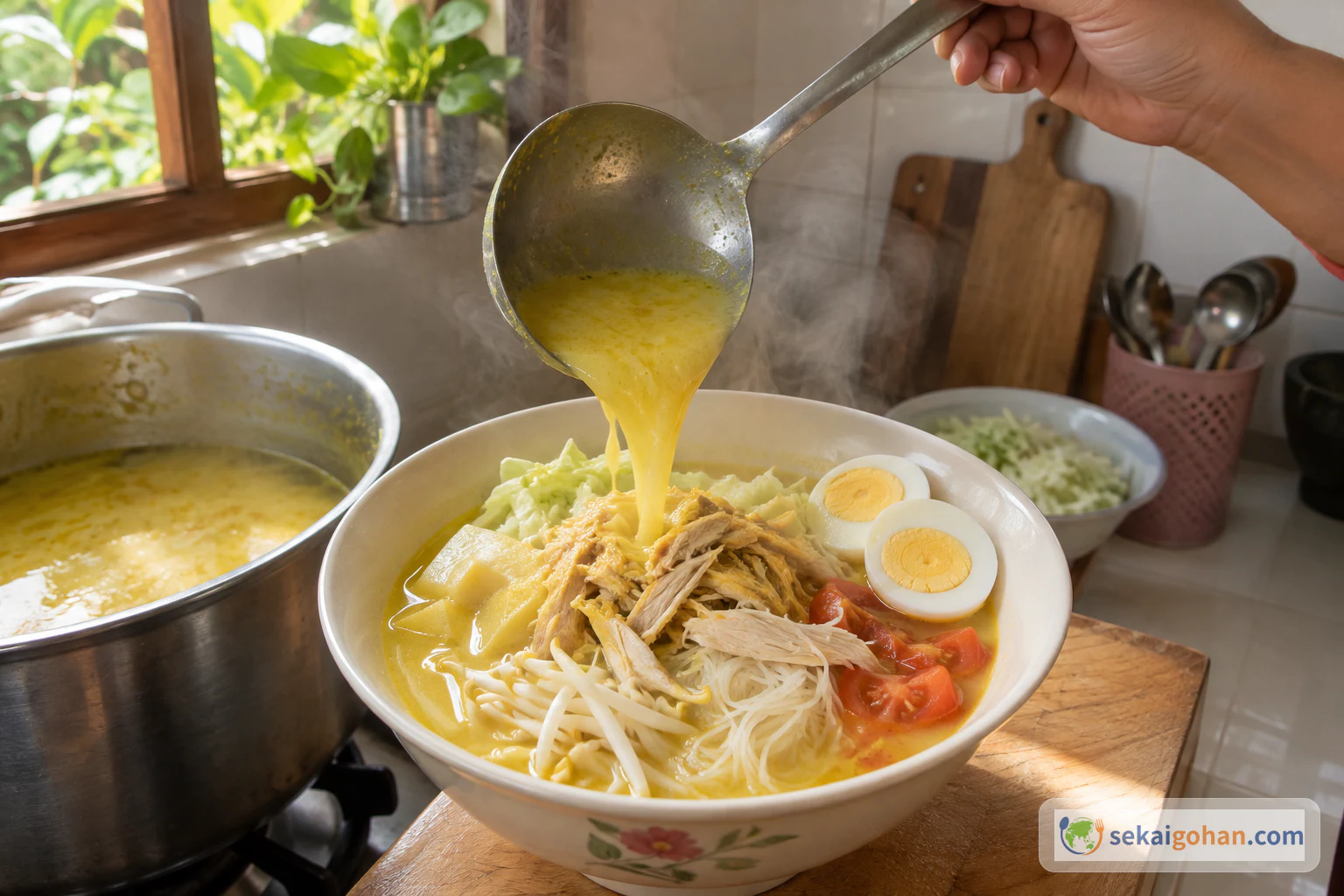
The spice paste hits the oil and the kitchen fills with turmeric, garlic and cumin. A few minutes later the oil around it has turned a deep yellow-red, and the raw edge of the garlic is gone. Later, when the thick coconut milk goes in, it swirls through the pot in white ribbons and the broth turns opaque and gold. That is soto Medan, the coconut milk chicken soup of Medan in North Sumatra. It is rich and gently spiced, scented with cardamom, star anise and kaffir lime leaf, and it is poured hot over bean sprouts, glass noodles, cabbage and shredded chicken, then sharpened at the table with lime and sambal.
Medan's Yellow Soto: Breakfast Shops, Chosen Fillings and a Port City's Spices
In Medan, soto is morning food. RM Sinar Pagi, which the current owner's parents opened in 1962, has been serving it for some sixty years. The doors open at 7 a.m., and locals and visitors arrive together while orders are written down on paper one after another. At the counter you choose what goes in your bowl: beef, paru (lung) or chicken. The broth over all of them carries coconut milk with cumin, nutmeg, turmeric and galangal.
What sets this soto apart from its Indonesian neighbours is the coconut milk. It makes the broth thick, opaque and deep yellow, heavier on the tongue than the clear yellow chicken broth of soto ayam. It also differs from Jakarta's soto Betawi, whose beef and milk give a pale, whitish soup. Medan also has noodle dishes in the same family, such as mie sop Medan, which belong on their own page. For another dish from Sumatra, mie Aceh brings noodles and spice in a different direction. The wider Indonesian table is collected under Indonesia.
Where the name comes from
The usual account places soto Medan in the early twentieth century, when it went by the name Soto Medan Batak. A second story follows: during Dutch rule, cooks added potato, carrot, green peas and beef to suit European tastes. Neither story rests on early written records, so where and how the dish began is not settled. Medan is a port city where Malay, Batak, Chinese and Indian cooking meet, and the layering of whole spices in this broth is often linked to Indian influence; that link, too, is a reading rather than a fact anyone has pinned down.
One soup, many pots
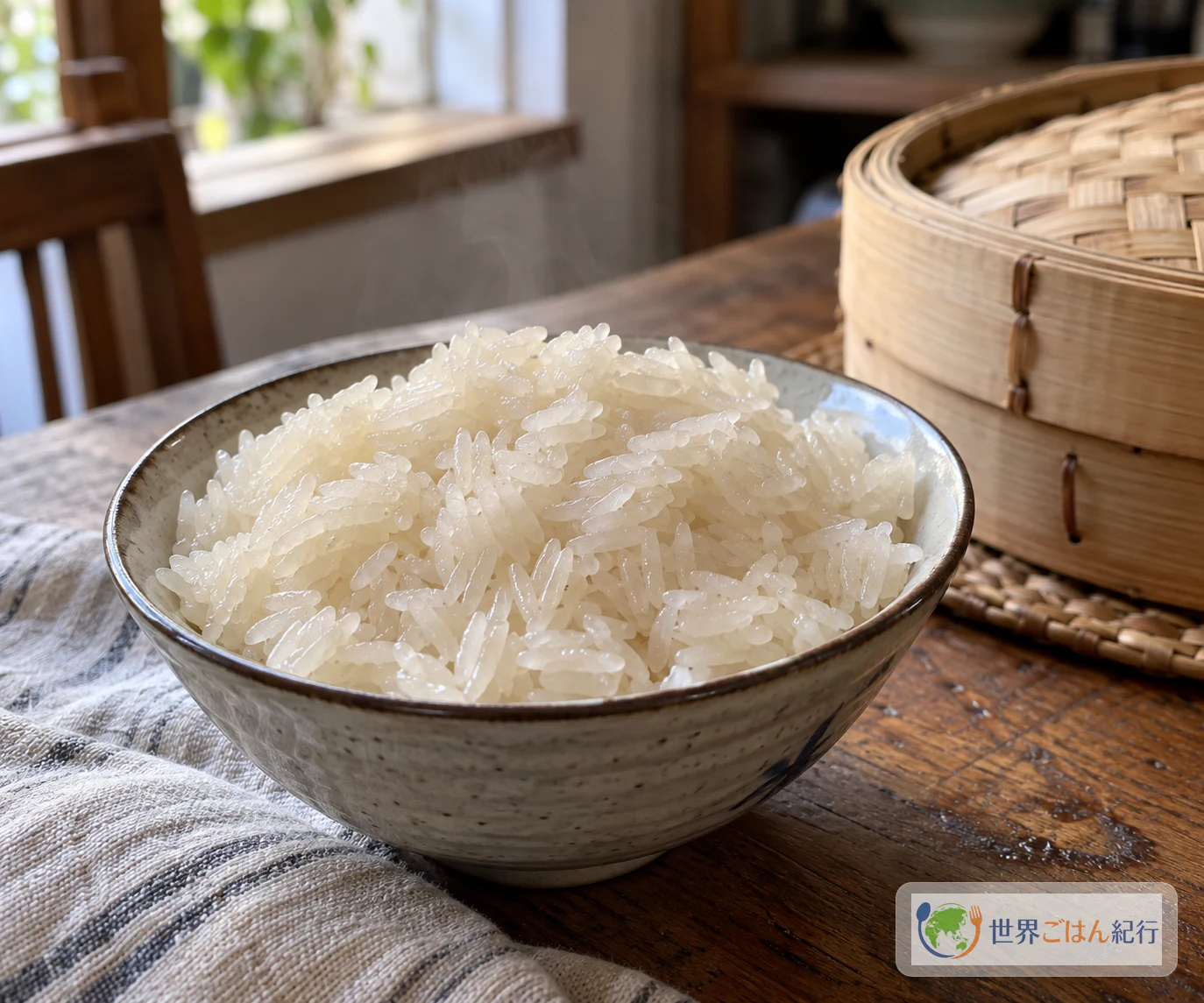
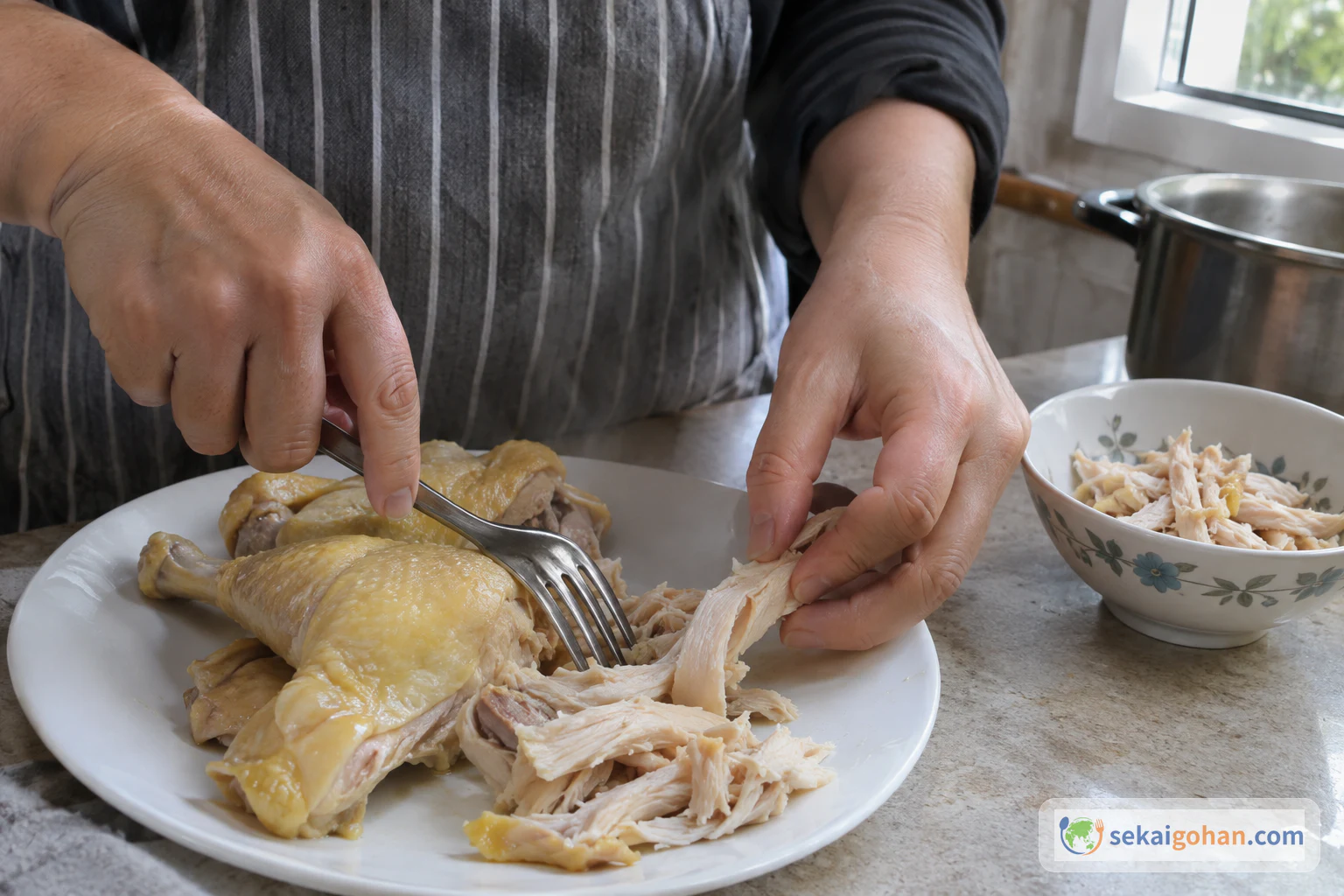
Every cook in Medan adjusts the pot. Some wash the chicken with lime and salt, cook it, then fry it golden before shredding. Some add galangal and coriander seed and use more candlenuts. Some add a spoon of sugar. Shops offer beef and shrimp alongside chicken. The pot here keeps to boiled, shredded chicken, no sugar, and a fixed set of five whole spices, so the coconut milk and spices stay clear and balanced. Whatever the filling, soto is eaten with white rice or ketupat, the compressed rice cake.
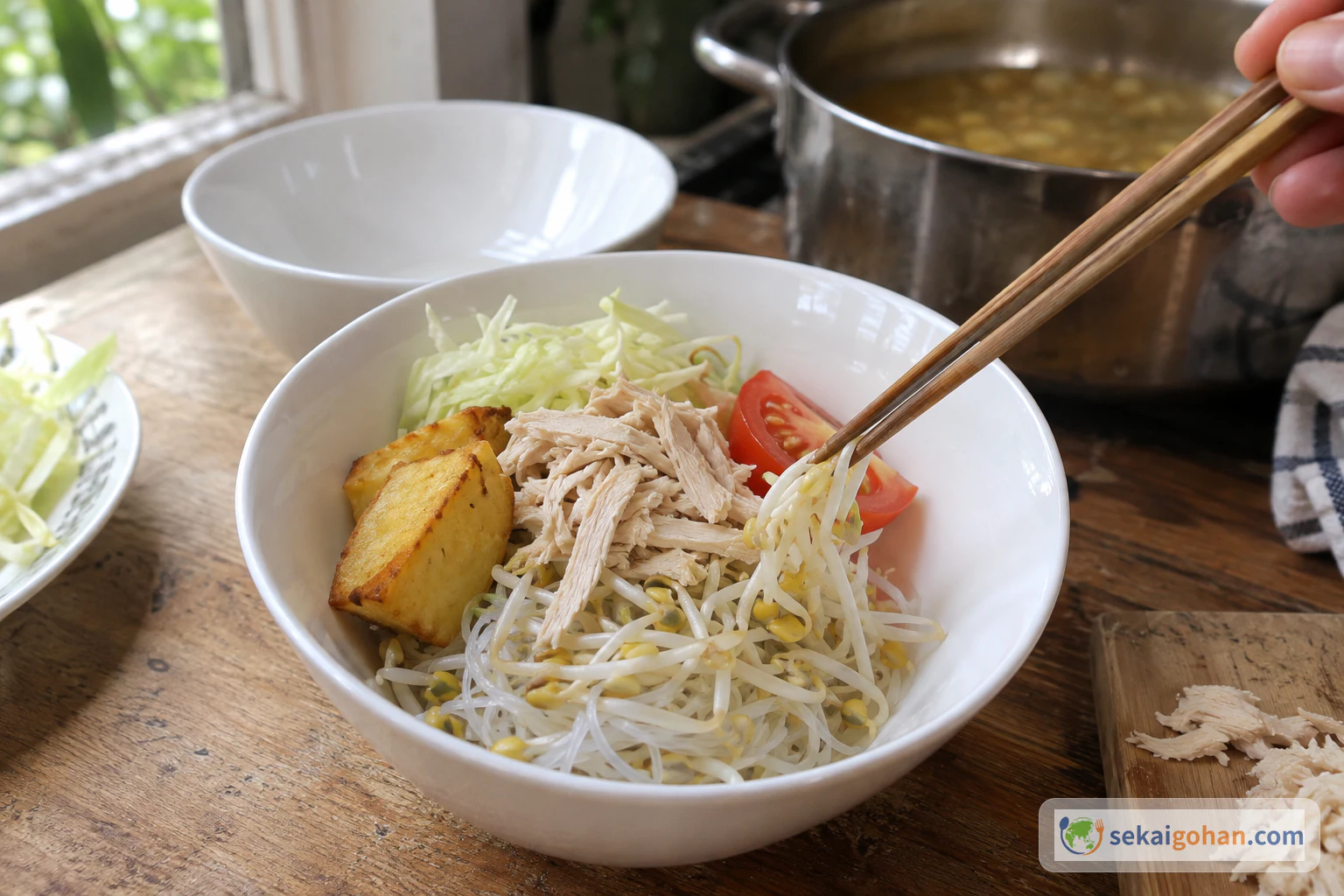
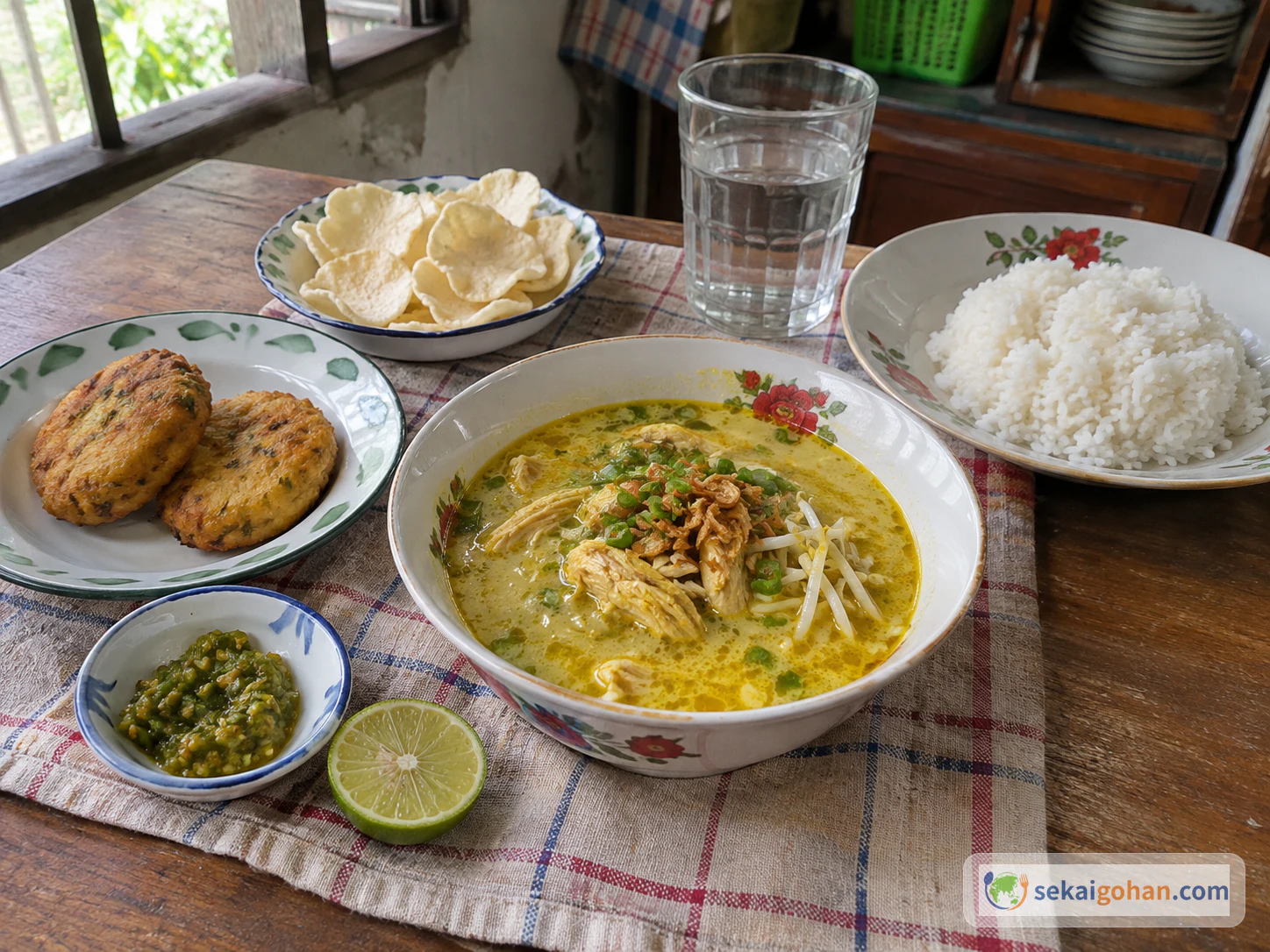
Soto Medan has two layers of extras. The isian (fillings) go into the bowl before the broth: bean sprouts, glass noodles, cabbage, fried potato, tomato, egg and chicken. The pelengkap (accompaniments) go on top or beside the bowl: fried shallots and scallion over the soup, and lime, potato perkedel and emping crackers on the side.
Ingredients (serves 8)
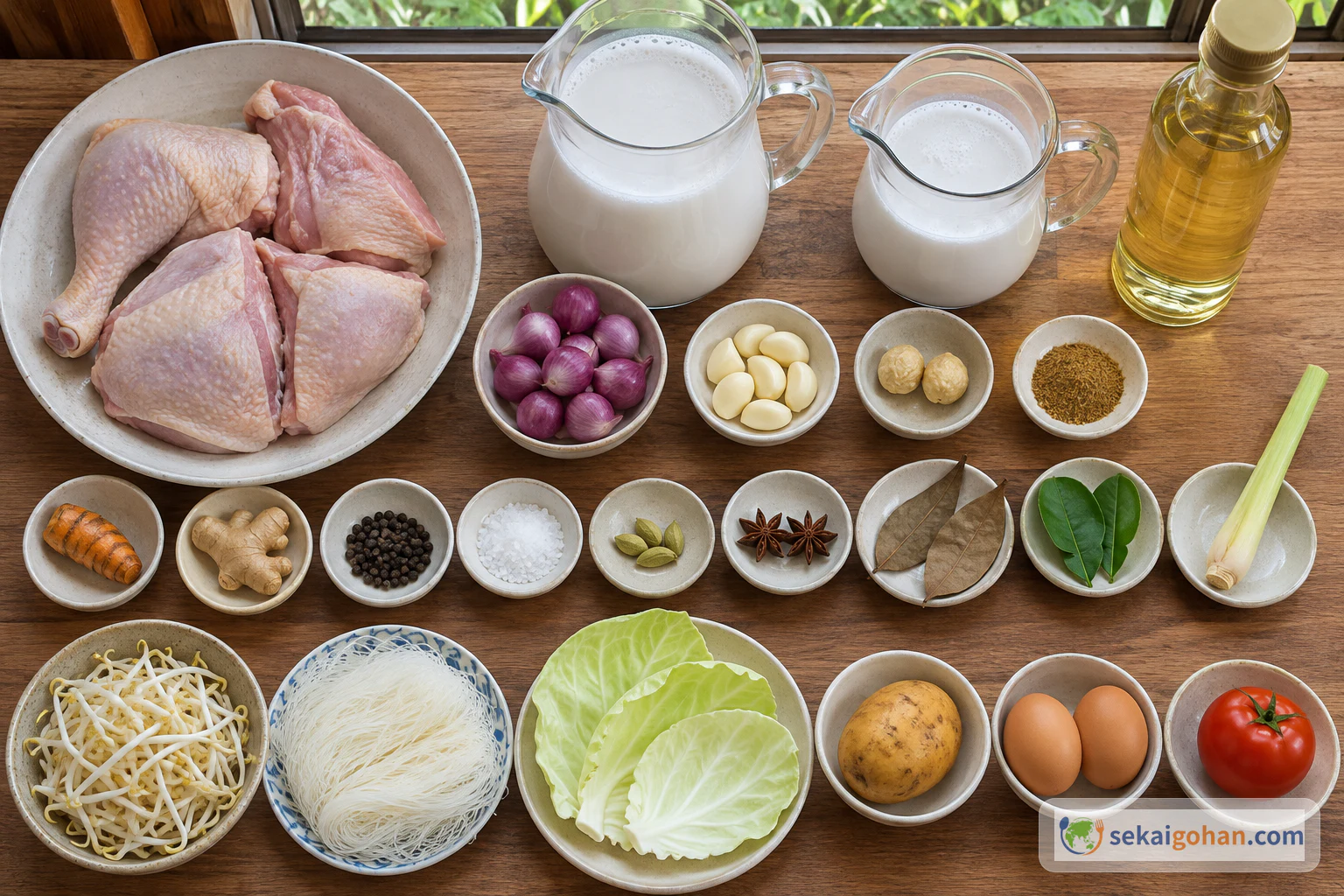
The only salt in the pot is the 2 tsp ground into the spice paste. Spread over eight bowls and a large volume of coconut milk, that seasons lightly. Taste once the broth is finished and add more to taste; each eater can also sharpen their bowl with lime and sambal.
This dish contains coconut and egg. Candlenuts are tree nuts, and emping is made from melinjo seeds. Many store-bought shrimp crackers and sambals contain shrimp, so check labels if you serve them. Check the coconut milk label for emulsifiers and other additives.
Equipment
- Mortar and pestle or a small food processor
- Large pot for parboiling and simmering, at least 3¼ quarts (3 L), heavy-bottomed
- Wide pan for frying the spice paste
- Small pan for frying the potato
- Saucepan for boiling the eggs
- Skewer and instant-read thermometer
- Ladle and eight soup bowls
Shopping and Substitutes: What Must Stay Medan
The whole spices and the coconut milk carry the dish, and most of them sit in the same aisle of an Indonesian or Southeast Asian grocer or online shop. Small bags are enough. Kaffir lime leaves are the one to track down first: frozen or dried both work, and without them the yellow broth loses its sharp outline. Choose green cardamom pods; black cardamom tastes of camphor and smoke and turns the broth into something else. Whole pods hold their fragrance through the simmer, while ground cardamom fades.
| Ingredient | What to buy | What a swap changes |
|---|---|---|
| Coconut milk | Unsweetened canned coconut milk | For the thin coconut milk, dilute canned coconut milk with hot water following the label. Coconut cream is thicker and makes the broth heavy at the same amount. Diluting with dairy milk adds a milky smell. |
| Salam leaves | Dried Indonesian salam leaves | Bay leaf smells completely different; it is a separate flavour, not a stand-in. |
| Lemongrass | Fresh or frozen | Dried is weaker. Keep to one stalk anyway rather than adding more. |
| Candlenuts | Candlenuts (kemiri) | Macadamia nuts give similar richness. Too many leave a heavy feel on the tongue. |
| Turmeric | Fresh turmeric root | Ground turmeric works; start with a little and adjust by colour and aroma. Too much turns bitter. |
| Cumin | Ground cumin | Whole seeds, dry-toasted and ground, smell brighter. More than the amount pushes the soup toward curry. |
| Shallots | Small shallots | Regular onion releases more water into the paste. |
| Chicken | A young whole chicken, or bone-in thighs | Native or free-range birds have more flavour and tougher fibres and take longer to soften. |
| Glass noodles | Mung bean noodles | Potato-starch glass noodles stretch and soften differently in hot broth. Check the starch on the pack. |
| Limes | Small limes | Any small, sharp lime works; add the juice bowl by bowl. |
| Emping | Melinjo crackers | Leave them out if you cannot find them. Shrimp crackers are a different food with a different allergen. |
Star anise is sold as star anise everywhere. Adding more than two pushes a licorice sweetness to the front of the broth.
Method: Paste, Simmer, Then Build the Bowls
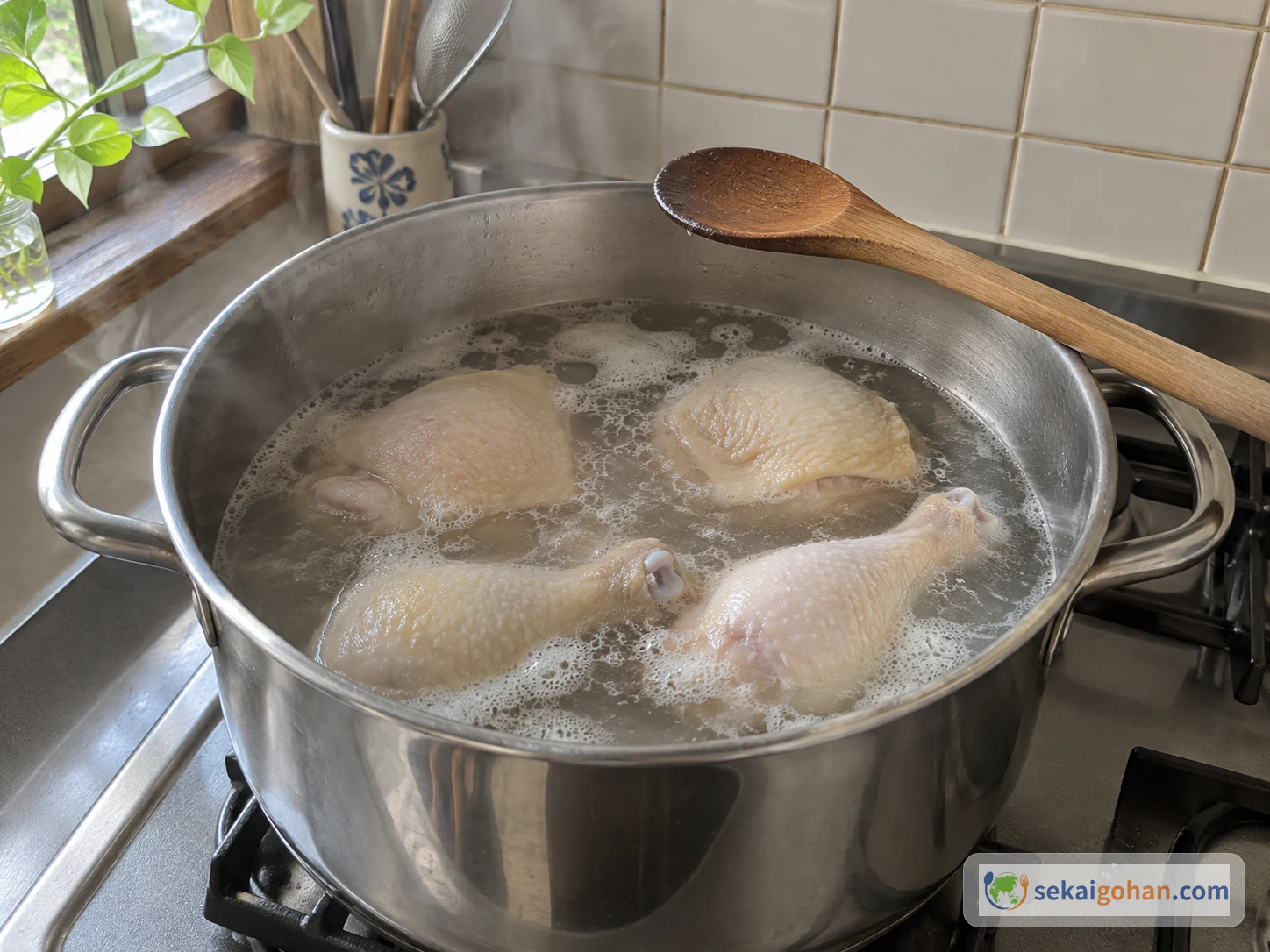
Grind the paste and prepare every filling before the chicken goes in the water, so the bowls are ready when the broth is. The chicken parboils first, and its cooking water stays in the pot to become the base of the broth. The long, low simmer in thin coconut milk is the hands-off stretch, though you still stir now and then. The thick coconut milk, the shredding and the assembly come quickly at the end.
When It Goes Wrong
| What you see | Why | What to do |
|---|---|---|
| Grainy broth with clear fat on top | The coconut milk boiled hard for too long, cold coconut milk went in, or the pot sat unstirred | Lower the heat and stir from the bottom. Split broth is safe to eat, but the texture turns rough. Next time, warm the thick coconut milk to room temperature first. |
| A raw, green taste | The spice paste was underfried, often with the turmeric still raw | Fry the paste until the oil turns yellow-red and the garlic smell is gone. Once the broth is made, this cannot be fried out. |
| A flat, blurred aroma | The kaffir lime leaves or lemongrass went in late or were left out | Fry the whole spices in the paste before it goes into the pot so their oils carry into the broth. |
| Tough chicken | A native or free-range bird needs a longer simmer | Keep simmering on low heat until the skewer slides in and the meat leaves the bone. |
| Bland broth | The salt is all in the paste and spreads over a large pot | Taste and add salt to taste, or let each eater season with lime and sambal. |
| Watery bowls | The sprouts and cabbage went in wet | Drain the vegetables thoroughly after blanching. |
Serving, Variations and Storage
At the table
Set soto Medan out as a full meal. The bowl goes in the centre, with white rice or ketupat, potato perkedel and emping crackers on their own plates, plus lime and a small dish of sambal. The sweetness and oil of the perkedel stand up to the weight of the coconut broth, and the bitter crunch of emping cuts through it. Keep the chili out of the pot; sambal in a separate dish lets each person set their own heat. If you are out of sambal, these substitutes cover it.
Variations
- Fried, then shredded chicken. After the simmer, fry the cooked chicken pieces golden before shredding. The shreds gain browned edges and a toastier flavour against the soft broth.
- Rice in the bowl. Put a small spoonful of white rice under the fillings. It soaks up the broth and turns the bowl into a heartier meal.
- Other fillings. Medan shops offer beef, paru and shrimp alongside chicken. Each one is a separate pot; at home, one filling is plenty.
Leftovers
Cool the broth quickly, transfer it to a clean covered container and refrigerate promptly; finish it by the next day. Do not leave cooked soup sitting at room temperature for long. Reheat over low heat, stirring, until it reaches 167°F (75°C), without letting it boil hard. Store the fillings separately and assemble fresh bowls. Do not freeze it, because coconut milk separates when it thaws.
Frequently asked questions
Can I use chicken breast?
You can, but breast meat turns dry and stringy when shredded after a long simmer. Bone-in thighs are the better choice: they shred easily into eight portions and stay juicy. Bone-in pieces take longer to soften than boneless ones, so go by the skewer and the thermometer.
How do I make it spicy?
Serve sambal rawit or any chili sambal in a small dish and let each person stir it into their bowl. Adding chili to the pot makes the whole batch hot and covers the cardamom and lime leaf.
Can I use rice vermicelli instead of glass noodles?
Yes. Rice vermicelli gives finer strands and soaks up more broth than mung bean noodles, so the bowl turns softer as it sits. Soak it following the pack and drain it well before it goes into the bowls.