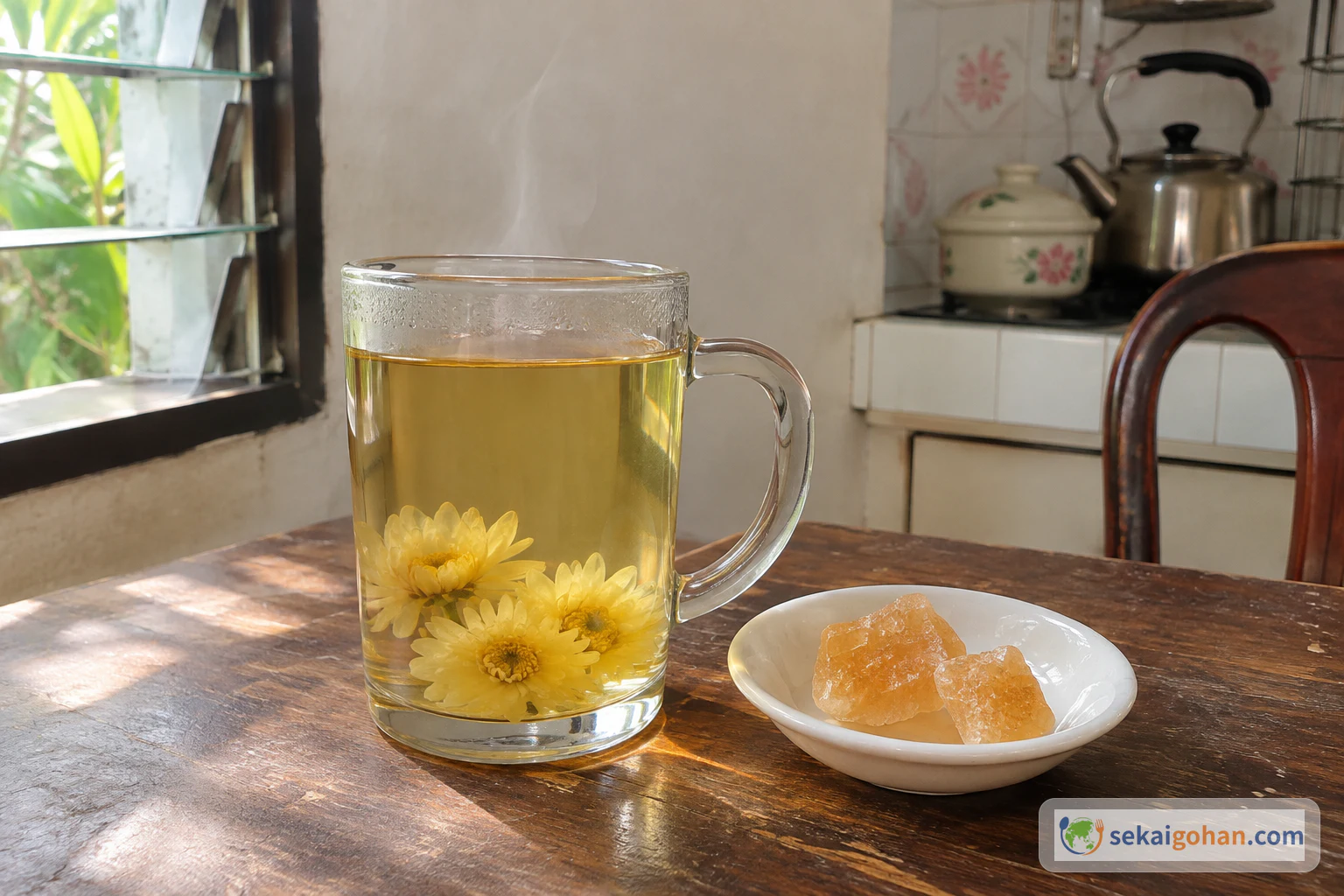
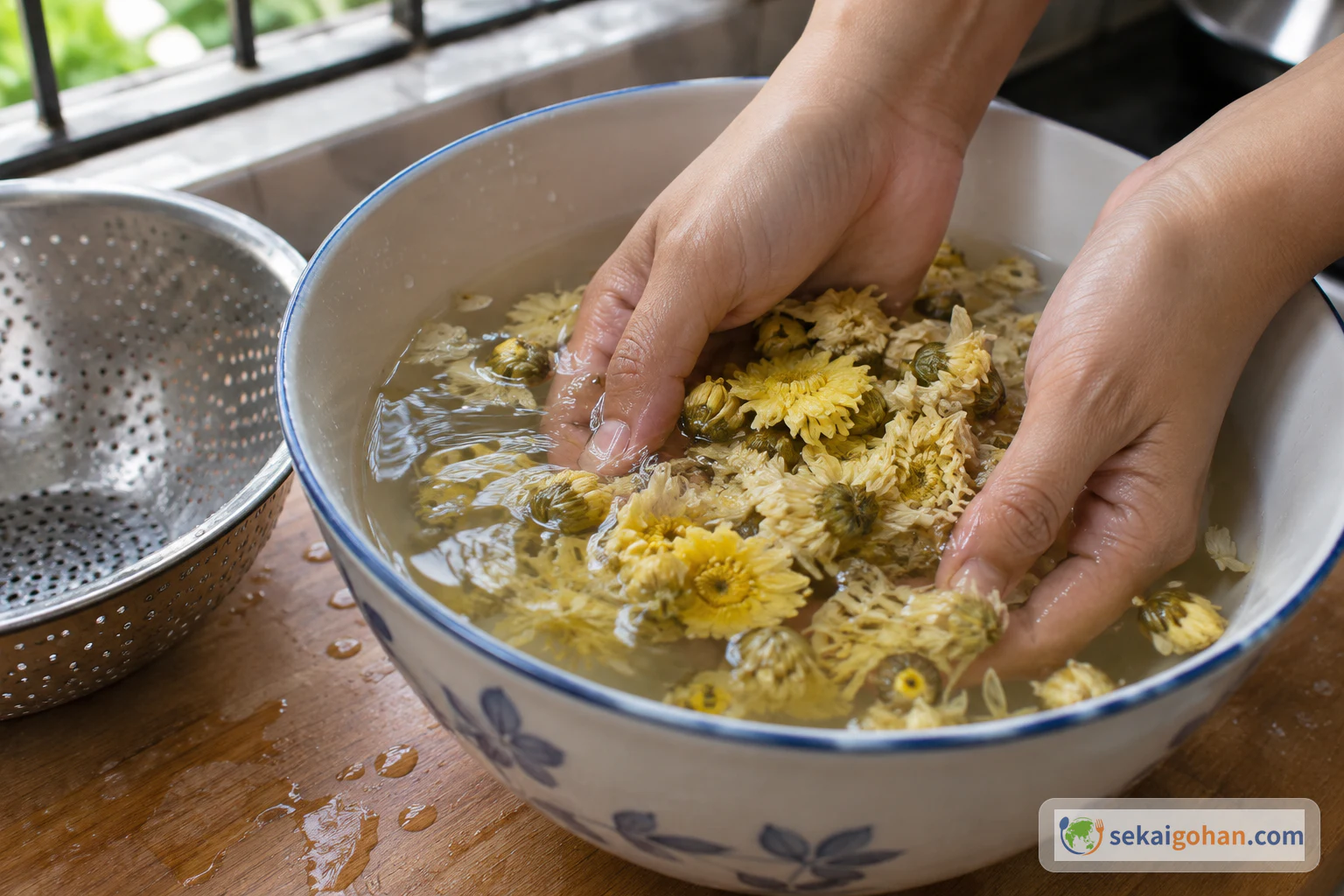
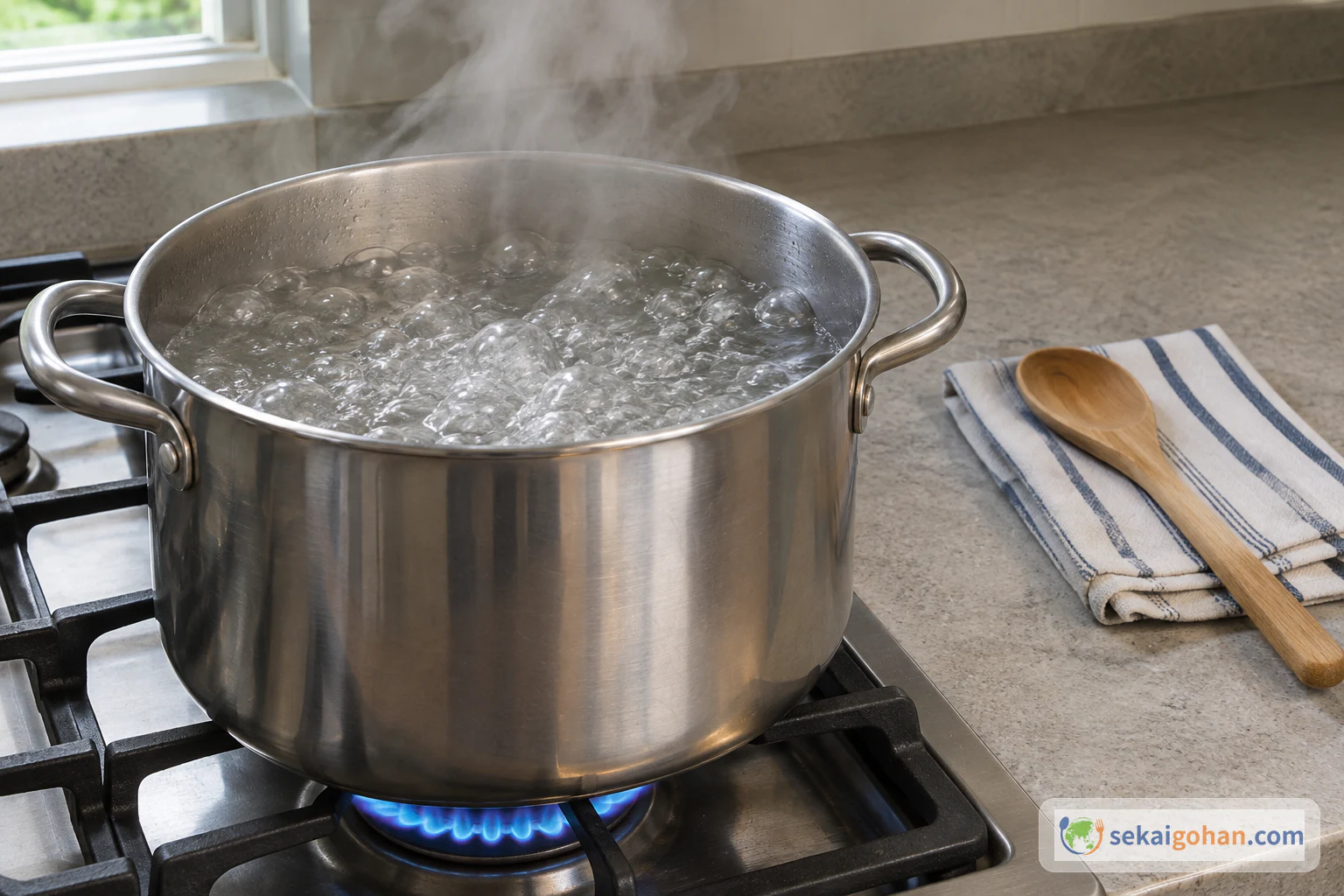
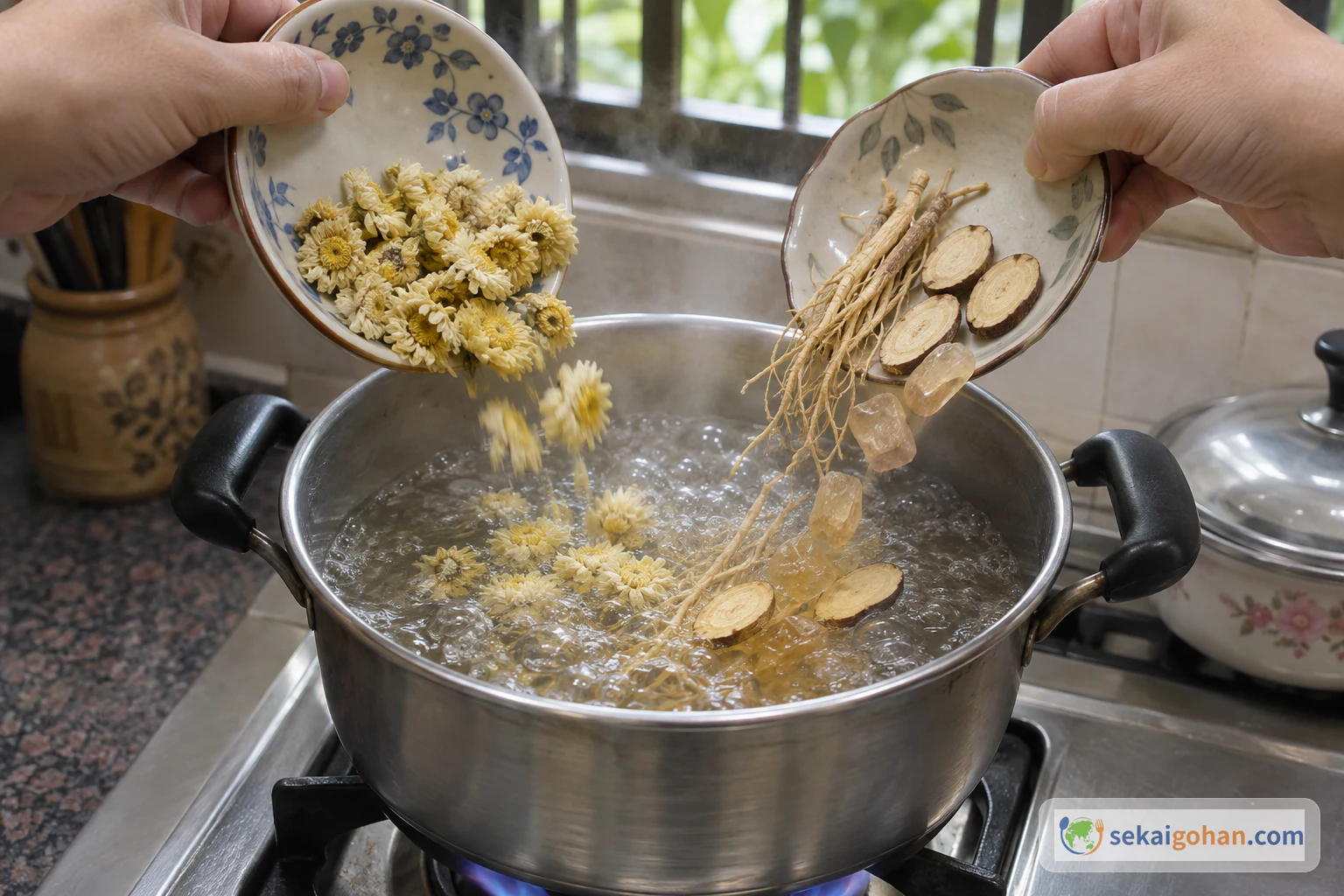
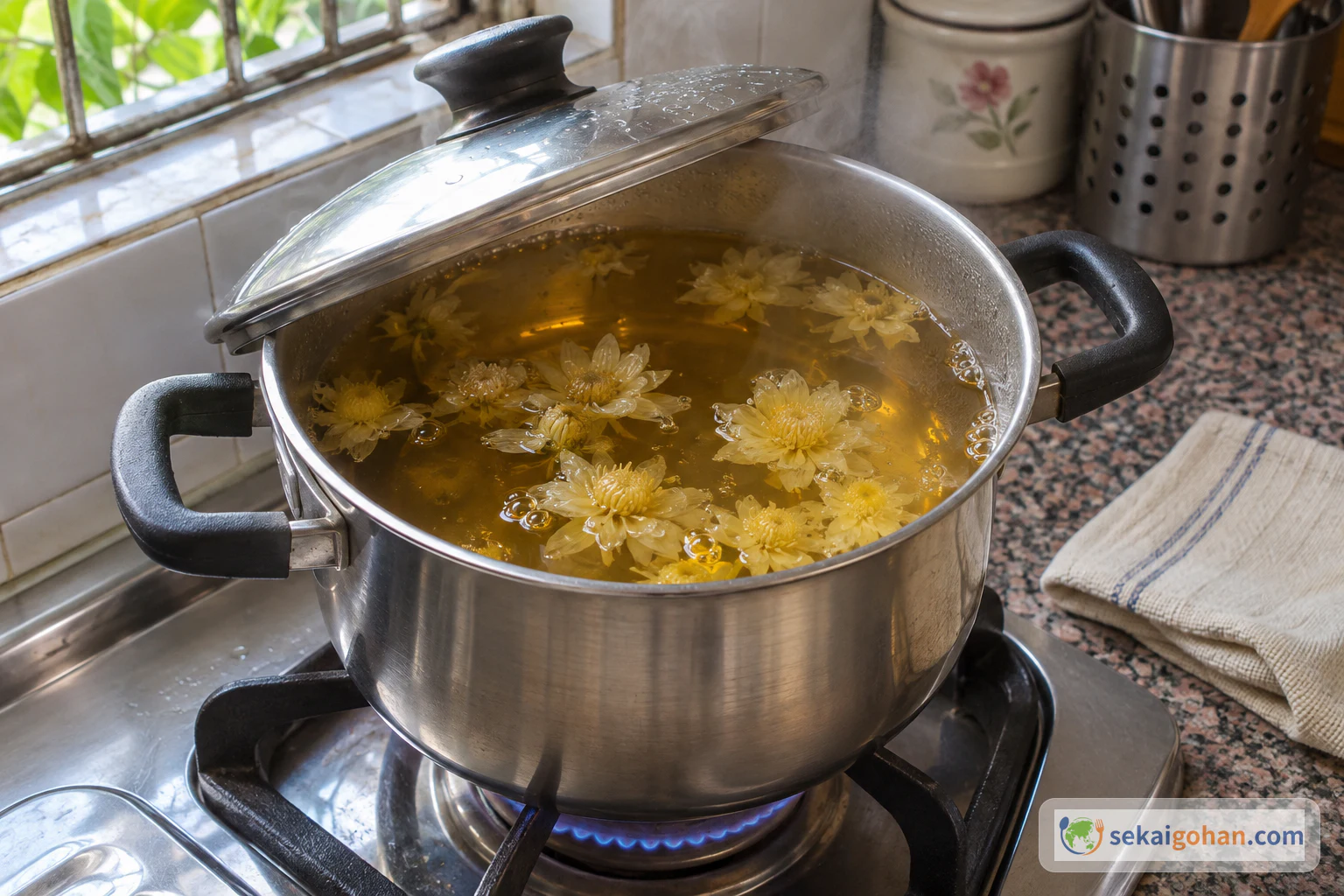
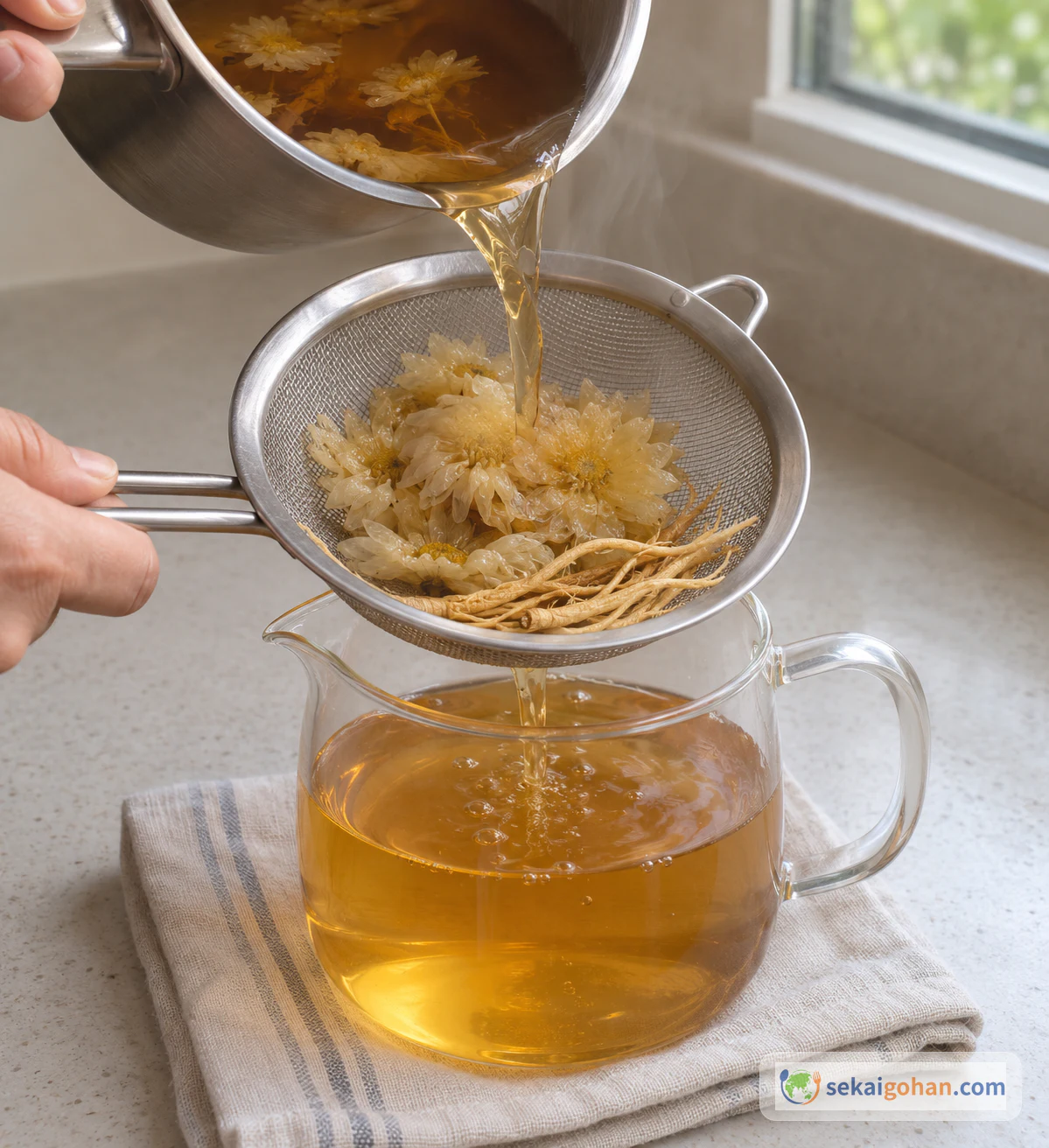
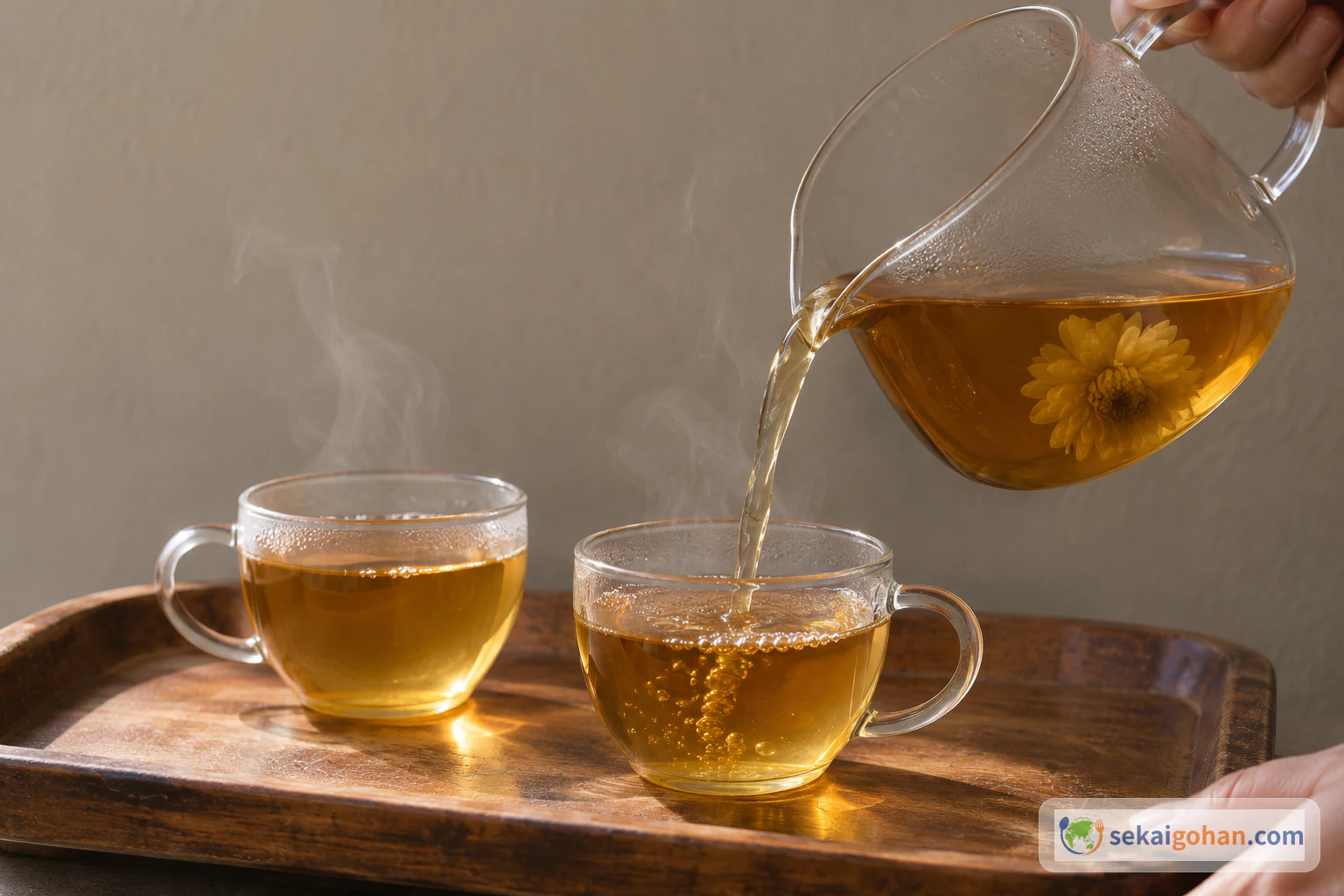
The dried flowers hit the boiling water looking like small papery buttons. Within minutes they loosen and spread across the surface, the lid goes on, the flame drops low, and the water turns pale gold and then amber while the kitchen fills with a soft, grassy, honeyed smell. That pot is teh krisantimum, the chrysanthemum tea of Malaysia, a flower brew that the Chinese community there drinks hot from the stove or cold from the fridge. It tastes gently floral, lightly sweet from rock sugar, with a faint bitterness from the petals underneath. The Ipoh home style simmers the flowers with American ginseng whiskers and slices of licorice root, which give the sweetness more depth and body.
From Ipoh's Herbal-Tea Stalls to the Home Pot
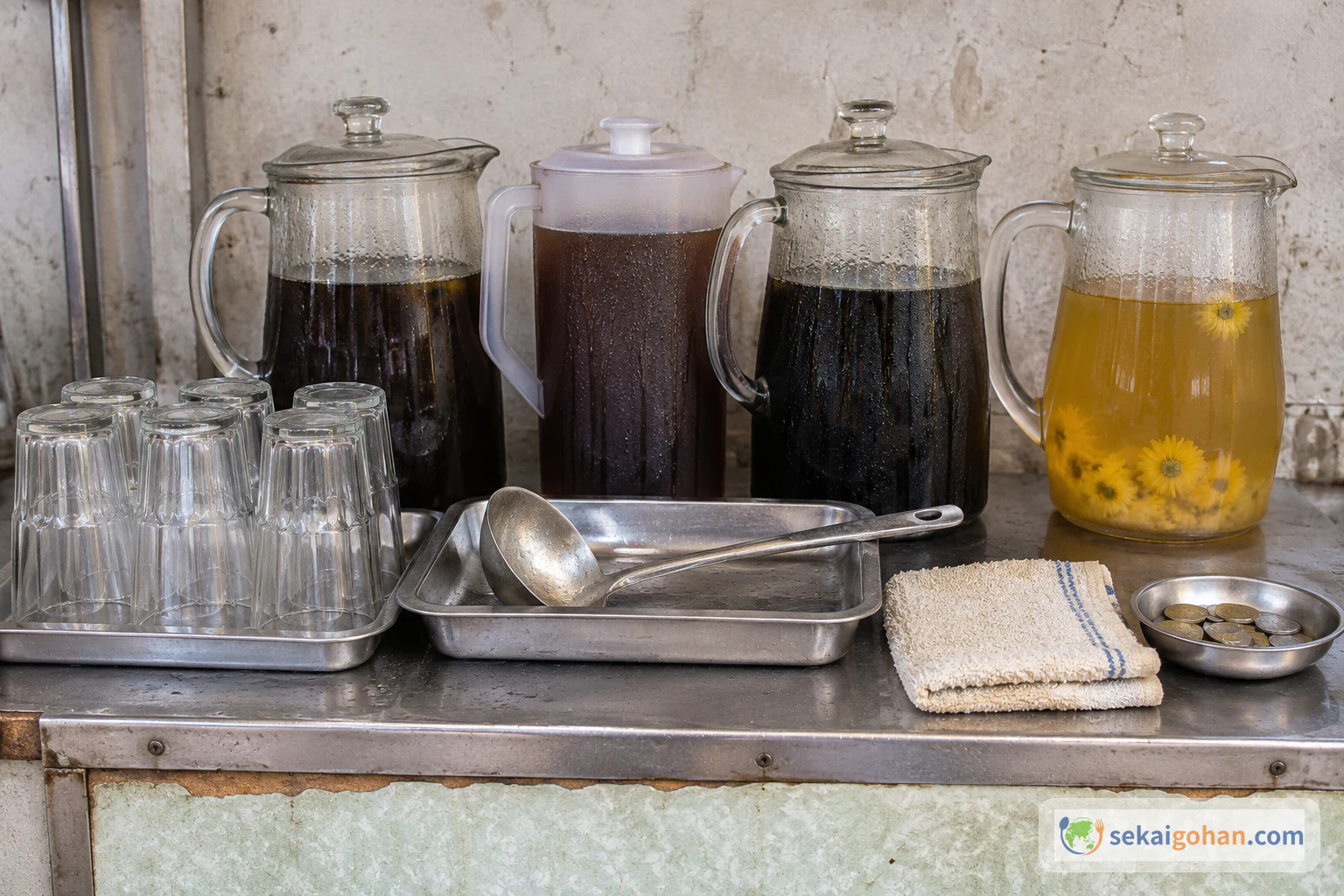
Chrysanthemum tea is a flower tea of Chinese origin, and in Malaysia it belongs to the family of leong char, the Cantonese name for cooling herbal teas (liang cha in Mandarin). These drinks are brewed from roots, flowers, fruit and cane, and sold by the cup. Chrysanthemum is among the gentlest of them: clear, amber and lightly sweet.
Teh means tea in Malay and bunga kekwa means chrysanthemum flower, so the everyday Malay name is teh bunga kekwa, often shortened to teh kekwa. In Chinese it is 菊花茶. Teh krisantimum is the name printed on cans and cartons in Malaysian shops. In Indonesia the same drink is called teh krisan.
The roadside stalls
In Ipoh in the late 1960s and early 1970s, herbal-tea stalls stood along the roadside. People called the women who ran them leong char mui, the herbal-tea aunties. A customer chose between chrysanthemum, luo han guo, winter melon, sugarcane and wong lo kat, and a cup of chrysanthemum tea cost 20 to 50 sen. The stalls still trade in Ipoh today. In the hot season of March 2026, one herbal-tea stall in the city went from about 50 customers a day to about 100, with bitter herbal teas and a chrysanthemum-sugarcane tea among the best sellers. One customer there said they drink chrysanthemum tea and soy milk to get through the heat, and the stallholder talks of such teas as cooling the body. That is the traditional way of talking about it; the reason to make it is the taste.
Every household's pot
At home the drink changes from kitchen to kitchen. Some families simmer just a few flowers with rock sugar until the water takes on colour. Others add ginseng whiskers, with their own amounts of flowers and water. The version here is an Ipoh home pot, made in a large batch with ginseng whiskers and licorice alongside the flowers, so the sweetness has layers rather than a single sugary note.
Malaysian supermarkets also stock chrysanthemum tea in cans and cartons, chilled and lighter, with labels reading Teh Krisantimum, Kurang Gula (less sugar) and Menyejukkan & Menenangkan (cooling and calming). The canned tea is pleasant and thin. The home pot smells far more of flowers, and you decide how sweet it is.
Ingredients
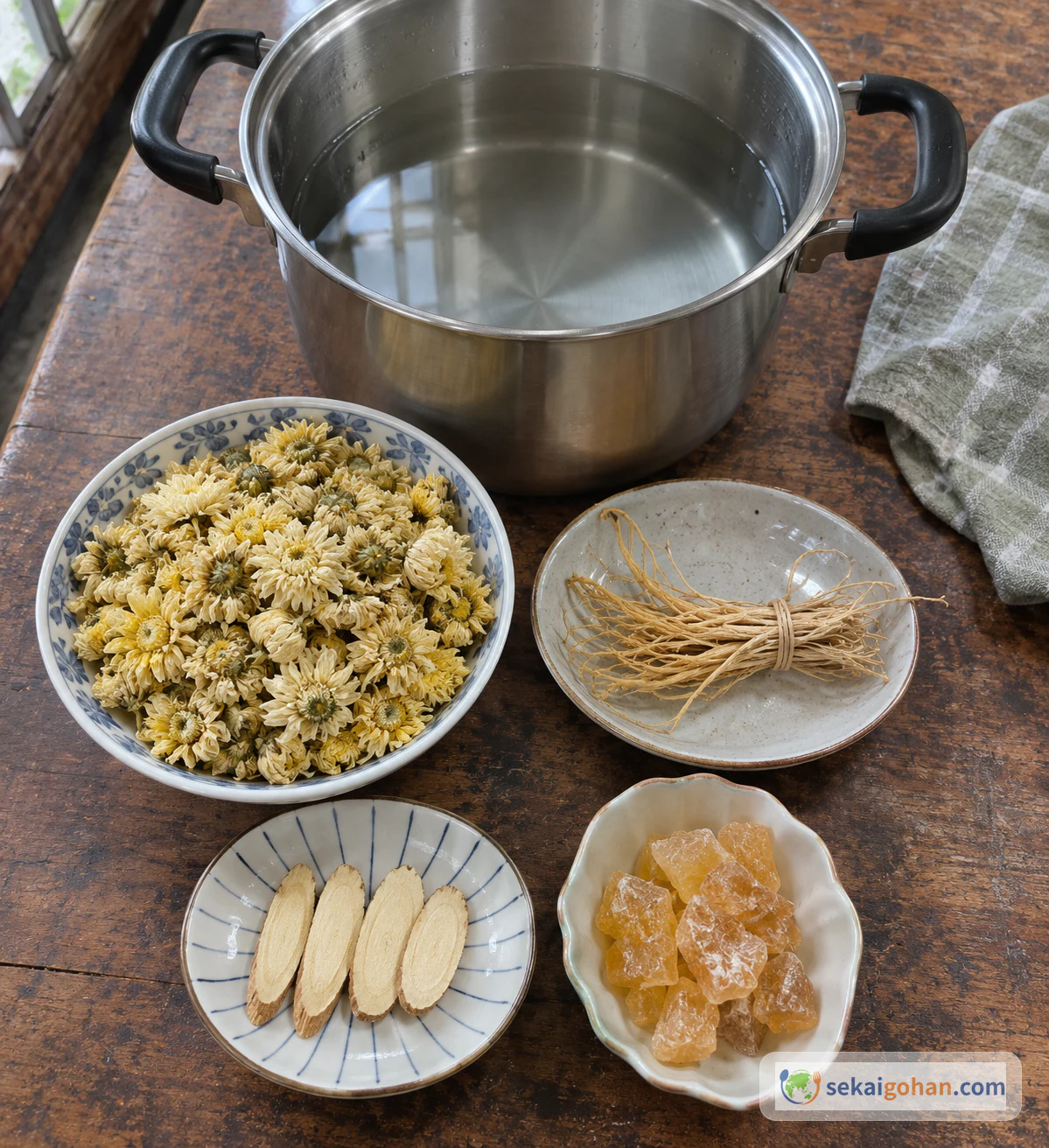
This tea contains licorice root. Drinking large amounts of licorice over a long time can cause serious side effects, including raised blood pressure and low potassium, and people with high blood pressure, heart disease or kidney disease are at particular risk. Large amounts during pregnancy have been linked with preterm birth and harm to the baby, and very little is known about licorice while breastfeeding. Licorice products differ in makeup, so there is no amount that can be called safe. Treat this as an occasional drink, not one to drink in quantity every day. If you are pregnant, breastfeeding or under a doctor's care, ask your doctor first, and use the licorice-free version below. If you react to ragweed, mugwort or other daisy-family pollens, skip flower teas or start with a small cup, and ask your doctor if you are unsure.
Equipment
- A lidded pot that holds at least 3¼ quarts (3 L)
- A bowl and a colander for rinsing the flowers
- A fine-mesh strainer
- A heatproof jug or large heatproof measuring cup
- A covered container for the fridge
Choosing and Substituting
All four dry ingredients sit side by side in Chinese grocery stores and herbal shops, and they are easy to find online. Buy dried chrysanthemum sold for eating or drinking. Garden or florist chrysanthemums, and flowers of unknown origin, do not go in the pot. You will see names such as hang bai ju (杭白菊) and gong ju (貢菊) on the bags. White types taste lighter and more delicate; yellow types have a stronger scent.
Ginseng whiskers are the fine rootlets of American ginseng, sold under the name yeong sum soo or ginseng whiskers. Licorice root is sold as dried slices; buy slices rather than powder, since this recipe counts them. Rock sugar comes in large amber or clear lumps and dissolves slowly.
| If you have | What changes |
|---|---|
| No ginseng whiskers | Leave them out. The tea loses some body and sweetness, and the flower scent comes forward |
| No licorice, or you want to avoid it | Leave it out. The sweetness becomes flatter; add about ¼ oz (5 to 10 g) more rock sugar |
| Small sugar crystals instead of rock sugar | They dissolve faster and taste a little lighter |
| Ordinary white sugar | It sweetens, but the flavour shifts away from the rounded rock-sugar taste |
Keep the chrysanthemum amount and let everything else flex. The drink should taste of flowers first, sugar second, and never of medicine. If the licorice or ginseng starts to lead, cut those next time and leave the flowers alone.
Method
Everything is measured before the water boils, because all four dry ingredients go in at the same moment. After that the pot looks after itself for half an hour on low heat, and the only waiting left is for it to cool enough to strain safely.
When It Goes Wrong
| What you see | Why | What to do |
|---|---|---|
| Bitter or astringent | Simmered past 30 minutes, boiled hard, or too many flowers | Keep the flame low and stop at 30 minutes. To rescue a batch, thin it with hot water; the whole flavour gets lighter |
| Little flower scent | High heat, a long boil, or kept hot for hours after brewing | Hold a gentle simmer and reheat only what you are about to drink |
| Too sweet | 3¼ oz (90 g) rock sugar is more than you like | Next time use 2 oz (60 g); the petals' bitterness shows more |
| Cloudy | Unrinsed flowers, a coarse strainer, or straining while very hot | Rinse in step 1, use a fine mesh, and let the pot cool first |
| Burnt smell | Flame too high or a thin-bottomed pot | Start again in a heavy pot on low heat; the scorched smell carries into the tea |
| Harsh licorice edge | Large slices | Use 3 slices next time and keep the 30 minutes |
Serving, Variations and Storage
At the table
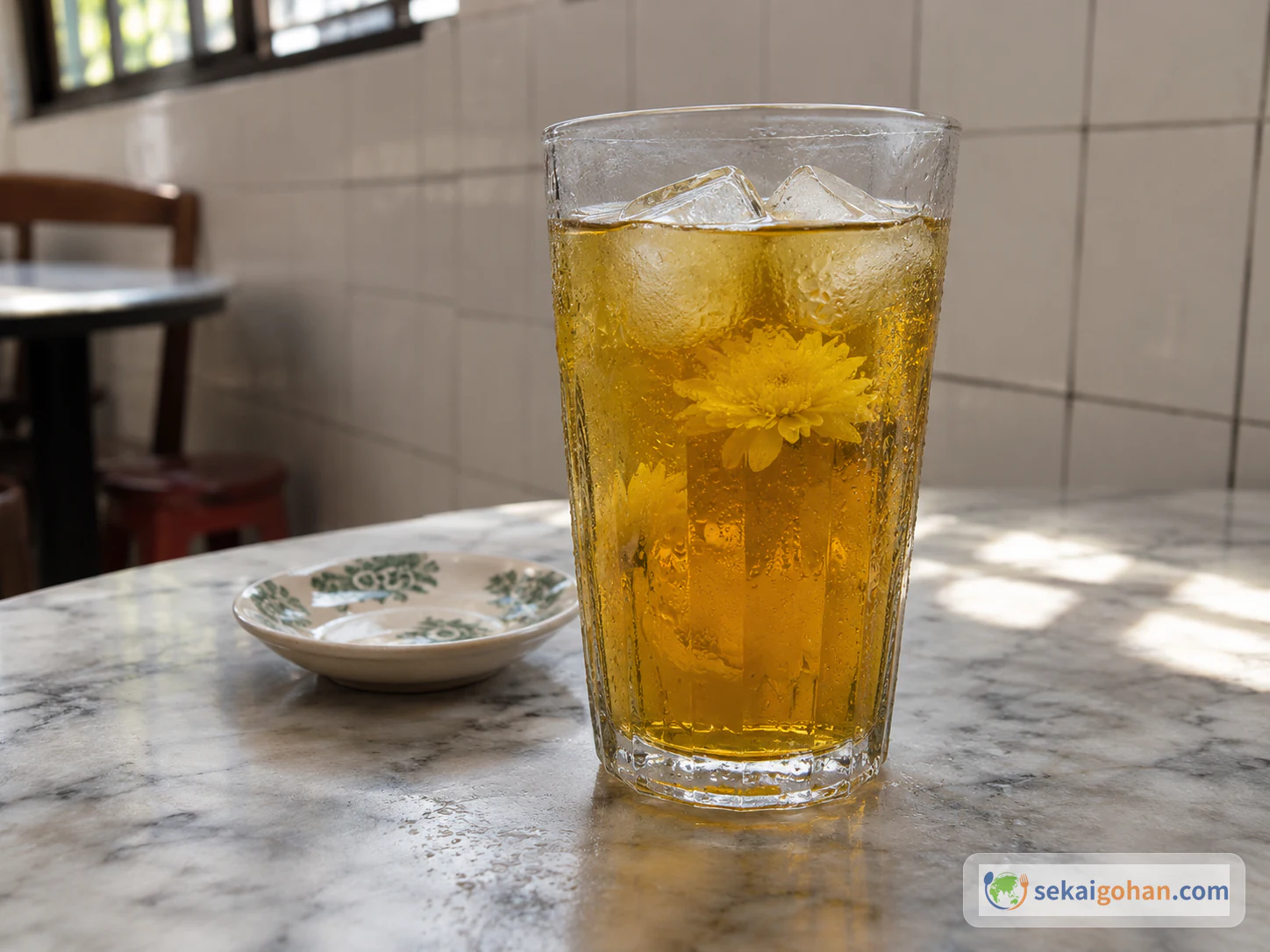
Chrysanthemum tea is drunk warm or cold; the canned tea is sold chilled. To serve it cold, chill the strained tea in the fridge and add only one or two ice cubes; melting ice dulls the flower scent quickly.
Variations
- Half batch. Halve everything: 1¼ oz (35 g) flowers, a scant ¼ oz (5 g) ginseng whiskers, 2 licorice slices, about 1½ oz (45 g) rock sugar and 5¾ cups (1,375 ml) water. It fits a pot of about 2 quarts (2 L). Keep the simmer at 30 minutes; if it tastes thin, add flowers next time rather than cooking longer.
- Without licorice. For anyone avoiding licorice. Add about ¼ oz (5 to 10 g) more rock sugar to make up for the lost depth.
- Less sweet. Drop the rock sugar to 2 oz (60 g). The petals' bitterness comes forward, so make the full-sugar pot once first and adjust from there.
- Ginseng-forward, smaller pot. Another Malaysian home style uses 1 oz (30 g) flowers, ½ oz (15 g) ginseng whiskers and about 8½ cups (2 L) water, with rock sugar to taste. Boil the flowers and sugar for 10 minutes, add the ginseng whiskers and simmer on low for 5 minutes more. It is a separate recipe with a quicker, rootier cup; keep its amounts apart from the Ipoh pot.
Storage
Once the tea has cooled, pour it into a covered container and refrigerate promptly; as a rough editorial guide, drink it within 2 to 3 days, and keep it out of room temperature. Reheat in a pot until just short of boiling, or in the microwave. Reheated tea has less aroma than a fresh pot, so warm only what you will drink.
Frequently Asked Questions
Does chrysanthemum tea contain caffeine?
No tea leaves go into it, so a pot made from these ingredients has no caffeine from tea. For canned or boxed chrysanthemum tea, read the ingredient list.
Can I make it with just flowers and sugar?
Yes. Some Malaysian homes simmer only chrysanthemum and rock sugar in water until the colour comes out, sweetening to taste. The result is lighter and more purely floral, without the rounded sweetness that ginseng and licorice bring.
Why does the canned tea taste so different?
Canned and boxed chrysanthemum tea is sold chilled and made lighter, often with reduced sugar. A home pot simmered with ginseng and licorice smells much more strongly of flowers and has a deeper, layered sweetness that you can set yourself.
Is it a medicine?
It is a drink. Herbal-tea stalls describe it as cooling, and some cans say "cooling and calming", which is the traditional way people talk about leong char. Enjoy it for the taste, and follow the licorice guidance above if you drink it often.