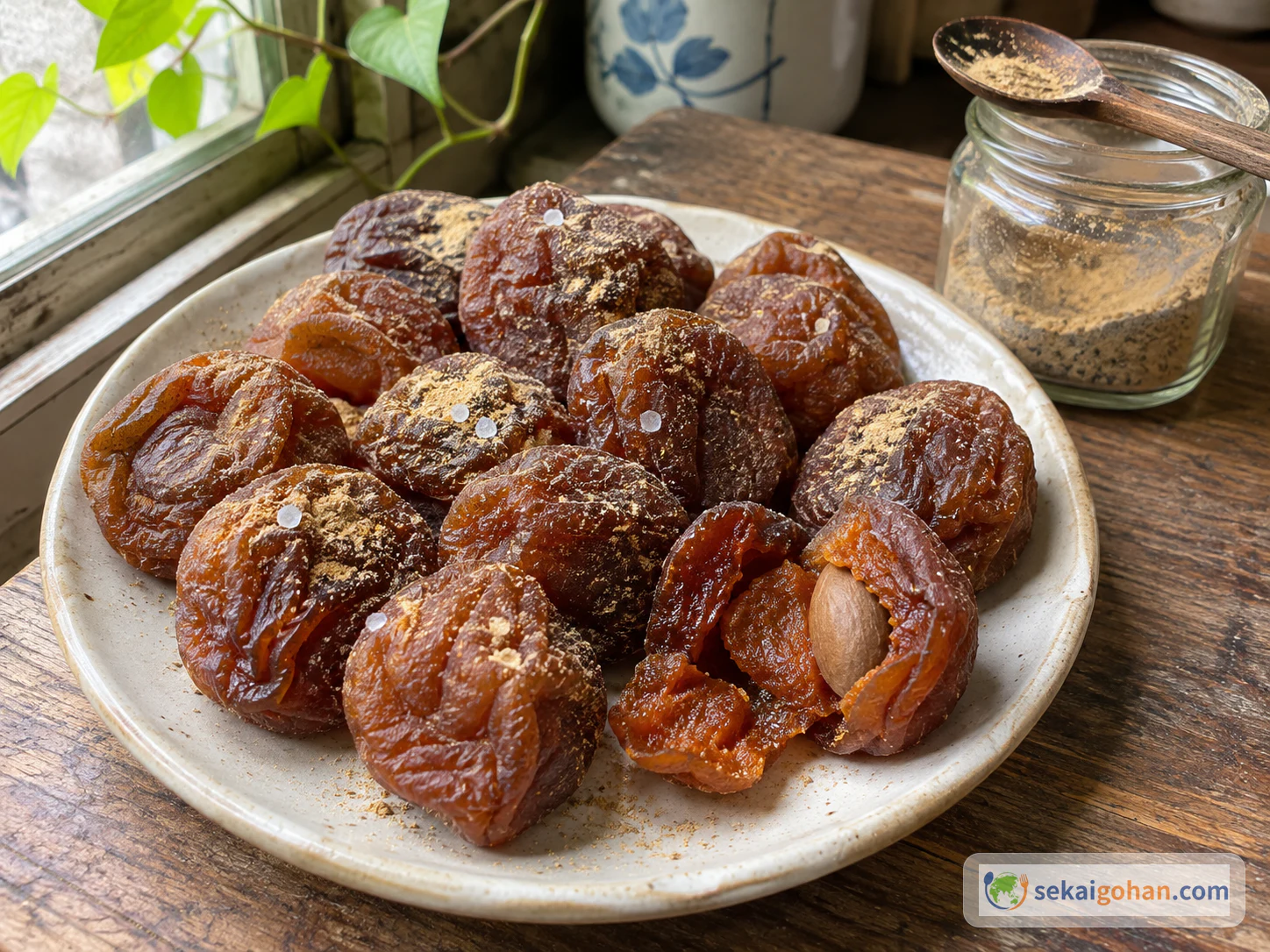
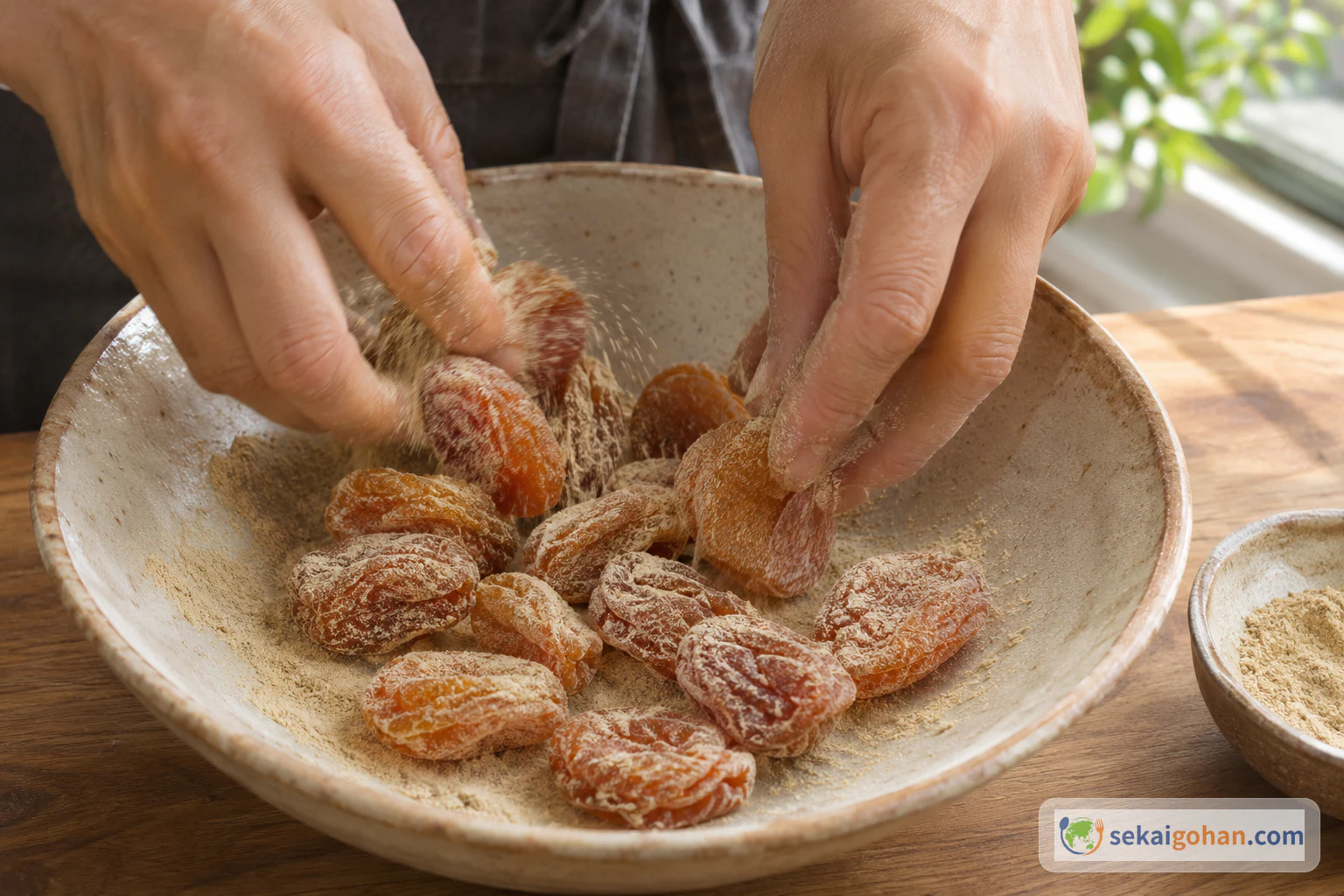
From mid-March to mid-April, Hanoi's street stalls and open markets fill with thumb-sized yellow fruit with a fine fuzz and a red blush. Much of that harvest goes into salt, then into sugar, then dries until it shrinks into dark, wrinkled pieces. At Tết those pieces sit heaped on small plates. That is ô mai: Hanoi's preserved fruit sweet, made most often from mơ, the same species as the Japanese ume. A piece hits sour first, then salty, then sweet, with ginger heat underneath and a long licorice finish. The sourness is strong enough that ô mai is described as an acquired taste.
From Sugar Street to the Tết Plate
Hàng Đường and the new-year table
The place to buy ô mai in Hanoi is Hàng Đường, "Sugar Street," in the Old Quarter. Until 1945 it carried the French name Rue du Sucre. It runs about 200 m (650 ft), and until the 1960s it was the center of the city's sweets trade, where families came for Mid-Autumn Festival treats and for Tết. Fewer sweet shops line it now, but it is still where people go for ô mai. In March 2018, ô mai retailed for 200,000 to 350,000 dong a kilo.
Ô mai belongs to Tết, the lunar new year. A small plate heaped with colorful preserved fruit stood for the family's wishes for happiness in the year ahead. It shares the season with bánh chưng, the leaf-wrapped sticky rice cake, but plays the opposite role: a few sharp, sweet bites passed around between visits. For Vietnamese living abroad, a pack of ô mai from home is a gift that says love and thanks. For more of the country's cooking, start from Vietnam.
A fruit written into the city
The fruit runs deep in Hanoi's history. The word mơ is tied to the Sino-Vietnamese mai, and the old capital Thăng Long was once called Kẻ Mơ, "the land of ume." The city still has Bạch Mai, Hồng Mai, Tương Mai, Hoàng Mai and Mai Động on its map. The orchards around the Perfume Pagoda, about 50 km (30 miles) from central Hanoi, inspired Nguyễn Bính's poem "Cô hái mơ" ("The Girl Picking Ume"), which Phạm Duy set to music. Those orchards were being replanted when Việt Nam News reported on them in 2021. Hanoi's forestry authority oversees more than 4,000 hectares (about 9,900 acres) of ume orchards, able to produce over 2 tonnes of native fruit a year. One family there has planted more than 300 trees of the native Tuyết Sơn variety.
Vietnamese has a phrase, tuổi ô mai, "the ô mai age," for a girl's teenage years. Girls that age are said to always be chewing on salted ume tossed with ginger, sugar and licorice.
Many fruits, many methods
Ô mai started with mơ and widened into a family name for fruit preserved the same way. Apricot-type mơ, mận plums and sấu (dracontomelon) used to be the main three. Today shops also make it from tamarind, kumquat, pineapple, mango, star fruit, ambarella, peach and lemon. The flavors run sour, spicy, salty and sweet, and the textures run from moist to dry. Ô mai xào, the stir-cooked kind, stays moister and chewier than the dried kind. Seasonings shift too: crushed ginger, licorice powder, chili powder, lime-scented water.
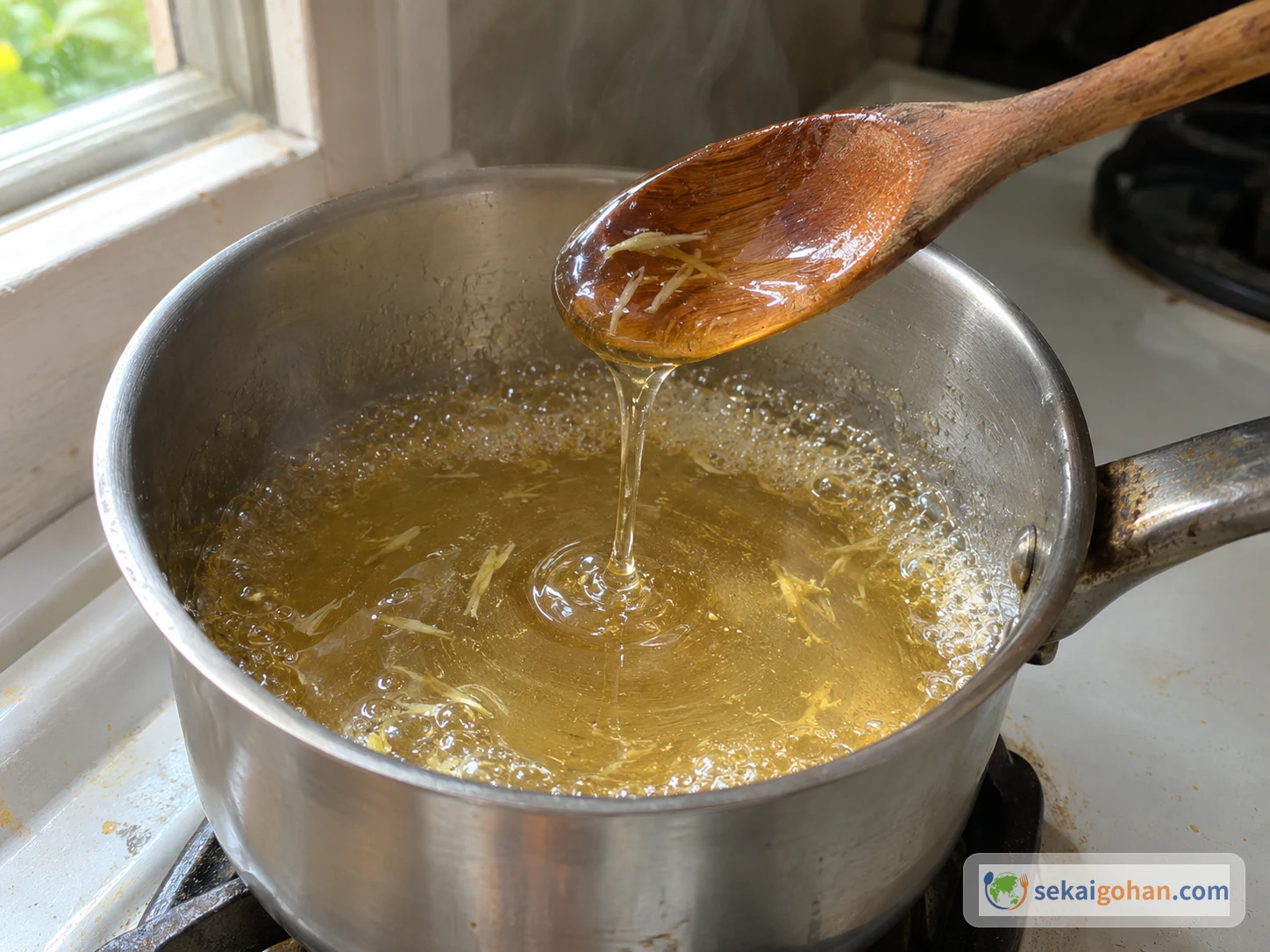
The old methods take weeks. For bạch mai, fruit sits in salt for two weeks, dries in the sun and then rests under banana leaves until white salt crystals bloom on the skin. For the black kind, nearly ripe fruit is half-steamed, sun-dried three or four times, soaked in rice-husk ash and sun-dried again, nine rounds in all. The juice that runs out during salting is even sold for sour soups. The home recipe below is a quicker cousin: a two-day brine, a ginger-sugar syrup and a low oven. The kOBE Lab recipe it is built on brines at room temperature; here the brine goes in the refrigerator, an editorial change for safety in warm weather.
Not umeboshi, not wūméi
The Chinese characters behind the name are shared across East Asia. Chinese wūméi, Korean omae and Japanese ubai are smoked, dried ume used in medicine and drinks, a separate line of food. Japanese umeboshi are pickled with salt and red shiso, without the sugar syrup of ô mai. Xí muội sits closest to ô mai, a saltier kin of the same idea. Ô mai is a sweet, built on salt, sugar and drying together.
Ingredients
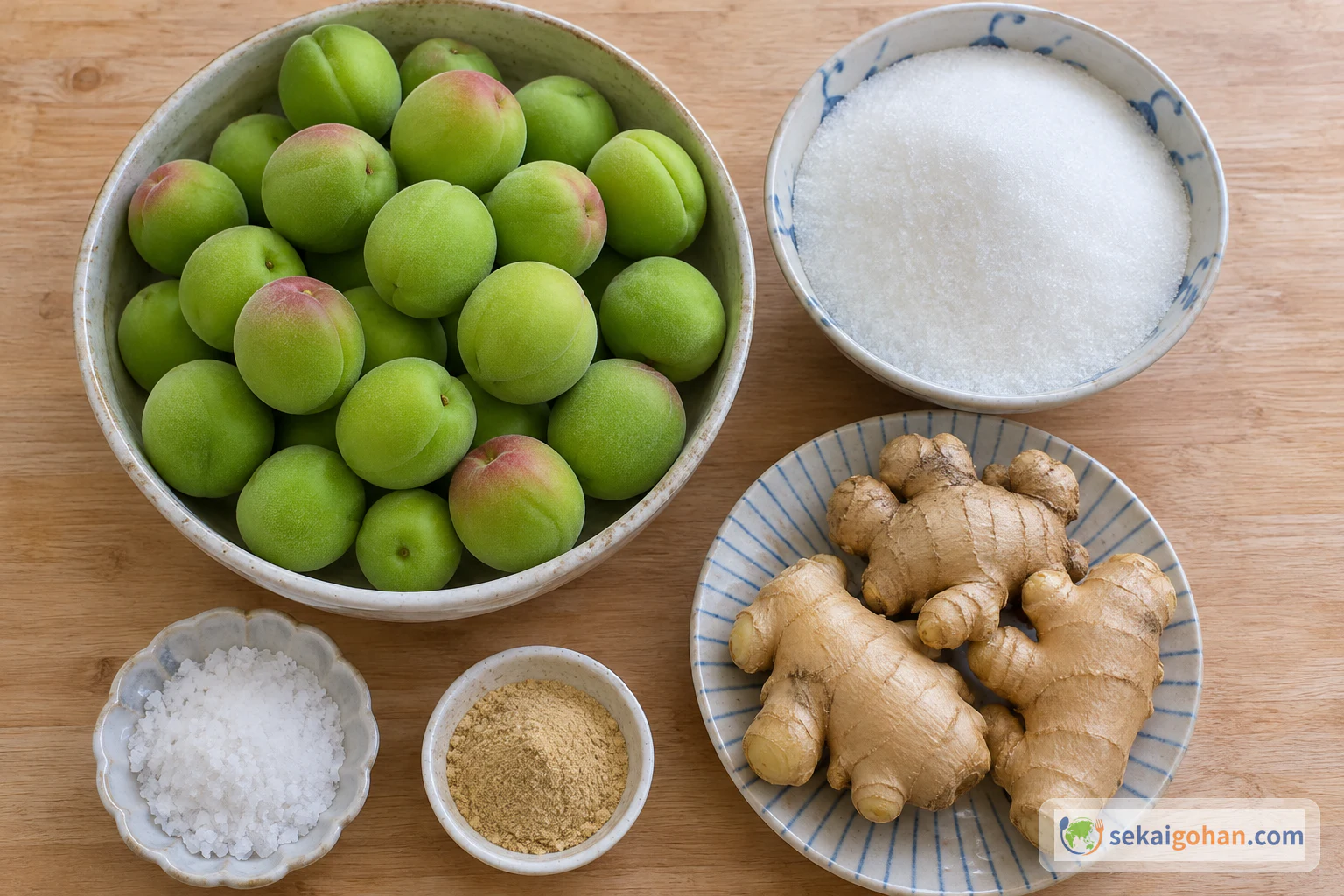
Ume belong to the rose family (Rosaceae), with apricots and plums. Anyone with a rose-family fruit allergy should skip ô mai. The recipe also uses ginger and licorice.
Equipment
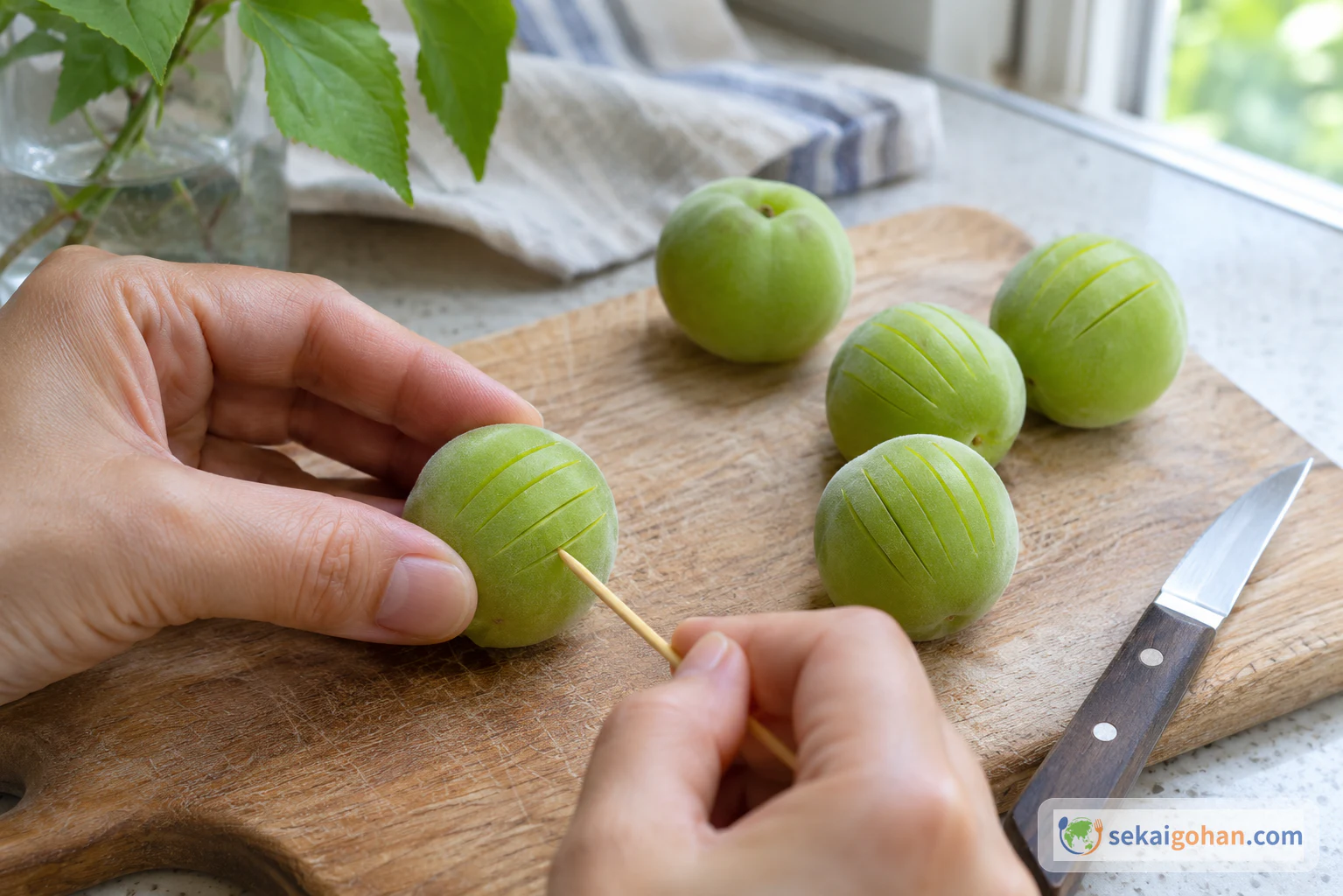
- Bamboo skewer or a thin, pointed knife
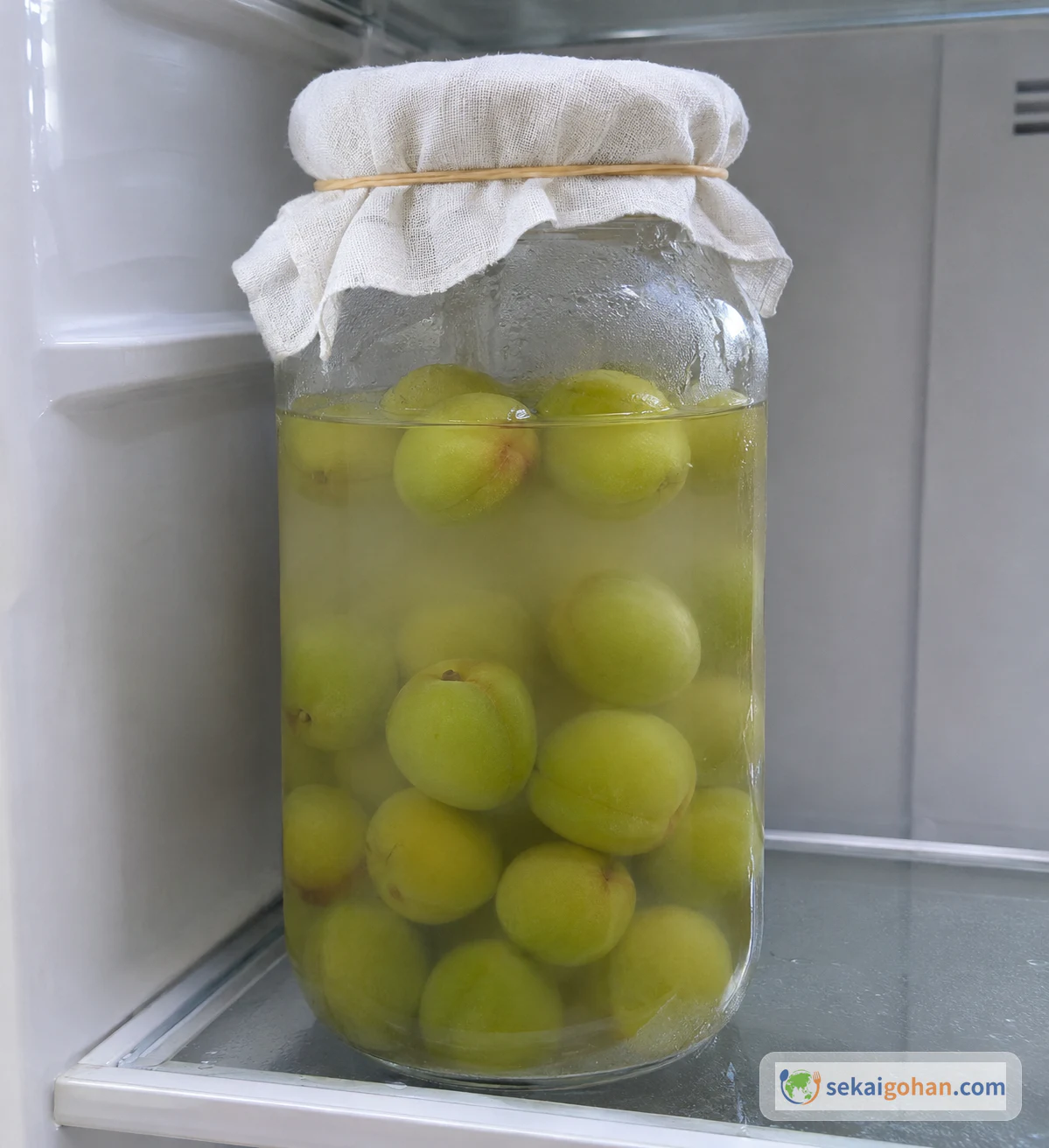
- Glass jar large enough to hold the fruit under brine, with a lid or clean cloth
- Colander set over a bowl
- Grater or blender, and cotton gauze or a fine sieve
- Saucepan and wooden spoon
- Baking tray lined with baking paper
- Oven that holds 195°F (90°C), plus an oven thermometer to check it
- Storage jar, washed and dried completely, and a dry spoon
Choosing Ume, Licorice and Sugar
Vietnamese mơ is Prunus mume, the fruit sold in English as Japanese apricot or ume. Green ume come into season in early summer, around June. Buy them hard and green with taut skin; soft, ripened fruit falls apart in the brine. Japanese ume run from about ½ oz (15 g) to just over 1 oz (30 g) each, so a kilo is roughly 33 to 66 fruits. Bigger fruit takes longer in the oven, which is why the drying step runs on touch, not the clock.
Licorice root powder is sold at Chinese herbal pharmacies, Chinese grocers and import food shops. Use the full 1¾ oz (50 g) for the classic taste, or start with half, 1 oz (25 g), if you want a lighter finish. Plain white granulated sugar keeps the fruit clear and amber; brown cane sugar darkens the color and changes the aroma, so it makes a different sweet. Keep the ginger at full weight, because less ginger gives a flatter, weaker aroma. Any salt works, but keep the weight the same.
For a half batch, use 1.1 lb (500 g) ume, 1¼ oz (35 g) salt for the brine, 7 oz (200 g) sugar, 5¼ oz (150 g) ginger and scant 1 oz (25 g) licorice powder. The finishing salt stays at a little.
Hard, green ume are what make this work. They survive scoring, brining and the syrup pan whole, and they dry into chewy, intact pieces instead of flat scraps.
Method
The work spreads over three days, with almost all the time hands-off. On day one you score the fruit and set it in brine; then it sits in the refrigerator for two days. The last session runs straight through: ginger, syrup, oven, dusting. Drying takes the longest, and you check it by touch.
Green ume contain cyanide compounds (amygdalin) and are not eaten raw. Do not taste the fruit while you prepare it. Work where children and pets cannot reach the fruit. If you crack a stone while eating, do not swallow it.
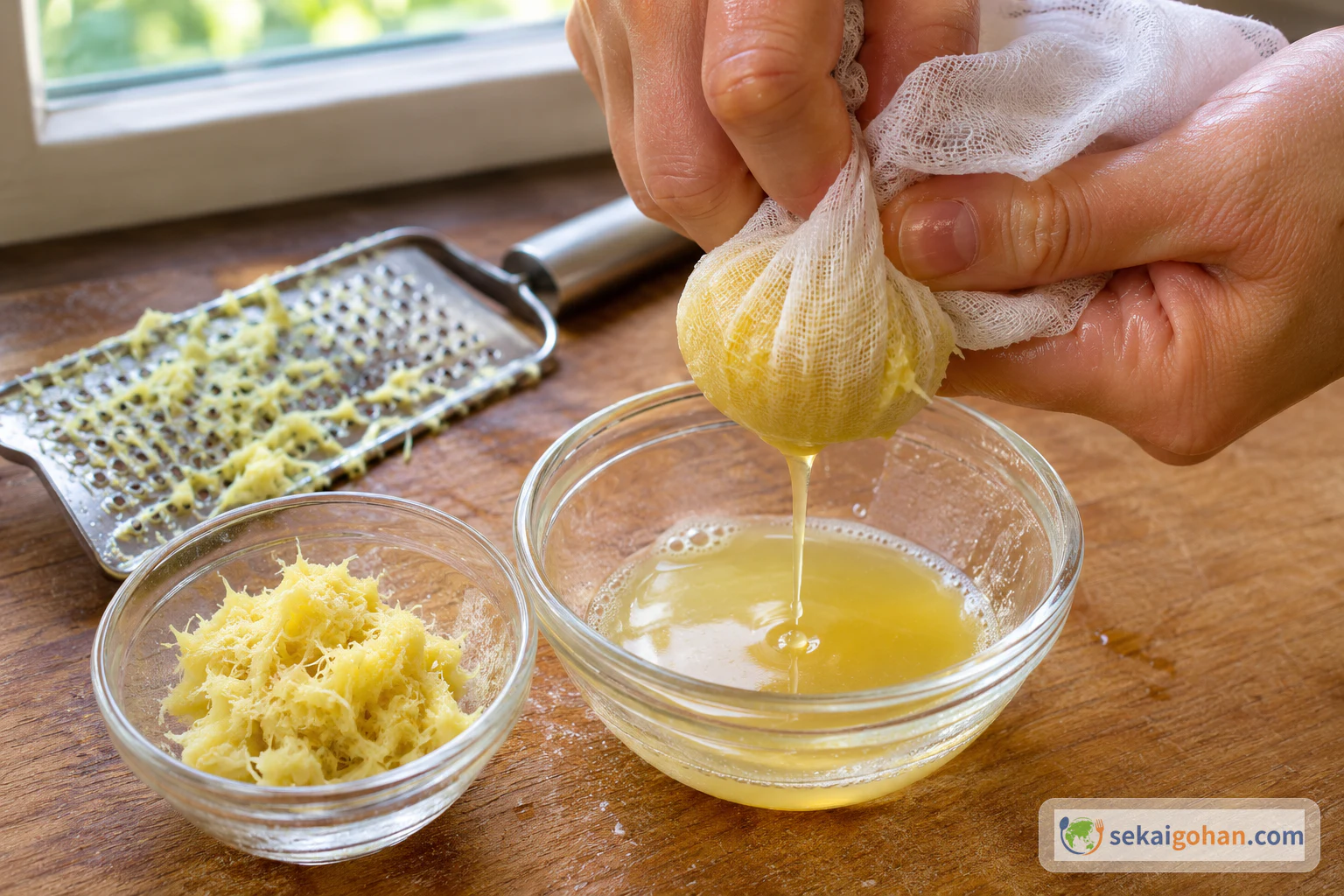
Splitting the ginger is what keeps ô mai from turning soggy. The juice perfumes the syrup from the start; the squeezed pulp goes in only for the last minute or two, so it clings to the fruit without adding water.
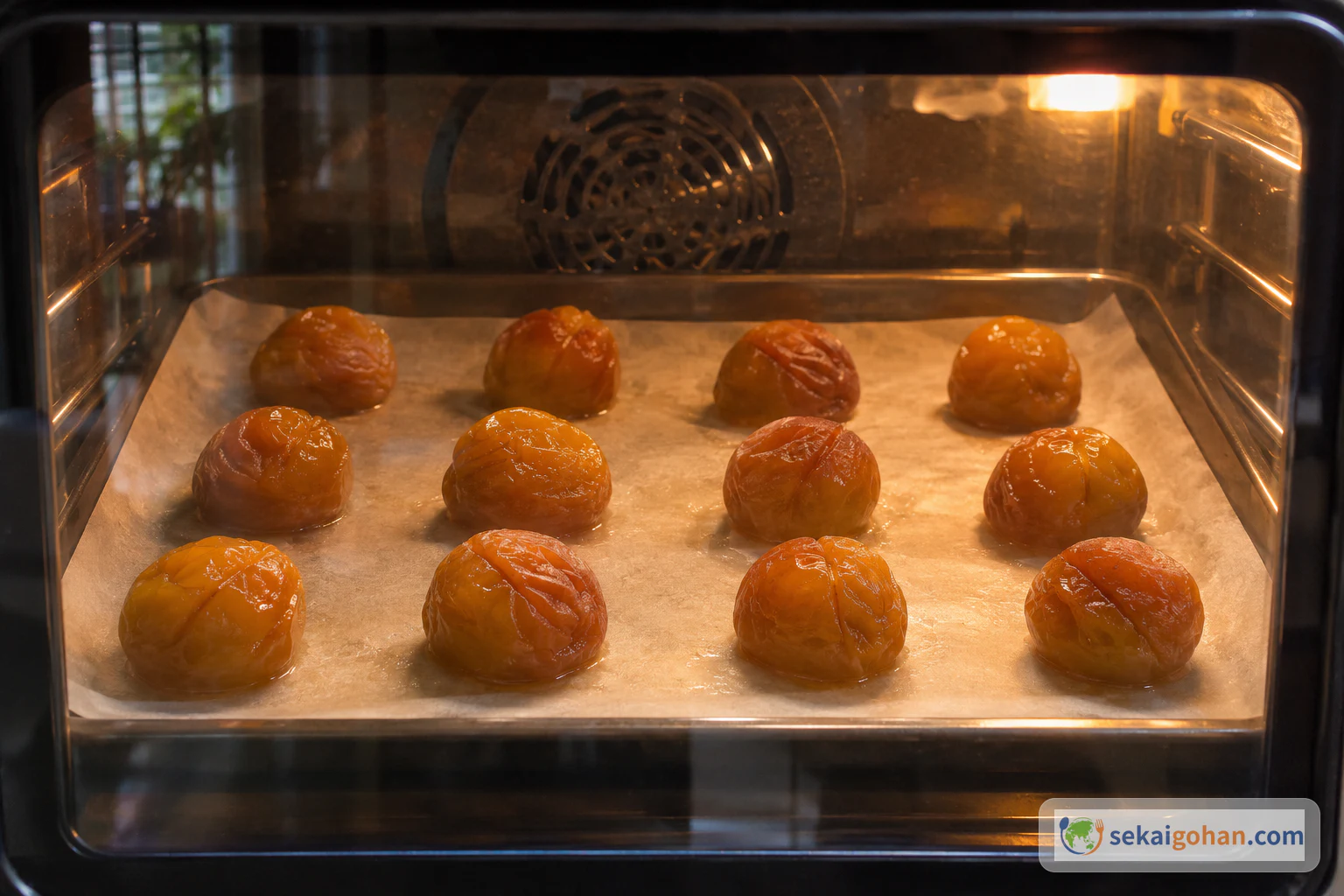
Dried too long, ô mai turns hard. Pull the tray when the skin is dry but the flesh still springs back under your finger.
Licorice contains glycyrrhizic acid, which can raise blood pressure and lower potassium, and the risk grows with the amount eaten. People with high blood pressure, low potassium or swelling, people taking diuretics or herbal medicines that contain licorice, and anyone pregnant should avoid ô mai or ask a doctor first. Do not eat large amounts every day.
When It Goes Wrong
| What you see | Why | What to do |
|---|---|---|
| Brine foams, smells sour or grows mold | Warm temperature, an unclean jar or a soak left too long | Throw out the whole batch and start again with a clean, dry jar in the refrigerator |
| Sugar will not dissolve in the pan | Too little liquid drained from the fruit | Add about 3½ tbsp (50 ml) water and keep the heat low |
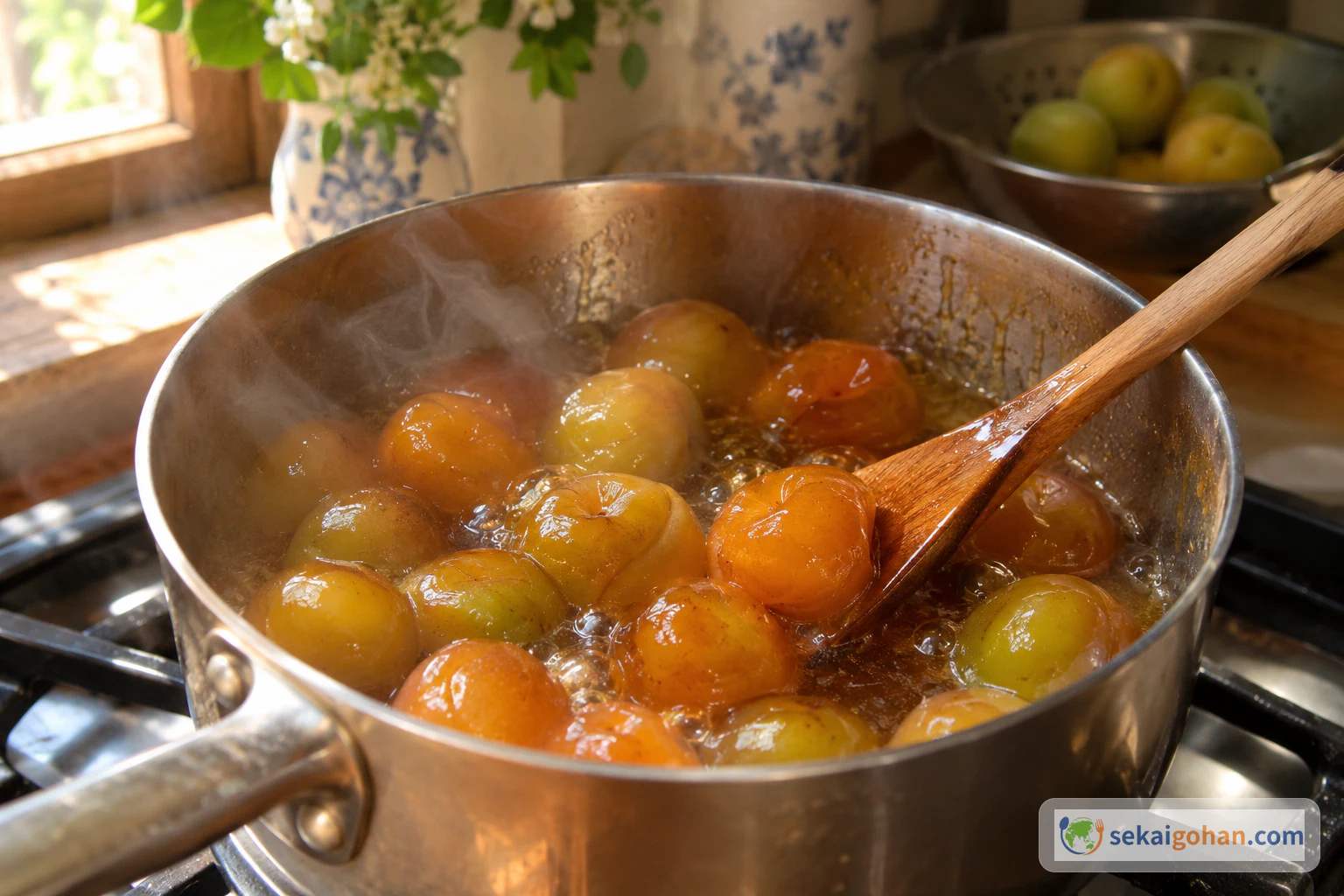
| Fruit breaks in the syrup | Stirred instead of shaken, or fruit too ripe | Shake the pan; next time use hard, green ume |
| Ginger coating is wet and soggy | Pulp not squeezed dry, or juice and pulp cooked together | Squeeze the pulp hard and add it only in the last 1 to 2 minutes |
| Fruit is hard after drying | Dried too long or too hot | Hold the oven at 195°F (90°C) and stop while the flesh still gives |
| Sticky pieces or mold in the jar | Jar closed while the fruit was warm, or a wet spoon used | Discard moldy fruit; cool completely before closing, and always use a dry spoon |
Serving, Variations and Storage
At the table
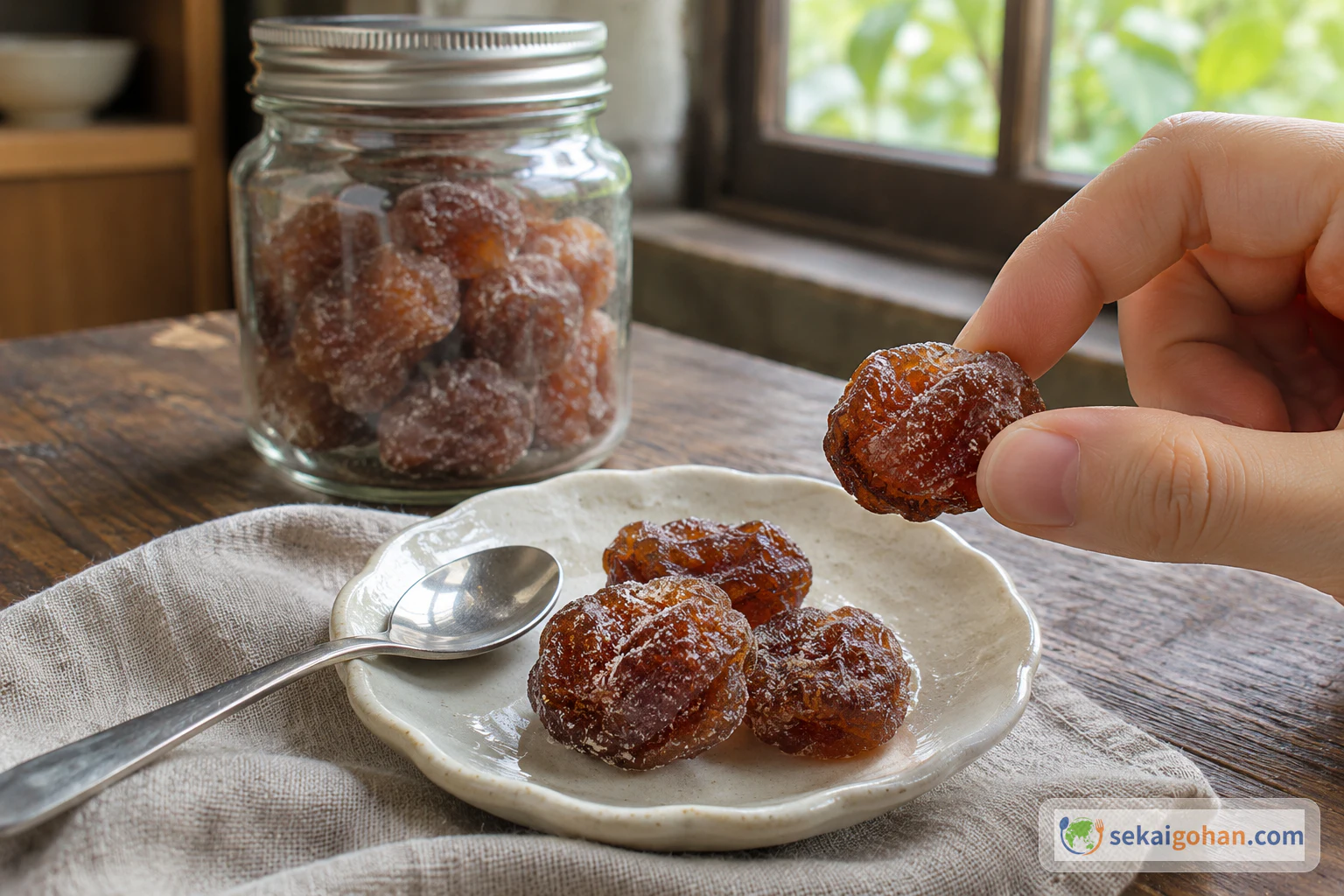
Set ô mai out on a small plate, a few pieces at a time, the way it appears on the Tết table. Two or three pieces make a serving; the sourness and salt are strong, and it is a sweet to nibble slowly between conversations. Take pieces from the jar with a dry spoon, so no moisture gets back into the batch.
Variations
- Ô mai mận (plum). A plum version runs on its own amounts: 4.4 lb (2 kg) mận hậu plums, 2.2 lb (1 kg) sugar, ½ tsp fine salt, 1 knob fresh ginger and water. Wash the plums, soak them in light salt water for about 30 minutes and drain. Score them so the cuts stay joined, layer them with the sugar and salt, and leave them 9 to 10 hours; in hot weather a longer soak ferments and molds. Simmer the fruit in its juices over low heat for 30 to 35 minutes, skimming, until the color deepens, then lift out the fruit, brush it with ginger juice, dry it and dust it with the squeezed ginger. The result is sweeter than the ume version.
- Ô mai sấu (dracontomelon). Another style uses 1.1 lb (500 g) sấu, 14 oz (400 g) sugar, 1 oz (30 g) ginger, ⅓ oz (10 g) salt and 1 quart (1 L) rice-washing water, and dries the fruit hot, at 300°F (150°C) for 1 hour. The ratio of sugar to fruit is twice the ume batch, and the high heat sets the surface fast, so over-drying makes it hard and dry.
- Less sugar. Cut the sugar to 12½ oz (350 g) for a sharper, more sour result. The syrup takes longer to turn sticky, so cook it until the spoon trails a ribbon.
- Less or no licorice. Use 1 oz (25 g) licorice, or dust with salt alone. The fruit loses the long sweet aftertaste that marks classic ô mai mơ and leans salty-sour.
Storage
Let the fruit cool completely before it goes into a jar that is washed and fully dry. Close the lid only once the fruit is cold, keep the jar in a cool, dark place or in the refrigerator, and always take pieces out with a dry spoon. Moisture is the main cause of mold; if mold appears, throw the fruit away. Ô mai is not reheated. If a batch feels underdried, return it to the oven at 195°F (90°C) until it passes the touch test.
Frequently asked questions
Can I use regular apricots?
Apricots sold in Western markets are Prunus armeniaca, a different species from ume. They are a different species, so the result will not taste like ô mai mơ. For the real sour bite, use green ume.
Can I dry ô mai in the sun?
Sun-drying is a long tradition in Vietnam, and plum and sấu versions are still made that way. In humid weather, though, damp fruit outdoors invites mold. A steady oven at 195°F (90°C) dries it evenly in any season.
Does ô mai help a sore throat?
Vietnamese traditional medicine has long described ô mai as good for sore throats, phlegm and a hoarse voice. It is a sweet, not a treatment. Do not use it to treat any illness.
What if a child eats a raw green ume?
Raw green ume are not eaten at all, which is why the fruit is kept out of reach throughout the work. If you suspect a child has eaten raw fruit or chewed a stone, contact a doctor or medical service right away.