A red sauce raised on the Manado table
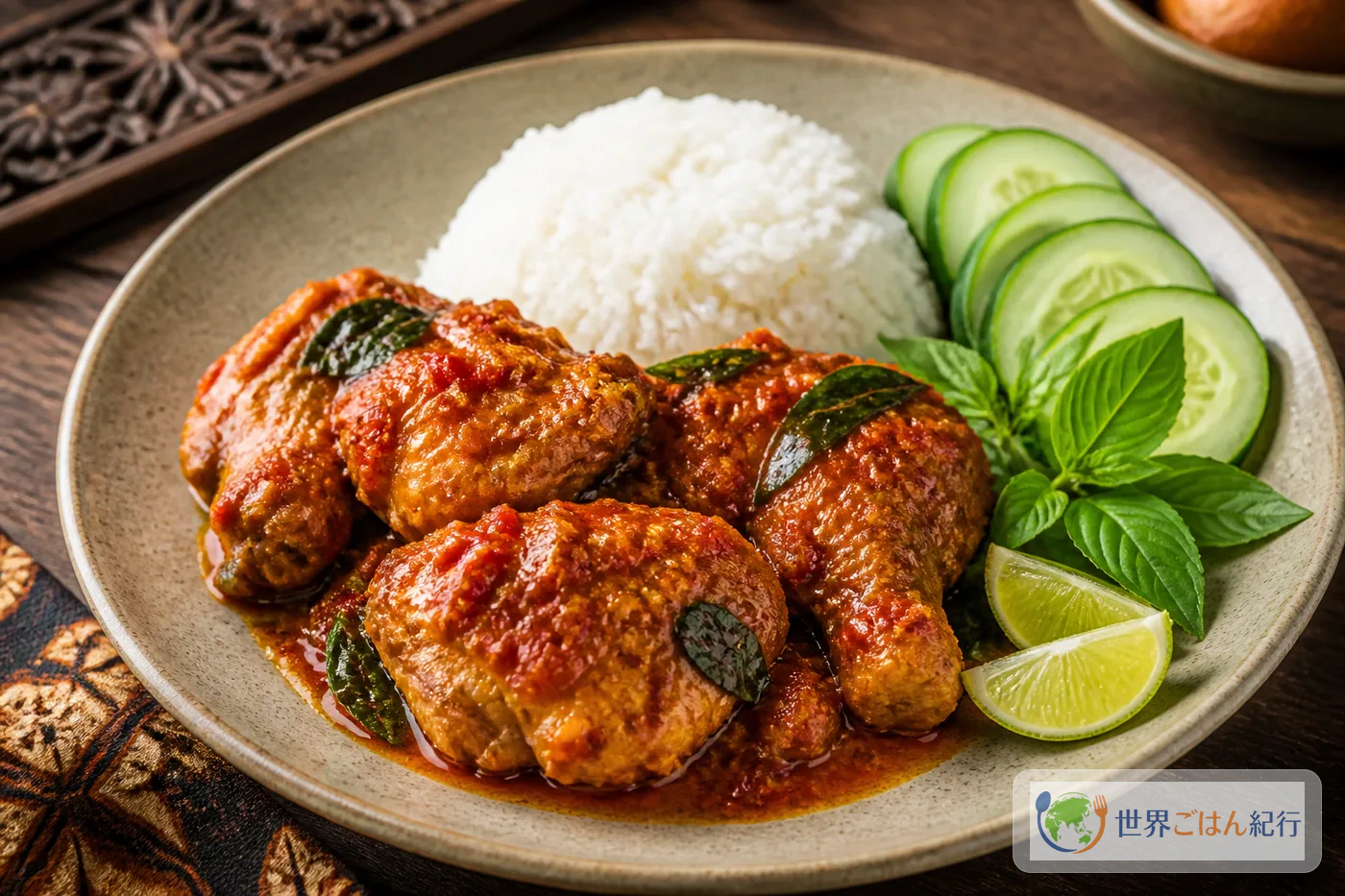
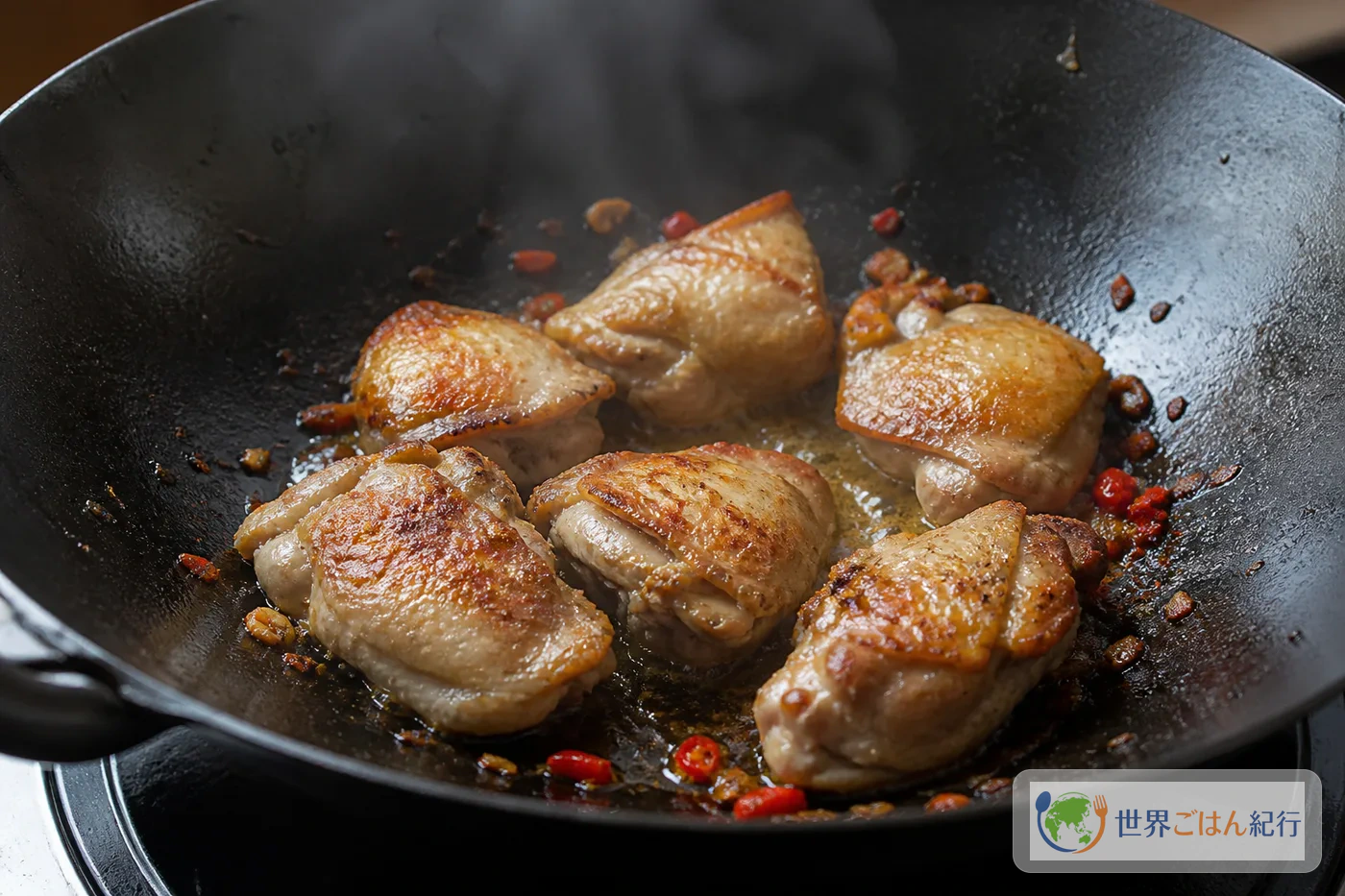
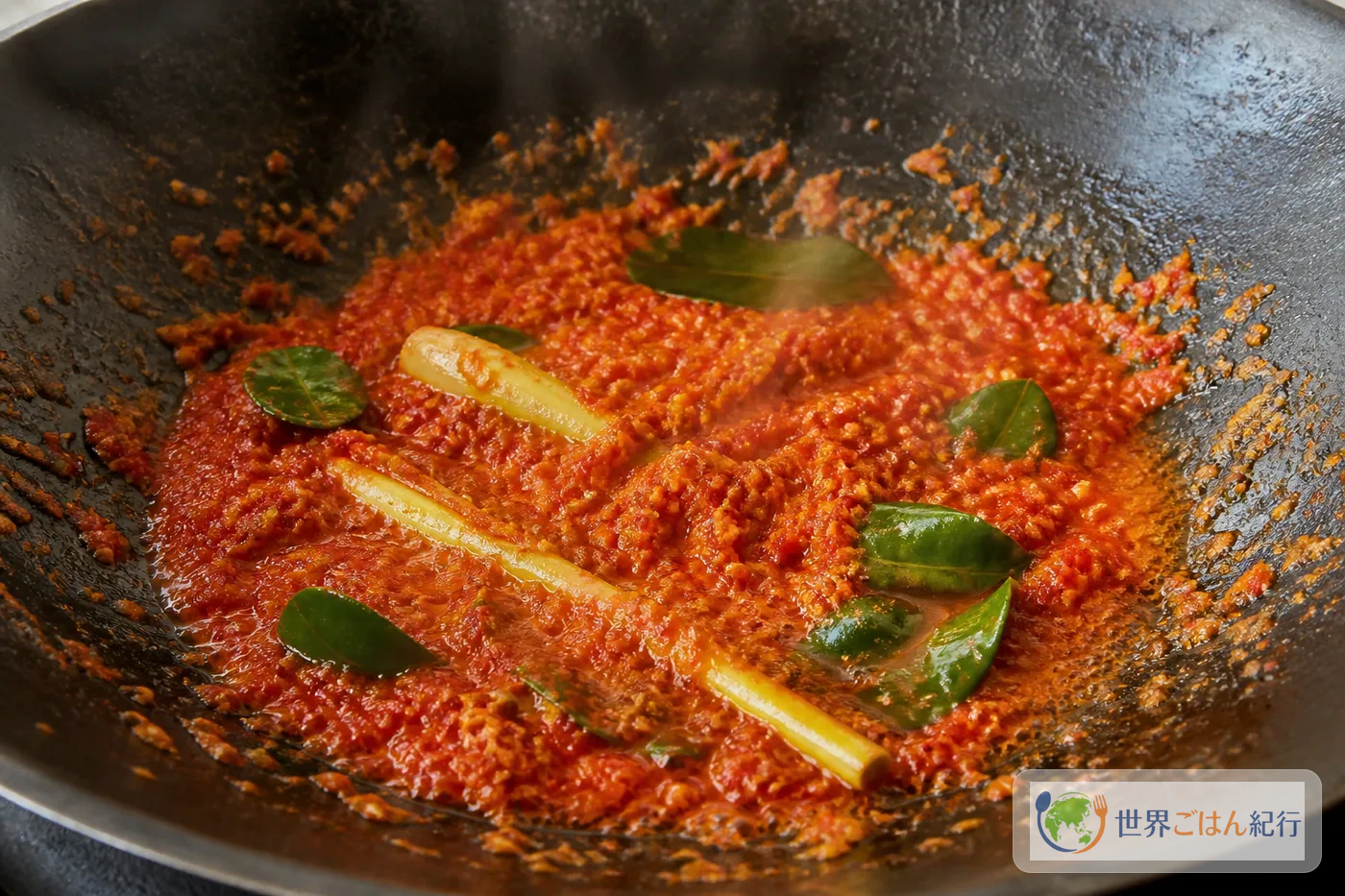
Chilies and tomatoes melt into the oil, garlic and ginger rise, and over it all floats the green citrus scent of makrut lime leaves. Ayam rica-rica is chicken simmered in a fiery sauce. But simply making it hot isn't enough: if the moisture in the aromatics never cooks off, the flavor turns flat and muddy. Fry the paste first, and only return the chicken once the red has deepened a little. That order is the backbone of making it on a home stove.
There are three signs that it's done: the raw smell of the paste is gone, the center of the chicken has reached 74°C (165°F), and the sauce clings in a thin layer to the back of a spoon. You can add or remove as many chilies as you like, but unless those three line up, you won't get the fragrant, unmistakably Manado plate.
Working aromatics deep into chicken is something it shares with Bali's ayam betutu. Betutu is wrapped and slow-roasted or steamed, while rica-rica keeps the aroma of fried chilies front and center to the last bite.
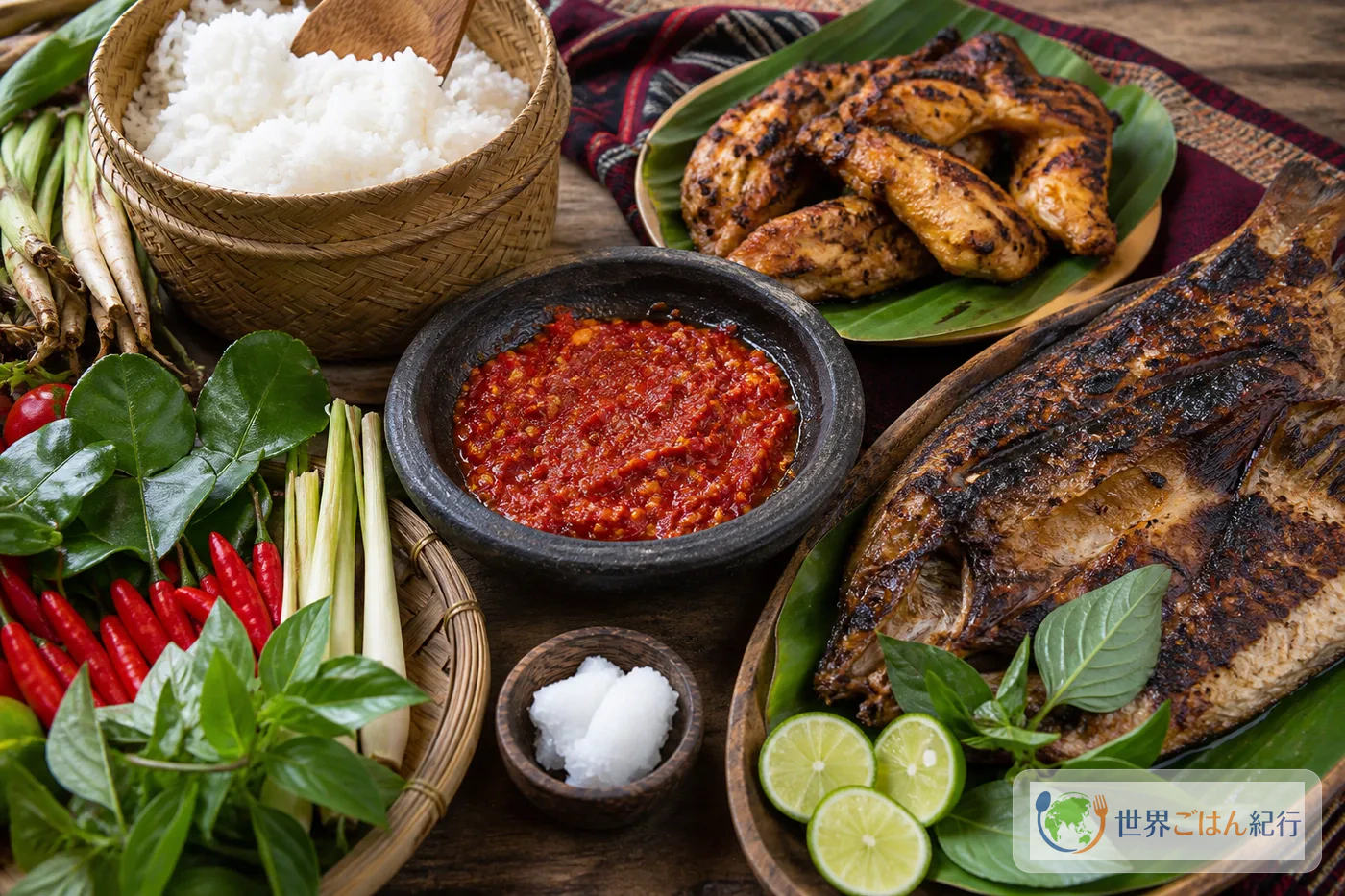
Indonesia's official tourism site, in its introduction to Manado food, explains that the local word "rica-rica" refers to spiciness or heat. The sauce is made by crushing tomatoes, chilies, garlic, shallots and ginger, cooking them in coconut oil, and adding makrut lime leaves, lemongrass and lime. It goes over fish, meat and seafood as well as chicken, and ayam rica-rica and tuna rica-rica are given as typical examples.
Manado is a city in North Sulawesi province, and in the food culture of the surrounding Minahasa area, seafood, chilies and herbs stand out. In a port city, fish is an everyday main dish, and the tourism board also presents the Manado and Bitung area as a place for fish dishes. Seen that way, rica-rica is best understood as an aromatic sauce that is paired with fish and meat as readily as with chicken.
As for how chilies reached the cooking of this region, a research review sets out several theories involving the Portuguese and the Spanish. National Geographic's feature on North Sulawesi also presents the view that chilies arrived via Portuguese and Spanish sailors in a region that was a crossroads of the spice trade. Rather than pinning it to a single origin, it's safer to see it as a land where spices, coconut and seafood passed back and forth, and where heat took root in Minahasa cooking.
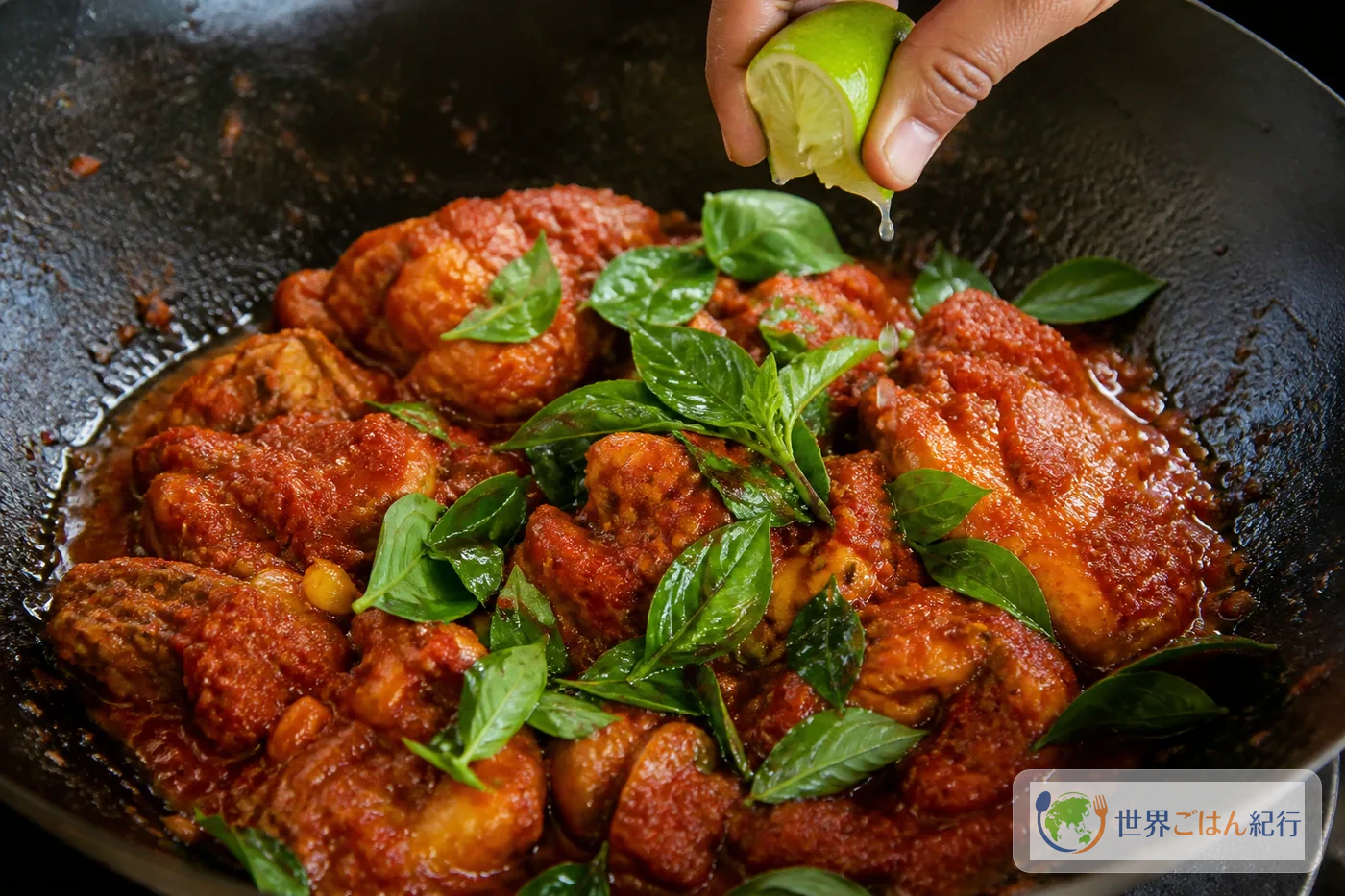
What makes it taste authentic isn't just the amount of chili. Large red chilies bring color and a sweet aroma, and a small amount of little chilies adds the heat. Makrut lime leaves and lemongrass perfume the oil, and a final squeeze of lime cuts the richness. Keep that division of roles, and the dish holds its shape even if you dial the heat down with milder chilies.
Ingredients and substitutes (serves 4)
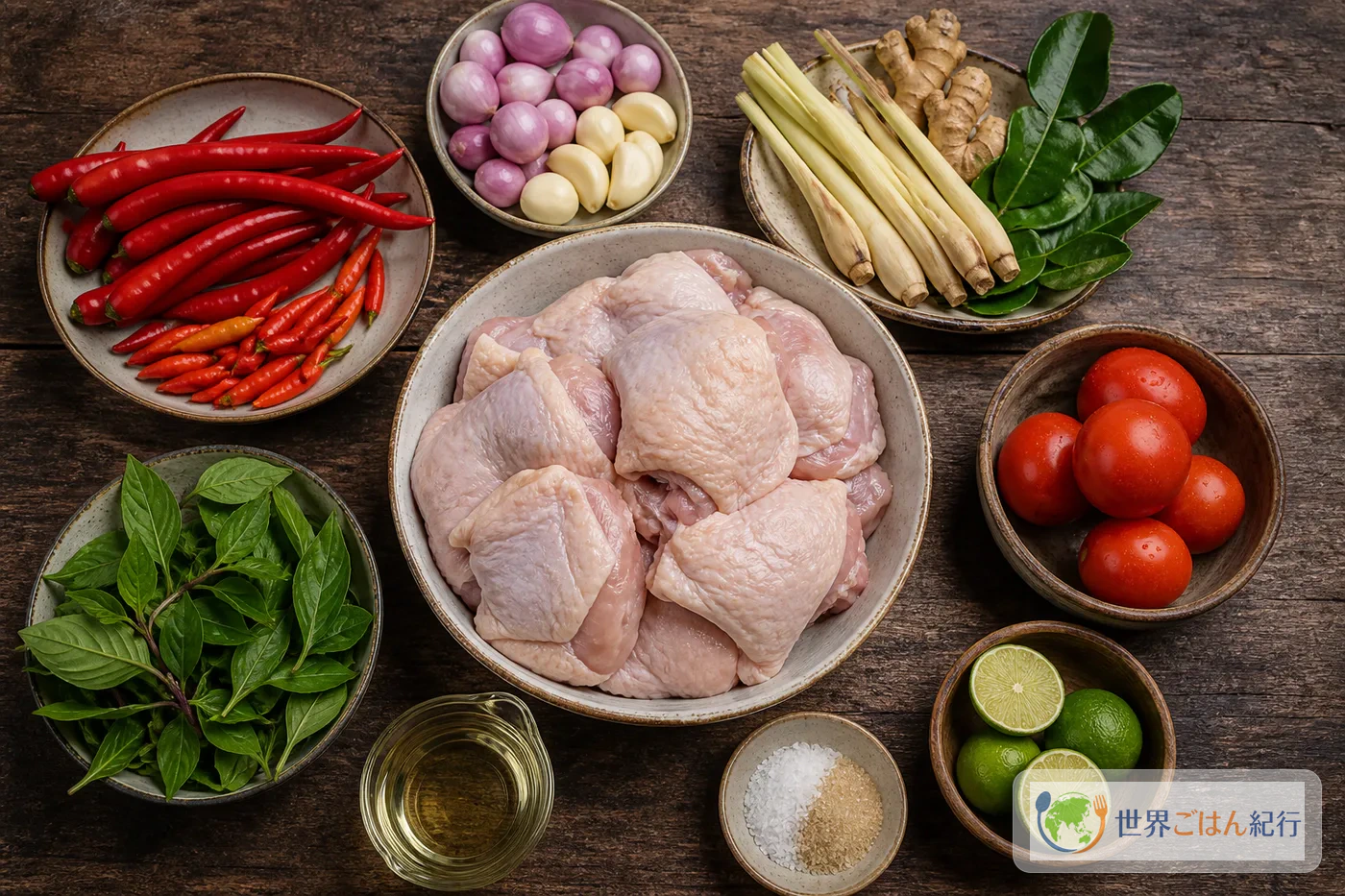
Boneless chicken thighs are easier to cut up; bone-in pieces stay juicier during the simmer. The amounts below assume boneless thighs cut into 5–6 cm pieces. Chili heat varies with variety and from pod to pod, so don't add the full amount at the start; leave room to add a little more after the paste is fried.
Makrut lime leaves give an aroma that juice can't replace
Dried or frozen makrut lime leaves don't add sourness the way juice does; they add a green citrus aroma that moves into the oil. If fresh leaves are hard to find where you live, a bag of frozen ones from an Asian grocery will cover rica-rica as well as urap (in Japanese) and fried noodles. If you're only making it once, you can skip the leaves and grate a little lemon zest instead, but the aroma won't be the same.
If using sambal oelek, replace only part of the chilies
On days when you can't get fresh chilies, you can add 1–2 tbsp of sambal oelek. Keep in mind it isn't the same as Manado's fresh chili paste. Brands differ in how much salt, garlic, vinegar and sugar they contain, so don't replace all 120 g of large red chilies; cut back on some of them and use the sambal to make up the heat. Check the ingredient list, and reduce the salt and sugar by however much the sambal brings.
Tools: anything that keeps the paste coarse
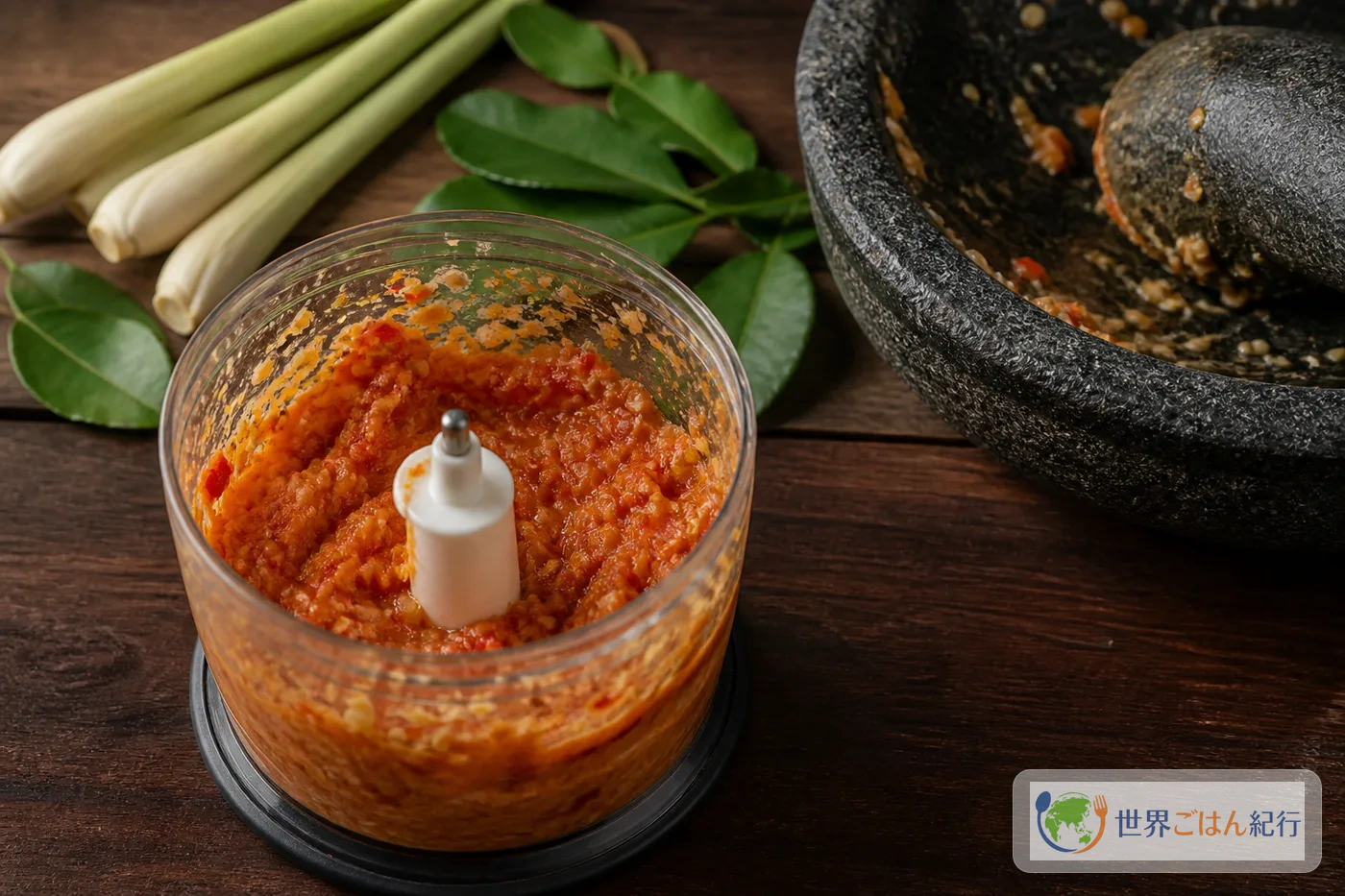
If you finely chop the aromatics with a knife or pound them in a mortar, you don't need a food processor. If you do use one, don't add liquid to make it smooth; stop while there are still 2–3 mm bits.
Allergens and labels
This dish uses chicken. Store-bought chicken stock, sambal oelek and frozen aromatics may contain soy, wheat, fish or shellfish depending on the product. If using chicken stock, check the ingredient label, and if other foods share the same cutting board and knife, wash them before cooking. Swapping coconut oil for regular oil doesn't mean you can skip checking allergen labels.
Method: fry the aromatics, then return the chicken
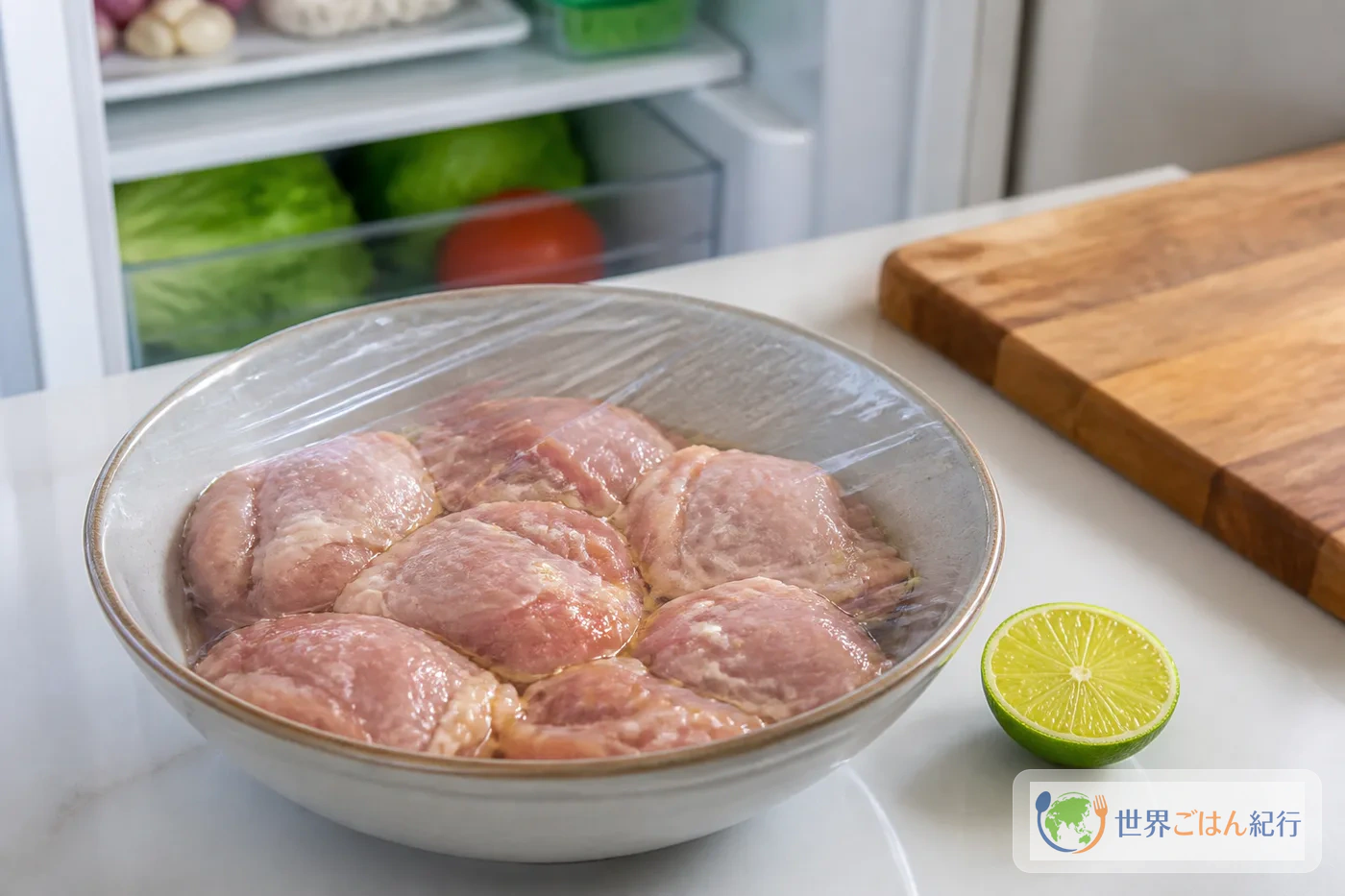
Including the 15 minutes the chicken marinates, the cooking takes about 40 minutes. Before you make the paste, set out a pot, a strainer, a thermometer and separate cutting boards for chicken and vegetables. Rinsing raw chicken splashes water around the sink, so don't wash it; pat the surface dry with paper towels instead.
Three checks to rescue a scorched or watery pot
If you go by the clock alone with a braise, the size of your pan and your chicken pieces will throw you off. Watch what's happening in the pan and adjust the heat.
The paste is done when the initial green, raw smell is gone and ginger and lemongrass come to the front. If it still smells strongly of green chili, add 1 tsp oil and give it 2 more minutes.
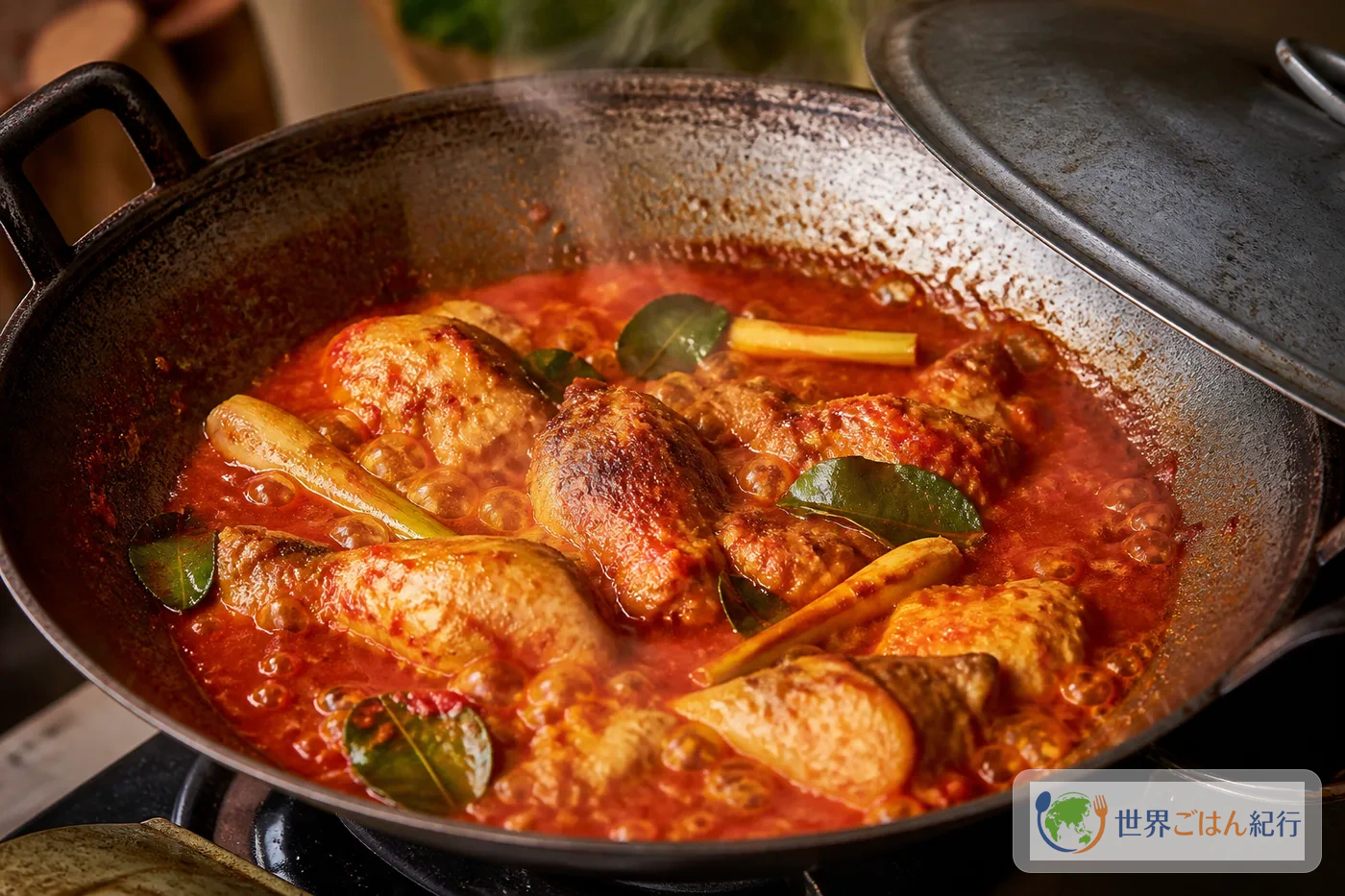
Draw a line across the bottom of the pan with a spatula: the red sauce should part, then slowly flow back. If it's watery, take the lid off and reduce; if the bottom looks close to drying out, add water 1 tbsp at a time.
Use a thermometer to confirm the thickest part has reached 74°C (165°F). Don't judge safety by color or juices alone; take the temperature before you turn off the heat.
If you scorch the paste, don't scrape the bottom; move only the unburnt part on top to another pan. Adding water to dissolve the scorched layer spreads the bitterness through everything. If it's too salty, add a little unsalted water or tomato and simmer again. If it's too hot, serving it with rice and cucumber so each bite carries less sauce keeps the flavor more intact than trying to round it off with sugar alone.
Adjust the heat and build the meal
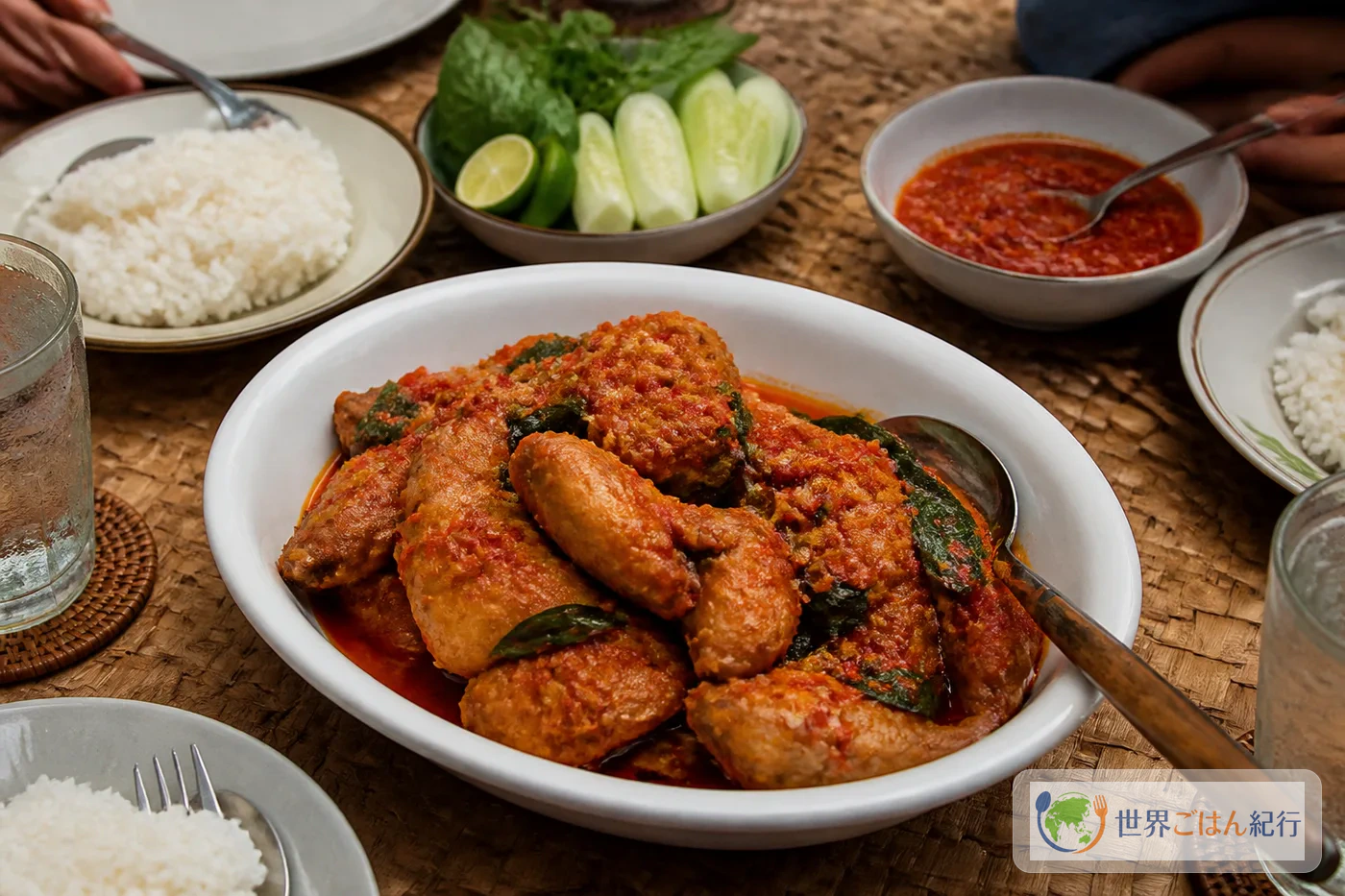
Manado food is known for being fiery, but even the tourism board's introduction notes restaurants that serve the heat on the side so diners can adjust it themselves. At home, it's easier not to lock the whole pot at one heat level: build aroma and color with the large red chilies, then let everyone add small chilies or sambal to taste.
For a milder version
Remove the seeds and membranes from the large red chilies, and use 0–2 small chilies. The heat drops, but the aroma of the red sauce doesn't disappear. Keep the tomatoes and add a little more lime at the end so the flavor doesn't lean only toward sweet.
For more heat
Don't add all the small chilies at the start; after frying the paste, add them half at a time. Heat doesn't necessarily fade as it simmers, and it can feel stronger once the dish cools. If you only want extra fire for the adults, add it to their bowls rather than making the whole pot too hot for everyone.
Beyond chicken
The same rica-rica sauce goes with fish or pork. With fish, don't simmer it for long the way you do chicken; reduce the sauce first and spoon it over seared fish. For finfish, the safety guideline is an internal temperature of 63°C (145°F), or flesh that is no longer translucent and flakes easily with a fork. For a meatless version over fried tofu or mushrooms, use unsalted water instead of chicken stock.
What to keep and what to swap at home
You don't need every local ingredient to recreate the dish. Keep the layers of aroma and the cooking order, and replace hard-to-find items with ones that play a similar role.
| Local ingredient or tool | Substitute | What changes |
|---|---|---|
| Bird's eye–type chilies | Small dried red chilies, Korean chilies, large red chilies | Small dried chilies are hot in small amounts; Korean chilies give color with gentler heat |
| Kemangi | Thai basil, sweet basil | Thai basil's sweet anise note is closer; sweet basil is softer |
| Makrut lime leaves | Frozen leaves, dried leaves, a little lemon zest at the end | Juice alone can't create the green aroma of the leaves |
| Shallots | A mix of yellow and red onion | Onions are watery, so fry 2–3 minutes longer |
| Coconut oil | Rice bran oil, canola oil | Less coconut aroma, but the chili-and-herb backbone remains |
| Stone mortar | Food processor, knife | Don't let the machine make it too smooth; keep some texture |
Tomatoes appear in Indonesian introductions and recipes, yet some English-language recipes for North Sulawesi rica-rica don't make tomato a lead ingredient. This recipe uses them to keep the sauce's moisture and acidity steady in a home kitchen. Tomato isn't the one right answer; there's room to use less depending on the fish or the kind of chili.
Storage and FAQ
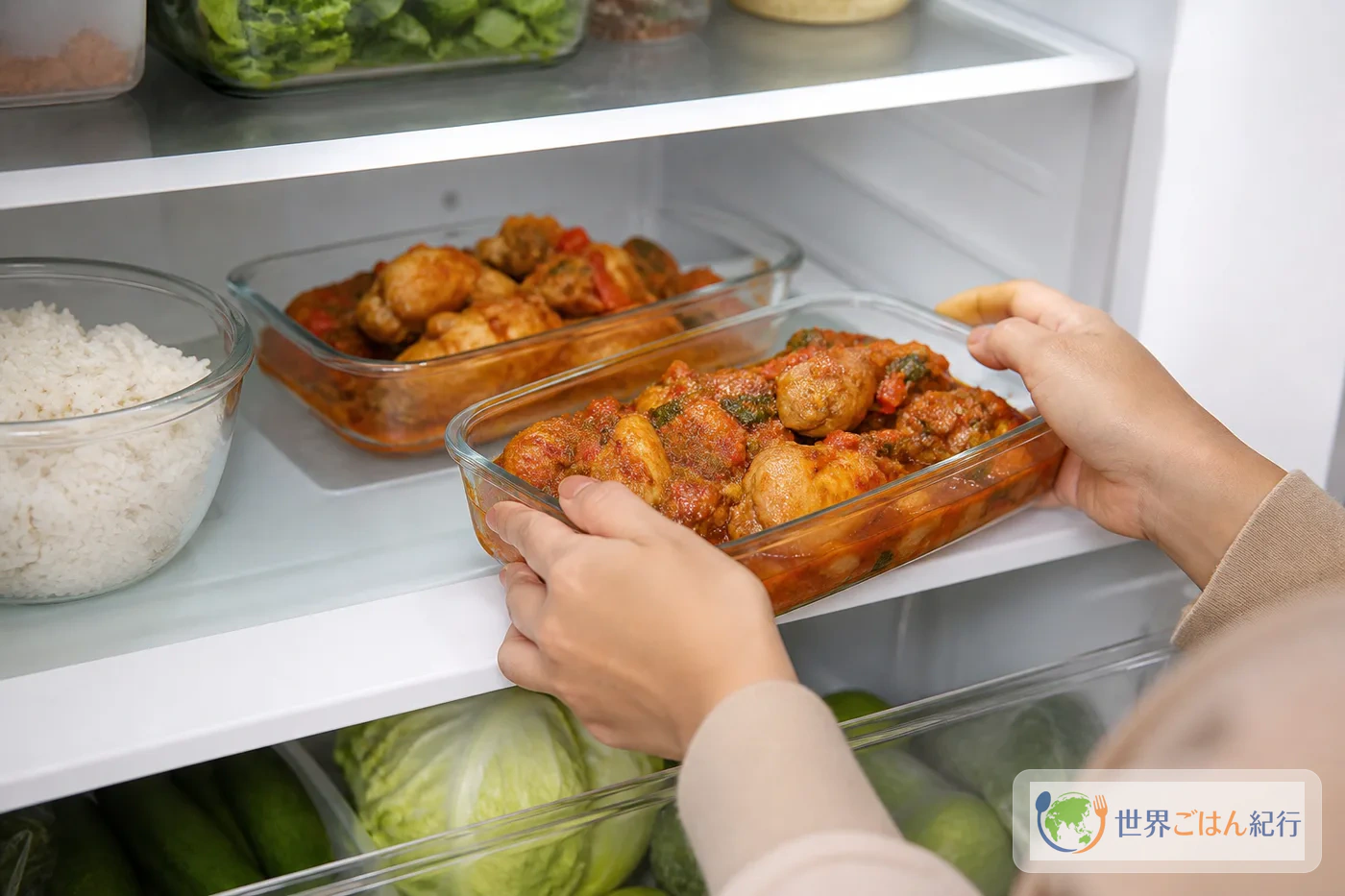
Storing and reheating
Once it has cooled slightly, transfer it to shallow containers and refrigerate. Keep the fridge at 4°C (40°F) or below; leftovers with chicken keep about 3–4 days. Move only what you'll eat into a small pan and heat it thoroughly to the center. Food-safety guidelines also call for reheating leftovers to 74°C (165°F).
To freeze, divide the chicken and sauce into single portions. Thaw in the refrigerator, then add 1 tbsp water and warm over low heat so the sauce loosens up. Basil loses its aroma in storage, so add a little at the end of reheating, and squeeze the lime just before eating. If there's an off smell, sliminess or a bulging container, throw it out without tasting.
Frequently asked questions
Can I make it with chicken breast?
Yes, but cut it into even 4–5 cm pieces and start checking after about 18 minutes of simmering. Once the center reaches 74°C (165°F), simmering longer than necessary dries it out, so reduce the sauce sooner than you would with thighs.
I don't have makrut lime leaves. Is lime juice alone enough?
Lime juice gives sourness, but not the aroma of the leaves. If you have dried leaves, soak a few in water; if not, add a tiny bit of lemon zest at the end. Too much zest turns bitter, so use only the grated yellow part.
Can I make the paste without a food processor?
Yes. Finely chop the ingredients with a knife, add a pinch of salt and crush them on the cutting board. If you have a mortar, pound the shallots, garlic and ginger first, and add the chilies and tomatoes last so less liquid comes out.
Can I make it with sambal oelek alone?
You can, but it doesn't replace the whole aromatic profile of rica-rica. Swap only part of the red chilies for sambal and keep the lemongrass, makrut lime leaves, ginger and lime. If the product contains salt or sugar, add seasonings a little at a time at the end.
Does the flavor change if I eat it the next day?
The chili heat and the saltiness of the aromatics tend to feel stronger. While reheating, add unsalted water 1 tbsp at a time, then finish with lime and basil to bring back a reduced sauce. Reheat only what you'll eat, and don't reheat it again and again.
Indonesian dishes to serve alongside
The red sauce goes well with steaming white rice and unsalted cucumber. If you're serving the heat on the side, a small dish of dabu-dabu (chopped tomato, red onion, lime and chili) lets everyone add sourness and heat at the table. In Manado the same style of sauce goes on fish, so the next day, spooning leftover sauce over grilled fish makes a different dish.
For another Indonesian dish that pairs an aromatic dressing with vegetables, try urap (in Japanese); for meat slowly infused with aroma, rendang (in Japanese). For something sweet with coconut and custard after the meal, Manado's klappertaart (in Japanese) follows naturally.
Nutrition estimate
This is an approximate figure for chicken thighs, oil, chilies and tomatoes divided among four, not including rice. It varies with how much skin you keep, how much oil remains, and the salt in any sambal or chicken stock. If you are strictly tracking carbohydrates or sodium, calculate from the labels of the products you use and the actual amounts.
Sources
- Indonesia Travel, Deliciously Hot Manado Foods: Manado aromatics, rica-rica ingredients and their use with fish, meat and chicken, and serving the heat on the side. Accessed and checked 2026-08-13 (JST)
- National Geographic Traveller, Taste North Sulawesi, Indonesia’s province of warming spices and fiery cuisine: background on trade, spices, chilies and Minahasa cooking in North Sulawesi. Accessed and checked 2026-08-13 (JST)
- Cook Me Indonesian, Ayam Rica-Rica: Manado Spicy Fried Chicken: ingredient structure, coarse paste, and the sear-then-simmer method from a cook who introduces Indonesian food. Accessed and checked 2026-08-13 (JST)
- Pimentious, Ayam Rica Rica: Manado-style aromatics and the structure of searing chicken, then reducing it in the sauce. Accessed and checked 2026-08-13 (JST)
- G-Tech: Jurnal Teknologi Terapan, Development and Quality of Rica-Rica as Indonesian Traditional Food: A Narrative Review: the name rica-rica, regional divisions of North Sulawesi, theories on the arrival of chilies, and the general process for the aromatic paste. Accessed and checked 2026-08-13 (JST)
- FoodSafety.gov, Cook to a Safe Minimum Internal Temperature: 74°C (165°F) internal temperature for poultry and leftovers, and guidance for fish. Accessed and checked 2026-08-13 (JST)
- FoodSafety.gov, Cold Food Storage Chart: 3–4 days refrigerated for cooked meat and poultry, and refrigerator and freezer temperatures. Accessed and checked 2026-08-13 (JST)
- FoodSafety.gov, Salmonella and Food: not washing raw chicken, separating utensils, and internal temperatures for poultry and leftovers. Accessed and checked 2026-08-13 (JST)