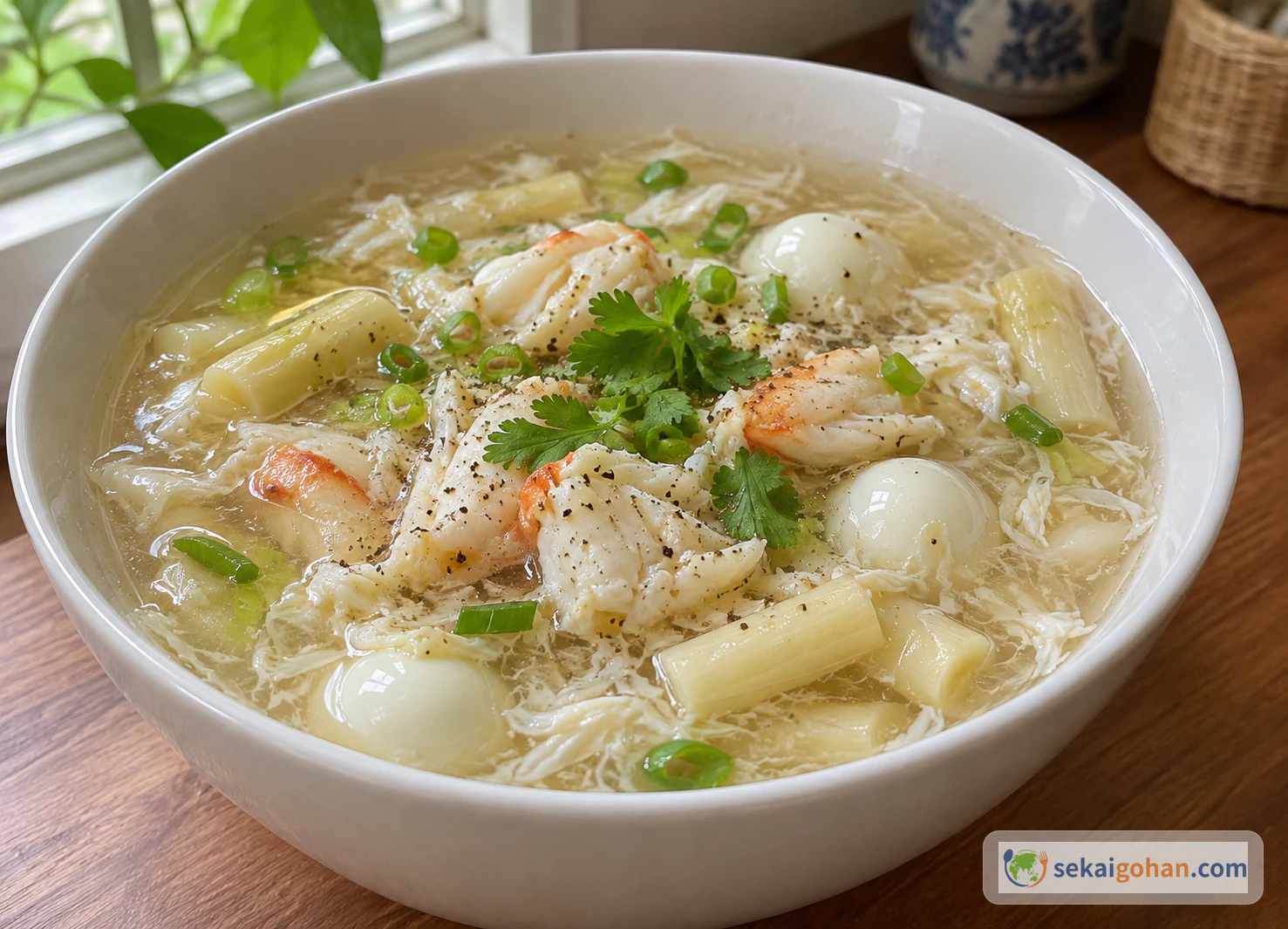
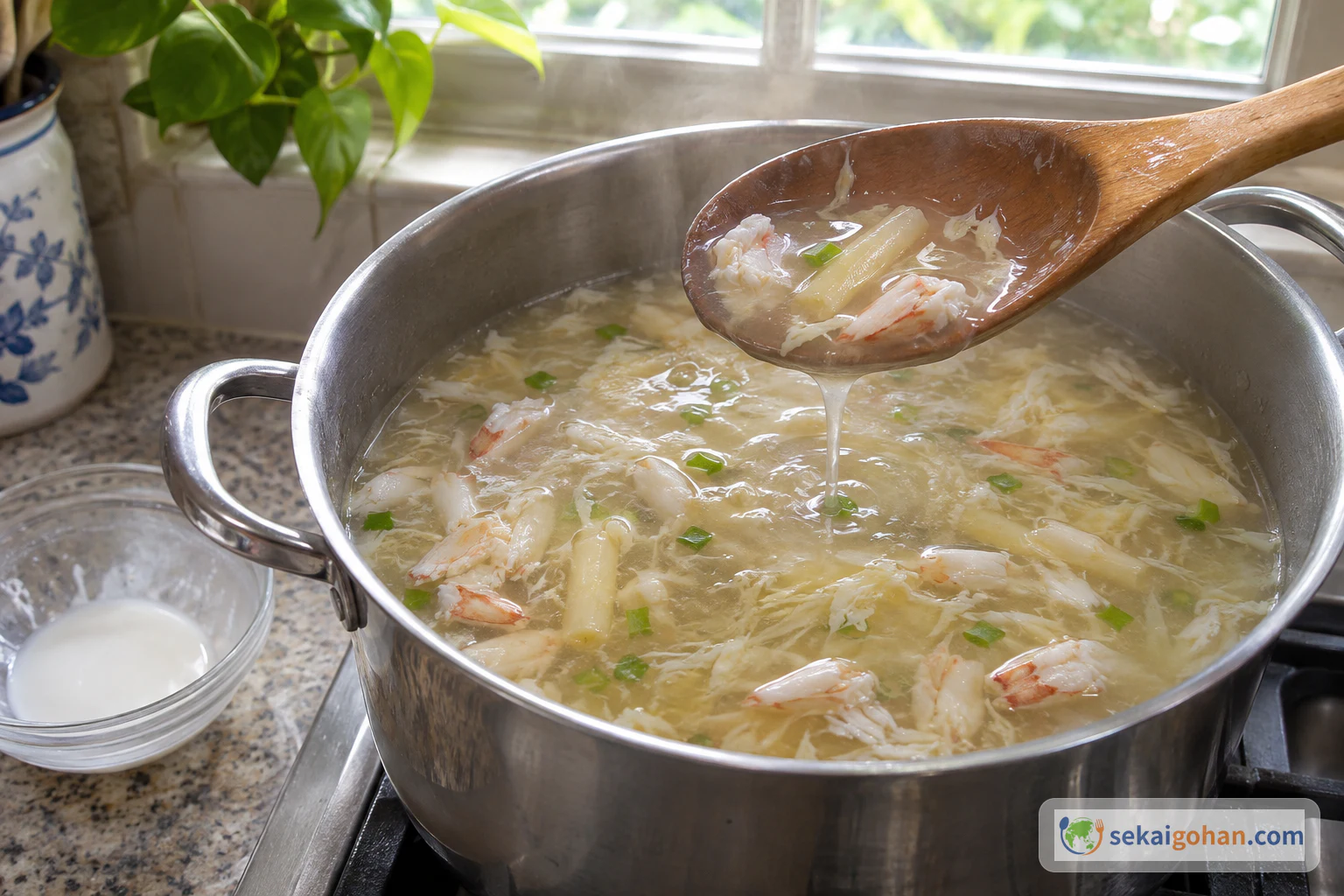
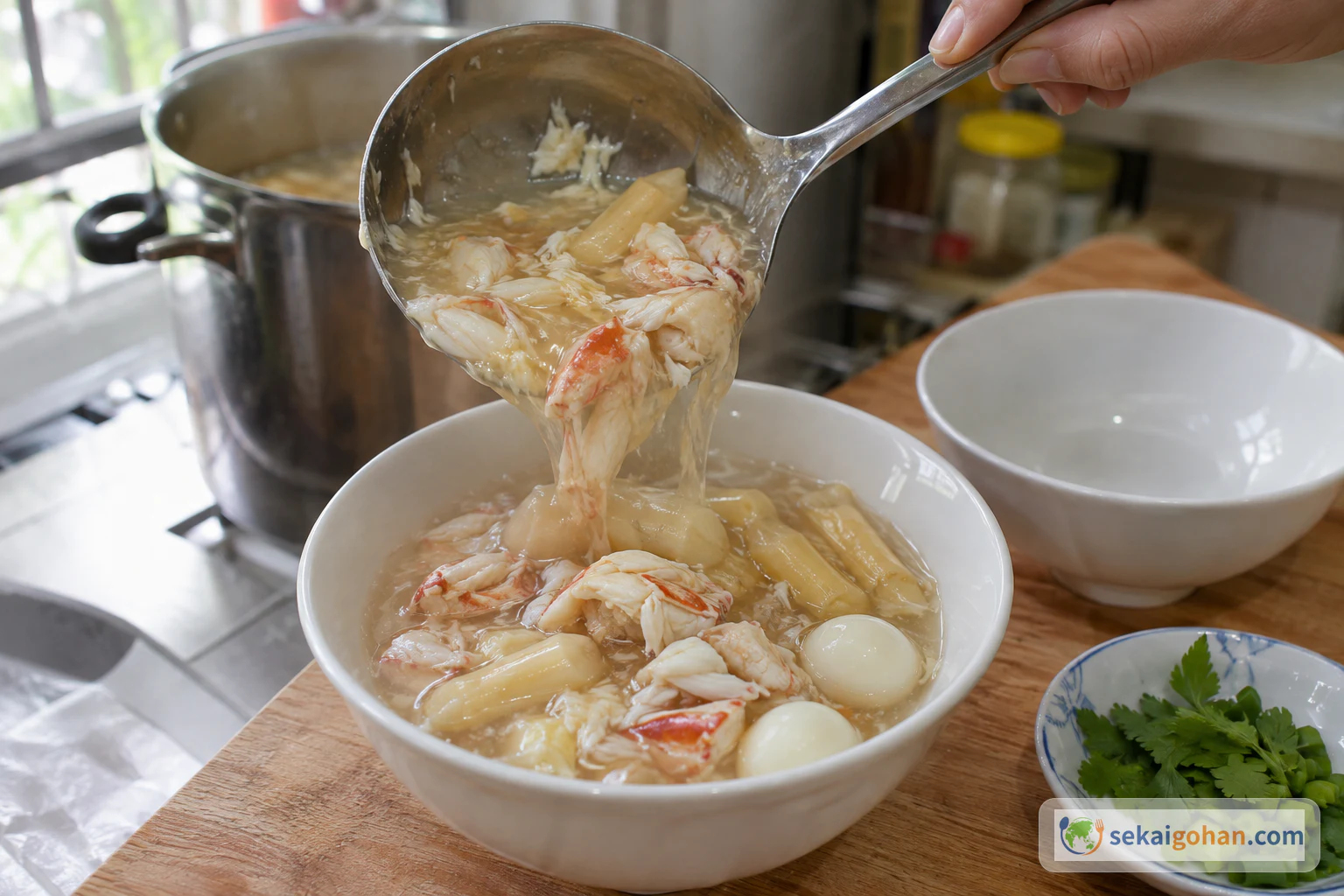
At a Vietnamese wedding banquet, the first thing brought to the table is a small bowl of pale, glossy soup. Steam rises off it. Under a scatter of cilantro and black pepper you can see thick lumps of crab, ivory pieces of white asparagus and fine white threads of egg hanging in the broth. This is súp măng cua: a clear chicken broth thickened until it is silky, sweet from the crab and the asparagus, and seasoned with fish sauce. You eat it slowly, with a spoon, before anything else arrives.
A Banquet Soup Named for the Wrong Vegetable
The name trips up nearly everyone who reads it. Súp is soup and cua is crab. Măng on its own means bamboo shoot, but the vegetable in this pot is asparagus, which in Vietnamese is măng tây, the "Western bamboo shoot." In the soup's name the tây falls away. So the bowl holds asparagus and crab, and no bamboo shoots at all.
Súp (soup) + măng (short for măng tây, asparagus) + cua (crab). Măng tây means "Western bamboo shoot," which is how asparagus got its Vietnamese name. A soup called súp măng tây is asparagus soup with no crab. Súp bắp cua is the version made with corn.
Asparagus is not native to Vietnam. The usual explanation is that it came during the French colonial period. When and how it arrived is not settled. White and green asparagus are the same plant. The white spears are grown under soil, so they never make chlorophyll, and they taste sweeter and milder than green. They come into season in spring. White asparagus and good crab both cost a lot and are not everyday food, and that is why this soup belongs to celebrations.
Where you find it
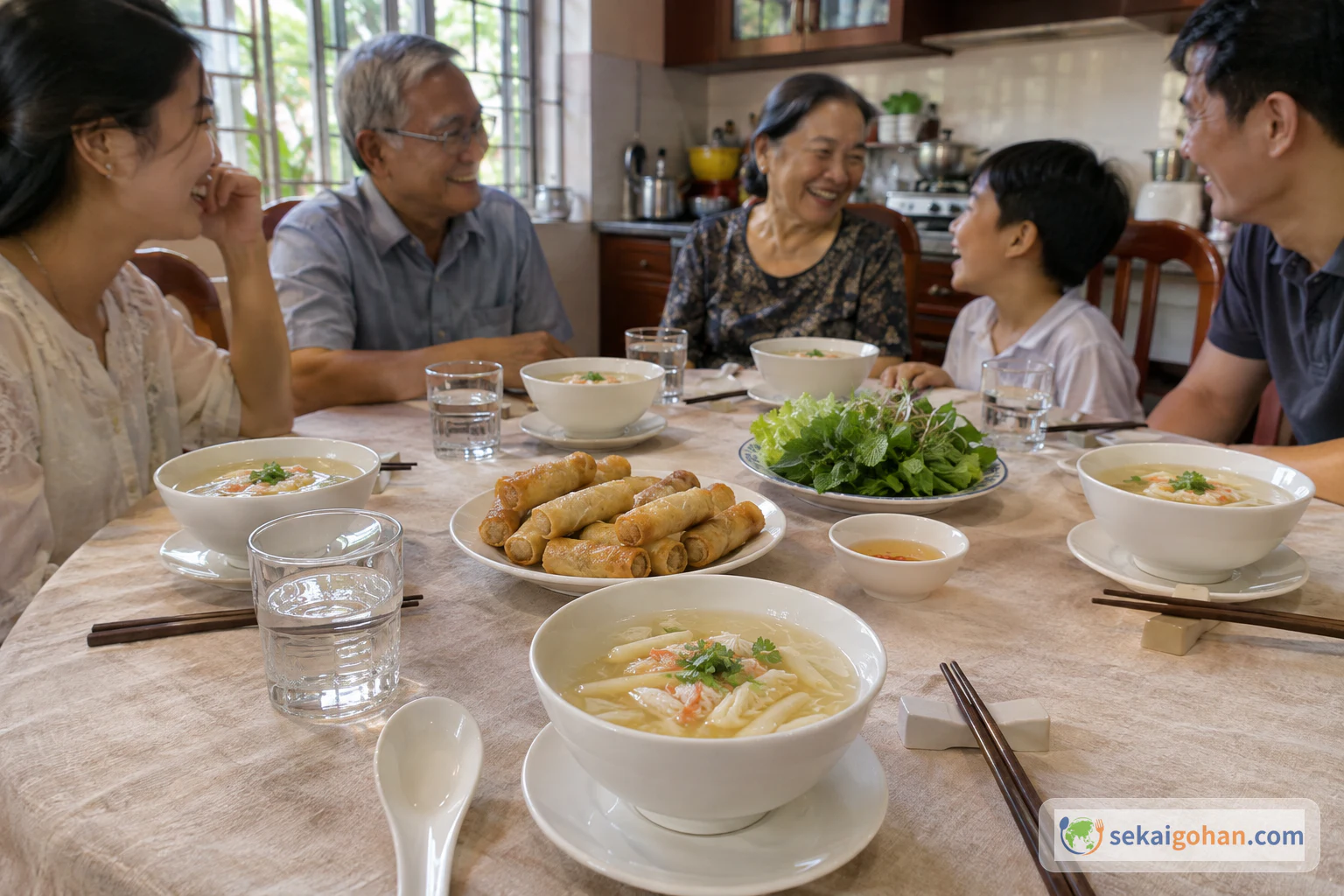
Súp măng cua is cooked at home and at banquets. You rarely see it on the menu of an ordinary Vietnamese restaurant. At weddings and other big gatherings it comes first. Chả giò, the fried spring rolls, are another dish for a celebration table. It is also eaten on its own, not with rice. That sets it apart from canh, the everyday soups ladled over rice at a family meal, such as the sweet-sour fish soup canh chua cá. If you like crab in a bowl, bún riêu puts paddy crab, egg and tomato over rice noodles for a more everyday meal.
How households change it
Every family makes it a little differently. One home version uses green asparagus because white is hard to find and expensive. It is thickened with tapioca starch and finished with white pepper and a drop of sesame oil. That version leaves the quail eggs out and says they were never part of the traditional pot. Immigrant families abroad sometimes make a much bigger, fuller version for parties. They simmer a large chicken-and-pork broth and add corn, carrot, bamboo shoots, shiitake and dried scallops along with the crab and quail eggs. On Vietnamese streets and in casual homes there is also plain súp cua, crab soup. It can carry crab cakes, century egg and fine seaweed threads, is thickened with tapioca starch, and is seasoned lightly so each person can add vinegar and soy sauce at the table. You can find more of the country's cooking on the Vietnam page.
The recipe below is the banquet style: white asparagus, chicken broth, cornstarch, egg-white ribbons and quail eggs.
Ingredients (serves 5)
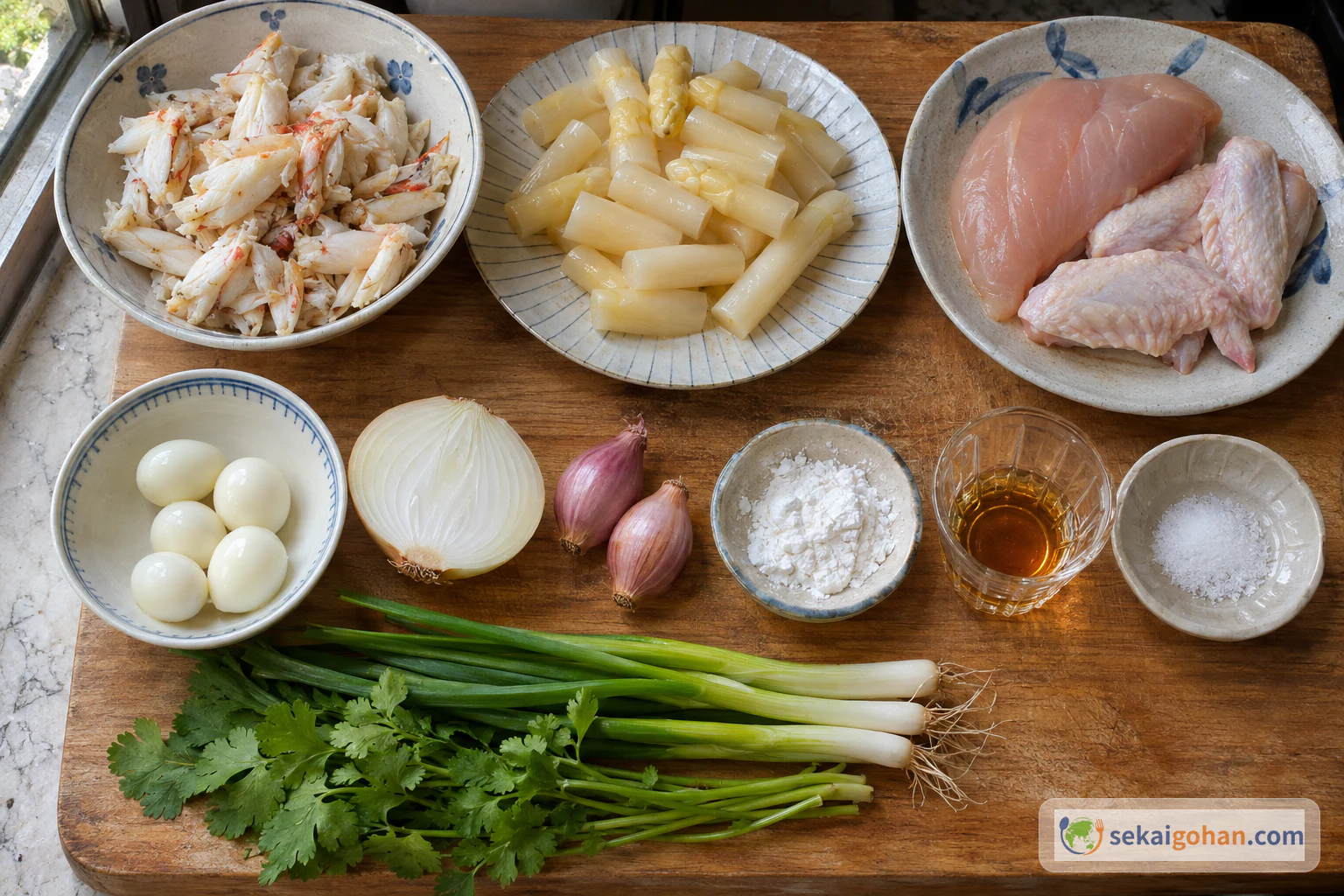
To serve 10, double every ingredient. The broth's simmering times stay the same.
This soup contains crustacean shellfish (crab), egg (egg white and quail eggs) and fish (fish sauce). Some bouillon granules contain milk, soy or wheat, so read the label on the one you buy.
Equipment
- A pot of at least 2¾ quarts (2.5 L)
- A fine-mesh strainer or slotted spoon, and a skimmer
- A small saucepan and a bowl of ice water (for fresh quail eggs)
- A frying pan
- Cooking chopsticks
- Small bowls for the egg white and the slurry
Choosing and Substituting
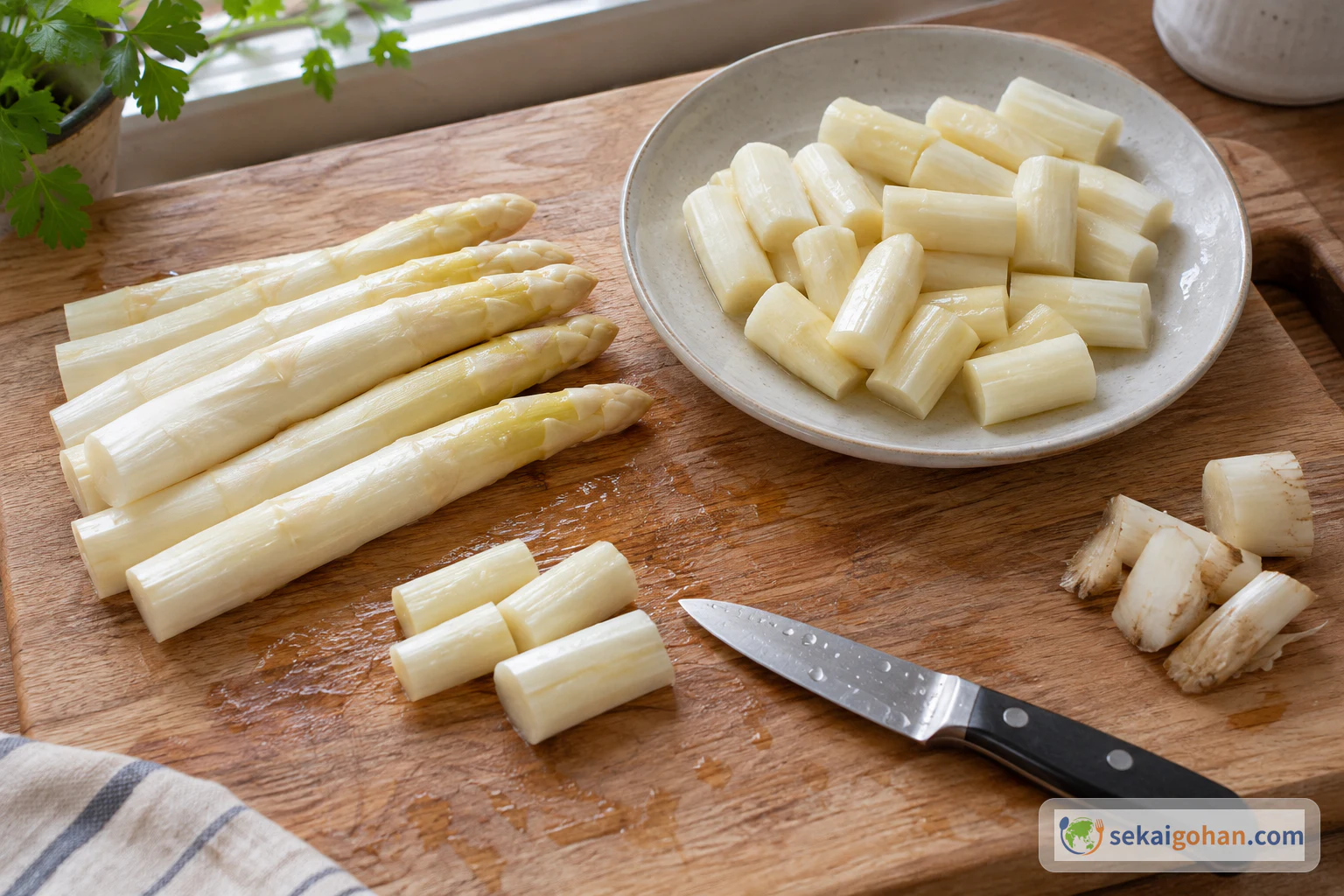
White asparagus is the vegetable that makes the soup white and gentle. Fresh spears turn up in spring. The rest of the year, canned or jarred white asparagus works well. A standard can holding about 10 oz (285 g) of spears is nearly enough for this pot. Canned spears are already cooked and salted, so skip the peeling, use less salt in the broth, and keep them from simmering too long. Green asparagus also works. Its aroma is stronger and it turns the bowl green.
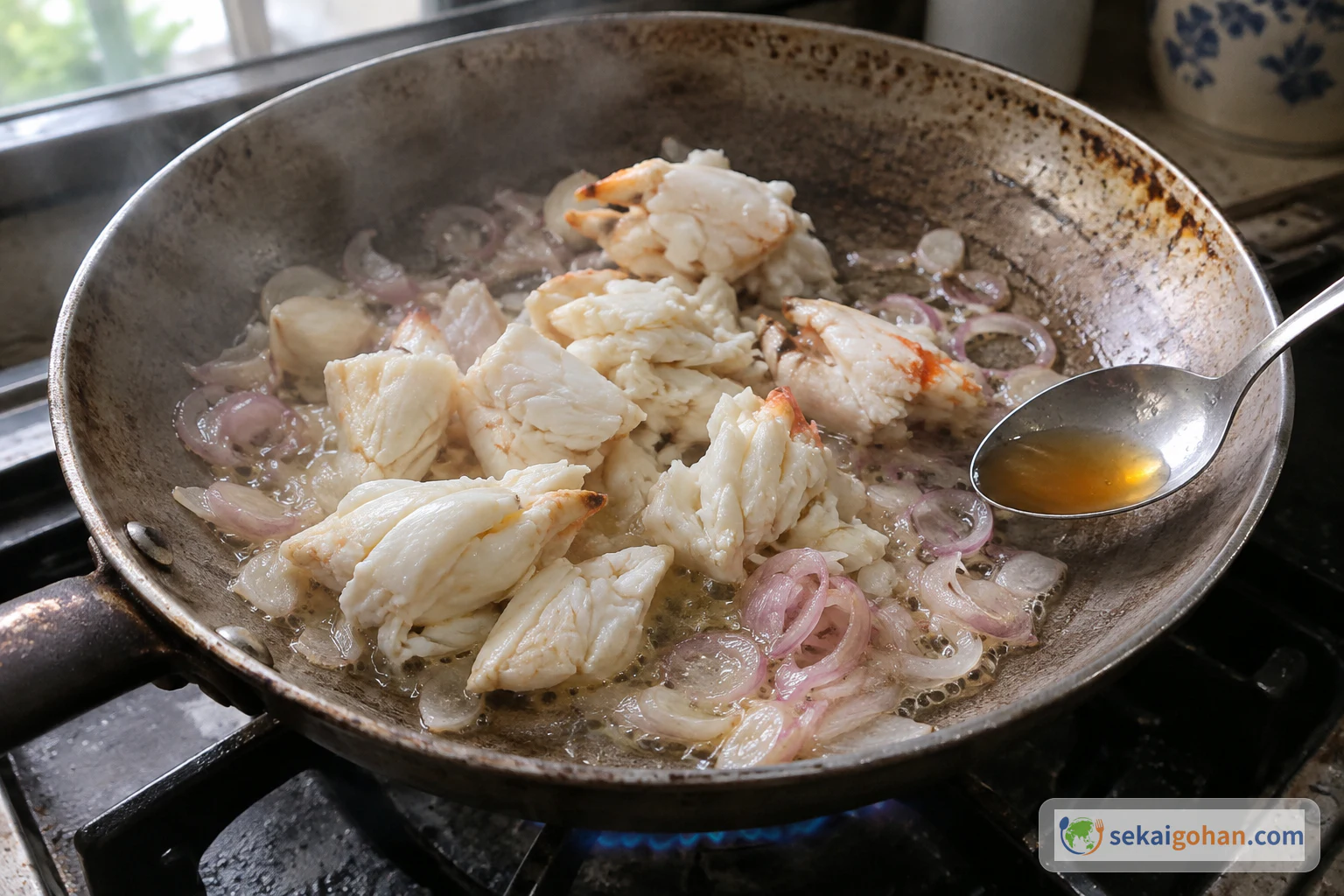
Crab should be large lump and leg meat. Fine shredded crab dissolves into the soup, and the bowl loses its bite. Canned crab is fine if you drain it well. Frozen cooked crab meat, such as snow crab, also works.
Chicken bones can be hard to find. Chicken wings in the same weight give a lighter broth with less body. They are fattier, so skim more often. Fish sauce can be Vietnamese nước mắm or Thai fish sauce. Saltiness and aroma vary from bottle to bottle, so add it a little at a time. Bouillon goes by granules here. If yours is a fine powder, use less. Quail eggs sold cooked in water, canned or in a pouch, save you the boiling and peeling. Cornstarch is the starch to use. Tapioca starch is what the Vietnamese home versions use. Do not assume that another starch, potato starch included, takes the same spoon measure.
Canned asparagus liquid, fish sauce and bouillon all add salt. Put salt only in the broth at the start. At the end, season with bouillon and fish sauce only, and taste before each addition.
Method
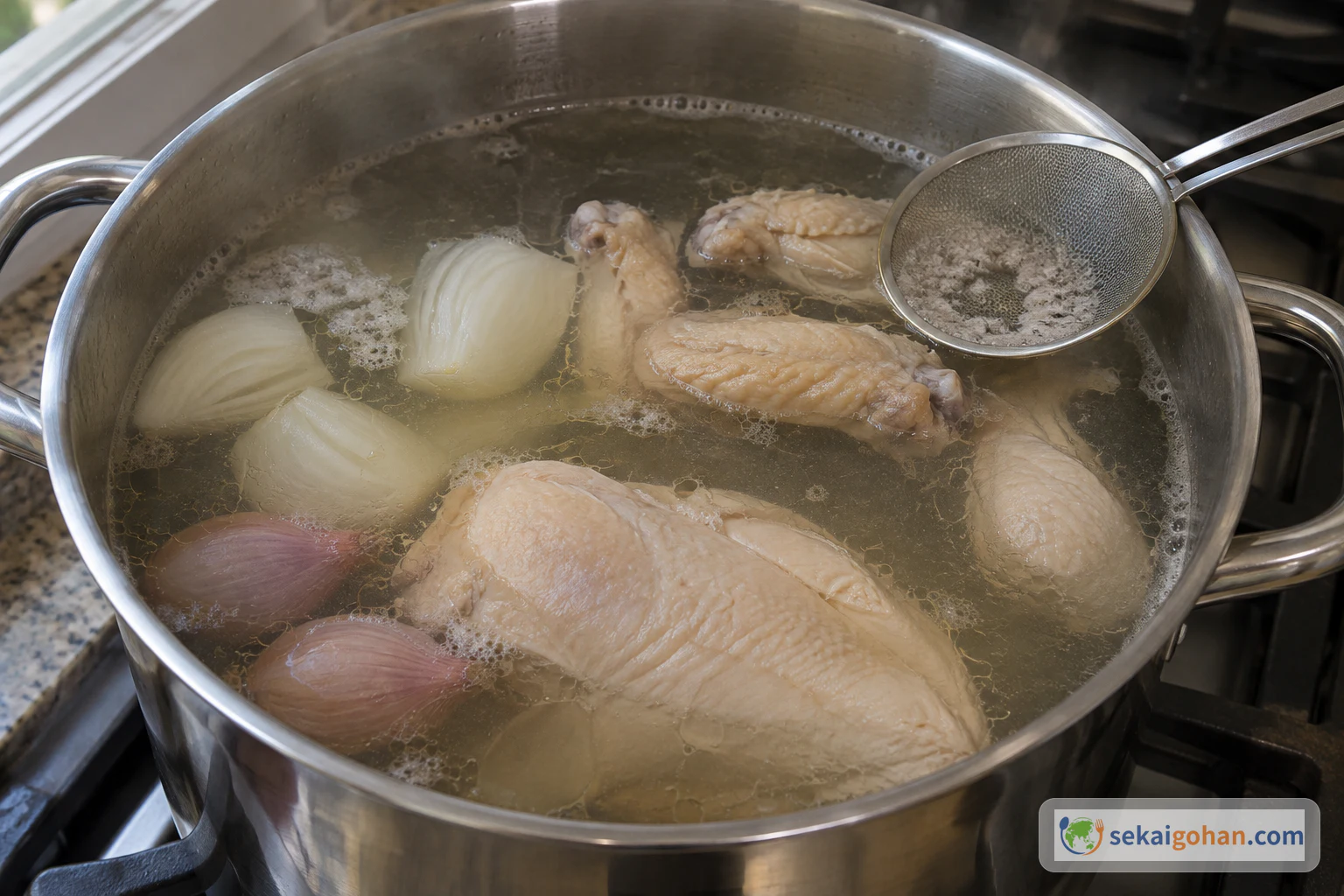
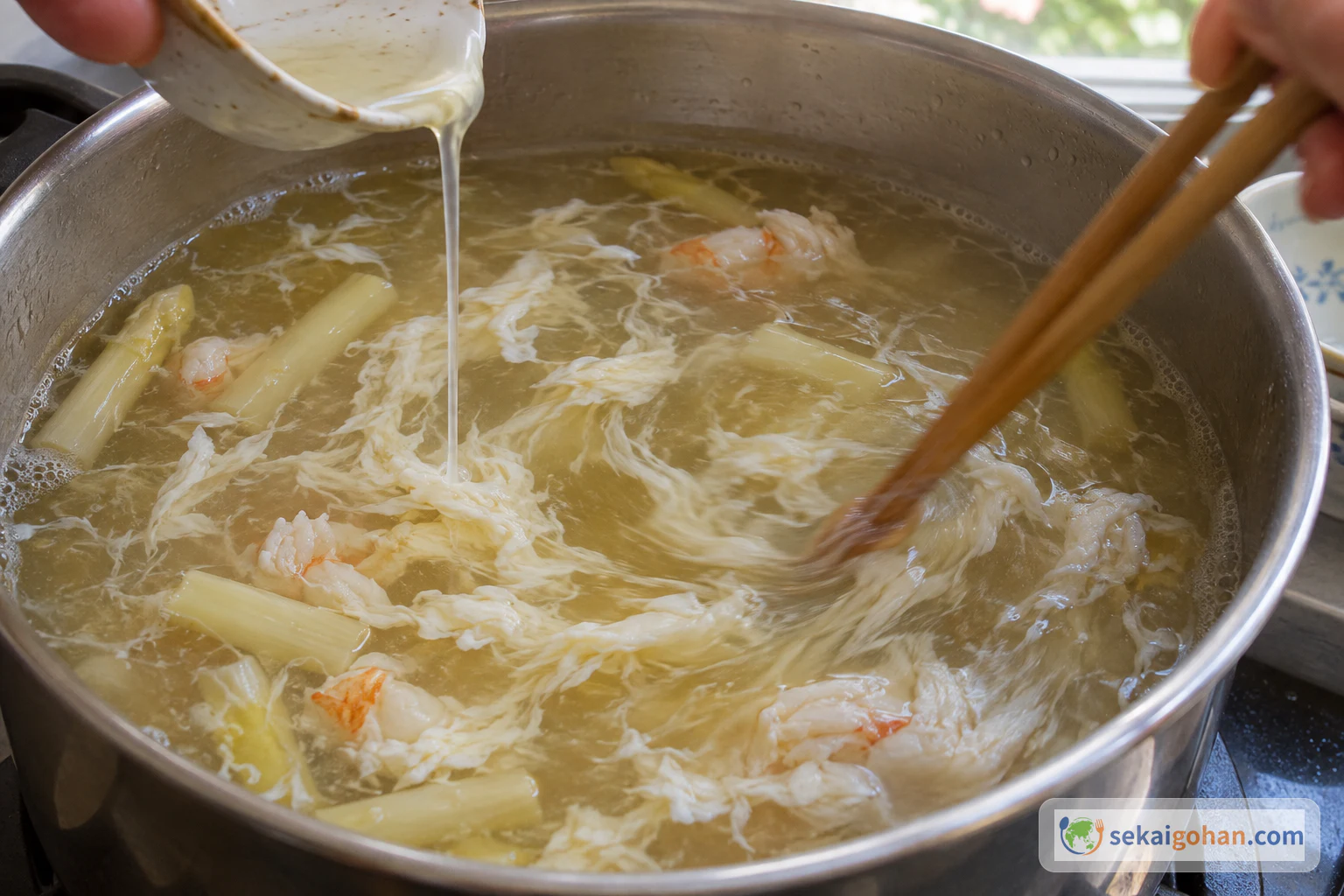
The broth comes first and takes two 30-minute stretches of simmering. Use that time to cut the asparagus, slice the shallot, boil the quail eggs and shred the chicken. Once the broth is strained, the rest goes quickly: asparagus, then crab, then egg white, then starch. Keep the egg white before the starch. Have every bowl ready next to the stove before the crab hits the pan.
When It Goes Wrong
| What you see | Why | What to do |
|---|---|---|
| Cloudy, grey broth | Foam and fat were left in, or the pot boiled hard | Skim the whole time and keep the broth at a gentle simmer |
| Egg white in grainy clumps instead of ribbons | Too much stirring, the soup was off the boil, or the white was beaten stiff | Beat the white only lightly, pour it into boiling soup, and stir in slow circles |
| Dry, stringy crab | Fried longer than 5 minutes or boiled for a long time | Fry for 5 minutes, then just bring it back to a boil in the soup |
| Asparagus falling apart | Canned spears were simmered too long | Add canned spears at step 6 and only heat them through |
| Too salty | Salt from the can, fish sauce and bouillon all added up | Salt the broth only at the start and season the end with bouillon and fish sauce, tasting as you go |
| Thick as paste, firmer as it cools | Cornstarch feels thicker as the soup cools | Serve it hot. Next time, hold a little slurry back. Do not fix it with extra water or a second starch |
Serving, Variations and Storage
At the table
Serve it as a first course, in small bowls, one per person, with nothing alongside. It is eaten on its own, not with rice.
Variations
- Green asparagus. The aroma is stronger and grassier, and the soup turns green. Everything else stays the same.
- No quail eggs. The soup gets lighter, and the egg-white ribbons become the only egg in it. Some families make it this way at home.
- Wing broth. Wings in place of bones, with the breast, make a lighter broth with less body. Skim the extra fat.
- White pepper and sesame oil. Finish each bowl with white pepper and a drop of sesame oil instead of black pepper. The flavor is rounder and nuttier.
Storing and reheating
Divide leftovers into shallow containers so they cool quickly, then refrigerate at 50°F (10°C) or below. Do not leave the soup at room temperature for long. Throw it out if too much time has passed. The soup sets firmer in the fridge. To reheat, bring it all the way to a boil. In a microwave, stir it now and then so it heats evenly.
Frequently asked questions
How do I make it for ten?
Double every ingredient and use a pot about twice the size. The broth still simmers 30 minutes with the breast in, then 30 minutes more without it. The egg and starch steps stay the same. Pour the larger amount of egg white in a thin stream so the ribbons stay fine.
Can I thicken it with potato starch?
Whether potato starch can replace cornstarch spoon for spoon has not been checked, so do not expect the same measure to give the same body. Cornstarch gives the texture described in step 9. If you have to use another starch, add it gradually and stop at the spoon-coating stage.
What do I do with the leftover yolk?
Use it in another dish. Only the white goes into this soup, so the ribbons stay white and the broth stays pale. A yolk would turn the soup yellow and cloudy.