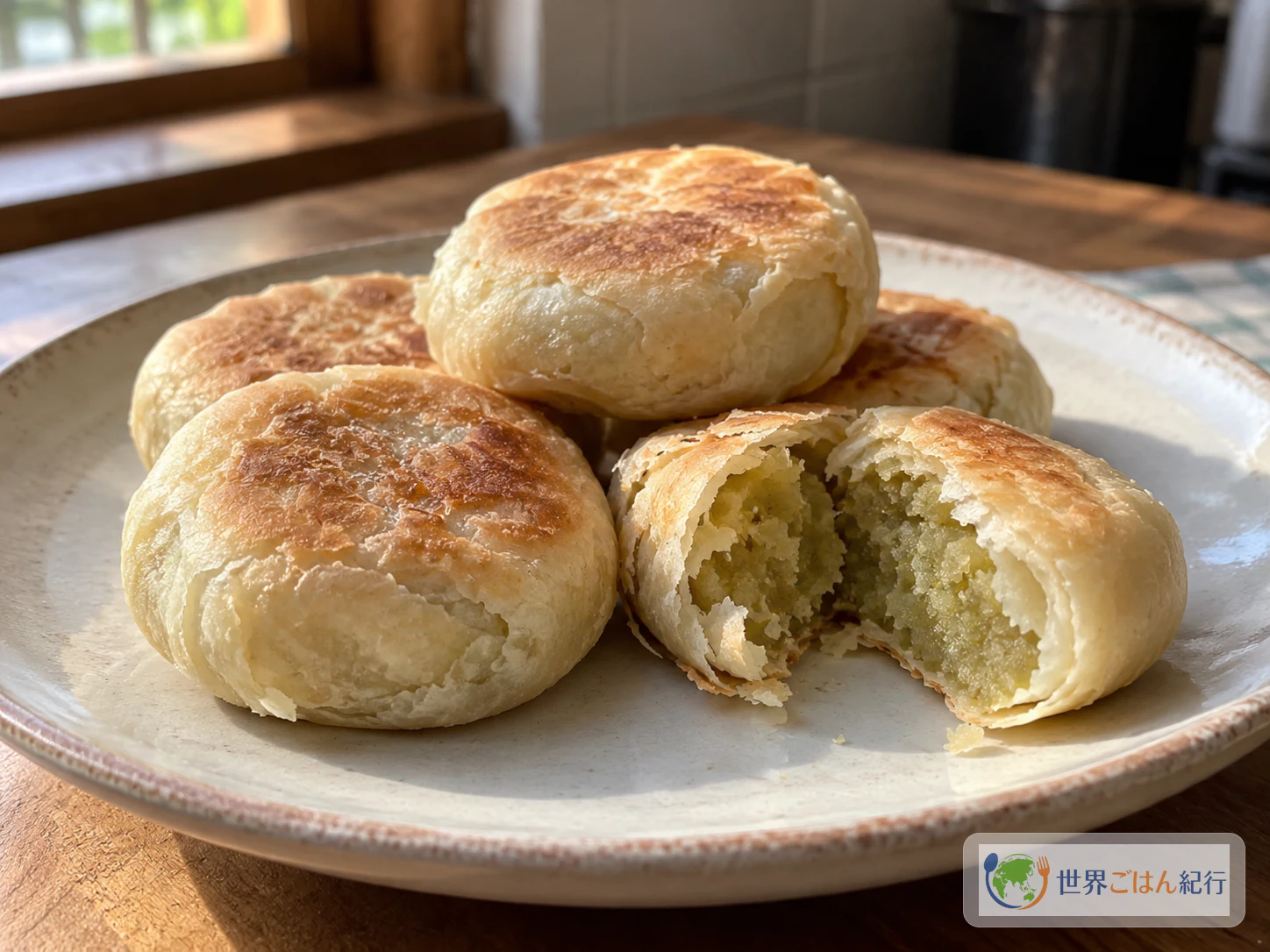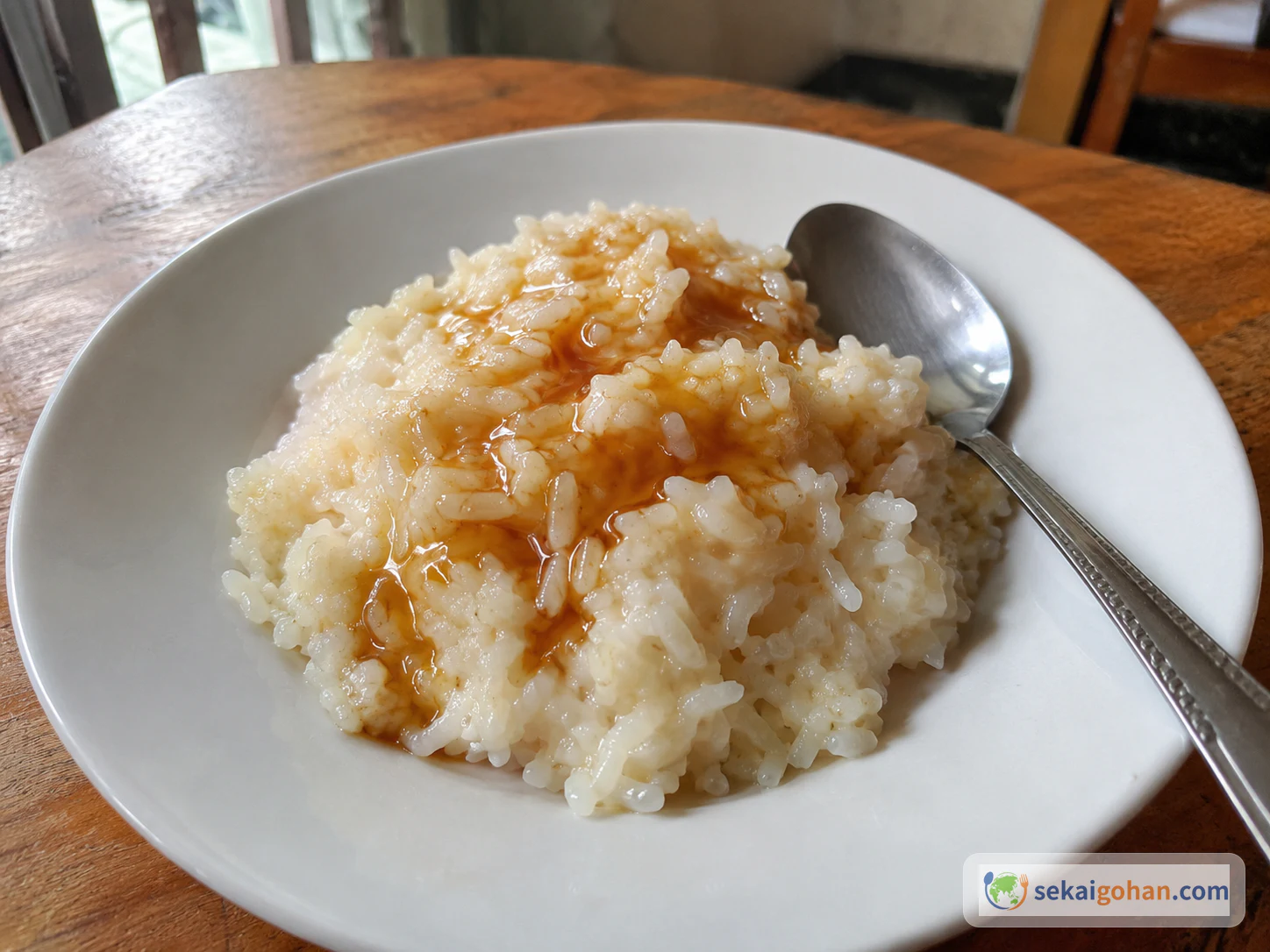
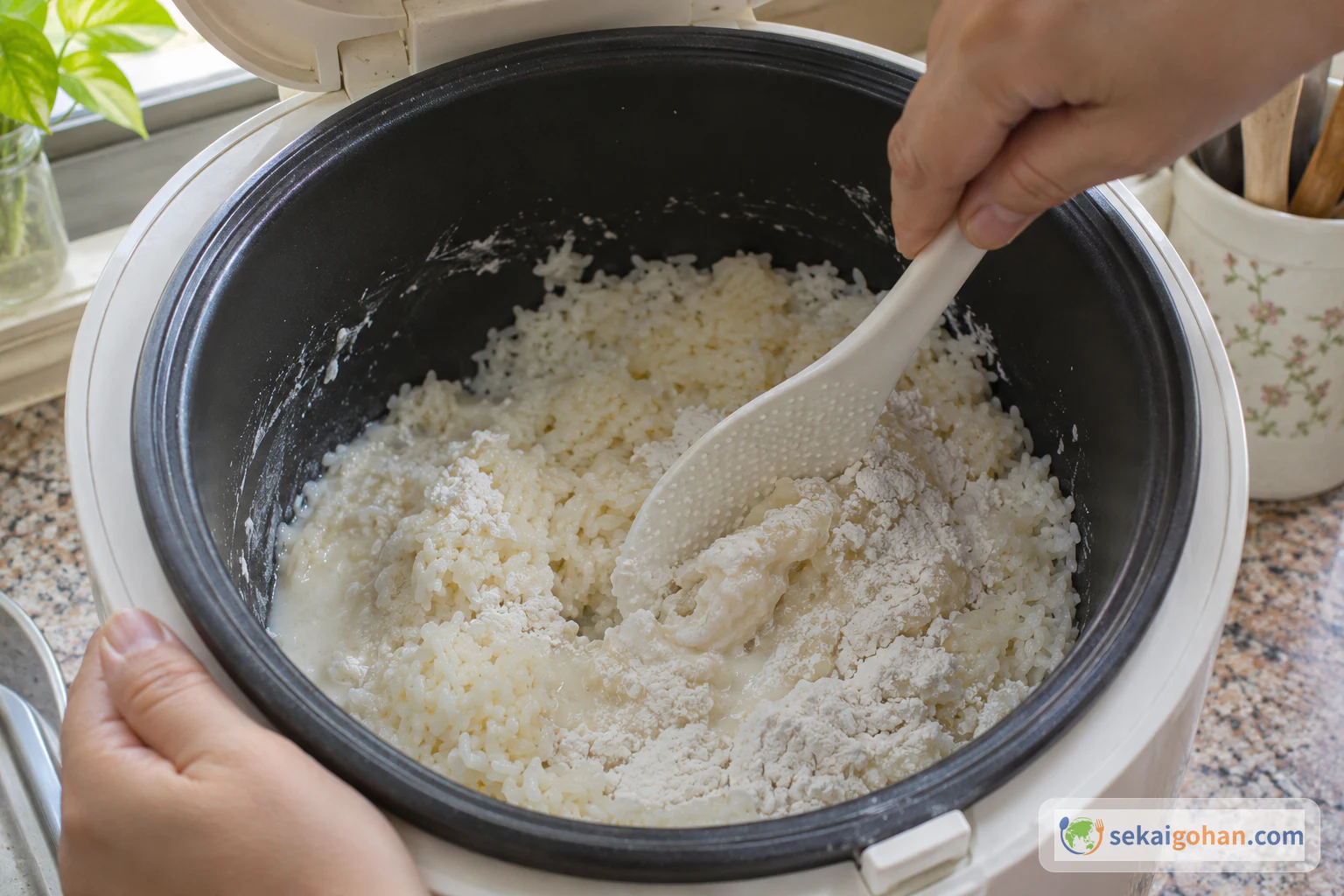
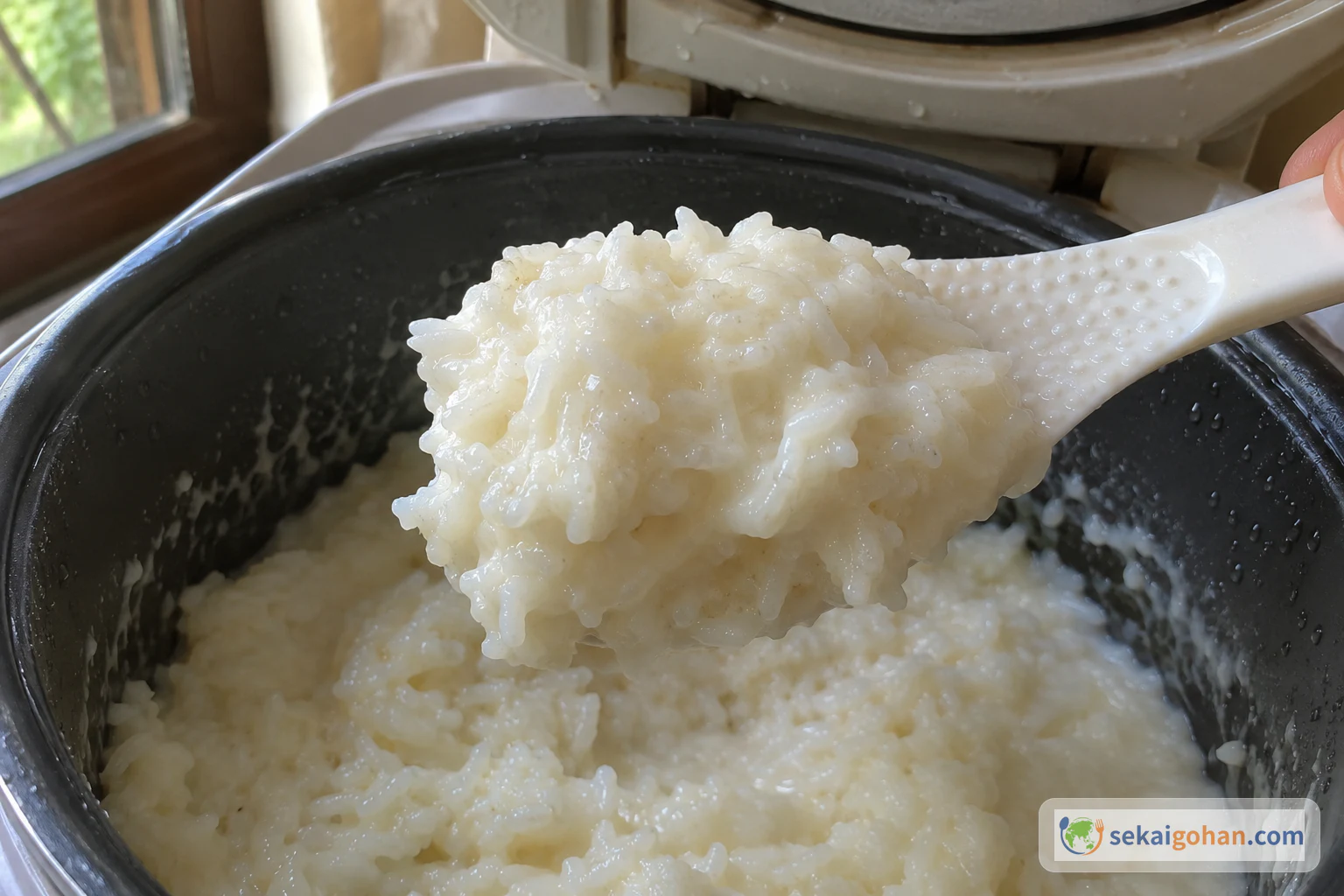
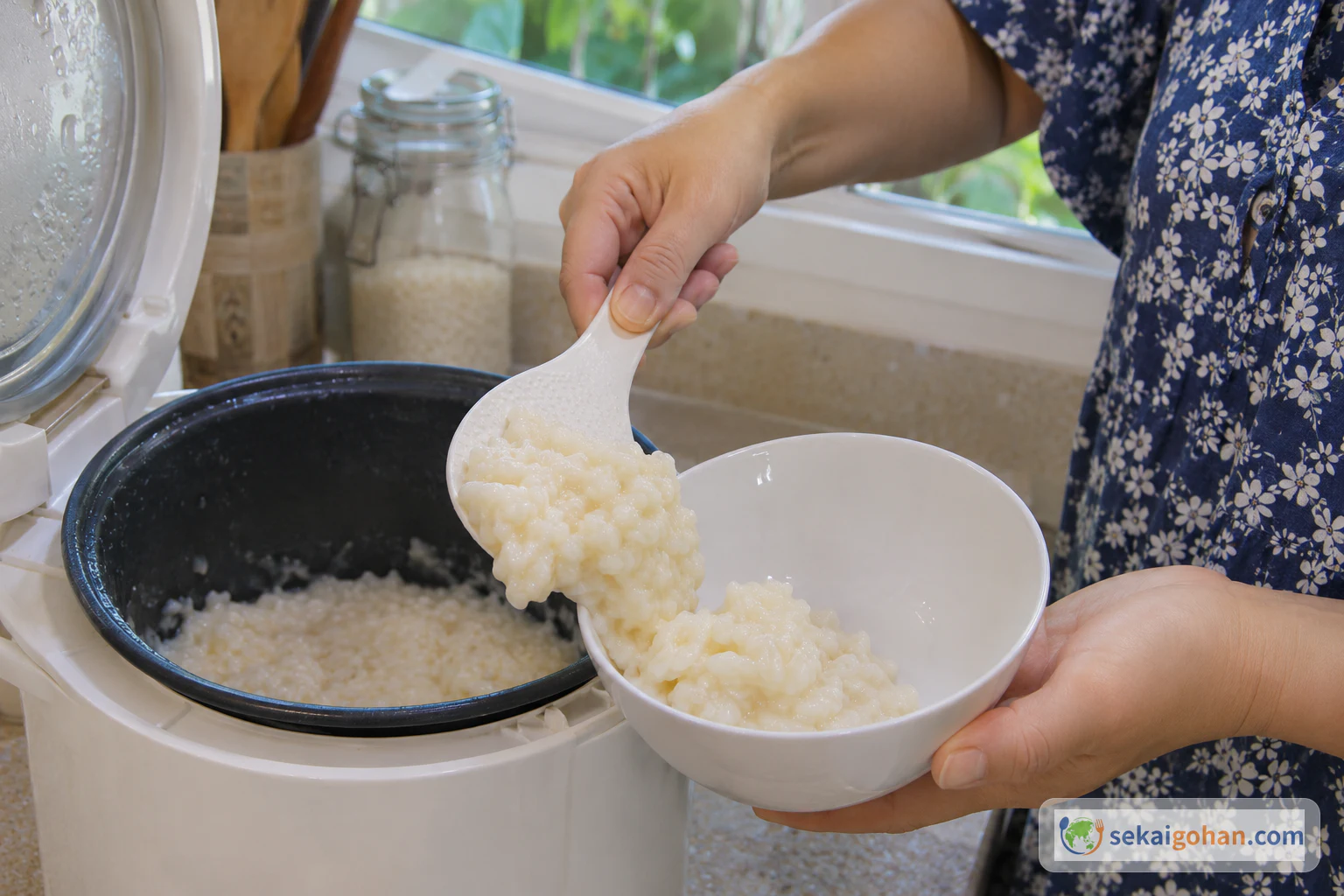
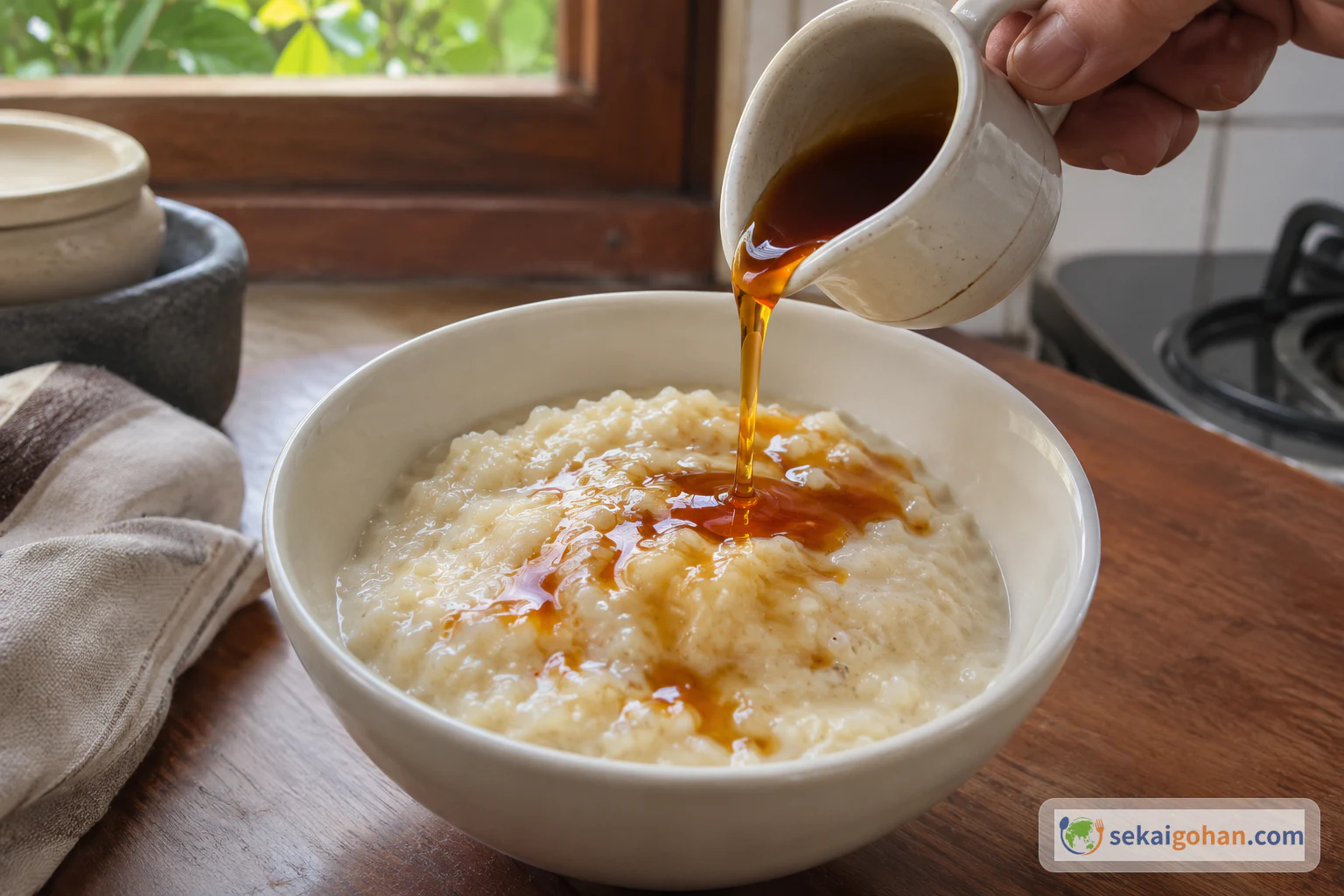
The rice cooker finishes its second cycle, you lift the lid, and steam rises off rice that has turned pale with milk and settled into one mass. Push a paddle in and it lifts out a clump that holds together. That is no htamin, Myanmar's milk rice: rice cooked in whole milk, then cooked a second time with rice flour, salt and more milk until it sets slightly firm. The pot is seasoned only with salt. The sweetness comes at the table, as palm jaggery syrup poured over each bowl or a spoonful of sugar.
Milk Rice, Cooked Twice
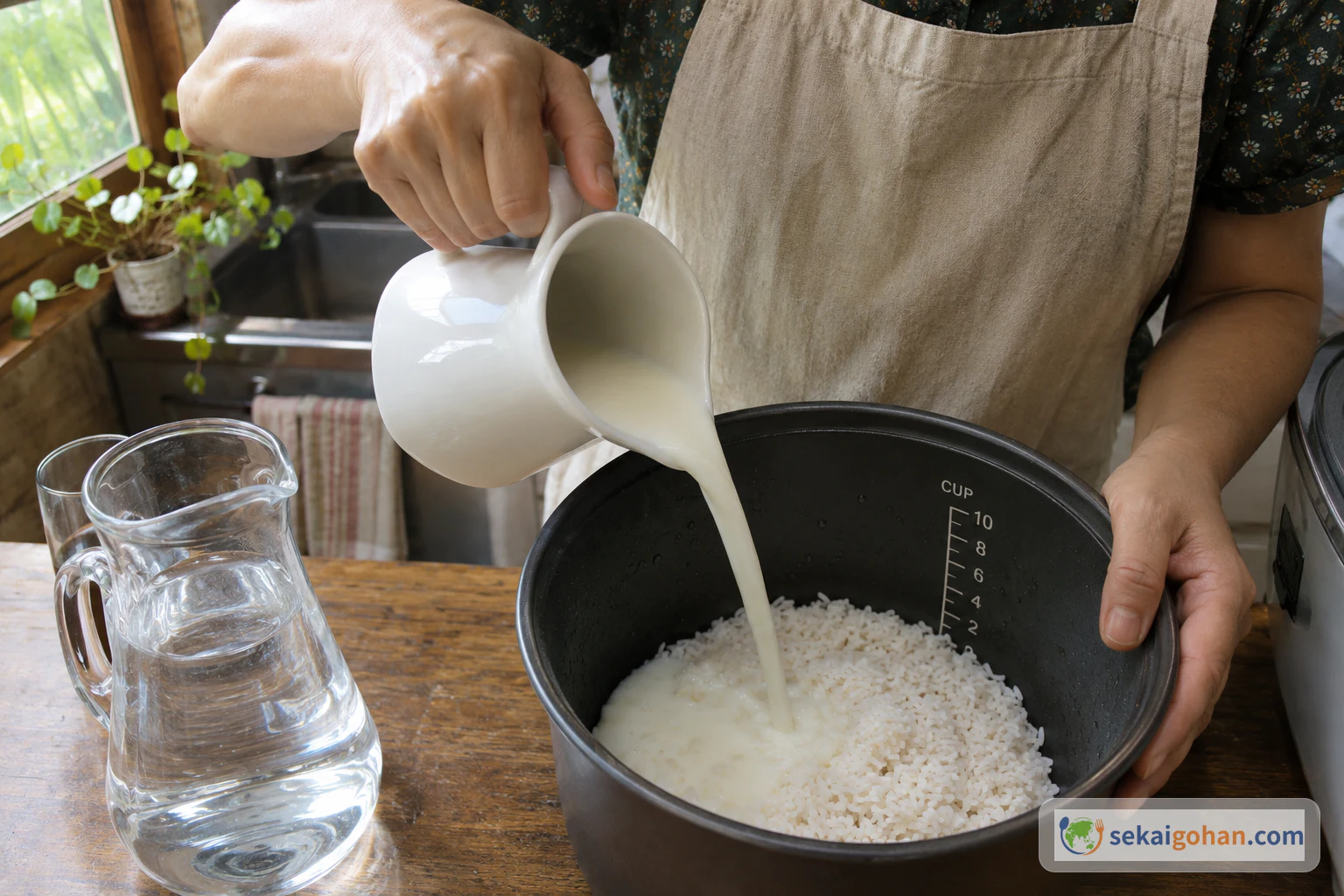
In Burmese the dish is written နို့ထမင်း. The first word means milk and the second means cooked rice, so no htamin is simply milk rice, which is also its English name. The dish is usually described with long-grain rice, and at home it is made in a rice cooker. Two cycles do the work. The first cooks the rice in milk and water. The second turns that cooked rice into something firmer and more bound, because rice flour, salt and fresh milk go in before the lid closes again.
That second cook is what sets no htamin apart from its neighbours. Myanmar has many rice dishes with htamin in the name, and they move in very different directions. Hsi htamin is glutinous rice cooked with oil and eaten at breakfast. Htamin gyaw is fried rice made from cold cooked rice. Ngwe htamin, also called kauknyin shwekyi, is a separate sweet of glutinous rice and coconut milk, close in name and far apart on the plate. There is also a looser, porridge-style milk rice made by stirring rice flour into milk and heating it in a pan, with no whole grains cooked first. It shares the name and is a different preparation. You can find more of Myanmar's cooking across the site.
Htamin means cooked rice, and it sits at the end of many Burmese dish names. The word in front tells you what the rice meets. Here it is no, milk.
Ingredients
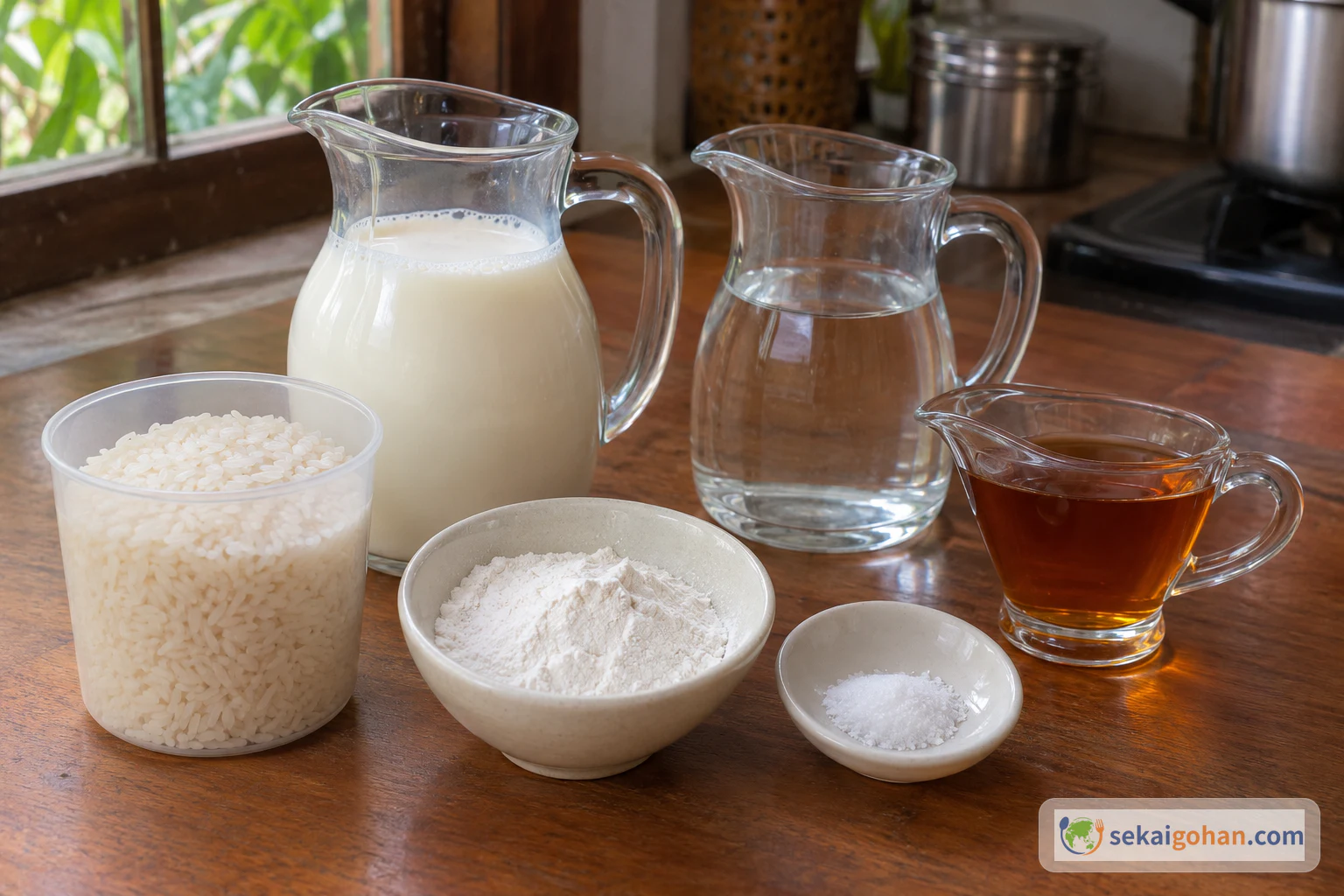
No htamin contains milk. Check the ingredients on the rice flour label. Use pasteurized whole milk from the store.
Equipment
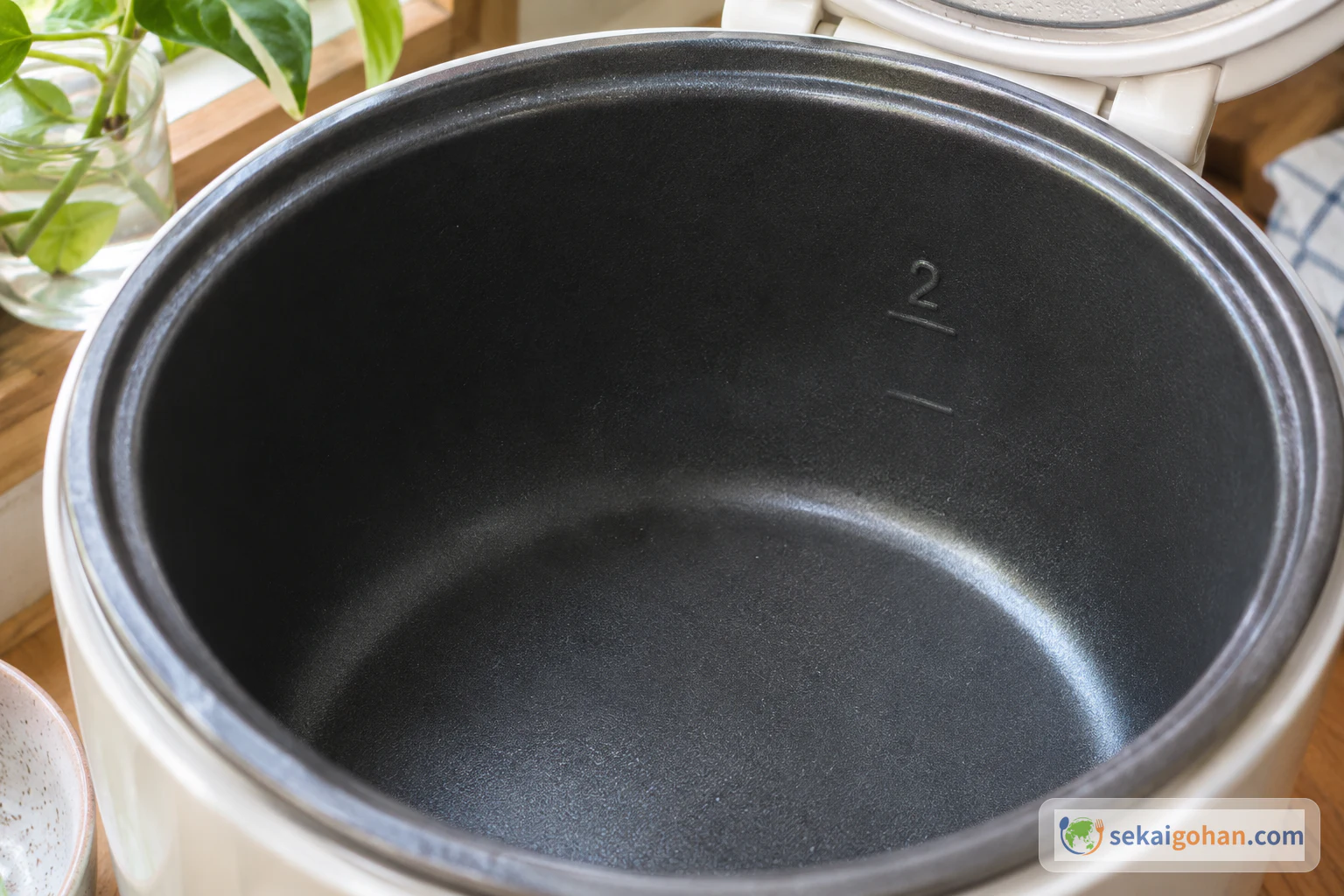
- A rice cooker with water-level marks on its inner pot
- The measuring cup that came with the rice cooker
- A bowl for washing the rice
- A rice paddle or wooden spatula
- A teaspoon
- Serving bowls, and a small jug or dish for the syrup or sugar
Choosing the Rice Flour, Milk and Sweetener
The one purchase that decides the dish is the rice flour. Buy plain rice flour made from non-glutinous rice. Glutinous rice flour, often sold as sweet rice flour, sits on the same shelf in Asian grocers and changes the texture into something else. Read the label before you buy, because the bags look alike.
Use pasteurized whole milk with its fat left in. The rice can be the plain white rice you usually cook; long-grain is the rice most often named for this dish, and whatever you use, measure it with your cooker's own cup so it matches that cooker's marks.
For the table, look for palm jaggery syrup or palm sugar at an Asian grocer or online. Plain sugar is the other way no htamin is eaten, and it gives a simpler, cleaner sweetness. Plain rice flour, whole milk and a sweetener are all this dish needs from the shop.
"Rice flour" and "glutinous rice flour" are different products. If the label lists glutinous or sweet rice, put it back and find plain rice flour.
Method
The rice cooker does most of the work in two full cycles. Between them, your hands are busy loosening the cooked rice, pressing it down and stirring in the flour, salt and milk. After the second cycle, the rice rests in the closed cooker for 15 minutes before it goes into bowls.
When It Goes Wrong
| What you see | Why | What to do |
|---|---|---|
| The rice comes out stretchy and sticky in a way that looks wrong | Glutinous rice flour was used | Next time use plain rice flour made from non-glutinous rice |
| Dry, powdery patches in the finished rice | Flour was left unmixed before the second cook | Stir until there is no dry flour or grit before closing the lid |
| The rice is much wetter or drier than a firm clump | Your cooker's mark 2 holds a different amount, or the rice was measured with another cup | Measure the rice with your cooker's own cup and fill to mark 2, reading it at eye level |
| Soft and loose when served | It went into bowls before the rest | Keep the lid closed for the full 15 minutes after the second cook |
Serving No Htamin
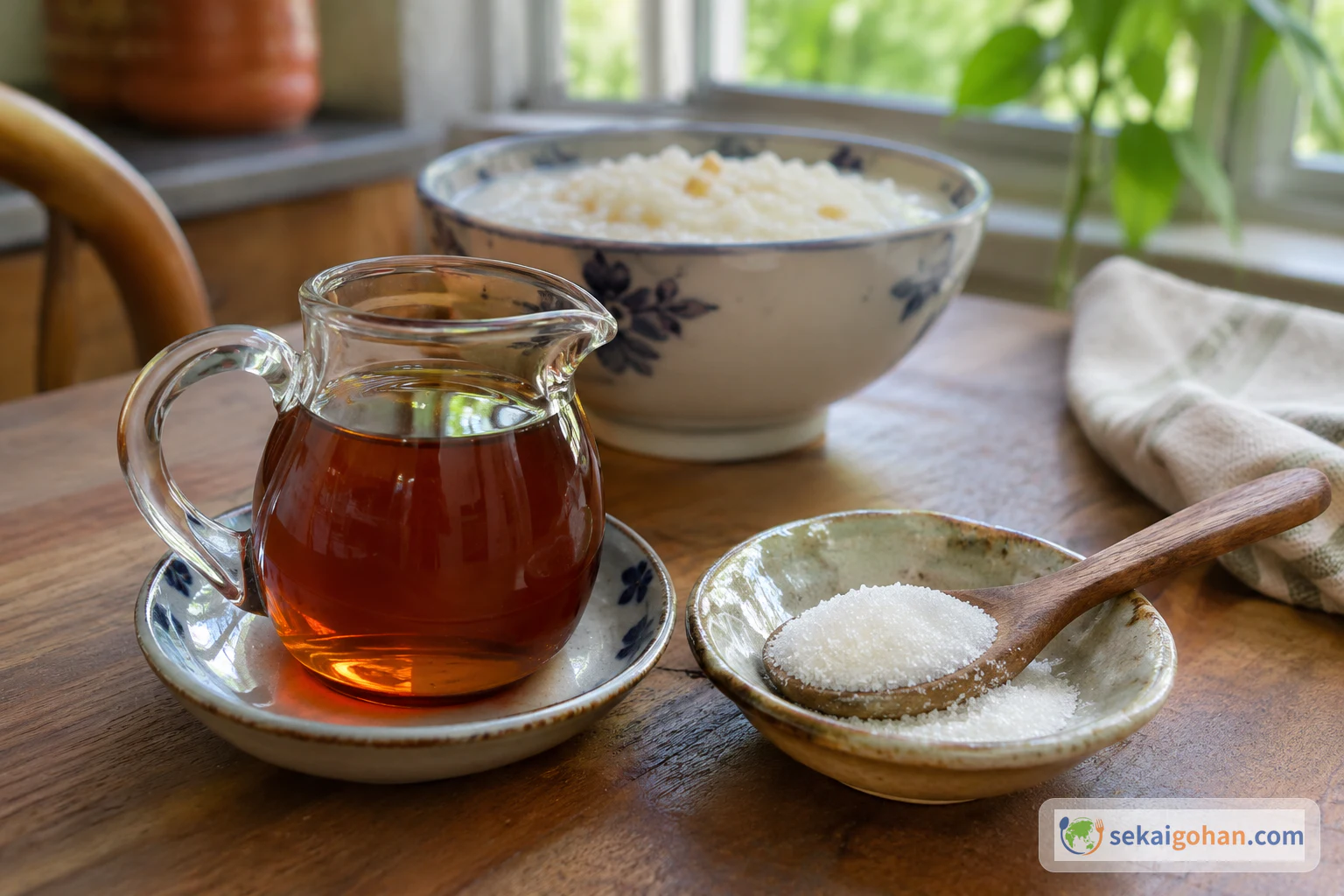
The rice itself carries only salt, so the sweetener decides how each bowl tastes. Palm jaggery syrup pools over the pale rice and brings a deeper, darker sweetness. Sugar gives a plain, clean sweetness and a little crunch where it lands. Putting both on the table and letting everyone add their own keeps the pot neutral, and people can make each spoonful as sweet as they like.
Serve it warm, scooped in clumps, with the syrup poured on at the last moment so it runs over the surface. A spoon is the right tool; the rice is firm enough to hold together on it.
Frequently asked questions
Is no htamin the same as coconut rice?
No. Coconut rice, ohn htamin, is a different Burmese dish made with coconut milk. No htamin is made with cow's milk and finished with rice flour, so leave coconut milk out of this pot.
Can I skip the rice flour?
The rice flour is what makes this dish. It goes in for the second cook and binds the milk-cooked rice into a slightly firm mass. Without it you have rice cooked in milk, with a looser texture.
Can I make it in a pot on the stove?
Make it in a rice cooker. The amounts are set by the cooker's measuring cup and the mark-2 line on its inner pot, and both cooks run on the normal white-rice setting.
Does the order of milk and water matter in the first cook?
What matters is that together they reach mark 2. Pour the milk over the rice, top up with water to the line, and check the level once both are in.