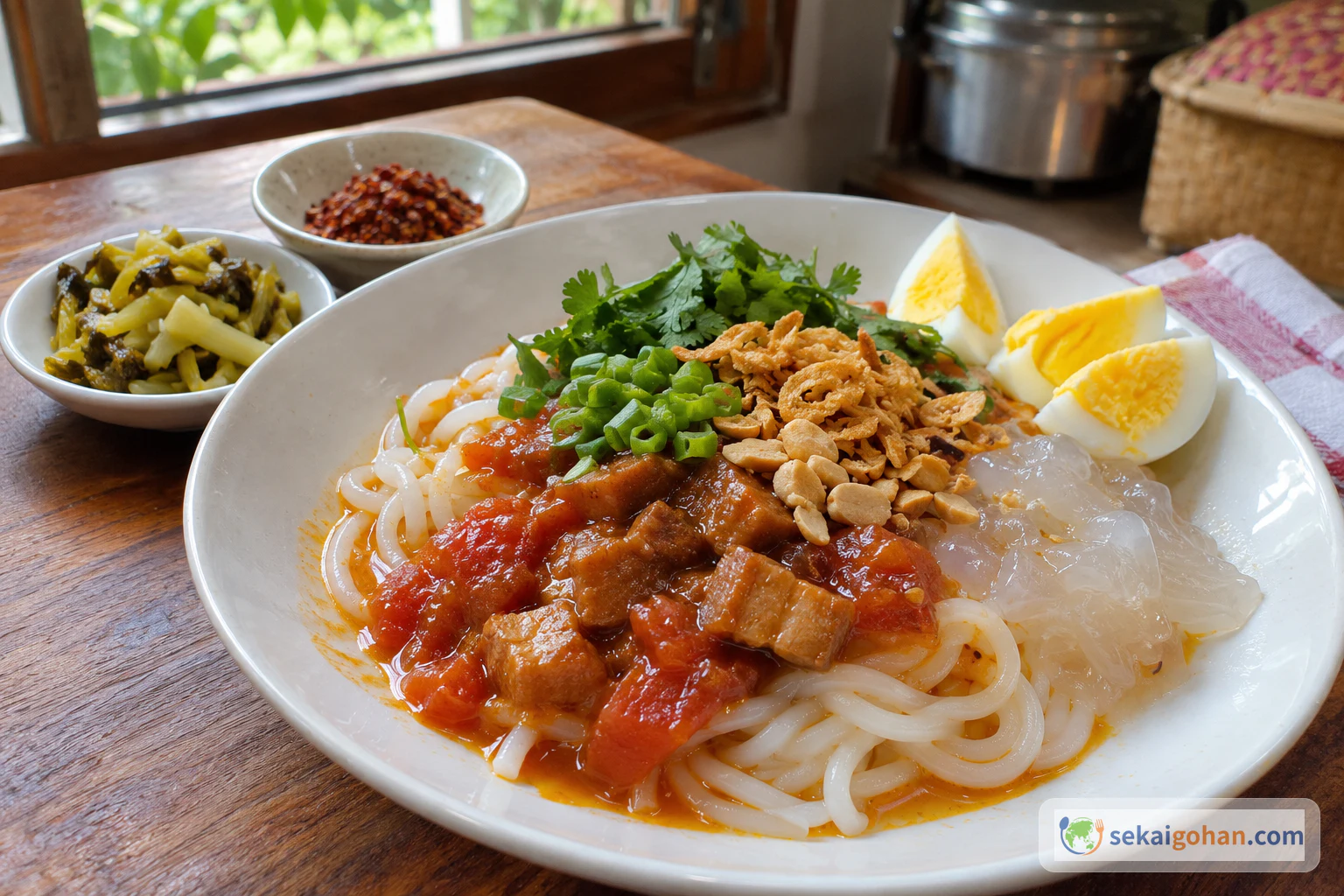
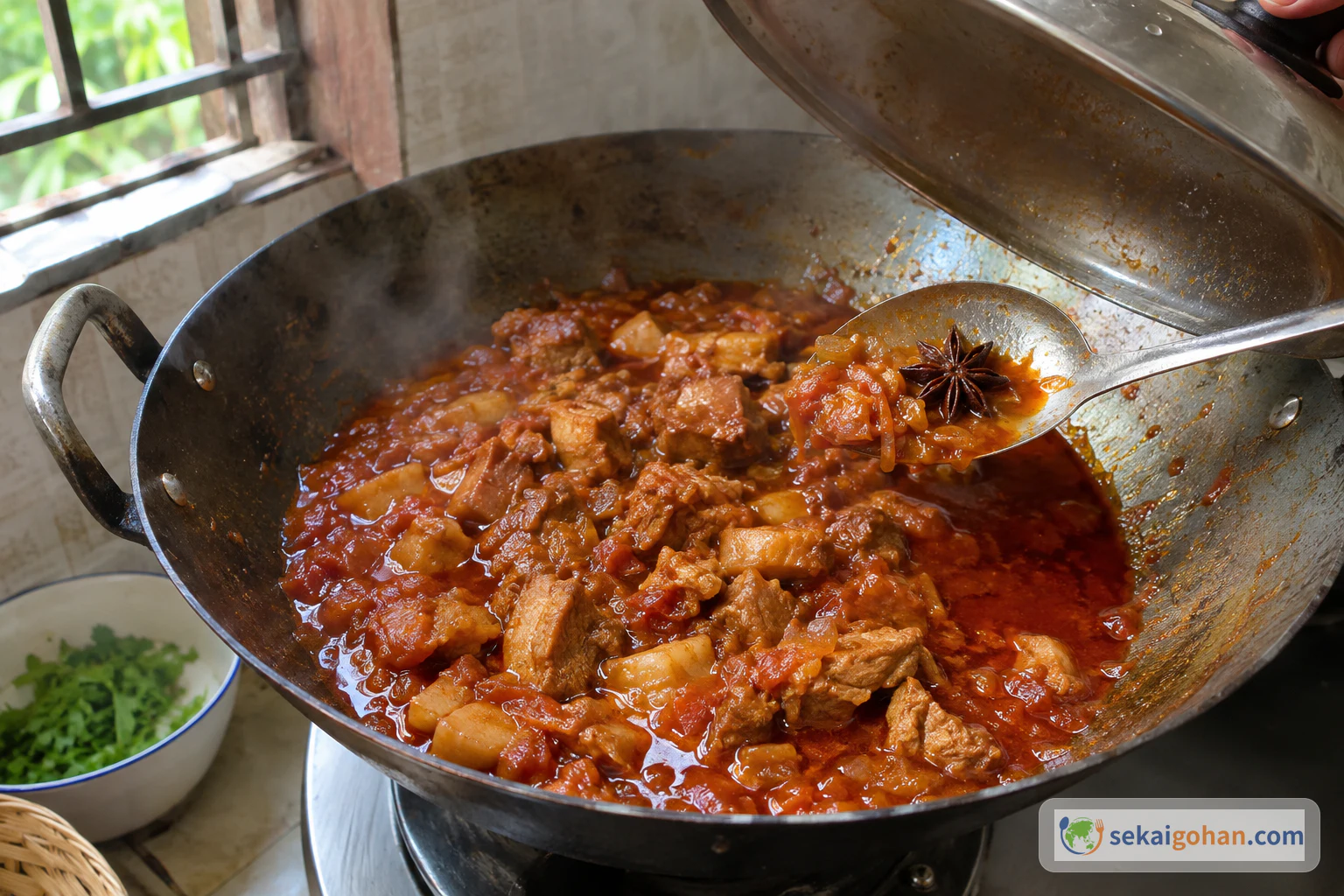
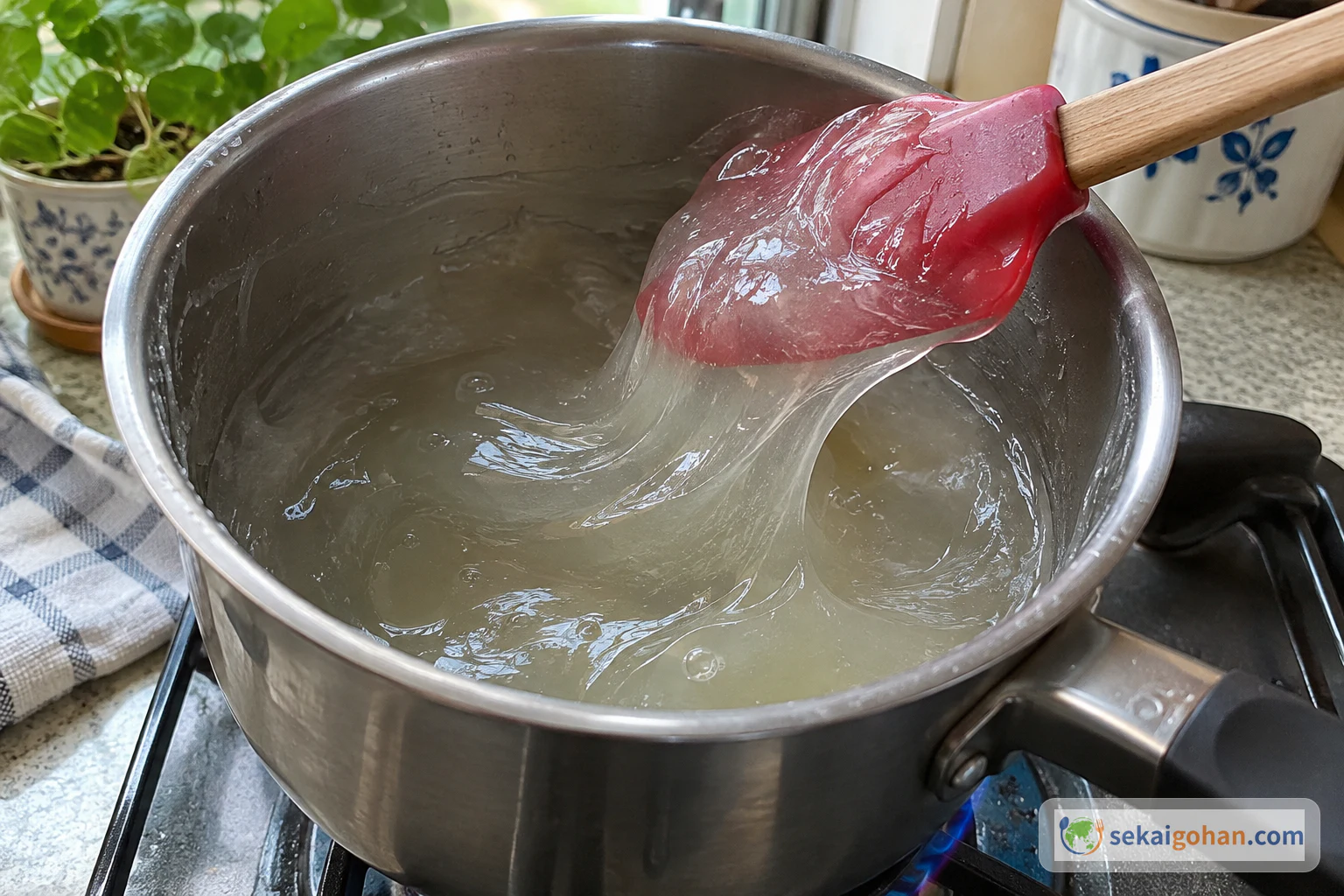
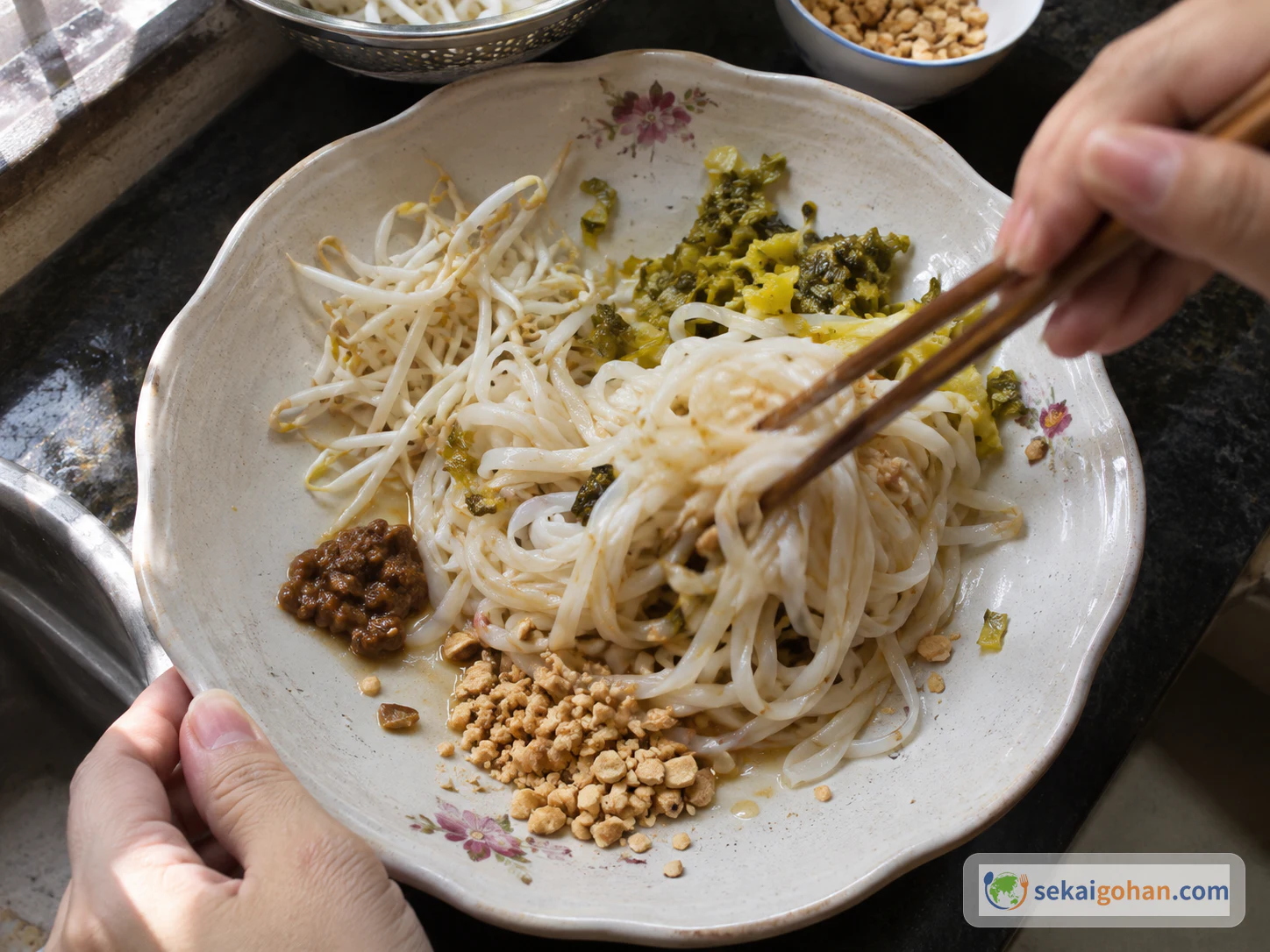
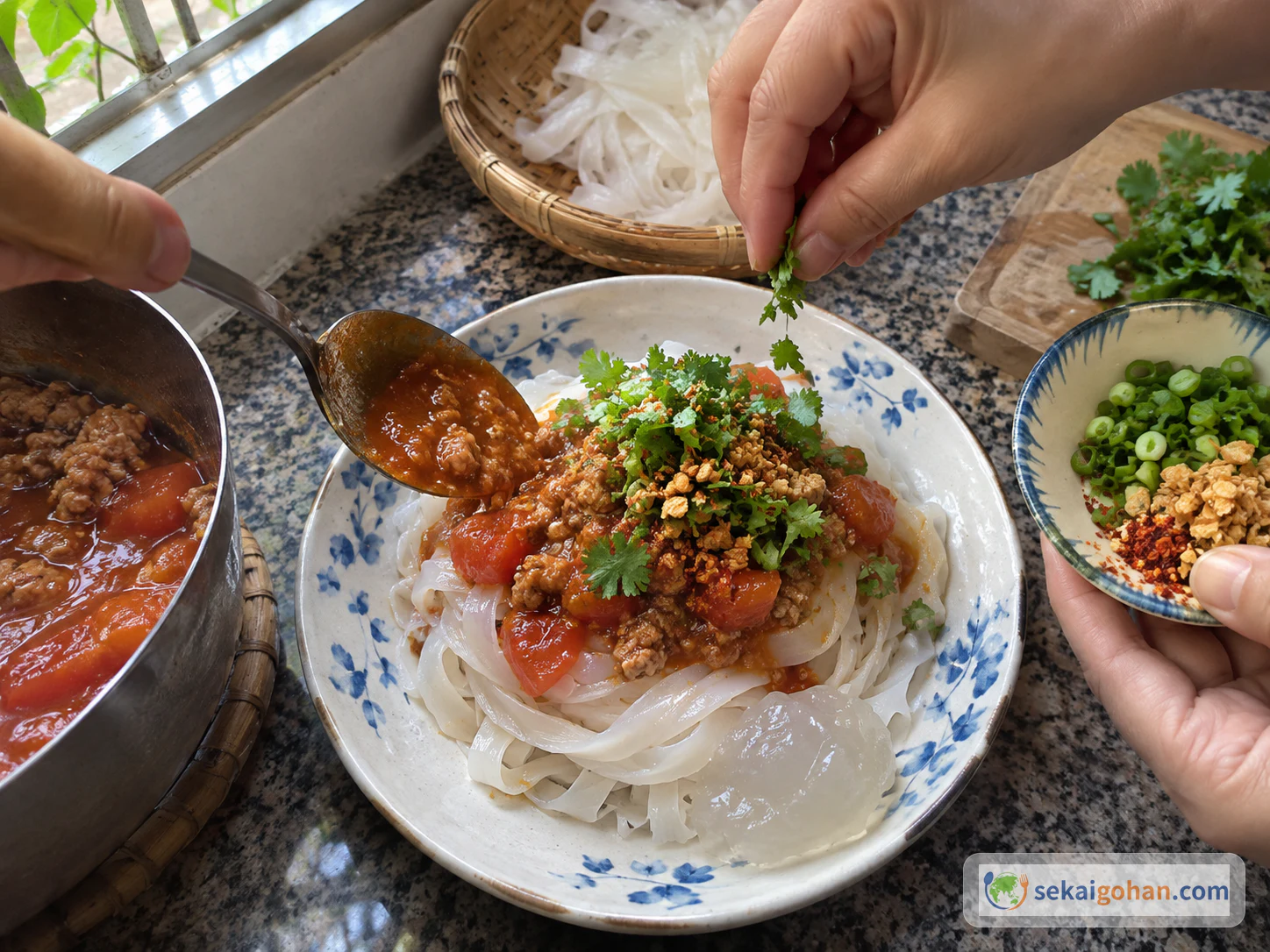
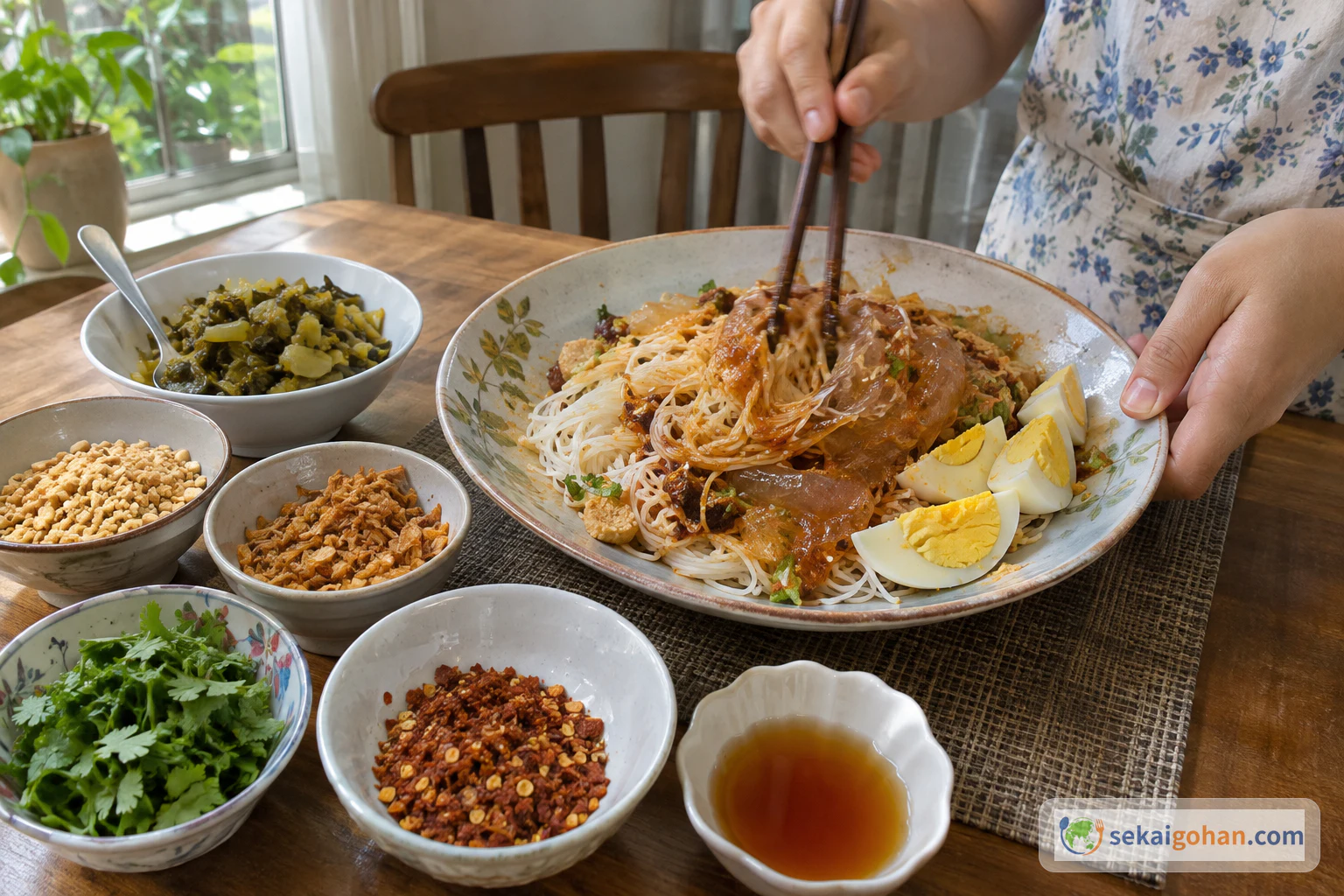
The plate starts with almost nothing on it: a spoon of bean sprouts, a dab of dark fermented bean paste, a little sour pickle, a few drops of fish sauce and some crushed peanuts. The noodles go on top and get tossed over that base. Then come a spoonful of red, oily pork and tomato sauce and a soft, trembling spoon of translucent jelly, then coriander, green onion and crisp fried garlic. Right before the first bite you stir everything together, and the salty, sour, nutty base rises up through the noodles to meet the sauce. This is Mandalay meeshay from Myanmar. It is a dry rice-noodle dish, rich with pork fat and tomato, sharp with pickles, and slippery where the jelly coats the strands.
A Shan Noodle That Grew More Toppings in Mandalay
Where it comes from
Meeshay, written မြီးရှေ in Burmese, is a dish of rice noodles under a meat sauce and a crowd of toppings. Its roots are usually traced to Chinese mixian, the rice noodles of China, and it is described as having become a specialty of the Shan people in the east of Myanmar. How and when the noodles crossed over is not settled. What is clear is that the dish travelled within the country and changed as it went.
The Mandalay version is the most generous of them. It has the most toppings and the most work of any meeshay: medium-thick round noodles, a dark sauce heavy with oil, fermented soybeans, pickled daikon and crisp fried fritters. Pork or chicken can go into the sauce. Across the styles, the same building blocks keep turning up: bean sprouts, onion, garlic, chickpea flour and coriander, with pickles, chicken broth or fried tofu on the side.
You will see it written Meeshay, Mee shay and Myee shay; all three point to the same dish. The soft jelly on top is traditionally a rice-flour gel. This recipe sets it with cornstarch, which gives a glossy, slippery spoonful in a home kitchen.
Three styles in one country
The Shan or Mogok style is the lightest. Its sauce is pale and built on onion, its rice-flour gel is sour, and it is dressed with soy sauce, peanut oil and chili oil. The Mandalay style sits at the other end, darker and oilier, with pickled daikon or mustard greens cutting through the fat. A third style, myay-o, comes in a clay pot. Shan khauk swè, the better-known Shan noodle, shares the tomato meat sauce but is counted as a separate dish.
On the street in Mandalay
In Mandalay, meeshay is street food eaten on low stools at the side of the road. One stall serves its noodles with pork tail and pork skin, with a bowl of pork-bone broth alongside. People squeeze lime over the plate and pile on mustard greens for more sourness. That plate carries different toppings from the home version below, but the idea is the same: a rich pork sauce, then acid and pickles to keep every mouthful bright.
Ingredients (serves 4)
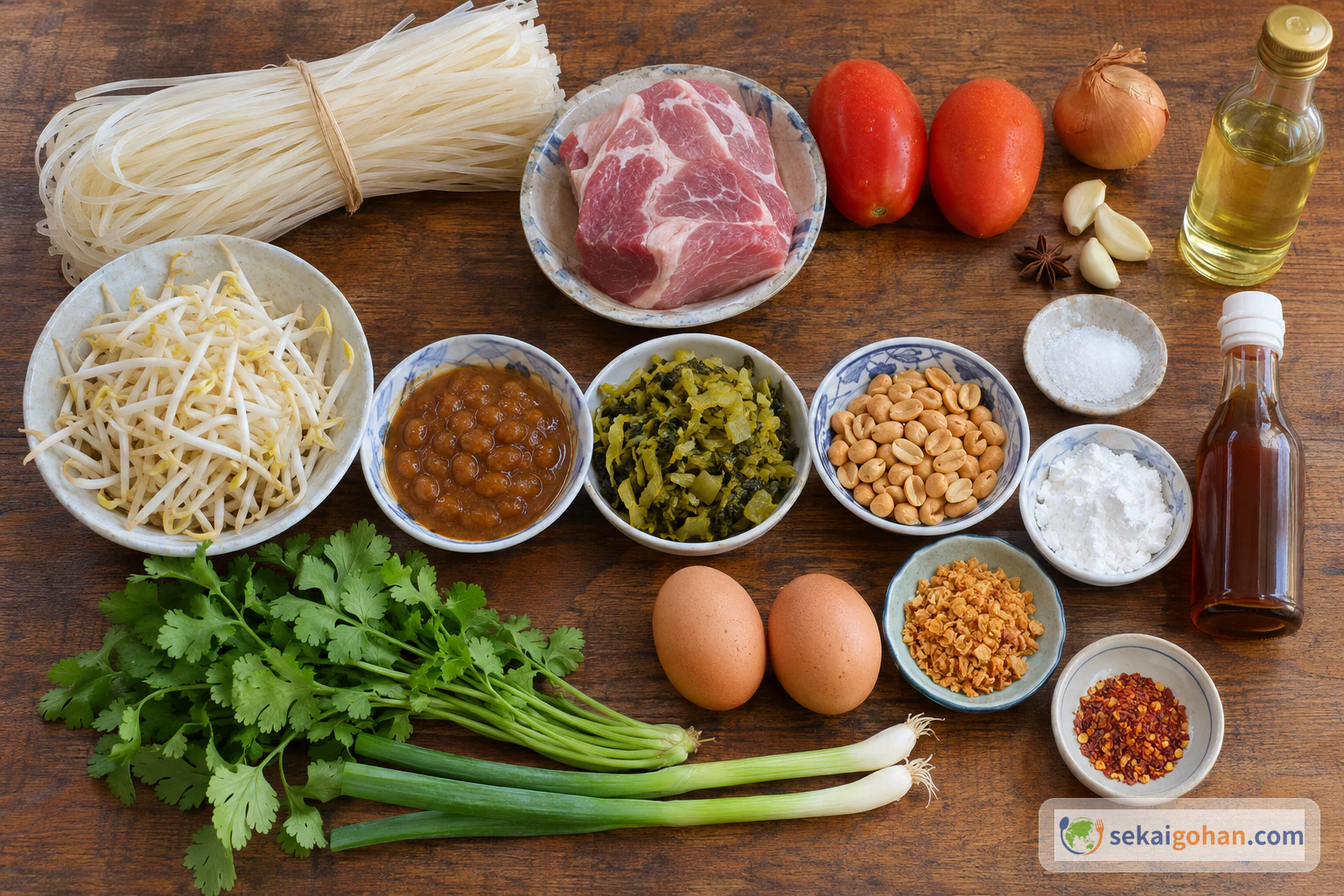
This dish contains peanuts, egg, soy (in the fermented bean paste) and fish (in the fish sauce). Read the labels on the bean paste and on store-bought fried garlic for wheat.
Equipment
- Large pot for the noodles and a colander
- Wok or large skillet with a lid
- Wooden spatula
- Small saucepan and a whisk or spatula for the jelly
- Wire mesh strainer (spider) for the bean sprouts
- Four shallow plates and chopsticks for tossing
Shopping and Swaps: What Has to Stay
The taste of Mandalay meeshay rests on four things: the oily pork and tomato sauce, the soft jelly, the trio of bean paste, sour pickle and peanuts under the noodles, and medium-thick round rice noodles. Keep those and the plate tastes right. The rest bends to what your shops carry.
Noodles. Look in an Asian grocery or online for Guilin rice noodles or the round noodles sold for bún bò Huế; both have the right thickness. Thin rice vermicelli works and makes a lighter, softer plate that holds less sauce.
Bean paste. Tau cheo, the fermented soybean paste sold in jars for Singaporean and Malaysian cooking, is the one specialty item worth ordering. Miso is a different paste; it fills the same spot but shifts the sweetness and the kind of saltiness. Buy the bean paste and the pickles ready-made.
Pickles. Sour pickled mustard greens and pickled daikon both belong here; daikon is the one tied to the Mandalay style.
Everything else. Thai fish sauce is a fish sauce like any other and works. Store-bought fried garlic is fine. Pork shoulder from any butcher, cut into small cubes, is what you want. If your tomatoes are large and juicy rather than Roma, expect a looser sauce and plan to cook it down a little with the lid off.
Cornstarch stays as it is. Potato starch is a different starch, so keep to cornstarch for the jelly.
Method
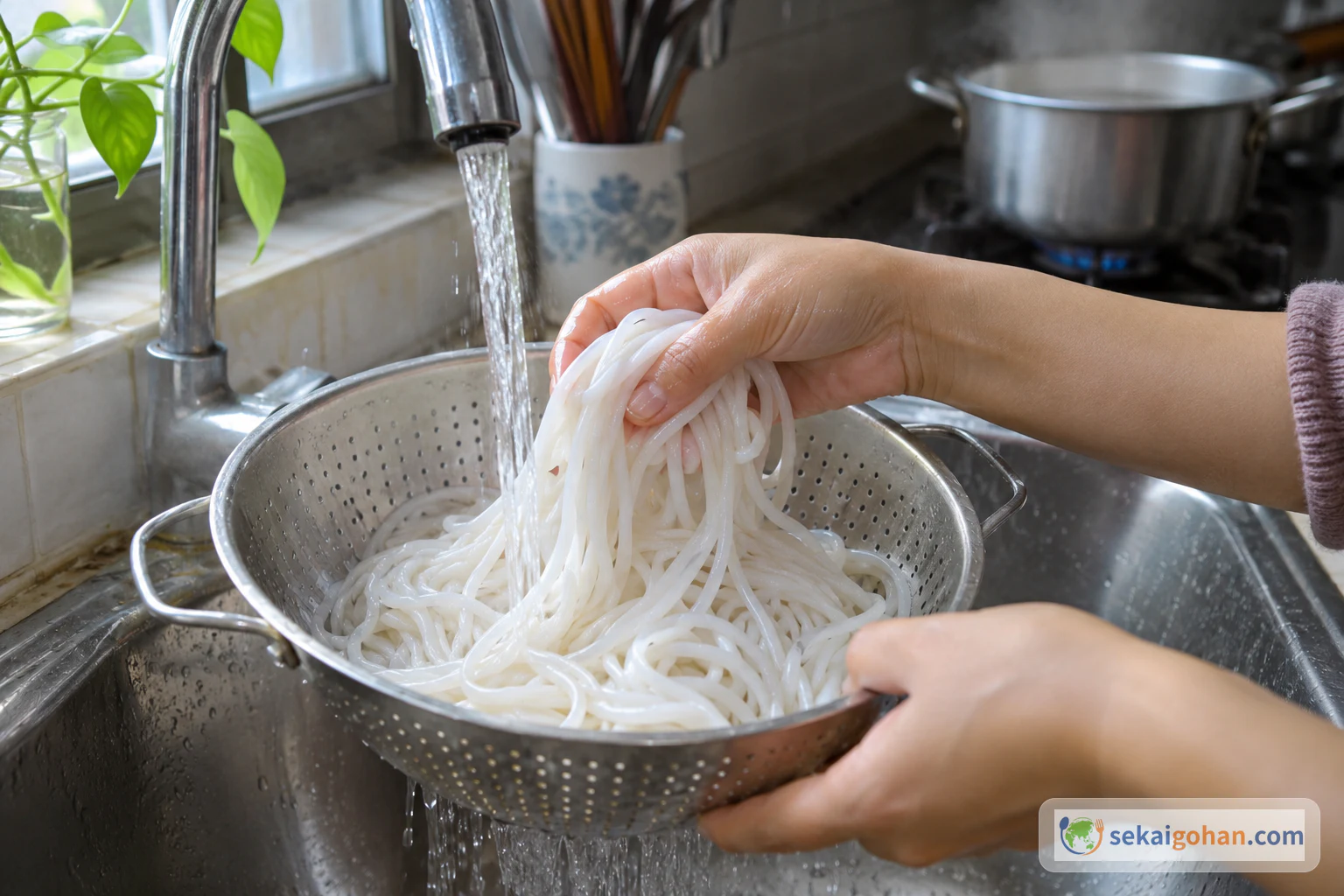
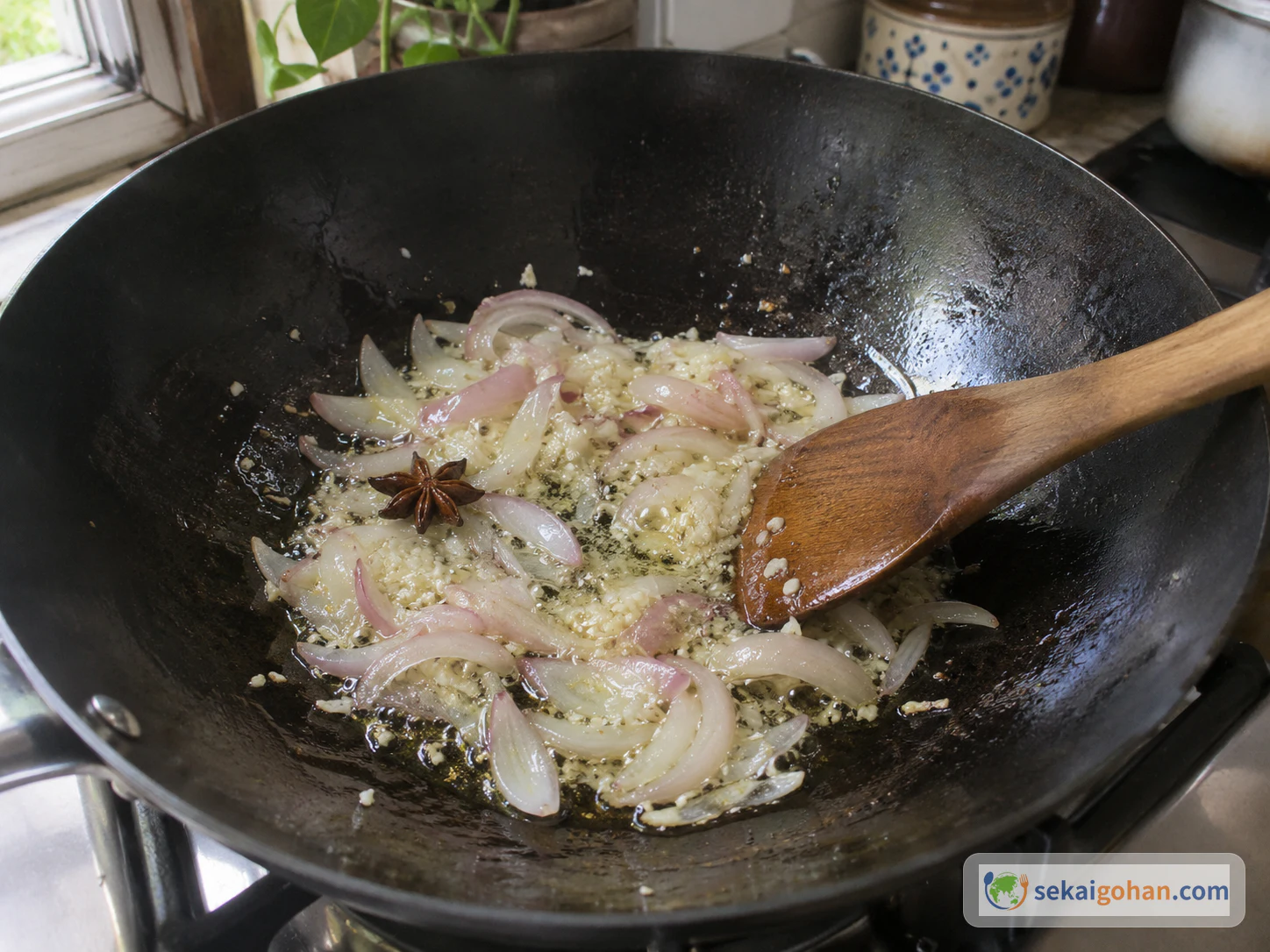
The noodles come first, so they are rinsed and ready. Then the sauce takes the stove, and the covered simmer in step 4 is the one hands-off stretch: set out four plates and open the jars then. The jelly and sprouts are quick, and the plates are built one layer at a time at the end.
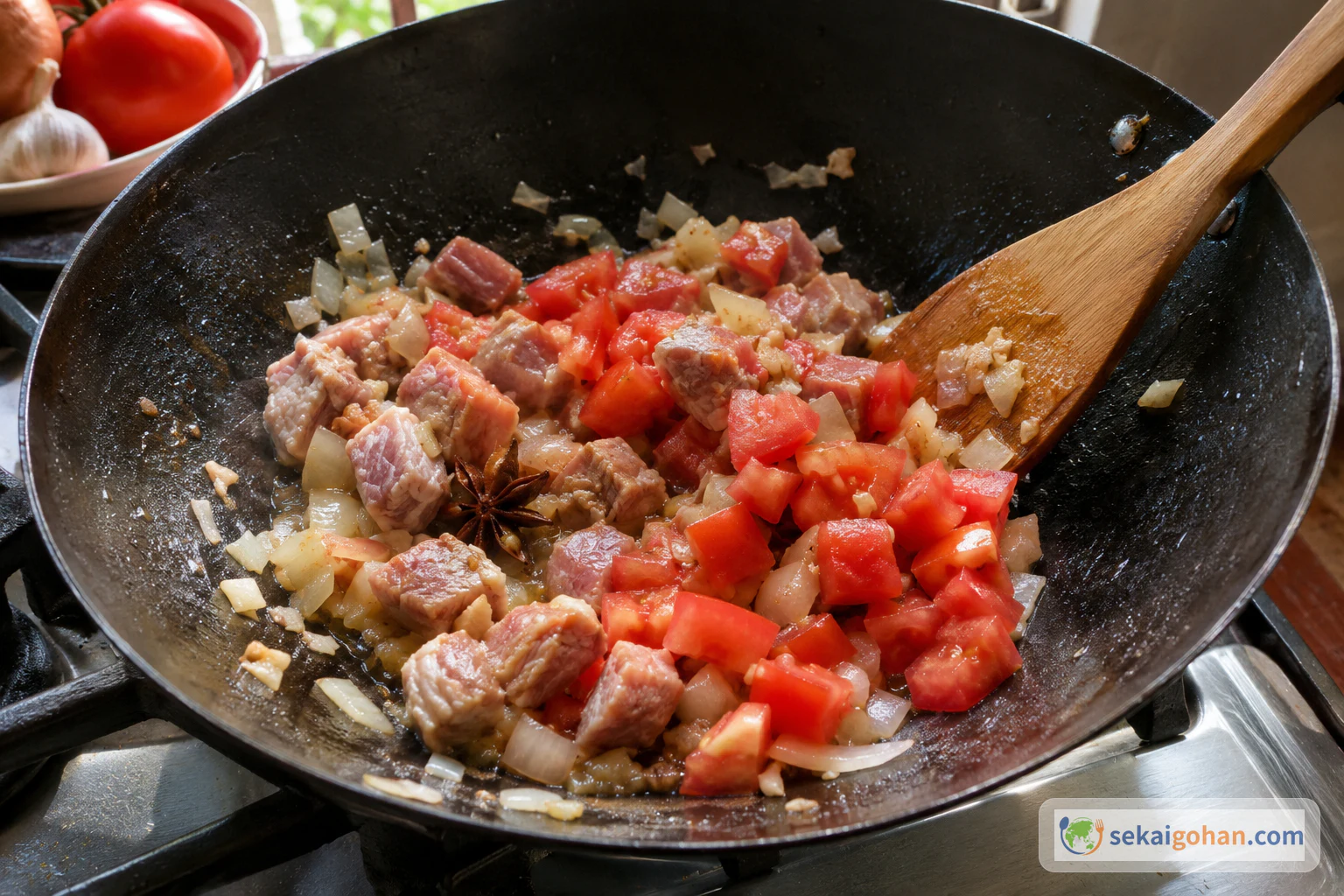
Cook the pork until every cube is done through the center, with no pink when you cut one open: at least 75°C at the center for 1 minute. Never eat the pork raw. If your cubes are large, simmer longer. The oil is hot when the onion goes in, so add it gently and keep your face back from the wok.
Small, even cubes cook through in the covered simmer and spread across every forkful of noodles. Big chunks need more time and sit on top of the plate instead of mixing in.
Whisk the cornstarch into the water until no white specks remain before the pan goes on the heat, then stir without stopping. Starch that hits heat undissolved turns into lumps that will not smooth out.
Salty and sour things go under the noodles, and rich and soft things go on top. Toss before the sauce goes on, and the bean paste and pickles season the noodles themselves. Pile everything on at once and you get pockets of plain noodle next to bites of pure salt.
When It Goes Wrong
| What you see | Why | What to do |
|---|---|---|
| The noodles stick together in one mass | Surface starch left on, or they sat too long after rinsing | Drain well and build the plates soon after rinsing. Loosen dry noodles with a spoonful of the oil from the pork sauce |
| The sauce is thin and watery | Juicy tomatoes released a lot of liquid | Take the lid off and simmer a little longer until it thickens and the oil separates on top |
| The pork is still pink inside | The cubes were cut large | Cover again and keep simmering until a cut cube shows no pink and reaches 75°C at the center |
| The plate tastes too salty | Bean paste, pickles and fish sauce are all salty | Keep the base to the measured spoons, and taste before the final fish sauce |
Serving, Variations and Storage
At the table
Meeshay is a full meal on one plate, and the egg is the only thing that needs to go beside it. The leftover blanched bean sprouts from the 2 cups go into a bowl on the table, with small dishes of pickles, peanuts, fried garlic, coriander, chili flakes and fish sauce so everyone can add more. You can also skip building the plates and put out noodles, sauce, jelly and every topping separately, letting each person toss their own.
Variations
- Chicken instead of pork. Use the same amount of diced chicken thigh and cook it through until no pink remains. The sauce comes out lighter and less fatty, and the pickles feel sharper against it.
- A bowl of broth alongside. Mandalay street stalls serve pork-bone broth with the noodles; chicken broth also goes with meeshay. A sip between bites washes the oil from your mouth.
- Lime and more chili. Squeeze lime over the plate, as Mandalay street stalls do, and add more chili if you like. It pushes the dish toward bright and sour.
- Rice-flour gel. The traditional jelly is set with rice flour rather than cornstarch.
Storage
Cool the pork sauce, then refrigerate it in a covered container without delay. Before eating, reheat it until it is hot through to the center. Cooked rice noodles stiffen as they sit, so cook them close to the time you serve.
Frequently Asked Questions
How is meeshay different from Shan khauk swè?
Both are rice noodles under a pork and tomato sauce, but they are separate dishes. Meeshay adds the soft jelly and builds the plate on a seasoned base of bean paste, sour pickles and peanuts that you toss the noodles over. That base and the jelly give meeshay its salty, sour, silky character.
Why does the sauce go on after the noodles are tossed?
The base needs to coat the noodles directly before anything heavy sits on top. Once the oily sauce is on, the bean paste and pickles cannot spread through the strands. Tossing first seasons every noodle, and the final stir at the table only has to bring in the sauce and jelly.
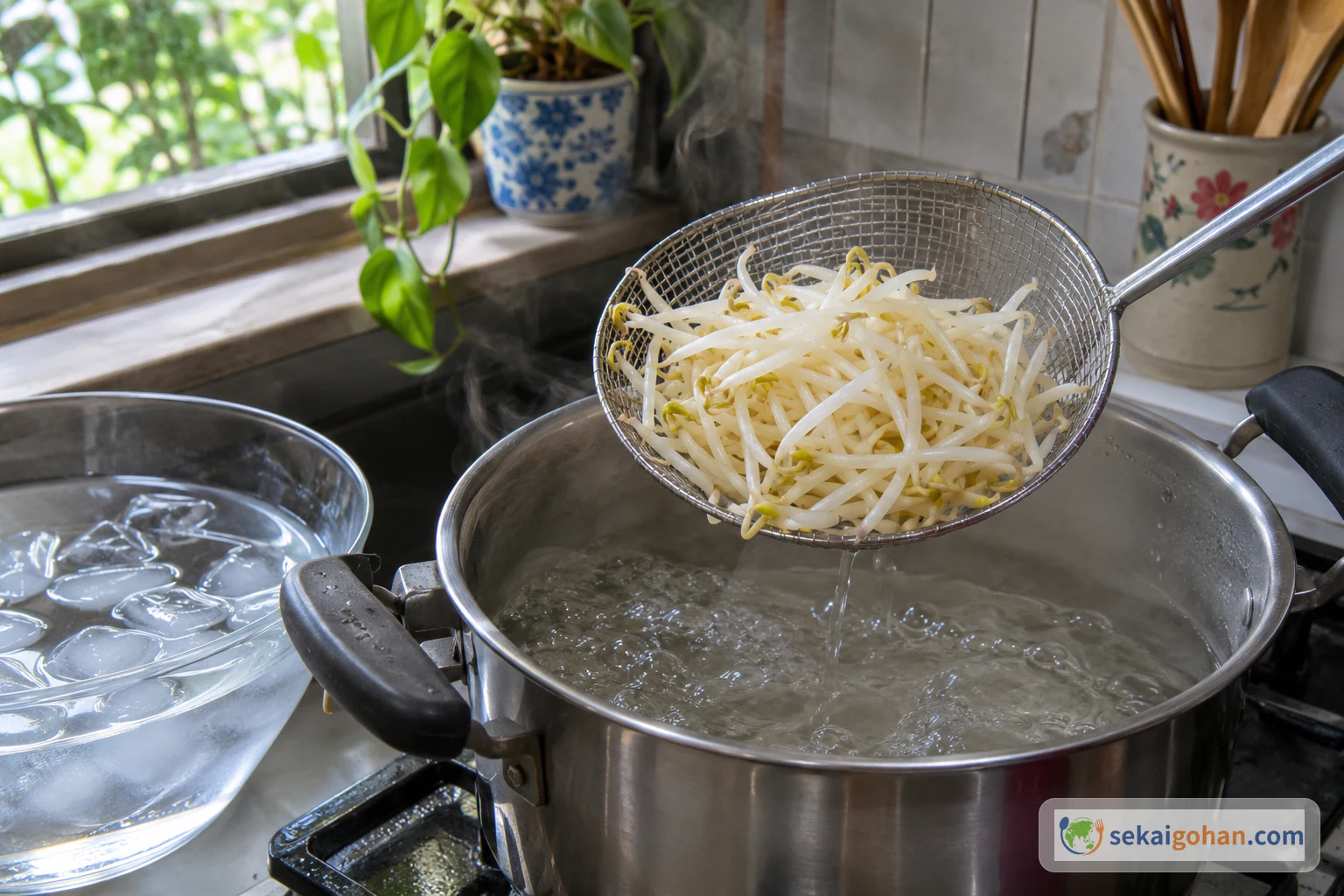
Why prepare 2 cups of bean sprouts when each plate gets 1 tablespoon?
The tablespoon on each plate is the base layer under the noodles. The rest goes to the table in a bowl so people can add more crunch while they eat. If you serve the toppings separately for each person to build their own plate, the same bowl serves both purposes.
Can I make the pork sauce ahead?
Yes. Make it, cool it and refrigerate it covered, then reheat it until hot all the way through before building the plates. Cook the noodles, jelly and bean sprouts on the day you serve.