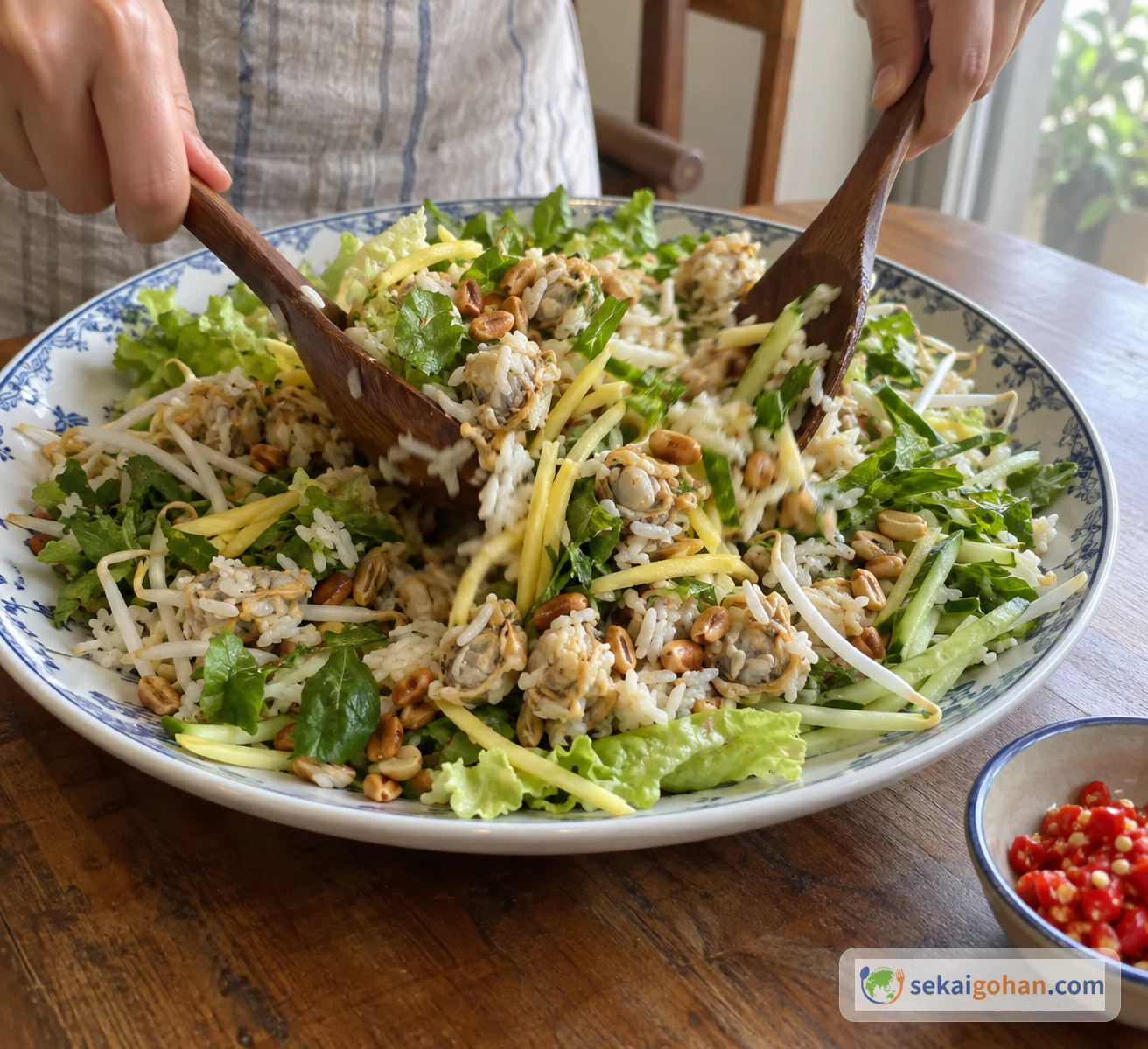
Cơm Hến: Rice, Clams, Sauce and Six Toppings on One Plate
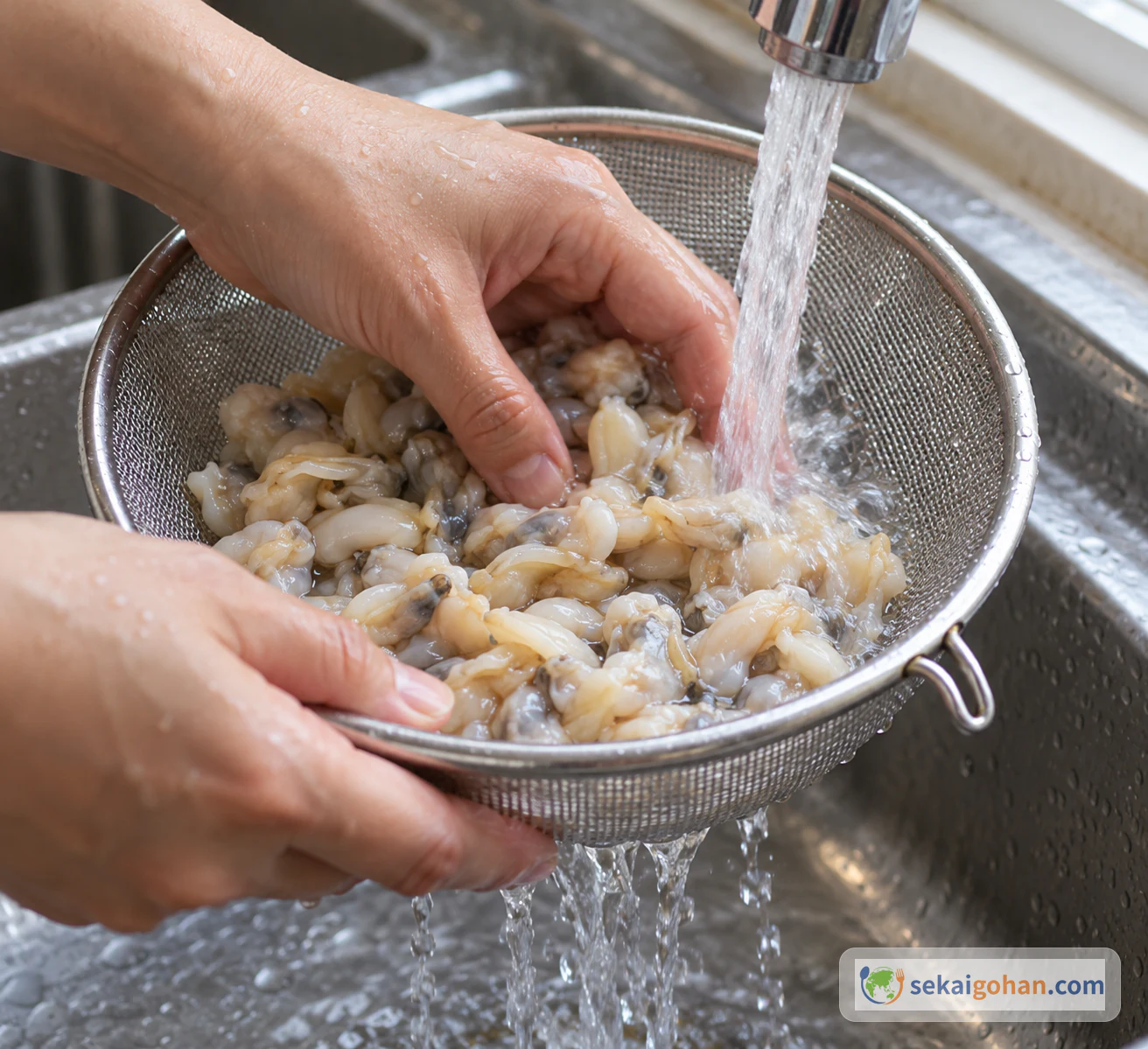
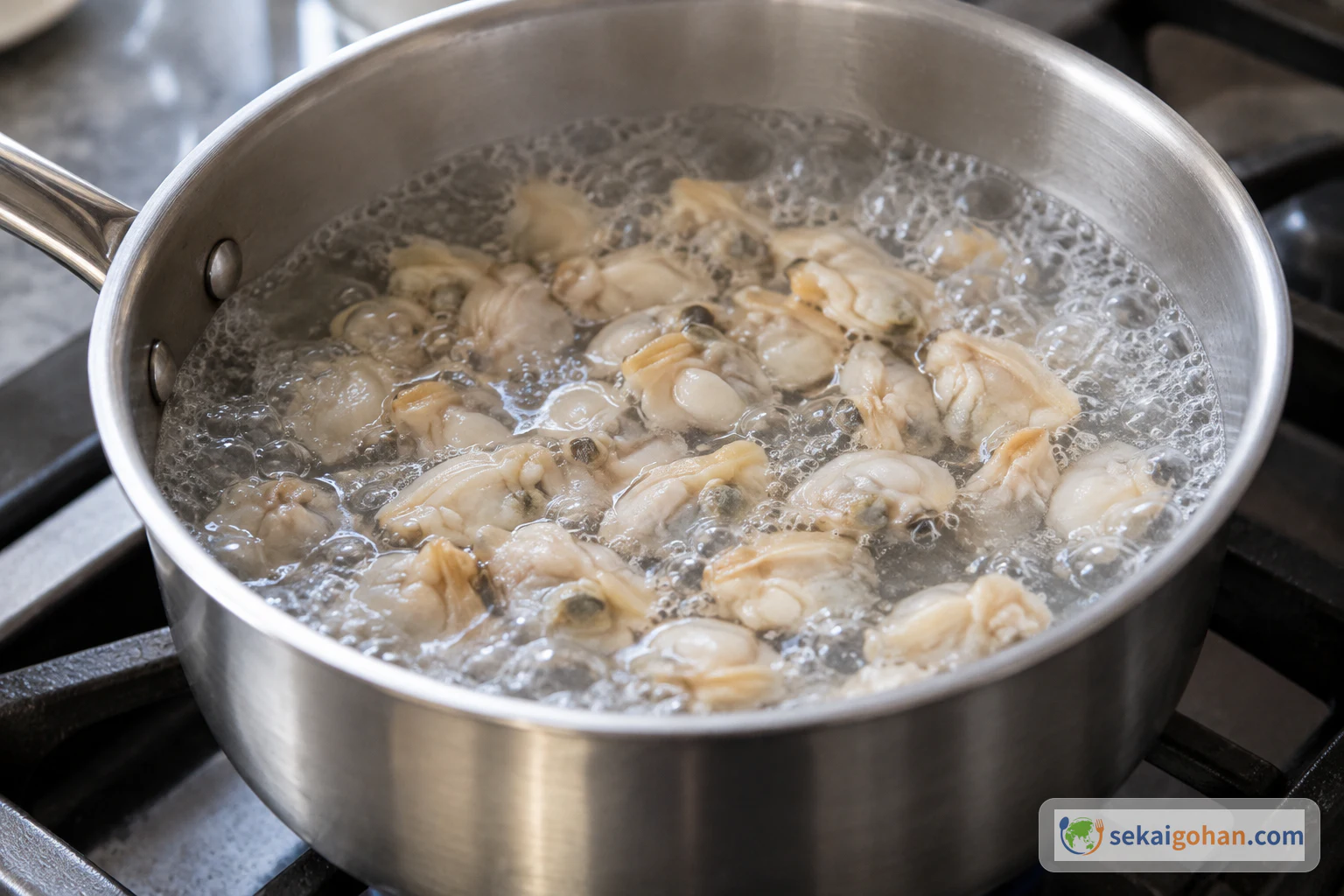
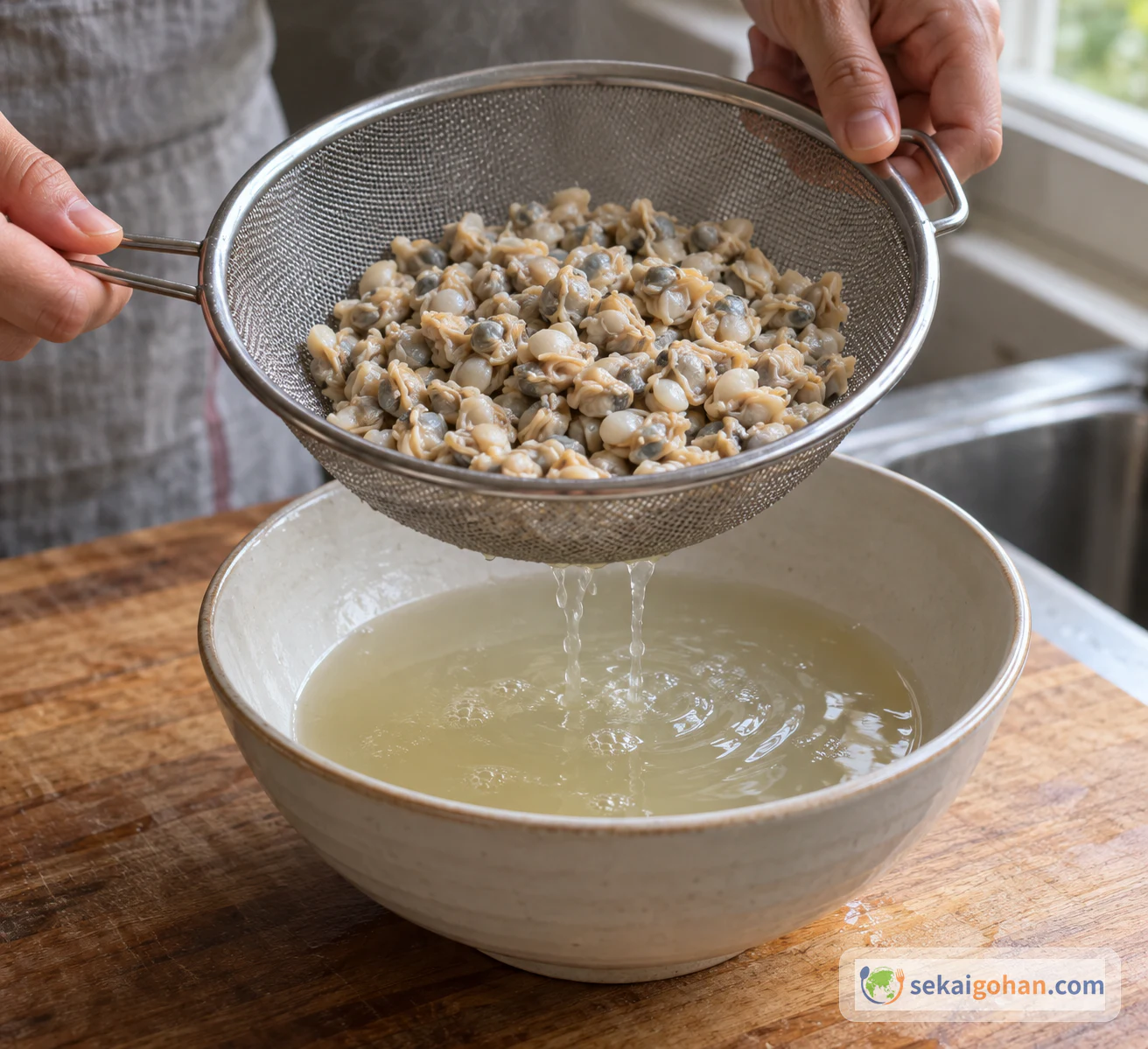
Keep the liquid from blanching the clams, because it goes into the sauce. Cook the clams until the meat has shrunk and the dark innards have set, and mix everything together just before eating.
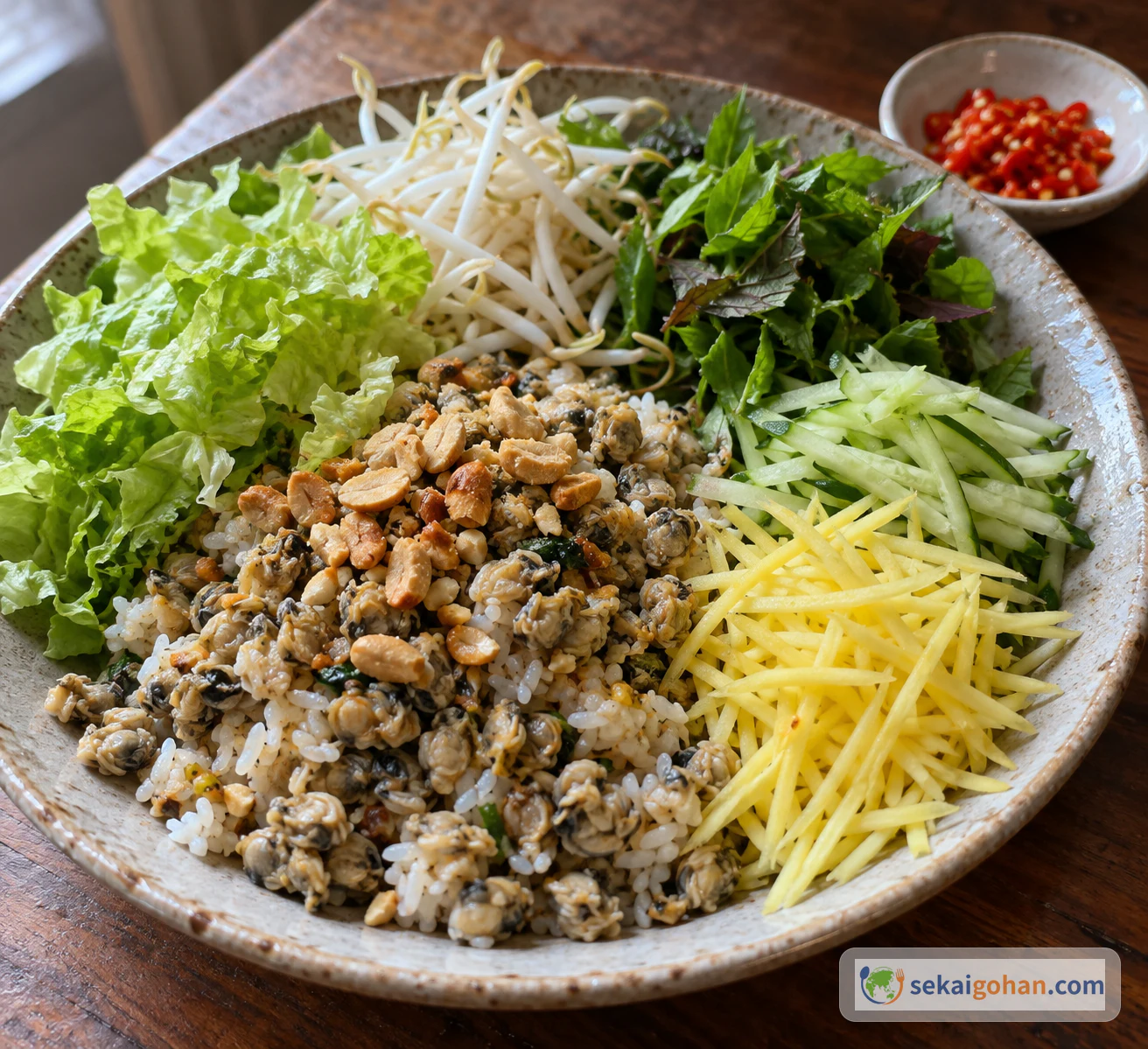
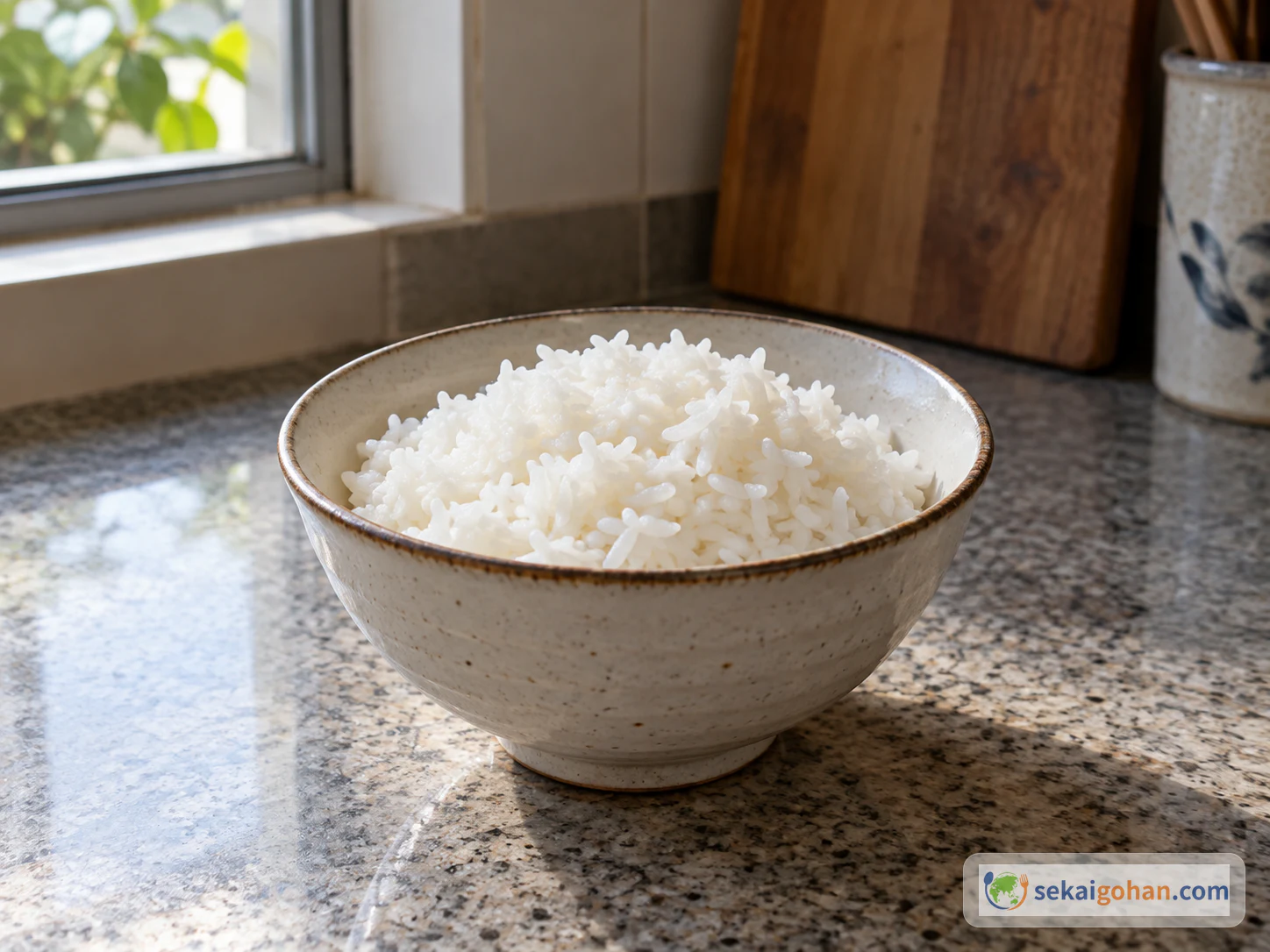
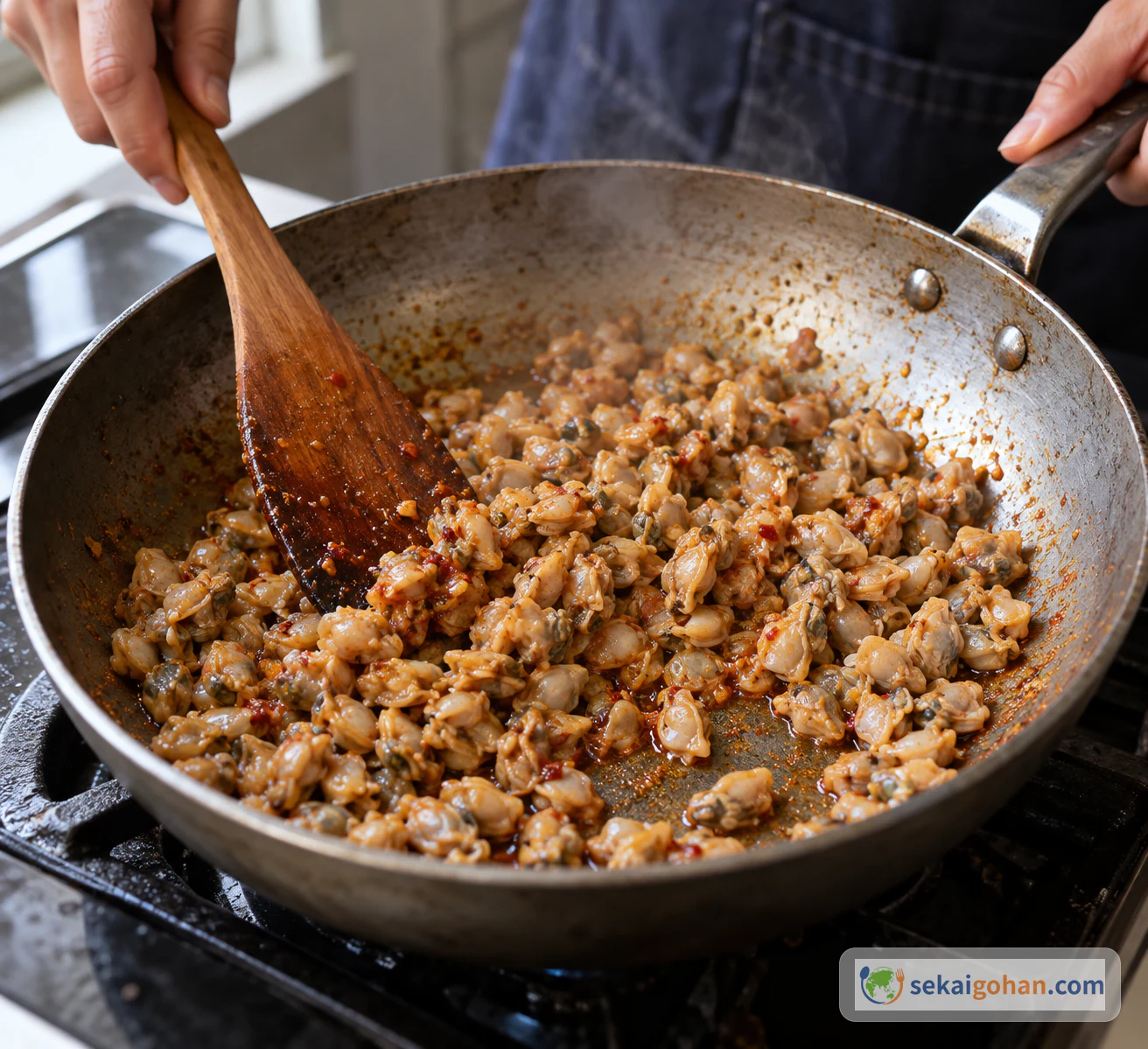
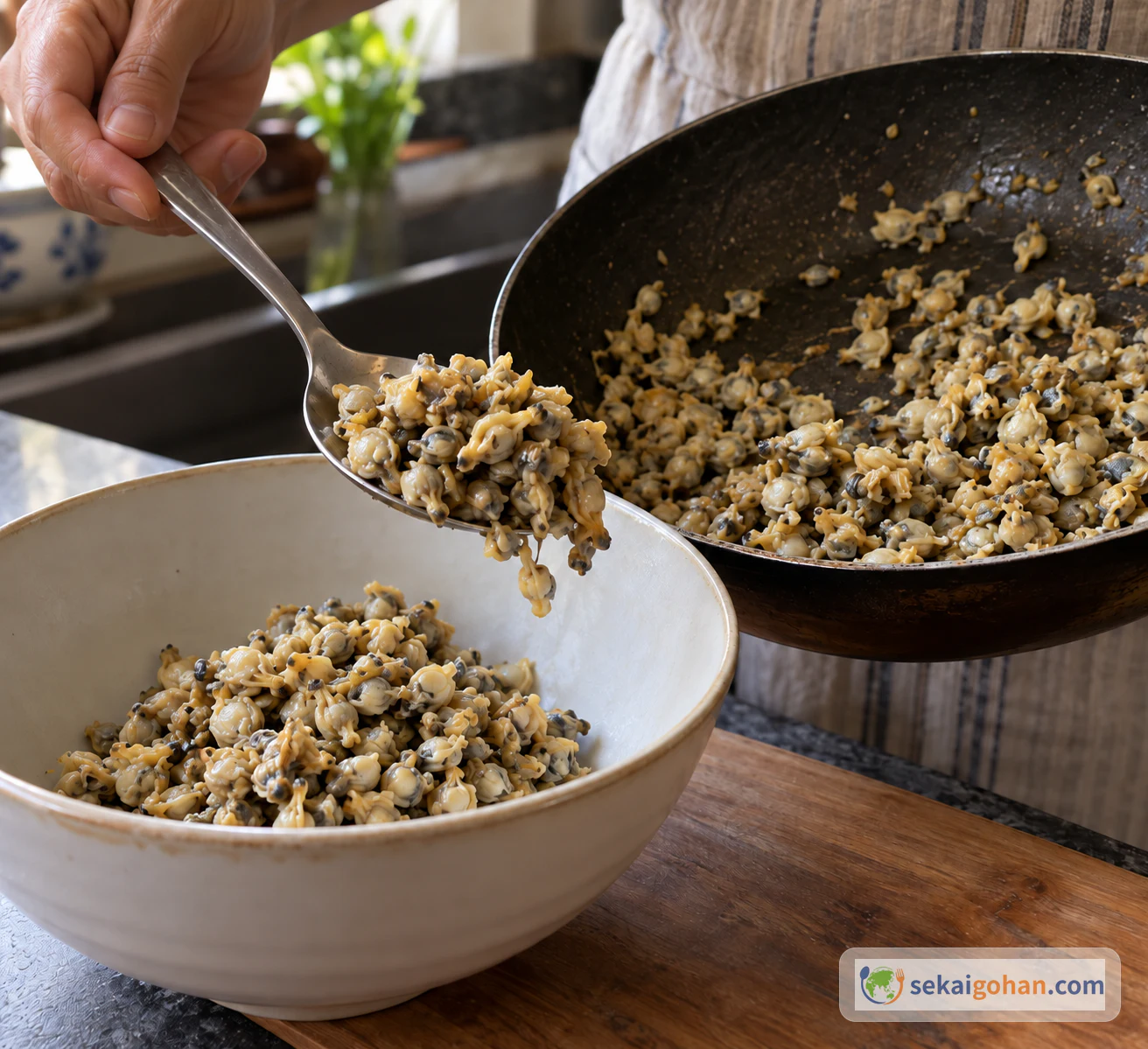
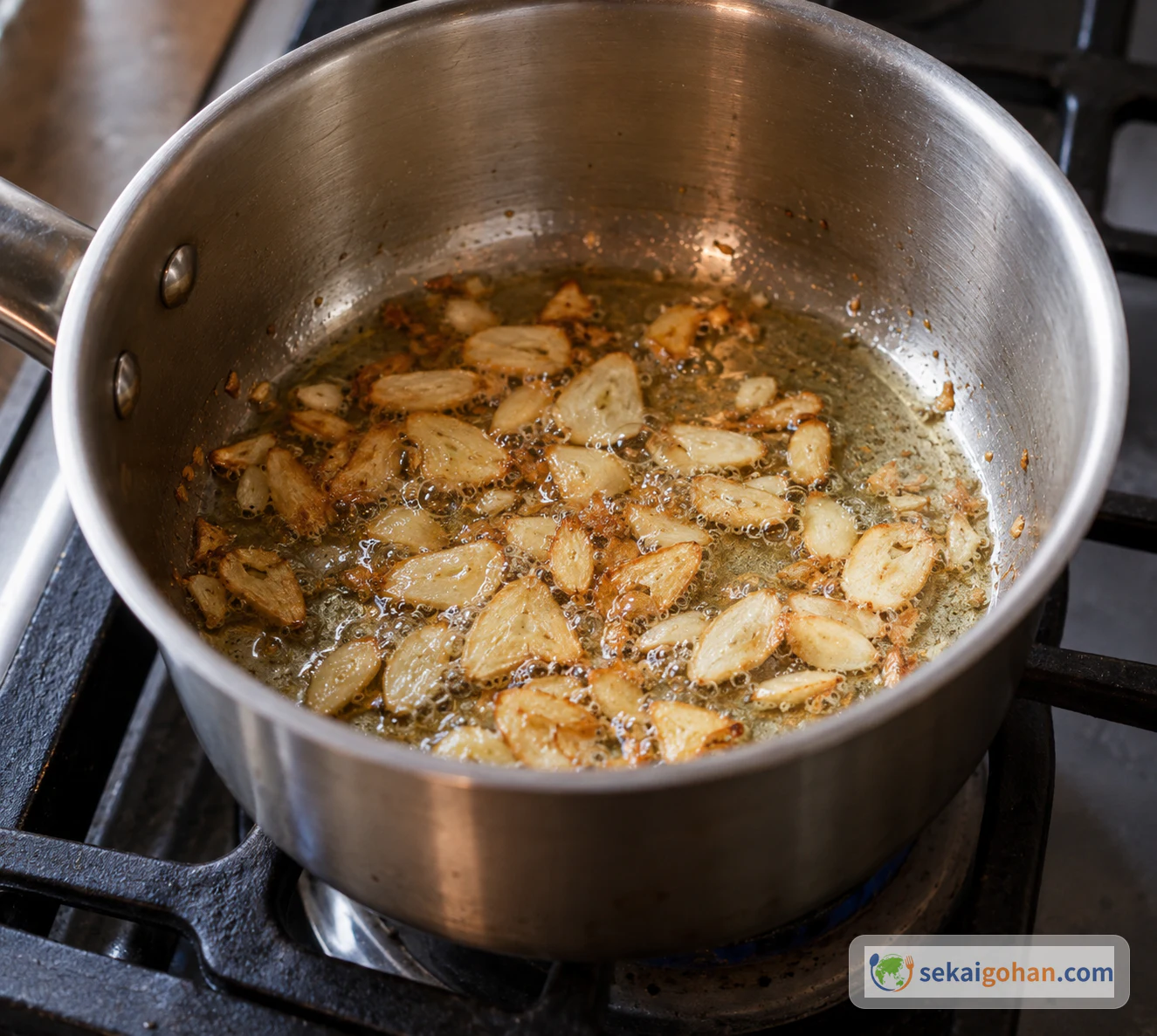
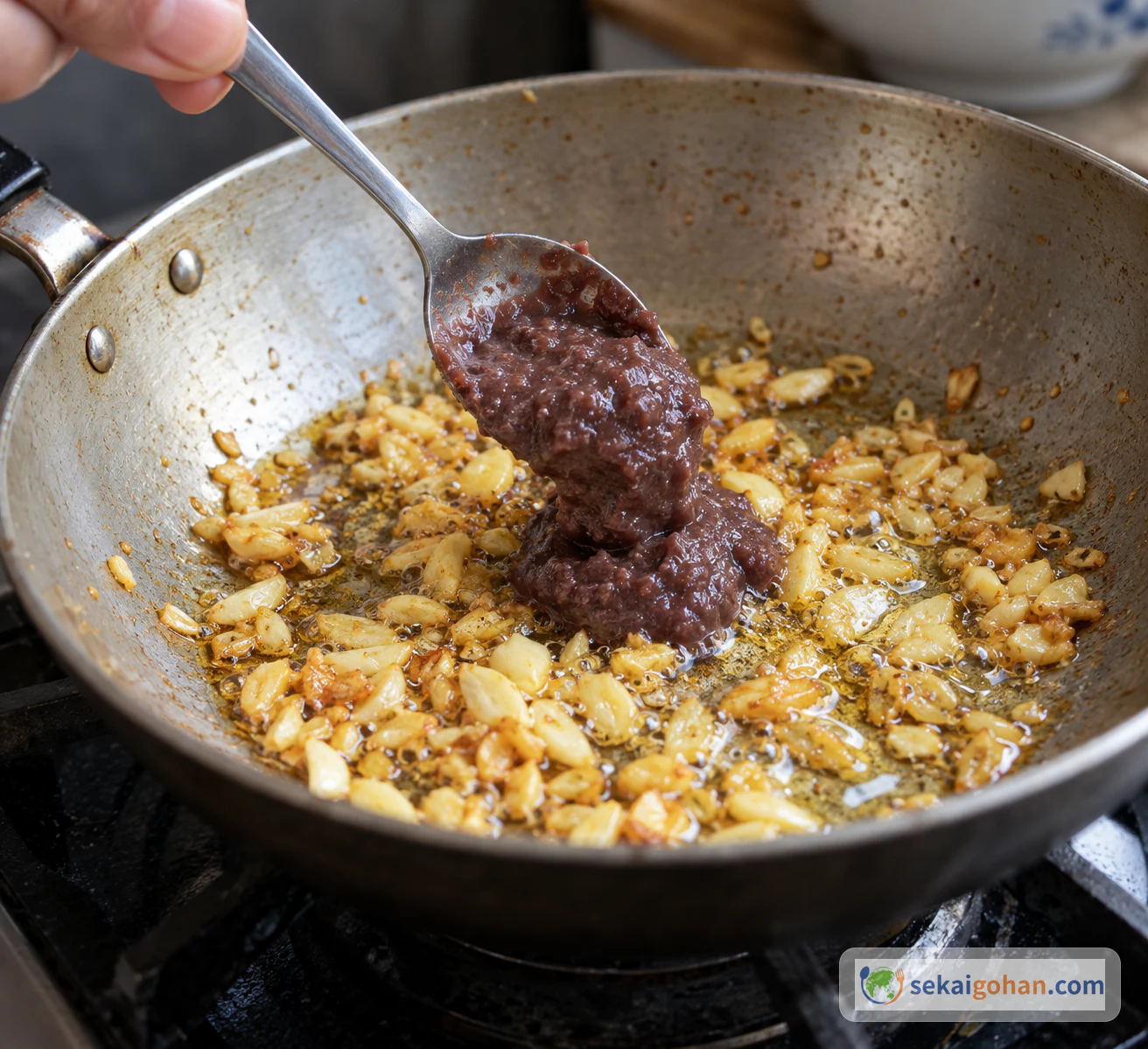
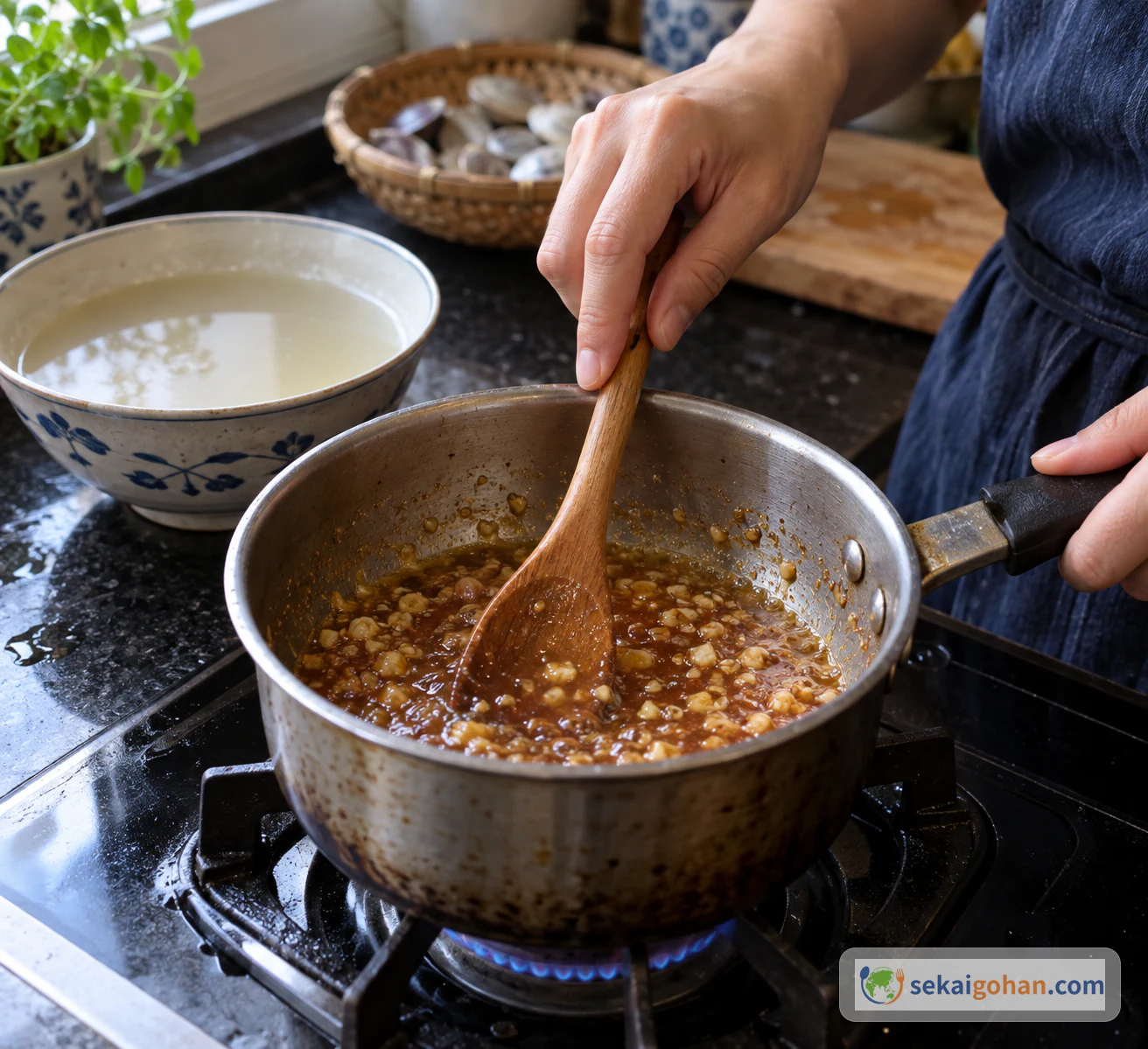
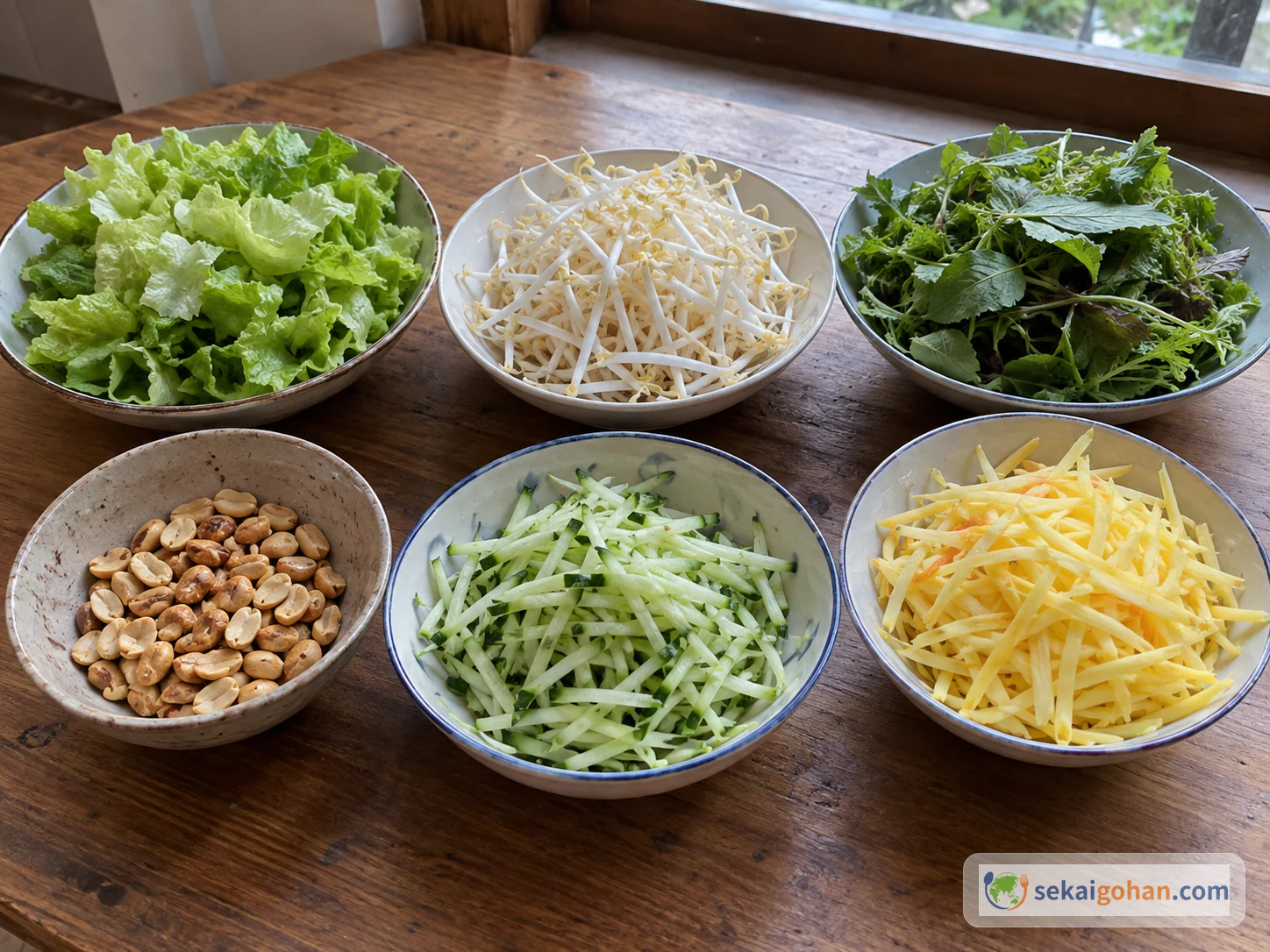
Cooked rice goes on a plate. Beside it are small shucked clams, firmed in a pan with a little mắm ruốc and chili powder, and a sauce of golden garlic, mắm ruốc, sugar and the clams' own blanching liquid. Lettuce, bean sprouts, raw leafy greens, roasted peanuts, shredded cucumber and shredded mango join them, and the whole plate is mixed just before eating.
That scene is drawn from the steps of the recipe. It is not a record of a tasting, a visit or a family table, and we make no claims here about how the finished dish tastes.
This Version and Where Its Amounts Come From
This article follows one home recipe: the cơm hến posted in Vietnamese by Trung Nguyen (@trungquangnguyen) on Cookpad Vietnam, dated 2023-09-29. It is one household's version, not the standard or authentic form of cơm hến.
The post fixes only two amounts: 2 tablespoons of mắm ruốc for the sauce and 4 tablespoons of clam blanching liquid. It gives no servings, no time and no amounts for the rice or clams. To make it cookable, we added the following as editorial supplements from a separate recipe on Fifteen.net:
| Item | Guide used here | Basis |
|---|---|---|
| Servings | About 5 | Fifteen.net lists 5 servings |
| Shucked clam meat | About 500g | Fifteen.net lists 17.6 ounces of baby clam meat |
| Cooked rice | 5 bowls, size not stated | Fifteen.net lists 5 bowls of leftover rice |
| Roasted peanuts | About 85g | Fifteen.net lists around 3 ounces of peanuts |
| Time | About 30 minutes, not counting cooking the rice | Fifteen.net lists 10 minutes of prep and 20 of cooking |
As a comparison, a recipe on Dạy nấu ăn Gia đình pairs 500g of boiled hến with 6 bowls (chén) of cooked rice. Fifteen.net uses 5 teaspoons of fermented shrimp sauce for its 5 servings, close in scale to the 2 tablespoons here, which is why we matched the two.
That match is our editorial judgment, not the Cookpad cook's serving count. Our editors have not kitchen-tested this recipe, and the 5-serving combination has not been confirmed by cooking it. Taste as you go and treat the amounts as a starting guide. Only the amounts above were borrowed; Fifteen.net's other ingredients and methods were not.
Ingredients: A Guide for About 5 Servings
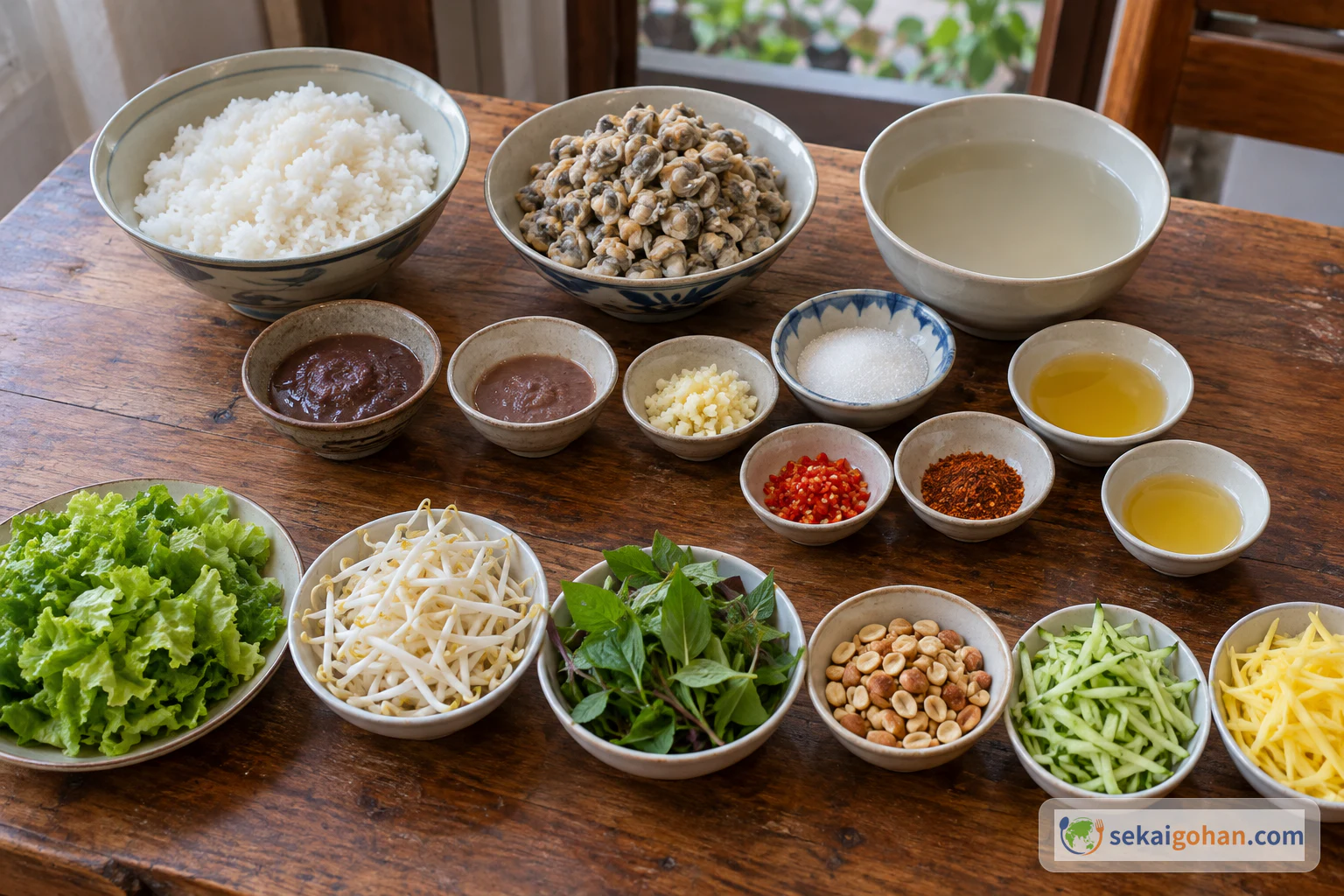
Allergens: this dish contains peanuts, a shrimp-based seasoning and shellfish.
Bean sprouts: children, older adults, pregnant people and anyone with a weakened immune system should not eat them raw or lightly cooked. For those eaters, cook the sprouts thoroughly or leave them out.
Equipment
- Knife and cutting board
- Fine-mesh strainer
- Saucepan for blanching the clams
- Bowl for catching the blanching liquid
- Pan for sautéing the clams
- Separate bowl for the cooked clams
- Small saucepan for the sauce
- Tablespoon measure
- Serving plates
Choosing the Clams and Mắm Ruốc
Clams. Use edible, shop-bought shucked clam meat. Frozen shucked asari is one example of shop-bought shucked clam meat in Japan; check what is on sale near you. Asari is a different shellfish from hến, so don't expect an identical flavor.
Thaw frozen clams according to the package. If the meat is sold already cooked, still follow the same steps.
Mắm ruốc. Check the Vietnamese spelling on the label. Mắm ruốc and mắm tôm are different products that differ in smell and taste, and both may be labeled in English as shrimp paste or shrimp sauce. We have not confirmed a substitute or specific places to buy it, so we don't recommend either. Mắm nêm and fish sauce would take this toward a different recipe.
Hến belongs to the Corbiculidae family of bivalves, according to Vietnamese Wikipedia. That general classification doesn't identify the clam used in the Cookpad post.
Japan's Ministry of Health, Labour and Welfare says bivalves that may be contaminated with norovirus should ideally be heated to 85–90°C at the center for at least 90 seconds. Japan's Ministry of Agriculture, Forestry and Fisheries says that with sufficient heating the meat shrinks and the brown or black innards, where the virus is found, set firm. These are conditions for bivalves in general, not test results for hến.
A short blanch alone doesn't finish the clams, and nothing here guarantees safety. Not cutting the sauté shorter than 90 seconds is our own working rule, because small pieces are hard to probe. Boiling the sauce after adding the blanching liquid is also our editorial addition, not part of the Cookpad post.
The U.S. FDA advises washing produce thoroughly under running water, noting that this reduces bacteria but will not eliminate them.
Troubleshooting
| Problem | What to do |
|---|---|
| The clams look firm very quickly | Keep sautéing for at least 90 seconds, and look for shrunken meat and set innards |
| The innards still look soft | Keep cooking until they have set |
| The plate is getting too salty | Stop adding sauce and mix before tasting again. Next time add the sauce more gradually, since the clams are seasoned too |
| You have less than 4 tbsp of blanching liquid | Use what you have and taste. Don't top it up with plain water or canned clam juice. Next time, make sure the water just covers the clams |
| You're unsure which mắm ruốc is which | Measure the 2 tbsp for the sauce into its own dish before you start, and keep the small amount for the clams separate |
| You're unsure which chili goes where | Chili powder goes in the clam sauté. Minced chili stays at the table |
Variations and Other Versions
Within this recipe, the most useful adjustments are cooking or omitting the bean sprouts for eaters who should avoid them, and leaving the minced chili in its own dish so each person decides how much to add.
Other published recipes differ in ways that make them separate recipes:
- BichHoa on Cookpad is a clam rice in which the rice is stir-fried. The rice here is not stir-fried.
- The Ravenous Couple uses frozen, precooked baby clams, apple, taro stems and mắm nêm. None of these are used here.
- VnExpress describes a version using shell-on clams, where the cooking liquid is strained and boiled again. We don't use shell-on clams here.
These are differences between individual recipes. We don't treat them as evidence of regional differences or tradition.
What We Can and Can't Say About the Dish
Hến refers to a family of small bivalves, and the name appears here as written in the Vietnamese post. Beyond that, our materials are mostly recipes and food-safety guidance. They don't establish the origin of the dish or the meaning of its name, its history, its links to festivals, how people commonly eat it, or a standard form from Huế, so we make no claims on those points.
The same limit applies to the Cookpad post. It doesn't say which clam was used or whether it was raw, frozen or precooked when bought, how ripe the mango was, or which leaves made up the rau sống. The post's date is not a date of origin for the dish, and we don't infer anything about the cook's background.
For more dishes from the same country, see Vietnamese recipes.
Frequently Asked Questions
Is this the authentic version of cơm hến?
We can't claim that. It is one cook's home recipe, with some amounts added by our editors.
Have these amounts been tested?
No. The 2 tablespoons of mắm ruốc and 4 tablespoons of blanching liquid come from the Cookpad post. The servings, clams, rice, peanuts and time come from a separate recipe, and our editors have not cooked the combination.
Is blanching enough to cook the clams?
No. Blanching is only preparation. The clams still need the full sauté in step 5, and even then we can't promise that the dish is risk-free.
Do precooked clams need the same steps?
Yes. Follow the same steps for clam meat sold already cooked, and thaw frozen clams according to the package.
Can I use plain water or canned clam juice in the sauce?
Not for this recipe. The sauce is built on the liquid from blanching these same clams.
Can I replace mắm ruốc?
We haven't confirmed a substitute or how one would change the flavor. Mắm ruốc is not the same as mắm tôm, and mắm nêm belongs to a different recipe in our comparison.
Is the mango green or ripe?
The Cookpad post doesn't say, so we don't specify. The same is true of the mix of leaves in the rau sống.
How do I keep leftovers?
Keep only the unmixed clams and sauce. Put them in separate shallow containers so they cool quickly, refrigerate at 10°C or below, and reheat to 75°C or above. Our guidance gives no keeping time, so we don't state one.
Sources
- Trung Nguyen (@trungquangnguyen), "Cơm hến," Cookpad Vietnam, 2023-09-29. The main recipe: ingredients, the two fixed amounts and the order of the steps. https://cookpad.com/vn/cong-thuc/17081552
- BichHoa, stir-fried clam rice recipe, Cookpad Vietnam. Used only to distinguish a separate recipe. https://cookpad.com/vn/cong-thuc/3006298
- The Ravenous Couple, "Com Hen (Baby Clam Rice)." Used only to distinguish a separate recipe. https://theravenouscouple.com/2020/09/com-hen-baby-clam-rice.html
- Tien – Alden, "Cơm Hến Recipe," Fifteen.net. Editorial guide for servings, clam, rice and peanut amounts, and time. https://www.fifteen.net/wprm_print/com-hen-recipe-vietnamese-baby-clam-rice
- Lê Husky, "Hướng Dẫn Cách Làm Cơm Hến Huế Ngon Đúng Vị," Dạy nấu ăn Gia đình. Used to compare the ratio of clams to rice. https://daynauan.info.vn/com-hen-hue
- Ministry of Health, Labour and Welfare (Japan), Norovirus Q&A. Heating condition for bivalves. https://www.mhlw.go.jp/stf/seisakunitsuite/bunya/kenkou_iryou/shokuhin/syokuchu/kanren/yobou/040204-1.html
- Ministry of Agriculture, Forestry and Fisheries (Japan), "Norovirus." Visual cues for heating, cutting order, handwashing and washing tools. https://www.maff.go.jp/j/syouan/seisaku/foodpoisoning/f_encyclopedia/norovirus.html
- Khương Rosa, "Hấp dẫn cơm hến Huế," VnExpress, 2014-07-19. A separate version in which the cooking liquid is strained and boiled again. https://vnexpress.net/hap-dan-com-hen-hue-3018457.html
- "Họ Hến," Vietnamese Wikipedia. Classification of hến as a bivalve family; a secondary reference. https://vi.wikipedia.org/wiki/Hến
- U.S. Food and Drug Administration, "Selecting and Serving Produce Safely." Washing produce, and who should avoid raw or lightly cooked sprouts. https://www.fda.gov/food/buy-store-serve-safe-food/selecting-and-serving-produce-safely
- Ministry of Health, Labour and Welfare (Japan), six points for preventing food poisoning at home. Room-temperature limits, refrigeration, shallow containers and reheating. https://www.mhlw.go.jp/stf/seisakunitsuite/bunya/kenkou_iryou/shokuhin/syokuchu/01_00006.html
- All About, Japanese article comparing asari clam products, updated 2022-10-12. An example of frozen shucked clams on retail sale; current availability unconfirmed. https://ichioshi.allabout.co.jp/articles/common/489373
- Delightful Plate, "Mam tom guide." The difference between mắm ruốc and mắm tôm, and how they may be labeled. https://delightfulplate.com/?p=2383