
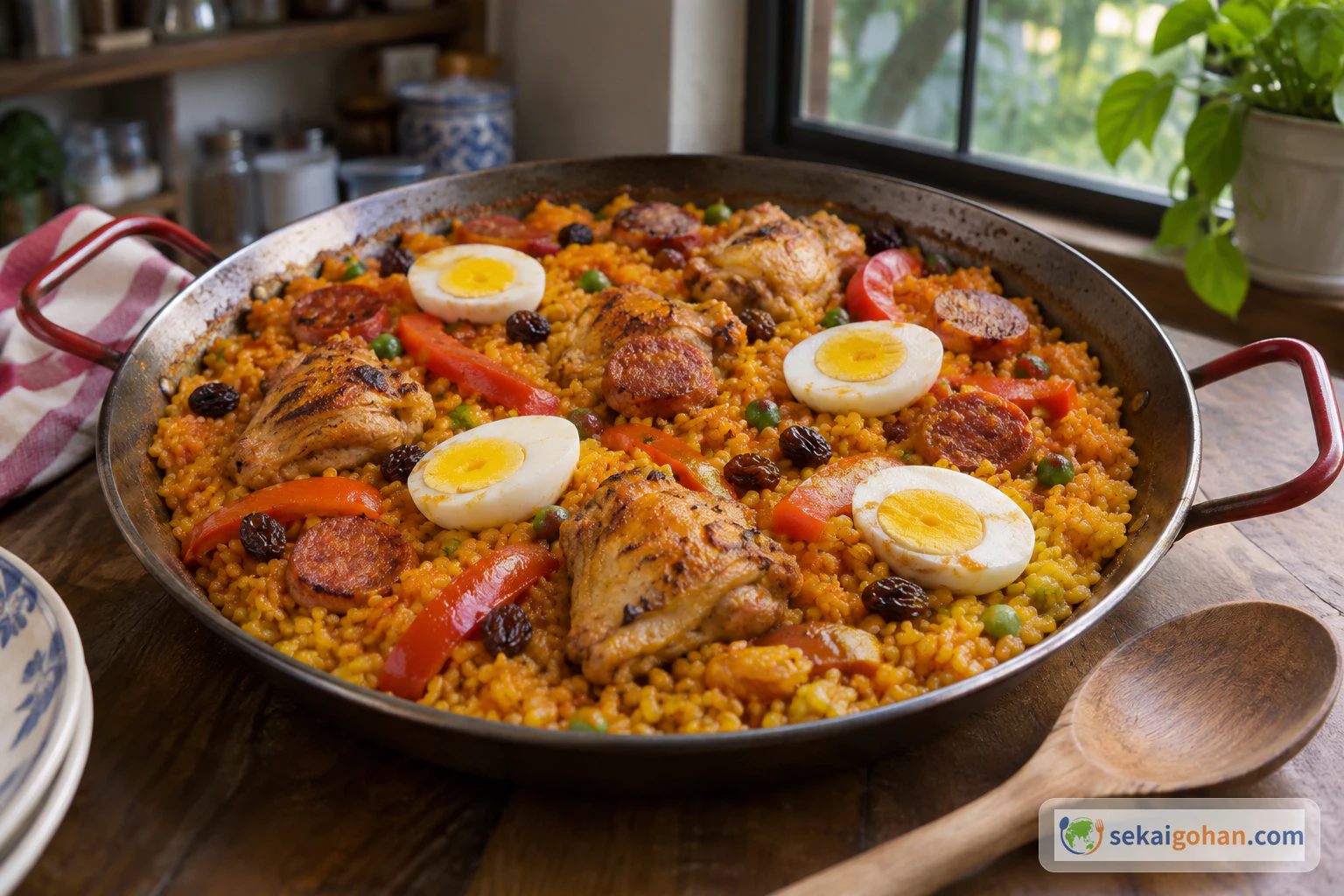
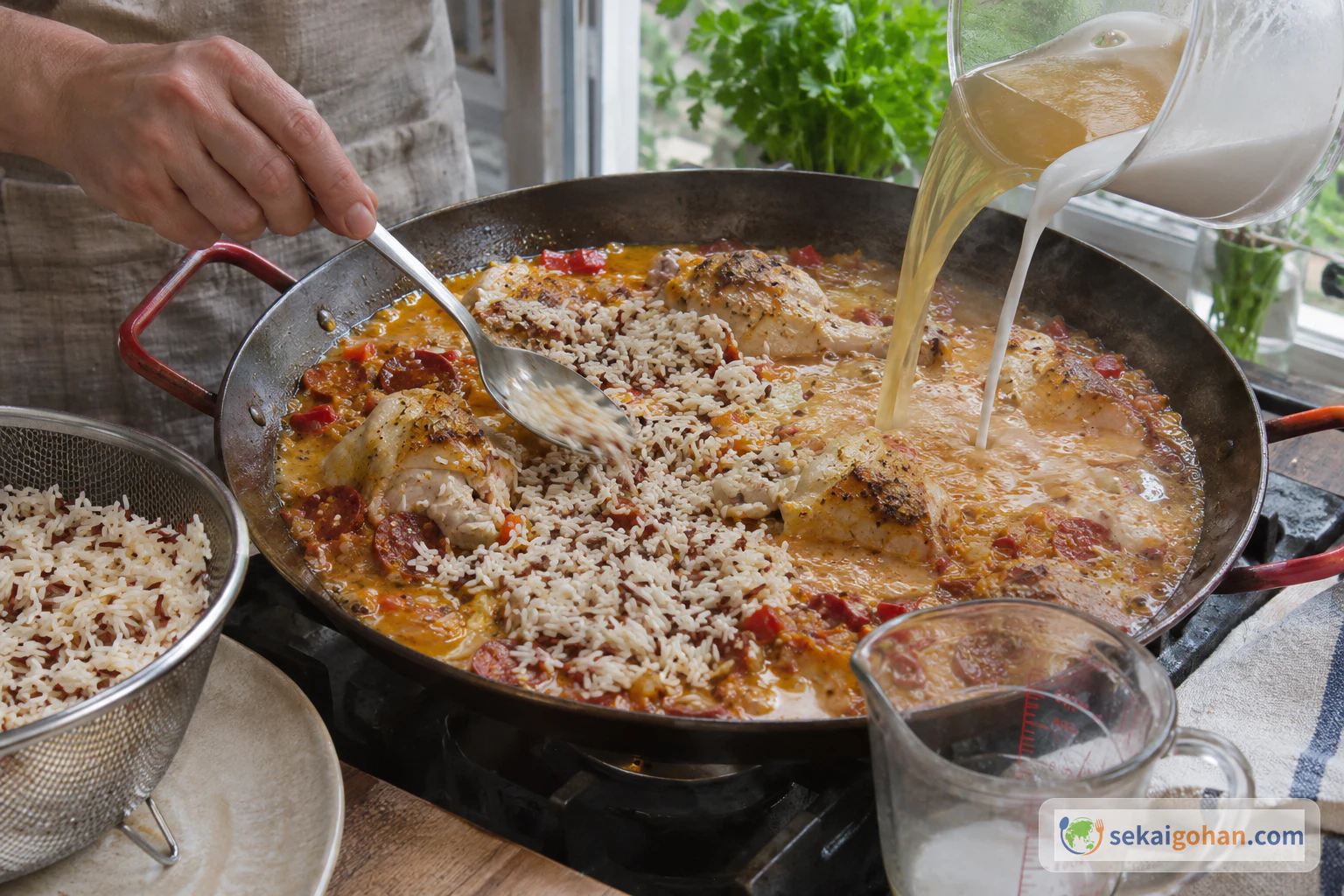
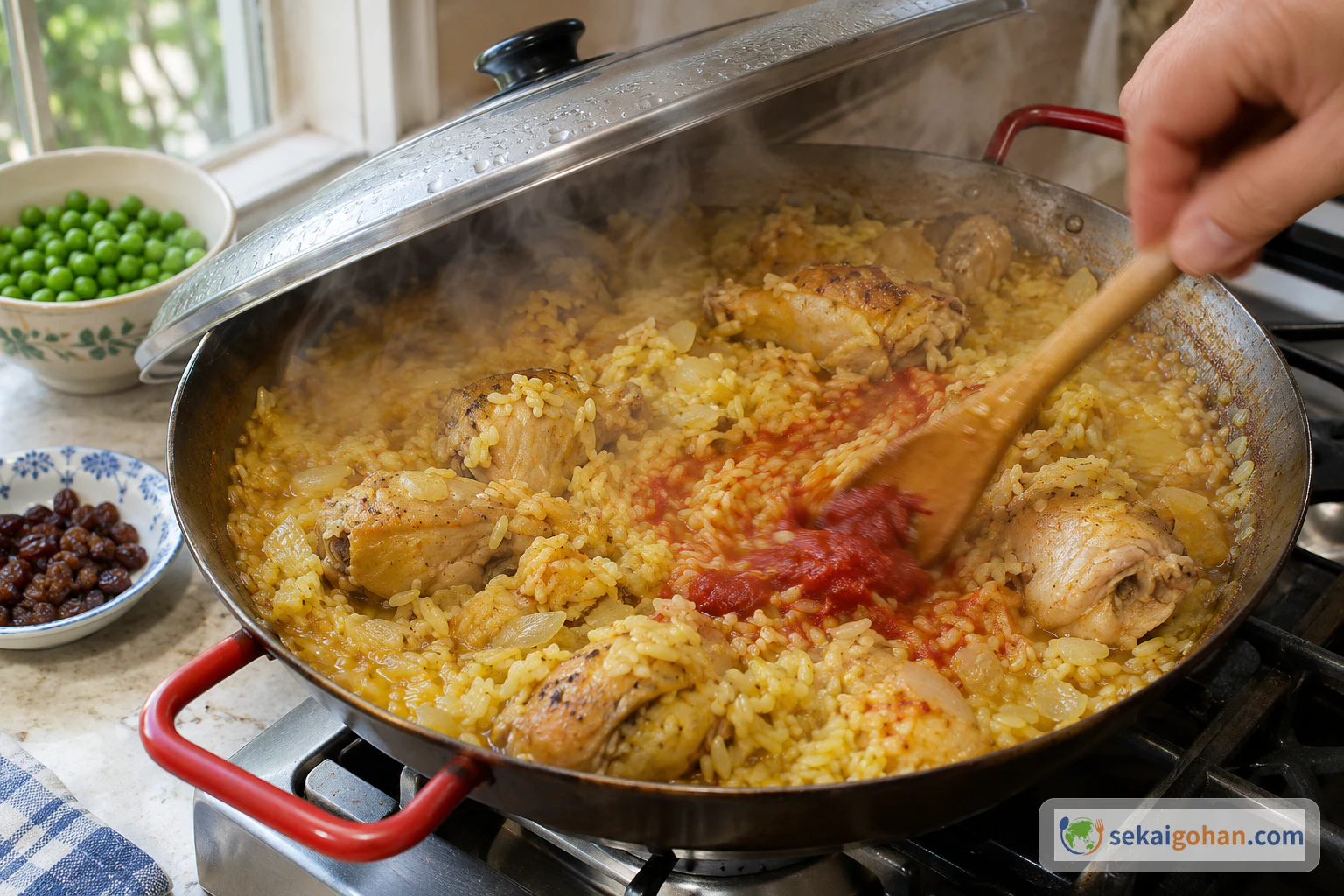
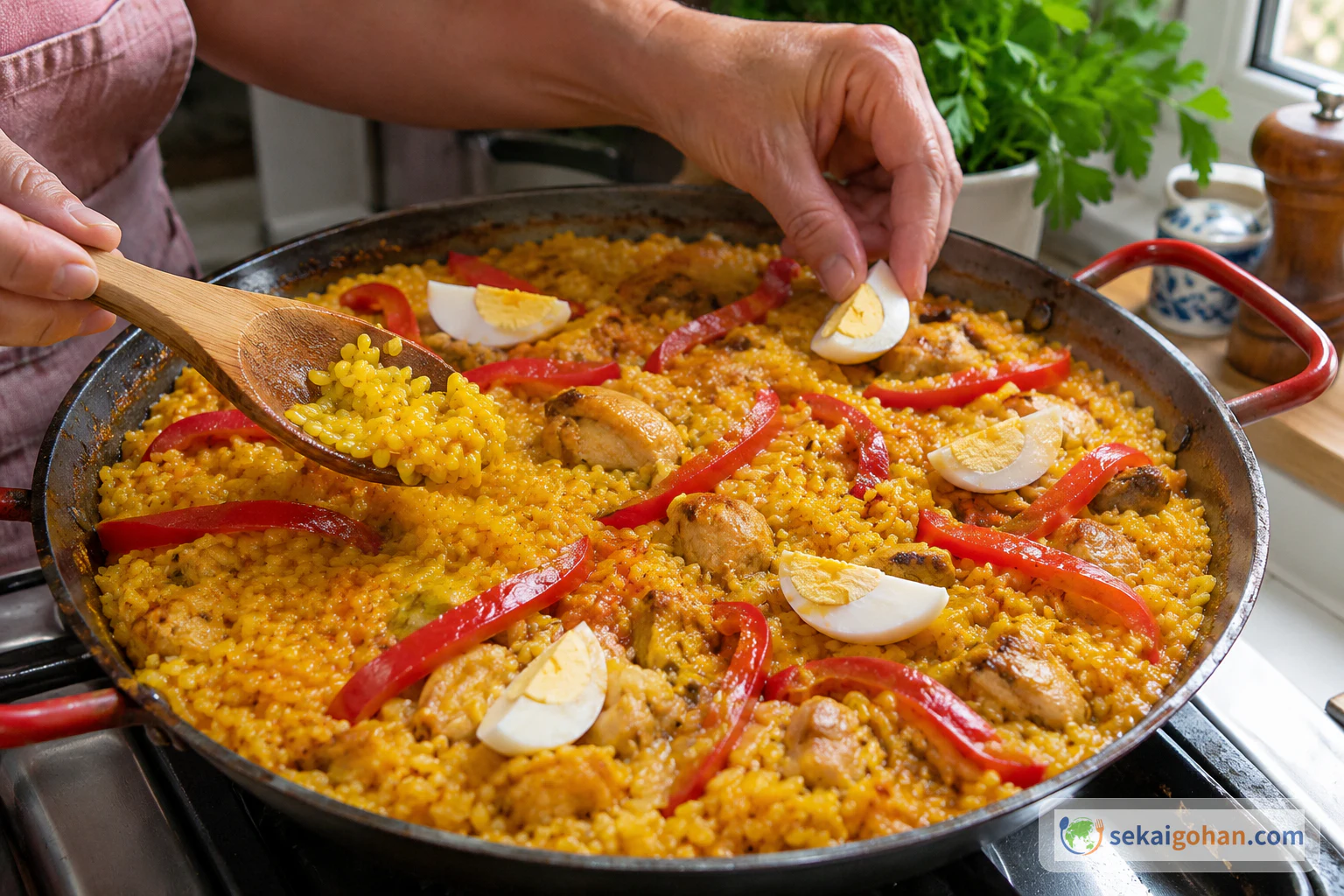
You lift the lid off the wide pan and the steam carries coconut and smoky sausage at the same time. Underneath, the rice has turned a warm yellow. It is soft, a little sticky where the glutinous grains have done their work, and dotted with green peas, plump raisins and slices of red chorizo. Boiled eggs go on top, and the pan goes to the middle of the table for everyone to share.
This is paelya, the Filipino paella. It is richer and rounder than the Spanish dish it comes from. Coconut milk and chicken broth give it body, the raisins add sweetness, and the chorizo brings salt and paprika. It is the rice that turns up when a Filipino table is set for a celebration.
A Spanish Rice Dish, Remade for the Filipino Holiday Table
Paelya is one of the dishes born in the Philippines during the Spanish colonial period. Filipinos took up paella long ago and made it fiesta fare, the food a household cooks when the whole family and the neighbours are coming. It is a celebratory dish. It is served during the holidays, especially at Christmas and on New Year's Eve, and it often sits at the centre of the Noche Buena dinner, the big Christmas Eve dinner. One large pan feeds the room, and people scoop their share straight from it.
The Filipino version moved away from the Spanish one in ways you can taste. Glutinous rice mixed in with jasmine rice gives the grains a gentle chew and makes them cling together. Coconut milk goes into the cooking liquid. The sausage is chorizo de Bilbao, the Filipino chorizo, rather than a Spanish one, and raisins and boiled eggs finish the pan. Spain's own paella valenciana, with its rabbit and beans, is a different dish altogether, even though both share a name and a wide, shallow pan.
Paelya is the Filipino spelling of paella. In Filipino home kitchens, this chicken-and-chorizo version, with glutinous rice and coconut milk, also goes by arroz valenciana. Search for either name and you will find the same festive yellow rice.
How it changes from house to house
No two holiday pans are quite the same. Some cooks build paelya on chicken and chorizo, as here. Others load it with seafood, such as shrimp, crab, squid and clams, and there are vegetable and mixed versions too. Some use only ordinary rice. Others make half the rice glutinous. The colour changes as well: this pan gets its yellow from saffron, while other households colour the rice with annatto (atsuete).
Paelya rarely appears on its own. At a fiesta it sits beside lechon, the whole roast pig of Filipino celebrations, and the chorizo in it has a Filipino cousin in the sweet sausage longganisa. If you know Filipino chicken mainly through the vinegar-and-soy braise adobo, paelya shows the same chicken thigh in its party clothes. You'll find more of the country's dishes on the Philippines page.
Ingredients (serves 6)
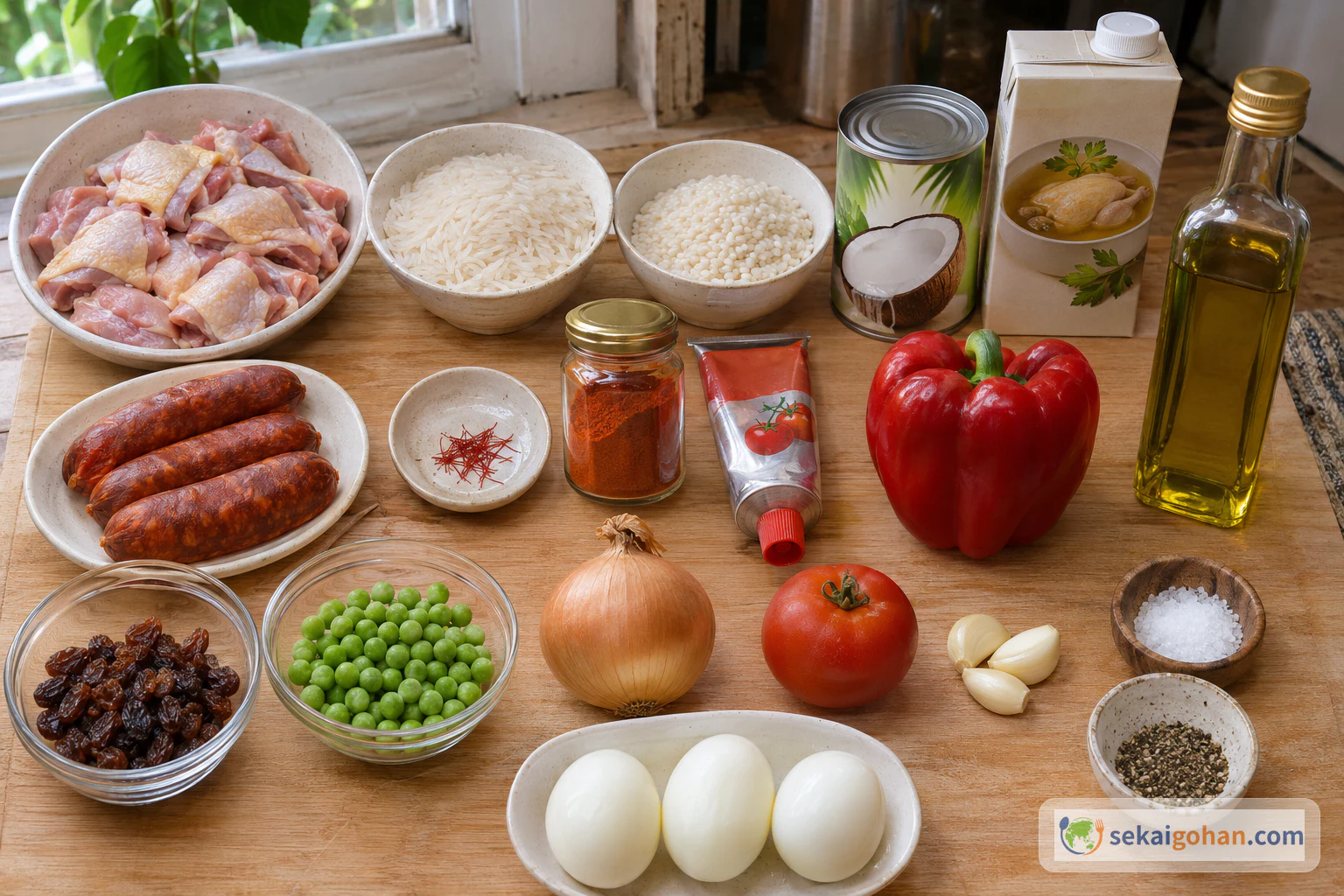
This dish contains egg from the boiled egg garnish. Leave the eggs off for anyone who can't eat them. Check the chorizo label for its meat (it usually contains pork) and other ingredients, and read the coconut milk label for anything added.
Equipment
- Paella pan (paellera) or a wide, shallow pan, with a lid
- Two bowls and a colander for rinsing the rice
- Cutting board and knife
- Wooden spatula or spoon
- Measuring cups and spoons
- Small saucepan for boiling the eggs
Choosing and Substituting
The two things that make this taste Filipino are chorizo de Bilbao and the glutinous rice. Look for chorizo de Bilbao at a Filipino or Asian grocer or online. If you can't find it, Spanish dry chorizo or a fresh chorizo-style sausage will work. Expect the aroma and the saltiness to change, so taste before you add salt at the end. Glutinous rice is sold as sweet or sticky rice at Asian shops. Without it, you get looser grains with less cling.
Jasmine rice is in most supermarkets now. Any fragrant long-grain rice does the same job, though it may drink up the liquid a little differently, so trust the texture cue in the last step over the clock. Buy real saffron threads. A pinch is all you need, and it gives both the colour and the aroma. Annatto colours the rice well too, but it won't taste like saffron. Coconut milk, raisins, peas, paprika and tomato paste come from any supermarket shelf.
Chorizo brands vary a lot in salt and smoke. Fry a slice and taste it before you season the pan. Then you'll know how much salt the rice can take.
Method
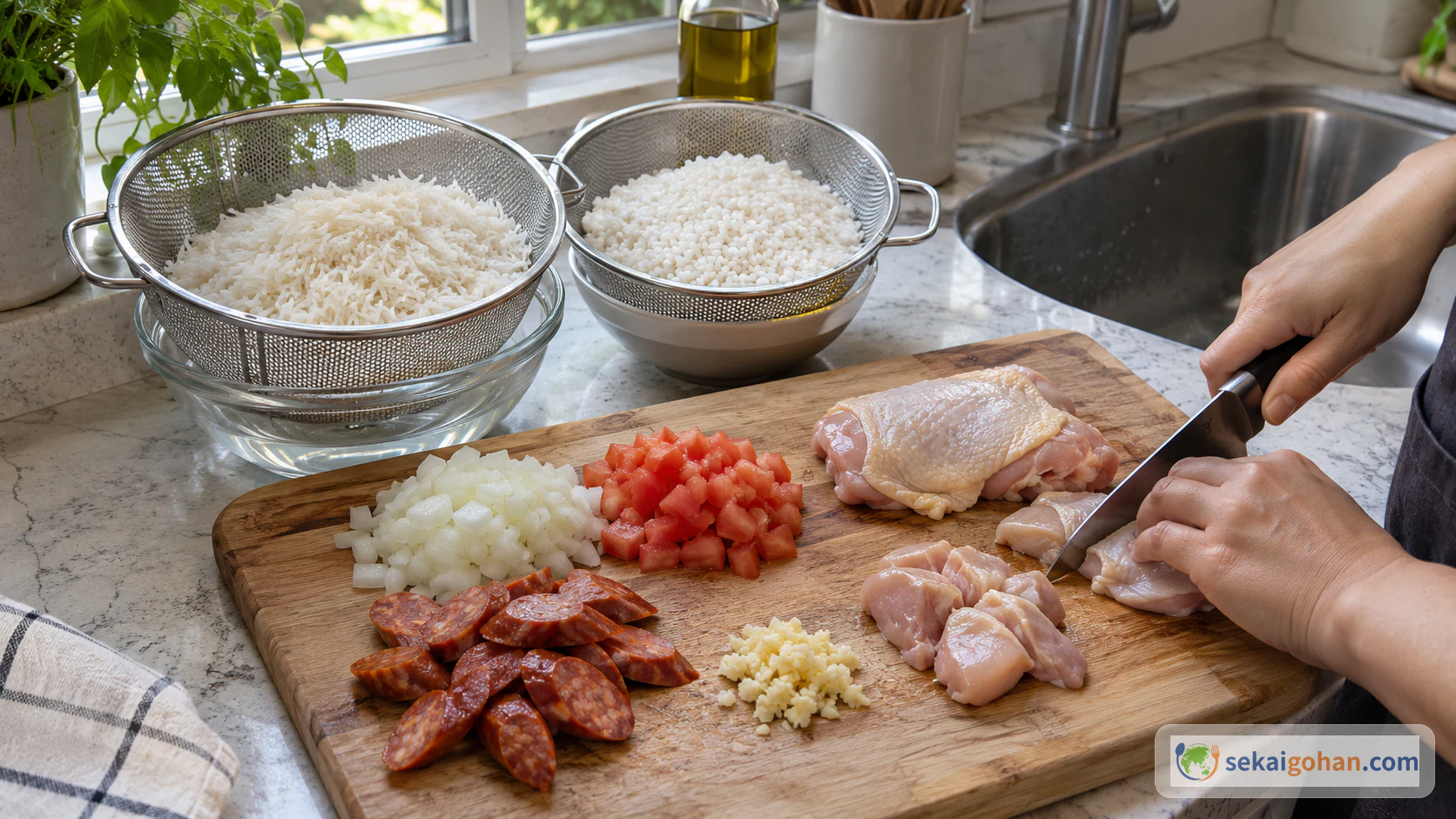
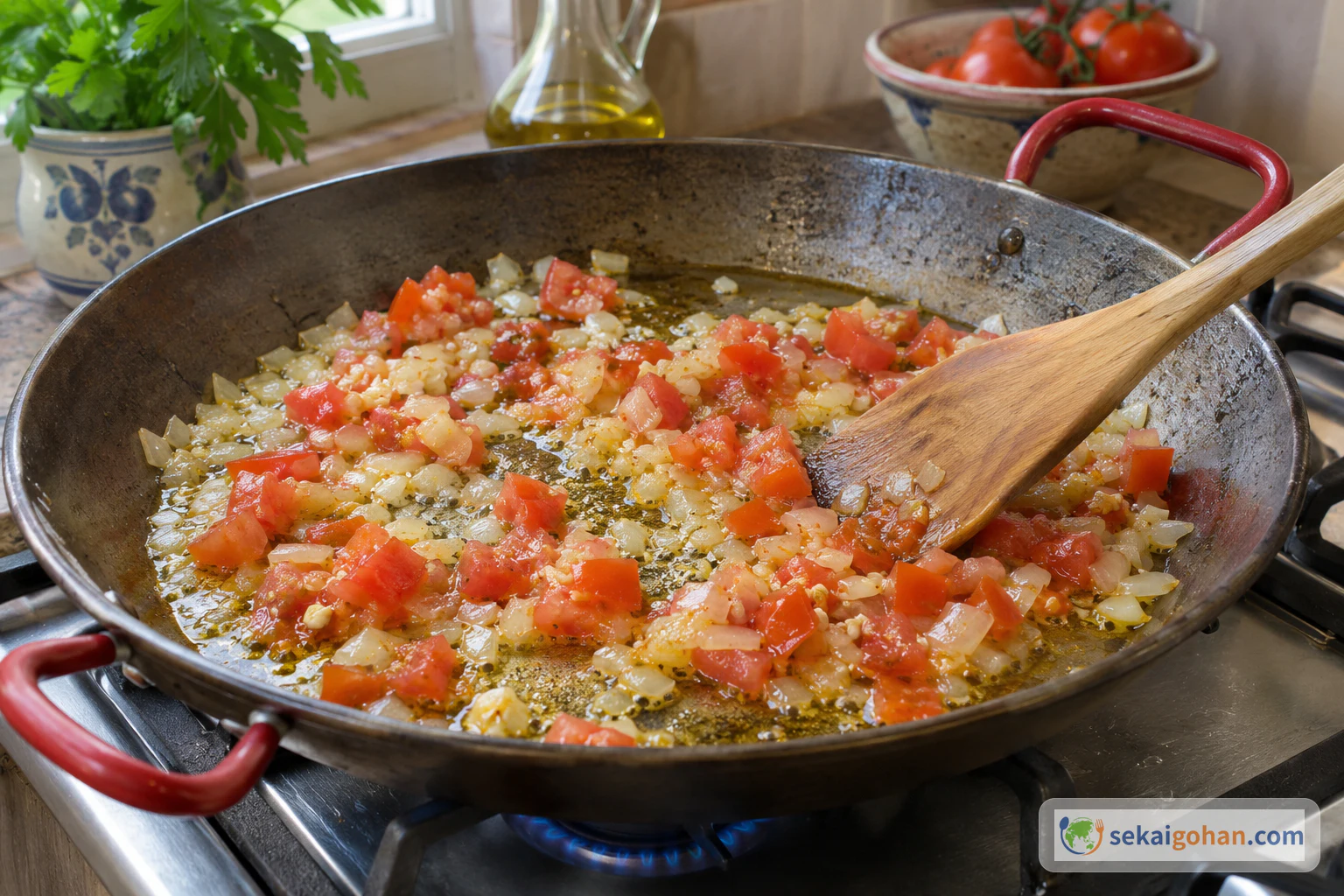
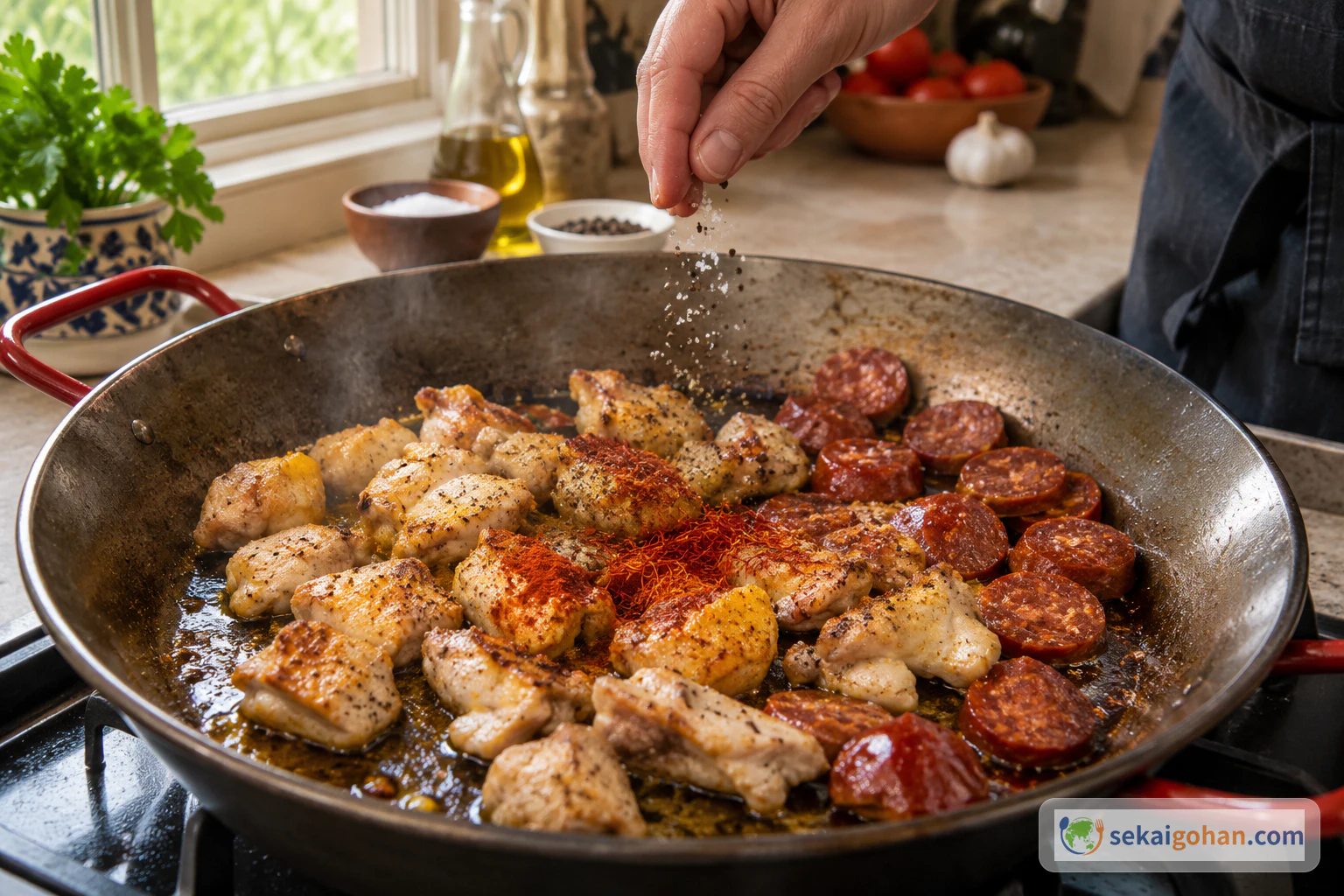
The cooking is fast once the pan is hot, so prep everything first. Rinse both rices, cut the meat and vegetables, and boil and peel the eggs. After that it is one pan from start to finish: build the base, brown the meat, add the liquid and rice, then cook it under the lid in stages. The lid does most of the work. Your job is to add each ingredient at the right moment and check the rice and chicken at the end.
Undercooked or raw chicken is a common cause of food poisoning. Cut into the thickest piece before serving. If any pink remains at the centre, cover the pan and keep cooking until it is white all the way through.
Paelya cooks in the steam under the lid, not by boiling off liquid in an open pan. Lift the lid only to add the next ingredient or to check the rice. That way the coconut broth stays in the grains, and the glutinous rice turns soft instead of chalky.
When It Goes Wrong
| What you see | Why | What to do |
|---|---|---|
| The rice still has a hard centre at the end | The liquid ran low before the grains finished softening | Cover and cook on low heat a little longer. If the pan looks dry, add a splash of chicken broth first |
| The bottom is catching and smells scorched | The heat is too high for the thick coconut liquid | Lower the heat and stir gently up from the bottom, then cover again |
| The chicken is pink inside | The pieces were cut large, or the rice finished first | Cover and cook longer, then cut a piece open to check again |
Serving and Variations
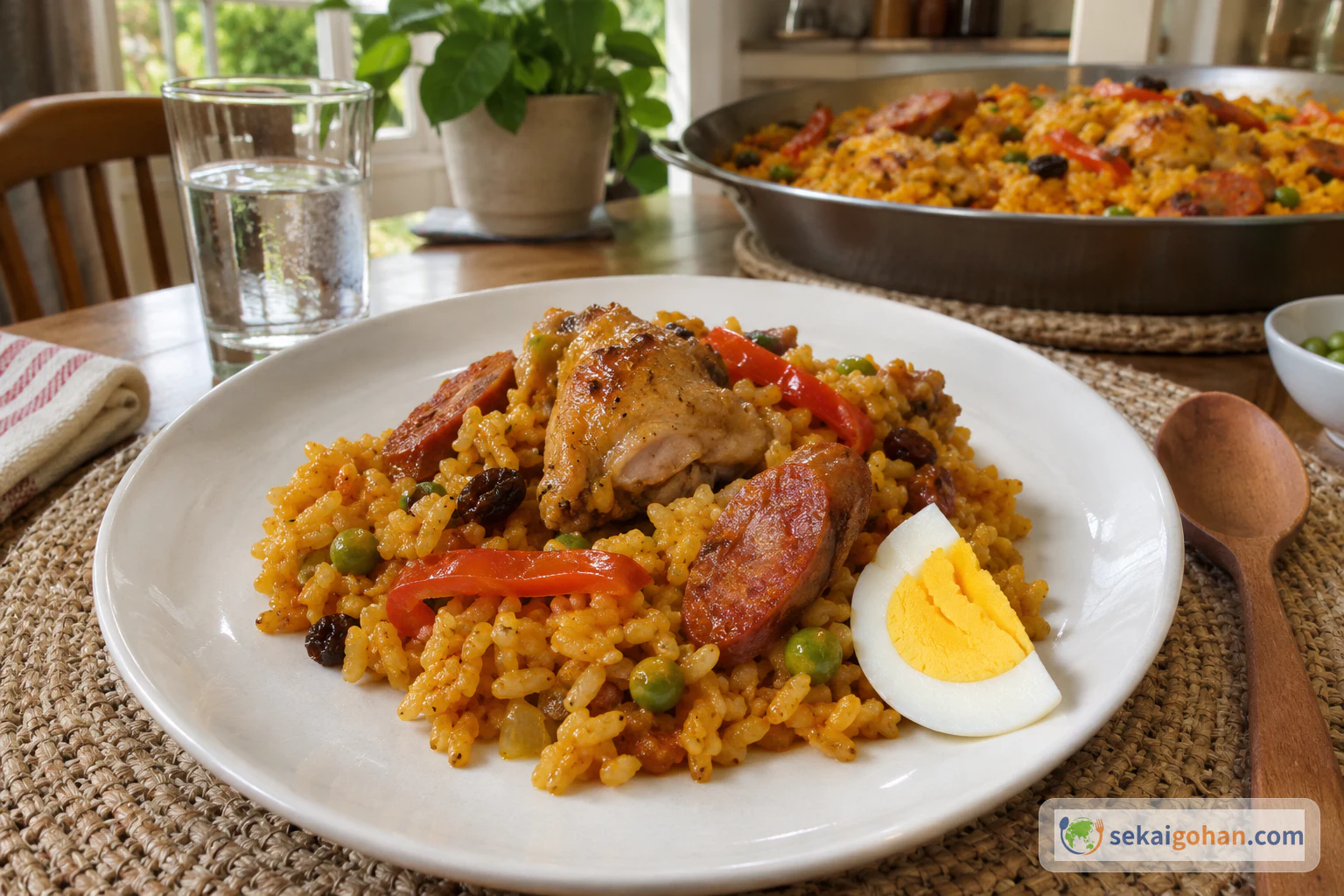
Paelya goes to the table in the pan it was cooked in, set in the middle so everyone can serve themselves. Make sure each scoop gets some chicken, a few slices of chorizo, a slice of egg and some of the raisins and peas. It belongs to Noche Buena, New Year's Eve and fiestas, where it shares the table with roast meats and the other festive dishes of the season.
Variations
- Seafood paelya: Replace some or all of the chicken and chorizo with shrimp, crab, squid and clams. The rice takes on the flavour of the seafood.
- Oven-finished paelya: Some cooks cook the pan ahead and bake it in the oven before the holiday dinner.
- Vegetable or mixed paelya: Build it on vegetables, or combine meat and seafood. Vegetables make it lighter. A mixed pan makes it grander for a big crowd.
Frequently Asked Questions
Do I have to use glutinous rice?
No. Some Filipino cooks make paelya with ordinary rice only. The glutinous rice is what gives the gentle chew and makes the grains stick together, so without it the rice comes out looser and closer to a Spanish paella. If you leave it out, use more jasmine rice in its place.
Can I use annatto instead of saffron?
Yes. Annatto (atsuete) is a common way to colour paelya in the Philippines, and it turns the rice a deep yellow-orange. It doesn't have the floral aroma of saffron, so the pan will taste more of chorizo and coconut. Use just enough to colour the cooking liquid.
Is coconut milk essential?
For this chicken-and-chorizo pan, yes. It gives the rice its richness and rounds out the salty chorizo. Some seafood versions are made without coconut milk.
What if I don't own a paella pan?
Any wide, shallow pan with a lid will do, such as a large skillet or sauté pan. The width matters more than the shape, because a thin, even layer of rice cooks at the same pace from the middle to the edge. In a deep pot, the bottom cooks faster than the top.


